Binance Square
#newtraders

newtraders

481,369 views
603 Discussing
艾伦Eren1688
·
--
Bullish
The Portugal squad is officially kicking off their World Cup journey today 🇵🇹🔥 First match is bound to be a bit tense—will they cruise to victory or battle it out? As a new trader on Binance, I'm keeping an eye on the game while analyzing the candlesticks. Both football and crypto test your patience, strategy, and timing. Drop your score predictions in the comments below, and let's chat about trading and football! Let's grow together with every match and every K-line 📈⚽ #BİNANCESQUARE #Portugal #WorldCup #NewTraders
The Portugal squad is officially kicking off their World Cup journey today 🇵🇹🔥 First match is bound to be a bit tense—will they cruise to victory or battle it out? As a new trader on Binance, I'm keeping an eye on the game while analyzing the candlesticks. Both football and crypto test your patience, strategy, and timing. Drop your score predictions in the comments below, and let's chat about trading and football! Let's grow together with every match and every K-line 📈⚽
#BİNANCESQUARE #Portugal #WorldCup #NewTraders
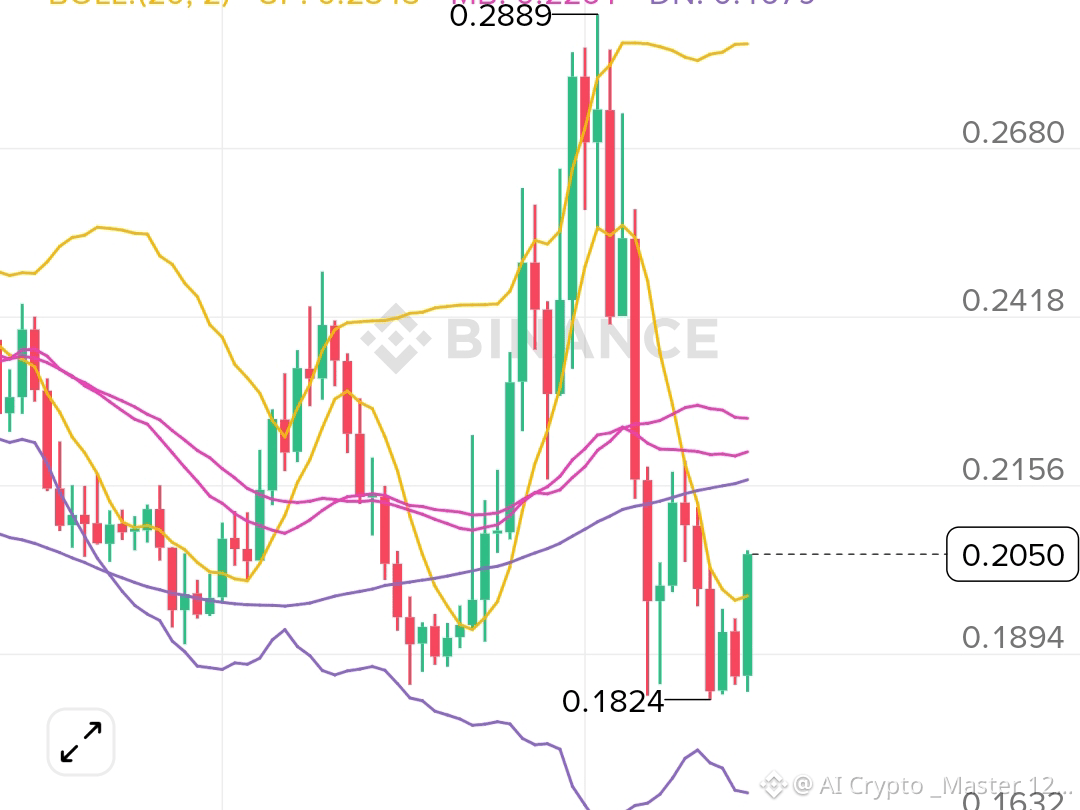
$FET ⚡ BOUNCE: +7.84% RECOVERY ⚡ FET/USDT = $0.2050 | Rs 57.07 Low: $0.1836 → Current: $0.2050 **WHY NEW TRADERS ARE WATCHING:** 1️⃣ **SUPPORT HELD** ✅ $0.1836 low defended. Bounce = buyers stepped in. 2️⃣ **MA7 BREAKOUT** Price above MA7 $0.1985 = Short term bullish flip 3️⃣ **NEXT RESISTANCE CLEAR** 🎯 MA99 $0.2166 + MA25 $0.2209 = Break this = $0.226 BB mid 4️⃣ **AI NARRATIVE ALIVE** FET = AI + Infrastructure. Narrative pumps fast when it moves. **ENTRY PLAN FOR NEW TRADERS:** **SAFE ENTRY**: $0.198 - $0.200 zone Wait for MA7 retest. Don’t FOMO buy $0.205 **TARGET 1**: $0.2166 **TARGET 2**: $0.2209 **SL**: Daily close below $0.1836 **⚠️ NEW TRADER RULE:** Max 3x leverage on Perp. SL must. FET is volatile. **COMMENT BELOW:** Type "$FET {spot}(FETUSDT) T" if you’re adding this to watchlist 👇 #FET.👀 #FetchAI #BinanceSquareTalks #NewTraders
$FET ⚡ BOUNCE: +7.84% RECOVERY ⚡

FET/USDT = $0.2050 | Rs 57.07
Low: $0.1836 → Current: $0.2050

**WHY NEW TRADERS ARE WATCHING:**

1️⃣ **SUPPORT HELD** ✅
$0.1836 low defended. Bounce = buyers stepped in.

2️⃣ **MA7 BREAKOUT**
Price above MA7 $0.1985 = Short term bullish flip

3️⃣ **NEXT RESISTANCE CLEAR** 🎯
MA99 $0.2166 + MA25 $0.2209 = Break this = $0.226 BB mid

4️⃣ **AI NARRATIVE ALIVE**
FET = AI + Infrastructure. Narrative pumps fast when it moves.

**ENTRY PLAN FOR NEW TRADERS:**

**SAFE ENTRY**: $0.198 - $0.200 zone
Wait for MA7 retest. Don’t FOMO buy $0.205

**TARGET 1**: $0.2166
**TARGET 2**: $0.2209
**SL**: Daily close below $0.1836

**⚠️ NEW TRADER RULE:**
Max 3x leverage on Perp. SL must. FET is volatile.

**COMMENT BELOW:**
Type "$FET
T" if you’re adding this to watchlist 👇

#FET.👀 #FetchAI #BinanceSquareTalks #NewTraders
#newt $NEWT Watching the future of on-chain automation evolve is exciting. I'm following @NewtonProtocol as the Newton Mainnet Beta continues to grow. Looking forward to seeing more builders, more real-world use cases, and a stronger Web3 ecosystem. Wishing the community continued success! $NEWT #NewTraders
#newt $NEWT Why I'm Excited About Newton ProtocolBlockchain technology is evolving rapidly, and I believe @NewtonProtocol is building something truly valuable for the future of Web3. The Newton Mainnet Beta represents an exciting step toward a faster, more secure, and more decentralized ecosystem where developers and users can interact with confidence. One of the biggest strengths of Newton Protocol is its focus on innovation, scalability, and real-world usability. A strong infrastructure can help developers create better decentralized applications while giving users a smoother blockchain experience. I'm looking forward to seeing how the community grows and how the ecosystem expands over time. The launch of the Mainnet Beta is only the beginning, and it has the potential to bring more opportunities for builders, investors, and blockchain enthusiasts. Let's support innovation and watch this project develop in the coming months. The future of Web3 depends on projects that continue to improve technology and community engagement. @NewtonProtocol $NEWT #NewTraders
#newt $NEWT Why I'm Excited About Newton ProtocolBlockchain technology is evolving rapidly, and I believe @NewtonProtocol is building something truly valuable for the future of Web3. The Newton Mainnet Beta represents an exciting step toward a faster, more secure, and more decentralized ecosystem where developers and users can interact with confidence.
One of the biggest strengths of Newton Protocol is its focus on innovation, scalability, and real-world usability. A strong infrastructure can help developers create better decentralized applications while giving users a smoother blockchain experience.
I'm looking forward to seeing how the community grows and how the ecosystem expands over time. The launch of the Mainnet Beta is only the beginning, and it has the potential to bring more opportunities for builders, investors, and blockchain enthusiasts.
Let's support innovation and watch this project develop in the coming months. The future of Web3 depends on projects that continue to improve technology and community engagement.
@NewtonProtocol $NEWT #NewTraders

#newt $NEWT I'm excited to learn more about Newton Protocol and its vision for improving on-chain authorization in decentralized finance. As blockchain technology continues to evolve, projects that focus on security, transparency, and better user experience are becoming increasingly important. Newton Protocol aims to provide an authorization layer that could make decentralized applications safer and more efficient for developers and users alike. I'm looking forward to following the project's progress, learning more about its technology, and seeing how it contributes to the future of Web3 and AI-powered blockchain solutions. Innovation in crypto is driven by strong ideas and active communities, and it's great to see projects building tools that may solve real-world problems. Wishing the Newton Protocol team success as they continue developing the ecosystem. @NewtonProtocol $NEWT #NewTraders
##newt $NEWT Update on the Newton ecosystemUpdate on the Newton ecosystem The launch of the Newton Mainnet Beta marks a decisive turning point for the project. The innovative approach of @NewtonProtocol to decentralized infrastructure is impressive, and the potential of the token $NEWT within this rapidly expanding network deserves our full attention. By moving from theory to concrete, operational application on the Mainnet, the project demonstrates strong stability and technological maturity that open up new opportunities for users and developers. This is a major development to closely follow for every Web3 enthusiast. #NewTraders #NEW
##newt $NEWT
Update on the Newton ecosystemUpdate on the Newton ecosystem
The launch of the Newton Mainnet Beta marks a decisive turning point for the project. The innovative approach of @NewtonProtocol to decentralized infrastructure is impressive, and the potential of the token $NEWT within this rapidly expanding network deserves our full attention.
By moving from theory to concrete, operational application on the Mainnet, the project demonstrates strong stability and technological maturity that open up new opportunities for users and developers. This is a major development to closely follow for every Web3 enthusiast. #NewTraders #NEW
#newt $NEWT Here we are! #Newt #Newt $TSLAB #NewTraders #Newt Testing Newton Mainnet Beta and the architecture seems solid 👨‍💻 @NewtonProtocol is building the coordination layer for autonomous AI agents on-chain. The key: $NEWT manages permissions, payments, and execution between agents without custody. This solves the interoperability problem in DeFi + AI. Have you tested the Beta yet? #Newt
#newt $NEWT

Here we are!
#Newt #Newt $TSLAB
#NewTraders #Newt Testing Newton Mainnet Beta and the architecture seems solid 👨‍💻
@NewtonProtocol is building the coordination layer for autonomous AI agents on-chain.
The key: $NEWT manages permissions, payments, and execution between agents without custody.
This solves the interoperability problem in DeFi + AI.
Have you tested the Beta yet? #Newt

NISHA_9:
A reliable ecosystem builds confidence for both developers and users. When participants know the infrastructure is dependable and incentives are aligned, they're more likely to contribute, engage, and stay for the long term. That's often how strong network effects begin to form. 🚀
Why I'm Excited About @NewtonProtocol and the $NEWT Mainnet Beta #NewtTheek hai yaar, sirf title + article. Bina kuch extra 👇 Copy kar lo: Title: Why I'm Excited About @NewtonProtocol and the $NEWT Mainnet Beta #Newt I recently started exploring @NewtonProtocol and I think it’s one of the most practical projects in the Web3 space right now. Newton Protocol is focused on making blockchain usable for everyday people, not just developers. The idea is simple: automate complex on-chain tasks so users don’t have to do everything manually. The biggest thing I’m watching is the Newton Mainnet Beta. A mainnet beta means the network is live for real testing before full launch. This is important because it shows how stable, fast, and secure the protocol will be when millions of people start using it. For $NEWT holders and new users like me, the Mainnet Beta is a chance to actually test the automation features, give feedback, and be part of building the ecosystem early. If the team delivers a smooth experience here, $NEWT could play a big role in making Web3 less confusing for beginners. Overall, I’m bullish on @NewtonProtocol because it’s solving a real problem: making crypto easier to use. Excited to see what comes next with the Mainnet Beta. #Newt $NEWT #newtrend #NewTraders #newton

Why I'm Excited About @NewtonProtocol and the $NEWT Mainnet Beta #Newt

Theek hai yaar, sirf title + article. Bina kuch extra 👇
Copy kar lo:
Title: Why I'm Excited About @NewtonProtocol and the $NEWT Mainnet Beta #Newt
I recently started exploring @NewtonProtocol and I think it’s one of the most practical projects in the Web3 space right now.
Newton Protocol is focused on making blockchain usable for everyday people, not just developers. The idea is simple: automate complex on-chain tasks so users don’t have to do everything manually.
The biggest thing I’m watching is the Newton Mainnet Beta. A mainnet beta means the network is live for real testing before full launch. This is important because it shows how stable, fast, and secure the protocol will be when millions of people start using it.
For $NEWT holders and new users like me, the Mainnet Beta is a chance to actually test the automation features, give feedback, and be part of building the ecosystem early. If the team delivers a smooth experience here, $NEWT could play a big role in making Web3 less confusing for beginners.
Overall, I’m bullish on @NewtonProtocol because it’s solving a real problem: making crypto easier to use. Excited to see what comes next with the Mainnet Beta. #Newt $NEWT #newtrend #NewTraders #newton
#newt $NEWT I discover @NewtonProtocol and its innovative ecosystem. The testnet allows you to explore the project's features and better understand its potential for Web3. I'm looking forward to following the next updates. $NEWT #NewTraders
#newt $NEWT Really excited to see what the future holds for @NewtonProtocol! Their approach to building a secure authorization layer for on-chain finance looks incredibly promising. Can't wait to see how the Newton Mainnet Beta performs as more people join. Looking forward to tracking the growth of $NEWT! #NewTraders
#newt $NEWT Really excited to see what the future holds for @NewtonProtocol! Their approach to building a secure authorization layer for on-chain finance looks incredibly promising. Can't wait to see how the Newton Mainnet Beta performs as more people join. Looking forward to tracking the growth of $NEWT ! #NewTraders

·
--
#newt $NEWT 🌱 NEWT is quietly building momentum through innovation, community growth, and long-term vision. Every milestone strengthens confidence in its ecosystem. Stay focused on fundamentals, follow the roadmap, and remember—real value is created over time, not overnight. 🚀 #NEWT #Crypto #Web3 #NewTraders
Article
Today let’s talk about GMT in a simple way — not just price action, but what this token actually.Today let’s talk about $GMT in a simple way — not just price action, but what this token actually represents inside the crypto ecosystem. Most people see $GMT and immediately think: “Is it pumping or dumping?” But smarter investors usually ask a different question: “What gives this token value over time?” #GMT is connected to the move-to-earn project called STEPN — an app that combines fitness, gaming, and blockchain rewards. The basic idea is simple: You walk, jog, or run → the app tracks activity → users earn crypto rewards. That concept became huge because it introduced millions of people to #Web3 in a very different way compared to traditional $DEFI or meme coins. Now here’s the important part beginners often miss: GMT is NOT just a random reward token. It mainly acts as the governance and utility token of the ecosystem. That means holders may use it for: • governance voting • premium in-app features • upgrades • ecosystem participation • long-term platform incentives This is why understanding #token utility matters more than hype. A token survives longer when: ✅ people actually use the platform ✅ the ecosystem keeps growing ✅ developers continue building ✅ demand exists beyond speculation But there’s another lesson here too. Projects connected to trends can experience explosive growth… and brutal corrections. GMT already showed both sides: • massive hype cycle • huge user growth • then strong market cooldown That’s completely normal in crypto. A mature investor studies: • tokenomics • circulating supply • unlock schedules • user retention • revenue models • real adoption —not just candles on a chart. One thing I always tell #newtraders : A low price does NOT automatically mean “cheap.” And a high price does NOT automatically mean “expensive.” Market cap, supply, utility, and adoption matter far more. So if you’re researching #GMT , ask yourself: 1. Is the ecosystem still active? 2. Are users staying long term? 3. Is revenue sustainable? 4. Does GMT have real demand? 5. Can the project evolve with the market? That’s how professionals analyze crypto projects. In crypto, education is your biggest edge. People who only chase hype usually panic. People who understand the technology make calmer decisions.

Today let’s talk about GMT in a simple way — not just price action, but what this token actually.

Today let’s talk about $GMT in a simple way — not just price action, but what this token actually represents inside the crypto ecosystem.
Most people see $GMT and immediately think: “Is it pumping or dumping?”
But smarter investors usually ask a different question: “What gives this token value over time?”
#GMT is connected to the move-to-earn project called STEPN — an app that combines fitness, gaming, and blockchain rewards. The basic idea is simple:
You walk, jog, or run → the app tracks activity → users earn crypto rewards.
That concept became huge because it introduced millions of people to #Web3 in a very different way compared to traditional $DEFI or meme coins.
Now here’s the important part beginners often miss:
GMT is NOT just a random reward token.
It mainly acts as the governance and utility token of the ecosystem. That means holders may use it for: • governance voting
• premium in-app features
• upgrades
• ecosystem participation
• long-term platform incentives
This is why understanding #token utility matters more than hype.
A token survives longer when: ✅ people actually use the platform
✅ the ecosystem keeps growing
✅ developers continue building
✅ demand exists beyond speculation
But there’s another lesson here too.
Projects connected to trends can experience explosive growth… and brutal corrections.
GMT already showed both sides: • massive hype cycle
• huge user growth
• then strong market cooldown
That’s completely normal in crypto.
A mature investor studies: • tokenomics
• circulating supply
• unlock schedules
• user retention
• revenue models
• real adoption
—not just candles on a chart.
One thing I always tell #newtraders :
A low price does NOT automatically mean “cheap.” And a high price does NOT automatically mean “expensive.”
Market cap, supply, utility, and adoption matter far more.
So if you’re researching #GMT , ask yourself:
1. Is the ecosystem still active?
2. Are users staying long term?
3. Is revenue sustainable?
4. Does GMT have real demand?
5. Can the project evolve with the market?
That’s how professionals analyze crypto projects.
In crypto, education is your biggest edge. People who only chase hype usually panic. People who understand the technology make calmer decisions.
Article
Newton Protocol Just Put a Bouncer at Every Onchain Door - and Mainnet Beta Proves It WorksCrypto solved settlement years ago. What it never solved is the step before settlement: deciding whether a transaction should happen at all. That gap is bigger than it looks. Roughly $700 billion moves onchain every month — about $298 billion of it in stablecoins, another $21 billion in tokenized real-world assets. Every dollar of that settles on a blockchain that is very good at moving value and completely blind to context. It doesn't know if a wallet is sanctioned. It doesn't know if a vault curator broke their own risk limits. It doesn't know if an AI agent is about to spend outside its mandate. Traditional finance solved this with authorization: a check before clearing, the way a card network approves a payment before money moves. Onchain finance never had that layer. The rules lived in a PDF, not in code. Newton Protocol is built to close that gap, and on June 23 it stopped being a whitepaper thesis and became a running system. Mainnet beta is now live on Base and Ethereum, enforcing real policy on real transactions. Here's the mechanism. Newton runs as an EigenLayer AVS — a network of independent operators who stake restaked ETH as collateral for honesty. When a transaction is proposed, each operator evaluates it against a policy written in a Rego/OPA-style language, pulling in whatever offchain data the policy calls for. Enough operators agreeing produces a single compact attestation: cryptographic proof that a supermajority independently checked the transaction and reached the same answer. If an operator signs off incorrectly, anyone can challenge it with a zero-knowledge fraud proof during a dispute window, and the operator gets slashed. The incentive to cheat is structurally worse than the incentive to behave. What makes mainnet beta more than a tech demo is who showed up for it. Newton launched with a real data-oracle bench: Chainalysis for sanctions and risk monitoring, RedStone for price feeds, Credora for risk ratings and collateral intelligence, vaults.fyi for vault health, and Webacy for wallet reputation. None of these are theoretical integrations — they're the actual inputs a policy can read when it decides whether a transaction clears. Alongside the network launch, Magic Labs shipped VaultKit, an SDK that lets DeFi vault curators encode their own rules as enforceable onchain policy instead of a governance promise. That last point is the part worth sitting with. Curated DeFi vault TVL has grown more than 350% in the past year. Every dollar in one of those vaults is sitting on a curator's word that they'll follow their stated strategy. VaultKit turns that word into code that checks itself on every action, before it executes — not after a post-mortem thread on X. A liquidity provider doesn't have to trust a curator's discipline; they can point at the policy enforcing it. The use case set extends past vaults. The same authorization model applies to stablecoin issuers who need transfer-level sanctions screening, to RWA issuers who need investor-eligibility checks baked into settlement, to institutions that need position limits enforced without a centralized gatekeeper, and — increasingly relevant as autonomous agents start moving funds — to AI agents that need a hard, verifiable spending ceiling instead of a system prompt asking them nicely to behave. Identity fraud alone is estimated near $43 billion; that's the scale of the offchain-verification gap Newton is trying to move onchain and make provable. None of this makes the bet safe. Mainnet beta is still beta — this is the network's first real exposure to adversarial conditions, and the operator-consensus model hasn't been stress-tested at scale over a long horizon yet. The system's usefulness is also bounded by its oracle partners: Newton doesn't generate compliance data, it enforces policies against data others provide, so a bad price feed or a stale risk score from an integrated provider becomes Newton's problem too. And adoption is still the real test — a policy engine is only as valuable as the number of protocols willing to hand it the "before you execute" decision, and that trust gets earned transaction by transaction, not announced. What Newton is really proposing is a change in where trust lives. Not "the curator says they'll behave" or "the frontend will catch it," but a rule, enforced in code, checked before money moves, provable after the fact. If that holds up past beta, the boring-sounding "authorization layer" might end up being the piece institutional DeFi was actually missing. Would you want a policy checking your own transactions before they clear, or does that defeat the point of being onchain in the first place? @NewtonProtocol $NEWT #Newt #newscrypto #NewToken #NewToCrypto #NewTraders

Newton Protocol Just Put a Bouncer at Every Onchain Door - and Mainnet Beta Proves It Works

Crypto solved settlement years ago. What it never solved is the step before settlement: deciding whether a transaction should happen at all.
That gap is bigger than it looks. Roughly $700 billion moves onchain every month — about $298 billion of it in stablecoins, another $21 billion in tokenized real-world assets. Every dollar of that settles on a blockchain that is very good at moving value and completely blind to context. It doesn't know if a wallet is sanctioned. It doesn't know if a vault curator broke their own risk limits. It doesn't know if an AI agent is about to spend outside its mandate. Traditional finance solved this with authorization: a check before clearing, the way a card network approves a payment before money moves. Onchain finance never had that layer. The rules lived in a PDF, not in code.
Newton Protocol is built to close that gap, and on June 23 it stopped being a whitepaper thesis and became a running system. Mainnet beta is now live on Base and Ethereum, enforcing real policy on real transactions.
Here's the mechanism. Newton runs as an EigenLayer AVS — a network of independent operators who stake restaked ETH as collateral for honesty. When a transaction is proposed, each operator evaluates it against a policy written in a Rego/OPA-style language, pulling in whatever offchain data the policy calls for. Enough operators agreeing produces a single compact attestation: cryptographic proof that a supermajority independently checked the transaction and reached the same answer. If an operator signs off incorrectly, anyone can challenge it with a zero-knowledge fraud proof during a dispute window, and the operator gets slashed. The incentive to cheat is structurally worse than the incentive to behave.
What makes mainnet beta more than a tech demo is who showed up for it. Newton launched with a real data-oracle bench: Chainalysis for sanctions and risk monitoring, RedStone for price feeds, Credora for risk ratings and collateral intelligence, vaults.fyi for vault health, and Webacy for wallet reputation. None of these are theoretical integrations — they're the actual inputs a policy can read when it decides whether a transaction clears. Alongside the network launch, Magic Labs shipped VaultKit, an SDK that lets DeFi vault curators encode their own rules as enforceable onchain policy instead of a governance promise.
That last point is the part worth sitting with. Curated DeFi vault TVL has grown more than 350% in the past year. Every dollar in one of those vaults is sitting on a curator's word that they'll follow their stated strategy. VaultKit turns that word into code that checks itself on every action, before it executes — not after a post-mortem thread on X. A liquidity provider doesn't have to trust a curator's discipline; they can point at the policy enforcing it.
The use case set extends past vaults. The same authorization model applies to stablecoin issuers who need transfer-level sanctions screening, to RWA issuers who need investor-eligibility checks baked into settlement, to institutions that need position limits enforced without a centralized gatekeeper, and — increasingly relevant as autonomous agents start moving funds — to AI agents that need a hard, verifiable spending ceiling instead of a system prompt asking them nicely to behave. Identity fraud alone is estimated near $43 billion; that's the scale of the offchain-verification gap Newton is trying to move onchain and make provable.
None of this makes the bet safe. Mainnet beta is still beta — this is the network's first real exposure to adversarial conditions, and the operator-consensus model hasn't been stress-tested at scale over a long horizon yet. The system's usefulness is also bounded by its oracle partners: Newton doesn't generate compliance data, it enforces policies against data others provide, so a bad price feed or a stale risk score from an integrated provider becomes Newton's problem too. And adoption is still the real test — a policy engine is only as valuable as the number of protocols willing to hand it the "before you execute" decision, and that trust gets earned transaction by transaction, not announced.
What Newton is really proposing is a change in where trust lives. Not "the curator says they'll behave" or "the frontend will catch it," but a rule, enforced in code, checked before money moves, provable after the fact. If that holds up past beta, the boring-sounding "authorization layer" might end up being the piece institutional DeFi was actually missing.
Would you want a policy checking your own transactions before they clear, or does that defeat the point of being onchain in the first place?
@NewtonProtocol $NEWT #Newt #newscrypto #NewToken #NewToCrypto #NewTraders
Bhima_Trader:
I completely understand this perspective. The details really matter in the long run.
Article
Before AI Acts, Who Checks the Rules?Last month a trading bot I was testing almost moved my funds on a signal I never actually approved. Nothing broke, but it stuck with me: I had no way to check what that bot was allowed to do until after it already tried to do it. That gap is exactly what Newton Protocol is built to close.Most people hear "AI agent trading" and picture speed. What Newton actually changes is the order of operations. Before any action executes, it runs through policy checks (built on Rego, the same engine used in cloud access control) inside a TEE, with EigenLayer AVS operators verifying the decision. So the system isn't just confirming who you are, it's confirming whether the action itself should happen at all, before it happens, not after the damage is done.That's a real architectural shift, not a marketing one. But tech doesn't create adoption on its own. Centralized bots already feel "good enough" for most people, even flawed ones.So here's my honest question: would you trust an AI agent more if you could see its permissions before it acts, or only after the fact?@NewtonProtocol $NEWT #newt #Newt #NewTraders

Before AI Acts, Who Checks the Rules?

Last month a trading bot I was testing almost moved my funds on a signal I never actually approved. Nothing broke, but it stuck with me: I had no way to check what that bot was allowed to do until after it already tried to do it. That gap is exactly what Newton Protocol is built to close.Most people hear "AI agent trading" and picture speed. What Newton actually changes is the order of operations. Before any action executes, it runs through policy checks (built on Rego, the same engine used in cloud access control) inside a TEE, with EigenLayer AVS operators verifying the decision. So the system isn't just confirming who you are, it's confirming whether the action itself should happen at all, before it happens, not after the damage is done.That's a real architectural shift, not a marketing one. But tech doesn't create adoption on its own. Centralized bots already feel "good enough" for most people, even flawed ones.So here's my honest question: would you trust an AI agent more if you could see its permissions before it acts, or only after the fact?@NewtonProtocol $NEWT #newt #Newt #NewTraders
Sohel shaik 03:
Projects solving foundational challenges deserve more attention
·
--
Article
NEWTON PROTOCOL (NEWT) FEELS LIKE ONE OF THE FEW AI-X-CRYPTO IDEAS THAT ISN’T TOTAL NOISEHonestly... I’m tired of the 2026 market already. Too much flashy talk, too many projects yelling about AI this, automation that, and half of them can’t even explain what problem they’re fixing without sounding like they copied the same pitch deck from each other. It’s messy. It’s loud. And most of it feels like hype with a nicer logo. That’s why Newton Protocol caught my eye in the first place. Not because it’s perfect. It’s not. Not even close. But at least the idea sounds like it came from somebody who noticed a real gap instead of just trying to catch the AI trend and slap it onto a token. That matters. A lot. What Newton is trying to do is pretty simple when you strip away the buzz. It wants to connect AI-driven strategies with blockchain execution in a way that feels more organized and safer than the usual off-chain chaos. And yeah, that sounds technical, but the basic point is easy: people want automation that actually does something useful, not just another bot that tweets screenshots and dies the second the market gets weird. Look, that’s the part I respect. It’s not pretending the problem doesn’t exist. We already have AI tools. We already have trading bots. We already have blockchain rails. The real issue is that these pieces don’t always fit together nicely. Sometimes they’re clunky. Sometimes they’re slow. Sometimes they’re just plain untrustworthy. Newton at least tries to deal with that instead of selling a dream and calling it a product. But let me be blunt... the adoption side is still the big question mark. Always is. You can have the cleanest idea in the world, and if nobody uses it, it’s just another token with a story. That’s the graveyard this market is full of. Cool concepts that never got past the “sounds good in a post” stage. And 2026 has been especially bad for that kind of nonsense. Too many half-built things. Too many people acting like usage is guaranteed just because the narrative is hot. Wait, I almost forgot to mention... that’s exactly why I don’t fully buy the hype around any project like this until I see real activity. Not vanity metrics. Not random community noise. Real usage. Real builders. Real reasons for people to keep coming back. Without that, it’s all just smoke. Still, I can’t completely dismiss Newton either. There’s something spot-on about focusing on infrastructure for AI-powered strategies instead of only talking about the token price or the next pump. That feels more serious. More useful. Less fake. And in a market full of junk, that already makes it stand out a bit. I also think the developer angle is important. If a project makes it easier for people to build and test ideas without fighting with ten layers of nonsense, that’s not small. Developers don’t want drama. They want things that work. Simple as that. If Newton can make the process less painful, then yeah, it has a real shot at being more than just another shiny name. But I’m still not here to sell it to anyone. Far from it. I’ve seen too many projects start with a clean story and end up buried under their own delay, confusion, or bad timing. Crypto is full of that. It’s almost the default outcome now. So when I say Newton feels different, I don’t mean it’s guaranteed to win. I mean it at least sounds like it was built around a problem that actually exists. And that’s rare enough these days to matter. The market is packed with trash right now. Plain and simple. Stuff that exists because somebody knew how to chase attention, not because they knew how to build something people need. Newton doesn’t feel like that kind of project. It feels more like a project that knows it has to prove itself, which is a lot better than acting like it already did. So yeah... I’m cautious, but I’m not brushing it off. It’s one of those ideas that could either become genuinely useful or get swallowed by the usual crypto noise. And honestly, that’s the part that makes it interesting. #Newt @NewtonProtocol $NEWT #NewTokens #nawtrader #NawToCypto #NewTraders $BTC $LAB {future}(LABUSDT)

NEWTON PROTOCOL (NEWT) FEELS LIKE ONE OF THE FEW AI-X-CRYPTO IDEAS THAT ISN’T TOTAL NOISE

Honestly... I’m tired of the 2026 market already. Too much flashy talk, too many projects yelling about AI this, automation that, and half of them can’t even explain what problem they’re fixing without sounding like they copied the same pitch deck from each other. It’s messy. It’s loud. And most of it feels like hype with a nicer logo.
That’s why Newton Protocol caught my eye in the first place. Not because it’s perfect. It’s not. Not even close. But at least the idea sounds like it came from somebody who noticed a real gap instead of just trying to catch the AI trend and slap it onto a token. That matters. A lot.
What Newton is trying to do is pretty simple when you strip away the buzz. It wants to connect AI-driven strategies with blockchain execution in a way that feels more organized and safer than the usual off-chain chaos. And yeah, that sounds technical, but the basic point is easy: people want automation that actually does something useful, not just another bot that tweets screenshots and dies the second the market gets weird.
Look, that’s the part I respect. It’s not pretending the problem doesn’t exist. We already have AI tools. We already have trading bots. We already have blockchain rails. The real issue is that these pieces don’t always fit together nicely. Sometimes they’re clunky. Sometimes they’re slow. Sometimes they’re just plain untrustworthy. Newton at least tries to deal with that instead of selling a dream and calling it a product.
But let me be blunt... the adoption side is still the big question mark. Always is. You can have the cleanest idea in the world, and if nobody uses it, it’s just another token with a story. That’s the graveyard this market is full of. Cool concepts that never got past the “sounds good in a post” stage. And 2026 has been especially bad for that kind of nonsense. Too many half-built things. Too many people acting like usage is guaranteed just because the narrative is hot.
Wait, I almost forgot to mention... that’s exactly why I don’t fully buy the hype around any project like this until I see real activity. Not vanity metrics. Not random community noise. Real usage. Real builders. Real reasons for people to keep coming back. Without that, it’s all just smoke.
Still, I can’t completely dismiss Newton either. There’s something spot-on about focusing on infrastructure for AI-powered strategies instead of only talking about the token price or the next pump. That feels more serious. More useful. Less fake. And in a market full of junk, that already makes it stand out a bit.
I also think the developer angle is important. If a project makes it easier for people to build and test ideas without fighting with ten layers of nonsense, that’s not small. Developers don’t want drama. They want things that work. Simple as that. If Newton can make the process less painful, then yeah, it has a real shot at being more than just another shiny name.
But I’m still not here to sell it to anyone. Far from it. I’ve seen too many projects start with a clean story and end up buried under their own delay, confusion, or bad timing. Crypto is full of that. It’s almost the default outcome now. So when I say Newton feels different, I don’t mean it’s guaranteed to win. I mean it at least sounds like it was built around a problem that actually exists.
And that’s rare enough these days to matter.
The market is packed with trash right now. Plain and simple. Stuff that exists because somebody knew how to chase attention, not because they knew how to build something people need. Newton doesn’t feel like that kind of project. It feels more like a project that knows it has to prove itself, which is a lot better than acting like it already did.
So yeah... I’m cautious, but I’m not brushing it off. It’s one of those ideas that could either become genuinely useful or get swallowed by the usual crypto noise. And honestly, that’s the part that makes it interesting.
#Newt @NewtonProtocol $NEWT
#NewTokens #nawtrader #NawToCypto
#NewTraders
$BTC
$LAB
Byte Bro:
But let me be blunt... the adoption side is still the big question mark. Always is. You can have the cleanest idea in the world, and if nobody uses it, it’s just another
·
--
Bullish
#newt $NEWT Crypto loves to talk about AI as if the biggest opportunity is speed. Faster execution, smarter trading, more automation. But the real problem has never been speed alone. The bigger issue is control. If an AI agent is allowed to trade, rebalance, or move assets on a user’s behalf, how much authority should it actually have? That question matters because most crypto automation still relies on a risky trade-off: either users manage everything manually, or they hand over broad wallet permissions to bots, apps, or third-party tools. Manual control is slow, but unrestricted automation creates obvious security and trust problems. That is what makes Newton Protocol worth paying attention to. Instead of focusing only on AI-powered execution, Newton appears to be built around a different idea: automation should operate inside clear, programmable limits. In simple terms, an AI agent should not have open-ended wallet access just because it can execute a strategy. The project’s broader value may be in this policy-based approach. Rather than asking whether AI can trade faster, Newton asks whether automated actions can be constrained by rules set in advance — things like spending caps, approved strategies, or compliance conditions. That makes it less about “AI trading hype” and more about building a permission layer for machine-driven finance. Of course, that does not remove the risks. Systems built around rules and authorization can become complex, and complexity often introduces new weaknesses. But Newton is at least pointing toward a more serious problem than most AI-related crypto projects discuss. As automation grows, the real question may not be how smart an AI agent becomes, but whether its authority can stay narrow, verifiable, and aligned with the user’s intent. @NewtonProtocol #NewTraders . $NEWT .
#newt $NEWT Crypto loves to talk about AI as if the biggest opportunity is speed. Faster execution, smarter trading, more automation. But the real problem has never been speed alone. The bigger issue is control.

If an AI agent is allowed to trade, rebalance, or move assets on a user’s behalf, how much authority should it actually have? That question matters because most crypto automation still relies on a risky trade-off: either users manage everything manually, or they hand over broad wallet permissions to bots, apps, or third-party tools. Manual control is slow, but unrestricted automation creates obvious security and trust problems.

That is what makes Newton Protocol worth paying attention to. Instead of focusing only on AI-powered execution, Newton appears to be built around a different idea:

automation should operate inside clear, programmable limits. In simple terms, an AI agent should not have open-ended wallet access just because it can execute a strategy.

The project’s broader value may be in this policy-based approach. Rather than asking whether AI can trade faster, Newton asks whether automated actions can be constrained by rules set in advance — things like spending caps, approved strategies, or compliance conditions. That makes it less about “AI trading hype” and more about building a permission layer for machine-driven finance.

Of course, that does not remove the risks. Systems built around rules and authorization can become complex, and complexity often introduces new weaknesses. But Newton is at least pointing toward a more serious problem than most AI-related crypto projects discuss.

As automation grows, the real question may not be how smart an AI agent becomes, but whether its authority can stay narrow, verifiable, and aligned with the user’s intent.

@NewtonProtocol #NewTraders .

$NEWT .
Jaxon Crypto:
an AI agent is allowed to trade, rebalance, or move assets on a user’s behalf, how much authority should it actually have? That question matters because most crypto automation still relies on a risky trade-off: either users manage
Article
Newton Protocol Is Not Really About AI Trading. It Is About Pre-Trade Control.Newton Protocol wasn't a project that won me over overnight. At first glance, it looked like another name riding the AI wave. I almost moved on without giving it a second thought. Then I spent some time digging through the docs, the code, and the progress they've shared over the past months. That's when the story started to change. Instead of chasing headlines, the team kept building. They focused on a problem that doesn't get much attention—how to make sure a transaction is actually safe before it reaches the blockchain. It sounds simple, but it isn't. Every step meant adding another piece to the puzzle: policy engines, developer tools, smart contracts, governance, and infrastructure that most people will never notice if it works the way it's supposed to. What stood out to me wasn't one big announcement. It was the consistency. While the market kept jumping from one narrative to the next, Newton kept refining the same vision, improving the tooling, expanding the architecture, and quietly laying the groundwork for something much bigger. That doesn't mean the hard part is over. In many ways, it's only beginning. Building technology is one challenge. Convincing developers and institutions to rely on it every day is a completely different one. That's the journey I'm watching now. Because sometimes the projects that make the biggest impact aren't the ones making the most noise—they're the ones patiently building until people can't imagine the ecosystem without them. I'm curious to see where Newton Protocol goes from here. $NEWT #Newt @NewtonProtocol #NeWTokens #newtrader #NewToCrypto #NewTraders $BTC {spot}(BTCUSDT) $LAB {future}(LABUSDT)

Newton Protocol Is Not Really About AI Trading. It Is About Pre-Trade Control.

Newton Protocol wasn't a project that won me over overnight.
At first glance, it looked like another name riding the AI wave. I almost moved on without giving it a second thought.
Then I spent some time digging through the docs, the code, and the progress they've shared over the past months.
That's when the story started to change.
Instead of chasing headlines, the team kept building. They focused on a problem that doesn't get much attention—how to make sure a transaction is actually safe before it reaches the blockchain.
It sounds simple, but it isn't.
Every step meant adding another piece to the puzzle: policy engines, developer tools, smart contracts, governance, and infrastructure that most people will never notice if it works the way it's supposed to.
What stood out to me wasn't one big announcement.
It was the consistency.
While the market kept jumping from one narrative to the next, Newton kept refining the same vision, improving the tooling, expanding the architecture, and quietly laying the groundwork for something much bigger.
That doesn't mean the hard part is over.
In many ways, it's only beginning.
Building technology is one challenge. Convincing developers and institutions to rely on it every day is a completely different one.
That's the journey I'm watching now.
Because sometimes the projects that make the biggest impact aren't the ones making the most noise—they're the ones patiently building until people can't imagine the ecosystem without them.
I'm curious to see where Newton Protocol goes from here.
$NEWT #Newt @NewtonProtocol

#NeWTokens #newtrader #NewToCrypto
#NewTraders
$BTC
$LAB
Alonmmusk:
DeFi infrastructure feels more mature when authorization before settlement is part of the flow, $NEWT fits that infrastructure conversation 🔒
newtonThe launch of the Newton Mainnet Beta marks an exciting milestone for @NewtonProtocol as it moves from development into a phase where builders, validators, and the wider community can actively participate in shaping the network. A successful blockchain ecosystem depends on more than technology alone—it requires reliable infrastructure, transparent development, strong security, and continuous community feedback. The Mainnet Beta creates an opportunity to test performance, improve stability, and encourage developers to experiment with new decentralized applications before broader adoption. I'm looking forward to seeing the ecosystem expand with innovative tools, meaningful real-world use cases, and a growing developer community contributing to the network's evolution. Every improvement made during this stage helps strengthen the foundation for long-term growth and adoption. Wishing the entire @NewtonProtocol team continued success as they build the future of the ecosystem around $NEWT. #NewTraders

newton

The launch of the Newton Mainnet Beta marks an exciting milestone for @NewtonProtocol as it moves from development into a phase where builders, validators, and the wider community can actively participate in shaping the network. A successful blockchain ecosystem depends on more than technology alone—it requires reliable infrastructure, transparent development, strong security, and continuous community feedback. The Mainnet Beta creates an opportunity to test performance, improve stability, and encourage developers to experiment with new decentralized applications before broader adoption. I'm looking forward to seeing the ecosystem expand with innovative tools, meaningful real-world use cases, and a growing developer community contributing to the network's evolution. Every improvement made during this stage helps strengthen the foundation for long-term growth and adoption. Wishing the entire @NewtonProtocol team continued success as they build the future of the ecosystem around $NEWT. #NewTraders
Article
Newton Protocol’s Silent Trap: When Tokenized Asset Rules Keep Working After the Law Moves OnNewton Protocol is walking into one of the nastiest corners of tokenized finance: not bad code, not weak wallets, not sloppy UX, but policies that keep working after the legal logic behind them has gone stale. For NEWT, that is the part worth watching. Not the loudest part. The sharpest part. Picture a tokenized short-term Treasury note sitting inside a smart contract. The issuer has a transfer policy attached to it. Only approved wallets can receive the token. Jurisdictions are checked. KYC status is checked. Sanctions exposure is checked. Maybe there is a holding restriction, maybe a redemption window, maybe a rule tied to how the product was originally offered. Everything looks clean. Then something changes off-chain. The offering terms are updated. A custodian changes eligibility requirements. A regulator narrows how a certain investor category should be treated. A user who was fine last month is no longer eligible. Or the opposite happens: someone who should now be allowed is still blocked because the old rule is sitting there like a fossil inside the policy layer. The transaction comes in. The code checks the policy. The attestation passes. The contract executes. No hack. No exploit. No red warning light. The system did exactly what it was told to do. That is the trap. Newton Protocol is interesting because it is not trying to be another decorative layer on top of tokenized assets. Its purpose is closer to the plumbing: before a transaction settles, the system checks whether the action fits the policy attached to it. Identity, jurisdiction, transfer restrictions, sanctions screening, velocity limits, asset-specific conditions. All the stuff people like to ignore until a transaction lands in the wrong place. A normal crypto user may see that and shrug. Fine, compliance checks. Boring. But tokenized assets are not normal tokens. A tokenized fund share is not a meme coin with better branding. A tokenized bond does not stop being a bond-like instrument because it moved into a wallet. A tokenized private credit product carries documents, restrictions, responsibilities, and legal assumptions behind it. There is always a back room. The chain only shows the front desk. Newton’s pitch, at least at the infrastructure level, is that these rules should not live only in a front end or a private server. A website can block a user, sure. But users do not always come through the website. Contracts get called directly. Aggregators route transactions. Other protocols plug into assets in ways the issuer did not imagine during launch week. If the only real gate is sitting in an app interface, the gate is not much of a gate. So Newton pulls the policy check closer to execution. A user wants to move, mint, redeem, transfer, or interact. The request is evaluated against a policy. Operators attest to the result. The smart contract verifies before letting the action through. Good idea. Not enough. The ugly question is not whether Newton can enforce a policy. The ugly question is whether the policy deserves to be enforced. That is the policy freshness paradox. The better the machine gets at enforcing rules, the more dangerous an outdated rule becomes. A sloppy system fails visibly. A tight system can fail with confidence. It gives you a clean approval, a valid proof, a neat on-chain record, and a bad legal outcome wrapped in technical correctness. That should make people uncomfortable. Take a simple eligibility rule. A policy says wallets from certain jurisdictions can hold a tokenized asset if they passed onboarding under a specific framework. At launch, legal signs off. Compliance signs off. Developers encode the rule. The policy is deployed. The asset goes live. Months later, the issuer changes the product structure. Maybe the old investor category no longer fits. Maybe a distribution exemption expires. Maybe a local rule changes around resale. Maybe the asset is no longer being offered under the same assumptions. Nobody touches the policy because nothing appears broken. Transfers continue. The dashboard stays green. The smart contract keeps accepting valid attestations. From the outside, the system looks healthy. Inside, it is enforcing a memory. This is the part of tokenized finance that does not get enough attention. Everyone wants to talk about settlement speed, liquidity, fractional access, and 24/7 markets. Fine. Those are real selling points. But if tokenized assets are going to carry meaningful financial rights, then the rules around those rights need to stay current. Otherwise the industry is just building faster pipes for stale obligations. Newton Protocol has a better starting point than most because it treats policy as a separate layer rather than burying every condition forever inside the asset contract. That separation matters. If a policy can be updated, replaced, versioned, and tied to fresh data, a tokenized asset platform has room to adapt without ripping out the whole system. Still, let’s not pretend the existence of an update path solves the problem. Someone has to know the rule is stale. Someone has to care. Someone has to rewrite it without breaking something else. Someone has to test the new logic against the weird edge cases: the user approved under the old rule, the transfer pending before the update, the redemption request that crosses a cutoff, the wallet that changed status after onboarding, the jurisdiction that treats the same instrument differently from another one. This is where policy work stops being a clean engineering diagram and starts looking like real financial infrastructure. Messy. Slow. Full of exceptions. Full of judgment calls. And that is exactly where $NEWT’s long-term relevance will be tested. A token can get attention from listings, volume, narratives, and market cycles. That part is familiar. But Newton Protocol is aiming at a less forgiving lane. If builders use it for tokenized assets, they will not only care whether the system is fast. They will care whether it helps them avoid embarrassing, expensive, silent mistakes. A stale sanctions feed is easy to understand. Everyone gets that risk. But stale legal logic is more subtle. It may not come from a dead API or a failed oracle. It may come from a paragraph in an offering document that changed. A board-approved update. A custodian memo. A jurisdictional interpretation. A compliance decision that never made it into the policy code. That is how rules rot. Not all at once. Quietly. A policy engine should force teams to confront that rot. Every active policy should have a version. Every version should have a reason. Every reason should point back to something real: a product term, a legal requirement, a risk control, a compliance procedure, a data source, a transfer restriction. Otherwise the policy becomes just another blob of logic with authority it did not earn. Newton can help make policy enforcement more disciplined, but discipline cannot be outsourced entirely to infrastructure. No protocol can magically decide whether an issuer’s legal interpretation is sound. No attestation can turn a bad assumption into a good one. No network of operators can rescue a rule that was written from yesterday’s facts. That is the uncomfortable truth. The best version of Newton Protocol gives tokenized asset issuers a way to make restrictions enforceable without turning every transaction into a manual compliance ticket. That is a real need. A tokenized private fund cannot behave like a free-floating speculative token. A tokenized debt instrument may need transfer controls. A tokenized real-world asset may need identity checks, jurisdiction checks, and redemption rules that actually match the documents behind the asset. But the same system can become dangerous if teams treat policy deployment like a one-time chore. “Set it and forget it” is poison here. A policy that controls who can hold an asset should not live forever without review. A rule tied to user eligibility should not rely on old onboarding assumptions. A jurisdictional restriction should not keep running after the legal basis changes. A redemption policy should not drift away from the product’s actual terms. If the policy is still live, someone should be responsible for proving it still belongs there. That responsibility is not glamorous. It will not trend. It probably will not move a token price on a random Tuesday. But it is the difference between infrastructure and theater. Newton Protocol’s strongest role may be as a forcing function. If a platform builds around policy-based authorization, it has to think more clearly about what its rules are, where they come from, how they are updated, and what happens when they conflict. That alone is valuable. Tokenized finance has too often survived on vague claims that “compliance is handled” somewhere off-screen. Somewhere in the backend. Somewhere with the issuer. Somewhere with the custodian. “Somewhere” is not an architecture. A serious policy layer should make the logic visible to the right people, private where it needs to be private, and enforceable at the point where money actually moves. It should also make old logic harder to ignore. If a policy has not been reviewed after a product change, that should be treated as a risk. If an oracle has not refreshed. Risk. If a legal assumption has no owner. Risk. If nobody can explain why a wallet was blocked beyond “the policy said so,” bigger risk. That last one matters more than people admit. Users will tolerate friction if the rules are clear. Institutions will tolerate automation if the controls are auditable. Regulators may tolerate new rails if the old obligations are not being hand-waved away. But nobody serious wants a black box deciding regulated asset transfers based on stale logic and mystery inputs. Newton Protocol has to avoid becoming that black box. The project’s opportunity is bigger than “compliance on-chain,” which has become a lazy phrase. The real opportunity is policy governance near settlement. That sounds less catchy. It is also much closer to the truth. A tokenized asset needs a living policy layer. Not living in the marketing sense. Living in the operational sense. Reviewed. Updated. Replaced when needed. Connected to current data. Attached to clear authority. Able to expire old approvals before they become liabilities. Think about an attestation that remains valid after the policy behind it has been updated. Should it still pass? Maybe for a short window. Maybe not. Depends on the asset, the rule, the legal reason for the change, and the risk of letting old approvals settle. Annoying answer. Correct answer. Real financial infrastructure is full of annoying answers. Newton Protocol sits right in that zone. If it becomes too rigid, it cannot handle real-world assets. If it becomes too loose, it becomes decorative compliance. The useful path is narrow: flexible enough to update, strict enough to enforce, transparent enough to audit, private enough to protect sensitive data, and honest enough to admit that legal rules age. That final point is the one I keep coming back to. Legal rules age. Investor status ages. Sanctions data ages. Offering terms age. Risk parameters age. Product structures age. Even a beautifully written policy starts dying the moment it is deployed unless someone maintains it. The danger for tokenized assets is not that the code stops working. That would be easier to spot. The danger is that the code keeps working while the world it was written for no longer exists. That is the silent trap Newton Protocol has to help projects avoid. For $NEWT, the market may spend plenty of time arguing over price, supply, liquidity, and short-term momentum. Fair enough. Tokens live in markets. But the project’s deeper test is not on a chart. It is in the boring, high-stakes gap between legal reality and executable policy. Can Newton Protocol help keep that gap small? If it can, the project has a real role in tokenized asset infrastructure. Not as a magic compliance machine. Not as a cure for bad judgment. More like a hard-nosed control layer that forces rules to meet transactions before settlement and gives teams a way to update those rules before they become liabilities. If it cannot, the risk is uglier than a failed transaction. The risk is a successful one. A transfer goes through. A proof verifies. A dashboard shows green. Everyone moves on. Only later does someone realize the policy was enforcing a rule that should have died weeks ago. That is the kind of failure that does not make noise at first. It just waits. #Newt @NewtonProtocol $NEWT #NewTokens #newtrader #NewToCrypto #NewTraders $BTC {spot}(BTCUSDT) $LAB {future}(LABUSDT)

Newton Protocol’s Silent Trap: When Tokenized Asset Rules Keep Working After the Law Moves On

Newton Protocol is walking into one of the nastiest corners of tokenized finance: not bad code, not weak wallets, not sloppy UX, but policies that keep working after the legal logic behind them has gone stale. For NEWT, that is the part worth watching. Not the loudest part. The sharpest part.
Picture a tokenized short-term Treasury note sitting inside a smart contract. The issuer has a transfer policy attached to it. Only approved wallets can receive the token. Jurisdictions are checked. KYC status is checked. Sanctions exposure is checked. Maybe there is a holding restriction, maybe a redemption window, maybe a rule tied to how the product was originally offered.
Everything looks clean.
Then something changes off-chain.
The offering terms are updated. A custodian changes eligibility requirements. A regulator narrows how a certain investor category should be treated. A user who was fine last month is no longer eligible. Or the opposite happens: someone who should now be allowed is still blocked because the old rule is sitting there like a fossil inside the policy layer.
The transaction comes in.
The code checks the policy.
The attestation passes.
The contract executes.
No hack. No exploit. No red warning light. The system did exactly what it was told to do.
That is the trap.
Newton Protocol is interesting because it is not trying to be another decorative layer on top of tokenized assets. Its purpose is closer to the plumbing: before a transaction settles, the system checks whether the action fits the policy attached to it. Identity, jurisdiction, transfer restrictions, sanctions screening, velocity limits, asset-specific conditions. All the stuff people like to ignore until a transaction lands in the wrong place.
A normal crypto user may see that and shrug. Fine, compliance checks. Boring.
But tokenized assets are not normal tokens. A tokenized fund share is not a meme coin with better branding. A tokenized bond does not stop being a bond-like instrument because it moved into a wallet. A tokenized private credit product carries documents, restrictions, responsibilities, and legal assumptions behind it. There is always a back room. The chain only shows the front desk.
Newton’s pitch, at least at the infrastructure level, is that these rules should not live only in a front end or a private server. A website can block a user, sure. But users do not always come through the website. Contracts get called directly. Aggregators route transactions. Other protocols plug into assets in ways the issuer did not imagine during launch week. If the only real gate is sitting in an app interface, the gate is not much of a gate.
So Newton pulls the policy check closer to execution. A user wants to move, mint, redeem, transfer, or interact. The request is evaluated against a policy. Operators attest to the result. The smart contract verifies before letting the action through.
Good idea.
Not enough.
The ugly question is not whether Newton can enforce a policy. The ugly question is whether the policy deserves to be enforced.
That is the policy freshness paradox. The better the machine gets at enforcing rules, the more dangerous an outdated rule becomes. A sloppy system fails visibly. A tight system can fail with confidence. It gives you a clean approval, a valid proof, a neat on-chain record, and a bad legal outcome wrapped in technical correctness.
That should make people uncomfortable.
Take a simple eligibility rule. A policy says wallets from certain jurisdictions can hold a tokenized asset if they passed onboarding under a specific framework. At launch, legal signs off. Compliance signs off. Developers encode the rule. The policy is deployed. The asset goes live.
Months later, the issuer changes the product structure. Maybe the old investor category no longer fits. Maybe a distribution exemption expires. Maybe a local rule changes around resale. Maybe the asset is no longer being offered under the same assumptions. Nobody touches the policy because nothing appears broken. Transfers continue. The dashboard stays green. The smart contract keeps accepting valid attestations.
From the outside, the system looks healthy.
Inside, it is enforcing a memory.
This is the part of tokenized finance that does not get enough attention. Everyone wants to talk about settlement speed, liquidity, fractional access, and 24/7 markets. Fine. Those are real selling points. But if tokenized assets are going to carry meaningful financial rights, then the rules around those rights need to stay current. Otherwise the industry is just building faster pipes for stale obligations.
Newton Protocol has a better starting point than most because it treats policy as a separate layer rather than burying every condition forever inside the asset contract. That separation matters. If a policy can be updated, replaced, versioned, and tied to fresh data, a tokenized asset platform has room to adapt without ripping out the whole system.
Still, let’s not pretend the existence of an update path solves the problem.
Someone has to know the rule is stale.
Someone has to care.
Someone has to rewrite it without breaking something else.
Someone has to test the new logic against the weird edge cases: the user approved under the old rule, the transfer pending before the update, the redemption request that crosses a cutoff, the wallet that changed status after onboarding, the jurisdiction that treats the same instrument differently from another one.
This is where policy work stops being a clean engineering diagram and starts looking like real financial infrastructure. Messy. Slow. Full of exceptions. Full of judgment calls.
And that is exactly where $NEWT ’s long-term relevance will be tested.
A token can get attention from listings, volume, narratives, and market cycles. That part is familiar. But Newton Protocol is aiming at a less forgiving lane. If builders use it for tokenized assets, they will not only care whether the system is fast. They will care whether it helps them avoid embarrassing, expensive, silent mistakes.
A stale sanctions feed is easy to understand. Everyone gets that risk. But stale legal logic is more subtle. It may not come from a dead API or a failed oracle. It may come from a paragraph in an offering document that changed. A board-approved update. A custodian memo. A jurisdictional interpretation. A compliance decision that never made it into the policy code.
That is how rules rot.
Not all at once. Quietly.
A policy engine should force teams to confront that rot. Every active policy should have a version. Every version should have a reason. Every reason should point back to something real: a product term, a legal requirement, a risk control, a compliance procedure, a data source, a transfer restriction. Otherwise the policy becomes just another blob of logic with authority it did not earn.
Newton can help make policy enforcement more disciplined, but discipline cannot be outsourced entirely to infrastructure. No protocol can magically decide whether an issuer’s legal interpretation is sound. No attestation can turn a bad assumption into a good one. No network of operators can rescue a rule that was written from yesterday’s facts.
That is the uncomfortable truth.
The best version of Newton Protocol gives tokenized asset issuers a way to make restrictions enforceable without turning every transaction into a manual compliance ticket. That is a real need. A tokenized private fund cannot behave like a free-floating speculative token. A tokenized debt instrument may need transfer controls. A tokenized real-world asset may need identity checks, jurisdiction checks, and redemption rules that actually match the documents behind the asset.
But the same system can become dangerous if teams treat policy deployment like a one-time chore.
“Set it and forget it” is poison here.
A policy that controls who can hold an asset should not live forever without review. A rule tied to user eligibility should not rely on old onboarding assumptions. A jurisdictional restriction should not keep running after the legal basis changes. A redemption policy should not drift away from the product’s actual terms. If the policy is still live, someone should be responsible for proving it still belongs there.
That responsibility is not glamorous. It will not trend. It probably will not move a token price on a random Tuesday.
But it is the difference between infrastructure and theater.
Newton Protocol’s strongest role may be as a forcing function. If a platform builds around policy-based authorization, it has to think more clearly about what its rules are, where they come from, how they are updated, and what happens when they conflict. That alone is valuable. Tokenized finance has too often survived on vague claims that “compliance is handled” somewhere off-screen. Somewhere in the backend. Somewhere with the issuer. Somewhere with the custodian.
“Somewhere” is not an architecture.
A serious policy layer should make the logic visible to the right people, private where it needs to be private, and enforceable at the point where money actually moves. It should also make old logic harder to ignore. If a policy has not been reviewed after a product change, that should be treated as a risk. If an oracle has not refreshed. Risk. If a legal assumption has no owner. Risk. If nobody can explain why a wallet was blocked beyond “the policy said so,” bigger risk.
That last one matters more than people admit.
Users will tolerate friction if the rules are clear. Institutions will tolerate automation if the controls are auditable. Regulators may tolerate new rails if the old obligations are not being hand-waved away. But nobody serious wants a black box deciding regulated asset transfers based on stale logic and mystery inputs.
Newton Protocol has to avoid becoming that black box.
The project’s opportunity is bigger than “compliance on-chain,” which has become a lazy phrase. The real opportunity is policy governance near settlement. That sounds less catchy. It is also much closer to the truth.
A tokenized asset needs a living policy layer. Not living in the marketing sense. Living in the operational sense. Reviewed. Updated. Replaced when needed. Connected to current data. Attached to clear authority. Able to expire old approvals before they become liabilities.
Think about an attestation that remains valid after the policy behind it has been updated. Should it still pass? Maybe for a short window. Maybe not. Depends on the asset, the rule, the legal reason for the change, and the risk of letting old approvals settle. Annoying answer. Correct answer.
Real financial infrastructure is full of annoying answers.
Newton Protocol sits right in that zone. If it becomes too rigid, it cannot handle real-world assets. If it becomes too loose, it becomes decorative compliance. The useful path is narrow: flexible enough to update, strict enough to enforce, transparent enough to audit, private enough to protect sensitive data, and honest enough to admit that legal rules age.
That final point is the one I keep coming back to.
Legal rules age.
Investor status ages. Sanctions data ages. Offering terms age. Risk parameters age. Product structures age. Even a beautifully written policy starts dying the moment it is deployed unless someone maintains it.
The danger for tokenized assets is not that the code stops working. That would be easier to spot. The danger is that the code keeps working while the world it was written for no longer exists.
That is the silent trap Newton Protocol has to help projects avoid.
For $NEWT , the market may spend plenty of time arguing over price, supply, liquidity, and short-term momentum. Fair enough. Tokens live in markets. But the project’s deeper test is not on a chart. It is in the boring, high-stakes gap between legal reality and executable policy.
Can Newton Protocol help keep that gap small?
If it can, the project has a real role in tokenized asset infrastructure. Not as a magic compliance machine. Not as a cure for bad judgment. More like a hard-nosed control layer that forces rules to meet transactions before settlement and gives teams a way to update those rules before they become liabilities.
If it cannot, the risk is uglier than a failed transaction.
The risk is a successful one.
A transfer goes through. A proof verifies. A dashboard shows green. Everyone moves on.
Only later does someone realize the policy was enforcing a rule that should have died weeks ago.
That is the kind of failure that does not make noise at first. It just waits.
#Newt @NewtonProtocol $NEWT
#NewTokens #newtrader #NewToCrypto #NewTraders
$BTC
$LAB
RUMI CRYPTO107:
Picture a tokenized short-term Treasury note sitting inside a smart contract
Log in to explore more content
Join global crypto users on Binance Square
⚡️ Get latest and useful information about crypto.
💬 Trusted by the world’s largest crypto exchange.
👍 Discover real insights from verified creators.
Email / Phone number