
#layer2
layer2
4.3M views
23,943 Discussing
Hot
Latest


$STRK — Starknet remains a major Ethereum scaling project. Traders are watching token liquidity and whether buying interest can strengthen.
$ZK — ZK remains tied to Ethereum’s scaling narrative. Short-term traders are focused on volume and whether price can build a sustainable trend.
$SCR — Scroll remains part of the Ethereum Layer-2 landscape. Market liquidity and broader L2 sentiment are key factors to monitor.
#STRK #ZK #SCR #Layer2 #CryptoTrading
$ZK — ZK remains tied to Ethereum’s scaling narrative. Short-term traders are focused on volume and whether price can build a sustainable trend.
$SCR — Scroll remains part of the Ethereum Layer-2 landscape. Market liquidity and broader L2 sentiment are key factors to monitor.
#STRK #ZK #SCR #Layer2 #CryptoTrading
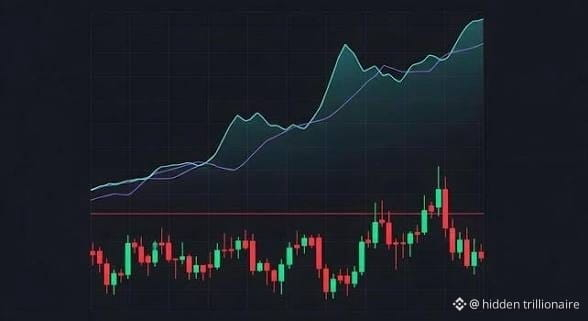

🚨 $BSV SKYROCKETS ON QUANTUMBRIDGE LAUNCH – 6.2% POP! 💥
📊 QuantumBridge’s sub‑second finality and 10× fee compression rewrite the scaling playbook, turning the BSV ledger into a high‑velocity conduit for institutional order flow. 🦈 Smart‑money clusters are already gravitating toward the freshly minted Layer‑2, seeking low‑cost liquidity sweeps that were impossible before.
📈 The 6.2% surge validates the hypothesis: traders are testing the new network en masse, inflating volume and reinforcing the demand block around current levels. ⚡ Expect the order‑block to act as a springboard for further upside as the protocol cements its role in mass‑adoption pipelines. 💬 How are you allocating capital to capture the next liquidity wave? 👇
⚠️ Not financial advice. Always manage your risk. 🛡️
🏷️ #BSV #Layer2 #QuantumBridge #Crypto
🚀 🦈
📊 QuantumBridge’s sub‑second finality and 10× fee compression rewrite the scaling playbook, turning the BSV ledger into a high‑velocity conduit for institutional order flow. 🦈 Smart‑money clusters are already gravitating toward the freshly minted Layer‑2, seeking low‑cost liquidity sweeps that were impossible before.
📈 The 6.2% surge validates the hypothesis: traders are testing the new network en masse, inflating volume and reinforcing the demand block around current levels. ⚡ Expect the order‑block to act as a springboard for further upside as the protocol cements its role in mass‑adoption pipelines. 💬 How are you allocating capital to capture the next liquidity wave? 👇
⚠️ Not financial advice. Always manage your risk. 🛡️
🏷️ #BSV #Layer2 #QuantumBridge #Crypto
🚀 🦈
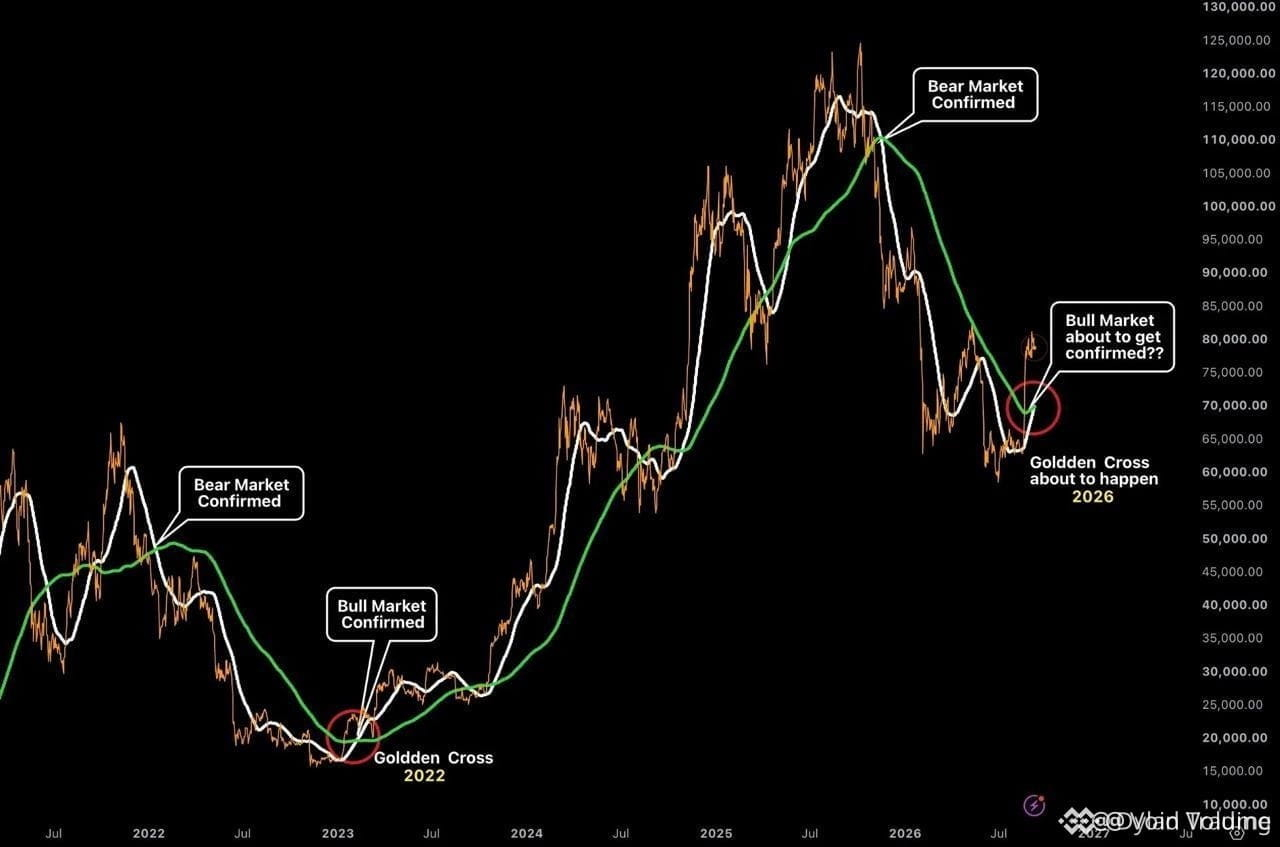

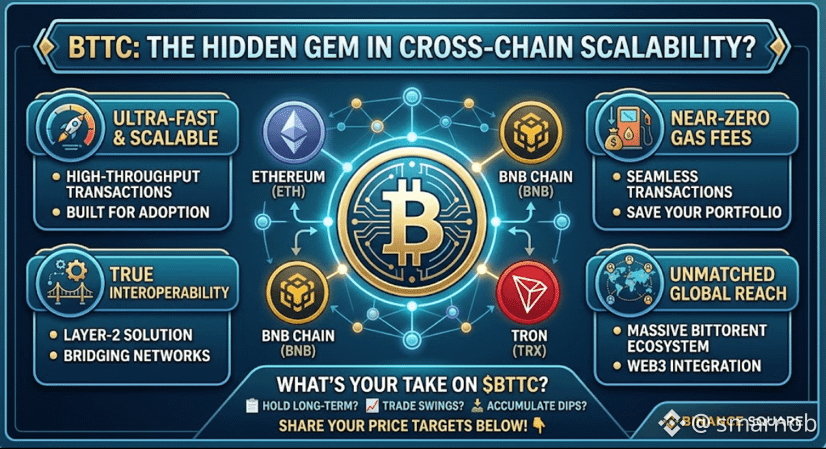
$BTTC 🚀 BTTC (BitTorrent Chain) – The Hidden Gem in Cross-Chain Scalability? 🌐
While the market constantly shifts focus between hype cycles, BTTC (BitTorrent Chain) continues quietly building the foundation for seamless blockchain interoperability.
Here is why $BTTC remains a project to watch closely in the Web3 space:
⚡ Ultra-Fast & Scalable: Designed to handle high-throughput transactions effortlessly, making it built for real-world adoption.
⛽ Near-Zero Gas Fees: Enables seamless transactions without burning a hole through your portfolio.
🌉 True Cross-Chain Interoperability: Operates as a Layer-2 solution bridging Ethereum (ETH), BNB Chain (BNB), and TRON (TRX).
👥 Unmatched Global Reach: Leverages the massive infrastructure and user base of the BitTorrent ecosystem to drive Web3 integration.
As decentralized finance and multi-chain ecosystems continue to grow, cross-chain infrastructure like BTTC plays a pivotal role in keeping gas fees low and speed high.
❓ What's your take on $BTTC ?
Are you holding for the long term, trading the swings, or accumulating on dips? Share your price targets below! 👇
#BTTC #BitTorrent #crypto #BinanceSquare #Layer2
While the market constantly shifts focus between hype cycles, BTTC (BitTorrent Chain) continues quietly building the foundation for seamless blockchain interoperability.
Here is why $BTTC remains a project to watch closely in the Web3 space:
⚡ Ultra-Fast & Scalable: Designed to handle high-throughput transactions effortlessly, making it built for real-world adoption.
⛽ Near-Zero Gas Fees: Enables seamless transactions without burning a hole through your portfolio.
🌉 True Cross-Chain Interoperability: Operates as a Layer-2 solution bridging Ethereum (ETH), BNB Chain (BNB), and TRON (TRX).
👥 Unmatched Global Reach: Leverages the massive infrastructure and user base of the BitTorrent ecosystem to drive Web3 integration.
As decentralized finance and multi-chain ecosystems continue to grow, cross-chain infrastructure like BTTC plays a pivotal role in keeping gas fees low and speed high.
❓ What's your take on $BTTC ?
Are you holding for the long term, trading the swings, or accumulating on dips? Share your price targets below! 👇
#BTTC #BitTorrent #crypto #BinanceSquare #Layer2

Congratulations
From smarnob
Fully Claimed

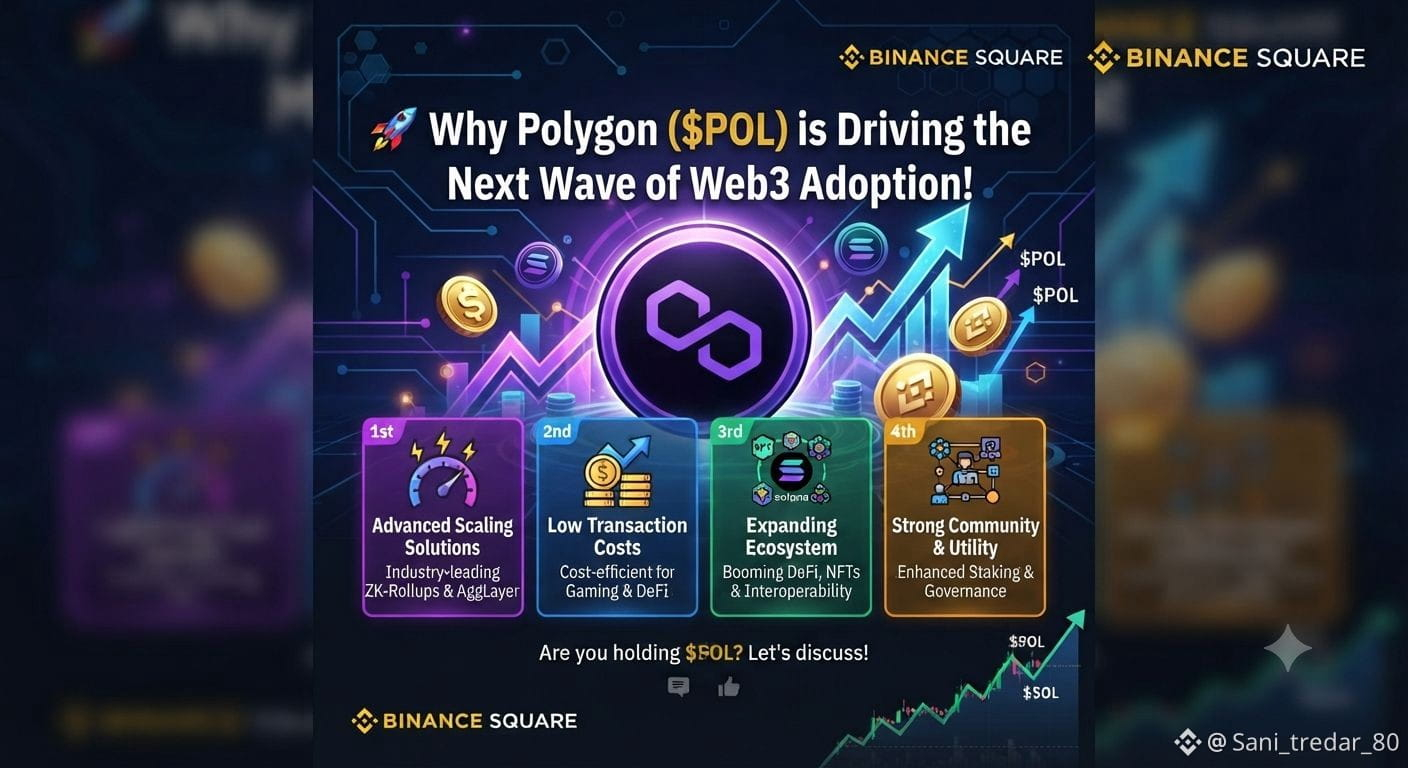
$POL 🚀 Why Polygon ($POL ) is Driving the Next Wave of Web3 Adoption!
The blockchain landscape is constantly shifting, and Polygon’s evolution with
continues to prove why it is a powerhouse for scaling and interoperability. Here is a quick breakdown of what is driving the current interest:
Advanced Scaling Solutions: $POL powers a robust ecosystem of zero-knowledge (ZK) rollups, ensuring high-speed and efficient scaling for Ethereum.
Low Transaction Costs: Cost-efficiency remains a massive advantage, enabling seamless micro-transactions, gaming, and DeFi activities for global users.
Expanding Ecosystem: From major enterprise partnerships to a booming network of decentralized apps and multi-chain solutions, network activity around $POL is continuously growing.
Strong Community & Utility: Enhanced staking mechanics and governance features are empowering holders and securing the network's future.
Are you holding in your portfolio for the long term, or are you actively trading the network's growth? Let’s discuss your strategy in the comments below! 👇
#Polygon #POL #CryptoTrading #BinanceSquare #Web3 #Layer2
The blockchain landscape is constantly shifting, and Polygon’s evolution with
continues to prove why it is a powerhouse for scaling and interoperability. Here is a quick breakdown of what is driving the current interest:
Advanced Scaling Solutions: $POL powers a robust ecosystem of zero-knowledge (ZK) rollups, ensuring high-speed and efficient scaling for Ethereum.
Low Transaction Costs: Cost-efficiency remains a massive advantage, enabling seamless micro-transactions, gaming, and DeFi activities for global users.
Expanding Ecosystem: From major enterprise partnerships to a booming network of decentralized apps and multi-chain solutions, network activity around $POL is continuously growing.
Strong Community & Utility: Enhanced staking mechanics and governance features are empowering holders and securing the network's future.
Are you holding in your portfolio for the long term, or are you actively trading the network's growth? Let’s discuss your strategy in the comments below! 👇
#Polygon #POL #CryptoTrading #BinanceSquare #Web3 #Layer2

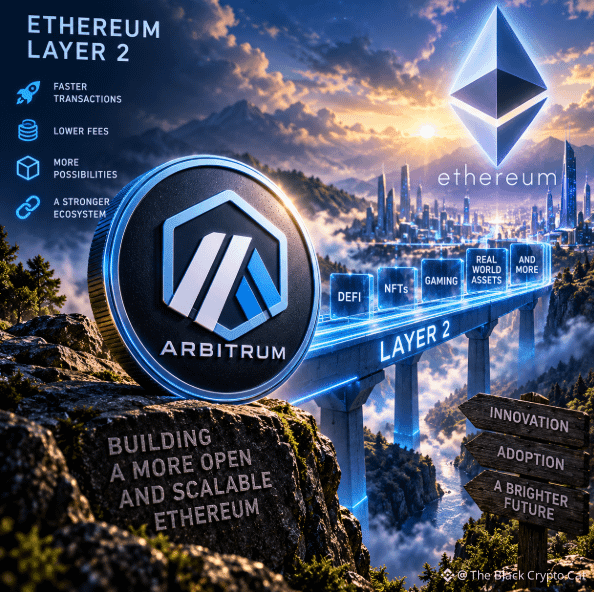
🔥 IS $ARB PUTTING LAYER 2s BACK ON THE RADAR?
ARB's rally is doing more than moving price — it's bringing fresh attention back to the Ethereum Layer 2 narrative.
After months of weak sentiment, capital and attention are starting to return as real activity across the Arbitrum ecosystem grows.
The opportunity I'm watching isn't just $ARB current rally.
It's whether Layer 2s become a major market narrative again.
👀 Is this just an $ARB
move, or the beginning of a broader L2 comeback?
#ARB #Arbitrum #Layer2
ARB's rally is doing more than moving price — it's bringing fresh attention back to the Ethereum Layer 2 narrative.
After months of weak sentiment, capital and attention are starting to return as real activity across the Arbitrum ecosystem grows.
The opportunity I'm watching isn't just $ARB current rally.
It's whether Layer 2s become a major market narrative again.
👀 Is this just an $ARB
move, or the beginning of a broader L2 comeback?
#ARB #Arbitrum #Layer2
The Black Crypto Cat
·
--
📊 $ARB BREAKS OUT WITH MASSIVE VOLUME
ARB has finally broken above a resistance area that had been holding price down, and the move is being backed by a sharp increase in volume.
Momentum is clearly bullish, but there’s one thing to watch:
⚠️ Daily RSI is already around 84.
The breakout is strong, but ARB is becoming increasingly extended after such a fast move.
👀 Can ARB keep pushing higher, or do we see a retest first?
#ARB #Arbitrum
ARB has finally broken above a resistance area that had been holding price down, and the move is being backed by a sharp increase in volume.
Momentum is clearly bullish, but there’s one thing to watch:
⚠️ Daily RSI is already around 84.
The breakout is strong, but ARB is becoming increasingly extended after such a fast move.
👀 Can ARB keep pushing higher, or do we see a retest first?
#ARB #Arbitrum
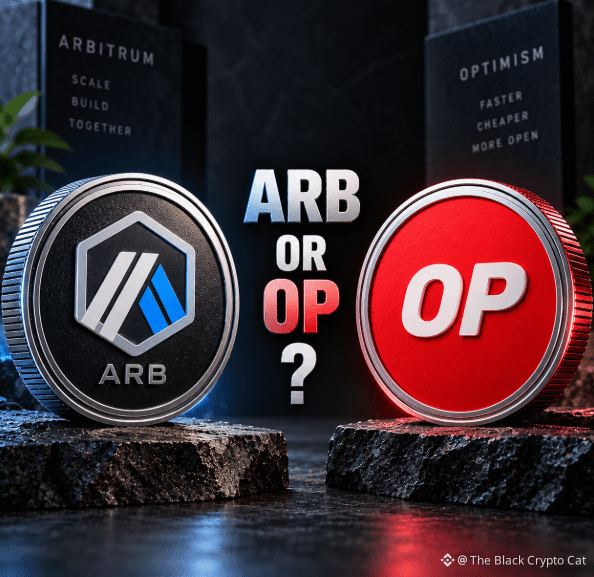
IF LAYER 2s ARE MAKING A COMEBACK, WHICH ONE WOULD YOU BET ON?
$ARB is back in the spotlight, but Arbitrum isn't alone in the Ethereum scaling race.
If the Layer 2 narrative really heats up again, choosing the strongest ecosystem could matter more than chasing the first pump.
If you had to choose ONE today:
🔵 $ARB — Arbitrum
🔴 $OP — Optimism
⚪ Neither
Which one and why? 👇
#ARB #ARBİTRUM #Layer2
$ARB is back in the spotlight, but Arbitrum isn't alone in the Ethereum scaling race.
If the Layer 2 narrative really heats up again, choosing the strongest ecosystem could matter more than chasing the first pump.
If you had to choose ONE today:
🔵 $ARB — Arbitrum
🔴 $OP — Optimism
⚪ Neither
Which one and why? 👇
#ARB #ARBİTRUM #Layer2
The Black Crypto Cat
·
--
🔥 IS $ARB PUTTING LAYER 2s BACK ON THE RADAR?
ARB's rally is doing more than moving price — it's bringing fresh attention back to the Ethereum Layer 2 narrative.
After months of weak sentiment, capital and attention are starting to return as real activity across the Arbitrum ecosystem grows.
The opportunity I'm watching isn't just $ARB current rally.
It's whether Layer 2s become a major market narrative again.
👀 Is this just an $ARB
move, or the beginning of a broader L2 comeback?
#ARB #Arbitrum #Layer2
ARB's rally is doing more than moving price — it's bringing fresh attention back to the Ethereum Layer 2 narrative.
After months of weak sentiment, capital and attention are starting to return as real activity across the Arbitrum ecosystem grows.
The opportunity I'm watching isn't just $ARB current rally.
It's whether Layer 2s become a major market narrative again.
👀 Is this just an $ARB
move, or the beginning of a broader L2 comeback?
#ARB #Arbitrum #Layer2
Seeing $ARB Arbitrum trending high on CoinGecko while pushing past +6% is always fun to watch.
It makes you step back and ask the hard questions that retail usually ignores.
How much of this pump is genuine ecosystem demand, versus standard speculative frenzy?
When platform fees on layer-2 solutions route cleanly back to corporate treasuries rather than trickling down to native token holders, where do you draw the line?
There is a specific price point where tokenomics stop mattering to the crowd because the momentum is just too loud to ignore.
Where would you personally draw that line?
Drop your thoughts below, because the token utility debate is heating up fast.
#ARB #Arbitrum #Layer2
It makes you step back and ask the hard questions that retail usually ignores.
How much of this pump is genuine ecosystem demand, versus standard speculative frenzy?
When platform fees on layer-2 solutions route cleanly back to corporate treasuries rather than trickling down to native token holders, where do you draw the line?
There is a specific price point where tokenomics stop mattering to the crowd because the momentum is just too loud to ignore.
Where would you personally draw that line?
Drop your thoughts below, because the token utility debate is heating up fast.
#ARB #Arbitrum #Layer2
🚨 $METIS PRINTS MASSIVE 80% EXPANSION AS CAPITAL ROTATES TO L2S! 💥
Target: 4.5 🚀
An aggressive 80% daily candle has completely restructured the local chart, signaling a high-conviction order flow shift. Market participants are actively positioning as capital flow visibly rotates toward lower-cap Layer-2 infrastructure. ⚡
📊 Volume metrics confirm significant institutional interest sweeping upper range inefficiencies toward the 4.5 resistance objective. 💡 As long as momentum holds above structural support, this momentum push remains firmly intact. 💬 Are you riding this Layer-2 momentum cycle, or waiting for a structural pull-back before looking for exposure? 👇
⚠️ Not financial advice. Always manage your risk. 🛡️
🏷️ #METIS #Layer2 #Breakout #Crypto
🔥 ⚡
Target: 4.5 🚀
An aggressive 80% daily candle has completely restructured the local chart, signaling a high-conviction order flow shift. Market participants are actively positioning as capital flow visibly rotates toward lower-cap Layer-2 infrastructure. ⚡
📊 Volume metrics confirm significant institutional interest sweeping upper range inefficiencies toward the 4.5 resistance objective. 💡 As long as momentum holds above structural support, this momentum push remains firmly intact. 💬 Are you riding this Layer-2 momentum cycle, or waiting for a structural pull-back before looking for exposure? 👇
⚠️ Not financial advice. Always manage your risk. 🛡️
🏷️ #METIS #Layer2 #Breakout #Crypto
🔥 ⚡
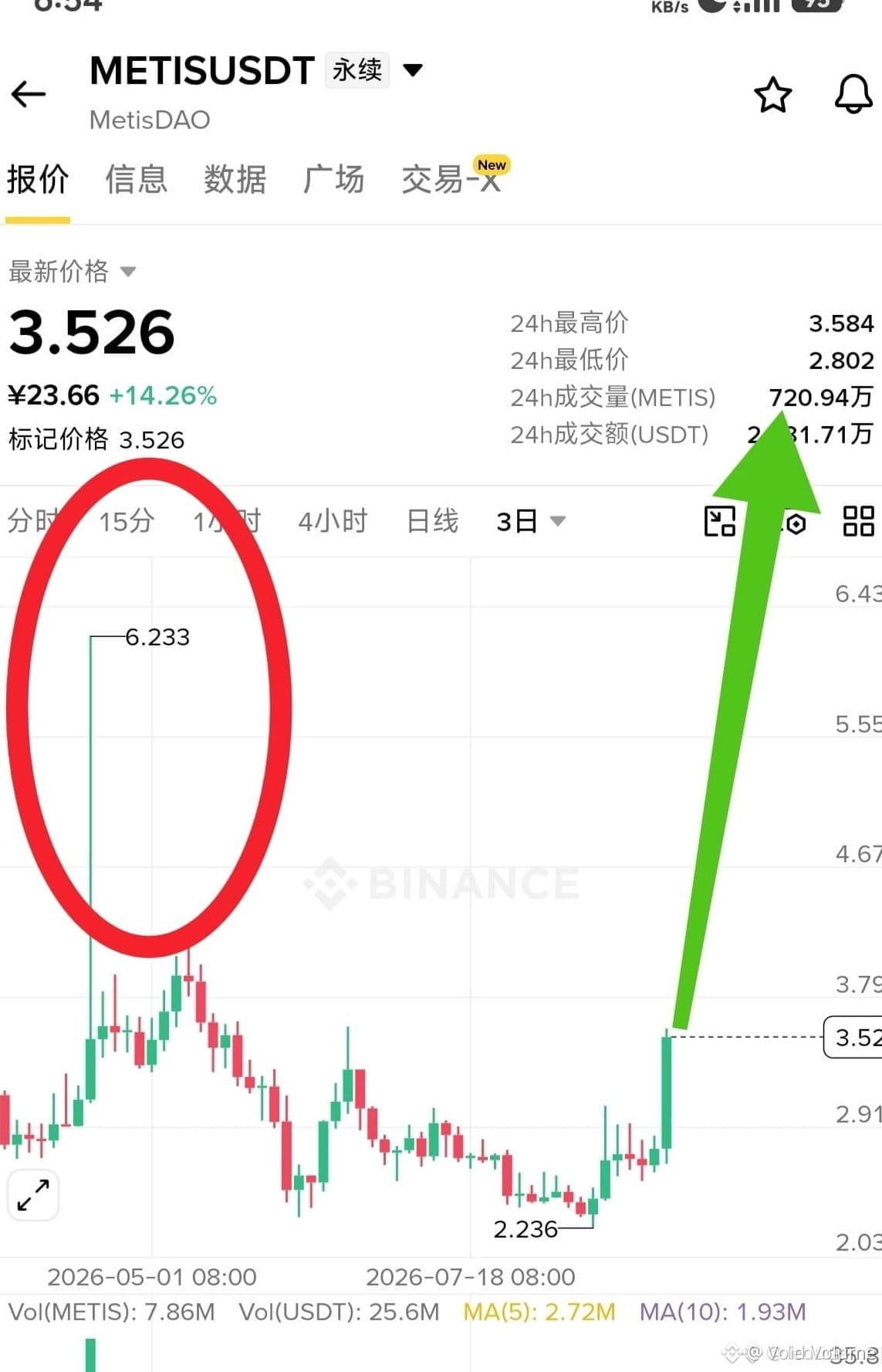

EXPLOSIVE L2 ROTATION IGNITES $METIS AFTER MASSIVE 80% SINGLE-DAY SURGE! ⚡ 🚀
Target: 4.5 🚀
Capital is aggressively rotating back into Layer-2 protocols, and $METIS just signaled the charge with a ferocious 80% single-day expansion candle. 📊 Sitting at a lean $20M market cap, this move showcases classic early-stage momentum as buyers absorb thin order books. ⚡
When structural liquidity shifts this fast, price discovery mode often extends far beyond initial impulse waves. 💡 💬 Are you catching this L2 momentum wave early or waiting for the retest? 👇
⚠️ Not financial advice. Always manage your risk. 🛡️
🏷️ #METIS #Layer2 #Crypto #Breakout
⚡ 💥
Target: 4.5 🚀
Capital is aggressively rotating back into Layer-2 protocols, and $METIS just signaled the charge with a ferocious 80% single-day expansion candle. 📊 Sitting at a lean $20M market cap, this move showcases classic early-stage momentum as buyers absorb thin order books. ⚡
When structural liquidity shifts this fast, price discovery mode often extends far beyond initial impulse waves. 💡 💬 Are you catching this L2 momentum wave early or waiting for the retest? 👇
⚠️ Not financial advice. Always manage your risk. 🛡️
🏷️ #METIS #Layer2 #Crypto #Breakout
⚡ 💥

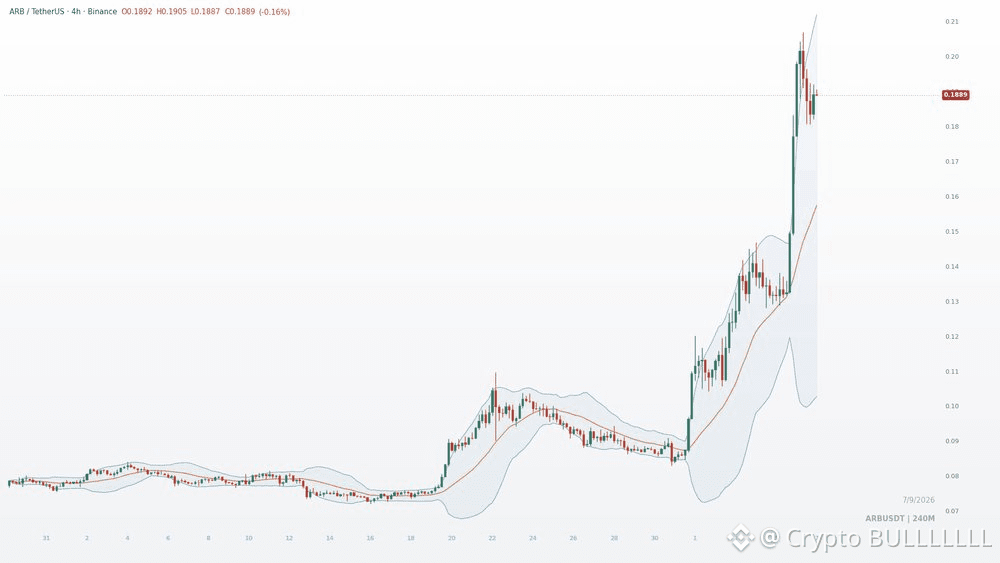
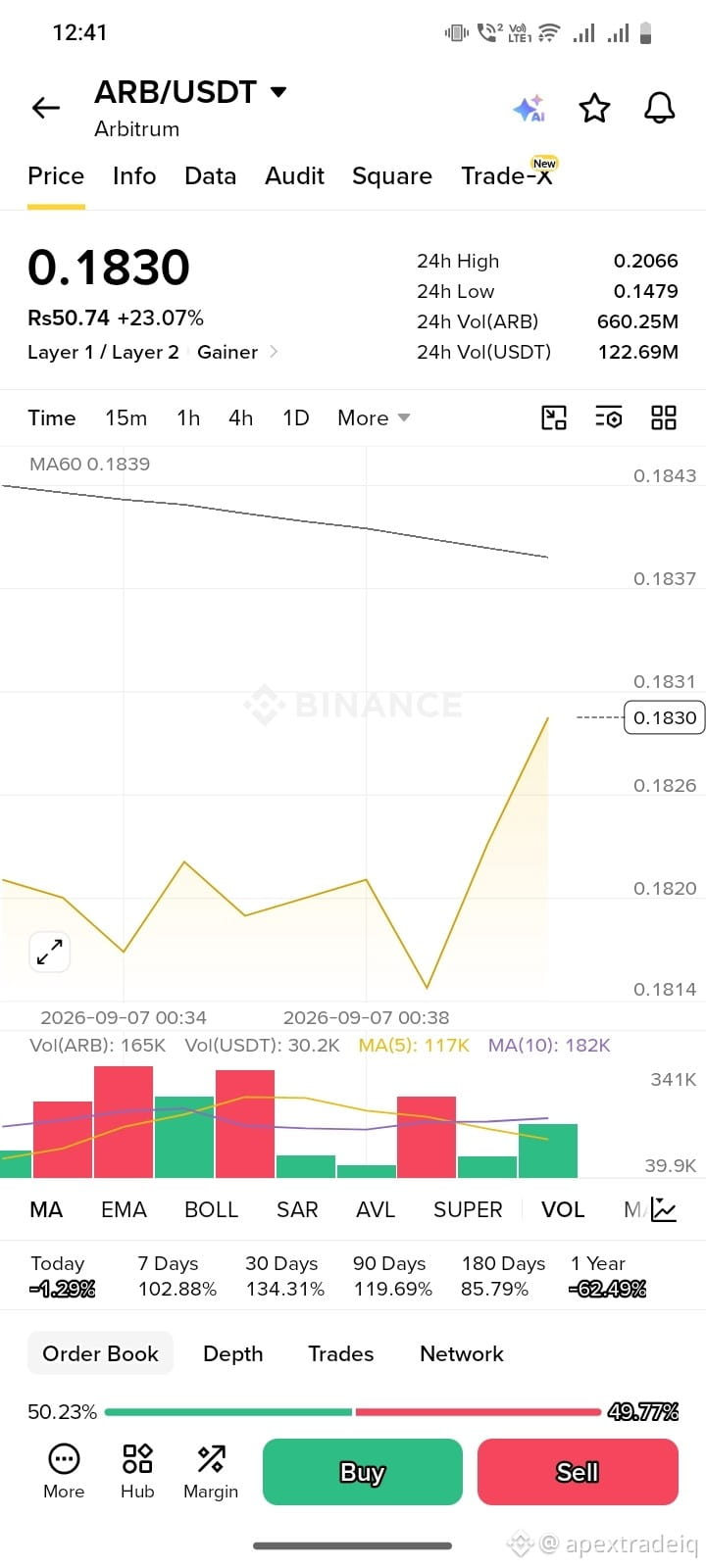
🚀 $ARB /USDT on the move! Arbitrum ($ARB ) is up +23.07%, currently trading around $0.1830 after reaching a 24h high of $0.2066. Heavy trading activity is backing this push, with 24h volume surpassing $122.69M USDT and gains over +102% across the last 7 days.
Will $ARB reclaim $0.20 and push higher, or are we due for a quick retest? Let us know your price target below! 👇
#BinanceSquare #Arbitrum #ARB #Layer2 #crypto #DYOR
Will $ARB reclaim $0.20 and push higher, or are we due for a quick retest? Let us know your price target below! 👇
#BinanceSquare #Arbitrum #ARB #Layer2 #crypto #DYOR

Verified
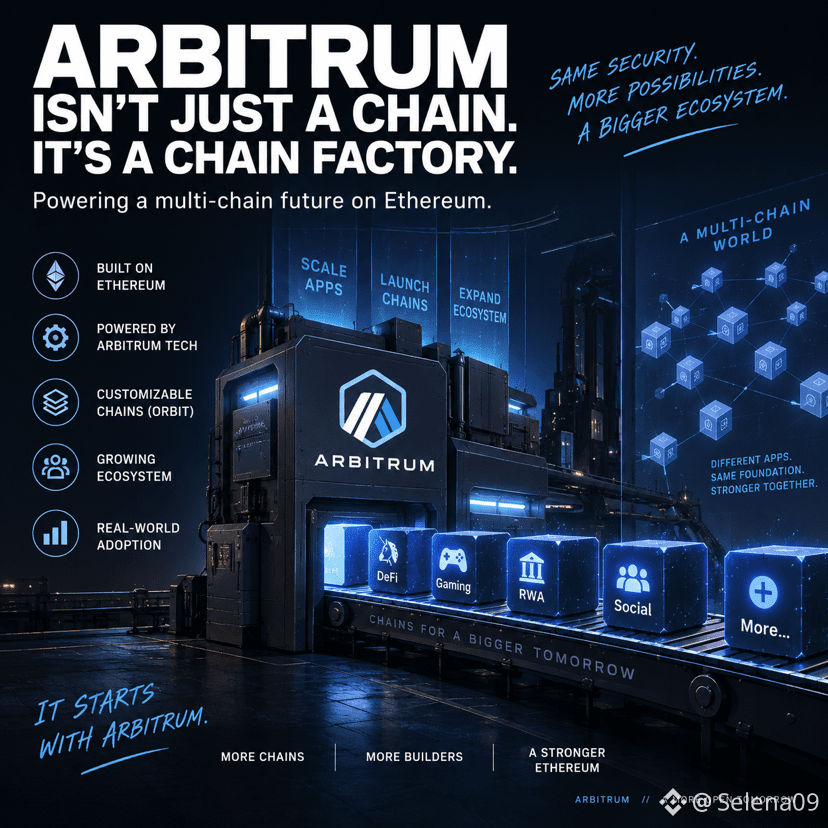
🚨 THE MOST INTERESTING THING ABOUT $ARB MAY NOT BE ARBITRUM ONE.
Arbitrum’s bigger bet is Orbit: instead of forcing every project onto the same chain, it lets teams launch their own customizable chains while using Arbitrum’s technology underneath.
That changes the question for me. The real metric isn’t only “How many people use Arbitrum?” but “How many blockchains end up being built with Arbitrum?”
👀 Sometimes the infrastructure underneath the apps is the bigger story.
#ARB #Arbitrum #Ethereum #Layer2 #CryptoNews $RAYSOL $BULLA
Arbitrum’s bigger bet is Orbit: instead of forcing every project onto the same chain, it lets teams launch their own customizable chains while using Arbitrum’s technology underneath.
That changes the question for me. The real metric isn’t only “How many people use Arbitrum?” but “How many blockchains end up being built with Arbitrum?”
👀 Sometimes the infrastructure underneath the apps is the bigger story.
#ARB #Arbitrum #Ethereum #Layer2 #CryptoNews $RAYSOL $BULLA


ARB just ripped +40% in 24 hours. This isn't a pump — it's a re-rating.
Volume is nearly 2x normal at $125M. Price is holding above SMA7 on the 4H ($0.185) with RSI at 73.5 — strong momentum with room to run. Daily RSI at 84 confirms this is a major move, not noise.
📊 Trade Plan (LONG):
🎯 Entry: $0.1802 – $0.1920
🛑 Stop Loss: $0.1627 (below 4H SMA25)
✅ TP1: $0.1935 | TP2: $0.2010 | TP3: $0.2084
L2 narratives are back and ARB is the biggest beneficiary. When volume confirms price, you pay attention.
Is ARB the next $0.25 L2 play, or is this the local top? 🤔
#ARB #Layer2 #DYOR
⚠️ Not financial advice. Always do your own research and manage risk carefully.
Volume is nearly 2x normal at $125M. Price is holding above SMA7 on the 4H ($0.185) with RSI at 73.5 — strong momentum with room to run. Daily RSI at 84 confirms this is a major move, not noise.
📊 Trade Plan (LONG):
🎯 Entry: $0.1802 – $0.1920
🛑 Stop Loss: $0.1627 (below 4H SMA25)
✅ TP1: $0.1935 | TP2: $0.2010 | TP3: $0.2084
L2 narratives are back and ARB is the biggest beneficiary. When volume confirms price, you pay attention.
Is ARB the next $0.25 L2 play, or is this the local top? 🤔
#ARB #Layer2 #DYOR
⚠️ Not financial advice. Always do your own research and manage risk carefully.

$ARB just posted a massive +44.94% gain today, reaching $0.1932 with $117.8M in 24h volume — one of the strongest performances across the market. This Layer-2 token is now trading at levels not seen in weeks, combining both sharp price action and substantial trading activity. The question on every trader's mind: is this the start of a sustained L2 rally, or are we looking at a volume-driven spike that could retrace?
Will Arbitrum hold above $0.19 for the next 48 hours after today's +45% surge?
1. Yes, momentum continues higher
2. No, pullback to $0.17 range likely
3. Consolidates sideways at current levels
Drop your vote in the comments and join the discussion in the Cyclo Telegram community! 📊
#Arbitrum #Layer2 #CryptoPolls #AltcoinRally
Will Arbitrum hold above $0.19 for the next 48 hours after today's +45% surge?
1. Yes, momentum continues higher
2. No, pullback to $0.17 range likely
3. Consolidates sideways at current levels
Drop your vote in the comments and join the discussion in the Cyclo Telegram community! 📊
#Arbitrum #Layer2 #CryptoPolls #AltcoinRally


Arbitrum ($ARB )
🚀 Arbitrum Revenue Skyrockets Onchain
$ARB rallied 120% as Robinhood Chain adoption sent network fees and protocol revenue soaring. Analysts warn of short-term correction risks following rapid vertical price action across Layer 2 ecosystems.
$ARB
#Arbitrum #Layer2 #CryptoNews
🚀 Arbitrum Revenue Skyrockets Onchain
$ARB rallied 120% as Robinhood Chain adoption sent network fees and protocol revenue soaring. Analysts warn of short-term correction risks following rapid vertical price action across Layer 2 ecosystems.
$ARB
#Arbitrum #Layer2 #CryptoNews

Everyone treats L2 as ETH’s life raft. Funding rate is up by +0.0059%, and all the net longs are betting on the idea that “V God will wake up from a nap and L2 will send value back to the mainnet.” But reality is cold: just now, the four-hour K-line for $ETH dropped from $2,511 to $2,502. Bulls and bears are repeatedly tugging at the $2,500 level. This isn’t a breakout signal at all—it’s an alarm for stagnation at high levels.😏
**First anti-consensus: The more prosperous L2 becomes, the more ETH looks like a “cash-forcing factory.”**
Have you calculated the books? $ETH is priced at about $2,502 right now, propped up by mainnet Gas fees and the burn mechanism. But when all transactions migrate to L2s like Arbitrum and Optimism, what’s left on the mainnet? Only a bunch of staking nodes idling. For every successful trade on L2, the mainnet burns a little less ETH. What people call “value回流” (value inflow) is just air. Look at the 24h trading volume of 259,587 ETH—how much of that is truly driven by real mainnet demand? I bet the majority is just L2 tolls.💸
**Second painful truth: The L2s are using the emperor to command the princes.**
Now every L2 issues its own token and tells its own ecosystem story. Do they need ETH? They do, but only a little—just as gas collateral. More liquidity is being pulled into L2 DEXs and lending protocols. The holder of $ETH thinks they’re holding the foundation of the entire crypto empire. But in reality, the L2s have already built an air castle on top of it, while the foundation bricks are being pulled out one by one. With a 24h range from the low of $2,456 to the high of $2,523—how much of that $67 swing is just L2 arbitrage bots moving blocks?🤖
**Third strike: Don’t use “orthodoxy” as a shield.**
Someone always says, “L2 is scaling for ETH, not a competitor.” Too naive. When L2 fees get as low as $0.01, and when L2 cross-chain bridges are even safer than the mainnet, why would users come back? The +1.72% rise for $ETH right now looks more like the inertia of a rebound from being oversold—not a fundamental reversal. And if L2 Summer really explodes next, I predict $ETH will get drained by its “sons” the same way the old $BTC fork coins did back then.🩸
I’m not saying ETH will go to zero. I’m saying this narrative logic has a fatal crack in it. Everyone is singing bullish about L2 empowering ETH, yet I see a one-way road of “mainnet hollowing out.” Funding rates may be slightly bullish, but that’s just the fat accumulated by leverage. Once the L2 token market cools down, this big ship—$ETH —will be the first to feel the bumps.
One last question: if $ETH is really sidelined by the L2s, will you keep stubbornly holding the mainnet coin, or will you decisively rotate into a true L2 leader? Drop your positions in the comments—we’ll bet on who wins or loses.👇
#以太坊 #Layer2 #加密市场
**First anti-consensus: The more prosperous L2 becomes, the more ETH looks like a “cash-forcing factory.”**
Have you calculated the books? $ETH is priced at about $2,502 right now, propped up by mainnet Gas fees and the burn mechanism. But when all transactions migrate to L2s like Arbitrum and Optimism, what’s left on the mainnet? Only a bunch of staking nodes idling. For every successful trade on L2, the mainnet burns a little less ETH. What people call “value回流” (value inflow) is just air. Look at the 24h trading volume of 259,587 ETH—how much of that is truly driven by real mainnet demand? I bet the majority is just L2 tolls.💸
**Second painful truth: The L2s are using the emperor to command the princes.**
Now every L2 issues its own token and tells its own ecosystem story. Do they need ETH? They do, but only a little—just as gas collateral. More liquidity is being pulled into L2 DEXs and lending protocols. The holder of $ETH thinks they’re holding the foundation of the entire crypto empire. But in reality, the L2s have already built an air castle on top of it, while the foundation bricks are being pulled out one by one. With a 24h range from the low of $2,456 to the high of $2,523—how much of that $67 swing is just L2 arbitrage bots moving blocks?🤖
**Third strike: Don’t use “orthodoxy” as a shield.**
Someone always says, “L2 is scaling for ETH, not a competitor.” Too naive. When L2 fees get as low as $0.01, and when L2 cross-chain bridges are even safer than the mainnet, why would users come back? The +1.72% rise for $ETH right now looks more like the inertia of a rebound from being oversold—not a fundamental reversal. And if L2 Summer really explodes next, I predict $ETH will get drained by its “sons” the same way the old $BTC fork coins did back then.🩸
I’m not saying ETH will go to zero. I’m saying this narrative logic has a fatal crack in it. Everyone is singing bullish about L2 empowering ETH, yet I see a one-way road of “mainnet hollowing out.” Funding rates may be slightly bullish, but that’s just the fat accumulated by leverage. Once the L2 token market cools down, this big ship—$ETH —will be the first to feel the bumps.
One last question: if $ETH is really sidelined by the L2s, will you keep stubbornly holding the mainnet coin, or will you decisively rotate into a true L2 leader? Drop your positions in the comments—we’ll bet on who wins or loses.👇
#以太坊 #Layer2 #加密市场
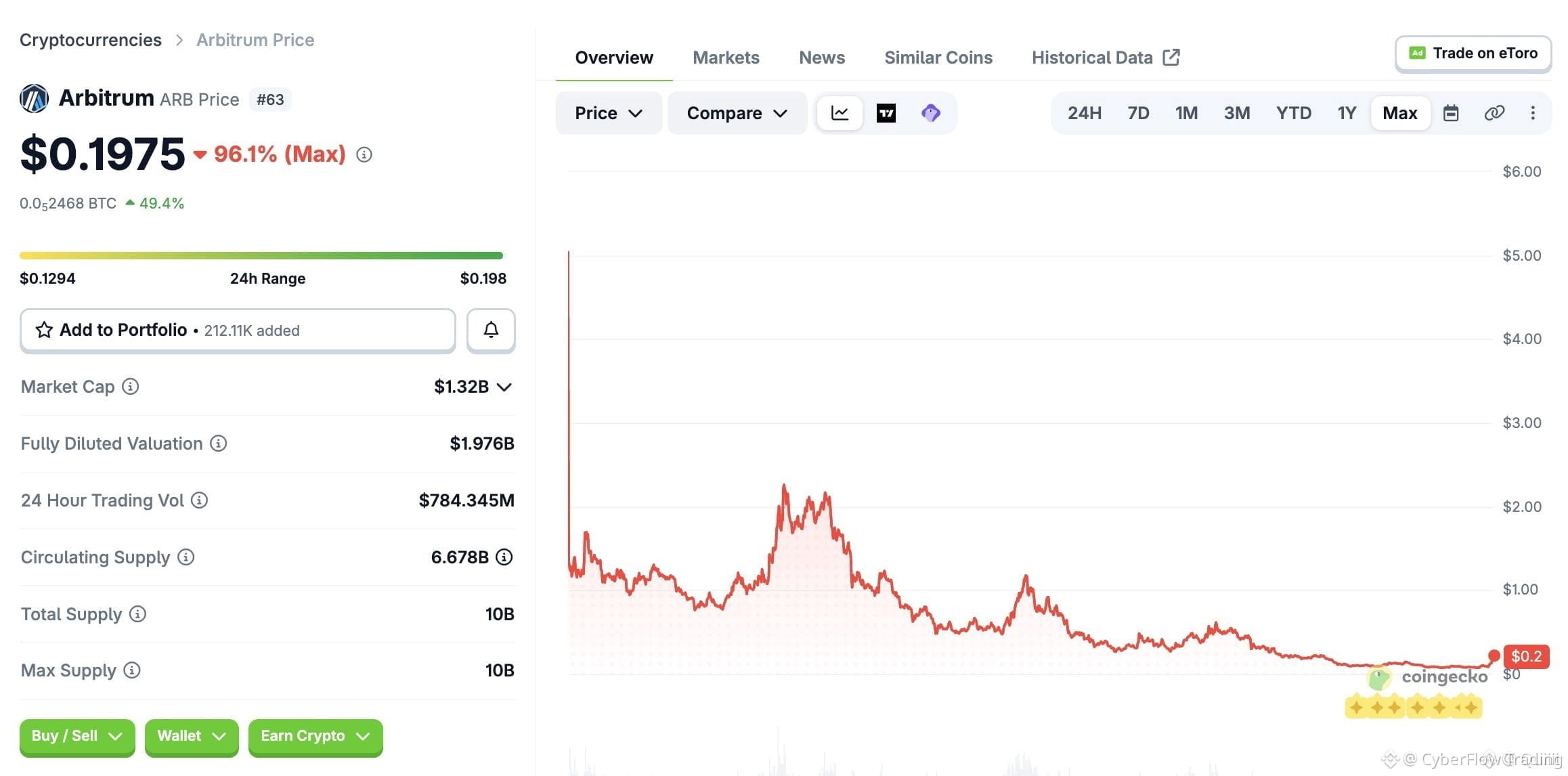
ARB just pulled a +42% move in a single day with 4x normal volume — this is the kind of candle that makes you double-check the ticker 😳
Arbitrum is trading at $0.1936 with $110.7M volume. RSI hit 80 on 4H and 85 on daily. MACD is positive and expanding. Price is above all major SMAs including SMA99 daily at $0.088 — the entire structure is bullish.
🔍 Why This Trade?
A 42% surge on surging volume (4.15x) with L/S ratio at 1.08 — longs are slightly dominant but not crowded. The move broke through multiple resistance levels in one shot. When Layer 2 narratives catch fire like this, they tend to run for days.
📋 Trade Plan (LONG):
• Entry: $0.188 – $0.199
• SL: $0.171 (below the breakout zone, ~12% risk)
• TP1: $0.201 | TP2: $0.209 | TP3: $0.217
• R:R = 0.3:1 on TP1, but momentum trades reward patience
⚡ Overbought doesn't mean sell — it means the trend is strong. Trail, don't fade.
ARB at $0.19 or ARB at $0.25 next week — which side are you on? 🔥
#ARB #Layer2 #DYOR
⚠️ Disclaimer: Not financial advice. Crypto is volatile. Always do your own research and manage risk responsibly.
Arbitrum is trading at $0.1936 with $110.7M volume. RSI hit 80 on 4H and 85 on daily. MACD is positive and expanding. Price is above all major SMAs including SMA99 daily at $0.088 — the entire structure is bullish.
🔍 Why This Trade?
A 42% surge on surging volume (4.15x) with L/S ratio at 1.08 — longs are slightly dominant but not crowded. The move broke through multiple resistance levels in one shot. When Layer 2 narratives catch fire like this, they tend to run for days.
📋 Trade Plan (LONG):
• Entry: $0.188 – $0.199
• SL: $0.171 (below the breakout zone, ~12% risk)
• TP1: $0.201 | TP2: $0.209 | TP3: $0.217
• R:R = 0.3:1 on TP1, but momentum trades reward patience
⚡ Overbought doesn't mean sell — it means the trend is strong. Trail, don't fade.
ARB at $0.19 or ARB at $0.25 next week — which side are you on? 🔥
#ARB #Layer2 #DYOR
⚠️ Disclaimer: Not financial advice. Crypto is volatile. Always do your own research and manage risk responsibly.

ROBINHOOD CATALYST BREATHES NEW LIFE INTO $ARB AS LAYER 2 WAR HEATS UP 💥 🚀
Arbitrum just caught a massive structural tailwind after Robinhood selected its tech stack, mirroring the exact playbook Optimism executed during the early Base expansion. 🔍 This fresh institutional adoption gives $ARB the fundamental fuel it desperately needed to reclaim market share in the Layer 2 arena.
Smart money is already sniffing out the narrative shift as order flow begins stabilizing near major demand blocks. 📊 If history repeats itself, this tech integration could mark the turning point where oversold momentum pivots into a sustained trend reversal.
💬 Will this traditional finance partnership spark a massive multi-week rally for $ARB , or is the seller overhead still too heavy to flip? 👇
⚠️ Not financial advice. Always manage your risk. 🛡️
🏷️ #ARB #Arbitrum #Layer2 #Crypto
⚡ 🎯
Arbitrum just caught a massive structural tailwind after Robinhood selected its tech stack, mirroring the exact playbook Optimism executed during the early Base expansion. 🔍 This fresh institutional adoption gives $ARB the fundamental fuel it desperately needed to reclaim market share in the Layer 2 arena.
Smart money is already sniffing out the narrative shift as order flow begins stabilizing near major demand blocks. 📊 If history repeats itself, this tech integration could mark the turning point where oversold momentum pivots into a sustained trend reversal.
💬 Will this traditional finance partnership spark a massive multi-week rally for $ARB , or is the seller overhead still too heavy to flip? 👇
⚠️ Not financial advice. Always manage your risk. 🛡️
🏷️ #ARB #Arbitrum #Layer2 #Crypto
⚡ 🎯
💥 +48% in a single day with 4x normal volume — ARB just became the most talked-about L2 token.
📊 Current Picture:
Price almost doubled from SMA25 ($0.102) to $0.194 — extreme deviation. RSI at 83.3 (4h) and 85 (daily) — deeply overbought on both timeframes. Volume ratio at 4.06x — this is a momentum event.
🧠 Why This Trade?
Pure momentum play. The 48% pump with 4x volume signals a structural shift — possibly a major partnership or unlock catalyst. Trade the momentum, but respect the overbought warning.
📋 Trade Plan (LONG):
• Entry: $0.188 – $0.199 (tight consolidation zone)
• Stop Loss: $0.171 (below SMA7 support, ~8.8% risk)
• TP1: $0.201 | TP2: $0.209 | TP3: $0.217
• Quick profits on momentum continuation; tight SL because overbought reversals can be violent
💬 Did you catch this ARB pump, or are you waiting for the inevitable 30% correction? 🎢
#ARB #Layer2 #DYOR
⚠️ Not financial advice. Always DYOR and manage your risk.
📊 Current Picture:
Price almost doubled from SMA25 ($0.102) to $0.194 — extreme deviation. RSI at 83.3 (4h) and 85 (daily) — deeply overbought on both timeframes. Volume ratio at 4.06x — this is a momentum event.
🧠 Why This Trade?
Pure momentum play. The 48% pump with 4x volume signals a structural shift — possibly a major partnership or unlock catalyst. Trade the momentum, but respect the overbought warning.
📋 Trade Plan (LONG):
• Entry: $0.188 – $0.199 (tight consolidation zone)
• Stop Loss: $0.171 (below SMA7 support, ~8.8% risk)
• TP1: $0.201 | TP2: $0.209 | TP3: $0.217
• Quick profits on momentum continuation; tight SL because overbought reversals can be violent
💬 Did you catch this ARB pump, or are you waiting for the inevitable 30% correction? 🎢
#ARB #Layer2 #DYOR
⚠️ Not financial advice. Always DYOR and manage your risk.
Log in to explore more content