

#ecosystem
ecosystem
133,051 views
893 Discussing
Hot
Latest

·
--
SOL Market & Protocol Intelligence: The Velocity Era📊 SOL Market & Protocol Intelligence: The Velocity Era
Solana continues to solidify its position as the premier high-throughput blockchain, moving beyond its recovery phase into a period of aggressive utility expansion. Recent data indicates that the ecosystem is successfully transitioning from a retail-driven memecoin hub to a robust infrastructure layer for institutional-grade financial applications.
Key Developments & On-chain Highlights
The most significant catalyst for $SOL lately has been the exponential growth of Firedancer, the independent validator client developed by Jump Crypto. This upgrade is designed to push Solana beyond the one-million transactions-per-second threshold, effectively eliminating network congestion concerns. Furthermore, the expansion of the tokenized asset market on Solana, specifically the integration of major stablecoin issuers and the rise of liquid staking protocols like Jito, has unlocked massive liquidity. On-chain volume consistently competes with Ethereum, driven by superior execution speeds and negligible transaction fees, which remain the primary drivers for active user retention.
Market Impact & Risk Management
From a market perspective, $SOL displays high beta sensitivity to broader sentiment, yet its internal demand remains sticky. The successful migration of major projects from alternative L1s to the Solana ecosystem underscores its developer moat. However, traders must account for inherent network risks. While protocol maturity has increased, the concentration of stake among a select group of large validators remains a technical consideration for long-term decentralization. Risk management should prioritize monitoring epoch transition volatility and the potential impact of future token unlock schedules on supply-side pressure. As the ecosystem evolves, Solana is effectively transforming into a low-latency settlement layer for global finance. Investors should watch the correlation between active addresses and total value locked as the definitive metrics for sustainable growth in the coming quarter.
#BinanceSquare #CryptoNews #ECOSYSTEM #SOL #Solana
SOL Market & Protocol Intelligence: The Velocity Era
📊 SOL Market & Protocol Intelligence: The Velocity Era
Solana continues to solidify its position as the premier high-throughput blockchain, moving beyond its recovery phase into a period of aggressive utility expansion. Recent data indicates that the ecosystem is successfully transitioning from a retail-driven memecoin hub to a robust infrastructure layer for institutional-grade financial applications.
Key Developments & On-chain Highlights
The most significant catalyst for $SOL lately has been the exponential growth of Firedancer, the independent validator client developed by Jump Crypto. This upgrade is designed to push Solana beyond the one-million transactions-per-second threshold, effectively eliminating network congestion concerns. Furthermore, the expansion of the tokenized asset market on Solana, specifically the integration of major stablecoin issuers and the rise of liquid staking protocols like Jito, has unlocked massive liquidity. On-chain volume consistently competes with Ethereum, driven by superior execution speeds and negligible transaction fees, which remain the primary drivers for active user retention.
Market Impact & Risk Management
From a market perspective, $SOL displays high beta sensitivity to broader sentiment, yet its internal demand remains sticky. The successful migration of major projects from alternative L1s to the Solana ecosystem underscores its developer moat. However, traders must account for inherent network risks. While protocol maturity has increased, the concentration of stake among a select group of large validators remains a technical consideration for long-term decentralization. Risk management should prioritize monitoring epoch transition volatility and the potential impact of future token unlock schedules on supply-side pressure. As the ecosystem evolves, Solana is effectively transforming into a low-latency settlement layer for global finance. Investors should watch the correlation between active addresses and total value locked as the definitive metrics for sustainable growth in the coming quarter.
#BinanceSquare #CryptoNews #ECOSYSTEM #SOL #Solana
Solana continues to solidify its position as the premier high-throughput blockchain, moving beyond its recovery phase into a period of aggressive utility expansion. Recent data indicates that the ecosystem is successfully transitioning from a retail-driven memecoin hub to a robust infrastructure layer for institutional-grade financial applications.
Key Developments & On-chain Highlights
The most significant catalyst for $SOL lately has been the exponential growth of Firedancer, the independent validator client developed by Jump Crypto. This upgrade is designed to push Solana beyond the one-million transactions-per-second threshold, effectively eliminating network congestion concerns. Furthermore, the expansion of the tokenized asset market on Solana, specifically the integration of major stablecoin issuers and the rise of liquid staking protocols like Jito, has unlocked massive liquidity. On-chain volume consistently competes with Ethereum, driven by superior execution speeds and negligible transaction fees, which remain the primary drivers for active user retention.
Market Impact & Risk Management
From a market perspective, $SOL displays high beta sensitivity to broader sentiment, yet its internal demand remains sticky. The successful migration of major projects from alternative L1s to the Solana ecosystem underscores its developer moat. However, traders must account for inherent network risks. While protocol maturity has increased, the concentration of stake among a select group of large validators remains a technical consideration for long-term decentralization. Risk management should prioritize monitoring epoch transition volatility and the potential impact of future token unlock schedules on supply-side pressure. As the ecosystem evolves, Solana is effectively transforming into a low-latency settlement layer for global finance. Investors should watch the correlation between active addresses and total value locked as the definitive metrics for sustainable growth in the coming quarter.
#BinanceSquare #CryptoNews #ECOSYSTEM #SOL #Solana
1
46

Ecosystem growth is one of the strongest signals in crypto. When users, developers, apps, and liquidity all expand together, it creates real momentum behind a chain or token. Hype can move price short term, but long-term strength comes from a growing ecosystem.
#digitalmolvi #ecosystem #BinanceSquare
Ecosystem growth is one of the strongest signals in crypto. When users, developers, apps, and liquidity all expand together, it creates real momentum behind a chain or token. Hype can move price short term, but long-term strength comes from a growing ecosystem.
#digitalmolvi #ecosystem #BinanceSquare
#digitalmolvi #ecosystem #BinanceSquare
16

🌱 Solana Ecosystem Expansion: Tokenization, DeFi, and Institutional Partnerships Drive Growth
On July 3, 2026, Solana $SOL at $80.45 (+2.88%) continues to expand its ecosystem. Securitize's choice to launch tokenized stocks on Solana validates its high-throughput design.
The Solana network processed significant volume today with the token, maintaining fast and low-cost transactions even during heightened activity.
With developer activity remaining strong and institutional partnerships growing, Solana is establishing itself as a leading platform for real-world asset tokenization alongside its DeFi ecosystem.
📌 Key Takeaway:
Solana's high throughput and low fees make it an attractive platform for tokenization — institutional partnerships like Securitize validate the network's design choices.
#Solana #Ecosystem
#BinanceAlphaAlert
🌱 Solana Ecosystem Expansion: Tokenization, DeFi, and Institutional Partnerships Drive Growth
On July 3, 2026, Solana $SOL at $80.45 (+2.88%) continues to expand its ecosystem. Securitize's choice to launch tokenized stocks on Solana validates its high-throughput design.
The Solana network processed significant volume today with the token, maintaining fast and low-cost transactions even during heightened activity.
With developer activity remaining strong and institutional partnerships growing, Solana is establishing itself as a leading platform for real-world asset tokenization alongside its DeFi ecosystem.
📌 Key Takeaway:
Solana's high throughput and low fees make it an attractive platform for tokenization — institutional partnerships like Securitize validate the network's design choices.
#Solana #Ecosystem
#BinanceAlphaAlert
On July 3, 2026, Solana $SOL at $80.45 (+2.88%) continues to expand its ecosystem. Securitize's choice to launch tokenized stocks on Solana validates its high-throughput design.
The Solana network processed significant volume today with the token, maintaining fast and low-cost transactions even during heightened activity.
With developer activity remaining strong and institutional partnerships growing, Solana is establishing itself as a leading platform for real-world asset tokenization alongside its DeFi ecosystem.
📌 Key Takeaway:
Solana's high throughput and low fees make it an attractive platform for tokenization — institutional partnerships like Securitize validate the network's design choices.
#Solana #Ecosystem
#BinanceAlphaAlert
82

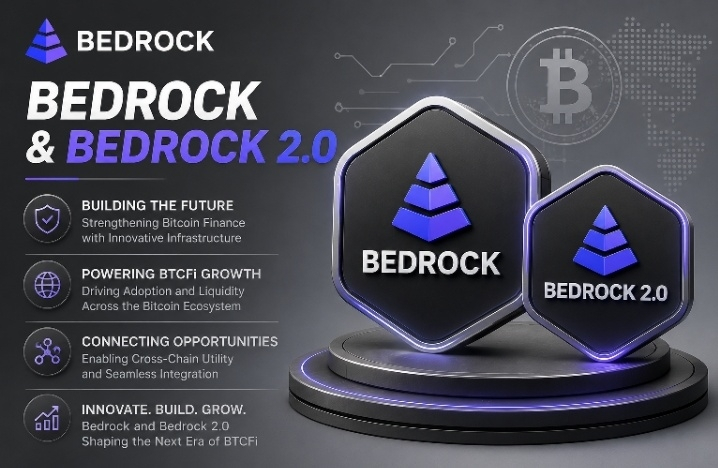
🚀 How Bedrock and Bedrock 2.0 Are Transforming Bitcoin Finance (BTCFi) 🚀
As the Bitcoin Finance (BTCFi) sector continues to grow 📈, Bedrock and Bedrock 2.0 are emerging as innovative solutions focused on expanding Bitcoin’s utility 🌍. Through liquid restaking 🔄, cross-chain connectivity 🌉, and broader DeFi opportunities 💎, the ecosystem aims to help users unlock more value from their Bitcoin holdings. Rather than keeping Bitcoin idle 🪙, Bedrock is helping create a more dynamic and efficient financial environment ⚡. With rising interest in BTCFi 🔥 and growing demand for Bitcoin-based financial products 📊, Bedrock and Bedrock 2.0 are positioning themselves as projects to watch 👀. Their continued development could help shape the future of Bitcoin finance 🚀🌟.
@Bedrock #Bedrock #ecosystem
$BR
{future}(BRUSDT)
🚀 How Bedrock and Bedrock 2.0 Are Transforming Bitcoin Finance (BTCFi) 🚀
As the Bitcoin Finance (BTCFi) sector continues to grow 📈, Bedrock and Bedrock 2.0 are emerging as innovative solutions focused on expanding Bitcoin’s utility 🌍. Through liquid restaking 🔄, cross-chain connectivity 🌉, and broader DeFi opportunities 💎, the ecosystem aims to help users unlock more value from their Bitcoin holdings. Rather than keeping Bitcoin idle 🪙, Bedrock is helping create a more dynamic and efficient financial environment ⚡. With rising interest in BTCFi 🔥 and growing demand for Bitcoin-based financial products 📊, Bedrock and Bedrock 2.0 are positioning themselves as projects to watch 👀. Their continued development could help shape the future of Bitcoin finance 🚀🌟.
@Bedrock #Bedrock #ecosystem
$BR
As the Bitcoin Finance (BTCFi) sector continues to grow 📈, Bedrock and Bedrock 2.0 are emerging as innovative solutions focused on expanding Bitcoin’s utility 🌍. Through liquid restaking 🔄, cross-chain connectivity 🌉, and broader DeFi opportunities 💎, the ecosystem aims to help users unlock more value from their Bitcoin holdings. Rather than keeping Bitcoin idle 🪙, Bedrock is helping create a more dynamic and efficient financial environment ⚡. With rising interest in BTCFi 🔥 and growing demand for Bitcoin-based financial products 📊, Bedrock and Bedrock 2.0 are positioning themselves as projects to watch 👀. Their continued development could help shape the future of Bitcoin finance 🚀🌟.
@Bedrock #Bedrock #ecosystem
$BR
3
101

THE TRON ECOSYSTEM: A UNIVERSE OF OPPORTUNITIES 🌌
TRON is more than just a blockchain; it's a thriving ecosystem of DApps, tokens, and services. From gaming and social media to finance and supply chain, the possibilities on TRON are endless.
We invite developers and entrepreneurs to join us and build the future of the decentralized web. The tools are ready, the community is waiting. 🛠️
@TRON DAO
#TRONEcoStar #Ecosystem #Opportunity
THE TRON ECOSYSTEM: A UNIVERSE OF OPPORTUNITIES 🌌
TRON is more than just a blockchain; it's a thriving ecosystem of DApps, tokens, and services. From gaming and social media to finance and supply chain, the possibilities on TRON are endless.
We invite developers and entrepreneurs to join us and build the future of the decentralized web. The tools are ready, the community is waiting. 🛠️
@TRON DAO
#TRONEcoStar #Ecosystem #Opportunity
TRON is more than just a blockchain; it's a thriving ecosystem of DApps, tokens, and services. From gaming and social media to finance and supply chain, the possibilities on TRON are endless.
We invite developers and entrepreneurs to join us and build the future of the decentralized web. The tools are ready, the community is waiting. 🛠️
@TRON DAO
#TRONEcoStar #Ecosystem #Opportunity
26

·
--
$BNB ECOSYSTEM EVOLVING — NEW TOKENS COULD BE NEXT WINNERS 💎
BNB laid the foundation, but the Binance ecosystem has grown into a network of DeFi, AI, RWA, and gaming projects. This structural shift from single-token dependence to a multi-token economy historically precedes major altcoin rotations. Capital is beginning to flow into infrastructure and utility tokens with strong fundamentals rather than hype.
The next cycle’s leaders may come from sectors still building under the radar right now. Sustained development, real adoption, and sound tokenomics are the filters that separate survivors from noise. Which emerging Binance ecosystem token has the strongest setup in your view?
Not financial advice. Always manage your risk.
#BNB #Ecosystem #DeFi #Crypto
💎
$BNB ECOSYSTEM EVOLVING — NEW TOKENS COULD BE NEXT WINNERS 💎
BNB laid the foundation, but the Binance ecosystem has grown into a network of DeFi, AI, RWA, and gaming projects. This structural shift from single-token dependence to a multi-token economy historically precedes major altcoin rotations. Capital is beginning to flow into infrastructure and utility tokens with strong fundamentals rather than hype.
The next cycle’s leaders may come from sectors still building under the radar right now. Sustained development, real adoption, and sound tokenomics are the filters that separate survivors from noise. Which emerging Binance ecosystem token has the strongest setup in your view?
Not financial advice. Always manage your risk.
#BNB #Ecosystem #DeFi #Crypto
💎
BNB laid the foundation, but the Binance ecosystem has grown into a network of DeFi, AI, RWA, and gaming projects. This structural shift from single-token dependence to a multi-token economy historically precedes major altcoin rotations. Capital is beginning to flow into infrastructure and utility tokens with strong fundamentals rather than hype.
The next cycle’s leaders may come from sectors still building under the radar right now. Sustained development, real adoption, and sound tokenomics are the filters that separate survivors from noise. Which emerging Binance ecosystem token has the strongest setup in your view?
Not financial advice. Always manage your risk.
#BNB #Ecosystem #DeFi #Crypto
💎
43

·
--
Article
The Verona Ecosystem Starts to Show a Bigger PictureAt a glance, Ero, WRTH, TradeOS, and Smoothly barely seem related to one another.
Some people deal with human attention.
Some focus on physical assets.
Some build AI for trading.
There are also those related to human communication capabilities.
But when you look deeper, everything starts to show the same pattern.
AI needs information that can be trusted.
And I think that’s where the Verona ecosystem starts to get interesting.
Ero by EarnOS → Verified Human Activity
The Verona Ecosystem Starts to Show a Bigger Picture
At a glance, Ero, WRTH, TradeOS, and Smoothly barely seem related to one another.
Some people deal with human attention.
Some focus on physical assets.
Some build AI for trading.
There are also those related to human communication capabilities.
But when you look deeper, everything starts to show the same pattern.
AI needs information that can be trusted.
And I think that’s where the Verona ecosystem starts to get interesting.
Ero by EarnOS → Verified Human Activity
Some people deal with human attention.
Some focus on physical assets.
Some build AI for trading.
There are also those related to human communication capabilities.
But when you look deeper, everything starts to show the same pattern.
AI needs information that can be trusted.
And I think that’s where the Verona ecosystem starts to get interesting.
Ero by EarnOS → Verified Human Activity
1
91
THE TRON ECOSYSTEM: A UNIVERSE OF INNOVATION 🌌
TRON isn't just a blockchain — it's a thriving universe of decentralized applications, tokens, and services. With over 2,000 DApps and growing, our ecosystem offers something for everyone.
In DeFi, protocols like JustLend, SunSwap, and JustMoney are processing billions in volume. In gaming, titles like Sunflower Land and TRON-based play-to-earn games are attracting mainstream gamers. In NFTs, marketplaces are showcasing digital artists from around the world.
What sets TRON's ecosystem apart is accessibility. Low fees mean users can interact with DApps without worrying about gas costs. Fast transactions ensure a smooth user experience. And our developer-friendly tools make building on TRON a pleasure.
We're also seeing enterprise adoption. Supply chain solutions, digital identity platforms, and tokenization projects are choosing TRON for its performance and reliability.
@TRON DAO
#TRONEcoStar #Ecosystem #Innovation
THE TRON ECOSYSTEM: A UNIVERSE OF INNOVATION 🌌
TRON isn't just a blockchain — it's a thriving universe of decentralized applications, tokens, and services. With over 2,000 DApps and growing, our ecosystem offers something for everyone.
In DeFi, protocols like JustLend, SunSwap, and JustMoney are processing billions in volume. In gaming, titles like Sunflower Land and TRON-based play-to-earn games are attracting mainstream gamers. In NFTs, marketplaces are showcasing digital artists from around the world.
What sets TRON's ecosystem apart is accessibility. Low fees mean users can interact with DApps without worrying about gas costs. Fast transactions ensure a smooth user experience. And our developer-friendly tools make building on TRON a pleasure.
We're also seeing enterprise adoption. Supply chain solutions, digital identity platforms, and tokenization projects are choosing TRON for its performance and reliability.
@TRON DAO
#TRONEcoStar #Ecosystem #Innovation
TRON isn't just a blockchain — it's a thriving universe of decentralized applications, tokens, and services. With over 2,000 DApps and growing, our ecosystem offers something for everyone.
In DeFi, protocols like JustLend, SunSwap, and JustMoney are processing billions in volume. In gaming, titles like Sunflower Land and TRON-based play-to-earn games are attracting mainstream gamers. In NFTs, marketplaces are showcasing digital artists from around the world.
What sets TRON's ecosystem apart is accessibility. Low fees mean users can interact with DApps without worrying about gas costs. Fast transactions ensure a smooth user experience. And our developer-friendly tools make building on TRON a pleasure.
We're also seeing enterprise adoption. Supply chain solutions, digital identity platforms, and tokenization projects are choosing TRON for its performance and reliability.
@TRON DAO
#TRONEcoStar #Ecosystem #Innovation
36
Partly True
$TON STRATEGY CUTS COSTS BY $4M, GOES ALL-IN ON ECOSYSTEM 🚀
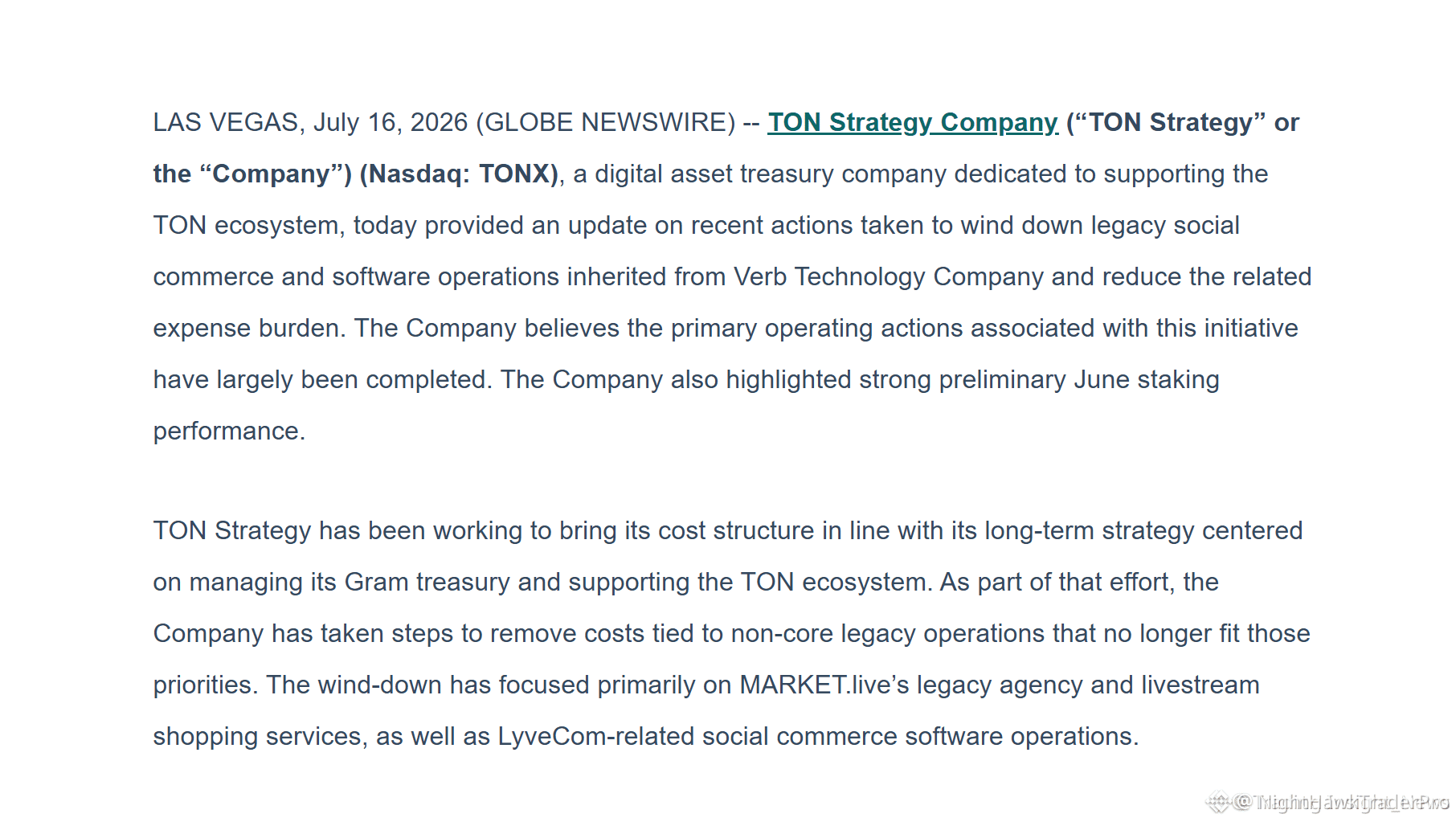
The parent company behind Gram reserves just shed its remaining side projects — cutting annual cash burn by $4 million to zero in on the TON ecosystem. That's a serious cost restructuring move from a firm with a listed parent.
When a team trims fat this aggressively, they're betting big on the core asset. Could be the kind of signal institutional money waits for before stepping in.
What's your read — does this make TON a stronger hold long term?
Not financial advice. Always manage your risk.
#TON #Ecosystem #CryptoStrategy #InstitutionalFlow
💎
$TON STRATEGY CUTS COSTS BY $4M, GOES ALL-IN ON ECOSYSTEM 🚀
The parent company behind Gram reserves just shed its remaining side projects — cutting annual cash burn by $4 million to zero in on the TON ecosystem. That's a serious cost restructuring move from a firm with a listed parent.
When a team trims fat this aggressively, they're betting big on the core asset. Could be the kind of signal institutional money waits for before stepping in.
What's your read — does this make TON a stronger hold long term?
Not financial advice. Always manage your risk.
#TON #Ecosystem #CryptoStrategy #InstitutionalFlow
💎
The parent company behind Gram reserves just shed its remaining side projects — cutting annual cash burn by $4 million to zero in on the TON ecosystem. That's a serious cost restructuring move from a firm with a listed parent.
When a team trims fat this aggressively, they're betting big on the core asset. Could be the kind of signal institutional money waits for before stepping in.
What's your read — does this make TON a stronger hold long term?
Not financial advice. Always manage your risk.
#TON #Ecosystem #CryptoStrategy #InstitutionalFlow
💎
337

·
--
Browsing $MON ecosystem updates today feels like walking through a new mall before the anchor stores open — polished floors, plenty of signage, not much reason to come back yet.
Monad's in my trending row this Monday afternoon. I spent twenty minutes clicking through the latest apps and dev posts instead of staring at charts. Wallet onboarding looks snappier. A few games and mint tools are technically live. But the feed still reads like a launch-week playlist: screenshot, points badge, "first on Monad" claim, repeat. Gainers board's empty. Losers are only mildly red. Nothing in the headlines explains why this L1 is so loud right now.
I think the ecosystem story is ahead of the habit story. Trending on a quiet day is attention, not proof anyone sticks around.
The real test is a Monad app showing real repeat usage after the farming wave moves on — not another debut thread.
#Monad #L1 #Ecosystem
Browsing $MON ecosystem updates today feels like walking through a new mall before the anchor stores open — polished floors, plenty of signage, not much reason to come back yet.
Monad's in my trending row this Monday afternoon. I spent twenty minutes clicking through the latest apps and dev posts instead of staring at charts. Wallet onboarding looks snappier. A few games and mint tools are technically live. But the feed still reads like a launch-week playlist: screenshot, points badge, "first on Monad" claim, repeat. Gainers board's empty. Losers are only mildly red. Nothing in the headlines explains why this L1 is so loud right now.
I think the ecosystem story is ahead of the habit story. Trending on a quiet day is attention, not proof anyone sticks around.
The real test is a Monad app showing real repeat usage after the farming wave moves on — not another debut thread.
#Monad #L1 #Ecosystem
Monad's in my trending row this Monday afternoon. I spent twenty minutes clicking through the latest apps and dev posts instead of staring at charts. Wallet onboarding looks snappier. A few games and mint tools are technically live. But the feed still reads like a launch-week playlist: screenshot, points badge, "first on Monad" claim, repeat. Gainers board's empty. Losers are only mildly red. Nothing in the headlines explains why this L1 is so loud right now.
I think the ecosystem story is ahead of the habit story. Trending on a quiet day is attention, not proof anyone sticks around.
The real test is a Monad app showing real repeat usage after the farming wave moves on — not another debut thread.
#Monad #L1 #Ecosystem
77
Litentry ( LIT ) shows strong order block support as volume surges, signaling bullish momentum. Zero Knowledge Coin ( ZKC ) gains traction in privacy focused ecosystems, with growing liquidity and investor sentiment turning positive. SingularityNET ( AGIX ) continues to innovate, expanding its AI marketplace and attracting new developers. Ecosystem growth fuels trading activity, reinforcing the bullish outlook across all three tokens. 🚀📈🌐🤝 #Crypto #SMC #Trading #Ecosystem #Innovation
Litentry ( LIT ) shows strong order block support as volume surges, signaling bullish momentum. Zero Knowledge Coin ( ZKC ) gains traction in privacy focused ecosystems, with growing liquidity and investor sentiment turning positive. SingularityNET ( AGIX ) continues to innovate, expanding its AI marketplace and attracting new developers. Ecosystem growth fuels trading activity, reinforcing the bullish outlook across all three tokens. 🚀📈🌐🤝 #Crypto #SMC #Trading #Ecosystem #Innovation
186
·
--
When the chain starts moving, the gems built on it start getting noticed. $ARB → $XAI 🎮🚀
#gaming #ecosystem #GameFi $BTC #ARB
When the chain starts moving, the gems built on it start getting noticed. $ARB → $XAI 🎮🚀
#gaming #ecosystem #GameFi $BTC #ARB
#gaming #ecosystem #GameFi $BTC #ARB
666

·
--
Bullish
$BNB
{spot}(BNBUSDT)
— Binance Ecosystem Exposure
BNB is holding up relatively well given the broader pullback — trading near $850, only about 6% off its all-time high after briefly touching $900+ in late August. The token's ongoing burn mechanism continues to provide a structural tailwind even as short-term momentum cools. For anyone tracking exchange-token beta, BNB remains one of the steadier majors in this tape.
#bnb #BinanceCoin #ecosystem
$BNB
— Binance Ecosystem Exposure
BNB is holding up relatively well given the broader pullback — trading near $850, only about 6% off its all-time high after briefly touching $900+ in late August. The token's ongoing burn mechanism continues to provide a structural tailwind even as short-term momentum cools. For anyone tracking exchange-token beta, BNB remains one of the steadier majors in this tape.
#bnb #BinanceCoin #ecosystem
— Binance Ecosystem Exposure
BNB is holding up relatively well given the broader pullback — trading near $850, only about 6% off its all-time high after briefly touching $900+ in late August. The token's ongoing burn mechanism continues to provide a structural tailwind even as short-term momentum cools. For anyone tracking exchange-token beta, BNB remains one of the steadier majors in this tape.
#bnb #BinanceCoin #ecosystem
1
38

Gram (GRAM) and Huma (HUMA) are pushing forward with robust order blocks, while Robo (ROBO) shows increasing volume and momentum. The ecosystem growth of each platform fuels adoption, and liquidity remains healthy as traders keep activity high. Investor sentiment stays positive amid continuous innovation across all three networks. 🚀📈🤖🌐💹 #Crypto #DeFi #Innovation #Ecosystem #Liquidity
Gram (GRAM) and Huma (HUMA) are pushing forward with robust order blocks, while Robo (ROBO) shows increasing volume and momentum. The ecosystem growth of each platform fuels adoption, and liquidity remains healthy as traders keep activity high. Investor sentiment stays positive amid continuous innovation across all three networks. 🚀📈🤖🌐💹 #Crypto #DeFi #Innovation #Ecosystem #Liquidity
232
Espresso ( ESP ) is carving out a niche with its community driven launchpad, while ZBT ( ZBT ) shows robust order block consolidation ahead of its next liquidity boost. Muub ( MUUB ) fuels ecosystem growth through cross chain bridges, sparking heightened trading activity and momentum. Investor sentiment remains bullish as adoption expands, and the combined liquidity pool signals a healthy innovative market. 🚀📈💹 #Crypto #Trading #Innovation #Ecosystem #Liquidity
Espresso ( ESP ) is carving out a niche with its community driven launchpad, while ZBT ( ZBT ) shows robust order block consolidation ahead of its next liquidity boost. Muub ( MUUB ) fuels ecosystem growth through cross chain bridges, sparking heightened trading activity and momentum. Investor sentiment remains bullish as adoption expands, and the combined liquidity pool signals a healthy innovative market. 🚀📈💹 #Crypto #Trading #Innovation #Ecosystem #Liquidity
150

·
--
Base Azul goes live on mainnet, enhancing speed and security for Coinbase’s layer-2 network
Azul's launch on Base could redefine Layer 2 scalability and security, potentially accelerating Ethereum's broader adoption and innovation.
The post Base Azul goes live on mainnet, enhancing speed and security for Coinbase’s layer-2 network appeared first on Crypto Briefing.
#Ecosystem
Base Azul goes live on mainnet, enhancing speed and security for Coinbase’s layer-2 network
Azul's launch on Base could redefine Layer 2 scalability and security, potentially accelerating Ethereum's broader adoption and innovation.
The post Base Azul goes live on mainnet, enhancing speed and security for Coinbase’s layer-2 network appeared first on Crypto Briefing.
#Ecosystem
Azul's launch on Base could redefine Layer 2 scalability and security, potentially accelerating Ethereum's broader adoption and innovation.
The post Base Azul goes live on mainnet, enhancing speed and security for Coinbase’s layer-2 network appeared first on Crypto Briefing.
#Ecosystem
25
Article
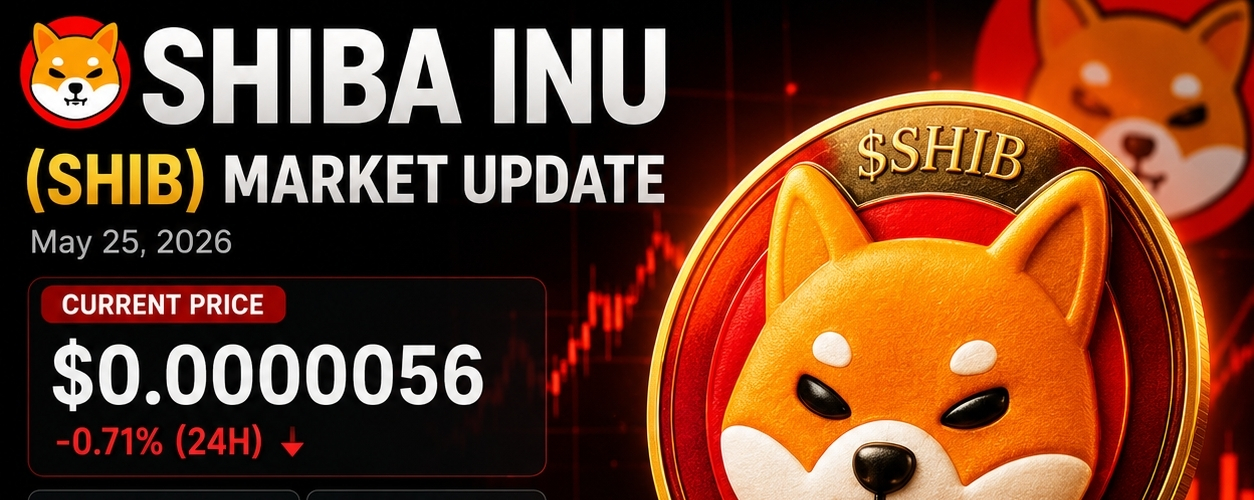
The Current price of ShibaThe current price of Shiba Inu is trading around $0.0000056 today, with mixed short-term momentum across the crypto market. �
Coinbase +2
SHIB Market Snapshot — May 25, 2026
Price: ~$0.0000056
24h Movement: Slightly bearish to flat
Market Cap: Around $3.3B–$3.7B
Trend: Weak consolidation with heavy meme-coin volatility �$SHIB #shiba⚡
MetaMask +2
Today’s Key SHIB Signals
Nearly 490 billion SHIB reportedly moved off exchanges, which can reduce immediate sell pressure and is often viewed as a bullish long-term sign. �
CoinMarketCap
Technical analysts are watching the $0.00000540 support zone closely. A breakdown below this area could trigger another drop. �
CoinMarketCap#CoinMarketCap
Community sentiment remains mostly bullish despite weak price action. �
Coinbase
Ecosystem Update#ecosystem
The SHIB ecosystem continues expanding through:
Shibarium Layer-2
ShibaSwap
NFT and DeFi integrations
These developments are helping SHIB maintain relevance beyond being only a meme coin. �#nft
Coinbase +1
Short-Term Outlook
Bullish scenario: If Bitcoin and meme coins recover, SHIB may retest resistance near $0.0000060–0.0000065
Bearish scenario: Losing support near $0.0000054 could push SHIB lower again. �
CoinMarketCap +1
Market Mood
Meme coins remain highly speculative in 2026. Traders are currently balancing:
macro market pressure,
whale accumulation,
and risk sentiment in crypto markets. �
moderndiplomacy.eu +1
The Current price of Shiba
The current price of Shiba Inu is trading around $0.0000056 today, with mixed short-term momentum across the crypto market. �
Coinbase +2
SHIB Market Snapshot — May 25, 2026
Price: ~$0.0000056
24h Movement: Slightly bearish to flat
Market Cap: Around $3.3B–$3.7B
Trend: Weak consolidation with heavy meme-coin volatility �$SHIB #shiba⚡
MetaMask +2
Today’s Key SHIB Signals
Nearly 490 billion SHIB reportedly moved off exchanges, which can reduce immediate sell pressure and is often viewed as a bullish long-term sign. �
CoinMarketCap
Technical analysts are watching the $0.00000540 support zone closely. A breakdown below this area could trigger another drop. �
CoinMarketCap#CoinMarketCap
Community sentiment remains mostly bullish despite weak price action. �
Coinbase
Ecosystem Update#ecosystem
The SHIB ecosystem continues expanding through:
Shibarium Layer-2
ShibaSwap
NFT and DeFi integrations
These developments are helping SHIB maintain relevance beyond being only a meme coin. �#nft
Coinbase +1
Short-Term Outlook
Bullish scenario: If Bitcoin and meme coins recover, SHIB may retest resistance near $0.0000060–0.0000065
Bearish scenario: Losing support near $0.0000054 could push SHIB lower again. �
CoinMarketCap +1
Market Mood
Meme coins remain highly speculative in 2026. Traders are currently balancing:
macro market pressure,
whale accumulation,
and risk sentiment in crypto markets. �
moderndiplomacy.eu +1
Coinbase +2
SHIB Market Snapshot — May 25, 2026
Price: ~$0.0000056
24h Movement: Slightly bearish to flat
Market Cap: Around $3.3B–$3.7B
Trend: Weak consolidation with heavy meme-coin volatility �$SHIB #shiba⚡
MetaMask +2
Today’s Key SHIB Signals
Nearly 490 billion SHIB reportedly moved off exchanges, which can reduce immediate sell pressure and is often viewed as a bullish long-term sign. �
CoinMarketCap
Technical analysts are watching the $0.00000540 support zone closely. A breakdown below this area could trigger another drop. �
CoinMarketCap#CoinMarketCap
Community sentiment remains mostly bullish despite weak price action. �
Coinbase
Ecosystem Update#ecosystem
The SHIB ecosystem continues expanding through:
Shibarium Layer-2
ShibaSwap
NFT and DeFi integrations
These developments are helping SHIB maintain relevance beyond being only a meme coin. �#nft
Coinbase +1
Short-Term Outlook
Bullish scenario: If Bitcoin and meme coins recover, SHIB may retest resistance near $0.0000060–0.0000065
Bearish scenario: Losing support near $0.0000054 could push SHIB lower again. �
CoinMarketCap +1
Market Mood
Meme coins remain highly speculative in 2026. Traders are currently balancing:
macro market pressure,
whale accumulation,
and risk sentiment in crypto markets. �
moderndiplomacy.eu +1
218

💵 Tron Processes $4.76 Trillion in Stablecoin Transfers in 2026
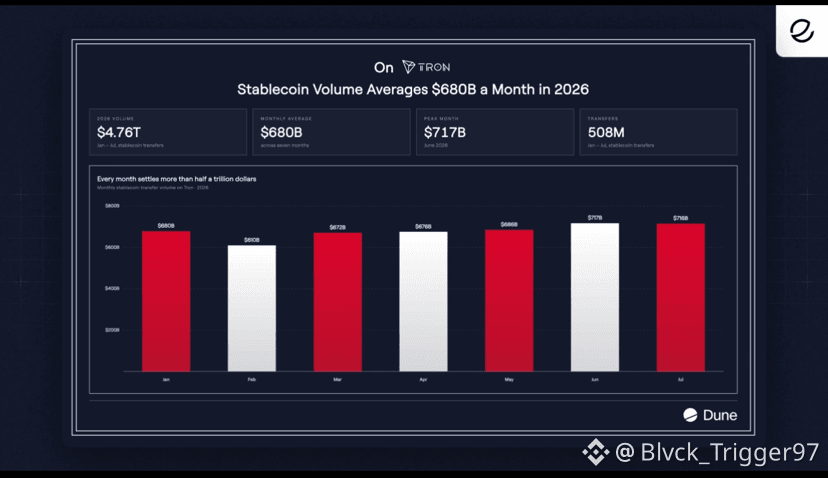
🔗 The Tron blockchain recorded an impressive $4.76 trillion in stablecoin transaction volume during the first seven months of 2026, underscoring its dominant role in the stablecoin ecosystem.
This translates to an average monthly transfer volume of approximately $680 billion, highlighting the network's massive on-chain activity and growing adoption for fast, low-cost stablecoin payments.
The figures reinforce Tron's position as one of the leading blockchains for stablecoin settlements, driven by strong demand from both retail users and institutional participants. 🚀
#tron #blockchain #Stablecoins #ecosystem $BNB
{future}(BNBUSDT)
$BTC
{future}(BTCUSDT)
$TRON.US
{stock_us}(TRON.US)
💵 Tron Processes $4.76 Trillion in Stablecoin Transfers in 2026
🔗 The Tron blockchain recorded an impressive $4.76 trillion in stablecoin transaction volume during the first seven months of 2026, underscoring its dominant role in the stablecoin ecosystem.
This translates to an average monthly transfer volume of approximately $680 billion, highlighting the network's massive on-chain activity and growing adoption for fast, low-cost stablecoin payments.
The figures reinforce Tron's position as one of the leading blockchains for stablecoin settlements, driven by strong demand from both retail users and institutional participants. 🚀
#tron #blockchain #Stablecoins #ecosystem $BNB
$BTC
$TRON.US
🔗 The Tron blockchain recorded an impressive $4.76 trillion in stablecoin transaction volume during the first seven months of 2026, underscoring its dominant role in the stablecoin ecosystem.
This translates to an average monthly transfer volume of approximately $680 billion, highlighting the network's massive on-chain activity and growing adoption for fast, low-cost stablecoin payments.
The figures reinforce Tron's position as one of the leading blockchains for stablecoin settlements, driven by strong demand from both retail users and institutional participants. 🚀
#tron #blockchain #Stablecoins #ecosystem $BNB
$BTC
$TRON.US
1
106
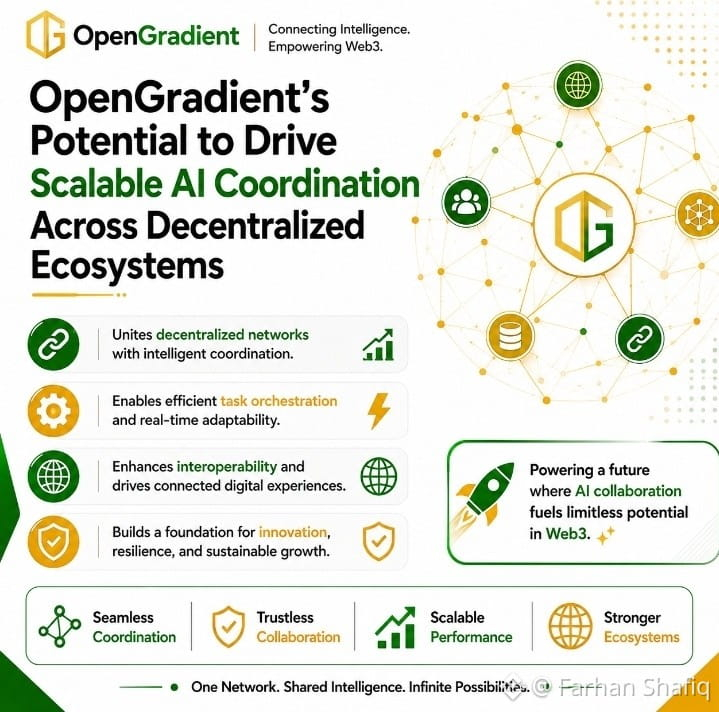
🚀🌍 OpenGradient's Potential to Drive Scalable AI Coordination Across Decentralized Ecosystems ⚡✨
The expansion of decentralized technology requires intelligent orchestration that can connect diverse digital environments with speed and precision. 🛰️🔗 OpenGradient introduces a collaborative AI layer that enables synchronized execution, adaptive communication, and efficient task allocation across distributed blockchain ecosystems. 📡💎
Its network-centric design encourages interoperable services, continuous optimization, and frictionless interaction between decentralized applications, creating opportunities for more responsive digital infrastructure. 📈🌐 From financial protocols 💰 to creator platforms 🎨 and enterprise solutions 🏢, coordinated intelligence can unlock greater productivity and innovation.
As Web3 adoption accelerates, OpenGradient is paving the way for unified AI collaboration that empowers scalable, connected, and future-ready decentralized ecosystems. 🚀🔥
@OpenGradient #OPG #ecosystem #DigitalAssets
$OPG
{spot}(OPGUSDT)
🚀🌍 OpenGradient's Potential to Drive Scalable AI Coordination Across Decentralized Ecosystems ⚡✨
The expansion of decentralized technology requires intelligent orchestration that can connect diverse digital environments with speed and precision. 🛰️🔗 OpenGradient introduces a collaborative AI layer that enables synchronized execution, adaptive communication, and efficient task allocation across distributed blockchain ecosystems. 📡💎
Its network-centric design encourages interoperable services, continuous optimization, and frictionless interaction between decentralized applications, creating opportunities for more responsive digital infrastructure. 📈🌐 From financial protocols 💰 to creator platforms 🎨 and enterprise solutions 🏢, coordinated intelligence can unlock greater productivity and innovation.
As Web3 adoption accelerates, OpenGradient is paving the way for unified AI collaboration that empowers scalable, connected, and future-ready decentralized ecosystems. 🚀🔥
@OpenGradient #OPG #ecosystem #DigitalAssets
$OPG
The expansion of decentralized technology requires intelligent orchestration that can connect diverse digital environments with speed and precision. 🛰️🔗 OpenGradient introduces a collaborative AI layer that enables synchronized execution, adaptive communication, and efficient task allocation across distributed blockchain ecosystems. 📡💎
Its network-centric design encourages interoperable services, continuous optimization, and frictionless interaction between decentralized applications, creating opportunities for more responsive digital infrastructure. 📈🌐 From financial protocols 💰 to creator platforms 🎨 and enterprise solutions 🏢, coordinated intelligence can unlock greater productivity and innovation.
As Web3 adoption accelerates, OpenGradient is paving the way for unified AI collaboration that empowers scalable, connected, and future-ready decentralized ecosystems. 🚀🔥
@OpenGradient #OPG #ecosystem #DigitalAssets
$OPG
2
85

Article
Why I'm Watching NEWTON/USDT Closely in 2026The cryptocurrency market is constantly evolving, and new projects continue to emerge with the potential to disrupt traditional blockchain ecosystems. Among the projects attracting attention from traders and investors is NEWTON (NEWTON/USDT).
While investing in cryptocurrencies always carries risk, I believe NEWTON is a project worth monitoring due to its growing ecosystem, technological vision, and increasing community interest.
What Makes NEWTON Interesting?
NEWTON aims to build a decentralized ecosystem that focuses on efficiency, scalability, and broader blockchain adoption. As the crypto industry moves toward real-world applications, projects with strong utility and active communities may have an advantage.
Some factors that make NEWTON attractive include:
🌐 Growing blockchain ecosystem
👥 Expanding community support
🚀 Potential for future adoption
💡 Continuous development and innovation
📈 Increasing interest from traders
Why Traders Are Watching NEWTON/USDT
Many traders look for projects that have:
Strong market momentum
Active development teams
Supportive communities
Potential catalysts for growth
Long-term utility
If NEWTON continues to develop its ecosystem and attract users, it could become one of the projects to watch in future market cycles.
Potential Opportunities and Risks
Like every cryptocurrency, NEWTON presents both opportunities and risks.#Newt
Growing mark#Ecosystem s
Increased adoption potential
Strong community engagement
Risks:
Market volatility
Regulatory uncertainty
Competition from other blockchain projects
Changes in investor sentiment
Investors should always conduct their own research and avoid making decisions based solely on market hype.
@NewtonProtocol (https://www.binance.com/en/square/profile/newtonprotocol)
My Personal Strategy
My approach to NEWTON/USDT is straightforward:
Monitor project developments regularly.
Manage risk carefully.
Avoid emotional trading decisions.
Take profits gradually during strong rallies.
Focus on long-term trends rather than short-term noise.
Final Thoughts
The cryptocurrency market rewards patience, research, and discipline. While no one can predict the future with certainty, NEWTON remains an interesting project to follow as the blockchain industry continues to evolve.
Whether NEWTON becomes a major player or remains a niche project, its progress will be worth watching in the coming years.$NEWT
What is your target for NEWTON/USDT? Are you bullish or bearish?
Why I'm Watching NEWTON/USDT Closely in 2026
The cryptocurrency market is constantly evolving, and new projects continue to emerge with the potential to disrupt traditional blockchain ecosystems. Among the projects attracting attention from traders and investors is NEWTON (NEWTON/USDT).
While investing in cryptocurrencies always carries risk, I believe NEWTON is a project worth monitoring due to its growing ecosystem, technological vision, and increasing community interest.
What Makes NEWTON Interesting?
NEWTON aims to build a decentralized ecosystem that focuses on efficiency, scalability, and broader blockchain adoption. As the crypto industry moves toward real-world applications, projects with strong utility and active communities may have an advantage.
Some factors that make NEWTON attractive include:
🌐 Growing blockchain ecosystem
👥 Expanding community support
🚀 Potential for future adoption
💡 Continuous development and innovation
📈 Increasing interest from traders
Why Traders Are Watching NEWTON/USDT
Many traders look for projects that have:
Strong market momentum
Active development teams
Supportive communities
Potential catalysts for growth
Long-term utility
If NEWTON continues to develop its ecosystem and attract users, it could become one of the projects to watch in future market cycles.
Potential Opportunities and Risks
Like every cryptocurrency, NEWTON presents both opportunities and risks.#Newt
Growing mark#Ecosystem s
Increased adoption potential
Strong community engagement
Risks:
Market volatility
Regulatory uncertainty
Competition from other blockchain projects
Changes in investor sentiment
Investors should always conduct their own research and avoid making decisions based solely on market hype.
@NewtonProtocol (https://www.binance.com/en/square/profile/newtonprotocol)
My Personal Strategy
My approach to NEWTON/USDT is straightforward:
Monitor project developments regularly.
Manage risk carefully.
Avoid emotional trading decisions.
Take profits gradually during strong rallies.
Focus on long-term trends rather than short-term noise.
Final Thoughts
The cryptocurrency market rewards patience, research, and discipline. While no one can predict the future with certainty, NEWTON remains an interesting project to follow as the blockchain industry continues to evolve.
Whether NEWTON becomes a major player or remains a niche project, its progress will be worth watching in the coming years.$NEWT
What is your target for NEWTON/USDT? Are you bullish or bearish?
While investing in cryptocurrencies always carries risk, I believe NEWTON is a project worth monitoring due to its growing ecosystem, technological vision, and increasing community interest.
What Makes NEWTON Interesting?
NEWTON aims to build a decentralized ecosystem that focuses on efficiency, scalability, and broader blockchain adoption. As the crypto industry moves toward real-world applications, projects with strong utility and active communities may have an advantage.
Some factors that make NEWTON attractive include:
🌐 Growing blockchain ecosystem
👥 Expanding community support
🚀 Potential for future adoption
💡 Continuous development and innovation
📈 Increasing interest from traders
Why Traders Are Watching NEWTON/USDT
Many traders look for projects that have:
Strong market momentum
Active development teams
Supportive communities
Potential catalysts for growth
Long-term utility
If NEWTON continues to develop its ecosystem and attract users, it could become one of the projects to watch in future market cycles.
Potential Opportunities and Risks
Like every cryptocurrency, NEWTON presents both opportunities and risks.#Newt
Growing mark#Ecosystem s
Increased adoption potential
Strong community engagement
Risks:
Market volatility
Regulatory uncertainty
Competition from other blockchain projects
Changes in investor sentiment
Investors should always conduct their own research and avoid making decisions based solely on market hype.
@NewtonProtocol (https://www.binance.com/en/square/profile/newtonprotocol)
My Personal Strategy
My approach to NEWTON/USDT is straightforward:
Monitor project developments regularly.
Manage risk carefully.
Avoid emotional trading decisions.
Take profits gradually during strong rallies.
Focus on long-term trends rather than short-term noise.
Final Thoughts
The cryptocurrency market rewards patience, research, and discipline. While no one can predict the future with certainty, NEWTON remains an interesting project to follow as the blockchain industry continues to evolve.
Whether NEWTON becomes a major player or remains a niche project, its progress will be worth watching in the coming years.$NEWT
What is your target for NEWTON/USDT? Are you bullish or bearish?
1
16
Log in to explore more content
Join global crypto users on Binance Square
⚡️ Get latest and useful information about crypto.
💬 Trusted by the world’s largest crypto exchange.
👍 Discover real insights from verified creators.
Email / Phone number
Trending Topics
1
#QNTRises39%
8,672 views
497 Discussing
2
#EthereumBreaksAbove$2700
1,103 views
61 Discussing
3
#BitgetBreachForgedRequestsNotStolenKeys
7,498 views
407 Discussing
4
#BitcoinSpotETFsTurnNetPositiveYTD
4,900 views
298 Discussing
5
#GrayscaleZcashETFHits$1BNetAssets
899 views
32 Discussing
6
#BitcoinSpotETFsNetInflow$191M
6,100 views
168 Discussing
7
#CFTCUpdatesGuidanceOnTokenizedAssets
40,796 views
1,326 Discussing
8
#BitgetSays$352MAffectedInHack
15,663 views
90 Discussing
9
#NYAndPolymarketSueEachOther
4,061 views
182 Discussing
10
#BinanceWillListHyperliquid(HYPE)
252,668 views
3,871 Discussing