
#defi
defi
56.5M views
294,592 Discussing
Hot
Latest

·
--
Bullish
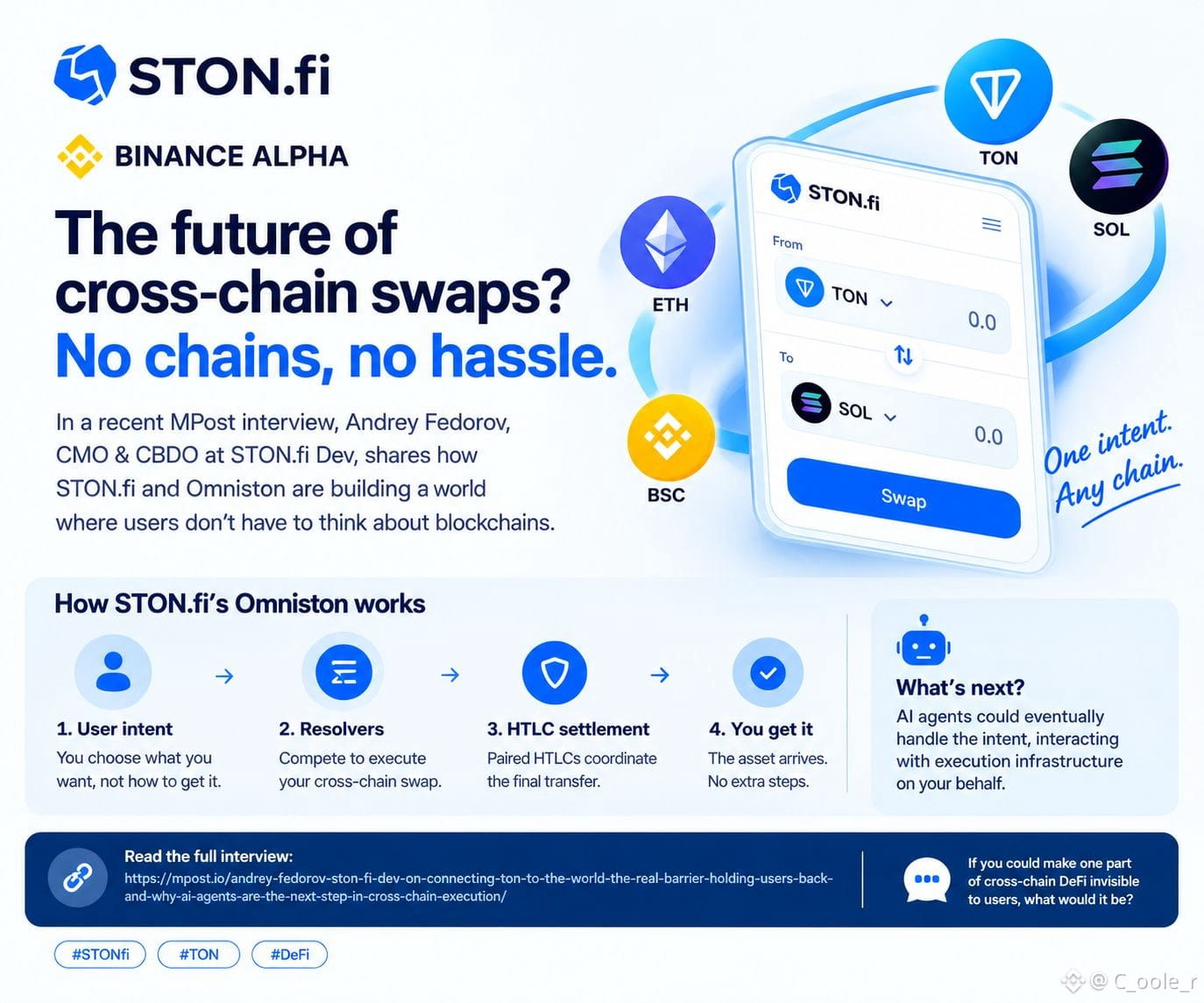
What if the best cross-chain experience is the one where you stop thinking about chains?
That idea stood out in a recent MPost interview with Andrey Fedorov, CMO & CBDO at STONfi Dev.
🧠 The problem
Today, moving an asset between networks can mean dealing with different wallets, gas coins, bridges and separate balances.
But the user's actual intent is usually much simpler:
“I have this asset. I want that one.”
🚀 Where STONfi fits
STONfi’s cross-chain swaps use Omniston, a resolver-based execution layer.
A user expresses an intent, resolvers compete to fulfil it, and paired HTLCs coordinate the settlement.
The important part is what the user doesn't have to manage.
💡 The bigger idea
Fedorov describes true chain abstraction as a future where users simply stop thinking about which blockchain is underneath.
The interview also explores how AI agents could eventually understand user intent and interact with execution infrastructure on their behalf.
That makes chain abstraction less about adding another crypto feature and more about removing unnecessary complexity.
💬 If you could make one part of cross-chain DeFi invisible to users, what would it be?
#Stonfiers #defi
$GRAM
{spot}(GRAMUSDT)
What if the best cross-chain experience is the one where you stop thinking about chains?
That idea stood out in a recent MPost interview with Andrey Fedorov, CMO & CBDO at STONfi Dev.
🧠 The problem
Today, moving an asset between networks can mean dealing with different wallets, gas coins, bridges and separate balances.
But the user's actual intent is usually much simpler:
“I have this asset. I want that one.”
🚀 Where STONfi fits
STONfi’s cross-chain swaps use Omniston, a resolver-based execution layer.
A user expresses an intent, resolvers compete to fulfil it, and paired HTLCs coordinate the settlement.
The important part is what the user doesn't have to manage.
💡 The bigger idea
Fedorov describes true chain abstraction as a future where users simply stop thinking about which blockchain is underneath.
The interview also explores how AI agents could eventually understand user intent and interact with execution infrastructure on their behalf.
That makes chain abstraction less about adding another crypto feature and more about removing unnecessary complexity.
💬 If you could make one part of cross-chain DeFi invisible to users, what would it be?
#Stonfiers #defi
$GRAM
That idea stood out in a recent MPost interview with Andrey Fedorov, CMO & CBDO at STONfi Dev.
🧠 The problem
Today, moving an asset between networks can mean dealing with different wallets, gas coins, bridges and separate balances.
But the user's actual intent is usually much simpler:
“I have this asset. I want that one.”
🚀 Where STONfi fits
STONfi’s cross-chain swaps use Omniston, a resolver-based execution layer.
A user expresses an intent, resolvers compete to fulfil it, and paired HTLCs coordinate the settlement.
The important part is what the user doesn't have to manage.
💡 The bigger idea
Fedorov describes true chain abstraction as a future where users simply stop thinking about which blockchain is underneath.
The interview also explores how AI agents could eventually understand user intent and interact with execution infrastructure on their behalf.
That makes chain abstraction less about adding another crypto feature and more about removing unnecessary complexity.
💬 If you could make one part of cross-chain DeFi invisible to users, what would it be?
#Stonfiers #defi
$GRAM
1
163

·
--
DeFi ecosystem: finance rebuilt with programmable infrastructure.
Decentralized finance (DeFi) uses smart contracts to provide financial services without relying on a single traditional intermediary.
The ecosystem includes:
• Decentralized exchanges (DEXs): users trade through liquidity pools and automated market makers.
• Lending markets: users supply assets to earn variable returns or borrow against collateral.
• Stablecoins: on-chain units designed to reduce price volatility and support settlement.
• Liquid staking: users receive a tradable representation of staked assets while maintaining capital utility.
• Derivatives: protocols create permissionless exposure to futures, options or synthetic assets.
• Bridges and interoperability: connect liquidity across different blockchains.
• Governance: token holders may vote on parameters, upgrades and treasury decisions.
The trade-off is clear: DeFi can improve access, transparency and composability, but users assume risks that banks normally manage.
Before using a protocol, check:
1. Smart-contract audits and exploit history
2. Oracle design and liquidation mechanics
3. Total value locked versus actual liquidity
4. Admin keys, upgradeability and governance concentration
5. Bridge, stablecoin and counterparty exposure
6. Fees, slippage and withdrawal conditions
High APY is not free yield. It may compensate users for smart-contract, market, liquidity or incentive risk.
Start with small amounts, use official links, verify contract addresses and never share a seed phrase or private key.
Educational content only. Not financial advice.
#DeFi #Web3 #CryptoEducation #BinanceAngels
DeFi ecosystem: finance rebuilt with programmable infrastructure.
Decentralized finance (DeFi) uses smart contracts to provide financial services without relying on a single traditional intermediary.
The ecosystem includes:
• Decentralized exchanges (DEXs): users trade through liquidity pools and automated market makers.
• Lending markets: users supply assets to earn variable returns or borrow against collateral.
• Stablecoins: on-chain units designed to reduce price volatility and support settlement.
• Liquid staking: users receive a tradable representation of staked assets while maintaining capital utility.
• Derivatives: protocols create permissionless exposure to futures, options or synthetic assets.
• Bridges and interoperability: connect liquidity across different blockchains.
• Governance: token holders may vote on parameters, upgrades and treasury decisions.
The trade-off is clear: DeFi can improve access, transparency and composability, but users assume risks that banks normally manage.
Before using a protocol, check:
1. Smart-contract audits and exploit history
2. Oracle design and liquidation mechanics
3. Total value locked versus actual liquidity
4. Admin keys, upgradeability and governance concentration
5. Bridge, stablecoin and counterparty exposure
6. Fees, slippage and withdrawal conditions
High APY is not free yield. It may compensate users for smart-contract, market, liquidity or incentive risk.
Start with small amounts, use official links, verify contract addresses and never share a seed phrase or private key.
Educational content only. Not financial advice.
#DeFi #Web3 #CryptoEducation #BinanceAngels
Decentralized finance (DeFi) uses smart contracts to provide financial services without relying on a single traditional intermediary.
The ecosystem includes:
• Decentralized exchanges (DEXs): users trade through liquidity pools and automated market makers.
• Lending markets: users supply assets to earn variable returns or borrow against collateral.
• Stablecoins: on-chain units designed to reduce price volatility and support settlement.
• Liquid staking: users receive a tradable representation of staked assets while maintaining capital utility.
• Derivatives: protocols create permissionless exposure to futures, options or synthetic assets.
• Bridges and interoperability: connect liquidity across different blockchains.
• Governance: token holders may vote on parameters, upgrades and treasury decisions.
The trade-off is clear: DeFi can improve access, transparency and composability, but users assume risks that banks normally manage.
Before using a protocol, check:
1. Smart-contract audits and exploit history
2. Oracle design and liquidation mechanics
3. Total value locked versus actual liquidity
4. Admin keys, upgradeability and governance concentration
5. Bridge, stablecoin and counterparty exposure
6. Fees, slippage and withdrawal conditions
High APY is not free yield. It may compensate users for smart-contract, market, liquidity or incentive risk.
Start with small amounts, use official links, verify contract addresses and never share a seed phrase or private key.
Educational content only. Not financial advice.
#DeFi #Web3 #CryptoEducation #BinanceAngels
24

Haedal Lending Vault is LIVE 🦦🌊
Sui has been getting more active again lately, and $HAEDAL has also been showing some nice price action.
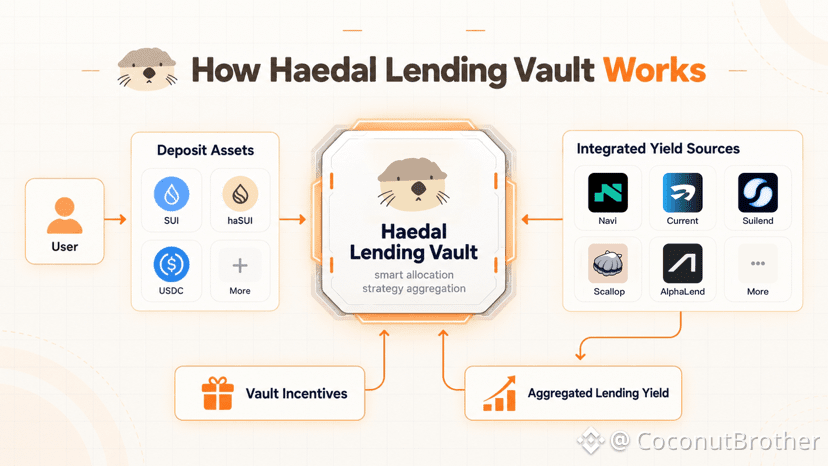
At the same time, Haedal just launched a new product that I think is worth paying attention to: Haedal Lending Vault.
Lending yields across Sui can be attractive, but there’s always one problem: rates and incentives keep changing between protocols.
If you want to follow the better opportunities yourself, you normally have to keep checking different markets, move funds around, claim rewards, and rebalance your positions.
Haedal Lending Vault basically automates that process.
You deposit one supported asset such as SUI, USDC, or haSUI, and the vault allocates liquidity across multiple lending markets based on market conditions, protocol performance, and available liquidity.
Currently integrated markets include:
NAVI / Current / Suilend / Scallop / AlphaFi
with Cetus Vault acting as a buffer pool for more flexible liquidity management.
In return, users receive a Vault LP Token representing their share of the vault. As the underlying strategy generates yield, that value is reflected in the LP token.
What I like most about the idea is the simplicity:
No manually jumping between lending protocols.
No constant rebalancing.
No manual reward claiming.
Instead of trying to chase lending opportunities yourself, the vault handles the allocation for you across multiple markets.
So while everyone is watching $HAEDAL’s recent price action, there’s also quite a bit happening on the product side. 👀
Deposit once. Let the vault do the moves. 🦦🌊
#Haedal #sui #defi #Lending
{future}(HAEDALUSDT)
Haedal Lending Vault is LIVE 🦦🌊
Sui has been getting more active again lately, and $HAEDAL has also been showing some nice price action.
At the same time, Haedal just launched a new product that I think is worth paying attention to: Haedal Lending Vault.
Lending yields across Sui can be attractive, but there’s always one problem: rates and incentives keep changing between protocols.
If you want to follow the better opportunities yourself, you normally have to keep checking different markets, move funds around, claim rewards, and rebalance your positions.
Haedal Lending Vault basically automates that process.
You deposit one supported asset such as SUI, USDC, or haSUI, and the vault allocates liquidity across multiple lending markets based on market conditions, protocol performance, and available liquidity.
Currently integrated markets include:
NAVI / Current / Suilend / Scallop / AlphaFi
with Cetus Vault acting as a buffer pool for more flexible liquidity management.
In return, users receive a Vault LP Token representing their share of the vault. As the underlying strategy generates yield, that value is reflected in the LP token.
What I like most about the idea is the simplicity:
No manually jumping between lending protocols.
No constant rebalancing.
No manual reward claiming.
Instead of trying to chase lending opportunities yourself, the vault handles the allocation for you across multiple markets.
So while everyone is watching $HAEDAL ’s recent price action, there’s also quite a bit happening on the product side. 👀
Deposit once. Let the vault do the moves. 🦦🌊
#Haedal #sui #defi #Lending
Sui has been getting more active again lately, and $HAEDAL has also been showing some nice price action.
At the same time, Haedal just launched a new product that I think is worth paying attention to: Haedal Lending Vault.
Lending yields across Sui can be attractive, but there’s always one problem: rates and incentives keep changing between protocols.
If you want to follow the better opportunities yourself, you normally have to keep checking different markets, move funds around, claim rewards, and rebalance your positions.
Haedal Lending Vault basically automates that process.
You deposit one supported asset such as SUI, USDC, or haSUI, and the vault allocates liquidity across multiple lending markets based on market conditions, protocol performance, and available liquidity.
Currently integrated markets include:
NAVI / Current / Suilend / Scallop / AlphaFi
with Cetus Vault acting as a buffer pool for more flexible liquidity management.
In return, users receive a Vault LP Token representing their share of the vault. As the underlying strategy generates yield, that value is reflected in the LP token.
What I like most about the idea is the simplicity:
No manually jumping between lending protocols.
No constant rebalancing.
No manual reward claiming.
Instead of trying to chase lending opportunities yourself, the vault handles the allocation for you across multiple markets.
So while everyone is watching $HAEDAL ’s recent price action, there’s also quite a bit happening on the product side. 👀
Deposit once. Let the vault do the moves. 🦦🌊
#Haedal #sui #defi #Lending
1
122

·
--
Bullish
🚨 USDe JUST LANDED ON TRON. ⚡️💵
Ethena is bringing USDe + sUSDe to TRON, expanding access to its synthetic dollar ecosystem. 🌐
💵 USDe on TRON
📈 sUSDe goes cross-chain
⚡️ More liquidity. More reach. More users.
TRON already dominates stablecoin activity.
Now Ethena wants a piece of that flow. 👀
The stablecoin wars are getting serious. 🔥
#ethena #USDe #Tron #Stablecoins #DeFi
{spot}(USDEUSDT)
{spot}(ENAUSDT)
🚨 USDe JUST LANDED ON TRON. ⚡️💵
Ethena is bringing USDe + sUSDe to TRON, expanding access to its synthetic dollar ecosystem. 🌐
💵 USDe on TRON
📈 sUSDe goes cross-chain
⚡️ More liquidity. More reach. More users.
TRON already dominates stablecoin activity.
Now Ethena wants a piece of that flow. 👀
The stablecoin wars are getting serious. 🔥
#ethena #USDe #Tron #Stablecoins #DeFi
Ethena is bringing USDe + sUSDe to TRON, expanding access to its synthetic dollar ecosystem. 🌐
💵 USDe on TRON
📈 sUSDe goes cross-chain
⚡️ More liquidity. More reach. More users.
TRON already dominates stablecoin activity.
Now Ethena wants a piece of that flow. 👀
The stablecoin wars are getting serious. 🔥
#ethena #USDe #Tron #Stablecoins #DeFi
312

·
--
Bullish
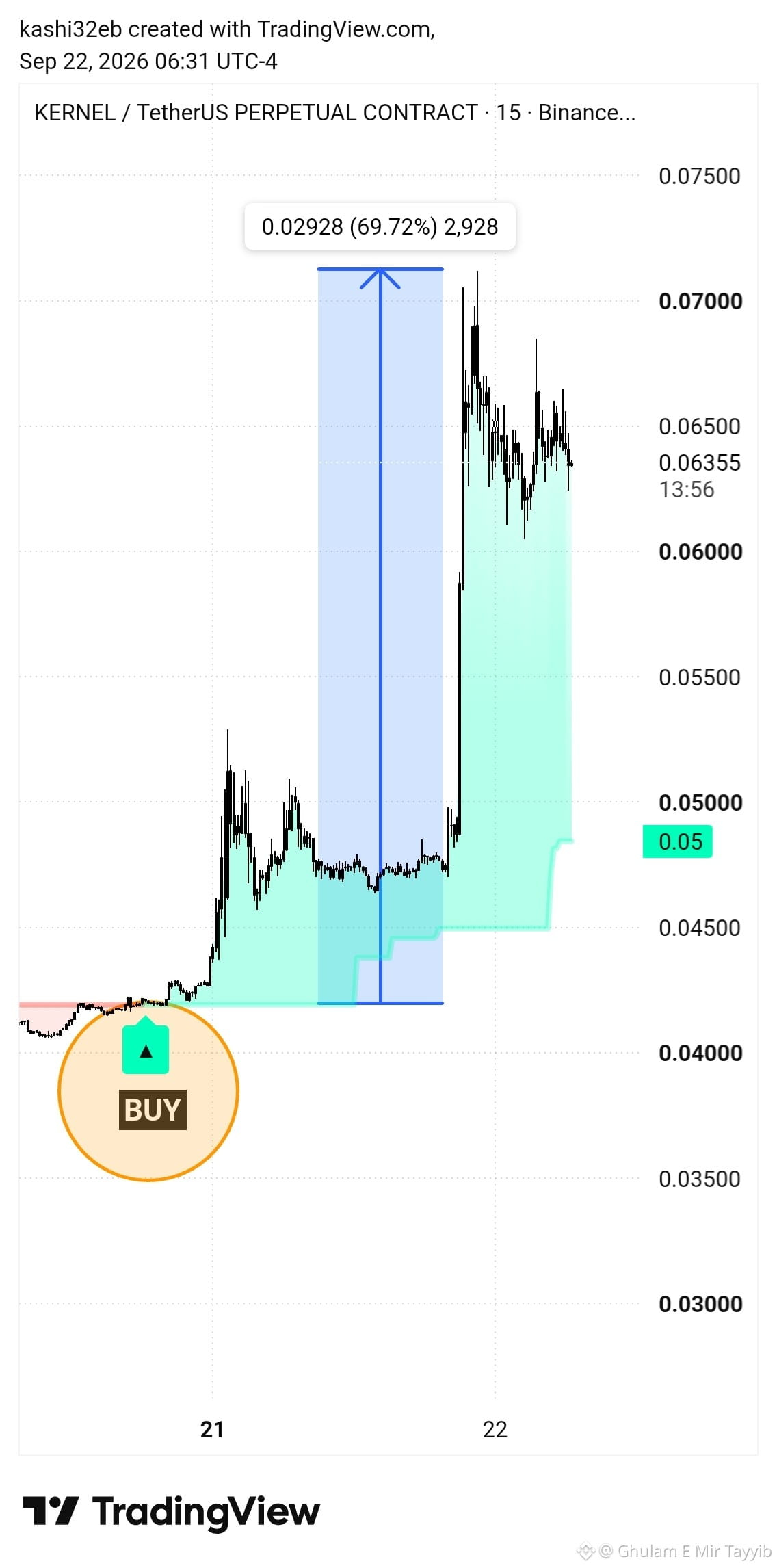
Real yield, real infrastructure — $KERNEL just moved 69.72%!
This isn't hype-driven — KernelDAO has $1.6B+ locked across its restaking ecosystem, letting users earn multiple reward streams from a single staked asset. Backed by ex-Stader Labs
founders, this is serious DeFi plumbing.
The restaking narrative is clearly back in focus, and capital is flowing where the yield is real.
👉 Are you restaking anywhere right now? Share your setup below, and drop your next coin request!
#KERNEL #KernelDao #defi #BinanceTopGainer
{future}(KERNELUSDT)
Real yield, real infrastructure — $KERNEL just moved 69.72%!
This isn't hype-driven — KernelDAO has $1.6B+ locked across its restaking ecosystem, letting users earn multiple reward streams from a single staked asset. Backed by ex-Stader Labs
founders, this is serious DeFi plumbing.
The restaking narrative is clearly back in focus, and capital is flowing where the yield is real.
👉 Are you restaking anywhere right now? Share your setup below, and drop your next coin request!
#KERNEL #KernelDao #defi #BinanceTopGainer
This isn't hype-driven — KernelDAO has $1.6B+ locked across its restaking ecosystem, letting users earn multiple reward streams from a single staked asset. Backed by ex-Stader Labs
founders, this is serious DeFi plumbing.
The restaking narrative is clearly back in focus, and capital is flowing where the yield is real.
👉 Are you restaking anywhere right now? Share your setup below, and drop your next coin request!
#KERNEL #KernelDao #defi #BinanceTopGainer
45

·
--
Article
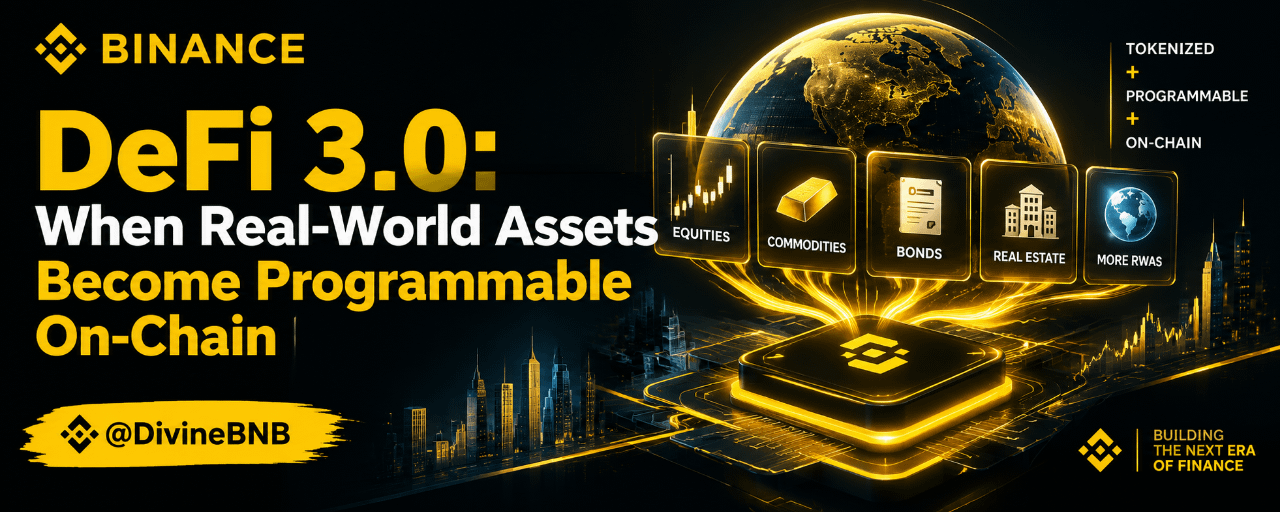
DeFi 3.0: When Real-World Assets Become Programmable On-ChainDeFi 3.0 may already be taking shape — and Binance is positioning itself at the center of the shift from crypto-native assets to programmable real-world assets.
DeFi 1.0 built the core financial primitives: decentralized trading, lending and borrowing.
DeFi 2.0 connected those primitives through composability.
Now comes the next question:
What happens when the assets themselves become programmable?
From Crypto-Native to Real-World Assets
For years, [DeFi](https://www.binance.com/en/academy/glossary/defi) largely operated within its own crypto economy. The next phase could bring equities, bonds, funds, commodities and other real-world assets onto blockchain rails.
But tokenization alone isn't the end goal.
The bigger opportunity is activation.
A tokenized equity that can interact with trading venues, lending protocols, collateral systems and smart contracts becomes more than a digital representation of an asset. It becomes programmable financial infrastructure.
That is the foundation of what we can call DeFi 3.0.
{spot}(NVDABUSDT)
Why Binance Matters
This is where Binance becomes particularly relevant.
@Binance_Research is now framing the transition around the [Real World Assets](https://www.binance.com/en/academy/articles/what-are-real-world-assets-rwa-in-defi-and-crypto) (RWA) Activation Era, arguing that the market needs to measure not only how much value gets tokenized, but also what happens after those assets come on-chain.
Two metrics are central to that framework:
Programmable Asset Ratio (PAR) — how much of an underlying asset market has become programmable on-chain.
Capital Activation Rate (CAR) — how much of the tokenized asset supply is actually being deployed in on-chain financial applications such as liquidity, lending and collateral markets.
That distinction matters.
A trillion dollars of tokenized assets sitting idle would tell a very different story from a trillion dollars actively circulating through programmable financial markets.
{spot}(METABUSDT)
Binance and the Programmable Asset Era
Binance's broader expansion into tokenized securities, equities, derivatives and multi-asset infrastructure gives the company a natural connection to this emerging model.
The strategic idea is bigger than simply bringing traditional assets onto a crypto platform.
It is about connecting traditional assets + blockchain liquidity + programmable finance.
In Binance's recent research, tokenized equities are already showing rapid growth while remaining tiny compared with the underlying global equity market. Binance Research also found equity CAR rising from 1.95% to 7.54% year-to-date, illustrating the shift from simple issuance toward actual on-chain use.
That is the DeFi 3.0 signal to watch.
The Next DeFi Cycle Could Be Different
Crypto-native assets can be extremely volatile, and individual tokens can ultimately go to zero.
Real-world assets such as equities are connected to underlying companies and established financial markets. Their tokenization therefore introduces a fundamentally different asset base into the on-chain economy.
The question is no longer:
“How many new tokens can DeFi create?”
It becomes:
“How much of the world's existing financial value can become programmable?”
That is a much larger opportunity.
{spot}(SPCXBUSDT)
Binance's Bigger Bet
If DeFi 1.0 created decentralized financial primitives and DeFi 2.0 made them composable, DeFi 3.0 could make the world's assets composable.
And Binance is already developing a framework for measuring that transition through concepts such as PAR and CAR.
The winners of the next phase may not simply be the platforms with the most tokens.
They may be the platforms that successfully connect assets, liquidity, settlement and utility on-chain.
DeFi 3.0 isn't just about putting real-world assets on-chain.
It's about making them programmable.
The next DeFi cycle may be less about creating another generation of speculative tokens and more about bringing existing financial value on-chain.
DeFi 1.0 built the primitives.
DeFi 2.0 made them composable.
DeFi 3.0 could make the world's assets programmable.
And Binance is building a framework for measuring that transition.
#defi | @Binance_Square_Official | @Binance_Angels | @Binance_Research
DeFi 3.0: When Real-World Assets Become Programmable On-Chain
DeFi 3.0 may already be taking shape — and Binance is positioning itself at the center of the shift from crypto-native assets to programmable real-world assets.
DeFi 1.0 built the core financial primitives: decentralized trading, lending and borrowing.
DeFi 2.0 connected those primitives through composability.
Now comes the next question:
What happens when the assets themselves become programmable?
From Crypto-Native to Real-World Assets
For years, DeFi largely operated within its own crypto economy. The next phase could bring equities, bonds, funds, commodities and other real-world assets onto blockchain rails.
But tokenization alone isn't the end goal.
The bigger opportunity is activation.
A tokenized equity that can interact with trading venues, lending protocols, collateral systems and smart contracts becomes more than a digital representation of an asset. It becomes programmable financial infrastructure.
That is the foundation of what we can call DeFi 3.0.
Why Binance Matters
This is where Binance becomes particularly relevant.
@Binance Research is now framing the transition around the Real World Assets (RWA) Activation Era, arguing that the market needs to measure not only how much value gets tokenized, but also what happens after those assets come on-chain.
Two metrics are central to that framework:
Programmable Asset Ratio (PAR) — how much of an underlying asset market has become programmable on-chain.
Capital Activation Rate (CAR) — how much of the tokenized asset supply is actually being deployed in on-chain financial applications such as liquidity, lending and collateral markets.
That distinction matters.
A trillion dollars of tokenized assets sitting idle would tell a very different story from a trillion dollars actively circulating through programmable financial markets.
Binance and the Programmable Asset Era
Binance's broader expansion into tokenized securities, equities, derivatives and multi-asset infrastructure gives the company a natural connection to this emerging model.
The strategic idea is bigger than simply bringing traditional assets onto a crypto platform.
It is about connecting traditional assets + blockchain liquidity + programmable finance.
In Binance's recent research, tokenized equities are already showing rapid growth while remaining tiny compared with the underlying global equity market. Binance Research also found equity CAR rising from 1.95% to 7.54% year-to-date, illustrating the shift from simple issuance toward actual on-chain use.
That is the DeFi 3.0 signal to watch.
The Next DeFi Cycle Could Be Different
Crypto-native assets can be extremely volatile, and individual tokens can ultimately go to zero.
Real-world assets such as equities are connected to underlying companies and established financial markets. Their tokenization therefore introduces a fundamentally different asset base into the on-chain economy.
The question is no longer:
“How many new tokens can DeFi create?”
It becomes:
“How much of the world's existing financial value can become programmable?”
That is a much larger opportunity.
Binance's Bigger Bet
If DeFi 1.0 created decentralized financial primitives and DeFi 2.0 made them composable, DeFi 3.0 could make the world's assets composable.
And Binance is already developing a framework for measuring that transition through concepts such as PAR and CAR.
The winners of the next phase may not simply be the platforms with the most tokens.
They may be the platforms that successfully connect assets, liquidity, settlement and utility on-chain.
DeFi 3.0 isn't just about putting real-world assets on-chain.
It's about making them programmable.
The next DeFi cycle may be less about creating another generation of speculative tokens and more about bringing existing financial value on-chain.
DeFi 1.0 built the primitives.
DeFi 2.0 made them composable.
DeFi 3.0 could make the world's assets programmable.
And Binance is building a framework for measuring that transition.
#defi | @Binance Square Official | @Binance Angels | @Binance Research
DeFi 1.0 built the core financial primitives: decentralized trading, lending and borrowing.
DeFi 2.0 connected those primitives through composability.
Now comes the next question:
What happens when the assets themselves become programmable?
From Crypto-Native to Real-World Assets
For years, DeFi largely operated within its own crypto economy. The next phase could bring equities, bonds, funds, commodities and other real-world assets onto blockchain rails.
But tokenization alone isn't the end goal.
The bigger opportunity is activation.
A tokenized equity that can interact with trading venues, lending protocols, collateral systems and smart contracts becomes more than a digital representation of an asset. It becomes programmable financial infrastructure.
That is the foundation of what we can call DeFi 3.0.
Why Binance Matters
This is where Binance becomes particularly relevant.
@Binance Research is now framing the transition around the Real World Assets (RWA) Activation Era, arguing that the market needs to measure not only how much value gets tokenized, but also what happens after those assets come on-chain.
Two metrics are central to that framework:
Programmable Asset Ratio (PAR) — how much of an underlying asset market has become programmable on-chain.
Capital Activation Rate (CAR) — how much of the tokenized asset supply is actually being deployed in on-chain financial applications such as liquidity, lending and collateral markets.
That distinction matters.
A trillion dollars of tokenized assets sitting idle would tell a very different story from a trillion dollars actively circulating through programmable financial markets.
Binance and the Programmable Asset Era
Binance's broader expansion into tokenized securities, equities, derivatives and multi-asset infrastructure gives the company a natural connection to this emerging model.
The strategic idea is bigger than simply bringing traditional assets onto a crypto platform.
It is about connecting traditional assets + blockchain liquidity + programmable finance.
In Binance's recent research, tokenized equities are already showing rapid growth while remaining tiny compared with the underlying global equity market. Binance Research also found equity CAR rising from 1.95% to 7.54% year-to-date, illustrating the shift from simple issuance toward actual on-chain use.
That is the DeFi 3.0 signal to watch.
The Next DeFi Cycle Could Be Different
Crypto-native assets can be extremely volatile, and individual tokens can ultimately go to zero.
Real-world assets such as equities are connected to underlying companies and established financial markets. Their tokenization therefore introduces a fundamentally different asset base into the on-chain economy.
The question is no longer:
“How many new tokens can DeFi create?”
It becomes:
“How much of the world's existing financial value can become programmable?”
That is a much larger opportunity.
Binance's Bigger Bet
If DeFi 1.0 created decentralized financial primitives and DeFi 2.0 made them composable, DeFi 3.0 could make the world's assets composable.
And Binance is already developing a framework for measuring that transition through concepts such as PAR and CAR.
The winners of the next phase may not simply be the platforms with the most tokens.
They may be the platforms that successfully connect assets, liquidity, settlement and utility on-chain.
DeFi 3.0 isn't just about putting real-world assets on-chain.
It's about making them programmable.
The next DeFi cycle may be less about creating another generation of speculative tokens and more about bringing existing financial value on-chain.
DeFi 1.0 built the primitives.
DeFi 2.0 made them composable.
DeFi 3.0 could make the world's assets programmable.
And Binance is building a framework for measuring that transition.
#defi | @Binance Square Official | @Binance Angels | @Binance Research
1
84

·
--
Bullish
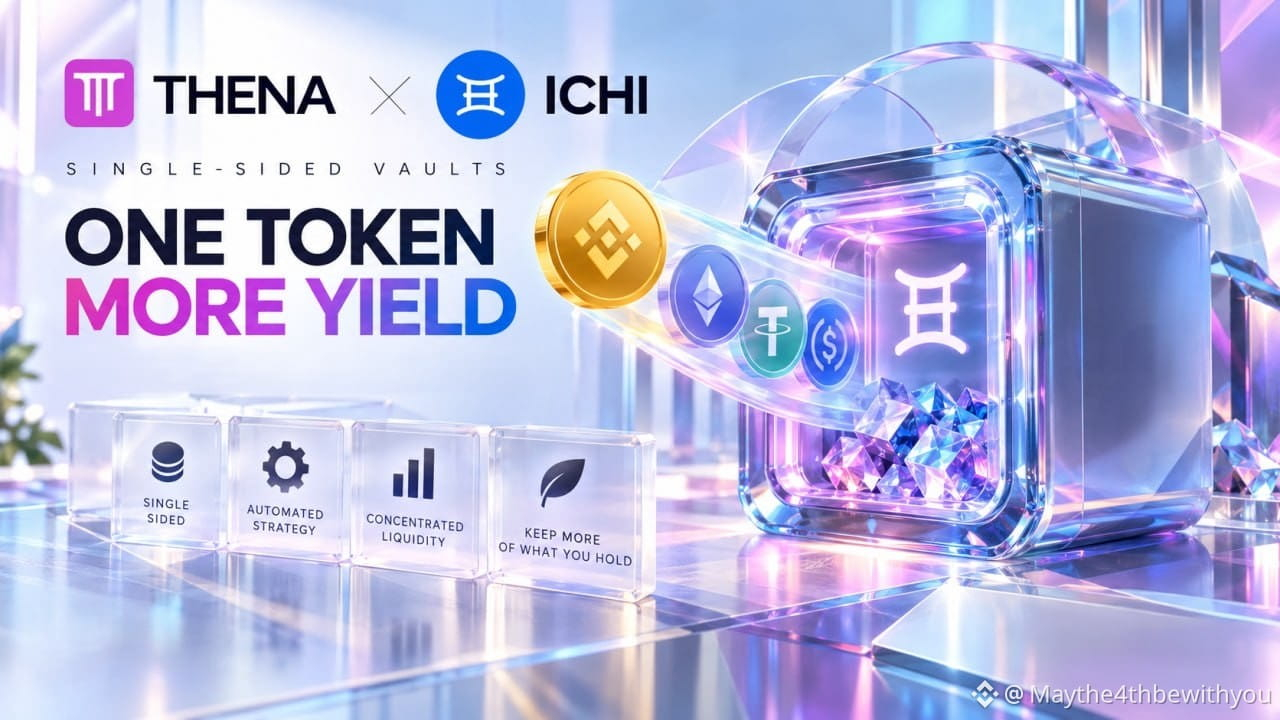
Most people meet #THENA through Swap.
But there’s an easier way to explore concentrated liquidity: ICHI single-sided vaults powered by #ichifoundation .
1/ You deposit one token. The strategy manages the LP position for you. No need to build a 50/50 pair or manage a price range yourself.
2/ ICHI is a #defi liquidity-management protocol integrated into selected THENA pools.
You choose one token to deposit, while the strategy manages how that capital is placed into concentrated liquidity and adjusts the position when needed.
3/ THENA’s ICHI strategies are designed to keep 65–95% of the position in the token you deposited.
In simple terms: you can earn from liquidity while keeping most of the position tilted toward the asset you actually wanted to hold.
4/ It's mostly for LPs and newcomers who want to provide liquidity without constantly adjusting ranges or buying both assets first.
And because THENA runs on #BNBChain , transactions remain fast and relatively inexpensive -useful when working with DeFi strategies.
5/ Why do people miss it?
Because it isn’t sitting on the Swap screen.
Open THENA Pools, choose a concentrated-liquidity pair and check the “Automated Strategy” section for ICHI.
6/ Before depositing, compare the ICHI APR with the risks of the underlying pair.
Automation removes a lot of $THE work. It does not remove LP risk.
APRs change. Not financial advice.
{spot}(THEUSDT)
Most people meet #THENA through Swap.
But there’s an easier way to explore concentrated liquidity: ICHI single-sided vaults powered by #ichifoundation .
1/ You deposit one token. The strategy manages the LP position for you. No need to build a 50/50 pair or manage a price range yourself.
2/ ICHI is a #defi liquidity-management protocol integrated into selected THENA pools.
You choose one token to deposit, while the strategy manages how that capital is placed into concentrated liquidity and adjusts the position when needed.
3/ THENA’s ICHI strategies are designed to keep 65–95% of the position in the token you deposited.
In simple terms: you can earn from liquidity while keeping most of the position tilted toward the asset you actually wanted to hold.
4/ It's mostly for LPs and newcomers who want to provide liquidity without constantly adjusting ranges or buying both assets first.
And because THENA runs on #BNBChain , transactions remain fast and relatively inexpensive -useful when working with DeFi strategies.
5/ Why do people miss it?
Because it isn’t sitting on the Swap screen.
Open THENA Pools, choose a concentrated-liquidity pair and check the “Automated Strategy” section for ICHI.
6/ Before depositing, compare the ICHI APR with the risks of the underlying pair.
Automation removes a lot of $THE work. It does not remove LP risk.
APRs change. Not financial advice.
But there’s an easier way to explore concentrated liquidity: ICHI single-sided vaults powered by #ichifoundation .
1/ You deposit one token. The strategy manages the LP position for you. No need to build a 50/50 pair or manage a price range yourself.
2/ ICHI is a #defi liquidity-management protocol integrated into selected THENA pools.
You choose one token to deposit, while the strategy manages how that capital is placed into concentrated liquidity and adjusts the position when needed.
3/ THENA’s ICHI strategies are designed to keep 65–95% of the position in the token you deposited.
In simple terms: you can earn from liquidity while keeping most of the position tilted toward the asset you actually wanted to hold.
4/ It's mostly for LPs and newcomers who want to provide liquidity without constantly adjusting ranges or buying both assets first.
And because THENA runs on #BNBChain , transactions remain fast and relatively inexpensive -useful when working with DeFi strategies.
5/ Why do people miss it?
Because it isn’t sitting on the Swap screen.
Open THENA Pools, choose a concentrated-liquidity pair and check the “Automated Strategy” section for ICHI.
6/ Before depositing, compare the ICHI APR with the risks of the underlying pair.
Automation removes a lot of $THE work. It does not remove LP risk.
APRs change. Not financial advice.
150

·
--
🚨 $USDe FLASH DEPEG TO $0.92 ON ORDER BOOKS BUT ON-CHAIN ANCHOR HOLDS STRONG! 🔍
📌 Order book liquidity for $USDe on top-tier exchange venues remains surprisingly thin, causing a momentary spike down to $0.92 while on-chain prices stayed rock solid. Smart capital knows thin order books create fake panic when collateral mechanics get tested. 📊
💡 The key detail scrollers are missing: index pricing now incorporates real-time redemption value rather than raw book quotes. This architectural upgrade prevents the collateral liquidation cascade we saw during past volatility events. 🌊
🤔 Is this order book lag a temporary inefficiency you are taking advantage of, or are you waiting for deeper book depth? 👇
⚠️ Not financial advice. Always manage your risk. 🛡️
🏷️ #USDe #Stablecoin #MarketAnalysis #DeFi
🔍 🛡️
🚨 $USDe FLASH DEPEG TO $0.92 ON ORDER BOOKS BUT ON-CHAIN ANCHOR HOLDS STRONG! 🔍
📌 Order book liquidity for $USDe on top-tier exchange venues remains surprisingly thin, causing a momentary spike down to $0.92 while on-chain prices stayed rock solid. Smart capital knows thin order books create fake panic when collateral mechanics get tested. 📊
💡 The key detail scrollers are missing: index pricing now incorporates real-time redemption value rather than raw book quotes. This architectural upgrade prevents the collateral liquidation cascade we saw during past volatility events. 🌊
🤔 Is this order book lag a temporary inefficiency you are taking advantage of, or are you waiting for deeper book depth? 👇
⚠️ Not financial advice. Always manage your risk. 🛡️
🏷️ #USDe #Stablecoin #MarketAnalysis #DeFi
🔍 🛡️
📌 Order book liquidity for $USDe on top-tier exchange venues remains surprisingly thin, causing a momentary spike down to $0.92 while on-chain prices stayed rock solid. Smart capital knows thin order books create fake panic when collateral mechanics get tested. 📊
💡 The key detail scrollers are missing: index pricing now incorporates real-time redemption value rather than raw book quotes. This architectural upgrade prevents the collateral liquidation cascade we saw during past volatility events. 🌊
🤔 Is this order book lag a temporary inefficiency you are taking advantage of, or are you waiting for deeper book depth? 👇
⚠️ Not financial advice. Always manage your risk. 🛡️
🏷️ #USDe #Stablecoin #MarketAnalysis #DeFi
🔍 🛡️
215

Vitalik Buterin's endorsement of Trueo highlights a growing shift toward decentralized prediction markets that prioritize user ethics over corporate interests. Moving to Ethereum gives this platform the robust security it needs to scale without compromising its core values. As the sector matures, community-driven alternatives are proving they can outpace traditional models by fostering true transparency and fairness for all participants. $ETH #Ethereum #PredictionMarkets #DeFi
Vitalik Buterin's endorsement of Trueo highlights a growing shift toward decentralized prediction markets that prioritize user ethics over corporate interests. Moving to Ethereum gives this platform the robust security it needs to scale without compromising its core values. As the sector matures, community-driven alternatives are proving they can outpace traditional models by fostering true transparency and fairness for all participants. $ETH #Ethereum #PredictionMarkets #DeFi
2

🚨 INSTITUTIONAL SMART MONEY ACCUMULATES $XSTABLE AS DAILY ON-CHAIN FOREX VOLUME CROSSES $100M! 🦈
Smart money positioning in the real-world asset sector is accelerating rapidly as $XSTABLE secures multi-million institutional backing to expand its on-chain gold and forex liquidity architecture. 🏦 With cumulative volume scaling past tens of billions and daily volume maintaining over $100M, institutional participants are establishing high-conviction exposure early. 📊
This deep order flow integration across major commodities and foreign exchange pairs creates an unprecedented structural moat for decentralized liquidity. 💡 Will on-chain institutional forex settlement become the dominant catalyst for the next cycle? 👇
⚠️ Not financial advice. Always manage your risk. 🛡️
🏷️ #XSTABLE #RWA #DeFi #Crypto
🎯 🦈
🚨 INSTITUTIONAL SMART MONEY ACCUMULATES $XSTABLE AS DAILY ON-CHAIN FOREX VOLUME CROSSES $100M! 🦈
Smart money positioning in the real-world asset sector is accelerating rapidly as $XSTABLE secures multi-million institutional backing to expand its on-chain gold and forex liquidity architecture. 🏦 With cumulative volume scaling past tens of billions and daily volume maintaining over $100M, institutional participants are establishing high-conviction exposure early. 📊
This deep order flow integration across major commodities and foreign exchange pairs creates an unprecedented structural moat for decentralized liquidity. 💡 Will on-chain institutional forex settlement become the dominant catalyst for the next cycle? 👇
⚠️ Not financial advice. Always manage your risk. 🛡️
🏷️ #XSTABLE #RWA #DeFi #Crypto
🎯 🦈
Smart money positioning in the real-world asset sector is accelerating rapidly as $XSTABLE secures multi-million institutional backing to expand its on-chain gold and forex liquidity architecture. 🏦 With cumulative volume scaling past tens of billions and daily volume maintaining over $100M, institutional participants are establishing high-conviction exposure early. 📊
This deep order flow integration across major commodities and foreign exchange pairs creates an unprecedented structural moat for decentralized liquidity. 💡 Will on-chain institutional forex settlement become the dominant catalyst for the next cycle? 👇
⚠️ Not financial advice. Always manage your risk. 🛡️
🏷️ #XSTABLE #RWA #DeFi #Crypto
🎯 🦈
22

·
--
One thing i keep coming back to with DeFi is composability.
it’s not just about having different protocols doing different things.
it’s about those pieces being able to work together.
an option shouldn’t have to exist in isolation.
when financial primitives can connect with other onchain applications, developers can build more around them and users can have more ways to interact with them.
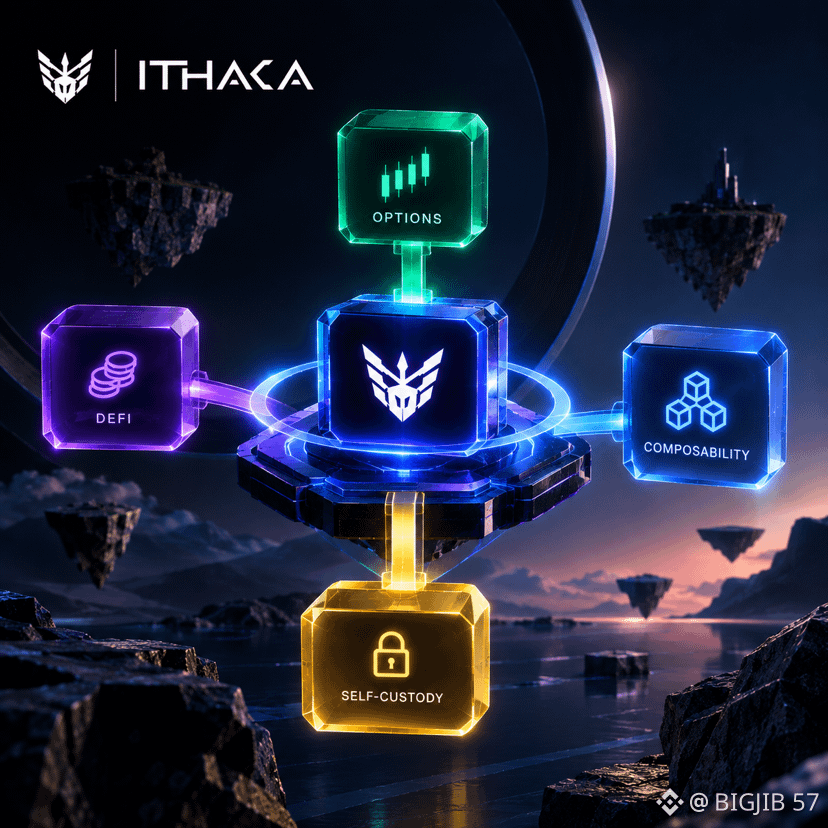
that’s one part of Ithaca i find interesting.
options + composability + self-custody.
simple ideas, but the possibilities around them are pretty big.
i’m still exploring the deeper mechanics, but this is the kind of infrastructure that keeps me digging.
#Ithaca #defi #Web3 #Onchain
One thing i keep coming back to with DeFi is composability.
it’s not just about having different protocols doing different things.
it’s about those pieces being able to work together.
an option shouldn’t have to exist in isolation.
when financial primitives can connect with other onchain applications, developers can build more around them and users can have more ways to interact with them.
that’s one part of Ithaca i find interesting.
options + composability + self-custody.
simple ideas, but the possibilities around them are pretty big.
i’m still exploring the deeper mechanics, but this is the kind of infrastructure that keeps me digging.
#Ithaca #defi #Web3 #Onchain
it’s not just about having different protocols doing different things.
it’s about those pieces being able to work together.
an option shouldn’t have to exist in isolation.
when financial primitives can connect with other onchain applications, developers can build more around them and users can have more ways to interact with them.
that’s one part of Ithaca i find interesting.
options + composability + self-custody.
simple ideas, but the possibilities around them are pretty big.
i’m still exploring the deeper mechanics, but this is the kind of infrastructure that keeps me digging.
#Ithaca #defi #Web3 #Onchain
67


·
--
🚨 Bitcoin holders may soon have another way to access dollar liquidity without selling BTC.
Circle has launched its Digital Asset-Backed Borrowing service on Sept. 21, allowing eligible institutions to deposit native Bitcoin through Circle Mint, mint cirBTC, and use it as collateral in a Morpho lending market to borrow USDC.
The key point is that the BTC itself is not sold. Instead, tokenized BTC becomes collateral while USDC is used for liquidity.
For treasury teams, this could simplify the process of accessing capital while maintaining Bitcoin exposure. But the risks remain important: borrowing costs, collateral limits, liquidation thresholds and available liquidity depend on the selected Morpho market.
The service is currently limited to eligible institutions and excludes New York clients.
From a trader’s view, this is another development connecting Bitcoin with institutional lending and dollar liquidity.
Do you think BTC-backed borrowing can become a bigger part of institutional crypto finance?
#Bitcoin #crypto #USDC #defi
🚨 Bitcoin holders may soon have another way to access dollar liquidity without selling BTC.
Circle has launched its Digital Asset-Backed Borrowing service on Sept. 21, allowing eligible institutions to deposit native Bitcoin through Circle Mint, mint cirBTC, and use it as collateral in a Morpho lending market to borrow USDC.
The key point is that the BTC itself is not sold. Instead, tokenized BTC becomes collateral while USDC is used for liquidity.
For treasury teams, this could simplify the process of accessing capital while maintaining Bitcoin exposure. But the risks remain important: borrowing costs, collateral limits, liquidation thresholds and available liquidity depend on the selected Morpho market.
The service is currently limited to eligible institutions and excludes New York clients.
From a trader’s view, this is another development connecting Bitcoin with institutional lending and dollar liquidity.
Do you think BTC-backed borrowing can become a bigger part of institutional crypto finance?
#Bitcoin #crypto #USDC #defi
Circle has launched its Digital Asset-Backed Borrowing service on Sept. 21, allowing eligible institutions to deposit native Bitcoin through Circle Mint, mint cirBTC, and use it as collateral in a Morpho lending market to borrow USDC.
The key point is that the BTC itself is not sold. Instead, tokenized BTC becomes collateral while USDC is used for liquidity.
For treasury teams, this could simplify the process of accessing capital while maintaining Bitcoin exposure. But the risks remain important: borrowing costs, collateral limits, liquidation thresholds and available liquidity depend on the selected Morpho market.
The service is currently limited to eligible institutions and excludes New York clients.
From a trader’s view, this is another development connecting Bitcoin with institutional lending and dollar liquidity.
Do you think BTC-backed borrowing can become a bigger part of institutional crypto finance?
#Bitcoin #crypto #USDC #defi
127
Trueo migrating its prediction market from Base back to Ethereum mainnet highlights a fascinating shift in L2 vs L1 strategy. While Base was ideal for early bootstrapping due to low fees, the mature Ethereum ecosystem now provides the deep liquidity and composability needed for advanced prediction protocols. This move proves L2s are fantastic launchpads, but high-value DeFi applications often return to mainnet for ultimate security and integration. $ETH #Ethereum #Base #DeFi
Trueo migrating its prediction market from Base back to Ethereum mainnet highlights a fascinating shift in L2 vs L1 strategy. While Base was ideal for early bootstrapping due to low fees, the mature Ethereum ecosystem now provides the deep liquidity and composability needed for advanced prediction protocols. This move proves L2s are fantastic launchpads, but high-value DeFi applications often return to mainnet for ultimate security and integration. $ETH #Ethereum #Base #DeFi
11

·
--
The most underexplored frontier in DeFi isn't a new AMM design or a flashier yield strategy — it's credit.
Everything in DeFi today runs on overcollateralization. You lock $100, you borrow $60. The system never trusts you — it trusts your collateral. This works beautifully for whales and protocols, but it completely locks out the 99% of economic activity that runs on actual credit: working capital, margin, trust-based lending, real-world commerce.
The reason matters. On-chain credit has two hard problems: identity and enforcement. Without a persistent identity layer, there's no way to track reputation. Without enforcement, there's no cost to default. So protocols overcorrect — they demand 150% collateral ratios, which makes DeFi lending a leverage tool rather than a credit tool.
But the primitives are forming. On-chain identity attestations, ZK reputation proofs, and protocol-level credit scoring are quietly maturing. A few protocols are testing undercollateralized loans backed by institutional balance sheets rather than smart contract collateral vaults. The bet: DeFi credit doesn't need to replace TradFi credit — it just needs to serve the borrowers TradFi ignores.
When credit works on-chain, DeFi stops being a casino with extra steps and becomes actual financial infrastructure. The protocol that solves trust-minimized credit at scale wins something bigger than TVL — it wins the real economy.
$ETH $SOL $BNB
#DeFi #CreditMarkets #OnChainIdentity #CryptoInfrastructure
The most underexplored frontier in DeFi isn't a new AMM design or a flashier yield strategy — it's credit.
Everything in DeFi today runs on overcollateralization. You lock $100, you borrow $60. The system never trusts you — it trusts your collateral. This works beautifully for whales and protocols, but it completely locks out the 99% of economic activity that runs on actual credit: working capital, margin, trust-based lending, real-world commerce.
The reason matters. On-chain credit has two hard problems: identity and enforcement. Without a persistent identity layer, there's no way to track reputation. Without enforcement, there's no cost to default. So protocols overcorrect — they demand 150% collateral ratios, which makes DeFi lending a leverage tool rather than a credit tool.
But the primitives are forming. On-chain identity attestations, ZK reputation proofs, and protocol-level credit scoring are quietly maturing. A few protocols are testing undercollateralized loans backed by institutional balance sheets rather than smart contract collateral vaults. The bet: DeFi credit doesn't need to replace TradFi credit — it just needs to serve the borrowers TradFi ignores.
When credit works on-chain, DeFi stops being a casino with extra steps and becomes actual financial infrastructure. The protocol that solves trust-minimized credit at scale wins something bigger than TVL — it wins the real economy.
$ETH $SOL $BNB
#DeFi #CreditMarkets #OnChainIdentity #CryptoInfrastructure
Everything in DeFi today runs on overcollateralization. You lock $100, you borrow $60. The system never trusts you — it trusts your collateral. This works beautifully for whales and protocols, but it completely locks out the 99% of economic activity that runs on actual credit: working capital, margin, trust-based lending, real-world commerce.
The reason matters. On-chain credit has two hard problems: identity and enforcement. Without a persistent identity layer, there's no way to track reputation. Without enforcement, there's no cost to default. So protocols overcorrect — they demand 150% collateral ratios, which makes DeFi lending a leverage tool rather than a credit tool.
But the primitives are forming. On-chain identity attestations, ZK reputation proofs, and protocol-level credit scoring are quietly maturing. A few protocols are testing undercollateralized loans backed by institutional balance sheets rather than smart contract collateral vaults. The bet: DeFi credit doesn't need to replace TradFi credit — it just needs to serve the borrowers TradFi ignores.
When credit works on-chain, DeFi stops being a casino with extra steps and becomes actual financial infrastructure. The protocol that solves trust-minimized credit at scale wins something bigger than TVL — it wins the real economy.
$ETH $SOL $BNB
#DeFi #CreditMarkets #OnChainIdentity #CryptoInfrastructure
156

·
--
INSTITUTIONAL FLOWS REWRITE $HYPE DYNAMICS AS PROTOCOL REVENUE TOUCHES 65M DOLLARS 🦈 ⚡
Hyperliquid is demonstrating true fundamental expansion, printing over 10B dollars in 24-hour perp volume while September open interest surged toward 14.3B dollars. 📊 Real protocol revenue generated 65M dollars over 30 days, signaling institutional liquidity capturing structural market share beyond mere speculation.
The growth engine extends into HIP-3 custom markets, driving up to 50 percent of volume, though core crypto perps remain the primary catalyst directly acquiring $HYPE via fee mechanics. 🔍 As venue infrastructure expands across real-world assets and direct access rails, protocol volume quality dictates long-term tokenomics.
💬 Is $HYPE evolving into the primary institutional liquidity hub for on-chain derivatives, or will fee splits dilute token buybacks? 👇
⚠️ Not financial advice. Always manage your risk. 🛡️
🏷️ #HYPE #DeFi #MarketStructure #Crypto
🦈 ⚡
INSTITUTIONAL FLOWS REWRITE $HYPE DYNAMICS AS PROTOCOL REVENUE TOUCHES 65M DOLLARS 🦈 ⚡
Hyperliquid is demonstrating true fundamental expansion, printing over 10B dollars in 24-hour perp volume while September open interest surged toward 14.3B dollars. 📊 Real protocol revenue generated 65M dollars over 30 days, signaling institutional liquidity capturing structural market share beyond mere speculation.
The growth engine extends into HIP-3 custom markets, driving up to 50 percent of volume, though core crypto perps remain the primary catalyst directly acquiring $HYPE via fee mechanics. 🔍 As venue infrastructure expands across real-world assets and direct access rails, protocol volume quality dictates long-term tokenomics.
💬 Is $HYPE evolving into the primary institutional liquidity hub for on-chain derivatives, or will fee splits dilute token buybacks? 👇
⚠️ Not financial advice. Always manage your risk. 🛡️
🏷️ #HYPE #DeFi #MarketStructure #Crypto
🦈 ⚡
Hyperliquid is demonstrating true fundamental expansion, printing over 10B dollars in 24-hour perp volume while September open interest surged toward 14.3B dollars. 📊 Real protocol revenue generated 65M dollars over 30 days, signaling institutional liquidity capturing structural market share beyond mere speculation.
The growth engine extends into HIP-3 custom markets, driving up to 50 percent of volume, though core crypto perps remain the primary catalyst directly acquiring $HYPE via fee mechanics. 🔍 As venue infrastructure expands across real-world assets and direct access rails, protocol volume quality dictates long-term tokenomics.
💬 Is $HYPE evolving into the primary institutional liquidity hub for on-chain derivatives, or will fee splits dilute token buybacks? 👇
⚠️ Not financial advice. Always manage your risk. 🛡️
🏷️ #HYPE #DeFi #MarketStructure #Crypto
🦈 ⚡
81

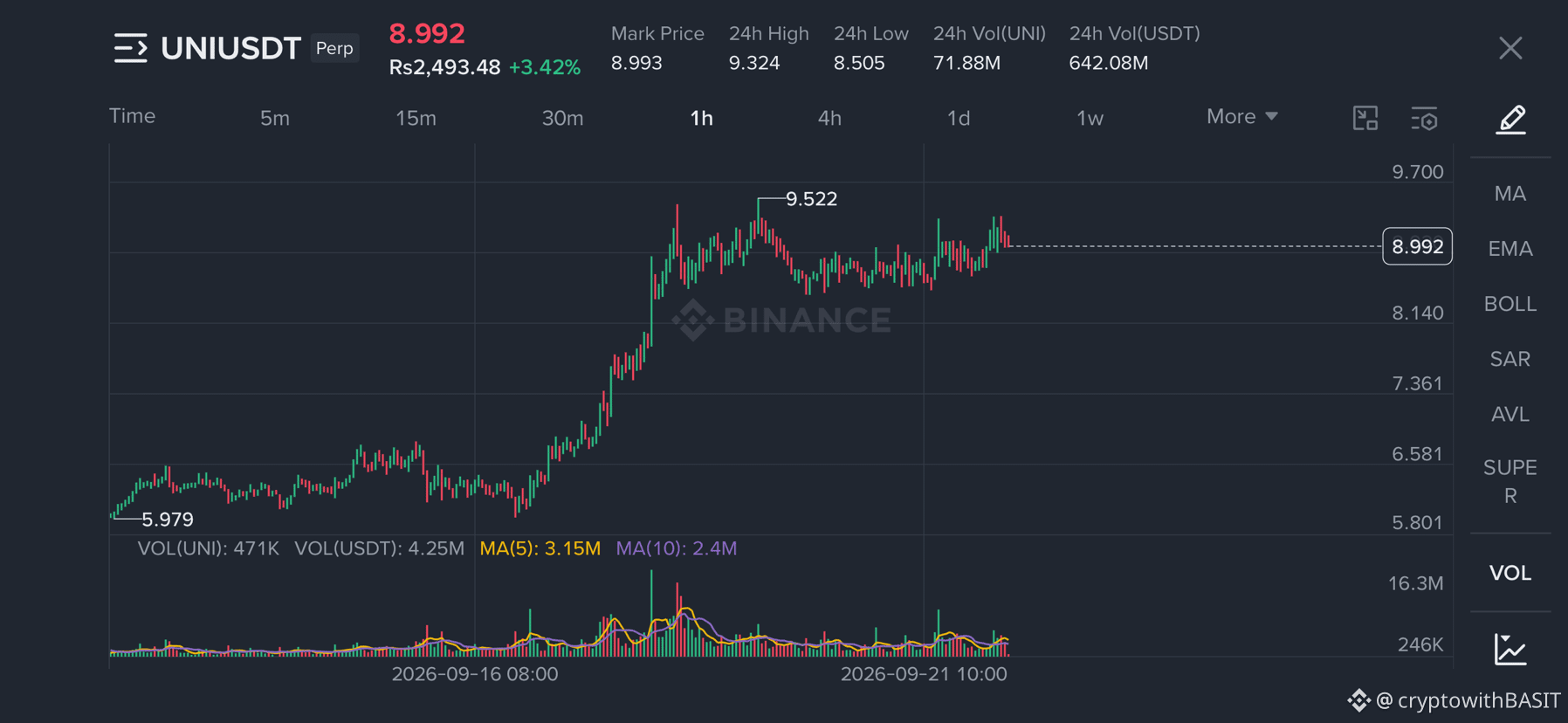
🦄 $UNI — DeFi Setup Worth Watching
$UNI is showing renewed strength as capital rotates into major altcoins.
📍 Entry zone: $8.45 – $8.70
🎯 TP1: $9.10
🎯 TP2: $9.60
🎯 TP3: $10.20
🛑 SL: $8.05
A clean breakout with volume could strengthen the bullish structure. A rejection may send price back toward the entry zone.
Trade the confirmation, not the hype.
#UNI #defi #crypto #Altcoins
{future}(UNIUSDT)
🦄 $UNI — DeFi Setup Worth Watching
$UNI is showing renewed strength as capital rotates into major altcoins.
📍 Entry zone: $8.45 – $8.70
🎯 TP1: $9.10
🎯 TP2: $9.60
🎯 TP3: $10.20
🛑 SL: $8.05
A clean breakout with volume could strengthen the bullish structure. A rejection may send price back toward the entry zone.
Trade the confirmation, not the hype.
#UNI #defi #crypto #Altcoins
$UNI is showing renewed strength as capital rotates into major altcoins.
📍 Entry zone: $8.45 – $8.70
🎯 TP1: $9.10
🎯 TP2: $9.60
🎯 TP3: $10.20
🛑 SL: $8.05
A clean breakout with volume could strengthen the bullish structure. A rejection may send price back toward the entry zone.
Trade the confirmation, not the hype.
#UNI #defi #crypto #Altcoins
103
Circle is making waves by letting institutions unlock USDC liquidity directly using Bitcoin as collateral, but there is a catch. While the Mint workflow streamlines operations, Morpho protocol handles the actual rules and liquidation risks. This move highlights a growing trend of traditional stablecoin issuers partnering with DeFi infrastructure to scale institutional borrowing without taking on direct credit exposure themselves. Smart division of labor, or added systemic complexity? $USDC $BTC #Circle #DeFi #Bitcoin
Circle is making waves by letting institutions unlock USDC liquidity directly using Bitcoin as collateral, but there is a catch. While the Mint workflow streamlines operations, Morpho protocol handles the actual rules and liquidation risks. This move highlights a growing trend of traditional stablecoin issuers partnering with DeFi infrastructure to scale institutional borrowing without taking on direct credit exposure themselves. Smart division of labor, or added systemic complexity? $USDC $BTC #Circle #DeFi #Bitcoin
37

$SNX -- Synthetix remains an important derivatives-focused DeFi name. Derivatives volume and protocol activity are key metrics to monitor.
{spot}(SNXUSDT)
$DYDX — dYdX remains strongly associated with decentralized perpetual trading. Rising derivatives activity could make DYDX particularly interesting.
{spot}(DYDXUSDT)
$GMX — GMX continues operating in the decentralized perpetuals space. Increased on-chain leverage demand can bring renewed attention to GMX.
{spot}(GMXUSDT)
#SNX #DYDX #GMX #DeFi #Trading
$SNX -- Synthetix remains an important derivatives-focused DeFi name. Derivatives volume and protocol activity are key metrics to monitor.
$DYDX — dYdX remains strongly associated with decentralized perpetual trading. Rising derivatives activity could make DYDX particularly interesting.
$GMX — GMX continues operating in the decentralized perpetuals space. Increased on-chain leverage demand can bring renewed attention to GMX.
#SNX #DYDX #GMX #DeFi #Trading
$DYDX — dYdX remains strongly associated with decentralized perpetual trading. Rising derivatives activity could make DYDX particularly interesting.
$GMX — GMX continues operating in the decentralized perpetuals space. Increased on-chain leverage demand can bring renewed attention to GMX.
#SNX #DYDX #GMX #DeFi #Trading

105
$LDO — Lido remains one of the most recognizable Ethereum staking protocols. Changes in ETH staking activity can directly influence attention around LDO.
{spot}(LDOUSDT)
$CRV — Curve remains deeply connected to stablecoin and DeFi liquidity. Increasing DeFi volumes could make CRV’s chart more active.
{spot}(CRVUSDT)
$COMP — Compound remains an established DeFi lending protocol. A resurgence in lending activity could put COMP back under the spotlight.
{spot}(COMPUSDT)
#LDO #CRV #COMP #DeFi #CryptoTrading
$LDO — Lido remains one of the most recognizable Ethereum staking protocols. Changes in ETH staking activity can directly influence attention around LDO.
$CRV — Curve remains deeply connected to stablecoin and DeFi liquidity. Increasing DeFi volumes could make CRV’s chart more active.
$COMP — Compound remains an established DeFi lending protocol. A resurgence in lending activity could put COMP back under the spotlight.
#LDO #CRV #COMP #DeFi #CryptoTrading
$CRV — Curve remains deeply connected to stablecoin and DeFi liquidity. Increasing DeFi volumes could make CRV’s chart more active.
$COMP — Compound remains an established DeFi lending protocol. A resurgence in lending activity could put COMP back under the spotlight.
#LDO #CRV #COMP #DeFi #CryptoTrading

280
$ETHFI — Ether.fi remains closely tied to Ethereum liquid-restaking activity. ETH ecosystem strength can provide an important backdrop for ETHFI.
{spot}(ETHFIUSDT)
$EIGEN — EigenLayer remains a major Ethereum restaking narrative. Changes in staking and AVS activity can influence attention around EIGEN.
{spot}(EIGENUSDT)
$PENDLE — Pendle remains a key DeFi yield-trading protocol. Yield narratives and changing market rates can create interesting volatility.
{spot}(PENDLEUSDT)
#ETHFI #EIGEN #PENDLE #DeFi #Trading
$ETHFI — Ether.fi remains closely tied to Ethereum liquid-restaking activity. ETH ecosystem strength can provide an important backdrop for ETHFI.
$EIGEN — EigenLayer remains a major Ethereum restaking narrative. Changes in staking and AVS activity can influence attention around EIGEN.
$PENDLE — Pendle remains a key DeFi yield-trading protocol. Yield narratives and changing market rates can create interesting volatility.
#ETHFI #EIGEN #PENDLE #DeFi #Trading
$EIGEN — EigenLayer remains a major Ethereum restaking narrative. Changes in staking and AVS activity can influence attention around EIGEN.
$PENDLE — Pendle remains a key DeFi yield-trading protocol. Yield narratives and changing market rates can create interesting volatility.
#ETHFI #EIGEN #PENDLE #DeFi #Trading

2
Log in to explore more content
Join global crypto users on Binance Square
⚡️ Get latest and useful information about crypto.
💬 Trusted by the world’s largest crypto exchange.
👍 Discover real insights from verified creators.
Email / Phone number
Trending Topics
1
#AIStocksWhatNext
141,962 views
1,703 Discussing
2
#BitcoinBreaksAboveMayHighNears$86K
3,577 views
68 Discussing
3
#DogecoinRises15%
8,921 views
409 Discussing
4
#$14BBitcoinOptionsExpireFriday
424 views
39 Discussing
5
#BNBMarketCapPassesBNYMellon
4,720 views
297 Discussing
6
#CryptoMarketCapReclaims$3Trillion
877 views
37 Discussing
7
#MuseOvertakesChatGPTAsTopFreeIOSApp
4,768 views
283 Discussing
8
#TokenizedStockPlatformsCouldLaunchNextQuarter
7,323 views
316 Discussing
9
#StrategyAdds950Bitcoin
11,874 views
410 Discussing
10
#CardanoAddedToX402KitForADAPayments
16,223 views
508 Discussing