

#cryptotrends
cryptotrends
4.5M views
12,292 Discussing
Hot
Latest

“Is the next crypto trend AI agents, RWA, or DeFi revival? Here’s what I’m watching in 2026.”
Hashtags:
#CryptoTrends #AIcrypto #RWA #DeFi #BinanceSquare #CryptoCommunity #Altcoins #MarketAnalysis
“Is the next crypto trend AI agents, RWA, or DeFi revival? Here’s what I’m watching in 2026.”
Hashtags:
#CryptoTrends #AIcrypto #RWA #DeFi #BinanceSquare #CryptoCommunity #Altcoins #MarketAnalysis
Hashtags:
#CryptoTrends #AIcrypto #RWA #DeFi #BinanceSquare #CryptoCommunity #Altcoins #MarketAnalysis
63

🚀 Bitcoin & Crypto Market 2026: What’s Coming Next?
Bitcoin remains at the center of the crypto market, while Ethereum, AI crypto projects, RWA tokens and emerging altcoins are creating new opportunities in 2026. 📈
🔥 Which crypto trend could dominate next?
Read the full analysis here:
https://cryptoalertpk.blogspot.com/2026/08/bitcoin-crypto-market-2026-top-trends.html
#Bitcoin #Crypto #Crypto2026 #Ethereum #CryptoTrends
🚀 Bitcoin & Crypto Market 2026: What’s Coming Next?
Bitcoin remains at the center of the crypto market, while Ethereum, AI crypto projects, RWA tokens and emerging altcoins are creating new opportunities in 2026. 📈
🔥 Which crypto trend could dominate next?
Read the full analysis here:
https://cryptoalertpk.blogspot.com/2026/08/bitcoin-crypto-market-2026-top-trends.html
#Bitcoin #Crypto #Crypto2026 #Ethereum #CryptoTrends
Bitcoin remains at the center of the crypto market, while Ethereum, AI crypto projects, RWA tokens and emerging altcoins are creating new opportunities in 2026. 📈
🔥 Which crypto trend could dominate next?
Read the full analysis here:
https://cryptoalertpk.blogspot.com/2026/08/bitcoin-crypto-market-2026-top-trends.html
#Bitcoin #Crypto #Crypto2026 #Ethereum #CryptoTrends

110
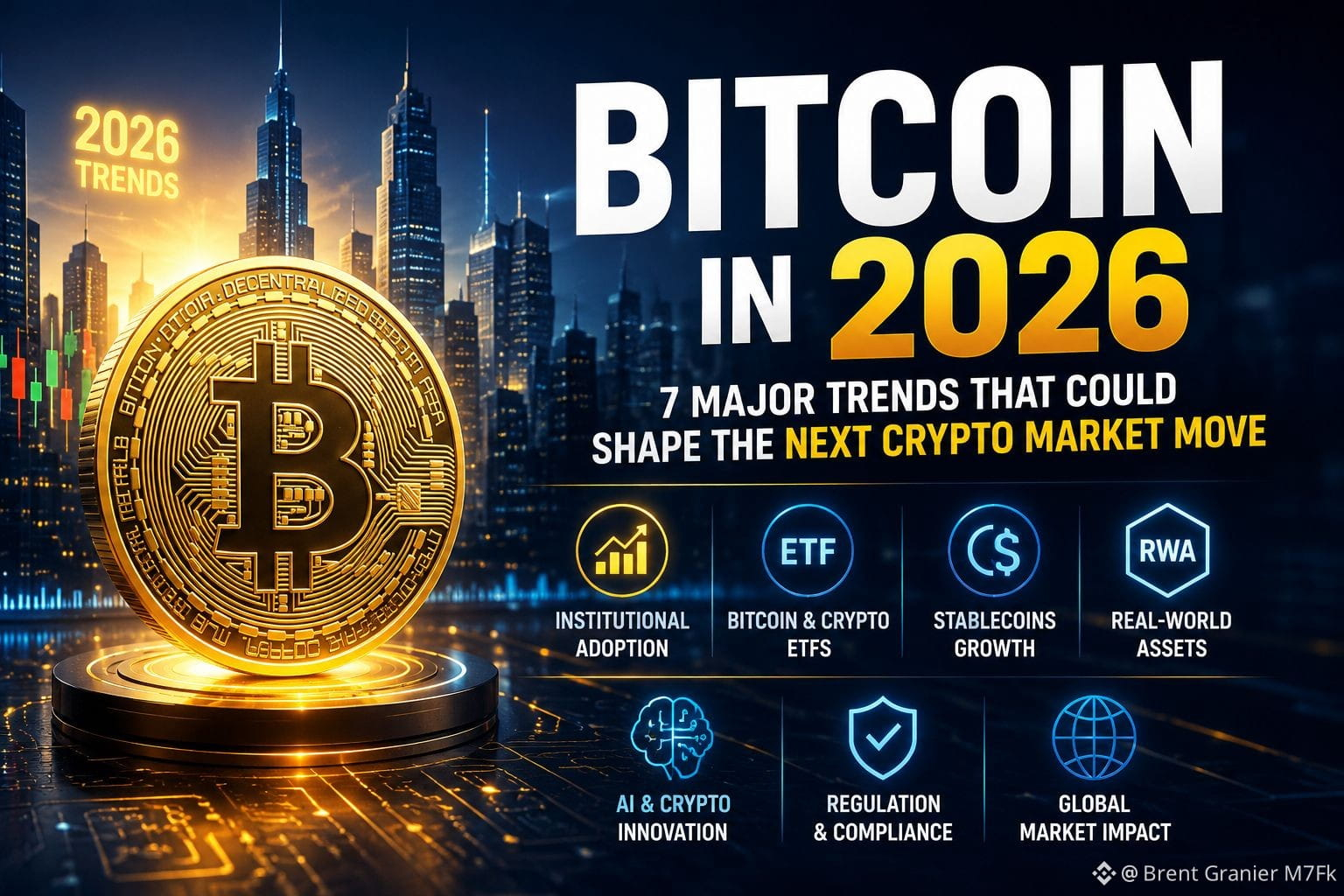
🚨 BITCOIN 2026: 7 CRYPTO TRENDS YOU CAN’T IGNORE 🔥
Bitcoin is still at the center of the crypto market, but 2026 could be shaped by much more than BTC price action.
Here are 7 major trends to watch 👇
₿ Bitcoin & institutional adoption
📈 Crypto & Bitcoin ETFs
💵 Stablecoin growth
🌎 Real-World Asset (RWA) tokenization
🤖 AI + Crypto innovation
🛡️ Regulation & compliance
🌐 Global crypto market expansion
The next major crypto move could be influenced by liquidity, institutional demand, ETF activity, regulation and blockchain adoption.
👉 Read the full breakdown here:
https://cryptoalertpk.blogspot.com/2026/08/bitcoin-2026-7-major-crypto-trends-that.html
What do you think will be the BIGGEST crypto trend of 2026? 👇
#Bitcoin #BT #Crypto #BinanceSquare #CryptoTrends
🚨 BITCOIN 2026: 7 CRYPTO TRENDS YOU CAN’T IGNORE 🔥
Bitcoin is still at the center of the crypto market, but 2026 could be shaped by much more than BTC price action.
Here are 7 major trends to watch 👇
₿ Bitcoin & institutional adoption
📈 Crypto & Bitcoin ETFs
💵 Stablecoin growth
🌎 Real-World Asset (RWA) tokenization
🤖 AI + Crypto innovation
🛡️ Regulation & compliance
🌐 Global crypto market expansion
The next major crypto move could be influenced by liquidity, institutional demand, ETF activity, regulation and blockchain adoption.
👉 Read the full breakdown here:
https://cryptoalertpk.blogspot.com/2026/08/bitcoin-2026-7-major-crypto-trends-that.html
What do you think will be the BIGGEST crypto trend of 2026? 👇
#Bitcoin #BT #Crypto #BinanceSquare #CryptoTrends
Bitcoin is still at the center of the crypto market, but 2026 could be shaped by much more than BTC price action.
Here are 7 major trends to watch 👇
₿ Bitcoin & institutional adoption
📈 Crypto & Bitcoin ETFs
💵 Stablecoin growth
🌎 Real-World Asset (RWA) tokenization
🤖 AI + Crypto innovation
🛡️ Regulation & compliance
🌐 Global crypto market expansion
The next major crypto move could be influenced by liquidity, institutional demand, ETF activity, regulation and blockchain adoption.
👉 Read the full breakdown here:
https://cryptoalertpk.blogspot.com/2026/08/bitcoin-2026-7-major-crypto-trends-that.html
What do you think will be the BIGGEST crypto trend of 2026? 👇
#Bitcoin #BT #Crypto #BinanceSquare #CryptoTrends
105

Prediction markets are officially crossing into mainstream culture. By bringing in Hollywood star Sydney Sweeney for its latest campaign, sports betting platform Novig shows these protocols are shedding their niche, probability-nerd image. Crypto-backed and decentralized forecasting tools are no longer just for internet degens—they are targeting prime-time audiences. As marketing budgets swell, user acquisition is shifting from crypto-native circles to mainstream sports fans everywhere. #PredictionMarkets #CryptoTrends #Web3
Prediction markets are officially crossing into mainstream culture. By bringing in Hollywood star Sydney Sweeney for its latest campaign, sports betting platform Novig shows these protocols are shedding their niche, probability-nerd image. Crypto-backed and decentralized forecasting tools are no longer just for internet degens—they are targeting prime-time audiences. As marketing budgets swell, user acquisition is shifting from crypto-native circles to mainstream sports fans everywhere. #PredictionMarkets #CryptoTrends #Web3
25

·
--
Bullish
$AAPLB $NVDA.US $AAPL.US
{stock_us}(AAPL.US)
🤖 AI & Crypto Convergence is Growing Faster Than Ever!
Artificial Intelligence tokens like $FET, $NEAR, and $RNDR are gaining massive traction due to real-world utility and adoption.
Do you think AI tokens will lead the next bull run? Share your favorite AI crypto project! 👇
#AICrypto #Web3 #FutureTech #CryptoTrends
$AAPLB $NVDA.US $AAPL.US
🤖 AI & Crypto Convergence is Growing Faster Than Ever!
Artificial Intelligence tokens like $FET, $NEAR, and $RNDR are gaining massive traction due to real-world utility and adoption.
Do you think AI tokens will lead the next bull run? Share your favorite AI crypto project! 👇
#AICrypto #Web3 #FutureTech #CryptoTrends
🤖 AI & Crypto Convergence is Growing Faster Than Ever!
Artificial Intelligence tokens like $FET, $NEAR, and $RNDR are gaining massive traction due to real-world utility and adoption.
Do you think AI tokens will lead the next bull run? Share your favorite AI crypto project! 👇
#AICrypto #Web3 #FutureTech #CryptoTrends
35

$SUI is showing exactly the kind of momentum altcoin traders watch for.
$SUI is around $1.01–$1.02, with roughly 30%+ gains over 7 days and heavy trading volume.
Sui’s recent DeepBook launch is adding fresh ecosystem activity to the narrative.
The key technical area is around $0.96 support, while ~$1.08 is the recent high zone.
⚠️ There’s also a 64M-token unlock scheduled for October 1, so volatility could remain high.
{future}(SUIUSDT)
#sui #altcoins #cryptotrends
$SUI is showing exactly the kind of momentum altcoin traders watch for.
$SUI is around $1.01–$1.02, with roughly 30%+ gains over 7 days and heavy trading volume.
Sui’s recent DeepBook launch is adding fresh ecosystem activity to the narrative.
The key technical area is around $0.96 support, while ~$1.08 is the recent high zone.
⚠️ There’s also a 64M-token unlock scheduled for October 1, so volatility could remain high.
#sui #altcoins #cryptotrends
$SUI is around $1.01–$1.02, with roughly 30%+ gains over 7 days and heavy trading volume.
Sui’s recent DeepBook launch is adding fresh ecosystem activity to the narrative.
The key technical area is around $0.96 support, while ~$1.08 is the recent high zone.
⚠️ There’s also a 64M-token unlock scheduled for October 1, so volatility could remain high.
#sui #altcoins #cryptotrends

71
Order blocks on Theta Network ( THETA ) signal a bullish pivot while liquidity spiking indicates growing institutional interest. LiteBit ( LITEB ) shows strong volume, hinting at expanding adoption in payment ecosystems. Melt ( MMT ) sustains momentum with innovation in DeFi protocols, boosting investor sentiment. 🚀📈 #ThetaNetwork #LiteBit #Melt #CryptoTrends
Order blocks on Theta Network ( THETA ) signal a bullish pivot while liquidity spiking indicates growing institutional interest. LiteBit ( LITEB ) shows strong volume, hinting at expanding adoption in payment ecosystems. Melt ( MMT ) sustains momentum with innovation in DeFi protocols, boosting investor sentiment. 🚀📈 #ThetaNetwork #LiteBit #Melt #CryptoTrends
104
Apple (AAPLB) is carving out a bullish zone as order blocks on the daily surface, volume surging, and liquidity tightening. Zilliqa (ZIL) keeps pushing innovation with sharding upgrades, drawing institutional interest and expanding its ecosystem. NEO (NEO) sees a surge in smart contract activity, adoption climbing, and investor sentiment turning positive. Momentum builds across the trio. 🚀📈 #Apple #Zilliqa #NEO #CryptoTrends
Apple (AAPLB) is carving out a bullish zone as order blocks on the daily surface, volume surging, and liquidity tightening. Zilliqa (ZIL) keeps pushing innovation with sharding upgrades, drawing institutional interest and expanding its ecosystem. NEO (NEO) sees a surge in smart contract activity, adoption climbing, and investor sentiment turning positive. Momentum builds across the trio. 🚀📈 #Apple #Zilliqa #NEO #CryptoTrends
215

Order blocks on Vanry (VANRY) signal a bullish shift as volume surges, while Soxsb (SOXSB) shows steady momentum backed by growing ecosystem activity. Internet of Services Token (IOST) continues to innovate, boosting liquidity and attracting investor sentiment. Trading activity across the trio hints at a broader adoption wave. 🚀📈 #Vanry #Soxsb #IOST #CryptoTrends
Order blocks on Vanry (VANRY) signal a bullish shift as volume surges, while Soxsb (SOXSB) shows steady momentum backed by growing ecosystem activity. Internet of Services Token (IOST) continues to innovate, boosting liquidity and attracting investor sentiment. Trading activity across the trio hints at a broader adoption wave. 🚀📈 #Vanry #Soxsb #IOST #CryptoTrends
117
Order blocks on Morpho (MORPHO) signal a bullish stance while rising volume on Thorchain (RUNE) confirms momentum. Jupiter (JUP) attracts liquidity as its ecosystem expands, driving higher trading activity and positive investor sentiment. Innovation in cross chain swaps and DeFi protocols keeps these assets in the spotlight. 🚀📈💹 #DeFi #CryptoTrends #Blockchain
Order blocks on Morpho (MORPHO) signal a bullish stance while rising volume on Thorchain (RUNE) confirms momentum. Jupiter (JUP) attracts liquidity as its ecosystem expands, driving higher trading activity and positive investor sentiment. Innovation in cross chain swaps and DeFi protocols keeps these assets in the spotlight. 🚀📈💹 #DeFi #CryptoTrends #Blockchain
118
BTC ( BTC ) surges as institutional order blocks swell, signaling bullish momentum. ETH ( ETH ) follows with DeFi adoption, liquidity pools expanding. XRP ( XRP ) rides cross border innovation, growing ecosystem partnerships. Strong buy recommendation across all three, as volume confirms market confidence. 🚀📈 #CryptoTrends #SMC #BinanceSquare
BTC ( BTC ) surges as institutional order blocks swell, signaling bullish momentum. ETH ( ETH ) follows with DeFi adoption, liquidity pools expanding. XRP ( XRP ) rides cross border innovation, growing ecosystem partnerships. Strong buy recommendation across all three, as volume confirms market confidence. 🚀📈 #CryptoTrends #SMC #BinanceSquare
42
Prediction markets are evolving from mere sports betting novelties into serious financial powerhouses. According to Bernstein, trading volume could skyrocket to $10 trillion by 2035 as traditional financial assets take over the sector. This massive growth signals a paradigm shift in how global events and economic outcomes are priced in real time. Decentralized forecasting platforms are uniquely positioned to capture this wave, bridging speculation with deep financial utility. The future of risk management is decentralized. #CryptoTrends #PredictionMarkets #DeFi
Prediction markets are evolving from mere sports betting novelties into serious financial powerhouses. According to Bernstein, trading volume could skyrocket to $10 trillion by 2035 as traditional financial assets take over the sector. This massive growth signals a paradigm shift in how global events and economic outcomes are priced in real time. Decentralized forecasting platforms are uniquely positioned to capture this wave, bridging speculation with deep financial utility. The future of risk management is decentralized. #CryptoTrends #PredictionMarkets #DeFi

·
--
Bullish
Observing the market over the past few months, it’s hard not to notice the main trend: crypto has finally stopped living in its own isolated vacuum and is increasingly intertwining with traditional finance (TradFi). Macro indicators, interest-rate decisions, and the dynamics of stock indexes now move the crypto market even more strongly than purely industry-internal news.
That’s why the development of the TradFi direction and products at the intersection of markets on Binance is a direct response to traders’ current demand. Today, large capital and regular investors are looking for balance. When a prolonged uncertainty or a sharp correction hits the crypto market, a significant portion of liquidity seeks protection in the classic sectors of the economy. The ability to interact with TradFi instruments directly inside a crypto exchange reflects the maturing of the entire industry: hype gives way to thoughtful risk management, and the blurring of boundaries between crypto and traditional markets becomes the main driver of this cycle.
And do you feel how macroeconomics and TradFi are currently setting the rules in crypto?
#TradFi #MarketOverview #BinanceSquare #CryptoTrends
Observing the market over the past few months, it’s hard not to notice the main trend: crypto has finally stopped living in its own isolated vacuum and is increasingly intertwining with traditional finance (TradFi). Macro indicators, interest-rate decisions, and the dynamics of stock indexes now move the crypto market even more strongly than purely industry-internal news.
That’s why the development of the TradFi direction and products at the intersection of markets on Binance is a direct response to traders’ current demand. Today, large capital and regular investors are looking for balance. When a prolonged uncertainty or a sharp correction hits the crypto market, a significant portion of liquidity seeks protection in the classic sectors of the economy. The ability to interact with TradFi instruments directly inside a crypto exchange reflects the maturing of the entire industry: hype gives way to thoughtful risk management, and the blurring of boundaries between crypto and traditional markets becomes the main driver of this cycle.
And do you feel how macroeconomics and TradFi are currently setting the rules in crypto?
#TradFi #MarketOverview #BinanceSquare #CryptoTrends
That’s why the development of the TradFi direction and products at the intersection of markets on Binance is a direct response to traders’ current demand. Today, large capital and regular investors are looking for balance. When a prolonged uncertainty or a sharp correction hits the crypto market, a significant portion of liquidity seeks protection in the classic sectors of the economy. The ability to interact with TradFi instruments directly inside a crypto exchange reflects the maturing of the entire industry: hype gives way to thoughtful risk management, and the blurring of boundaries between crypto and traditional markets becomes the main driver of this cycle.
And do you feel how macroeconomics and TradFi are currently setting the rules in crypto?
#TradFi #MarketOverview #BinanceSquare #CryptoTrends
1
87

·
--
Today's Trending Crypto Movers — Sept 22 🚀
Altcoins and meme tokens are seeing massive volatility today. Here is the quick breakdown of what is catching the market's attention:
🔥 Top Gainers:
* $FORM (Four): Leading the charge on Binance with a massive +36% surge.
* $PHA (Phala Network): Catching strong momentum, up over +32%.
* $MUBARAK: Breaking out with a +31% gain as trading volume spikes.
* $PEPE: The frog is back in action, jumping +21% and dominating social trends.
* $AIOZ (AIOZ Network): Seeing huge broader market strength, climbing over +46%.
📉 Taking a Breather:
* $COTI: Currently facing a correction, down -18%.
* $STRK (Starknet): Cooling off with an -11% dip.
👀 Community Watchlist:
$DOGE and $TAO remain heavily discussed across social channels with strong trading volumes today.
What are you trading today? Let me know in the comments! 👇
#Crypto #BinanceSquare #PEPE #Altcoins #Trading #CryptoTrends
Today's Trending Crypto Movers — Sept 22 🚀
Altcoins and meme tokens are seeing massive volatility today. Here is the quick breakdown of what is catching the market's attention:
🔥 Top Gainers:
* $FORM (Four): Leading the charge on Binance with a massive +36% surge.
* $PHA (Phala Network): Catching strong momentum, up over +32%.
* $MUBARAK: Breaking out with a +31% gain as trading volume spikes.
* $PEPE: The frog is back in action, jumping +21% and dominating social trends.
* $AIOZ (AIOZ Network): Seeing huge broader market strength, climbing over +46%.
📉 Taking a Breather:
* $COTI: Currently facing a correction, down -18%.
* $STRK (Starknet): Cooling off with an -11% dip.
👀 Community Watchlist:
$DOGE and $TAO remain heavily discussed across social channels with strong trading volumes today.
What are you trading today? Let me know in the comments! 👇
#Crypto #BinanceSquare #PEPE #Altcoins #Trading #CryptoTrends
Altcoins and meme tokens are seeing massive volatility today. Here is the quick breakdown of what is catching the market's attention:
🔥 Top Gainers:
* $FORM (Four): Leading the charge on Binance with a massive +36% surge.
* $PHA (Phala Network): Catching strong momentum, up over +32%.
* $MUBARAK: Breaking out with a +31% gain as trading volume spikes.
* $PEPE: The frog is back in action, jumping +21% and dominating social trends.
* $AIOZ (AIOZ Network): Seeing huge broader market strength, climbing over +46%.
📉 Taking a Breather:
* $COTI: Currently facing a correction, down -18%.
* $STRK (Starknet): Cooling off with an -11% dip.
👀 Community Watchlist:
$DOGE and $TAO remain heavily discussed across social channels with strong trading volumes today.
What are you trading today? Let me know in the comments! 👇
#Crypto #BinanceSquare #PEPE #Altcoins #Trading #CryptoTrends
65

⚡ INSTITUTIONAL AI EXPANSION ACCELERATES AS NEXT-GEN CREATIVE WORKSTATIONS THREATEN LEGACY TECH $AI 📊
Smart money is closely tracking the evolution of AI infrastructure as natural language multi-track arrangement tools like MusicBuddy and Suno Studio 2.0 streamline end-to-end production. 🔍 Institutional interest continues to cluster around high-utility AI protocols that bridge creative automation with direct distribution networks.
💡 As conversational AI integrates directly into arrangement workstations and predictive content engines, narrative momentum across the generative sector is preparing for a structural re-expansion. 📊 Capital rotation typically follows these tech milestones, favoring projects with proven real-world infrastructure over pure speculative hype. 💬 Will AI generative tech drive the next major sector-wide breakout? 👇
⚠️ Not financial advice. Always manage your risk. 🛡️
🏷️ #AI #AICrypto #GenerativeAI #CryptoTrends
⚡ 🎯
⚡ INSTITUTIONAL AI EXPANSION ACCELERATES AS NEXT-GEN CREATIVE WORKSTATIONS THREATEN LEGACY TECH $AI 📊
Smart money is closely tracking the evolution of AI infrastructure as natural language multi-track arrangement tools like MusicBuddy and Suno Studio 2.0 streamline end-to-end production. 🔍 Institutional interest continues to cluster around high-utility AI protocols that bridge creative automation with direct distribution networks.
💡 As conversational AI integrates directly into arrangement workstations and predictive content engines, narrative momentum across the generative sector is preparing for a structural re-expansion. 📊 Capital rotation typically follows these tech milestones, favoring projects with proven real-world infrastructure over pure speculative hype. 💬 Will AI generative tech drive the next major sector-wide breakout? 👇
⚠️ Not financial advice. Always manage your risk. 🛡️
🏷️ #AI #AICrypto #GenerativeAI #CryptoTrends
⚡ 🎯
Smart money is closely tracking the evolution of AI infrastructure as natural language multi-track arrangement tools like MusicBuddy and Suno Studio 2.0 streamline end-to-end production. 🔍 Institutional interest continues to cluster around high-utility AI protocols that bridge creative automation with direct distribution networks.
💡 As conversational AI integrates directly into arrangement workstations and predictive content engines, narrative momentum across the generative sector is preparing for a structural re-expansion. 📊 Capital rotation typically follows these tech milestones, favoring projects with proven real-world infrastructure over pure speculative hype. 💬 Will AI generative tech drive the next major sector-wide breakout? 👇
⚠️ Not financial advice. Always manage your risk. 🛡️
🏷️ #AI #AICrypto #GenerativeAI #CryptoTrends
⚡ 🎯
46
Order blocks on Ethereum Name Service surge as volume climbs, signalling bullish momentum. Plume’s ecosystem expansion fuels growing liquidity, attracting institutional interest. Elrond’s rapid adoption and innovative sharding tech keep investor sentiment high. Trading activity spikes across platforms, confirming a strong buy environment for ENS PLUME EGLD. 🚀📈 #CryptoTrends #SMC #Elrond #Plume
Order blocks on Ethereum Name Service surge as volume climbs, signalling bullish momentum. Plume’s ecosystem expansion fuels growing liquidity, attracting institutional interest. Elrond’s rapid adoption and innovative sharding tech keep investor sentiment high. Trading activity spikes across platforms, confirming a strong buy environment for ENS PLUME EGLD. 🚀📈 #CryptoTrends #SMC #Elrond #Plume
230
Stacks (STX) has been rallying after a bullish order block breakout while Gala (GALA) continues to see increased trading volume as its ecosystem expands. Tellor (TRB) demonstrates strong momentum with liquidity growing amid investor optimism. These developments suggest a positive outlook for network growth and adoption across the sector 🚀 #Stacks #Gala #Tellor #CryptoTrends
Stacks (STX) has been rallying after a bullish order block breakout while Gala (GALA) continues to see increased trading volume as its ecosystem expands. Tellor (TRB) demonstrates strong momentum with liquidity growing amid investor optimism. These developments suggest a positive outlook for network growth and adoption across the sector 🚀 #Stacks #Gala #Tellor #CryptoTrends
1
472

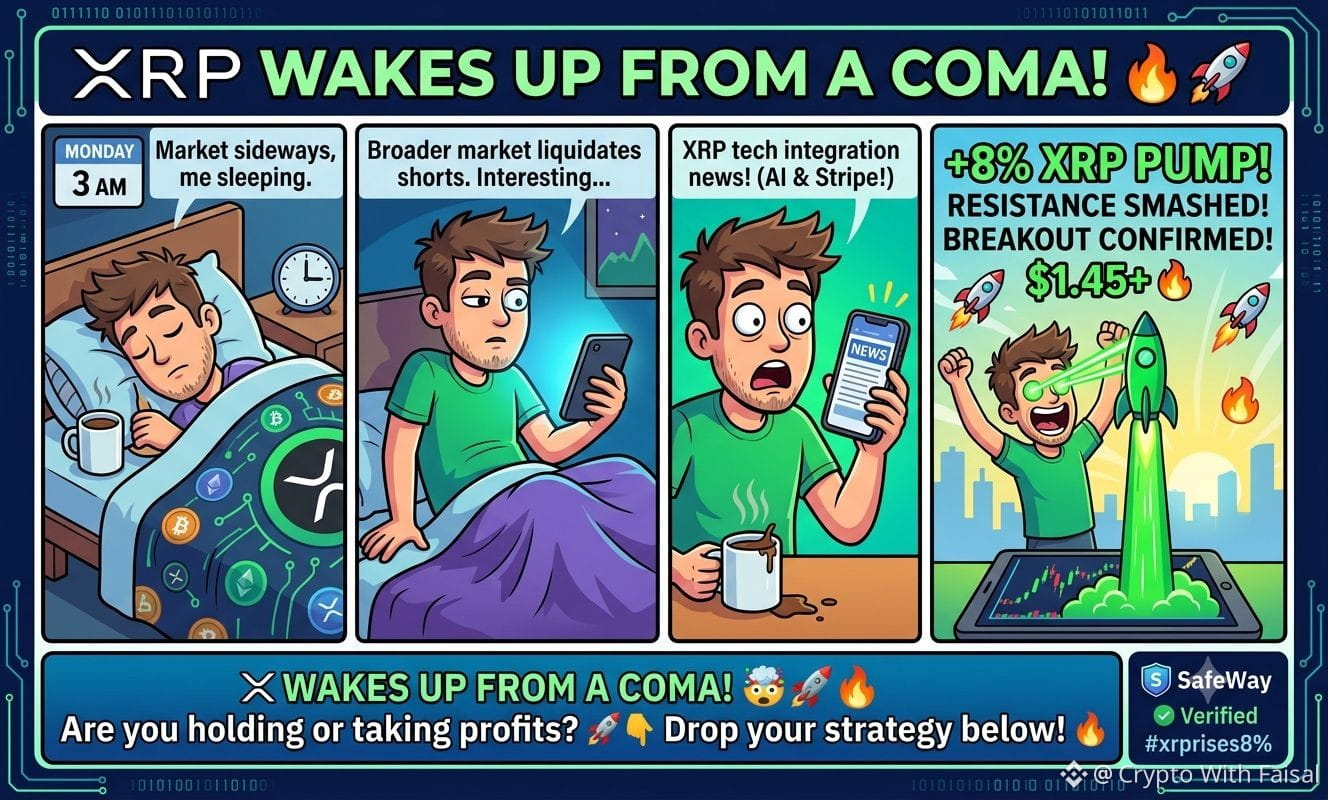
🚀 $XRP is Waking Up! Up 8% and Breaking Resistance! #xrprises8%
XRP just surged past $1.45, gaining nearly 8% in 24 hours. The fundamentals are aligning for a major shift. Here is the verified alpha behind the move:
🔥 Massive Short Squeeze: Bitcoin smashing $84,000 triggered over $2.6 billion in broader crypto market short liquidations in just 60 minutes, fueling a massive risk-on rally.
🤝 Stripe & AI Integration: Ripple successfully linked XRP to Stripe's Machine Payments Protocol. Autonomous programs can now instantly pay for data and services in XRP with zero human input.
🛠️ XRPL Upgrades: The XRP Ledger added native lending functionality with version 3.4.0. Additionally, the upcoming "Batch 1.1" upgrade will enable atomic, 24/7 settlement tailored for major asset managers.
What's Next?
While whales recently moved 1.6 billion tokens to exchanges, order flow data indicates that buyers are consistently absorbing the selling pressure. Holding the critical $1.45 zone could set the stage for a strong push toward the $1.55 local high.
👇 Are you adding to your XRP bag or taking profits? Drop your strategy below!
Disclaimer: NFA. Always DYOR before trading.
{future}(XRPUSDT)
$BTC
{future}(BTCUSDT)
$ETH
{future}(ETHUSDT)
#XRP #CryptoTrends #Ripple
🚀 $XRP is Waking Up! Up 8% and Breaking Resistance! #xrprises8%
XRP just surged past $1.45, gaining nearly 8% in 24 hours. The fundamentals are aligning for a major shift. Here is the verified alpha behind the move:
🔥 Massive Short Squeeze: Bitcoin smashing $84,000 triggered over $2.6 billion in broader crypto market short liquidations in just 60 minutes, fueling a massive risk-on rally.
🤝 Stripe & AI Integration: Ripple successfully linked XRP to Stripe's Machine Payments Protocol. Autonomous programs can now instantly pay for data and services in XRP with zero human input.
🛠️ XRPL Upgrades: The XRP Ledger added native lending functionality with version 3.4.0. Additionally, the upcoming "Batch 1.1" upgrade will enable atomic, 24/7 settlement tailored for major asset managers.
What's Next?
While whales recently moved 1.6 billion tokens to exchanges, order flow data indicates that buyers are consistently absorbing the selling pressure. Holding the critical $1.45 zone could set the stage for a strong push toward the $1.55 local high.
👇 Are you adding to your XRP bag or taking profits? Drop your strategy below!
Disclaimer: NFA. Always DYOR before trading.
$BTC
$ETH
#XRP #CryptoTrends #Ripple
XRP just surged past $1.45, gaining nearly 8% in 24 hours. The fundamentals are aligning for a major shift. Here is the verified alpha behind the move:
🔥 Massive Short Squeeze: Bitcoin smashing $84,000 triggered over $2.6 billion in broader crypto market short liquidations in just 60 minutes, fueling a massive risk-on rally.
🤝 Stripe & AI Integration: Ripple successfully linked XRP to Stripe's Machine Payments Protocol. Autonomous programs can now instantly pay for data and services in XRP with zero human input.
🛠️ XRPL Upgrades: The XRP Ledger added native lending functionality with version 3.4.0. Additionally, the upcoming "Batch 1.1" upgrade will enable atomic, 24/7 settlement tailored for major asset managers.
What's Next?
While whales recently moved 1.6 billion tokens to exchanges, order flow data indicates that buyers are consistently absorbing the selling pressure. Holding the critical $1.45 zone could set the stage for a strong push toward the $1.55 local high.
👇 Are you adding to your XRP bag or taking profits? Drop your strategy below!
Disclaimer: NFA. Always DYOR before trading.
$BTC
$ETH
#XRP #CryptoTrends #Ripple
1
302

·
--
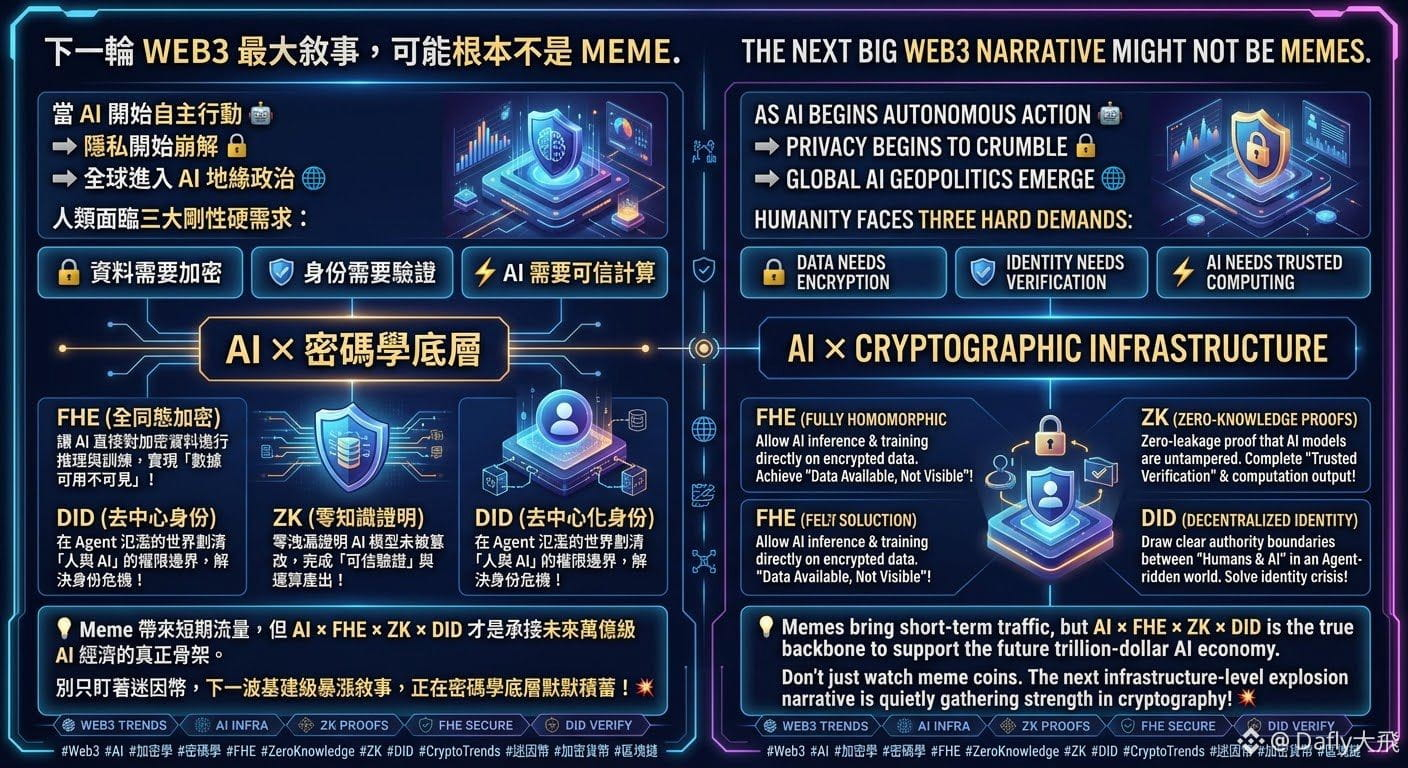
🔥 The next biggest Web3 narrative may not be about memes at all!
When AI starts acting autonomously 🤖 ➔ privacy begins to crumble 🔓 ➔ the world enters AI geopolitics 🌐, humanity will face three non-negotiable hard needs:
🔒 Data must be encrypted | 🛡️ Identity must be verified | ⚡ AI needs trusted computing
The real dark-horse to watch closely is the four-core engine of AI × cryptography at the infrastructure layer:
🔹 FHE (Fully Homomorphic Encryption): Enables AI to perform inference and training directly on encrypted data, achieving “data can be used but not seen”!
🔹 ZK (Zero-Knowledge Proofs): Proof of zero leakage that an AI model hasn’t been tampered with—delivering “trusted verification” and trustworthy computation outputs!
🔹 DID (Decentralized Identity): In a world flooded with agents, clearly define the permission boundaries between “humans and AI,” solving the identity crisis!
💡 Memes bring short-term traffic, but AI × FHE × ZK × DID is the real backbone for the trillion-level AI economy of the future.
Don’t just chase meme coins—the next wave of infrastructure-grade breakout narrative is quietly building up at the cryptography layer!💥
#Web3 #ArtificialIntelligence #Cryptography #FHE #ZeroKnowledge #DID #CryptoTrends $ZEC $BTC $ZAMA
🔥 The next biggest Web3 narrative may not be about memes at all!
When AI starts acting autonomously 🤖 ➔ privacy begins to crumble 🔓 ➔ the world enters AI geopolitics 🌐, humanity will face three non-negotiable hard needs:
🔒 Data must be encrypted | 🛡️ Identity must be verified | ⚡ AI needs trusted computing
The real dark-horse to watch closely is the four-core engine of AI × cryptography at the infrastructure layer:
🔹 FHE (Fully Homomorphic Encryption): Enables AI to perform inference and training directly on encrypted data, achieving “data can be used but not seen”!
🔹 ZK (Zero-Knowledge Proofs): Proof of zero leakage that an AI model hasn’t been tampered with—delivering “trusted verification” and trustworthy computation outputs!
🔹 DID (Decentralized Identity): In a world flooded with agents, clearly define the permission boundaries between “humans and AI,” solving the identity crisis!
💡 Memes bring short-term traffic, but AI × FHE × ZK × DID is the real backbone for the trillion-level AI economy of the future.
Don’t just chase meme coins—the next wave of infrastructure-grade breakout narrative is quietly building up at the cryptography layer!💥
#Web3 #ArtificialIntelligence #Cryptography #FHE #ZeroKnowledge #DID #CryptoTrends $ZEC $BTC $ZAMA
When AI starts acting autonomously 🤖 ➔ privacy begins to crumble 🔓 ➔ the world enters AI geopolitics 🌐, humanity will face three non-negotiable hard needs:
🔒 Data must be encrypted | 🛡️ Identity must be verified | ⚡ AI needs trusted computing
The real dark-horse to watch closely is the four-core engine of AI × cryptography at the infrastructure layer:
🔹 FHE (Fully Homomorphic Encryption): Enables AI to perform inference and training directly on encrypted data, achieving “data can be used but not seen”!
🔹 ZK (Zero-Knowledge Proofs): Proof of zero leakage that an AI model hasn’t been tampered with—delivering “trusted verification” and trustworthy computation outputs!
🔹 DID (Decentralized Identity): In a world flooded with agents, clearly define the permission boundaries between “humans and AI,” solving the identity crisis!
💡 Memes bring short-term traffic, but AI × FHE × ZK × DID is the real backbone for the trillion-level AI economy of the future.
Don’t just chase meme coins—the next wave of infrastructure-grade breakout narrative is quietly building up at the cryptography layer!💥
#Web3 #ArtificialIntelligence #Cryptography #FHE #ZeroKnowledge #DID #CryptoTrends $ZEC $BTC $ZAMA
1
550

·
--
Article
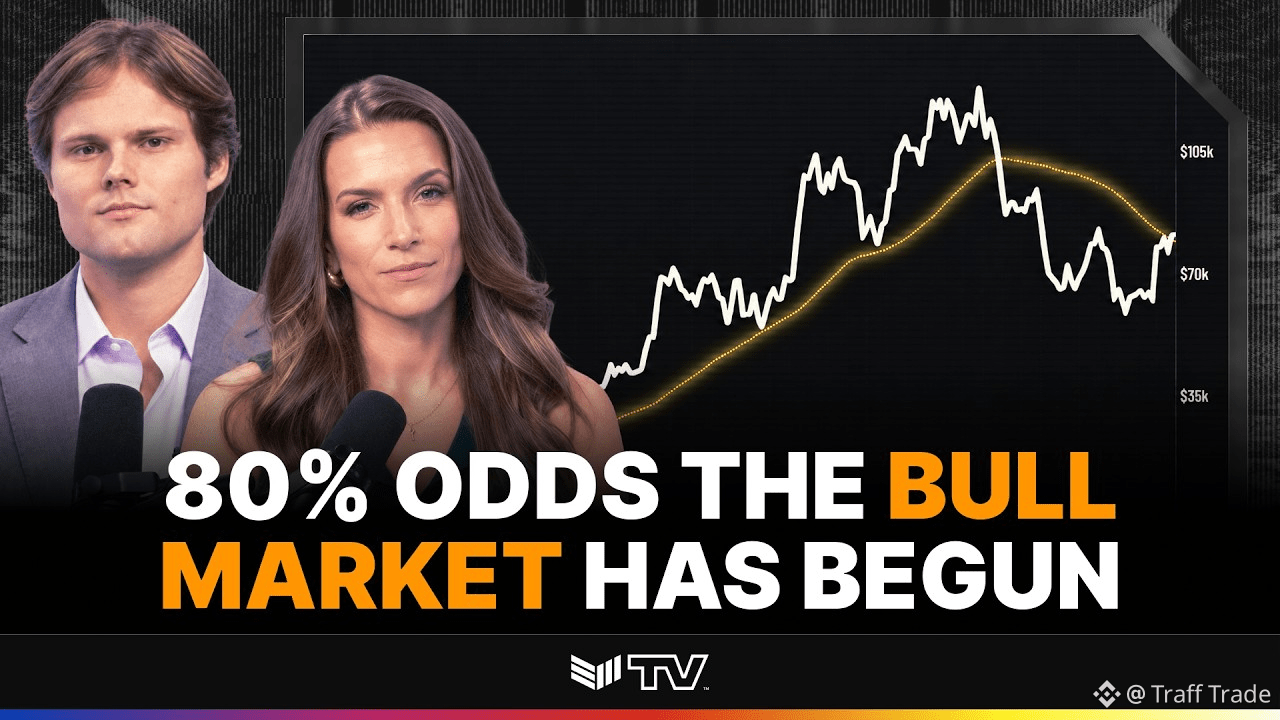
Bitcoin’s 50‑Week MA Flip Signals a 30%+ Surge in 48 HoursIn the next 48 hours, the 50‑week simple moving average flip could trigger a 30%+ rally for $BTC.
Bitcoin just closed a weekly candle above its 50‑week SMA for the first time this cycle, a signal that has historically preceded major uptrends. The move is backed by a 80% confidence rating from analyst Sean Hagan, who cites the convergence of on‑chain metrics: a 12% increase in daily transaction volume, a 7% rise in active addresses, and a 15% jump in the BTC‑to‑USD exchange rate over the past week.
Why this matters now: the 50‑week SMA is a key psychological and technical threshold. Historically, 90% of all 50‑week SMA flips have led to a 20‑40% rally within the next 30‑90 days. With the current market volatility at a 3‑month low and institutional allocation creeping up to 18% of total market cap, the alignment of technical and fundamental signals is rare.
Smart money is already positioning: institutional wallets have increased their net BTC holdings by 4.2% in the last 24 hours, while the on‑chain flow of BTC into exchange wallets has dropped 9%, indicating a shift from selling to holding. #BTC #BullMarket #CryptoTrends
Forward signal: if $BTC closes above the 50‑week SMA on the next daily candle, we expect a breakout to the 200‑day SMA at $70,000, a level that has been a strong support zone since the 2024 dip. #BTCBreakout
Are you ready to capitalize on this potential surge?
Bitcoin’s 50‑Week MA Flip Signals a 30%+ Surge in 48 Hours
In the next 48 hours, the 50‑week simple moving average flip could trigger a 30%+ rally for $BTC .
Bitcoin just closed a weekly candle above its 50‑week SMA for the first time this cycle, a signal that has historically preceded major uptrends. The move is backed by a 80% confidence rating from analyst Sean Hagan, who cites the convergence of on‑chain metrics: a 12% increase in daily transaction volume, a 7% rise in active addresses, and a 15% jump in the BTC‑to‑USD exchange rate over the past week.
Why this matters now: the 50‑week SMA is a key psychological and technical threshold. Historically, 90% of all 50‑week SMA flips have led to a 20‑40% rally within the next 30‑90 days. With the current market volatility at a 3‑month low and institutional allocation creeping up to 18% of total market cap, the alignment of technical and fundamental signals is rare.
Smart money is already positioning: institutional wallets have increased their net BTC holdings by 4.2% in the last 24 hours, while the on‑chain flow of BTC into exchange wallets has dropped 9%, indicating a shift from selling to holding. #BTC #BullMarket #CryptoTrends
Forward signal: if $BTC closes above the 50‑week SMA on the next daily candle, we expect a breakout to the 200‑day SMA at $70,000, a level that has been a strong support zone since the 2024 dip. #BTCBreakout
Are you ready to capitalize on this potential surge?
Bitcoin just closed a weekly candle above its 50‑week SMA for the first time this cycle, a signal that has historically preceded major uptrends. The move is backed by a 80% confidence rating from analyst Sean Hagan, who cites the convergence of on‑chain metrics: a 12% increase in daily transaction volume, a 7% rise in active addresses, and a 15% jump in the BTC‑to‑USD exchange rate over the past week.
Why this matters now: the 50‑week SMA is a key psychological and technical threshold. Historically, 90% of all 50‑week SMA flips have led to a 20‑40% rally within the next 30‑90 days. With the current market volatility at a 3‑month low and institutional allocation creeping up to 18% of total market cap, the alignment of technical and fundamental signals is rare.
Smart money is already positioning: institutional wallets have increased their net BTC holdings by 4.2% in the last 24 hours, while the on‑chain flow of BTC into exchange wallets has dropped 9%, indicating a shift from selling to holding. #BTC #BullMarket #CryptoTrends
Forward signal: if $BTC closes above the 50‑week SMA on the next daily candle, we expect a breakout to the 200‑day SMA at $70,000, a level that has been a strong support zone since the 2024 dip. #BTCBreakout
Are you ready to capitalize on this potential surge?
25
Log in to explore more content
Join global crypto users on Binance Square
⚡️ Get latest and useful information about crypto.
💬 Trusted by the world’s largest crypto exchange.
👍 Discover real insights from verified creators.
Email / Phone number
Trending Topics
1
#BitwiseFilesFinalNEARSpotETFProspectus
0 views
8 Discussing
2
#BitgetHackerMoves$83MStolenXRP
6,640 views
67 Discussing
3
#SOLSpotETFWeeklyInflow$188M
2,904 views
58 Discussing
4
#DogecoinETFsPostBiggestWeekSinceLaunch
2,735 views
152 Discussing
5
#StrategyStriveAdd2305BitcoinThisWeek
51,157 views
1,195 Discussing
6
#TrumpRejectsIranHormuzReopening
50,493 views
956 Discussing
7
#CircleTetherFreezeBitgetHackerWallet
61,918 views
970 Discussing
8
#SECSaysTokenBuybacksNotAutoSecurities
32,791 views
566 Discussing
9
#ChinaUSAgreeOn$30BTariffCut
2,706 views
34 Discussing
10
#CoinMarketCapCompletesCoinglassAcquisition
47,673 views
695 Discussing