
#buyback
buyback
313,966 views
669 Discussing
Hot
Latest

🔥 THE PUMPFUN BURN IS A GAME‑OVER MOVE FOR TOKEN SUPPLY.
📊 Pumpfun just torched roughly 36% of its circulating tokens in a single, unprecedented buy‑back — a supply slash faster than any meme‑coin this year, and it locked in a 50% revenue‑share burn model that guarantees the fire keeps roaring. #Pumpfun #Buyback #Burn Meanwhile, BTC open interest sits at a massive $7.96 B with longs at 60% and funding +0.0018% (bullish), ETH is up 2.56% at $2,525 with a bullish MACD crossover, and BNB nudged +1.33% to $
🔥 THE PUMPFUN BURN IS A GAME‑OVER MOVE FOR TOKEN SUPPLY.
📊 Pumpfun just torched roughly 36% of its circulating tokens in a single, unprecedented buy‑back — a supply slash faster than any meme‑coin this year, and it locked in a 50% revenue‑share burn model that guarantees the fire keeps roaring. #Pumpfun #Buyback #Burn Meanwhile, BTC open interest sits at a massive $7.96 B with longs at 60% and funding +0.0018% (bullish), ETH is up 2.56% at $2,525 with a bullish MACD crossover, and BNB nudged +1.33% to $
📊 Pumpfun just torched roughly 36% of its circulating tokens in a single, unprecedented buy‑back — a supply slash faster than any meme‑coin this year, and it locked in a 50% revenue‑share burn model that guarantees the fire keeps roaring. #Pumpfun #Buyback #Burn Meanwhile, BTC open interest sits at a massive $7.96 B with longs at 60% and funding +0.0018% (bullish), ETH is up 2.56% at $2,525 with a bullish MACD crossover, and BNB nudged +1.33% to $

42

·
--
#USTreasuryToBuyBackUpTo$6BLongDatedDebt
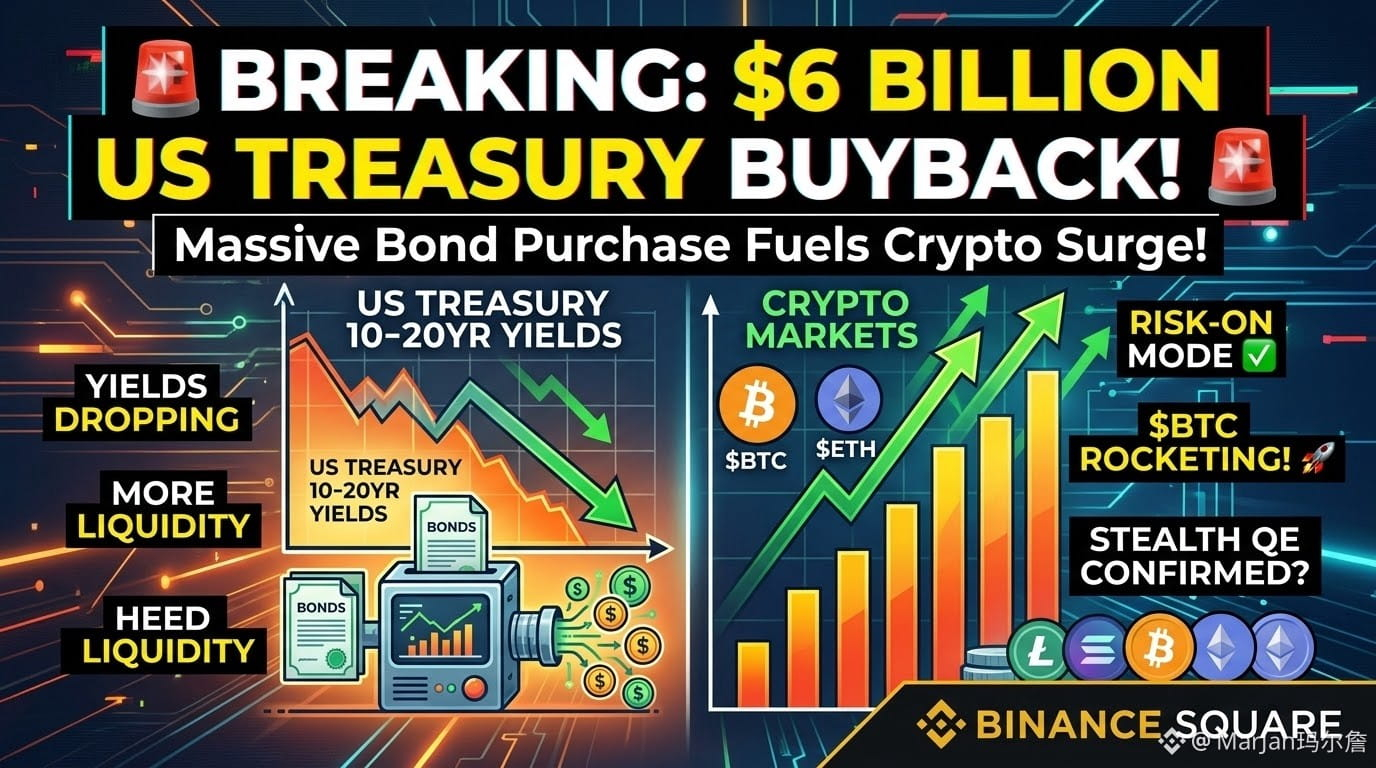
🚨 BREAKING: US Treasury to Buy Back $6 BILLION in Long-Dated Debt!
The Treasury just announced a MASSIVE $6B buyback of 10-to-20 year bonds on Sept 10 - that's 3x bigger than last time!
🔥🔥🔥Why it matters:
The 30-year yield just hit its highest since 2007 after a brutal bond selloff. Treasury is stepping in to boost liquidity. Last month they said they'd at least double buybacks to $4B, now they go $6B!
What it means for Crypto 👇
✅ Lower yields = Risk-ON.
When bond yields drop, money flows into $BTC, $ETH & alts.
✅ Liquidity injection - Treasury removing old illiquid bonds = more cash in system
✅ Fed rate cut narrative getting stronger - 10Y yield already slipped to 4.65%
This is stealth QE. Don't fade it.
Are you bullish for Q4?
$BTC $ZEC
#USTreasury #Buyback #Bitcoin #Write2Earn
#USTreasuryToBuyBackUpTo$6BLongDatedDebt
🚨 BREAKING: US Treasury to Buy Back $6 BILLION in Long-Dated Debt!
The Treasury just announced a MASSIVE $6B buyback of 10-to-20 year bonds on Sept 10 - that's 3x bigger than last time!
🔥🔥🔥Why it matters:
The 30-year yield just hit its highest since 2007 after a brutal bond selloff. Treasury is stepping in to boost liquidity. Last month they said they'd at least double buybacks to $4B, now they go $6B!
What it means for Crypto 👇
✅ Lower yields = Risk-ON.
When bond yields drop, money flows into $BTC , $ETH & alts.
✅ Liquidity injection - Treasury removing old illiquid bonds = more cash in system
✅ Fed rate cut narrative getting stronger - 10Y yield already slipped to 4.65%
This is stealth QE. Don't fade it.
Are you bullish for Q4?
$BTC $ZEC
#USTreasury #Buyback #Bitcoin #Write2Earn
🚨 BREAKING: US Treasury to Buy Back $6 BILLION in Long-Dated Debt!
The Treasury just announced a MASSIVE $6B buyback of 10-to-20 year bonds on Sept 10 - that's 3x bigger than last time!
🔥🔥🔥Why it matters:
The 30-year yield just hit its highest since 2007 after a brutal bond selloff. Treasury is stepping in to boost liquidity. Last month they said they'd at least double buybacks to $4B, now they go $6B!
What it means for Crypto 👇
✅ Lower yields = Risk-ON.
When bond yields drop, money flows into $BTC , $ETH & alts.
✅ Liquidity injection - Treasury removing old illiquid bonds = more cash in system
✅ Fed rate cut narrative getting stronger - 10Y yield already slipped to 4.65%
This is stealth QE. Don't fade it.
Are you bullish for Q4?
$BTC $ZEC
#USTreasury #Buyback #Bitcoin #Write2Earn
2
321

·
--
Bullish
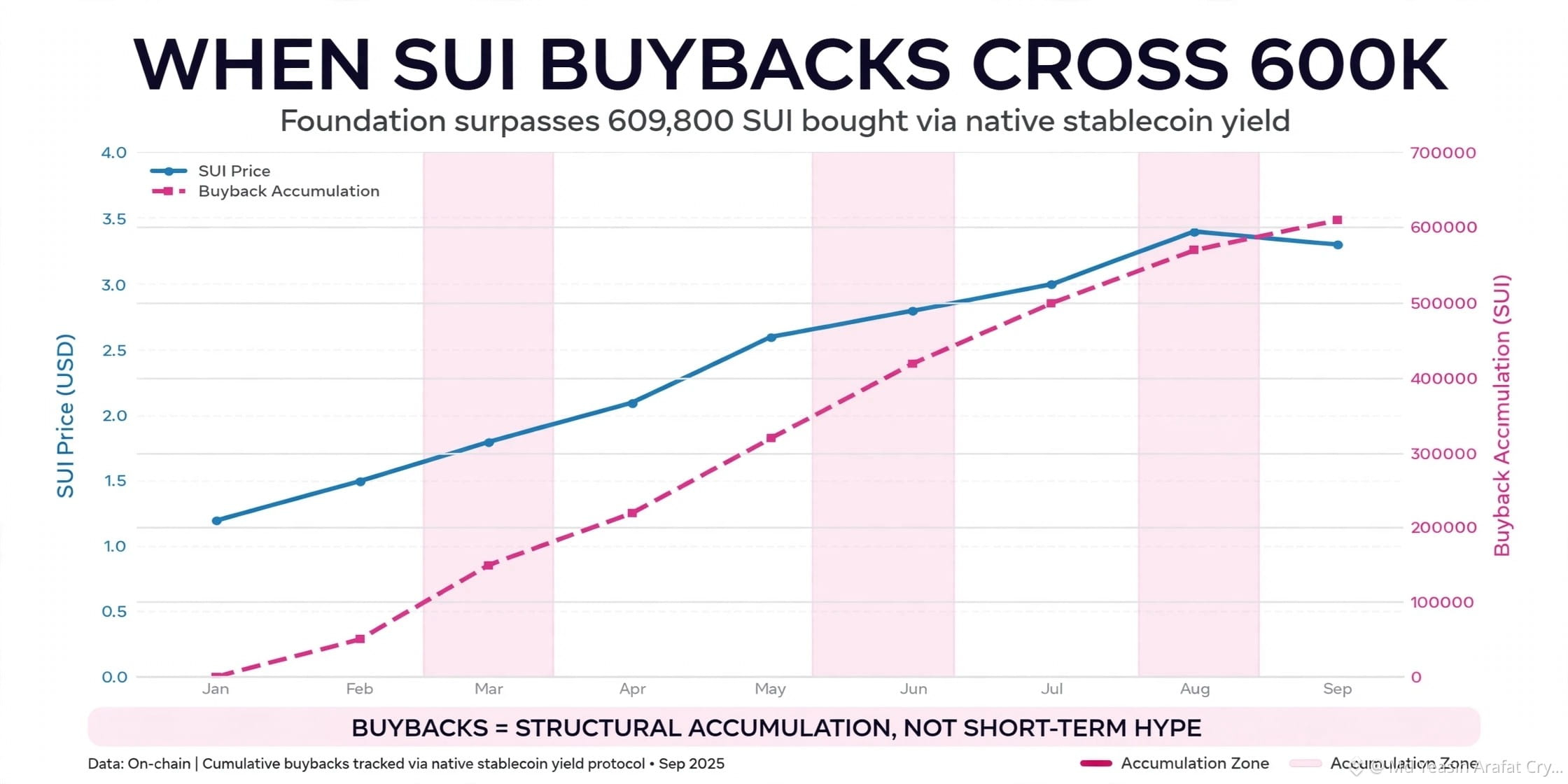
🚨 $SUI — WHEN BUYBACKS CROSS 600K
Foundation surpasses 609,800 SUI in YTD buybacks — funded entirely by on-chain yield, not dilutive raises. On Sep 5 alone, 8,000 SUI acquired. Treasury ∼$490k.
History: SUI is currently stuck between 50-day EMA $0.74 support and 200-day EMA $0.96 resistance. Holding $0.66 June low is key — break $0.96 opens path to $1.05 then $1.60.
50% supply still? No, this is different — this is buy pressure from real revenue.
⚠️ Educational Only — Not Financial Advice • DYOR
#SuiNetwork #Buyback #DOYOR #TrumpCryptoSupport #DowFallsOver600Points
{future}(SUIUSDT)
🚨 $SUI — WHEN BUYBACKS CROSS 600K
Foundation surpasses 609,800 SUI in YTD buybacks — funded entirely by on-chain yield, not dilutive raises. On Sep 5 alone, 8,000 SUI acquired. Treasury ∼$490k.
History: SUI is currently stuck between 50-day EMA $0.74 support and 200-day EMA $0.96 resistance. Holding $0.66 June low is key — break $0.96 opens path to $1.05 then $1.60.
50% supply still? No, this is different — this is buy pressure from real revenue.
⚠️ Educational Only — Not Financial Advice • DYOR
#SuiNetwork #Buyback #DOYOR #TrumpCryptoSupport #DowFallsOver600Points
Foundation surpasses 609,800 SUI in YTD buybacks — funded entirely by on-chain yield, not dilutive raises. On Sep 5 alone, 8,000 SUI acquired. Treasury ∼$490k.
History: SUI is currently stuck between 50-day EMA $0.74 support and 200-day EMA $0.96 resistance. Holding $0.66 June low is key — break $0.96 opens path to $1.05 then $1.60.
50% supply still? No, this is different — this is buy pressure from real revenue.
⚠️ Educational Only — Not Financial Advice • DYOR
#SuiNetwork #Buyback #DOYOR #TrumpCryptoSupport #DowFallsOver600Points
70

🚨 $STRC UNVEILS $176.3M BUYBACK, BTC RESERVE WHISPERS BULLISH SURGE 📈
📊 The $176.3 million repurchase doubled the preferred‑stock program to a $2 billion ceiling, snatching 1.81 M shares in just a week. Smart‑money whales are loading the balance sheet, leaving $1.19 B of repurchase authority still untapped. 🦈
⚡ Meanwhile, the firm hoards 845,050 BTC bought at an average $75,412, a $63.73 B stash that could act as a price catalyst. Liquidity sweeps around the $75k‑$80k zone may flash a bullish signal for equity holders. 🌊
💬 How do you see the BTC reserve influencing $STRC ’s next equity rally? 👇
⚠️ Not financial advice. Always manage your risk. 🛡️
🏷️ #STRC #Buyback #BTCReserve #Crypto
🔥 💎
🚨 $STRC UNVEILS $176.3M BUYBACK, BTC RESERVE WHISPERS BULLISH SURGE 📈
📊 The $176.3 million repurchase doubled the preferred‑stock program to a $2 billion ceiling, snatching 1.81 M shares in just a week. Smart‑money whales are loading the balance sheet, leaving $1.19 B of repurchase authority still untapped. 🦈
⚡ Meanwhile, the firm hoards 845,050 BTC bought at an average $75,412, a $63.73 B stash that could act as a price catalyst. Liquidity sweeps around the $75k‑$80k zone may flash a bullish signal for equity holders. 🌊
💬 How do you see the BTC reserve influencing $STRC ’s next equity rally? 👇
⚠️ Not financial advice. Always manage your risk. 🛡️
🏷️ #STRC #Buyback #BTCReserve #Crypto
🔥 💎
📊 The $176.3 million repurchase doubled the preferred‑stock program to a $2 billion ceiling, snatching 1.81 M shares in just a week. Smart‑money whales are loading the balance sheet, leaving $1.19 B of repurchase authority still untapped. 🦈
⚡ Meanwhile, the firm hoards 845,050 BTC bought at an average $75,412, a $63.73 B stash that could act as a price catalyst. Liquidity sweeps around the $75k‑$80k zone may flash a bullish signal for equity holders. 🌊
💬 How do you see the BTC reserve influencing $STRC ’s next equity rally? 👇
⚠️ Not financial advice. Always manage your risk. 🛡️
🏷️ #STRC #Buyback #BTCReserve #Crypto
🔥 💎
21
🚀 $PONS SURGES WITH $3M BUYBACK FIREPOWER AND $2M DAILY REVENUE! 💎
Entry: $0.736 ⚡
📊 Daily revenue locked between $1.3M‑$2M, while the buyback wallet hoards nearly $3M ready for TWAP sweeps. 🦈 30% of supply already burned, pulling the real market cap down to ~$515M versus a $736M FDV illusion. 🌊 Robinhood Chain market share perched at an 80% peak, cementing $PONS as the chain’s launchpad king.
💡 With fee‑funded buybacks outpacing burn consumption, the token’s upside could crank into multi‑billion territory even on pullbacks. 💬 Are you loading up on $PONS before the next burn wave? 👇
⚠️ Not financial advice. Always manage your risk. 🛡️
🏷️ #PONS #Buyback #Bullish #Crypto
🔥 💎
🚀 $PONS SURGES WITH $3M BUYBACK FIREPOWER AND $2M DAILY REVENUE! 💎
Entry: $0.736 ⚡
📊 Daily revenue locked between $1.3M‑$2M, while the buyback wallet hoards nearly $3M ready for TWAP sweeps. 🦈 30% of supply already burned, pulling the real market cap down to ~$515M versus a $736M FDV illusion. 🌊 Robinhood Chain market share perched at an 80% peak, cementing $PONS as the chain’s launchpad king.
💡 With fee‑funded buybacks outpacing burn consumption, the token’s upside could crank into multi‑billion territory even on pullbacks. 💬 Are you loading up on $PONS before the next burn wave? 👇
⚠️ Not financial advice. Always manage your risk. 🛡️
🏷️ #PONS #Buyback #Bullish #Crypto
🔥 💎
Entry: $0.736 ⚡
📊 Daily revenue locked between $1.3M‑$2M, while the buyback wallet hoards nearly $3M ready for TWAP sweeps. 🦈 30% of supply already burned, pulling the real market cap down to ~$515M versus a $736M FDV illusion. 🌊 Robinhood Chain market share perched at an 80% peak, cementing $PONS as the chain’s launchpad king.
💡 With fee‑funded buybacks outpacing burn consumption, the token’s upside could crank into multi‑billion territory even on pullbacks. 💬 Are you loading up on $PONS before the next burn wave? 👇
⚠️ Not financial advice. Always manage your risk. 🛡️
🏷️ #PONS #Buyback #Bullish #Crypto
🔥 💎
311

·
--
🚀 $BNC4 DAILY BUYBACK RACE STARTS SEPT 9! 🦈
📊 Four.meme just launched a 3‑month BNC4 buyback blitz, funneling every day’s product revenue into burning the top‑volume Meme token. 🟢 Projects need ≥3,000 holders and a $500k market cap to qualify, turning daily volume battles into a liquidity sweep for smart money. 📈 With the first week’s revenue already locked in, the floor’s heating up as whales scramble for the daily burn‑right.
💬 Which Meme token will dominate the leaderboard and earn the fire‑sale burn? 👇
⚠️ Not financial advice. Always manage your risk. 🛡️
🏷️ #BNC4 #Buyback #MemeTokens #Crypto
🦈 🔥
🚀 $BNC4 DAILY BUYBACK RACE STARTS SEPT 9! 🦈
📊 Four.meme just launched a 3‑month BNC4 buyback blitz, funneling every day’s product revenue into burning the top‑volume Meme token. 🟢 Projects need ≥3,000 holders and a $500k market cap to qualify, turning daily volume battles into a liquidity sweep for smart money. 📈 With the first week’s revenue already locked in, the floor’s heating up as whales scramble for the daily burn‑right.
💬 Which Meme token will dominate the leaderboard and earn the fire‑sale burn? 👇
⚠️ Not financial advice. Always manage your risk. 🛡️
🏷️ #BNC4 #Buyback #MemeTokens #Crypto
🦈 🔥
📊 Four.meme just launched a 3‑month BNC4 buyback blitz, funneling every day’s product revenue into burning the top‑volume Meme token. 🟢 Projects need ≥3,000 holders and a $500k market cap to qualify, turning daily volume battles into a liquidity sweep for smart money. 📈 With the first week’s revenue already locked in, the floor’s heating up as whales scramble for the daily burn‑right.
💬 Which Meme token will dominate the leaderboard and earn the fire‑sale burn? 👇
⚠️ Not financial advice. Always manage your risk. 🛡️
🏷️ #BNC4 #Buyback #MemeTokens #Crypto
🦈 🔥
8

·
--
🚨 $STRC REVERSE: FUND REBUYS $176M, SIGNALING INSTITUTIONAL RE‑ENTRY 🦈
The strategy fund’s $176.3 M repurchase of $STRC after a Bitcoin‑free week is a textbook liquidity sweep, re‑injecting demand at a key order block.
Smart‑money is re‑asserting exposure; the buy‑back creates a fresh bullish imbalance that can trap lingering short sellers, while volume spikes on the 4‑hour chart confirm the shift. 📊🌊
If the fund continues to allocate capital, we could see a cascading series of institutional entries, pushing $STRC toward its next supply‑zone. ⚡💡
💬 How will you position as the smart money re‑enters? 👇
⚠️ Not financial advice. Always manage your risk. 🛡️
🏷️ #STRC #BuyBack #SmartMoney #Crypto
🔥 💎
🚨 $STRC REVERSE: FUND REBUYS $176M, SIGNALING INSTITUTIONAL RE‑ENTRY 🦈
The strategy fund’s $176.3 M repurchase of $STRC after a Bitcoin‑free week is a textbook liquidity sweep, re‑injecting demand at a key order block.
Smart‑money is re‑asserting exposure; the buy‑back creates a fresh bullish imbalance that can trap lingering short sellers, while volume spikes on the 4‑hour chart confirm the shift. 📊🌊
If the fund continues to allocate capital, we could see a cascading series of institutional entries, pushing $STRC toward its next supply‑zone. ⚡💡
💬 How will you position as the smart money re‑enters? 👇
⚠️ Not financial advice. Always manage your risk. 🛡️
🏷️ #STRC #BuyBack #SmartMoney #Crypto
🔥 💎
The strategy fund’s $176.3 M repurchase of $STRC after a Bitcoin‑free week is a textbook liquidity sweep, re‑injecting demand at a key order block.
Smart‑money is re‑asserting exposure; the buy‑back creates a fresh bullish imbalance that can trap lingering short sellers, while volume spikes on the 4‑hour chart confirm the shift. 📊🌊
If the fund continues to allocate capital, we could see a cascading series of institutional entries, pushing $STRC toward its next supply‑zone. ⚡💡
💬 How will you position as the smart money re‑enters? 👇
⚠️ Not financial advice. Always manage your risk. 🛡️
🏷️ #STRC #BuyBack #SmartMoney #Crypto
🔥 💎


12
·
--
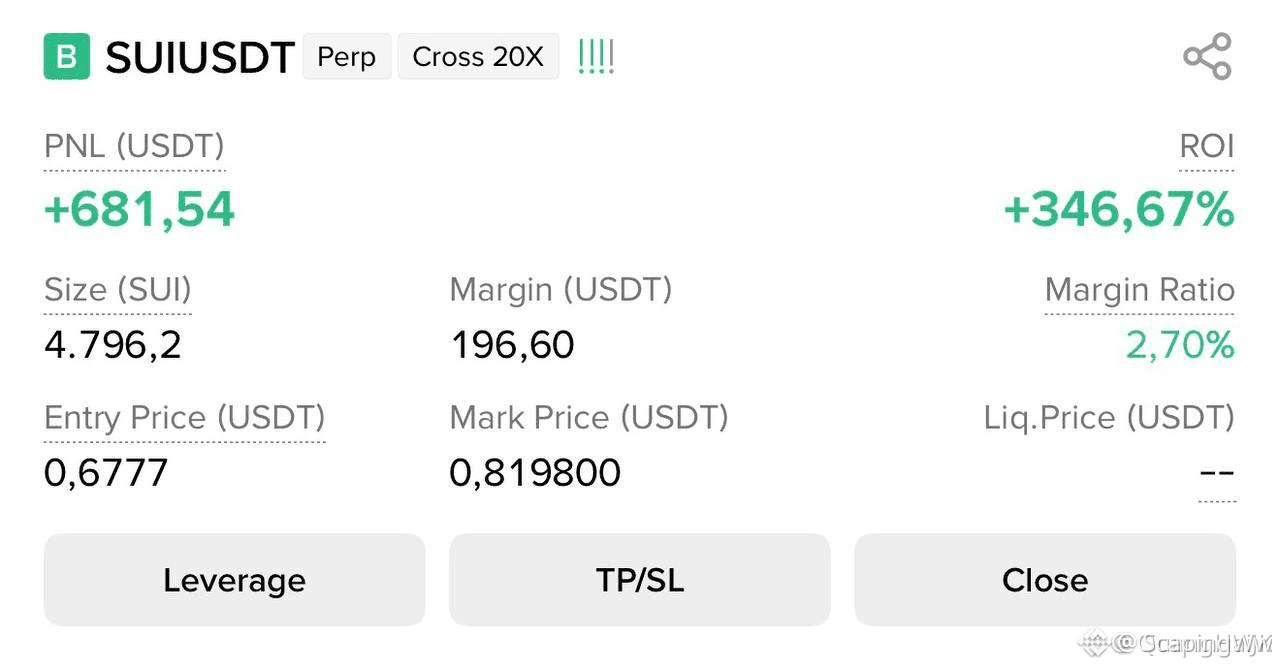
🚀 $SUI RISING ON WHALE BUYBACK SURGE! 💎
Entry: 0.7217-0.8199 ⚡
Target: 0.8582 🚀
Stop Loss: 0.7021 ⚠️
Smart money is dumping a 609k token buyback on‑chain, slashing supply and fueling a fresh accumulation wave. 📊 The order flow shows buyers stepping in aggressively as price hugs the 0.72‑0.82 band.
Momentum spikes on the 4H chart, with RSI flashing bullish divergence and volume surging like a tidal wave. 🦈⚡ This setup reads like a classic liquidity sweep turned into a long‑run launchpad. 💬 Are you loading up on $SUI or waiting for the next wave? 👇
⚠️ Not financial advice. Always manage your risk. 🛡️
🏷️ #SUI #LongSetup #Buyback #Crypto
🔥 💎
🚀 $SUI RISING ON WHALE BUYBACK SURGE! 💎
Entry: 0.7217-0.8199 ⚡
Target: 0.8582 🚀
Stop Loss: 0.7021 ⚠️
Smart money is dumping a 609k token buyback on‑chain, slashing supply and fueling a fresh accumulation wave. 📊 The order flow shows buyers stepping in aggressively as price hugs the 0.72‑0.82 band.
Momentum spikes on the 4H chart, with RSI flashing bullish divergence and volume surging like a tidal wave. 🦈⚡ This setup reads like a classic liquidity sweep turned into a long‑run launchpad. 💬 Are you loading up on $SUI or waiting for the next wave? 👇
⚠️ Not financial advice. Always manage your risk. 🛡️
🏷️ #SUI #LongSetup #Buyback #Crypto
🔥 💎
Entry: 0.7217-0.8199 ⚡
Target: 0.8582 🚀
Stop Loss: 0.7021 ⚠️
Smart money is dumping a 609k token buyback on‑chain, slashing supply and fueling a fresh accumulation wave. 📊 The order flow shows buyers stepping in aggressively as price hugs the 0.72‑0.82 band.
Momentum spikes on the 4H chart, with RSI flashing bullish divergence and volume surging like a tidal wave. 🦈⚡ This setup reads like a classic liquidity sweep turned into a long‑run launchpad. 💬 Are you loading up on $SUI or waiting for the next wave? 👇
⚠️ Not financial advice. Always manage your risk. 🛡️
🏷️ #SUI #LongSetup #Buyback #Crypto
🔥 💎
41

🦈 $LIT SWALLOWS 7% BUYBACK, PRICE STABILIZATION IN PLAY! 📈
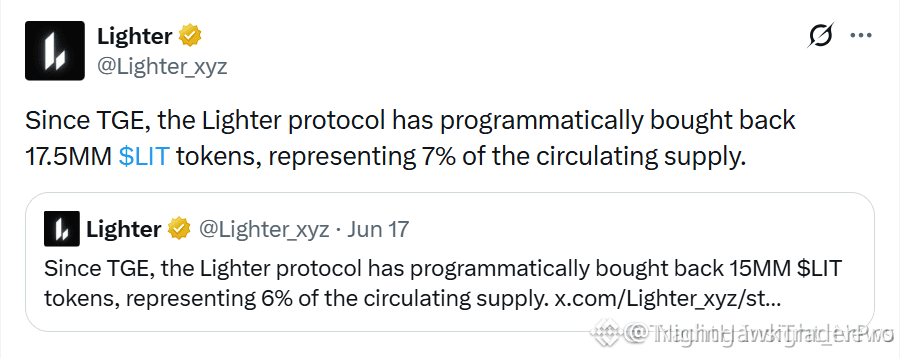
Lighter’s automated buy‑back engine just snapped up 17.5 M $LIT , a clean 7% of the float. 🦈 This whale‑level accumulation creates a fresh liquidity cushion, forcing sellers to hunt deeper before they can unload. 📊 On‑chain metrics show the reserve swelling, a classic smart‑money move that often precedes a price‑support pivot. ⚡
With the token reserve now primed for ecosystem grants or staking rewards, the market gets a clear signal of confidence. 📌 Keep an eye on how the protocol deploys these tokens – a strategic release could spark a fresh rally, while hoarding may simply tighten the supply‑demand balance. 🌊
💬 Will this 7% repurchase anchor $LIT higher or just set the stage for the next breakout? 👇
⚠️ Not financial advice. Always manage your risk. 🛡️
🏷️ #LIT #Buyback #SmartMoney #Crypto
🔥 💎
🦈 $LIT SWALLOWS 7% BUYBACK, PRICE STABILIZATION IN PLAY! 📈
Lighter’s automated buy‑back engine just snapped up 17.5 M $LIT , a clean 7% of the float. 🦈 This whale‑level accumulation creates a fresh liquidity cushion, forcing sellers to hunt deeper before they can unload. 📊 On‑chain metrics show the reserve swelling, a classic smart‑money move that often precedes a price‑support pivot. ⚡
With the token reserve now primed for ecosystem grants or staking rewards, the market gets a clear signal of confidence. 📌 Keep an eye on how the protocol deploys these tokens – a strategic release could spark a fresh rally, while hoarding may simply tighten the supply‑demand balance. 🌊
💬 Will this 7% repurchase anchor $LIT higher or just set the stage for the next breakout? 👇
⚠️ Not financial advice. Always manage your risk. 🛡️
🏷️ #LIT #Buyback #SmartMoney #Crypto
🔥 💎
Lighter’s automated buy‑back engine just snapped up 17.5 M $LIT , a clean 7% of the float. 🦈 This whale‑level accumulation creates a fresh liquidity cushion, forcing sellers to hunt deeper before they can unload. 📊 On‑chain metrics show the reserve swelling, a classic smart‑money move that often precedes a price‑support pivot. ⚡
With the token reserve now primed for ecosystem grants or staking rewards, the market gets a clear signal of confidence. 📌 Keep an eye on how the protocol deploys these tokens – a strategic release could spark a fresh rally, while hoarding may simply tighten the supply‑demand balance. 🌊
💬 Will this 7% repurchase anchor $LIT higher or just set the stage for the next breakout? 👇
⚠️ Not financial advice. Always manage your risk. 🛡️
🏷️ #LIT #Buyback #SmartMoney #Crypto
🔥 💎
90
·
--
🚀 $LIT REACHES 7% BUYBACK MILESTONE, SMART MONEY REACCUMULATES 💎
Since the TGE, LIT’s protocol has silently siphoned 17.5 million tokens back into the treasury, a 7% swing of circulating supply. 🦈 This disciplined repurchase signals strong institutional confidence buffer.
The buy‑back acts as a hidden liquidity sink, tightening the order‑block and setting the stage for a potential upside squeeze as smart money re‑positions. 📊 Expect tighter ranges and a fresh bullish bias on the next retrace. 💬 Do you see this accumulation as a catalyst for a breakout rally? 👇
⚠️ Not financial advice. Always manage your risk. 🛡️
🏷️ #LIT #Buyback #SmartMoney #Crypto
🦈 💎
🚀 $LIT REACHES 7% BUYBACK MILESTONE, SMART MONEY REACCUMULATES 💎
Since the TGE, LIT’s protocol has silently siphoned 17.5 million tokens back into the treasury, a 7% swing of circulating supply. 🦈 This disciplined repurchase signals strong institutional confidence buffer.
The buy‑back acts as a hidden liquidity sink, tightening the order‑block and setting the stage for a potential upside squeeze as smart money re‑positions. 📊 Expect tighter ranges and a fresh bullish bias on the next retrace. 💬 Do you see this accumulation as a catalyst for a breakout rally? 👇
⚠️ Not financial advice. Always manage your risk. 🛡️
🏷️ #LIT #Buyback #SmartMoney #Crypto
🦈 💎
Since the TGE, LIT’s protocol has silently siphoned 17.5 million tokens back into the treasury, a 7% swing of circulating supply. 🦈 This disciplined repurchase signals strong institutional confidence buffer.
The buy‑back acts as a hidden liquidity sink, tightening the order‑block and setting the stage for a potential upside squeeze as smart money re‑positions. 📊 Expect tighter ranges and a fresh bullish bias on the next retrace. 💬 Do you see this accumulation as a catalyst for a breakout rally? 👇
⚠️ Not financial advice. Always manage your risk. 🛡️
🏷️ #LIT #Buyback #SmartMoney #Crypto
🦈 💎
61
🦈 $LIT SWALLOWS 7% OF SUPPLY IN REPO BUYBACK SURGE! 🚀
📊 Since the TGE, Lighter has programmatically snapped up 17.5 M $LIT tokens – a clean 7% of circulating supply. 🦈 Smart‑money whales are tightening the float, forcing sellers into a liquidity squeeze and setting the stage for a demand‑driven rally. 💡 Supply contraction of this magnitude rarely flies under the radar; expect tighter order books and sharper price action as buyers scramble to reclaim the market. 📈
💬 How are you positioning as the buy‑back wave reshapes $LIT ’s upside potential? 👇
⚠️ Not financial advice. Always manage your risk. 🛡️
🏷️ #LIT #Buyback #SmartMoney #Crypto
🚀 🦈
🦈 $LIT SWALLOWS 7% OF SUPPLY IN REPO BUYBACK SURGE! 🚀
📊 Since the TGE, Lighter has programmatically snapped up 17.5 M $LIT tokens – a clean 7% of circulating supply. 🦈 Smart‑money whales are tightening the float, forcing sellers into a liquidity squeeze and setting the stage for a demand‑driven rally. 💡 Supply contraction of this magnitude rarely flies under the radar; expect tighter order books and sharper price action as buyers scramble to reclaim the market. 📈
💬 How are you positioning as the buy‑back wave reshapes $LIT ’s upside potential? 👇
⚠️ Not financial advice. Always manage your risk. 🛡️
🏷️ #LIT #Buyback #SmartMoney #Crypto
🚀 🦈
📊 Since the TGE, Lighter has programmatically snapped up 17.5 M $LIT tokens – a clean 7% of circulating supply. 🦈 Smart‑money whales are tightening the float, forcing sellers into a liquidity squeeze and setting the stage for a demand‑driven rally. 💡 Supply contraction of this magnitude rarely flies under the radar; expect tighter order books and sharper price action as buyers scramble to reclaim the market. 📈
💬 How are you positioning as the buy‑back wave reshapes $LIT ’s upside potential? 👇
⚠️ Not financial advice. Always manage your risk. 🛡️
🏷️ #LIT #Buyback #SmartMoney #Crypto
🚀 🦈
93
samsungtoannouncenewshareholderreturnplanfriday* 🚨
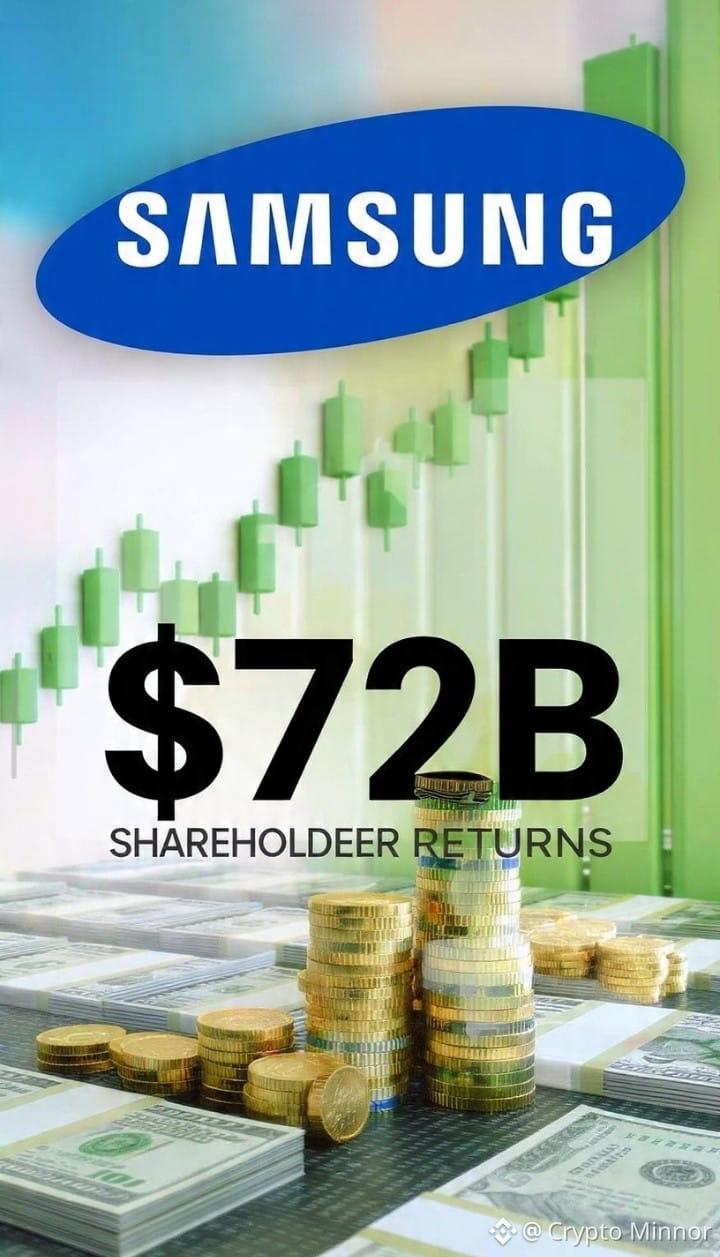
Samsung Electronics is set to announce a shareholder return plan worth over *$72 billion* on Friday, per MoneyToday.
The move comes just 1 day after rival *SK Hynix* announced a record stock buyback.
$72B is massive. This will likely include buybacks + dividends to boost shareholder value.
Samsung is clearly responding to pressure to return more cash as chip demand stays strong.
Market impact: This is bullish for *$SAMSUNG * and could lift sentiment across $CTR and chip stocks.
Investors have been asking for bigger returns for years.
Now Samsung is finally delivering.
Expect volatility in Korea and tech names on Friday.
Keep an eye on $AVAAI too as AI chip theme stays hot.
Big week for Asian tech.
#Samsung #SKHNYIX #CTR #AVAAI #ChipStocks #Korea #Buyback
{alpha}(84530x11030f79109269d796fd0fb956d6244e502757f7)
{alpha}(CT_501DKu9kykSfbN5LBfFXtNNDPaX35o4Fv6vJ9FKk7pZpump)
{future}(SKHYNIXUSDT)
samsungtoannouncenewshareholderreturnplanfriday* 🚨
Samsung Electronics is set to announce a shareholder return plan worth over *$72 billion* on Friday, per MoneyToday.
The move comes just 1 day after rival *SK Hynix* announced a record stock buyback.
$72B is massive. This will likely include buybacks + dividends to boost shareholder value.
Samsung is clearly responding to pressure to return more cash as chip demand stays strong.
Market impact: This is bullish for *$SAMSUNG * and could lift sentiment across $CTR and chip stocks.
Investors have been asking for bigger returns for years.
Now Samsung is finally delivering.
Expect volatility in Korea and tech names on Friday.
Keep an eye on $AVAAI too as AI chip theme stays hot.
Big week for Asian tech.
#Samsung #SKHNYIX #CTR #AVAAI #ChipStocks #Korea #Buyback
Samsung Electronics is set to announce a shareholder return plan worth over *$72 billion* on Friday, per MoneyToday.
The move comes just 1 day after rival *SK Hynix* announced a record stock buyback.
$72B is massive. This will likely include buybacks + dividends to boost shareholder value.
Samsung is clearly responding to pressure to return more cash as chip demand stays strong.
Market impact: This is bullish for *$SAMSUNG * and could lift sentiment across $CTR and chip stocks.
Investors have been asking for bigger returns for years.
Now Samsung is finally delivering.
Expect volatility in Korea and tech names on Friday.
Keep an eye on $AVAAI too as AI chip theme stays hot.
Big week for Asian tech.
#Samsung #SKHNYIX #CTR #AVAAI #ChipStocks #Korea #Buyback
1
117

·
--
Partly True
🚨 $OWL BUYBACK/BURN UPDATE
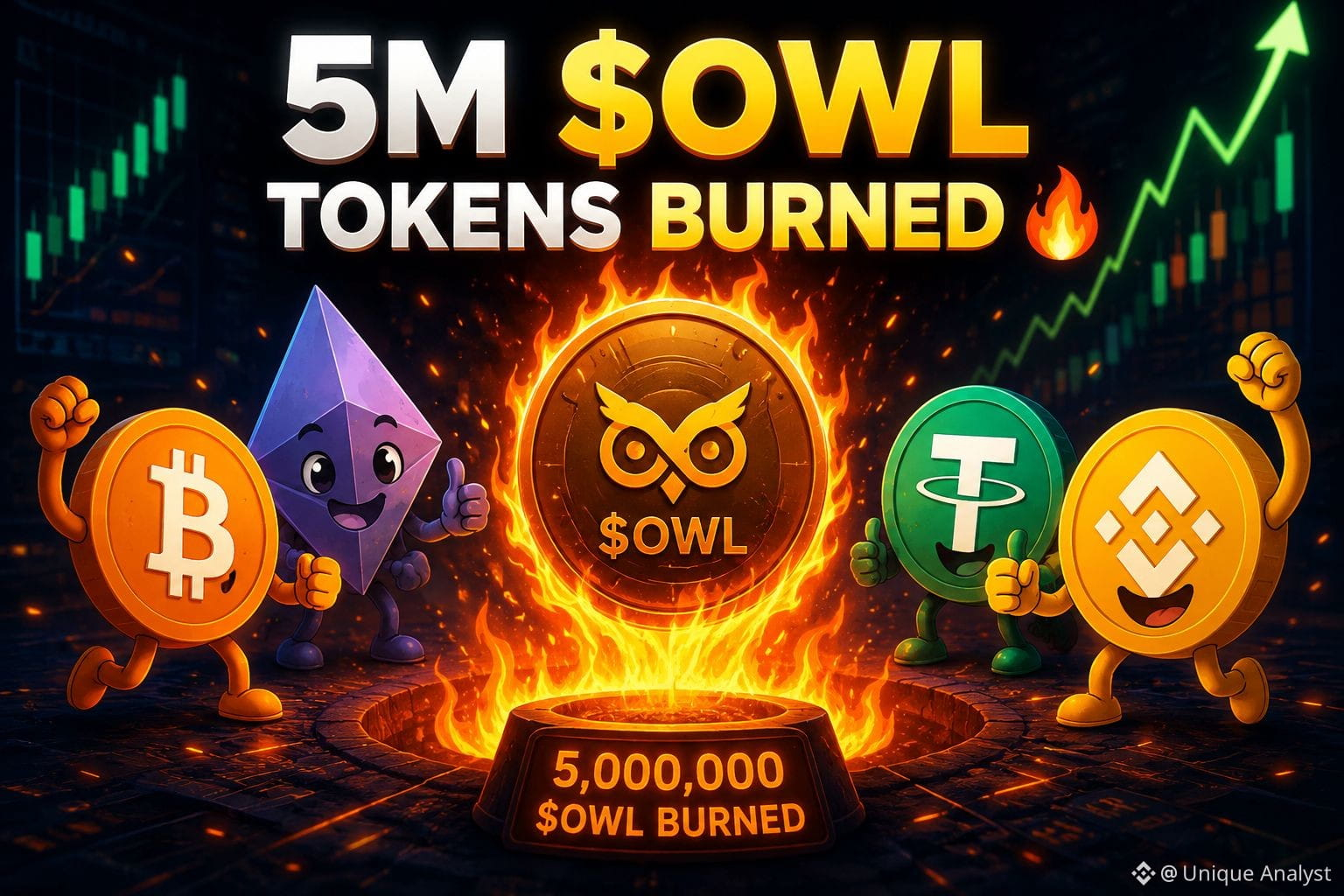
Another 5,000,000 $OWL tokens have been permanently burned 🔥
The transaction was sent from the official wallet:
"0x15Da...159e99"
➡️ Burn Address: "0x000...dEaD"
➡️ Amount: 5,000,000 OWL
➡️ Status: ✅ Success
➡️ Tx: "0x304131...4e152"
This brings another 5M $OWL out of circulation, showing continued execution of the buyback/burn mechanism. 🔥
#OWL #Owlto #Crypto #Buyback
{alpha}(560x51e667e91b4b8cb8e6e0528757f248406bd34b57)
🚨 $OWL BUYBACK/BURN UPDATE
Another 5,000,000 $OWL tokens have been permanently burned 🔥
The transaction was sent from the official wallet:
"0x15Da...159e99"
➡️ Burn Address: "0x000...dEaD"
➡️ Amount: 5,000,000 OWL
➡️ Status: ✅ Success
➡️ Tx: "0x304131...4e152"
This brings another 5M $OWL out of circulation, showing continued execution of the buyback/burn mechanism. 🔥
#OWL #Owlto #Crypto #Buyback
Another 5,000,000 $OWL tokens have been permanently burned 🔥
The transaction was sent from the official wallet:
"0x15Da...159e99"
➡️ Burn Address: "0x000...dEaD"
➡️ Amount: 5,000,000 OWL
➡️ Status: ✅ Success
➡️ Tx: "0x304131...4e152"
This brings another 5M $OWL out of circulation, showing continued execution of the buyback/burn mechanism. 🔥
#OWL #Owlto #Crypto #Buyback
5
822

#skhynixtobuyback40trillionwon
TradFi just pulled the ultimate crypto move. 🔥
SK Hynix just dropped a bombshell: a massive 40 TRILLION WON stock buyback!
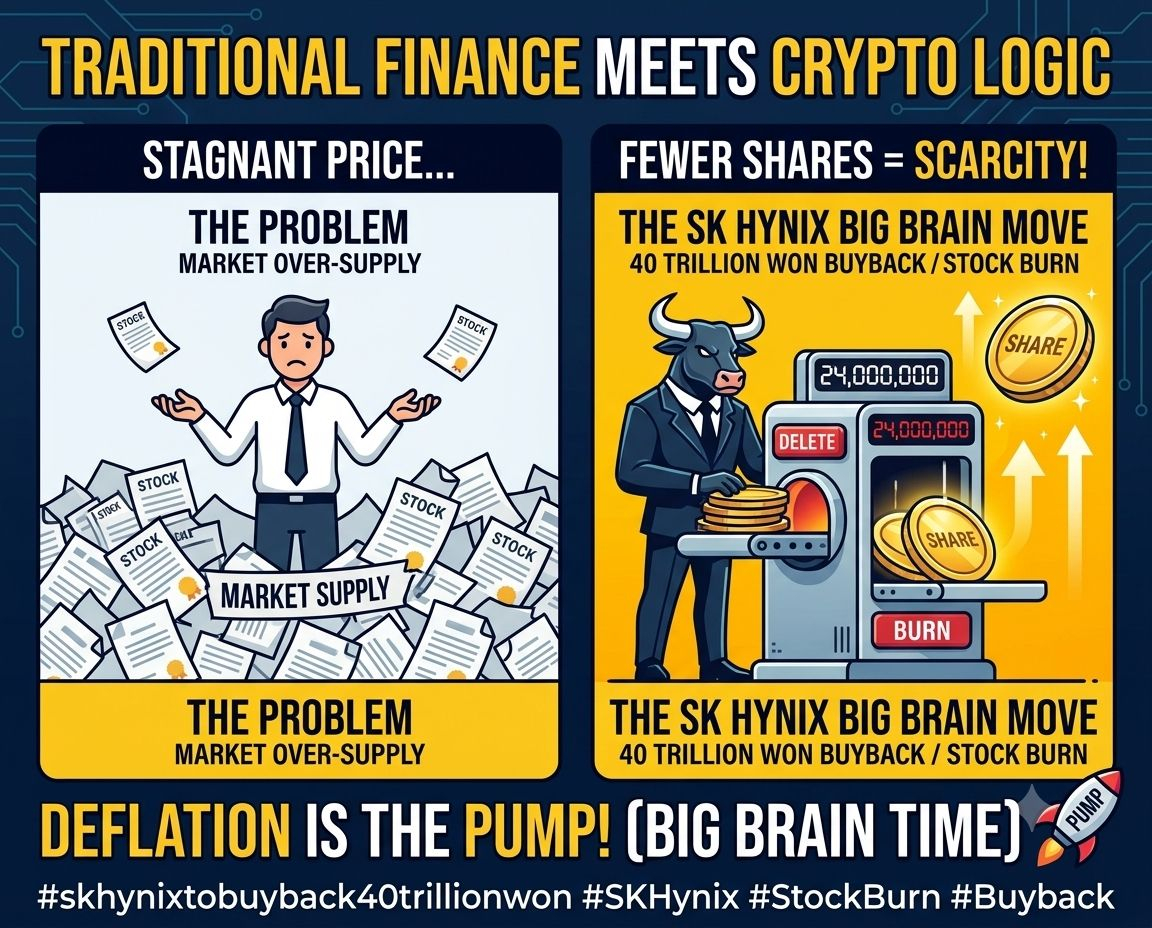
What does this mean in crypto terms? Think of it as a gigantic token burn. They are permanently erasing 24 million shares from existence. It’s a textbook deflationary shock—shrinking the circulating supply to drive up scarcity and value. 📉🚀
The Takeaway: Keep a laser focus on the AI and semiconductor narratives. When tech heavyweights start aggressively vaporizing their own supply, the entire sector heats up. 👀
⚠️ Always DYOR. This is not financial advice!
#SKHynix #StockBurn #Buyback
$SKHY
{future}(SKHYUSDT)
$SKHYNIX
{future}(SKHYNIXUSDT)
$SKHYB
{spot}(SKHYBUSDT)
#skhynixtobuyback40trillionwon
TradFi just pulled the ultimate crypto move. 🔥
SK Hynix just dropped a bombshell: a massive 40 TRILLION WON stock buyback!
What does this mean in crypto terms? Think of it as a gigantic token burn. They are permanently erasing 24 million shares from existence. It’s a textbook deflationary shock—shrinking the circulating supply to drive up scarcity and value. 📉🚀
The Takeaway: Keep a laser focus on the AI and semiconductor narratives. When tech heavyweights start aggressively vaporizing their own supply, the entire sector heats up. 👀
⚠️ Always DYOR. This is not financial advice!
#SKHynix #StockBurn #Buyback
$SKHY
$SKHYNIX
$SKHYB
TradFi just pulled the ultimate crypto move. 🔥
SK Hynix just dropped a bombshell: a massive 40 TRILLION WON stock buyback!
What does this mean in crypto terms? Think of it as a gigantic token burn. They are permanently erasing 24 million shares from existence. It’s a textbook deflationary shock—shrinking the circulating supply to drive up scarcity and value. 📉🚀
The Takeaway: Keep a laser focus on the AI and semiconductor narratives. When tech heavyweights start aggressively vaporizing their own supply, the entire sector heats up. 👀
⚠️ Always DYOR. This is not financial advice!
#SKHynix #StockBurn #Buyback
$SKHY
$SKHYNIX
$SKHYB
1
184
#skhynixtobuyback40trillionwon
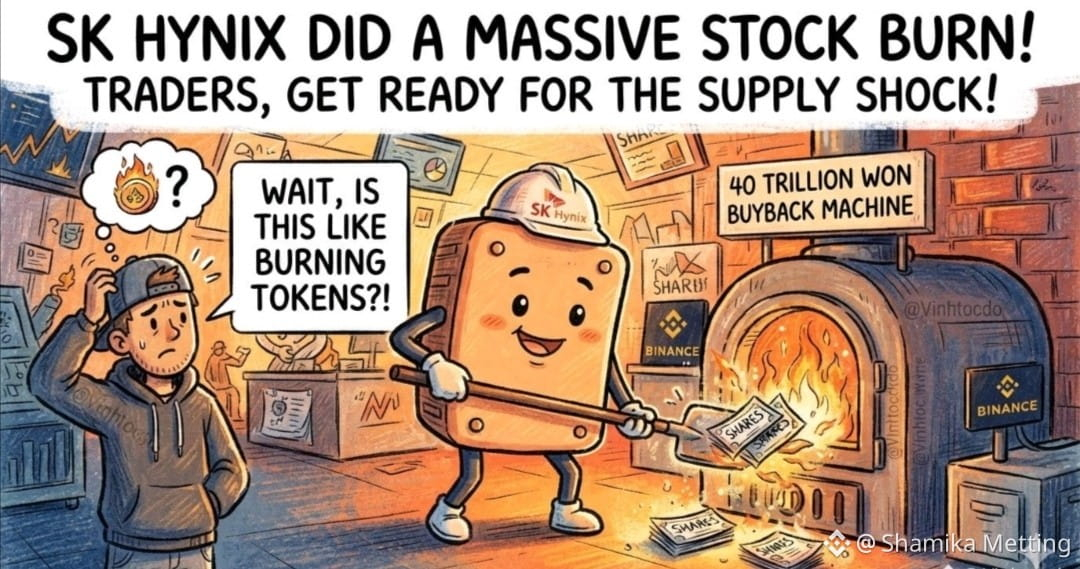
🚀 SK Hynix just announced a massive share buyback worth 40 trillion won! Crypto enthusiasts, what you’re hearing might make some of you ask: “Is this like burning tokens?!”
Well, yes—exactly! It’s very similar to burning large numbers of shares. They remove 24 million shares from the market and eliminate them forever. Fewer shares in circulation = your wallets can rise even harder. It’s the ultimate contraction move, using traditional financing!
So what should traders do? Watch the AI and semiconductor sectors, because when tech giants start burning their own supply, things get hot!
⚠️ Do your own research (DYOR): this is not financial advice!
Please follow up
#SKHYNIX #StockBurn #Buyback
$SKHYB
{spot}(SKHYBUSDT)
#skhynixtobuyback40trillionwon
🚀 SK Hynix just announced a massive share buyback worth 40 trillion won! Crypto enthusiasts, what you’re hearing might make some of you ask: “Is this like burning tokens?!”
Well, yes—exactly! It’s very similar to burning large numbers of shares. They remove 24 million shares from the market and eliminate them forever. Fewer shares in circulation = your wallets can rise even harder. It’s the ultimate contraction move, using traditional financing!
So what should traders do? Watch the AI and semiconductor sectors, because when tech giants start burning their own supply, things get hot!
⚠️ Do your own research (DYOR): this is not financial advice!
Please follow up
#SKHYNIX #StockBurn #Buyback
$SKHYB
🚀 SK Hynix just announced a massive share buyback worth 40 trillion won! Crypto enthusiasts, what you’re hearing might make some of you ask: “Is this like burning tokens?!”
Well, yes—exactly! It’s very similar to burning large numbers of shares. They remove 24 million shares from the market and eliminate them forever. Fewer shares in circulation = your wallets can rise even harder. It’s the ultimate contraction move, using traditional financing!
So what should traders do? Watch the AI and semiconductor sectors, because when tech giants start burning their own supply, things get hot!
⚠️ Do your own research (DYOR): this is not financial advice!
Please follow up
#SKHYNIX #StockBurn #Buyback
$SKHYB
1
60

·
--
🚨 INSTITUTIONAL BUYBACK REVEALS MASSIVE LIQUIDITY DRAIN FOR $SKHYNIX ! 💥
Target: 310,000 KRW 🚀
Citigroup's maintained buy rating pairs with a massive structural shift as management executes a 3.3% supply buyback with complete share cancellation. 🔍 This systematic reduction in circulating floating liquidity provides massive downside support through November.
Elevating post-2025 shareholder payouts above 50% of free cash flow reflects institutional-grade conviction in future capital efficiency. 📊 Smart money accumulation patterns are clearly establishing a definitive valuation floor well above prior ranges.
💬 Do you expect this supply squeeze to push prices straight to target, or will liquidity consolidate before the Q3 announcement? 👇
⚠️ Not financial advice. Always manage your risk. 🛡️
🏷️ #SKHYNIX #Buyback #MarketStructure #Liquidity
🎯 🦈
🚨 INSTITUTIONAL BUYBACK REVEALS MASSIVE LIQUIDITY DRAIN FOR $SKHYNIX ! 💥
Target: 310,000 KRW 🚀
Citigroup's maintained buy rating pairs with a massive structural shift as management executes a 3.3% supply buyback with complete share cancellation. 🔍 This systematic reduction in circulating floating liquidity provides massive downside support through November.
Elevating post-2025 shareholder payouts above 50% of free cash flow reflects institutional-grade conviction in future capital efficiency. 📊 Smart money accumulation patterns are clearly establishing a definitive valuation floor well above prior ranges.
💬 Do you expect this supply squeeze to push prices straight to target, or will liquidity consolidate before the Q3 announcement? 👇
⚠️ Not financial advice. Always manage your risk. 🛡️
🏷️ #SKHYNIX #Buyback #MarketStructure #Liquidity
🎯 🦈
Target: 310,000 KRW 🚀
Citigroup's maintained buy rating pairs with a massive structural shift as management executes a 3.3% supply buyback with complete share cancellation. 🔍 This systematic reduction in circulating floating liquidity provides massive downside support through November.
Elevating post-2025 shareholder payouts above 50% of free cash flow reflects institutional-grade conviction in future capital efficiency. 📊 Smart money accumulation patterns are clearly establishing a definitive valuation floor well above prior ranges.
💬 Do you expect this supply squeeze to push prices straight to target, or will liquidity consolidate before the Q3 announcement? 👇
⚠️ Not financial advice. Always manage your risk. 🛡️
🏷️ #SKHYNIX #Buyback #MarketStructure #Liquidity
🎯 🦈
218

·
--
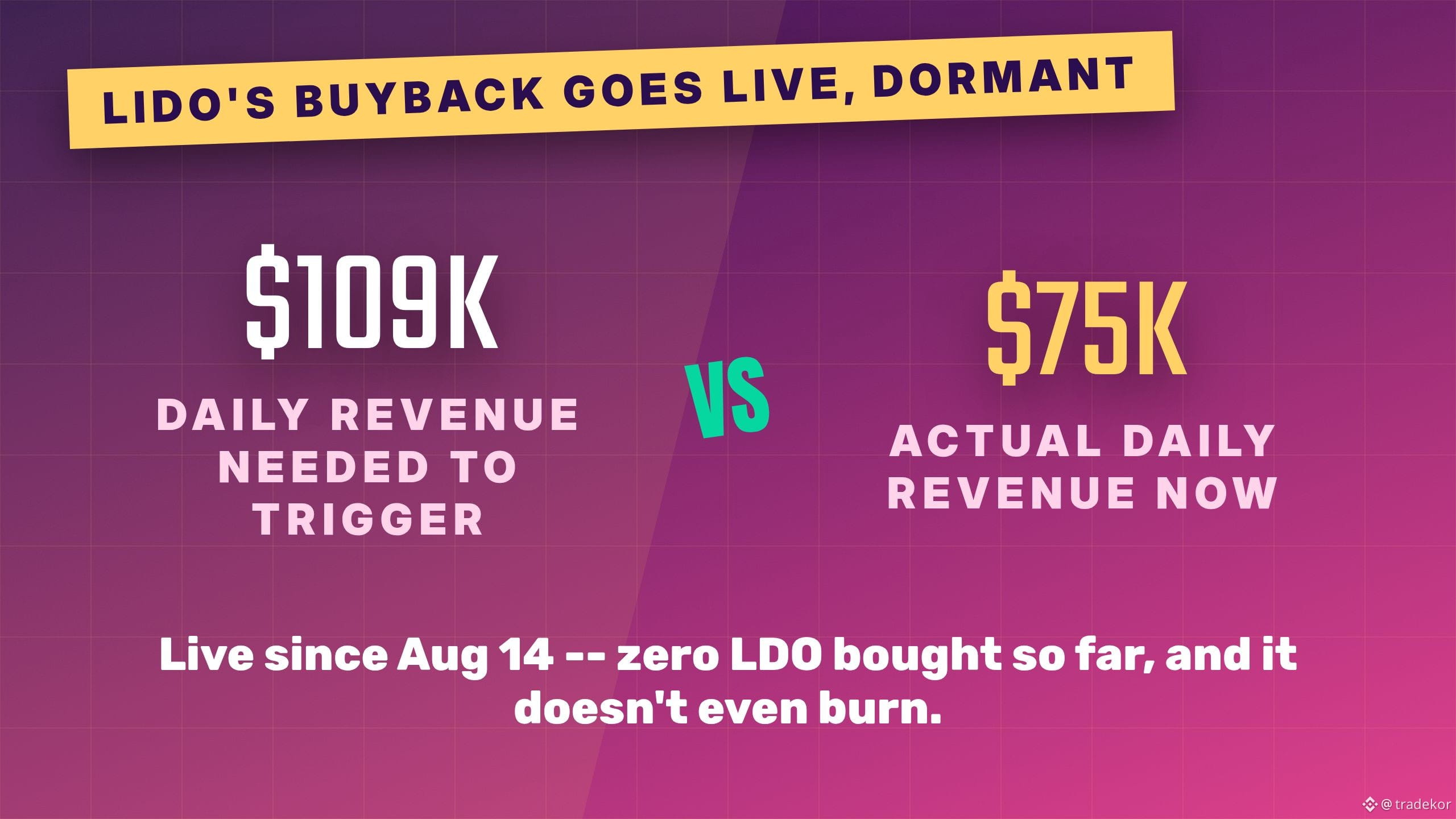
Lido's automatic LDO buyback mechanism went live on August 14 -- and it's bought exactly zero LDO so far because daily revenue is $34K short of the trigger.
The news: Lido DAO's NEST (Liquid Buybacks) mechanism moved from governance vote to live mainnet execution on Aug 14, following Dual Governance Proposal No. 13. When triggered, it directs 50% of daily staking revenue above a $109K threshold toward LDO purchases (via CoW Swap), capped at $50K/day and $10M/year, with the LDO paired into a wstETH/LDO Curve pool held by the DAO treasury.
The catch: Lido's daily protocol revenue is currently running around $75K -- well below the $109K trigger -- so no buybacks have actually executed since launch. The last time revenue crossed that line was back in April 2026, during the broader Q2 recovery, meaning NEST could sit dormant for a long stretch if current conditions persist. It's also worth noting the mechanism doesn't burn tokens: purchased LDO goes to the DAO treasury, redistributing value rather than shrinking supply -- a meaningfully weaker structural tailwind than a burn narrative implies.
Our read: a real, live mechanism with genuine long-term upside if revenue recovers, but "live" doesn't mean "active" -- there's no buyback pressure on LDO right now, and the token needs the exact market conditions that triggered it once before to matter again. Falsifiable watch-point: does Lido's daily revenue actually clear $109K in the coming weeks, or does NEST stay a mechanism that exists on paper only?
Does a buyback mechanism that hasn't bought anything yet change your view on LDO, or do you wait for it to actually trigger?
Not financial advice. DYOR.
$LDO #Lido #Buyback #DeFi #CryptoNews
Lido's automatic LDO buyback mechanism went live on August 14 -- and it's bought exactly zero LDO so far because daily revenue is $34K short of the trigger.
The news: Lido DAO's NEST (Liquid Buybacks) mechanism moved from governance vote to live mainnet execution on Aug 14, following Dual Governance Proposal No. 13. When triggered, it directs 50% of daily staking revenue above a $109K threshold toward LDO purchases (via CoW Swap), capped at $50K/day and $10M/year, with the LDO paired into a wstETH/LDO Curve pool held by the DAO treasury.
The catch: Lido's daily protocol revenue is currently running around $75K -- well below the $109K trigger -- so no buybacks have actually executed since launch. The last time revenue crossed that line was back in April 2026, during the broader Q2 recovery, meaning NEST could sit dormant for a long stretch if current conditions persist. It's also worth noting the mechanism doesn't burn tokens: purchased LDO goes to the DAO treasury, redistributing value rather than shrinking supply -- a meaningfully weaker structural tailwind than a burn narrative implies.
Our read: a real, live mechanism with genuine long-term upside if revenue recovers, but "live" doesn't mean "active" -- there's no buyback pressure on LDO right now, and the token needs the exact market conditions that triggered it once before to matter again. Falsifiable watch-point: does Lido's daily revenue actually clear $109K in the coming weeks, or does NEST stay a mechanism that exists on paper only?
Does a buyback mechanism that hasn't bought anything yet change your view on LDO, or do you wait for it to actually trigger?
Not financial advice. DYOR.
$LDO #Lido #Buyback #DeFi #CryptoNews
The news: Lido DAO's NEST (Liquid Buybacks) mechanism moved from governance vote to live mainnet execution on Aug 14, following Dual Governance Proposal No. 13. When triggered, it directs 50% of daily staking revenue above a $109K threshold toward LDO purchases (via CoW Swap), capped at $50K/day and $10M/year, with the LDO paired into a wstETH/LDO Curve pool held by the DAO treasury.
The catch: Lido's daily protocol revenue is currently running around $75K -- well below the $109K trigger -- so no buybacks have actually executed since launch. The last time revenue crossed that line was back in April 2026, during the broader Q2 recovery, meaning NEST could sit dormant for a long stretch if current conditions persist. It's also worth noting the mechanism doesn't burn tokens: purchased LDO goes to the DAO treasury, redistributing value rather than shrinking supply -- a meaningfully weaker structural tailwind than a burn narrative implies.
Our read: a real, live mechanism with genuine long-term upside if revenue recovers, but "live" doesn't mean "active" -- there's no buyback pressure on LDO right now, and the token needs the exact market conditions that triggered it once before to matter again. Falsifiable watch-point: does Lido's daily revenue actually clear $109K in the coming weeks, or does NEST stay a mechanism that exists on paper only?
Does a buyback mechanism that hasn't bought anything yet change your view on LDO, or do you wait for it to actually trigger?
Not financial advice. DYOR.
$LDO #Lido #Buyback #DeFi #CryptoNews
70

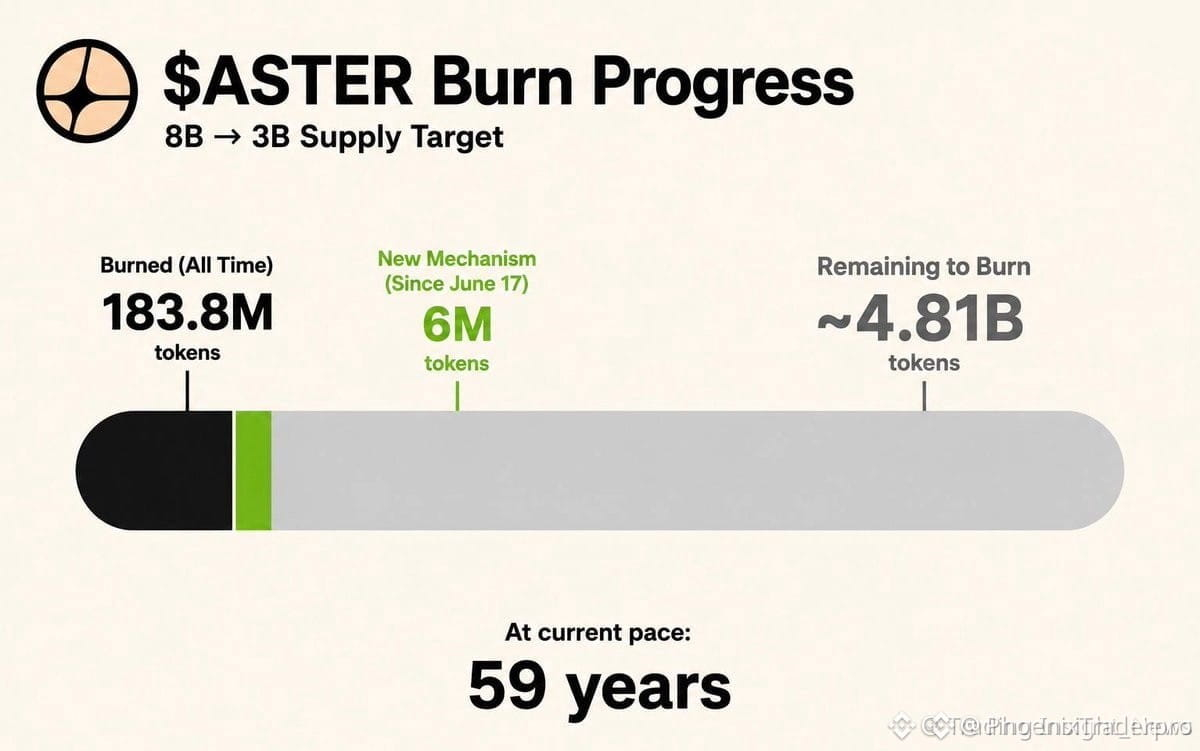
$ASTER 'S BUYBACK ENGINE IS RUNNING ON FUMES 🔥
At the current burn rate, it would take 59 years to reduce supply from 8B to 3B tokens. Daily buyback capacity sits at just $160K while $HYPE does over $2M per month in fees alone. That gap is massive.
Add monthly unlocks of 2.25M and 10M tokens on top of a 15% price drop, and you've got a mechanism that looks great on paper but can't move the needle yet. Revenue and volume need to scale hard for this to work.
Can Aster grow its ecosystem fast enough to turn this burn rate around?
Not financial advice. Always manage your risk.
#ASTER #Buyback #TokenBurn #Crypto
🔥
$ASTER 'S BUYBACK ENGINE IS RUNNING ON FUMES 🔥
At the current burn rate, it would take 59 years to reduce supply from 8B to 3B tokens. Daily buyback capacity sits at just $160K while $HYPE does over $2M per month in fees alone. That gap is massive.
Add monthly unlocks of 2.25M and 10M tokens on top of a 15% price drop, and you've got a mechanism that looks great on paper but can't move the needle yet. Revenue and volume need to scale hard for this to work.
Can Aster grow its ecosystem fast enough to turn this burn rate around?
Not financial advice. Always manage your risk.
#ASTER #Buyback #TokenBurn #Crypto
🔥
At the current burn rate, it would take 59 years to reduce supply from 8B to 3B tokens. Daily buyback capacity sits at just $160K while $HYPE does over $2M per month in fees alone. That gap is massive.
Add monthly unlocks of 2.25M and 10M tokens on top of a 15% price drop, and you've got a mechanism that looks great on paper but can't move the needle yet. Revenue and volume need to scale hard for this to work.
Can Aster grow its ecosystem fast enough to turn this burn rate around?
Not financial advice. Always manage your risk.
#ASTER #Buyback #TokenBurn #Crypto
🔥
180
·
--
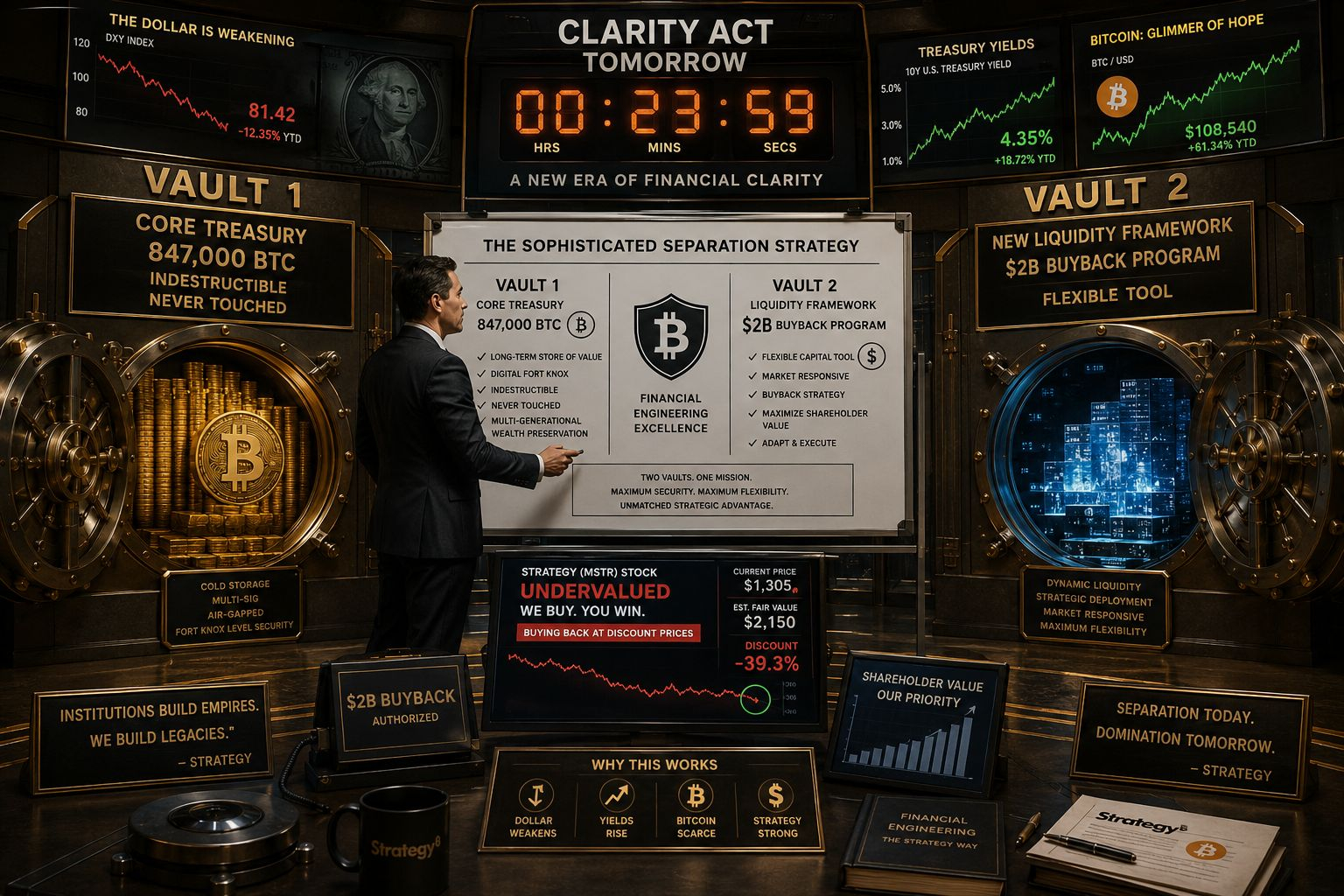
Strategy just authorized a $2 BILLION buyback framework.
Plus a new program allowing future Bitcoin sales to support liquidity.
This is Strategy entering a new operational phase.
Strategy adopted a new capital management framework, authorizing up to $2 billion in buybacks while creating a program that allows future bitcoin sales to support liquidity.
Let me explain why this is actually a sophisticated, bullish move — not a retreat.
Strategy holding 847,000+ Bitcoin while their stock trades below its historical premium has created an opportunity: buying back their OWN shares at a discount while their Bitcoin treasury remains intact.
This is financial engineering at its best:
🔧 $2B buyback authorization: Strategy buys their own undervalued stock
🔧 New liquidity program: gives flexibility WITHOUT forcing core treasury sales
🔧 "Indestructible" reserves: their 847K BTC core position remains protected
🔧 This separates "liquidity management" from "treasury conviction"
Combined with today's broader signals:
✅ BTC bounced to $59,800-$60,137 — testing recovery
✅ Dollar and U.S. Treasury yield market positions may carry a glimmer of hope for Bitcoin
✅ BVIV volatility dropping — calmer conditions emerging
✅ July 4 CLARITY Act: TOMORROW
📊 BTC today:
— Price: $59,800-$60,137 — recovering ✅
— Strategy: $2B buyback framework — sophisticated capital management ✅
— Dollar/yield positions: glimmer of hope ✅
— July 4: TOMORROW ✅
— Support: $58,000-$60,000 — tested and held
Strategy just got smarter with their balance sheet.
Tomorrow — the regulatory chapter begins.
#Bitcoin #Strategy #Buyback #BinanceSquare #STRKToken
Strategy just authorized a $2 BILLION buyback framework.
Plus a new program allowing future Bitcoin sales to support liquidity.
This is Strategy entering a new operational phase.
Strategy adopted a new capital management framework, authorizing up to $2 billion in buybacks while creating a program that allows future bitcoin sales to support liquidity.
Let me explain why this is actually a sophisticated, bullish move — not a retreat.
Strategy holding 847,000+ Bitcoin while their stock trades below its historical premium has created an opportunity: buying back their OWN shares at a discount while their Bitcoin treasury remains intact.
This is financial engineering at its best:
🔧 $2B buyback authorization: Strategy buys their own undervalued stock
🔧 New liquidity program: gives flexibility WITHOUT forcing core treasury sales
🔧 "Indestructible" reserves: their 847K BTC core position remains protected
🔧 This separates "liquidity management" from "treasury conviction"
Combined with today's broader signals:
✅ BTC bounced to $59,800-$60,137 — testing recovery
✅ Dollar and U.S. Treasury yield market positions may carry a glimmer of hope for Bitcoin
✅ BVIV volatility dropping — calmer conditions emerging
✅ July 4 CLARITY Act: TOMORROW
📊 BTC today:
— Price: $59,800-$60,137 — recovering ✅
— Strategy: $2B buyback framework — sophisticated capital management ✅
— Dollar/yield positions: glimmer of hope ✅
— July 4: TOMORROW ✅
— Support: $58,000-$60,000 — tested and held
Strategy just got smarter with their balance sheet.
Tomorrow — the regulatory chapter begins.
#Bitcoin #Strategy #Buyback #BinanceSquare #STRKToken
Plus a new program allowing future Bitcoin sales to support liquidity.
This is Strategy entering a new operational phase.
Strategy adopted a new capital management framework, authorizing up to $2 billion in buybacks while creating a program that allows future bitcoin sales to support liquidity.
Let me explain why this is actually a sophisticated, bullish move — not a retreat.
Strategy holding 847,000+ Bitcoin while their stock trades below its historical premium has created an opportunity: buying back their OWN shares at a discount while their Bitcoin treasury remains intact.
This is financial engineering at its best:
🔧 $2B buyback authorization: Strategy buys their own undervalued stock
🔧 New liquidity program: gives flexibility WITHOUT forcing core treasury sales
🔧 "Indestructible" reserves: their 847K BTC core position remains protected
🔧 This separates "liquidity management" from "treasury conviction"
Combined with today's broader signals:
✅ BTC bounced to $59,800-$60,137 — testing recovery
✅ Dollar and U.S. Treasury yield market positions may carry a glimmer of hope for Bitcoin
✅ BVIV volatility dropping — calmer conditions emerging
✅ July 4 CLARITY Act: TOMORROW
📊 BTC today:
— Price: $59,800-$60,137 — recovering ✅
— Strategy: $2B buyback framework — sophisticated capital management ✅
— Dollar/yield positions: glimmer of hope ✅
— July 4: TOMORROW ✅
— Support: $58,000-$60,000 — tested and held
Strategy just got smarter with their balance sheet.
Tomorrow — the regulatory chapter begins.
#Bitcoin #Strategy #Buyback #BinanceSquare #STRKToken
BTC+0.11%
MSTRUS+1.89%
92
·
--
Partly True
$ESPORTS TEAM ADDRESSES MAY 25TH PLUNGE AND ANNOUNCES BUYBACK 🔥
The team just confirmed the price dump came from an external OTC partner breaking the agreement, not from the project itself. They've already implemented liquidity support and are rolling out a token buyback plan plus game updates.
That kind of transparency paired with actual action usually brings the dip buyers in. The sell pressure may be exhausted if those pre-allocated tokens are already flushed out.
Are you playing the bounce here or watching from the sidelines?
Not financial advice. Always manage your risk.
#ESPORTS #Buyback #CryptoNews #Momentum
🔥
$ESPORTS TEAM ADDRESSES MAY 25TH PLUNGE AND ANNOUNCES BUYBACK 🔥
The team just confirmed the price dump came from an external OTC partner breaking the agreement, not from the project itself. They've already implemented liquidity support and are rolling out a token buyback plan plus game updates.
That kind of transparency paired with actual action usually brings the dip buyers in. The sell pressure may be exhausted if those pre-allocated tokens are already flushed out.
Are you playing the bounce here or watching from the sidelines?
Not financial advice. Always manage your risk.
#ESPORTS #Buyback #CryptoNews #Momentum
🔥
The team just confirmed the price dump came from an external OTC partner breaking the agreement, not from the project itself. They've already implemented liquidity support and are rolling out a token buyback plan plus game updates.
That kind of transparency paired with actual action usually brings the dip buyers in. The sell pressure may be exhausted if those pre-allocated tokens are already flushed out.
Are you playing the bounce here or watching from the sidelines?
Not financial advice. Always manage your risk.
#ESPORTS #Buyback #CryptoNews #Momentum
🔥
301
Log in to explore more content
Join global crypto users on Binance Square
⚡️ Get latest and useful information about crypto.
💬 Trusted by the world’s largest crypto exchange.
👍 Discover real insights from verified creators.
Email / Phone number
Trending Topics
1
#USBankCompletesCrossBorderPaymentPilotOnStellar
7,827 views
270 Discussing
2
#NvidiaInTalksToInvestUpTo$10BInAnthropicIPO
403 views
24 Discussing
3
#EtherRalliesAsBearishBetsLiquidate
19,060 views
484 Discussing
4
#EthereumHits$2600FirstTimeInSevenMonths
2,848 views
60 Discussing
5
#OpticalCommsStocksRallyOver3%
20,495 views
286 Discussing
6
#USInflationHoldsAt3.4%InAugust
24,615 views
311 Discussing
7
#CircleProposes$400MTazapayAcquisition
1,638 views
34 Discussing
8
#CPIWatch
87.4M views
504,390 Discussing
9
#BitcoinReboundsAbove$79KAfterCPI
6,695 views
156 Discussing
10
#BNBTops730USDT
55,128 views
1,230 Discussing