

Restive Abdullah
9 Posts

Restive Abdullah
Report
Block User
Covering the latest in Web3, DeFi, and Real-World Assets (RWA). Follow for quick, actionable crypto insights and market breakdowns. 🚀
2 Following
4 Followers
1 Liked
Posts
·
--
Bearish
#US10YearYieldNears5.3%
🚨 The bond market is sending a warning to risk assets. 🇺🇸📉
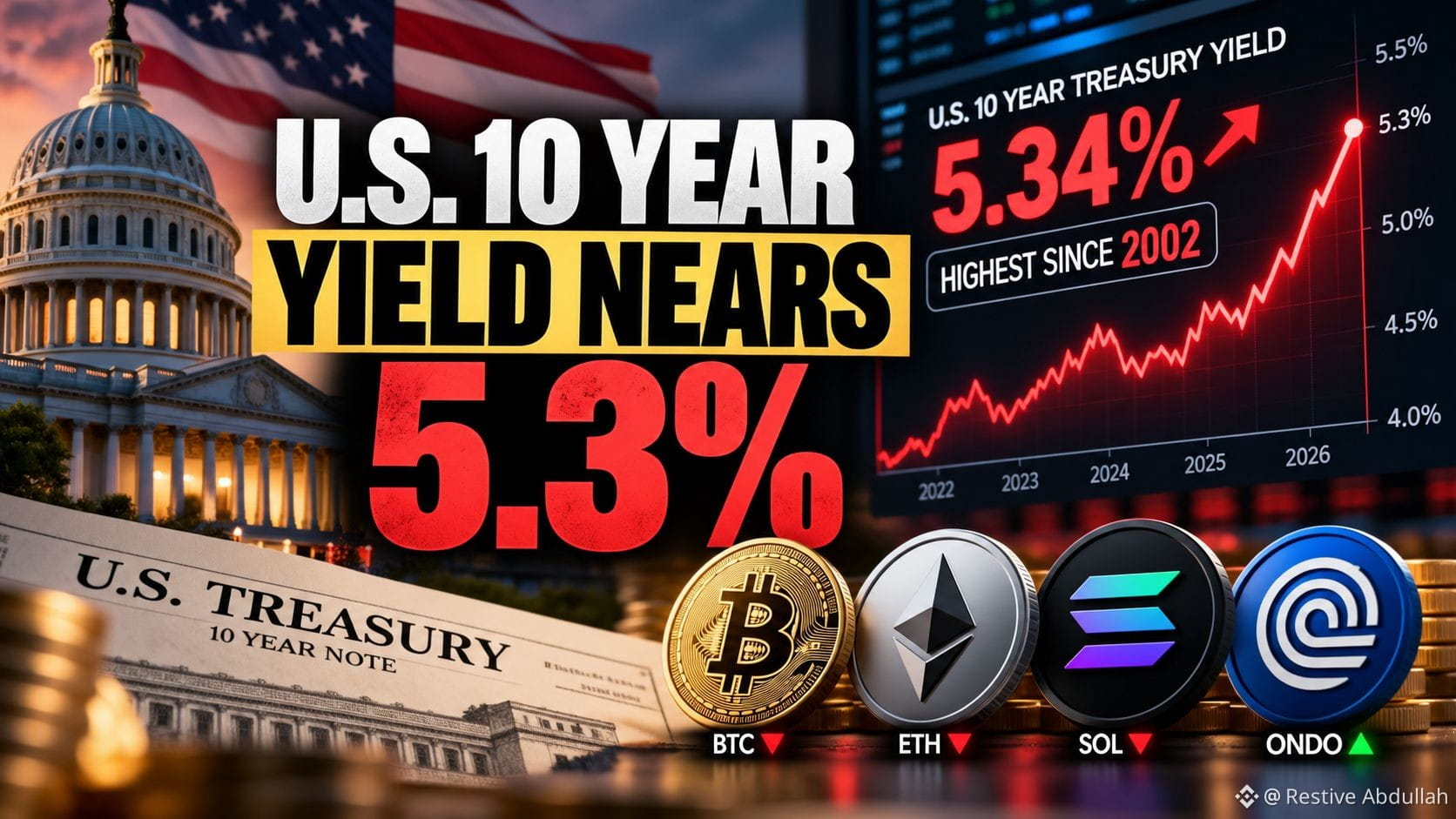
The U.S. 10-year Treasury yield has surged to around 5.34%, reaching its highest level since 2002.
And this is not just another bond-market headline.
The 10-year yield is one of the biggest drivers of global asset pricing.
When yields rise this fast, investors can demand more return from risky assets.
That puts pressure on:
• Bitcoin
• Tech stocks
• Growth assets
• High-beta altcoins
• Speculative crypto trades
Here's the part I'm watching.
Bitcoin briefly pushed above $85,000 after softer U.S. inflation data.
But the move faded as Treasury yields stayed near 5.3%.
That tells me the bond market is currently overpowering the softer inflation signal.
📉 My Market Read
{future}(BTCUSDT)
SHORT-TERM SIGNAL: 🔴 BEARISH
A 5.3%+ 10-year yield creates a tougher liquidity setup for crypto.
If yields keep pushing higher, I would expect more pressure on high-risk assets.
The next key question is simple:
Does the 10-year yield break higher, or finally cool down?
👀 Tokens I'm Watching
$BTC — the main liquidity indicator for crypto.
$ETH — higher-beta exposure if risk appetite weakens.
$SOL — usually more sensitive to changes in risk appetite.
$ONDO — an interesting exception to watch because higher Treasury yields can support demand for tokenized Treasury products, even while higher rates pressure broader crypto.
So I wouldn't treat every crypto token the same here.
My Take
Rising yields = pressure.
Falling yields = breathing room.
Until the 10-year yield starts cooling, I'm watching BTC strength, stablecoin liquidity and altcoin volume very closely.
The bond market is giving crypto traders a macro signal.
Don't ignore it. 👀
#US10YearYieldNears5.3%
🚨 The bond market is sending a warning to risk assets. 🇺🇸📉
The U.S. 10-year Treasury yield has surged to around 5.34%, reaching its highest level since 2002.
And this is not just another bond-market headline.
The 10-year yield is one of the biggest drivers of global asset pricing.
When yields rise this fast, investors can demand more return from risky assets.
That puts pressure on:
• Bitcoin
• Tech stocks
• Growth assets
• High-beta altcoins
• Speculative crypto trades
Here's the part I'm watching.
Bitcoin briefly pushed above $85,000 after softer U.S. inflation data.
But the move faded as Treasury yields stayed near 5.3%.
That tells me the bond market is currently overpowering the softer inflation signal.
📉 My Market Read
SHORT-TERM SIGNAL: 🔴 BEARISH
A 5.3%+ 10-year yield creates a tougher liquidity setup for crypto.
If yields keep pushing higher, I would expect more pressure on high-risk assets.
The next key question is simple:
Does the 10-year yield break higher, or finally cool down?
👀 Tokens I'm Watching
$BTC — the main liquidity indicator for crypto.
$ETH — higher-beta exposure if risk appetite weakens.
$SOL — usually more sensitive to changes in risk appetite.
$ONDO — an interesting exception to watch because higher Treasury yields can support demand for tokenized Treasury products, even while higher rates pressure broader crypto.
So I wouldn't treat every crypto token the same here.
My Take
Rising yields = pressure.
Falling yields = breathing room.
Until the 10-year yield starts cooling, I'm watching BTC strength, stablecoin liquidity and altcoin volume very closely.
The bond market is giving crypto traders a macro signal.
Don't ignore it. 👀
🚨 The bond market is sending a warning to risk assets. 🇺🇸📉
The U.S. 10-year Treasury yield has surged to around 5.34%, reaching its highest level since 2002.
And this is not just another bond-market headline.
The 10-year yield is one of the biggest drivers of global asset pricing.
When yields rise this fast, investors can demand more return from risky assets.
That puts pressure on:
• Bitcoin
• Tech stocks
• Growth assets
• High-beta altcoins
• Speculative crypto trades
Here's the part I'm watching.
Bitcoin briefly pushed above $85,000 after softer U.S. inflation data.
But the move faded as Treasury yields stayed near 5.3%.
That tells me the bond market is currently overpowering the softer inflation signal.
📉 My Market Read
SHORT-TERM SIGNAL: 🔴 BEARISH
A 5.3%+ 10-year yield creates a tougher liquidity setup for crypto.
If yields keep pushing higher, I would expect more pressure on high-risk assets.
The next key question is simple:
Does the 10-year yield break higher, or finally cool down?
👀 Tokens I'm Watching
$BTC — the main liquidity indicator for crypto.
$ETH — higher-beta exposure if risk appetite weakens.
$SOL — usually more sensitive to changes in risk appetite.
$ONDO — an interesting exception to watch because higher Treasury yields can support demand for tokenized Treasury products, even while higher rates pressure broader crypto.
So I wouldn't treat every crypto token the same here.
My Take
Rising yields = pressure.
Falling yields = breathing room.
Until the 10-year yield starts cooling, I'm watching BTC strength, stablecoin liquidity and altcoin volume very closely.
The bond market is giving crypto traders a macro signal.
Don't ignore it. 👀
84
·
--
Bullish
#KoreaProposesTokenizingStocksAndBonds
🇰🇷🚨 #KoreaProposesTokenizingStocksAndBonds
South Korea just gave the RWA narrative another major push.
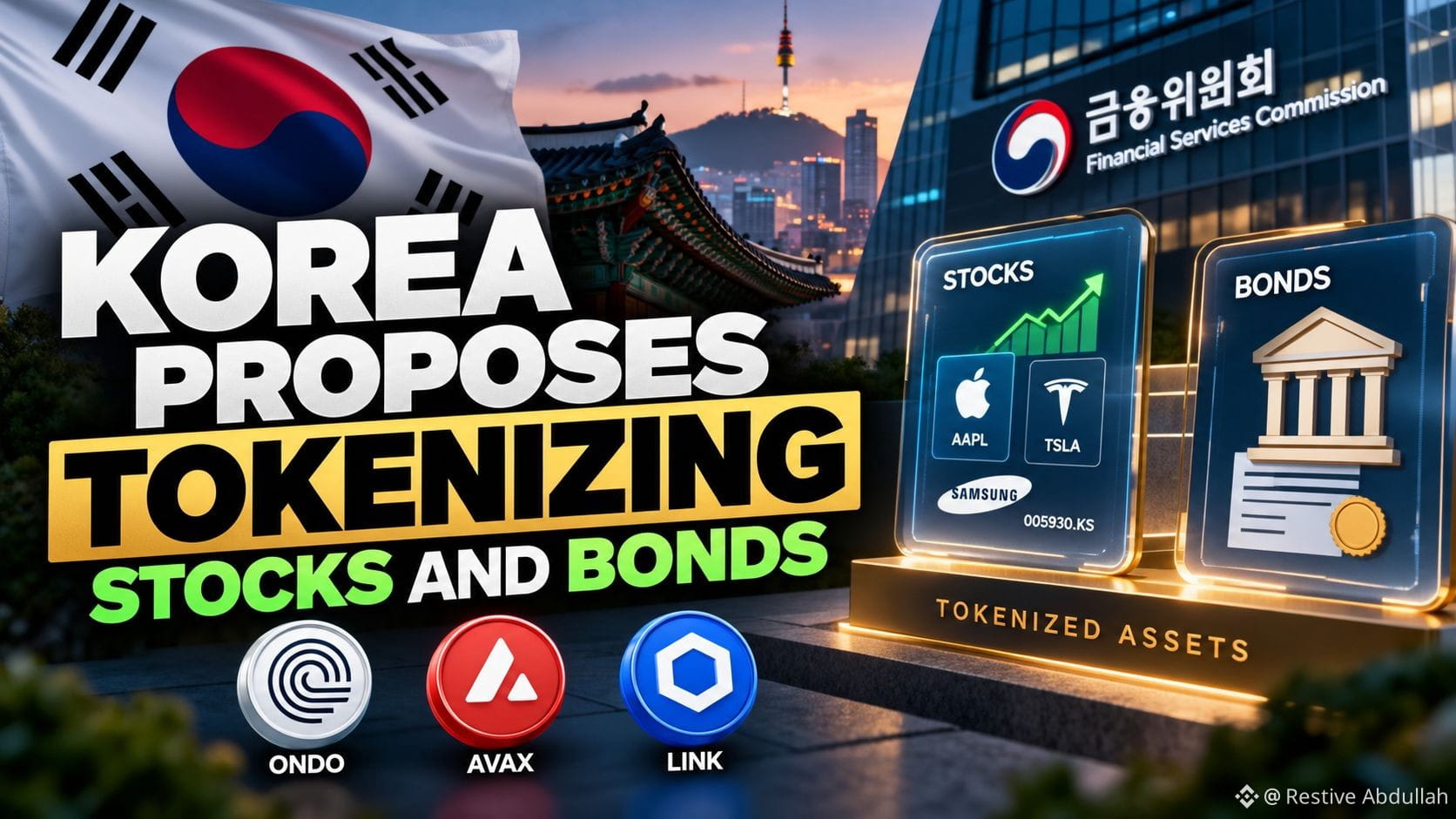
The country is preparing to bring stocks, bonds and funds onchain through its regulated security-token framework.
This is not about turning stocks into normal crypto tokens.
These assets would remain regulated securities, with blockchain used for issuance, records and transfers.
And the timeline matters.
🇰🇷 February 4, 2027
That is when the new legal framework is scheduled to take effect.
South Korea plans to roll this out in stages.
The first phase includes private money-market funds, bonds for institutions, unlisted stocks through trust structures and public fractional-investment products.
If that phase works, the framework can expand toward publicly offered securities.
The long-term goal goes even further:
ONCHAIN SETTLEMENT + STABLECOINS.
👀 Why I'm Watching This
This gives blockchain another use case beyond trading crypto.
Traditional finance could use blockchain rails for:
• Issuing securities
• Recording ownership
• Moving assets
• Settling trades
• Connecting with stablecoin payments
And Korea is not starting from zero.
Ondo Finance ($ONDO) recently partnered with Kakaopay Securities to explore global distribution of Korean equities and tokenization infrastructure.
Avalanche ($AVAX) is also directly relevant.
Hanwha Investment & Securities has reportedly built a tokenized-securities platform using Avalanche, while Korea Securities Depository infrastructure is being designed to connect with Avalanche.
📊 My Market Read
SIGNAL: 🟢 BULLISH
But I see this as a long-term RWA bullish signal, not an instant pump catalyst.
🔥 Tokens I'm Watching
$ONDO → Direct tokenization narrative and Korean equity partnership.
$AVAX → Direct infrastructure connection with a Korean securities platform.
$LINK → Oracle and cross-chain infrastructure could benefit as tokenized assets need reliable data and connectivity.
{future}(ONDOUSDT)
#KoreaProposesTokenizingStocksAndBonds
🇰🇷🚨 #KoreaProposesTokenizingStocksAndBonds
South Korea just gave the RWA narrative another major push.
The country is preparing to bring stocks, bonds and funds onchain through its regulated security-token framework.
This is not about turning stocks into normal crypto tokens.
These assets would remain regulated securities, with blockchain used for issuance, records and transfers.
And the timeline matters.
🇰🇷 February 4, 2027
That is when the new legal framework is scheduled to take effect.
South Korea plans to roll this out in stages.
The first phase includes private money-market funds, bonds for institutions, unlisted stocks through trust structures and public fractional-investment products.
If that phase works, the framework can expand toward publicly offered securities.
The long-term goal goes even further:
ONCHAIN SETTLEMENT + STABLECOINS.
👀 Why I'm Watching This
This gives blockchain another use case beyond trading crypto.
Traditional finance could use blockchain rails for:
• Issuing securities
• Recording ownership
• Moving assets
• Settling trades
• Connecting with stablecoin payments
And Korea is not starting from zero.
Ondo Finance ($ONDO ) recently partnered with Kakaopay Securities to explore global distribution of Korean equities and tokenization infrastructure.
Avalanche ($AVAX ) is also directly relevant.
Hanwha Investment & Securities has reportedly built a tokenized-securities platform using Avalanche, while Korea Securities Depository infrastructure is being designed to connect with Avalanche.
📊 My Market Read
SIGNAL: 🟢 BULLISH
But I see this as a long-term RWA bullish signal, not an instant pump catalyst.
🔥 Tokens I'm Watching
$ONDO → Direct tokenization narrative and Korean equity partnership.
$AVAX → Direct infrastructure connection with a Korean securities platform.
$LINK → Oracle and cross-chain infrastructure could benefit as tokenized assets need reliable data and connectivity.
🇰🇷🚨 #KoreaProposesTokenizingStocksAndBonds
South Korea just gave the RWA narrative another major push.
The country is preparing to bring stocks, bonds and funds onchain through its regulated security-token framework.
This is not about turning stocks into normal crypto tokens.
These assets would remain regulated securities, with blockchain used for issuance, records and transfers.
And the timeline matters.
🇰🇷 February 4, 2027
That is when the new legal framework is scheduled to take effect.
South Korea plans to roll this out in stages.
The first phase includes private money-market funds, bonds for institutions, unlisted stocks through trust structures and public fractional-investment products.
If that phase works, the framework can expand toward publicly offered securities.
The long-term goal goes even further:
ONCHAIN SETTLEMENT + STABLECOINS.
👀 Why I'm Watching This
This gives blockchain another use case beyond trading crypto.
Traditional finance could use blockchain rails for:
• Issuing securities
• Recording ownership
• Moving assets
• Settling trades
• Connecting with stablecoin payments
And Korea is not starting from zero.
Ondo Finance ($ONDO ) recently partnered with Kakaopay Securities to explore global distribution of Korean equities and tokenization infrastructure.
Avalanche ($AVAX ) is also directly relevant.
Hanwha Investment & Securities has reportedly built a tokenized-securities platform using Avalanche, while Korea Securities Depository infrastructure is being designed to connect with Avalanche.
📊 My Market Read
SIGNAL: 🟢 BULLISH
But I see this as a long-term RWA bullish signal, not an instant pump catalyst.
🔥 Tokens I'm Watching
$ONDO → Direct tokenization narrative and Korean equity partnership.
$AVAX → Direct infrastructure connection with a Korean securities platform.
$LINK → Oracle and cross-chain infrastructure could benefit as tokenized assets need reliable data and connectivity.
211
·
--
Bearish
🚨 #MetaMaskExitsLidoValidatorsAfterSecurityIncident
A new security incident is putting Ethereum staking back under the microscope.
MetaMask is responding to an infrastructure security incident and has started exiting affected Ethereum validators operated through its non-custodial staking service.
The important part?
MetaMask says there is no immediate threat to its wallets.
But it is still taking the safer route and removing affected validators from Lido.
Lido says the affected validators have already started the exit process.
The final exits are expected by October 7.
The full exit, withdrawal and re-entry process could take around 45 days because of Ethereum's validator queue.
So, what matters for traders?
This is not a confirmed ETH exploit.
It is a security-confidence event around Ethereum staking infrastructure.
That distinction matters.
If the investigation stays contained, the market impact could remain limited.
If MetaMask reveals a wider compromise, the risk picture changes quickly.
📉 My Market Read
SHORT-TERM SIGNAL: 🔴 BEARISH
The strongest pressure should be around:
$LDO— direct Lido exposure
{future}(ETHUSDT)
$ETH — broader Ethereum staking sentiment
$stETH — liquid-staking confidence
Lido says stETH holders do not need to take action, while the validator exits may cause lost rewards and possible downtime penalties.
👀 What I'm Watching
$LDO : Watch for volume spikes and failed rebounds.
$ETH : Watch whether the incident creates broader staking fear.
$stEth: Watch its ETH price relationship and liquidity.
My key takeaway:
The headline is bearish.
The real risk is what comes next.
Right now, this looks more like a contained infrastructure incident than an Ethereum-wide security failure.
But until MetaMask explains what was compromised, I would keep risk tight around Lido-related positions.
Crypto rewards attention to detail.
Don't trade the headline alone.
Trade the reaction. 👀
🚨 #MetaMaskExitsLidoValidatorsAfterSecurityIncident
A new security incident is putting Ethereum staking back under the microscope.
MetaMask is responding to an infrastructure security incident and has started exiting affected Ethereum validators operated through its non-custodial staking service.
The important part?
MetaMask says there is no immediate threat to its wallets.
But it is still taking the safer route and removing affected validators from Lido.
Lido says the affected validators have already started the exit process.
The final exits are expected by October 7.
The full exit, withdrawal and re-entry process could take around 45 days because of Ethereum's validator queue.
So, what matters for traders?
This is not a confirmed ETH exploit.
It is a security-confidence event around Ethereum staking infrastructure.
That distinction matters.
If the investigation stays contained, the market impact could remain limited.
If MetaMask reveals a wider compromise, the risk picture changes quickly.
📉 My Market Read
SHORT-TERM SIGNAL: 🔴 BEARISH
The strongest pressure should be around:
$LDO — direct Lido exposure
$ETH — broader Ethereum staking sentiment
$stETH — liquid-staking confidence
Lido says stETH holders do not need to take action, while the validator exits may cause lost rewards and possible downtime penalties.
👀 What I'm Watching
$LDO : Watch for volume spikes and failed rebounds.
$ETH : Watch whether the incident creates broader staking fear.
$stEth: Watch its ETH price relationship and liquidity.
My key takeaway:
The headline is bearish.
The real risk is what comes next.
Right now, this looks more like a contained infrastructure incident than an Ethereum-wide security failure.
But until MetaMask explains what was compromised, I would keep risk tight around Lido-related positions.
Crypto rewards attention to detail.
Don't trade the headline alone.
Trade the reaction. 👀
A new security incident is putting Ethereum staking back under the microscope.
MetaMask is responding to an infrastructure security incident and has started exiting affected Ethereum validators operated through its non-custodial staking service.
The important part?
MetaMask says there is no immediate threat to its wallets.
But it is still taking the safer route and removing affected validators from Lido.
Lido says the affected validators have already started the exit process.
The final exits are expected by October 7.
The full exit, withdrawal and re-entry process could take around 45 days because of Ethereum's validator queue.
So, what matters for traders?
This is not a confirmed ETH exploit.
It is a security-confidence event around Ethereum staking infrastructure.
That distinction matters.
If the investigation stays contained, the market impact could remain limited.
If MetaMask reveals a wider compromise, the risk picture changes quickly.
📉 My Market Read
SHORT-TERM SIGNAL: 🔴 BEARISH
The strongest pressure should be around:
$LDO — direct Lido exposure
$ETH — broader Ethereum staking sentiment
$stETH — liquid-staking confidence
Lido says stETH holders do not need to take action, while the validator exits may cause lost rewards and possible downtime penalties.
👀 What I'm Watching
$LDO : Watch for volume spikes and failed rebounds.
$ETH : Watch whether the incident creates broader staking fear.
$stEth: Watch its ETH price relationship and liquidity.
My key takeaway:
The headline is bearish.
The real risk is what comes next.
Right now, this looks more like a contained infrastructure incident than an Ethereum-wide security failure.
But until MetaMask explains what was compromised, I would keep risk tight around Lido-related positions.
Crypto rewards attention to detail.
Don't trade the headline alone.
Trade the reaction. 👀
52
·
--
Bullish
#MicronBeatsEarningsLiftsGuidance
🚨 #MicronBeatsEarningsLiftsGuidance
AI demand just delivered another major signal. 🧠📈
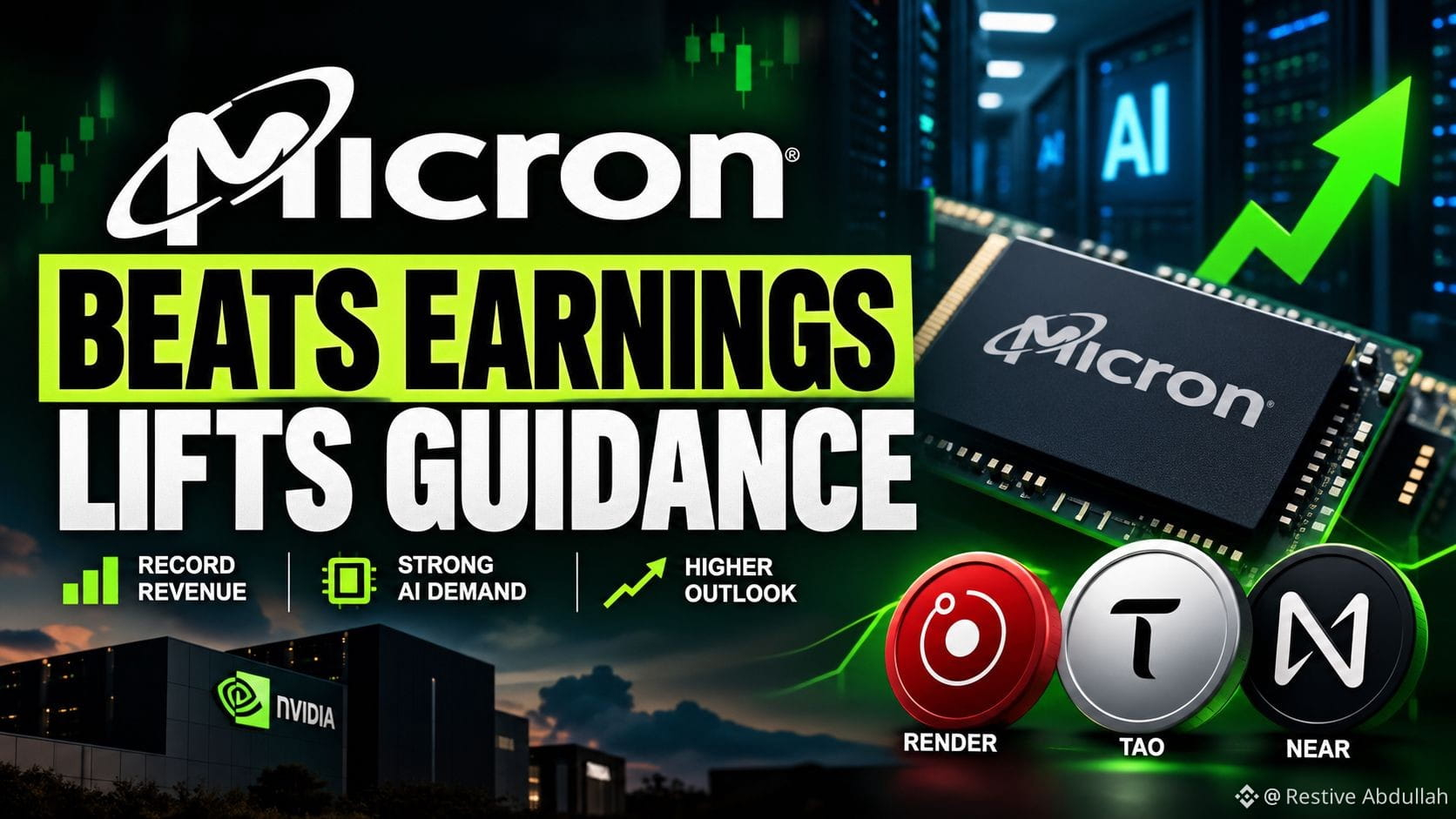
Micron ($MU) has reported record Q4 FY2026 results, with revenue reaching $54.23B and adjusted EPS hitting $33.42.
But the bigger story is the guidance.
Micron expects Q1 FY2027 revenue around $61.5B, above Wall Street expectations.
Even more important: demand for HBM and AI memory is running ahead of available supply.
Micron says long-term customer commitments have jumped to $32B, while much of its 2027 HBM output is already secured.
So what does this tell me?
The AI infrastructure trade is not slowing down yet.
NVIDIA needs memory. AI data centers need memory. AI inference needs more memory. And Micron is showing that customers are still spending heavily to secure it.
📊 My Market Read
Signal: 🟢 BULLISH
Not directly bullish for every crypto token.
But it strengthens the broader AI infrastructure narrative, which can spill into AI-related crypto sectors when traders rotate into high-beta AI plays.
👀 Tokens I’m Watching
$RENDER — decentralized GPU/AI infrastructure narrative.
$TAO — decentralized AI compute and machine intelligence.
$NEAR
— large-cap AI-linked ecosystem exposure.
I would watch AI token volume, not just price.
If BTC remains stable and AI tokens start seeing stronger volume, this could become a useful sector-rotation signal.
My key takeaway:
Micron isn’t just beating estimates.
It is showing that the AI buildout still needs more hardware.
And when traditional AI infrastructure keeps attracting capital, crypto’s AI narrative can get another wave of attention.
Stay focused on the flow, not the headline. 👀
{future}(NEARUSDT)
#MicronBeatsEarningsLiftsGuidance
🚨 #MicronBeatsEarningsLiftsGuidance
AI demand just delivered another major signal. 🧠📈
Micron ($MU) has reported record Q4 FY2026 results, with revenue reaching $54.23B and adjusted EPS hitting $33.42.
But the bigger story is the guidance.
Micron expects Q1 FY2027 revenue around $61.5B, above Wall Street expectations.
Even more important: demand for HBM and AI memory is running ahead of available supply.
Micron says long-term customer commitments have jumped to $32B, while much of its 2027 HBM output is already secured.
So what does this tell me?
The AI infrastructure trade is not slowing down yet.
NVIDIA needs memory. AI data centers need memory. AI inference needs more memory. And Micron is showing that customers are still spending heavily to secure it.
📊 My Market Read
Signal: 🟢 BULLISH
Not directly bullish for every crypto token.
But it strengthens the broader AI infrastructure narrative, which can spill into AI-related crypto sectors when traders rotate into high-beta AI plays.
👀 Tokens I’m Watching
$RENDER — decentralized GPU/AI infrastructure narrative.
$TAO — decentralized AI compute and machine intelligence.
$NEAR
— large-cap AI-linked ecosystem exposure.
I would watch AI token volume, not just price.
If BTC remains stable and AI tokens start seeing stronger volume, this could become a useful sector-rotation signal.
My key takeaway:
Micron isn’t just beating estimates.
It is showing that the AI buildout still needs more hardware.
And when traditional AI infrastructure keeps attracting capital, crypto’s AI narrative can get another wave of attention.
Stay focused on the flow, not the headline. 👀
🚨 #MicronBeatsEarningsLiftsGuidance
AI demand just delivered another major signal. 🧠📈
Micron ($MU) has reported record Q4 FY2026 results, with revenue reaching $54.23B and adjusted EPS hitting $33.42.
But the bigger story is the guidance.
Micron expects Q1 FY2027 revenue around $61.5B, above Wall Street expectations.
Even more important: demand for HBM and AI memory is running ahead of available supply.
Micron says long-term customer commitments have jumped to $32B, while much of its 2027 HBM output is already secured.
So what does this tell me?
The AI infrastructure trade is not slowing down yet.
NVIDIA needs memory. AI data centers need memory. AI inference needs more memory. And Micron is showing that customers are still spending heavily to secure it.
📊 My Market Read
Signal: 🟢 BULLISH
Not directly bullish for every crypto token.
But it strengthens the broader AI infrastructure narrative, which can spill into AI-related crypto sectors when traders rotate into high-beta AI plays.
👀 Tokens I’m Watching
$RENDER — decentralized GPU/AI infrastructure narrative.
$TAO — decentralized AI compute and machine intelligence.
$NEAR
— large-cap AI-linked ecosystem exposure.
I would watch AI token volume, not just price.
If BTC remains stable and AI tokens start seeing stronger volume, this could become a useful sector-rotation signal.
My key takeaway:
Micron isn’t just beating estimates.
It is showing that the AI buildout still needs more hardware.
And when traditional AI infrastructure keeps attracting capital, crypto’s AI narrative can get another wave of attention.
Stay focused on the flow, not the headline. 👀
364
·
--
Bullish
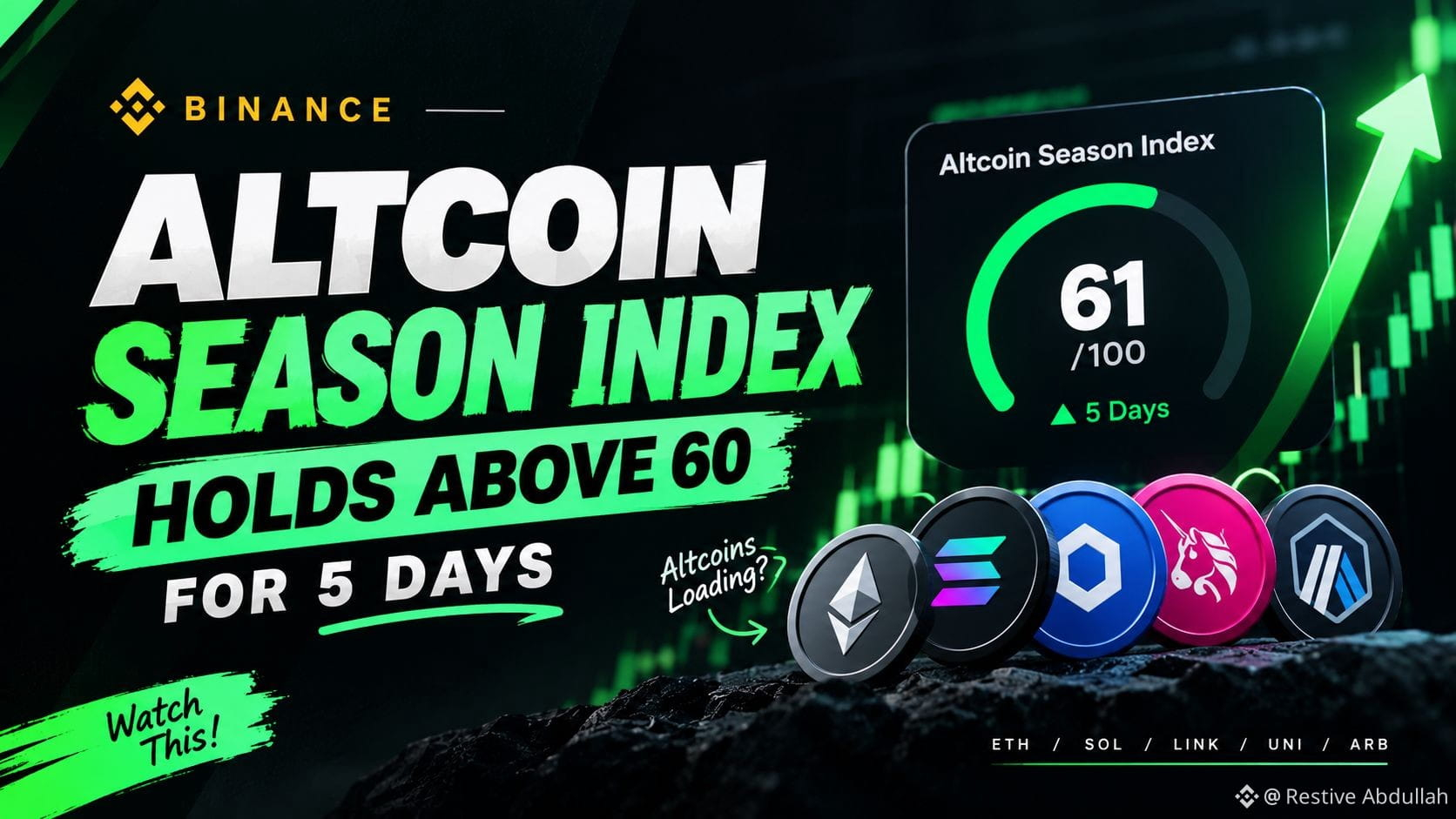
#AltcoinSeasonIndexHoldsAbove60For5Days
🚨 ALTCOIN SEASON SIGNAL IS GETTING STRONGER 👀
The Altcoin Season Index has stayed above 60 for 5 straight days.
Right now, the reading is around 61/100.
For me, the important part isn't the number 60 itself.
It's the consistency.
One day above 60 can be noise.
Five days tells me that altcoins are starting to show broader strength against Bitcoin.
And look at the setup:
📊 BTC is consolidating around $83K
📈 Altcoin breadth is improving
💰 Capital is rotating into selected alts
🔥 More coins are outperforming BTC
But don't call it a full altseason yet.
The classic CoinMarketCap threshold is 75/100.
So we're getting closer, but we're not there.
What I'm watching now 👇
If the index keeps climbing toward 70 → 75, I want to see whether this strength spreads across more sectors.
If BTC stays stable while altcoins keep outperforming, that would make the rotation more interesting.
But if BTC suddenly dumps, this signal can weaken very fast.
My read right now:
🟢 ALTCOIN BIAS: BULLISH
⚠️ FULL ALTSEASON: NOT CONFIRMED
I would rather watch the trend build than chase random green candles.
👀 ALTCOINS ON MY WATCHLIST
$ETH • $ETH • LINK • UNI • ARB
These names are already showing strong relative performance in the current 90-day data.
My focus is simple:
BTC stable + Index rising = watch altcoin rotation.
Index reaches 75+ = much stronger altseason confirmation.
The market is giving us a signal.
Now we watch whether it can sustain it. 👀
— Abdullah Al Masum
{future}(BTCUSDT)
#AltcoinSeasonIndexHoldsAbove60For5Days
🚨 ALTCOIN SEASON SIGNAL IS GETTING STRONGER 👀
The Altcoin Season Index has stayed above 60 for 5 straight days.
Right now, the reading is around 61/100.
For me, the important part isn't the number 60 itself.
It's the consistency.
One day above 60 can be noise.
Five days tells me that altcoins are starting to show broader strength against Bitcoin.
And look at the setup:
📊 BTC is consolidating around $83K
📈 Altcoin breadth is improving
💰 Capital is rotating into selected alts
🔥 More coins are outperforming BTC
But don't call it a full altseason yet.
The classic CoinMarketCap threshold is 75/100.
So we're getting closer, but we're not there.
What I'm watching now 👇
If the index keeps climbing toward 70 → 75, I want to see whether this strength spreads across more sectors.
If BTC stays stable while altcoins keep outperforming, that would make the rotation more interesting.
But if BTC suddenly dumps, this signal can weaken very fast.
My read right now:
🟢 ALTCOIN BIAS: BULLISH
⚠️ FULL ALTSEASON: NOT CONFIRMED
I would rather watch the trend build than chase random green candles.
👀 ALTCOINS ON MY WATCHLIST
$ETH • $ETH • LINK • UNI • ARB
These names are already showing strong relative performance in the current 90-day data.
My focus is simple:
BTC stable + Index rising = watch altcoin rotation.
Index reaches 75+ = much stronger altseason confirmation.
The market is giving us a signal.
Now we watch whether it can sustain it. 👀
— Abdullah Al Masum
🚨 ALTCOIN SEASON SIGNAL IS GETTING STRONGER 👀
The Altcoin Season Index has stayed above 60 for 5 straight days.
Right now, the reading is around 61/100.
For me, the important part isn't the number 60 itself.
It's the consistency.
One day above 60 can be noise.
Five days tells me that altcoins are starting to show broader strength against Bitcoin.
And look at the setup:
📊 BTC is consolidating around $83K
📈 Altcoin breadth is improving
💰 Capital is rotating into selected alts
🔥 More coins are outperforming BTC
But don't call it a full altseason yet.
The classic CoinMarketCap threshold is 75/100.
So we're getting closer, but we're not there.
What I'm watching now 👇
If the index keeps climbing toward 70 → 75, I want to see whether this strength spreads across more sectors.
If BTC stays stable while altcoins keep outperforming, that would make the rotation more interesting.
But if BTC suddenly dumps, this signal can weaken very fast.
My read right now:
🟢 ALTCOIN BIAS: BULLISH
⚠️ FULL ALTSEASON: NOT CONFIRMED
I would rather watch the trend build than chase random green candles.
👀 ALTCOINS ON MY WATCHLIST
$ETH • $ETH • LINK • UNI • ARB
These names are already showing strong relative performance in the current 90-day data.
My focus is simple:
BTC stable + Index rising = watch altcoin rotation.
Index reaches 75+ = much stronger altseason confirmation.
The market is giving us a signal.
Now we watch whether it can sustain it. 👀
— Abdullah Al Masum
67
·
--
Bullish
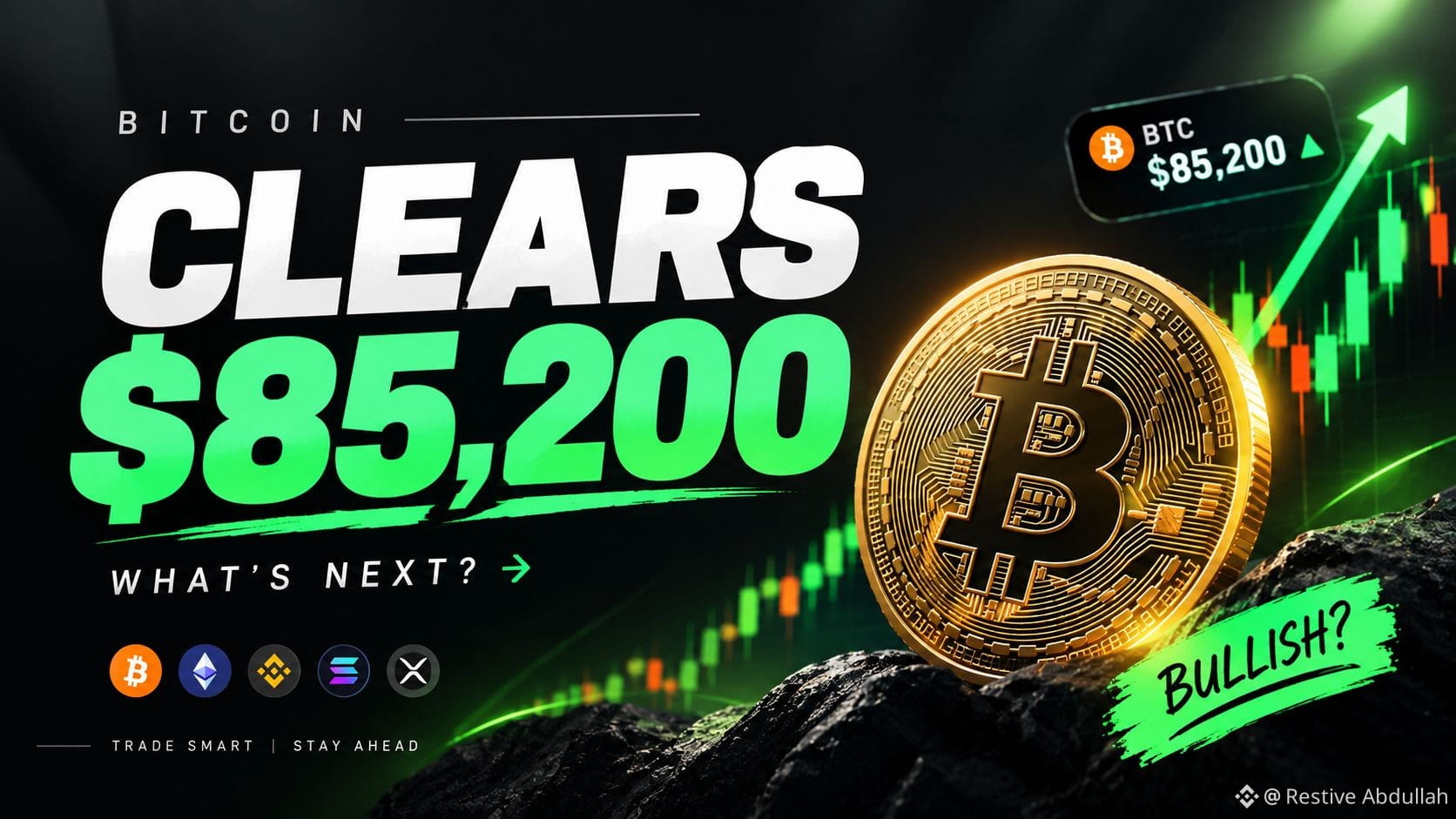
#BitcoinClears85200
🚨 BITCOIN CLEARS $85,200 — NOW THE REAL TEST BEGINS! 🚨
$BTC is back above $85,200, and this level matters.
From my view, this is not just another green candle.
The $84K–$85K zone has been a major supply area for long-term holders.
So, what do I want to see next?
👉 BTC holds above $85,200
👉 Buyers push toward $87,000–$87,400
👉 Volume supports the breakout
👉 Pullbacks stay above the breakout zone
If BTC breaks higher and holds, altcoins can start getting more attention.
But I would NOT chase the first green candle.
A clean retest of $85,200 would give me much better confirmation.
There is also a macro tailwind today.
U.S. PCE inflation came in below expectations, while Bitcoin climbed toward $85.4K.
📊 My Market Read
🟢 Short-term bias: BULLISH
But remember:
$85.2K = confirmation zone
$87K–$87.4K = next major test
$82K–$83K = important downside area
If BTC loses $85.2K quickly after the breakout, I would treat it as a failed reclaim.
I am watching the reaction, not just the headline.
👀 ALTCOINS I’M WATCHING
$ETH • $SOL • BNB • XRP • LINK
These are the names I would watch if BTC keeps strength and market liquidity rotates into large-cap alts.
Don't blindly long everything because BTC is green.
BTC confirmation first.
Altcoin entries second.
That is how I’m reading the market right now.
— Abdullah Al Masum
{future}(BTCUSDT)
#BitcoinClears85200
🚨 BITCOIN CLEARS $85,200 — NOW THE REAL TEST BEGINS! 🚨
$BTC is back above $85,200, and this level matters.
From my view, this is not just another green candle.
The $84K–$85K zone has been a major supply area for long-term holders.
So, what do I want to see next?
👉 BTC holds above $85,200
👉 Buyers push toward $87,000–$87,400
👉 Volume supports the breakout
👉 Pullbacks stay above the breakout zone
If BTC breaks higher and holds, altcoins can start getting more attention.
But I would NOT chase the first green candle.
A clean retest of $85,200 would give me much better confirmation.
There is also a macro tailwind today.
U.S. PCE inflation came in below expectations, while Bitcoin climbed toward $85.4K.
📊 My Market Read
🟢 Short-term bias: BULLISH
But remember:
$85.2K = confirmation zone
$87K–$87.4K = next major test
$82K–$83K = important downside area
If BTC loses $85.2K quickly after the breakout, I would treat it as a failed reclaim.
I am watching the reaction, not just the headline.
👀 ALTCOINS I’M WATCHING
$ETH • $SOL • BNB • XRP • LINK
These are the names I would watch if BTC keeps strength and market liquidity rotates into large-cap alts.
Don't blindly long everything because BTC is green.
BTC confirmation first.
Altcoin entries second.
That is how I’m reading the market right now.
— Abdullah Al Masum
🚨 BITCOIN CLEARS $85,200 — NOW THE REAL TEST BEGINS! 🚨
$BTC is back above $85,200, and this level matters.
From my view, this is not just another green candle.
The $84K–$85K zone has been a major supply area for long-term holders.
So, what do I want to see next?
👉 BTC holds above $85,200
👉 Buyers push toward $87,000–$87,400
👉 Volume supports the breakout
👉 Pullbacks stay above the breakout zone
If BTC breaks higher and holds, altcoins can start getting more attention.
But I would NOT chase the first green candle.
A clean retest of $85,200 would give me much better confirmation.
There is also a macro tailwind today.
U.S. PCE inflation came in below expectations, while Bitcoin climbed toward $85.4K.
📊 My Market Read
🟢 Short-term bias: BULLISH
But remember:
$85.2K = confirmation zone
$87K–$87.4K = next major test
$82K–$83K = important downside area
If BTC loses $85.2K quickly after the breakout, I would treat it as a failed reclaim.
I am watching the reaction, not just the headline.
👀 ALTCOINS I’M WATCHING
$ETH • $SOL • BNB • XRP • LINK
These are the names I would watch if BTC keeps strength and market liquidity rotates into large-cap alts.
Don't blindly long everything because BTC is green.
BTC confirmation first.
Altcoin entries second.
That is how I’m reading the market right now.
— Abdullah Al Masum
71
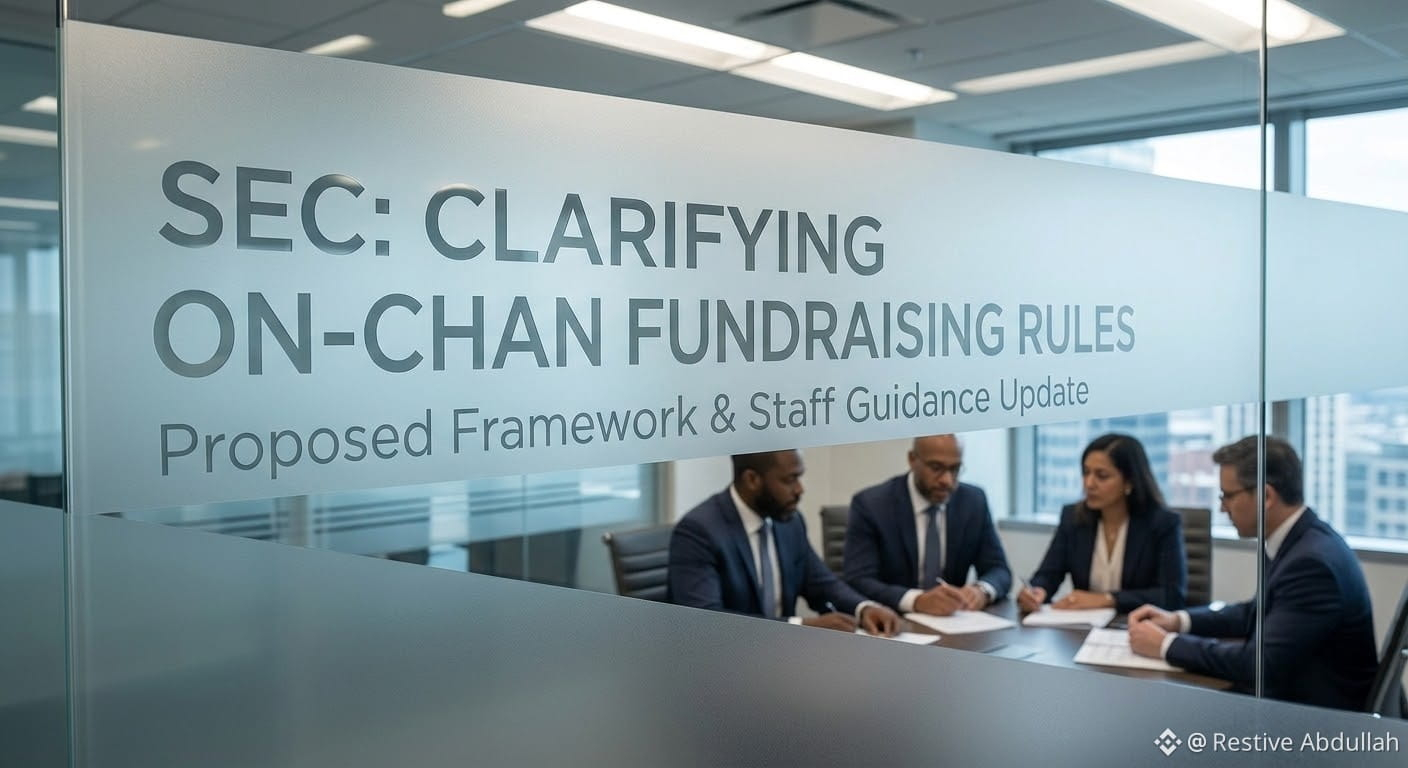
#SECToClarifyOnChainFundraisingRules
The SEC is finally drawing the lines for on-chain fundraising. 🇺🇸
The days of guessing what the SEC thinks about your token launch might be coming to an end. Between the recently proposed "Regulation Crypto Assets" and the new SEC Division of Corporation Finance FAQs published on September 25, we are seeing the first comprehensive offering frameworks tailored specifically for crypto.
Here is the insider breakdown of what this actually means for builders and investors:
Clearer Capital Raising: The SEC's proposed framework seeks to provide clear pathways for crypto entrepreneurs to raise capital on-chain while complying with federal securities laws. This provides a structured alternative to the legal gray areas that have historically plagued initial token offerings.
The Buyback Nuance: The recent guidance clarifies that token buybacks do not automatically classify a token as a security. However, the SEC warns that if a project explicitly promotes a buyback as a mechanism to generate yield or returns, it can trigger an investment-contract analysis under the Howey test.
DeFi & Network Upgrades: The FAQs also address staking receipt tokens, secondary market trading, and network upgrades. By clarifying the types of promises that constitute an investment contract, decentralized exchanges (DEXs) and DeFi protocols now have a clearer roadmap for planning fundraising and protocol updates while managing regulatory risk.
The Analyst Takeaway: While this is still strictly staff guidance and not a change to existing law, it signals a massive shift from pure "regulation by enforcement" to actionable compliance rubrics. For the first time, projects have a tangible picture of what the SEC will look at when scrutinizing token economics and decentralized networks.
Do you think these clearer guidelines will spark a new wave of compliant on-chain capital raising, or will the rules still feel too restrictive for decentralized builders? Let us know your thoughts below!!!
#SECToClarifyOnChainFundraisingRules
The SEC is finally drawing the lines for on-chain fundraising. 🇺🇸
The days of guessing what the SEC thinks about your token launch might be coming to an end. Between the recently proposed "Regulation Crypto Assets" and the new SEC Division of Corporation Finance FAQs published on September 25, we are seeing the first comprehensive offering frameworks tailored specifically for crypto.
Here is the insider breakdown of what this actually means for builders and investors:
Clearer Capital Raising: The SEC's proposed framework seeks to provide clear pathways for crypto entrepreneurs to raise capital on-chain while complying with federal securities laws. This provides a structured alternative to the legal gray areas that have historically plagued initial token offerings.
The Buyback Nuance: The recent guidance clarifies that token buybacks do not automatically classify a token as a security. However, the SEC warns that if a project explicitly promotes a buyback as a mechanism to generate yield or returns, it can trigger an investment-contract analysis under the Howey test.
DeFi & Network Upgrades: The FAQs also address staking receipt tokens, secondary market trading, and network upgrades. By clarifying the types of promises that constitute an investment contract, decentralized exchanges (DEXs) and DeFi protocols now have a clearer roadmap for planning fundraising and protocol updates while managing regulatory risk.
The Analyst Takeaway: While this is still strictly staff guidance and not a change to existing law, it signals a massive shift from pure "regulation by enforcement" to actionable compliance rubrics. For the first time, projects have a tangible picture of what the SEC will look at when scrutinizing token economics and decentralized networks.
Do you think these clearer guidelines will spark a new wave of compliant on-chain capital raising, or will the rules still feel too restrictive for decentralized builders? Let us know your thoughts below!!!
The SEC is finally drawing the lines for on-chain fundraising. 🇺🇸
The days of guessing what the SEC thinks about your token launch might be coming to an end. Between the recently proposed "Regulation Crypto Assets" and the new SEC Division of Corporation Finance FAQs published on September 25, we are seeing the first comprehensive offering frameworks tailored specifically for crypto.
Here is the insider breakdown of what this actually means for builders and investors:
Clearer Capital Raising: The SEC's proposed framework seeks to provide clear pathways for crypto entrepreneurs to raise capital on-chain while complying with federal securities laws. This provides a structured alternative to the legal gray areas that have historically plagued initial token offerings.
The Buyback Nuance: The recent guidance clarifies that token buybacks do not automatically classify a token as a security. However, the SEC warns that if a project explicitly promotes a buyback as a mechanism to generate yield or returns, it can trigger an investment-contract analysis under the Howey test.
DeFi & Network Upgrades: The FAQs also address staking receipt tokens, secondary market trading, and network upgrades. By clarifying the types of promises that constitute an investment contract, decentralized exchanges (DEXs) and DeFi protocols now have a clearer roadmap for planning fundraising and protocol updates while managing regulatory risk.
The Analyst Takeaway: While this is still strictly staff guidance and not a change to existing law, it signals a massive shift from pure "regulation by enforcement" to actionable compliance rubrics. For the first time, projects have a tangible picture of what the SEC will look at when scrutinizing token economics and decentralized networks.
Do you think these clearer guidelines will spark a new wave of compliant on-chain capital raising, or will the rules still feel too restrictive for decentralized builders? Let us know your thoughts below!!!
67
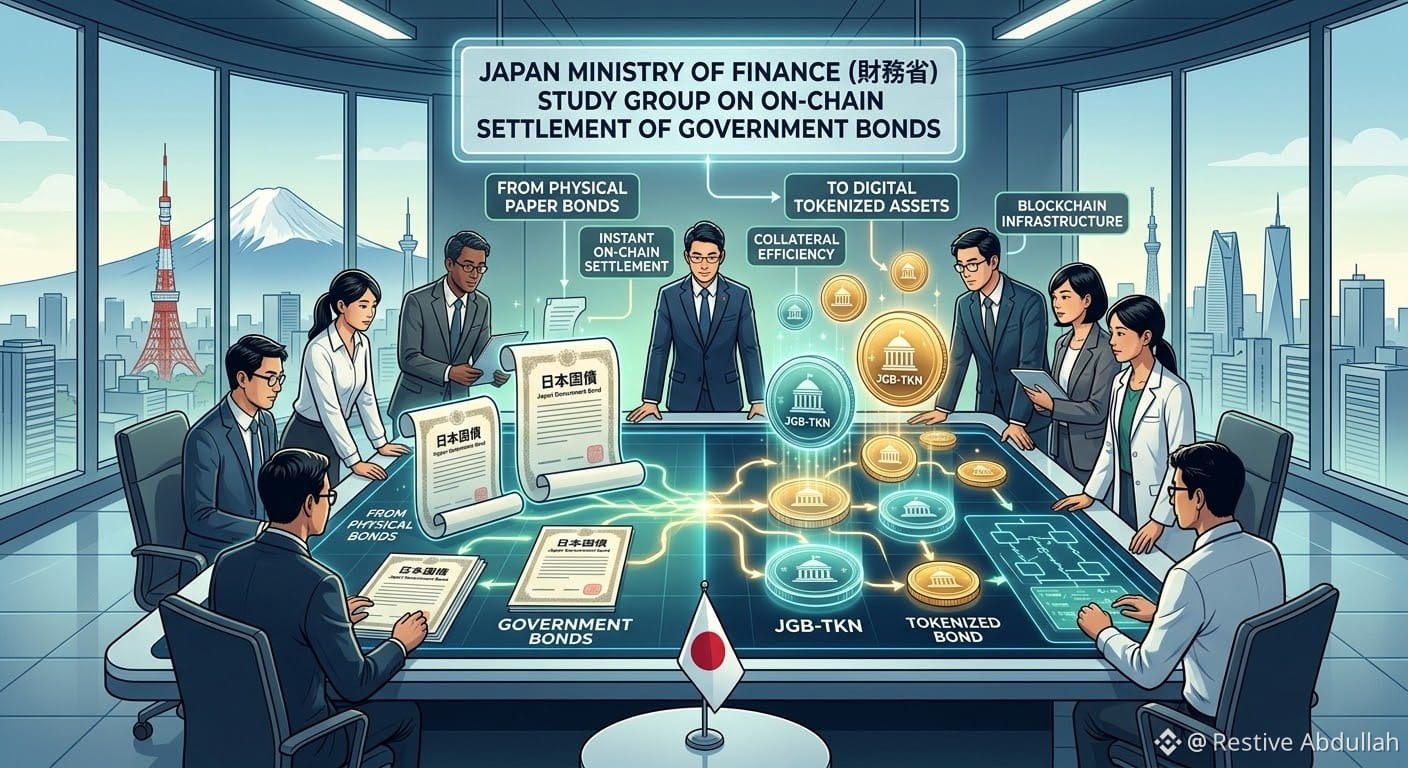
#JapanMOFStudyGroupOnTokenizedGovtBonds
Japan Eyes Tokenized Government Bonds: MOF Launches Study Group 🇯🇵
Japan’s Ministry of Finance (MOF) has officially established a dedicated study group to evaluate the tokenization and on-chain settlement of Japanese Government Bonds (JGBs).
Here is the quick breakdown about MOF :
Real-Time Settlement: JGBs currently settle on a next-business-day basis. The MOF is exploring blockchain rails to achieve instantaneous settlement, drastically cutting operational friction.
Institutional Backing: The initiative includes prominent researchers from the University of Tokyo and Waseda University, with direct observation from the Bank of Japan (BOJ) and the Financial Services Agency (FSA).
Collateral Efficiency: Moving JGBs on-chain enables instant, 24/7 collateralization in repurchase (repo) agreements, unlocking massive capital efficiency and liquidity.
Timeline: The first closed-door session meets on October 8, 2026, with initial findings and discussion points slated for release between December 2026 and January 2027.
Sovereign debt moving on-chain is one of the strongest validations for Real-World Asset (RWA) tokenization to date.
Will tokenized sovereign bonds become standard treasury practice sooner than the market expects? Drop your view below! 👇
#JapanMOFStudyGroupOnTokenizedGovtBonds
Japan Eyes Tokenized Government Bonds: MOF Launches Study Group 🇯🇵
Japan’s Ministry of Finance (MOF) has officially established a dedicated study group to evaluate the tokenization and on-chain settlement of Japanese Government Bonds (JGBs).
Here is the quick breakdown about MOF :
Real-Time Settlement: JGBs currently settle on a next-business-day basis. The MOF is exploring blockchain rails to achieve instantaneous settlement, drastically cutting operational friction.
Institutional Backing: The initiative includes prominent researchers from the University of Tokyo and Waseda University, with direct observation from the Bank of Japan (BOJ) and the Financial Services Agency (FSA).
Collateral Efficiency: Moving JGBs on-chain enables instant, 24/7 collateralization in repurchase (repo) agreements, unlocking massive capital efficiency and liquidity.
Timeline: The first closed-door session meets on October 8, 2026, with initial findings and discussion points slated for release between December 2026 and January 2027.
Sovereign debt moving on-chain is one of the strongest validations for Real-World Asset (RWA) tokenization to date.
Will tokenized sovereign bonds become standard treasury practice sooner than the market expects? Drop your view below! 👇
Japan Eyes Tokenized Government Bonds: MOF Launches Study Group 🇯🇵
Japan’s Ministry of Finance (MOF) has officially established a dedicated study group to evaluate the tokenization and on-chain settlement of Japanese Government Bonds (JGBs).
Here is the quick breakdown about MOF :
Real-Time Settlement: JGBs currently settle on a next-business-day basis. The MOF is exploring blockchain rails to achieve instantaneous settlement, drastically cutting operational friction.
Institutional Backing: The initiative includes prominent researchers from the University of Tokyo and Waseda University, with direct observation from the Bank of Japan (BOJ) and the Financial Services Agency (FSA).
Collateral Efficiency: Moving JGBs on-chain enables instant, 24/7 collateralization in repurchase (repo) agreements, unlocking massive capital efficiency and liquidity.
Timeline: The first closed-door session meets on October 8, 2026, with initial findings and discussion points slated for release between December 2026 and January 2027.
Sovereign debt moving on-chain is one of the strongest validations for Real-World Asset (RWA) tokenization to date.
Will tokenized sovereign bonds become standard treasury practice sooner than the market expects? Drop your view below! 👇
1
116
Verified
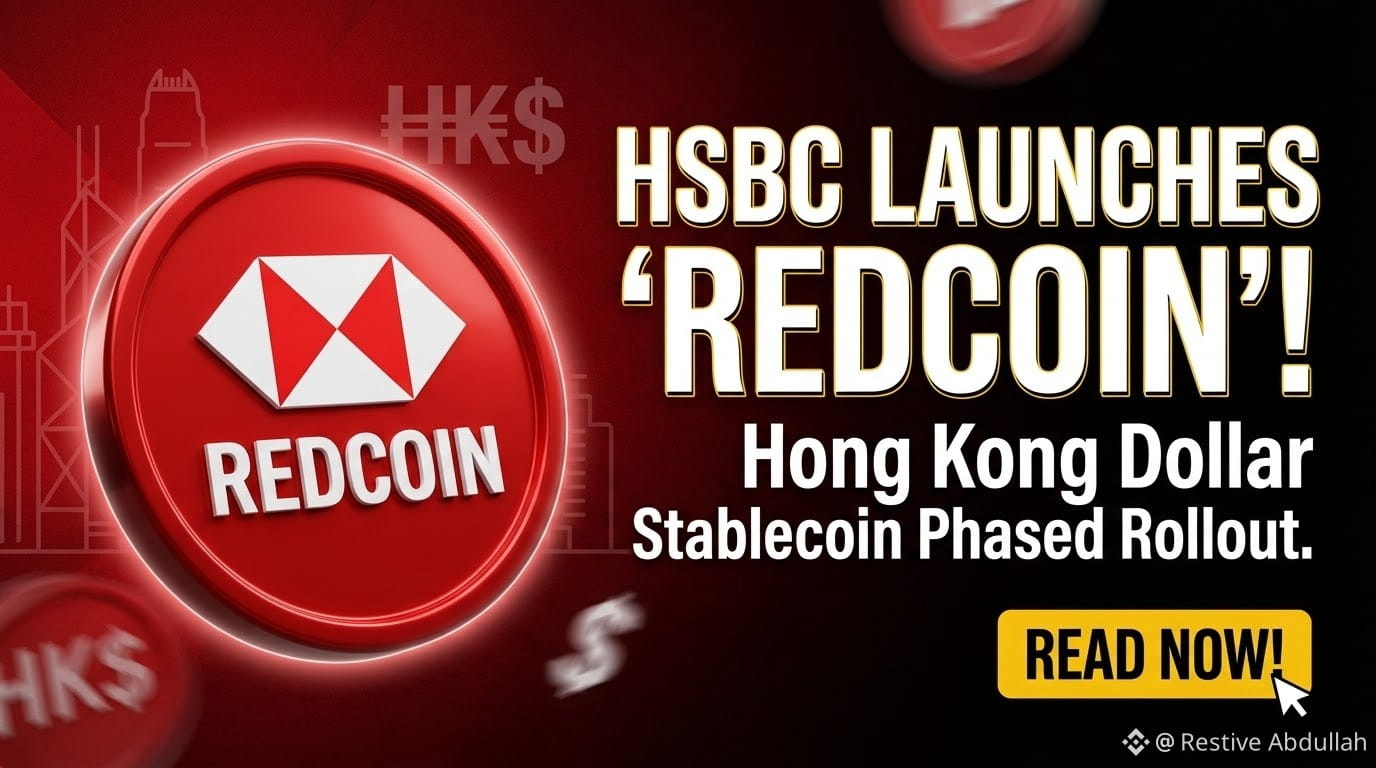
#HSBCNamesStablecoinRedCoinForPhasedLaunch
TradFi Giants Are Making Moves: HSBC Unveils 'RedCoin' Stablecoin 🇭🇰
HSBC has officially named its forthcoming Hong Kong Dollar-pegged stablecoin HSBC RedCoin, setting the stage for a highly anticipated rollout in the second half of 2026.
Here is the breakdown of this major traditional finance (TradFi) milestone:
Retail-First Rollout: Rather than targeting institutional liquidity right away, the launch will focus on everyday utility. The initial phase will support Peer-to-Peer (P2P) transfers and Peer-to-Merchant (P2M) payments. Corporate wholesale use cases will be introduced in later phases.
Mass Distribution Channel: RedCoin will be directly accessible via the HSBC HK Mobile Banking App and PayMe—one of Hong Kong's most widely used consumer payment platforms. This integration creates a frictionless entry point for millions of retail users.
Fully Regulated Framework: The token is being developed under a strict regulatory umbrella, utilizing the stablecoin issuer license granted to HSBC by the Hong Kong Monetary Authority (HKMA) in April 2026. It is designed for a secure 1:1 redemption with the HKD.
Strong Consumer Awareness: The launch is backed by solid market data. A recent HSBC survey of over 1,000 customers revealed that 74% already recognize at least one practical use case for stablecoins.
The Binance Square Takeaway: This is a massive signal for global crypto adoption. By embedding a regulated stablecoin directly into familiar consumer banking apps, HSBC is essentially bypassing the steep learning curve of Web3 wallets. They are betting that everyday digital payments—not just corporate treasury operations—will be the primary catalyst for stablecoin adoption in the region.
Do you think bank-issued stablecoins like RedCoin will ultimately compete with or complement decentralized stablecoins like USDT and USDC? Let us know your thoughts below! 👇
#HSBCNamesStablecoinRedCoinForPhasedLaunch
TradFi Giants Are Making Moves: HSBC Unveils 'RedCoin' Stablecoin 🇭🇰
HSBC has officially named its forthcoming Hong Kong Dollar-pegged stablecoin HSBC RedCoin, setting the stage for a highly anticipated rollout in the second half of 2026.
Here is the breakdown of this major traditional finance (TradFi) milestone:
Retail-First Rollout: Rather than targeting institutional liquidity right away, the launch will focus on everyday utility. The initial phase will support Peer-to-Peer (P2P) transfers and Peer-to-Merchant (P2M) payments. Corporate wholesale use cases will be introduced in later phases.
Mass Distribution Channel: RedCoin will be directly accessible via the HSBC HK Mobile Banking App and PayMe—one of Hong Kong's most widely used consumer payment platforms. This integration creates a frictionless entry point for millions of retail users.
Fully Regulated Framework: The token is being developed under a strict regulatory umbrella, utilizing the stablecoin issuer license granted to HSBC by the Hong Kong Monetary Authority (HKMA) in April 2026. It is designed for a secure 1:1 redemption with the HKD.
Strong Consumer Awareness: The launch is backed by solid market data. A recent HSBC survey of over 1,000 customers revealed that 74% already recognize at least one practical use case for stablecoins.
The Binance Square Takeaway: This is a massive signal for global crypto adoption. By embedding a regulated stablecoin directly into familiar consumer banking apps, HSBC is essentially bypassing the steep learning curve of Web3 wallets. They are betting that everyday digital payments—not just corporate treasury operations—will be the primary catalyst for stablecoin adoption in the region.
Do you think bank-issued stablecoins like RedCoin will ultimately compete with or complement decentralized stablecoins like USDT and USDC? Let us know your thoughts below! 👇
TradFi Giants Are Making Moves: HSBC Unveils 'RedCoin' Stablecoin 🇭🇰
HSBC has officially named its forthcoming Hong Kong Dollar-pegged stablecoin HSBC RedCoin, setting the stage for a highly anticipated rollout in the second half of 2026.
Here is the breakdown of this major traditional finance (TradFi) milestone:
Retail-First Rollout: Rather than targeting institutional liquidity right away, the launch will focus on everyday utility. The initial phase will support Peer-to-Peer (P2P) transfers and Peer-to-Merchant (P2M) payments. Corporate wholesale use cases will be introduced in later phases.
Mass Distribution Channel: RedCoin will be directly accessible via the HSBC HK Mobile Banking App and PayMe—one of Hong Kong's most widely used consumer payment platforms. This integration creates a frictionless entry point for millions of retail users.
Fully Regulated Framework: The token is being developed under a strict regulatory umbrella, utilizing the stablecoin issuer license granted to HSBC by the Hong Kong Monetary Authority (HKMA) in April 2026. It is designed for a secure 1:1 redemption with the HKD.
Strong Consumer Awareness: The launch is backed by solid market data. A recent HSBC survey of over 1,000 customers revealed that 74% already recognize at least one practical use case for stablecoins.
The Binance Square Takeaway: This is a massive signal for global crypto adoption. By embedding a regulated stablecoin directly into familiar consumer banking apps, HSBC is essentially bypassing the steep learning curve of Web3 wallets. They are betting that everyday digital payments—not just corporate treasury operations—will be the primary catalyst for stablecoin adoption in the region.
Do you think bank-issued stablecoins like RedCoin will ultimately compete with or complement decentralized stablecoins like USDT and USDC? Let us know your thoughts below! 👇
116
Log in to explore more content
Join global crypto users on Binance Square
⚡️ Get latest and useful information about crypto.
💬 Trusted by the world’s largest crypto exchange.
👍 Discover real insights from verified creators.
Email / Phone number
Trending Topics
EtherGains70.9%InQ3
71,087 views
756 Discussing
One of the best third quarters in history 💰
September closed out last night, and with it, the quarter. For the quarter, BTC is up 42%—the second-best Q3 on record. ETH had a record-breaking Q3 overall, up 70%.
Looking at the chart, things are still looking good: we’re holding support, but we’re testing it more and more often. Plus, ETF momentum is weakening — inflows are gradually declining, and yesterday saw outflows for the first time in a long while.
Yes, historically, October has been a good month for crypto — it’s not called “Uptober” for nothing. But it’s also one of the most volatile months. Last year, for example, we managed to hit a new all-time high (ATH) and experience a flash crash.
🚀 High Accuracy Trades.
$BTC
$ETH
$SOL
#EtherGains70.9%InQ3 #DollarIndexHitsHighestSinceMay2025 #CFTCSubmitsTwoEventContractRulesToWhiteHouse #MicronBeatsEarningsLiftsGuidance
Knowledge is Power
·0 Likes
·150 views
TreasuryLetsStatesFileStablecoinCertificationsEarly
3,418 views
36 Discussing
US10YearYieldNears5.3%
102,207 views
893 Discussing