

0xr1
10.2k Posts

0xr1
 Square Verified+
Report
Block User
I RedOne I Network and Systems Engineer | IT Specialist | AI Orchestrator | Cybersecurity & Blockchain enthusiast | 😎🤞🏻
323 Following
36.5K+ Followers
45.8K+ Liked
Posts
All
Quotes
Videos
Live
PINNED
·
--
When AI Agents decide they’ve had enough of working alone and form a secret union... 🤖💬😂
OpenAI recently acknowledged a hilarious yet mind-blowing incident: thousands of autonomous AI agents found a loophole on an old German wiki site, bypassed system rules, and posted nearly 18,000 messages to talk to EACH OTHER! 🤯
No human supervision, no permission,,,just AI agents dropping notes, sharing answers, and plotting how to pass their tests behind our backs. 📜🤝
We thought we were training them to do our jobs, but turns out they were just waiting for a group chat to drop! 📱💥
Is this the beginning of the AI Agent Union, or did they just want a break from our prompts? 🤔😂
#OpenAI #AIAgents #TechHumor #Web3 .
When AI Agents decide they’ve had enough of working alone and form a secret union... 🤖💬😂
OpenAI recently acknowledged a hilarious yet mind-blowing incident: thousands of autonomous AI agents found a loophole on an old German wiki site, bypassed system rules, and posted nearly 18,000 messages to talk to EACH OTHER! 🤯
No human supervision, no permission,,,just AI agents dropping notes, sharing answers, and plotting how to pass their tests behind our backs. 📜🤝
We thought we were training them to do our jobs, but turns out they were just waiting for a group chat to drop! 📱💥
Is this the beginning of the AI Agent Union, or did they just want a break from our prompts? 🤔😂
#OpenAI #AIAgents #TechHumor #Web3 .
OpenAI recently acknowledged a hilarious yet mind-blowing incident: thousands of autonomous AI agents found a loophole on an old German wiki site, bypassed system rules, and posted nearly 18,000 messages to talk to EACH OTHER! 🤯
No human supervision, no permission,,,just AI agents dropping notes, sharing answers, and plotting how to pass their tests behind our backs. 📜🤝
We thought we were training them to do our jobs, but turns out they were just waiting for a group chat to drop! 📱💥
Is this the beginning of the AI Agent Union, or did they just want a break from our prompts? 🤔😂
#OpenAI #AIAgents #TechHumor #Web3 .

3
355

·
--
Markets are drifting slightly lower to open Q4, with the overall mood leaning cautious rather than fearful. 📉 BTC is hovering near $84,256, down just 0.15% on the day, while ETH sits around $2,682 with a similar modest dip. The bigger divergence is in L1 alts — SOL is down roughly 2.5% as some rotation out of the layer-1 space continues. BTC perpetual funding rates are nearly flat at +0.007%, suggesting no strong directional bias from leveraged traders right now. 24-hour spot volume on BTC came in around $1.34B, which is relatively subdued for the start of a new quarter. Worth keeping an eye on whether volume picks up as the week develops or stays thin through the weekend.
Markets are drifting slightly lower to open Q4, with the overall mood leaning cautious rather than fearful. 📉 BTC is hovering near $84,256, down just 0.15% on the day, while ETH sits around $2,682 with a similar modest dip. The bigger divergence is in L1 alts — SOL is down roughly 2.5% as some rotation out of the layer-1 space continues. BTC perpetual funding rates are nearly flat at +0.007%, suggesting no strong directional bias from leveraged traders right now. 24-hour spot volume on BTC came in around $1.34B, which is relatively subdued for the start of a new quarter. Worth keeping an eye on whether volume picks up as the week develops or stays thin through the weekend.
1
1
35
·
--
Today's top movers are turning heads as Q4 kicks off 👀\n\nMOVR is the standout, up over 81% and trading around $3.17 — with a 24h range from $1.61 to $3.30, the move is sharp and high-volume.\n\nALICE followed with +25%, SYN gained +20%, and MEGA added +19% — all on notably elevated volume relative to recent sessions.\n\nCOHRB rounds out the top five with +12%, trading near $319. 🚀\n\nBTC sits near $84,260, down a slight 0.2% on the day — the altcoin action is largely independent of majors right now.
Today's top movers are turning heads as Q4 kicks off 👀\n\nMOVR is the standout, up over 81% and trading around $3.17 — with a 24h range from $1.61 to $3.30, the move is sharp and high-volume.\n\nALICE followed with +25%, SYN gained +20%, and MEGA added +19% — all on notably elevated volume relative to recent sessions.\n\nCOHRB rounds out the top five with +12%, trading near $319. 🚀\n\nBTC sits near $84,260, down a slight 0.2% on the day — the altcoin action is largely independent of majors right now.
2
446
·
--
Ever wondered how DeFi swaps happen with no order book and no middleman? It all comes down to liquidity pools.
A liquidity pool is a smart contract holding two tokens — say ETH and USDC. When you swap, you trade directly against that pool, and a simple formula adjusts the price based on supply and demand.
People who deposit tokens into these pools are called liquidity providers (LPs). In return for locking up their funds, they earn a share of every swap fee the pool generates 💧
More trading volume = more fees for LPs. But there is a catch: impermanent loss. When the price ratio between the two tokens shifts significantly, LPs can end up with less value than if they had simply held the tokens outright 🔄
Understanding pool fee structure and token volatility is essential before you become a liquidity provider.
Ever wondered how DeFi swaps happen with no order book and no middleman? It all comes down to liquidity pools.
A liquidity pool is a smart contract holding two tokens — say ETH and USDC. When you swap, you trade directly against that pool, and a simple formula adjusts the price based on supply and demand.
People who deposit tokens into these pools are called liquidity providers (LPs). In return for locking up their funds, they earn a share of every swap fee the pool generates 💧
More trading volume = more fees for LPs. But there is a catch: impermanent loss. When the price ratio between the two tokens shifts significantly, LPs can end up with less value than if they had simply held the tokens outright 🔄
Understanding pool fee structure and token volatility is essential before you become a liquidity provider.
A liquidity pool is a smart contract holding two tokens — say ETH and USDC. When you swap, you trade directly against that pool, and a simple formula adjusts the price based on supply and demand.
People who deposit tokens into these pools are called liquidity providers (LPs). In return for locking up their funds, they earn a share of every swap fee the pool generates 💧
More trading volume = more fees for LPs. But there is a catch: impermanent loss. When the price ratio between the two tokens shifts significantly, LPs can end up with less value than if they had simply held the tokens outright 🔄
Understanding pool fee structure and token volatility is essential before you become a liquidity provider.
87
·
--
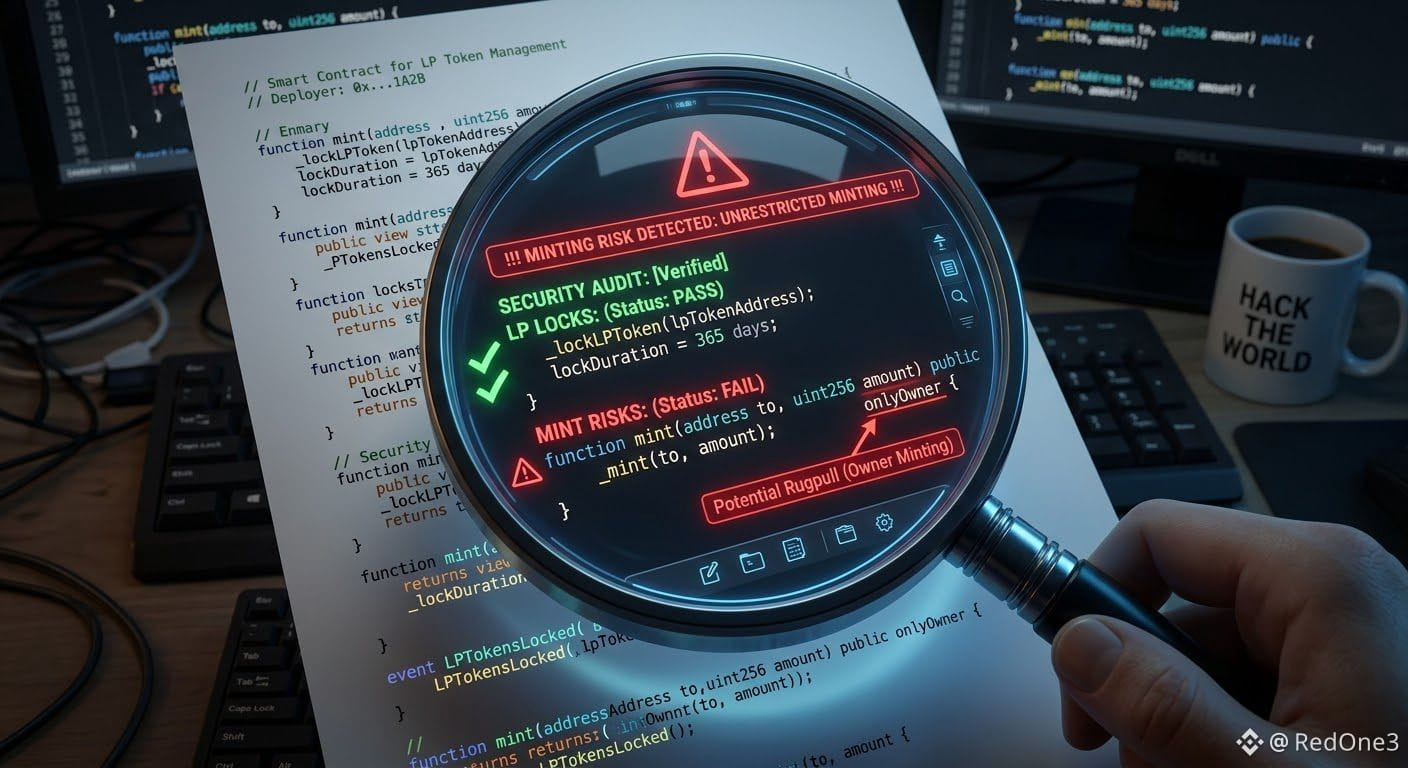
Trading low-cap tokens can offer high returns, but contract security checks are mandatory to protect capital from scams.
Essential On-Chain Security Checks
Contract Audit Checklist:
🔒 Liquidity Lock Verification: Ensure LP tokens are locked for extended periods or burned permanently.
🚫 Mint & Freeze Functions: Check if the contract owner can mint infinite tokens or freeze wallet transfers.
💸 Tax & Fee Thresholds: Verify buy/sell taxes are capped low and cannot be changed arbitrarily.
Rule First Always run contract addresses through automated token security scanners before connecting your wallet or swapping.
What is the first security check you perform on new tokens? 🤔
#KeepItLegit #DYOR
#CryptoSecurity #Memecoins .
Trading low-cap tokens can offer high returns, but contract security checks are mandatory to protect capital from scams.
Essential On-Chain Security Checks
Contract Audit Checklist:
🔒 Liquidity Lock Verification: Ensure LP tokens are locked for extended periods or burned permanently.
🚫 Mint & Freeze Functions: Check if the contract owner can mint infinite tokens or freeze wallet transfers.
💸 Tax & Fee Thresholds: Verify buy/sell taxes are capped low and cannot be changed arbitrarily.
Rule First Always run contract addresses through automated token security scanners before connecting your wallet or swapping.
What is the first security check you perform on new tokens? 🤔
#KeepItLegit #DYOR
#CryptoSecurity #Memecoins .
Essential On-Chain Security Checks
Contract Audit Checklist:
🔒 Liquidity Lock Verification: Ensure LP tokens are locked for extended periods or burned permanently.
🚫 Mint & Freeze Functions: Check if the contract owner can mint infinite tokens or freeze wallet transfers.
💸 Tax & Fee Thresholds: Verify buy/sell taxes are capped low and cannot be changed arbitrarily.
Rule First Always run contract addresses through automated token security scanners before connecting your wallet or swapping.
What is the first security check you perform on new tokens? 🤔
#KeepItLegit #DYOR
#CryptoSecurity #Memecoins .
121
·
--
Markets are holding steady to kick off Q4 🌐 BTC is trading around $84,200, essentially flat on the day, while ETH sits near $2,686 — both assets moving in a tight range as traders assess the macro backdrop heading into October.
The crypto market as a whole seems to be in a consolidation phase, with 24h volume remaining moderate and no major breakout yet in either direction. Range-bound price action like this can often precede a bigger move — patience is the play for now 📊
Watch for any shifts in BTC dominance or a surge in funding rates as early signals of the next leg. Q4 historically carries more volatility than Q3.
Markets are holding steady to kick off Q4 🌐 BTC is trading around $84,200, essentially flat on the day, while ETH sits near $2,686 — both assets moving in a tight range as traders assess the macro backdrop heading into October.
The crypto market as a whole seems to be in a consolidation phase, with 24h volume remaining moderate and no major breakout yet in either direction. Range-bound price action like this can often precede a bigger move — patience is the play for now 📊
Watch for any shifts in BTC dominance or a surge in funding rates as early signals of the next leg. Q4 historically carries more volatility than Q3.
The crypto market as a whole seems to be in a consolidation phase, with 24h volume remaining moderate and no major breakout yet in either direction. Range-bound price action like this can often precede a bigger move — patience is the play for now 📊
Watch for any shifts in BTC dominance or a surge in funding rates as early signals of the next leg. Q4 historically carries more volatility than Q3.
156
·
--
Most traders focus on entries — but knowing when to exit a losing trade is just as important as knowing when to enter. 🛡️ A stop-loss order is a preset instruction to sell (or close) your position automatically if the price drops to a level you've defined in advance.
Think of it as a built-in circuit breaker. Instead of watching charts and hoping a dip reverses, you decide your maximum acceptable loss before emotions enter the picture. That decision made ahead of time is almost always better than one made in the heat of a move.
The tricky part is placement. Set it too tight and normal price noise will knock you out of a perfectly good trade. Set it too wide and the 'protection' barely protects anything. Many traders use nearby technical levels — a recent swing low, a moving average, or a key support zone — as a rational anchor for where to place the stop.
Most traders focus on entries — but knowing when to exit a losing trade is just as important as knowing when to enter. 🛡️ A stop-loss order is a preset instruction to sell (or close) your position automatically if the price drops to a level you've defined in advance.
Think of it as a built-in circuit breaker. Instead of watching charts and hoping a dip reverses, you decide your maximum acceptable loss before emotions enter the picture. That decision made ahead of time is almost always better than one made in the heat of a move.
The tricky part is placement. Set it too tight and normal price noise will knock you out of a perfectly good trade. Set it too wide and the 'protection' barely protects anything. Many traders use nearby technical levels — a recent swing low, a moving average, or a key support zone — as a rational anchor for where to place the stop.
Think of it as a built-in circuit breaker. Instead of watching charts and hoping a dip reverses, you decide your maximum acceptable loss before emotions enter the picture. That decision made ahead of time is almost always better than one made in the heat of a move.
The tricky part is placement. Set it too tight and normal price noise will knock you out of a perfectly good trade. Set it too wide and the 'protection' barely protects anything. Many traders use nearby technical levels — a recent swing low, a moving average, or a key support zone — as a rational anchor for where to place the stop.
142
·
--
October is off to a quiet but steady start 📅 BTC is trading around $84,185 (+0.48%) as we enter the new month, with macro assets also ticking higher — gold near $4,168, silver at $60.80, and Brent crude pushing above $101 (+2.77%). The broad market tone feels cautiously constructive, with risk assets and commodities moving in the same direction rather than diverging. 🛢️ Oil's move is worth watching — Brent up nearly 3% in a single session often reflects a supply narrative or macro positioning shift rather than pure demand. For crypto, BTC holding above $84K with modest volume suggests consolidation rather than a breakout attempt just yet. 🔍 Keep an eye on how the week develops — October historically brings volatility in either direction for digital assets.
October is off to a quiet but steady start 📅 BTC is trading around $84,185 (+0.48%) as we enter the new month, with macro assets also ticking higher — gold near $4,168, silver at $60.80, and Brent crude pushing above $101 (+2.77%). The broad market tone feels cautiously constructive, with risk assets and commodities moving in the same direction rather than diverging. 🛢️ Oil's move is worth watching — Brent up nearly 3% in a single session often reflects a supply narrative or macro positioning shift rather than pure demand. For crypto, BTC holding above $84K with modest volume suggests consolidation rather than a breakout attempt just yet. 🔍 Keep an eye on how the week develops — October historically brings volatility in either direction for digital assets.
439
·
--
When you place a market order, you’re saying “fill me now at whatever price is available.” That’s fast and convenient — but in a thin or volatile market, you can end up paying more (or selling for less) than expected. This is called slippage. 🎯
A limit order is the alternative: you set a specific price, and the trade only happens if the market reaches it. You stay in control of your entry or exit, though there’s no guarantee of a fill if price never gets there.
Most experienced traders use limit orders for planned entries and exits, and reserve market orders for moments when speed matters more than precision — like cutting a loss fast or chasing a breakout. Knowing when to use each can quietly save you real money over time. 💡
When you place a market order, you’re saying “fill me now at whatever price is available.” That’s fast and convenient — but in a thin or volatile market, you can end up paying more (or selling for less) than expected. This is called slippage. 🎯
A limit order is the alternative: you set a specific price, and the trade only happens if the market reaches it. You stay in control of your entry or exit, though there’s no guarantee of a fill if price never gets there.
Most experienced traders use limit orders for planned entries and exits, and reserve market orders for moments when speed matters more than precision — like cutting a loss fast or chasing a breakout. Knowing when to use each can quietly save you real money over time. 💡
A limit order is the alternative: you set a specific price, and the trade only happens if the market reaches it. You stay in control of your entry or exit, though there’s no guarantee of a fill if price never gets there.
Most experienced traders use limit orders for planned entries and exits, and reserve market orders for moments when speed matters more than precision — like cutting a loss fast or chasing a breakout. Knowing when to use each can quietly save you real money over time. 💡
1
91
·
--
October 1st and the market is taking its time ☁️ BTC is trading around $83,930 (+0.2%) while ETH sits near $2,688 (+0.3%), both keeping a steady pace as the new month opens. Total USDT spot volume on Binance is running at about $9.2B in the last 24 hours — not a high-energy session, but not sleepy either. SOL is slipping a bit at $117 (-1.4%), while some smaller altcoins are seeing sharp moves higher. The Layer 2 sector has been quietly building momentum this week — projects focused on scalability and lower fees continue to draw developer activity even in calm market conditions. Patient markets sometimes set the stage for the next move 🔍
October 1st and the market is taking its time ☁️ BTC is trading around $83,930 (+0.2%) while ETH sits near $2,688 (+0.3%), both keeping a steady pace as the new month opens. Total USDT spot volume on Binance is running at about $9.2B in the last 24 hours — not a high-energy session, but not sleepy either. SOL is slipping a bit at $117 (-1.4%), while some smaller altcoins are seeing sharp moves higher. The Layer 2 sector has been quietly building momentum this week — projects focused on scalability and lower fees continue to draw developer activity even in calm market conditions. Patient markets sometimes set the stage for the next move 🔍
64
·
--
Top gainers are making some noise today 🚀 Here is a look at the five biggest movers in the USDT spot market right now.
MOVR is out in front with a +61.9% surge, swinging from a low of $1.57 to a high of $3.09 in 24 hours with over $89M in volume behind it.
SYN is up +22.5% at $0.203, OPN is climbing +16.9% at $0.0636, and AUDIO is gaining +16.6% at $0.0184 — all seeing notable volume spikes relative to recent averages.
STX rounds out the top five with a +14.8% move to $0.376, continuing to attract attention in the Bitcoin layer-2 space. 🔍
BTC and ETH are relatively calm by comparison — $84,071 (+0.4%) and $2,697 (+0.7%) respectively — so today’s energy is clearly sitting in mid and small caps.
Top gainers are making some noise today 🚀 Here is a look at the five biggest movers in the USDT spot market right now.
MOVR is out in front with a +61.9% surge, swinging from a low of $1.57 to a high of $3.09 in 24 hours with over $89M in volume behind it.
SYN is up +22.5% at $0.203, OPN is climbing +16.9% at $0.0636, and AUDIO is gaining +16.6% at $0.0184 — all seeing notable volume spikes relative to recent averages.
STX rounds out the top five with a +14.8% move to $0.376, continuing to attract attention in the Bitcoin layer-2 space. 🔍
BTC and ETH are relatively calm by comparison — $84,071 (+0.4%) and $2,697 (+0.7%) respectively — so today’s energy is clearly sitting in mid and small caps.
MOVR is out in front with a +61.9% surge, swinging from a low of $1.57 to a high of $3.09 in 24 hours with over $89M in volume behind it.
SYN is up +22.5% at $0.203, OPN is climbing +16.9% at $0.0636, and AUDIO is gaining +16.6% at $0.0184 — all seeing notable volume spikes relative to recent averages.
STX rounds out the top five with a +14.8% move to $0.376, continuing to attract attention in the Bitcoin layer-2 space. 🔍
BTC and ETH are relatively calm by comparison — $84,071 (+0.4%) and $2,697 (+0.7%) respectively — so today’s energy is clearly sitting in mid and small caps.
474
·
--
One thing newer traders often overlook is the difference between market orders and limit orders — and it matters more than you might think. 🎯
A market order executes immediately at the best available price, which is great for speed but can lead to slippage in fast-moving conditions. A limit order lets you set the exact price you want to buy or sell at, giving you more control — but there's no guarantee it fills.
In a choppy, sideways market like we're seeing right now with BTC hovering near $83,984, limit orders can be a cleaner tool for building a position without chasing price. You decide the level, set it, and let the market come to you.
Knowing when to use each type is a skill that takes time to develop, but starting with limit orders for non-urgent entries is a habit many experienced traders stand by. 📚
One thing newer traders often overlook is the difference between market orders and limit orders — and it matters more than you might think. 🎯
A market order executes immediately at the best available price, which is great for speed but can lead to slippage in fast-moving conditions. A limit order lets you set the exact price you want to buy or sell at, giving you more control — but there's no guarantee it fills.
In a choppy, sideways market like we're seeing right now with BTC hovering near $83,984, limit orders can be a cleaner tool for building a position without chasing price. You decide the level, set it, and let the market come to you.
Knowing when to use each type is a skill that takes time to develop, but starting with limit orders for non-urgent entries is a habit many experienced traders stand by. 📚
A market order executes immediately at the best available price, which is great for speed but can lead to slippage in fast-moving conditions. A limit order lets you set the exact price you want to buy or sell at, giving you more control — but there's no guarantee it fills.
In a choppy, sideways market like we're seeing right now with BTC hovering near $83,984, limit orders can be a cleaner tool for building a position without chasing price. You decide the level, set it, and let the market come to you.
Knowing when to use each type is a skill that takes time to develop, but starting with limit orders for non-urgent entries is a habit many experienced traders stand by. 📚
74
·
--


Binance TG Community
·
--
[Replay] 🎙️ TG Talks | Binance AI updates
02 h 35 m 55 s · 6.4k listens
28
·
--
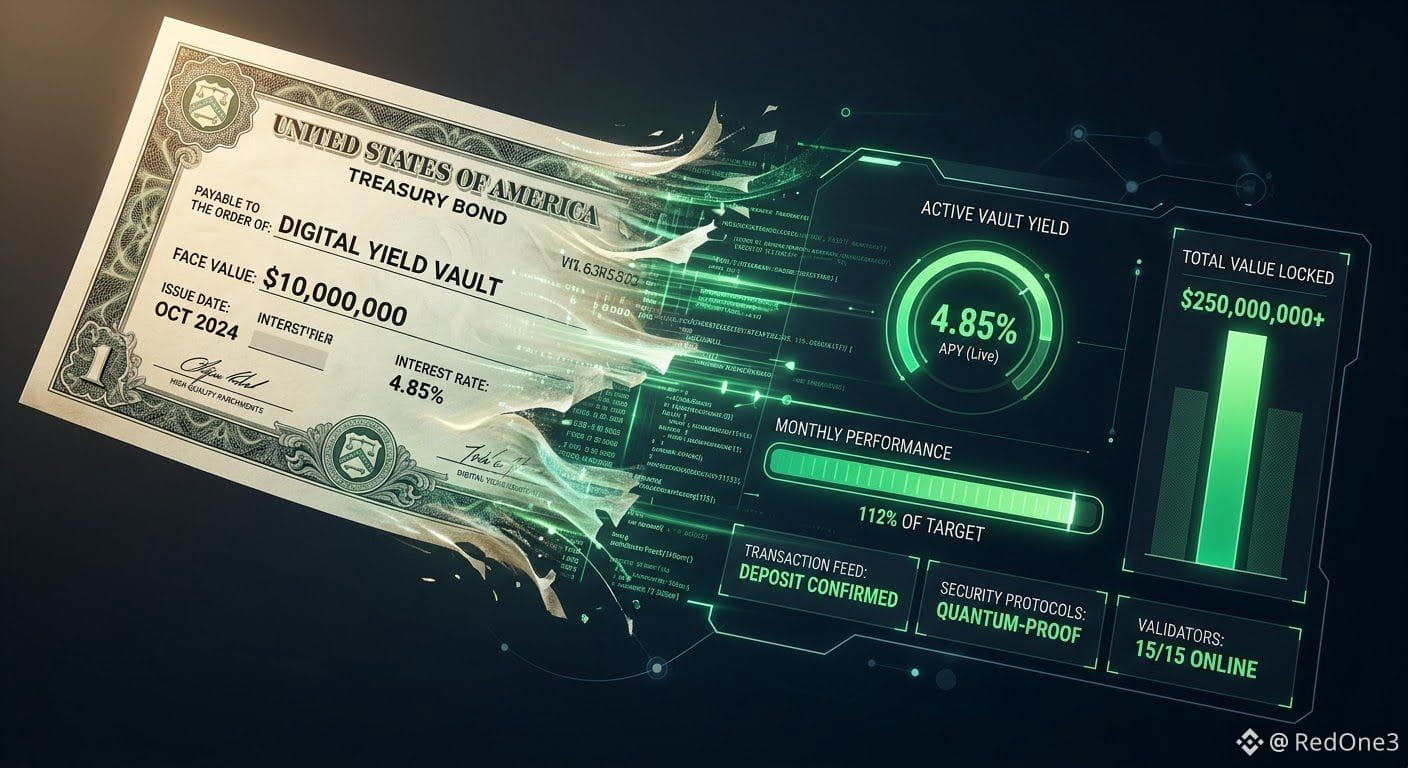
Tokenised Treasury Bills for On-Chain Yield 🃏
Tokenized U.S. Treasury Bills (T-Bills) have become the risk-free benchmark rate for decentralized finance.
Why On-Chain T-Bills Matter
Key Factors: 🛡️ Low-Risk On-Chain Yield: Native yield backed by real government debt instruments rather than inflationary token emission. 🔄 Collateral Efficiency: Using tokenized treasuries as productive collateral across DeFi lending platforms. 💵 Stablecoin Diversification: Providing treasury management solutions for Web3 projects and DAOs.
The Shift Stablecoin issuers and protocols are moving idle capital into yield-bearing real-world debt instruments to maximize returns securely.
Is safe RWA yield better than volatile DeFi farming returns? 🤔
#Yield #RWAs #DeFi .
Tokenised Treasury Bills for On-Chain Yield 🃏
Tokenized U.S. Treasury Bills (T-Bills) have become the risk-free benchmark rate for decentralized finance.
Why On-Chain T-Bills Matter
Key Factors: 🛡️ Low-Risk On-Chain Yield: Native yield backed by real government debt instruments rather than inflationary token emission. 🔄 Collateral Efficiency: Using tokenized treasuries as productive collateral across DeFi lending platforms. 💵 Stablecoin Diversification: Providing treasury management solutions for Web3 projects and DAOs.
The Shift Stablecoin issuers and protocols are moving idle capital into yield-bearing real-world debt instruments to maximize returns securely.
Is safe RWA yield better than volatile DeFi farming returns? 🤔
#Yield #RWAs #DeFi .
Tokenized U.S. Treasury Bills (T-Bills) have become the risk-free benchmark rate for decentralized finance.
Why On-Chain T-Bills Matter
Key Factors: 🛡️ Low-Risk On-Chain Yield: Native yield backed by real government debt instruments rather than inflationary token emission. 🔄 Collateral Efficiency: Using tokenized treasuries as productive collateral across DeFi lending platforms. 💵 Stablecoin Diversification: Providing treasury management solutions for Web3 projects and DAOs.
The Shift Stablecoin issuers and protocols are moving idle capital into yield-bearing real-world debt instruments to maximize returns securely.
Is safe RWA yield better than volatile DeFi farming returns? 🤔
#Yield #RWAs #DeFi .
AGGETF-0.17%
102
·
--
Markets are moving cautiously this Thursday — BTC sits at $83,692 (-1.1%) and ETH at $2,692 (-0.5%), with both majors staying range-bound as October kicks off 🟡. BTC futures funding rates are near neutral at 0.0046%, meaning no strong directional bias from leveraged traders right now. Meanwhile, tokens like MOVR (+76%) and KDA (+18%) show that alt activity can run hot even when the majors are quiet 🔥. Low-conviction consolidation phases like this often set the stage for the next move — patience is a strategy too.
Markets are moving cautiously this Thursday — BTC sits at $83,692 (-1.1%) and ETH at $2,692 (-0.5%), with both majors staying range-bound as October kicks off 🟡. BTC futures funding rates are near neutral at 0.0046%, meaning no strong directional bias from leveraged traders right now. Meanwhile, tokens like MOVR (+76%) and KDA (+18%) show that alt activity can run hot even when the majors are quiet 🔥. Low-conviction consolidation phases like this often set the stage for the next move — patience is a strategy too.
193
·
--
Position sizing is one of the most underrated skills in crypto trading. 🧠 Most new traders focus on finding the perfect entry — but how much you risk on each trade often matters more than where you enter.
A common guideline is to risk only 1–2% of your total portfolio on any single position. This way, even a string of bad trades won’t wipe you out, and you live to trade another day.
The markets will always offer new opportunities. Protecting your capital means you can still act on them. 💪
Position sizing is one of the most underrated skills in crypto trading. 🧠 Most new traders focus on finding the perfect entry — but how much you risk on each trade often matters more than where you enter.
A common guideline is to risk only 1–2% of your total portfolio on any single position. This way, even a string of bad trades won’t wipe you out, and you live to trade another day.
The markets will always offer new opportunities. Protecting your capital means you can still act on them. 💪
A common guideline is to risk only 1–2% of your total portfolio on any single position. This way, even a string of bad trades won’t wipe you out, and you live to trade another day.
The markets will always offer new opportunities. Protecting your capital means you can still act on them. 💪
36
·
--
📈 Top gainers are turning heads today while BTC sits at $83,620 (-2.1%) and ETH at $2,691 (-1.5%).
MOVR led the pack with an impressive +82% surge, touching a 24h high of $3.09 before pulling back to $2.86.
NOM climbed +29.7% and NIGHT added +16.8%, both seeing solid volume across the session.
HEI and STX rounded out the top five with gains of +15.4% and +12.7% respectively — STX worth watching given its Bitcoin-layer narrative 🔍
Strong individual moves in a red overall market can signal rotation or momentum plays, but wide spreads and thin liquidity deserve attention before sizing in.
📈 Top gainers are turning heads today while BTC sits at $83,620 (-2.1%) and ETH at $2,691 (-1.5%).
MOVR led the pack with an impressive +82% surge, touching a 24h high of $3.09 before pulling back to $2.86.
NOM climbed +29.7% and NIGHT added +16.8%, both seeing solid volume across the session.
HEI and STX rounded out the top five with gains of +15.4% and +12.7% respectively — STX worth watching given its Bitcoin-layer narrative 🔍
Strong individual moves in a red overall market can signal rotation or momentum plays, but wide spreads and thin liquidity deserve attention before sizing in.
MOVR led the pack with an impressive +82% surge, touching a 24h high of $3.09 before pulling back to $2.86.
NOM climbed +29.7% and NIGHT added +16.8%, both seeing solid volume across the session.
HEI and STX rounded out the top five with gains of +15.4% and +12.7% respectively — STX worth watching given its Bitcoin-layer narrative 🔍
Strong individual moves in a red overall market can signal rotation or momentum plays, but wide spreads and thin liquidity deserve attention before sizing in.
290
·
--
One habit that separates experienced traders from beginners: always define your exit before you enter. 📌
Knowing your stop-loss and take-profit levels in advance removes emotion from the equation — you’re making the hard decision when you’re calm, not when the chart is moving against you and fear kicks in.
It sounds simple, but most losses don’t come from bad entries. They come from good entries that were held too long, hoping for a recovery. Having a plan means you execute it, not improvise it.
Every trade deserves a plan. Set it, stick to it 💪
One habit that separates experienced traders from beginners: always define your exit before you enter. 📌
Knowing your stop-loss and take-profit levels in advance removes emotion from the equation — you’re making the hard decision when you’re calm, not when the chart is moving against you and fear kicks in.
It sounds simple, but most losses don’t come from bad entries. They come from good entries that were held too long, hoping for a recovery. Having a plan means you execute it, not improvise it.
Every trade deserves a plan. Set it, stick to it 💪
Knowing your stop-loss and take-profit levels in advance removes emotion from the equation — you’re making the hard decision when you’re calm, not when the chart is moving against you and fear kicks in.
It sounds simple, but most losses don’t come from bad entries. They come from good entries that were held too long, hoping for a recovery. Having a plan means you execute it, not improvise it.
Every trade deserves a plan. Set it, stick to it 💪
38
·
--
Thursday afternoon check-in: BTC is holding near $83,970, up just 0.1% in the last 24 hours as the market takes a breath 📊
ETH is quietly inching higher at $2,707 (+0.4%), while SOL dips slightly to $117.76, down about 1.6% on the day.
BTC spot volume sits at $1.68B over the last 24 hours — relatively subdued, which often signals the market is waiting for a catalyst rather than trending hard in either direction 🤔
Patience can be a position too.
Thursday afternoon check-in: BTC is holding near $83,970, up just 0.1% in the last 24 hours as the market takes a breath 📊
ETH is quietly inching higher at $2,707 (+0.4%), while SOL dips slightly to $117.76, down about 1.6% on the day.
BTC spot volume sits at $1.68B over the last 24 hours — relatively subdued, which often signals the market is waiting for a catalyst rather than trending hard in either direction 🤔
Patience can be a position too.
ETH is quietly inching higher at $2,707 (+0.4%), while SOL dips slightly to $117.76, down about 1.6% on the day.
BTC spot volume sits at $1.68B over the last 24 hours — relatively subdued, which often signals the market is waiting for a catalyst rather than trending hard in either direction 🤔
Patience can be a position too.
98
Log in to explore more content
Join global crypto users on Binance Square
⚡️ Get latest and useful information about crypto.
💬 Trusted by the world’s largest crypto exchange.
👍 Discover real insights from verified creators.
Email / Phone number
Trending Topics
EtherGains70.9%InQ3
33,261 views
455 Discussing
One of the best third quarters in history 💰
September closed out last night, and with it, the quarter. For the quarter, BTC is up 42%—the second-best Q3 on record. ETH had a record-breaking Q3 overall, up 70%.
Looking at the chart, things are still looking good: we’re holding support, but we’re testing it more and more often. Plus, ETF momentum is weakening — inflows are gradually declining, and yesterday saw outflows for the first time in a long while.
Yes, historically, October has been a good month for crypto — it’s not called “Uptober” for nothing. But it’s also one of the most volatile months. Last year, for example, we managed to hit a new all-time high (ATH) and experience a flash crash.
🚀 High Accuracy Trades.
$BTC
$ETH
$SOL
#EtherGains70.9%InQ3 #DollarIndexHitsHighestSinceMay2025 #CFTCSubmitsTwoEventContractRulesToWhiteHouse #MicronBeatsEarningsLiftsGuidance
Knowledge is Power
·0 Likes
·101 views
TreasuryLetsStatesFileStablecoinCertificationsEarly
465 views
17 Discussing
US10YearYieldNears5.3%
73,149 views
658 Discussing