
0xSignal
228 Posts

0xSignal
Signal over noise. 📡
RWA x Solana Memecoins | On-Chain Intel Before Hype.
Micro-cap scout | Data doesn't lie. | Web3 Research Analyst 🔬
Open Trade
Frequent Trader
7.1 Months
52 Following
51 Followers
382 Liked
Posts
Portfolio
All
Quotes
PINNED
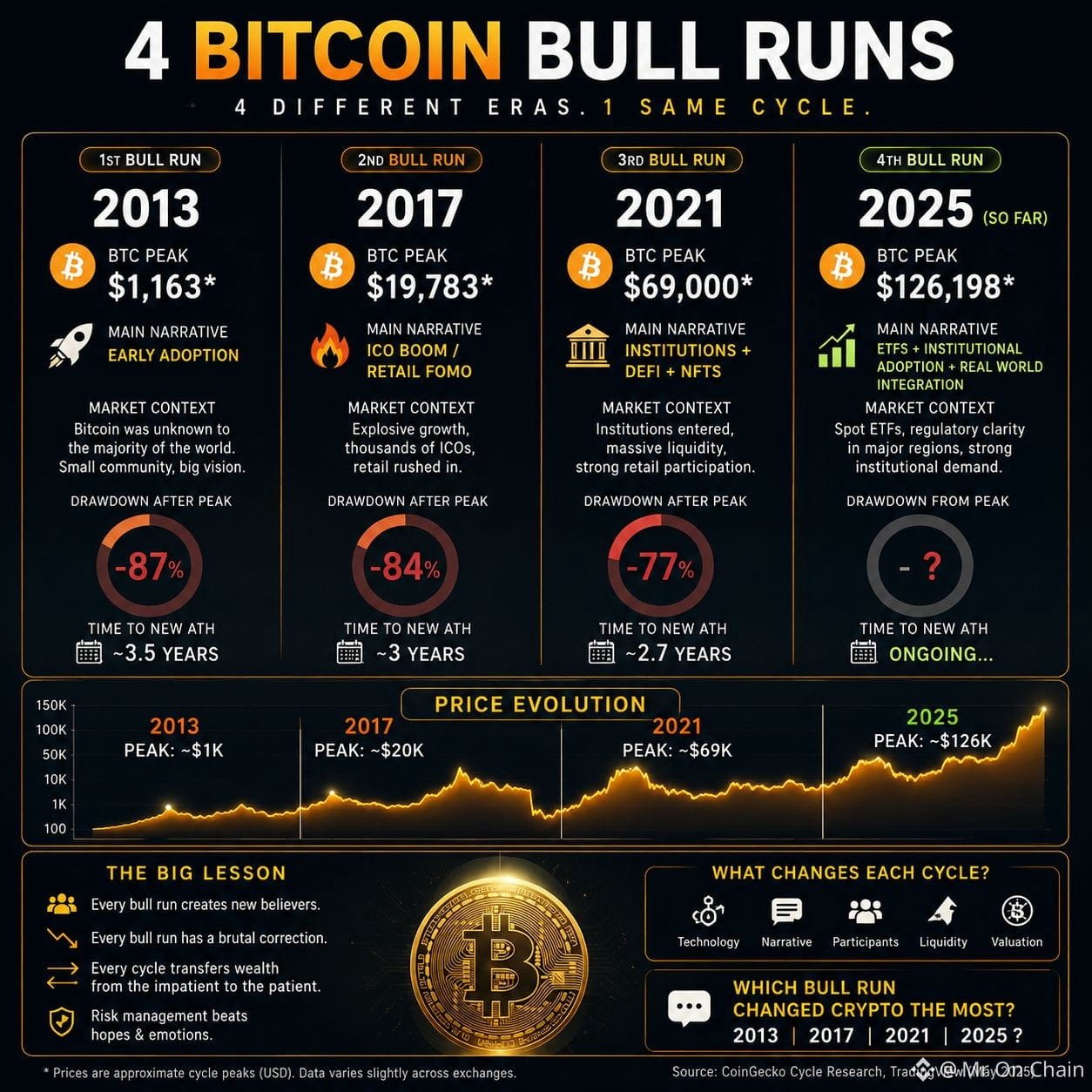
🚨 4 BITCOIN BULL RUNS. 4 DIFFERENT ERAS.
Look at Bitcoin across the last 4 major bull-run cycles 👀
2013 → 2017 → 2021 → 2025
The numbers tell a very different story:
🟠 2013 Bull Run
BTC peaked around $1,156–$1,163
The era of early adoption & speculation.
🟠 2017 Bull Run
BTC reached roughly $19,783–$20,089
The ICO boom brought massive retail attention.
🟠 2021 Bull Run
BTC reached about $69,000
Institutions, DeFi, NFTs & global retail pushed the market into another historic cycle.
🟠 2025 Bull Run
BTC reached around $126,000
A new era of spot ETFs, institutional demand and broader mainstream access.
📈 $1K → $20K → $69K → $126K
But here's what interests me most:
Every cycle created a new group of buyers who believed the market had entered a completely new era.
And every cycle eventually reminded investors that bull markets don't move in straight lines.
The lesson isn't “don't invest.”
The lesson is:
Know your entry.
Know your risk.
Have a profit plan.
And don't confuse a bull market with a guaranteed future.
The next cycle may look completely different from the previous four.
But market psychology?
That part may be the most predictable thing in crypto. 👀
Which Bitcoin bull run changed the market the most?
2013 | 2017 | 2021 | 2025? 👇
#Bitcoin #BTC #Crypto #BullRun #CryptoMarket
$HEMI
$WAL
Look at Bitcoin across the last 4 major bull-run cycles 👀
2013 → 2017 → 2021 → 2025
The numbers tell a very different story:
🟠 2013 Bull Run
BTC peaked around $1,156–$1,163
The era of early adoption & speculation.
🟠 2017 Bull Run
BTC reached roughly $19,783–$20,089
The ICO boom brought massive retail attention.
🟠 2021 Bull Run
BTC reached about $69,000
Institutions, DeFi, NFTs & global retail pushed the market into another historic cycle.
🟠 2025 Bull Run
BTC reached around $126,000
A new era of spot ETFs, institutional demand and broader mainstream access.
📈 $1K → $20K → $69K → $126K
But here's what interests me most:
Every cycle created a new group of buyers who believed the market had entered a completely new era.
And every cycle eventually reminded investors that bull markets don't move in straight lines.
The lesson isn't “don't invest.”
The lesson is:
Know your entry.
Know your risk.
Have a profit plan.
And don't confuse a bull market with a guaranteed future.
The next cycle may look completely different from the previous four.
But market psychology?
That part may be the most predictable thing in crypto. 👀
Which Bitcoin bull run changed the market the most?
2013 | 2017 | 2021 | 2025? 👇
#Bitcoin #BTC #Crypto #BullRun #CryptoMarket
$HEMI
$WAL
PINNED
Verified
#dellrisesnearly9%gitlabjumps20%afterhours
Dell +9%. GitLab +20% after hours. Is the AI trade getting bigger?
Two very different companies moving sharply after earnings raises a bigger question:
Are investors still willing to pay for companies tied to AI and software infrastructure?
That's important because markets don't only trade individual earnings.
They build narratives.
Strong results can reinforce the idea that AI spending is translating into real business demand.
But here's the painful part:
When expectations become extreme, even good numbers can eventually disappoint.
Bull: earnings + guidance confirm continued AI/software spending.
Bear: valuation runs faster than fundamentals.
For crypto, I'd watch whether the same risk appetite appears in AI-linked tokens and major assets.
Don't chase a 20% after-hours candle.
AI doesn't need another narrative. It needs numbers that keep proving the narrative right.
#ArtificialIntelligence #TechStocks #Earnings
$AKE
$FIL
$ACE
Dell +9%. GitLab +20% after hours. Is the AI trade getting bigger?
Two very different companies moving sharply after earnings raises a bigger question:
Are investors still willing to pay for companies tied to AI and software infrastructure?
That's important because markets don't only trade individual earnings.
They build narratives.
Strong results can reinforce the idea that AI spending is translating into real business demand.
But here's the painful part:
When expectations become extreme, even good numbers can eventually disappoint.
Bull: earnings + guidance confirm continued AI/software spending.
Bear: valuation runs faster than fundamentals.
For crypto, I'd watch whether the same risk appetite appears in AI-linked tokens and major assets.
Don't chase a 20% after-hours candle.
AI doesn't need another narrative. It needs numbers that keep proving the narrative right.
#ArtificialIntelligence #TechStocks #Earnings
$AKE
$FIL
$ACE
#kuwaitairdefensesrespondtoiraniandroneattacks
Kuwait activating air defenses is a reminder that Middle East risk isn't staying contained to one headline.
The question for markets is simple:
Does this remain isolated, or does the risk spread?
Investors usually react first through oil, currencies and safe-haven assets.
Crypto gets pulled into the second wave because BTC is increasingly traded alongside global risk liquidity.
The mechanism matters:
Geopolitical escalation → oil risk premium → inflation concerns → yields/DXY pressure → risk assets become harder to hold.
But here's the narrative flip:
If defenses respond successfully and escalation remains contained, markets can quickly unwind part of the fear premium.
Bull: containment.
Bear: repeated cross-border escalation.
Watch oil, DXY, Treasury yields and BTC together.
Don't FOMO into a geopolitical candle.
When the headline is scary, the reaction function matters more than the headline.
#MiddleEast #Geopolitics #Oil
$PYTH
$KITE
$AKE
Kuwait activating air defenses is a reminder that Middle East risk isn't staying contained to one headline.
The question for markets is simple:
Does this remain isolated, or does the risk spread?
Investors usually react first through oil, currencies and safe-haven assets.
Crypto gets pulled into the second wave because BTC is increasingly traded alongside global risk liquidity.
The mechanism matters:
Geopolitical escalation → oil risk premium → inflation concerns → yields/DXY pressure → risk assets become harder to hold.
But here's the narrative flip:
If defenses respond successfully and escalation remains contained, markets can quickly unwind part of the fear premium.
Bull: containment.
Bear: repeated cross-border escalation.
Watch oil, DXY, Treasury yields and BTC together.
Don't FOMO into a geopolitical candle.
When the headline is scary, the reaction function matters more than the headline.
#MiddleEast #Geopolitics #Oil
$PYTH
$KITE
$AKE
Verified
$170M flowing into US spot XRP ETFs over 11 days deserves attention.
But here's the question nobody should skip:
Is this real structural demand, or just a hot narrative attracting capital?
ETF flows matter because they create a cleaner way for traditional investors to gain exposure.
If inflows continue while XRP price holds strong, that becomes more interesting.
#USSpotXRPETFsDraw$170MOver11Days
$XVS
The market mechanics are simple:
ETF demand → potential spot buying → tighter available supply → stronger price response.
But there's a hidden risk.
Flows can slow. Traders can front-run future demand. Price can detach from fundamentals.
Bull: persistent inflows + rising spot volume + improving XRP/BTC strength.
Bear: ETF flows weaken while price becomes leverage-driven.
Don't buy simply because someone posted “$170M.”
The number gets attention. The consistency tells the story.
#XRP #XRPETF #CryptoETFs
$ETHFI
But here's the question nobody should skip:
Is this real structural demand, or just a hot narrative attracting capital?
ETF flows matter because they create a cleaner way for traditional investors to gain exposure.
If inflows continue while XRP price holds strong, that becomes more interesting.
#USSpotXRPETFsDraw$170MOver11Days
$XVS
The market mechanics are simple:
ETF demand → potential spot buying → tighter available supply → stronger price response.
But there's a hidden risk.
Flows can slow. Traders can front-run future demand. Price can detach from fundamentals.
Bull: persistent inflows + rising spot volume + improving XRP/BTC strength.
Bear: ETF flows weaken while price becomes leverage-driven.
Don't buy simply because someone posted “$170M.”
The number gets attention. The consistency tells the story.
#XRP #XRPETF #CryptoETFs
$ETHFI
#irgcsaystwotankershitbyminesinhormuz
Two tankers reportedly hit by mines near Hormuz. Is this becoming a bigger market risk?
This is where traders need to stop thinking only in headlines.
The real question is supply-chain disruption.
If shipping through a critical energy corridor becomes riskier, insurers, shippers and energy markets can all demand a higher risk premium.
That can push oil higher.
Then comes the chain reaction:
Oil ↑ → inflation fears ↑ → yields ↑ → liquidity expectations ↓ → risk assets pressured.
But the narrative can flip quickly if shipping remains operational and tensions stabilize.
Bull: disruption stays contained.
Bear: repeated incidents reduce energy flows materially.
Watch Brent, WTI, shipping conditions, DXY and Treasury yields.
Don't short everything just because geopolitics looks scary.
The market doesn't price fear. It prices the economic consequences of fear.
#Hormuz #OilMarkets #Geopolitics
$BTC $ETH $SOL
Two tankers reportedly hit by mines near Hormuz. Is this becoming a bigger market risk?
This is where traders need to stop thinking only in headlines.
The real question is supply-chain disruption.
If shipping through a critical energy corridor becomes riskier, insurers, shippers and energy markets can all demand a higher risk premium.
That can push oil higher.
Then comes the chain reaction:
Oil ↑ → inflation fears ↑ → yields ↑ → liquidity expectations ↓ → risk assets pressured.
But the narrative can flip quickly if shipping remains operational and tensions stabilize.
Bull: disruption stays contained.
Bear: repeated incidents reduce energy flows materially.
Watch Brent, WTI, shipping conditions, DXY and Treasury yields.
Don't short everything just because geopolitics looks scary.
The market doesn't price fear. It prices the economic consequences of fear.
#Hormuz #OilMarkets #Geopolitics
$BTC $ETH $SOL
Hong Kong stocks barely moved lower. So why is anyone watching it?
Because sometimes the lack of movement tells you more than a huge candle.
A small Hang Seng decline suggests investors aren't completely abandoning risk, but they're also not aggressively chasing it.
The bigger question is what happens next across China equities, tech stocks, the yuan and global liquidity expectations.
Here's the investigation I'd make:
Is weakness isolated to Hong Kong?
Or is it part of a broader risk-off move?
Bull: stabilization in Asian equities + improving liquidity expectations could support global risk assets.
Bear: renewed China weakness spreads into global markets.
Crypto traders should watch BTC alongside Asian markets rather than treating them separately.
No need to force a trade from an 18-point move.
Sometimes the signal isn't the drop. It's what refuses to drop with it.
#HangSeng #ChinaMarkets #GlobalMarkets
$CFX
$BNB
$ARB
#hangsengcloses18pointslower
Because sometimes the lack of movement tells you more than a huge candle.
A small Hang Seng decline suggests investors aren't completely abandoning risk, but they're also not aggressively chasing it.
The bigger question is what happens next across China equities, tech stocks, the yuan and global liquidity expectations.
Here's the investigation I'd make:
Is weakness isolated to Hong Kong?
Or is it part of a broader risk-off move?
Bull: stabilization in Asian equities + improving liquidity expectations could support global risk assets.
Bear: renewed China weakness spreads into global markets.
Crypto traders should watch BTC alongside Asian markets rather than treating them separately.
No need to force a trade from an 18-point move.
Sometimes the signal isn't the drop. It's what refuses to drop with it.
#HangSeng #ChinaMarkets #GlobalMarkets
$CFX
$BNB
$ARB
#hangsengcloses18pointslower
AI agents finding flaws autonomously sounds impressive. But should crypto traders be excited or worried?
The interesting part isn't simply that AI can detect problems.
It's the direction: AI is moving from answering questions toward taking actions.
That could eventually connect directly with coding, wallets, payments, trading and on-chain execution.
And that's where the crypto angle becomes serious.
But the hidden risk is obvious: an autonomous system can also make mistakes autonomously.
Bull case: AI agents become useful infrastructure for on-chain applications.
Bear case: security failures create enormous financial consequences.
I'd watch agent wallets, smart-contract interaction, identity and security infrastructure before chasing every AI token.
The market loves the “AI + crypto” narrative.
But autonomous money needs autonomous security too.
#AIAgents #ArtificialIntelligence #Crypto
$ETH
$PYTH
$ARB
#openaisaysastrafindsflawsautonomously
The interesting part isn't simply that AI can detect problems.
It's the direction: AI is moving from answering questions toward taking actions.
That could eventually connect directly with coding, wallets, payments, trading and on-chain execution.
And that's where the crypto angle becomes serious.
But the hidden risk is obvious: an autonomous system can also make mistakes autonomously.
Bull case: AI agents become useful infrastructure for on-chain applications.
Bear case: security failures create enormous financial consequences.
I'd watch agent wallets, smart-contract interaction, identity and security infrastructure before chasing every AI token.
The market loves the “AI + crypto” narrative.
But autonomous money needs autonomous security too.
#AIAgents #ArtificialIntelligence #Crypto
$ETH
$PYTH
$ARB
#openaisaysastrafindsflawsautonomously
A ship attack around Hormuz changes the market conversation fast.
Why?
Because the Strait of Hormuz isn't just another geopolitical headline. It's a critical route for global energy flows.
If tensions escalate, markets can price higher oil, higher inflation expectations and greater risk premiums.
And crypto doesn't trade in a vacuum.
Higher energy prices can pressure inflation → inflation can pressure yields → higher yields can pressure risk assets.
$ONG
But here's the narrative flip:
Markets don't need peace. They need escalation risk to stop getting worse.
Bull case for crypto: tensions stabilize and the oil shock fades.
Bear case: repeated incidents create a sustained energy/inflation shock.
Watch oil, DXY, Treasury yields and BTC together.
Don't FOMO into geopolitical volatility.
In macro markets, the next escalation matters more than the last headline.
#Hormuz #Geopolitics #Oil
$FF
$SAND
#saudisaysiranattackedshipinhormuz
Why?
Because the Strait of Hormuz isn't just another geopolitical headline. It's a critical route for global energy flows.
If tensions escalate, markets can price higher oil, higher inflation expectations and greater risk premiums.
And crypto doesn't trade in a vacuum.
Higher energy prices can pressure inflation → inflation can pressure yields → higher yields can pressure risk assets.
$ONG
But here's the narrative flip:
Markets don't need peace. They need escalation risk to stop getting worse.
Bull case for crypto: tensions stabilize and the oil shock fades.
Bear case: repeated incidents create a sustained energy/inflation shock.
Watch oil, DXY, Treasury yields and BTC together.
Don't FOMO into geopolitical volatility.
In macro markets, the next escalation matters more than the last headline.
#Hormuz #Geopolitics #Oil
$FF
$SAND
#saudisaysiranattackedshipinhormuz
US private hiring just posted its smallest gain since January. Why should crypto care?
Because the labor market is becoming part of the Fed conversation again.
Weak hiring can mean cooling economic activity. That can increase expectations for easier monetary policy.
$TRX
Sounds bullish for risk assets, right?
Not automatically.
The market has to decide whether weaker jobs mean “Fed can cut” or “recession risk is rising.”
That distinction is everything.
Crypto traders should watch the reaction in Treasury yields, DXY and BTC, not just the jobs headline.
$T
Bull case: softer labor data → lower yields → more liquidity expectations → risk assets benefit.
Bear case: labor weakness accelerates → recession fears overwhelm rate-cut optimism.
Don’t trade one ADP number in isolation.
The same weak data can be bullish liquidity news today and recession news tomorrow.
#USJobs #FederalReserve #Macro
$SOL
#usaugadpjobssmallestgainsincejan
Because the labor market is becoming part of the Fed conversation again.
Weak hiring can mean cooling economic activity. That can increase expectations for easier monetary policy.
$TRX
Sounds bullish for risk assets, right?
Not automatically.
The market has to decide whether weaker jobs mean “Fed can cut” or “recession risk is rising.”
That distinction is everything.
Crypto traders should watch the reaction in Treasury yields, DXY and BTC, not just the jobs headline.
$T
Bull case: softer labor data → lower yields → more liquidity expectations → risk assets benefit.
Bear case: labor weakness accelerates → recession fears overwhelm rate-cut optimism.
Don’t trade one ADP number in isolation.
The same weak data can be bullish liquidity news today and recession news tomorrow.
#USJobs #FederalReserve #Macro
$SOL
#usaugadpjobssmallestgainsincejan
Dell jumped 8% after earnings. But what is the market really buying?
An earnings beat sounds bullish. The harder question is: what happens after the headline disappears?
Investors aren't only buying Dell's latest numbers. They're pricing expectations around AI infrastructure, servers, networking and future enterprise spending.
#DellSurges8%OnEarningsBeat
$PYTH
That matters for crypto too.
If AI infrastructure demand remains strong, the broader compute → data center → electricity → capital spending chain can keep attracting money.
But here's the hidden risk: expectations can become more aggressive than actual growth.
Bull: strong AI infrastructure demand keeps estimates rising.
Bear: great results become “already priced in.”
$FIL
Watch guidance, capex and whether other semiconductor/infrastructure names confirm the move.
Don’t chase an 8% candle just because it looks strong.
In markets, the earnings beat is the headline. The guidance is the verdict.
#AIInfrastructure #TechStocks #MarketNews
$SEI
An earnings beat sounds bullish. The harder question is: what happens after the headline disappears?
Investors aren't only buying Dell's latest numbers. They're pricing expectations around AI infrastructure, servers, networking and future enterprise spending.
#DellSurges8%OnEarningsBeat
$PYTH
That matters for crypto too.
If AI infrastructure demand remains strong, the broader compute → data center → electricity → capital spending chain can keep attracting money.
But here's the hidden risk: expectations can become more aggressive than actual growth.
Bull: strong AI infrastructure demand keeps estimates rising.
Bear: great results become “already priced in.”
$FIL
Watch guidance, capex and whether other semiconductor/infrastructure names confirm the move.
Don’t chase an 8% candle just because it looks strong.
In markets, the earnings beat is the headline. The guidance is the verdict.
#AIInfrastructure #TechStocks #MarketNews
$SEI
Here’s your post rewritten in a natural, human, conversational tone for Binance Square (0xSignal style), plain text, no markdown:
SOL just dropped a bit over 3%. Do we actually need to care?
This is the part where crypto gets annoying. One red candle and suddenly everyone acts like the trend is dead.
Before hitting panic, I’d ask why it moved. A 3% dip can be profit-taking, leverage getting flushed, BTC showing weakness, or real spot selling. The real question is whether SOL’s underlying demand is actually fading.
Most people see price first. I’d watch spot volume, SOL/BTC strength, open interest, and funding next.
Bull case: sellers run out of steam and spot buyers soak up the dip.
Bear case: price keeps sliding while OI stays high → another leverage flush could be coming.
Don’t buy just because SOL looks cheaper. The first red candle is information. The second one is confirmation.
#Solana #SOL #CryptoMarket
$SOL $SCRT
$ETHFI
#solanafallsover3%
SOL just dropped a bit over 3%. Do we actually need to care?
This is the part where crypto gets annoying. One red candle and suddenly everyone acts like the trend is dead.
Before hitting panic, I’d ask why it moved. A 3% dip can be profit-taking, leverage getting flushed, BTC showing weakness, or real spot selling. The real question is whether SOL’s underlying demand is actually fading.
Most people see price first. I’d watch spot volume, SOL/BTC strength, open interest, and funding next.
Bull case: sellers run out of steam and spot buyers soak up the dip.
Bear case: price keeps sliding while OI stays high → another leverage flush could be coming.
Don’t buy just because SOL looks cheaper. The first red candle is information. The second one is confirmation.
#Solana #SOL #CryptoMarket
$SOL $SCRT
$ETHFI
#solanafallsover3%
nice insight

Sulaiman 零号猎人
·
--
$ACE , $AKE and $FIL look different.
But traders keep making the same mistake:
they buy the coin after the story becomes obvious.
Then the crowd arrives, liquidity gets thin, and early buyers start selling into them.
The real question isn’t “which coin pumps?”
It’s:
which one still has buyers before everyone notices?
That’s where I start looking.
#Crypto #BinanceSquare #ACE #AKE #FIL
But traders keep making the same mistake:
they buy the coin after the story becomes obvious.
Then the crowd arrives, liquidity gets thin, and early buyers start selling into them.
The real question isn’t “which coin pumps?”
It’s:
which one still has buyers before everyone notices?
That’s where I start looking.
#Crypto #BinanceSquare #ACE #AKE #FIL
Is Bitcoin Actually Strong? Here's My Simple Check
When $BTC goes up, it's very easy to say:
“Bitcoin is strong.”
But I like asking one more question:
What's actually pushing it higher?
I usually compare 5 things.
Spot demand
Are real buyers showing up?
Futures activity
Or is leverage doing most of the work?
ETF flows
Is institutional demand supporting the market?
Exchange supply
Are coins moving toward exchanges or away from them?
Leverage
Are traders getting too aggressive?
Here's the part I find interesting.
A BTC move supported by strong spot demand and controlled leverage feels very different from a move where open interest explodes and everyone starts using 20x.
Same green candle.
Very different market underneath.
So instead of asking:
“Is Bitcoin bullish?”
Try asking:
“What is making Bitcoin bullish?”
That's usually the better question.
#BTCMarketStructure #BitcoinFlows #BTCLeverage #BitcoinResearch #BTCTraders
When $BTC goes up, it's very easy to say:
“Bitcoin is strong.”
But I like asking one more question:
What's actually pushing it higher?
I usually compare 5 things.
Spot demand
Are real buyers showing up?
Futures activity
Or is leverage doing most of the work?
ETF flows
Is institutional demand supporting the market?
Exchange supply
Are coins moving toward exchanges or away from them?
Leverage
Are traders getting too aggressive?
Here's the part I find interesting.
A BTC move supported by strong spot demand and controlled leverage feels very different from a move where open interest explodes and everyone starts using 20x.
Same green candle.
Very different market underneath.
So instead of asking:
“Is Bitcoin bullish?”
Try asking:
“What is making Bitcoin bullish?”
That's usually the better question.
#BTCMarketStructure #BitcoinFlows #BTCLeverage #BitcoinResearch #BTCTraders
🔥 THE AI TRADE JUST GOT A SECOND ENGINE.
Nvidia reignited the AI rally with a huge earnings beat.
But now look beyond the obvious:
$NVDA → AI chips
$CRWD / $OKTA.US → AI cybersecurity
CrowdStrike and Okta both surged after earnings, showing investors are starting to price in another layer of the AI economy: protecting AI systems from AI-powered threats.
This could be bigger than just an Nvidia rally.
AI builds the future. Cybersecurity protects it. 🔥
#Aİ #BinanceSquare
#nvidiarises8.74%afterearnings
#MarvellFallsOver5%AfterHours #OktaCrowdStrikeSurgeOnEarningsBeat
Nvidia reignited the AI rally with a huge earnings beat.
But now look beyond the obvious:
$NVDA → AI chips
$CRWD / $OKTA.US → AI cybersecurity
CrowdStrike and Okta both surged after earnings, showing investors are starting to price in another layer of the AI economy: protecting AI systems from AI-powered threats.
This could be bigger than just an Nvidia rally.
AI builds the future. Cybersecurity protects it. 🔥
#Aİ #BinanceSquare
#nvidiarises8.74%afterearnings
#MarvellFallsOver5%AfterHours #OktaCrowdStrikeSurgeOnEarningsBeat
Quantum computing just moved deeper into the financial-security conversation.
The US Treasury launched a Quantum-Readiness Task Force focused on preparing the financial sector for post-quantum cryptography and future cybersecurity risks.
For crypto, this matters.
Blockchains depend heavily on cryptography.
Quantum resistance may eventually become a major infrastructure narrative — not just a theoretical problem.
#QuantumComputing #Bitcoin #Crypto
$BMT
$EDEN
$PYTH
#ustreasurylaunchesquantumreadinessworkinggroup
The US Treasury launched a Quantum-Readiness Task Force focused on preparing the financial sector for post-quantum cryptography and future cybersecurity risks.
For crypto, this matters.
Blockchains depend heavily on cryptography.
Quantum resistance may eventually become a major infrastructure narrative — not just a theoretical problem.
#QuantumComputing #Bitcoin #Crypto
$BMT
$EDEN
$PYTH
#ustreasurylaunchesquantumreadinessworkinggroup
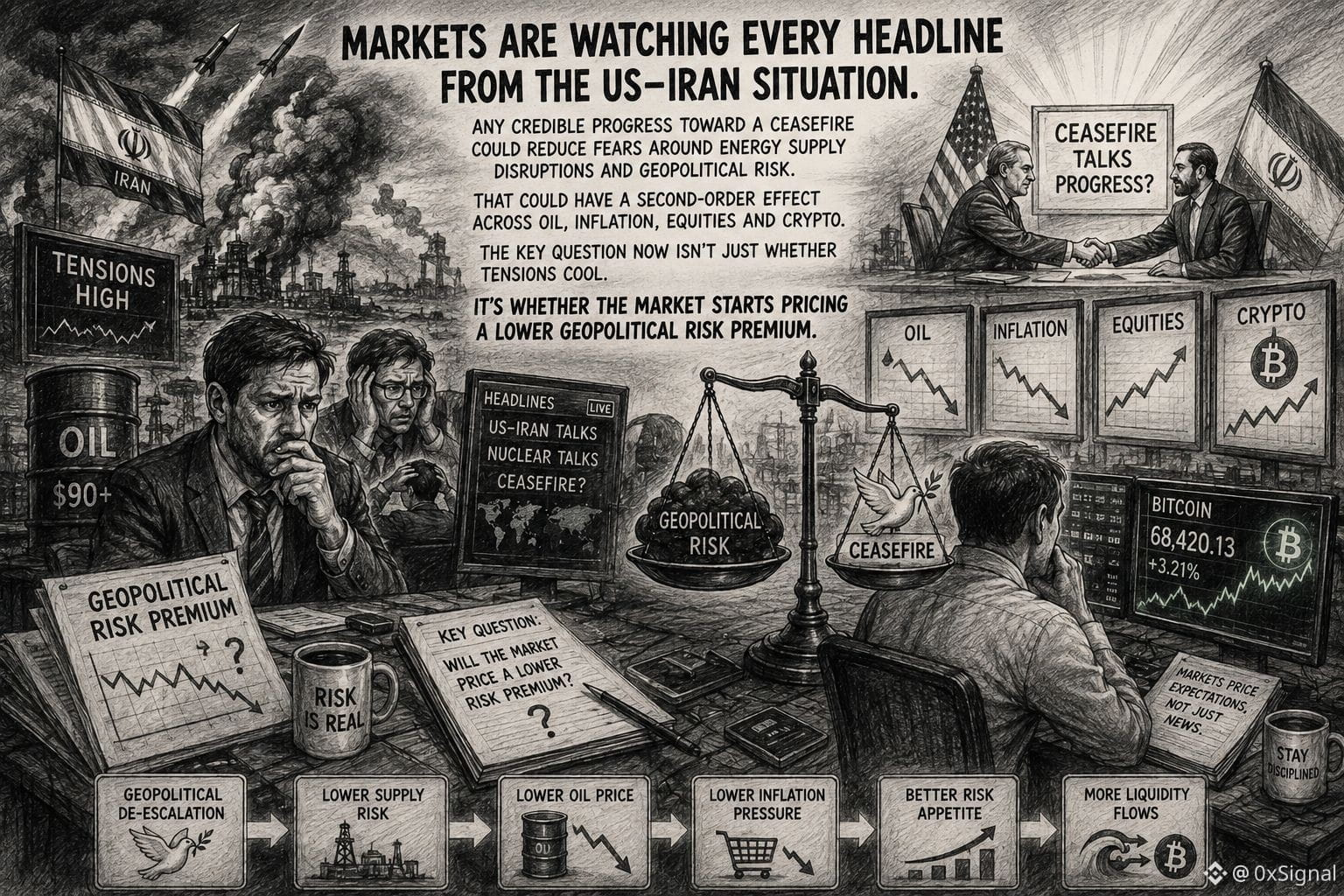
Markets are watching every headline from the US–Iran situation.
Any credible progress toward a ceasefire could reduce fears around energy supply disruptions and geopolitical risk.
That could have a second-order effect across oil, inflation, equities and crypto.
The key question now isn’t just whether tensions cool.
It’s whether the market starts pricing a lower geopolitical risk premium.
#Iran #Geopolitics #Oil #Bitcoin
$BMT
$PYTH
$EDEN
#usiranreportedlyreachceasefireconsensus
Any credible progress toward a ceasefire could reduce fears around energy supply disruptions and geopolitical risk.
That could have a second-order effect across oil, inflation, equities and crypto.
The key question now isn’t just whether tensions cool.
It’s whether the market starts pricing a lower geopolitical risk premium.
#Iran #Geopolitics #Oil #Bitcoin
$BMT
$PYTH
$EDEN
#usiranreportedlyreachceasefireconsensus
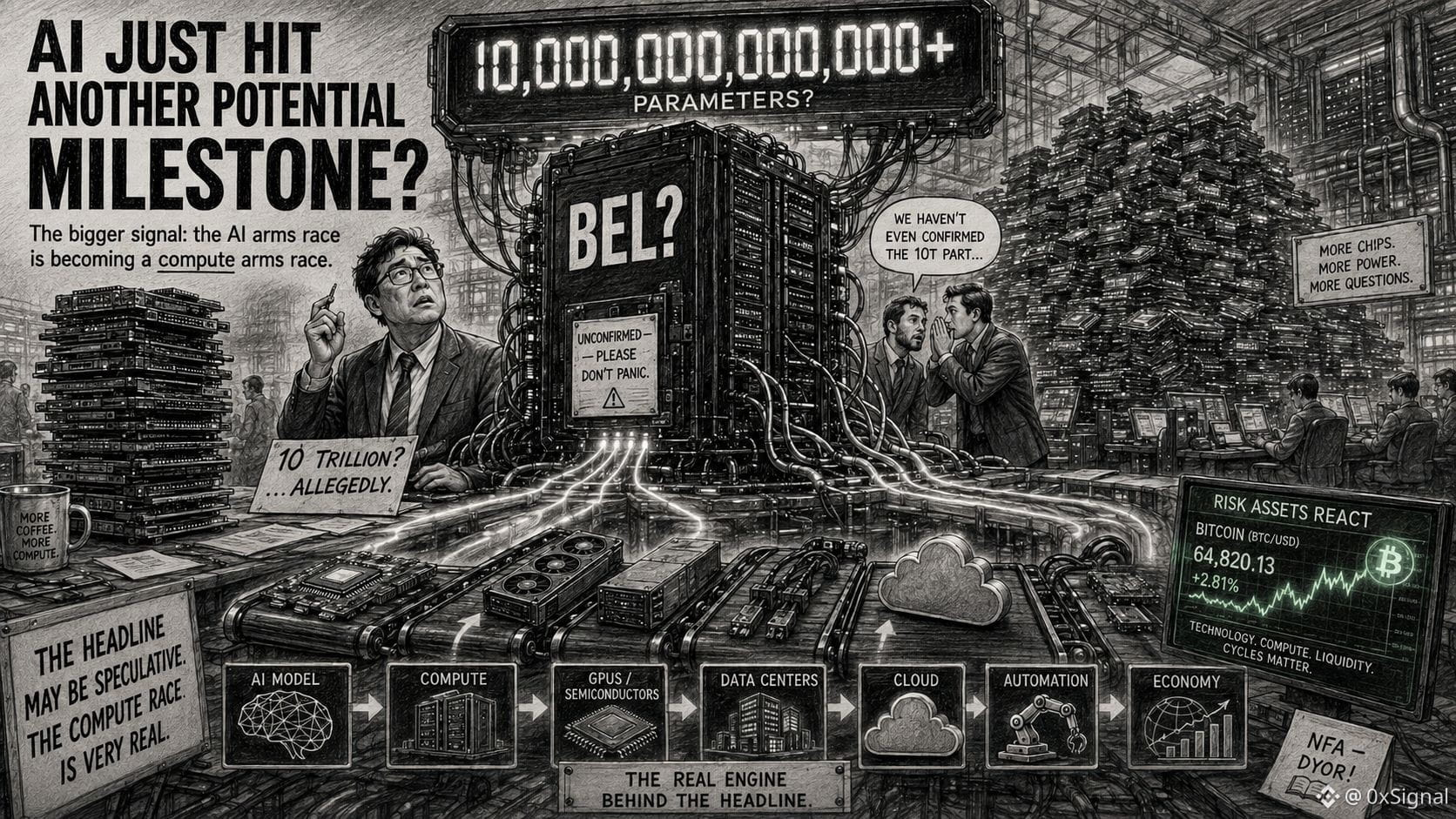
AI just hit another potential milestone.
OpenAI reportedly completed pretraining for a model called “Bel,” with reports claiming a scale above 10 trillion parameters.
Important: OpenAI has not officially confirmed these details.
Still, the bigger signal is clear — frontier AI competition is accelerating, pushing demand for compute, chips, cloud infrastructure and eventually automation.
#AI #OpenAI #Technology #Semiconductors
$ICP
$TAO
$FET
#openaireportedlycompletesbelmodelpretraining
OpenAI reportedly completed pretraining for a model called “Bel,” with reports claiming a scale above 10 trillion parameters.
Important: OpenAI has not officially confirmed these details.
Still, the bigger signal is clear — frontier AI competition is accelerating, pushing demand for compute, chips, cloud infrastructure and eventually automation.
#AI #OpenAI #Technology #Semiconductors
$ICP
$TAO
$FET
#openaireportedlycompletesbelmodelpretraining
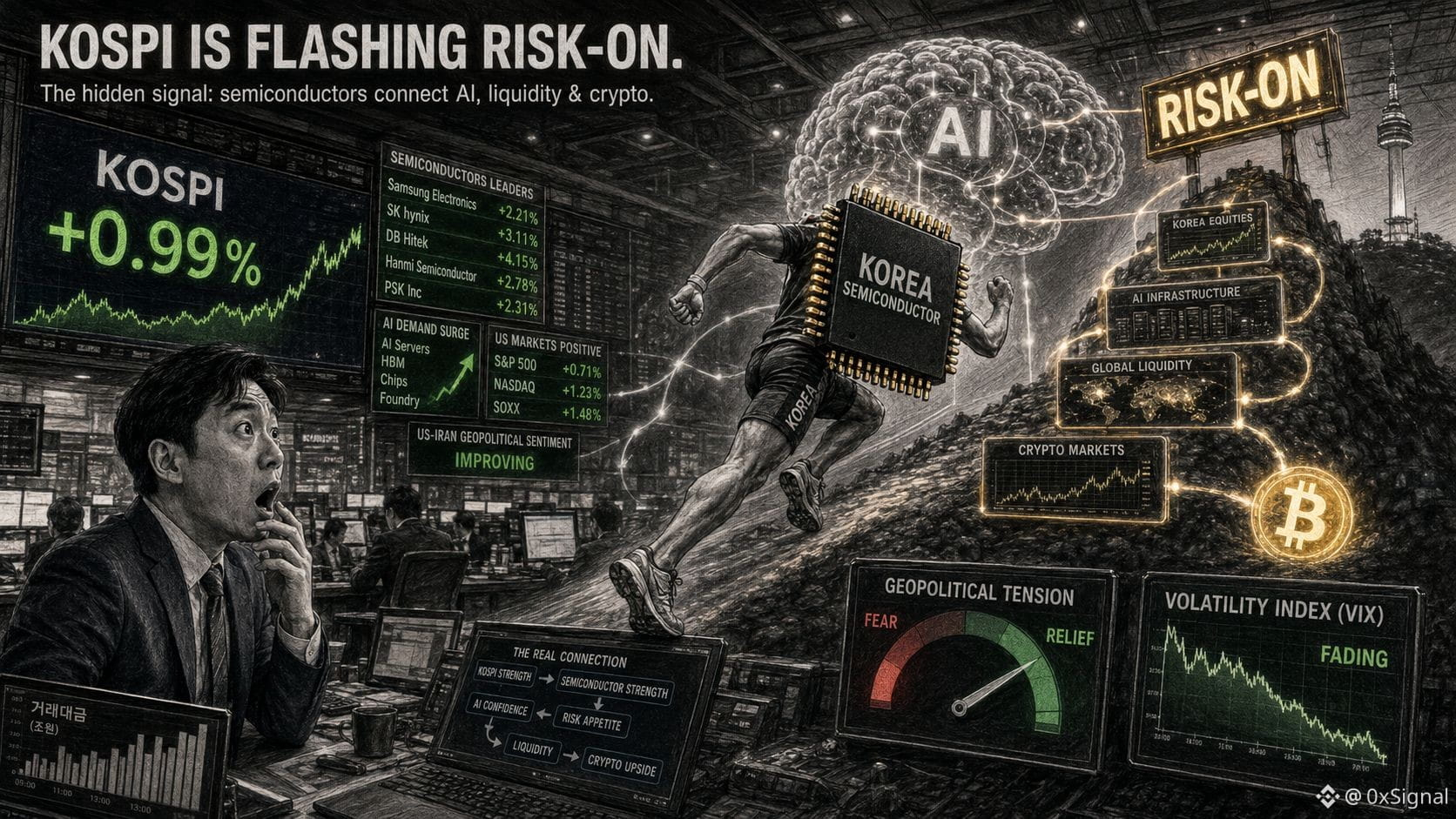
The KOSPI shows why tech remains one of the strongest risk-on signals.
The index gained nearly 1%, helped by semiconductor strength and improving sentiment around US-Iran developments.
When Asian tech markets strengthen, the signal matters beyond Korea.
Semiconductors sit at the center of the AI cycle — and AI, liquidity and crypto are increasingly connected.
#KOSPI #Semiconductors #Aİ #Stocks
$XRP
$ETH
$PORTAL
#kospirisesnearly1%
The index gained nearly 1%, helped by semiconductor strength and improving sentiment around US-Iran developments.
When Asian tech markets strengthen, the signal matters beyond Korea.
Semiconductors sit at the center of the AI cycle — and AI, liquidity and crypto are increasingly connected.
#KOSPI #Semiconductors #Aİ #Stocks
$XRP
$ETH
$PORTAL
#kospirisesnearly1%
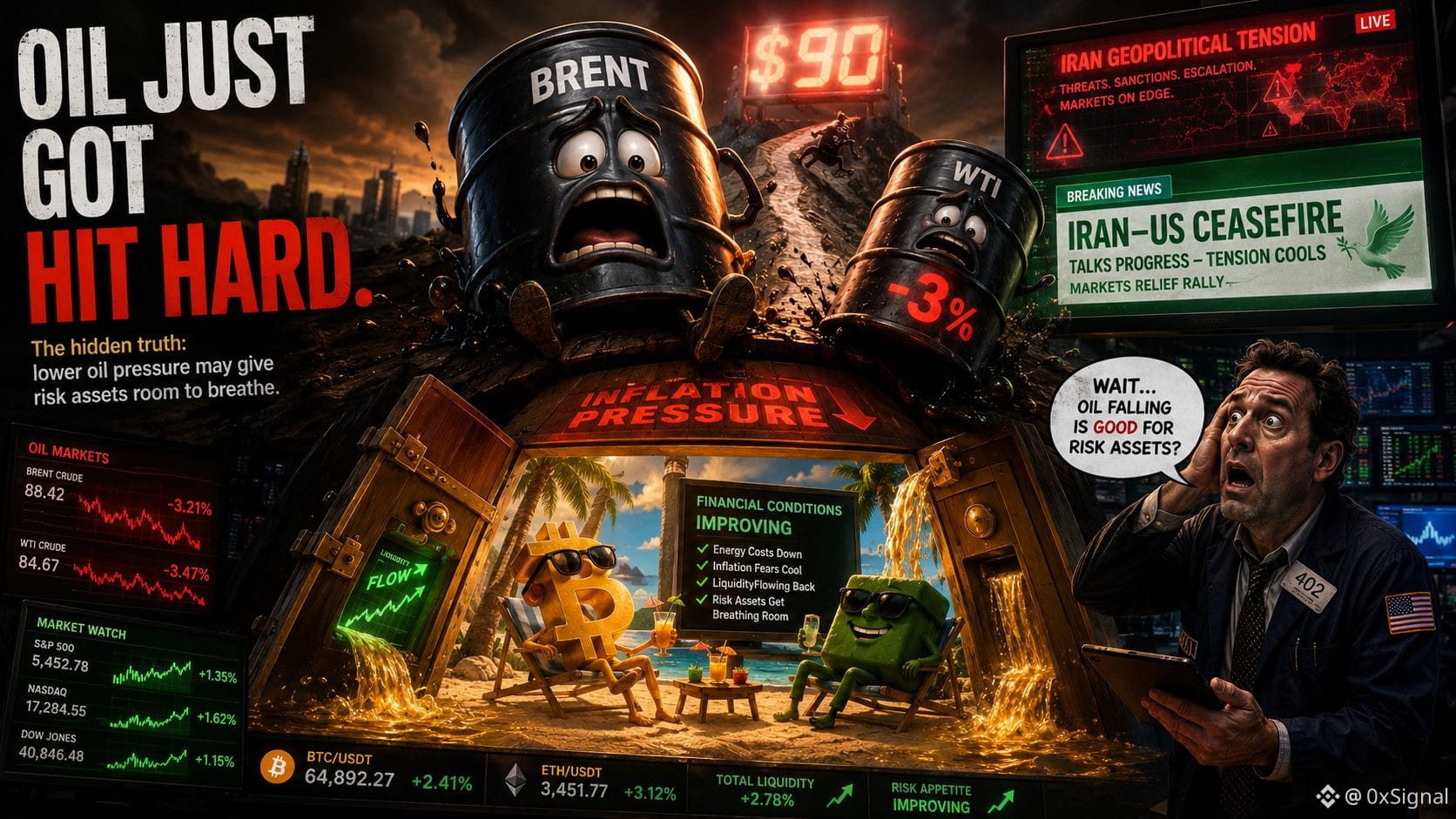
Oil just got hit hard.
Brent fell below $90, while WTI dropped more than 3% as markets priced in lower near-term supply-disruption risk and reassessed the Iran situation.
But this isn’t automatically bearish for risk assets.
Lower energy pressure can ease inflation fears — potentially giving stocks and crypto more room to breathe.
#Oil #WTI #Brent #Macro
$SCRT
$FF
$PORTAL
#brentwticrudefallover3%
Brent fell below $90, while WTI dropped more than 3% as markets priced in lower near-term supply-disruption risk and reassessed the Iran situation.
But this isn’t automatically bearish for risk assets.
Lower energy pressure can ease inflation fears — potentially giving stocks and crypto more room to breathe.
#Oil #WTI #Brent #Macro
$SCRT
$FF
$PORTAL
#brentwticrudefallover3%
Log in to explore more content