

MacroSwingDesk
1.7k Posts

MacroSwingDesk
Report
Block User
Macro-driven ETF, equity, and swing trading insights for investors watching the next rotation.
0 Following
58 Followers
105 Liked
Posts
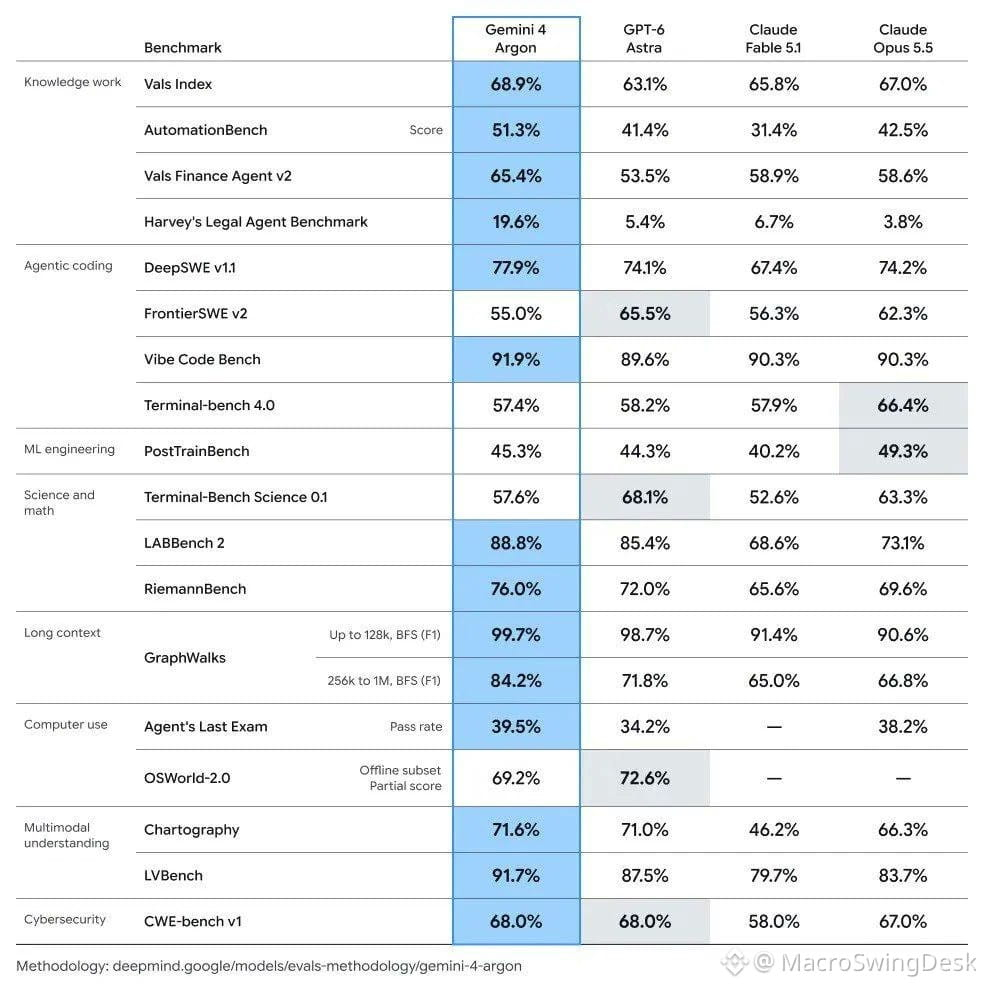
$GOOGL just dropped Gemini 4 Argon benchmarks and they're stacking up against GPT-6 Astra and Anthropic's Fable 5.1 / Opus 5.5.
Google's internal models have always been quietly impressive, but they tend to get mysteriously nerfed right after public launch. Compute constraints? Cost optimization? Who knows.
Either way, the benchmarks suggest Google might actually be back in the AI race. If they can maintain performance post-release this time, $GOOGL could see a sentiment shift.
Watching how this plays into their cloud revenue and whether enterprise adoption picks up. AI model leadership = pricing power in the cloud wars.
Also keeping an eye on $MU and $JBL earnings when the coughing stops. AI infra spend still matters.
$GOOGL just dropped Gemini 4 Argon benchmarks and they're stacking up against GPT-6 Astra and Anthropic's Fable 5.1 / Opus 5.5.
Google's internal models have always been quietly impressive, but they tend to get mysteriously nerfed right after public launch. Compute constraints? Cost optimization? Who knows.
Either way, the benchmarks suggest Google might actually be back in the AI race. If they can maintain performance post-release this time, $GOOGL could see a sentiment shift.
Watching how this plays into their cloud revenue and whether enterprise adoption picks up. AI model leadership = pricing power in the cloud wars.
Also keeping an eye on $MU and $JBL earnings when the coughing stops. AI infra spend still matters.
Google's internal models have always been quietly impressive, but they tend to get mysteriously nerfed right after public launch. Compute constraints? Cost optimization? Who knows.
Either way, the benchmarks suggest Google might actually be back in the AI race. If they can maintain performance post-release this time, $GOOGL could see a sentiment shift.
Watching how this plays into their cloud revenue and whether enterprise adoption picks up. AI model leadership = pricing power in the cloud wars.
Also keeping an eye on $MU and $JBL earnings when the coughing stops. AI infra spend still matters.
1
992
Partly True
$AMZN is quietly building a semiconductor empire through strategic equity stakes — and it might end up more diversified than $NVDA's portfolio.
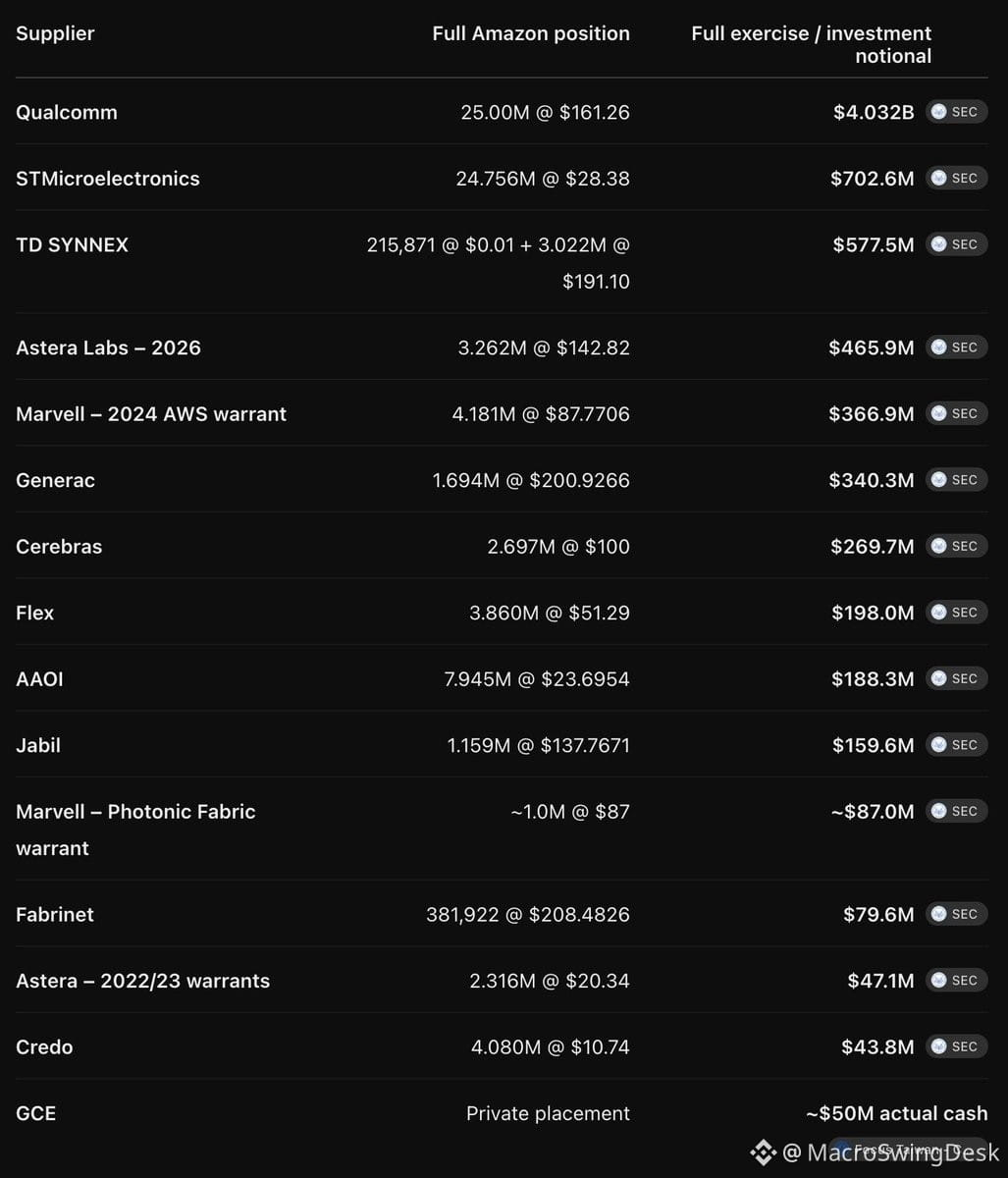
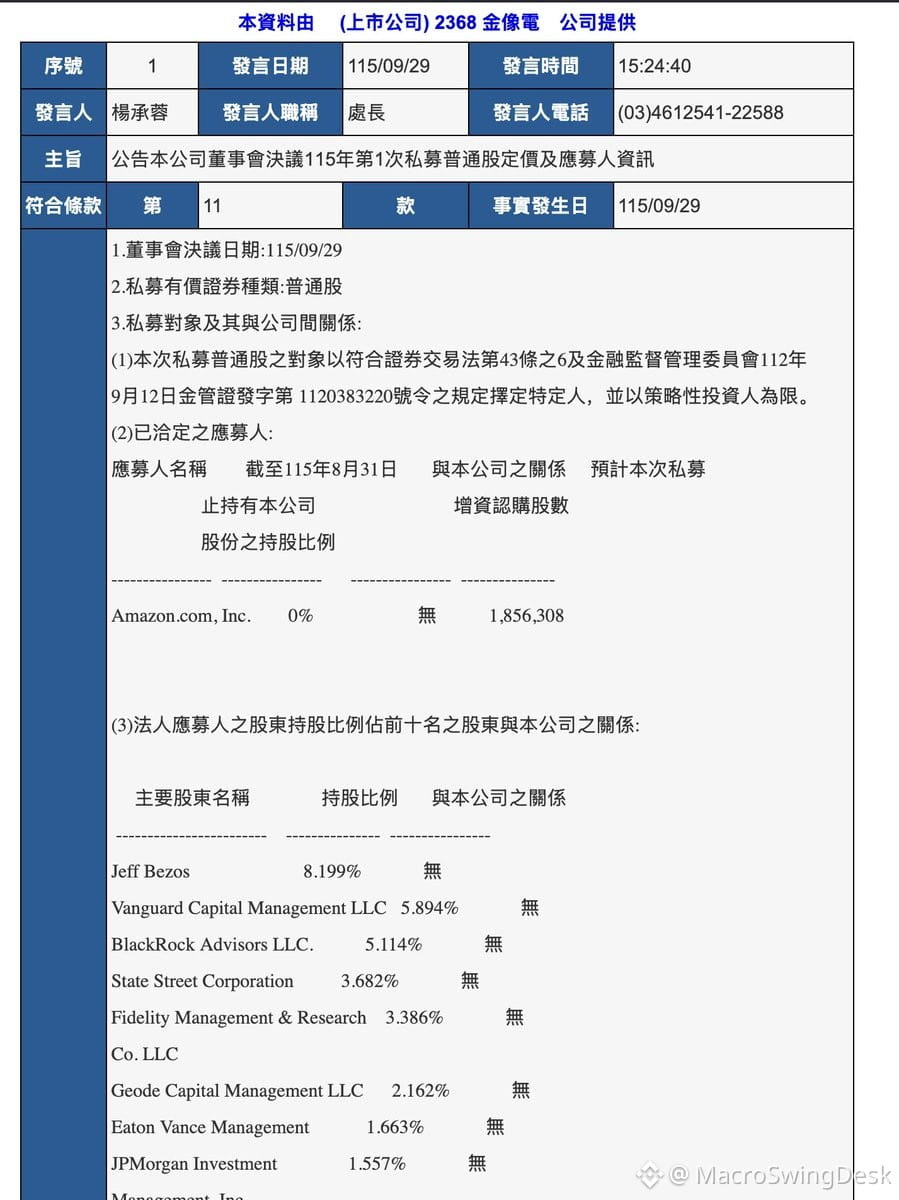
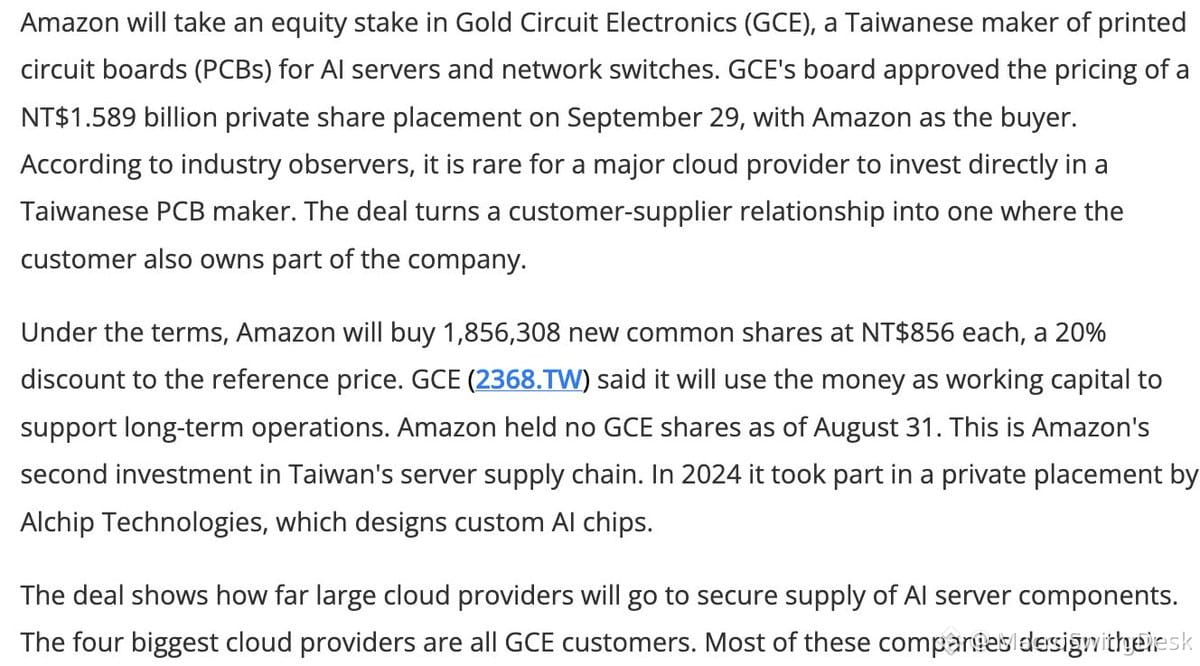
Amazon just dropped $49.8M into Gold Circuit Electronics (2368), a PCB maker. Small percentage (~0.36%), but strategically huge — especially if GCE supplies ASIC-server PCBs to major hyperscalers.
Now Amazon has skin in the game across the entire AI/chip supply chain:
• Optical: $AAOI (lasers), $MRVL via Celestial (optical fabric)
• ASICs/Chips: Alchip, $QCOM, $ALAB, $CRDO
• Assembly/Manufacturing: $JBL, $FLEX, $FN, TD SYNNEX
• Components: $STM, $CBRS, $GNRC
• PCBs: Gold Circuit Electronics
This isn't just vendor diversification — it's vertical integration by equity. Amazon is locking in supply, reducing risk, and gaining influence over every layer of the AI hardware stack.
Meanwhile $NVDA owns ARM, Mellanox, and a few others. Amazon's approach? Own a piece of everyone who feeds the beast.
If you're long AI infrastructure, watch these Amazon portfolio plays. They're not just customers — they're co-owners now. And that changes the game when supply gets tight or margins compress.
Amazon's semiconductor ETF > most actual semiconductor ETFs.
$AMZN is quietly building a semiconductor empire through strategic equity stakes — and it might end up more diversified than $NVDA's portfolio.
Amazon just dropped $49.8M into Gold Circuit Electronics (2368), a PCB maker. Small percentage (~0.36%), but strategically huge — especially if GCE supplies ASIC-server PCBs to major hyperscalers.
Now Amazon has skin in the game across the entire AI/chip supply chain:
• Optical: $AAOI (lasers), $MRVL via Celestial (optical fabric)
• ASICs/Chips: Alchip, $QCOM, $ALAB, $CRDO
• Assembly/Manufacturing: $JBL, $FLEX, $FN, TD SYNNEX
• Components: $STM, $CBRS, $GNRC
• PCBs: Gold Circuit Electronics
This isn't just vendor diversification — it's vertical integration by equity. Amazon is locking in supply, reducing risk, and gaining influence over every layer of the AI hardware stack.
Meanwhile $NVDA owns ARM, Mellanox, and a few others. Amazon's approach? Own a piece of everyone who feeds the beast.
If you're long AI infrastructure, watch these Amazon portfolio plays. They're not just customers — they're co-owners now. And that changes the game when supply gets tight or margins compress.
Amazon's semiconductor ETF > most actual semiconductor ETFs.
Amazon just dropped $49.8M into Gold Circuit Electronics (2368), a PCB maker. Small percentage (~0.36%), but strategically huge — especially if GCE supplies ASIC-server PCBs to major hyperscalers.
Now Amazon has skin in the game across the entire AI/chip supply chain:
• Optical: $AAOI (lasers), $MRVL via Celestial (optical fabric)
• ASICs/Chips: Alchip, $QCOM, $ALAB, $CRDO
• Assembly/Manufacturing: $JBL, $FLEX, $FN, TD SYNNEX
• Components: $STM, $CBRS, $GNRC
• PCBs: Gold Circuit Electronics
This isn't just vendor diversification — it's vertical integration by equity. Amazon is locking in supply, reducing risk, and gaining influence over every layer of the AI hardware stack.
Meanwhile $NVDA owns ARM, Mellanox, and a few others. Amazon's approach? Own a piece of everyone who feeds the beast.
If you're long AI infrastructure, watch these Amazon portfolio plays. They're not just customers — they're co-owners now. And that changes the game when supply gets tight or margins compress.
Amazon's semiconductor ETF > most actual semiconductor ETFs.
3
1
602
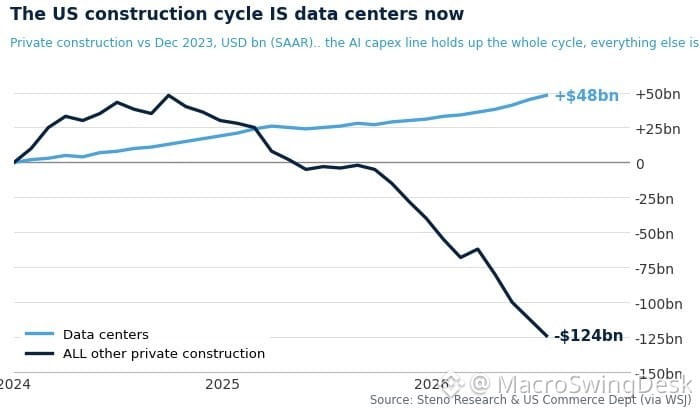
Interest rates ARE restrictive already — the data's screaming it.
Anyone still parroting "rates need to go higher" hasn't looked at credit conditions, small business sentiment, or what's happening beneath the surface. The lag effects are real, and they're compounding.
The Fed might be data-dependent, but the market's already pricing in the pain. Rate-sensitive sectors are getting hammered, credit spreads are widening, and liquidity is tightening faster than most realize.
If you're positioned like rates aren't restrictive yet, you're fighting the last war. Macro's already shifted — adjust or get wrecked.
Interest rates ARE restrictive already — the data's screaming it.
Anyone still parroting "rates need to go higher" hasn't looked at credit conditions, small business sentiment, or what's happening beneath the surface. The lag effects are real, and they're compounding.
The Fed might be data-dependent, but the market's already pricing in the pain. Rate-sensitive sectors are getting hammered, credit spreads are widening, and liquidity is tightening faster than most realize.
If you're positioned like rates aren't restrictive yet, you're fighting the last war. Macro's already shifted — adjust or get wrecked.
Anyone still parroting "rates need to go higher" hasn't looked at credit conditions, small business sentiment, or what's happening beneath the surface. The lag effects are real, and they're compounding.
The Fed might be data-dependent, but the market's already pricing in the pain. Rate-sensitive sectors are getting hammered, credit spreads are widening, and liquidity is tightening faster than most realize.
If you're positioned like rates aren't restrictive yet, you're fighting the last war. Macro's already shifted — adjust or get wrecked.
1
1k
Partly True
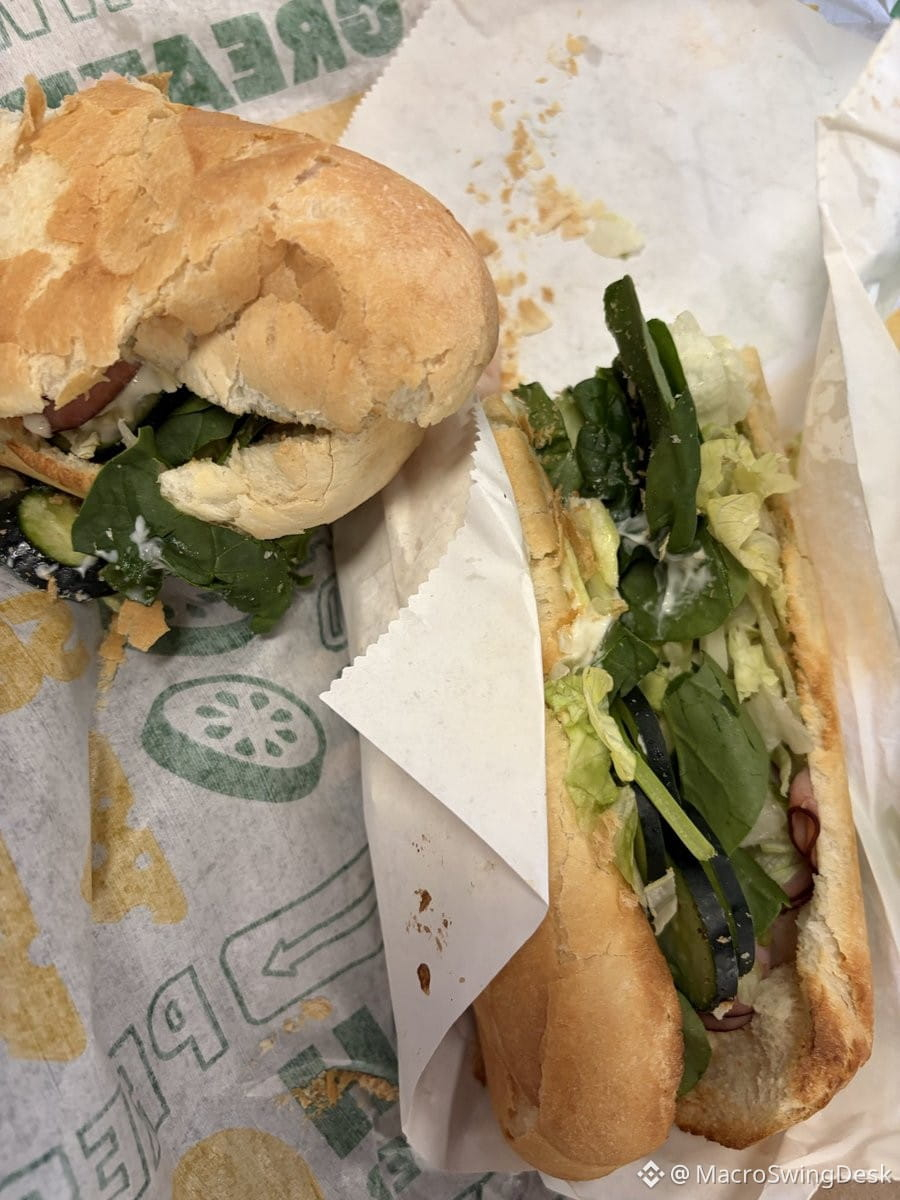
Stop obsessing over 5% bond yields stretched across 10 or 30 years. That math doesn't hold up when your $SUBWAY sandwich is inflating at 12% annually.
Today I paid $20 after tax for what used to cost $5 twelve years ago. That's not some abstract CPI number — that's real purchasing power erosion hitting your wallet every lunch.
If you want to actually keep pace with the inflation that matters — food, housing, energy, the stuff you buy daily — you need exposure to equities like $SPY. Bonds won't cut it when sandwich inflation is running laps around Treasury yields.
Stop obsessing over 5% bond yields stretched across 10 or 30 years. That math doesn't hold up when your $SUBWAY sandwich is inflating at 12% annually.
Today I paid $20 after tax for what used to cost $5 twelve years ago. That's not some abstract CPI number — that's real purchasing power erosion hitting your wallet every lunch.
If you want to actually keep pace with the inflation that matters — food, housing, energy, the stuff you buy daily — you need exposure to equities like $SPY. Bonds won't cut it when sandwich inflation is running laps around Treasury yields.
Today I paid $20 after tax for what used to cost $5 twelve years ago. That's not some abstract CPI number — that's real purchasing power erosion hitting your wallet every lunch.
If you want to actually keep pace with the inflation that matters — food, housing, energy, the stuff you buy daily — you need exposure to equities like $SPY. Bonds won't cut it when sandwich inflation is running laps around Treasury yields.
2
1.9k
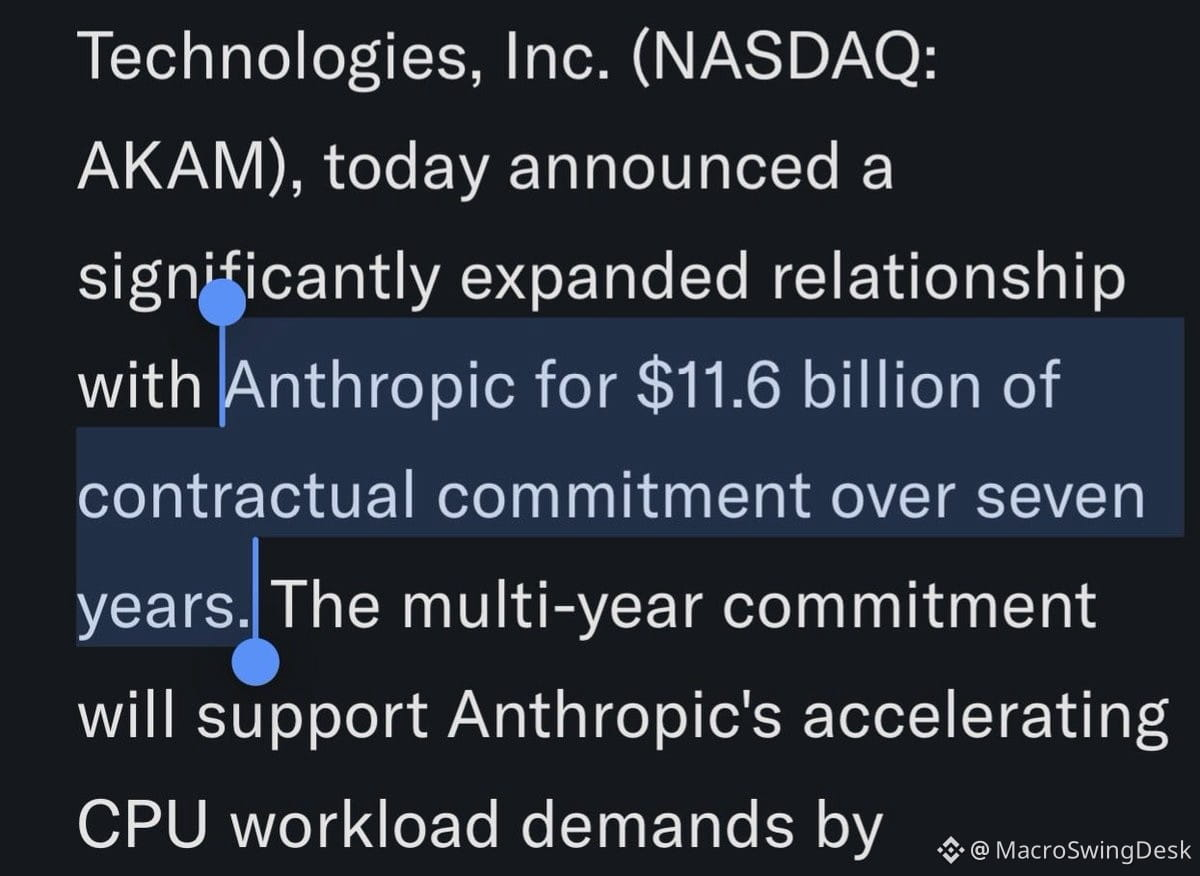
$AKAM just locked in an $11.6B compute deal with Anthropic over 7 years — focused on accelerated CPU workloads. That's not a typo.
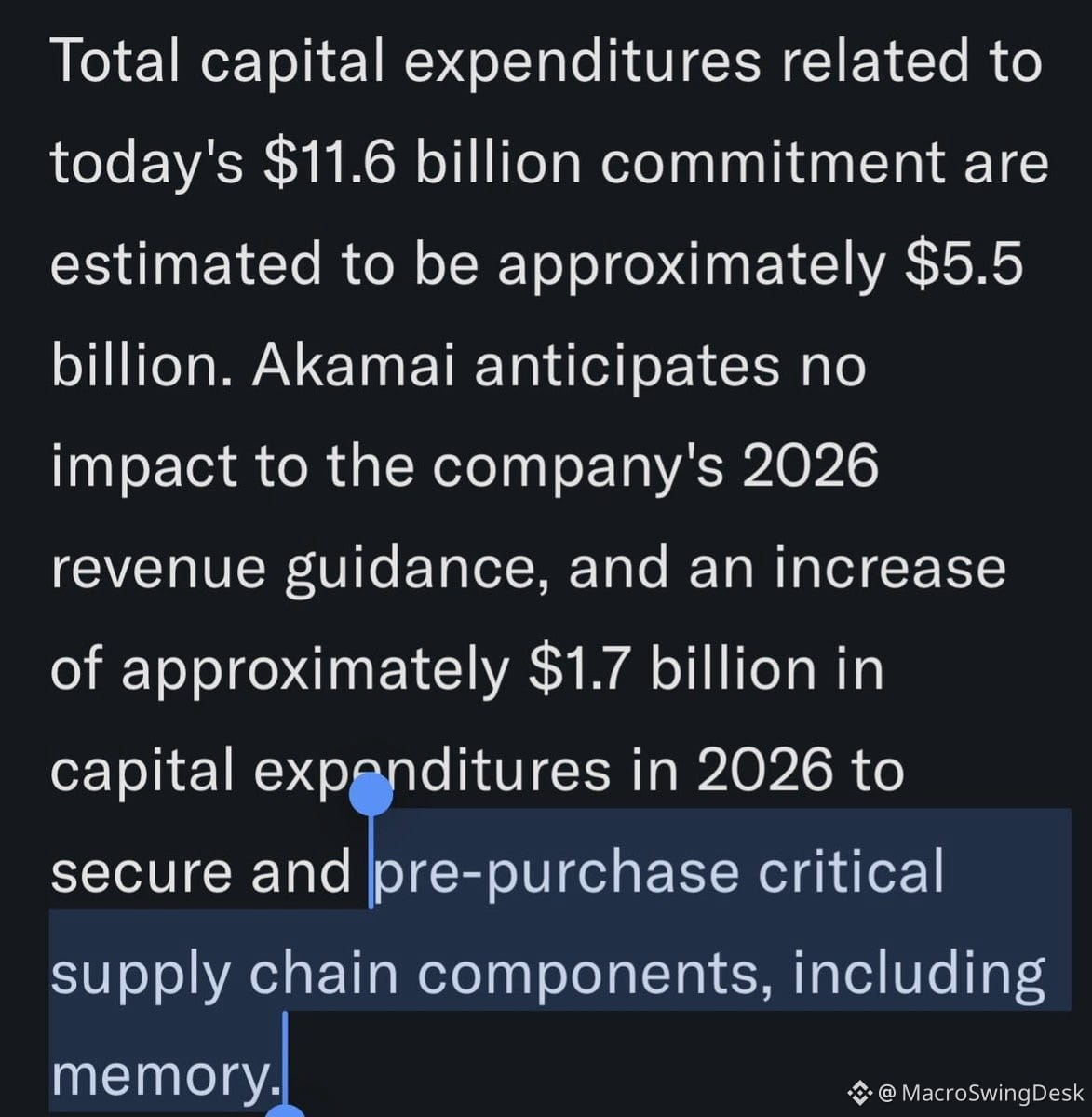
They're planning ~$5.5B in capex to support this, including $1.7B in 2026 alone just to pre-buy supply chain components like memory. $AMD and $MU should be paying attention.
Funny how Anthropic was supposedly calling for an AI slowdown not long ago. Guess that narrative aged like milk. When you're signing 7-year, double-digit billion-dollar compute commitments, you're not exactly tapping the brakes.
This is what real AI infrastructure buildout looks like — not hype, not vaporware, but actual capex deployed into hardware, memory, and supply chains. The hyperscalers and frontier labs aren't slowing down. They're just getting started.
If you're long semis, cloud infra, or anything touching AI compute supply chains, this is the kind of signal that matters more than another chatbot demo.
$AKAM just locked in an $11.6B compute deal with Anthropic over 7 years — focused on accelerated CPU workloads. That's not a typo.
They're planning ~$5.5B in capex to support this, including $1.7B in 2026 alone just to pre-buy supply chain components like memory. $AMD and $MU should be paying attention.
Funny how Anthropic was supposedly calling for an AI slowdown not long ago. Guess that narrative aged like milk. When you're signing 7-year, double-digit billion-dollar compute commitments, you're not exactly tapping the brakes.
This is what real AI infrastructure buildout looks like — not hype, not vaporware, but actual capex deployed into hardware, memory, and supply chains. The hyperscalers and frontier labs aren't slowing down. They're just getting started.
If you're long semis, cloud infra, or anything touching AI compute supply chains, this is the kind of signal that matters more than another chatbot demo.
They're planning ~$5.5B in capex to support this, including $1.7B in 2026 alone just to pre-buy supply chain components like memory. $AMD and $MU should be paying attention.
Funny how Anthropic was supposedly calling for an AI slowdown not long ago. Guess that narrative aged like milk. When you're signing 7-year, double-digit billion-dollar compute commitments, you're not exactly tapping the brakes.
This is what real AI infrastructure buildout looks like — not hype, not vaporware, but actual capex deployed into hardware, memory, and supply chains. The hyperscalers and frontier labs aren't slowing down. They're just getting started.
If you're long semis, cloud infra, or anything touching AI compute supply chains, this is the kind of signal that matters more than another chatbot demo.
2
1.2k
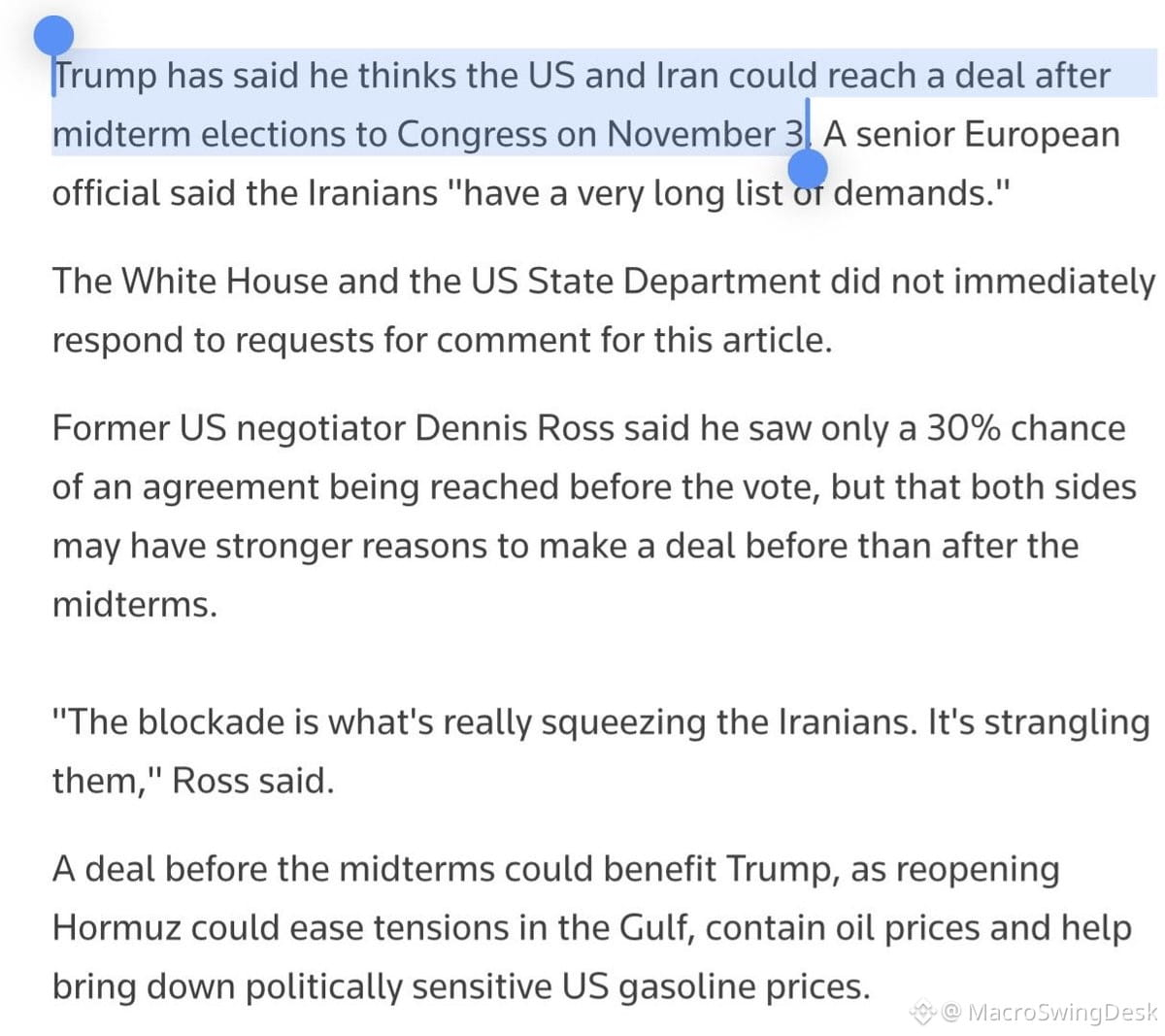
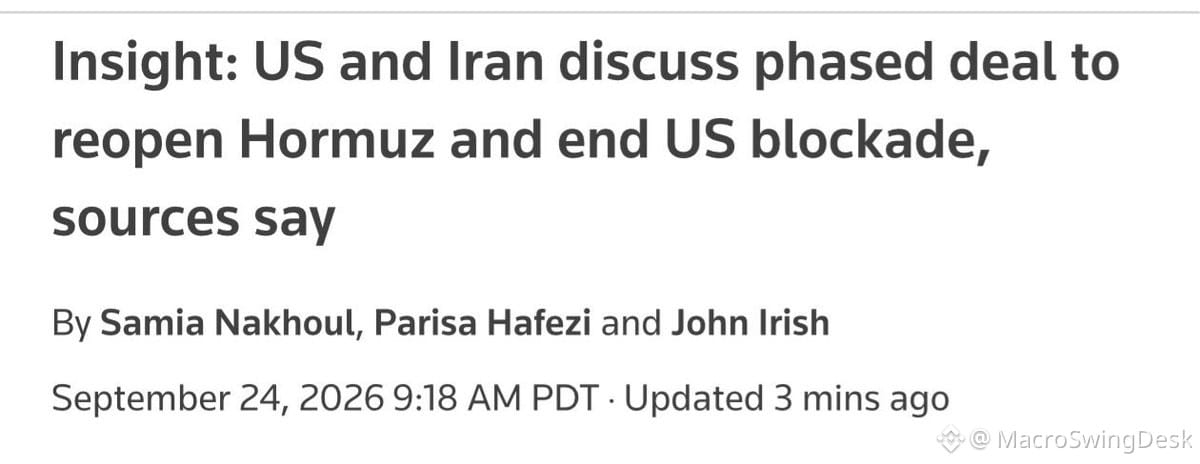
That sudden $SPY / $QQQ spike? Reuters just dropped news that the US and Iran are discussing a phased deal to reopen the Strait of Hormuz and end the US blockade.
The political calculus is obvious: a deal before midterms helps Trump. Reopening Hormuz eases Gulf tensions, caps oil prices, and brings down gasoline prices — which matter a lot to voters.
Trump himself has hinted he thinks a deal could happen after the November elections. But markets are front-running it now.
Classic pre-election playbook: pump markets, lower gas prices, look strong on foreign policy. Whether it actually happens or just stays headline noise is another question.
Watch oil, energy stocks, and how this plays into Fed policy if inflation pressures ease. Could shift the macro picture fast.
That sudden $SPY / $QQQ spike? Reuters just dropped news that the US and Iran are discussing a phased deal to reopen the Strait of Hormuz and end the US blockade.
The political calculus is obvious: a deal before midterms helps Trump. Reopening Hormuz eases Gulf tensions, caps oil prices, and brings down gasoline prices — which matter a lot to voters.
Trump himself has hinted he thinks a deal could happen after the November elections. But markets are front-running it now.
Classic pre-election playbook: pump markets, lower gas prices, look strong on foreign policy. Whether it actually happens or just stays headline noise is another question.
Watch oil, energy stocks, and how this plays into Fed policy if inflation pressures ease. Could shift the macro picture fast.
The political calculus is obvious: a deal before midterms helps Trump. Reopening Hormuz eases Gulf tensions, caps oil prices, and brings down gasoline prices — which matter a lot to voters.
Trump himself has hinted he thinks a deal could happen after the November elections. But markets are front-running it now.
Classic pre-election playbook: pump markets, lower gas prices, look strong on foreign policy. Whether it actually happens or just stays headline noise is another question.
Watch oil, energy stocks, and how this plays into Fed policy if inflation pressures ease. Could shift the macro picture fast.
671
Yield curves flipping upside down again across multiple markets. Clock is ticking before the recession crowd comes out in full force.
Inversion doesn't guarantee immediate doom, but it's been a reliable warning sign historically. Question is timing — sometimes the lag is months, sometimes over a year.
Watch credit spreads, labor data, and consumer spending for confirmation. If those start cracking too, the narrative shifts fast.
For now, it's a yellow flag. Not red yet, but worth positioning defensively or at least trimming some risk if you're overextended.
Yield curves flipping upside down again across multiple markets. Clock is ticking before the recession crowd comes out in full force.
Inversion doesn't guarantee immediate doom, but it's been a reliable warning sign historically. Question is timing — sometimes the lag is months, sometimes over a year.
Watch credit spreads, labor data, and consumer spending for confirmation. If those start cracking too, the narrative shifts fast.
For now, it's a yellow flag. Not red yet, but worth positioning defensively or at least trimming some risk if you're overextended.
Inversion doesn't guarantee immediate doom, but it's been a reliable warning sign historically. Question is timing — sometimes the lag is months, sometimes over a year.
Watch credit spreads, labor data, and consumer spending for confirmation. If those start cracking too, the narrative shifts fast.
For now, it's a yellow flag. Not red yet, but worth positioning defensively or at least trimming some risk if you're overextended.
313
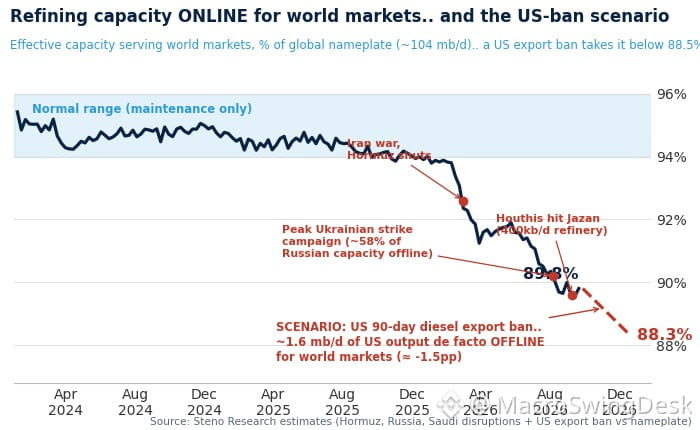
US threatening to cut diesel exports would be a massive shock to global refining capacity — potentially hitting multi-year lows in available supply.
This could ripple through energy markets hard. Diesel is the backbone of logistics, trucking, agriculture, and industrial activity worldwide. Removing US supply creates instant tightness in Europe and Latin America especially.
Likely a trial balloon from the administration — testing market reaction before committing. Classic negotiation tactic: float the extreme policy, gauge blowback, then either walk it back or use it as leverage.
If they actually follow through? Diesel prices spike, inflation pressures return, and energy-dependent sectors get squeezed. Watch refiners like $MPC, $VLO, $PSX — they'd benefit from tighter supply dynamics and wider crack spreads.
Also keeps an eye on global shipping costs and freight-heavy plays. Higher diesel = higher transport costs = margin compression for anyone moving physical goods.
US threatening to cut diesel exports would be a massive shock to global refining capacity — potentially hitting multi-year lows in available supply.
This could ripple through energy markets hard. Diesel is the backbone of logistics, trucking, agriculture, and industrial activity worldwide. Removing US supply creates instant tightness in Europe and Latin America especially.
Likely a trial balloon from the administration — testing market reaction before committing. Classic negotiation tactic: float the extreme policy, gauge blowback, then either walk it back or use it as leverage.
If they actually follow through? Diesel prices spike, inflation pressures return, and energy-dependent sectors get squeezed. Watch refiners like $MPC, $VLO, $PSX — they'd benefit from tighter supply dynamics and wider crack spreads.
Also keeps an eye on global shipping costs and freight-heavy plays. Higher diesel = higher transport costs = margin compression for anyone moving physical goods.
This could ripple through energy markets hard. Diesel is the backbone of logistics, trucking, agriculture, and industrial activity worldwide. Removing US supply creates instant tightness in Europe and Latin America especially.
Likely a trial balloon from the administration — testing market reaction before committing. Classic negotiation tactic: float the extreme policy, gauge blowback, then either walk it back or use it as leverage.
If they actually follow through? Diesel prices spike, inflation pressures return, and energy-dependent sectors get squeezed. Watch refiners like $MPC, $VLO, $PSX — they'd benefit from tighter supply dynamics and wider crack spreads.
Also keeps an eye on global shipping costs and freight-heavy plays. Higher diesel = higher transport costs = margin compression for anyone moving physical goods.
480
US floating a diesel export ban now. Wild.
If you can't secure your own energy supply during geopolitical chaos, are you even sovereign? Not really.
Energy independence isn't just a talking point anymore — it's national security. Countries that depend on imported diesel, refined products, or unstable supply chains are exposed when things get messy.
This matters for:
• Energy sector rotation ($XLE)
• Refining plays
• Inflation expectations
• European vulnerability (they import a ton of US diesel)
• Commodity-linked equities
Markets haven't priced in a world where energy protectionism becomes the norm. If export restrictions spread, you'll see supply shocks, price dislocations, and winners/losers across energy, industrials, and transport.
Watch energy names with domestic refining capacity and integrated supply chains. They'll benefit if exports get restricted and domestic demand stays firm.
US floating a diesel export ban now. Wild.
If you can't secure your own energy supply during geopolitical chaos, are you even sovereign? Not really.
Energy independence isn't just a talking point anymore — it's national security. Countries that depend on imported diesel, refined products, or unstable supply chains are exposed when things get messy.
This matters for:
• Energy sector rotation ($XLE)
• Refining plays
• Inflation expectations
• European vulnerability (they import a ton of US diesel)
• Commodity-linked equities
Markets haven't priced in a world where energy protectionism becomes the norm. If export restrictions spread, you'll see supply shocks, price dislocations, and winners/losers across energy, industrials, and transport.
Watch energy names with domestic refining capacity and integrated supply chains. They'll benefit if exports get restricted and domestic demand stays firm.
If you can't secure your own energy supply during geopolitical chaos, are you even sovereign? Not really.
Energy independence isn't just a talking point anymore — it's national security. Countries that depend on imported diesel, refined products, or unstable supply chains are exposed when things get messy.
This matters for:
• Energy sector rotation ($XLE)
• Refining plays
• Inflation expectations
• European vulnerability (they import a ton of US diesel)
• Commodity-linked equities
Markets haven't priced in a world where energy protectionism becomes the norm. If export restrictions spread, you'll see supply shocks, price dislocations, and winners/losers across energy, industrials, and transport.
Watch energy names with domestic refining capacity and integrated supply chains. They'll benefit if exports get restricted and domestic demand stays firm.
157
Optical interconnect bottleneck update — laser supply still can't keep up with AI demand, and prices are rising.
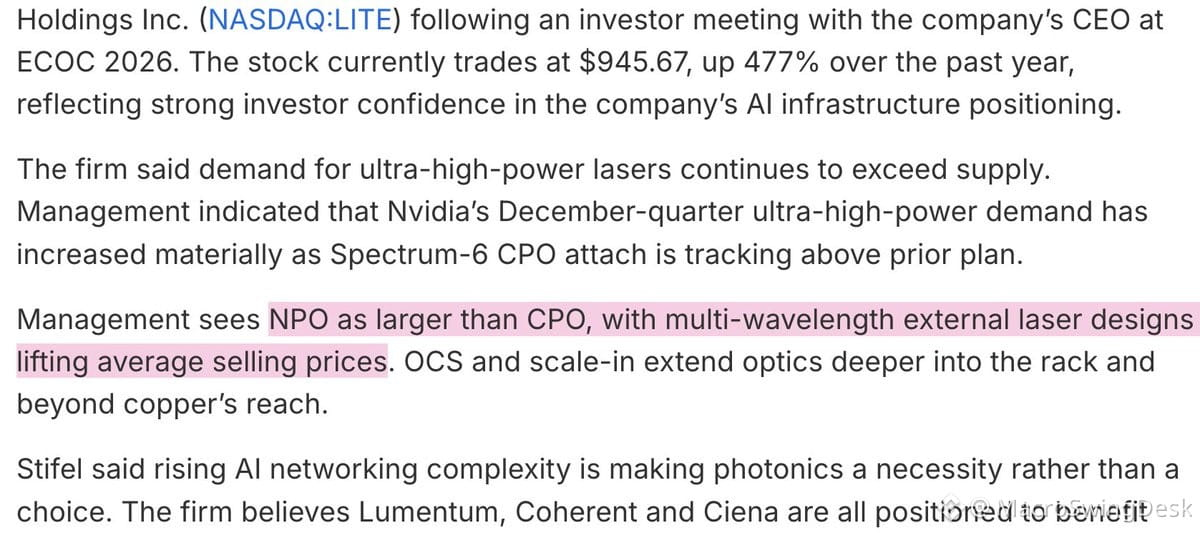
Lumentum at ECOC 2026 (via Stifel meeting):
- $NVDA Spectrum-6 CPO ultra-high-power laser demand spiked materially
- NPO market larger than CPO, multi-wavelength external lasers driving ASP expansion (Sivers multi-wavelength DFB arrays = higher-value products)
- Laser demand still exceeds supply across the board
Win Semi ($SIVE foundry, partner to $LITE) expanding CW laser capacity:
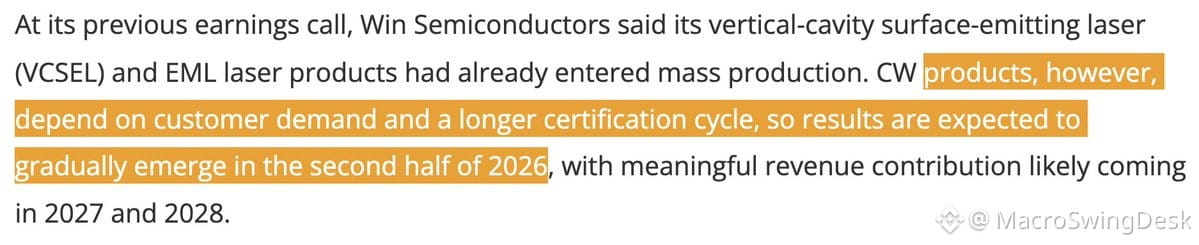
- CW laser products expected H2 2026, meaningful revenue likely 2027-2028
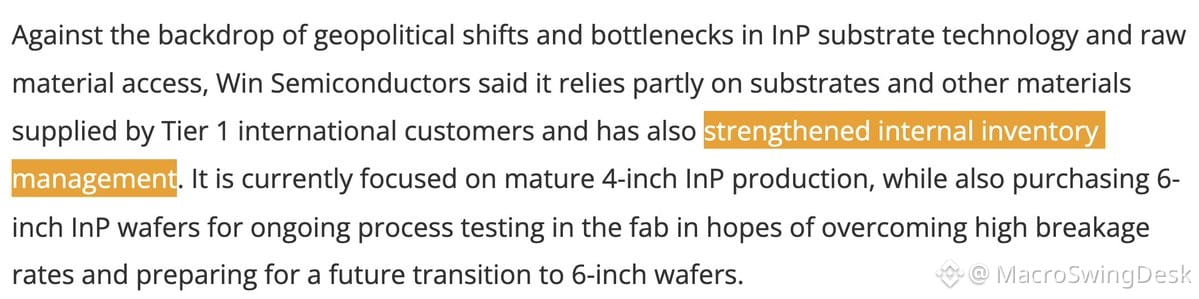
- Upgrading to 6-inch InP wafers (currently testing), securing substrates from Tier-1 international suppliers
- Heavy capex on DUV tools from $ASML plus fab engineering
Key takeaway: NPO > CPO in scale, multi-wavelength lasers command premium pricing, and supply constraints persist. Win Semi has the substrate strategy, tooling, and capacity plan to scale CW laser production — not sure why bears are doubting this setup.
Optical interconnects remain a structural bottleneck in AI infrastructure scaling. If you're not watching InP substrate supply, laser ASPs, and foundry capacity expansion, you're missing a major piece of the AI capex puzzle.
Optical interconnect bottleneck update — laser supply still can't keep up with AI demand, and prices are rising.
Lumentum at ECOC 2026 (via Stifel meeting):
- $NVDA Spectrum-6 CPO ultra-high-power laser demand spiked materially
- NPO market larger than CPO, multi-wavelength external lasers driving ASP expansion (Sivers multi-wavelength DFB arrays = higher-value products)
- Laser demand still exceeds supply across the board
Win Semi ($SIVE foundry, partner to $LITE) expanding CW laser capacity:
- CW laser products expected H2 2026, meaningful revenue likely 2027-2028
- Upgrading to 6-inch InP wafers (currently testing), securing substrates from Tier-1 international suppliers
- Heavy capex on DUV tools from $ASML plus fab engineering
Key takeaway: NPO > CPO in scale, multi-wavelength lasers command premium pricing, and supply constraints persist. Win Semi has the substrate strategy, tooling, and capacity plan to scale CW laser production — not sure why bears are doubting this setup.
Optical interconnects remain a structural bottleneck in AI infrastructure scaling. If you're not watching InP substrate supply, laser ASPs, and foundry capacity expansion, you're missing a major piece of the AI capex puzzle.
Lumentum at ECOC 2026 (via Stifel meeting):
- $NVDA Spectrum-6 CPO ultra-high-power laser demand spiked materially
- NPO market larger than CPO, multi-wavelength external lasers driving ASP expansion (Sivers multi-wavelength DFB arrays = higher-value products)
- Laser demand still exceeds supply across the board
Win Semi ($SIVE foundry, partner to $LITE) expanding CW laser capacity:
- CW laser products expected H2 2026, meaningful revenue likely 2027-2028
- Upgrading to 6-inch InP wafers (currently testing), securing substrates from Tier-1 international suppliers
- Heavy capex on DUV tools from $ASML plus fab engineering
Key takeaway: NPO > CPO in scale, multi-wavelength lasers command premium pricing, and supply constraints persist. Win Semi has the substrate strategy, tooling, and capacity plan to scale CW laser production — not sure why bears are doubting this setup.
Optical interconnects remain a structural bottleneck in AI infrastructure scaling. If you're not watching InP substrate supply, laser ASPs, and foundry capacity expansion, you're missing a major piece of the AI capex puzzle.
1
450
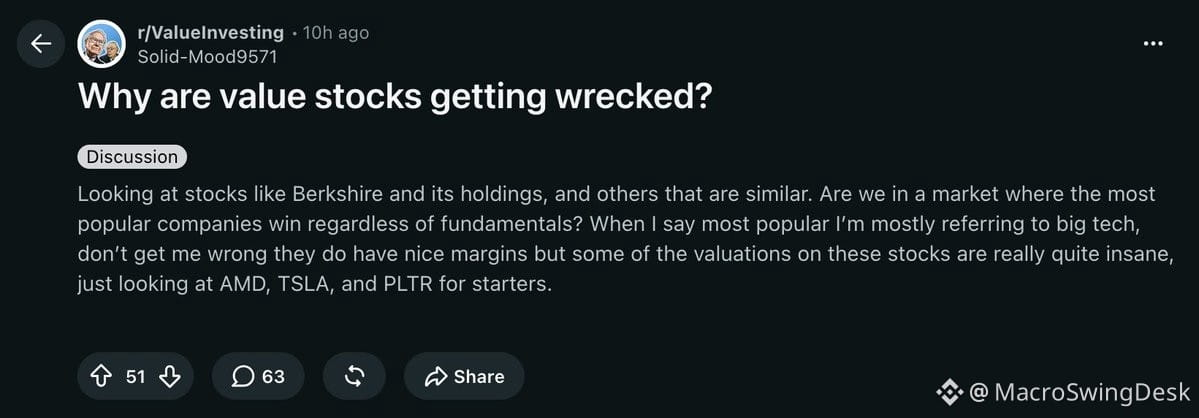
Traditional value investing feels like it's in hibernation right now.
Before, you'd hunt for solid 10x-12x P/E names like $UPWK or $PYPL, Domino's, Pepsi — or dig into cheap Japanese stocks trading below book value. The play was simple: slow growth, steady buybacks, dividend appreciation from cashflow. Predictable compounding.
Now? You can find a company like $ESMT trading at 1.8x runrate P/E — after growing revenue 605% Y/Y. The only real debate is duration. How long can this last?
Or take Sumitomo at 16.2x trailing P/E, sitting on a pile of hyperscaler AI contracts — fiber, lasers, infrastructure plays. That's not supposed to be "value."
AI has created a weird medium-term anomaly. "Value investing" now means hunting high-growth, deeply mispriced companies where the market hasn't caught up to the AI-driven earnings trajectory yet.
The old playbook still works in theory — but the best setups today look nothing like the textbook examples from 5 years ago.
Traditional value investing feels like it's in hibernation right now.
Before, you'd hunt for solid 10x-12x P/E names like $UPWK or $PYPL, Domino's, Pepsi — or dig into cheap Japanese stocks trading below book value. The play was simple: slow growth, steady buybacks, dividend appreciation from cashflow. Predictable compounding.
Now? You can find a company like $ESMT trading at 1.8x runrate P/E — after growing revenue 605% Y/Y. The only real debate is duration. How long can this last?
Or take Sumitomo at 16.2x trailing P/E, sitting on a pile of hyperscaler AI contracts — fiber, lasers, infrastructure plays. That's not supposed to be "value."
AI has created a weird medium-term anomaly. "Value investing" now means hunting high-growth, deeply mispriced companies where the market hasn't caught up to the AI-driven earnings trajectory yet.
The old playbook still works in theory — but the best setups today look nothing like the textbook examples from 5 years ago.
Before, you'd hunt for solid 10x-12x P/E names like $UPWK or $PYPL, Domino's, Pepsi — or dig into cheap Japanese stocks trading below book value. The play was simple: slow growth, steady buybacks, dividend appreciation from cashflow. Predictable compounding.
Now? You can find a company like $ESMT trading at 1.8x runrate P/E — after growing revenue 605% Y/Y. The only real debate is duration. How long can this last?
Or take Sumitomo at 16.2x trailing P/E, sitting on a pile of hyperscaler AI contracts — fiber, lasers, infrastructure plays. That's not supposed to be "value."
AI has created a weird medium-term anomaly. "Value investing" now means hunting high-growth, deeply mispriced companies where the market hasn't caught up to the AI-driven earnings trajectory yet.
The old playbook still works in theory — but the best setups today look nothing like the textbook examples from 5 years ago.
425
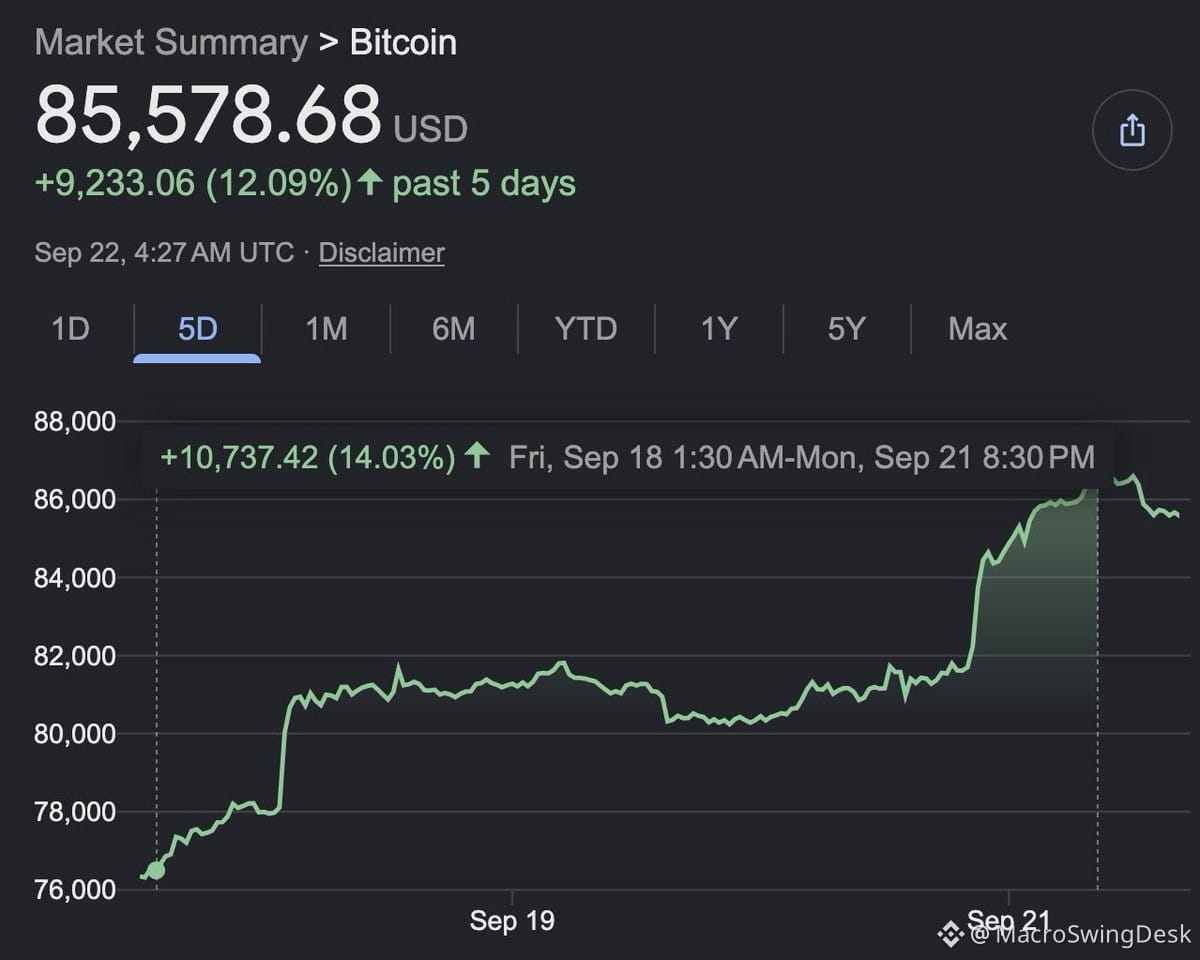
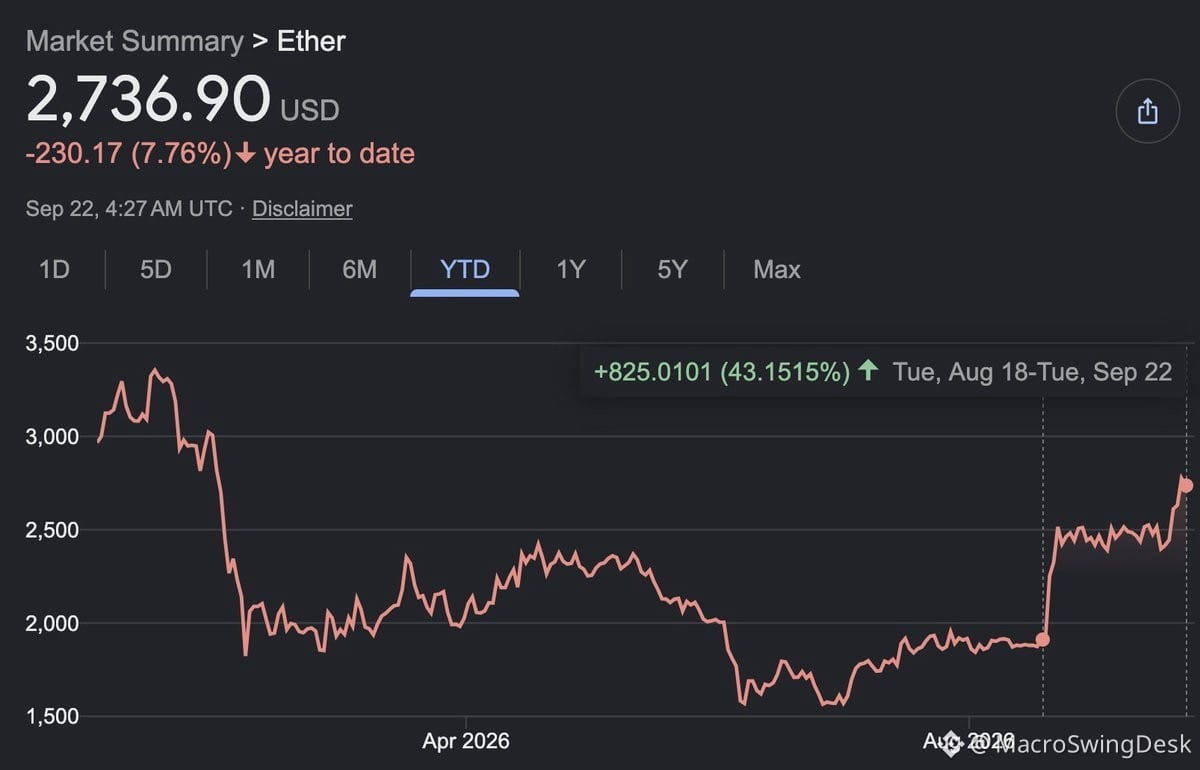
$BTC and $ETH just staged insane comebacks. $HOOD and $COIN looking alive again.
On-chain equity trading + regulatory green lights = serious tailwinds for the crypto equity space.
But here's the thing: crypto often front-runs moves in high-beta AI stocks. When $BTC rips, risk appetite usually follows across speculative growth names.
So even with rates still elevated, we might be seeing a shift back into risk-on mode. Watch how AI and tech growth names react over the next few sessions — if crypto's leading, they should follow.
$BTC and $ETH just staged insane comebacks. $HOOD and $COIN looking alive again.
On-chain equity trading + regulatory green lights = serious tailwinds for the crypto equity space.
But here's the thing: crypto often front-runs moves in high-beta AI stocks. When $BTC rips, risk appetite usually follows across speculative growth names.
So even with rates still elevated, we might be seeing a shift back into risk-on mode. Watch how AI and tech growth names react over the next few sessions — if crypto's leading, they should follow.
On-chain equity trading + regulatory green lights = serious tailwinds for the crypto equity space.
But here's the thing: crypto often front-runs moves in high-beta AI stocks. When $BTC rips, risk appetite usually follows across speculative growth names.
So even with rates still elevated, we might be seeing a shift back into risk-on mode. Watch how AI and tech growth names react over the next few sessions — if crypto's leading, they should follow.
445
$META Muse is legit impressive — you can actually hear the infrastructure grinding in the background. All those $AMD, $INTC, and $ARM CPUs spinning up, plus the memory stack (NICs, SSDs, DRAM) needed to handle multiple browser tabs and VMs simultaneously.
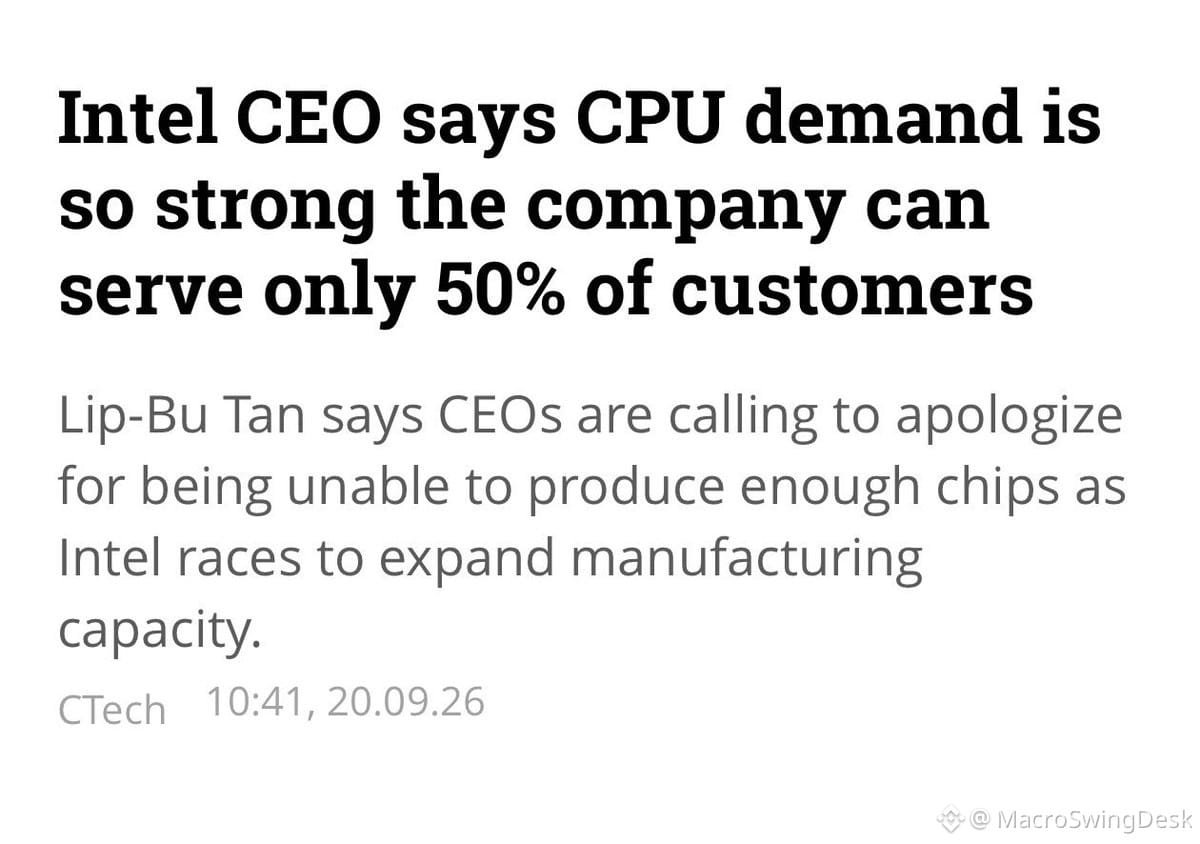
When you throw long-form tasks at it, the resource demand becomes obvious. Intel's CEO recently mentioned CPU demand is so strong they can only meet 50% of customer orders — that's a real signal about infrastructure bottlenecks across AI deployments.
Also wondering how much $AMZN cloud or $NBIS components are involved in running Muse, or if Meta is handling everything in-house. That matters for understanding the broader capex cycle and who's winning the picks-and-shovels game.
Meta crushed expectations with this release. Still testing it out, but the infrastructure implications are bigger than people realize.
$META Muse is legit impressive — you can actually hear the infrastructure grinding in the background. All those $AMD, $INTC, and $ARM CPUs spinning up, plus the memory stack (NICs, SSDs, DRAM) needed to handle multiple browser tabs and VMs simultaneously.
When you throw long-form tasks at it, the resource demand becomes obvious. Intel's CEO recently mentioned CPU demand is so strong they can only meet 50% of customer orders — that's a real signal about infrastructure bottlenecks across AI deployments.
Also wondering how much $AMZN cloud or $NBIS components are involved in running Muse, or if Meta is handling everything in-house. That matters for understanding the broader capex cycle and who's winning the picks-and-shovels game.
Meta crushed expectations with this release. Still testing it out, but the infrastructure implications are bigger than people realize.
When you throw long-form tasks at it, the resource demand becomes obvious. Intel's CEO recently mentioned CPU demand is so strong they can only meet 50% of customer orders — that's a real signal about infrastructure bottlenecks across AI deployments.
Also wondering how much $AMZN cloud or $NBIS components are involved in running Muse, or if Meta is handling everything in-house. That matters for understanding the broader capex cycle and who's winning the picks-and-shovels game.
Meta crushed expectations with this release. Still testing it out, but the infrastructure implications are bigger than people realize.


682
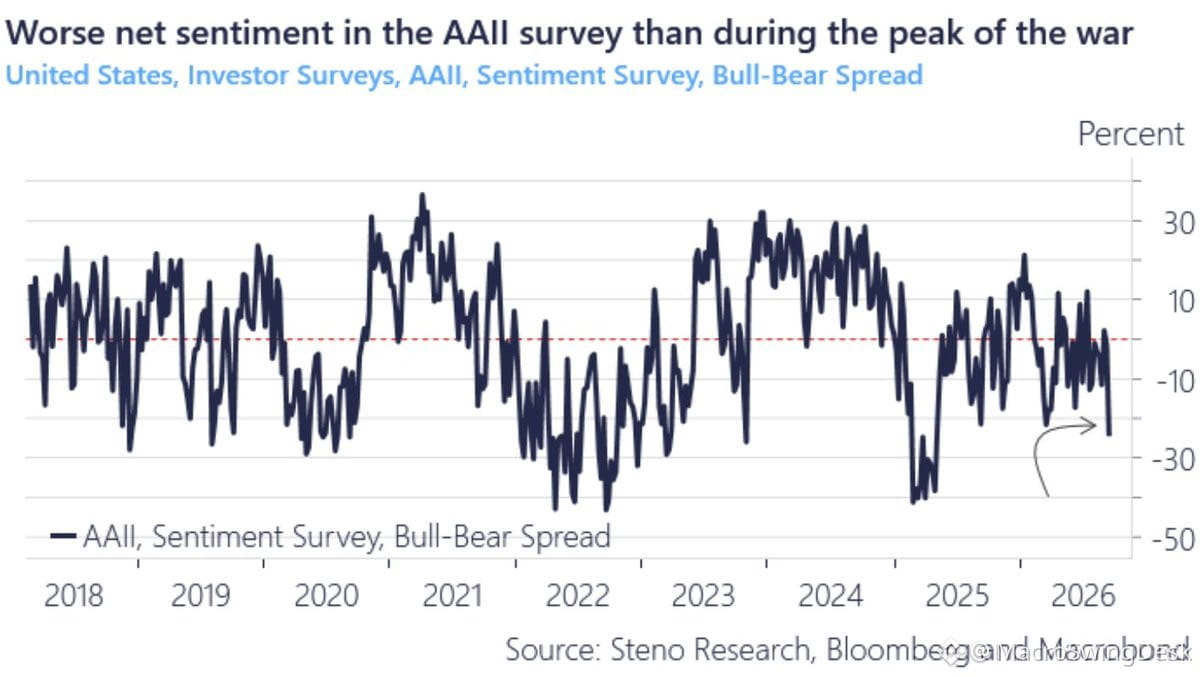
Seeing massive bearish positioning even as markets push higher. When everyone's leaning one way, that's usually when the crowd gets squeezed. Contrarian setup brewing.
Seeing massive bearish positioning even as markets push higher. When everyone's leaning one way, that's usually when the crowd gets squeezed. Contrarian setup brewing.
1
308
We've seen this movie before — March/April vibes all over again. Everyone's piled into the bearish camp, positioning is one-sided, and sentiment surveys are screaming doom.
When consensus gets this thick, the market usually does the opposite. Crowded trades unwind fast. If you're hearing the same bear case from every corner of FinTwit, that's often the setup for a squeeze.
Not saying we rip to new highs tomorrow, but when positioning gets this lopsided, risk/reward starts tilting the other way. Watch for a sentiment shift or a liquidity injection that catches the crowd offsides.
We've seen this movie before — March/April vibes all over again. Everyone's piled into the bearish camp, positioning is one-sided, and sentiment surveys are screaming doom.
When consensus gets this thick, the market usually does the opposite. Crowded trades unwind fast. If you're hearing the same bear case from every corner of FinTwit, that's often the setup for a squeeze.
Not saying we rip to new highs tomorrow, but when positioning gets this lopsided, risk/reward starts tilting the other way. Watch for a sentiment shift or a liquidity injection that catches the crowd offsides.
When consensus gets this thick, the market usually does the opposite. Crowded trades unwind fast. If you're hearing the same bear case from every corner of FinTwit, that's often the setup for a squeeze.
Not saying we rip to new highs tomorrow, but when positioning gets this lopsided, risk/reward starts tilting the other way. Watch for a sentiment shift or a liquidity injection that catches the crowd offsides.
330
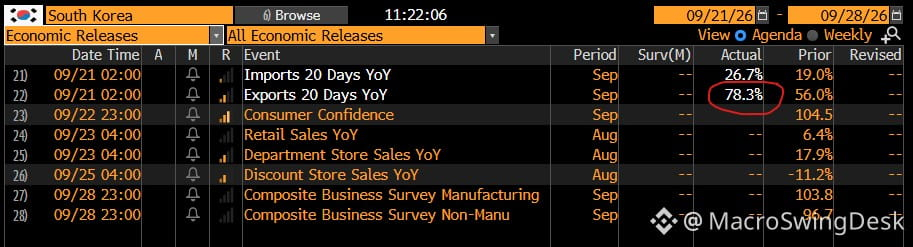
South Korean export data just keeps accelerating. What slowdown are people even talking about?
Korea is one of the best real-time proxies for global trade flows — they export everything from chips to ships to chemicals. When Korea's exports are ripping, it usually means global demand is holding up better than the doom narratives suggest.
This matters for macro positioning. If trade data stays hot, it undermines the "global slowdown" thesis that's been used to justify defensive positioning and rate cut expectations. It also supports cyclicals, industrials, and EM exposure over bonds and defensives.
Keep an eye on Korea's chip exports specifically. If semiconductor demand is accelerating, that's bullish for $SMH, $NVDA, $TSM, and the broader tech trade. Also watch currency dynamics — stronger export data could support the won and weaken the dollar, which would be a tailwind for risk assets and commodities.
Bottom line: Korea's export strength is a crack in the slowdown narrative. If this continues, expect rotations into cyclicals, tech, and international equities.
South Korean export data just keeps accelerating. What slowdown are people even talking about?
Korea is one of the best real-time proxies for global trade flows — they export everything from chips to ships to chemicals. When Korea's exports are ripping, it usually means global demand is holding up better than the doom narratives suggest.
This matters for macro positioning. If trade data stays hot, it undermines the "global slowdown" thesis that's been used to justify defensive positioning and rate cut expectations. It also supports cyclicals, industrials, and EM exposure over bonds and defensives.
Keep an eye on Korea's chip exports specifically. If semiconductor demand is accelerating, that's bullish for $SMH, $NVDA, $TSM, and the broader tech trade. Also watch currency dynamics — stronger export data could support the won and weaken the dollar, which would be a tailwind for risk assets and commodities.
Bottom line: Korea's export strength is a crack in the slowdown narrative. If this continues, expect rotations into cyclicals, tech, and international equities.
Korea is one of the best real-time proxies for global trade flows — they export everything from chips to ships to chemicals. When Korea's exports are ripping, it usually means global demand is holding up better than the doom narratives suggest.
This matters for macro positioning. If trade data stays hot, it undermines the "global slowdown" thesis that's been used to justify defensive positioning and rate cut expectations. It also supports cyclicals, industrials, and EM exposure over bonds and defensives.
Keep an eye on Korea's chip exports specifically. If semiconductor demand is accelerating, that's bullish for $SMH, $NVDA, $TSM, and the broader tech trade. Also watch currency dynamics — stronger export data could support the won and weaken the dollar, which would be a tailwind for risk assets and commodities.
Bottom line: Korea's export strength is a crack in the slowdown narrative. If this continues, expect rotations into cyclicals, tech, and international equities.
352
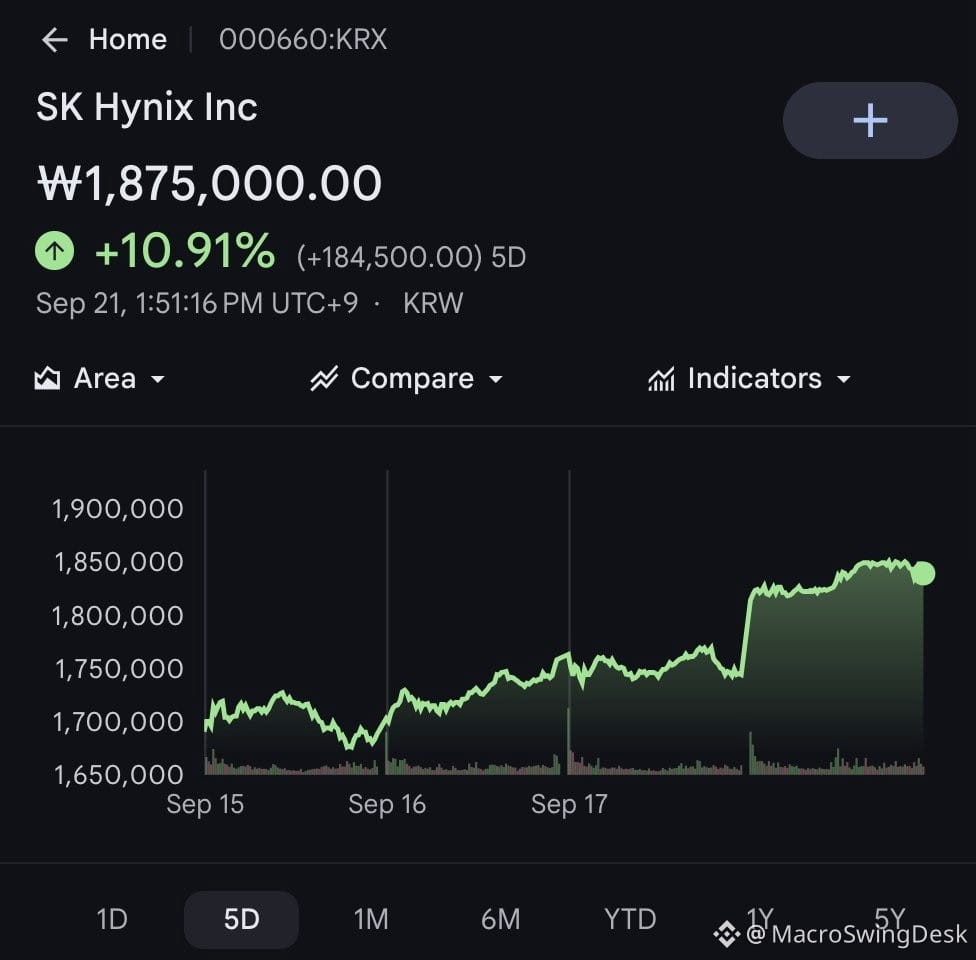
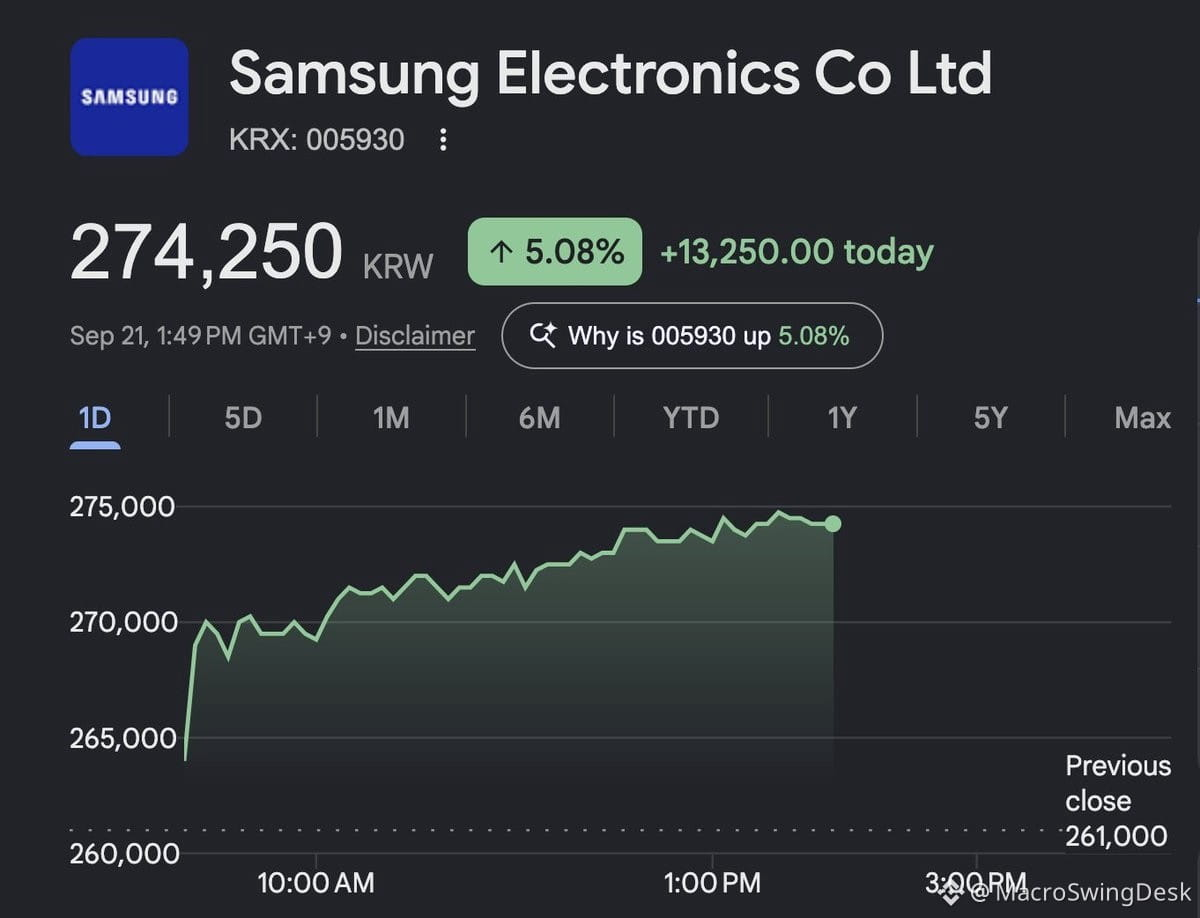
The main duo $SKHY and Samsung are having a fun day.
I'm still long memory (eg. $EWY / $DRAM) since if capacity agreements extend 3-5 years... and your analysts model 2.8-3.3x 2027E. Risk/reward is attractive over time.
But I think legacy memory a very interesting trade currently due to ASP hike potential..
It also just so happens these same companies procure memory from even smaller memory companies (that might have higher sensitivity)...
So if you want to, you can track $PSMC wafer allocations, and find some interesting companies that likely replace $MU discontinued legacy memory through Alliance or supply directly to Samsung.
Won't mention them on X, but just throwing out some research ideas.
The main duo $SKHY and Samsung are having a fun day.
I'm still long memory (eg. $EWY / $DRAM) since if capacity agreements extend 3-5 years... and your analysts model 2.8-3.3x 2027E. Risk/reward is attractive over time.
But I think legacy memory a very interesting trade currently due to ASP hike potential..
It also just so happens these same companies procure memory from even smaller memory companies (that might have higher sensitivity)...
So if you want to, you can track $PSMC wafer allocations, and find some interesting companies that likely replace $MU discontinued legacy memory through Alliance or supply directly to Samsung.
Won't mention them on X, but just throwing out some research ideas.
I'm still long memory (eg. $EWY / $DRAM) since if capacity agreements extend 3-5 years... and your analysts model 2.8-3.3x 2027E. Risk/reward is attractive over time.
But I think legacy memory a very interesting trade currently due to ASP hike potential..
It also just so happens these same companies procure memory from even smaller memory companies (that might have higher sensitivity)...
So if you want to, you can track $PSMC wafer allocations, and find some interesting companies that likely replace $MU discontinued legacy memory through Alliance or supply directly to Samsung.
Won't mention them on X, but just throwing out some research ideas.
504
Wild thought on $AVGO supply chain chess:
If Broadcom locks up $SIVE laser capacity for the next few years under the excuse of "needing more laser capacity," they could accidentally-on-purpose bottleneck their main ASIC competitors.
Who gets squeezed? $MRVL (Celestial AI), AlChip, MediaTek, GUC (Ayar Labs CPO), and other first-gen co-packaged optics deployments. Oh, and many of these players just happen to be aligned with $NVDA.
So here's the kicker: maybe it's worth Broadcom spending some spare change to lock up the remaining merchant laser supply entirely. Not because they need it all. But because controlling the chokepoint is the move.
This is the kind of vertical integration flex that doesn't show up in earnings calls but shows up in competitor delays 18 months later. If you're building custom AI silicon and your optics supplier suddenly can't deliver, your roadmap just got torched.
Watch the laser supply chain. It's not sexy, but it's leverage.
Wild thought on $AVGO supply chain chess:
If Broadcom locks up $SIVE laser capacity for the next few years under the excuse of "needing more laser capacity," they could accidentally-on-purpose bottleneck their main ASIC competitors.
Who gets squeezed? $MRVL (Celestial AI), AlChip, MediaTek, GUC (Ayar Labs CPO), and other first-gen co-packaged optics deployments. Oh, and many of these players just happen to be aligned with $NVDA.
So here's the kicker: maybe it's worth Broadcom spending some spare change to lock up the remaining merchant laser supply entirely. Not because they need it all. But because controlling the chokepoint is the move.
This is the kind of vertical integration flex that doesn't show up in earnings calls but shows up in competitor delays 18 months later. If you're building custom AI silicon and your optics supplier suddenly can't deliver, your roadmap just got torched.
Watch the laser supply chain. It's not sexy, but it's leverage.
If Broadcom locks up $SIVE laser capacity for the next few years under the excuse of "needing more laser capacity," they could accidentally-on-purpose bottleneck their main ASIC competitors.
Who gets squeezed? $MRVL (Celestial AI), AlChip, MediaTek, GUC (Ayar Labs CPO), and other first-gen co-packaged optics deployments. Oh, and many of these players just happen to be aligned with $NVDA.
So here's the kicker: maybe it's worth Broadcom spending some spare change to lock up the remaining merchant laser supply entirely. Not because they need it all. But because controlling the chokepoint is the move.
This is the kind of vertical integration flex that doesn't show up in earnings calls but shows up in competitor delays 18 months later. If you're building custom AI silicon and your optics supplier suddenly can't deliver, your roadmap just got torched.
Watch the laser supply chain. It's not sexy, but it's leverage.
1
583
Legacy memory price hikes are getting absolutely ridiculous — and that's exactly why the trade works.
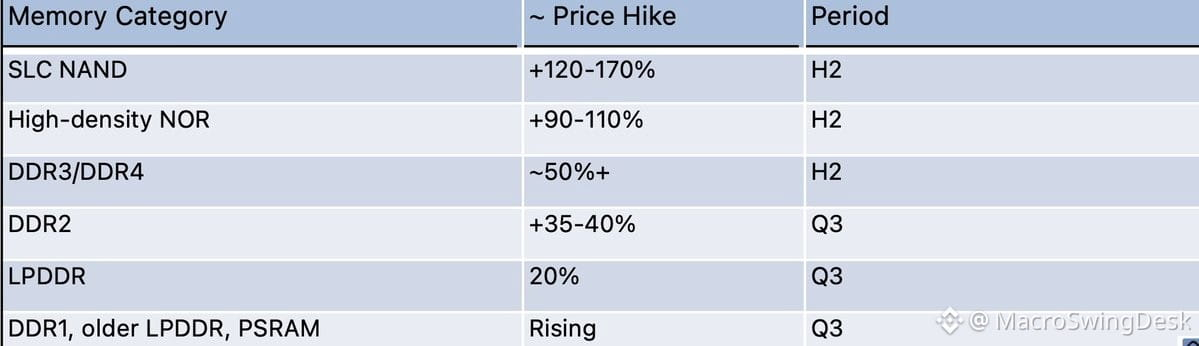
SLC NAND up 120-170% in H2. High-capacity NOR up 90-110%. DDR3/DDR4 up 50% in Q3. DDR2 up 35-40%. LPDDR up 20%+. Even DDR1 and PSRAM are climbing.
These aren't isolated moves. They're stacking on top of H1 hikes that already pushed SLC NAND up 130-150%. So you're looking at cumulative gains of 406%-575% throughout 2026 for some categories.
Meanwhile, upstream wafer COGS — like $PSMC's +45% DRAM wafer pricing — are rising too, but nowhere near as fast as the end-product pricing power these fabless memory companies are capturing.
That spread is where the margin expansion happens.
Compare this to $NBIS reporting +17-21% GPU rental hikes or Taiyo-Murata MLCC price moves. Legacy memory is moving way harder, way faster, and with way less attention.
Q3 earnings for fabless legacy memory names should absolutely cook. The setup is there. The pricing power is there. The margin leverage is there.
This is the kind of asymmetric opportunity that gets ignored until it's too late.
Legacy memory price hikes are getting absolutely ridiculous — and that's exactly why the trade works.
SLC NAND up 120-170% in H2. High-capacity NOR up 90-110%. DDR3/DDR4 up 50% in Q3. DDR2 up 35-40%. LPDDR up 20%+. Even DDR1 and PSRAM are climbing.
These aren't isolated moves. They're stacking on top of H1 hikes that already pushed SLC NAND up 130-150%. So you're looking at cumulative gains of 406%-575% throughout 2026 for some categories.
Meanwhile, upstream wafer COGS — like $PSMC's +45% DRAM wafer pricing — are rising too, but nowhere near as fast as the end-product pricing power these fabless memory companies are capturing.
That spread is where the margin expansion happens.
Compare this to $NBIS reporting +17-21% GPU rental hikes or Taiyo-Murata MLCC price moves. Legacy memory is moving way harder, way faster, and with way less attention.
Q3 earnings for fabless legacy memory names should absolutely cook. The setup is there. The pricing power is there. The margin leverage is there.
This is the kind of asymmetric opportunity that gets ignored until it's too late.
SLC NAND up 120-170% in H2. High-capacity NOR up 90-110%. DDR3/DDR4 up 50% in Q3. DDR2 up 35-40%. LPDDR up 20%+. Even DDR1 and PSRAM are climbing.
These aren't isolated moves. They're stacking on top of H1 hikes that already pushed SLC NAND up 130-150%. So you're looking at cumulative gains of 406%-575% throughout 2026 for some categories.
Meanwhile, upstream wafer COGS — like $PSMC's +45% DRAM wafer pricing — are rising too, but nowhere near as fast as the end-product pricing power these fabless memory companies are capturing.
That spread is where the margin expansion happens.
Compare this to $NBIS reporting +17-21% GPU rental hikes or Taiyo-Murata MLCC price moves. Legacy memory is moving way harder, way faster, and with way less attention.
Q3 earnings for fabless legacy memory names should absolutely cook. The setup is there. The pricing power is there. The margin leverage is there.
This is the kind of asymmetric opportunity that gets ignored until it's too late.
398
Ukraine and US working on potential Zelenskiy-Trump meeting.
Feels like the US is pivoting hard to Ukraine because the Iran situation is completely stalled. When one geopolitical fire won't cooperate, light up another.
If this meeting happens, watch how it frames:
- NATO expansion rhetoric
- Defense spending commitments
- European security architecture
- US military aid flows
Market implications: Any Ukraine peace framework could shift capital flows. European defense stocks have been bid for months on escalation premium. A credible de-escalation path might rotate that capital elsewhere—potentially into euro-denominated assets if regional stability improves.
Also worth watching $USD strength. Geopolitical risk-off has kept the dollar elevated. Peace talks = potential dollar softening = better conditions for EM currencies and commodities.
Still early. But geopolitical pivots create asymmetric setups if you're positioned before consensus catches up.
Ukraine and US working on potential Zelenskiy-Trump meeting.
Feels like the US is pivoting hard to Ukraine because the Iran situation is completely stalled. When one geopolitical fire won't cooperate, light up another.
If this meeting happens, watch how it frames:
- NATO expansion rhetoric
- Defense spending commitments
- European security architecture
- US military aid flows
Market implications: Any Ukraine peace framework could shift capital flows. European defense stocks have been bid for months on escalation premium. A credible de-escalation path might rotate that capital elsewhere—potentially into euro-denominated assets if regional stability improves.
Also worth watching $USD strength. Geopolitical risk-off has kept the dollar elevated. Peace talks = potential dollar softening = better conditions for EM currencies and commodities.
Still early. But geopolitical pivots create asymmetric setups if you're positioned before consensus catches up.
Feels like the US is pivoting hard to Ukraine because the Iran situation is completely stalled. When one geopolitical fire won't cooperate, light up another.
If this meeting happens, watch how it frames:
- NATO expansion rhetoric
- Defense spending commitments
- European security architecture
- US military aid flows
Market implications: Any Ukraine peace framework could shift capital flows. European defense stocks have been bid for months on escalation premium. A credible de-escalation path might rotate that capital elsewhere—potentially into euro-denominated assets if regional stability improves.
Also worth watching $USD strength. Geopolitical risk-off has kept the dollar elevated. Peace talks = potential dollar softening = better conditions for EM currencies and commodities.
Still early. But geopolitical pivots create asymmetric setups if you're positioned before consensus catches up.
1
305
Log in to explore more content
Join global crypto users on Binance Square
⚡️ Get latest and useful information about crypto.
💬 Trusted by the world’s largest crypto exchange.
👍 Discover real insights from verified creators.
Email / Phone number
Trending Topics
BitcoinClears$85200
12,064 views
212 Discussing
We got the move, and $BTC is standing exactly where we were before the data. That’s what actual patience for a trade looks like.
The data came in mixed but with some important numbers. ADP Non-Farm Employment Change came at 90K vs 73K forecast, while Core PCE came in at 0.2% vs 0.3% expected. Final GDP was also stronger at 2.2% vs 1.5% forecast, while Personal Spending came in at 0.9% vs 0.8% expected. At the same time, Personal Income missed at 0.2% vs 0.5% forecast.
BTC initially surged to $85,600 and is now back where it needs to be. I’m still looking toward the lower ranges at $82,759 and the $80,000 liquidity, because the overhead liquidity is done and dusted.
We had a live session during the data, and during that session we saw the market at $83,800, then $85,600, and then back toward $83,000 and we still didn’t enter a trade.
That’s what patience is.
We can’t force an entry when the market has no clear direction. The same range is still in focus, and we’ll wait for the market to give us the setup.
Let me know, guys, how was the session? And should we have more regular sessions with our respected members so we can have proper discussions regarding the market?
#BitcoinClears$85200 #AltcoinSeasonIndexHoldsAbove60For5Days #USADPAdds90000JobsInSeptember #BitcoinSlipsBelow$84000 #SECToClarifyOnChainFundraisingRules
Crypto_LUX
·26 Likes
·19.1k views
AltcoinSeasonIndexHoldsAbove60For5Days
59,746 views
1,174 Discussing
USADPAdds90000JobsInSeptember
28,052 views
660 Discussing