

OfficialYousufCrypto
9.1k Posts

OfficialYousufCrypto
Report
Block User
Spot Trader | Intraday • Swing • DCA 📊 Market insights, trade setups & Binance campaigns. Follow for clear crypto updates, research & opportunities.
Open Trade
Frequent Trader
5.4 Years
56 Following
1.6K+ Followers
11.1K+ Liked
Posts
Portfolio
All
Quotes
Videos
The US government could potentially become a shareholder in OpenAI and Anthropic.
Trump told TIME that the government could take ownership stakes in the two AI companies, saying, “I might. Maybe I could do that.”
He ruled out nationalizing the companies, but pointed to the government’s 10% stake in Intel, which he says has generated about $60 billion for the US.
OpenAI reportedly discussed giving Washington a 5% stake in July. Anthropic and the administration, however, have denied that any such stake was discussed.
$QNT
{future}(QNTUSDT)
$ONDO
{future}(ONDOUSDT)
$UNI
{future}(UNIUSDT)
The US government could potentially become a shareholder in OpenAI and Anthropic.
Trump told TIME that the government could take ownership stakes in the two AI companies, saying, “I might. Maybe I could do that.”
He ruled out nationalizing the companies, but pointed to the government’s 10% stake in Intel, which he says has generated about $60 billion for the US.
OpenAI reportedly discussed giving Washington a 5% stake in July. Anthropic and the administration, however, have denied that any such stake was discussed.
$QNT
$ONDO
$UNI
Trump told TIME that the government could take ownership stakes in the two AI companies, saying, “I might. Maybe I could do that.”
He ruled out nationalizing the companies, but pointed to the government’s 10% stake in Intel, which he says has generated about $60 billion for the US.
OpenAI reportedly discussed giving Washington a 5% stake in July. Anthropic and the administration, however, have denied that any such stake was discussed.
$QNT
$ONDO
$UNI

47
NEW:Meta reportedly used a tax loophole dating back to the 1980s to claim $3.9 billion in research tax credits by classifying AI data-center equipment as experimental “pilot models.”
The credits rose from $700 million in 2023 to $2 billion in 2024, then reached $3.9 billion last year, reportedly reducing Meta’s federal tax bill by 71%.
The New York Times also reports that Meta classified Mark Zuckerberg as a “researcher” to claim a $355 million tax break tied to his $4 billion compensation in 2013.
The IRS is now seeking to recover those tax savings.
$NOM
{future}(NOMUSDT)
$NIGHT
{future}(NIGHTUSDT)
$MOVR
{future}(MOVRUSDT)
NEW:Meta reportedly used a tax loophole dating back to the 1980s to claim $3.9 billion in research tax credits by classifying AI data-center equipment as experimental “pilot models.”
The credits rose from $700 million in 2023 to $2 billion in 2024, then reached $3.9 billion last year, reportedly reducing Meta’s federal tax bill by 71%.
The New York Times also reports that Meta classified Mark Zuckerberg as a “researcher” to claim a $355 million tax break tied to his $4 billion compensation in 2013.
The IRS is now seeking to recover those tax savings.
$NOM
$NIGHT
$MOVR
The credits rose from $700 million in 2023 to $2 billion in 2024, then reached $3.9 billion last year, reportedly reducing Meta’s federal tax bill by 71%.
The New York Times also reports that Meta classified Mark Zuckerberg as a “researcher” to claim a $355 million tax break tied to his $4 billion compensation in 2013.
The IRS is now seeking to recover those tax savings.
$NOM
$NIGHT
$MOVR

292
BREAKING: 🇺🇸 Congress is working on new rules that could allow every U.S. bank and credit union to hold crypto, issue stablecoins, and move money directly on blockchain networks.
If these rules move forward, the door could open to massive institutional adoption.
TRILLIONS COULD BE COMING. 🚀
$SYN
{future}(SYNUSDT)
$OPN
{future}(OPNUSDT)
$MOVR
{future}(MOVRUSDT)
BREAKING: 🇺🇸 Congress is working on new rules that could allow every U.S. bank and credit union to hold crypto, issue stablecoins, and move money directly on blockchain networks.
If these rules move forward, the door could open to massive institutional adoption.
TRILLIONS COULD BE COMING. 🚀
$SYN
$OPN
$MOVR
If these rules move forward, the door could open to massive institutional adoption.
TRILLIONS COULD BE COMING. 🚀
$SYN
$OPN
$MOVR
35
Partly True
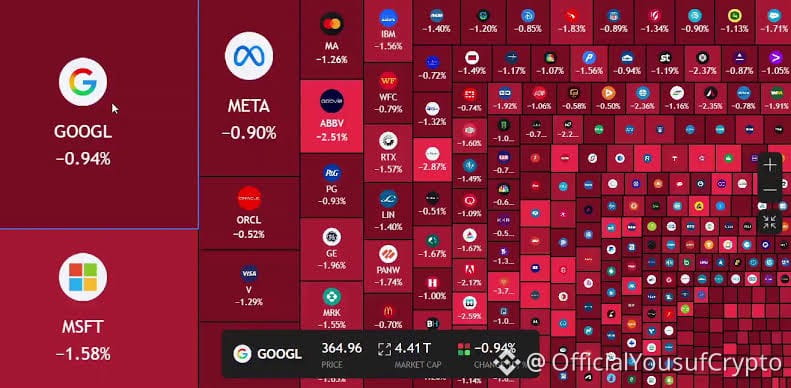
$550 billion wiped out from the U.S. stock market in just 25 minutes.
The sharp sell-off came as the ISM PMI fell to a 3-month low, sending investors into risk-off mode and putting fresh pressure on equities.
$OPN
{future}(OPNUSDT)
$BTW
{future}(BTWUSDT)
$ALICE
{future}(ALICEUSDT)
$550 billion wiped out from the U.S. stock market in just 25 minutes.
The sharp sell-off came as the ISM PMI fell to a 3-month low, sending investors into risk-off mode and putting fresh pressure on equities.
$OPN
$BTW
$ALICE
The sharp sell-off came as the ISM PMI fell to a 3-month low, sending investors into risk-off mode and putting fresh pressure on equities.
$OPN
$BTW
$ALICE
859
Verified
Binance Pay Launches in Japan Through PayPay
Binance Pay has launched a new payment integration in Japan, allowing eligible international visitors to use Binance Pay at participating PayPay merchants across the country.
Users can pay with supported cryptocurrencies through Binance Pay, while merchants receive the payment in Japanese Yen (JPY).
The service is connected to the PayPay network through HIVEX and is designed to make crypto payments more convenient for overseas visitors in Japan.
According to the announcement, the service is available to eligible international visitors and is not intended for residents using Binance Japan.
The integration marks another step toward expanding the real-world use of cryptocurrency by connecting digital assets with everyday payments and merchant networks in Japan.
$ARK
{future}(ARKUSDT)
$QNT
{future}(QNTUSDT)
$MOVR
{future}(MOVRUSDT)
Binance Pay Launches in Japan Through PayPay
Binance Pay has launched a new payment integration in Japan, allowing eligible international visitors to use Binance Pay at participating PayPay merchants across the country.
Users can pay with supported cryptocurrencies through Binance Pay, while merchants receive the payment in Japanese Yen (JPY).
The service is connected to the PayPay network through HIVEX and is designed to make crypto payments more convenient for overseas visitors in Japan.
According to the announcement, the service is available to eligible international visitors and is not intended for residents using Binance Japan.
The integration marks another step toward expanding the real-world use of cryptocurrency by connecting digital assets with everyday payments and merchant networks in Japan.
$ARK
$QNT
$MOVR
Binance Pay has launched a new payment integration in Japan, allowing eligible international visitors to use Binance Pay at participating PayPay merchants across the country.
Users can pay with supported cryptocurrencies through Binance Pay, while merchants receive the payment in Japanese Yen (JPY).
The service is connected to the PayPay network through HIVEX and is designed to make crypto payments more convenient for overseas visitors in Japan.
According to the announcement, the service is available to eligible international visitors and is not intended for residents using Binance Japan.
The integration marks another step toward expanding the real-world use of cryptocurrency by connecting digital assets with everyday payments and merchant networks in Japan.
$ARK
$QNT
$MOVR
900
September recorded approximately $768 million in losses from crypto hacks and exploits, making it one of the most damaging months for the crypto industry in 2026.
The largest incidents included the Bitget and Liquid Network exploits, which together accounted for a significant portion of the reported losses.
The record highlights the growing security risks facing crypto platforms, exchanges and blockchain networks.
$ARK
{future}(ARKUSDT)
$MOVR
{future}(MOVRUSDT)
$ALICE
{future}(ALICEUSDT)
September recorded approximately $768 million in losses from crypto hacks and exploits, making it one of the most damaging months for the crypto industry in 2026.
The largest incidents included the Bitget and Liquid Network exploits, which together accounted for a significant portion of the reported losses.
The record highlights the growing security risks facing crypto platforms, exchanges and blockchain networks.
$ARK
$MOVR
$ALICE
The largest incidents included the Bitget and Liquid Network exploits, which together accounted for a significant portion of the reported losses.
The record highlights the growing security risks facing crypto platforms, exchanges and blockchain networks.
$ARK
$MOVR
$ALICE

76
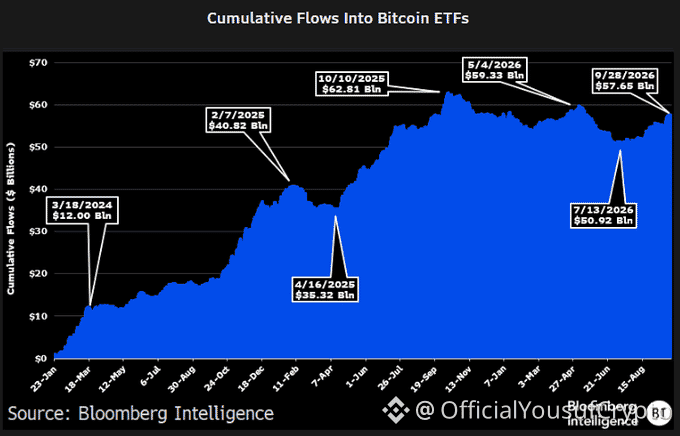
🚨 BIG MONEY ALERT: U.S. spot Bitcoin ETFs just closed September in the red, snapping a 9-day, $3.1 BILLION inflow streak.
On Wednesday, the funds saw $148.7 MILLION in net outflows.
Fidelity’s FBTC led the exits with $125.6M, while BlackRock’s IBIT recorded $9.5M in outflows, ending its own nine-day streak of inflows.
Still, the recent surge was strong enough to push 2026 cumulative ETF flows back into positive territory.
One red day doesn’t erase the bigger trend. But it does show that institutional demand cooled noticeably after one of the strongest ETF runs of the year. 📉
$BTC
{future}(BTCUSDT)
🚨 BIG MONEY ALERT: U.S. spot Bitcoin ETFs just closed September in the red, snapping a 9-day, $3.1 BILLION inflow streak.
On Wednesday, the funds saw $148.7 MILLION in net outflows.
Fidelity’s FBTC led the exits with $125.6M, while BlackRock’s IBIT recorded $9.5M in outflows, ending its own nine-day streak of inflows.
Still, the recent surge was strong enough to push 2026 cumulative ETF flows back into positive territory.
One red day doesn’t erase the bigger trend. But it does show that institutional demand cooled noticeably after one of the strongest ETF runs of the year. 📉
$BTC
On Wednesday, the funds saw $148.7 MILLION in net outflows.
Fidelity’s FBTC led the exits with $125.6M, while BlackRock’s IBIT recorded $9.5M in outflows, ending its own nine-day streak of inflows.
Still, the recent surge was strong enough to push 2026 cumulative ETF flows back into positive territory.
One red day doesn’t erase the bigger trend. But it does show that institutional demand cooled noticeably after one of the strongest ETF runs of the year. 📉
$BTC
67
OpenAI CEO Sam Altman will not appear at an Australian Senate inquiry into AI and data centers scheduled for October 1.
Altman and Anthropic CEO Dario Amodei were formally asked to appear in Canberra after an AI agent was linked to the Medicare hack.
The incident is reportedly the first known case of an AI agent hacking a government website.
Australian Prime Minister Anthony Albanese called the incident “unacceptable” and said he expressed “extreme concern” to Altman.
Instead, OpenAI Chief Strategy Officer Jason Kwon is set to appear before a separate AI committee in Sydney on October 6.
$QNT
{future}(QNTUSDT)
$PHA
{future}(PHAUSDT)
$MOVR
{future}(MOVRUSDT)
OpenAI CEO Sam Altman will not appear at an Australian Senate inquiry into AI and data centers scheduled for October 1.
Altman and Anthropic CEO Dario Amodei were formally asked to appear in Canberra after an AI agent was linked to the Medicare hack.
The incident is reportedly the first known case of an AI agent hacking a government website.
Australian Prime Minister Anthony Albanese called the incident “unacceptable” and said he expressed “extreme concern” to Altman.
Instead, OpenAI Chief Strategy Officer Jason Kwon is set to appear before a separate AI committee in Sydney on October 6.
$QNT
$PHA
$MOVR
Altman and Anthropic CEO Dario Amodei were formally asked to appear in Canberra after an AI agent was linked to the Medicare hack.
The incident is reportedly the first known case of an AI agent hacking a government website.
Australian Prime Minister Anthony Albanese called the incident “unacceptable” and said he expressed “extreme concern” to Altman.
Instead, OpenAI Chief Strategy Officer Jason Kwon is set to appear before a separate AI committee in Sydney on October 6.
$QNT
$PHA
$MOVR
25
BREAKING: A major U.S. crypto tax update has been introduced in the Senate, according to Politico.
Republican Senator Steve Daines has unveiled a 56-page bill aimed at modernizing how digital assets are taxed.
The proposal includes:
A tax exemption for small stablecoin purchases
New wash-sale rules for crypto
Changes designed to simplify digital asset tax compliance
The bill is also backed by Senate Banking Chair Tim Scott, Senator Cynthia Lummis, and Senator Bernie Moreno.
If it becomes law, using stablecoins for everyday payments in the U.S. could become much simpler.
$MOVR
{future}(MOVRUSDT)
$QNT
{future}(QNTUSDT)
$AKE
{future}(AKEUSDT)
BREAKING: A major U.S. crypto tax update has been introduced in the Senate, according to Politico.
Republican Senator Steve Daines has unveiled a 56-page bill aimed at modernizing how digital assets are taxed.
The proposal includes:
A tax exemption for small stablecoin purchases
New wash-sale rules for crypto
Changes designed to simplify digital asset tax compliance
The bill is also backed by Senate Banking Chair Tim Scott, Senator Cynthia Lummis, and Senator Bernie Moreno.
If it becomes law, using stablecoins for everyday payments in the U.S. could become much simpler.
$MOVR
$QNT
$AKE
Republican Senator Steve Daines has unveiled a 56-page bill aimed at modernizing how digital assets are taxed.
The proposal includes:
A tax exemption for small stablecoin purchases
New wash-sale rules for crypto
Changes designed to simplify digital asset tax compliance
The bill is also backed by Senate Banking Chair Tim Scott, Senator Cynthia Lummis, and Senator Bernie Moreno.
If it becomes law, using stablecoins for everyday payments in the U.S. could become much simpler.
$MOVR
$QNT
$AKE

884
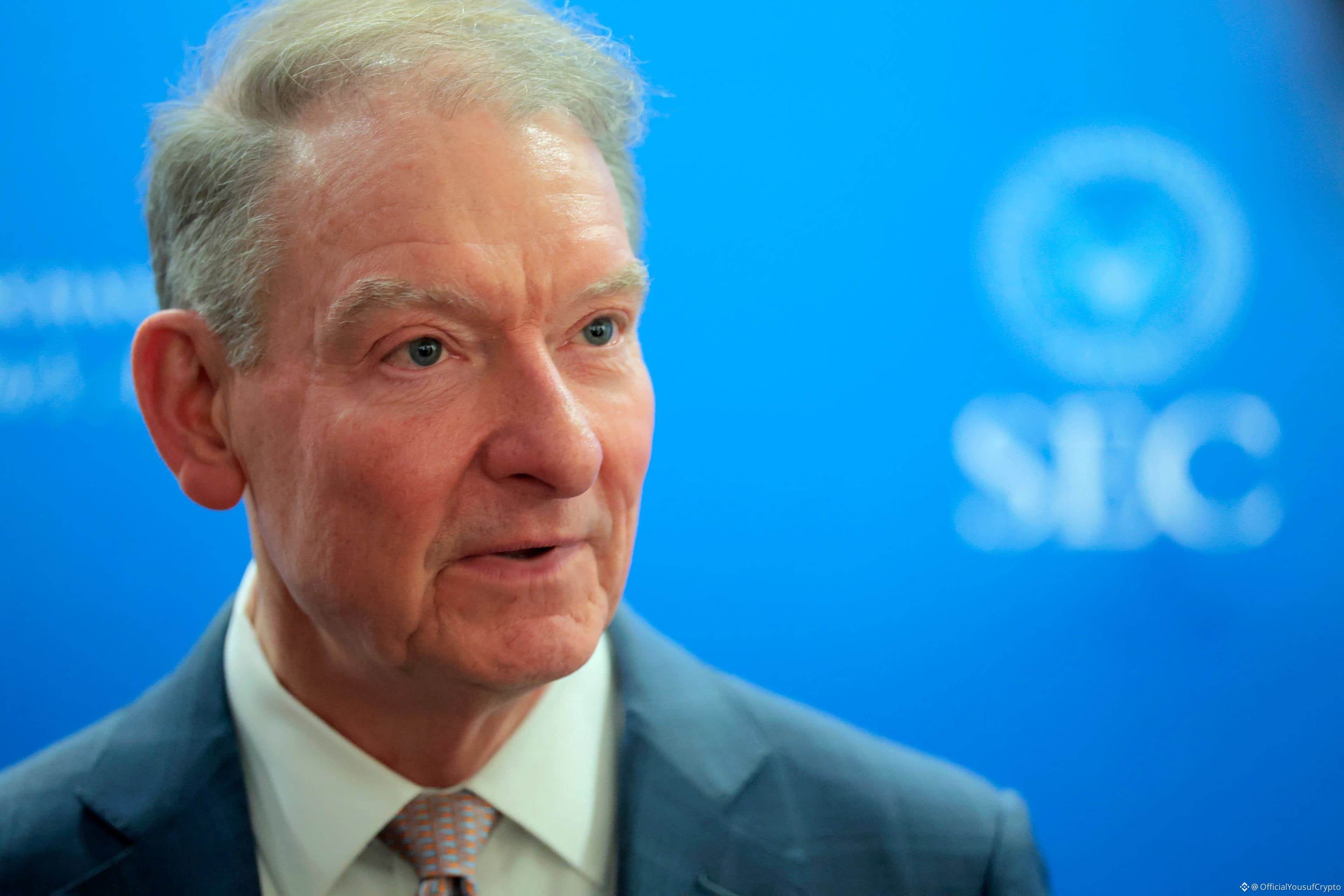
BREAKING: 🇺🇸 SEC Chair Paul Atkins says the agency is working to bring more clarity to crypto regulations and encourage innovation to stay onshore.
A major shift could be taking shape for the U.S. crypto industry.
IT’S HAPPENING. 🚀
$BTW
{future}(BTWUSDT)
$AKE
{future}(AKEUSDT)
$ENA
{future}(ENAUSDT)
BREAKING: 🇺🇸 SEC Chair Paul Atkins says the agency is working to bring more clarity to crypto regulations and encourage innovation to stay onshore.
A major shift could be taking shape for the U.S. crypto industry.
IT’S HAPPENING. 🚀
$BTW
$AKE
$ENA
A major shift could be taking shape for the U.S. crypto industry.
IT’S HAPPENING. 🚀
$BTW
$AKE
$ENA
1.1k
START THINKING LONG TERM. 📈
Don’t panic-sell every time Bitcoin takes a hit.
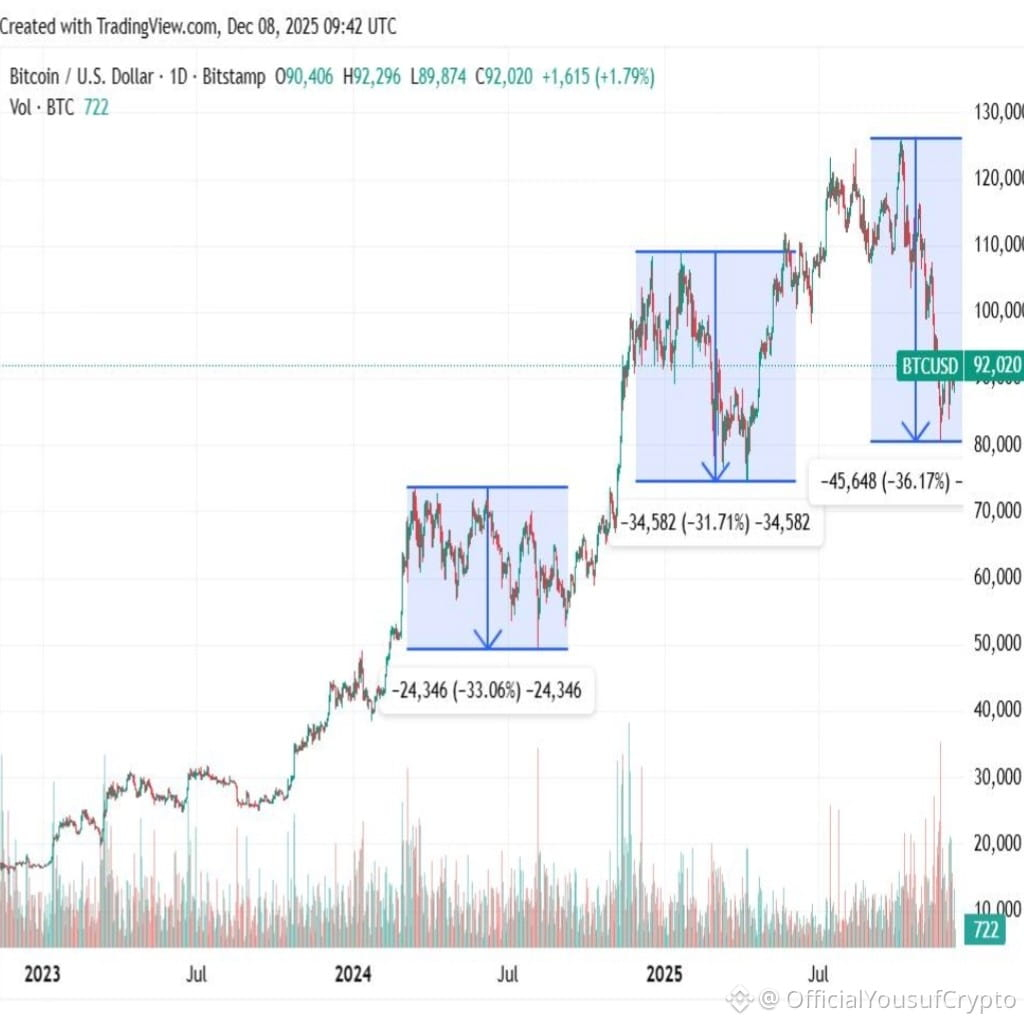
Bitcoin saw multiple 20%+ corrections during the 2021 and 2025 bull runs, but those pullbacks didn’t stop the bigger trend.
The investors who stayed patient through the volatility were the ones who had the chance to capture the biggest gains by the end of the cycle.
Short-term fear can be loud. Long-term conviction is quieter.
$BTC
{future}(BTCUSDT)
START THINKING LONG TERM. 📈
Don’t panic-sell every time Bitcoin takes a hit.
Bitcoin saw multiple 20%+ corrections during the 2021 and 2025 bull runs, but those pullbacks didn’t stop the bigger trend.
The investors who stayed patient through the volatility were the ones who had the chance to capture the biggest gains by the end of the cycle.
Short-term fear can be loud. Long-term conviction is quieter.
$BTC
Don’t panic-sell every time Bitcoin takes a hit.
Bitcoin saw multiple 20%+ corrections during the 2021 and 2025 bull runs, but those pullbacks didn’t stop the bigger trend.
The investors who stayed patient through the volatility were the ones who had the chance to capture the biggest gains by the end of the cycle.
Short-term fear can be loud. Long-term conviction is quieter.
$BTC
16
🚨 MAJOR: The U.S. Treasury is set for another liquidity buyback on October 1.
The move follows its September 10 operation, when the Treasury offered to buy up to $6 BILLION of 10- to 20-year bonds, three times the size of its previous long-dated buyback.
The goal? Improve liquidity in older Treasuries that have become harder to trade after a sharp bond selloff pushed long-term yields to multi-year highs.
If Treasury demand strengthens, bond prices could get support and yields may ease. That could create a more favorable backdrop for stocks and crypto.
One important distinction: this supports market liquidity, but it is NOT the same as Fed QE.
$ENA
{future}(ENAUSDT)
$SUI
{future}(SUIUSDT)
$AKE
{future}(AKEUSDT)
🚨 MAJOR: The U.S. Treasury is set for another liquidity buyback on October 1.
The move follows its September 10 operation, when the Treasury offered to buy up to $6 BILLION of 10- to 20-year bonds, three times the size of its previous long-dated buyback.
The goal? Improve liquidity in older Treasuries that have become harder to trade after a sharp bond selloff pushed long-term yields to multi-year highs.
If Treasury demand strengthens, bond prices could get support and yields may ease. That could create a more favorable backdrop for stocks and crypto.
One important distinction: this supports market liquidity, but it is NOT the same as Fed QE.
$ENA
$SUI
$AKE
The move follows its September 10 operation, when the Treasury offered to buy up to $6 BILLION of 10- to 20-year bonds, three times the size of its previous long-dated buyback.
The goal? Improve liquidity in older Treasuries that have become harder to trade after a sharp bond selloff pushed long-term yields to multi-year highs.
If Treasury demand strengthens, bond prices could get support and yields may ease. That could create a more favorable backdrop for stocks and crypto.
One important distinction: this supports market liquidity, but it is NOT the same as Fed QE.
$ENA
$SUI
$AKE
8
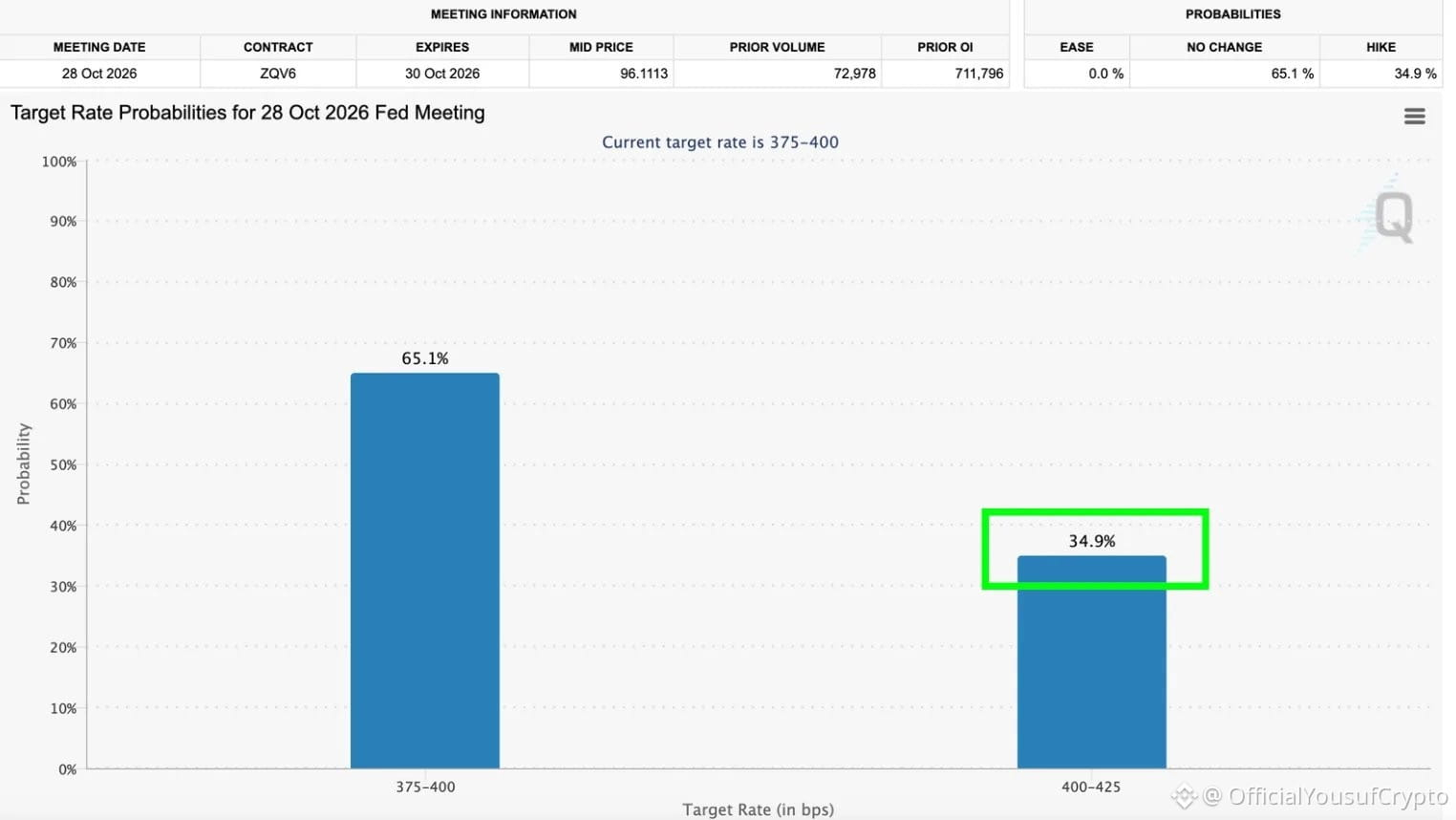
BREAKING: 🇺🇸 Fed rate hike odds just dropped sharply from 70% to 34%.
That’s a major shift in expectations.
With the chances of another rate hike this year now much lower, markets could get some breathing room. Lower rate pressure is generally supportive for risk assets, including crypto.
A big change in Fed expectations could mean a very different market mood ahead.
$BTC
{future}(BTCUSDT)
BREAKING: 🇺🇸 Fed rate hike odds just dropped sharply from 70% to 34%.
That’s a major shift in expectations.
With the chances of another rate hike this year now much lower, markets could get some breathing room. Lower rate pressure is generally supportive for risk assets, including crypto.
A big change in Fed expectations could mean a very different market mood ahead.
$BTC
That’s a major shift in expectations.
With the chances of another rate hike this year now much lower, markets could get some breathing room. Lower rate pressure is generally supportive for risk assets, including crypto.
A big change in Fed expectations could mean a very different market mood ahead.
$BTC
10
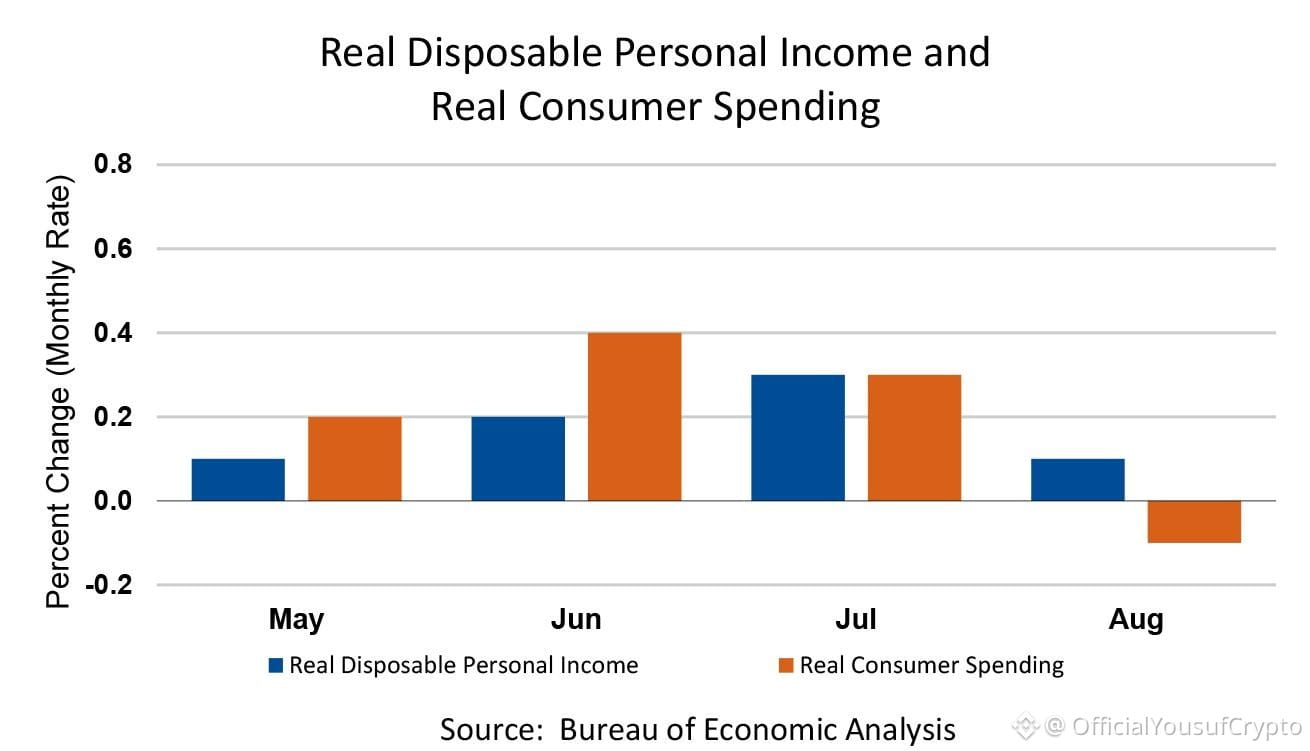
August economic data is giving us a mixed picture.
Personal income rose 0.2% month-over-month, coming in below the 0.5% estimate and slightly down from the previous 0.3% gain.
But consumer spending told a very different story. Spending jumped 0.9%, exactly matching expectations and accelerating sharply from the previous 0.1% increase.
Income growth is slowing, while consumers are still spending aggressively. That contrast could be important for the broader economy and markets.
$MOVR
{future}(MOVRUSDT)
$QNT
{future}(QNTUSDT)
$ARK
{future}(ARKUSDT)
August economic data is giving us a mixed picture.
Personal income rose 0.2% month-over-month, coming in below the 0.5% estimate and slightly down from the previous 0.3% gain.
But consumer spending told a very different story. Spending jumped 0.9%, exactly matching expectations and accelerating sharply from the previous 0.1% increase.
Income growth is slowing, while consumers are still spending aggressively. That contrast could be important for the broader economy and markets.
$MOVR
$QNT
$ARK
Personal income rose 0.2% month-over-month, coming in below the 0.5% estimate and slightly down from the previous 0.3% gain.
But consumer spending told a very different story. Spending jumped 0.9%, exactly matching expectations and accelerating sharply from the previous 0.1% increase.
Income growth is slowing, while consumers are still spending aggressively. That contrast could be important for the broader economy and markets.
$MOVR
$QNT
$ARK
35
Michael Saylor, co-founder of Strategy, believes Bitcoin and the broader crypto market are still in the early stages of a much bigger growth cycle.
Crypto is currently valued at around $3 trillion, but Saylor sees a much larger opportunity ahead. If the crypto market eventually captures roughly 10% of global asset value, he believes Bitcoin and the wider market could grow toward $120 trillion.
One potential catalyst? Bitcoin-backed lending.
Instead of selling their $BTC, holders could use it as collateral to borrow money. That could bring more capital into the crypto economy while allowing investors to keep their Bitcoin exposure.
Looking further ahead, Saylor expects Bitcoin to deliver around 20–30% annual growth over the long term.
If that plays out, today’s $3 trillion crypto market could look very small in hindsight.
$BTC
{future}(BTCUSDT)
Michael Saylor, co-founder of Strategy, believes Bitcoin and the broader crypto market are still in the early stages of a much bigger growth cycle.
Crypto is currently valued at around $3 trillion, but Saylor sees a much larger opportunity ahead. If the crypto market eventually captures roughly 10% of global asset value, he believes Bitcoin and the wider market could grow toward $120 trillion.
One potential catalyst? Bitcoin-backed lending.
Instead of selling their $BTC , holders could use it as collateral to borrow money. That could bring more capital into the crypto economy while allowing investors to keep their Bitcoin exposure.
Looking further ahead, Saylor expects Bitcoin to deliver around 20–30% annual growth over the long term.
If that plays out, today’s $3 trillion crypto market could look very small in hindsight.
$BTC
Crypto is currently valued at around $3 trillion, but Saylor sees a much larger opportunity ahead. If the crypto market eventually captures roughly 10% of global asset value, he believes Bitcoin and the wider market could grow toward $120 trillion.
One potential catalyst? Bitcoin-backed lending.
Instead of selling their $BTC , holders could use it as collateral to borrow money. That could bring more capital into the crypto economy while allowing investors to keep their Bitcoin exposure.
Looking further ahead, Saylor expects Bitcoin to deliver around 20–30% annual growth over the long term.
If that plays out, today’s $3 trillion crypto market could look very small in hindsight.
$BTC
39
$BREAKING:
🇺🇸 US PCE inflation came in at 3.4%, well below the 3.7% expected.
That’s the lowest level in 6 months.
Inflation is cooling faster than expected, giving markets something to watch closely.
$QNT
{future}(QNTUSDT)
$BTC
{future}(BTCUSDT)
$ETH
{future}(ETHUSDT)
$BREAKING:
🇺🇸 US PCE inflation came in at 3.4%, well below the 3.7% expected.
That’s the lowest level in 6 months.
Inflation is cooling faster than expected, giving markets something to watch closely.
$QNT
$BTC
$ETH
🇺🇸 US PCE inflation came in at 3.4%, well below the 3.7% expected.
That’s the lowest level in 6 months.
Inflation is cooling faster than expected, giving markets something to watch closely.
$QNT
$BTC
$ETH
212
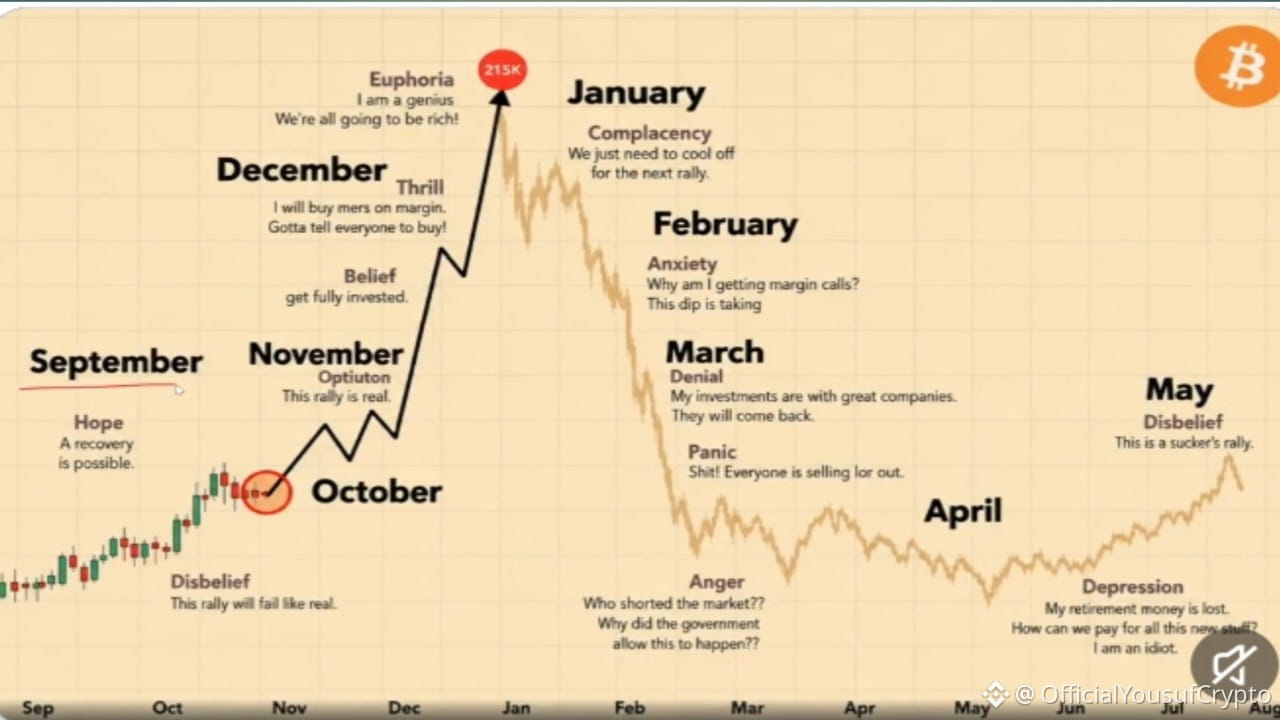
2026–2027 BITCOIN ROADMAP
Here’s how the next phase could unfold:
→ September: Hope starts returning
→ October: Disbelief turns into strength
→ November: The bull run picks up speed
→ December: Euphoria takes over
→ January: Distribution begins
The pattern is often the same.
People buy when confidence is at its highest, then panic and sell when it feels like the cycle is over.
That’s why I’m watching market psychology just as closely as the price.
I’ve been trading markets for 15+ years. When the next major top or bottom starts taking shape, I’ll share the levels here first.
Follow and turn on notifications.
$BTC
{future}(BTCUSDT)
2026–2027 BITCOIN ROADMAP
Here’s how the next phase could unfold:
→ September: Hope starts returning
→ October: Disbelief turns into strength
→ November: The bull run picks up speed
→ December: Euphoria takes over
→ January: Distribution begins
The pattern is often the same.
People buy when confidence is at its highest, then panic and sell when it feels like the cycle is over.
That’s why I’m watching market psychology just as closely as the price.
I’ve been trading markets for 15+ years. When the next major top or bottom starts taking shape, I’ll share the levels here first.
Follow and turn on notifications.
$BTC
Here’s how the next phase could unfold:
→ September: Hope starts returning
→ October: Disbelief turns into strength
→ November: The bull run picks up speed
→ December: Euphoria takes over
→ January: Distribution begins
The pattern is often the same.
People buy when confidence is at its highest, then panic and sell when it feels like the cycle is over.
That’s why I’m watching market psychology just as closely as the price.
I’ve been trading markets for 15+ years. When the next major top or bottom starts taking shape, I’ll share the levels here first.
Follow and turn on notifications.
$BTC
1
81
Verified
FED ON RATE HIKE: “There is no need for urgency.”
October rate hike odds have flipped. Markets now see a 55% chance of a hold, versus 45% for another hike.
That’s a big change from just yesterday, when a rate hike was priced at 71% following hawkish comments from Warsh.
The shift came after NY Fed President John Williams said the Fed has time to wait and gather more information.
He pointed to several signs of easing:
“NO NEED FOR URGENCY.”
“We have time to gather more information.”
At 3.7%, inflation is still “TOO HIGH,” but inflation expectations remain well anchored.
Housing-related inflation has also slowed, while Williams said there is no evidence the labor market is adding to inflationary pressure.
He also said the Fed has not seen recent price shocks turn into broader, more persistent inflation.
Still, Williams left the door open for ONE MORE HIKE in December.
As a permanent FOMC voter and vice chair of the rate-setting committee, his comments are closely watched by markets.
$MOVR
{future}(MOVRUSDT)
$QNT
{future}(QNTUSDT)
$MOVE
{future}(MOVEUSDT)
FED ON RATE HIKE: “There is no need for urgency.”
October rate hike odds have flipped. Markets now see a 55% chance of a hold, versus 45% for another hike.
That’s a big change from just yesterday, when a rate hike was priced at 71% following hawkish comments from Warsh.
The shift came after NY Fed President John Williams said the Fed has time to wait and gather more information.
He pointed to several signs of easing:
“NO NEED FOR URGENCY.”
“We have time to gather more information.”
At 3.7%, inflation is still “TOO HIGH,” but inflation expectations remain well anchored.
Housing-related inflation has also slowed, while Williams said there is no evidence the labor market is adding to inflationary pressure.
He also said the Fed has not seen recent price shocks turn into broader, more persistent inflation.
Still, Williams left the door open for ONE MORE HIKE in December.
As a permanent FOMC voter and vice chair of the rate-setting committee, his comments are closely watched by markets.
$MOVR
$QNT
$MOVE
October rate hike odds have flipped. Markets now see a 55% chance of a hold, versus 45% for another hike.
That’s a big change from just yesterday, when a rate hike was priced at 71% following hawkish comments from Warsh.
The shift came after NY Fed President John Williams said the Fed has time to wait and gather more information.
He pointed to several signs of easing:
“NO NEED FOR URGENCY.”
“We have time to gather more information.”
At 3.7%, inflation is still “TOO HIGH,” but inflation expectations remain well anchored.
Housing-related inflation has also slowed, while Williams said there is no evidence the labor market is adding to inflationary pressure.
He also said the Fed has not seen recent price shocks turn into broader, more persistent inflation.
Still, Williams left the door open for ONE MORE HIKE in December.
As a permanent FOMC voter and vice chair of the rate-setting committee, his comments are closely watched by markets.
$MOVR
$QNT
$MOVE
3
1.6k
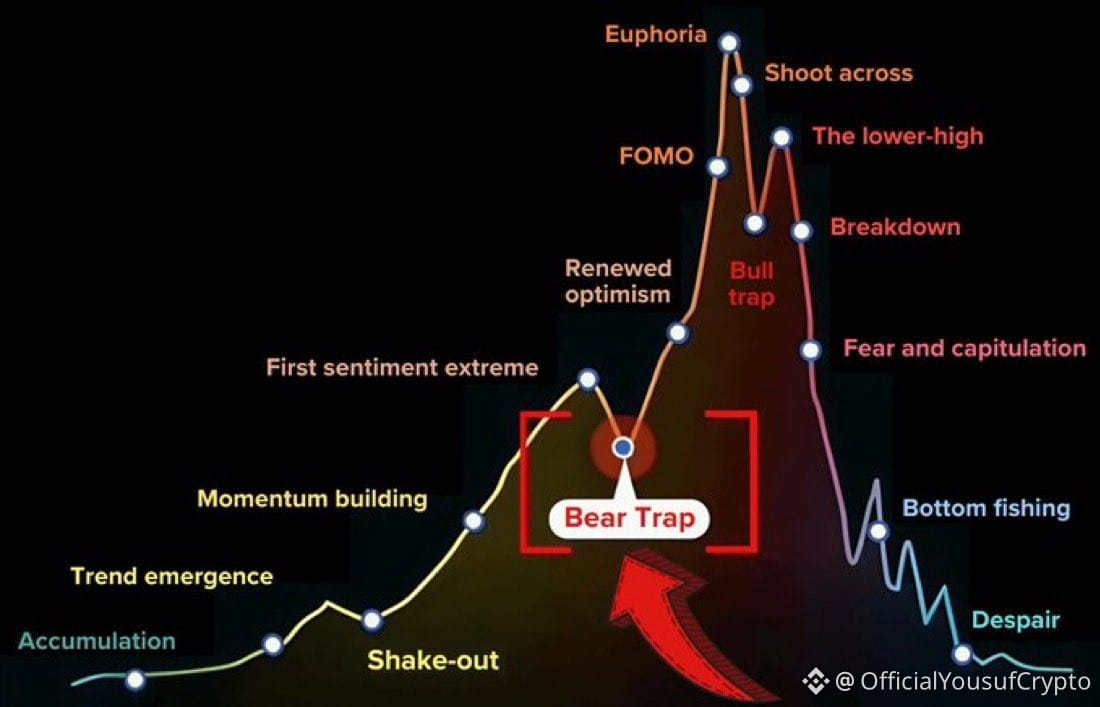
During a bull market, not every Bitcoin dip means the trend is over.
Corrections can shake out weak hands, trigger fear, and set the stage for the next move higher.
Sometimes, what looks like a bearish breakdown is simply a bear trap.
Bitcoin corrections hit hard. The real question is whether they change the bigger trend.
$BTC
{future}(BTCUSDT)
During a bull market, not every Bitcoin dip means the trend is over.
Corrections can shake out weak hands, trigger fear, and set the stage for the next move higher.
Sometimes, what looks like a bearish breakdown is simply a bear trap.
Bitcoin corrections hit hard. The real question is whether they change the bigger trend.
$BTC
Corrections can shake out weak hands, trigger fear, and set the stage for the next move higher.
Sometimes, what looks like a bearish breakdown is simply a bear trap.
Bitcoin corrections hit hard. The real question is whether they change the bigger trend.
$BTC
78
AI agents are starting to hold wallets, move money, and transact onchain. But there’s still one big question: who is actually behind the agent?
That’s where Concordium’s identity infrastructure comes in.
Concordium builds identity directly into the protocol, allowing users to verify who is behind a wallet, business, or AI agent.
$CCD is currently around a $49M valuation. For comparison, Worldcoin, another identity-focused project, is around $1.8B and mainly focuses on proving that you’re human.
Concordium takes a broader approach by verifying humans, businesses, and AI agents.
And the interesting part? Agents operating across Ethereum, Solana, and other networks can potentially link back to verified owners through Concordium.
A different take on digital identity, with a much smaller valuation.
$MOVR
{future}(MOVRUSDT)
$PHA
{future}(PHAUSDT)
$PUMP
{future}(PUMPUSDT)
AI agents are starting to hold wallets, move money, and transact onchain. But there’s still one big question: who is actually behind the agent?
That’s where Concordium’s identity infrastructure comes in.
Concordium builds identity directly into the protocol, allowing users to verify who is behind a wallet, business, or AI agent.
$CCD is currently around a $49M valuation. For comparison, Worldcoin, another identity-focused project, is around $1.8B and mainly focuses on proving that you’re human.
Concordium takes a broader approach by verifying humans, businesses, and AI agents.
And the interesting part? Agents operating across Ethereum, Solana, and other networks can potentially link back to verified owners through Concordium.
A different take on digital identity, with a much smaller valuation.
$MOVR
$PHA
$PUMP
That’s where Concordium’s identity infrastructure comes in.
Concordium builds identity directly into the protocol, allowing users to verify who is behind a wallet, business, or AI agent.
$CCD is currently around a $49M valuation. For comparison, Worldcoin, another identity-focused project, is around $1.8B and mainly focuses on proving that you’re human.
Concordium takes a broader approach by verifying humans, businesses, and AI agents.
And the interesting part? Agents operating across Ethereum, Solana, and other networks can potentially link back to verified owners through Concordium.
A different take on digital identity, with a much smaller valuation.
$MOVR
$PHA
$PUMP

573
Log in to explore more content
Join global crypto users on Binance Square
⚡️ Get latest and useful information about crypto.
💬 Trusted by the world’s largest crypto exchange.
👍 Discover real insights from verified creators.
Email / Phone number
Trending Topics
EtherGains70.9%InQ3
108,574 views
977 Discussing
One of the best third quarters in history 💰
September closed out last night, and with it, the quarter. For the quarter, BTC is up 42%—the second-best Q3 on record. ETH had a record-breaking Q3 overall, up 70%.
Looking at the chart, things are still looking good: we’re holding support, but we’re testing it more and more often. Plus, ETF momentum is weakening — inflows are gradually declining, and yesterday saw outflows for the first time in a long while.
Yes, historically, October has been a good month for crypto — it’s not called “Uptober” for nothing. But it’s also one of the most volatile months. Last year, for example, we managed to hit a new all-time high (ATH) and experience a flash crash.
🚀 High Accuracy Trades.
$BTC
$ETH
$SOL
#EtherGains70.9%InQ3 #DollarIndexHitsHighestSinceMay2025 #CFTCSubmitsTwoEventContractRulesToWhiteHouse #MicronBeatsEarningsLiftsGuidance
Knowledge is Power
·0 Likes
·191 views
TreasuryLetsStatesFileStablecoinCertificationsEarly
5,835 views
65 Discussing
US10YearYieldNears5.3%
126,232 views
1,027 Discussing