
Crypto_Athlete 7
36.5k Beiträge

Crypto_Athlete 7
Melden
Nutzer blockieren
Passionate Crypto Trader 🚀 | Technical Analysis | Market Insights | Long-Term Vision | Always Learning
Trade eröffnen
Regelmäßiger Trader
10.3 Monate
327 Following
23.1K+ Follower
17.7K+ Like gegeben
Beiträge
Portfolio
Alle
Zitierungen
Live
PINNED
Der interessante Teil dieses Fed-Treffens ist nicht einfach nur, ob wir eine Erhöhung um 25 Basispunkte bekommen. Die Märkte tendieren bereits stark zu einem 25bp-Schritt: Nach den Inflationsdaten für August liegen die Erwartungen für eine Anhebung bei rund 90%.
Die größere Frage ist, was als Nächstes kommt.
Der August-CPI stieg um 0,4% im Monatsvergleich und um 3,4% im Jahresvergleich, während der Kern-CPI um 0,3% im Monatsvergleich und um 2,4% im Jahresvergleich zulegte. Dass die Kerninflation über den Erwartungen liegt, übt Druck auf die Fed aus, auch wenn ein Teil des Anstiegs in der Schlagzeile durch Benzin verursacht wurde.
Doch Händler sollten die Zinserhöhung nicht als die ganze Geschichte betrachten.
Morgan Stanley erwartet nun eine weitere Zinserhöhung um 25bp im Dezember. Wenn diese Sicht durch die Prognosen und die Formulierungen der Fed gestützt wird, könnten die Märkte beginnen, eine längere Phase restriktiver Politik einzupreisen – statt nur einen einmaligen Schritt.
Das würde für riskante Anlagewerte bedeutsam.
Bitcoin könnte erneut unter Volatilität leiden, da strengere Erwartungen an die Liquidität spekulative Assets belasten. Auch Tech-Aktien könnten unter Druck geraten, weil höhere Renditen teure Wachstumsbewertungen schwerer rechtfertigen lassen. Gold ist komplizierter: Höhere Zinsen können es belasten, aber anhaltende Inflation und geopolitisches Risiko können die Nachfrage nach dem Metall stark halten.
Mein Ansatz ist einfach: Ich würde lieber auf die Botschaft der Fed warten, statt der ersten Bewegung hinterherzulaufen. Eine Erhöhung um 25bp wird weitgehend erwartet. Die Überraschung könnte daher kommen, was die politischen Entscheidungsträger über den Dezember und darüber hinaus signalisieren.
Die Zinsentscheidung ist nur die Schlagzeile.
Die eigentliche Geschichte ist der Pfad danach.
#FedRateWatch
$POWER
{future}(POWERUSDT)
$AIN
{future}(AINUSDT)
$AKE
{future}(AKEUSDT)
Der interessante Teil dieses Fed-Treffens ist nicht einfach nur, ob wir eine Erhöhung um 25 Basispunkte bekommen. Die Märkte tendieren bereits stark zu einem 25bp-Schritt: Nach den Inflationsdaten für August liegen die Erwartungen für eine Anhebung bei rund 90%.
Die größere Frage ist, was als Nächstes kommt.
Der August-CPI stieg um 0,4% im Monatsvergleich und um 3,4% im Jahresvergleich, während der Kern-CPI um 0,3% im Monatsvergleich und um 2,4% im Jahresvergleich zulegte. Dass die Kerninflation über den Erwartungen liegt, übt Druck auf die Fed aus, auch wenn ein Teil des Anstiegs in der Schlagzeile durch Benzin verursacht wurde.
Doch Händler sollten die Zinserhöhung nicht als die ganze Geschichte betrachten.
Morgan Stanley erwartet nun eine weitere Zinserhöhung um 25bp im Dezember. Wenn diese Sicht durch die Prognosen und die Formulierungen der Fed gestützt wird, könnten die Märkte beginnen, eine längere Phase restriktiver Politik einzupreisen – statt nur einen einmaligen Schritt.
Das würde für riskante Anlagewerte bedeutsam.
Bitcoin könnte erneut unter Volatilität leiden, da strengere Erwartungen an die Liquidität spekulative Assets belasten. Auch Tech-Aktien könnten unter Druck geraten, weil höhere Renditen teure Wachstumsbewertungen schwerer rechtfertigen lassen. Gold ist komplizierter: Höhere Zinsen können es belasten, aber anhaltende Inflation und geopolitisches Risiko können die Nachfrage nach dem Metall stark halten.
Mein Ansatz ist einfach: Ich würde lieber auf die Botschaft der Fed warten, statt der ersten Bewegung hinterherzulaufen. Eine Erhöhung um 25bp wird weitgehend erwartet. Die Überraschung könnte daher kommen, was die politischen Entscheidungsträger über den Dezember und darüber hinaus signalisieren.
Die Zinsentscheidung ist nur die Schlagzeile.
Die eigentliche Geschichte ist der Pfad danach.
#FedRateWatch
$POWER
$AIN
$AKE
Die größere Frage ist, was als Nächstes kommt.
Der August-CPI stieg um 0,4% im Monatsvergleich und um 3,4% im Jahresvergleich, während der Kern-CPI um 0,3% im Monatsvergleich und um 2,4% im Jahresvergleich zulegte. Dass die Kerninflation über den Erwartungen liegt, übt Druck auf die Fed aus, auch wenn ein Teil des Anstiegs in der Schlagzeile durch Benzin verursacht wurde.
Doch Händler sollten die Zinserhöhung nicht als die ganze Geschichte betrachten.
Morgan Stanley erwartet nun eine weitere Zinserhöhung um 25bp im Dezember. Wenn diese Sicht durch die Prognosen und die Formulierungen der Fed gestützt wird, könnten die Märkte beginnen, eine längere Phase restriktiver Politik einzupreisen – statt nur einen einmaligen Schritt.
Das würde für riskante Anlagewerte bedeutsam.
Bitcoin könnte erneut unter Volatilität leiden, da strengere Erwartungen an die Liquidität spekulative Assets belasten. Auch Tech-Aktien könnten unter Druck geraten, weil höhere Renditen teure Wachstumsbewertungen schwerer rechtfertigen lassen. Gold ist komplizierter: Höhere Zinsen können es belasten, aber anhaltende Inflation und geopolitisches Risiko können die Nachfrage nach dem Metall stark halten.
Mein Ansatz ist einfach: Ich würde lieber auf die Botschaft der Fed warten, statt der ersten Bewegung hinterherzulaufen. Eine Erhöhung um 25bp wird weitgehend erwartet. Die Überraschung könnte daher kommen, was die politischen Entscheidungsträger über den Dezember und darüber hinaus signalisieren.
Die Zinsentscheidung ist nur die Schlagzeile.
Die eigentliche Geschichte ist der Pfad danach.
#FedRateWatch
$POWER
$AIN
$AKE

4
536
HYPE hat gerade die Art von Move geliefert, die Krypto-Zeitpläne zum Vibrieren bringt – aber der prozentuale Gewinn ist nicht die ganze Geschichte.
Laut Binance News ist Hyperliquid’s HYPE am Freitag um mehr als 11% auf fast 89 US-Dollar gestiegen und damit einer der stärksten Moves unter den großen Liquid-Tokens zu dieser Zeit.
Was meine Aufmerksamkeit geweckt hat, ist die Positionierung hinter dem Move. Hyperliquid-Marktdaten zeigten HYPE zuletzt bei etwa 87–90 US-Dollar, mit rund 1,9 Milliarden Open Interest und mehr als 640 Millionen US-Dollar im 24-Stunden-Perpetual-Volumen. Das ist eine ernstzunehmende Menge an gehebelter Exponierung, die hinter der Kursbewegung sitzt.
Auch das Funding war leicht positiv – das bedeutet, dass Longs Shorts bezahlten. Das heißt nicht automatisch, dass der Anstieg ungesund ist, aber es zeigt: Trader werden zunehmend bereit, für bullische Exponierung zu zahlen.
Da ist noch ein weiterer Punkt, auf den es sich lohnt zu achten: Ein Buyback-Tracker schätzt, dass Hyperliquid in den vergangenen 30 Tagen etwa 62,4 Millionen US-Dollar an HYPE zurückgekauft hat, während US HYPE Spot-ETFs am 17. September rund 4,25 Millionen US-Dollar an Netto-Zuflüssen verzeichneten.
Also ja, HYPE bewegt sich schnell. Aber die größere Frage ist, ob die tatsächliche Nachfrage den Preis auch dann noch stützen kann, wenn die Aufregung abklingt.
Genau das beobachte ich.
#HYPEJumpsOver11%
$ONE
{future}(ONEUSDT)
$G
{future}(GUSDT)
$MYX
{future}(MYXUSDT)
HYPE hat gerade die Art von Move geliefert, die Krypto-Zeitpläne zum Vibrieren bringt – aber der prozentuale Gewinn ist nicht die ganze Geschichte.
Laut Binance News ist Hyperliquid’s HYPE am Freitag um mehr als 11% auf fast 89 US-Dollar gestiegen und damit einer der stärksten Moves unter den großen Liquid-Tokens zu dieser Zeit.
Was meine Aufmerksamkeit geweckt hat, ist die Positionierung hinter dem Move. Hyperliquid-Marktdaten zeigten HYPE zuletzt bei etwa 87–90 US-Dollar, mit rund 1,9 Milliarden Open Interest und mehr als 640 Millionen US-Dollar im 24-Stunden-Perpetual-Volumen. Das ist eine ernstzunehmende Menge an gehebelter Exponierung, die hinter der Kursbewegung sitzt.
Auch das Funding war leicht positiv – das bedeutet, dass Longs Shorts bezahlten. Das heißt nicht automatisch, dass der Anstieg ungesund ist, aber es zeigt: Trader werden zunehmend bereit, für bullische Exponierung zu zahlen.
Da ist noch ein weiterer Punkt, auf den es sich lohnt zu achten: Ein Buyback-Tracker schätzt, dass Hyperliquid in den vergangenen 30 Tagen etwa 62,4 Millionen US-Dollar an HYPE zurückgekauft hat, während US HYPE Spot-ETFs am 17. September rund 4,25 Millionen US-Dollar an Netto-Zuflüssen verzeichneten.
Also ja, HYPE bewegt sich schnell. Aber die größere Frage ist, ob die tatsächliche Nachfrage den Preis auch dann noch stützen kann, wenn die Aufregung abklingt.
Genau das beobachte ich.
#HYPEJumpsOver11%
$ONE
$G
$MYX
Laut Binance News ist Hyperliquid’s HYPE am Freitag um mehr als 11% auf fast 89 US-Dollar gestiegen und damit einer der stärksten Moves unter den großen Liquid-Tokens zu dieser Zeit.
Was meine Aufmerksamkeit geweckt hat, ist die Positionierung hinter dem Move. Hyperliquid-Marktdaten zeigten HYPE zuletzt bei etwa 87–90 US-Dollar, mit rund 1,9 Milliarden Open Interest und mehr als 640 Millionen US-Dollar im 24-Stunden-Perpetual-Volumen. Das ist eine ernstzunehmende Menge an gehebelter Exponierung, die hinter der Kursbewegung sitzt.
Auch das Funding war leicht positiv – das bedeutet, dass Longs Shorts bezahlten. Das heißt nicht automatisch, dass der Anstieg ungesund ist, aber es zeigt: Trader werden zunehmend bereit, für bullische Exponierung zu zahlen.
Da ist noch ein weiterer Punkt, auf den es sich lohnt zu achten: Ein Buyback-Tracker schätzt, dass Hyperliquid in den vergangenen 30 Tagen etwa 62,4 Millionen US-Dollar an HYPE zurückgekauft hat, während US HYPE Spot-ETFs am 17. September rund 4,25 Millionen US-Dollar an Netto-Zuflüssen verzeichneten.
Also ja, HYPE bewegt sich schnell. Aber die größere Frage ist, ob die tatsächliche Nachfrage den Preis auch dann noch stützen kann, wenn die Aufregung abklingt.
Genau das beobachte ich.
#HYPEJumpsOver11%
$ONE
$G
$MYX

464
·
--
Bullisch


VICTORIA _777
·
--
BullischDie Fed könnte die Zinsen anheben.
Aber ehrlich gesagt glaube ich nicht, dass die Zinserhöhung selbst das größte Risiko ist.
Die Märkte erwarten sie bereits.
Die entscheidende Frage ist, was Powell nach der Entscheidung sagt.
Wenn die Fed signalisiert, dass das nur eine einmalige Anpassung ist, könnten riskante Anlagen wieder aufatmen.
Aber wenn die Botschaft klar macht, dass weitere Straffungen bevorstehen, ändert sich alles.
Höhere Renditen.
Stärkerer Dollar.
Mehr Druck auf Tech.
Mehr Druck auf Gold.
Und BTC könnte einige starke Schwankungen sehen.
Deshalb habe ich kein Interesse daran, Schlagzeilen hinterherzulaufen.
Ich beobachte die Reaktion.
Erst BTC.
Dann Gold.
Dann Tech.
Wenn BTC sich hält, während die Renditen hoch bleiben, sagt mir das etwas.
Wenn BTC nachgibt und der Dollar weiter nach oben drückt, sagt mir das etwas anderes.
Die Zinserhöhung ist die Schlagzeile.
Die Guidance ist das Trading.
Und manchmal kommt die größte Bewegung dann, wenn alle denken, dass das Ereignis schon im Preis eingepreist ist.
#FedRateWatch
$AIN
$AKE
$POWER
Aber ehrlich gesagt glaube ich nicht, dass die Zinserhöhung selbst das größte Risiko ist.
Die Märkte erwarten sie bereits.
Die entscheidende Frage ist, was Powell nach der Entscheidung sagt.
Wenn die Fed signalisiert, dass das nur eine einmalige Anpassung ist, könnten riskante Anlagen wieder aufatmen.
Aber wenn die Botschaft klar macht, dass weitere Straffungen bevorstehen, ändert sich alles.
Höhere Renditen.
Stärkerer Dollar.
Mehr Druck auf Tech.
Mehr Druck auf Gold.
Und BTC könnte einige starke Schwankungen sehen.
Deshalb habe ich kein Interesse daran, Schlagzeilen hinterherzulaufen.
Ich beobachte die Reaktion.
Erst BTC.
Dann Gold.
Dann Tech.
Wenn BTC sich hält, während die Renditen hoch bleiben, sagt mir das etwas.
Wenn BTC nachgibt und der Dollar weiter nach oben drückt, sagt mir das etwas anderes.
Die Zinserhöhung ist die Schlagzeile.
Die Guidance ist das Trading.
Und manchmal kommt die größte Bewegung dann, wenn alle denken, dass das Ereignis schon im Preis eingepreist ist.
#FedRateWatch
$AIN
$AKE
$POWER

1
479
·
--
Bullisch
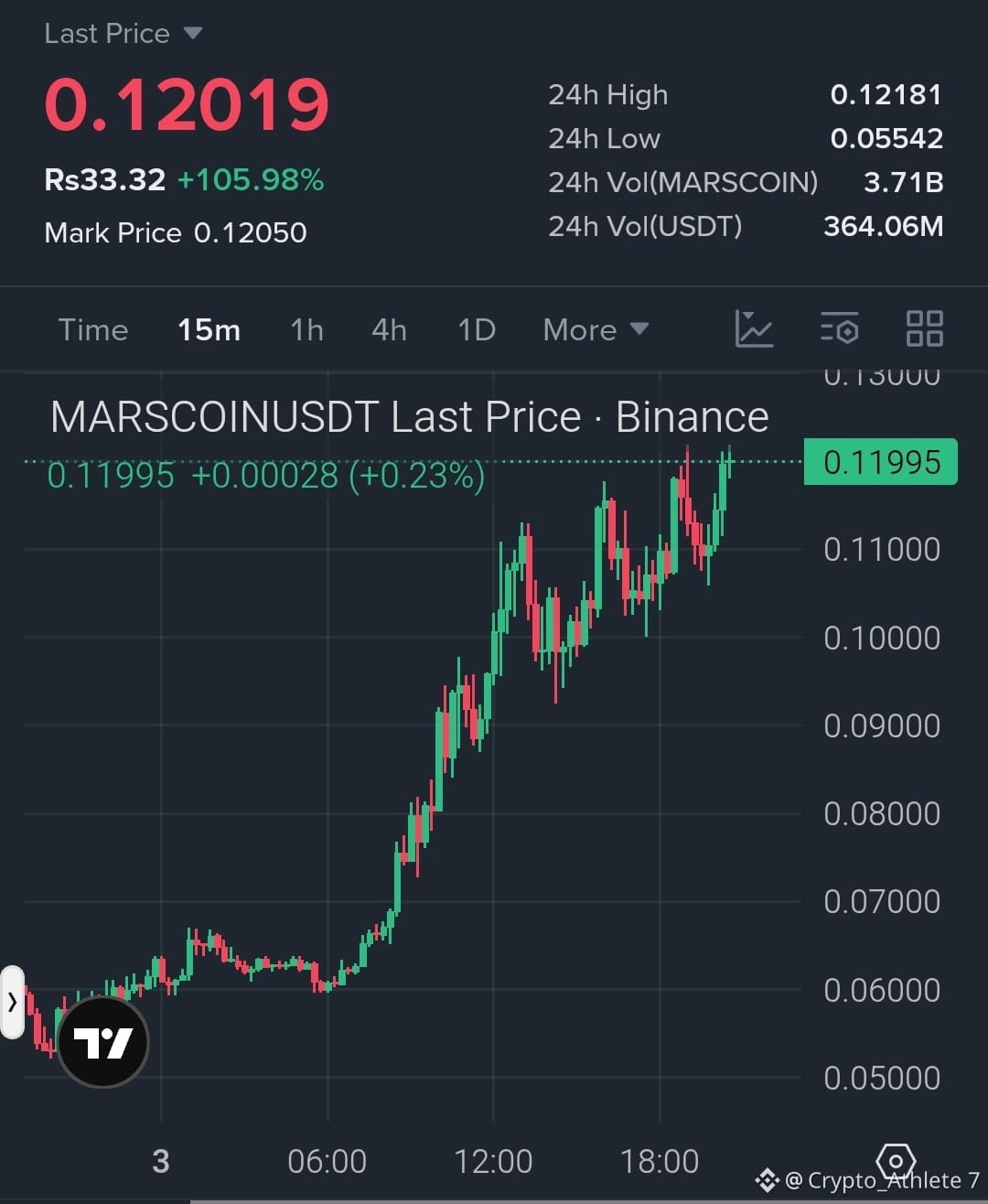
$MARSCOIN Breakout-Setup wird rund um $0.1200 interessant.
Long $MARSCOIN
Einstieg: $0.1195-$0.1210
SL: $0.1160
TP1: $0.1240
TP2: $0.1280
TP3: $0.1350
Das Momentum ist stark, der Kurs drückt in die Breakout-Zone und das Volumen kehrt zurück. Ein sauberer Rückeroberung über $0.1210 könnte die nächste Aufwärtsbewegung auslösen.
Risiko gemanagt. Augen auf. 🚀
$MARSCOIN Breakout-Setup wird rund um $0.1200 interessant.
Long $MARSCOIN
Einstieg: $0.1195-$0.1210
SL: $0.1160
TP1: $0.1240
TP2: $0.1280
TP3: $0.1350
Das Momentum ist stark, der Kurs drückt in die Breakout-Zone und das Volumen kehrt zurück. Ein sauberer Rückeroberung über $0.1210 könnte die nächste Aufwärtsbewegung auslösen.
Risiko gemanagt. Augen auf. 🚀
Long $MARSCOIN
Einstieg: $0.1195-$0.1210
SL: $0.1160
TP1: $0.1240
TP2: $0.1280
TP3: $0.1350
Das Momentum ist stark, der Kurs drückt in die Breakout-Zone und das Volumen kehrt zurück. Ein sauberer Rückeroberung über $0.1210 könnte die nächste Aufwärtsbewegung auslösen.
Risiko gemanagt. Augen auf. 🚀
1
486
·
--
Bullisch
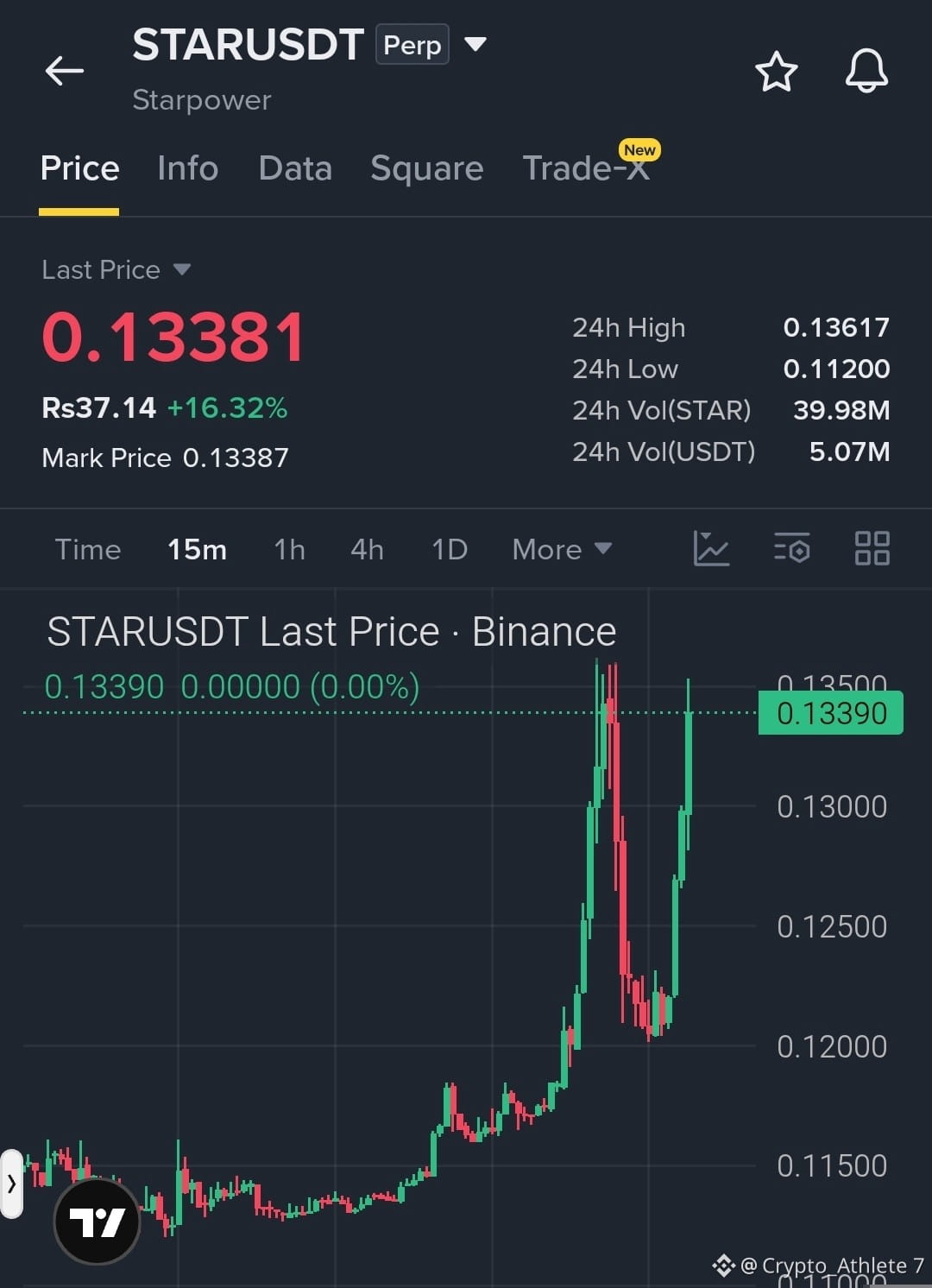
$STAR — bullische Erholung
STAR machte eine scharfe Bewegung von 0.112 in Richtung 0.136, gefolgt von einem starken Rücksetzer auf etwa 0.120. Käufer haben den Preis nun wieder in die Nähe des vorherigen Hochs gedrückt.
0.1362 ist der entscheidende Widerstand. Ein bestätigter Ausbruch könnte die Erholung fortsetzen, während eine Ablehnung den Preis zurück in Richtung 0.130 / 0.125 schicken könnte.
Einstieg: 0.1310 - 0.1340
SL: 0.1260
TP1: 0.1362
TP2: 0.1400
TP3: 0.1450
⚠️ Hohe Volatilität nach der starken Bewegung — Bestätigung ist wichtig.
{alpha}(560x8fce7206e3043dd360f115afa956ee31b90b787c)
$STAR — bullische Erholung
STAR machte eine scharfe Bewegung von 0.112 in Richtung 0.136, gefolgt von einem starken Rücksetzer auf etwa 0.120. Käufer haben den Preis nun wieder in die Nähe des vorherigen Hochs gedrückt.
0.1362 ist der entscheidende Widerstand. Ein bestätigter Ausbruch könnte die Erholung fortsetzen, während eine Ablehnung den Preis zurück in Richtung 0.130 / 0.125 schicken könnte.
Einstieg: 0.1310 - 0.1340
SL: 0.1260
TP1: 0.1362
TP2: 0.1400
TP3: 0.1450
⚠️ Hohe Volatilität nach der starken Bewegung — Bestätigung ist wichtig.
STAR machte eine scharfe Bewegung von 0.112 in Richtung 0.136, gefolgt von einem starken Rücksetzer auf etwa 0.120. Käufer haben den Preis nun wieder in die Nähe des vorherigen Hochs gedrückt.
0.1362 ist der entscheidende Widerstand. Ein bestätigter Ausbruch könnte die Erholung fortsetzen, während eine Ablehnung den Preis zurück in Richtung 0.130 / 0.125 schicken könnte.
Einstieg: 0.1310 - 0.1340
SL: 0.1260
TP1: 0.1362
TP2: 0.1400
TP3: 0.1450
⚠️ Hohe Volatilität nach der starken Bewegung — Bestätigung ist wichtig.
152
·
--
Bullisch
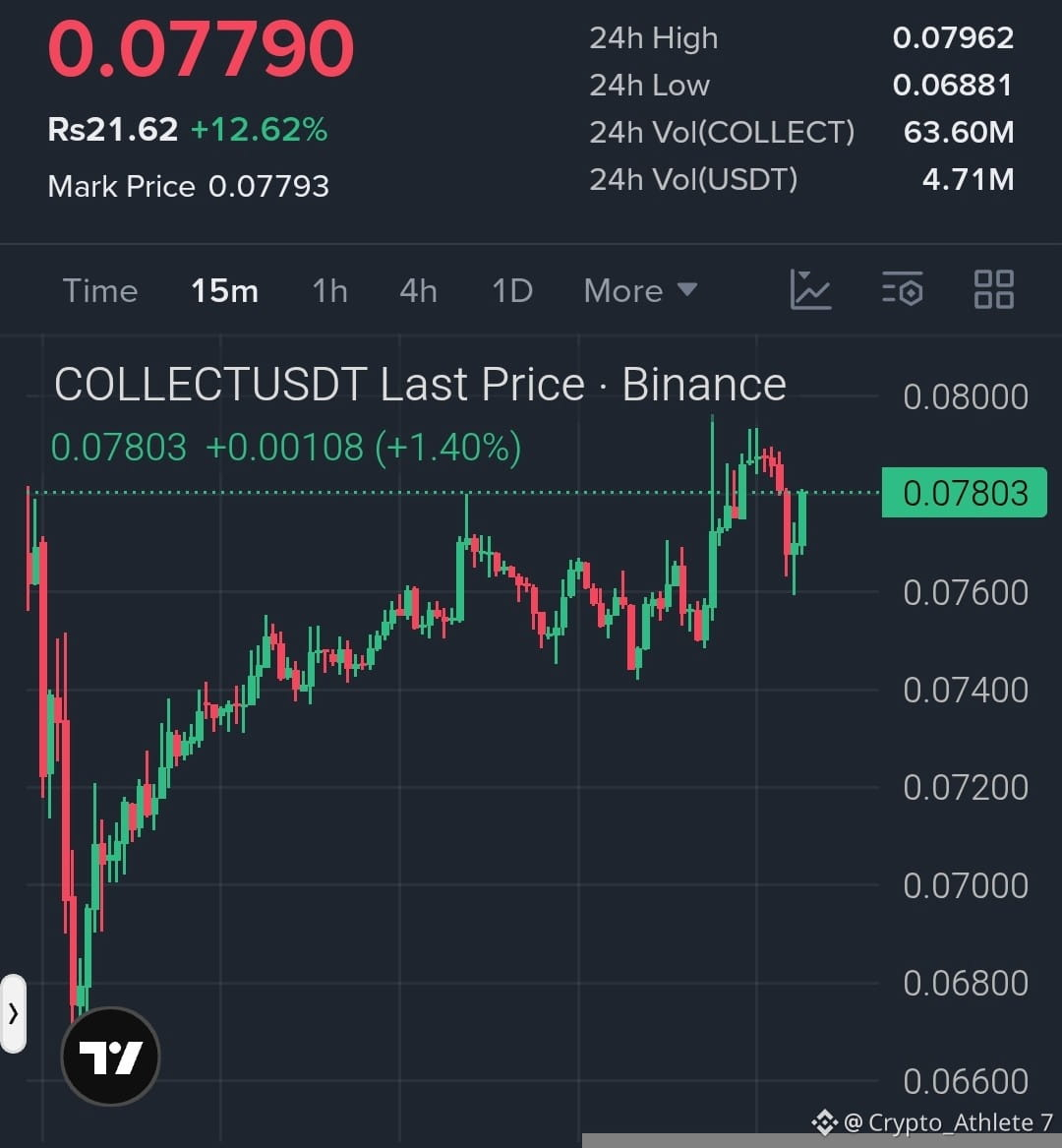
$COLLECT — bullische Fortsetzung
COLLECT hält nach der Erholung von 0.068 einen klaren kurzfristigen Aufwärtstrend im 15-Minuten-Chart. Der Preis liegt nun wieder nahe 0.078, wobei das jüngste Hoch um 0.0796 als Widerstand fungiert.
Ein sauberer Ausbruch über 0.0796 könnte den Weg in Richtung 0.080+ öffnen. Ein Fall unter 0.076 würde das Setup schwächen.
Einstieg: 0.0775 - 0.0782
SL: 0.0758
TP1: 0.0796
TP2: 0.0810
TP3: 0.0830
⚡ Schlüsselniveau: Widerstand bei 0.0796.
{alpha}(560x4b3d30992f003c8167699735f5ab2831b2a087d3)
$COLLECT — bullische Fortsetzung
COLLECT hält nach der Erholung von 0.068 einen klaren kurzfristigen Aufwärtstrend im 15-Minuten-Chart. Der Preis liegt nun wieder nahe 0.078, wobei das jüngste Hoch um 0.0796 als Widerstand fungiert.
Ein sauberer Ausbruch über 0.0796 könnte den Weg in Richtung 0.080+ öffnen. Ein Fall unter 0.076 würde das Setup schwächen.
Einstieg: 0.0775 - 0.0782
SL: 0.0758
TP1: 0.0796
TP2: 0.0810
TP3: 0.0830
⚡ Schlüsselniveau: Widerstand bei 0.0796.
COLLECT hält nach der Erholung von 0.068 einen klaren kurzfristigen Aufwärtstrend im 15-Minuten-Chart. Der Preis liegt nun wieder nahe 0.078, wobei das jüngste Hoch um 0.0796 als Widerstand fungiert.
Ein sauberer Ausbruch über 0.0796 könnte den Weg in Richtung 0.080+ öffnen. Ein Fall unter 0.076 würde das Setup schwächen.
Einstieg: 0.0775 - 0.0782
SL: 0.0758
TP1: 0.0796
TP2: 0.0810
TP3: 0.0830
⚡ Schlüsselniveau: Widerstand bei 0.0796.
167
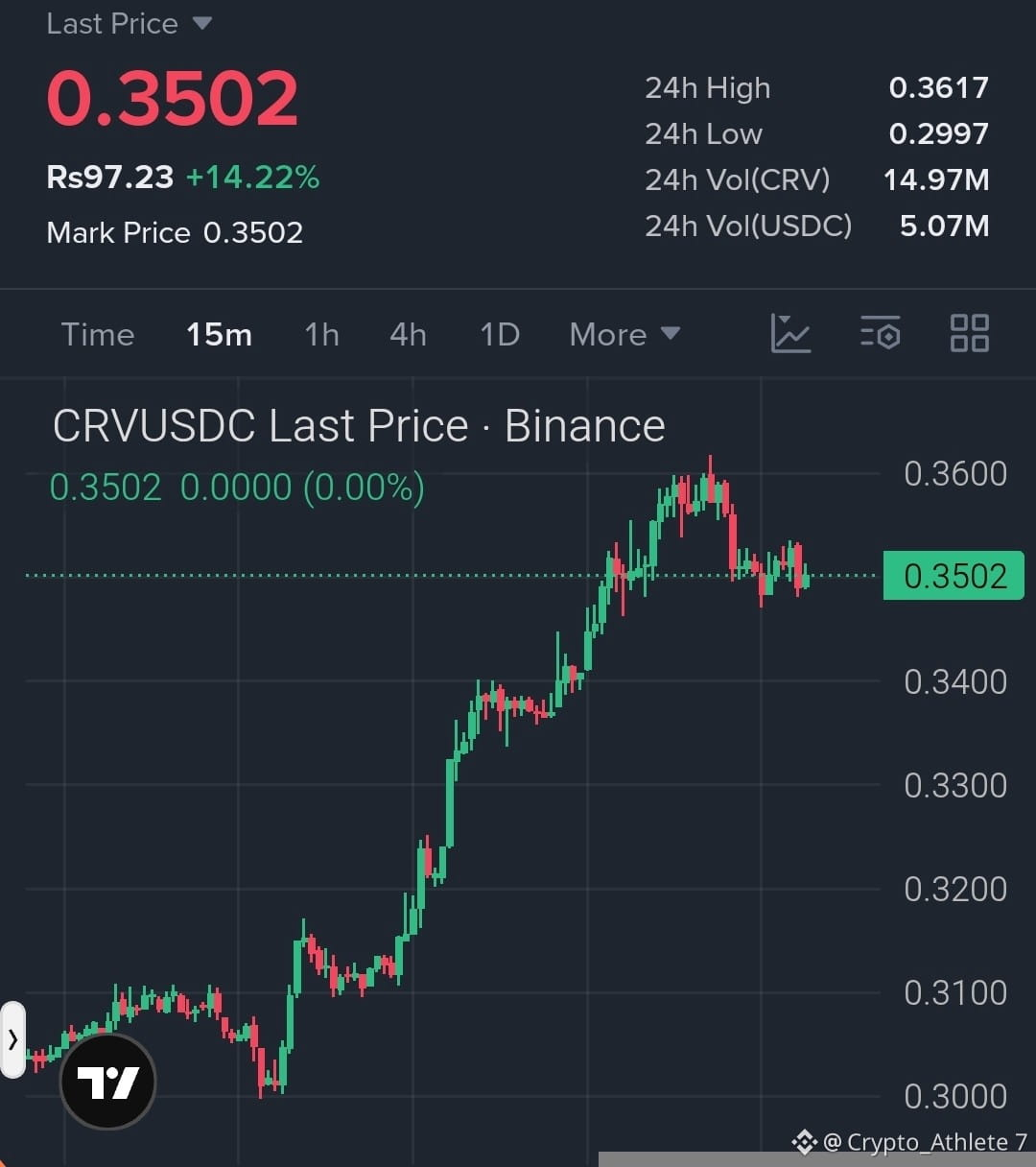
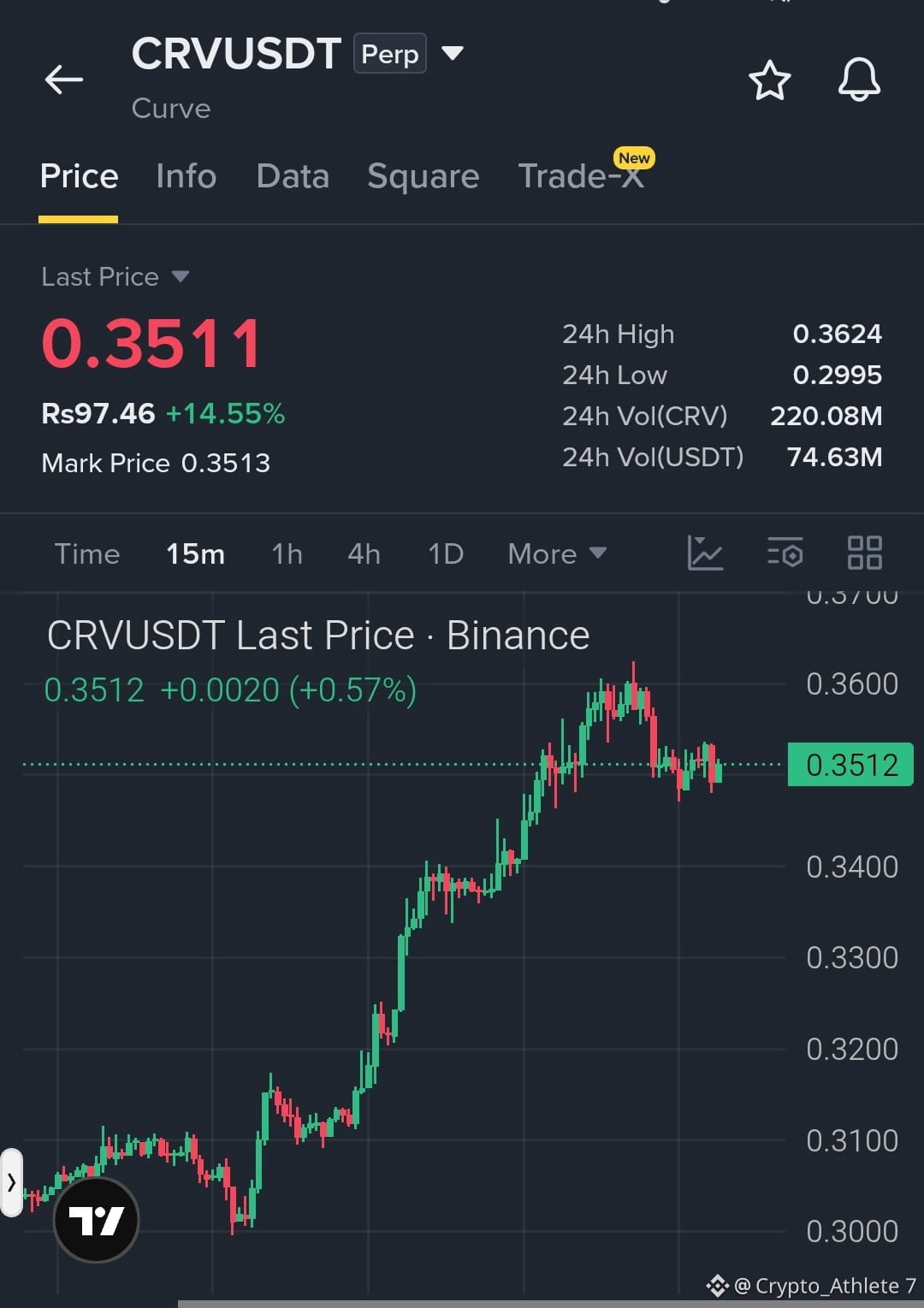
$CRV — bullische Fortsetzung
CRV ist von 0.30 in den Bereich um 0.36 gestiegen und konsolidiert nun um 0.35 nach der Zurückweisung am jüngsten Hoch.
Die Zone 0.345–0.350 hält vorerst. Ein klarer Ausbruch über 0.3617 wäre die stärkere bullische Bestätigung, während ein Verlust von 0.345 auf einen tieferen Rücksetzer hindeuten könnte.
Einstieg: 0.348 - 0.352
SL: 0.342
TP1: 0.360
TP2: 0.370
TP3: 0.385
⚡ Schlüsselniveau: Widerstand bei 0.3617.
$CRV — bullische Fortsetzung
CRV ist von 0.30 in den Bereich um 0.36 gestiegen und konsolidiert nun um 0.35 nach der Zurückweisung am jüngsten Hoch.
Die Zone 0.345–0.350 hält vorerst. Ein klarer Ausbruch über 0.3617 wäre die stärkere bullische Bestätigung, während ein Verlust von 0.345 auf einen tieferen Rücksetzer hindeuten könnte.
Einstieg: 0.348 - 0.352
SL: 0.342
TP1: 0.360
TP2: 0.370
TP3: 0.385
⚡ Schlüsselniveau: Widerstand bei 0.3617.
CRV ist von 0.30 in den Bereich um 0.36 gestiegen und konsolidiert nun um 0.35 nach der Zurückweisung am jüngsten Hoch.
Die Zone 0.345–0.350 hält vorerst. Ein klarer Ausbruch über 0.3617 wäre die stärkere bullische Bestätigung, während ein Verlust von 0.345 auf einen tieferen Rücksetzer hindeuten könnte.
Einstieg: 0.348 - 0.352
SL: 0.342
TP1: 0.360
TP2: 0.370
TP3: 0.385
⚡ Schlüsselniveau: Widerstand bei 0.3617.
82
·
--
Bullisch
$CRV — bullische Fortsetzung
CRV hat sich stark aus dem Bereich von 0.30 bewegt und konsolidiert nun um 0.35, nachdem der Widerstand bei 0.36 getestet wurde.
Die 15-Minuten-Struktur bleibt bullisch, solange 0.345–0.350 hält. Ein klarer Ausbruch über 0.3624 könnte die nächste Aufwärtsbewegung eröffnen.
Einstieg: 0.348 - 0.353
SL: 0.340
TP1: 0.360
TP2: 0.370
TP3: 0.385
⚡ Schlüsselniveau: Widerstand bei 0.3624.
{future}(CRVUSDT)
$CRV — bullische Fortsetzung
CRV hat sich stark aus dem Bereich von 0.30 bewegt und konsolidiert nun um 0.35, nachdem der Widerstand bei 0.36 getestet wurde.
Die 15-Minuten-Struktur bleibt bullisch, solange 0.345–0.350 hält. Ein klarer Ausbruch über 0.3624 könnte die nächste Aufwärtsbewegung eröffnen.
Einstieg: 0.348 - 0.353
SL: 0.340
TP1: 0.360
TP2: 0.370
TP3: 0.385
⚡ Schlüsselniveau: Widerstand bei 0.3624.
CRV hat sich stark aus dem Bereich von 0.30 bewegt und konsolidiert nun um 0.35, nachdem der Widerstand bei 0.36 getestet wurde.
Die 15-Minuten-Struktur bleibt bullisch, solange 0.345–0.350 hält. Ein klarer Ausbruch über 0.3624 könnte die nächste Aufwärtsbewegung eröffnen.
Einstieg: 0.348 - 0.353
SL: 0.340
TP1: 0.360
TP2: 0.370
TP3: 0.385
⚡ Schlüsselniveau: Widerstand bei 0.3624.
73
·
--
Bullisch
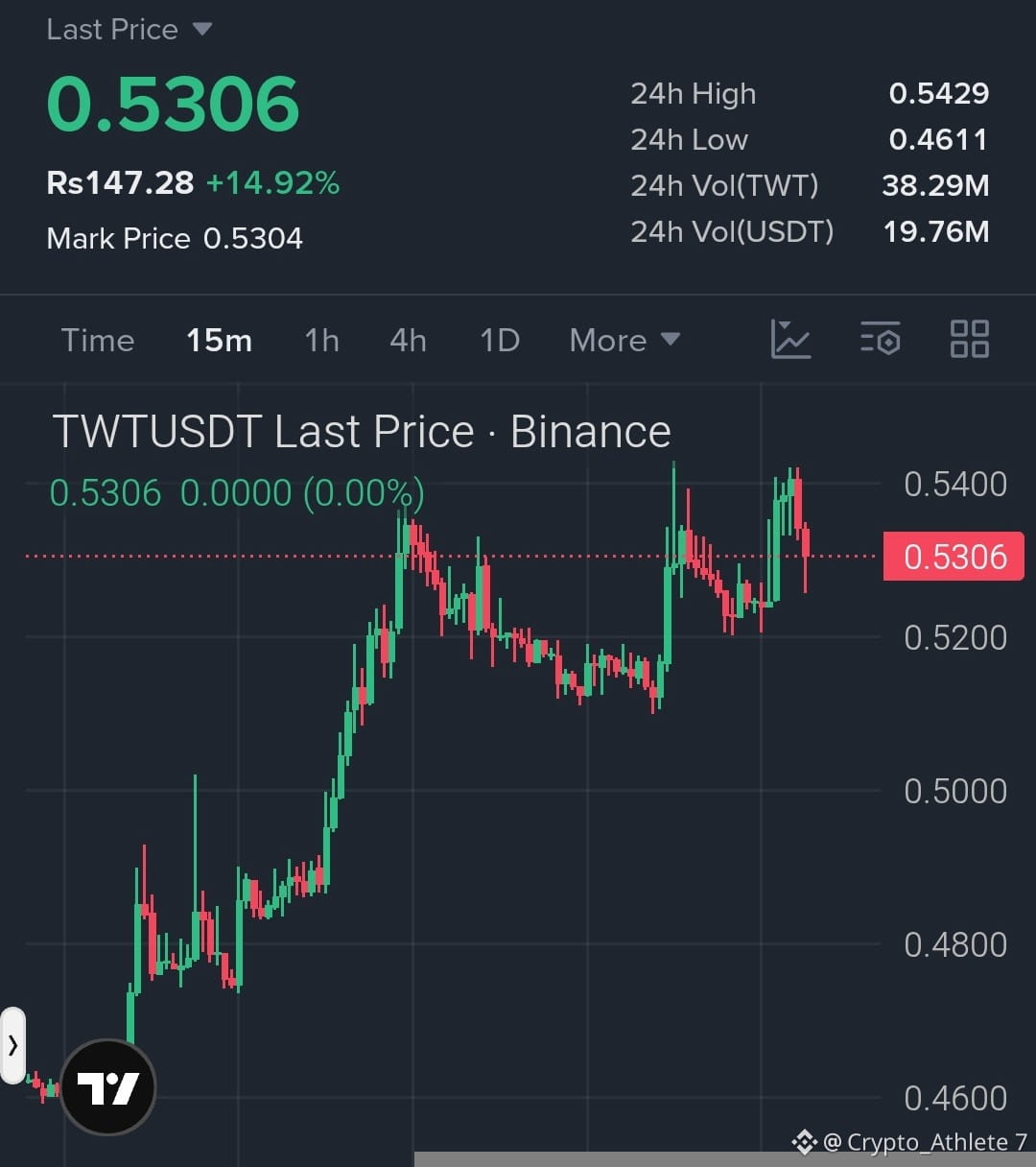
$TWT — bullisches Fortsetzungsszenario
TWT hat sich stark von der 0,46er Zone in Richtung 0,54 bewegt. Im 15-Minuten-Chart setzt der Preis von dem 0,54er Widerstand zurück, hält sich dabei aber weiterhin über der 0,52er Zone.
Ein Zurückerobern der 0,54 würde das bullische Setup stärken. Ein Verlust der 0,52 könnte eine tiefere Korrektur nach sich ziehen.
Einstieg: 0.525 - 0.532
SL: 0.515
TP1: 0.540
TP2: 0.550
TP3: 0.565
⚠️ Hohe Volatilität nach einer starken Bewegung — Bestätigung ist wichtig.
{future}(TWTUSDT)
$TWT — bullisches Fortsetzungsszenario
TWT hat sich stark von der 0,46er Zone in Richtung 0,54 bewegt. Im 15-Minuten-Chart setzt der Preis von dem 0,54er Widerstand zurück, hält sich dabei aber weiterhin über der 0,52er Zone.
Ein Zurückerobern der 0,54 würde das bullische Setup stärken. Ein Verlust der 0,52 könnte eine tiefere Korrektur nach sich ziehen.
Einstieg: 0.525 - 0.532
SL: 0.515
TP1: 0.540
TP2: 0.550
TP3: 0.565
⚠️ Hohe Volatilität nach einer starken Bewegung — Bestätigung ist wichtig.
TWT hat sich stark von der 0,46er Zone in Richtung 0,54 bewegt. Im 15-Minuten-Chart setzt der Preis von dem 0,54er Widerstand zurück, hält sich dabei aber weiterhin über der 0,52er Zone.
Ein Zurückerobern der 0,54 würde das bullische Setup stärken. Ein Verlust der 0,52 könnte eine tiefere Korrektur nach sich ziehen.
Einstieg: 0.525 - 0.532
SL: 0.515
TP1: 0.540
TP2: 0.550
TP3: 0.565
⚠️ Hohe Volatilität nach einer starken Bewegung — Bestätigung ist wichtig.
77
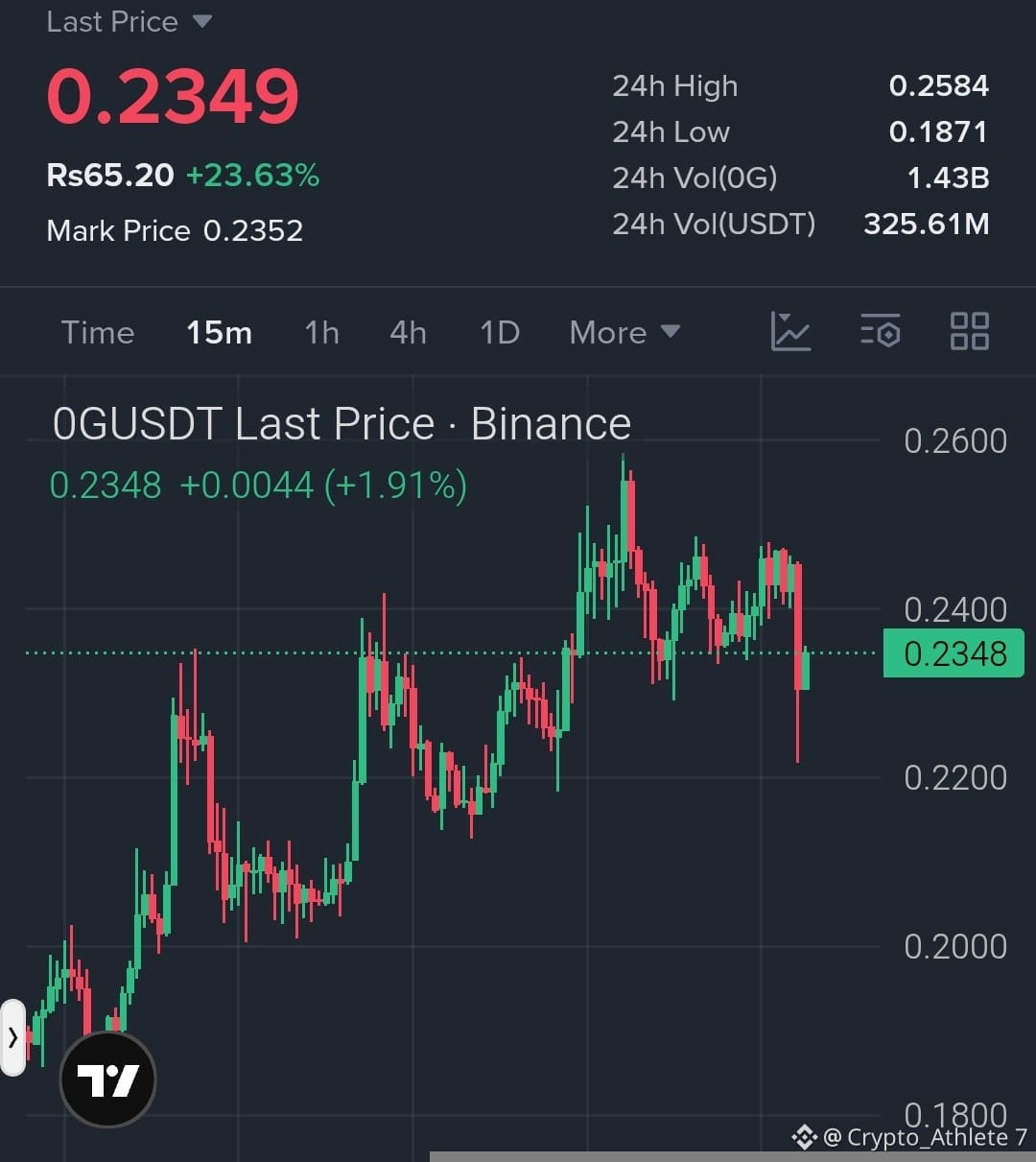
$OG — bullische Erholung, aber Ablehnungsrisiko bleibt
OG wurde aus dem Bereich von 0.18 in Richtung 0.25+ gedrückt, aber der 15-Minuten-Chart zeigt wiederholte Zurückweisungen um 0.24–0.25.
Der jüngste Rücksetzer erreichte fast 0.22 und prallte wieder nach oben ab, daher ist 0.23 ein wichtiges kurzfristiges Niveau. Eine Rückeroberung von 0.24 würde das Momentum verbessern; ein Verlust von 0.22 würde die Struktur schwächen.
Unterstützung: 0.230 / 0.220
Widerstand: 0.240 / 0.250
Nächste Aufwärtszone: 0.258
⚠️ Nur eine Chart-Beobachtung. Diese Bewegung ist bereits sehr volatil, also vermeide es, diese Niveaus als garantierte Einstiege oder Ziele zu betrachten.
{spot}(0GUSDT)
$OG — bullische Erholung, aber Ablehnungsrisiko bleibt
OG wurde aus dem Bereich von 0.18 in Richtung 0.25+ gedrückt, aber der 15-Minuten-Chart zeigt wiederholte Zurückweisungen um 0.24–0.25.
Der jüngste Rücksetzer erreichte fast 0.22 und prallte wieder nach oben ab, daher ist 0.23 ein wichtiges kurzfristiges Niveau. Eine Rückeroberung von 0.24 würde das Momentum verbessern; ein Verlust von 0.22 würde die Struktur schwächen.
Unterstützung: 0.230 / 0.220
Widerstand: 0.240 / 0.250
Nächste Aufwärtszone: 0.258
⚠️ Nur eine Chart-Beobachtung. Diese Bewegung ist bereits sehr volatil, also vermeide es, diese Niveaus als garantierte Einstiege oder Ziele zu betrachten.
OG wurde aus dem Bereich von 0.18 in Richtung 0.25+ gedrückt, aber der 15-Minuten-Chart zeigt wiederholte Zurückweisungen um 0.24–0.25.
Der jüngste Rücksetzer erreichte fast 0.22 und prallte wieder nach oben ab, daher ist 0.23 ein wichtiges kurzfristiges Niveau. Eine Rückeroberung von 0.24 würde das Momentum verbessern; ein Verlust von 0.22 würde die Struktur schwächen.
Unterstützung: 0.230 / 0.220
Widerstand: 0.240 / 0.250
Nächste Aufwärtszone: 0.258
⚠️ Nur eine Chart-Beobachtung. Diese Bewegung ist bereits sehr volatil, also vermeide es, diese Niveaus als garantierte Einstiege oder Ziele zu betrachten.
112
·
--
Bullisch
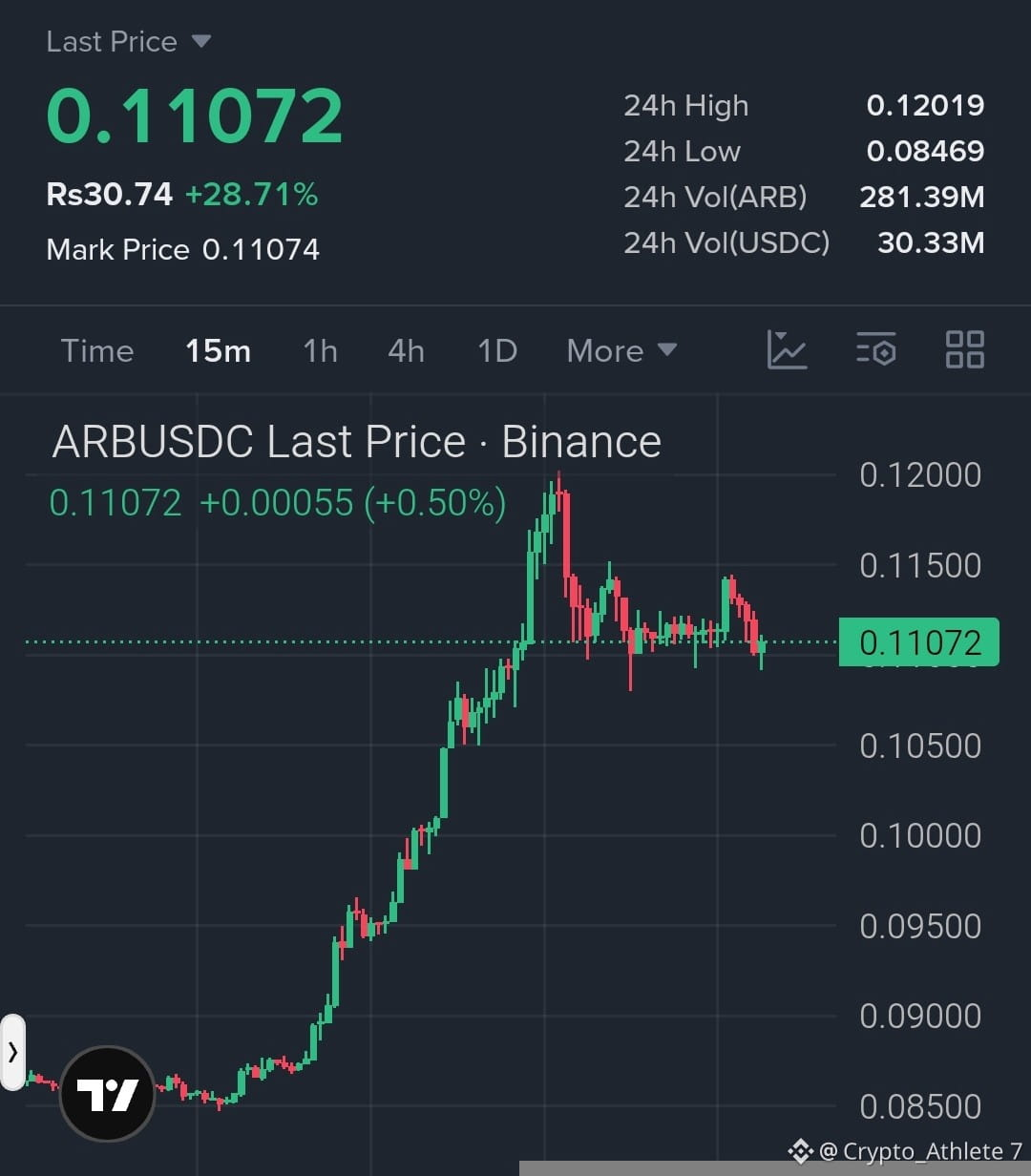
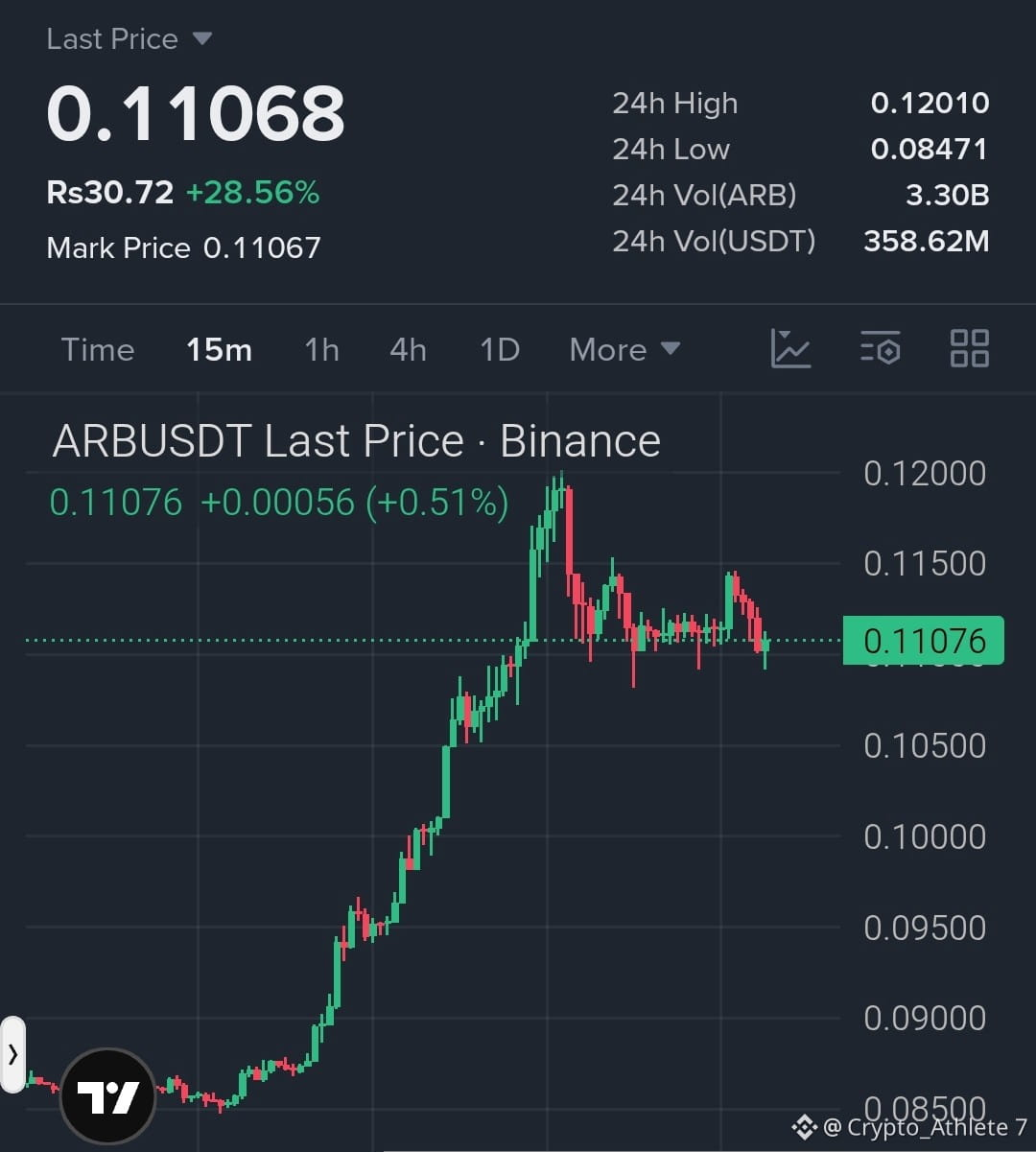
$ARB — bullisches Momentum lässt nach
ARB hat sich stark von dem Bereich um 0.085 in Richtung 0.120 bewegt, aber der 15-Minuten-Chart zeigt nun eine Konsolidierung um 0.110–0.115.
Die Käufer halten weiterhin die jüngste Ausbruchszone, während 0.115–0.120 die wichtigste Widerstandszone bleibt.
Ein anhaltender Anstieg über 0.120 würde die bullische Struktur verbessern. Ein Unterschreiten von 0.110 könnte auf einen tieferen Rücksetzer hindeuten.
Unterstützung: 0.110 / 0.105
Widerstand: 0.115 / 0.120
Nur Chart-Beobachtung — kein garantiertes Handelssignal.
$ARB — bullisches Momentum lässt nach
ARB hat sich stark von dem Bereich um 0.085 in Richtung 0.120 bewegt, aber der 15-Minuten-Chart zeigt nun eine Konsolidierung um 0.110–0.115.
Die Käufer halten weiterhin die jüngste Ausbruchszone, während 0.115–0.120 die wichtigste Widerstandszone bleibt.
Ein anhaltender Anstieg über 0.120 würde die bullische Struktur verbessern. Ein Unterschreiten von 0.110 könnte auf einen tieferen Rücksetzer hindeuten.
Unterstützung: 0.110 / 0.105
Widerstand: 0.115 / 0.120
Nur Chart-Beobachtung — kein garantiertes Handelssignal.
ARB hat sich stark von dem Bereich um 0.085 in Richtung 0.120 bewegt, aber der 15-Minuten-Chart zeigt nun eine Konsolidierung um 0.110–0.115.
Die Käufer halten weiterhin die jüngste Ausbruchszone, während 0.115–0.120 die wichtigste Widerstandszone bleibt.
Ein anhaltender Anstieg über 0.120 würde die bullische Struktur verbessern. Ein Unterschreiten von 0.110 könnte auf einen tieferen Rücksetzer hindeuten.
Unterstützung: 0.110 / 0.105
Widerstand: 0.115 / 0.120
Nur Chart-Beobachtung — kein garantiertes Handelssignal.
100
·
--
Bullisch
$ARB — bullisches Fortsetzungsszenario
Starke 15-Minuten-Erholung aus dem Bereich um 0.085 hat ARB in Richtung 0.120 gedrückt. Nach dieser scharfen Bewegung konsolidiert der Kurs eher um 0.110–0.114, statt aggressiv nach unten auszubrechen.
Eine saubere Rückeroberung von 0.115 könnte 0.120 wieder in den Fokus bringen.
Einstieg: 0.1095 - 0.1115
SL: 0.1065
TP1: 0.1150
TP2: 0.1200
TP3: 0.1250
⚠️ Nach einer täglichen Bewegung von +28 % ist die Volatilität hoch. Dies ist ein chartbasiertes Setup, kein garantierter Trade.
{future}(ARBUSDT)
$ARB — bullisches Fortsetzungsszenario
Starke 15-Minuten-Erholung aus dem Bereich um 0.085 hat ARB in Richtung 0.120 gedrückt. Nach dieser scharfen Bewegung konsolidiert der Kurs eher um 0.110–0.114, statt aggressiv nach unten auszubrechen.
Eine saubere Rückeroberung von 0.115 könnte 0.120 wieder in den Fokus bringen.
Einstieg: 0.1095 - 0.1115
SL: 0.1065
TP1: 0.1150
TP2: 0.1200
TP3: 0.1250
⚠️ Nach einer täglichen Bewegung von +28 % ist die Volatilität hoch. Dies ist ein chartbasiertes Setup, kein garantierter Trade.
Starke 15-Minuten-Erholung aus dem Bereich um 0.085 hat ARB in Richtung 0.120 gedrückt. Nach dieser scharfen Bewegung konsolidiert der Kurs eher um 0.110–0.114, statt aggressiv nach unten auszubrechen.
Eine saubere Rückeroberung von 0.115 könnte 0.120 wieder in den Fokus bringen.
Einstieg: 0.1095 - 0.1115
SL: 0.1065
TP1: 0.1150
TP2: 0.1200
TP3: 0.1250
⚠️ Nach einer täglichen Bewegung von +28 % ist die Volatilität hoch. Dies ist ein chartbasiertes Setup, kein garantierter Trade.
100
·
--
Bullisch
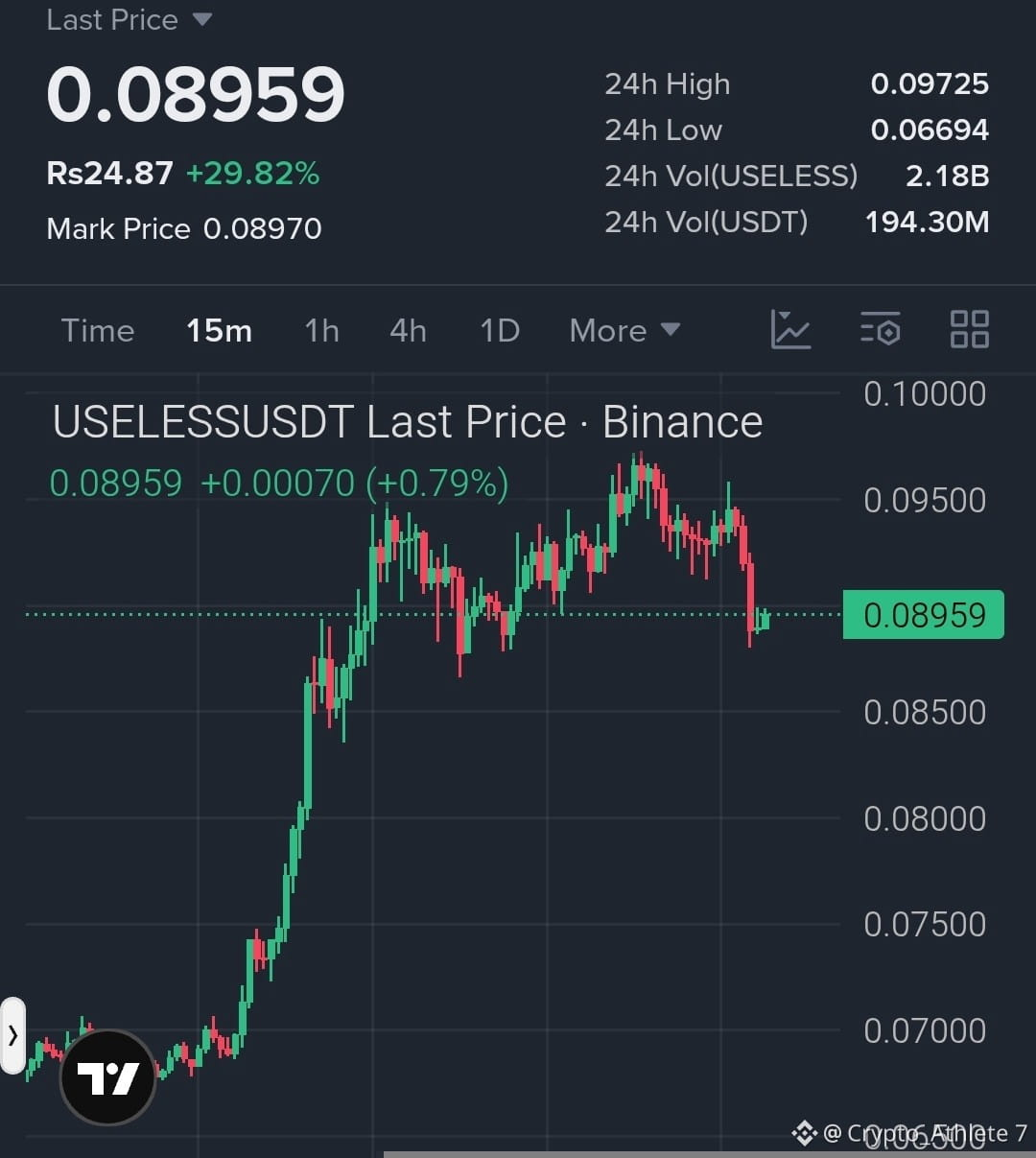
$USELESS — aggressive bärische Fortsetzung
Die scharfe Zurückweisung aus der Zone 0.095–0.097 hat den Preis wieder in Richtung 0.089 gedrückt. Die Verkäufer zeigen nach der jüngsten Rallye Stärke, während 0.090 nun das entscheidende Niveau ist, das zurückerobert werden muss.
Ein gescheiterter Rückeroberungsversuch könnte den Unterstützungsbereich bei 0.085 freilegen.
Einstieg: 0.0895 - 0.0910
SL: 0.0938
TP1: 0.0870
TP2: 0.0850
TP3: 0.0820
⚠️ Hohe Volatilität — das Setup basiert nur auf dem gezeigten 15m-Chart.
{alpha}(560xba38b3c706f7a515ff7c8db04daa0a134ec46d2b)
$USELESS — aggressive bärische Fortsetzung
Die scharfe Zurückweisung aus der Zone 0.095–0.097 hat den Preis wieder in Richtung 0.089 gedrückt. Die Verkäufer zeigen nach der jüngsten Rallye Stärke, während 0.090 nun das entscheidende Niveau ist, das zurückerobert werden muss.
Ein gescheiterter Rückeroberungsversuch könnte den Unterstützungsbereich bei 0.085 freilegen.
Einstieg: 0.0895 - 0.0910
SL: 0.0938
TP1: 0.0870
TP2: 0.0850
TP3: 0.0820
⚠️ Hohe Volatilität — das Setup basiert nur auf dem gezeigten 15m-Chart.
Die scharfe Zurückweisung aus der Zone 0.095–0.097 hat den Preis wieder in Richtung 0.089 gedrückt. Die Verkäufer zeigen nach der jüngsten Rallye Stärke, während 0.090 nun das entscheidende Niveau ist, das zurückerobert werden muss.
Ein gescheiterter Rückeroberungsversuch könnte den Unterstützungsbereich bei 0.085 freilegen.
Einstieg: 0.0895 - 0.0910
SL: 0.0938
TP1: 0.0870
TP2: 0.0850
TP3: 0.0820
⚠️ Hohe Volatilität — das Setup basiert nur auf dem gezeigten 15m-Chart.
151
·
--
Bullisch
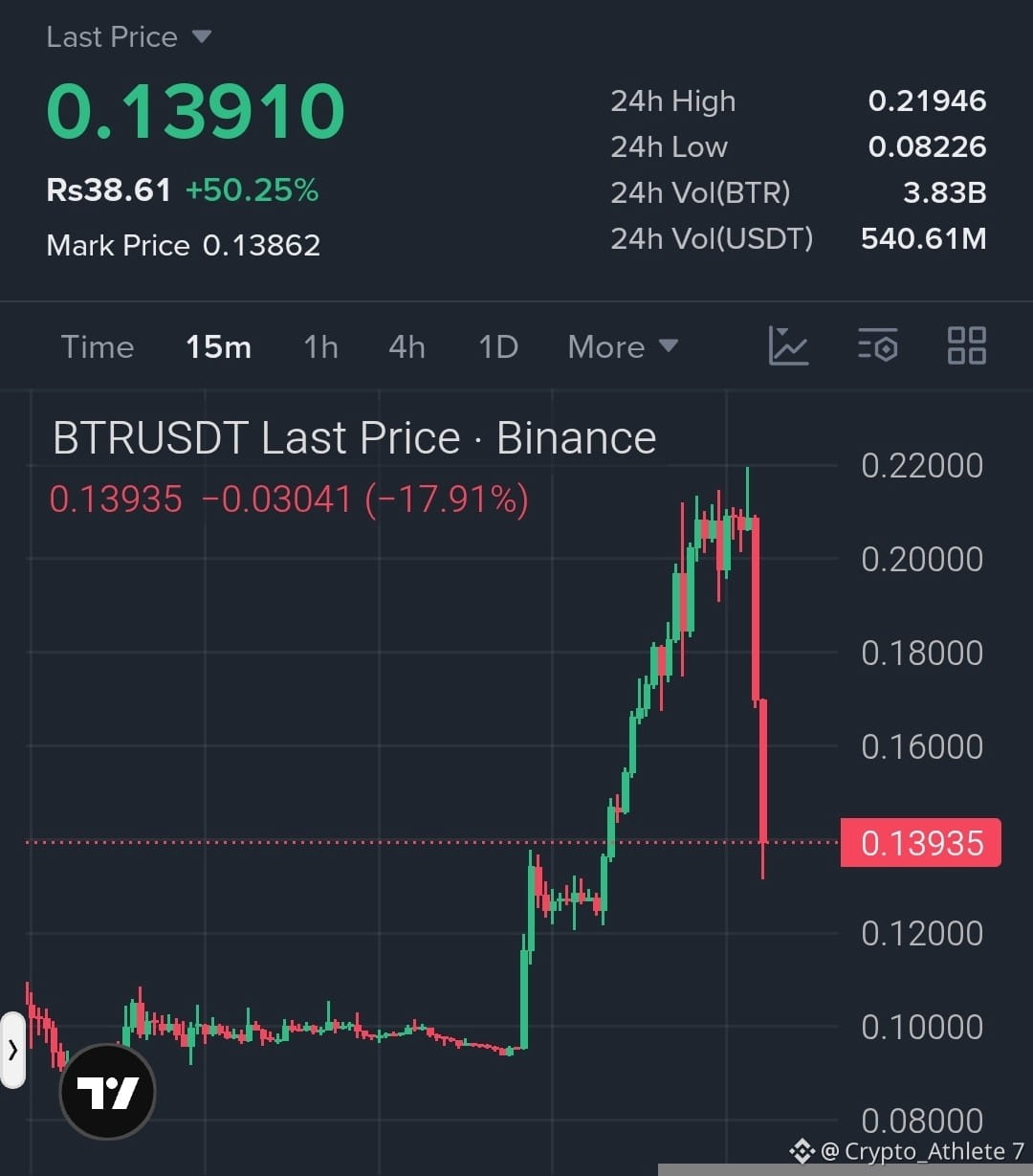
$BTR — aggressive bärische Fortsetzung
Die parabolische Bewegung wurde scharf aus der Zone 0.20–0.21 zurückgewiesen. Der Kurs ist nun aggressiv aus dem Bereich 0.17 ausgebrochen und zeigt starken Verkaufsdruck.
Ein schwacher Rückprall in Richtung 0.14–0.15 könnte auf weiteres Abweisen stoßen. Die entscheidenden Tiefen liegen bei 0.13 und 0.12.
Einstieg: 0.142 - 0.148
SL: 0.158
TP1: 0.132
TP2: 0.125
TP3: 0.115
⚠️ Nach einem +50% Tagesmove extrem volatil. Bestätigung ist entscheidend.
{alpha}(560xfed13d0c40790220fbde712987079eda1ed75c51)
$BTR — aggressive bärische Fortsetzung
Die parabolische Bewegung wurde scharf aus der Zone 0.20–0.21 zurückgewiesen. Der Kurs ist nun aggressiv aus dem Bereich 0.17 ausgebrochen und zeigt starken Verkaufsdruck.
Ein schwacher Rückprall in Richtung 0.14–0.15 könnte auf weiteres Abweisen stoßen. Die entscheidenden Tiefen liegen bei 0.13 und 0.12.
Einstieg: 0.142 - 0.148
SL: 0.158
TP1: 0.132
TP2: 0.125
TP3: 0.115
⚠️ Nach einem +50% Tagesmove extrem volatil. Bestätigung ist entscheidend.
Die parabolische Bewegung wurde scharf aus der Zone 0.20–0.21 zurückgewiesen. Der Kurs ist nun aggressiv aus dem Bereich 0.17 ausgebrochen und zeigt starken Verkaufsdruck.
Ein schwacher Rückprall in Richtung 0.14–0.15 könnte auf weiteres Abweisen stoßen. Die entscheidenden Tiefen liegen bei 0.13 und 0.12.
Einstieg: 0.142 - 0.148
SL: 0.158
TP1: 0.132
TP2: 0.125
TP3: 0.115
⚠️ Nach einem +50% Tagesmove extrem volatil. Bestätigung ist entscheidend.
302
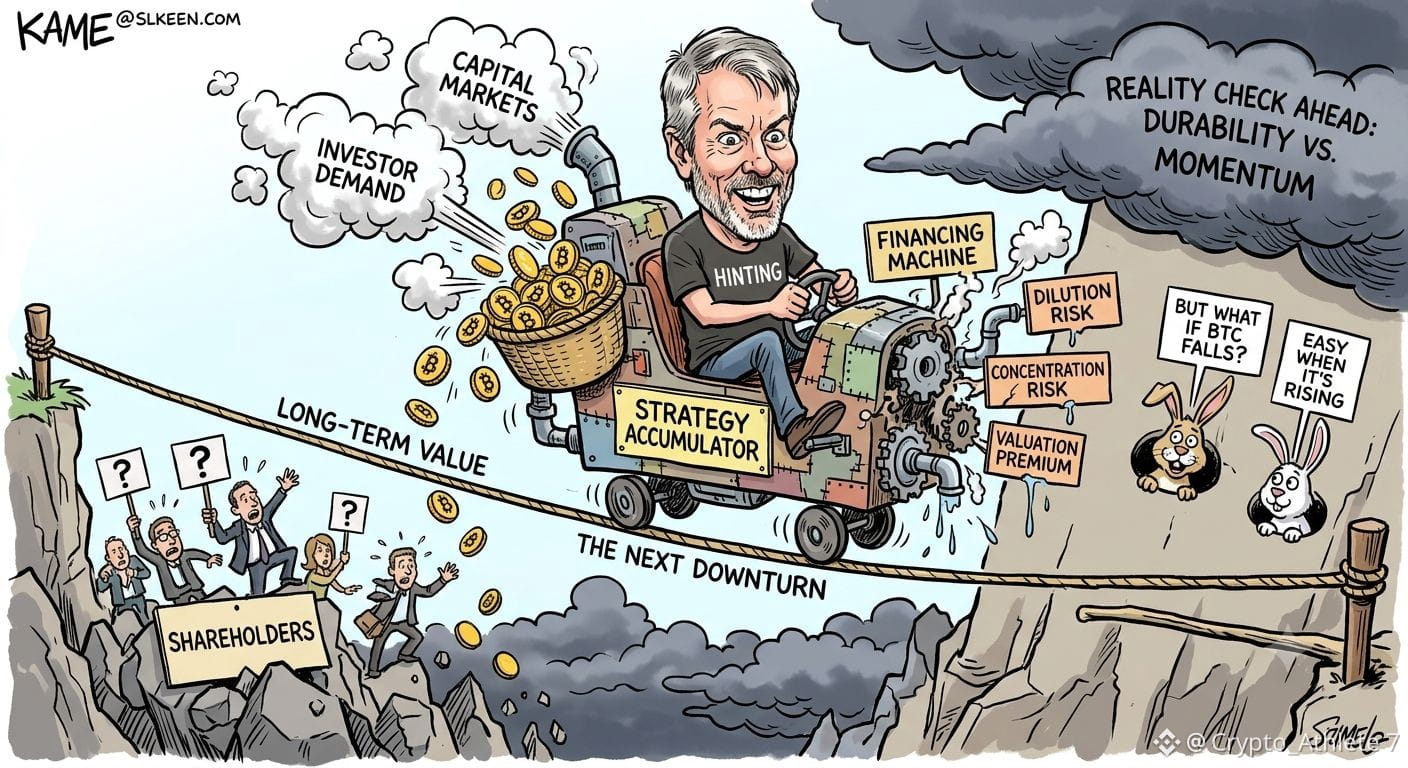
#SaylorHintsStrategyBitcoinBuy Saylor deutet auf einen weiteren Bitcoin-Kauf hin – größer als ein simples bullisches Signal.
Die Strategie hat ihre gesamte Identität darauf aufgebaut, BTC anzuhäufen, aber die eigentliche Frage ist, wie lange die Finanzierungsmaschine reibungslos weiterlaufen kann.
Bitcoin zu kaufen ist leicht, wenn die Kapitalmärkte freundlich sind, die Investorennachfrage stark ist und BTC steigt.
Der wahre Test kommt, wenn sich diese Bedingungen umkehren.
Ein massiver BTC-Bestand schafft enormes Aufwärtspotenzial, bringt aber auch Konzentrations- und Finanzierungsrisiken mit sich. Wenn Bitcoin lange genug fällt, könnte sich der Bewertungsaufschlag von Strategy verringern, das Kapital könnte teurer werden, und Aktionäre könnten beginnen, Verwässerung infrage zu stellen.
Saylor könnte mit dem langfristigen Wert von Bitcoin recht haben.
Das bedeutet jedoch nicht automatisch, dass jeder Strategy-Kauf ein gutes Geschäft ist.
Der nächste Abschwung wird zeigen, ob es sich um eine belastbare Strategie oder um marktabhängige Dynamik handelt.
$BTC $CL
#SaylorHintsStrategyBitcoinBuy Saylor deutet auf einen weiteren Bitcoin-Kauf hin – größer als ein simples bullisches Signal.
Die Strategie hat ihre gesamte Identität darauf aufgebaut, BTC anzuhäufen, aber die eigentliche Frage ist, wie lange die Finanzierungsmaschine reibungslos weiterlaufen kann.
Bitcoin zu kaufen ist leicht, wenn die Kapitalmärkte freundlich sind, die Investorennachfrage stark ist und BTC steigt.
Der wahre Test kommt, wenn sich diese Bedingungen umkehren.
Ein massiver BTC-Bestand schafft enormes Aufwärtspotenzial, bringt aber auch Konzentrations- und Finanzierungsrisiken mit sich. Wenn Bitcoin lange genug fällt, könnte sich der Bewertungsaufschlag von Strategy verringern, das Kapital könnte teurer werden, und Aktionäre könnten beginnen, Verwässerung infrage zu stellen.
Saylor könnte mit dem langfristigen Wert von Bitcoin recht haben.
Das bedeutet jedoch nicht automatisch, dass jeder Strategy-Kauf ein gutes Geschäft ist.
Der nächste Abschwung wird zeigen, ob es sich um eine belastbare Strategie oder um marktabhängige Dynamik handelt.
$BTC $CL
Die Strategie hat ihre gesamte Identität darauf aufgebaut, BTC anzuhäufen, aber die eigentliche Frage ist, wie lange die Finanzierungsmaschine reibungslos weiterlaufen kann.
Bitcoin zu kaufen ist leicht, wenn die Kapitalmärkte freundlich sind, die Investorennachfrage stark ist und BTC steigt.
Der wahre Test kommt, wenn sich diese Bedingungen umkehren.
Ein massiver BTC-Bestand schafft enormes Aufwärtspotenzial, bringt aber auch Konzentrations- und Finanzierungsrisiken mit sich. Wenn Bitcoin lange genug fällt, könnte sich der Bewertungsaufschlag von Strategy verringern, das Kapital könnte teurer werden, und Aktionäre könnten beginnen, Verwässerung infrage zu stellen.
Saylor könnte mit dem langfristigen Wert von Bitcoin recht haben.
Das bedeutet jedoch nicht automatisch, dass jeder Strategy-Kauf ein gutes Geschäft ist.
Der nächste Abschwung wird zeigen, ob es sich um eine belastbare Strategie oder um marktabhängige Dynamik handelt.
$BTC $CL
1
105
·
--
Bärisch
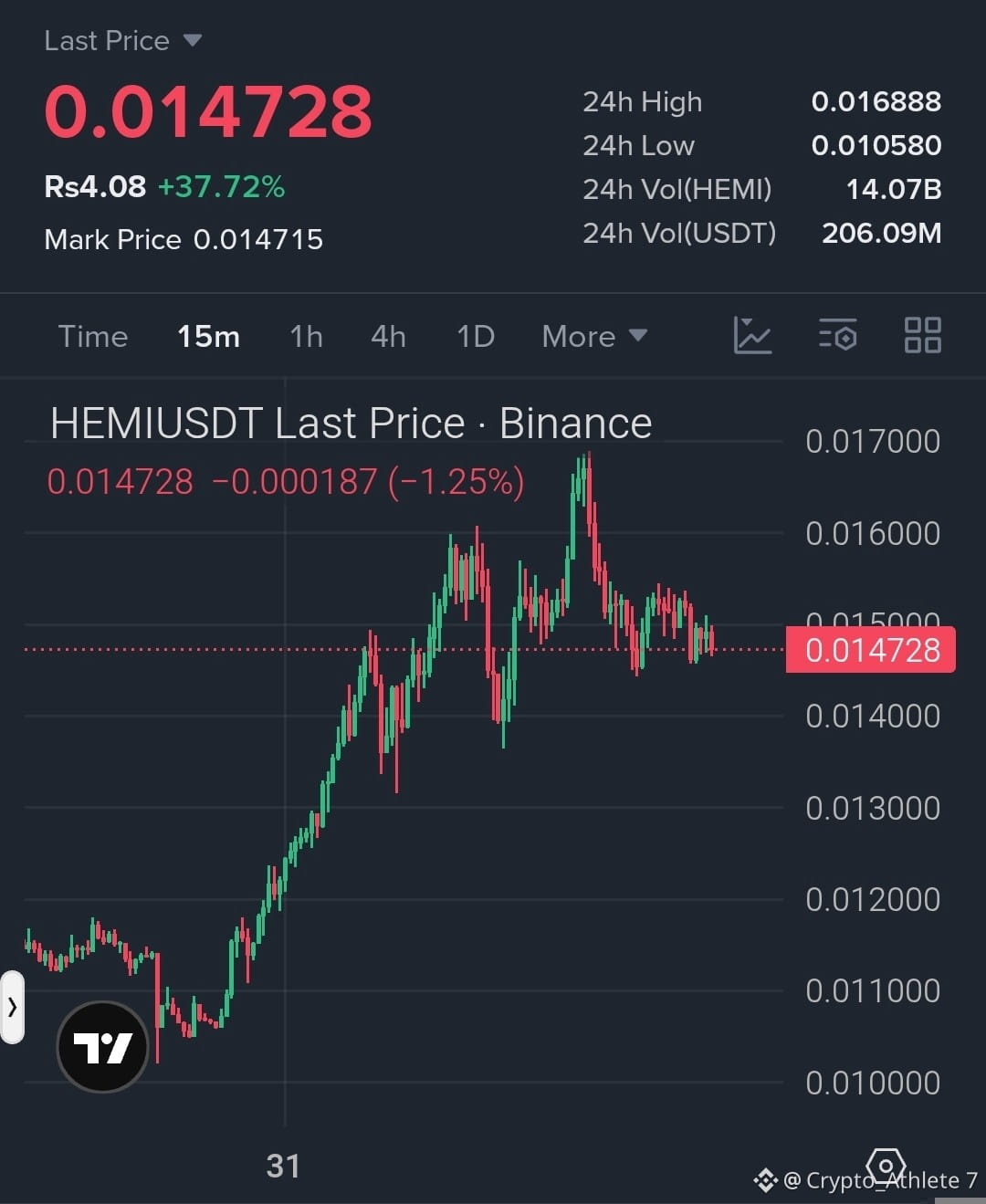
$HEMI — aggressive bärische Fortsetzung
Der Kurs weist die Widerstandszone von 0.0150–0.0153 nach einem starken Anstieg zurück. Verkäufer absorbieren Rücksetzer, während auf dem 15-Minuten-Chart niedrigere Hochs im Bereich des Widerstands entstehen.
Ein klarer Ausbruch unter 0.0145 könnte die Abwärtsbewegung beschleunigen.
Einstieg: 0.01465 - 0.01485
SL: 0.01545
TP1: 0.01400
TP2: 0.01340
TP3: 0.01280
Hohe Volatilität — warte auf Bestätigung, bevor du einsteigst.
$HEMI — aggressive bärische Fortsetzung
Der Kurs weist die Widerstandszone von 0.0150–0.0153 nach einem starken Anstieg zurück. Verkäufer absorbieren Rücksetzer, während auf dem 15-Minuten-Chart niedrigere Hochs im Bereich des Widerstands entstehen.
Ein klarer Ausbruch unter 0.0145 könnte die Abwärtsbewegung beschleunigen.
Einstieg: 0.01465 - 0.01485
SL: 0.01545
TP1: 0.01400
TP2: 0.01340
TP3: 0.01280
Hohe Volatilität — warte auf Bestätigung, bevor du einsteigst.
Der Kurs weist die Widerstandszone von 0.0150–0.0153 nach einem starken Anstieg zurück. Verkäufer absorbieren Rücksetzer, während auf dem 15-Minuten-Chart niedrigere Hochs im Bereich des Widerstands entstehen.
Ein klarer Ausbruch unter 0.0145 könnte die Abwärtsbewegung beschleunigen.
Einstieg: 0.01465 - 0.01485
SL: 0.01545
TP1: 0.01400
TP2: 0.01340
TP3: 0.01280
Hohe Volatilität — warte auf Bestätigung, bevor du einsteigst.
114
·
--
Bullisch
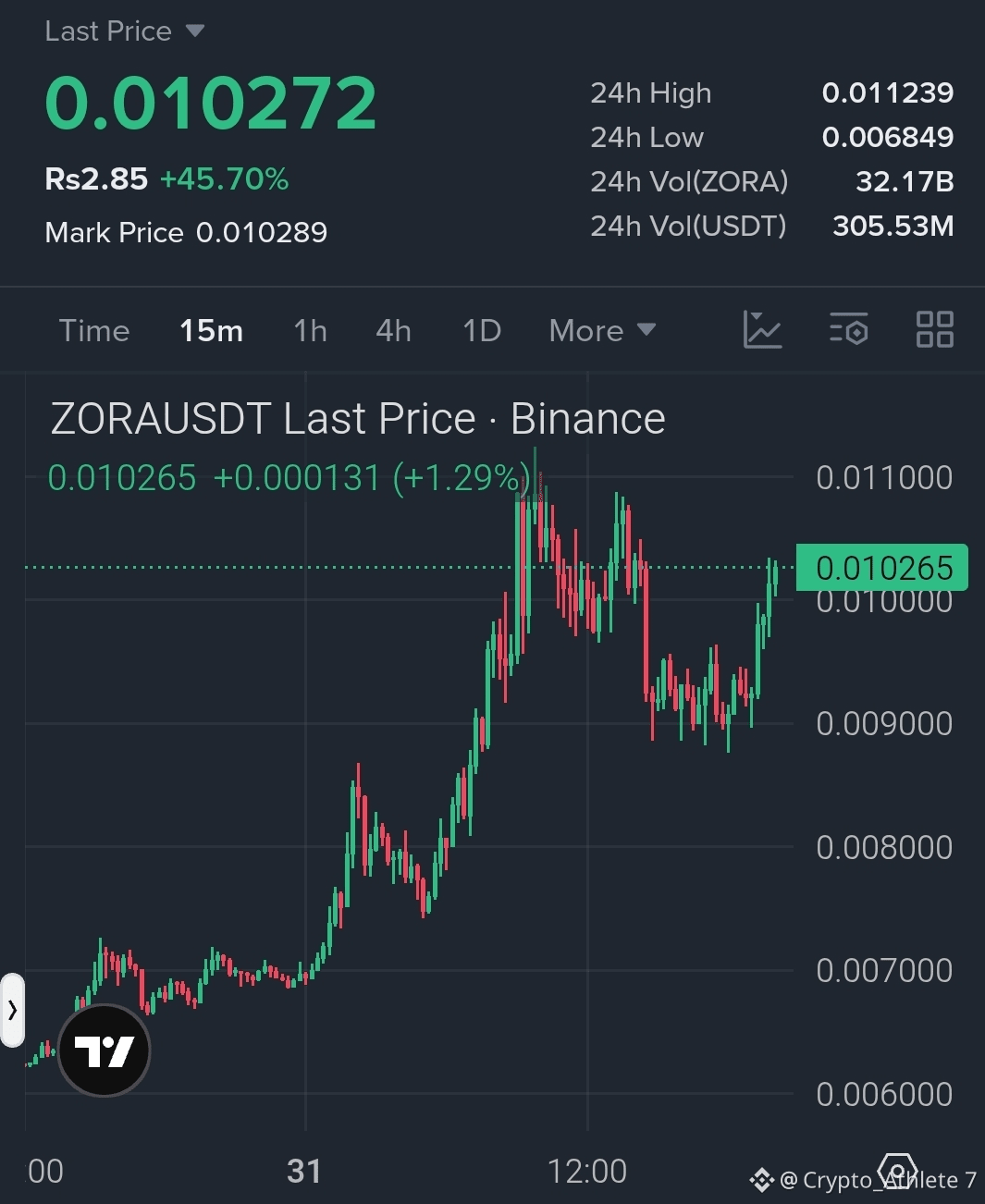
$ZORA — aggressiver bullischer Fortsetzungsimpuls
Der Ausbruchsmomentum bleibt stark, nachdem die Zone von 0.0100 zurückerobert wurde. Käufer drängen zurück in den Widerstandsbereich 0.0110–0.01124; die neuesten Kerzen zeigen erneute Stärke.
Ein sauberer Ausbruch über 0.01124 könnte die nächste Bewegung beschleunigen.
Einstieg: 0.01000 - 0.01030
SL: 0.00920
TP1: 0.01080
TP2: 0.01120
TP3: 0.01180
Hohe Volatilität — Bestätigung ist entscheidend.
$ZORA — aggressiver bullischer Fortsetzungsimpuls
Der Ausbruchsmomentum bleibt stark, nachdem die Zone von 0.0100 zurückerobert wurde. Käufer drängen zurück in den Widerstandsbereich 0.0110–0.01124; die neuesten Kerzen zeigen erneute Stärke.
Ein sauberer Ausbruch über 0.01124 könnte die nächste Bewegung beschleunigen.
Einstieg: 0.01000 - 0.01030
SL: 0.00920
TP1: 0.01080
TP2: 0.01120
TP3: 0.01180
Hohe Volatilität — Bestätigung ist entscheidend.
Der Ausbruchsmomentum bleibt stark, nachdem die Zone von 0.0100 zurückerobert wurde. Käufer drängen zurück in den Widerstandsbereich 0.0110–0.01124; die neuesten Kerzen zeigen erneute Stärke.
Ein sauberer Ausbruch über 0.01124 könnte die nächste Bewegung beschleunigen.
Einstieg: 0.01000 - 0.01030
SL: 0.00920
TP1: 0.01080
TP2: 0.01120
TP3: 0.01180
Hohe Volatilität — Bestätigung ist entscheidend.
159
·
--
Bullisch
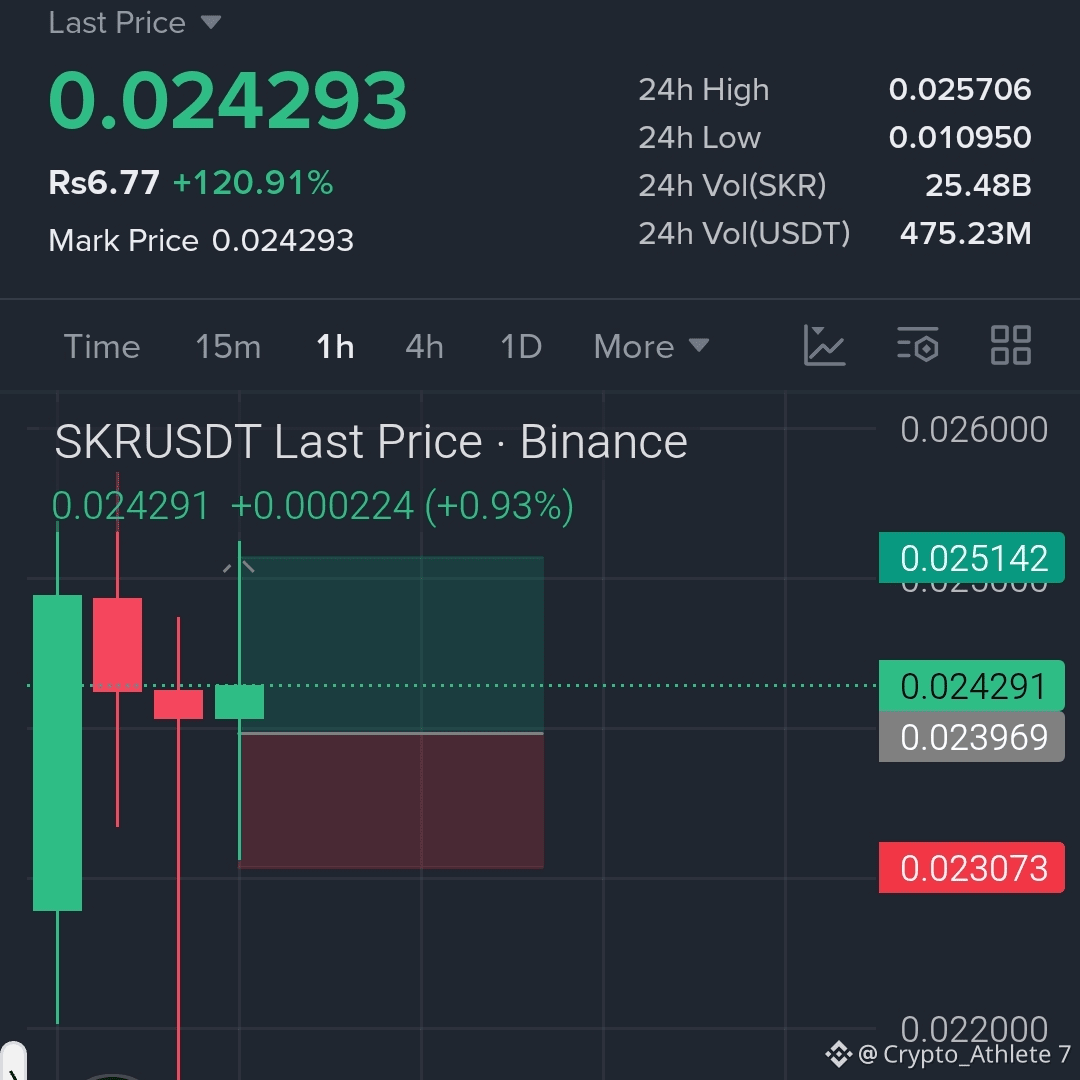
$SKR — aggressive bullische Fortsetzung
Massiver Momentum-Move, bei dem der Kurs nach einem scharfen Ausbruch über der Zone von 0.0240 gehalten wird. Käufer haben weiterhin die Kontrolle, doch die Volatilität ist nach dem +120%-Anstieg extrem hoch.
Ein sauberer Push über 0.02570 könnte einen weiteren Aufwärts-Impuls auslösen.
Einstieg: 0.02395 - 0.02430
SL: 0.02305
TP1: 0.02515
TP2: 0.02570
TP3: 0.02650
High-Risk-Setup — Bestätigung ist entscheidend.
$SKR — aggressive bullische Fortsetzung
Massiver Momentum-Move, bei dem der Kurs nach einem scharfen Ausbruch über der Zone von 0.0240 gehalten wird. Käufer haben weiterhin die Kontrolle, doch die Volatilität ist nach dem +120%-Anstieg extrem hoch.
Ein sauberer Push über 0.02570 könnte einen weiteren Aufwärts-Impuls auslösen.
Einstieg: 0.02395 - 0.02430
SL: 0.02305
TP1: 0.02515
TP2: 0.02570
TP3: 0.02650
High-Risk-Setup — Bestätigung ist entscheidend.
Massiver Momentum-Move, bei dem der Kurs nach einem scharfen Ausbruch über der Zone von 0.0240 gehalten wird. Käufer haben weiterhin die Kontrolle, doch die Volatilität ist nach dem +120%-Anstieg extrem hoch.
Ein sauberer Push über 0.02570 könnte einen weiteren Aufwärts-Impuls auslösen.
Einstieg: 0.02395 - 0.02430
SL: 0.02305
TP1: 0.02515
TP2: 0.02570
TP3: 0.02650
High-Risk-Setup — Bestätigung ist entscheidend.
1
291
·
--
Bullisch
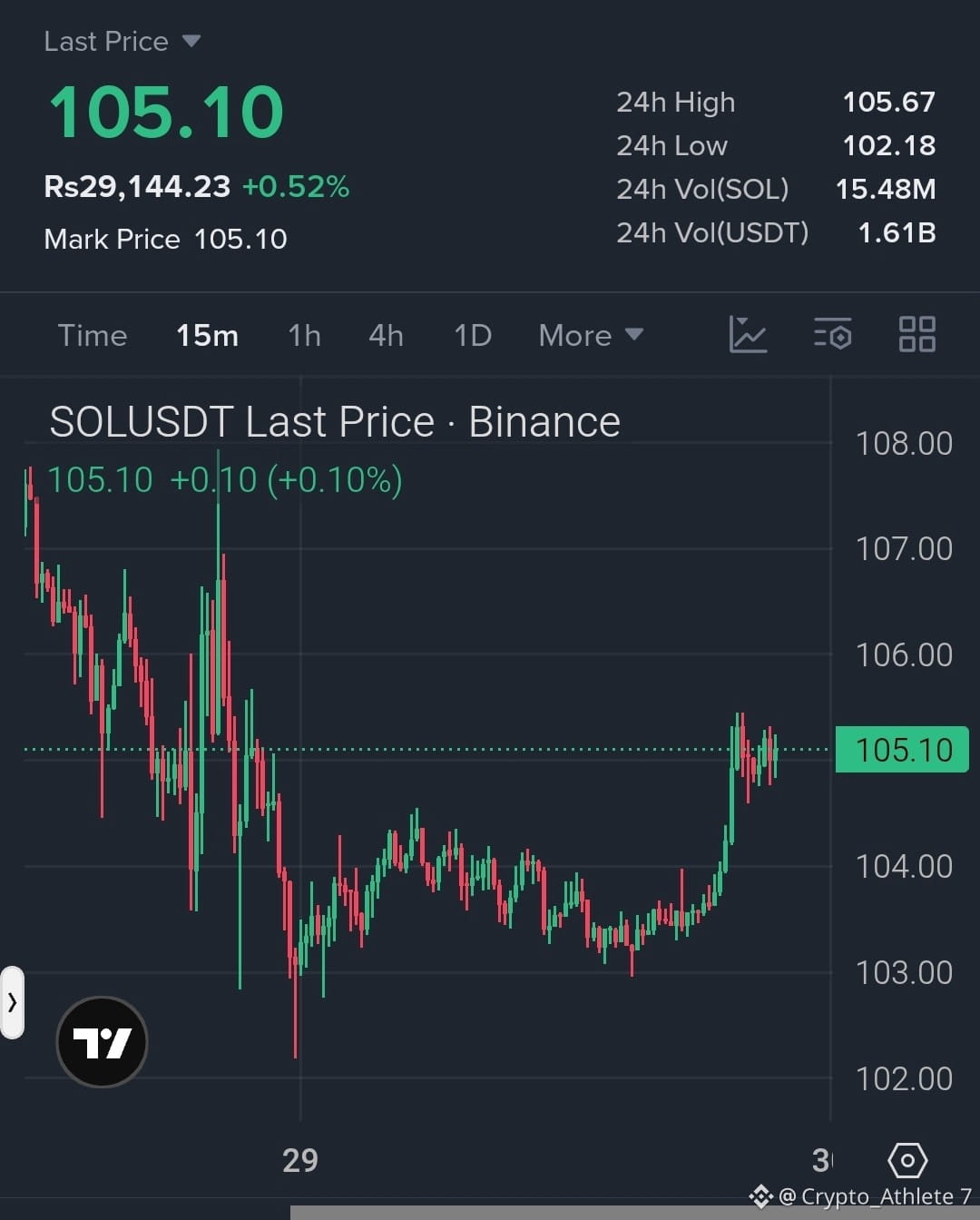
$SOL — aggressive bullische Fortsetzung
Der Ausbruch aus der Konsolidierungsrange bei 103–104 hält nun oberhalb von 105. Die Käufer verteidigen den Ausbruch, aber 105.60–106.00 bleibt die wichtigste Widerstandszone.
Ein bestätigter Ausbruch über 105.70 könnte die Bewegung weiter nach oben treiben.
Einstieg: 104.80 - 105.20
SL: 103.90
TP1: 106.00
TP2: 107.00
TP3: 108.00
Abwarten, bis es bestätigt ist; diese Levels basieren nur auf dem gezeigten 15m-Chart.
$SOL — aggressive bullische Fortsetzung
Der Ausbruch aus der Konsolidierungsrange bei 103–104 hält nun oberhalb von 105. Die Käufer verteidigen den Ausbruch, aber 105.60–106.00 bleibt die wichtigste Widerstandszone.
Ein bestätigter Ausbruch über 105.70 könnte die Bewegung weiter nach oben treiben.
Einstieg: 104.80 - 105.20
SL: 103.90
TP1: 106.00
TP2: 107.00
TP3: 108.00
Abwarten, bis es bestätigt ist; diese Levels basieren nur auf dem gezeigten 15m-Chart.
Der Ausbruch aus der Konsolidierungsrange bei 103–104 hält nun oberhalb von 105. Die Käufer verteidigen den Ausbruch, aber 105.60–106.00 bleibt die wichtigste Widerstandszone.
Ein bestätigter Ausbruch über 105.70 könnte die Bewegung weiter nach oben treiben.
Einstieg: 104.80 - 105.20
SL: 103.90
TP1: 106.00
TP2: 107.00
TP3: 108.00
Abwarten, bis es bestätigt ist; diese Levels basieren nur auf dem gezeigten 15m-Chart.
144
Anmelden und weiter Inhalte entdecken
Krypto-Nutzer weltweit auf Binance Square kennenlernen
⚡️ Bleib in Sachen Krypto stets am Puls.
💬 Die weltgrößte Kryptobörse vertraut darauf.
👍 Erhalte verlässliche Einblicke von verifizierten Creators.
E-Mail-Adresse/Telefonnummer