
Look, I’ve seen this movie before.
A new “game” shows up. Friendly visuals. Simple mechanics. Big promises about fixing what the last generation got wrong. This time, they say, it’s sustainable. This time, it’s about fun first, not extraction.
And now it’s Pixels taking its turn.
Let’s be honest. The pitch sounds clean. A casual farming world where players can earn, trade, and own their assets. Built on the Ronin Network, which already has a history in gaming. Lower fees. Faster transactions. Supposedly smoother experience.
It sounds tidy. On paper, at least.
But once you step back, the same old question comes back. What problem is this actually solving?
Because the problem they claim to fix is clear enough. Earlier play-to-earn games collapsed under their own economics. Too many tokens. Too much extraction. Not enough real demand. People showed up to earn, not to play, and when the payouts dropped, they left. Simple as that.
So Pixels says it’s different. Slower pace. Softer rewards. More focus on community and routine.
Fine. But slowing down a broken system doesn’t fix it. It just delays the moment it breaks.
That’s the part nobody wants to say out loud.
Let’s talk about the “solution.” Because this is where things start to wobble.
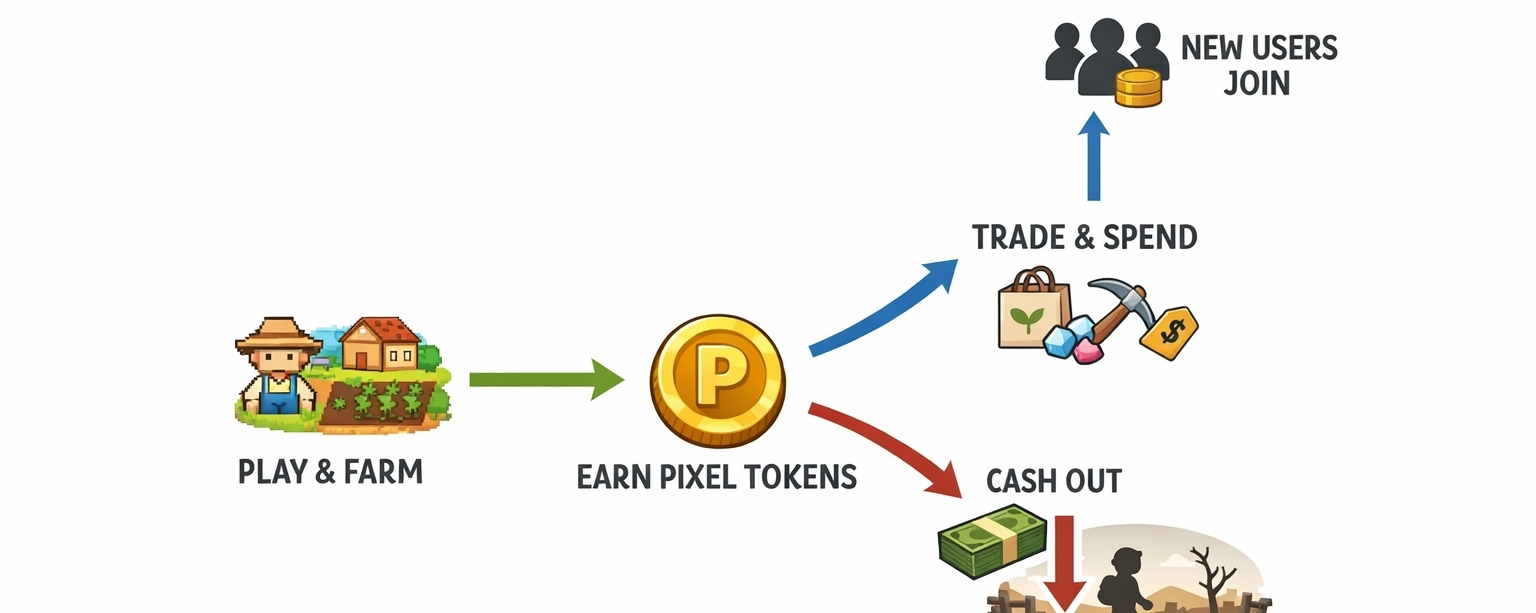
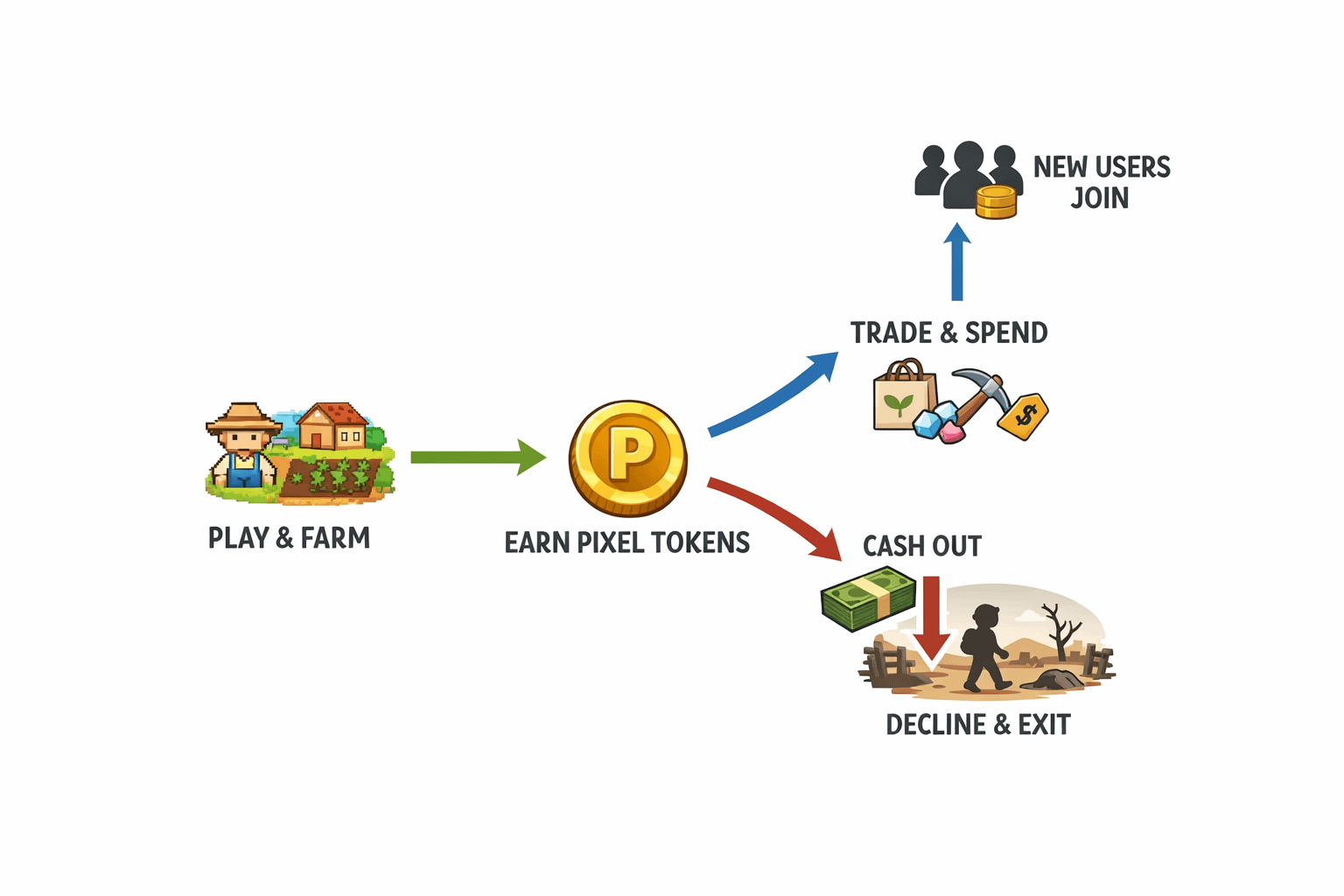
Pixels wraps the same basic economic engine in a calmer experience. You farm. You gather. You earn tokens. You spend some, maybe trade some, maybe hold them and hope the price goes up. It’s still a loop built around a token that needs demand to survive.
And where does that demand come from?
Not from the farming mechanics. Not from the pixel art. It comes from other people buying in. That’s the uncomfortable truth. The system still leans on new money entering the ecosystem, even if it does so more quietly than its predecessors.
I’ve seen this structure in different clothes for twenty years. Change the interface, tweak the pacing, soften the language—it doesn’t matter. If the value of participation depends on someone else showing up later, you’re not looking at a stable system. You’re looking at a timing game.
Now layer in the blockchain part.
People hear “ownership” and think control. But ownership of what, exactly? A plot of land in Pixels only has value as long as the game is active and people care about it. There’s no independent utility. No fallback. If activity drops, those assets don’t degrade gracefully—they just sit there, like abandoned property in a town nobody visits anymore.
That’s not ownership in the traditional sense. That’s dependency.
And then there’s centralization, the thing everyone politely avoids.
Yes, assets live on-chain. Yes, transactions are recorded. But the game itself—the rules, the economy, the updates—is still controlled by a small group of developers. They decide emission rates. They tweak rewards. They introduce new mechanics when the economy starts to wobble.
So let’s not pretend this is some decentralized utopia. It’s a managed system with a token attached. The blockchain is doing record-keeping, not governance in any meaningful sense.
Now ask the harder question. Who actually makes money here?
Early participants. Always.
The ones who arrive before the system saturates, before token inflation kicks in, before rewards get diluted. They benefit from the initial wave of attention and liquidity. Everyone else is playing catch-up in an environment where the returns are already compressing.
That’s not unique to Pixels. It’s baked into the model.
The marketing doesn’t emphasize this, of course. It talks about community, creativity, long-term engagement. All fine words. But underneath, the incentives still tilt toward those who get in early and get out at the right time.
And then there’s the human side of it.
What happens when the numbers stop working?
Because they will, at some point. Maybe slowly, maybe all at once. Token prices drift down. Rewards feel less meaningful. Players log in less often. The social layer thins out. And suddenly the “game” has to stand on its own, without the financial carrot keeping people engaged.
That’s where most of these projects run into trouble. Because the gameplay, stripped of its economic layer, often isn’t strong enough to hold attention.
Pixels might be better designed than earlier attempts. It probably is. The pacing is smarter. The onboarding is easier. It doesn’t scream at you to optimize every second.
But better doesn’t mean durable.
The core tension is still there. You’re mixing entertainment with financial incentives in a system that depends on both working at the same time. If either side weakens, the whole thing starts to feel off.
And markets have a way of testing these systems when nobody’s ready for it.
So when people say Pixels is fixing Web3 gaming, I tend to pause.
Because from where I’m sitting, it looks less like a fix and more like a softer version of the same bet.
Just dressed in calmer colors.
