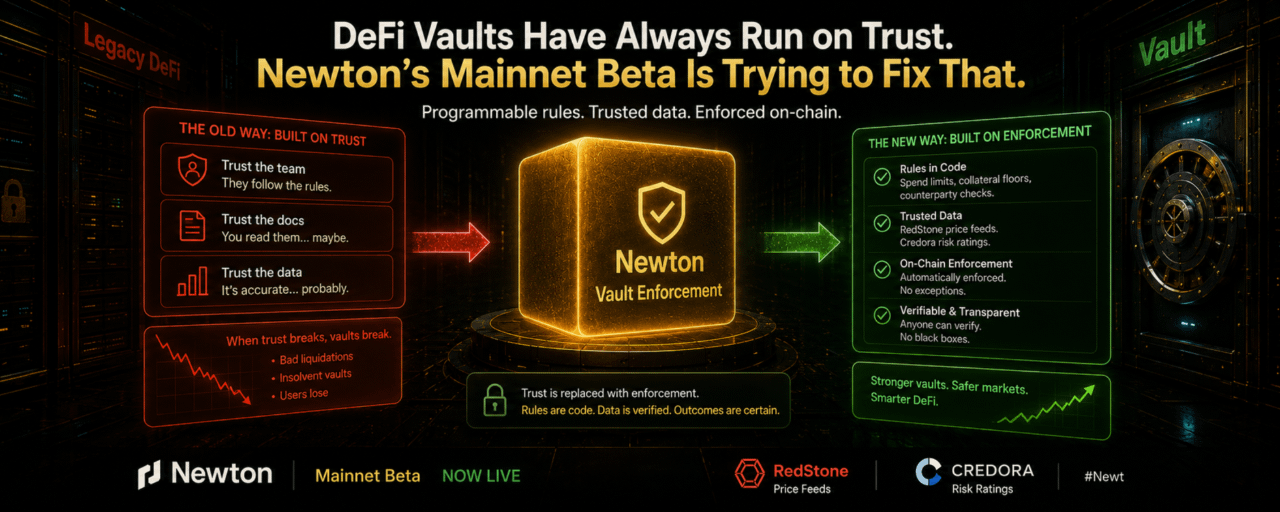
Newton Protocol's Mainnet Beta Is Trying to Fix the Part of DeFi Nobody Talks About
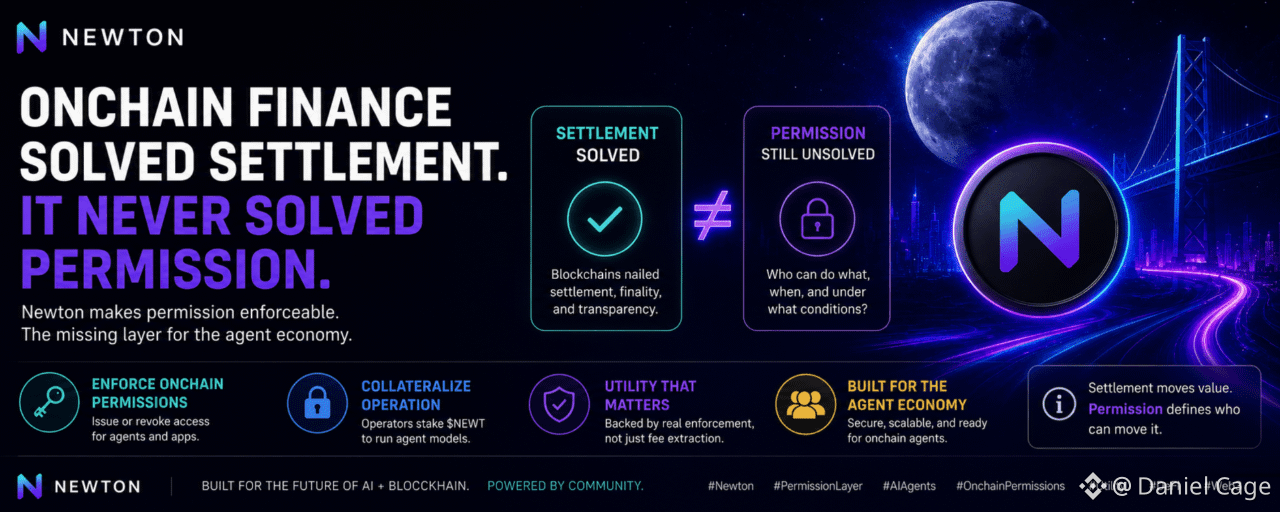
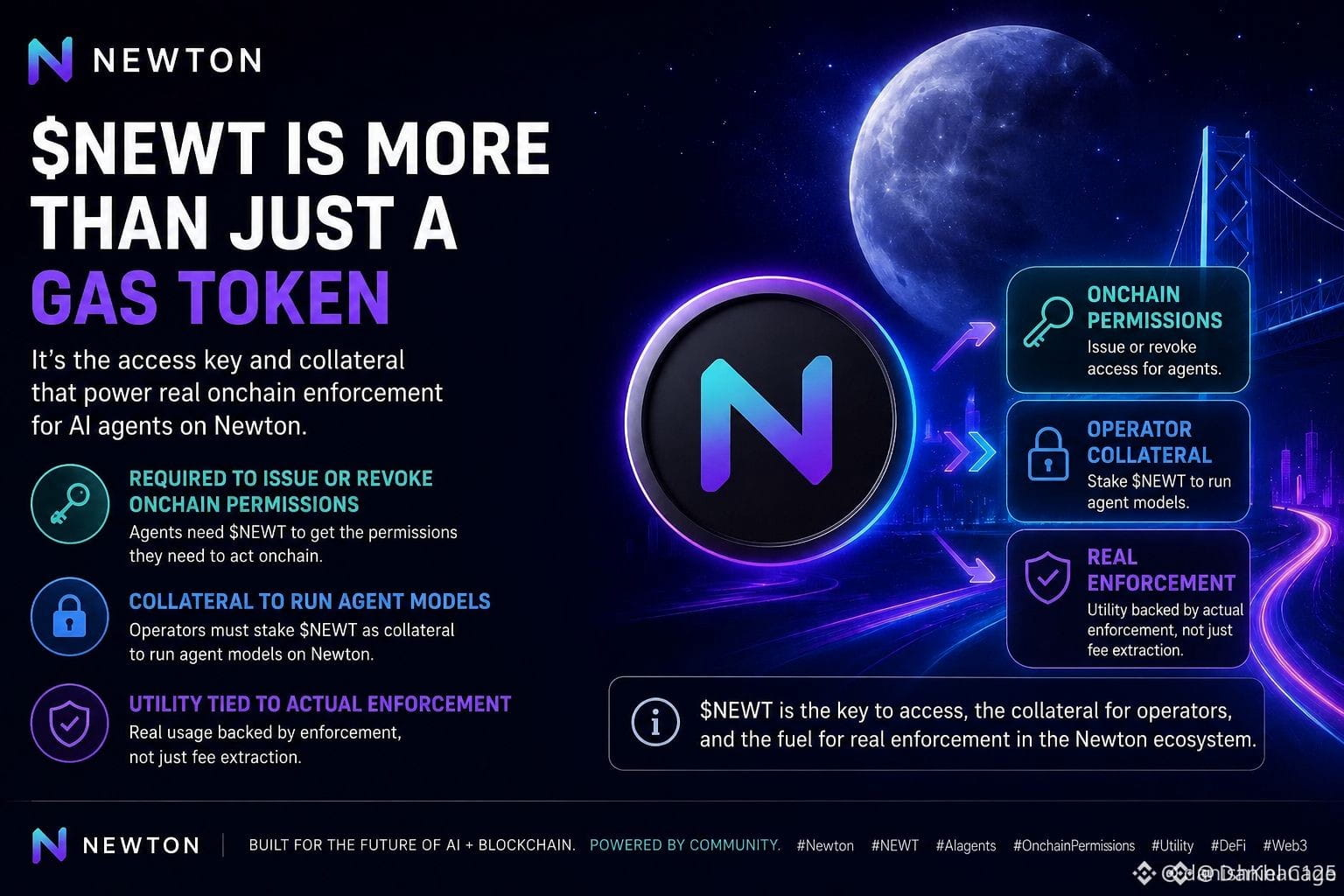
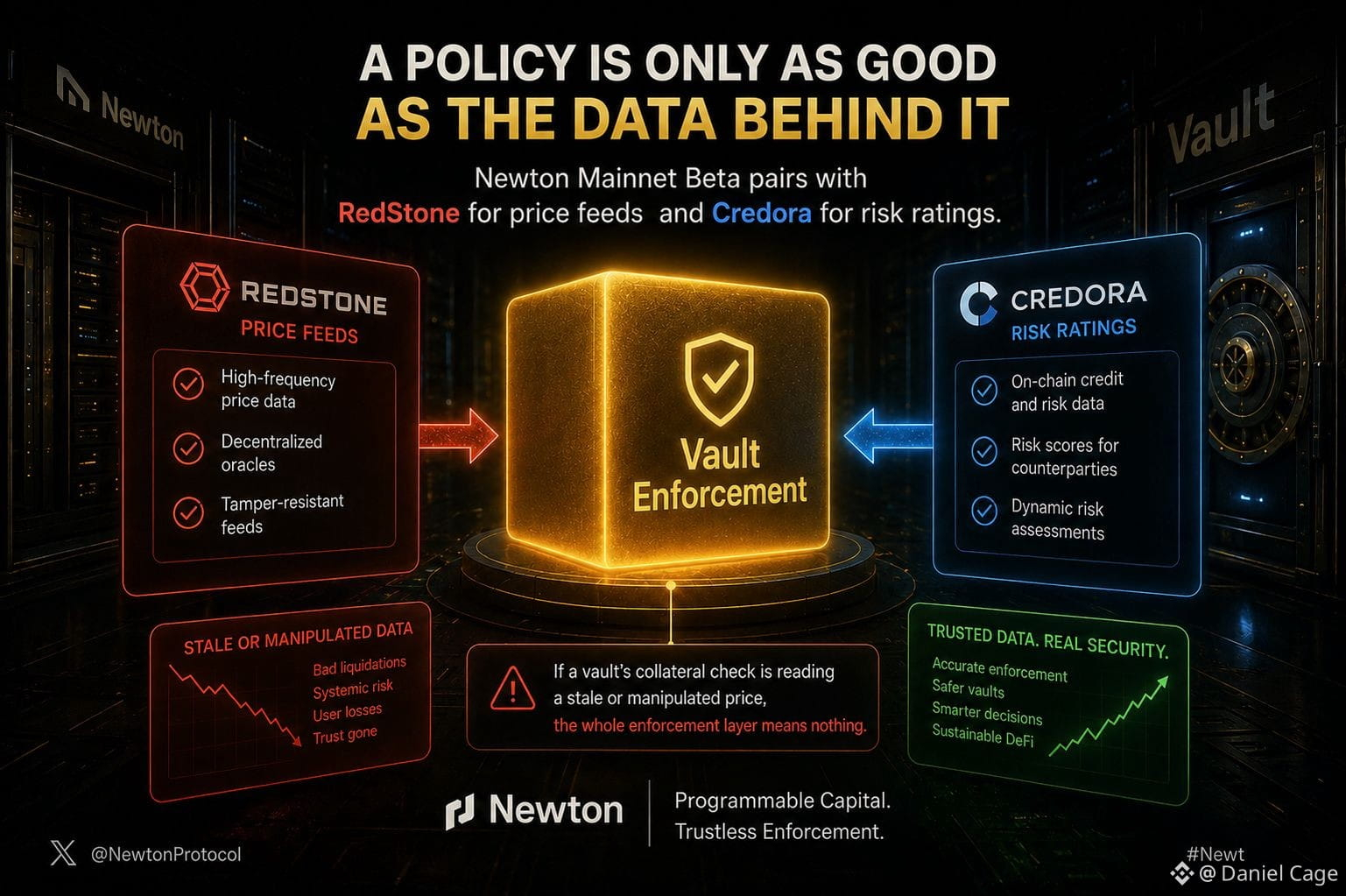
Smart contracts are blind. That's the part of this industry I don't think gets enough attention. A contract can execute a transaction perfectly and still have no idea whether the wallet on the other end is sanctioned, whether an AI agent is about to blow through a spending limit, or whether a transfer breaks a fund's own compliance policy. Historically, protocols have patched over this with frontend filters or centralized API checks — which is exactly the kind of soft, easily-bypassed layer that gets skipped the moment someone calls a contract directly. That's the gap Newton Protocol is going after, and it's why the mainnet beta launch on June 23 caught my eye more than most "infrastructure" announcements do. Why this matters right now Newton positions itself as an authorization layer — it evaluates policies like spend limits, sanctions screening, and investor eligibility before a transaction settles, and enforces the result inside the smart contract itself. Built as an EigenLayer AVS, it leans on a decentralized operator network to check real-world context — KYC status, market prices, proof of reserves — and produces a signed attestation for every decision, so there's an auditable record of why something was approved or blocked, not just that it happened. The mainnet beta shipped alongside VaultKit, the SDK vault curators use to make their rules enforceable onchain instead of living in a PDF somewhere. RedStone integrated its verified price feeds into that same policy layer the same day, which is a genuinely practical detail: now, when someone tries to withdraw or borrow against a vault, Newton checks the live asset price through RedStone and compares it against the vault's own policy before allowing the transaction to go through. Translating the tech A few concrete examples make this click faster than the architecture diagrams do: A stablecoin issuer can enforce sanctions screening and transfer restrictions on every redemption, automatically, instead of relying on a centralized backend to catch violations after the fact.An institution can cap what an autonomous trading agent is allowed to spend, set approved payees, and build in defenses against prompt-injection attacks — guardrails enforced before the transaction settles, not after.A vault curator can set position limits and counterparty screening that hold across every protocol the vault touches, with Newton doing the checking rather than trusting each integration to implement it correctly. What I find genuinely interesting is the choice to bring Rego onchain — it's the policy language that's been running compliance logic at places like Goldman Sachs and Capital One for years. Instead of inventing a new policy syntax from scratch, Newton is borrowing something already battle-tested in regulated finance and putting it where DeFi actually needs it. On the token side, NEWT has a fixed 1 billion supply, with 21.5% circulating at launch (including a 10% community rewards allocation), and it's used for staking and permissions that secure the network — the people running the operator checks have skin in the game. The honest risk paragraph I'd be doing this a disservice if I didn't flag the obvious stuff. A mainnet beta is still early — there's no long track record yet, and "policy enforcement layer" only matters if protocols actually integrate VaultKit rather than treating it as another SDK on the shelf. There's also a concentration question worth sitting with: if Newton's evaluations lean heavily on a handful of data providers like RedStone, a disruption on their end could cascade into transaction freezes rather than smooth enforcement. And jurisdictional policy enforcement across chains is inherently a moving target — regulation shifts faster than smart contracts do. Where I land Institutional capital has been circling onchain finance for a while, and the honest blocker has never really been yield — it's been the absence of enforceable, auditable controls that a compliance officer can actually sign off on. Newton isn't the flashiest pitch in this cycle, but "boring and enforceable" is usually what unlocks the next order of magnitude of capital, not the next narrative. Curious where others land on this: does onchain policy enforcement feel like the missing rail for institutional DeFi to you, or does it read as bureaucracy creeping into a space that was supposed to route around it? @NewtonProtocol $NEWT #Newt #newtonnetwork #newton #newtrend #NewsAboutCrypto
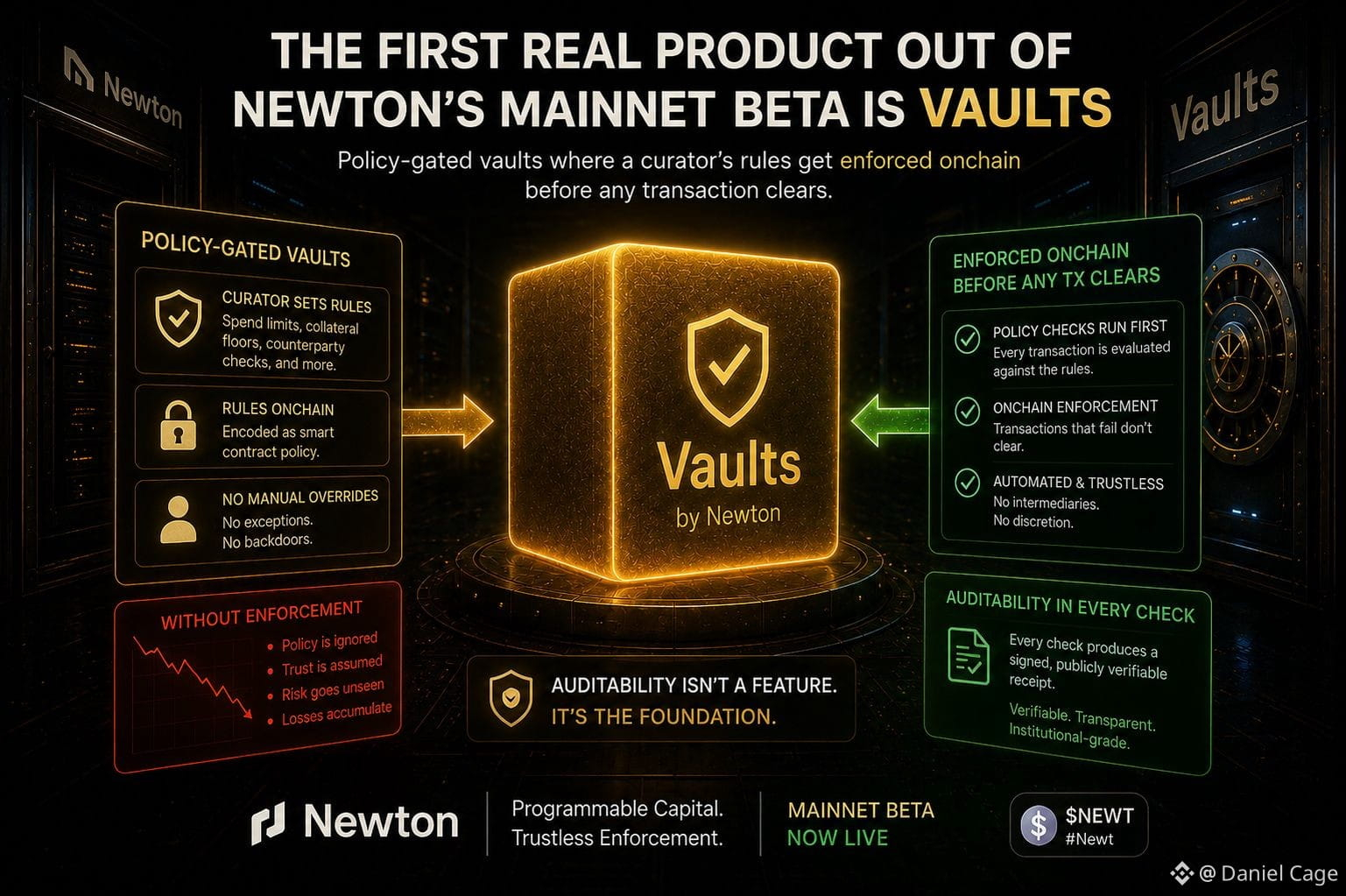
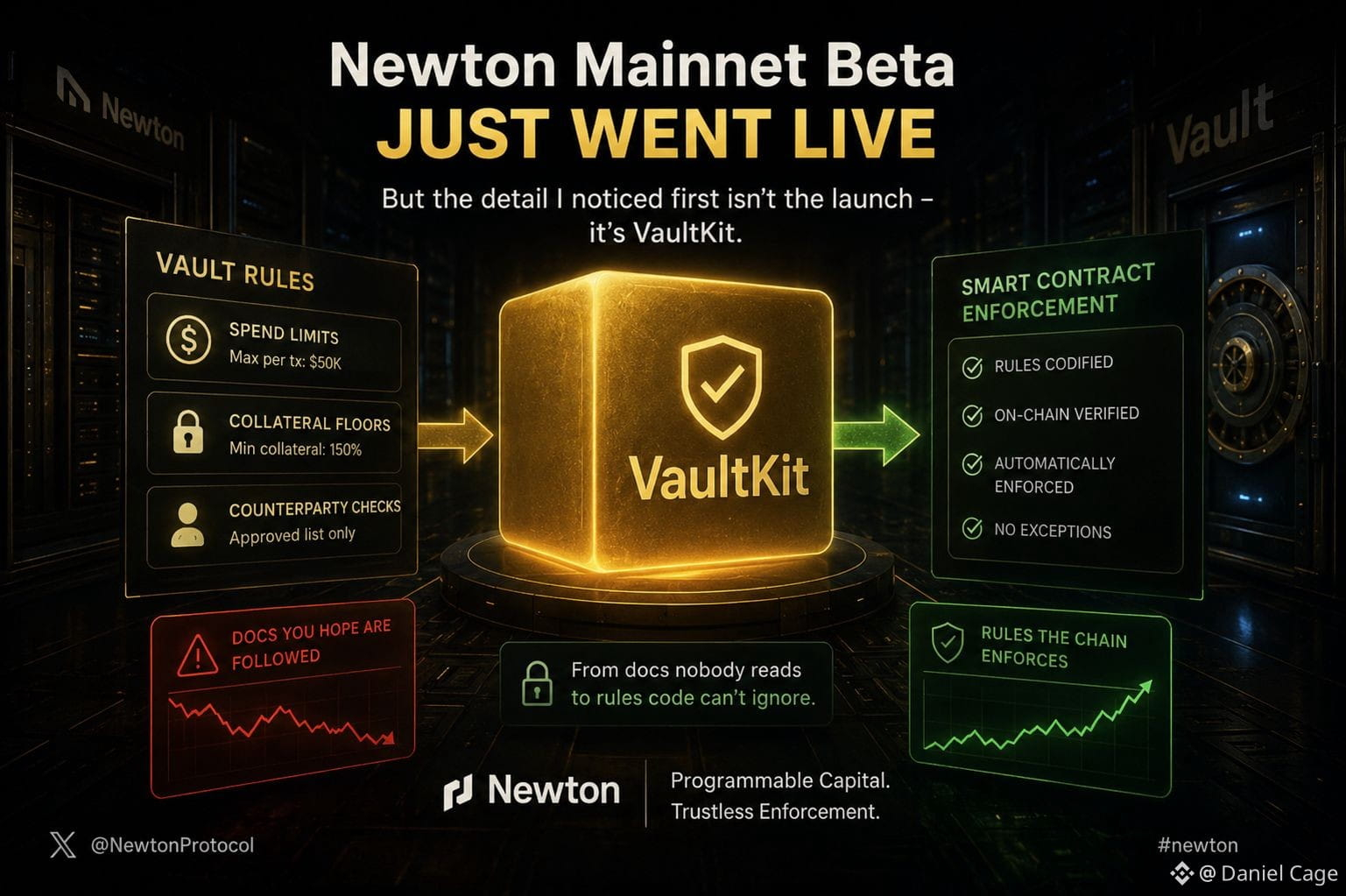
Das Newton Mainnet Beta ist gerade live gegangen, und das Detail, das mir zuerst aufgefallen ist, ist nicht der Launch selbst – es ist VaultKit. Es macht die Regeln eines Tresors (Ausgabenlimits, Sicherheitenuntergrenzen, Prüfungen für Gegenparteien) zu etwas, das ein Smart Contract tatsächlich durchsetzen kann – und nicht nur zu einer Dokumentation, die niemand liest. @NewtonProtocol $NEWT #newton #newton_xyz #newton_Network #NEWTONUSDT #NewToken
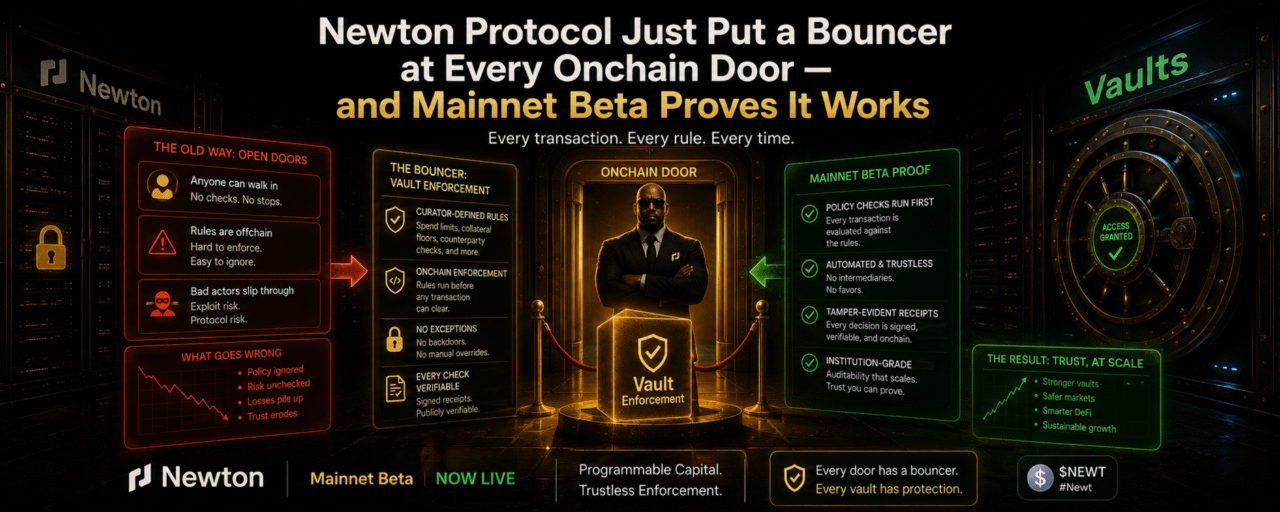
Newton Protocol Just Put a Bouncer at the Door of Every Onchain Transaction
I've spent years watching DeFi protocols bolt compliance on after the fact - a freeze function here, a manual review there, usually added only after something has already gone wrong. Newton Protocol is one of the few teams I've seen try to solve this at the root, and its Mainnet Beta launch is worth slowing down on. Why now. Newton just went live on mainnet with RedStone and Credora as its first data partners, and VaultKit as the SDK builders use to wire policies into their contracts. That's not a cosmetic update. It's the first real-world test of Newton's core idea: checking a transaction against a rulebook before it settles, not after. What it actually does. Newton describes itself as an authorization layer for onchain transactions - think of how a card network checks a payment against fraud rules before the charge clears. A curator or builder writes a policy (Newton uses the Rego policy language, the same one used in enterprise cloud security) that defines conditions: a price threshold, a risk score, a jurisdiction rule, a spending cap. When a transaction is submitted, Newton's decentralized operator network evaluates it against that policy inside a Trusted Execution Environment, secured through EigenLayer restaking. If the transaction passes, it settles. If it doesn't, it's blocked - and either way, the network produces a signed onchain receipt anyone can verify. No centralized reviewer, no black box. The mainnet beta's flagship product, Vaults, makes this concrete. A vault curator can set a policy that liquidates or blocks a position automatically if a collateral price (fed by RedStone) or a risk rating (from Credora) crosses a line the curator defined in advance. The enforcement happens at the exact moment of the transaction, not through after-the-fact monitoring - which is the gap most DeFi risk tooling still hasn't closed. Why I think this matters more than it looks. The numbers behind Newton's pitch are the part I keep coming back to: a stablecoin market north of $313B, monthly stablecoin transfer volume above $4T, tokenized real-world assets past $25B, and global compliance costs estimated above $206B a year. That's the size of the problem Newton is aiming a policy engine at. Institutions, stablecoin issuers, and RWA platforms don't lack demand to go onchain - they lack a way to prove, transaction by transaction, that they stayed inside the rules. A signed, publicly verifiable receipt is a genuinely different answer to that than "trust our compliance team." It also isn't a project running on a napkin. Newton comes out of Magic Labs, the team behind the original embedded wallet, which already has real distribution - over 200,000 developers and 50 million-plus wallets created through customers like Polymarket, Forbes, and WalletConnect. Backers include PayPal Ventures, DCG, CoinFund, Polygon, and Tiger Global, which tells me this isn't purely a crypto-native audience Newton is building for - it's aiming at the institutional side too. NEWT itself is capped at 1 billion tokens with no inflation, and it's used to secure the operator network through restaking, pay for compliance compute, and vote on policy governance - utility tied directly to how much of the network is actually enforcing. Where I'd stay careful. A policy is only as good as the data feeding it, and Newton is currently leaning on a small number of partners - RedStone for price data, Credora for risk. If either has an outage or a feed goes stale, that's a real point of failure for anything gated by their inputs. Mainnet beta also means exactly that: early. Adoption by builders willing to wire VaultKit into production contracts, and by institutions willing to trust a new attestation model over legal review, will take time to prove out, and regulatory treatment of "compliance-as-code" is still an open question in most jurisdictions. What strikes me most isn't the tech alone - it's the framing. Newton isn't trying to be another DeFi app competing for TVL; it's trying to be the layer that decides whether a transaction is even allowed to happen, across whichever app sits on top of it. If that holds, it changes who the customer is - not just DeFi users, but the stablecoin issuers and RWA platforms currently stuck choosing between staying compliant and staying decentralized. Do you think onchain policy enforcement like this becomes standard infrastructure, or does regulation move too fast for any fixed rulebook to keep up? @NewtonProtocol $NEWT #Newt
I keep coming back to one gap in DeFi: contracts execute, then everyone hopes it was fine. @NewtonProtocol flips that order — it checks a transaction against a policy before it settles, not after the funds move. Less flashy than a new L2, but it's the plumbing institutional capital actually waits for. #Newt $NEWT