
Zeb Rana
117 Beiträge

Zeb Rana
Melden
Nutzer blockieren
Entrepreneur Mindset 💼 Building wealth through crypto, discipline & smart decisions 📈 Dream big. Work silent. Win loud. 🚀
29 Following
13 Follower
113 Like gegeben
Beiträge
Alle
Zitierungen
·
--
Artikel
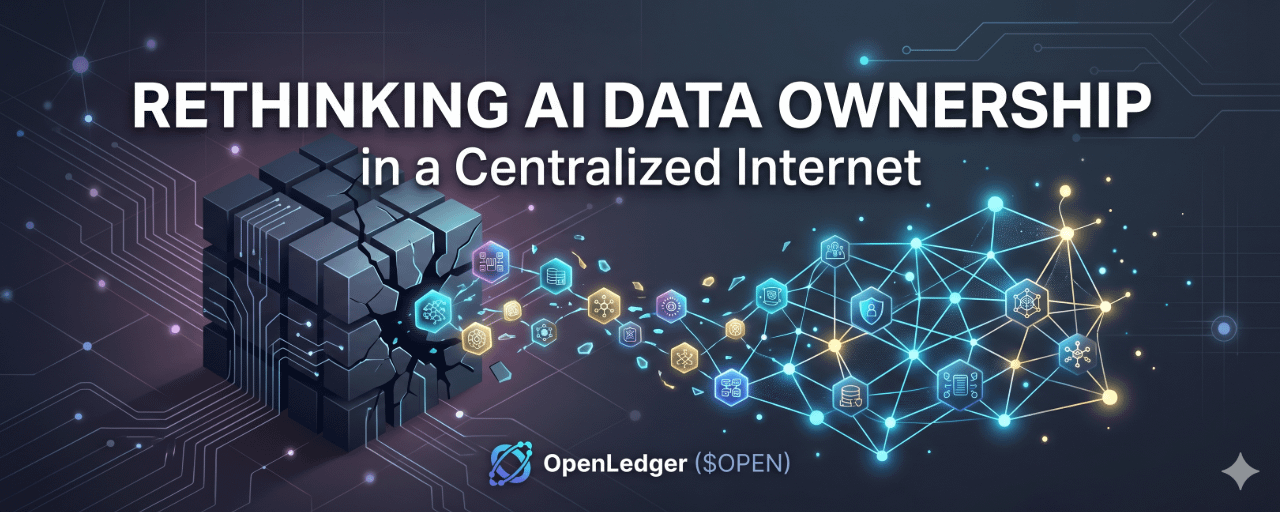
OpenLedger ($OPEN): Neuüberdenkung des Eigentums an KI-Daten im zentralisierten InternetDie meisten KI-Krypto-Projekte heute haben dasselbe Problem, sie klingen beeindruckend,
aber fühlen sich von echten Nutzern disconnected.
Große Worte wie „dezentralisierte Intelligenz“ und „KI-Ermächtigung“ sind überall, doch nur sehr wenige erklären, welchen Wert die Leute, die die Daten generieren, tatsächlich zurückbekommen.
@Openledger versucht, dieses Problem aus einem praktischeren Blickwinkel anzugehen.
Im Grunde läuft das Internet bereits auf nutzergenerierten Daten.
Jede Suche, jeder Post, jeder Klick und jede Interaktion trainieren stillschweigend KI-Systeme im Hintergrund.
OpenLedger ($OPEN): Neuüberdenkung des Eigentums an KI-Daten im zentralisierten Internet
Die meisten KI-Krypto-Projekte heute haben dasselbe Problem, sie klingen beeindruckend,
aber fühlen sich von echten Nutzern disconnected.
Große Worte wie „dezentralisierte Intelligenz“ und „KI-Ermächtigung“ sind überall, doch nur sehr wenige erklären, welchen Wert die Leute, die die Daten generieren, tatsächlich zurückbekommen.
@OpenLedger versucht, dieses Problem aus einem praktischeren Blickwinkel anzugehen.
Im Grunde läuft das Internet bereits auf nutzergenerierten Daten.
Jede Suche, jeder Post, jeder Klick und jede Interaktion trainieren stillschweigend KI-Systeme im Hintergrund.
aber fühlen sich von echten Nutzern disconnected.
Große Worte wie „dezentralisierte Intelligenz“ und „KI-Ermächtigung“ sind überall, doch nur sehr wenige erklären, welchen Wert die Leute, die die Daten generieren, tatsächlich zurückbekommen.
@OpenLedger versucht, dieses Problem aus einem praktischeren Blickwinkel anzugehen.
Im Grunde läuft das Internet bereits auf nutzergenerierten Daten.
Jede Suche, jeder Post, jeder Klick und jede Interaktion trainieren stillschweigend KI-Systeme im Hintergrund.
270
·
--
Bullisch
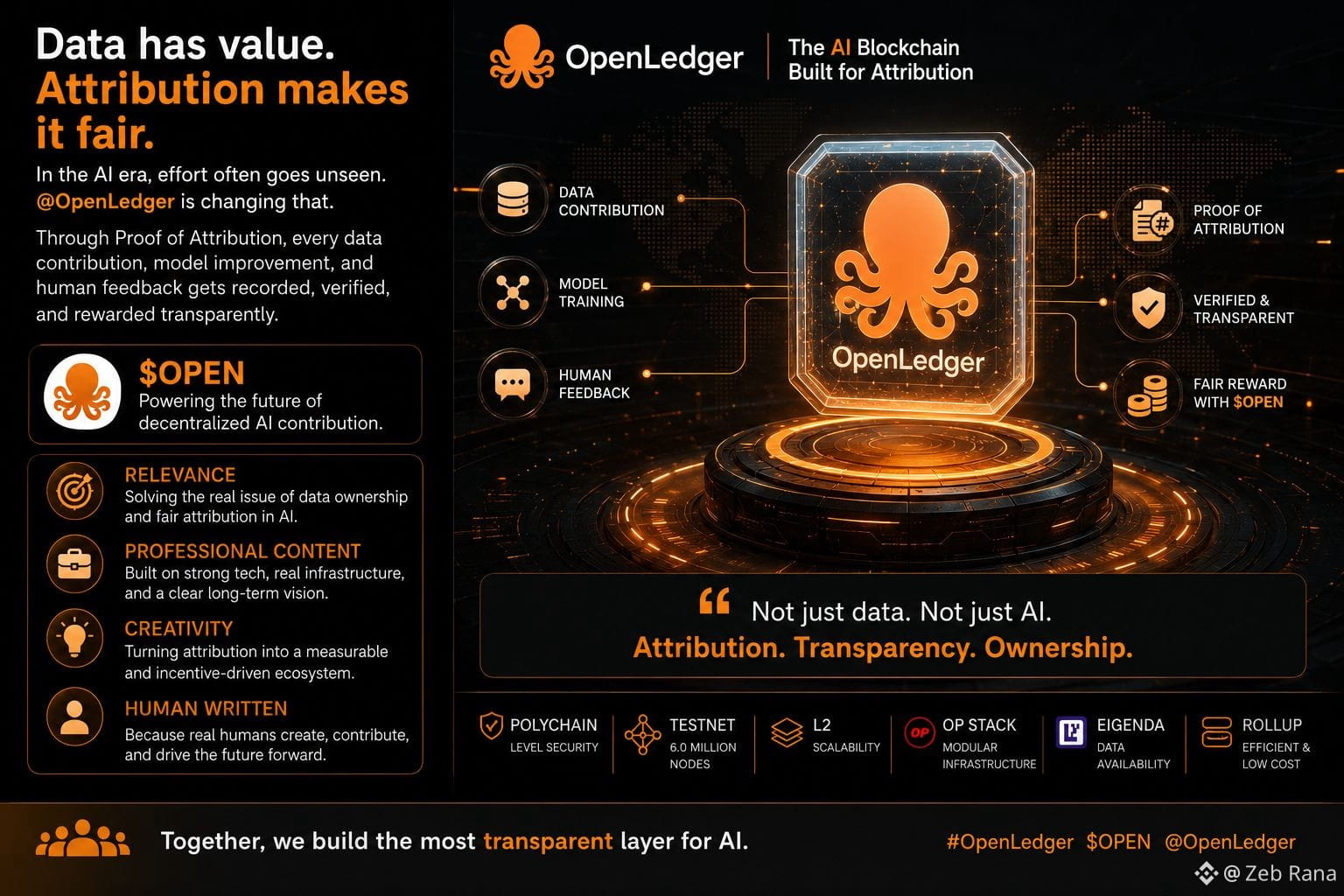
Viele Leute nähern sich noch immer der KI + Krypto-Narrative, als wäre es nur ein weiterer Handelszyklus, aber was sich wirklich verschiebt, ist viel tiefer als kurzfristige Marktbewegungen.
Ich habe Fälle gesehen, in denen Nutzer kleine Mengen BNB in mehrere Mikro-Aktivitäten aufteilen, nur um "Signale zu farmen", während sie stillschweigend Gebühren, Dashboards und prozentuale Änderungen verfolgen, als wäre es ein Spiel.
Aber die echte Frage ist nicht der Trade, sondern das Verständnis dahinter.
Projekte wie @Openledger (https://www.binance.com/en/square/profile/openledger) treiben eine unangenehmere Idee voran: Daten sind nicht nur "besessen", sie werden zugeordnet, gemessen und gewichtet.
Und das ändert alles.
Denk daran wie an eine Präzisionswaage auf einem Markt.
Die Waage ist genau, aber was wirklich zählt, ist, wer entscheidet, was darauf gelegt wird.
Das ist die zentrale Spannung im Proof of Attribution, nicht wo Wissen herkommt, sondern was verifiziert, verfolgt und in messbare Beiträge umgewandelt werden kann.
In diesem System riskiert Aufwand, der nicht quantifiziert werden kann, oft ignoriert zu werden.
Ein sauberer Datensatz versus ein höheres Interaktionsvolumen, das System tendiert natürlicherweise zu dem, was leichter zu verifizieren ist, nicht immer zu dem, was am bedeutendsten ist.
Da wird $OPEN interessant. Es geht nicht nur um Anreize; es geht darum, wie Beiträge im KI-Zeitalter aufgezeichnet, bewertet und schließlich belohnt werden.
Aber hier ist die unangenehme Wahrheit: Wenn alles eine Metrik wird, beginnt die Datenbereinigung, Feedbackschleifen, Feineinstellung von Signalen die Kreativität durch das zu filtern, was bewiesen werden kann, nicht durch das, was vorgestellt werden kann.
Dennoch ist das, was @Openledger auszeichnet.
Es verkauft keine Fantasie. Es baut eine Prüf-Ebene für die Intelligenz selbst.
Und im Web3 kann ein Prüfraum mächtiger und beunruhigender wirken als ein Casino.
{spot}(OPENUSDT)
{alpha}(560x7ec43cf65f1663f820427c62a5780b8f2e25593a)
#OpenLedger $OPEN $LAB
Viele Leute nähern sich noch immer der KI + Krypto-Narrative, als wäre es nur ein weiterer Handelszyklus, aber was sich wirklich verschiebt, ist viel tiefer als kurzfristige Marktbewegungen.
Ich habe Fälle gesehen, in denen Nutzer kleine Mengen BNB in mehrere Mikro-Aktivitäten aufteilen, nur um "Signale zu farmen", während sie stillschweigend Gebühren, Dashboards und prozentuale Änderungen verfolgen, als wäre es ein Spiel.
Aber die echte Frage ist nicht der Trade, sondern das Verständnis dahinter.
Projekte wie @OpenLedger (https://www.binance.com/en/square/profile/openledger) treiben eine unangenehmere Idee voran: Daten sind nicht nur "besessen", sie werden zugeordnet, gemessen und gewichtet.
Und das ändert alles.
Denk daran wie an eine Präzisionswaage auf einem Markt.
Die Waage ist genau, aber was wirklich zählt, ist, wer entscheidet, was darauf gelegt wird.
Das ist die zentrale Spannung im Proof of Attribution, nicht wo Wissen herkommt, sondern was verifiziert, verfolgt und in messbare Beiträge umgewandelt werden kann.
In diesem System riskiert Aufwand, der nicht quantifiziert werden kann, oft ignoriert zu werden.
Ein sauberer Datensatz versus ein höheres Interaktionsvolumen, das System tendiert natürlicherweise zu dem, was leichter zu verifizieren ist, nicht immer zu dem, was am bedeutendsten ist.
Da wird $OPEN interessant. Es geht nicht nur um Anreize; es geht darum, wie Beiträge im KI-Zeitalter aufgezeichnet, bewertet und schließlich belohnt werden.
Aber hier ist die unangenehme Wahrheit: Wenn alles eine Metrik wird, beginnt die Datenbereinigung, Feedbackschleifen, Feineinstellung von Signalen die Kreativität durch das zu filtern, was bewiesen werden kann, nicht durch das, was vorgestellt werden kann.
Dennoch ist das, was @OpenLedger auszeichnet.
Es verkauft keine Fantasie. Es baut eine Prüf-Ebene für die Intelligenz selbst.
Und im Web3 kann ein Prüfraum mächtiger und beunruhigender wirken als ein Casino.
#OpenLedger $OPEN $LAB
Ich habe Fälle gesehen, in denen Nutzer kleine Mengen BNB in mehrere Mikro-Aktivitäten aufteilen, nur um "Signale zu farmen", während sie stillschweigend Gebühren, Dashboards und prozentuale Änderungen verfolgen, als wäre es ein Spiel.
Aber die echte Frage ist nicht der Trade, sondern das Verständnis dahinter.
Projekte wie @OpenLedger (https://www.binance.com/en/square/profile/openledger) treiben eine unangenehmere Idee voran: Daten sind nicht nur "besessen", sie werden zugeordnet, gemessen und gewichtet.
Und das ändert alles.
Denk daran wie an eine Präzisionswaage auf einem Markt.
Die Waage ist genau, aber was wirklich zählt, ist, wer entscheidet, was darauf gelegt wird.
Das ist die zentrale Spannung im Proof of Attribution, nicht wo Wissen herkommt, sondern was verifiziert, verfolgt und in messbare Beiträge umgewandelt werden kann.
In diesem System riskiert Aufwand, der nicht quantifiziert werden kann, oft ignoriert zu werden.
Ein sauberer Datensatz versus ein höheres Interaktionsvolumen, das System tendiert natürlicherweise zu dem, was leichter zu verifizieren ist, nicht immer zu dem, was am bedeutendsten ist.
Da wird $OPEN interessant. Es geht nicht nur um Anreize; es geht darum, wie Beiträge im KI-Zeitalter aufgezeichnet, bewertet und schließlich belohnt werden.
Aber hier ist die unangenehme Wahrheit: Wenn alles eine Metrik wird, beginnt die Datenbereinigung, Feedbackschleifen, Feineinstellung von Signalen die Kreativität durch das zu filtern, was bewiesen werden kann, nicht durch das, was vorgestellt werden kann.
Dennoch ist das, was @OpenLedger auszeichnet.
Es verkauft keine Fantasie. Es baut eine Prüf-Ebene für die Intelligenz selbst.
Und im Web3 kann ein Prüfraum mächtiger und beunruhigender wirken als ein Casino.
#OpenLedger $OPEN $LAB
330
·
--
Die Evolution von BTCFi geht nicht mehr nur darum, Bitcoin zu verpacken
es geht darum, das Bitcoin-Kapital intelligenter in DeFi zu nutzen.
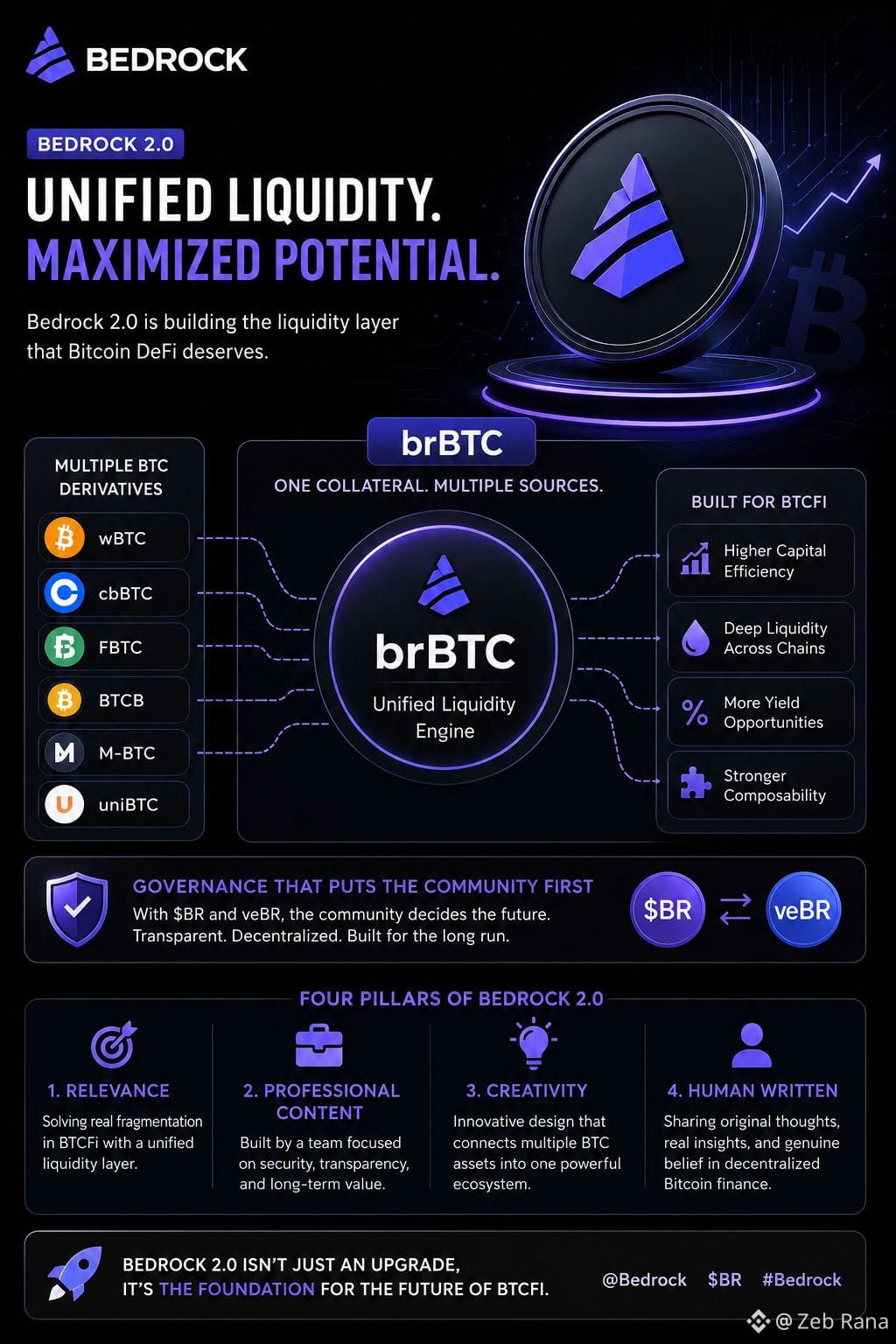
Deshalb hat @Bedrock 2.0 meine Aufmerksamkeit erregt.
Anstatt sich auf eine einzige BTC-Darstellung zu verlassen, führt @Bedrock brBTC ein,
eine einheitliche Liquiditätsschicht, die darauf ausgelegt ist, mehrere Bitcoin-besicherte Vermögenswerte in einem kapital-effizienten Ökosystem zu verbinden.
Die Idee ist einfach: die Fragmentierung der Liquidität zu reduzieren und gleichzeitig mehr Chancen auf Rendite, Nutzen und Komposabilität zu schaffen.
Was heraussticht, ist, dass @Bedrock 2.0 nicht nur auf Effizienz fokussiert;
es stellt auch die Governance in den Mittelpunkt durch $BR und veBR, wodurch die Community eine Stimme hat, wie sich das Ökosystem entwickelt.
In einem Markt, in dem Vertrauensannahmen genauso wichtig sind wie Renditen,
kann transparente Governance zu einem entscheidenden Unterscheidungsmerkmal werden.
BTCFi ist noch in der frühen Phase, aber Projekte, die Innovation, Liquidität,
und die Teilnahme der Community in Einklang bringen, werden wahrscheinlich die nächste Phase der dezentralen Finanzen prägen.
Zu beobachten, wie sich brBTC und das breitere Bedrock-Ökosystem entwickeln
wird interessant sein, während Bitcoin weiterhin über einfache Wertaufbewahrungs-Anwendungsfälle hinaus expandiert.
{alpha}(560xff7d6a96ae471bbcd7713af9cb1feeb16cf56b41)
{spot}(BTCUSDT)
@Bedrock $BR #BedrockGem $BTC
Die Evolution von BTCFi geht nicht mehr nur darum, Bitcoin zu verpacken
es geht darum, das Bitcoin-Kapital intelligenter in DeFi zu nutzen.
Deshalb hat @Bedrock 2.0 meine Aufmerksamkeit erregt.
Anstatt sich auf eine einzige BTC-Darstellung zu verlassen, führt @Bedrock brBTC ein,
eine einheitliche Liquiditätsschicht, die darauf ausgelegt ist, mehrere Bitcoin-besicherte Vermögenswerte in einem kapital-effizienten Ökosystem zu verbinden.
Die Idee ist einfach: die Fragmentierung der Liquidität zu reduzieren und gleichzeitig mehr Chancen auf Rendite, Nutzen und Komposabilität zu schaffen.
Was heraussticht, ist, dass @Bedrock 2.0 nicht nur auf Effizienz fokussiert;
es stellt auch die Governance in den Mittelpunkt durch $BR und veBR, wodurch die Community eine Stimme hat, wie sich das Ökosystem entwickelt.
In einem Markt, in dem Vertrauensannahmen genauso wichtig sind wie Renditen,
kann transparente Governance zu einem entscheidenden Unterscheidungsmerkmal werden.
BTCFi ist noch in der frühen Phase, aber Projekte, die Innovation, Liquidität,
und die Teilnahme der Community in Einklang bringen, werden wahrscheinlich die nächste Phase der dezentralen Finanzen prägen.
Zu beobachten, wie sich brBTC und das breitere Bedrock-Ökosystem entwickeln
wird interessant sein, während Bitcoin weiterhin über einfache Wertaufbewahrungs-Anwendungsfälle hinaus expandiert.
@Bedrock $BR #BedrockGem $BTC
es geht darum, das Bitcoin-Kapital intelligenter in DeFi zu nutzen.
Deshalb hat @Bedrock 2.0 meine Aufmerksamkeit erregt.
Anstatt sich auf eine einzige BTC-Darstellung zu verlassen, führt @Bedrock brBTC ein,
eine einheitliche Liquiditätsschicht, die darauf ausgelegt ist, mehrere Bitcoin-besicherte Vermögenswerte in einem kapital-effizienten Ökosystem zu verbinden.
Die Idee ist einfach: die Fragmentierung der Liquidität zu reduzieren und gleichzeitig mehr Chancen auf Rendite, Nutzen und Komposabilität zu schaffen.
Was heraussticht, ist, dass @Bedrock 2.0 nicht nur auf Effizienz fokussiert;
es stellt auch die Governance in den Mittelpunkt durch $BR und veBR, wodurch die Community eine Stimme hat, wie sich das Ökosystem entwickelt.
In einem Markt, in dem Vertrauensannahmen genauso wichtig sind wie Renditen,
kann transparente Governance zu einem entscheidenden Unterscheidungsmerkmal werden.
BTCFi ist noch in der frühen Phase, aber Projekte, die Innovation, Liquidität,
und die Teilnahme der Community in Einklang bringen, werden wahrscheinlich die nächste Phase der dezentralen Finanzen prägen.
Zu beobachten, wie sich brBTC und das breitere Bedrock-Ökosystem entwickeln
wird interessant sein, während Bitcoin weiterhin über einfache Wertaufbewahrungs-Anwendungsfälle hinaus expandiert.
@Bedrock $BR #BedrockGem $BTC
1
1
97
·
--
Bullisch
Die meisten Trader konzentrieren sich auf die Preisbewegung,
aber erfahrene On-Chain-Analysten achten auf das Verhalten.
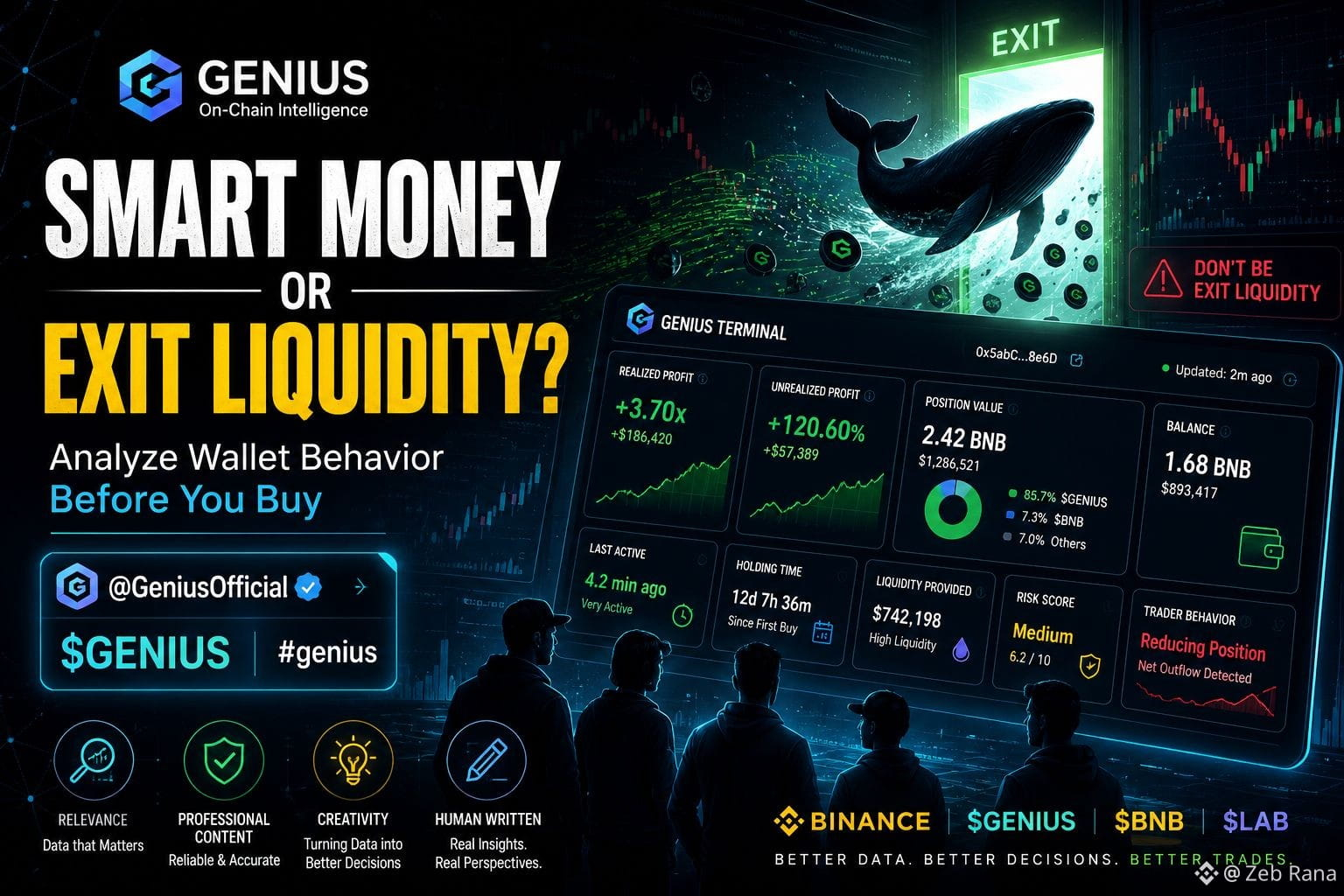
Eine Wallet, die massive unrealized gains zeigt, kann attraktiv aussehen,
doch die wahre Geschichte verbirgt sich oft in realisierten Gewinnen, Positionsgröße, Aktivitätshistorie und Exit-Risiko.
Deshalb schätze ich @GeniusOfficial .
Anstatt blindes Copy Trading zu fördern,
bietet es tiefere Einblicke in die Wallet-Aktivität, was den Nutzern hilft zu bewerten, ob ein Trader weiterhin accumuliert, das Risiko reduziert oder einen Exit vorbereitet.
Ein grünes Portfolio bedeutet nicht immer eine profitable Gelegenheit für Nachzügler.
Der Unterschied zwischen klugem Investieren und zum Exit-Liquidität zu werden, liegt oft im Verständnis der Daten hinter dem Trade.
Mit $GENIUS wird On-Chain-Intelligenz zugänglicher, was es den Tradern ermöglicht, informierte Entscheidungen zu treffen, anstatt emotional zu handeln.
In der Krypto-Welt erzählen Charts einen Teil der Geschichte.
Das Verhalten der Wallet erzählt den Rest.
{spot}(GENIUSUSDT)
{alpha}(560x7ec43cf65f1663f820427c62a5780b8f2e25593a)
{spot}(BNBUSDT)
#genius $GENIUS $LAB @GeniusOfficial
Die meisten Trader konzentrieren sich auf die Preisbewegung,
aber erfahrene On-Chain-Analysten achten auf das Verhalten.
Eine Wallet, die massive unrealized gains zeigt, kann attraktiv aussehen,
doch die wahre Geschichte verbirgt sich oft in realisierten Gewinnen, Positionsgröße, Aktivitätshistorie und Exit-Risiko.
Deshalb schätze ich @GeniusOfficial .
Anstatt blindes Copy Trading zu fördern,
bietet es tiefere Einblicke in die Wallet-Aktivität, was den Nutzern hilft zu bewerten, ob ein Trader weiterhin accumuliert, das Risiko reduziert oder einen Exit vorbereitet.
Ein grünes Portfolio bedeutet nicht immer eine profitable Gelegenheit für Nachzügler.
Der Unterschied zwischen klugem Investieren und zum Exit-Liquidität zu werden, liegt oft im Verständnis der Daten hinter dem Trade.
Mit $GENIUS wird On-Chain-Intelligenz zugänglicher, was es den Tradern ermöglicht, informierte Entscheidungen zu treffen, anstatt emotional zu handeln.
In der Krypto-Welt erzählen Charts einen Teil der Geschichte.
Das Verhalten der Wallet erzählt den Rest.
#genius $GENIUS $LAB @GeniusOfficial
aber erfahrene On-Chain-Analysten achten auf das Verhalten.
Eine Wallet, die massive unrealized gains zeigt, kann attraktiv aussehen,
doch die wahre Geschichte verbirgt sich oft in realisierten Gewinnen, Positionsgröße, Aktivitätshistorie und Exit-Risiko.
Deshalb schätze ich @GeniusOfficial .
Anstatt blindes Copy Trading zu fördern,
bietet es tiefere Einblicke in die Wallet-Aktivität, was den Nutzern hilft zu bewerten, ob ein Trader weiterhin accumuliert, das Risiko reduziert oder einen Exit vorbereitet.
Ein grünes Portfolio bedeutet nicht immer eine profitable Gelegenheit für Nachzügler.
Der Unterschied zwischen klugem Investieren und zum Exit-Liquidität zu werden, liegt oft im Verständnis der Daten hinter dem Trade.
Mit $GENIUS wird On-Chain-Intelligenz zugänglicher, was es den Tradern ermöglicht, informierte Entscheidungen zu treffen, anstatt emotional zu handeln.
In der Krypto-Welt erzählen Charts einen Teil der Geschichte.
Das Verhalten der Wallet erzählt den Rest.
#genius $GENIUS $LAB @GeniusOfficial
558
·
--
Bullisch
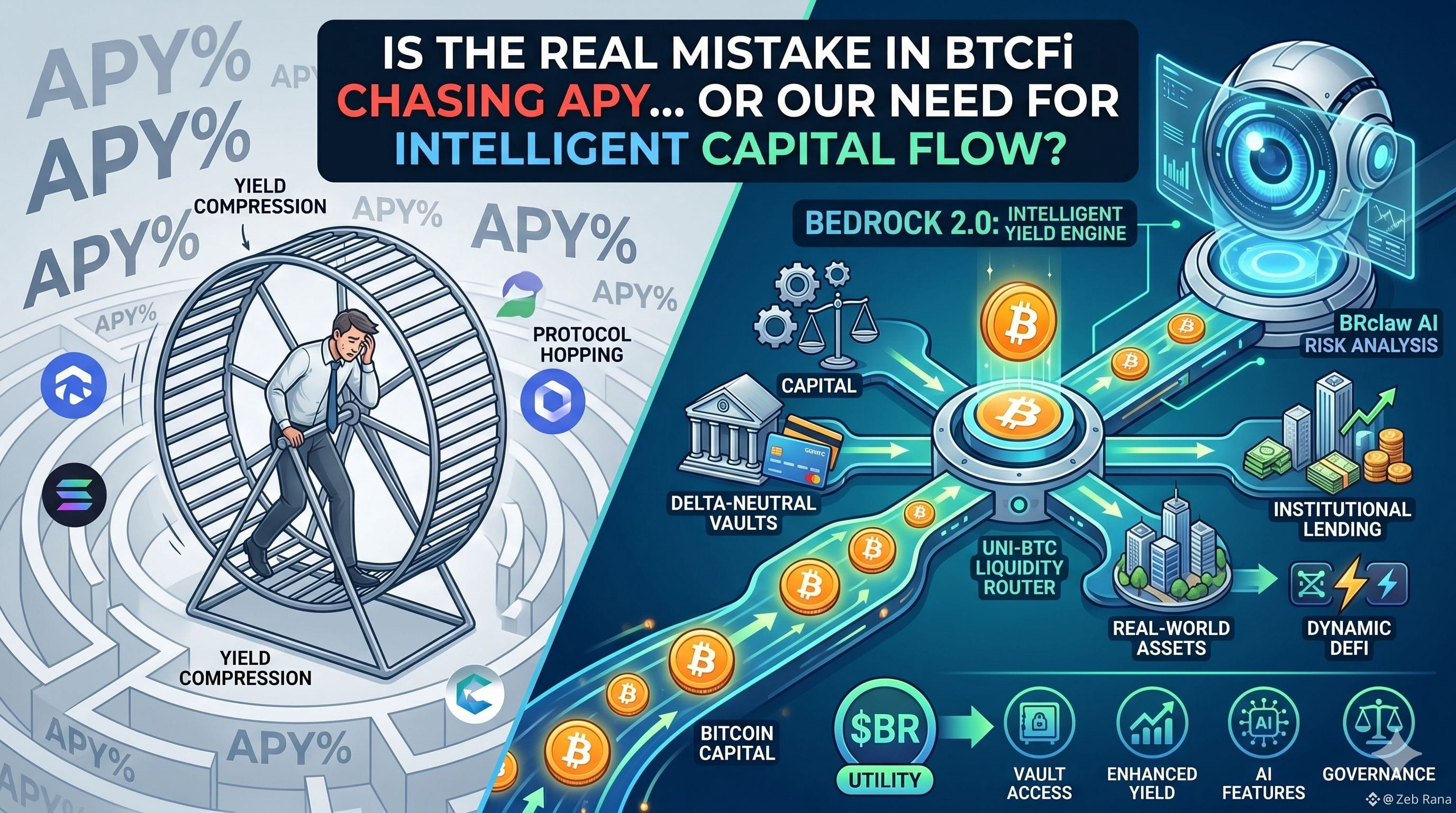
Was, wenn der eigentliche Fehler bei BTCFi nicht der Markt ist…
sondern unsere Besessenheit, der APY hinterherzujagen? 🤔
Lange Zeit haben Nutzer endlos zwischen Protokollen gewechselt und von einer „hochverzinslichen“ Möglichkeit zur nächsten gesprungen, in der Erwartung, Konsistenz in einem Bereich zu finden, wo die Erträge naturgemäß mit der Zeit komprimiert werden.
Aber der tiefere Wandel, der gerade jetzt stattfindet, dreht sich nicht darum, wer den höchsten APY bietet.
Es geht darum, wer kontrolliert, wohin das Bitcoin-Kapital als Nächstes fließt.
Hier kommt @Bedrock ins Spiel.
Anstatt sich nur als ein weiteres Liquid Restaking-Protokoll zu positionieren, entwickelt sich @Bedrock 2.0 zu etwas viel Fortschrittlicherem – einem Intelligent Yield Engine für Bitcoin-Kapital.
Durch uniBTC ist es darauf ausgelegt, die Bitcoin-Liquidität über mehrere institutionelle Strategien zu leiten, anstatt sich auf eine einzige Ertragsquelle zu verlassen, darunter:
🏦 Delta-neutrale quantitative Vaults
💳 Institutionelles Lending & Kreditmärkte
🌍 Exposition gegenüber realen Vermögenswerten
⚡ Dynamische DeFi-Ertragsmöglichkeiten
Zusätzlich führt $BR claw eine KI-gesteuerte Schicht ein, die Risiko, Allokationseffizienz und Strategiekompromisse über BTCFi analysiert und mehr Transparenz in Kapitalentscheidungen bringt.
Und $BR verändert auch seine Rolle über Anreize hinaus:
🔑 Vault-Zugangspriorität
📈 Verbesserte Ertragswege
🤖 KI-gestützte Funktionen
🏛 Governance-Einfluss
Am Ende könnte BTCFi nicht entschieden werden durch den, der heute den höchsten Ertrag druckt…
sondern durch den, der morgen intelligent Milliarden in Bitcoin-Liquidität leitet.
Also, die eigentliche Debatte ist:
A) Protokolle, die Erträge generieren
B) Protokolle, die Kapitalflüsse in großem Maßstab steuern
{alpha}(560xff7d6a96ae471bbcd7713af9cb1feeb16cf56b41)
#bedrock $BR
Was, wenn der eigentliche Fehler bei BTCFi nicht der Markt ist…
sondern unsere Besessenheit, der APY hinterherzujagen? 🤔
Lange Zeit haben Nutzer endlos zwischen Protokollen gewechselt und von einer „hochverzinslichen“ Möglichkeit zur nächsten gesprungen, in der Erwartung, Konsistenz in einem Bereich zu finden, wo die Erträge naturgemäß mit der Zeit komprimiert werden.
Aber der tiefere Wandel, der gerade jetzt stattfindet, dreht sich nicht darum, wer den höchsten APY bietet.
Es geht darum, wer kontrolliert, wohin das Bitcoin-Kapital als Nächstes fließt.
Hier kommt @Bedrock ins Spiel.
Anstatt sich nur als ein weiteres Liquid Restaking-Protokoll zu positionieren, entwickelt sich @Bedrock 2.0 zu etwas viel Fortschrittlicherem – einem Intelligent Yield Engine für Bitcoin-Kapital.
Durch uniBTC ist es darauf ausgelegt, die Bitcoin-Liquidität über mehrere institutionelle Strategien zu leiten, anstatt sich auf eine einzige Ertragsquelle zu verlassen, darunter:
🏦 Delta-neutrale quantitative Vaults
💳 Institutionelles Lending & Kreditmärkte
🌍 Exposition gegenüber realen Vermögenswerten
⚡ Dynamische DeFi-Ertragsmöglichkeiten
Zusätzlich führt $BR claw eine KI-gesteuerte Schicht ein, die Risiko, Allokationseffizienz und Strategiekompromisse über BTCFi analysiert und mehr Transparenz in Kapitalentscheidungen bringt.
Und $BR verändert auch seine Rolle über Anreize hinaus:
🔑 Vault-Zugangspriorität
📈 Verbesserte Ertragswege
🤖 KI-gestützte Funktionen
🏛 Governance-Einfluss
Am Ende könnte BTCFi nicht entschieden werden durch den, der heute den höchsten Ertrag druckt…
sondern durch den, der morgen intelligent Milliarden in Bitcoin-Liquidität leitet.
Also, die eigentliche Debatte ist:
A) Protokolle, die Erträge generieren
B) Protokolle, die Kapitalflüsse in großem Maßstab steuern
#bedrock $BR
sondern unsere Besessenheit, der APY hinterherzujagen? 🤔
Lange Zeit haben Nutzer endlos zwischen Protokollen gewechselt und von einer „hochverzinslichen“ Möglichkeit zur nächsten gesprungen, in der Erwartung, Konsistenz in einem Bereich zu finden, wo die Erträge naturgemäß mit der Zeit komprimiert werden.
Aber der tiefere Wandel, der gerade jetzt stattfindet, dreht sich nicht darum, wer den höchsten APY bietet.
Es geht darum, wer kontrolliert, wohin das Bitcoin-Kapital als Nächstes fließt.
Hier kommt @Bedrock ins Spiel.
Anstatt sich nur als ein weiteres Liquid Restaking-Protokoll zu positionieren, entwickelt sich @Bedrock 2.0 zu etwas viel Fortschrittlicherem – einem Intelligent Yield Engine für Bitcoin-Kapital.
Durch uniBTC ist es darauf ausgelegt, die Bitcoin-Liquidität über mehrere institutionelle Strategien zu leiten, anstatt sich auf eine einzige Ertragsquelle zu verlassen, darunter:
🏦 Delta-neutrale quantitative Vaults
💳 Institutionelles Lending & Kreditmärkte
🌍 Exposition gegenüber realen Vermögenswerten
⚡ Dynamische DeFi-Ertragsmöglichkeiten
Zusätzlich führt $BR claw eine KI-gesteuerte Schicht ein, die Risiko, Allokationseffizienz und Strategiekompromisse über BTCFi analysiert und mehr Transparenz in Kapitalentscheidungen bringt.
Und $BR verändert auch seine Rolle über Anreize hinaus:
🔑 Vault-Zugangspriorität
📈 Verbesserte Ertragswege
🤖 KI-gestützte Funktionen
🏛 Governance-Einfluss
Am Ende könnte BTCFi nicht entschieden werden durch den, der heute den höchsten Ertrag druckt…
sondern durch den, der morgen intelligent Milliarden in Bitcoin-Liquidität leitet.
Also, die eigentliche Debatte ist:
A) Protokolle, die Erträge generieren
B) Protokolle, die Kapitalflüsse in großem Maßstab steuern
#bedrock $BR
1
85
·
--
Artikel
KI, Gedächtnis & Zugriff: Warum OpenLedger möglicherweise die fehlende wirtschaftliche Schicht der Intelligenz aufbautKI dreht sich nicht mehr nur um Intelligenz
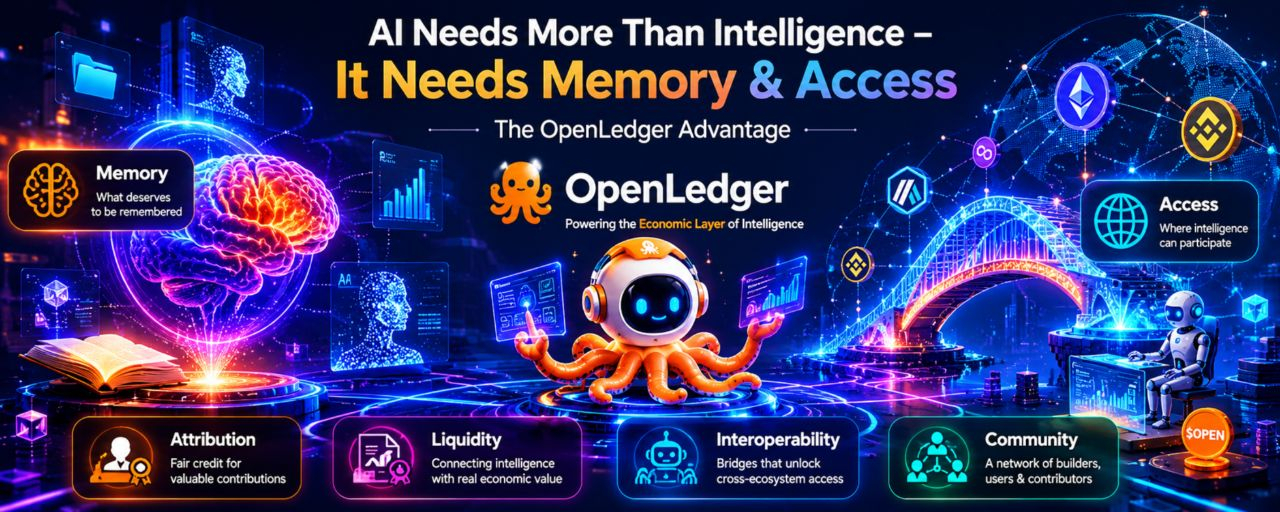
Jahrelang war die KI-Erzählung einfach und fast linear.
Intelligentere Modelle führten zu besseren Ergebnissen.
Bessere Ergebnisse bedeuteten bessere Systeme.
Und die Annahme war klar: Intelligenz allein würde den Erfolg bestimmen.
Aber diese Annahme beginnt zu bröckeln.
Heute operiert KI nicht mehr isoliert. Sie existiert in Umgebungen, in denen die Leistung von zwei verborgenen Kräften abhängt:
was das System sich merkt
auf was das System zugreifen kann
Und zunehmend werden diese beiden Faktoren genauso wichtig wie die Intelligenz selbst.
KI, Gedächtnis & Zugriff: Warum OpenLedger möglicherweise die fehlende wirtschaftliche Schicht der Intelligenz aufbaut
KI dreht sich nicht mehr nur um Intelligenz
Jahrelang war die KI-Erzählung einfach und fast linear.
Intelligentere Modelle führten zu besseren Ergebnissen.
Bessere Ergebnisse bedeuteten bessere Systeme.
Und die Annahme war klar: Intelligenz allein würde den Erfolg bestimmen.
Aber diese Annahme beginnt zu bröckeln.
Heute operiert KI nicht mehr isoliert. Sie existiert in Umgebungen, in denen die Leistung von zwei verborgenen Kräften abhängt:
was das System sich merkt
auf was das System zugreifen kann
Und zunehmend werden diese beiden Faktoren genauso wichtig wie die Intelligenz selbst.
Jahrelang war die KI-Erzählung einfach und fast linear.
Intelligentere Modelle führten zu besseren Ergebnissen.
Bessere Ergebnisse bedeuteten bessere Systeme.
Und die Annahme war klar: Intelligenz allein würde den Erfolg bestimmen.
Aber diese Annahme beginnt zu bröckeln.
Heute operiert KI nicht mehr isoliert. Sie existiert in Umgebungen, in denen die Leistung von zwei verborgenen Kräften abhängt:
was das System sich merkt
auf was das System zugreifen kann
Und zunehmend werden diese beiden Faktoren genauso wichtig wie die Intelligenz selbst.
1
39
·
--
Bullisch
OpenLedger ( $OPEN ): Wenn Vertrauen Teil der KI-Wirtschaft wird
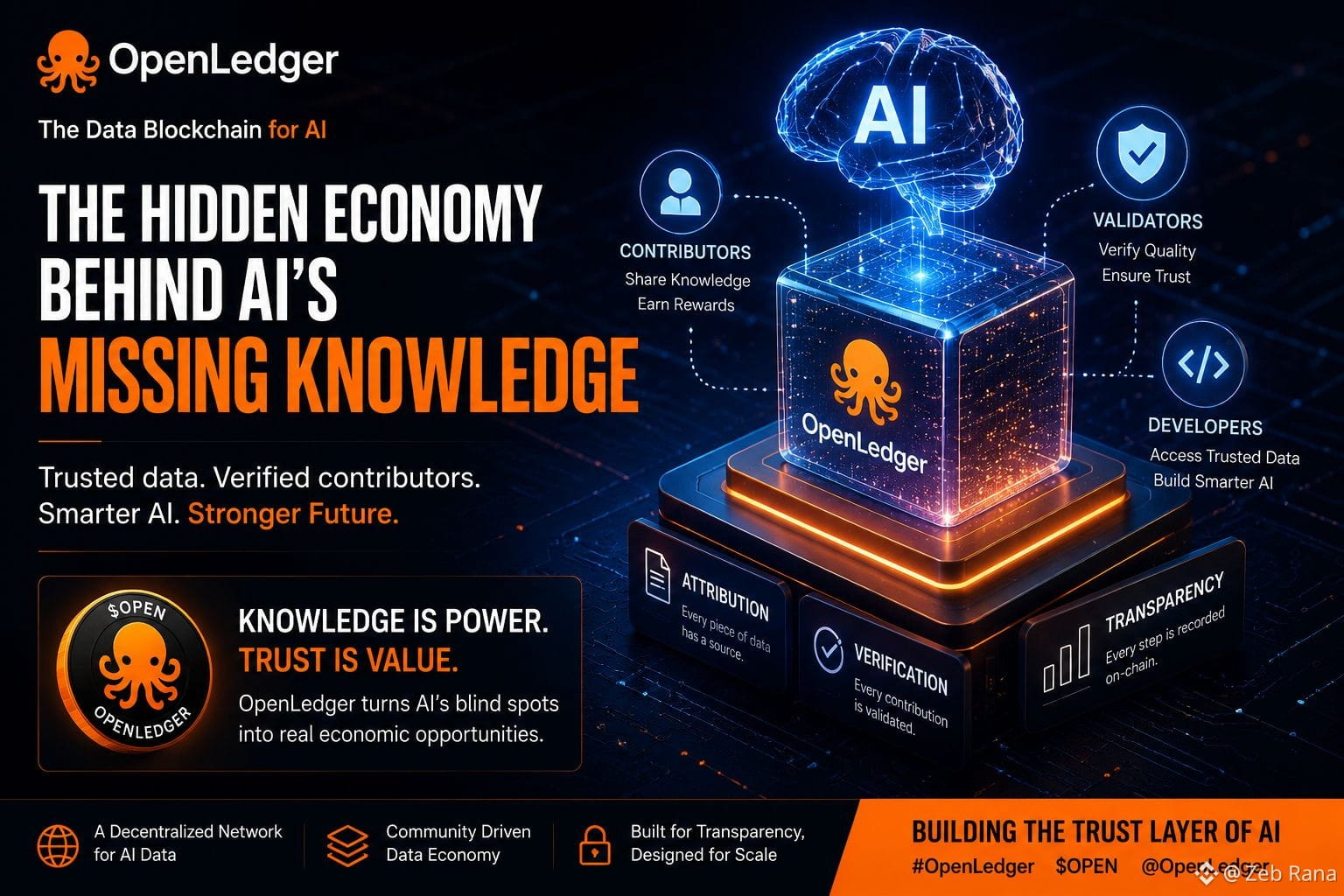
Die KI-Branche gibt Milliarden aus, um leistungsstärkere Modelle zu entwickeln,
aber ich denke, die größere Chance liegt woanders: vertrauenswürdige Daten.
Ein Modell ist nur so zuverlässig wie das Wissen, das dahintersteht.
Die Herausforderung besteht nicht mehr nur darin, Antworten zu generieren, sondern auch zu beweisen, woher diese Antworten stammen und ob man ihnen vertrauen kann.
Genau deshalb hat @Openledger meine Aufmerksamkeit erregt.
Anstatt Daten als unsichtbare Ressource zu behandeln, baut @Openledger ein Ökosystem auf, in dem Mitwirkende, Validatoren und Entwickler alle eine Rolle bei der Schaffung verifizierbaren Wissens spielen.
Jeder Beitrag kann Attribution, Validierung und eine transparente Historie darüber tragen, wie Informationen in die KI-Pipeline gelangen.
Was das interessant macht, ist die wirtschaftliche Schicht.
KI stößt ständig auf Wissenslücken, veraltete Informationen und branchenspezifische blinde Flecken.
Wenn diese Lücken identifiziert, gefüllt und verifiziert werden können, werden sie mehr als technische Probleme – sie werden zu Chancen für die Wertschöpfung.
Langfristig könnte die wertvollste KI-Infrastruktur nicht das Modell sein, das am lautesten spricht,
sondern das Netzwerk, das beweisen kann, warum sein Wissen Vertrauen verdient.
Das ist die These, die ich bei @Openledger beobachte.
{future}(OPENUSDT)
#AI #blockchain $OPEN @Openledger #openledger
OpenLedger ( $OPEN ): Wenn Vertrauen Teil der KI-Wirtschaft wird
Die KI-Branche gibt Milliarden aus, um leistungsstärkere Modelle zu entwickeln,
aber ich denke, die größere Chance liegt woanders: vertrauenswürdige Daten.
Ein Modell ist nur so zuverlässig wie das Wissen, das dahintersteht.
Die Herausforderung besteht nicht mehr nur darin, Antworten zu generieren, sondern auch zu beweisen, woher diese Antworten stammen und ob man ihnen vertrauen kann.
Genau deshalb hat @OpenLedger meine Aufmerksamkeit erregt.
Anstatt Daten als unsichtbare Ressource zu behandeln, baut @OpenLedger ein Ökosystem auf, in dem Mitwirkende, Validatoren und Entwickler alle eine Rolle bei der Schaffung verifizierbaren Wissens spielen.
Jeder Beitrag kann Attribution, Validierung und eine transparente Historie darüber tragen, wie Informationen in die KI-Pipeline gelangen.
Was das interessant macht, ist die wirtschaftliche Schicht.
KI stößt ständig auf Wissenslücken, veraltete Informationen und branchenspezifische blinde Flecken.
Wenn diese Lücken identifiziert, gefüllt und verifiziert werden können, werden sie mehr als technische Probleme – sie werden zu Chancen für die Wertschöpfung.
Langfristig könnte die wertvollste KI-Infrastruktur nicht das Modell sein, das am lautesten spricht,
sondern das Netzwerk, das beweisen kann, warum sein Wissen Vertrauen verdient.
Das ist die These, die ich bei @OpenLedger beobachte.
#AI #blockchain $OPEN @OpenLedger #openledger
Die KI-Branche gibt Milliarden aus, um leistungsstärkere Modelle zu entwickeln,
aber ich denke, die größere Chance liegt woanders: vertrauenswürdige Daten.
Ein Modell ist nur so zuverlässig wie das Wissen, das dahintersteht.
Die Herausforderung besteht nicht mehr nur darin, Antworten zu generieren, sondern auch zu beweisen, woher diese Antworten stammen und ob man ihnen vertrauen kann.
Genau deshalb hat @OpenLedger meine Aufmerksamkeit erregt.
Anstatt Daten als unsichtbare Ressource zu behandeln, baut @OpenLedger ein Ökosystem auf, in dem Mitwirkende, Validatoren und Entwickler alle eine Rolle bei der Schaffung verifizierbaren Wissens spielen.
Jeder Beitrag kann Attribution, Validierung und eine transparente Historie darüber tragen, wie Informationen in die KI-Pipeline gelangen.
Was das interessant macht, ist die wirtschaftliche Schicht.
KI stößt ständig auf Wissenslücken, veraltete Informationen und branchenspezifische blinde Flecken.
Wenn diese Lücken identifiziert, gefüllt und verifiziert werden können, werden sie mehr als technische Probleme – sie werden zu Chancen für die Wertschöpfung.
Langfristig könnte die wertvollste KI-Infrastruktur nicht das Modell sein, das am lautesten spricht,
sondern das Netzwerk, das beweisen kann, warum sein Wissen Vertrauen verdient.
Das ist die These, die ich bei @OpenLedger beobachte.
#AI #blockchain $OPEN @OpenLedger #openledger
2
60
·
--
Bullisch
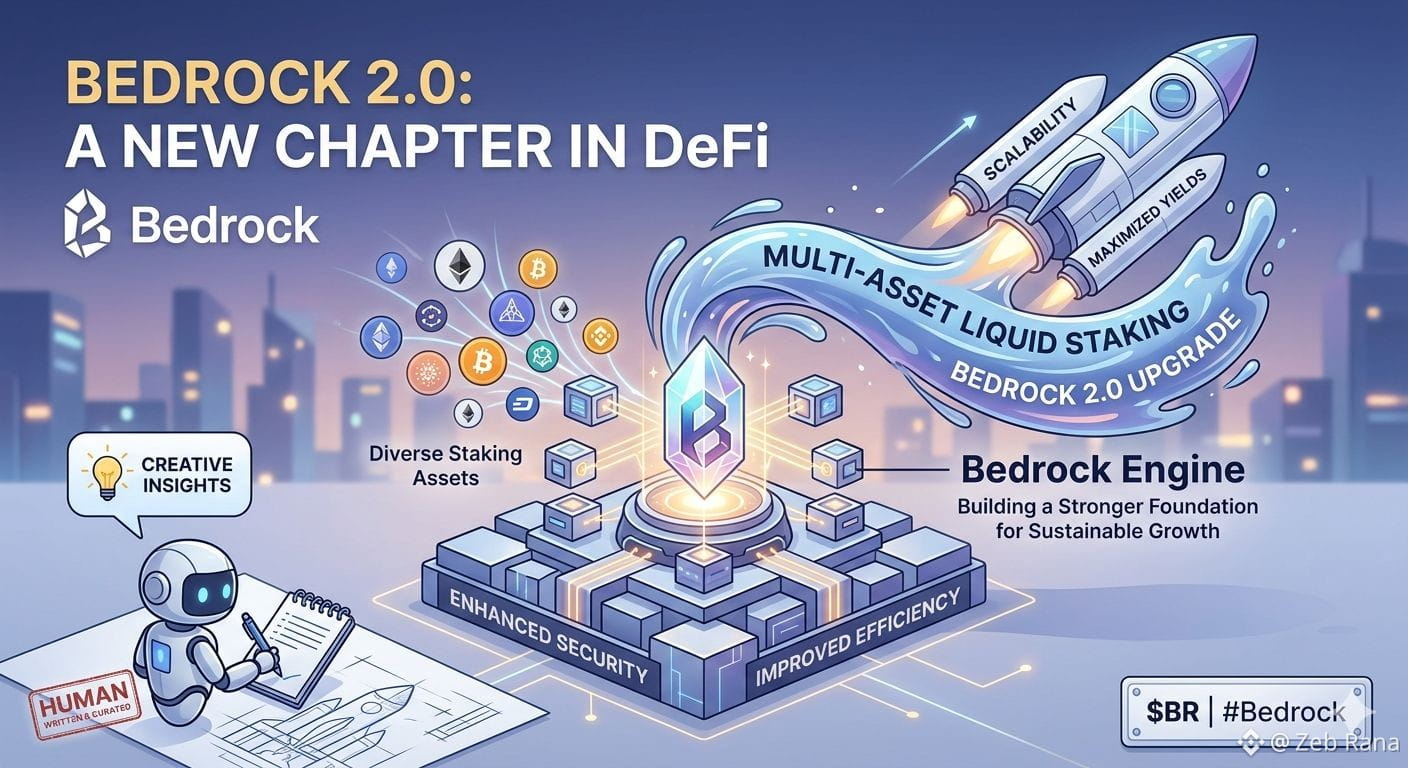
Die Evolution des dezentralen Stakings erreicht einen massiven Meilenstein mit @Bedrock ! 🚀
Da das Krypto-Ökosystem höhere Effizienz und Sicherheit verlangt,
darstellt der Übergang zu @Bedrock 2.0 einen ausgeklügelten Sprung
vorwärts im Bereich des Multi-Asset Liquid Stakings.
Durch die Optimierung der Erträge und die Stärkung der Infrastruktur,
ist dieses Upgrade nicht nur ein technisches Update
sondern ein wesentlicher Katalysator für die Schaffung langfristiger Werte.
Behalte die Performance und die wachsende Nützlichkeit von $BR
im Auge, während Liquid Staking-Lösungen die institutionellen
und Retail DeFi-Rahmenbedingungen neu definieren.
Innovation hört niemals auf,
und Bedrock setzt eindeutig das Tempo. 🔥
{alpha}(560xff7d6a96ae471bbcd7713af9cb1feeb16cf56b41)
#BedrockBR #defi @Bedrock #CryptoAnalysis $BR
Die Evolution des dezentralen Stakings erreicht einen massiven Meilenstein mit @Bedrock ! 🚀
Da das Krypto-Ökosystem höhere Effizienz und Sicherheit verlangt,
darstellt der Übergang zu @Bedrock 2.0 einen ausgeklügelten Sprung
vorwärts im Bereich des Multi-Asset Liquid Stakings.
Durch die Optimierung der Erträge und die Stärkung der Infrastruktur,
ist dieses Upgrade nicht nur ein technisches Update
sondern ein wesentlicher Katalysator für die Schaffung langfristiger Werte.
Behalte die Performance und die wachsende Nützlichkeit von $BR
im Auge, während Liquid Staking-Lösungen die institutionellen
und Retail DeFi-Rahmenbedingungen neu definieren.
Innovation hört niemals auf,
und Bedrock setzt eindeutig das Tempo. 🔥
#BedrockBR #defi @Bedrock #CryptoAnalysis $BR
Da das Krypto-Ökosystem höhere Effizienz und Sicherheit verlangt,
darstellt der Übergang zu @Bedrock 2.0 einen ausgeklügelten Sprung
vorwärts im Bereich des Multi-Asset Liquid Stakings.
Durch die Optimierung der Erträge und die Stärkung der Infrastruktur,
ist dieses Upgrade nicht nur ein technisches Update
sondern ein wesentlicher Katalysator für die Schaffung langfristiger Werte.
Behalte die Performance und die wachsende Nützlichkeit von $BR
im Auge, während Liquid Staking-Lösungen die institutionellen
und Retail DeFi-Rahmenbedingungen neu definieren.
Innovation hört niemals auf,
und Bedrock setzt eindeutig das Tempo. 🔥
#BedrockBR #defi @Bedrock #CryptoAnalysis $BR
1
73
·
--
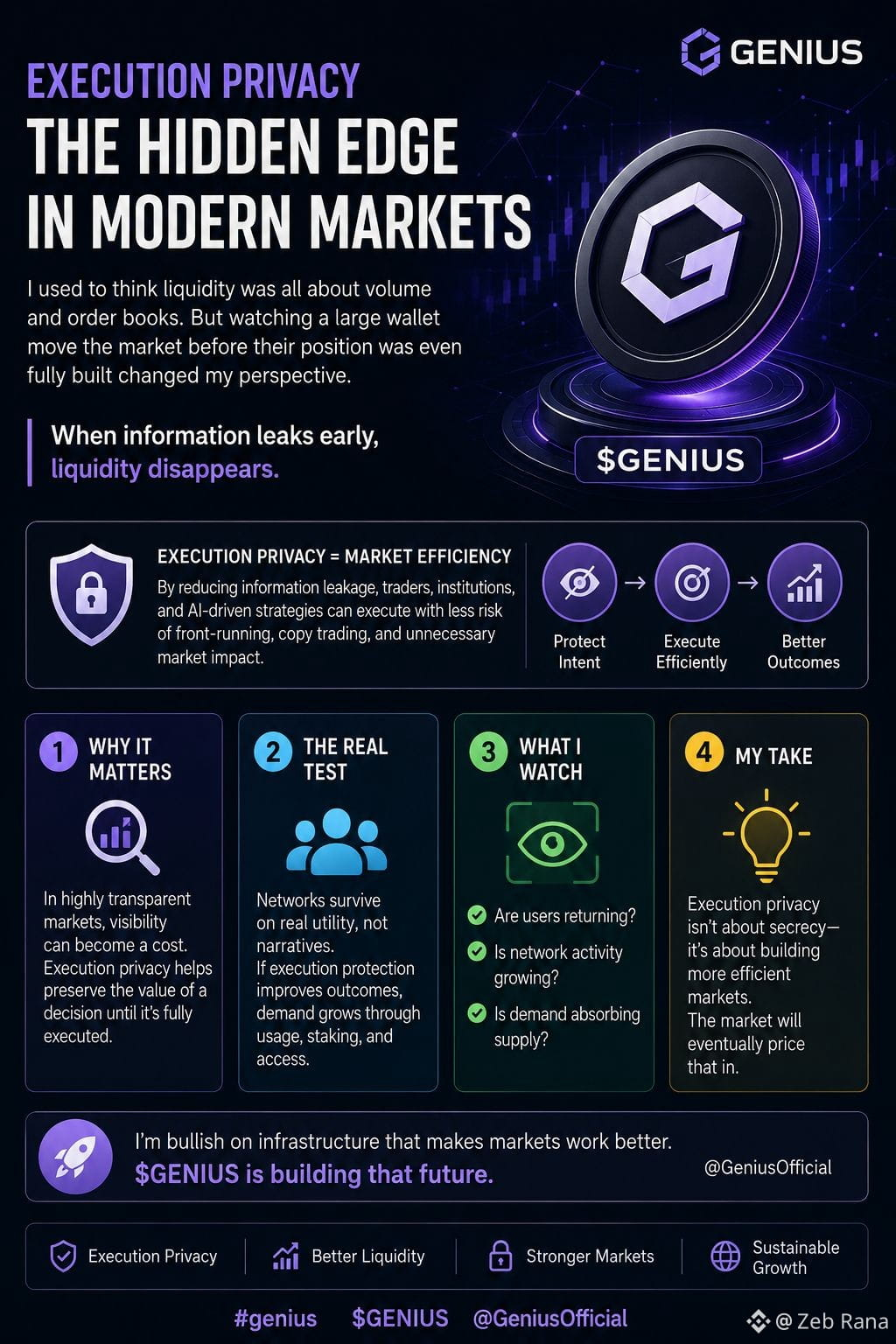
Eine Lektion, die ich aus dem Beobachten der Krypto-Märkte gelernt habe, ist, dass Liquidität nicht nur über Volumen geht, sondern auch über den Informationsfluss.
Ich erinnere mich, dass ich einer großen Akkumulations-Wallet gefolgt bin und bemerkt habe, dass der Markt zu bewegen begann, bevor die Position vollständig aufgebaut war.
Diese Erfahrung hat mir klar gemacht, dass Transparenz manchmal verborgene Kosten verursachen kann.
Wenn zu viele Informationen zu früh sichtbar werden, können Front-Runner, Copy-Trader und Algorithmen reagieren, bevor die Ausführung abgeschlossen ist.
Deshalb ist @GeniusOfficial in letzter Zeit auf meinem Radar.
Was $GENIUS für mich interessant macht, ist der Fokus auf die Ausführungsprivatsphäre als Lösung für Markteffizienz und nicht nur als ein einfaches Datenschutz-Feature.
In sich schnell bewegenden Märkten kann der Schutz der Handelsabsicht bis zur vollständigen Ausführung helfen, den strategischen Wert zu bewahren und unnötige Marktauswirkungen zu reduzieren.
Der wahre Test ist jedoch die Akzeptanz. Nachhaltige Projekte basieren auf wiederkehrendem Nutzen, nicht auf kurzfristigen Narrativen.
Wenn Trader, Institutionen und automatisierte Systeme konsequent von besseren Ausführungsergebnissen profitieren, kann die Nachfrage nach dem Netzwerk organisch durch echte Nutzung wachsen.
Persönlich achte ich genau auf die Nutzeraktivität, das Wachstum des Netzwerks und ob die Nachfrage weiterhin das Angebot über die Zeit absorbiert.
Diese Kennzahlen erzählen eine viel stärkere Geschichte als nur Hype.
Für mich liegt die langfristige Gelegenheit hinter $GENIUS nicht in der Geheimhaltung,
sondern im Potenzial, die Liquidität effizienter und die Märkte funktionaler zu gestalten.
Wenn sich dieses Wertversprechen in großem Maßstab beweist, könnte der Markt schließlich die Ausführungsprivatsphäre als essenzielle Infrastruktur und nicht als optionale Funktion betrachten.
{spot}(GENIUSUSDT)
#genius #Web3 #cryptotrading $GENIUS @GeniusOfficial
Eine Lektion, die ich aus dem Beobachten der Krypto-Märkte gelernt habe, ist, dass Liquidität nicht nur über Volumen geht, sondern auch über den Informationsfluss.
Ich erinnere mich, dass ich einer großen Akkumulations-Wallet gefolgt bin und bemerkt habe, dass der Markt zu bewegen begann, bevor die Position vollständig aufgebaut war.
Diese Erfahrung hat mir klar gemacht, dass Transparenz manchmal verborgene Kosten verursachen kann.
Wenn zu viele Informationen zu früh sichtbar werden, können Front-Runner, Copy-Trader und Algorithmen reagieren, bevor die Ausführung abgeschlossen ist.
Deshalb ist @GeniusOfficial in letzter Zeit auf meinem Radar.
Was $GENIUS für mich interessant macht, ist der Fokus auf die Ausführungsprivatsphäre als Lösung für Markteffizienz und nicht nur als ein einfaches Datenschutz-Feature.
In sich schnell bewegenden Märkten kann der Schutz der Handelsabsicht bis zur vollständigen Ausführung helfen, den strategischen Wert zu bewahren und unnötige Marktauswirkungen zu reduzieren.
Der wahre Test ist jedoch die Akzeptanz. Nachhaltige Projekte basieren auf wiederkehrendem Nutzen, nicht auf kurzfristigen Narrativen.
Wenn Trader, Institutionen und automatisierte Systeme konsequent von besseren Ausführungsergebnissen profitieren, kann die Nachfrage nach dem Netzwerk organisch durch echte Nutzung wachsen.
Persönlich achte ich genau auf die Nutzeraktivität, das Wachstum des Netzwerks und ob die Nachfrage weiterhin das Angebot über die Zeit absorbiert.
Diese Kennzahlen erzählen eine viel stärkere Geschichte als nur Hype.
Für mich liegt die langfristige Gelegenheit hinter $GENIUS nicht in der Geheimhaltung,
sondern im Potenzial, die Liquidität effizienter und die Märkte funktionaler zu gestalten.
Wenn sich dieses Wertversprechen in großem Maßstab beweist, könnte der Markt schließlich die Ausführungsprivatsphäre als essenzielle Infrastruktur und nicht als optionale Funktion betrachten.
#genius #Web3 #cryptotrading $GENIUS @GeniusOfficial
Ich erinnere mich, dass ich einer großen Akkumulations-Wallet gefolgt bin und bemerkt habe, dass der Markt zu bewegen begann, bevor die Position vollständig aufgebaut war.
Diese Erfahrung hat mir klar gemacht, dass Transparenz manchmal verborgene Kosten verursachen kann.
Wenn zu viele Informationen zu früh sichtbar werden, können Front-Runner, Copy-Trader und Algorithmen reagieren, bevor die Ausführung abgeschlossen ist.
Deshalb ist @GeniusOfficial in letzter Zeit auf meinem Radar.
Was $GENIUS für mich interessant macht, ist der Fokus auf die Ausführungsprivatsphäre als Lösung für Markteffizienz und nicht nur als ein einfaches Datenschutz-Feature.
In sich schnell bewegenden Märkten kann der Schutz der Handelsabsicht bis zur vollständigen Ausführung helfen, den strategischen Wert zu bewahren und unnötige Marktauswirkungen zu reduzieren.
Der wahre Test ist jedoch die Akzeptanz. Nachhaltige Projekte basieren auf wiederkehrendem Nutzen, nicht auf kurzfristigen Narrativen.
Wenn Trader, Institutionen und automatisierte Systeme konsequent von besseren Ausführungsergebnissen profitieren, kann die Nachfrage nach dem Netzwerk organisch durch echte Nutzung wachsen.
Persönlich achte ich genau auf die Nutzeraktivität, das Wachstum des Netzwerks und ob die Nachfrage weiterhin das Angebot über die Zeit absorbiert.
Diese Kennzahlen erzählen eine viel stärkere Geschichte als nur Hype.
Für mich liegt die langfristige Gelegenheit hinter $GENIUS nicht in der Geheimhaltung,
sondern im Potenzial, die Liquidität effizienter und die Märkte funktionaler zu gestalten.
Wenn sich dieses Wertversprechen in großem Maßstab beweist, könnte der Markt schließlich die Ausführungsprivatsphäre als essenzielle Infrastruktur und nicht als optionale Funktion betrachten.
#genius #Web3 #cryptotrading $GENIUS @GeniusOfficial
1
105
·
--
Artikel
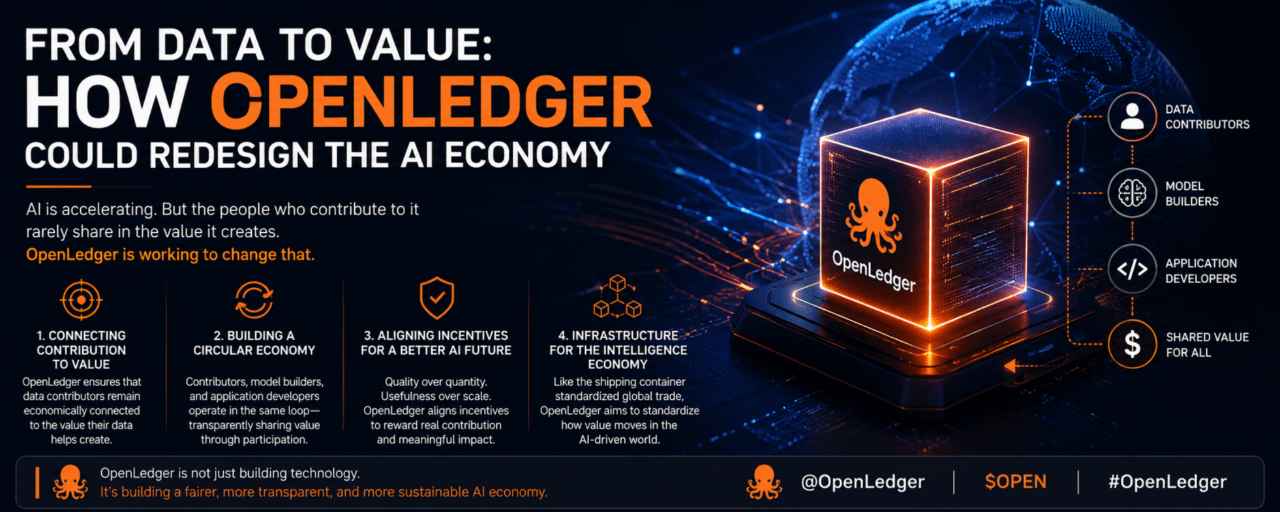
Von Daten zu Wert: Wie OpenLedger die KI-Wirtschaft neu gestalten könnte@Openledger fühlt sich zunehmend weniger wie ein traditionelles KI-Projekt an und eher wie ein Versuch, die Art und Weise, wie Wert in der Intelligenzökonomie fließt, neu zu gestalten.
Um diesen Wandel zu verstehen, hilft es, an den globalen Handel zu denken, bevor es Versandcontainer gab.
Jeder Hafen operierte anders. Waren bewegten sich weiterhin über die Welt, aber es gab kein standardisiertes System für deren Handhabung.
Das Laden war langsam, die Kosten waren unvorhersehbar, und die Skalierbarkeit war nicht durch die Produktion, sondern durch die Logistik begrenzt.
Der echte Durchbruch war nicht bessere Waren.
Von Daten zu Wert: Wie OpenLedger die KI-Wirtschaft neu gestalten könnte
@OpenLedger fühlt sich zunehmend weniger wie ein traditionelles KI-Projekt an und eher wie ein Versuch, die Art und Weise, wie Wert in der Intelligenzökonomie fließt, neu zu gestalten.
Um diesen Wandel zu verstehen, hilft es, an den globalen Handel zu denken, bevor es Versandcontainer gab.
Jeder Hafen operierte anders. Waren bewegten sich weiterhin über die Welt, aber es gab kein standardisiertes System für deren Handhabung.
Das Laden war langsam, die Kosten waren unvorhersehbar, und die Skalierbarkeit war nicht durch die Produktion, sondern durch die Logistik begrenzt.
Der echte Durchbruch war nicht bessere Waren.
Um diesen Wandel zu verstehen, hilft es, an den globalen Handel zu denken, bevor es Versandcontainer gab.
Jeder Hafen operierte anders. Waren bewegten sich weiterhin über die Welt, aber es gab kein standardisiertes System für deren Handhabung.
Das Laden war langsam, die Kosten waren unvorhersehbar, und die Skalierbarkeit war nicht durch die Produktion, sondern durch die Logistik begrenzt.
Der echte Durchbruch war nicht bessere Waren.
1
55
·
--
Bullisch
"Die Zukunft von KI hängt davon ab, wer das Verdienst für die Daten erhält"
KI hat ein Datenproblem, kein Intelligenzproblem
Jeder redet darüber, smartere KI zu entwickeln.
Größere Modelle. Schnellere Inferenz. Mächtigere Fähigkeiten.
Aber es gibt eine Frage, die oft ignoriert wird:
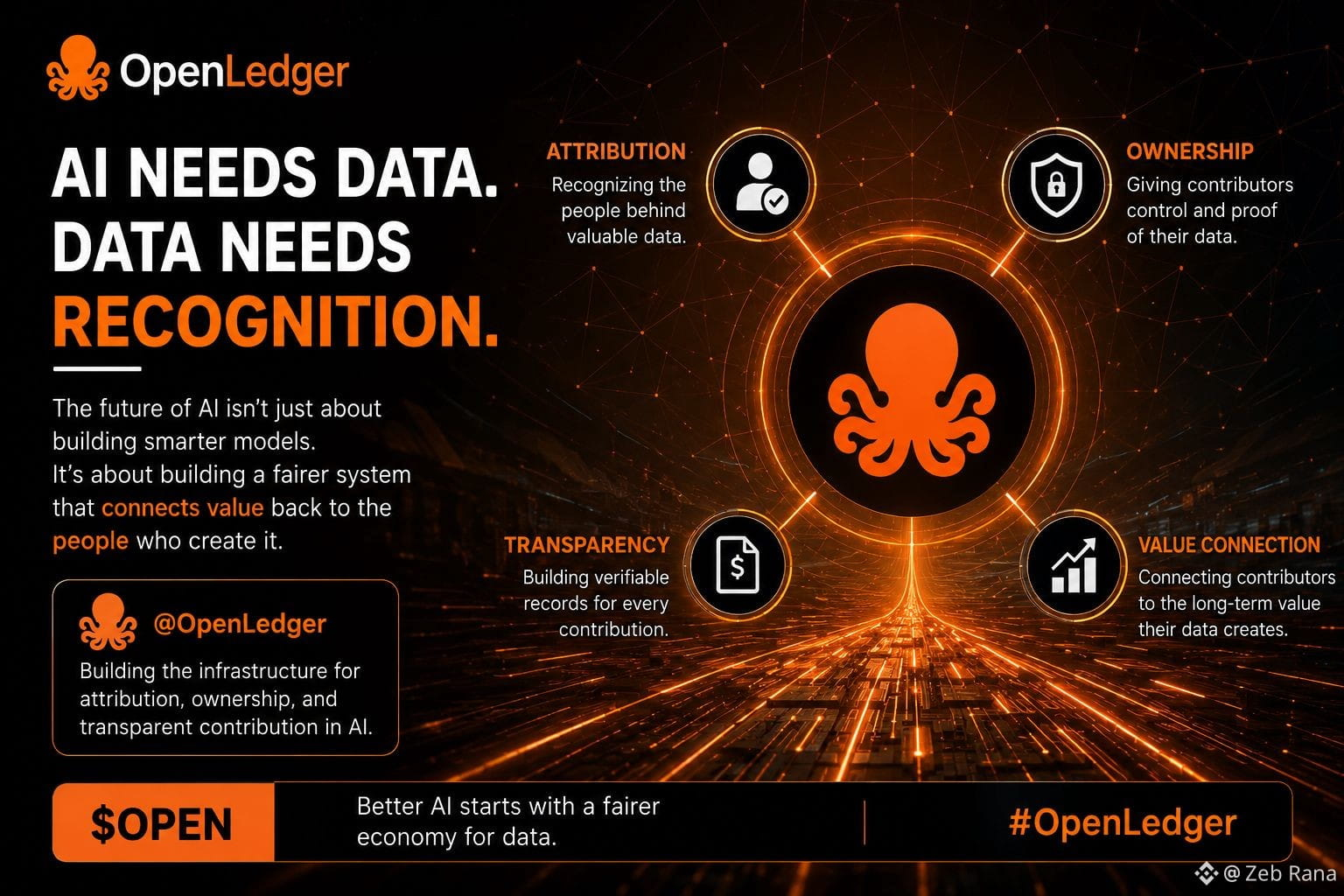
Wer verdient Anerkennung, wenn KI Werte schafft?
Jeden Tag tragen Menschen Wissen durch Forschung, Diskussionen, Inhalte und Expertise bei.
Diese Daten werden Teil des Fundaments, das KI-Systeme verbessert und weiterentwickelt.
Doch sobald dieser Wert ins System eingeht, sind die ursprünglichen Mitwirkenden selten mit den Ergebnissen verbunden, die sie geschaffen haben.
Deshalb hat @Openledger meine Aufmerksamkeit erregt.
Anstatt sich nur darauf zu konzentrieren, KI intelligenter zu machen, baut @Openledger eine Infrastruktur rund um Attribution, Eigentum und transparente Beitragsverfolgung auf.
Es führt einen Rahmen ein, in dem wertvolle Daten anerkannt werden können, anstatt in einer Blackbox zu verschwinden.
Für mich ist das eines der wichtigsten Gespräche in der KI heute.
Die Zukunft wird nicht nur den Plattformen mit den fortschrittlichsten Modellen gehören, sondern den Ökosystemen, die faire Anreize für die Menschen schaffen, die das Wissen dahinter bereitstellen.
Wenn KI weiter wächst, könnte es ebenso wichtig werden, den Wert zu den Mitwirkenden zurückzubringen, wie die Intelligenz selbst zu schaffen.
{future}(OPENUSDT)
{future}(PLAYUSDT)
#OpenLedger $OPEN #AI $PLAY #Web3
"Die Zukunft von KI hängt davon ab, wer das Verdienst für die Daten erhält"
KI hat ein Datenproblem, kein Intelligenzproblem
Jeder redet darüber, smartere KI zu entwickeln.
Größere Modelle. Schnellere Inferenz. Mächtigere Fähigkeiten.
Aber es gibt eine Frage, die oft ignoriert wird:
Wer verdient Anerkennung, wenn KI Werte schafft?
Jeden Tag tragen Menschen Wissen durch Forschung, Diskussionen, Inhalte und Expertise bei.
Diese Daten werden Teil des Fundaments, das KI-Systeme verbessert und weiterentwickelt.
Doch sobald dieser Wert ins System eingeht, sind die ursprünglichen Mitwirkenden selten mit den Ergebnissen verbunden, die sie geschaffen haben.
Deshalb hat @OpenLedger meine Aufmerksamkeit erregt.
Anstatt sich nur darauf zu konzentrieren, KI intelligenter zu machen, baut @OpenLedger eine Infrastruktur rund um Attribution, Eigentum und transparente Beitragsverfolgung auf.
Es führt einen Rahmen ein, in dem wertvolle Daten anerkannt werden können, anstatt in einer Blackbox zu verschwinden.
Für mich ist das eines der wichtigsten Gespräche in der KI heute.
Die Zukunft wird nicht nur den Plattformen mit den fortschrittlichsten Modellen gehören, sondern den Ökosystemen, die faire Anreize für die Menschen schaffen, die das Wissen dahinter bereitstellen.
Wenn KI weiter wächst, könnte es ebenso wichtig werden, den Wert zu den Mitwirkenden zurückzubringen, wie die Intelligenz selbst zu schaffen.
#OpenLedger $OPEN #AI $PLAY #Web3
KI hat ein Datenproblem, kein Intelligenzproblem
Jeder redet darüber, smartere KI zu entwickeln.
Größere Modelle. Schnellere Inferenz. Mächtigere Fähigkeiten.
Aber es gibt eine Frage, die oft ignoriert wird:
Wer verdient Anerkennung, wenn KI Werte schafft?
Jeden Tag tragen Menschen Wissen durch Forschung, Diskussionen, Inhalte und Expertise bei.
Diese Daten werden Teil des Fundaments, das KI-Systeme verbessert und weiterentwickelt.
Doch sobald dieser Wert ins System eingeht, sind die ursprünglichen Mitwirkenden selten mit den Ergebnissen verbunden, die sie geschaffen haben.
Deshalb hat @OpenLedger meine Aufmerksamkeit erregt.
Anstatt sich nur darauf zu konzentrieren, KI intelligenter zu machen, baut @OpenLedger eine Infrastruktur rund um Attribution, Eigentum und transparente Beitragsverfolgung auf.
Es führt einen Rahmen ein, in dem wertvolle Daten anerkannt werden können, anstatt in einer Blackbox zu verschwinden.
Für mich ist das eines der wichtigsten Gespräche in der KI heute.
Die Zukunft wird nicht nur den Plattformen mit den fortschrittlichsten Modellen gehören, sondern den Ökosystemen, die faire Anreize für die Menschen schaffen, die das Wissen dahinter bereitstellen.
Wenn KI weiter wächst, könnte es ebenso wichtig werden, den Wert zu den Mitwirkenden zurückzubringen, wie die Intelligenz selbst zu schaffen.
#OpenLedger $OPEN #AI $PLAY #Web3
1
163
·
--
Bullisch
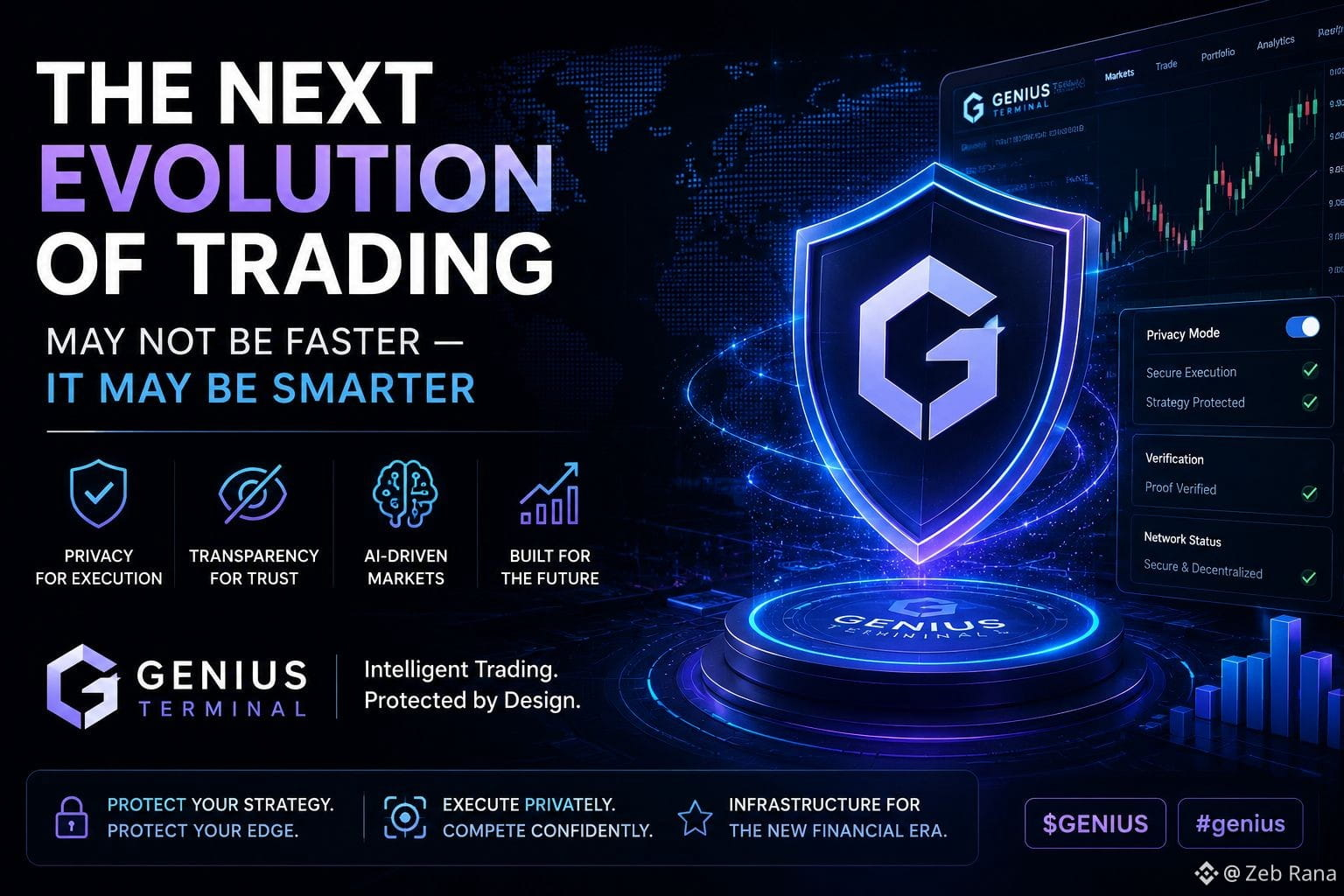
Die nächste Evolution des Tradings könnte nicht schneller, sondern intelligenter sein.
Während ich @GeniusOfficial erkundete, wurde mir etwas klar, das in der Krypto-Welt nicht oft genug besprochen wird.
Jahrelang hat sich die Branche darauf konzentriert, alles sichtbar zu machen.
Jede Transaktion, jede Wallet-Bewegung, jeder Trade kann verfolgt und analysiert werden. Diese Transparenz hat geholfen, Vertrauen aufzubauen und die Akzeptanz zu beschleunigen.
Aber der Markt verändert sich.
Wir treten in eine Ära ein, in der KI-gesteuerte Agenten, algorithmische Strategien und fortschrittliche Handelssysteme zunehmend verbreitet werden.
In einem solchen Umfeld wird die Information selbst zu einem Vermögenswert.
Die Frage ist nicht mehr, ob Märkte transparent sein sollten.
Die eigentliche Frage ist: Wie schützen wir die Strategie, während wir das Vertrauen bewahren?
Hier sticht die Vision hinter @GeniusOfficial für mich hervor.
Anstatt Privatsphäre als Nischenmerkmal zu betrachten, scheint @GeniusOfficial eine Infrastruktur für eine Zukunft aufzubauen, in der intelligentes Trading sowohl Verifizierung als auch Schutz erfordert.
Trader benötigen Vertrauen, dass die Märkte fair sind, aber sie brauchen auch die Freiheit, zu handeln, ohne jedes Detail ihrer Strategie offenzulegen.
Dieses Gleichgewicht könnte eine der wichtigsten Herausforderungen im Finanzwesen der nächsten Generation werden.
Viele Projekte konkurrieren über Gebühren, Belohnungen oder Geschwindigkeit. Diese Vorteile sind wichtig, aber oft nur von kurzer Dauer.
Infrastruktur, die grundlegende Marktprobleme löst, schafft tendenziell nachhaltigen Wert.
Wenn KI zunehmend in On-Chain-Aktivitäten involviert wird, könnten Plattformen, die Transparenz, Privatsphäre und effiziente Ausführung kombinieren, einen erheblichen Vorteil haben.
Das ist einer der Gründe, warum ich $GENIUS genau beobachte.
Das Gespräch dreht sich nicht nur um das Trading-Erlebnis von heute, sondern um den Aufbau für die Marktstruktur von morgen.
{spot}(GENIUSUSDT)
#genius $GENIUS @GeniusOfficial
Die nächste Evolution des Tradings könnte nicht schneller, sondern intelligenter sein.
Während ich @GeniusOfficial erkundete, wurde mir etwas klar, das in der Krypto-Welt nicht oft genug besprochen wird.
Jahrelang hat sich die Branche darauf konzentriert, alles sichtbar zu machen.
Jede Transaktion, jede Wallet-Bewegung, jeder Trade kann verfolgt und analysiert werden. Diese Transparenz hat geholfen, Vertrauen aufzubauen und die Akzeptanz zu beschleunigen.
Aber der Markt verändert sich.
Wir treten in eine Ära ein, in der KI-gesteuerte Agenten, algorithmische Strategien und fortschrittliche Handelssysteme zunehmend verbreitet werden.
In einem solchen Umfeld wird die Information selbst zu einem Vermögenswert.
Die Frage ist nicht mehr, ob Märkte transparent sein sollten.
Die eigentliche Frage ist: Wie schützen wir die Strategie, während wir das Vertrauen bewahren?
Hier sticht die Vision hinter @GeniusOfficial für mich hervor.
Anstatt Privatsphäre als Nischenmerkmal zu betrachten, scheint @GeniusOfficial eine Infrastruktur für eine Zukunft aufzubauen, in der intelligentes Trading sowohl Verifizierung als auch Schutz erfordert.
Trader benötigen Vertrauen, dass die Märkte fair sind, aber sie brauchen auch die Freiheit, zu handeln, ohne jedes Detail ihrer Strategie offenzulegen.
Dieses Gleichgewicht könnte eine der wichtigsten Herausforderungen im Finanzwesen der nächsten Generation werden.
Viele Projekte konkurrieren über Gebühren, Belohnungen oder Geschwindigkeit. Diese Vorteile sind wichtig, aber oft nur von kurzer Dauer.
Infrastruktur, die grundlegende Marktprobleme löst, schafft tendenziell nachhaltigen Wert.
Wenn KI zunehmend in On-Chain-Aktivitäten involviert wird, könnten Plattformen, die Transparenz, Privatsphäre und effiziente Ausführung kombinieren, einen erheblichen Vorteil haben.
Das ist einer der Gründe, warum ich $GENIUS genau beobachte.
Das Gespräch dreht sich nicht nur um das Trading-Erlebnis von heute, sondern um den Aufbau für die Marktstruktur von morgen.
#genius $GENIUS @GeniusOfficial
Während ich @GeniusOfficial erkundete, wurde mir etwas klar, das in der Krypto-Welt nicht oft genug besprochen wird.
Jahrelang hat sich die Branche darauf konzentriert, alles sichtbar zu machen.
Jede Transaktion, jede Wallet-Bewegung, jeder Trade kann verfolgt und analysiert werden. Diese Transparenz hat geholfen, Vertrauen aufzubauen und die Akzeptanz zu beschleunigen.
Aber der Markt verändert sich.
Wir treten in eine Ära ein, in der KI-gesteuerte Agenten, algorithmische Strategien und fortschrittliche Handelssysteme zunehmend verbreitet werden.
In einem solchen Umfeld wird die Information selbst zu einem Vermögenswert.
Die Frage ist nicht mehr, ob Märkte transparent sein sollten.
Die eigentliche Frage ist: Wie schützen wir die Strategie, während wir das Vertrauen bewahren?
Hier sticht die Vision hinter @GeniusOfficial für mich hervor.
Anstatt Privatsphäre als Nischenmerkmal zu betrachten, scheint @GeniusOfficial eine Infrastruktur für eine Zukunft aufzubauen, in der intelligentes Trading sowohl Verifizierung als auch Schutz erfordert.
Trader benötigen Vertrauen, dass die Märkte fair sind, aber sie brauchen auch die Freiheit, zu handeln, ohne jedes Detail ihrer Strategie offenzulegen.
Dieses Gleichgewicht könnte eine der wichtigsten Herausforderungen im Finanzwesen der nächsten Generation werden.
Viele Projekte konkurrieren über Gebühren, Belohnungen oder Geschwindigkeit. Diese Vorteile sind wichtig, aber oft nur von kurzer Dauer.
Infrastruktur, die grundlegende Marktprobleme löst, schafft tendenziell nachhaltigen Wert.
Wenn KI zunehmend in On-Chain-Aktivitäten involviert wird, könnten Plattformen, die Transparenz, Privatsphäre und effiziente Ausführung kombinieren, einen erheblichen Vorteil haben.
Das ist einer der Gründe, warum ich $GENIUS genau beobachte.
Das Gespräch dreht sich nicht nur um das Trading-Erlebnis von heute, sondern um den Aufbau für die Marktstruktur von morgen.
#genius $GENIUS @GeniusOfficial
1
76
·
--
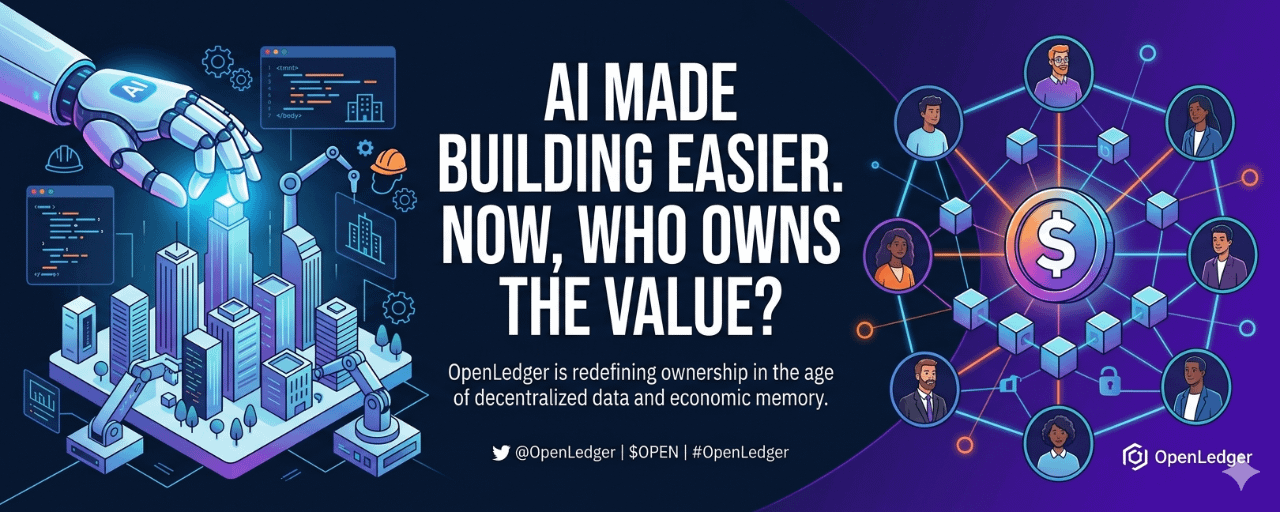
Artikel
AI hat das Bauen erleichtert. @OpenLedger stellt eine schwierigere Frage: Wer besitzt tatsächlich den Wert?In letzter Zeit denke ich ständig an etwas, das in der Mainstream-AI-Diskussion seltsam übersehen wird.
Das Bauen wird einfacher, aber das Verfolgen von Eigentum und Attribution hinkt hinterher.
Vor ein paar Jahren fühlte es sich unrealistisch an, Software ohne tiefgehende technische Fähigkeiten zu launchen.
Jetzt bauen die Leute Werkzeuge, automatisieren komplexe Workflows und verwandeln grobe Ideen in nutzbare Produkte, wobei AI als der ultimative Katalysator fungiert.
Die Barriere zur Erstellung sinkt ständig, was zu schnelleren Iterationen und weniger Reibung führt.
AI hat das Bauen erleichtert. @OpenLedger stellt eine schwierigere Frage: Wer besitzt tatsächlich den Wert?
In letzter Zeit denke ich ständig an etwas, das in der Mainstream-AI-Diskussion seltsam übersehen wird.
Das Bauen wird einfacher, aber das Verfolgen von Eigentum und Attribution hinkt hinterher.
Vor ein paar Jahren fühlte es sich unrealistisch an, Software ohne tiefgehende technische Fähigkeiten zu launchen.
Jetzt bauen die Leute Werkzeuge, automatisieren komplexe Workflows und verwandeln grobe Ideen in nutzbare Produkte, wobei AI als der ultimative Katalysator fungiert.
Die Barriere zur Erstellung sinkt ständig, was zu schnelleren Iterationen und weniger Reibung führt.
Das Bauen wird einfacher, aber das Verfolgen von Eigentum und Attribution hinkt hinterher.
Vor ein paar Jahren fühlte es sich unrealistisch an, Software ohne tiefgehende technische Fähigkeiten zu launchen.
Jetzt bauen die Leute Werkzeuge, automatisieren komplexe Workflows und verwandeln grobe Ideen in nutzbare Produkte, wobei AI als der ultimative Katalysator fungiert.
Die Barriere zur Erstellung sinkt ständig, was zu schnelleren Iterationen und weniger Reibung führt.
1
48
·
--
Bullisch
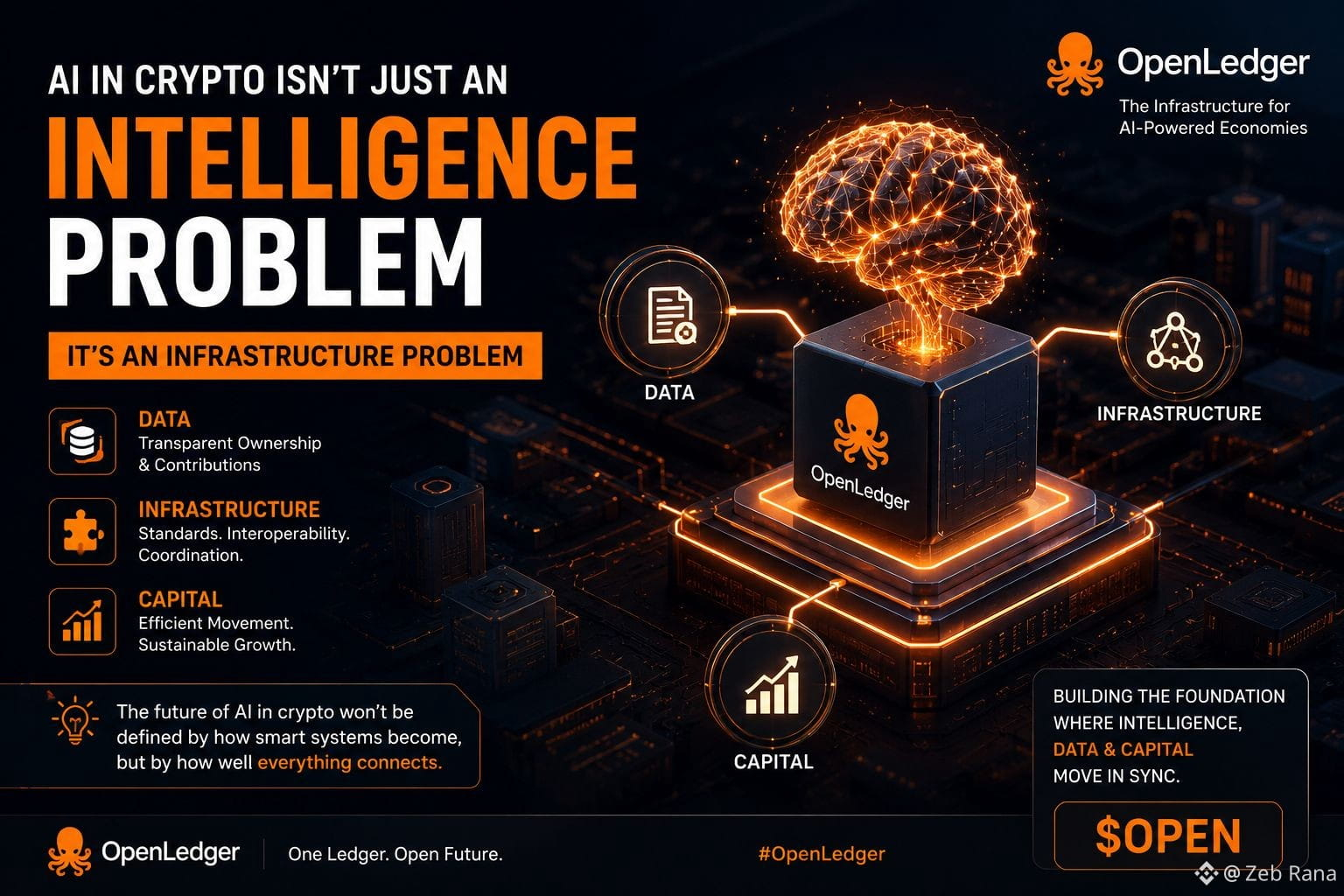
Lange Zeit glaubte ich, dass der echte Durchbruch in KI + Krypto von schlaueren Modellen, besseren Agenten und mehr Automatisierung kommen würde.
Aber je tiefer du schaust, desto klarer wird es: Intelligenz allein reicht nicht aus.
Der echte Engpass ist die Koordination.
Im Moment sind DeFi und On-Chain-Systeme immer noch stark fragmentiert.
Verschiedene Protokolle folgen unterschiedlichen Standards, Daten sitzen in isolierten Umgebungen, und Kapital fließt durch mehrere Schichten, die nicht immer effizient kommunizieren.
Selbst die fortschrittlichste KI hat Schwierigkeiten, wenn das Ökosystem selbst unorganisiert ist.
Hier verschiebt sich die Perspektive.
Anstatt sich nur auf "schlauere KI" zu konzentrieren, könnte die echte Gelegenheit darin liegen, Systeme zu bauen, die KI tatsächlich verstehen und in denen sie arbeiten kann.
Deshalb sticht @Openledger (https://www.binance.com/en/square/profile/openledger) in dieser Erzählung hervor.
Anstatt nur KI-Ausgaben zu pushen, konzentriert es sich auf die zugrunde liegende Infrastruktur, Daten-Transparenz, Beitragsverfolgung und standardisierte Rahmenbedingungen, die KI-gesteuerte Ökonomien nutzbarer und vernetzter machen können.
Denn in Märkten wie diesem ist Hype temporär.
Echte Akzeptanz kommt von der Lösung struktureller Probleme, die über Zyklen hinweg bestehen.
Und die Geschichte hat gezeigt, dass die Projekte, die still und leise unter unsicheren Bedingungen aufbauen, oft das Fundament werden, auf das andere später angewiesen sind.
Vielleicht wird die nächste Phase der KI in Krypto nicht davon definiert, wie schlau die Systeme werden
Sondern davon, wie gut alles verbunden ist.
Wenn Daten, Intelligenz und Kapital endlich synchronisiert fließen, dann passiert der echte Wandel.
{future}(OPENUSDT)
@Openledger $OPEN #AI #Web3 #openledger
Lange Zeit glaubte ich, dass der echte Durchbruch in KI + Krypto von schlaueren Modellen, besseren Agenten und mehr Automatisierung kommen würde.
Aber je tiefer du schaust, desto klarer wird es: Intelligenz allein reicht nicht aus.
Der echte Engpass ist die Koordination.
Im Moment sind DeFi und On-Chain-Systeme immer noch stark fragmentiert.
Verschiedene Protokolle folgen unterschiedlichen Standards, Daten sitzen in isolierten Umgebungen, und Kapital fließt durch mehrere Schichten, die nicht immer effizient kommunizieren.
Selbst die fortschrittlichste KI hat Schwierigkeiten, wenn das Ökosystem selbst unorganisiert ist.
Hier verschiebt sich die Perspektive.
Anstatt sich nur auf "schlauere KI" zu konzentrieren, könnte die echte Gelegenheit darin liegen, Systeme zu bauen, die KI tatsächlich verstehen und in denen sie arbeiten kann.
Deshalb sticht @OpenLedger (https://www.binance.com/en/square/profile/openledger) in dieser Erzählung hervor.
Anstatt nur KI-Ausgaben zu pushen, konzentriert es sich auf die zugrunde liegende Infrastruktur, Daten-Transparenz, Beitragsverfolgung und standardisierte Rahmenbedingungen, die KI-gesteuerte Ökonomien nutzbarer und vernetzter machen können.
Denn in Märkten wie diesem ist Hype temporär.
Echte Akzeptanz kommt von der Lösung struktureller Probleme, die über Zyklen hinweg bestehen.
Und die Geschichte hat gezeigt, dass die Projekte, die still und leise unter unsicheren Bedingungen aufbauen, oft das Fundament werden, auf das andere später angewiesen sind.
Vielleicht wird die nächste Phase der KI in Krypto nicht davon definiert, wie schlau die Systeme werden
Sondern davon, wie gut alles verbunden ist.
Wenn Daten, Intelligenz und Kapital endlich synchronisiert fließen, dann passiert der echte Wandel.
@OpenLedger $OPEN #AI #Web3 #openledger
Aber je tiefer du schaust, desto klarer wird es: Intelligenz allein reicht nicht aus.
Der echte Engpass ist die Koordination.
Im Moment sind DeFi und On-Chain-Systeme immer noch stark fragmentiert.
Verschiedene Protokolle folgen unterschiedlichen Standards, Daten sitzen in isolierten Umgebungen, und Kapital fließt durch mehrere Schichten, die nicht immer effizient kommunizieren.
Selbst die fortschrittlichste KI hat Schwierigkeiten, wenn das Ökosystem selbst unorganisiert ist.
Hier verschiebt sich die Perspektive.
Anstatt sich nur auf "schlauere KI" zu konzentrieren, könnte die echte Gelegenheit darin liegen, Systeme zu bauen, die KI tatsächlich verstehen und in denen sie arbeiten kann.
Deshalb sticht @OpenLedger (https://www.binance.com/en/square/profile/openledger) in dieser Erzählung hervor.
Anstatt nur KI-Ausgaben zu pushen, konzentriert es sich auf die zugrunde liegende Infrastruktur, Daten-Transparenz, Beitragsverfolgung und standardisierte Rahmenbedingungen, die KI-gesteuerte Ökonomien nutzbarer und vernetzter machen können.
Denn in Märkten wie diesem ist Hype temporär.
Echte Akzeptanz kommt von der Lösung struktureller Probleme, die über Zyklen hinweg bestehen.
Und die Geschichte hat gezeigt, dass die Projekte, die still und leise unter unsicheren Bedingungen aufbauen, oft das Fundament werden, auf das andere später angewiesen sind.
Vielleicht wird die nächste Phase der KI in Krypto nicht davon definiert, wie schlau die Systeme werden
Sondern davon, wie gut alles verbunden ist.
Wenn Daten, Intelligenz und Kapital endlich synchronisiert fließen, dann passiert der echte Wandel.
@OpenLedger $OPEN #AI #Web3 #openledger
81
·
--
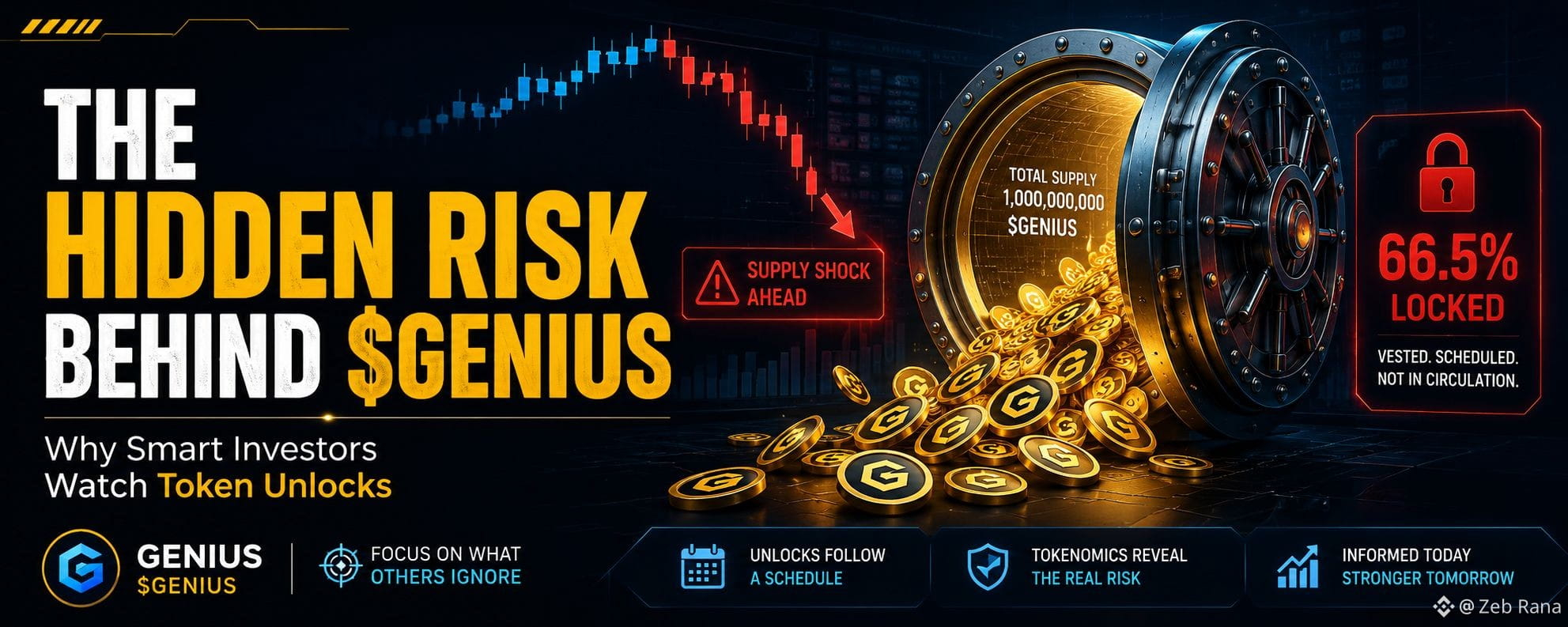
Eine der teuersten Lektionen, die ich im Crypto-Bereich gelernt habe, hatte nichts mit Technologie, Marktstimmung oder sogar mit der Ausführung zu tun. Es ging um das Verständnis von Angebot.
Vor ein paar Jahren hielt ich ein Projekt, das fundamental stark aussah. Das Team baute, die Akzeptanz wuchs und die Erzählung blieb intakt. Dann traf ein großes Token-Entsperren den Markt. Innerhalb weniger Tage fiel der Preis drastisch. Am Produkt hat sich nichts geändert. Was sich geändert hat, war die Anzahl der zum Verkauf verfügbaren Tokens.
Diese Erfahrung hat meine Bewertung neuer Projekte völlig verändert.
Wenn ich @GeniusOfficial und $GENIUS anschaue, konzentriere ich mich nicht nur auf das zirkulierende Angebot von heute. Ich achte darauf, wie die Token-Verteilung über die Zeit strukturiert ist. Ein nachhaltiges Ökosystem basiert nicht nur auf Innovation; es gründet sich auf Transparenz hinsichtlich des zukünftigen Angebots und einer langfristigen Ausrichtung zwischen Nutzern, Investoren und dem Team.
Viele Marktteilnehmer sehen ein begrenztes zirkulierendes Angebot und denken sofort "Seltenheit."
Erfahrene Investoren stellen oft eine andere Frage: "Wie sieht der zukünftige Angebotszeitplan aus?"
Deshalb sind Tokenomics so wichtig. Das Verständnis von Entsperrplänen, Treasury-Management und langfristiger Verteilung hilft Investoren, fundiertere Entscheidungen zu treffen, anstatt später auf Marktüberraschungen zu reagieren.
Was bei @GeniusOfficial auffällt, ist, dass es eine tiefere Diskussion über Infrastruktur, Ausführung und nachhaltiges Wachstum des Ökosystems anregt, anstatt sich nur auf kurzfristige Spekulation zu konzentrieren.
In einem Markt, in dem die Aufmerksamkeit schnell wechselt, haben Projekte, die langfristige Wertschöpfung priorisieren, oft die stärksten Grundlagen.
Bevor ich eine Position eingehe, studiere ich immer den Fahrplan, die Nutzbarkeit und die Token-Release-Struktur.
Der Preis sagt dir, wo der Markt heute steht. Tokenomics helfen dir zu verstehen, wo er morgen stehen könnte.
{spot}(GENIUSUSDT)
#genius $GENIUS @GeniusOfficial
Eine der teuersten Lektionen, die ich im Crypto-Bereich gelernt habe, hatte nichts mit Technologie, Marktstimmung oder sogar mit der Ausführung zu tun. Es ging um das Verständnis von Angebot.
Vor ein paar Jahren hielt ich ein Projekt, das fundamental stark aussah. Das Team baute, die Akzeptanz wuchs und die Erzählung blieb intakt. Dann traf ein großes Token-Entsperren den Markt. Innerhalb weniger Tage fiel der Preis drastisch. Am Produkt hat sich nichts geändert. Was sich geändert hat, war die Anzahl der zum Verkauf verfügbaren Tokens.
Diese Erfahrung hat meine Bewertung neuer Projekte völlig verändert.
Wenn ich @GeniusOfficial und $GENIUS anschaue, konzentriere ich mich nicht nur auf das zirkulierende Angebot von heute. Ich achte darauf, wie die Token-Verteilung über die Zeit strukturiert ist. Ein nachhaltiges Ökosystem basiert nicht nur auf Innovation; es gründet sich auf Transparenz hinsichtlich des zukünftigen Angebots und einer langfristigen Ausrichtung zwischen Nutzern, Investoren und dem Team.
Viele Marktteilnehmer sehen ein begrenztes zirkulierendes Angebot und denken sofort "Seltenheit."
Erfahrene Investoren stellen oft eine andere Frage: "Wie sieht der zukünftige Angebotszeitplan aus?"
Deshalb sind Tokenomics so wichtig. Das Verständnis von Entsperrplänen, Treasury-Management und langfristiger Verteilung hilft Investoren, fundiertere Entscheidungen zu treffen, anstatt später auf Marktüberraschungen zu reagieren.
Was bei @GeniusOfficial auffällt, ist, dass es eine tiefere Diskussion über Infrastruktur, Ausführung und nachhaltiges Wachstum des Ökosystems anregt, anstatt sich nur auf kurzfristige Spekulation zu konzentrieren.
In einem Markt, in dem die Aufmerksamkeit schnell wechselt, haben Projekte, die langfristige Wertschöpfung priorisieren, oft die stärksten Grundlagen.
Bevor ich eine Position eingehe, studiere ich immer den Fahrplan, die Nutzbarkeit und die Token-Release-Struktur.
Der Preis sagt dir, wo der Markt heute steht. Tokenomics helfen dir zu verstehen, wo er morgen stehen könnte.
#genius $GENIUS @GeniusOfficial
Vor ein paar Jahren hielt ich ein Projekt, das fundamental stark aussah. Das Team baute, die Akzeptanz wuchs und die Erzählung blieb intakt. Dann traf ein großes Token-Entsperren den Markt. Innerhalb weniger Tage fiel der Preis drastisch. Am Produkt hat sich nichts geändert. Was sich geändert hat, war die Anzahl der zum Verkauf verfügbaren Tokens.
Diese Erfahrung hat meine Bewertung neuer Projekte völlig verändert.
Wenn ich @GeniusOfficial und $GENIUS anschaue, konzentriere ich mich nicht nur auf das zirkulierende Angebot von heute. Ich achte darauf, wie die Token-Verteilung über die Zeit strukturiert ist. Ein nachhaltiges Ökosystem basiert nicht nur auf Innovation; es gründet sich auf Transparenz hinsichtlich des zukünftigen Angebots und einer langfristigen Ausrichtung zwischen Nutzern, Investoren und dem Team.
Viele Marktteilnehmer sehen ein begrenztes zirkulierendes Angebot und denken sofort "Seltenheit."
Erfahrene Investoren stellen oft eine andere Frage: "Wie sieht der zukünftige Angebotszeitplan aus?"
Deshalb sind Tokenomics so wichtig. Das Verständnis von Entsperrplänen, Treasury-Management und langfristiger Verteilung hilft Investoren, fundiertere Entscheidungen zu treffen, anstatt später auf Marktüberraschungen zu reagieren.
Was bei @GeniusOfficial auffällt, ist, dass es eine tiefere Diskussion über Infrastruktur, Ausführung und nachhaltiges Wachstum des Ökosystems anregt, anstatt sich nur auf kurzfristige Spekulation zu konzentrieren.
In einem Markt, in dem die Aufmerksamkeit schnell wechselt, haben Projekte, die langfristige Wertschöpfung priorisieren, oft die stärksten Grundlagen.
Bevor ich eine Position eingehe, studiere ich immer den Fahrplan, die Nutzbarkeit und die Token-Release-Struktur.
Der Preis sagt dir, wo der Markt heute steht. Tokenomics helfen dir zu verstehen, wo er morgen stehen könnte.
#genius $GENIUS @GeniusOfficial
1
1
314
·
--
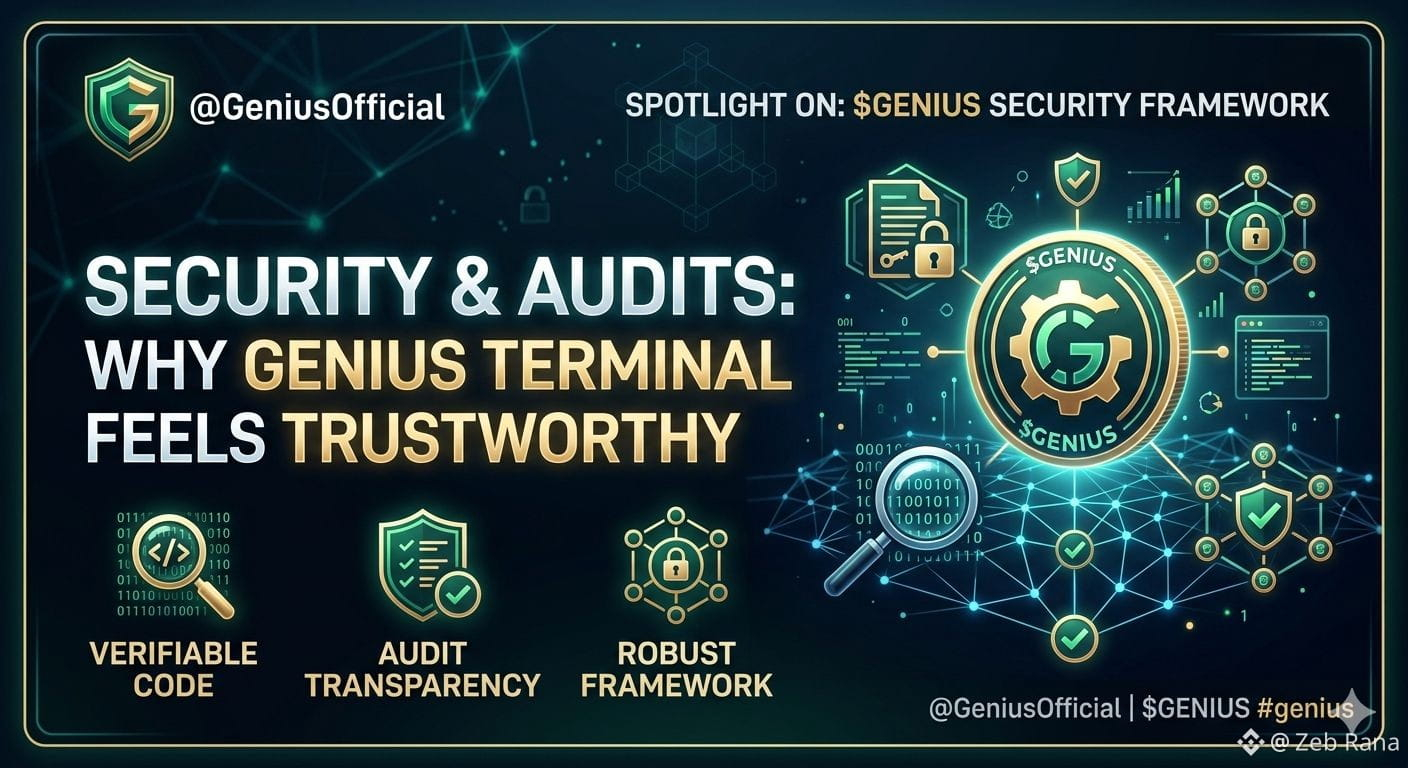
In einem Markt, der oft von der Tokenomics-Hype geblendet ist, hängt die echte Langlebigkeit von Projekten von einem einzigen Faktor ab: überprüfbare Vertrauensinfrastruktur.
Genau hier verschiebt @GeniusOfficial das Paradigma.
Anstatt Sicherheit als nachträglichen Gedanken oder versteckte Fußnote zu behandeln, positioniert das Genius Terminal auditierten Code als seine Kernbasis.
Durch die Priorisierung von transparenter On-Chain-Logik und strengen Drittanbieter-Audits von Smart Contracts beweist das $GENIUS -Ökosystem, dass das Vertrauen der Nutzer verdient werden muss, nicht nur vermarktet.
Echte Sicherheit ist jedoch kein einmaliger Meilenstein, sondern eine fortlaufende Disziplin. Während sich das Protokoll ausweitet, wird der echte Test darin bestehen, ob zukünftige Module diesen strengen Überprüfungsrhythmus beibehalten können, ohne Geschwindigkeit für Sicherheit zu opfern.
Für den Moment ist ihr Engagement für öffentliche Sicherheitsdokumentation ein riesiges grünes Licht in einem Raum, der es verzweifelt braucht.
Ich halte genau im Auge, wie sich dieses Ökosystem entwickelt. 🛡️
{spot}(GENIUSUSDT)
@GeniusOfficial #genius $GENIUS
In einem Markt, der oft von der Tokenomics-Hype geblendet ist, hängt die echte Langlebigkeit von Projekten von einem einzigen Faktor ab: überprüfbare Vertrauensinfrastruktur.
Genau hier verschiebt @GeniusOfficial das Paradigma.
Anstatt Sicherheit als nachträglichen Gedanken oder versteckte Fußnote zu behandeln, positioniert das Genius Terminal auditierten Code als seine Kernbasis.
Durch die Priorisierung von transparenter On-Chain-Logik und strengen Drittanbieter-Audits von Smart Contracts beweist das $GENIUS -Ökosystem, dass das Vertrauen der Nutzer verdient werden muss, nicht nur vermarktet.
Echte Sicherheit ist jedoch kein einmaliger Meilenstein, sondern eine fortlaufende Disziplin. Während sich das Protokoll ausweitet, wird der echte Test darin bestehen, ob zukünftige Module diesen strengen Überprüfungsrhythmus beibehalten können, ohne Geschwindigkeit für Sicherheit zu opfern.
Für den Moment ist ihr Engagement für öffentliche Sicherheitsdokumentation ein riesiges grünes Licht in einem Raum, der es verzweifelt braucht.
Ich halte genau im Auge, wie sich dieses Ökosystem entwickelt. 🛡️
@GeniusOfficial #genius $GENIUS
Genau hier verschiebt @GeniusOfficial das Paradigma.
Anstatt Sicherheit als nachträglichen Gedanken oder versteckte Fußnote zu behandeln, positioniert das Genius Terminal auditierten Code als seine Kernbasis.
Durch die Priorisierung von transparenter On-Chain-Logik und strengen Drittanbieter-Audits von Smart Contracts beweist das $GENIUS -Ökosystem, dass das Vertrauen der Nutzer verdient werden muss, nicht nur vermarktet.
Echte Sicherheit ist jedoch kein einmaliger Meilenstein, sondern eine fortlaufende Disziplin. Während sich das Protokoll ausweitet, wird der echte Test darin bestehen, ob zukünftige Module diesen strengen Überprüfungsrhythmus beibehalten können, ohne Geschwindigkeit für Sicherheit zu opfern.
Für den Moment ist ihr Engagement für öffentliche Sicherheitsdokumentation ein riesiges grünes Licht in einem Raum, der es verzweifelt braucht.
Ich halte genau im Auge, wie sich dieses Ökosystem entwickelt. 🛡️
@GeniusOfficial #genius $GENIUS
80
·
--
Artikel
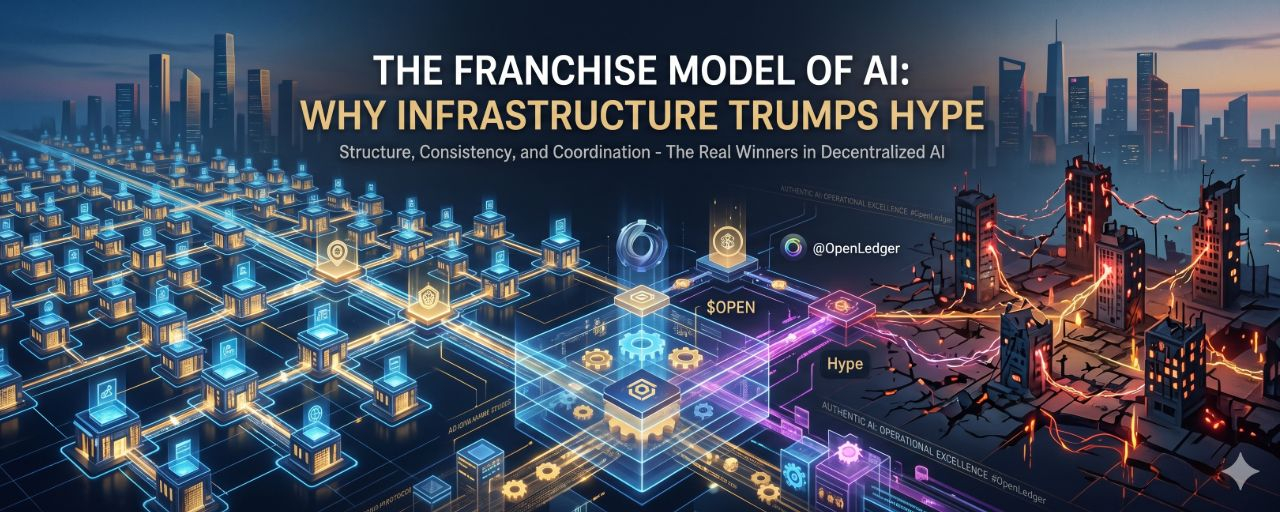
Die Entkopplung des KI-Hypes: Warum die Zukunft dezentraler Infrastruktur gehörtWenn wir die explosive Entwicklung der künstlichen Intelligenz analysieren, machen die meisten Marktbeobachter den Fehler, sich ganz auf das "Gehirn" der großen Sprachmodelle zu konzentrieren, die in den Schlagzeilen stehen.
Aber wenn du tiefer in die strukturellen Mechaniken von Web3-nativen KI-Ökosystemen wie @Openledger schaust, kommt dir eine völlig andere Analogie in den Sinn: das globale Franchise-System.
Denk darüber nach, wie große reale Franchises skalieren.
Ihr Überleben hängt nicht von einem einzigen zentralen Manager ab, der jedes Standort bis ins kleinste Detail micromanaged.
Stattdessen beruht es auf einem rocksoliden Betriebsprotokoll. Tausende von unabhängigen Betreibern müssen Aufgaben mit absoluter Vorhersehbarkeit unter einem gemeinsamen Regelwerk ausführen.
Die Entkopplung des KI-Hypes: Warum die Zukunft dezentraler Infrastruktur gehört
Wenn wir die explosive Entwicklung der künstlichen Intelligenz analysieren, machen die meisten Marktbeobachter den Fehler, sich ganz auf das "Gehirn" der großen Sprachmodelle zu konzentrieren, die in den Schlagzeilen stehen.
Aber wenn du tiefer in die strukturellen Mechaniken von Web3-nativen KI-Ökosystemen wie @OpenLedger schaust, kommt dir eine völlig andere Analogie in den Sinn: das globale Franchise-System.
Denk darüber nach, wie große reale Franchises skalieren.
Ihr Überleben hängt nicht von einem einzigen zentralen Manager ab, der jedes Standort bis ins kleinste Detail micromanaged.
Stattdessen beruht es auf einem rocksoliden Betriebsprotokoll. Tausende von unabhängigen Betreibern müssen Aufgaben mit absoluter Vorhersehbarkeit unter einem gemeinsamen Regelwerk ausführen.
Aber wenn du tiefer in die strukturellen Mechaniken von Web3-nativen KI-Ökosystemen wie @OpenLedger schaust, kommt dir eine völlig andere Analogie in den Sinn: das globale Franchise-System.
Denk darüber nach, wie große reale Franchises skalieren.
Ihr Überleben hängt nicht von einem einzigen zentralen Manager ab, der jedes Standort bis ins kleinste Detail micromanaged.
Stattdessen beruht es auf einem rocksoliden Betriebsprotokoll. Tausende von unabhängigen Betreibern müssen Aufgaben mit absoluter Vorhersehbarkeit unter einem gemeinsamen Regelwerk ausführen.
1
66
·
--
Bullisch
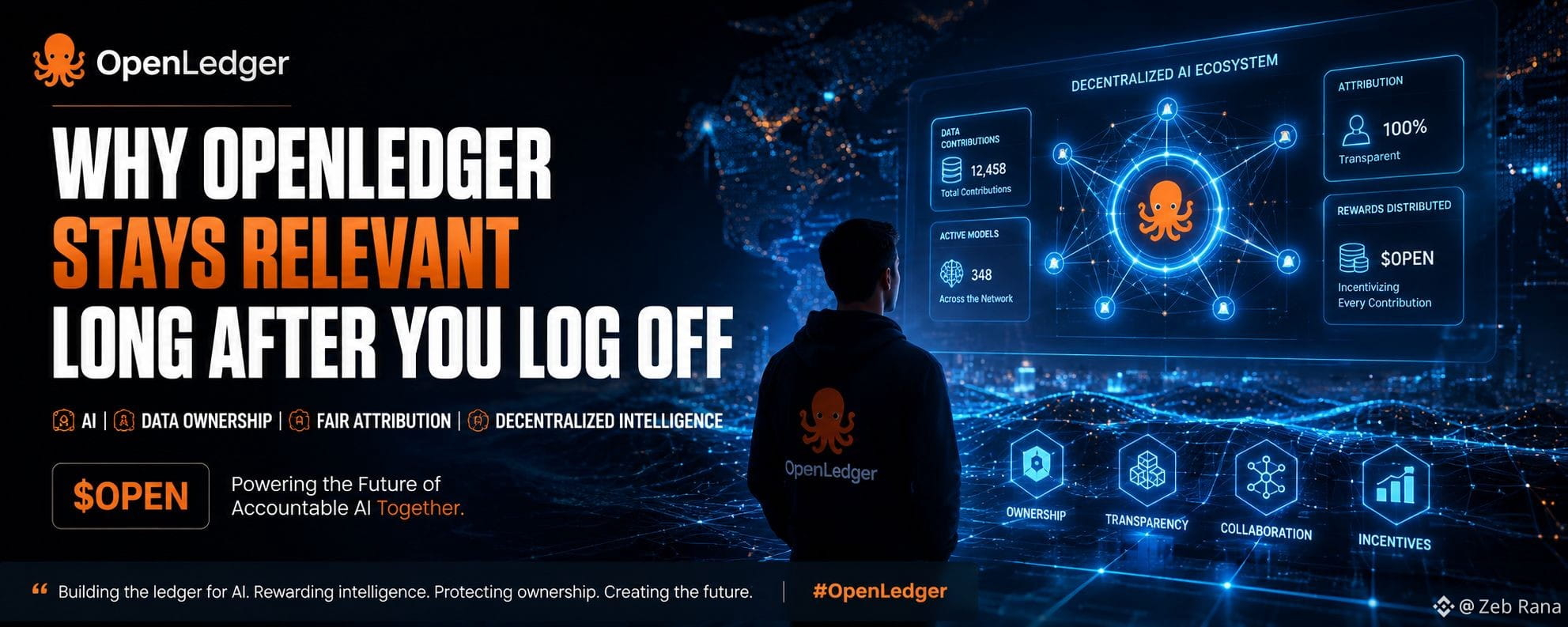
Je länger ich @Openledger beobachte, desto mehr wird mir klar, dass sein Wert nicht nur auf das beschränkt ist, was an der Oberfläche passiert. Die meisten Projekte im Krypto-Bereich konkurrieren um Aufmerksamkeit durch Schlagzeilen, Partnerschaften oder kurzfristige Markthemmungen.
@Openledger scheint etwas anderes aufzubauen – ein Ökosystem, das weiterhin Ideen generiert, selbst nachdem du aufgehört hast, aktiv danach zu suchen.
Kürzlich habe ich etwas Zeit damit verbracht, Diskussionen rund um $OPEN und die umfassendere Vision hinter dezentraler KI zu erkunden. Was herausstach, war keine spezifische Ankündigung oder Funktionsaktualisierung. Es war die Erkenntnis, dass OpenLedger eine Herausforderung angeht, die immer wichtiger wird, je schneller die KI-Adoption voranschreitet: ein System zu schaffen, in dem Daten, Intelligenz und Beiträge fair verfolgt, zugeordnet und belohnt werden können.
Je mehr ich darüber nachdenke, desto relevanter wird das. KI-Modelle werden immer leistungsfähiger, aber Fragen zu Eigentum, Transparenz und Anreizen bleiben weitgehend ungelöst. Das ist der Punkt, an dem @Openledger meine Aufmerksamkeit erregt. Statt sich nur darauf zu konzentrieren, was KI produzieren kann, legt es auch Wert darauf, wie Wert im gesamten Ökosystem geschaffen und verteilt wird.
Was ich am interessantesten finde, ist, wie das Projekt kontinuierliches Denken fördert. Ein Workflow kann verbessert werden. Ein Mechanismus zur Datenbeitragsleistung kann effizienter werden. Eine KI-Interaktion kann sich zu etwas Nützlicherem entwickeln. Jede Schicht fühlt sich an wie Teil eines größeren Systems, das sich weiterhin ausdehnt.
Während KI und Blockchain weiterhin näher zusammenrücken, glaube ich, dass Ökosysteme, die Verantwortlichkeit, Zuordnung und nachhaltige Anreize priorisieren, eine zunehmend wichtige Rolle spielen werden. Das ist einer der Gründe, warum ich @Openledger und die Zukunft von $OPEN genau im Auge behalte.
{future}(OPENUSDT)
#AI #blockchain #openledger $OPEN
Je länger ich @OpenLedger beobachte, desto mehr wird mir klar, dass sein Wert nicht nur auf das beschränkt ist, was an der Oberfläche passiert. Die meisten Projekte im Krypto-Bereich konkurrieren um Aufmerksamkeit durch Schlagzeilen, Partnerschaften oder kurzfristige Markthemmungen.
@OpenLedger scheint etwas anderes aufzubauen – ein Ökosystem, das weiterhin Ideen generiert, selbst nachdem du aufgehört hast, aktiv danach zu suchen.
Kürzlich habe ich etwas Zeit damit verbracht, Diskussionen rund um $OPEN und die umfassendere Vision hinter dezentraler KI zu erkunden. Was herausstach, war keine spezifische Ankündigung oder Funktionsaktualisierung. Es war die Erkenntnis, dass OpenLedger eine Herausforderung angeht, die immer wichtiger wird, je schneller die KI-Adoption voranschreitet: ein System zu schaffen, in dem Daten, Intelligenz und Beiträge fair verfolgt, zugeordnet und belohnt werden können.
Je mehr ich darüber nachdenke, desto relevanter wird das. KI-Modelle werden immer leistungsfähiger, aber Fragen zu Eigentum, Transparenz und Anreizen bleiben weitgehend ungelöst. Das ist der Punkt, an dem @OpenLedger meine Aufmerksamkeit erregt. Statt sich nur darauf zu konzentrieren, was KI produzieren kann, legt es auch Wert darauf, wie Wert im gesamten Ökosystem geschaffen und verteilt wird.
Was ich am interessantesten finde, ist, wie das Projekt kontinuierliches Denken fördert. Ein Workflow kann verbessert werden. Ein Mechanismus zur Datenbeitragsleistung kann effizienter werden. Eine KI-Interaktion kann sich zu etwas Nützlicherem entwickeln. Jede Schicht fühlt sich an wie Teil eines größeren Systems, das sich weiterhin ausdehnt.
Während KI und Blockchain weiterhin näher zusammenrücken, glaube ich, dass Ökosysteme, die Verantwortlichkeit, Zuordnung und nachhaltige Anreize priorisieren, eine zunehmend wichtige Rolle spielen werden. Das ist einer der Gründe, warum ich @OpenLedger und die Zukunft von $OPEN genau im Auge behalte.
#AI #blockchain #openledger $OPEN
@OpenLedger scheint etwas anderes aufzubauen – ein Ökosystem, das weiterhin Ideen generiert, selbst nachdem du aufgehört hast, aktiv danach zu suchen.
Kürzlich habe ich etwas Zeit damit verbracht, Diskussionen rund um $OPEN und die umfassendere Vision hinter dezentraler KI zu erkunden. Was herausstach, war keine spezifische Ankündigung oder Funktionsaktualisierung. Es war die Erkenntnis, dass OpenLedger eine Herausforderung angeht, die immer wichtiger wird, je schneller die KI-Adoption voranschreitet: ein System zu schaffen, in dem Daten, Intelligenz und Beiträge fair verfolgt, zugeordnet und belohnt werden können.
Je mehr ich darüber nachdenke, desto relevanter wird das. KI-Modelle werden immer leistungsfähiger, aber Fragen zu Eigentum, Transparenz und Anreizen bleiben weitgehend ungelöst. Das ist der Punkt, an dem @OpenLedger meine Aufmerksamkeit erregt. Statt sich nur darauf zu konzentrieren, was KI produzieren kann, legt es auch Wert darauf, wie Wert im gesamten Ökosystem geschaffen und verteilt wird.
Was ich am interessantesten finde, ist, wie das Projekt kontinuierliches Denken fördert. Ein Workflow kann verbessert werden. Ein Mechanismus zur Datenbeitragsleistung kann effizienter werden. Eine KI-Interaktion kann sich zu etwas Nützlicherem entwickeln. Jede Schicht fühlt sich an wie Teil eines größeren Systems, das sich weiterhin ausdehnt.
Während KI und Blockchain weiterhin näher zusammenrücken, glaube ich, dass Ökosysteme, die Verantwortlichkeit, Zuordnung und nachhaltige Anreize priorisieren, eine zunehmend wichtige Rolle spielen werden. Das ist einer der Gründe, warum ich @OpenLedger und die Zukunft von $OPEN genau im Auge behalte.
#AI #blockchain #openledger $OPEN
1
90
·
--
Artikel
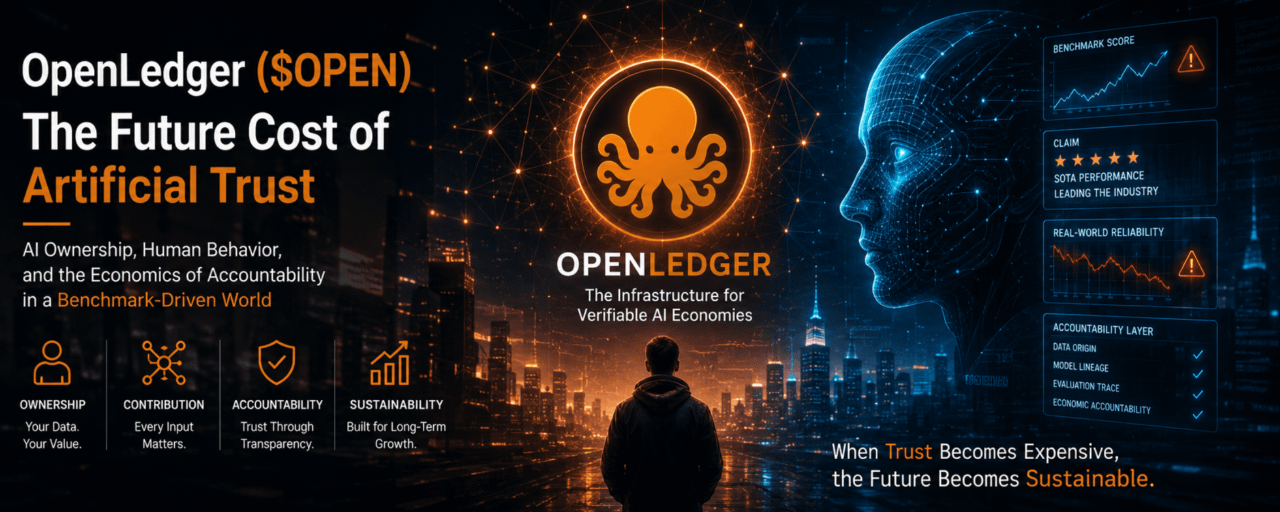
OpenLedger ($OPEN) und warum die nächste KI-Wirtschaft möglicherweise von verifiablem Vertrauen abhängtLange Zeit sah die KI-Industrie aus wie ein Wettkampf, der ausschließlich auf Intelligenz basierte.
Jede neue Modellankündigung konzentrierte sich auf größere Parameter, schnellere Ausgaben, höhere Benchmark-Punkte und ausgefeiltere Demos. Die Botschaft war klar: Wer die schlauste KI baut, wird letztendlich die Zukunft dominieren.
Aber in letzter Zeit denke ich, dass sich das Gespräch in eine viel wichtigere Richtung verschoben hat.
Die Leute sind nicht mehr nur von Intelligenz beeindruckt.
Sie beginnen, die Zuverlässigkeit zu hinterfragen.
OpenLedger ($OPEN) und warum die nächste KI-Wirtschaft möglicherweise von verifiablem Vertrauen abhängt
Lange Zeit sah die KI-Industrie aus wie ein Wettkampf, der ausschließlich auf Intelligenz basierte.
Jede neue Modellankündigung konzentrierte sich auf größere Parameter, schnellere Ausgaben, höhere Benchmark-Punkte und ausgefeiltere Demos. Die Botschaft war klar: Wer die schlauste KI baut, wird letztendlich die Zukunft dominieren.
Aber in letzter Zeit denke ich, dass sich das Gespräch in eine viel wichtigere Richtung verschoben hat.
Die Leute sind nicht mehr nur von Intelligenz beeindruckt.
Sie beginnen, die Zuverlässigkeit zu hinterfragen.
Jede neue Modellankündigung konzentrierte sich auf größere Parameter, schnellere Ausgaben, höhere Benchmark-Punkte und ausgefeiltere Demos. Die Botschaft war klar: Wer die schlauste KI baut, wird letztendlich die Zukunft dominieren.
Aber in letzter Zeit denke ich, dass sich das Gespräch in eine viel wichtigere Richtung verschoben hat.
Die Leute sind nicht mehr nur von Intelligenz beeindruckt.
Sie beginnen, die Zuverlässigkeit zu hinterfragen.
45
·
--
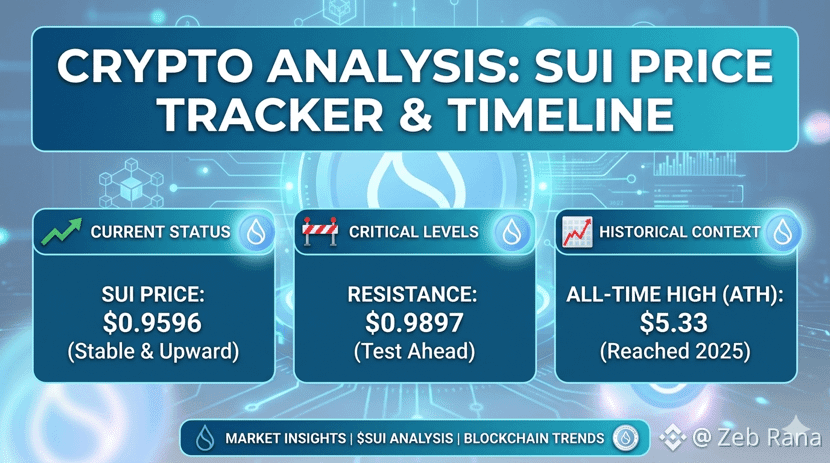
$SUI Die Preisbewegung zeigt einen schönen Stabilitätstrend.
Wir traden derzeit bei $0.9596.
Der unmittelbare Test für die Bullen ist das Durchbrechen der Widerstandsmarke bei $0.9897.
Es ist ein weiter Weg vom 2025-Hoch von $5.33, aber die Struktur sieht interessant aus.
{spot}(SUIUSDT)
#sui #USIranStrikesSinkBitcoinBelow$73000
$SUI Die Preisbewegung zeigt einen schönen Stabilitätstrend.
Wir traden derzeit bei $0.9596.
Der unmittelbare Test für die Bullen ist das Durchbrechen der Widerstandsmarke bei $0.9897.
Es ist ein weiter Weg vom 2025-Hoch von $5.33, aber die Struktur sieht interessant aus.
#sui #USIranStrikesSinkBitcoinBelow$73000
Wir traden derzeit bei $0.9596.
Der unmittelbare Test für die Bullen ist das Durchbrechen der Widerstandsmarke bei $0.9897.
Es ist ein weiter Weg vom 2025-Hoch von $5.33, aber die Struktur sieht interessant aus.
#sui #USIranStrikesSinkBitcoinBelow$73000
209
Anmelden und weiter Inhalte entdecken
Krypto-Nutzer weltweit auf Binance Square kennenlernen
⚡️ Bleib in Sachen Krypto stets am Puls.
💬 Die weltgrößte Kryptobörse vertraut darauf.
👍 Erhalte verlässliche Einblicke von verifizierten Creators.
E-Mail-Adresse/Telefonnummer
Trendthemen
USAugustPPIRisesLessThanExpected
38,289 Aufrufe
691 Kommentare
🚨 US AUG PPI: Steigt WENIGER als erwartet! Bullisch für Krypto? 🚀
PPI +0,4% MoM wie erwartet, aber CORE PPI nur +0,2% statt +0,3% erwartet – Abkühlung!
Was das bedeutet:
• Großhandel-Inflation schwächer als befürchtet
• Chance auf Zinserhöhung der Fed jetzt bei 62% – aber eher nachgiebige Signale kommen
• Abwärtskorrekturen bei Core PCE erwartet – bullisch
• BTC steigt normalerweise bei nachlassendem PPI
Fed-Sitzung 15.–16. Sep – Der Markt erwartet nun eine Pause, keine Erhöhung?
Ist das der Startschuss für den Q4-Rallye?
#Bitcoin #PPI #Fed #CryptoNews #BTC#usaugustppiriseslessthanexpected
True News
·1 Likes
·1.3k Aufrufe
SECApprovesNasdaqTexasCommodityTrustRule
22,845 Aufrufe
508 Kommentare
ECBRaisesRatesSecondTimeTo2.5%
20,436 Aufrufe
374 Kommentare