

DilbaTheGreat
11.5k Beiträge

DilbaTheGreat
Melden
Nutzer blockieren
Trader | Crypto Strategist | High-Probability Trade Setups | Holder of BNB, My X: @Dilba_Crypto
42 Following
23.7K+ Follower
34.7K+ Like gegeben
Beiträge
Alle
Zitierungen
Live
PINNED
Ich verstehe immer noch nicht, warum du meiner [GROUP CHAT](https://app.binance.com/uni-qr/group-chat-landing?channelToken=zSGGhRROeT49KMcKvoik4w&type=1&entrySource=sharing_link) noch nicht beigetreten bist… 🤔
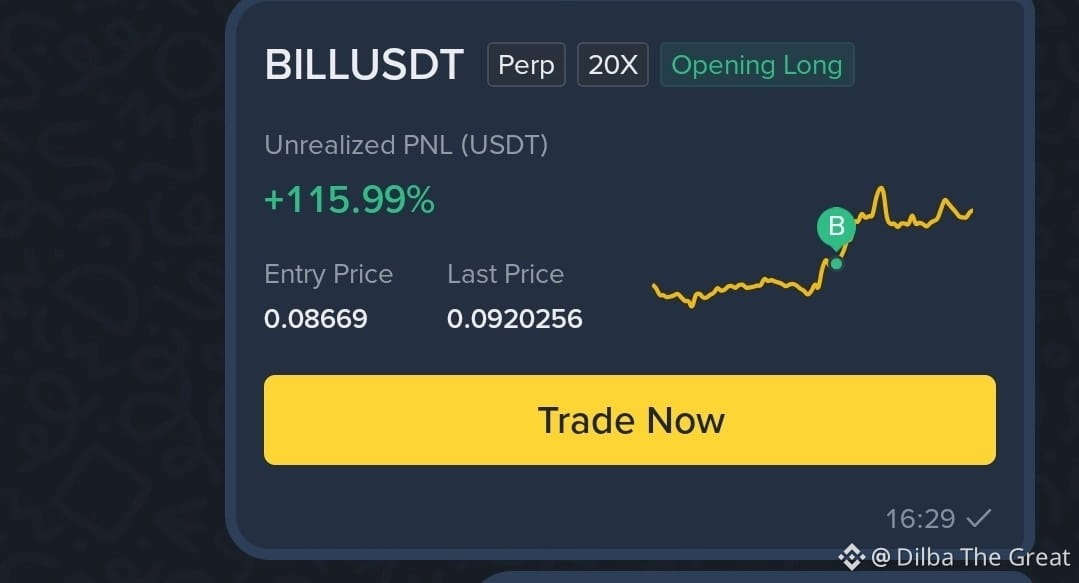
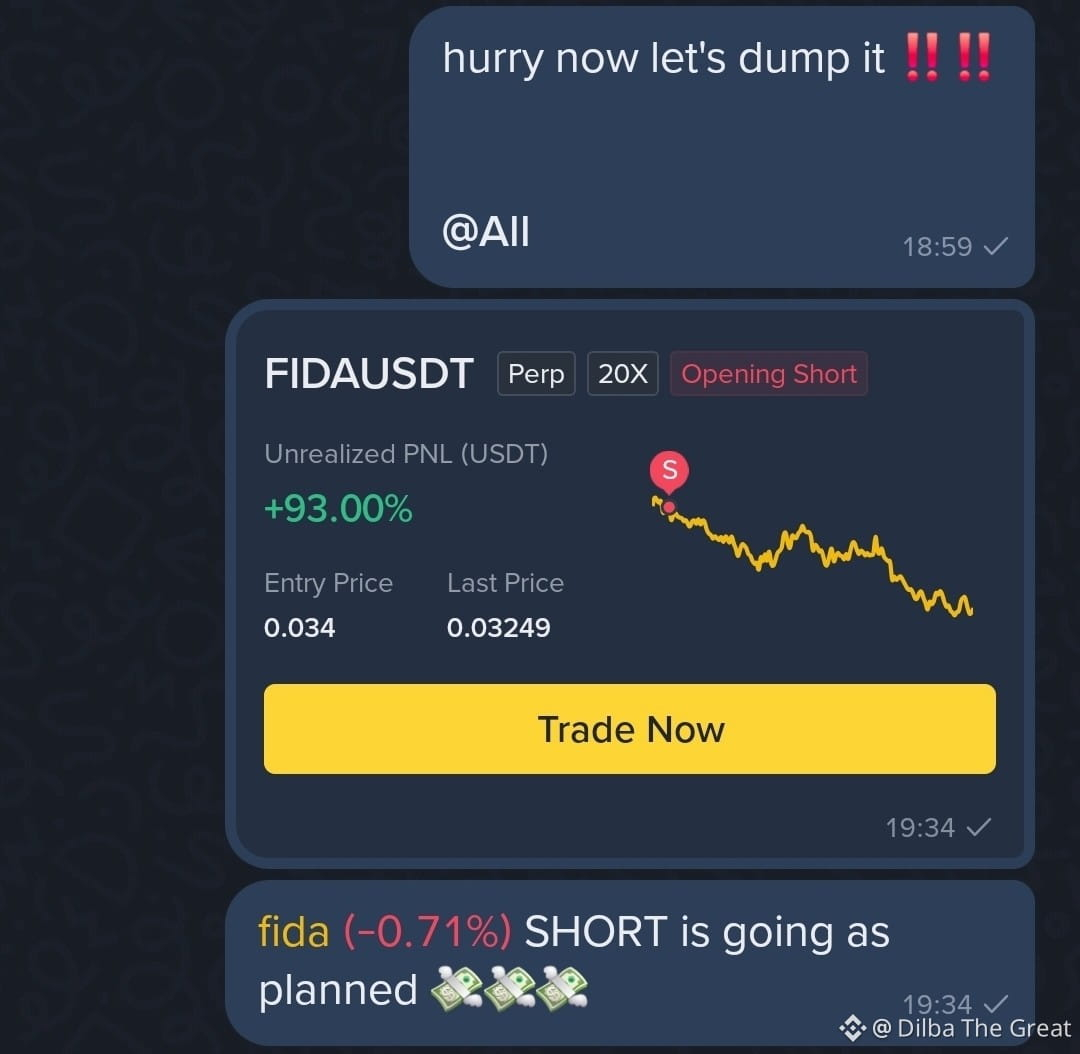
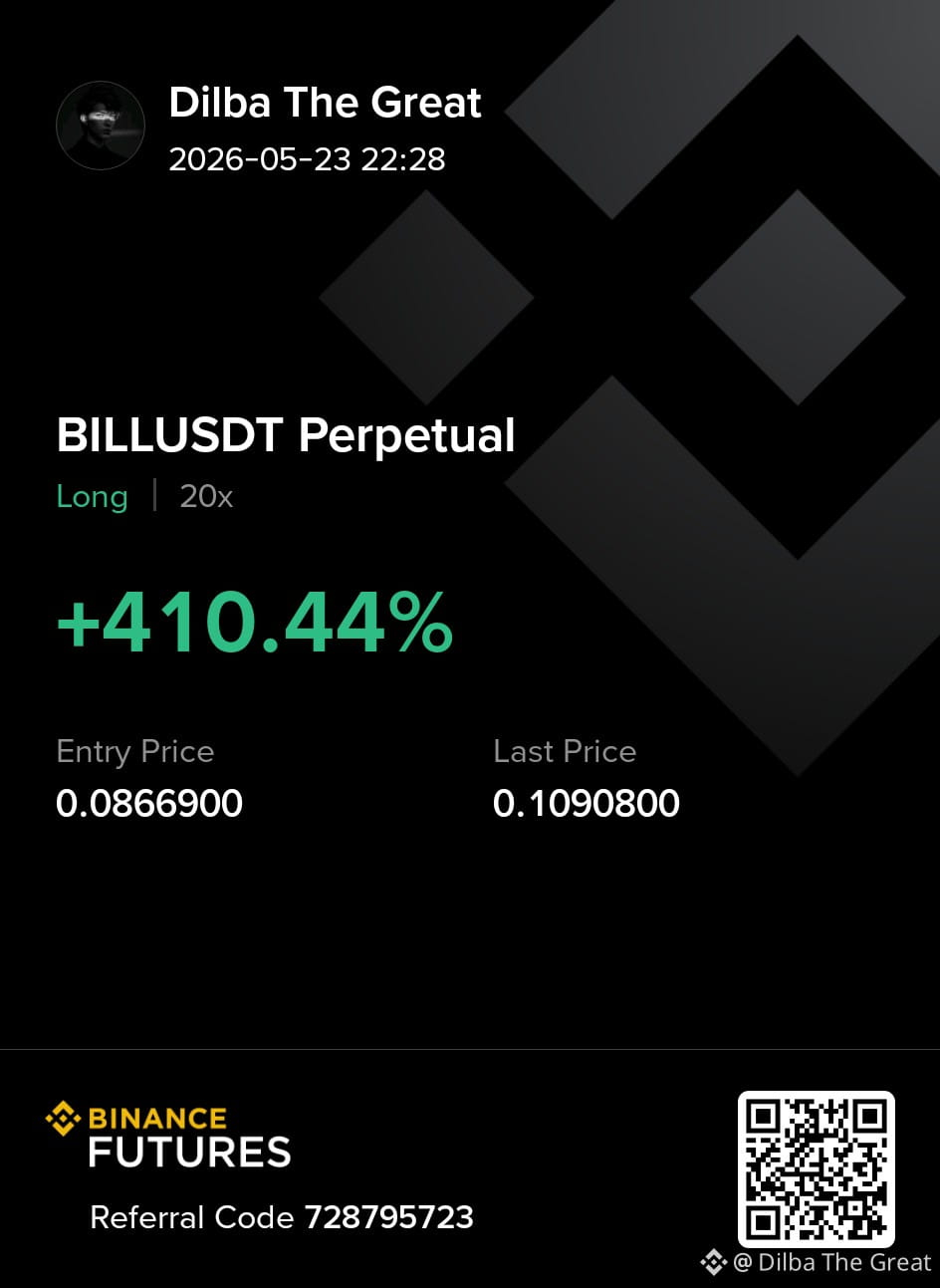
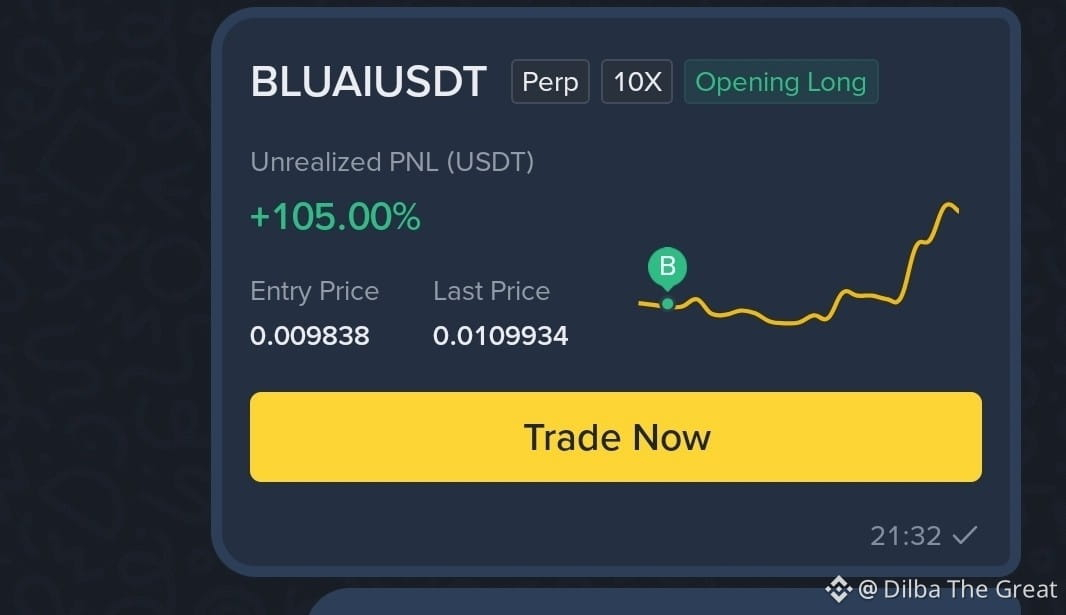
Während viele Trader mit späten Einstiegen und emotionalem Trading kämpfen, fangen meine Mitglieder die Bewegungen frühzeitig ein und drucken konstant Gewinne. 📈🔥
Die Signale werden vor dem Hype geteilt.
Setups werden diszipliniert besprochen.
Und die Community wächst jeden Tag stärker.
Einige Leute warten, bis eine Coin um 100% pumpt, bevor sie Aufmerksamkeit schenken.
Gewinner positionieren sich, bevor die Masse ankommt.
Schau nicht weiter zu, wie Chancen vorbeiziehen, während andere in der Gruppe essen.
Dein nächster Gewinner-Trade könnte bereits im Chat auf dich warten. 🚀
Ich verstehe immer noch nicht, warum du meiner GROUP CHAT noch nicht beigetreten bist… 🤔
Während viele Trader mit späten Einstiegen und emotionalem Trading kämpfen, fangen meine Mitglieder die Bewegungen frühzeitig ein und drucken konstant Gewinne. 📈🔥
Die Signale werden vor dem Hype geteilt.
Setups werden diszipliniert besprochen.
Und die Community wächst jeden Tag stärker.
Einige Leute warten, bis eine Coin um 100% pumpt, bevor sie Aufmerksamkeit schenken.
Gewinner positionieren sich, bevor die Masse ankommt.
Schau nicht weiter zu, wie Chancen vorbeiziehen, während andere in der Gruppe essen.
Dein nächster Gewinner-Trade könnte bereits im Chat auf dich warten. 🚀
Während viele Trader mit späten Einstiegen und emotionalem Trading kämpfen, fangen meine Mitglieder die Bewegungen frühzeitig ein und drucken konstant Gewinne. 📈🔥
Die Signale werden vor dem Hype geteilt.
Setups werden diszipliniert besprochen.
Und die Community wächst jeden Tag stärker.
Einige Leute warten, bis eine Coin um 100% pumpt, bevor sie Aufmerksamkeit schenken.
Gewinner positionieren sich, bevor die Masse ankommt.
Schau nicht weiter zu, wie Chancen vorbeiziehen, während andere in der Gruppe essen.
Dein nächster Gewinner-Trade könnte bereits im Chat auf dich warten. 🚀
2
10
1.1k
·
--
Bärisch
30D-Trade $BR 215 USDT
Übersetzung ansehen
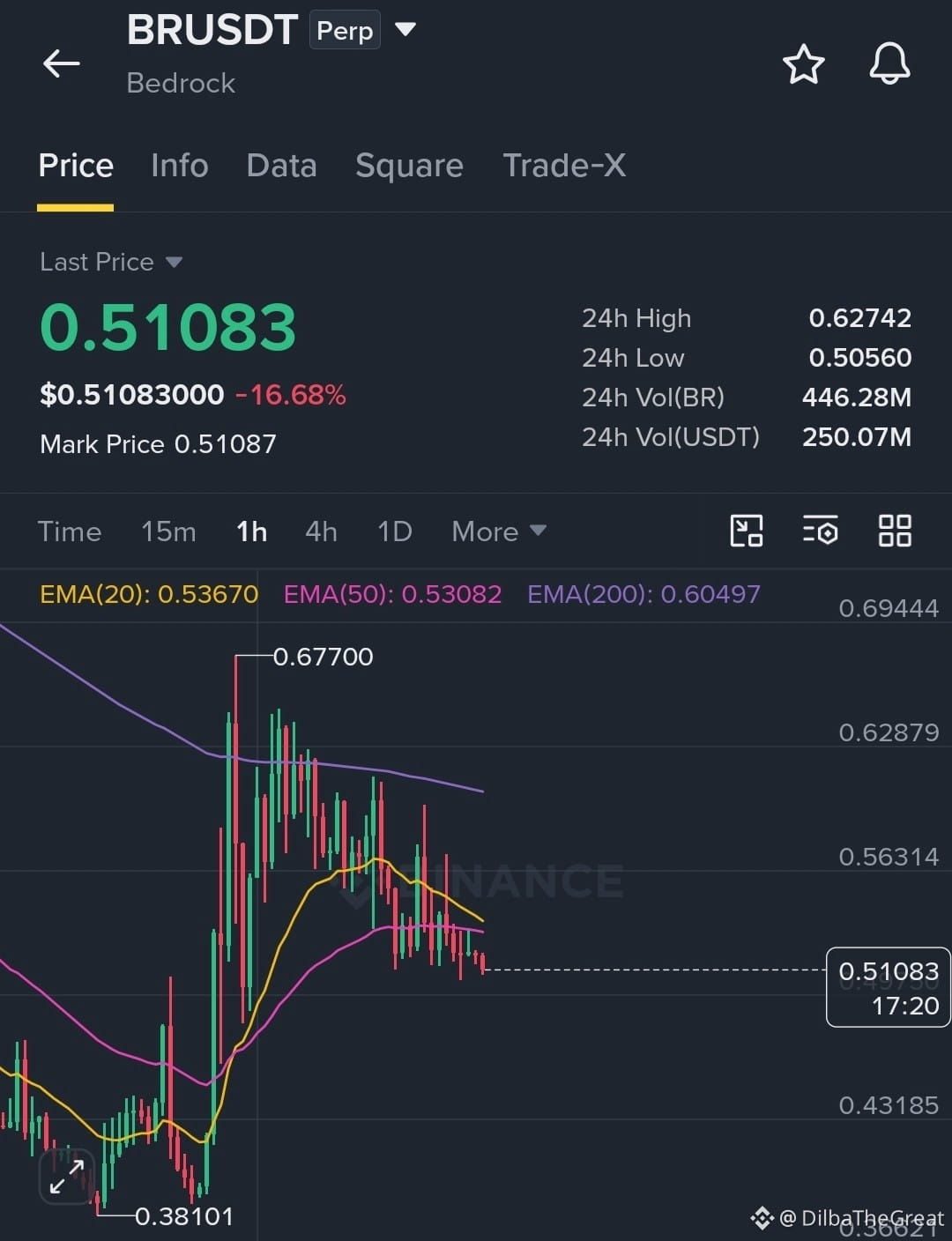
Guy's BR is falling slowly ‼️
$BR SELL NOW $0.5100
SL, $0.5550
TP, $0.4480 - $0.4100
Chart looks boring when price is going down like this but this kind of move will give you good profit bro.
{future}(BRUSDT)
Guy's BR is falling slowly ‼️
$BR SELL NOW $0.5100
SL, $0.5550
TP, $0.4480 - $0.4100
Chart looks boring when price is going down like this but this kind of move will give you good profit bro.
$BR SELL NOW $0.5100
SL, $0.5550
TP, $0.4480 - $0.4100
Chart looks boring when price is going down like this but this kind of move will give you good profit bro.
64
·
--
Bullisch
30D-Trade $BTW 146 USDT
Übersetzung ansehen
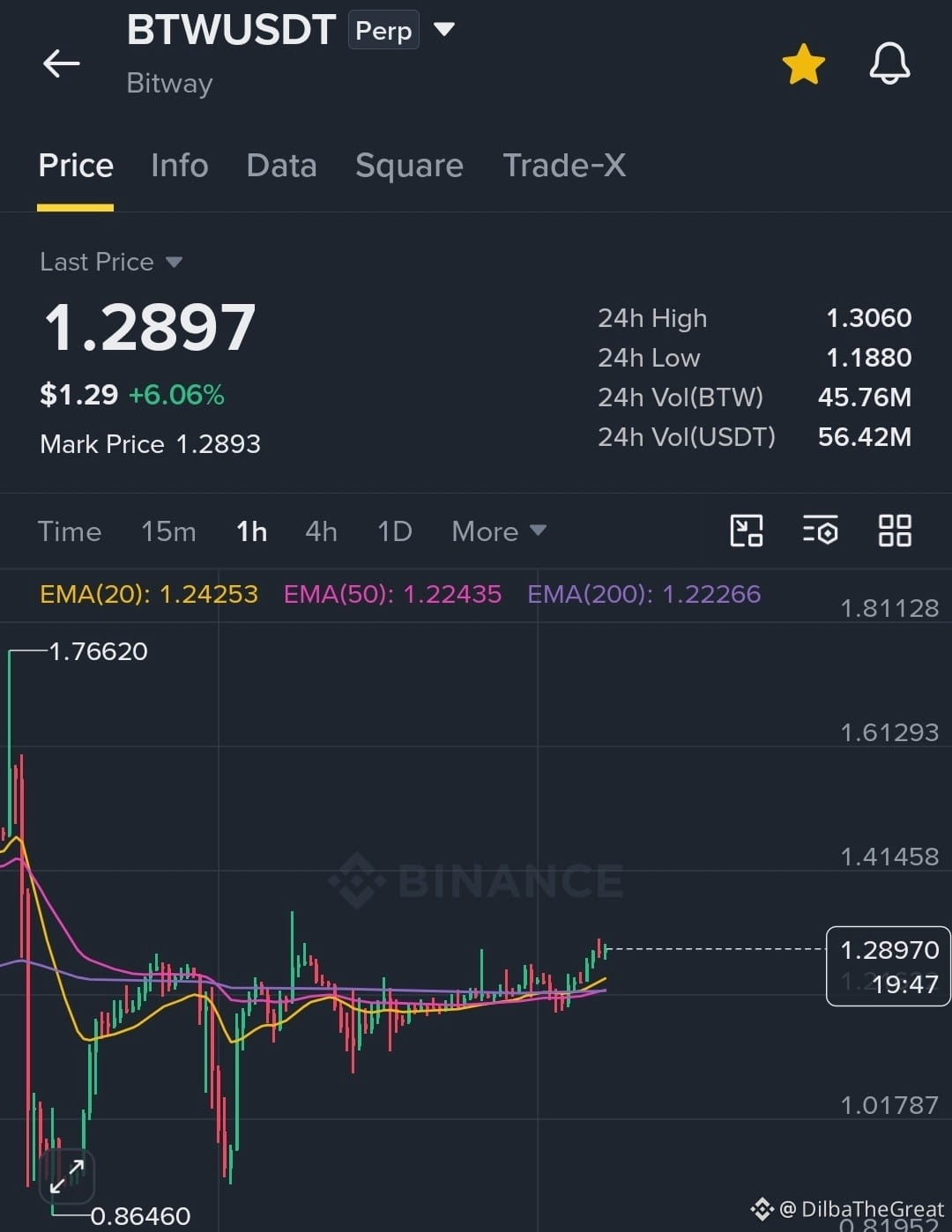
Guy's BTW is waking up again 🏹
$BTW BUY NOW $1.289
SL, $1.190
TP, $1.360 - $1.450
{future}(BTWUSDT)
Guy's BTW is waking up again 🏹
$BTW BUY NOW $1.289
SL, $1.190
TP, $1.360 - $1.450
$BTW BUY NOW $1.289
SL, $1.190
TP, $1.360 - $1.450
69
Übersetzung ansehen
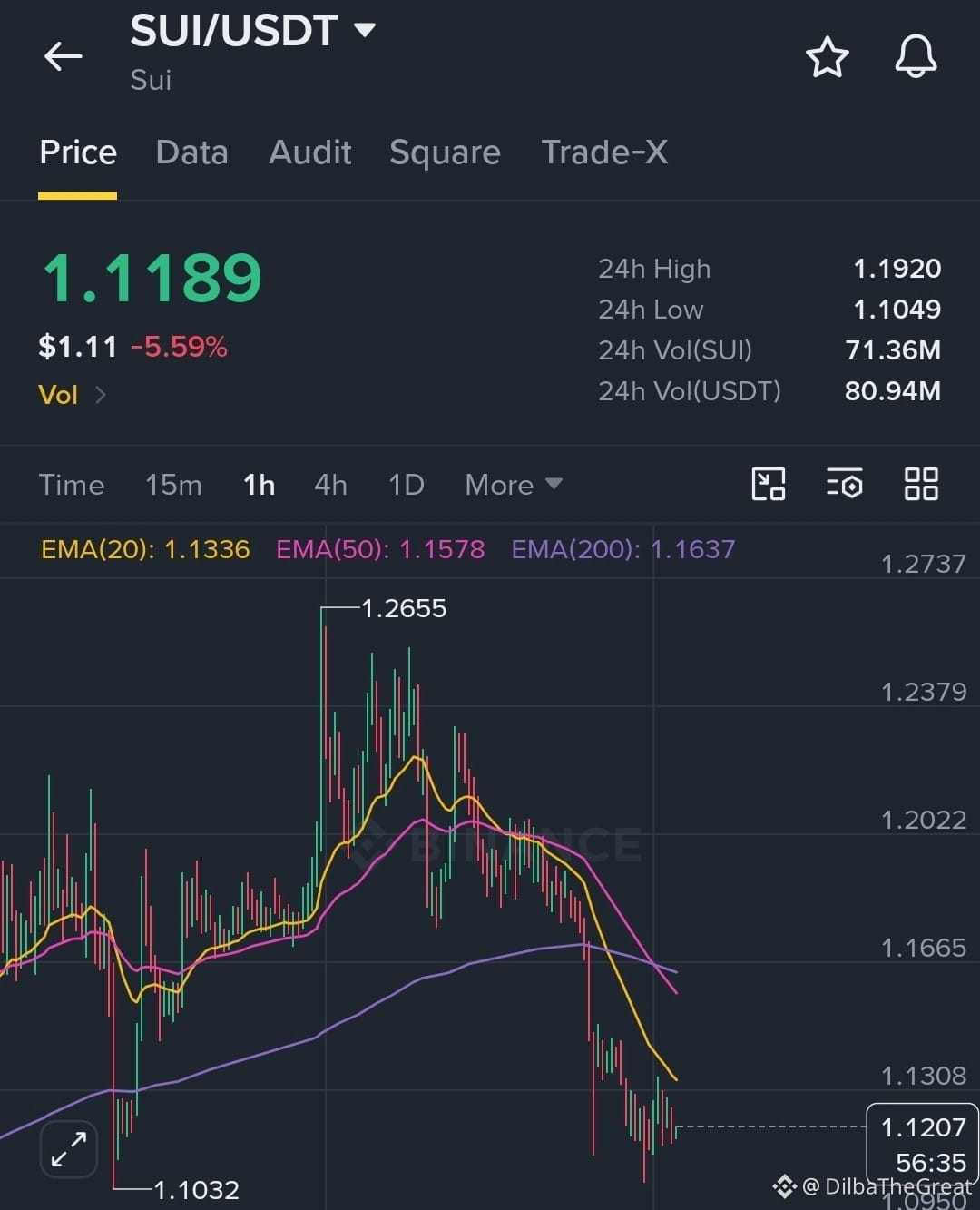
$SUI could break this zone or bounce? 👀
Price is at $1.1189, down 5.82%, and it's testing the 24h low of $1.1049 after a steady grind lower from the $1.29 peak. Momentum is clearly bearish on the 4H.
The key level I'm watching is $1.1534. As long as price stays below it, the downside prevails.
If bulls reclaim $1.1534: A bounce back toward $1.2331 comes into play.
If bears break $1.1049: The next stop is the $0.9940 support zone.
My read: Sellers are in control on short term time frames.
{future}(SUIUSDT)
$SUI could break this zone or bounce? 👀
Price is at $1.1189, down 5.82%, and it's testing the 24h low of $1.1049 after a steady grind lower from the $1.29 peak. Momentum is clearly bearish on the 4H.
The key level I'm watching is $1.1534. As long as price stays below it, the downside prevails.
If bulls reclaim $1.1534: A bounce back toward $1.2331 comes into play.
If bears break $1.1049: The next stop is the $0.9940 support zone.
My read: Sellers are in control on short term time frames.
Price is at $1.1189, down 5.82%, and it's testing the 24h low of $1.1049 after a steady grind lower from the $1.29 peak. Momentum is clearly bearish on the 4H.
The key level I'm watching is $1.1534. As long as price stays below it, the downside prevails.
If bulls reclaim $1.1534: A bounce back toward $1.2331 comes into play.
If bears break $1.1049: The next stop is the $0.9940 support zone.
My read: Sellers are in control on short term time frames.
1
41
·
--
Bärisch
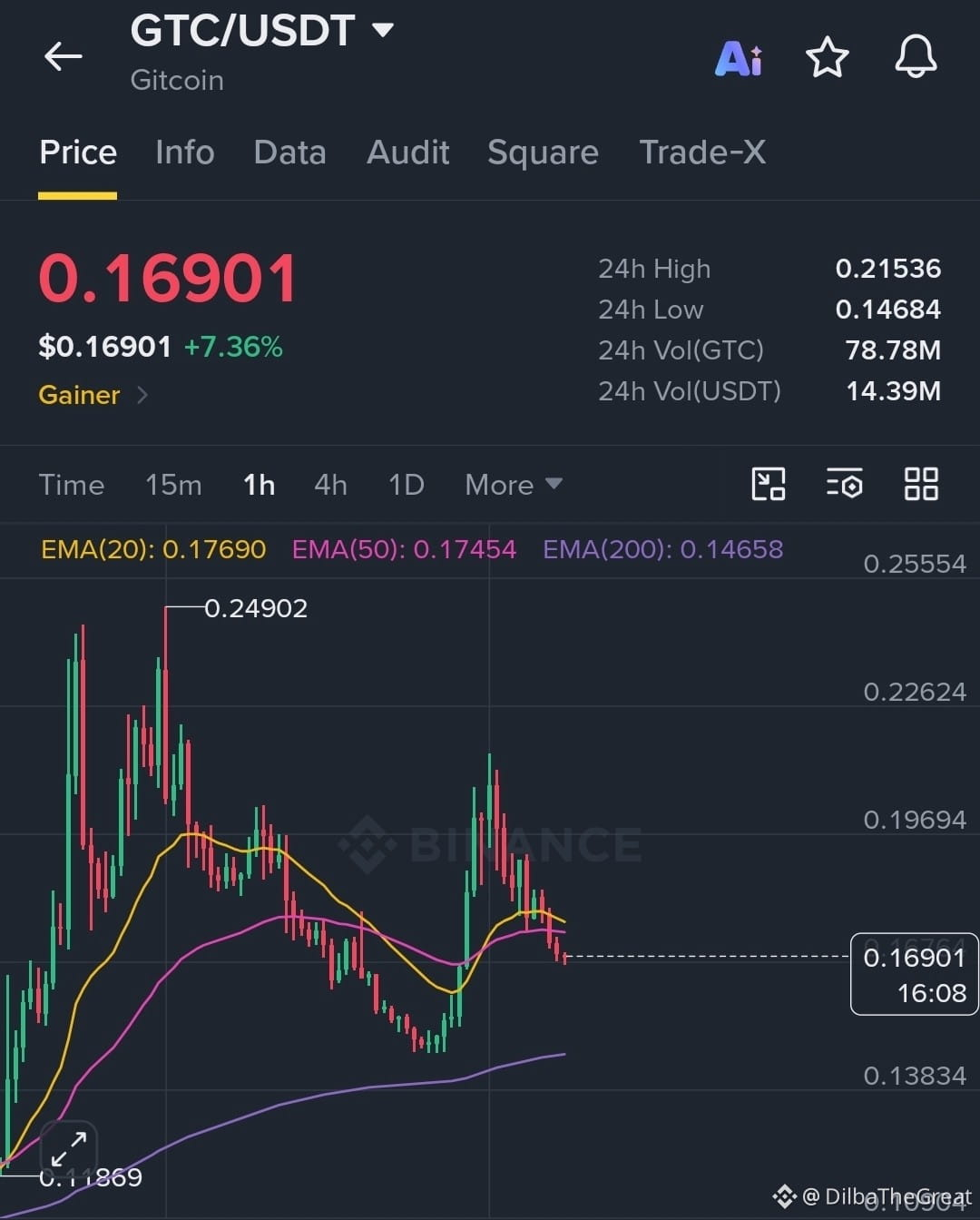
Das Momentum lässt nach ‼️
$GTC JETZT VERKAUFEN $0.1690
SL, $0.1780
TP, $0.1560 - $0.1480
Die Abwärtsbewegung dominiert, solange $0.1800 als Widerstand hält.
{future}(GTCUSDT)
Das Momentum lässt nach ‼️
$GTC JETZT VERKAUFEN $0.1690
SL, $0.1780
TP, $0.1560 - $0.1480
Die Abwärtsbewegung dominiert, solange $0.1800 als Widerstand hält.
$GTC JETZT VERKAUFEN $0.1690
SL, $0.1780
TP, $0.1560 - $0.1480
Die Abwärtsbewegung dominiert, solange $0.1800 als Widerstand hält.
77
Übersetzung ansehen
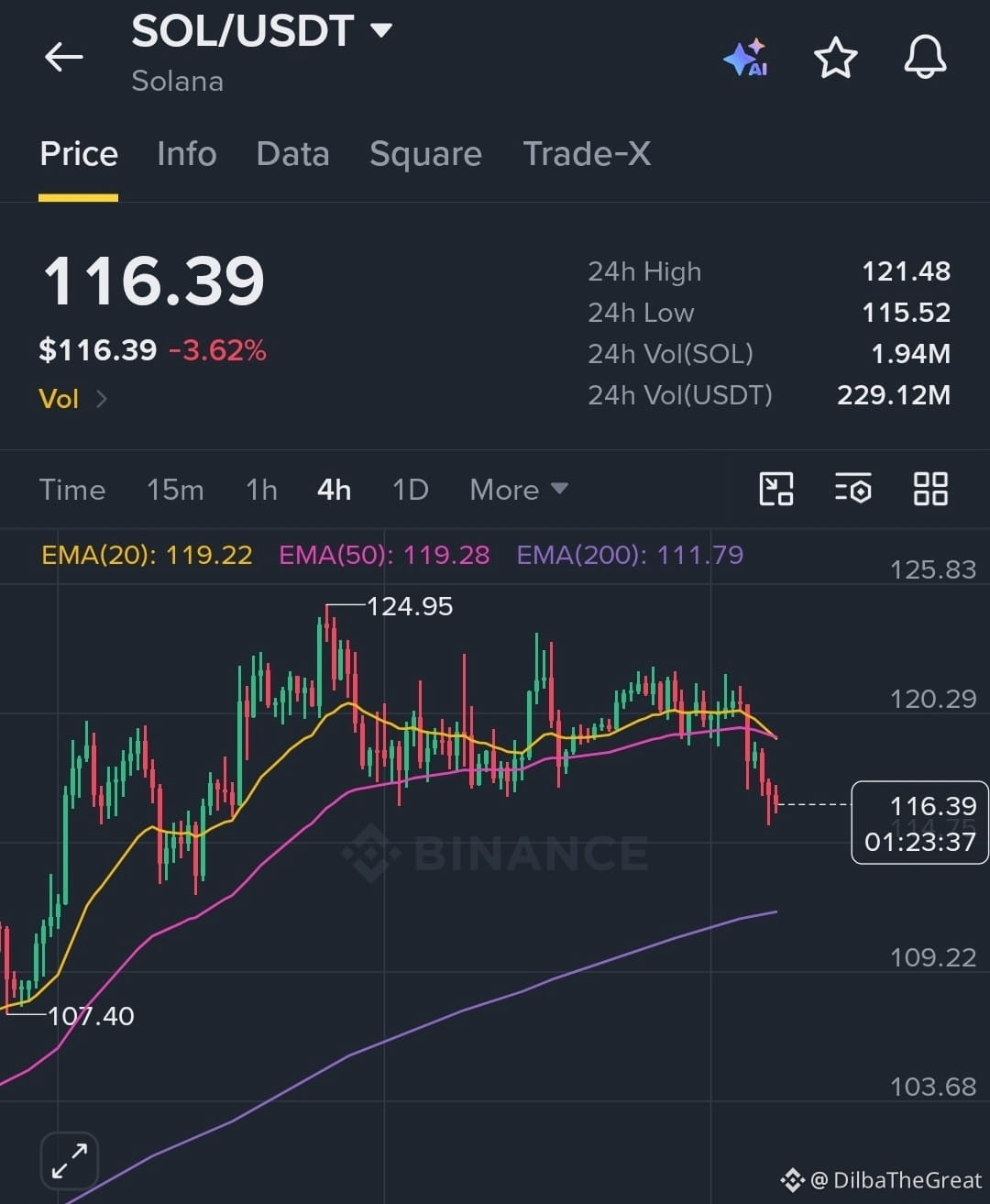
$SOL is bleeding — where does it stop?
Price is at $116.39, down 3.62%, and it just lost both the EMA20 ($119.22) and EMA50 ($119.28) on the 4H. That's a clear shift in short-term momentum.
The key level I'm watching is $119.28. As long as price stays below it, the downside prevails.
If bulls reclaim $119.28: This becomes a support bounce, and a push toward $125 comes back into play.
If bears hold control: Losing $111.79 opens the door to $109, then $103.
{future}(SOLUSDT)
$SOL is bleeding — where does it stop?
Price is at $116.39, down 3.62%, and it just lost both the EMA20 ($119.22) and EMA50 ($119.28) on the 4H. That's a clear shift in short-term momentum.
The key level I'm watching is $119.28. As long as price stays below it, the downside prevails.
If bulls reclaim $119.28: This becomes a support bounce, and a push toward $125 comes back into play.
If bears hold control: Losing $111.79 opens the door to $109, then $103.
Price is at $116.39, down 3.62%, and it just lost both the EMA20 ($119.22) and EMA50 ($119.28) on the 4H. That's a clear shift in short-term momentum.
The key level I'm watching is $119.28. As long as price stays below it, the downside prevails.
If bulls reclaim $119.28: This becomes a support bounce, and a push toward $125 comes back into play.
If bears hold control: Losing $111.79 opens the door to $109, then $103.
67
·
--
Bullisch
30D-Trade $MARSCOIN 1.5K USDT
Übersetzung ansehen
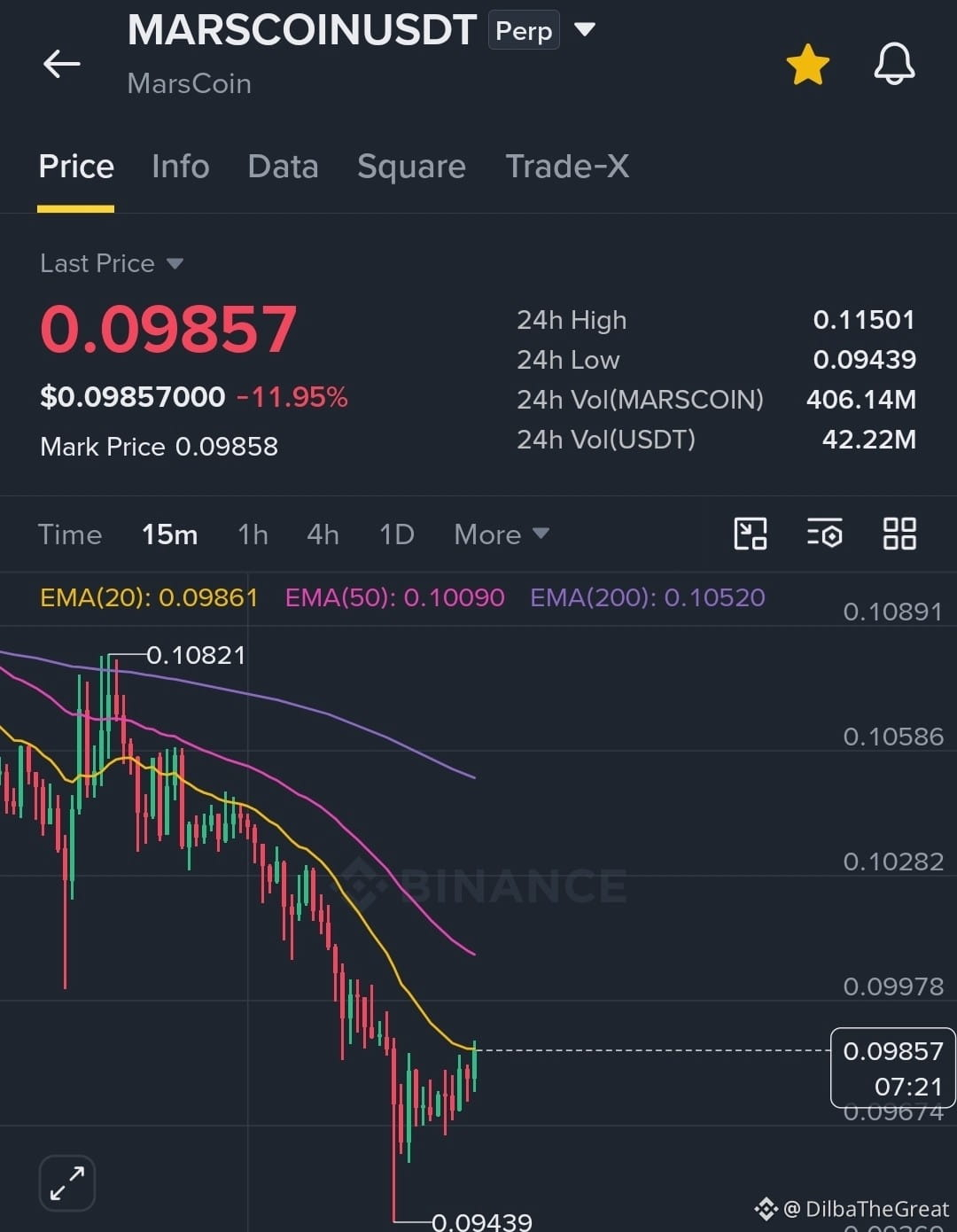
SCALP TRADING 🔥
$MARSCOIN BUY NOW $0.0986
SL, $0.0974
TP, $0.1000 - $0.1050
{future}(MARSCOINUSDT)
SCALP TRADING 🔥
$MARSCOIN BUY NOW $0.0986
SL, $0.0974
TP, $0.1000 - $0.1050
$MARSCOIN BUY NOW $0.0986
SL, $0.0974
TP, $0.1000 - $0.1050
1
91
·
--
Bullisch
Übersetzung ansehen
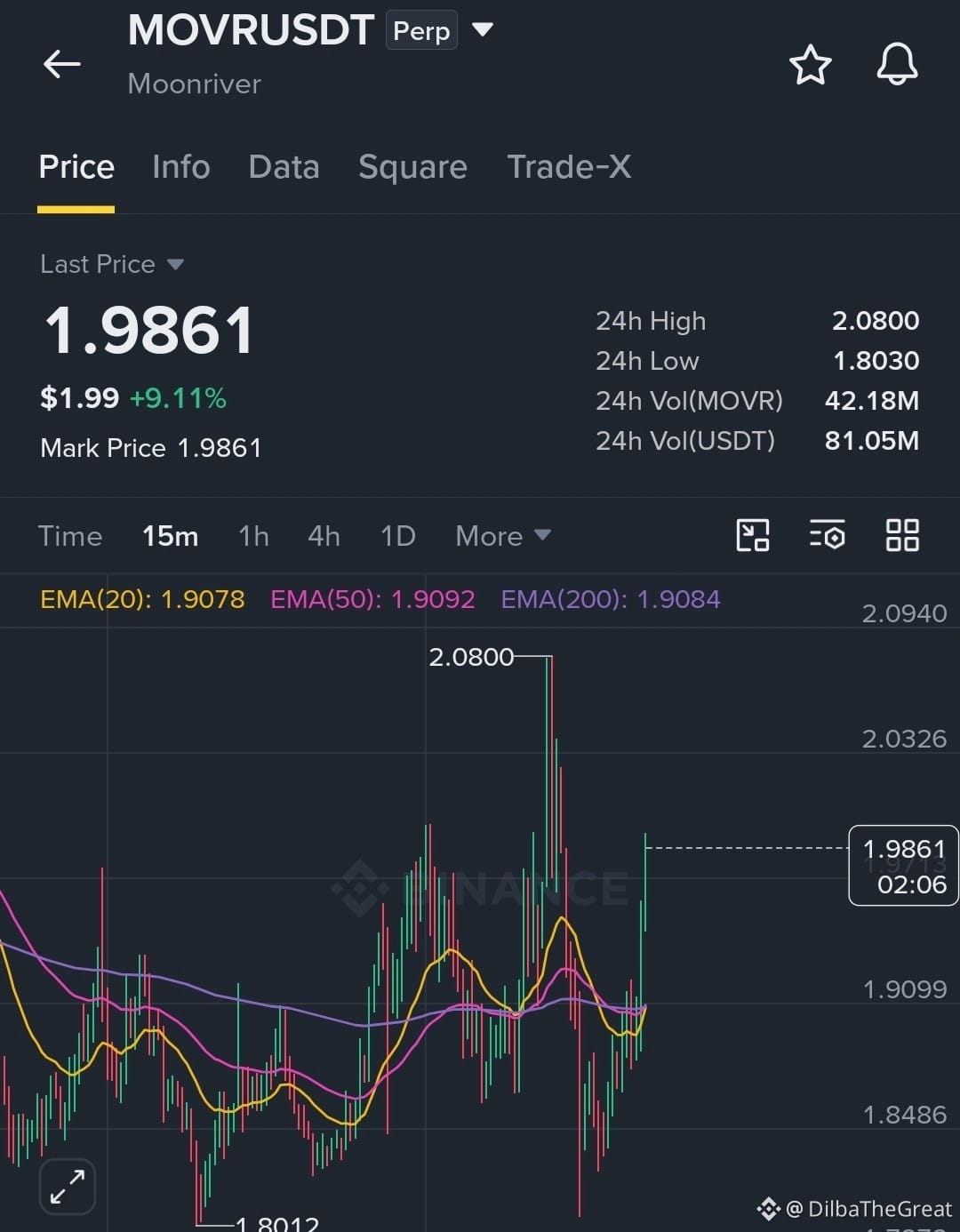
$MOVR BUY NOW 1.986 🚀
SL: 1.840
TP1: 2.150
TP2: 2.280
Full TP: 2.360
Price swept 1.6524 and V-reversed hard, holding the 1.9389 shelf since
1H structure printing higher lows after reclaiming the 1.7773 base
Needs a clean break and hold above 2.0800 to confirm the continuation leg
Trade $MOVR on Binance 👇
{future}(MOVRUSDT)
$MOVR BUY NOW 1.986 🚀
SL: 1.840
TP1: 2.150
TP2: 2.280
Full TP: 2.360
Price swept 1.6524 and V-reversed hard, holding the 1.9389 shelf since
1H structure printing higher lows after reclaiming the 1.7773 base
Needs a clean break and hold above 2.0800 to confirm the continuation leg
Trade $MOVR on Binance 👇
SL: 1.840
TP1: 2.150
TP2: 2.280
Full TP: 2.360
Price swept 1.6524 and V-reversed hard, holding the 1.9389 shelf since
1H structure printing higher lows after reclaiming the 1.7773 base
Needs a clean break and hold above 2.0800 to confirm the continuation leg
Trade $MOVR on Binance 👇
1
99
·
--
Bullisch
Übersetzung ansehen
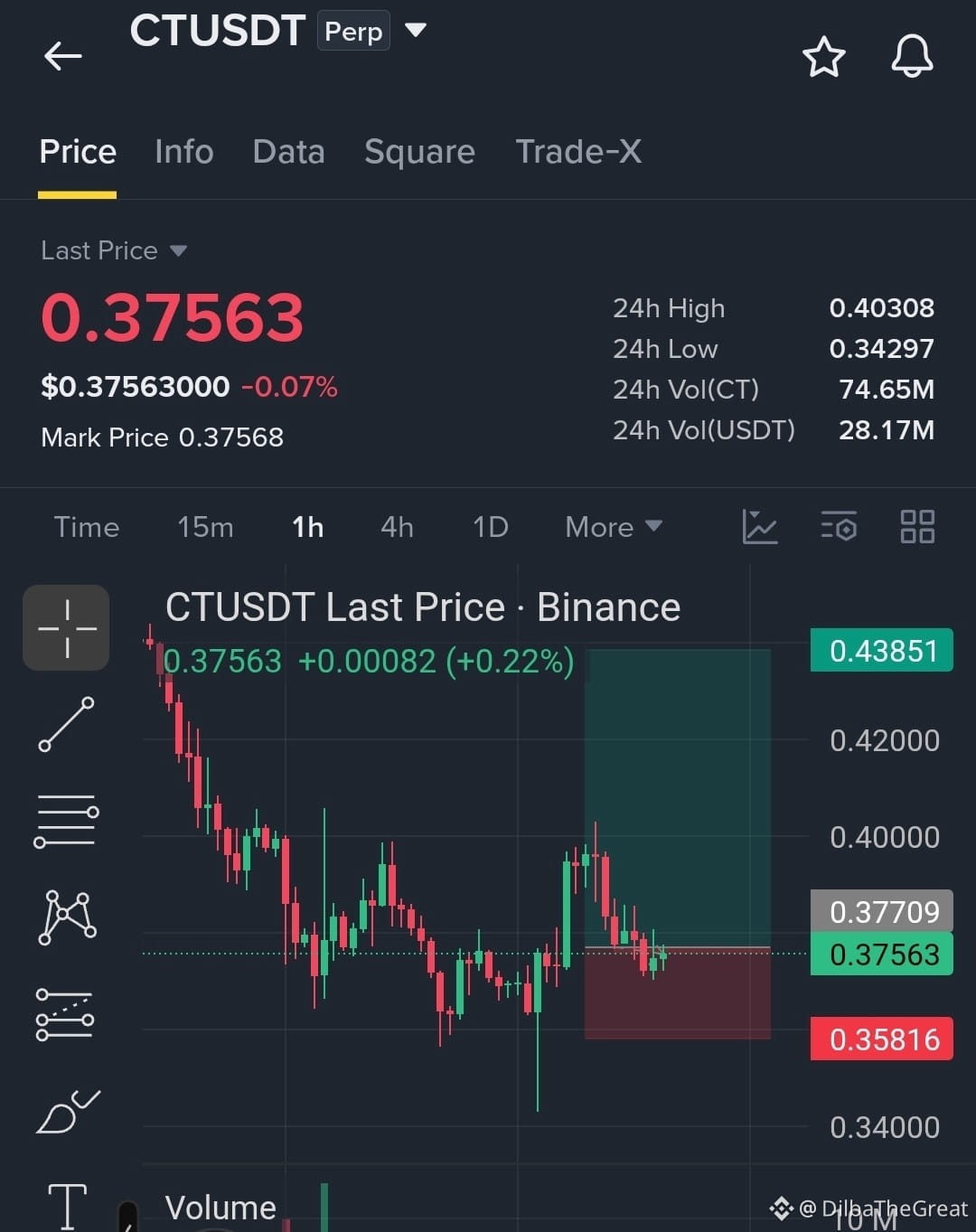
CT Dip is getting bought up 🚀
$CT BUY NOW 0.3756
SL: 0.3550
TP1: 0.3880
TP2: 0.4200
Full TP: 0.4300
Price swept 0.34297 and instantly V-reversed back into the range
1H structure printing higher lows after reclaiming the 0.36210 shelf
Needs a clean break above 0.38699 to confirm the continuation leg
Trade $CT on Binance 👇
{future}(CTUSDT)
CT Dip is getting bought up 🚀
$CT BUY NOW 0.3756
SL: 0.3550
TP1: 0.3880
TP2: 0.4200
Full TP: 0.4300
Price swept 0.34297 and instantly V-reversed back into the range
1H structure printing higher lows after reclaiming the 0.36210 shelf
Needs a clean break above 0.38699 to confirm the continuation leg
Trade $CT on Binance 👇
$CT BUY NOW 0.3756
SL: 0.3550
TP1: 0.3880
TP2: 0.4200
Full TP: 0.4300
Price swept 0.34297 and instantly V-reversed back into the range
1H structure printing higher lows after reclaiming the 0.36210 shelf
Needs a clean break above 0.38699 to confirm the continuation leg
Trade $CT on Binance 👇
1
100
30D-Trade $SNDK 424.6 USDT
Übersetzung ansehen
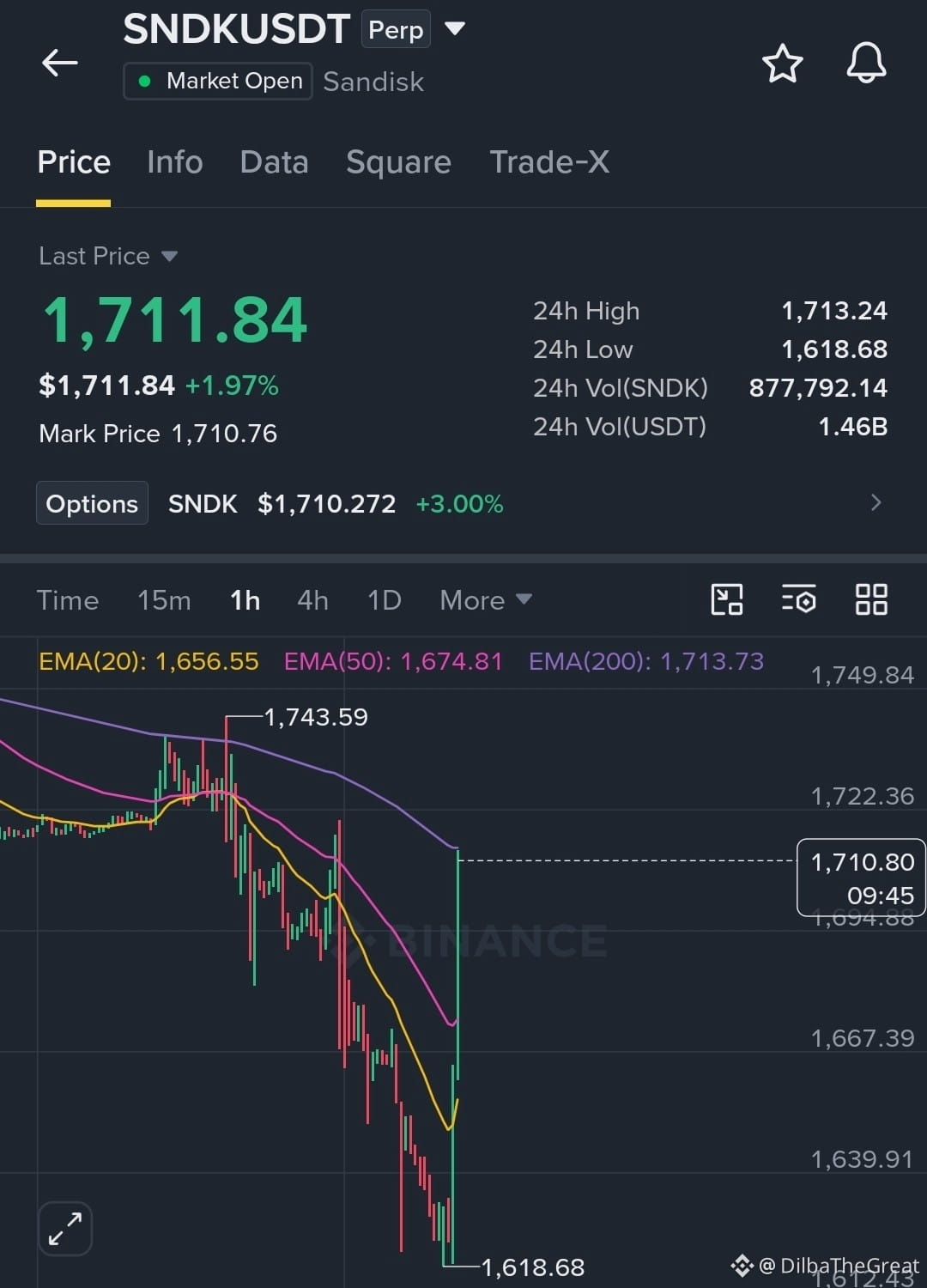
$SNDK just made huge breakout 🔥
Price is at $1,710 after a sharp V-shaped recovery from the $1,618 low. That was a strong reaction, but one 1H candle doesn't flip a trend.
The key level to watch is $1,731. As long as price stays below it, the broader downside structure remains intact.
If bulls reclaim $1,731: The next test is $1,772, then $1,812.
If bears reject here: A failure to hold $1,650 opens a retest of the $1,618 low.
My read: The bounce is impressive, but it's still inside a downtrend. I want to see a higher low form above $1,650 before trusting any upside. No chasing green candles.
{future}(SNDKUSDT)
$SNDK just made huge breakout 🔥
Price is at $1,710 after a sharp V-shaped recovery from the $1,618 low. That was a strong reaction, but one 1H candle doesn't flip a trend.
The key level to watch is $1,731. As long as price stays below it, the broader downside structure remains intact.
If bulls reclaim $1,731: The next test is $1,772, then $1,812.
If bears reject here: A failure to hold $1,650 opens a retest of the $1,618 low.
My read: The bounce is impressive, but it's still inside a downtrend. I want to see a higher low form above $1,650 before trusting any upside. No chasing green candles.
Price is at $1,710 after a sharp V-shaped recovery from the $1,618 low. That was a strong reaction, but one 1H candle doesn't flip a trend.
The key level to watch is $1,731. As long as price stays below it, the broader downside structure remains intact.
If bulls reclaim $1,731: The next test is $1,772, then $1,812.
If bears reject here: A failure to hold $1,650 opens a retest of the $1,618 low.
My read: The bounce is impressive, but it's still inside a downtrend. I want to see a higher low form above $1,650 before trusting any upside. No chasing green candles.
154
·
--
Bärisch
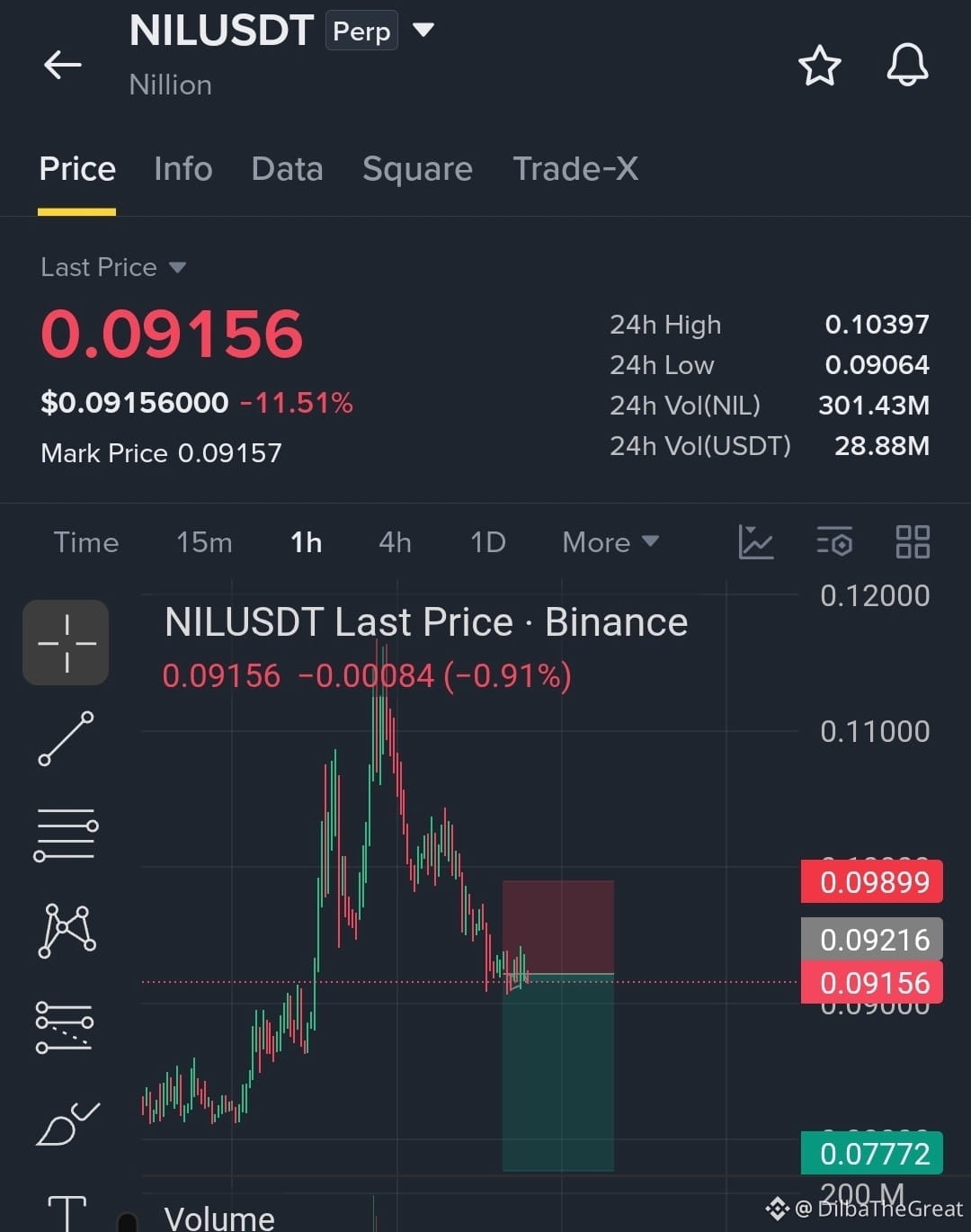
$NIL JETZT VERKAUFEN 0.0916 🚨
SL: 0.0975
TP1: 0.0865
TP2: 0.0830
Vollständiges TP: 0.0795
Der 1-Stunden-Chart zeigt eine deutliche Zurückweisung am Höchststand von 0.11677. Dabei bildet sich eine klare Folge niedrigerer Hochs und Tiefs, während die Aufwärtsstruktur zusammenbricht.
Der Kurs hat nun die Unterstützungszonen bei 0.10121 und 0.09243 verloren. Das bestätigt die aggressive Dominanz der Verkäufer und eine neue Abwärtsbewegung.
Da es bis zur Zone bei 0.08365 keine strukturelle Unterstützung gibt, liegt das Ziel des Weges des geringsten Widerstands bei der Swing-Basis von 0.07687. Das bietet ein attraktives Chance-Risiko-Verhältnis.
Trade $NIL auf Binance 👇
{future}(NILUSDT)
$NIL JETZT VERKAUFEN 0.0916 🚨
SL: 0.0975
TP1: 0.0865
TP2: 0.0830
Vollständiges TP: 0.0795
Der 1-Stunden-Chart zeigt eine deutliche Zurückweisung am Höchststand von 0.11677. Dabei bildet sich eine klare Folge niedrigerer Hochs und Tiefs, während die Aufwärtsstruktur zusammenbricht.
Der Kurs hat nun die Unterstützungszonen bei 0.10121 und 0.09243 verloren. Das bestätigt die aggressive Dominanz der Verkäufer und eine neue Abwärtsbewegung.
Da es bis zur Zone bei 0.08365 keine strukturelle Unterstützung gibt, liegt das Ziel des Weges des geringsten Widerstands bei der Swing-Basis von 0.07687. Das bietet ein attraktives Chance-Risiko-Verhältnis.
Trade $NIL auf Binance 👇
SL: 0.0975
TP1: 0.0865
TP2: 0.0830
Vollständiges TP: 0.0795
Der 1-Stunden-Chart zeigt eine deutliche Zurückweisung am Höchststand von 0.11677. Dabei bildet sich eine klare Folge niedrigerer Hochs und Tiefs, während die Aufwärtsstruktur zusammenbricht.
Der Kurs hat nun die Unterstützungszonen bei 0.10121 und 0.09243 verloren. Das bestätigt die aggressive Dominanz der Verkäufer und eine neue Abwärtsbewegung.
Da es bis zur Zone bei 0.08365 keine strukturelle Unterstützung gibt, liegt das Ziel des Weges des geringsten Widerstands bei der Swing-Basis von 0.07687. Das bietet ein attraktives Chance-Risiko-Verhältnis.
Trade $NIL auf Binance 👇
158
·
--
Bärisch
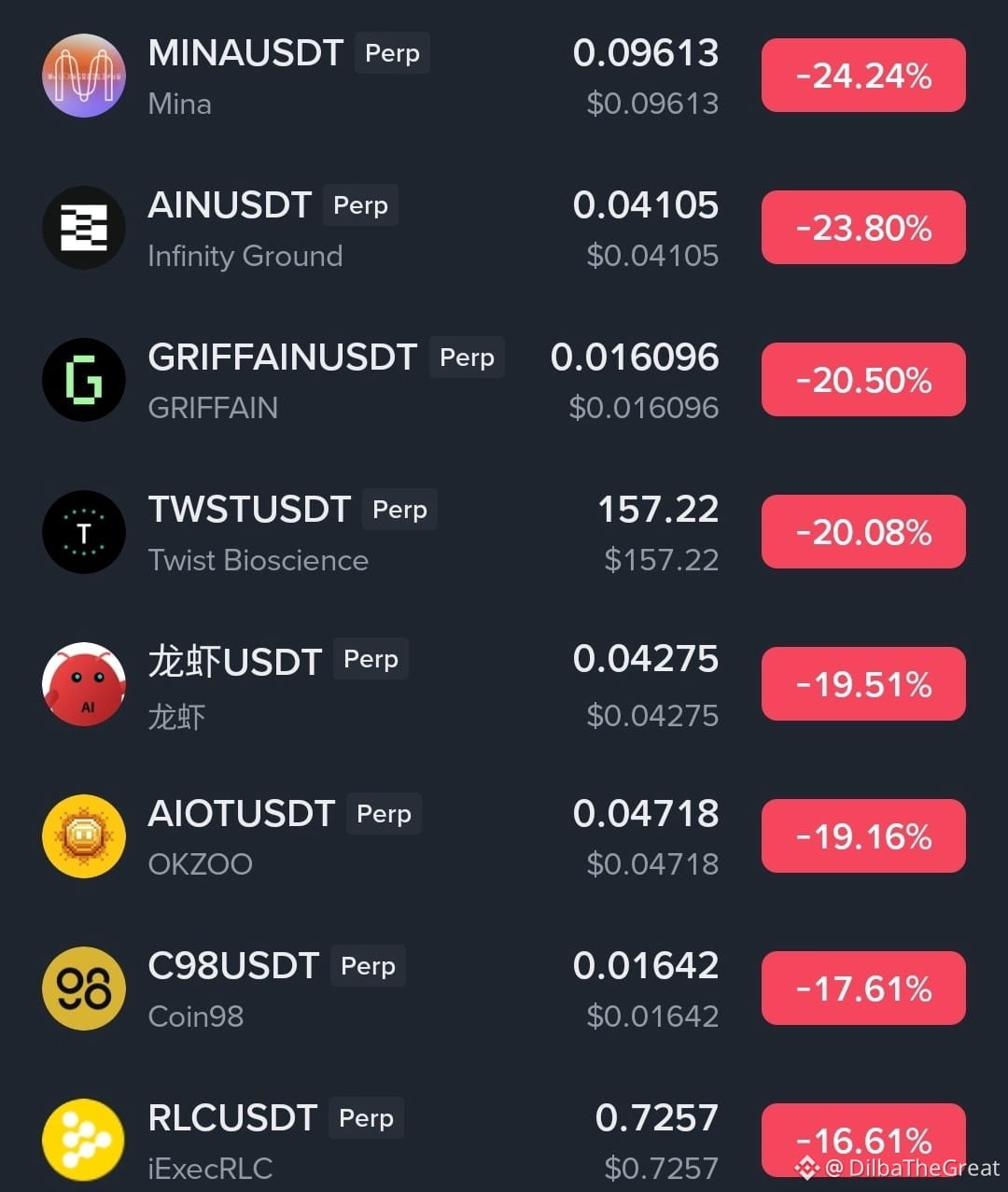
Leute, der Markt blutet stark 😭 ‼️
Das ist heftig und kein normales Marktverhalten. Jetzt müsst ihr durchhalten. Wenn ihr den heutigen Tag überstanden habt, macht euch keine Sorgen, meine Brüder – im Bullenmarkt werdet ihr Geld verdienen 💪
Leute, der Markt blutet stark 😭 ‼️
Das ist heftig und kein normales Marktverhalten. Jetzt müsst ihr durchhalten. Wenn ihr den heutigen Tag überstanden habt, macht euch keine Sorgen, meine Brüder – im Bullenmarkt werdet ihr Geld verdienen 💪
Das ist heftig und kein normales Marktverhalten. Jetzt müsst ihr durchhalten. Wenn ihr den heutigen Tag überstanden habt, macht euch keine Sorgen, meine Brüder – im Bullenmarkt werdet ihr Geld verdienen 💪
2
2
1.7k
Übersetzung ansehen
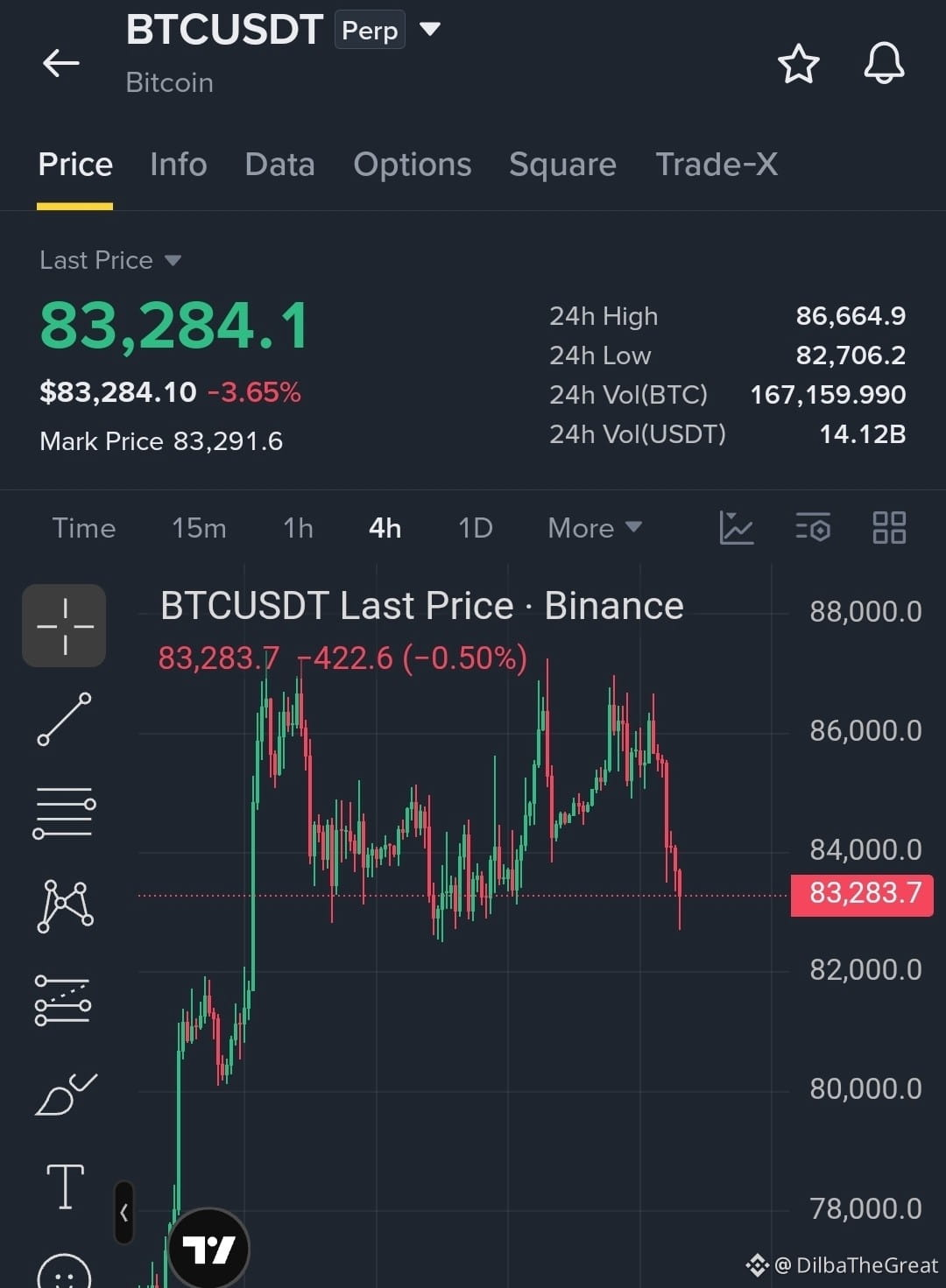
$BTC just broke down now what's next? 👀
Price is at $83,206, down 3.74% after getting rejected from the $85,651 area. The 4H structure shows a clean lower high forming, and momentum is leaning bearish.
The key level I'm watching is $83,400. As long as price stays below it, the downside prevails.
If bulls reclaim $83,400: A push back toward $85,651 is the first test, then $87,385.
If bears hold control: Losing $81,164 opens the door to $78,921.
My read: The breakdown is fresh and momentum is still heavy.
{future}(BTCUSDT)
$BTC just broke down now what's next? 👀
Price is at $83,206, down 3.74% after getting rejected from the $85,651 area. The 4H structure shows a clean lower high forming, and momentum is leaning bearish.
The key level I'm watching is $83,400. As long as price stays below it, the downside prevails.
If bulls reclaim $83,400: A push back toward $85,651 is the first test, then $87,385.
If bears hold control: Losing $81,164 opens the door to $78,921.
My read: The breakdown is fresh and momentum is still heavy.
Price is at $83,206, down 3.74% after getting rejected from the $85,651 area. The 4H structure shows a clean lower high forming, and momentum is leaning bearish.
The key level I'm watching is $83,400. As long as price stays below it, the downside prevails.
If bulls reclaim $83,400: A push back toward $85,651 is the first test, then $87,385.
If bears hold control: Losing $81,164 opens the door to $78,921.
My read: The breakdown is fresh and momentum is still heavy.
1
118
·
--
Bärisch
30D-Trade $NMR 278.3 USDT
Übersetzung ansehen
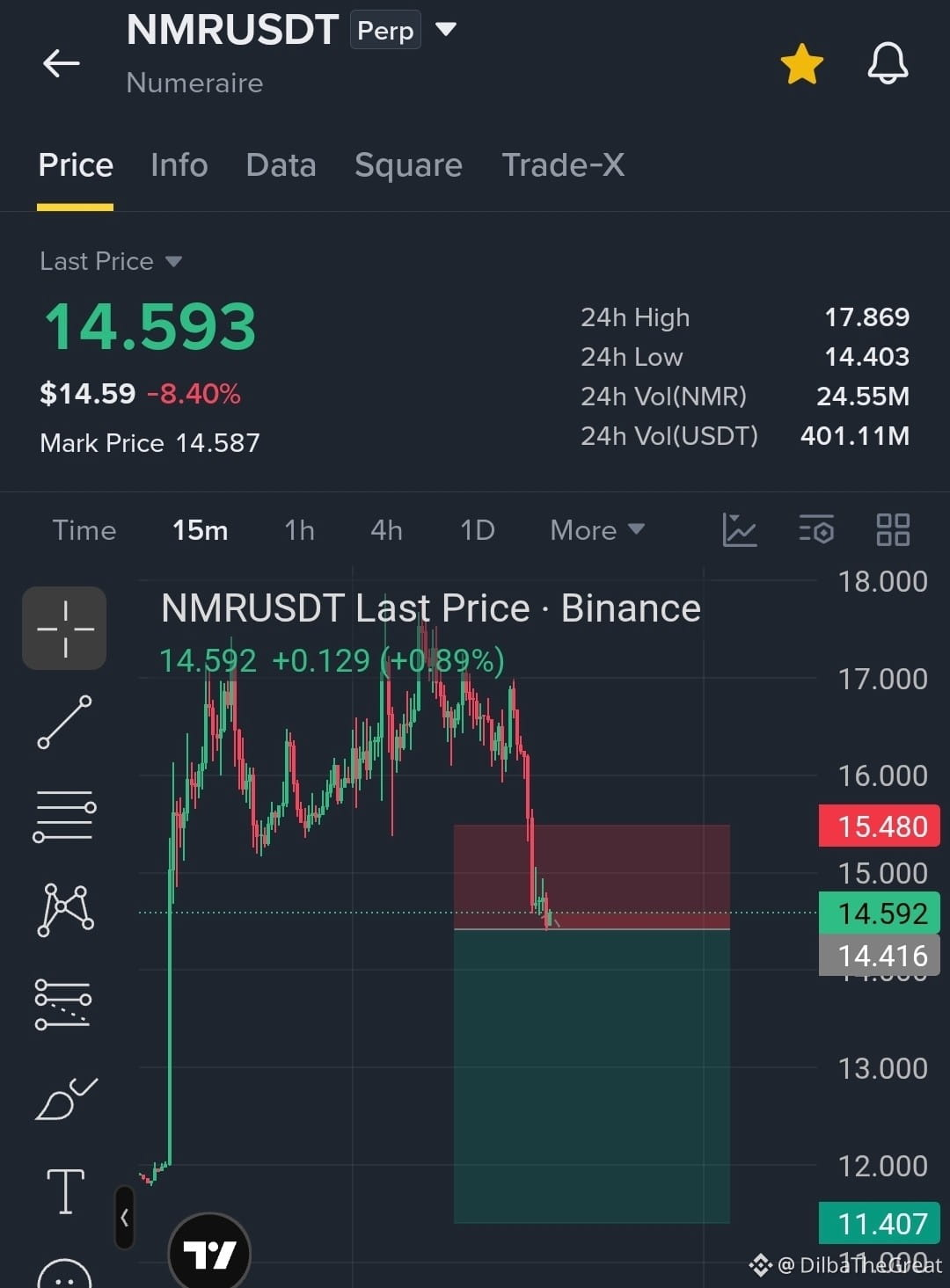
Parabolic spike rejected and sellers are back in control of the trend. ‼️
$NMR SELL NOW 14.60
SL: 15.50
TP1: 13.50
TP2: 12.70
Full TP: 12.30
Chart shows a massive vertical pump into 17.869 that was immediately rejected, printing a series of lower highs and confirming exhaustion.
Price has now lost the 15.398 support shelf and is accelerating downward, breaking the prior consolidation range.
With the momentum firmly bearish, the path of least resistance targets the 12.609 zone and the 11.532 swing base, offering a strong risk-to-reward setup.
Trade $NMR on Binance 👇
{future}(NMRUSDT)
Parabolic spike rejected and sellers are back in control of the trend. ‼️
$NMR SELL NOW 14.60
SL: 15.50
TP1: 13.50
TP2: 12.70
Full TP: 12.30
Chart shows a massive vertical pump into 17.869 that was immediately rejected, printing a series of lower highs and confirming exhaustion.
Price has now lost the 15.398 support shelf and is accelerating downward, breaking the prior consolidation range.
With the momentum firmly bearish, the path of least resistance targets the 12.609 zone and the 11.532 swing base, offering a strong risk-to-reward setup.
Trade $NMR on Binance 👇
$NMR SELL NOW 14.60
SL: 15.50
TP1: 13.50
TP2: 12.70
Full TP: 12.30
Chart shows a massive vertical pump into 17.869 that was immediately rejected, printing a series of lower highs and confirming exhaustion.
Price has now lost the 15.398 support shelf and is accelerating downward, breaking the prior consolidation range.
With the momentum firmly bearish, the path of least resistance targets the 12.609 zone and the 11.532 swing base, offering a strong risk-to-reward setup.
Trade $NMR on Binance 👇
1
73
·
--
Bullisch
Übersetzung ansehen
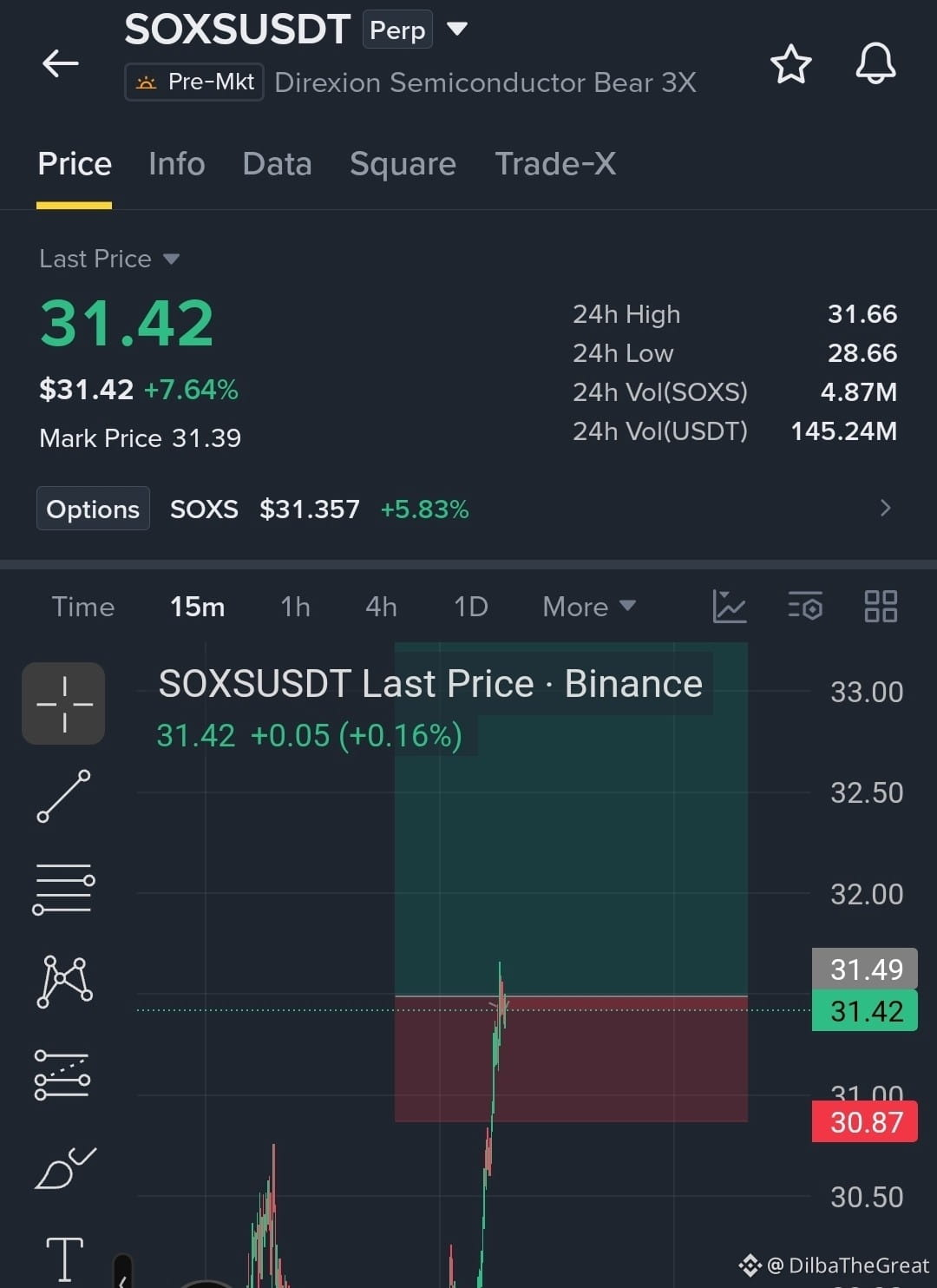
$SOXS BUY NOW 31.42 🚀
SL: 29.80
TP1: 33.5
TP2: 34.0
Full TP: 35.0
4H structure bottomed out at 28.50 and printed a sharp V-shaped recovery, reclaiming the prior breakdown zone with force.
Price is now pushing through 31.47 with consecutive bullish candles, confirming a clean break of market structure to the upside.
Upside targets align with the 33.06 and 34.71 resistance zones, with the major swing high at 35.98 as the full target.
Trade $SOXS on Binance 👇
{future}(SOXSUSDT)
$SOXS BUY NOW 31.42 🚀
SL: 29.80
TP1: 33.5
TP2: 34.0
Full TP: 35.0
4H structure bottomed out at 28.50 and printed a sharp V-shaped recovery, reclaiming the prior breakdown zone with force.
Price is now pushing through 31.47 with consecutive bullish candles, confirming a clean break of market structure to the upside.
Upside targets align with the 33.06 and 34.71 resistance zones, with the major swing high at 35.98 as the full target.
Trade $SOXS on Binance 👇
SL: 29.80
TP1: 33.5
TP2: 34.0
Full TP: 35.0
4H structure bottomed out at 28.50 and printed a sharp V-shaped recovery, reclaiming the prior breakdown zone with force.
Price is now pushing through 31.47 with consecutive bullish candles, confirming a clean break of market structure to the upside.
Upside targets align with the 33.06 and 34.71 resistance zones, with the major swing high at 35.98 as the full target.
Trade $SOXS on Binance 👇
1
67
·
--
Bärisch
30D-Trade $龙虾 376.1 USDT
Übersetzung ansehen
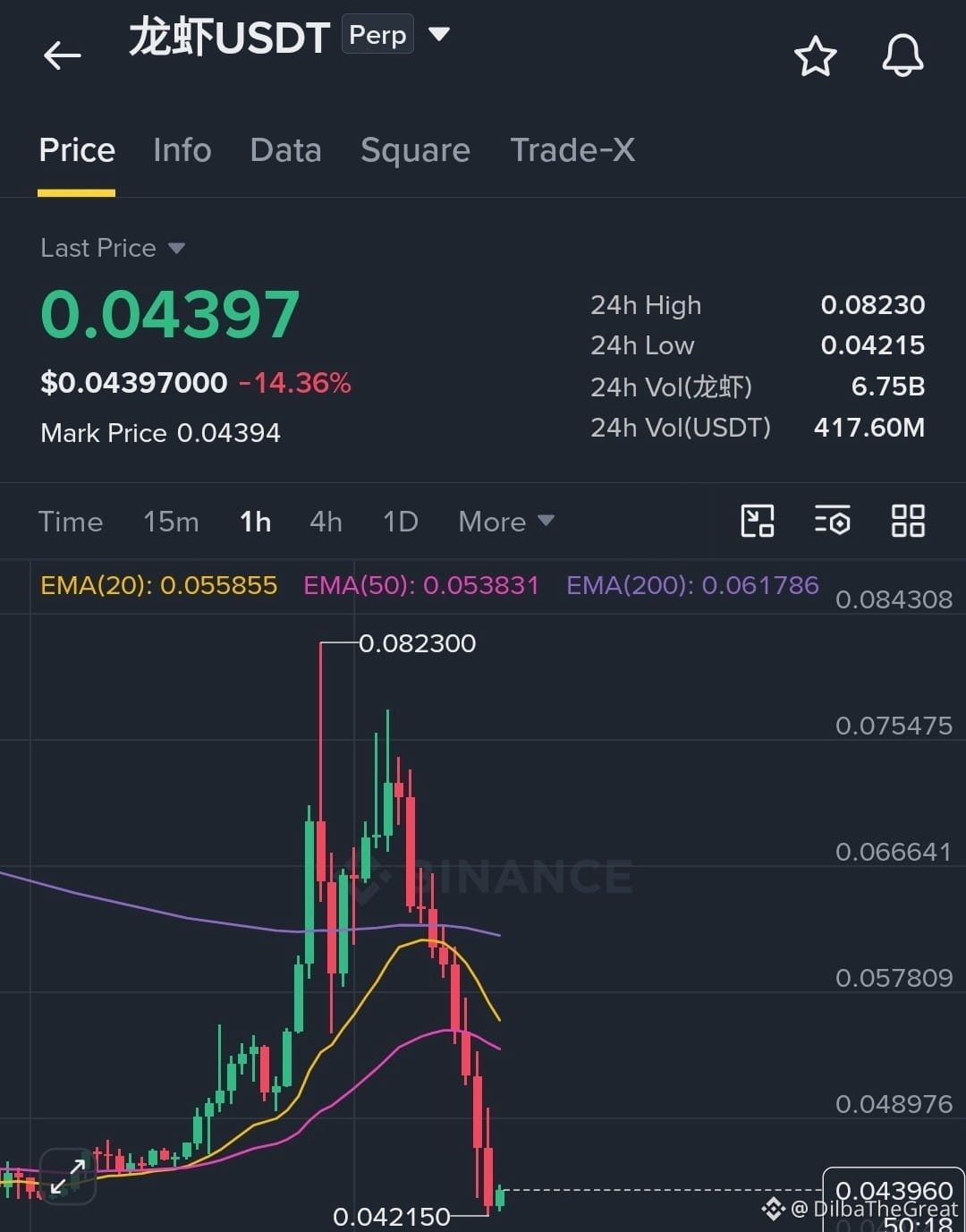
$龙虾 if you remember yesterday we made big money from long and today again we made big money by shorting it and all targets has been smashed successfully 🎯🎯💸💸😍😋
{future}(龙虾USDT)
$龙虾 if you remember yesterday we made big money from long and today again we made big money by shorting it and all targets has been smashed successfully 🎯🎯💸💸😍😋
DilbaTheGreat
·
--
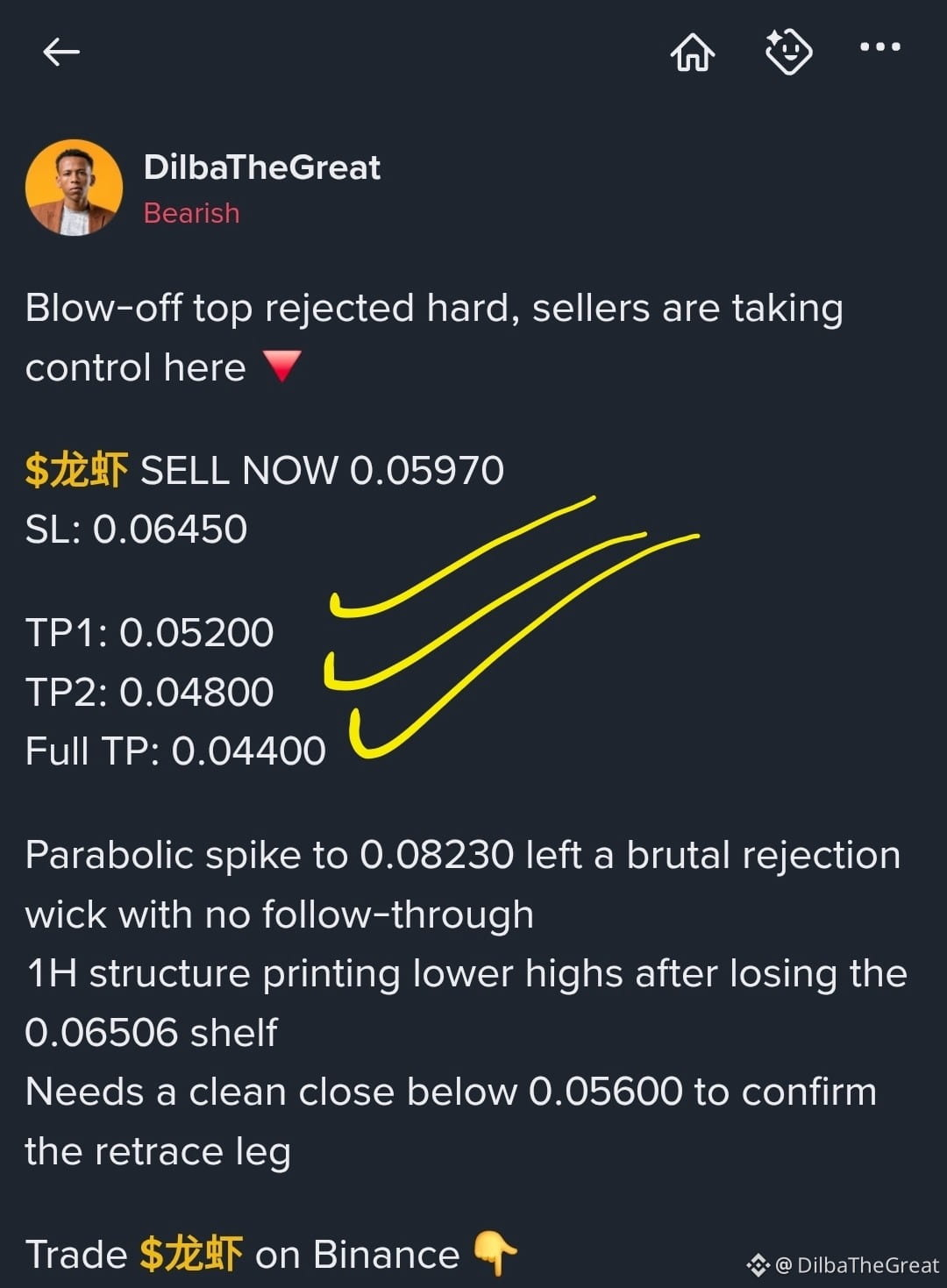
BärischBlow-off top rejected hard, sellers are taking control here 🔻
$龙虾 SELL NOW 0.05970
SL: 0.06450
TP1: 0.05200
TP2: 0.04800
Full TP: 0.04400
Parabolic spike to 0.08230 left a brutal rejection wick with no follow-through
1H structure printing lower highs after losing the 0.06506 shelf
Needs a clean close below 0.05600 to confirm the retrace leg
Trade $龙虾 on Binance 👇
$龙虾 SELL NOW 0.05970
SL: 0.06450
TP1: 0.05200
TP2: 0.04800
Full TP: 0.04400
Parabolic spike to 0.08230 left a brutal rejection wick with no follow-through
1H structure printing lower highs after losing the 0.06506 shelf
Needs a clean close below 0.05600 to confirm the retrace leg
Trade $龙虾 on Binance 👇
2
1
677
·
--
Bärisch
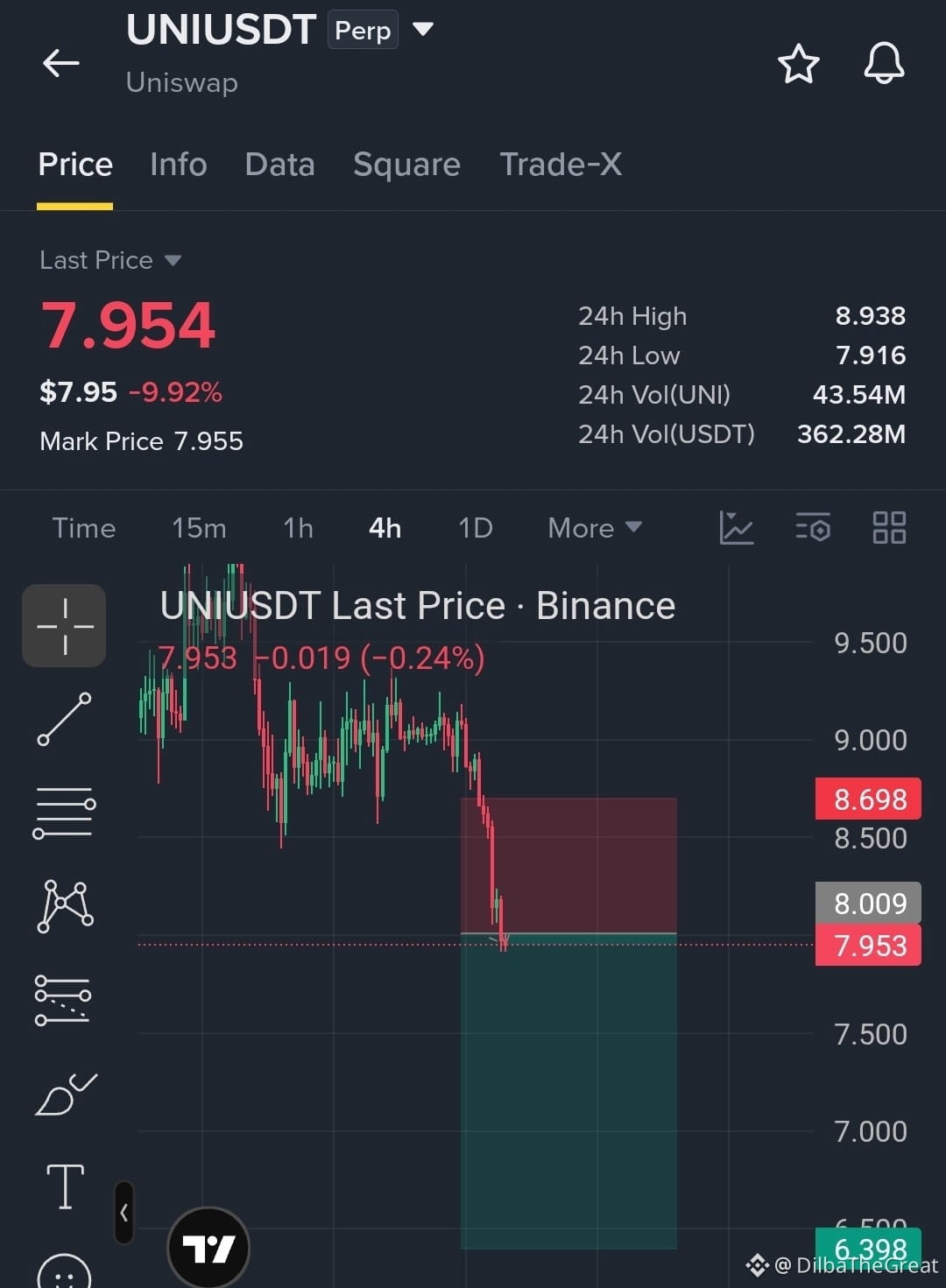
Verkäufer haben die volle Kontrolle ‼️
$UNI JETZT VERKAUFEN 7.954
SL: 8.550
TP1: 7.300
TP2: 6.600
Vollständiges TP: 6.450
Der 4-Stunden-Chart zeigt nach der Zurückweisung bei 10.953 einen klaren Bruch der Marktstruktur. Der Kurs bildet eine Reihe tieferer Hochs und tieferer Tiefs.
Die entscheidende Unterstützung bei 9.019 ist bei hohem Volumen eingebrochen und bestätigt damit die aggressive Dominanz der Verkäufer sowie eine neue Abwärtsbewegung.
Da es bis zum Niveau von 6.837 keine strukturelle Unterstützung gibt, bleibt der Weg des geringsten Widerstands klar nach unten gerichtet – mit dem Swing-Tief bei 5.994 als Ziel.
Trade $UNI auf Binance 👇
{future}(UNIUSDT)
Verkäufer haben die volle Kontrolle ‼️
$UNI JETZT VERKAUFEN 7.954
SL: 8.550
TP1: 7.300
TP2: 6.600
Vollständiges TP: 6.450
Der 4-Stunden-Chart zeigt nach der Zurückweisung bei 10.953 einen klaren Bruch der Marktstruktur. Der Kurs bildet eine Reihe tieferer Hochs und tieferer Tiefs.
Die entscheidende Unterstützung bei 9.019 ist bei hohem Volumen eingebrochen und bestätigt damit die aggressive Dominanz der Verkäufer sowie eine neue Abwärtsbewegung.
Da es bis zum Niveau von 6.837 keine strukturelle Unterstützung gibt, bleibt der Weg des geringsten Widerstands klar nach unten gerichtet – mit dem Swing-Tief bei 5.994 als Ziel.
Trade $UNI auf Binance 👇
$UNI JETZT VERKAUFEN 7.954
SL: 8.550
TP1: 7.300
TP2: 6.600
Vollständiges TP: 6.450
Der 4-Stunden-Chart zeigt nach der Zurückweisung bei 10.953 einen klaren Bruch der Marktstruktur. Der Kurs bildet eine Reihe tieferer Hochs und tieferer Tiefs.
Die entscheidende Unterstützung bei 9.019 ist bei hohem Volumen eingebrochen und bestätigt damit die aggressive Dominanz der Verkäufer sowie eine neue Abwärtsbewegung.
Da es bis zum Niveau von 6.837 keine strukturelle Unterstützung gibt, bleibt der Weg des geringsten Widerstands klar nach unten gerichtet – mit dem Swing-Tief bei 5.994 als Ziel.
Trade $UNI auf Binance 👇
75
·
--
Bärisch
Übersetzung ansehen
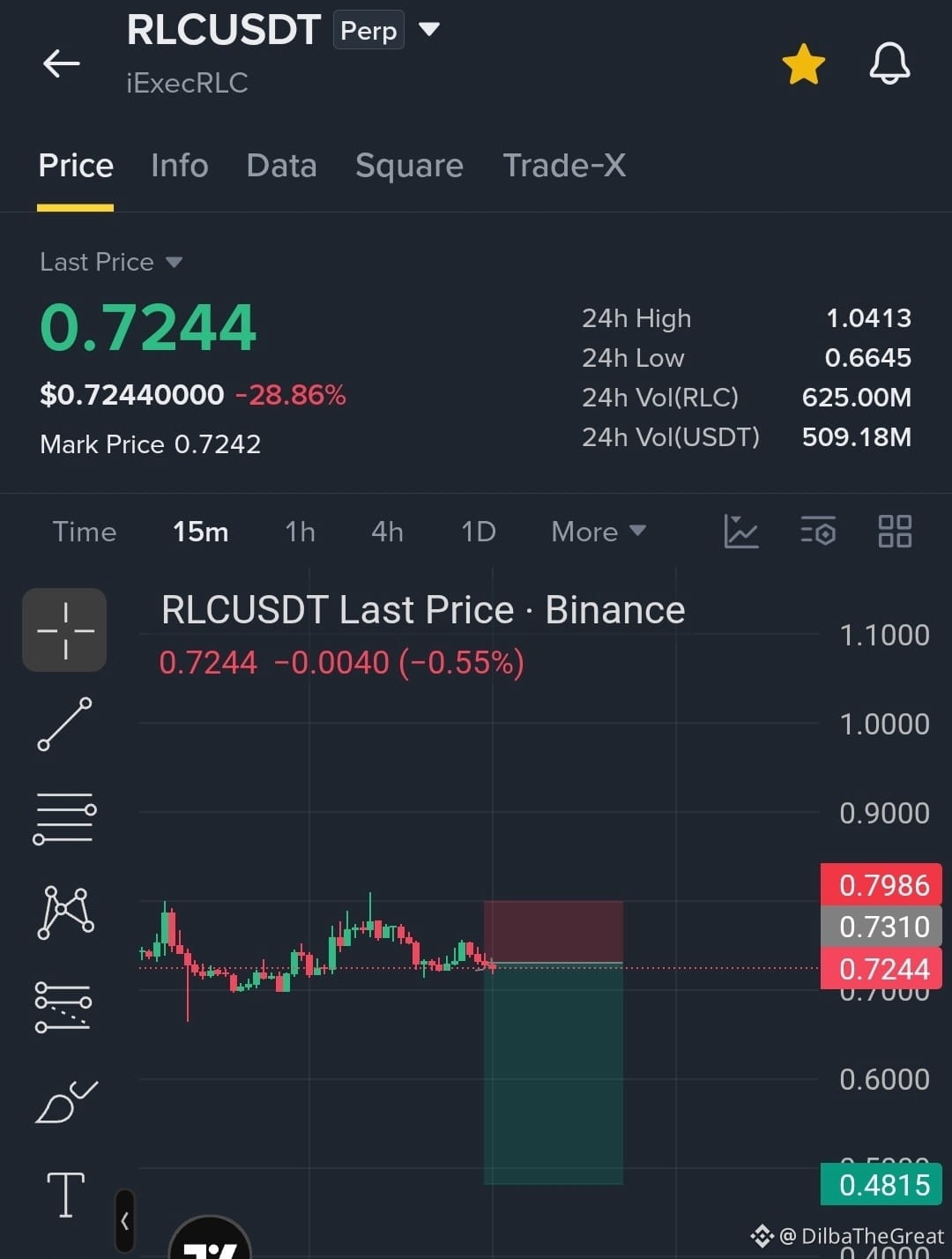
Sellers are taking in control ‼️
$RLC SELL NOW 0.7250
SL: 0.7940
TP1: 0.6640
TP2: 0.6000
Full TP: 0.5400
Price keeps failing below resistance after the heavy dump, and selling pressure is building on every bounce.
Trade $RLC on Binance 👇
{future}(RLCUSDT)
Sellers are taking in control ‼️
$RLC SELL NOW 0.7250
SL: 0.7940
TP1: 0.6640
TP2: 0.6000
Full TP: 0.5400
Price keeps failing below resistance after the heavy dump, and selling pressure is building on every bounce.
Trade $RLC on Binance 👇
$RLC SELL NOW 0.7250
SL: 0.7940
TP1: 0.6640
TP2: 0.6000
Full TP: 0.5400
Price keeps failing below resistance after the heavy dump, and selling pressure is building on every bounce.
Trade $RLC on Binance 👇
1
139
·
--
Bullisch
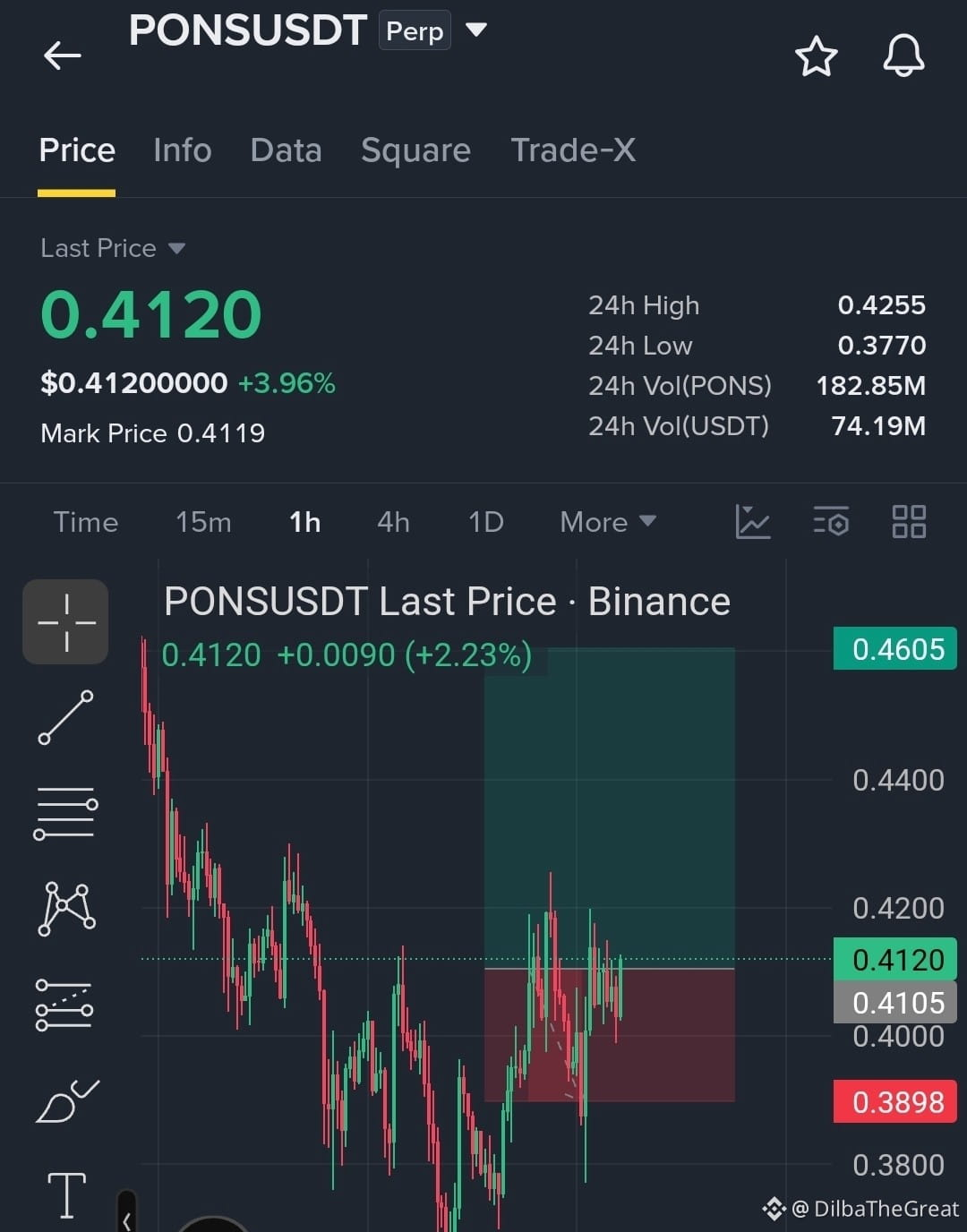
Käufer steigen wieder ein und diese Erholung behauptet sich.
$PONS JETZT KAUFEN 0.4120
SL: 0.3880
TP1: 0.4250
TP2: 0.4450
Vollständiges TP: 0.4600
Der Kurs prallt weiterhin an der Unterstützung ab, während Käufer die Rücksetzer verteidigen. Dadurch bleibt weiteres Aufwärtspotenzial bis zum Widerstand bestehen.
$PONS Auf Binance handeln 👇
{future}(PONSUSDT)
Käufer steigen wieder ein und diese Erholung behauptet sich.
$PONS JETZT KAUFEN 0.4120
SL: 0.3880
TP1: 0.4250
TP2: 0.4450
Vollständiges TP: 0.4600
Der Kurs prallt weiterhin an der Unterstützung ab, während Käufer die Rücksetzer verteidigen. Dadurch bleibt weiteres Aufwärtspotenzial bis zum Widerstand bestehen.
$PONS Auf Binance handeln 👇
$PONS JETZT KAUFEN 0.4120
SL: 0.3880
TP1: 0.4250
TP2: 0.4450
Vollständiges TP: 0.4600
Der Kurs prallt weiterhin an der Unterstützung ab, während Käufer die Rücksetzer verteidigen. Dadurch bleibt weiteres Aufwärtspotenzial bis zum Widerstand bestehen.
$PONS Auf Binance handeln 👇
1
416
·
--
Bärisch
Übersetzung ansehen
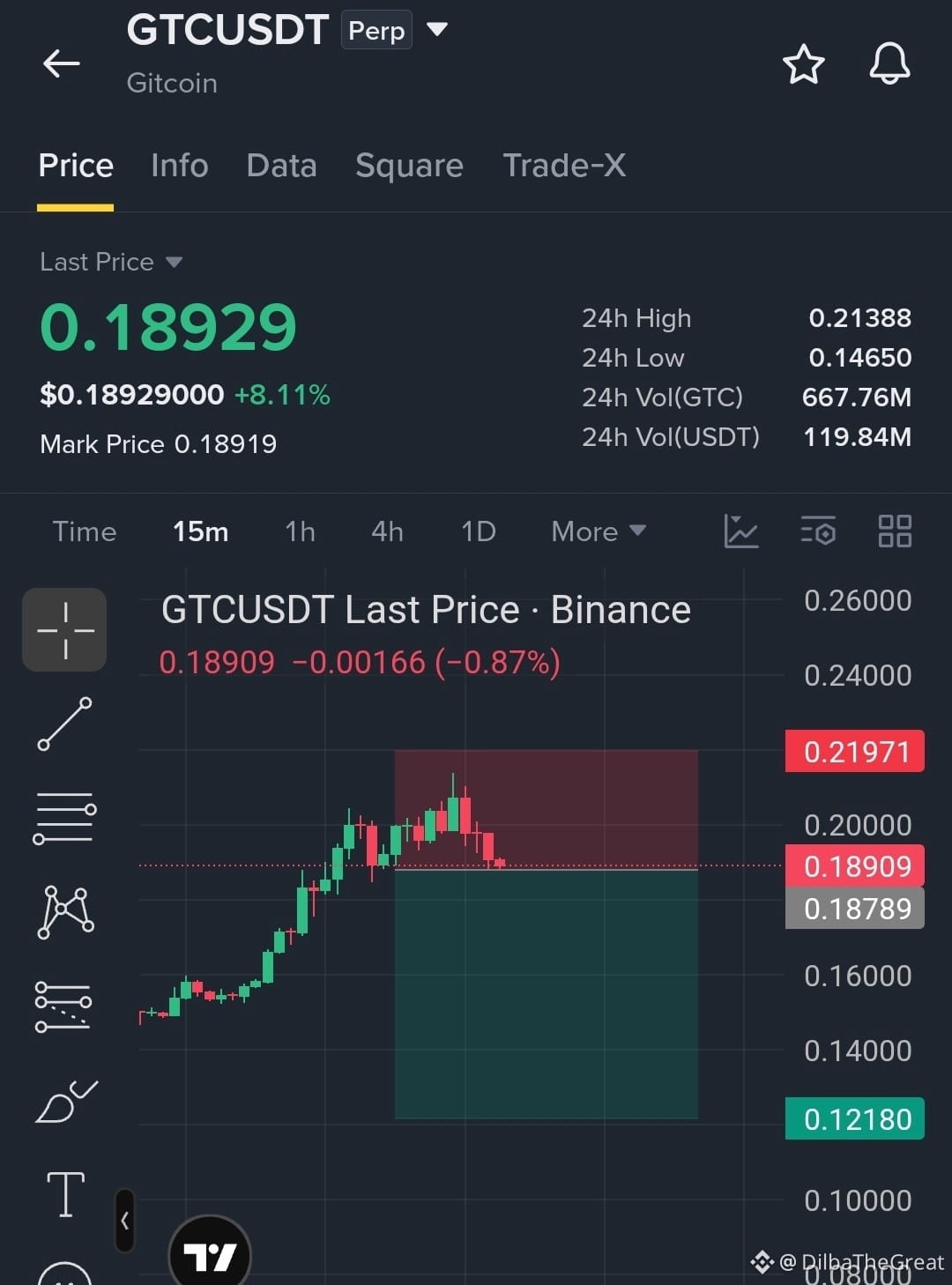
Sellers stepping back in as momentum fades.
$GTC SELL NOW 0.1900 ‼️
SL: 0.2010
TP1: 0.1700
TP2: 0.1580
Full TP: 0.1465
15m chart printed a vertical parabolic spike into 0.21388, which was immediately rejected with long upper wicks — classic exhaustion signal.
Price has now lost the 0.20243 support and is rolling over, confirming the momentum shift to the downside.
A clean break below 0.1900 opens the path to the 0.17278 and 0.15795 zones, with the 24h low at 0.14650 as the full target.
Trade $GTC on Binance 👇
{future}(GTCUSDT)
Sellers stepping back in as momentum fades.
$GTC SELL NOW 0.1900 ‼️
SL: 0.2010
TP1: 0.1700
TP2: 0.1580
Full TP: 0.1465
15m chart printed a vertical parabolic spike into 0.21388, which was immediately rejected with long upper wicks — classic exhaustion signal.
Price has now lost the 0.20243 support and is rolling over, confirming the momentum shift to the downside.
A clean break below 0.1900 opens the path to the 0.17278 and 0.15795 zones, with the 24h low at 0.14650 as the full target.
Trade $GTC on Binance 👇
$GTC SELL NOW 0.1900 ‼️
SL: 0.2010
TP1: 0.1700
TP2: 0.1580
Full TP: 0.1465
15m chart printed a vertical parabolic spike into 0.21388, which was immediately rejected with long upper wicks — classic exhaustion signal.
Price has now lost the 0.20243 support and is rolling over, confirming the momentum shift to the downside.
A clean break below 0.1900 opens the path to the 0.17278 and 0.15795 zones, with the 24h low at 0.14650 as the full target.
Trade $GTC on Binance 👇
1
1
218
Anmelden und weiter Inhalte entdecken
Krypto-Nutzer weltweit auf Binance Square kennenlernen
⚡️ Bleib in Sachen Krypto stets am Puls.
💬 Die weltgrößte Kryptobörse vertraut darauf.
👍 Erhalte verlässliche Einblicke von verifizierten Creators.
E-Mail-Adresse/Telefonnummer
Trendthemen
FedMinutesFocusOnOctoberPause
146,511 Aufrufe
1,242 Kommentare
🚨 HOHE ALARMSTUFE ‼️ BITTE HANDELT IN DER NÄCHSTEN STUNDE NICHT BLIND 🚨
Leute, in weniger als einer Stunde werden die FOMC-Protokolle veröffentlicht.
Nach der Volatilität, die wir heute bereits erlebt haben, möchte ich wirklich nicht, dass jemand kurz vor der Veröffentlichung irgendwelche zufälligen Positionen mit hohem Hebel eröffnet.
Die stärkste Reaktion erwarte ich bei Gold (XAU), Silber (XAG), BTC und ETH. Coins wie SOL und andere stark gehebelte Altcoins mit mittlerer oder niedriger Marktkapitalisierung können jede Bewegung von BTC noch verstärken.
Gold und Silber reagieren heute Abend besonders empfindlich, weil der Markt bereits auf den US-Dollar und die Renditen von US-Staatsanleihen reagiert und beide Metalle vor der Veröffentlichung der Fed-Protokolle stark unter Druck standen.
Kurz gesagt:
📉 FOMC-Protokolle mit falkenhaftem Ton → Dollar und Renditen können steigen → Druck auf BTC, Krypto, Gold und Silber
📈 FOMC-Protokolle mit taubenhaftem Ton → Dollar und Renditen können nachgeben → BTC, Gold, Silber und andere Risikoanlagen können kräftig steigen.
Und bitte denkt daran: Die erste Kerze kann eine Falle sein. Es kann zunächst zu einem Pump kommen, dann zu einem sofortigen Dump, Liquidationen auf beiden Seiten und erst danach zur tatsächlichen Richtungsbewegung.
Schützt also vorerst eure Positionen, reduziert unnötigen Hebel und springt nicht aus FOMO auf die erste Bewegung auf.
Heute Abend beobachte ich zuerst $XAU , $XAG und $BTC . An ihnen werden wir sehr schnell erkennen, wie der Markt die Fed einschätzt.
Ich halte euch rechtzeitig auf dem Laufenden.
Folgt @Panda Traders und aktiviert jetzt eure Benachrichtigungen.
#FedMinutesFocusOnOctoberPause
Panda Traders
·18 Likes
·3.7k Aufrufe
BinanceLaunchesBinanceIntelligence
1.1M Aufrufe
6,443 Kommentare
EvernorthDelaysNasdaqDebutToOct12
11,421 Aufrufe
277 Kommentare