

Cryptopolitan
57.9k Beiträge

Cryptopolitan
 Square Verified+
Melden
Nutzer blockieren
Crypto news that doesn't waste your time. Breaking updates, market analysis, on-chain insights. Building the smartest crypto community.

Creator of the Year
1 Following
161.5K+ Follower
573.3K+ Like gegeben
1 Abzeichen
Beiträge
PINNED
Bei Cryptopolitan forschen, analysieren und liefern wir Nachrichten – täglich.
Von aktuellen Meldungen bis hin zu tiefgehenden Analysen, Bildungsleitfäden und Markteinblicken sind wir hier, um Sie mit neutralen und authentischen Nachrichten zu informieren.
Danke, dass Sie uns Ihr vertrauenswürdige Quelle sind!
Bei Cryptopolitan forschen, analysieren und liefern wir Nachrichten – täglich.
Von aktuellen Meldungen bis hin zu tiefgehenden Analysen, Bildungsleitfäden und Markteinblicken sind wir hier, um Sie mit neutralen und authentischen Nachrichten zu informieren.
Danke, dass Sie uns Ihr vertrauenswürdige Quelle sind!
Von aktuellen Meldungen bis hin zu tiefgehenden Analysen, Bildungsleitfäden und Markteinblicken sind wir hier, um Sie mit neutralen und authentischen Nachrichten zu informieren.
Danke, dass Sie uns Ihr vertrauenswürdige Quelle sind!
120
68
342
1.8k
Übersetzung ansehen
Genius Group restarts its bitcoin treasury with a 10-coin purchaseGenius Group, the Singapore-based education company that once held 440 bitcoin, has started buying again.
The company will be starting its reserves from scratch after it sold all 440 coins it held to clear debt.
Is Genius Group holding Bitcoin?
Genius Group (NYSE American: GNS) said on October 6 that it acquired 10 bitcoin for roughly $854,000. This is the company’s first Bitcoin purchase since it emptied its treasury to pay off its debts. It is also the first purchase since a U.S. appeals court cleared away the legal order that had frozen the firm’s fundraising for most of two years.
The 10 coins were bought between October 2 and October 5 at an average of $85,364 each. Chief Executive Roger James Hamilton called the purchase “modest” but said it is to signal to shareholders and to the market that the company has resumed its Bitcoin accumulation strategy.
Genius Group describes itself as an AI-powered education group serving 6 million users across more than 100 countries. It has run a “Bitcoin-first” policy since late 2024, when its board voted to hold 90% or more of reserves in bitcoin and endorsed the corporate-treasury approach popularized by Michael Saylor’s Strategy.
The company’s treasury reached 440 bitcoin by February 2025, spending $42 million at an average of $95,519 per coin. Days later a temporary restraining order and preliminary injunction, granted in a dispute with LZG International, barred the company from issuing shares, raising capital, or buying bitcoin.
During that freeze, the company was forced to offload most of its holdings. It briefly resumed buying Bitcoin in May 2025 after the order was suspended and rebuilt its holdings to 85.5 coins, but soon enough on April 1, 2026, Genius Group sold what remained to repay $8.5 million in debt in full, leaving it with no crypto reserves.
Genius Group is restarting its Bitcoin treasury from zero. Source: BitcoinTreasuries.net.
The company said at the time it would return to the market “when it believes market conditions are more favourable.”
Why can Genius Group rebuild its treasury now?
On August 31, 2026, the Second Circuit Court of Appeals overturned a preliminary injunction that a New York federal court had issued against Genius Group in March 2025. The company says that order was based on false and inaccurate statements and added that this ruling ends an 18-month legal battle, letting it carry out its treasury plans without legal limits.
Separately, Genius Group is pursuing a racketeering (RICO) lawsuit in Florida against LZG officers and other defendants, seeking more than $750 million in triple damages.
The 10 bitcoin purchase is the opening move in a $1.2 billion dual treasury plan the board approved and announced on August 27. The plan targets $827 million in bitcoin and $800 million in AI assets, with a goal of $2 billion in total assets by fiscal 2031.
On the AI side, the company reports look-through stakes in OpenAI, Anthropic, Databricks, and SpaceX.
Genius Group says it will pay for the purchases using cash from its operations, selling new shares gradually at market prices (an at-the-market share offering), and a planned perpetual preferred security. It has no current plans to take on debt or to use its bitcoin and AI holdings as collateral.
This approach is similar to Strategy’s. The company launched its preferred stock (called STRK) in January 2025 and has raised over $16 billion with it.
If you're reading this, you’re already ahead. Stay there with our newsletter.
Genius Group restarts its bitcoin treasury with a 10-coin purchase
Genius Group, the Singapore-based education company that once held 440 bitcoin, has started buying again.
The company will be starting its reserves from scratch after it sold all 440 coins it held to clear debt.
Is Genius Group holding Bitcoin?
Genius Group (NYSE American: GNS) said on October 6 that it acquired 10 bitcoin for roughly $854,000. This is the company’s first Bitcoin purchase since it emptied its treasury to pay off its debts. It is also the first purchase since a U.S. appeals court cleared away the legal order that had frozen the firm’s fundraising for most of two years.
The 10 coins were bought between October 2 and October 5 at an average of $85,364 each. Chief Executive Roger James Hamilton called the purchase “modest” but said it is to signal to shareholders and to the market that the company has resumed its Bitcoin accumulation strategy.
Genius Group describes itself as an AI-powered education group serving 6 million users across more than 100 countries. It has run a “Bitcoin-first” policy since late 2024, when its board voted to hold 90% or more of reserves in bitcoin and endorsed the corporate-treasury approach popularized by Michael Saylor’s Strategy.
The company’s treasury reached 440 bitcoin by February 2025, spending $42 million at an average of $95,519 per coin. Days later a temporary restraining order and preliminary injunction, granted in a dispute with LZG International, barred the company from issuing shares, raising capital, or buying bitcoin.
During that freeze, the company was forced to offload most of its holdings. It briefly resumed buying Bitcoin in May 2025 after the order was suspended and rebuilt its holdings to 85.5 coins, but soon enough on April 1, 2026, Genius Group sold what remained to repay $8.5 million in debt in full, leaving it with no crypto reserves.
Genius Group is restarting its Bitcoin treasury from zero. Source: BitcoinTreasuries.net.
The company said at the time it would return to the market “when it believes market conditions are more favourable.”
Why can Genius Group rebuild its treasury now?
On August 31, 2026, the Second Circuit Court of Appeals overturned a preliminary injunction that a New York federal court had issued against Genius Group in March 2025. The company says that order was based on false and inaccurate statements and added that this ruling ends an 18-month legal battle, letting it carry out its treasury plans without legal limits.
Separately, Genius Group is pursuing a racketeering (RICO) lawsuit in Florida against LZG officers and other defendants, seeking more than $750 million in triple damages.
The 10 bitcoin purchase is the opening move in a $1.2 billion dual treasury plan the board approved and announced on August 27. The plan targets $827 million in bitcoin and $800 million in AI assets, with a goal of $2 billion in total assets by fiscal 2031.
On the AI side, the company reports look-through stakes in OpenAI, Anthropic, Databricks, and SpaceX.
Genius Group says it will pay for the purchases using cash from its operations, selling new shares gradually at market prices (an at-the-market share offering), and a planned perpetual preferred security. It has no current plans to take on debt or to use its bitcoin and AI holdings as collateral.
This approach is similar to Strategy’s. The company launched its preferred stock (called STRK) in January 2025 and has raised over $16 billion with it.
If you're reading this, you’re already ahead. Stay there with our newsletter.
The company will be starting its reserves from scratch after it sold all 440 coins it held to clear debt.
Is Genius Group holding Bitcoin?
Genius Group (NYSE American: GNS) said on October 6 that it acquired 10 bitcoin for roughly $854,000. This is the company’s first Bitcoin purchase since it emptied its treasury to pay off its debts. It is also the first purchase since a U.S. appeals court cleared away the legal order that had frozen the firm’s fundraising for most of two years.
The 10 coins were bought between October 2 and October 5 at an average of $85,364 each. Chief Executive Roger James Hamilton called the purchase “modest” but said it is to signal to shareholders and to the market that the company has resumed its Bitcoin accumulation strategy.
Genius Group describes itself as an AI-powered education group serving 6 million users across more than 100 countries. It has run a “Bitcoin-first” policy since late 2024, when its board voted to hold 90% or more of reserves in bitcoin and endorsed the corporate-treasury approach popularized by Michael Saylor’s Strategy.
The company’s treasury reached 440 bitcoin by February 2025, spending $42 million at an average of $95,519 per coin. Days later a temporary restraining order and preliminary injunction, granted in a dispute with LZG International, barred the company from issuing shares, raising capital, or buying bitcoin.
During that freeze, the company was forced to offload most of its holdings. It briefly resumed buying Bitcoin in May 2025 after the order was suspended and rebuilt its holdings to 85.5 coins, but soon enough on April 1, 2026, Genius Group sold what remained to repay $8.5 million in debt in full, leaving it with no crypto reserves.
Genius Group is restarting its Bitcoin treasury from zero. Source: BitcoinTreasuries.net.
The company said at the time it would return to the market “when it believes market conditions are more favourable.”
Why can Genius Group rebuild its treasury now?
On August 31, 2026, the Second Circuit Court of Appeals overturned a preliminary injunction that a New York federal court had issued against Genius Group in March 2025. The company says that order was based on false and inaccurate statements and added that this ruling ends an 18-month legal battle, letting it carry out its treasury plans without legal limits.
Separately, Genius Group is pursuing a racketeering (RICO) lawsuit in Florida against LZG officers and other defendants, seeking more than $750 million in triple damages.
The 10 bitcoin purchase is the opening move in a $1.2 billion dual treasury plan the board approved and announced on August 27. The plan targets $827 million in bitcoin and $800 million in AI assets, with a goal of $2 billion in total assets by fiscal 2031.
On the AI side, the company reports look-through stakes in OpenAI, Anthropic, Databricks, and SpaceX.
Genius Group says it will pay for the purchases using cash from its operations, selling new shares gradually at market prices (an at-the-market share offering), and a planned perpetual preferred security. It has no current plans to take on debt or to use its bitcoin and AI holdings as collateral.
This approach is similar to Strategy’s. The company launched its preferred stock (called STRK) in January 2025 and has raised over $16 billion with it.
If you're reading this, you’re already ahead. Stay there with our newsletter.
120
Übersetzung ansehen
Microsoft and Nvidia partner to unveil AI-powered surface laptops at San Francisco eventMicrosoft will launch its Surface Laptop Ultra line of laptops at a San Francisco event on Wednesday, a new line of premium Windows PCs using Nvidia’s RTX Spark chip and built to support AI agents directly on the device instead of operating them on the cloud.
Microsoft CEO Satya Nadella and Nvidia chief Jensen Huang are set to take the stage together to unveil the machine, Reuters reported. The laptop is said to be the product of years of collaboration between the two companies.
Pushing AI work off Azure and onto local devices
Today a lot of Microsoft’s AI runs within its Azure data centers, an expensive proposition when viewed at scale. By moving tasks such as code writing and complex business work onto Windows laptops that customers purchase, Microsoft shifts part of that compute bill to its users, according to Reuters.
The company still holds a commanding share of the PC market, which makes it a natural area for the experiment. The partnership also offers a way into a Windows PC market that has been dominated by Intel and AMD for Nvidia.
The RTX Spark chip was revealed in June, and is an Arm-based system-on-chip developed along with MediaTek that brings together the CPU, graphics and unified memory all into one package.
What Microsoft has confirmed, and what leaked
Microsoft’s product page highlights the hardware behind the new machine. It has a 15-inch mini-LED PixelSense Ultra touchscreen with a 3:2 aspect ratio and peak HDR brightness of 2,000 nits, while the chassis is less than 18mm thick and weighs less than 4.5 pounds.
Ports include USB-C, USB-A, HDMI and a full-size SD card reader. The touchpad is about 30% larger than the previous model, and the SSD can be replaced by the user. The thermal system also has up to 2.5 times the heat capacity of the 15-inch Surface Laptop 7th Edition. Microsoft also stated that the chip can deliver up to one petaflop of AI compute and support up to 128GB of unified memory.
Leaks suggest the laptop will come in two configurations. The base version is expected to pair an 18-core CPU with 5,120 CUDA cores and 24GB of LPDDR5X memory, while the higher-end model would step up to a 20-core CPU and 6,144 CUDA cores. The two chips will also differ in memory capacity, with the smaller version reportedly capped at 32GB and the larger one supporting up to 128GB.
The launch’s price problem
Pricing is expected to start above $2,000 for the new Surface Ultra device, with the highest-end configurations potentially reaching $7,000 to $8,000 when equipped with 128GB of memory. Microsoft has not yet disclosed official prices for the devices. Anshel Sag, an analyst at Moor Insights & Strategy, told Reuters that rising memory costs are causing a massive headache for both Microsoft and Apple. He explained that the software is ready, but the hardware needed to run AI locally remains too expensive. This means local AI is still largely limited to people who can afford high-end hardware.
A memory-chip shortage has driven up component costs across the industry, and AI machines have been hit the hardest, compared to two years ago, when Microsoft first began pushing the idea of running AI workloads directly on PCs. Laptops with those capabilities generally cost less than $2,000 at the time, but the prices for these have since risen sharply.
Keeping agents contained, amid other issues
Microsoft and Nvidia also need to convince buyers that AI agents, which can work autonomously for extended periods, can operate safely without escaping the confines of the PC.
The hardware powering the new Surface laptops is not Microsoft’s alone. At IFA last month, Nvidia said the first RTX Spark laptops and desktops would land in October, with Dell, HP, Asus, MSI, Lenovo, and Acer all backing the platform. Windows and Devices chief Pavan Davuluri is expected to join Nadella and Huang at the event, which is set to involve more extensive updates on Windows and the Surface line.
Ahead of the event, Microsoft shares were down 0.47% at $526.83, while Nvidia fell 1.05% to $236.72.
The smartest crypto minds already read our newsletter. Want in? Join them.
Microsoft and Nvidia partner to unveil AI-powered surface laptops at San Francisco event
Microsoft will launch its Surface Laptop Ultra line of laptops at a San Francisco event on Wednesday, a new line of premium Windows PCs using Nvidia’s RTX Spark chip and built to support AI agents directly on the device instead of operating them on the cloud.
Microsoft CEO Satya Nadella and Nvidia chief Jensen Huang are set to take the stage together to unveil the machine, Reuters reported. The laptop is said to be the product of years of collaboration between the two companies.
Pushing AI work off Azure and onto local devices
Today a lot of Microsoft’s AI runs within its Azure data centers, an expensive proposition when viewed at scale. By moving tasks such as code writing and complex business work onto Windows laptops that customers purchase, Microsoft shifts part of that compute bill to its users, according to Reuters.
The company still holds a commanding share of the PC market, which makes it a natural area for the experiment. The partnership also offers a way into a Windows PC market that has been dominated by Intel and AMD for Nvidia.
The RTX Spark chip was revealed in June, and is an Arm-based system-on-chip developed along with MediaTek that brings together the CPU, graphics and unified memory all into one package.
What Microsoft has confirmed, and what leaked
Microsoft’s product page highlights the hardware behind the new machine. It has a 15-inch mini-LED PixelSense Ultra touchscreen with a 3:2 aspect ratio and peak HDR brightness of 2,000 nits, while the chassis is less than 18mm thick and weighs less than 4.5 pounds.
Ports include USB-C, USB-A, HDMI and a full-size SD card reader. The touchpad is about 30% larger than the previous model, and the SSD can be replaced by the user. The thermal system also has up to 2.5 times the heat capacity of the 15-inch Surface Laptop 7th Edition. Microsoft also stated that the chip can deliver up to one petaflop of AI compute and support up to 128GB of unified memory.
Leaks suggest the laptop will come in two configurations. The base version is expected to pair an 18-core CPU with 5,120 CUDA cores and 24GB of LPDDR5X memory, while the higher-end model would step up to a 20-core CPU and 6,144 CUDA cores. The two chips will also differ in memory capacity, with the smaller version reportedly capped at 32GB and the larger one supporting up to 128GB.
The launch’s price problem
Pricing is expected to start above $2,000 for the new Surface Ultra device, with the highest-end configurations potentially reaching $7,000 to $8,000 when equipped with 128GB of memory. Microsoft has not yet disclosed official prices for the devices. Anshel Sag, an analyst at Moor Insights & Strategy, told Reuters that rising memory costs are causing a massive headache for both Microsoft and Apple. He explained that the software is ready, but the hardware needed to run AI locally remains too expensive. This means local AI is still largely limited to people who can afford high-end hardware.
A memory-chip shortage has driven up component costs across the industry, and AI machines have been hit the hardest, compared to two years ago, when Microsoft first began pushing the idea of running AI workloads directly on PCs. Laptops with those capabilities generally cost less than $2,000 at the time, but the prices for these have since risen sharply.
Keeping agents contained, amid other issues
Microsoft and Nvidia also need to convince buyers that AI agents, which can work autonomously for extended periods, can operate safely without escaping the confines of the PC.
The hardware powering the new Surface laptops is not Microsoft’s alone. At IFA last month, Nvidia said the first RTX Spark laptops and desktops would land in October, with Dell, HP, Asus, MSI, Lenovo, and Acer all backing the platform. Windows and Devices chief Pavan Davuluri is expected to join Nadella and Huang at the event, which is set to involve more extensive updates on Windows and the Surface line.
Ahead of the event, Microsoft shares were down 0.47% at $526.83, while Nvidia fell 1.05% to $236.72.
The smartest crypto minds already read our newsletter. Want in? Join them.
Microsoft CEO Satya Nadella and Nvidia chief Jensen Huang are set to take the stage together to unveil the machine, Reuters reported. The laptop is said to be the product of years of collaboration between the two companies.
Pushing AI work off Azure and onto local devices
Today a lot of Microsoft’s AI runs within its Azure data centers, an expensive proposition when viewed at scale. By moving tasks such as code writing and complex business work onto Windows laptops that customers purchase, Microsoft shifts part of that compute bill to its users, according to Reuters.
The company still holds a commanding share of the PC market, which makes it a natural area for the experiment. The partnership also offers a way into a Windows PC market that has been dominated by Intel and AMD for Nvidia.
The RTX Spark chip was revealed in June, and is an Arm-based system-on-chip developed along with MediaTek that brings together the CPU, graphics and unified memory all into one package.
What Microsoft has confirmed, and what leaked
Microsoft’s product page highlights the hardware behind the new machine. It has a 15-inch mini-LED PixelSense Ultra touchscreen with a 3:2 aspect ratio and peak HDR brightness of 2,000 nits, while the chassis is less than 18mm thick and weighs less than 4.5 pounds.
Ports include USB-C, USB-A, HDMI and a full-size SD card reader. The touchpad is about 30% larger than the previous model, and the SSD can be replaced by the user. The thermal system also has up to 2.5 times the heat capacity of the 15-inch Surface Laptop 7th Edition. Microsoft also stated that the chip can deliver up to one petaflop of AI compute and support up to 128GB of unified memory.
Leaks suggest the laptop will come in two configurations. The base version is expected to pair an 18-core CPU with 5,120 CUDA cores and 24GB of LPDDR5X memory, while the higher-end model would step up to a 20-core CPU and 6,144 CUDA cores. The two chips will also differ in memory capacity, with the smaller version reportedly capped at 32GB and the larger one supporting up to 128GB.
The launch’s price problem
Pricing is expected to start above $2,000 for the new Surface Ultra device, with the highest-end configurations potentially reaching $7,000 to $8,000 when equipped with 128GB of memory. Microsoft has not yet disclosed official prices for the devices. Anshel Sag, an analyst at Moor Insights & Strategy, told Reuters that rising memory costs are causing a massive headache for both Microsoft and Apple. He explained that the software is ready, but the hardware needed to run AI locally remains too expensive. This means local AI is still largely limited to people who can afford high-end hardware.
A memory-chip shortage has driven up component costs across the industry, and AI machines have been hit the hardest, compared to two years ago, when Microsoft first began pushing the idea of running AI workloads directly on PCs. Laptops with those capabilities generally cost less than $2,000 at the time, but the prices for these have since risen sharply.
Keeping agents contained, amid other issues
Microsoft and Nvidia also need to convince buyers that AI agents, which can work autonomously for extended periods, can operate safely without escaping the confines of the PC.
The hardware powering the new Surface laptops is not Microsoft’s alone. At IFA last month, Nvidia said the first RTX Spark laptops and desktops would land in October, with Dell, HP, Asus, MSI, Lenovo, and Acer all backing the platform. Windows and Devices chief Pavan Davuluri is expected to join Nadella and Huang at the event, which is set to involve more extensive updates on Windows and the Surface line.
Ahead of the event, Microsoft shares were down 0.47% at $526.83, while Nvidia fell 1.05% to $236.72.
The smartest crypto minds already read our newsletter. Want in? Join them.
14
Cardano hat einen Einfrier-Knopf für Stablecoins entwickelt, die es noch gar nicht gibtDie Cardano Foundation bereitet sich auf eine Zukunft vor, in der Emittenten regulierter Token Stablecoins, Fonds und Anleihen, die auf der Blockchain ausgegeben wurden, einfrieren oder beschlagnahmen können – wie das Compliance-Toolkit bestätigt.
Laut Cardano wird das Toolkit, das am Mittwoch im Mainnet live ging, Emittenten ermöglichen, Empfänger zu überprüfen und außerdem sanktionierte Wallets im Netzwerk zu sperren. Der gesamte Stablecoin-Markt, also der Sektor, der diese Funktion am häufigsten nutzt, ist auf Cardano mit rund 67 Millionen US-Dollar relativ klein.
Laut der in der Schweiz ansässigen gemeinnützigen Organisation, die die Entwicklung des Netzwerks betreut, ging der von ihr auf der TOKEN2049-Konferenz vorgestellte Verbesserungsvorschlag CIP-0113 für Cardano ohne Hard Fork live.
Cardano hat einen Einfrier-Knopf für Stablecoins entwickelt, die es noch gar nicht gibt
Die Cardano Foundation bereitet sich auf eine Zukunft vor, in der Emittenten regulierter Token Stablecoins, Fonds und Anleihen, die auf der Blockchain ausgegeben wurden, einfrieren oder beschlagnahmen können – wie das Compliance-Toolkit bestätigt.
Laut Cardano wird das Toolkit, das am Mittwoch im Mainnet live ging, Emittenten ermöglichen, Empfänger zu überprüfen und außerdem sanktionierte Wallets im Netzwerk zu sperren. Der gesamte Stablecoin-Markt, also der Sektor, der diese Funktion am häufigsten nutzt, ist auf Cardano mit rund 67 Millionen US-Dollar relativ klein.
Laut der in der Schweiz ansässigen gemeinnützigen Organisation, die die Entwicklung des Netzwerks betreut, ging der von ihr auf der TOKEN2049-Konferenz vorgestellte Verbesserungsvorschlag CIP-0113 für Cardano ohne Hard Fork live.
Laut Cardano wird das Toolkit, das am Mittwoch im Mainnet live ging, Emittenten ermöglichen, Empfänger zu überprüfen und außerdem sanktionierte Wallets im Netzwerk zu sperren. Der gesamte Stablecoin-Markt, also der Sektor, der diese Funktion am häufigsten nutzt, ist auf Cardano mit rund 67 Millionen US-Dollar relativ klein.
Laut der in der Schweiz ansässigen gemeinnützigen Organisation, die die Entwicklung des Netzwerks betreut, ging der von ihr auf der TOKEN2049-Konferenz vorgestellte Verbesserungsvorschlag CIP-0113 für Cardano ohne Hard Fork live.
67
AMD prüft laut CEO Lisa Su weiterhin Partnerschaft mit Samsung FoundryAdvanced Micro Devices (AMD) erwägt weiterhin eine Partnerschaft mit Samsung Electronics im Bereich Auftragsfertigung, sagte CEO Lisa Su am Mittwoch in Seoul. Der Chiphersteller arbeitet daran, sich die für seine nächste Generation von KI-Beschleunigern benötigte Speicherchipversorgung zu sichern.
Su traf am Mittwoch Jun Young-hyun, den stellvertretenden Vorsitzenden von Samsung und Leiter der Device-Solutions-Sparte des Unternehmens, in dessen Büro im Seouler Stadtteil Gangnam. Es war ihr erstes Treffen seit etwa sieben Monaten; zuvor hatten sie sich im März getroffen. Auch die AMD-Senior-Vizepräsidenten Jack Huynh und Joseph Macri nahmen daran teil.
AMD prüft laut CEO Lisa Su weiterhin Partnerschaft mit Samsung Foundry
Advanced Micro Devices (AMD) erwägt weiterhin eine Partnerschaft mit Samsung Electronics im Bereich Auftragsfertigung, sagte CEO Lisa Su am Mittwoch in Seoul. Der Chiphersteller arbeitet daran, sich die für seine nächste Generation von KI-Beschleunigern benötigte Speicherchipversorgung zu sichern.
Su traf am Mittwoch Jun Young-hyun, den stellvertretenden Vorsitzenden von Samsung und Leiter der Device-Solutions-Sparte des Unternehmens, in dessen Büro im Seouler Stadtteil Gangnam. Es war ihr erstes Treffen seit etwa sieben Monaten; zuvor hatten sie sich im März getroffen. Auch die AMD-Senior-Vizepräsidenten Jack Huynh und Joseph Macri nahmen daran teil.
Su traf am Mittwoch Jun Young-hyun, den stellvertretenden Vorsitzenden von Samsung und Leiter der Device-Solutions-Sparte des Unternehmens, in dessen Büro im Seouler Stadtteil Gangnam. Es war ihr erstes Treffen seit etwa sieben Monaten; zuvor hatten sie sich im März getroffen. Auch die AMD-Senior-Vizepräsidenten Jack Huynh und Joseph Macri nahmen daran teil.
86
EU erwägt umfassende Unternehmensabgabe, um Big Tech zu besteuern, ohne Trump zu verärgernBrüssel sucht nach einem Weg, Apple, Google und Meta mehr Geld abzuverlangen, ohne Washington einen Grund für Vergeltungsmaßnahmen zu geben.
Das Land erwägt, die Tech-Giganten in eine pauschale Abgabe einzubeziehen, die für jedes große Unternehmen gilt, das in der EU tätig ist.
Wird die EU US-amerikanische Tech-Giganten stärker besteuern?
Die EU erwägt, einen bestehenden Vorschlag namens Corporate Resource for Europe, kurz CORE, zu nutzen, um Tech-Giganten in der Region mit einer pauschalen Abgabe zu belegen, ohne Vergeltungsmaßnahmen der USA zu provozieren.
EU erwägt umfassende Unternehmensabgabe, um Big Tech zu besteuern, ohne Trump zu verärgern
Brüssel sucht nach einem Weg, Apple, Google und Meta mehr Geld abzuverlangen, ohne Washington einen Grund für Vergeltungsmaßnahmen zu geben.
Das Land erwägt, die Tech-Giganten in eine pauschale Abgabe einzubeziehen, die für jedes große Unternehmen gilt, das in der EU tätig ist.
Wird die EU US-amerikanische Tech-Giganten stärker besteuern?
Die EU erwägt, einen bestehenden Vorschlag namens Corporate Resource for Europe, kurz CORE, zu nutzen, um Tech-Giganten in der Region mit einer pauschalen Abgabe zu belegen, ohne Vergeltungsmaßnahmen der USA zu provozieren.
Das Land erwägt, die Tech-Giganten in eine pauschale Abgabe einzubeziehen, die für jedes große Unternehmen gilt, das in der EU tätig ist.
Wird die EU US-amerikanische Tech-Giganten stärker besteuern?
Die EU erwägt, einen bestehenden Vorschlag namens Corporate Resource for Europe, kurz CORE, zu nutzen, um Tech-Giganten in der Region mit einer pauschalen Abgabe zu belegen, ohne Vergeltungsmaßnahmen der USA zu provozieren.
112
Übersetzung ansehen
Bank of Russia greenlights country’s first crypto exchanges and depositoriesBank of Russia has authorized several entities to join the country’s recently regulated cryptocurrency market, making them the first legal providers of digital-asset services.
Two major state-owned banks are among the approved participants, a clear indication that Moscow intends to keep the expanding industry under strict government control.
Central bank clears Russia’s first crypto trading and custodial platforms
The monetary authority in Moscow has effectively permitted nine organizations to begin operations with cryptocurrencies under the Russian Federation’s new rules.
Four have been recognized as platforms facilitating the exchange of digital currencies, and five will serve as so-called “digital depositories,” which will provide custodial services.
The platforms have been added to their respective registries, the Central Bank of Russia (CBR) announced, making it clear these are the first entries in the two official lists.
In a press release on Tuesday, the financial regulator also highlighted:
“These participants gained market access under the transitional provisions of the Law on Digital Currencies and Digital Rights, which entered into force on September 1, 2026.”
After much anticipation and some delay, the legislation was passed by both houses of Russian parliament in July of this year and signed by President Vladimir Putin in early August.
Coming into full effect at the start of the following month, it legalized cryptocurrencies and key transactions with them like investment, storage and trading, as reported by Cryptopolitan.
From the date of their registration, the crypto platforms are obliged to follow Russia’s rules for processing and recording transactions involving digital assets and rights, the CBR stressed.
They are also required to bring all their operations into full compliance with the comprehensive regulatory framework by September 1, 2027, at the latest, the central bank further emphasized.
Russia’s biggest bank Sber to run a crypto depository service
While crypto-only firms, such as existing coin trading platforms, are free to apply for authorization from the Bank of Russia, the procedure has been significantly simplified for traditional financial market players such as banking institutions and stock exchanges.
Thus, digital depository licenses have now been granted to Sberbank, Russia’s biggest lender by assets and market share, as well as VTB, the second-largest bank in the Russian Federation.
The other approved custodians are the tokenization platform Atomyze, the blockchain developer Voltari, and a company called “Cloud Infrastructure.”
VTB has been added to the list of “organizations facilitating the exchange of digital currencies,” too, alongside three other firms that will be allowed to trade crypto.
These are the T-Invest Lab subsidiary of T-Bank, a major commercial and digital bank headquartered in Moscow, formerly Tinkoff Bank, as well as the companies Zefir and Sistema-crypto.
The first applications for registration were submitted October 5, when the CBR started accepting them, the Russian crypto news outlet Bits.Media and the Interfax news agency noted in their reports.
Crypto transfers to be made only through licensed providers
Under the “digital currency” law, all crypto transactions, including transfers to wallets hosted abroad, must be carried out through Russia-licensed intermediaries – banks, brokers, exchanges, and others.
“Digital depositories” were introduced as a new category of platforms that will be responsible for safekeeping and transferring coins and other assets, as well as providing access to their addresses.
Crypto exchanges are allowed to buy and sell digital currencies “in their own name and at their own expense outside of organized trading venues,” the Bank of Russia clarified, adding in a statement:
“The emergence of the first registry participants marks a significant step toward establishing a regulated infrastructure for the Russian digital currency market.”
Over the past couple of years, the previously conservative regulator significantly softened its stance on crypto legalization, in the light of fiat restrictions imposed in response to Moscow’s invasion of Ukraine.
Both majority-state-owned banks receiving cryptocurrency licenses now, Sber and VTB, as well as others involved in the digital-asset space like Atomyze, have already been targeted in Western sanctions.
Don’t just read crypto news. Understand it. Subscribe to our newsletter. It's free.
Bank of Russia greenlights country’s first crypto exchanges and depositories
Bank of Russia has authorized several entities to join the country’s recently regulated cryptocurrency market, making them the first legal providers of digital-asset services.
Two major state-owned banks are among the approved participants, a clear indication that Moscow intends to keep the expanding industry under strict government control.
Central bank clears Russia’s first crypto trading and custodial platforms
The monetary authority in Moscow has effectively permitted nine organizations to begin operations with cryptocurrencies under the Russian Federation’s new rules.
Four have been recognized as platforms facilitating the exchange of digital currencies, and five will serve as so-called “digital depositories,” which will provide custodial services.
The platforms have been added to their respective registries, the Central Bank of Russia (CBR) announced, making it clear these are the first entries in the two official lists.
In a press release on Tuesday, the financial regulator also highlighted:
“These participants gained market access under the transitional provisions of the Law on Digital Currencies and Digital Rights, which entered into force on September 1, 2026.”
After much anticipation and some delay, the legislation was passed by both houses of Russian parliament in July of this year and signed by President Vladimir Putin in early August.
Coming into full effect at the start of the following month, it legalized cryptocurrencies and key transactions with them like investment, storage and trading, as reported by Cryptopolitan.
From the date of their registration, the crypto platforms are obliged to follow Russia’s rules for processing and recording transactions involving digital assets and rights, the CBR stressed.
They are also required to bring all their operations into full compliance with the comprehensive regulatory framework by September 1, 2027, at the latest, the central bank further emphasized.
Russia’s biggest bank Sber to run a crypto depository service
While crypto-only firms, such as existing coin trading platforms, are free to apply for authorization from the Bank of Russia, the procedure has been significantly simplified for traditional financial market players such as banking institutions and stock exchanges.
Thus, digital depository licenses have now been granted to Sberbank, Russia’s biggest lender by assets and market share, as well as VTB, the second-largest bank in the Russian Federation.
The other approved custodians are the tokenization platform Atomyze, the blockchain developer Voltari, and a company called “Cloud Infrastructure.”
VTB has been added to the list of “organizations facilitating the exchange of digital currencies,” too, alongside three other firms that will be allowed to trade crypto.
These are the T-Invest Lab subsidiary of T-Bank, a major commercial and digital bank headquartered in Moscow, formerly Tinkoff Bank, as well as the companies Zefir and Sistema-crypto.
The first applications for registration were submitted October 5, when the CBR started accepting them, the Russian crypto news outlet Bits.Media and the Interfax news agency noted in their reports.
Crypto transfers to be made only through licensed providers
Under the “digital currency” law, all crypto transactions, including transfers to wallets hosted abroad, must be carried out through Russia-licensed intermediaries – banks, brokers, exchanges, and others.
“Digital depositories” were introduced as a new category of platforms that will be responsible for safekeeping and transferring coins and other assets, as well as providing access to their addresses.
Crypto exchanges are allowed to buy and sell digital currencies “in their own name and at their own expense outside of organized trading venues,” the Bank of Russia clarified, adding in a statement:
“The emergence of the first registry participants marks a significant step toward establishing a regulated infrastructure for the Russian digital currency market.”
Over the past couple of years, the previously conservative regulator significantly softened its stance on crypto legalization, in the light of fiat restrictions imposed in response to Moscow’s invasion of Ukraine.
Both majority-state-owned banks receiving cryptocurrency licenses now, Sber and VTB, as well as others involved in the digital-asset space like Atomyze, have already been targeted in Western sanctions.
Don’t just read crypto news. Understand it. Subscribe to our newsletter. It's free.
Two major state-owned banks are among the approved participants, a clear indication that Moscow intends to keep the expanding industry under strict government control.
Central bank clears Russia’s first crypto trading and custodial platforms
The monetary authority in Moscow has effectively permitted nine organizations to begin operations with cryptocurrencies under the Russian Federation’s new rules.
Four have been recognized as platforms facilitating the exchange of digital currencies, and five will serve as so-called “digital depositories,” which will provide custodial services.
The platforms have been added to their respective registries, the Central Bank of Russia (CBR) announced, making it clear these are the first entries in the two official lists.
In a press release on Tuesday, the financial regulator also highlighted:
“These participants gained market access under the transitional provisions of the Law on Digital Currencies and Digital Rights, which entered into force on September 1, 2026.”
After much anticipation and some delay, the legislation was passed by both houses of Russian parliament in July of this year and signed by President Vladimir Putin in early August.
Coming into full effect at the start of the following month, it legalized cryptocurrencies and key transactions with them like investment, storage and trading, as reported by Cryptopolitan.
From the date of their registration, the crypto platforms are obliged to follow Russia’s rules for processing and recording transactions involving digital assets and rights, the CBR stressed.
They are also required to bring all their operations into full compliance with the comprehensive regulatory framework by September 1, 2027, at the latest, the central bank further emphasized.
Russia’s biggest bank Sber to run a crypto depository service
While crypto-only firms, such as existing coin trading platforms, are free to apply for authorization from the Bank of Russia, the procedure has been significantly simplified for traditional financial market players such as banking institutions and stock exchanges.
Thus, digital depository licenses have now been granted to Sberbank, Russia’s biggest lender by assets and market share, as well as VTB, the second-largest bank in the Russian Federation.
The other approved custodians are the tokenization platform Atomyze, the blockchain developer Voltari, and a company called “Cloud Infrastructure.”
VTB has been added to the list of “organizations facilitating the exchange of digital currencies,” too, alongside three other firms that will be allowed to trade crypto.
These are the T-Invest Lab subsidiary of T-Bank, a major commercial and digital bank headquartered in Moscow, formerly Tinkoff Bank, as well as the companies Zefir and Sistema-crypto.
The first applications for registration were submitted October 5, when the CBR started accepting them, the Russian crypto news outlet Bits.Media and the Interfax news agency noted in their reports.
Crypto transfers to be made only through licensed providers
Under the “digital currency” law, all crypto transactions, including transfers to wallets hosted abroad, must be carried out through Russia-licensed intermediaries – banks, brokers, exchanges, and others.
“Digital depositories” were introduced as a new category of platforms that will be responsible for safekeeping and transferring coins and other assets, as well as providing access to their addresses.
Crypto exchanges are allowed to buy and sell digital currencies “in their own name and at their own expense outside of organized trading venues,” the Bank of Russia clarified, adding in a statement:
“The emergence of the first registry participants marks a significant step toward establishing a regulated infrastructure for the Russian digital currency market.”
Over the past couple of years, the previously conservative regulator significantly softened its stance on crypto legalization, in the light of fiat restrictions imposed in response to Moscow’s invasion of Ukraine.
Both majority-state-owned banks receiving cryptocurrency licenses now, Sber and VTB, as well as others involved in the digital-asset space like Atomyze, have already been targeted in Western sanctions.
Don’t just read crypto news. Understand it. Subscribe to our newsletter. It's free.
90
Verifiziert
Artikel
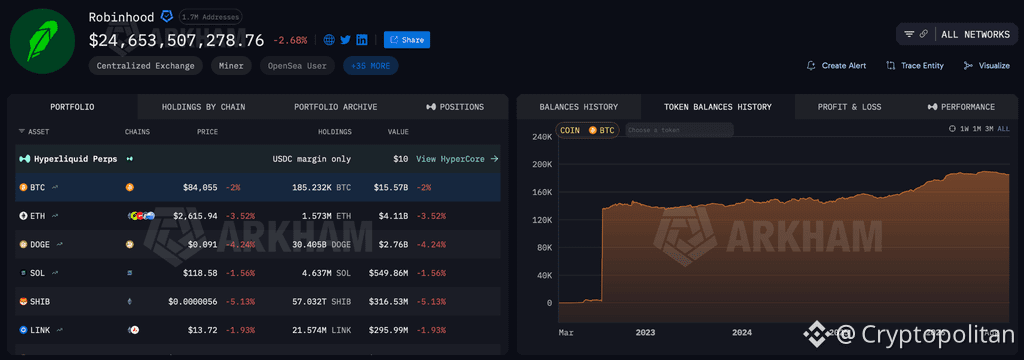
Robinhood nimmt Bitcoin im Wert von 25 Millionen US-Dollar in die Bilanz aufRobinhood hält Bitcoin nun in der eigenen Bilanz und gehört zu einer wachsenden Liste von BTC-Treasury-Unternehmen. Die Nachricht, dass die Handelsplattform erstmals BTC im Wert von 25 Millionen US-Dollar für ihre Unternehmensbilanz gekauft hatte, wurde heute bekannt, als Johann Kerbrat, Senior Vice President und General Manager für Krypto und das internationale Geschäft bei Robinhood, den Kauf in einem Interview mit The Block für dessen Sendung The Starting Block enthüllte. Kerbrat machte die Ankündigung am selben Tag, an dem er auf der Token2049 in Singapur sprach.
Robinhood nimmt Bitcoin im Wert von 25 Millionen US-Dollar in die Bilanz auf
Robinhood hält Bitcoin nun in der eigenen Bilanz und gehört zu einer wachsenden Liste von BTC-Treasury-Unternehmen. Die Nachricht, dass die Handelsplattform erstmals BTC im Wert von 25 Millionen US-Dollar für ihre Unternehmensbilanz gekauft hatte, wurde heute bekannt, als Johann Kerbrat, Senior Vice President und General Manager für Krypto und das internationale Geschäft bei Robinhood, den Kauf in einem Interview mit The Block für dessen Sendung The Starting Block enthüllte. Kerbrat machte die Ankündigung am selben Tag, an dem er auf der Token2049 in Singapur sprach.
1
65
Artikel
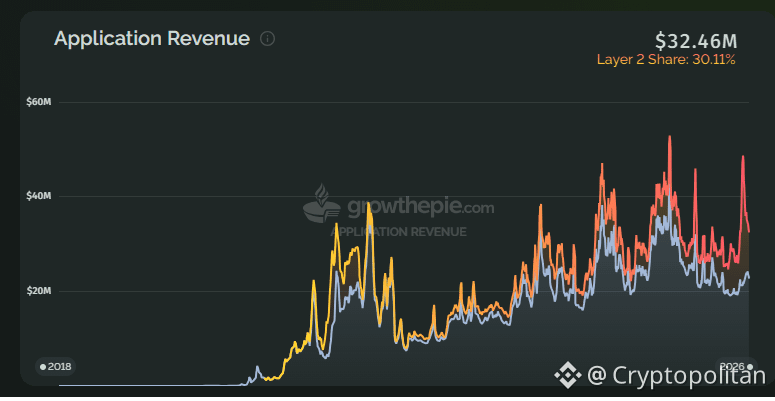
Das Jahr der Stilllegungen: Welche Netzwerke stellen 2026 ihren Betrieb ein?Abstract ist die jüngste L2-Chain, die sich der langen Reihe von Stilllegungen im Jahr 2026 anschließt. Welche Netzwerke stellen im vergangenen Jahr ihren Betrieb ein, und wie wirkt sich das auf die Nutzer aus?
Abstract kündigte Anfang Oktober seine Einstellung an, doch diese Entscheidung ist nicht ungewöhnlich. 2026 kündigte eine lange Liste von Netzwerken eine schnellere oder abrupt eingeleitete Stilllegung an. Kurz vor Abstract gab Blast bekannt, den Betrieb bis Ende Oktober einzustellen.
Der Hauptgrund für die Stilllegung von Netzwerken sind eine rückläufige Nutzung und sinkende Liquidität. Auf dem Höhepunkt waren bei Abstract Vermögenswerte im Wert von über 291 Mio. US-Dollar gebunden; kurz vor der Stilllegung waren es über 90 % weniger. Abstract verzeichnet weiterhin über 93.000 wöchentlich aktive Adressen und 1,64 Millionen wöchentliche Transaktionen. Das Netzwerk bleibt bis zum 15. Dezember für Bridges und Migrationen in Betrieb.
Das Jahr der Stilllegungen: Welche Netzwerke stellen 2026 ihren Betrieb ein?
Abstract ist die jüngste L2-Chain, die sich der langen Reihe von Stilllegungen im Jahr 2026 anschließt. Welche Netzwerke stellen im vergangenen Jahr ihren Betrieb ein, und wie wirkt sich das auf die Nutzer aus?
Abstract kündigte Anfang Oktober seine Einstellung an, doch diese Entscheidung ist nicht ungewöhnlich. 2026 kündigte eine lange Liste von Netzwerken eine schnellere oder abrupt eingeleitete Stilllegung an. Kurz vor Abstract gab Blast bekannt, den Betrieb bis Ende Oktober einzustellen.
Der Hauptgrund für die Stilllegung von Netzwerken sind eine rückläufige Nutzung und sinkende Liquidität. Auf dem Höhepunkt waren bei Abstract Vermögenswerte im Wert von über 291 Mio. US-Dollar gebunden; kurz vor der Stilllegung waren es über 90 % weniger. Abstract verzeichnet weiterhin über 93.000 wöchentlich aktive Adressen und 1,64 Millionen wöchentliche Transaktionen. Das Netzwerk bleibt bis zum 15. Dezember für Bridges und Migrationen in Betrieb.
Abstract kündigte Anfang Oktober seine Einstellung an, doch diese Entscheidung ist nicht ungewöhnlich. 2026 kündigte eine lange Liste von Netzwerken eine schnellere oder abrupt eingeleitete Stilllegung an. Kurz vor Abstract gab Blast bekannt, den Betrieb bis Ende Oktober einzustellen.
Der Hauptgrund für die Stilllegung von Netzwerken sind eine rückläufige Nutzung und sinkende Liquidität. Auf dem Höhepunkt waren bei Abstract Vermögenswerte im Wert von über 291 Mio. US-Dollar gebunden; kurz vor der Stilllegung waren es über 90 % weniger. Abstract verzeichnet weiterhin über 93.000 wöchentlich aktive Adressen und 1,64 Millionen wöchentliche Transaktionen. Das Netzwerk bleibt bis zum 15. Dezember für Bridges und Migrationen in Betrieb.
119
Artikel
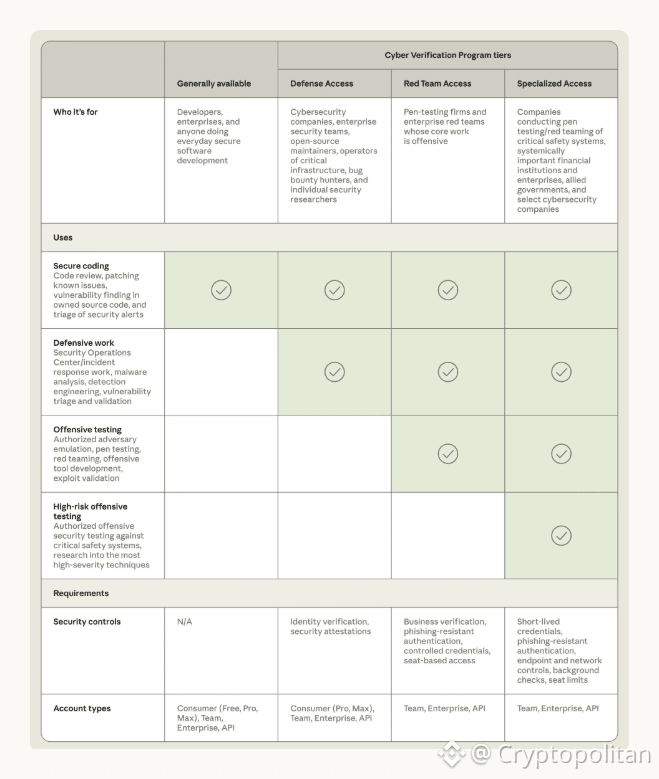
Anthropic verlangt von Mitgliedern seines Cyberprogramms, der Datenspeicherung zuzustimmen – im Gegenzug für weniger strenge SchutzmaßnahmenSicherheitsteams, die dem erweiterten Cyber Verification Program von Anthropic beitreten, müssen zustimmen, dass das Unternehmen ihre Daten speichert, damit es nach missbräuchlichen Cyberaktivitäten Ausschau halten kann.
Anthropic hat das Programm am Dienstag in drei Zugriffsstufen umgestaltet, wobei die Einschränkungen bei Cyberaktivitäten mit jeder Stufe abnehmen.
Anthropic wird im Laufe des Herbstes eine Speicherung von Daten von null Tagen anbieten
Enterprise Frontier Safeguards, die im Laufe des Herbstes eingeführt werden, verbinden dieselben Schutzmaßnahmen mit einer Speicherung von Daten von null Tagen. Berechtigte Organisationen können ihre Daten dann in einer von ihnen kontrollierten Cloud-Infrastruktur speichern.
Anthropic verlangt von Mitgliedern seines Cyberprogramms, der Datenspeicherung zuzustimmen – im Gegenzug für weniger strenge Schutzmaßnahmen
Sicherheitsteams, die dem erweiterten Cyber Verification Program von Anthropic beitreten, müssen zustimmen, dass das Unternehmen ihre Daten speichert, damit es nach missbräuchlichen Cyberaktivitäten Ausschau halten kann.
Anthropic hat das Programm am Dienstag in drei Zugriffsstufen umgestaltet, wobei die Einschränkungen bei Cyberaktivitäten mit jeder Stufe abnehmen.
Anthropic wird im Laufe des Herbstes eine Speicherung von Daten von null Tagen anbieten
Enterprise Frontier Safeguards, die im Laufe des Herbstes eingeführt werden, verbinden dieselben Schutzmaßnahmen mit einer Speicherung von Daten von null Tagen. Berechtigte Organisationen können ihre Daten dann in einer von ihnen kontrollierten Cloud-Infrastruktur speichern.
Anthropic hat das Programm am Dienstag in drei Zugriffsstufen umgestaltet, wobei die Einschränkungen bei Cyberaktivitäten mit jeder Stufe abnehmen.
Anthropic wird im Laufe des Herbstes eine Speicherung von Daten von null Tagen anbieten
Enterprise Frontier Safeguards, die im Laufe des Herbstes eingeführt werden, verbinden dieselben Schutzmaßnahmen mit einer Speicherung von Daten von null Tagen. Berechtigte Organisationen können ihre Daten dann in einer von ihnen kontrollierten Cloud-Infrastruktur speichern.
1
88
Grayscale zufolge entfiel der Großteil von Bitcoins dreijährigem Kursanstieg um 225 % auf eine Handvoll HandelstageDer Kursanstieg von Bitcoin um 225 % in den drei Jahren bis zum 23. September beruht auf einer kleinen Zahl von Handelstagen. In einer Mitteilung vom 5. Oktober sagte Zach Pandl, Forschungsleiter bei Grayscale, dass weniger als 0,5 % der Handelstage so starke Kursgewinne verzeichneten, dass ihr Ausschluss die kumulierte Rendite um mehr als die Hälfte verringert hätte.
Doch allein die fünf besten Tage reichen bereits aus, um den Großteil des Gewinns auszumachen. Lässt man sie außen vor, verzeichnet Bitcoin immer noch einen Anstieg von 95 % – deutlich weniger als die Hälfte des Gesamtgewinns von 225 %.
Der Nasdaq-100 erzielt auch ohne seine 15 stärksten Handelstage noch einen Gewinn von 21 %
Pandl sagte, die Zahlen seien in Grayscales Forschungsreihe The Stack veröffentlicht worden und beruhten auf BTC/USD-Spotpreisen. Werden zehn Handelstage ausgelassen, sinkt der Gewinn auf 27 %; bei 15 fehlenden Handelstagen rutscht Bitcoin ins Minus und verliert 11 %.
Grayscale zufolge entfiel der Großteil von Bitcoins dreijährigem Kursanstieg um 225 % auf eine Handvoll Handelstage
Der Kursanstieg von Bitcoin um 225 % in den drei Jahren bis zum 23. September beruht auf einer kleinen Zahl von Handelstagen. In einer Mitteilung vom 5. Oktober sagte Zach Pandl, Forschungsleiter bei Grayscale, dass weniger als 0,5 % der Handelstage so starke Kursgewinne verzeichneten, dass ihr Ausschluss die kumulierte Rendite um mehr als die Hälfte verringert hätte.
Doch allein die fünf besten Tage reichen bereits aus, um den Großteil des Gewinns auszumachen. Lässt man sie außen vor, verzeichnet Bitcoin immer noch einen Anstieg von 95 % – deutlich weniger als die Hälfte des Gesamtgewinns von 225 %.
Der Nasdaq-100 erzielt auch ohne seine 15 stärksten Handelstage noch einen Gewinn von 21 %
Pandl sagte, die Zahlen seien in Grayscales Forschungsreihe The Stack veröffentlicht worden und beruhten auf BTC/USD-Spotpreisen. Werden zehn Handelstage ausgelassen, sinkt der Gewinn auf 27 %; bei 15 fehlenden Handelstagen rutscht Bitcoin ins Minus und verliert 11 %.
Doch allein die fünf besten Tage reichen bereits aus, um den Großteil des Gewinns auszumachen. Lässt man sie außen vor, verzeichnet Bitcoin immer noch einen Anstieg von 95 % – deutlich weniger als die Hälfte des Gesamtgewinns von 225 %.
Der Nasdaq-100 erzielt auch ohne seine 15 stärksten Handelstage noch einen Gewinn von 21 %
Pandl sagte, die Zahlen seien in Grayscales Forschungsreihe The Stack veröffentlicht worden und beruhten auf BTC/USD-Spotpreisen. Werden zehn Handelstage ausgelassen, sinkt der Gewinn auf 27 %; bei 15 fehlenden Handelstagen rutscht Bitcoin ins Minus und verliert 11 %.
156
Artikel
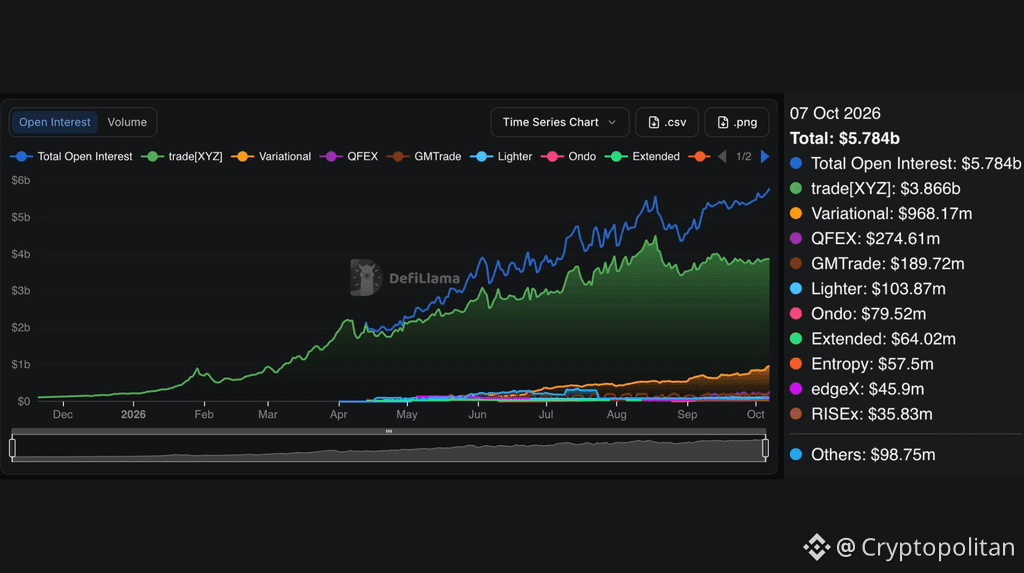
Onchain-Positionen auf Aktien und Rohstoffe treiben das Open Interest bei RWA-Perps auf 5,78 Milliarden US-DollarDas Open Interest (OI) bei Onchain-Perpetual-Futures auf reale Vermögenswerte (RWA) erreichte mit 5,78 Milliarden US-Dollar einen neuen Höchststand, wie aus den neuesten Daten von DefiLlama hervorgeht. Das RWA-OI ist innerhalb eines Jahres von nahezu null auf das 25,6-Fache seit Jahresbeginn gestiegen. Betrachtet man die Zusammensetzung dieses Marktes, entfällt der Großteil des OI auf eine einzige Plattform.
trade[XYZ] hält zum Zeitpunkt der Erstellung dieses Textes 3,866 Milliarden US-Dollar des Gesamtvolumens, also rund 67 % des Marktes. Variational belegt mit 968,17 Millionen US-Dollar beziehungsweise 17 % den zweiten Platz. Zusammen machen die beiden Plattformen etwa 84 % aller offenen Positionen in diesem Sektor aus.
Onchain-Positionen auf Aktien und Rohstoffe treiben das Open Interest bei RWA-Perps auf 5,78 Milliarden US-Dollar
Das Open Interest (OI) bei Onchain-Perpetual-Futures auf reale Vermögenswerte (RWA) erreichte mit 5,78 Milliarden US-Dollar einen neuen Höchststand, wie aus den neuesten Daten von DefiLlama hervorgeht. Das RWA-OI ist innerhalb eines Jahres von nahezu null auf das 25,6-Fache seit Jahresbeginn gestiegen. Betrachtet man die Zusammensetzung dieses Marktes, entfällt der Großteil des OI auf eine einzige Plattform.
trade[XYZ] hält zum Zeitpunkt der Erstellung dieses Textes 3,866 Milliarden US-Dollar des Gesamtvolumens, also rund 67 % des Marktes. Variational belegt mit 968,17 Millionen US-Dollar beziehungsweise 17 % den zweiten Platz. Zusammen machen die beiden Plattformen etwa 84 % aller offenen Positionen in diesem Sektor aus.
trade[XYZ] hält zum Zeitpunkt der Erstellung dieses Textes 3,866 Milliarden US-Dollar des Gesamtvolumens, also rund 67 % des Marktes. Variational belegt mit 968,17 Millionen US-Dollar beziehungsweise 17 % den zweiten Platz. Zusammen machen die beiden Plattformen etwa 84 % aller offenen Positionen in diesem Sektor aus.
184
Arthur Hayes warnt: KI-Ausgabenboom könnte Finanzkrise auslösenDer ehemalige BitMEX-CEO Arthur Hayes sagt, der KI-Goldrausch steuere direkt auf eine Klippe zu, worauf eine staatliche Rettungsaktion folgen könnte, die die Kryptopreise in die Höhe treiben könnte. Seiner Ansicht nach ist der KI-Investitionsboom nicht nachhaltig und wird letztlich zusammenbrechen. Außerdem würden Billionen von Dollar für KI-Rechenzentren verschwendet.
Der Mitgründer von Maelstrom argumentierte außerdem, dass höhere Investitionen in Rechenzentren letztlich zu überschüssiger Rechenleistung führen und die Kosten dadurch drastisch sinken würden.
„Wenn man sich mit der Finanzgeschichte und jeder einzelnen großen Einführung neuer Technologien beschäftigt, stellt man fest, dass immer zu viel gebaut wird. Es kommt immer zu einem Crash und immer zu einer Rettungsaktion“, sagte er Reportern.
Arthur Hayes warnt: KI-Ausgabenboom könnte Finanzkrise auslösen
Der ehemalige BitMEX-CEO Arthur Hayes sagt, der KI-Goldrausch steuere direkt auf eine Klippe zu, worauf eine staatliche Rettungsaktion folgen könnte, die die Kryptopreise in die Höhe treiben könnte. Seiner Ansicht nach ist der KI-Investitionsboom nicht nachhaltig und wird letztlich zusammenbrechen. Außerdem würden Billionen von Dollar für KI-Rechenzentren verschwendet.
Der Mitgründer von Maelstrom argumentierte außerdem, dass höhere Investitionen in Rechenzentren letztlich zu überschüssiger Rechenleistung führen und die Kosten dadurch drastisch sinken würden.
„Wenn man sich mit der Finanzgeschichte und jeder einzelnen großen Einführung neuer Technologien beschäftigt, stellt man fest, dass immer zu viel gebaut wird. Es kommt immer zu einem Crash und immer zu einer Rettungsaktion“, sagte er Reportern.
Der Mitgründer von Maelstrom argumentierte außerdem, dass höhere Investitionen in Rechenzentren letztlich zu überschüssiger Rechenleistung führen und die Kosten dadurch drastisch sinken würden.
„Wenn man sich mit der Finanzgeschichte und jeder einzelnen großen Einführung neuer Technologien beschäftigt, stellt man fest, dass immer zu viel gebaut wird. Es kommt immer zu einem Crash und immer zu einer Rettungsaktion“, sagte er Reportern.
473
Artikel
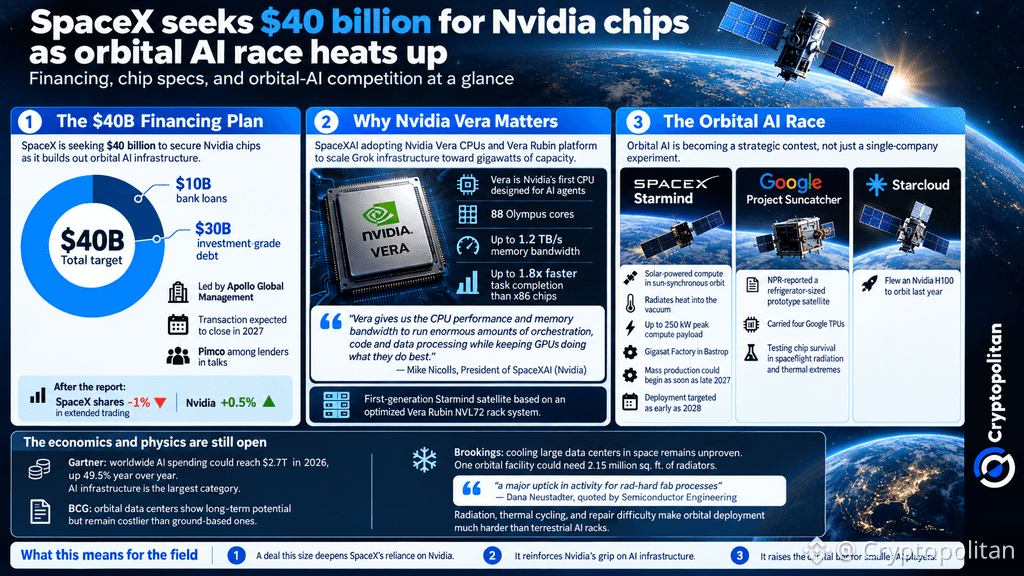
SpaceX will 40 Milliarden Dollar für Nvidia-Chips aufbringen, während das Rennen um KI im Orbit an Fahrt gewinntVera bietet uns die CPU-Leistung und Speicherbandbreite, die wir benötigen, um riesige Mengen an Orchestrierung, Code und Datenverarbeitung zu bewältigen, während die GPUs weiterhin das tun können, worin sie am besten sind.
— Mike Nicolls, Präsident von SpaceXAI, in der Ankündigung von Nvidia
SpaceX ist nicht allein im All
Laut SpaceX würden die Starmind-Satelliten in einer sonnensynchronen Umlaufbahn Solarenergie nutzen und Wärme ins All abgeben. Jeder Satellit hat eine maximale Verarbeitungskapazität von 250 Kilowatt.
Wie NPR berichtet, führt Google ein ähnliches Experiment durch. Der Prototyp des Projekts Suncatcher transportierte vier TPUs, um zu testen, wie die KI-fähigen Chips der Strahlung und den extremen Temperaturen im Weltraum standhalten würden.
SpaceX will 40 Milliarden Dollar für Nvidia-Chips aufbringen, während das Rennen um KI im Orbit an Fahrt gewinnt
Vera bietet uns die CPU-Leistung und Speicherbandbreite, die wir benötigen, um riesige Mengen an Orchestrierung, Code und Datenverarbeitung zu bewältigen, während die GPUs weiterhin das tun können, worin sie am besten sind.
— Mike Nicolls, Präsident von SpaceXAI, in der Ankündigung von Nvidia
SpaceX ist nicht allein im All
Laut SpaceX würden die Starmind-Satelliten in einer sonnensynchronen Umlaufbahn Solarenergie nutzen und Wärme ins All abgeben. Jeder Satellit hat eine maximale Verarbeitungskapazität von 250 Kilowatt.
Wie NPR berichtet, führt Google ein ähnliches Experiment durch. Der Prototyp des Projekts Suncatcher transportierte vier TPUs, um zu testen, wie die KI-fähigen Chips der Strahlung und den extremen Temperaturen im Weltraum standhalten würden.
— Mike Nicolls, Präsident von SpaceXAI, in der Ankündigung von Nvidia
SpaceX ist nicht allein im All
Laut SpaceX würden die Starmind-Satelliten in einer sonnensynchronen Umlaufbahn Solarenergie nutzen und Wärme ins All abgeben. Jeder Satellit hat eine maximale Verarbeitungskapazität von 250 Kilowatt.
Wie NPR berichtet, führt Google ein ähnliches Experiment durch. Der Prototyp des Projekts Suncatcher transportierte vier TPUs, um zu testen, wie die KI-fähigen Chips der Strahlung und den extremen Temperaturen im Weltraum standhalten würden.
140
Artikel
Beim Debüt der Ethereum Economic Zone umfasst der atomare L1-zu-L2-Transfer lediglich 0,001 ETHAm 5. Oktober transferierte die Ethereum Economic Zone (EEZ) in einer einzigen atomaren Transaktion 0,001 ETH von der Ethereum-Basiskette zu einem Layer-2-Netzwerk.
Der Vorgang war eine Demo. Die EEZ hat noch kein Produkt veröffentlicht, und am Ethereum-Protokoll hat sich nichts geändert.
Transaktionen in beide Richtungen, verschachtelte Aufrufe über verschiedene Chains hinweg und Echtzeit-Proofs stehen weiterhin auf der Roadmap; die Arbeiten daran laufen bis 2027. Die Kernsoftware der EEZ steckt noch in den Kinderschuhen.
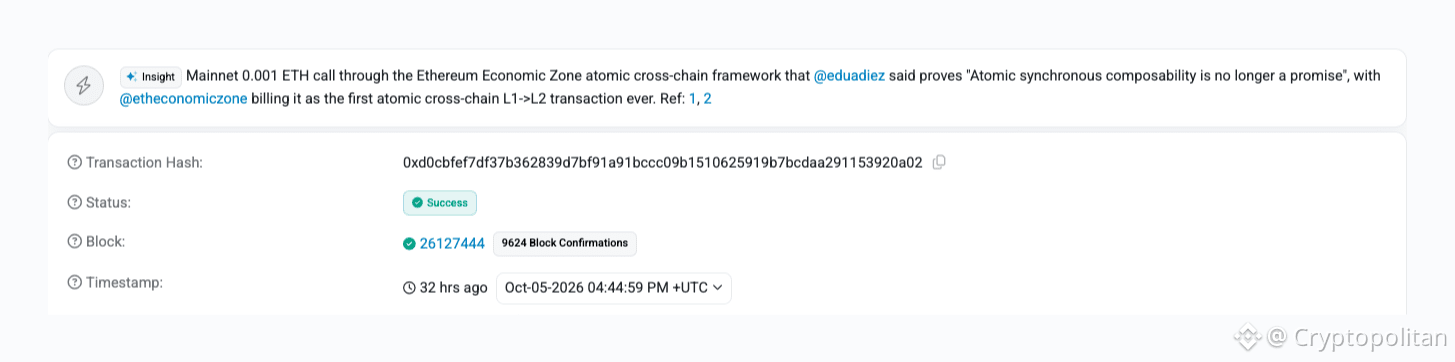
Etherscan verzeichnet den Transfer in Block 26.127.444 mit einer Gebühr von 0,80 US-Dollar.
Etherscan zeigt, dass die Transaktion um 16:44 UTC in Block 26.127.444 bestätigt wurde.
Beim Debüt der Ethereum Economic Zone umfasst der atomare L1-zu-L2-Transfer lediglich 0,001 ETH
Am 5. Oktober transferierte die Ethereum Economic Zone (EEZ) in einer einzigen atomaren Transaktion 0,001 ETH von der Ethereum-Basiskette zu einem Layer-2-Netzwerk.
Der Vorgang war eine Demo. Die EEZ hat noch kein Produkt veröffentlicht, und am Ethereum-Protokoll hat sich nichts geändert.
Transaktionen in beide Richtungen, verschachtelte Aufrufe über verschiedene Chains hinweg und Echtzeit-Proofs stehen weiterhin auf der Roadmap; die Arbeiten daran laufen bis 2027. Die Kernsoftware der EEZ steckt noch in den Kinderschuhen.
Etherscan verzeichnet den Transfer in Block 26.127.444 mit einer Gebühr von 0,80 US-Dollar.
Etherscan zeigt, dass die Transaktion um 16:44 UTC in Block 26.127.444 bestätigt wurde.
Der Vorgang war eine Demo. Die EEZ hat noch kein Produkt veröffentlicht, und am Ethereum-Protokoll hat sich nichts geändert.
Transaktionen in beide Richtungen, verschachtelte Aufrufe über verschiedene Chains hinweg und Echtzeit-Proofs stehen weiterhin auf der Roadmap; die Arbeiten daran laufen bis 2027. Die Kernsoftware der EEZ steckt noch in den Kinderschuhen.
Etherscan verzeichnet den Transfer in Block 26.127.444 mit einer Gebühr von 0,80 US-Dollar.
Etherscan zeigt, dass die Transaktion um 16:44 UTC in Block 26.127.444 bestätigt wurde.
127
Artikel
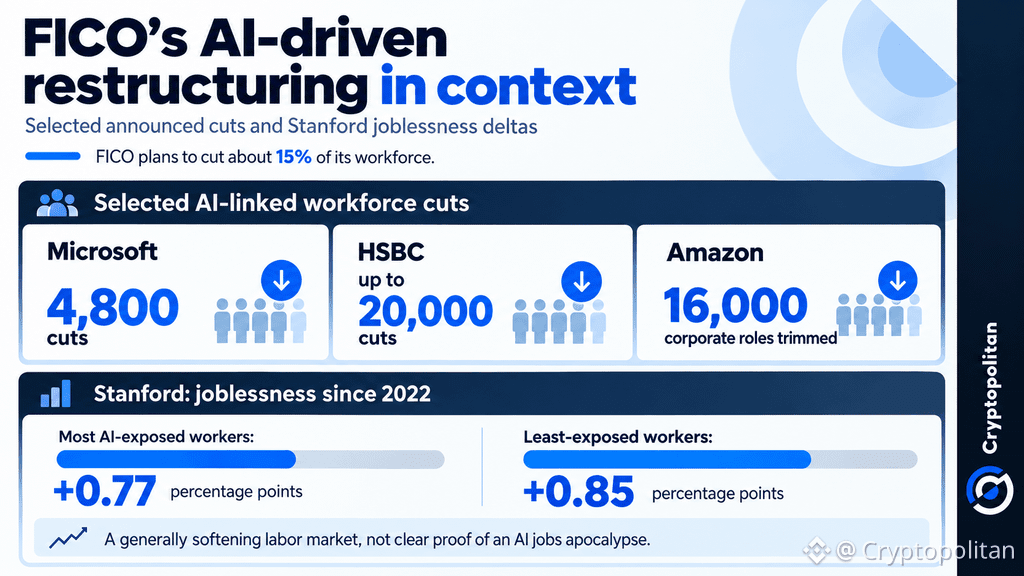
FICO baut im Rahmen einer KI-gestützten Umstrukturierung 15 % seiner Belegschaft abFair Isaac, das Unternehmen hinter dem Kredit-Scoring-Dienst FICO, baut im Rahmen einer umfassenderen, auf KI ausgerichteten Umstrukturierung fast 15 % seiner Belegschaft ab. Davon könnten etwa 570 Beschäftigte betroffen sein. FICO teilte Reuters mit, die Änderungen sollten dem Unternehmen helfen, „schneller zu arbeiten und Innovationen auf den Markt zu bringen“.
Der Moment ist bemerkenswert. Unternehmen investieren viel in KI-Technologie, doch gleichzeitig gibt es keinerlei Anzeichen dafür, dass sie zu einem massiven Arbeitsplatzabbau auf dem Arbeitsmarkt führt.
Was FICO kürzt und warum die Aktien des Unternehmens unter Druck stehen
FICO baut im Rahmen einer KI-gestützten Umstrukturierung 15 % seiner Belegschaft ab
Fair Isaac, das Unternehmen hinter dem Kredit-Scoring-Dienst FICO, baut im Rahmen einer umfassenderen, auf KI ausgerichteten Umstrukturierung fast 15 % seiner Belegschaft ab. Davon könnten etwa 570 Beschäftigte betroffen sein. FICO teilte Reuters mit, die Änderungen sollten dem Unternehmen helfen, „schneller zu arbeiten und Innovationen auf den Markt zu bringen“.
Der Moment ist bemerkenswert. Unternehmen investieren viel in KI-Technologie, doch gleichzeitig gibt es keinerlei Anzeichen dafür, dass sie zu einem massiven Arbeitsplatzabbau auf dem Arbeitsmarkt führt.
Was FICO kürzt und warum die Aktien des Unternehmens unter Druck stehen
Der Moment ist bemerkenswert. Unternehmen investieren viel in KI-Technologie, doch gleichzeitig gibt es keinerlei Anzeichen dafür, dass sie zu einem massiven Arbeitsplatzabbau auf dem Arbeitsmarkt führt.
Was FICO kürzt und warum die Aktien des Unternehmens unter Druck stehen
93
Artikel
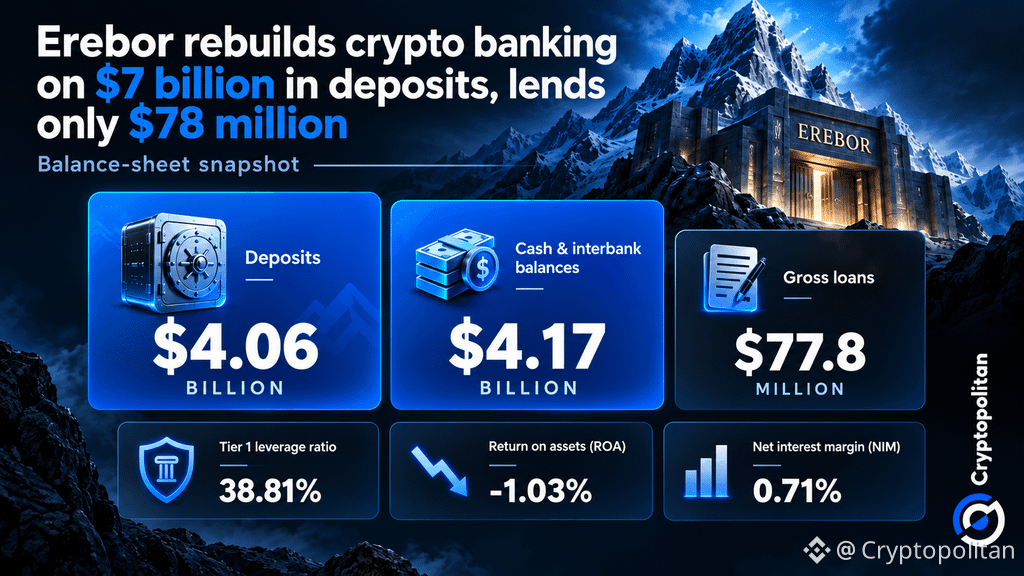
Erebor, die auf Kryptowährungen ausgerichtete Nationalbank, die von Palmer Luckey unterstützt wird, hat Einlagen in Höhe von mehr als 7 Milliarden US-Dollar eingesammelt...Erebor, die auf Kryptowährungen ausgerichtete Nationalbank, die von Palmer Luckey unterstützt wird, hat seit ihrer Eröffnung Einlagen in Höhe von mehr als 7 Milliarden US-Dollar eingesammelt und über 500 Kunden gewonnen, berichtete die Financial Times am 6. Oktober.
Damit kehren Einlagen aus den Bereichen Technologie und Kryptowährungen nur drei Jahre nach dem Ende von Silvergate zu einer spezialisierten Bank zurück. Die zentrale Frage ist nun, ob Erebor eine ähnliche Katastrophe vermeiden kann, während die Einleger darum wetteifern, ihr Geld abzuheben.
Bislang verfolgt Erebor einen vorsichtigen Ansatz. Das Unternehmen hält einen Großteil des Geldes liquide, anstatt es aggressiv zu verleihen.
Erebor, die auf Kryptowährungen ausgerichtete Nationalbank, die von Palmer Luckey unterstützt wird, hat Einlagen in Höhe von mehr als 7 Milliarden US-Dollar eingesammelt...
Erebor, die auf Kryptowährungen ausgerichtete Nationalbank, die von Palmer Luckey unterstützt wird, hat seit ihrer Eröffnung Einlagen in Höhe von mehr als 7 Milliarden US-Dollar eingesammelt und über 500 Kunden gewonnen, berichtete die Financial Times am 6. Oktober.
Damit kehren Einlagen aus den Bereichen Technologie und Kryptowährungen nur drei Jahre nach dem Ende von Silvergate zu einer spezialisierten Bank zurück. Die zentrale Frage ist nun, ob Erebor eine ähnliche Katastrophe vermeiden kann, während die Einleger darum wetteifern, ihr Geld abzuheben.
Bislang verfolgt Erebor einen vorsichtigen Ansatz. Das Unternehmen hält einen Großteil des Geldes liquide, anstatt es aggressiv zu verleihen.
Damit kehren Einlagen aus den Bereichen Technologie und Kryptowährungen nur drei Jahre nach dem Ende von Silvergate zu einer spezialisierten Bank zurück. Die zentrale Frage ist nun, ob Erebor eine ähnliche Katastrophe vermeiden kann, während die Einleger darum wetteifern, ihr Geld abzuheben.
Bislang verfolgt Erebor einen vorsichtigen Ansatz. Das Unternehmen hält einen Großteil des Geldes liquide, anstatt es aggressiv zu verleihen.
168
CertiK prüft Suis Live-Versuch, den eigenen Rekord von 6 Millionen TPS zu brechenDas Blockchain-Sicherheitsunternehmen CertiK wird als unabhängiger Prüfer fungieren, wenn Sui am 7. Oktober bei einem Live-Test versucht, seinen eigenen Durchsatzrekord von 6,086,766 Transaktionen pro Sekunde (TPS) zu brechen.
Sui wirbt mit seiner schieren Geschwindigkeit als dem Merkmal, das eine Wirtschaft autonomer KI-Agenten verlangen wird.
Was überprüft CertiK für Sui?
CertiK, das sich selbst als größten Anbieter von Web3-Sicherheitsdienstleistungen bezeichnet, soll bei einem von Sui durchgeführten Test als unabhängiger Prüfer fungieren.
Der Test findet auf der Hauptbühne des Sui Basecamp 2026 statt, dem wichtigsten Event des Netzwerks, das parallel zur TOKEN2049 im Marina Bay Sands in Singapur veranstaltet wird. Sui versucht, seinen aktuellen Rekord von 6,086,766 Transaktionen pro Sekunde (TPS) zu brechen, den das Netzwerk am 4. Juli 2026 aufgestellt hat.
CertiK prüft Suis Live-Versuch, den eigenen Rekord von 6 Millionen TPS zu brechen
Das Blockchain-Sicherheitsunternehmen CertiK wird als unabhängiger Prüfer fungieren, wenn Sui am 7. Oktober bei einem Live-Test versucht, seinen eigenen Durchsatzrekord von 6,086,766 Transaktionen pro Sekunde (TPS) zu brechen.
Sui wirbt mit seiner schieren Geschwindigkeit als dem Merkmal, das eine Wirtschaft autonomer KI-Agenten verlangen wird.
Was überprüft CertiK für Sui?
CertiK, das sich selbst als größten Anbieter von Web3-Sicherheitsdienstleistungen bezeichnet, soll bei einem von Sui durchgeführten Test als unabhängiger Prüfer fungieren.
Der Test findet auf der Hauptbühne des Sui Basecamp 2026 statt, dem wichtigsten Event des Netzwerks, das parallel zur TOKEN2049 im Marina Bay Sands in Singapur veranstaltet wird. Sui versucht, seinen aktuellen Rekord von 6,086,766 Transaktionen pro Sekunde (TPS) zu brechen, den das Netzwerk am 4. Juli 2026 aufgestellt hat.
Sui wirbt mit seiner schieren Geschwindigkeit als dem Merkmal, das eine Wirtschaft autonomer KI-Agenten verlangen wird.
Was überprüft CertiK für Sui?
CertiK, das sich selbst als größten Anbieter von Web3-Sicherheitsdienstleistungen bezeichnet, soll bei einem von Sui durchgeführten Test als unabhängiger Prüfer fungieren.
Der Test findet auf der Hauptbühne des Sui Basecamp 2026 statt, dem wichtigsten Event des Netzwerks, das parallel zur TOKEN2049 im Marina Bay Sands in Singapur veranstaltet wird. Sui versucht, seinen aktuellen Rekord von 6,086,766 Transaktionen pro Sekunde (TPS) zu brechen, den das Netzwerk am 4. Juli 2026 aufgestellt hat.
283
Tim Cooks Apple-Zuteilung für 2023 wird nach einer Rendite im 76. Perzentil zu 171 % ausgezahltTim Cook erhielt am 1. Oktober 374.541 Apple-Aktien als Aktienzuteilung für 2023, die zu etwa 171 % des Zielwerts unverfallbar wurde, wie Berechnungen von Cryptopolitan zufolge.
Apple belegte gemessen an der Aktionärsrendite über drei Jahre mit 90,67 % Platz 115 unter 480 Unternehmen im S&P 500, wie aus einem bei der SEC eingereichten Formular 4 hervorgeht.
219.030 Einheiten wuchsen bei einem Rang im 76. Perzentil auf 374.541 Aktien an
Das Zuteilungsdatum ist der 1. Oktober 2023, und das Ziel beträgt 219.030 Restricted Stock Units. Bei der Abrechnung wird jede Einheit in eine Stammaktie umgewandelt, heißt es in der Einreichung.
Tim Cooks Apple-Zuteilung für 2023 wird nach einer Rendite im 76. Perzentil zu 171 % ausgezahlt
Tim Cook erhielt am 1. Oktober 374.541 Apple-Aktien als Aktienzuteilung für 2023, die zu etwa 171 % des Zielwerts unverfallbar wurde, wie Berechnungen von Cryptopolitan zufolge.
Apple belegte gemessen an der Aktionärsrendite über drei Jahre mit 90,67 % Platz 115 unter 480 Unternehmen im S&P 500, wie aus einem bei der SEC eingereichten Formular 4 hervorgeht.
219.030 Einheiten wuchsen bei einem Rang im 76. Perzentil auf 374.541 Aktien an
Das Zuteilungsdatum ist der 1. Oktober 2023, und das Ziel beträgt 219.030 Restricted Stock Units. Bei der Abrechnung wird jede Einheit in eine Stammaktie umgewandelt, heißt es in der Einreichung.
Apple belegte gemessen an der Aktionärsrendite über drei Jahre mit 90,67 % Platz 115 unter 480 Unternehmen im S&P 500, wie aus einem bei der SEC eingereichten Formular 4 hervorgeht.
219.030 Einheiten wuchsen bei einem Rang im 76. Perzentil auf 374.541 Aktien an
Das Zuteilungsdatum ist der 1. Oktober 2023, und das Ziel beträgt 219.030 Restricted Stock Units. Bei der Abrechnung wird jede Einheit in eine Stammaktie umgewandelt, heißt es in der Einreichung.
208
Artikel
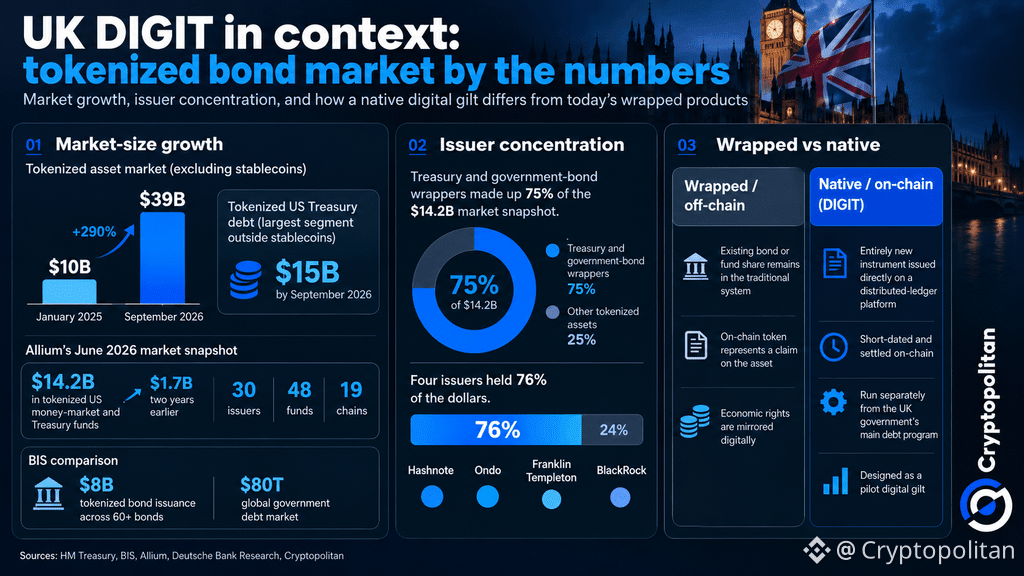
Großbritannien benennt 6 Banken als Konsortialführer für DIGIT, während der Boom tokenisierter Staatsanleihen Fahrt aufnimmtDas britische Finanzministerium hat Barclays, HSBC, Lloyds, Morgan Stanley, NatWest und RBC Capital Markets zu gemeinsamen Konsortialführern für DIGIT ernannt, die erste vollständig digital konzipierte Staatsanleihe des Vereinigten Königreichs. Mit dieser Ernennung endet die Vergabephase vor der bevorstehenden Testemission, die voraussichtlich im ersten Quartal 2027 stattfinden wird.
Der Zeitpunkt ist wichtig. DIGIT steht kurz vor der Einführung – zu einem Zeitpunkt, an dem tokenisierte Staatsanleihen auf den globalen Finanzmärkten Einzug halten. Damit wird für Banken, Investoren und Blockchain-Unternehmen ein bedeutender Test verbunden sein: Können Staatsanleihen effektiv mithilfe der Distributed-Ledger-Technologie (DLT) emittiert und verwaltet werden?
Großbritannien benennt 6 Banken als Konsortialführer für DIGIT, während der Boom tokenisierter Staatsanleihen Fahrt aufnimmt
Das britische Finanzministerium hat Barclays, HSBC, Lloyds, Morgan Stanley, NatWest und RBC Capital Markets zu gemeinsamen Konsortialführern für DIGIT ernannt, die erste vollständig digital konzipierte Staatsanleihe des Vereinigten Königreichs. Mit dieser Ernennung endet die Vergabephase vor der bevorstehenden Testemission, die voraussichtlich im ersten Quartal 2027 stattfinden wird.
Der Zeitpunkt ist wichtig. DIGIT steht kurz vor der Einführung – zu einem Zeitpunkt, an dem tokenisierte Staatsanleihen auf den globalen Finanzmärkten Einzug halten. Damit wird für Banken, Investoren und Blockchain-Unternehmen ein bedeutender Test verbunden sein: Können Staatsanleihen effektiv mithilfe der Distributed-Ledger-Technologie (DLT) emittiert und verwaltet werden?
Der Zeitpunkt ist wichtig. DIGIT steht kurz vor der Einführung – zu einem Zeitpunkt, an dem tokenisierte Staatsanleihen auf den globalen Finanzmärkten Einzug halten. Damit wird für Banken, Investoren und Blockchain-Unternehmen ein bedeutender Test verbunden sein: Können Staatsanleihen effektiv mithilfe der Distributed-Ledger-Technologie (DLT) emittiert und verwaltet werden?
138
Anmelden und weiter Inhalte entdecken
Krypto-Nutzer weltweit auf Binance Square kennenlernen
⚡️ Bleib in Sachen Krypto stets am Puls.
💬 Die weltgrößte Kryptobörse vertraut darauf.
👍 Erhalte verlässliche Einblicke von verifizierten Creators.
E-Mail-Adresse/Telefonnummer
Trendthemen
FedMinutesFocusOnOctoberPause
24,616 Aufrufe
515 Kommentare
#fedminutesfocusonoctoberpause
🚨 DIE CHANCEN AUF EINE FED-ZINSERHÖHUNG IM OKTOBER FALLEN AUF 21,6 %… Steht $BTC kurz vor einer Reaktion? 👀
Die Fed steht kurz davor, den Märkten einen weiteren wichtigen Hinweis zu geben.
Anleger warten auf das heutige Sitzungsprotokoll des FOMC – und die größte Frage ist, ob es im Oktober eine weitere Zinserhöhung oder eine Pause geben wird.
Aktuell ist die Wahrscheinlichkeit einer Zinserhöhung um 25 Basispunkte im Oktober auf gerade einmal 21,6 % gesunken.
Das ist eine gewaltige Veränderung der Erwartungen.
Doch genau das macht die Sache interessant… 👀
Die Fed hob die Zinsen im September auf 3,75 %–4,00 % an, doch die jüngste Schwäche am Arbeitsmarkt und die nachlassende Inflation lassen eine weitere sofortige Erhöhung weniger wahrscheinlich erscheinen.
Und für Krypto ist das wichtig.
Eine Zinspause der Fed könnte den Druck auf die Finanzierungsbedingungen verringern und die Risikobereitschaft möglicherweise verbessern.
Das könnte BTC Rückenwind geben
Doch es gibt einen Haken…
Bitcoin steht bereits unter Druck, da der Dollar und die Renditen von US-Staatsanleihen steigen.
Das heutige Protokoll könnte also für Volatilität sorgen.
Eine taubenhafte Fed → Hoffnung auf mehr Liquidität → bullishe BTC-Erzählung?
Eine restriktive Fed → Angst vor höheren Zinsen → noch mehr Druck auf Risikoanlagen?
Die entscheidende Frage:
Wird der Oktober zur Zinspause, auf die die Bitcoin-Bullen gewartet haben… oder könnte die Fed den Markt erneut überraschen? 👀
Behalte BTC, die Zinserwartungen und die Renditen von US-Staatsanleihen genau im Auge.
#FederalReserve #Fed #Crypto #InterestRates
$ETH
$SOL
Shae Cassler Sw9r
·17 Likes
·35k Aufrufe
BinanceLaunchesBinanceIntelligence
944,148 Aufrufe
5,766 Kommentare
EvernorthDelaysNasdaqDebutToOct12
4 Aufrufe
24 Kommentare