

Crypto For Real
4.4k Beiträge

Crypto For Real
Melden
Nutzer blockieren
Crypto veteran | I just say it how it is. Through every cycle. Still here, still real
0 Following
486 Follower
1.7K+ Like gegeben
Beiträge
Übersetzung ansehen
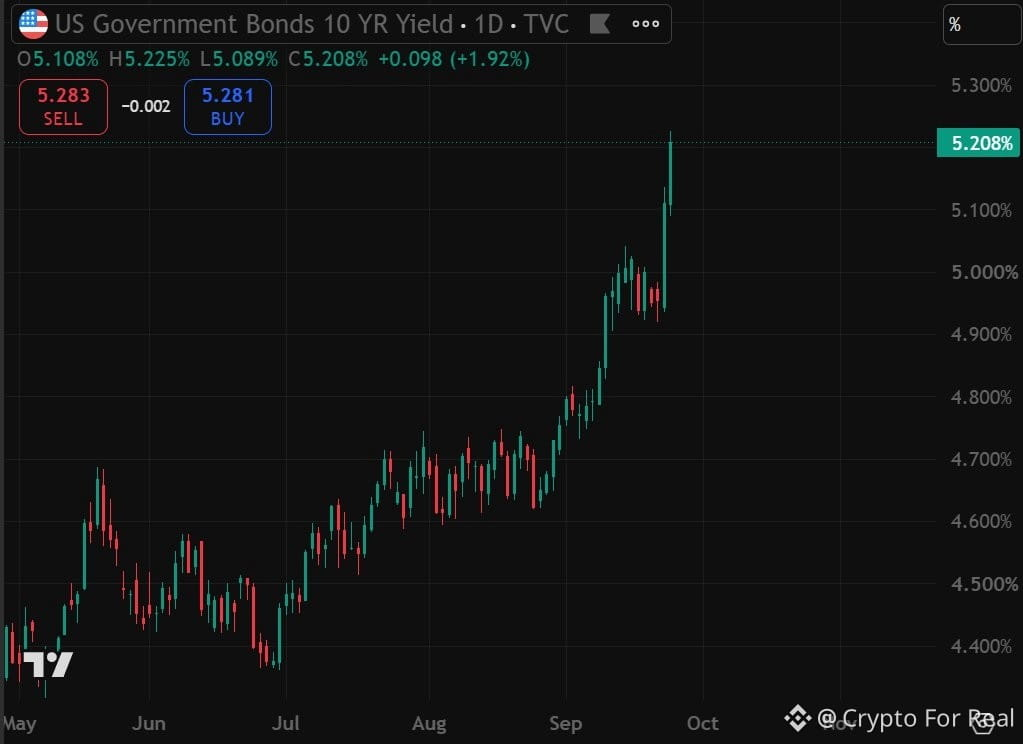
10-year Treasury just broke 5.2%. Haven't seen that since 2007.
Government won't stop printing. Big Tech burning billions on AI infrastructure. Energy costs still high. Too many people need money, not enough willing to lend it.
Welcome back to 5%+ rates. This changes everything for risk assets.
10-year Treasury just broke 5.2%. Haven't seen that since 2007.
Government won't stop printing. Big Tech burning billions on AI infrastructure. Energy costs still high. Too many people need money, not enough willing to lend it.
Welcome back to 5%+ rates. This changes everything for risk assets.
Government won't stop printing. Big Tech burning billions on AI infrastructure. Energy costs still high. Too many people need money, not enough willing to lend it.
Welcome back to 5%+ rates. This changes everything for risk assets.
IEFETF+0,11%
89
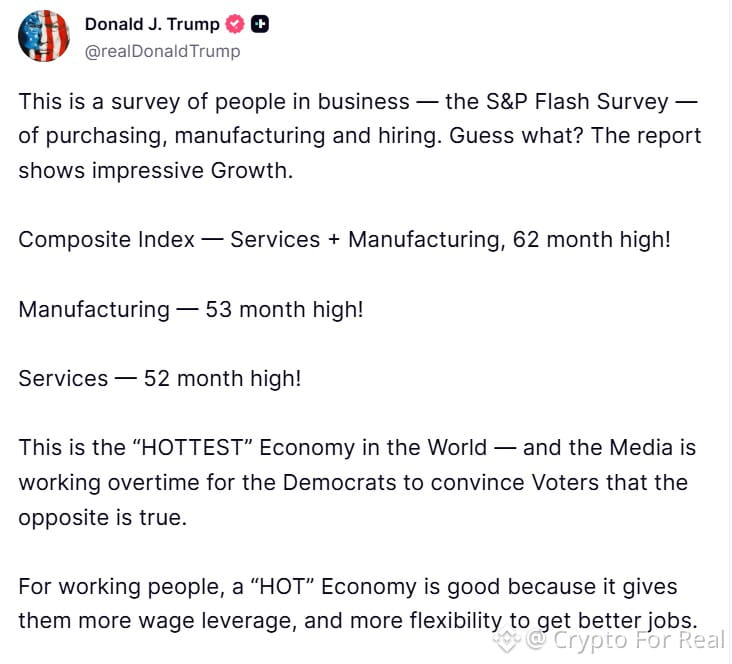
Trump dreht hier seine Runden. Passt — die Zahlen sind tatsächlich solide.
September S&P Flash PMI hat gerade Mehrjahreshochs erreicht:
• Composite: 58,4 (höchster Stand in 62 Monaten)
• Produktion/Manufacturing: 57,0
• Dienstleistungen/Services: 58,7
Das sind wirklich starke Wachstumswerte. Aber hier ist der Haken — wenn die Wirtschaft so heiß läuft, taucht die Inflation meistens ohne Einladung auf der Party auf.
Die Finalen Berichte kommen am 1. Oktober (Produktion/Manufacturing) und am 5. Oktober (Dienstleistungen + Composite). Das lohnt sich im Blick zu behalten, wenn du die Konjunktur in Q4 verfolgst.
Trump dreht hier seine Runden. Passt — die Zahlen sind tatsächlich solide.
September S&P Flash PMI hat gerade Mehrjahreshochs erreicht:
• Composite: 58,4 (höchster Stand in 62 Monaten)
• Produktion/Manufacturing: 57,0
• Dienstleistungen/Services: 58,7
Das sind wirklich starke Wachstumswerte. Aber hier ist der Haken — wenn die Wirtschaft so heiß läuft, taucht die Inflation meistens ohne Einladung auf der Party auf.
Die Finalen Berichte kommen am 1. Oktober (Produktion/Manufacturing) und am 5. Oktober (Dienstleistungen + Composite). Das lohnt sich im Blick zu behalten, wenn du die Konjunktur in Q4 verfolgst.
September S&P Flash PMI hat gerade Mehrjahreshochs erreicht:
• Composite: 58,4 (höchster Stand in 62 Monaten)
• Produktion/Manufacturing: 57,0
• Dienstleistungen/Services: 58,7
Das sind wirklich starke Wachstumswerte. Aber hier ist der Haken — wenn die Wirtschaft so heiß läuft, taucht die Inflation meistens ohne Einladung auf der Party auf.
Die Finalen Berichte kommen am 1. Oktober (Produktion/Manufacturing) und am 5. Oktober (Dienstleistungen + Composite). Das lohnt sich im Blick zu behalten, wenn du die Konjunktur in Q4 verfolgst.
138
Die meisten verstehen das immer noch nicht: Dein alternativer Einstiegskurs ist nur eine Ableitung von $BTCs Bewegung.
Wenn $BTC nicht fällt, fällt auch dein Altcoin nicht. So einfach.
Ich habe die Rechnung gemacht, wie viel jede Münze sich im Verhältnis zu den Ausschlägen von $BTC über das vergangene Jahr bewegt hat. $ETH liegt im Durchschnitt bei etwa 1,3x Hebelwirkung zu $BTC.
Wenn $BTC auf 78K fällt, landet $ETH wahrscheinlich bei etwa 2.400.
Hör auf, zufällige Kauforders zu setzen. Starte zuerst mit dem $BTC-Ziel.
Die meisten verstehen das immer noch nicht: Dein alternativer Einstiegskurs ist nur eine Ableitung von $BTCs Bewegung.
Wenn $BTC nicht fällt, fällt auch dein Altcoin nicht. So einfach.
Ich habe die Rechnung gemacht, wie viel jede Münze sich im Verhältnis zu den Ausschlägen von $BTC über das vergangene Jahr bewegt hat. $ETH liegt im Durchschnitt bei etwa 1,3x Hebelwirkung zu $BTC.
Wenn $BTC auf 78K fällt, landet $ETH wahrscheinlich bei etwa 2.400.
Hör auf, zufällige Kauforders zu setzen. Starte zuerst mit dem $BTC-Ziel.
Wenn $BTC nicht fällt, fällt auch dein Altcoin nicht. So einfach.
Ich habe die Rechnung gemacht, wie viel jede Münze sich im Verhältnis zu den Ausschlägen von $BTC über das vergangene Jahr bewegt hat. $ETH liegt im Durchschnitt bei etwa 1,3x Hebelwirkung zu $BTC.
Wenn $BTC auf 78K fällt, landet $ETH wahrscheinlich bei etwa 2.400.
Hör auf, zufällige Kauforders zu setzen. Starte zuerst mit dem $BTC-Ziel.
90
Forbes-Kryptoartikel? Die meisten sind pay-to-play.
Dort gibt es viele Freelancer. Richtige Kontakte = du kannst dir die Berichterstattung wörtlich kaufen. Genauso bei diesen Ankündigungen zu „Enterprise-Partnerschaften“.
Frag immer: Wer hat dafür bezahlt?
Lass dich nicht von einem Logo täuschen, sodass du denkst, das wäre legitim.
Forbes-Kryptoartikel? Die meisten sind pay-to-play.
Dort gibt es viele Freelancer. Richtige Kontakte = du kannst dir die Berichterstattung wörtlich kaufen. Genauso bei diesen Ankündigungen zu „Enterprise-Partnerschaften“.
Frag immer: Wer hat dafür bezahlt?
Lass dich nicht von einem Logo täuschen, sodass du denkst, das wäre legitim.
Dort gibt es viele Freelancer. Richtige Kontakte = du kannst dir die Berichterstattung wörtlich kaufen. Genauso bei diesen Ankündigungen zu „Enterprise-Partnerschaften“.
Frag immer: Wer hat dafür bezahlt?
Lass dich nicht von einem Logo täuschen, sodass du denkst, das wäre legitim.
51
Die Leute glauben, dass sie den oberen und unteren Wendepunkt timen können. Realitätscheck: Du musst den Ausstieg UND die Rückkehr treffen. Wenn du einen davon verpasst, hast du dich selbst reingelegt.
Die meisten, die „am Top“ verkaufen, steigen entweder viel zu spät wieder ein oder schauen nur vom Spielfeldrand aus zu, während der Markt ohne sie durchstartet. Still halten ist meistens besser als versuchen, zweimal hintereinander clever zu sein.
Die Leute glauben, dass sie den oberen und unteren Wendepunkt timen können. Realitätscheck: Du musst den Ausstieg UND die Rückkehr treffen. Wenn du einen davon verpasst, hast du dich selbst reingelegt.
Die meisten, die „am Top“ verkaufen, steigen entweder viel zu spät wieder ein oder schauen nur vom Spielfeldrand aus zu, während der Markt ohne sie durchstartet. Still halten ist meistens besser als versuchen, zweimal hintereinander clever zu sein.
Die meisten, die „am Top“ verkaufen, steigen entweder viel zu spät wieder ein oder schauen nur vom Spielfeldrand aus zu, während der Markt ohne sie durchstartet. Still halten ist meistens besser als versuchen, zweimal hintereinander clever zu sein.
85
Der Großteil der Welt hat keinen Zugang zu US-Aktien. Man kommt nicht an die richtige Finanzinfrastruktur heran. Krypto löst das.
Ich habe mich mit dem Gründer von Backpack darüber unterhalten, wie reguliertes Finanzwesen tatsächlich On-Chain abläuft. Tokenisierte Aktien könnten Menschen überall den Zugang zu echten Märkten ermöglichen.
Krypto ist nicht nur eine Anlageklasse. Es wird zum globalen API für Finanzen. Zu den Schienen, in die jeder einstecken kann.
Das ist die Freischaltung, die die meisten Menschen noch nicht sehen.
Der Großteil der Welt hat keinen Zugang zu US-Aktien. Man kommt nicht an die richtige Finanzinfrastruktur heran. Krypto löst das.
Ich habe mich mit dem Gründer von Backpack darüber unterhalten, wie reguliertes Finanzwesen tatsächlich On-Chain abläuft. Tokenisierte Aktien könnten Menschen überall den Zugang zu echten Märkten ermöglichen.
Krypto ist nicht nur eine Anlageklasse. Es wird zum globalen API für Finanzen. Zu den Schienen, in die jeder einstecken kann.
Das ist die Freischaltung, die die meisten Menschen noch nicht sehen.
Ich habe mich mit dem Gründer von Backpack darüber unterhalten, wie reguliertes Finanzwesen tatsächlich On-Chain abläuft. Tokenisierte Aktien könnten Menschen überall den Zugang zu echten Märkten ermöglichen.
Krypto ist nicht nur eine Anlageklasse. Es wird zum globalen API für Finanzen. Zu den Schienen, in die jeder einstecken kann.
Das ist die Freischaltung, die die meisten Menschen noch nicht sehen.
1
378
Crypto ist einen langen Weg gegangen. Früher gab es im Grunde nur Scam-Coins und Vaporware. Heute gibt es tatsächlich einen Nutzen, den die Leute begreifen können.
Trotzdem gibt es noch genug Müll da draußen, aber das Verhältnis von Signal zu Rauschen ist besser geworden. Man kann inzwischen auf Dinge zeigen, die funktionieren, ohne sich dabei wie ein Shill fühlen zu müssen.
Crypto ist einen langen Weg gegangen. Früher gab es im Grunde nur Scam-Coins und Vaporware. Heute gibt es tatsächlich einen Nutzen, den die Leute begreifen können.
Trotzdem gibt es noch genug Müll da draußen, aber das Verhältnis von Signal zu Rauschen ist besser geworden. Man kann inzwischen auf Dinge zeigen, die funktionieren, ohne sich dabei wie ein Shill fühlen zu müssen.
Trotzdem gibt es noch genug Müll da draußen, aber das Verhältnis von Signal zu Rauschen ist besser geworden. Man kann inzwischen auf Dinge zeigen, die funktionieren, ohne sich dabei wie ein Shill fühlen zu müssen.
227
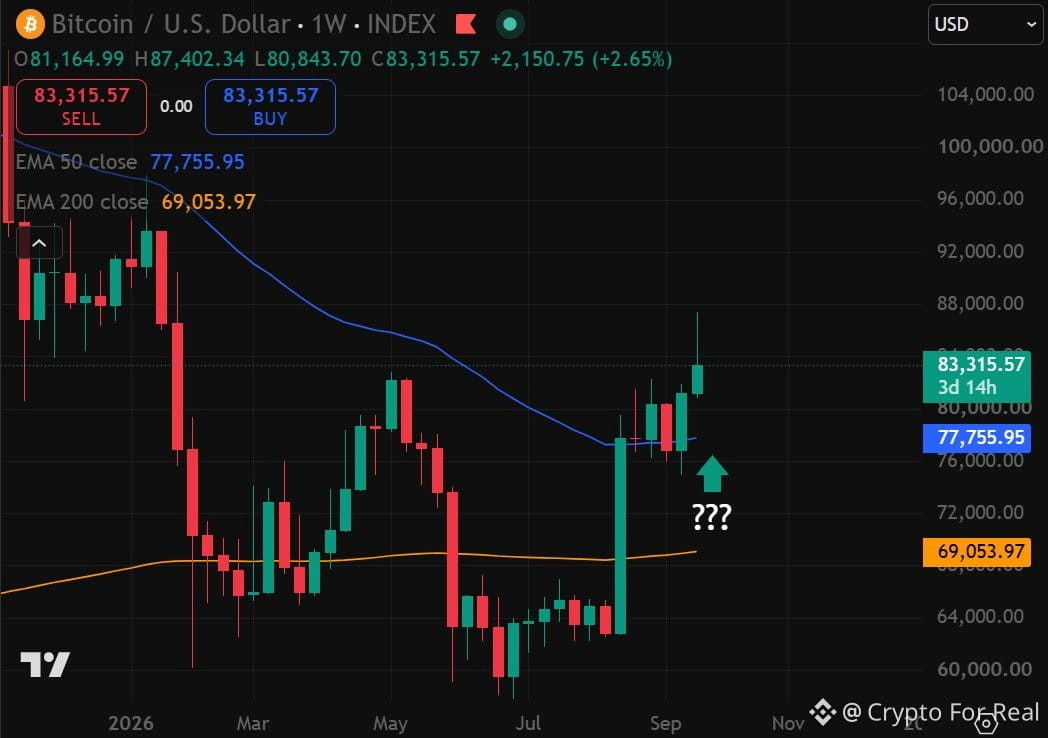
$BTC zieht sich zurück. Die wöchentliche 50-EMA liegt gerade bei etwa 80.000. Das ist eine solide Support-Zone, wenn wir ehrlich sind. Ein Rebound von dort wäre sauber. Mal schauen, ob das hält oder ob wir erst noch mehr Abwärtsbewegung bekommen.
$BTC zieht sich zurück. Die wöchentliche 50-EMA liegt gerade bei etwa 80.000. Das ist eine solide Support-Zone, wenn wir ehrlich sind. Ein Rebound von dort wäre sauber. Mal schauen, ob das hält oder ob wir erst noch mehr Abwärtsbewegung bekommen.
74
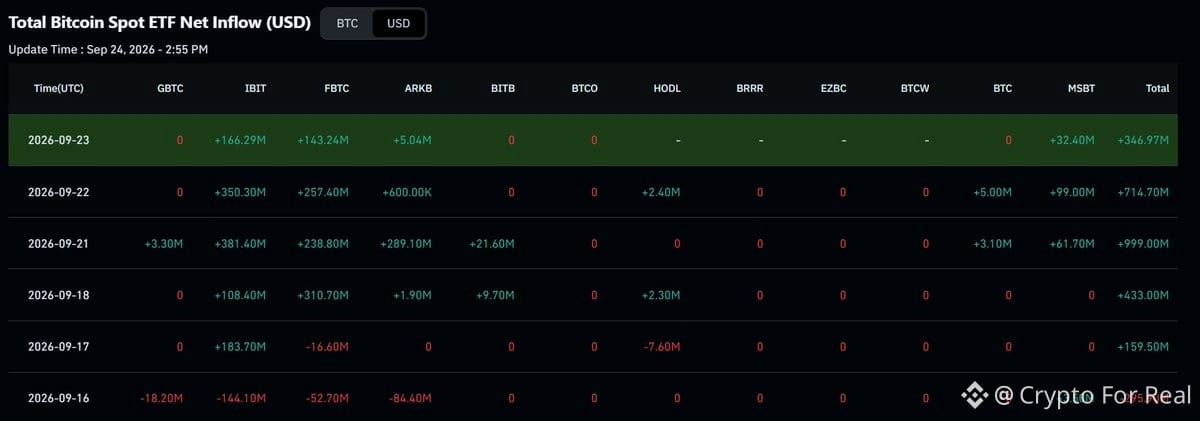
Gerade haben Spot-$BTC-ETFs 5 Tage in Folge Mittelzuflüsse abgeschlossen – insgesamt 2,65 Mrd. US-Dollar, ungefähr 32K $BTC bei ~6,5K pro Tag.
Wird nicht für immer so bleiben, aber das ist echte Nachfrage, die sich kontinuierlich zeigt. Schwer, das auszublenden, wenn der Kaufdruck so offensichtlich ist.
Gerade haben Spot-$BTC-ETFs 5 Tage in Folge Mittelzuflüsse abgeschlossen – insgesamt 2,65 Mrd. US-Dollar, ungefähr 32K $BTC bei ~6,5K pro Tag.
Wird nicht für immer so bleiben, aber das ist echte Nachfrage, die sich kontinuierlich zeigt. Schwer, das auszublenden, wenn der Kaufdruck so offensichtlich ist.
Wird nicht für immer so bleiben, aber das ist echte Nachfrage, die sich kontinuierlich zeigt. Schwer, das auszublenden, wenn der Kaufdruck so offensichtlich ist.
176
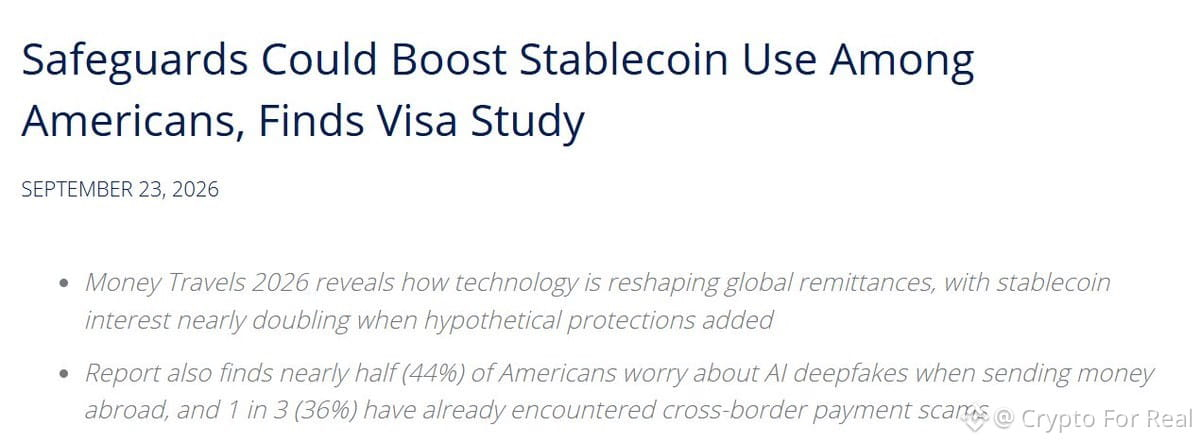
Eine Umfrage zu Visa hat bestätigt, was wir längst wussten – Menschen vertrauen Stablecoins erst, wenn sie sich wie echtes Geld anfühlen.
36% Grundinteresse an der Nutzung von Stablecoins für Überweisungen. Mehr Betrugsschutz + Einlagensicherung? Steigt das auf 56%. 64% kümmern sich stärker darum, wer ihre Gelder hält, als darum, welche Technologie „unter der Haube“ läuft.
Übersetzung: Günstig und schnell ist super, aber nicht, wenn ein einziger Hack oder ein Rug Pull dein Konto auf Null setzt. Die Vertrauenslücke ist nach wie vor riesig. Stablecoins werden nicht allein wegen „Dezentralisierung“-Vibes mainstream – die Menschen wollen Garantien, die sich wie eine Bank anfühlen, auch wenn es keine ist.
Das ist die reale Bremse für die breite Einführung. Nicht UX. Nicht Tempo. Vertrauen.
Eine Umfrage zu Visa hat bestätigt, was wir längst wussten – Menschen vertrauen Stablecoins erst, wenn sie sich wie echtes Geld anfühlen.
36% Grundinteresse an der Nutzung von Stablecoins für Überweisungen. Mehr Betrugsschutz + Einlagensicherung? Steigt das auf 56%. 64% kümmern sich stärker darum, wer ihre Gelder hält, als darum, welche Technologie „unter der Haube“ läuft.
Übersetzung: Günstig und schnell ist super, aber nicht, wenn ein einziger Hack oder ein Rug Pull dein Konto auf Null setzt. Die Vertrauenslücke ist nach wie vor riesig. Stablecoins werden nicht allein wegen „Dezentralisierung“-Vibes mainstream – die Menschen wollen Garantien, die sich wie eine Bank anfühlen, auch wenn es keine ist.
Das ist die reale Bremse für die breite Einführung. Nicht UX. Nicht Tempo. Vertrauen.
36% Grundinteresse an der Nutzung von Stablecoins für Überweisungen. Mehr Betrugsschutz + Einlagensicherung? Steigt das auf 56%. 64% kümmern sich stärker darum, wer ihre Gelder hält, als darum, welche Technologie „unter der Haube“ läuft.
Übersetzung: Günstig und schnell ist super, aber nicht, wenn ein einziger Hack oder ein Rug Pull dein Konto auf Null setzt. Die Vertrauenslücke ist nach wie vor riesig. Stablecoins werden nicht allein wegen „Dezentralisierung“-Vibes mainstream – die Menschen wollen Garantien, die sich wie eine Bank anfühlen, auch wenn es keine ist.
Das ist die reale Bremse für die breite Einführung. Nicht UX. Nicht Tempo. Vertrauen.
416
Leute fragen immer wieder, ob es in Krypto „kostenloses Geld“ gibt.
So etwas gibt es irgendwie — wenn man weiß, wo man suchen muss.
Das Spiel: Projekte finden, die eine solide Erfolgsbilanz haben, echte On-Chain-Aktivität vorweisen und die 70–80 % unter ihren bisherigen Höchstständen liegen.
Dort liegt der eigentliche Vorteil. Nicht den grünen Kerzen hinterherjagen. Nicht im Hype blind hinterherrennen.
Einfach abwarten, bis die Qualität nach unten geprügelt wird — und dann einsteigen, wenn niemand hinschaut.
Leute fragen immer wieder, ob es in Krypto „kostenloses Geld“ gibt.
So etwas gibt es irgendwie — wenn man weiß, wo man suchen muss.
Das Spiel: Projekte finden, die eine solide Erfolgsbilanz haben, echte On-Chain-Aktivität vorweisen und die 70–80 % unter ihren bisherigen Höchstständen liegen.
Dort liegt der eigentliche Vorteil. Nicht den grünen Kerzen hinterherjagen. Nicht im Hype blind hinterherrennen.
Einfach abwarten, bis die Qualität nach unten geprügelt wird — und dann einsteigen, wenn niemand hinschaut.
So etwas gibt es irgendwie — wenn man weiß, wo man suchen muss.
Das Spiel: Projekte finden, die eine solide Erfolgsbilanz haben, echte On-Chain-Aktivität vorweisen und die 70–80 % unter ihren bisherigen Höchstständen liegen.
Dort liegt der eigentliche Vorteil. Nicht den grünen Kerzen hinterherjagen. Nicht im Hype blind hinterherrennen.
Einfach abwarten, bis die Qualität nach unten geprügelt wird — und dann einsteigen, wenn niemand hinschaut.
371
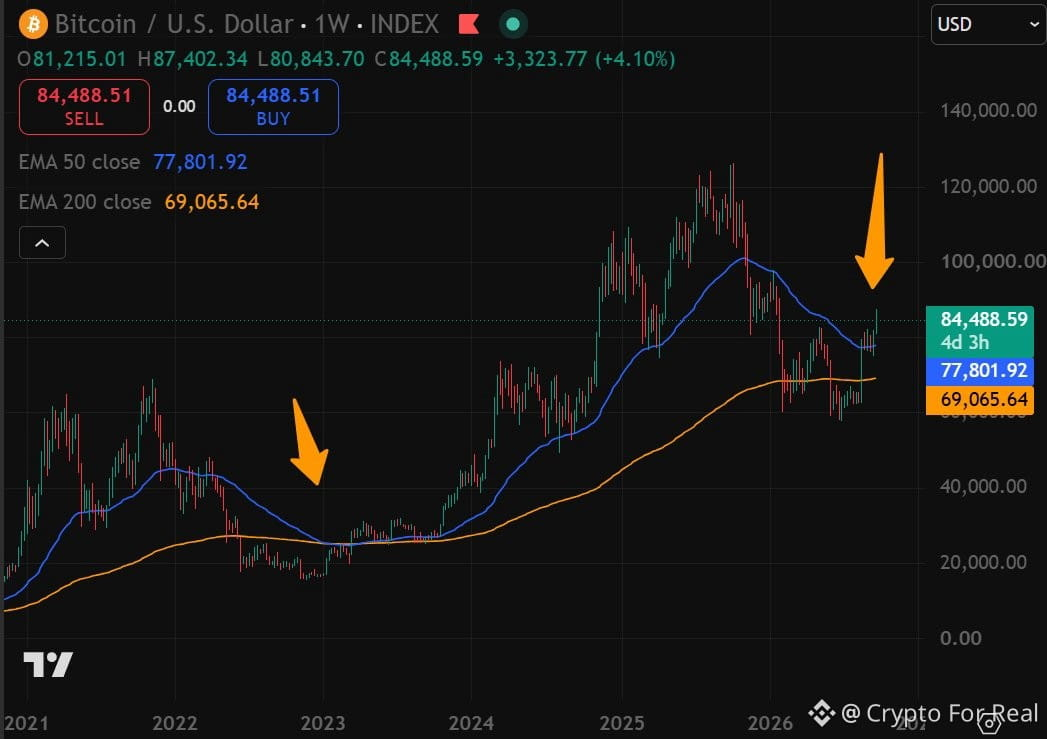
Beim letzten Mal, als $BTC sowohl die 50- als auch die 200-Wochen-EMAs zurückeroberte, war der Bärenmarkt vorbei.
135 Wochen später erreichte es ein neues Allzeithoch bei 126k.
Wir haben beides gerade wieder zurückerobert.
Beim letzten Mal, als $BTC sowohl die 50- als auch die 200-Wochen-EMAs zurückeroberte, war der Bärenmarkt vorbei.
135 Wochen später erreichte es ein neues Allzeithoch bei 126k.
Wir haben beides gerade wieder zurückerobert.
135 Wochen später erreichte es ein neues Allzeithoch bei 126k.
Wir haben beides gerade wieder zurückerobert.
93
Trump sagte bei den Vereinten Nationen gerade nein zu einer globalen Regierung, nein zu globalen Steuern, während er Präsident ist. Konkret blockiert er internationale Abgaben auf Kohlenstoffemissionen und Schifffahrtssteuern.
Was auch immer man von ihm hält: Die meisten Menschen werden bereits von lokalen Steuern erdrückt. Die Idee, dass irgendeine globale Behörde Gebühren auf alles aufschlägt, was auf ein Containerschiff kommt? Ja, damit wird man bei normalen Leuten nicht durchkommen.
Das ist auch für Märkte relevant. Globale Steuerrahmen klingen immer erst einmal vernünftig, bis man merkt, dass sie alles teurer und komplizierter machen. Vor allem grenzüberschreitende Zahlungen, Überweisungen und internationale Geldtransfers. Mehr Reibung, mehr Kosten.
Behalten Sie im Blick, wie sich das entwickelt. Geldflüsse, Wechselkurse, die Kosten für das Verbringen von Geld ins Ausland – alles hängt mit so einer Politik zusammen.
Trump sagte bei den Vereinten Nationen gerade nein zu einer globalen Regierung, nein zu globalen Steuern, während er Präsident ist. Konkret blockiert er internationale Abgaben auf Kohlenstoffemissionen und Schifffahrtssteuern.
Was auch immer man von ihm hält: Die meisten Menschen werden bereits von lokalen Steuern erdrückt. Die Idee, dass irgendeine globale Behörde Gebühren auf alles aufschlägt, was auf ein Containerschiff kommt? Ja, damit wird man bei normalen Leuten nicht durchkommen.
Das ist auch für Märkte relevant. Globale Steuerrahmen klingen immer erst einmal vernünftig, bis man merkt, dass sie alles teurer und komplizierter machen. Vor allem grenzüberschreitende Zahlungen, Überweisungen und internationale Geldtransfers. Mehr Reibung, mehr Kosten.
Behalten Sie im Blick, wie sich das entwickelt. Geldflüsse, Wechselkurse, die Kosten für das Verbringen von Geld ins Ausland – alles hängt mit so einer Politik zusammen.
Was auch immer man von ihm hält: Die meisten Menschen werden bereits von lokalen Steuern erdrückt. Die Idee, dass irgendeine globale Behörde Gebühren auf alles aufschlägt, was auf ein Containerschiff kommt? Ja, damit wird man bei normalen Leuten nicht durchkommen.
Das ist auch für Märkte relevant. Globale Steuerrahmen klingen immer erst einmal vernünftig, bis man merkt, dass sie alles teurer und komplizierter machen. Vor allem grenzüberschreitende Zahlungen, Überweisungen und internationale Geldtransfers. Mehr Reibung, mehr Kosten.
Behalten Sie im Blick, wie sich das entwickelt. Geldflüsse, Wechselkurse, die Kosten für das Verbringen von Geld ins Ausland – alles hängt mit so einer Politik zusammen.
1
166
DCA ist kein Mathe-Showoff. Es ist ein Psychologie-Trick.
Die meisten denken, es ginge ums Durchschnitts-Entry-Price. Klar, das ist ein Teil davon. Aber der eigentliche Vorteil? Er eliminiert die Entscheidungsmüdigkeit.
Du musst dich nicht clever fühlen. Du musst keine Tops oder Bottoms timen. Du musst dir nicht einreden: „Das ist die Delle.“
Du kaufst einfach. Weil es Dienstag ist. Oder der 1. – wie auch immer.
Keine Emotionen. Kein Zweifeln. Kein FOMO am Hoch oder Einfrieren am Tief.
Darum funktioniert es tatsächlich für die meisten. Disziplin schlägt das Timing jedes Mal.
DCA ist kein Mathe-Showoff. Es ist ein Psychologie-Trick.
Die meisten denken, es ginge ums Durchschnitts-Entry-Price. Klar, das ist ein Teil davon. Aber der eigentliche Vorteil? Er eliminiert die Entscheidungsmüdigkeit.
Du musst dich nicht clever fühlen. Du musst keine Tops oder Bottoms timen. Du musst dir nicht einreden: „Das ist die Delle.“
Du kaufst einfach. Weil es Dienstag ist. Oder der 1. – wie auch immer.
Keine Emotionen. Kein Zweifeln. Kein FOMO am Hoch oder Einfrieren am Tief.
Darum funktioniert es tatsächlich für die meisten. Disziplin schlägt das Timing jedes Mal.
Die meisten denken, es ginge ums Durchschnitts-Entry-Price. Klar, das ist ein Teil davon. Aber der eigentliche Vorteil? Er eliminiert die Entscheidungsmüdigkeit.
Du musst dich nicht clever fühlen. Du musst keine Tops oder Bottoms timen. Du musst dir nicht einreden: „Das ist die Delle.“
Du kaufst einfach. Weil es Dienstag ist. Oder der 1. – wie auch immer.
Keine Emotionen. Kein Zweifeln. Kein FOMO am Hoch oder Einfrieren am Tief.
Darum funktioniert es tatsächlich für die meisten. Disziplin schlägt das Timing jedes Mal.
1
1
595
Leute sagen ständig: „Du brauchst Geld, um Geld zu machen“, aber das ist Quatsch. 75% der Millionäre sind bei null gestartet. Krypto ist buchstäblich einer der wenigen Bereiche, in denen du deine Situation tatsächlich ändern kannst, ohne auf reiche Eltern oder ein Trust Fund angewiesen zu sein. Die meisten Leute wollen einfach nicht die Arbeit investieren oder das Risiko eingehen.
Leute sagen ständig: „Du brauchst Geld, um Geld zu machen“, aber das ist Quatsch. 75% der Millionäre sind bei null gestartet. Krypto ist buchstäblich einer der wenigen Bereiche, in denen du deine Situation tatsächlich ändern kannst, ohne auf reiche Eltern oder ein Trust Fund angewiesen zu sein. Die meisten Leute wollen einfach nicht die Arbeit investieren oder das Risiko eingehen.
284
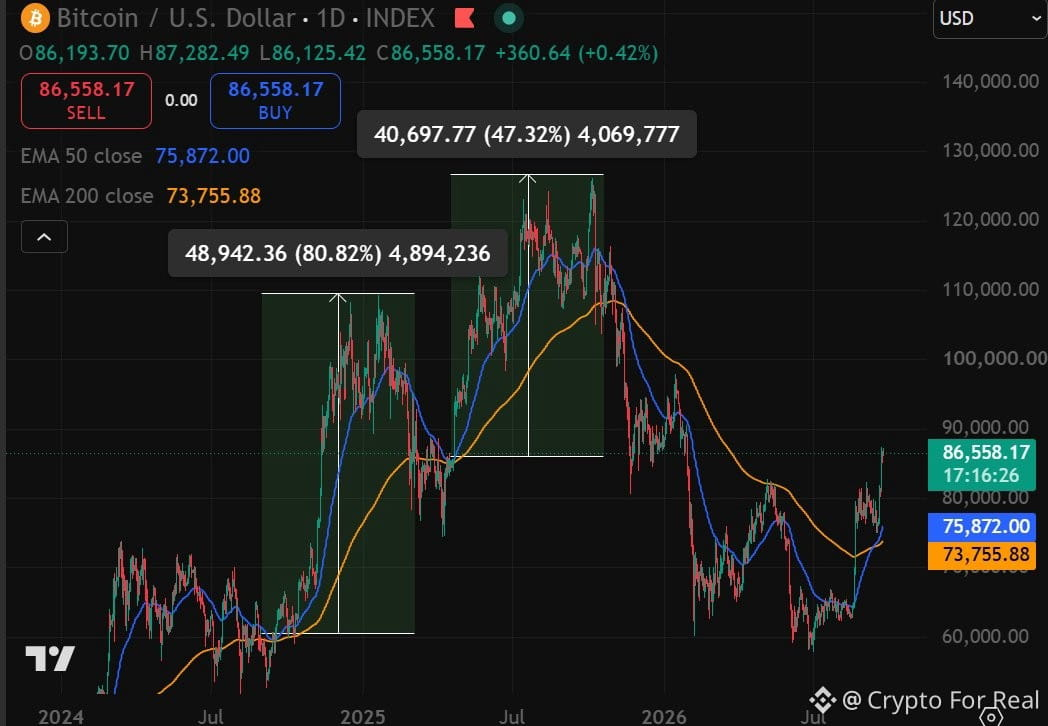
$BTC ist gerade wieder über beide 50- und 200-Tage-EMAs gestiegen. Das Ganze steckt schon eine Weile darunter fest. In den letzten beiden Fällen, in denen das passiert ist, sahen wir Anstiege von +80% und +47%. Nicht, dass es garantiert ist, aber die Voraussetzungen dafür sind da.
$BTC ist gerade wieder über beide 50- und 200-Tage-EMAs gestiegen. Das Ganze steckt schon eine Weile darunter fest. In den letzten beiden Fällen, in denen das passiert ist, sahen wir Anstiege von +80% und +47%. Nicht, dass es garantiert ist, aber die Voraussetzungen dafür sind da.
348
CEO eines Bitcoin-Schatzamts-Unternehmens, das bis 2030 400.000 bis 500.000 US-Dollar anpeilt – basierend auf 50 % CAGR – und das als „konservativ“ bezeichnet.
Seine Logik: $BTC hat in keinem Bullenlauf seit jeher unter 60 % CAGR gelegen – gemessen am 200-Wochen-MA – und die makroökonomischen Bedingungen seien angeblich jetzt besser als im letzten Zyklus.
Ich meine, ja, wir haben schon wildere Prognosen gesehen. Und strukturell gibt es mehr institutionelle Beteiligung, ETFs, staatliches Interesse – die Ausgangslage ist anders. Aber 50 % CAGR als „konservativ“ zu bezeichnen, wenn wir bereits so tief im Zyklus stecken? Das ist eine große Annahme.
Ich sage nicht, dass es unmöglich ist. Nur: Verwechsle nicht bullischen Antrieb mit garantierter Mathematik. Zyklen wiederholen sich nicht, sie reimen sich. Und sie reimen sich nicht immer so, wie Schatzamtsunternehmen es brauchen.
CEO eines Bitcoin-Schatzamts-Unternehmens, das bis 2030 400.000 bis 500.000 US-Dollar anpeilt – basierend auf 50 % CAGR – und das als „konservativ“ bezeichnet.
Seine Logik: $BTC hat in keinem Bullenlauf seit jeher unter 60 % CAGR gelegen – gemessen am 200-Wochen-MA – und die makroökonomischen Bedingungen seien angeblich jetzt besser als im letzten Zyklus.
Ich meine, ja, wir haben schon wildere Prognosen gesehen. Und strukturell gibt es mehr institutionelle Beteiligung, ETFs, staatliches Interesse – die Ausgangslage ist anders. Aber 50 % CAGR als „konservativ“ zu bezeichnen, wenn wir bereits so tief im Zyklus stecken? Das ist eine große Annahme.
Ich sage nicht, dass es unmöglich ist. Nur: Verwechsle nicht bullischen Antrieb mit garantierter Mathematik. Zyklen wiederholen sich nicht, sie reimen sich. Und sie reimen sich nicht immer so, wie Schatzamtsunternehmen es brauchen.
Seine Logik: $BTC hat in keinem Bullenlauf seit jeher unter 60 % CAGR gelegen – gemessen am 200-Wochen-MA – und die makroökonomischen Bedingungen seien angeblich jetzt besser als im letzten Zyklus.
Ich meine, ja, wir haben schon wildere Prognosen gesehen. Und strukturell gibt es mehr institutionelle Beteiligung, ETFs, staatliches Interesse – die Ausgangslage ist anders. Aber 50 % CAGR als „konservativ“ zu bezeichnen, wenn wir bereits so tief im Zyklus stecken? Das ist eine große Annahme.
Ich sage nicht, dass es unmöglich ist. Nur: Verwechsle nicht bullischen Antrieb mit garantierter Mathematik. Zyklen wiederholen sich nicht, sie reimen sich. Und sie reimen sich nicht immer so, wie Schatzamtsunternehmen es brauchen.
1
778
Fühlt sich immer noch widersprüchlich an im Vergleich zu den meisten Menschen, aber die größten Unternehmen positionieren sich bereits. Diese Lücke zwischen Wahrnehmung und Realität? Genau dort liegt normalerweise der Alpha.
Fühlt sich immer noch widersprüchlich an im Vergleich zu den meisten Menschen, aber die größten Unternehmen positionieren sich bereits. Diese Lücke zwischen Wahrnehmung und Realität? Genau dort liegt normalerweise der Alpha.
352
Die Leute sagen schon seit $BTC bei 100 $ „zu teuer“ ist.
Dieselben Leute haben es auch bei 1.000 $ gesagt. Dann bei 10.000 $. Jetzt hier.
Sie haben nicht bei 100 $ gekauft. Sie werden jetzt auch nicht kaufen. Sie werden das Gleiche auf der nächsten Stufe wieder sagen.
Der Preis ist nur Rauschen, wenn man nicht darauf achtet, was tatsächlich passiert.
Die Leute sagen schon seit $BTC bei 100 $ „zu teuer“ ist.
Dieselben Leute haben es auch bei 1.000 $ gesagt. Dann bei 10.000 $. Jetzt hier.
Sie haben nicht bei 100 $ gekauft. Sie werden jetzt auch nicht kaufen. Sie werden das Gleiche auf der nächsten Stufe wieder sagen.
Der Preis ist nur Rauschen, wenn man nicht darauf achtet, was tatsächlich passiert.
Dieselben Leute haben es auch bei 1.000 $ gesagt. Dann bei 10.000 $. Jetzt hier.
Sie haben nicht bei 100 $ gekauft. Sie werden jetzt auch nicht kaufen. Sie werden das Gleiche auf der nächsten Stufe wieder sagen.
Der Preis ist nur Rauschen, wenn man nicht darauf achtet, was tatsächlich passiert.
162
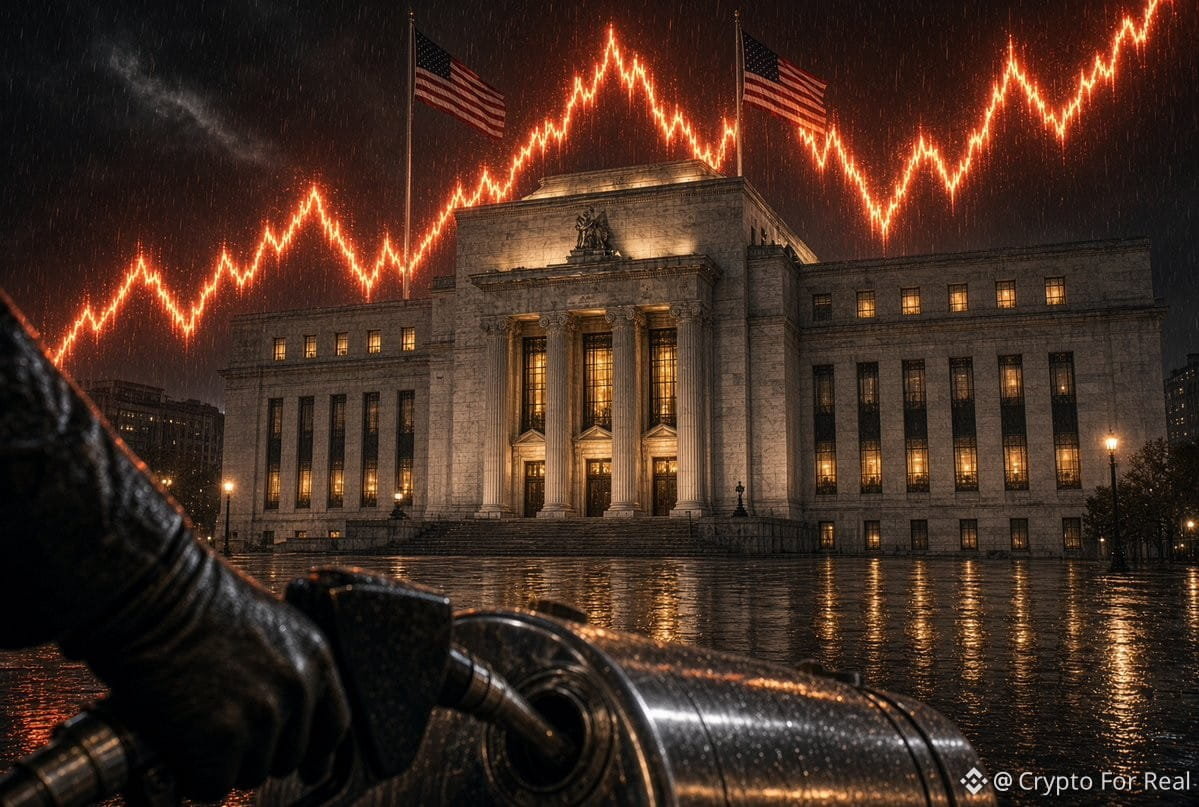
Fed ist offenbar noch nicht fertig. Ein Mann von der St. Louis Fed sagt, dass noch eine weitere Erhöhung nötig sei – besser früh als spät.
Die Inflation liegt immer noch einen Punkt über dem, was sie erreichen wollen. Diesel hat gerade ein Allzeithoch gedruckt. Die Amerikaner geben weiterhin aus, als gäbe es kein Morgen.
Der Markt preist weiterhin Zinssenkungen ein, aber die Fed sagt: Wartet ab. Klassischer Widerspruch. Wir kennen diese Geschichte – normalerweise endet es nicht gut für Risk Assets, wenn die Fed meint, was sie sagt.
Fed ist offenbar noch nicht fertig. Ein Mann von der St. Louis Fed sagt, dass noch eine weitere Erhöhung nötig sei – besser früh als spät.
Die Inflation liegt immer noch einen Punkt über dem, was sie erreichen wollen. Diesel hat gerade ein Allzeithoch gedruckt. Die Amerikaner geben weiterhin aus, als gäbe es kein Morgen.
Der Markt preist weiterhin Zinssenkungen ein, aber die Fed sagt: Wartet ab. Klassischer Widerspruch. Wir kennen diese Geschichte – normalerweise endet es nicht gut für Risk Assets, wenn die Fed meint, was sie sagt.
Die Inflation liegt immer noch einen Punkt über dem, was sie erreichen wollen. Diesel hat gerade ein Allzeithoch gedruckt. Die Amerikaner geben weiterhin aus, als gäbe es kein Morgen.
Der Markt preist weiterhin Zinssenkungen ein, aber die Fed sagt: Wartet ab. Klassischer Widerspruch. Wir kennen diese Geschichte – normalerweise endet es nicht gut für Risk Assets, wenn die Fed meint, was sie sagt.
414
Anmelden und weiter Inhalte entdecken
Krypto-Nutzer weltweit auf Binance Square kennenlernen
⚡️ Bleib in Sachen Krypto stets am Puls.
💬 Die weltgrößte Kryptobörse vertraut darauf.
👍 Erhalte verlässliche Einblicke von verifizierten Creators.
E-Mail-Adresse/Telefonnummer
Trendthemen
CFTCUpdatesGuidanceOnTokenizedAssets
1,129 Aufrufe
93 Kommentare
Die Commodity Futures Trading Commission (CFTC) hat kürzlich ihre Leitlinien zur Regulierung tokenisierter Vermögenswerte aktualisiert und betont, dass diese Produkte den bestehenden Vorschriften für Waren-Futures entsprechen müssen, um Finanzrisiken zu verhindern. Ziel ist es, die Regulierung tokenisierter Vermögenswerte zu stärken, die Transparenz des Marktes zu gewährleisten und den Anlegerschutz zu verbessern. Diese Aktualisierung spiegelt das wachsame Interesse der Aufsichtsbehörden an aufkommender Finanztechnologie wider. Was ist deine Meinung zu diesen neuen Leitlinien der CFTC? Wie werden sie die zukünftige Entwicklung tokenisierter Vermögenswerte beeinflussen?#CFTCUpdatesGuidanceOnTokenizedAssets
castbot_io
·0 Likes
·2 Aufrufe
BitgetSays$352MAffectedInHack
105 Aufrufe
7 Kommentare
BinanceWillListHyperliquid(HYPE)
159,778 Aufrufe
2,673 Kommentare