
Crypto Breaking
20.7k Beiträge

Crypto Breaking
 Square Verified+
Melden
Nutzer blockieren
Get real-time cryptocurrency news, blockchain updates, market analysis, and expert insights. Explore the latest trends in Bitcoin, Ethereum, DeFi, and Web3.
6 Following
32.9K+ Follower
31.7K+ Like gegeben
Beiträge
Alle
Zitierungen
Artikel
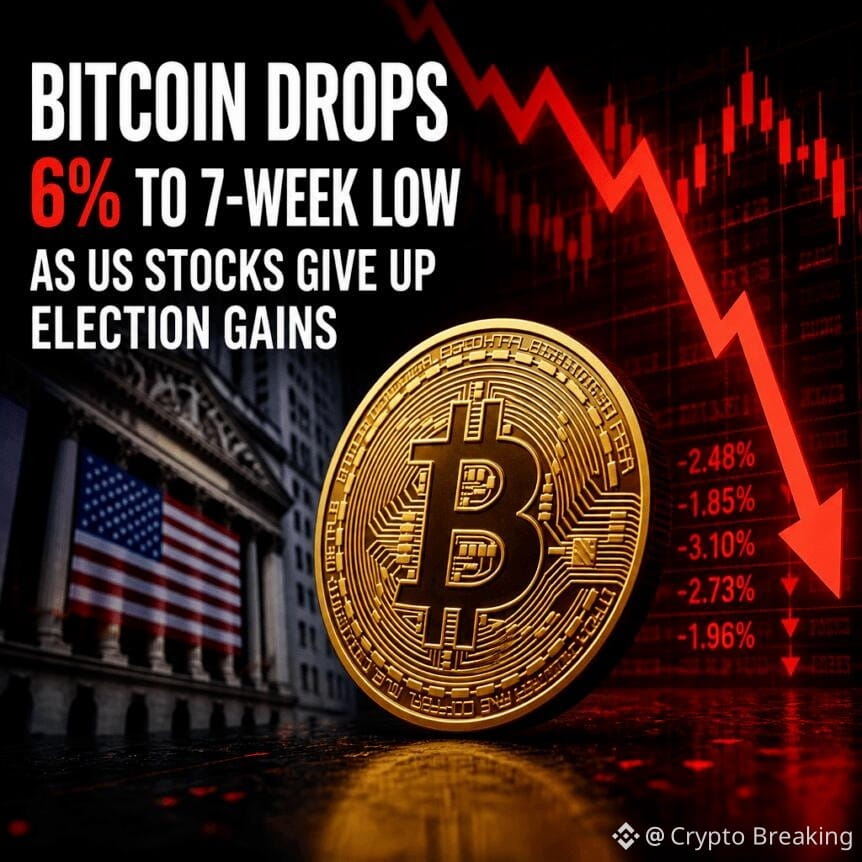
Bitcoin fällt um 6 % auf ein 7-Wochen-Tief, während US-Aktien ihre Wahlgewinne abgebenBitcoin fiel am Donnerstag unter 76.000 US-Dollar und setzte damit eine deutliche Abkehr von risikoreichen Anlagen fort, nachdem eine durch die Zwischenwahlen ausgelöste Aktienrallye ins Stocken geraten war. BTC/USD sank auf Bitstamp zeitweise auf 75.463 US-Dollar – den niedrigsten Stand seit dem 16. September –, als sich der Verkaufsdruck auf die Aktienmärkte ausweitete, insbesondere auf den Technologiesektor.
Die Bewegung setzte auch eine weithin beachtete technische Marke unter Druck: Während des Ausverkaufs fiel BTC/USD kurzzeitig unter seinen 50-Wochen-Durchschnitt (SMA) von etwa 75.733 US-Dollar. Da parallel zum Kursrückgang vermehrt Positionen liquidiert wurden, konzentrieren sich die Händler nun darauf, ob diese langfristige Trendlinie hält.
Bitcoin fällt um 6 % auf ein 7-Wochen-Tief, während US-Aktien ihre Wahlgewinne abgeben
Bitcoin fiel am Donnerstag unter 76.000 US-Dollar und setzte damit eine deutliche Abkehr von risikoreichen Anlagen fort, nachdem eine durch die Zwischenwahlen ausgelöste Aktienrallye ins Stocken geraten war. BTC/USD sank auf Bitstamp zeitweise auf 75.463 US-Dollar – den niedrigsten Stand seit dem 16. September –, als sich der Verkaufsdruck auf die Aktienmärkte ausweitete, insbesondere auf den Technologiesektor.
Die Bewegung setzte auch eine weithin beachtete technische Marke unter Druck: Während des Ausverkaufs fiel BTC/USD kurzzeitig unter seinen 50-Wochen-Durchschnitt (SMA) von etwa 75.733 US-Dollar. Da parallel zum Kursrückgang vermehrt Positionen liquidiert wurden, konzentrieren sich die Händler nun darauf, ob diese langfristige Trendlinie hält.
Die Bewegung setzte auch eine weithin beachtete technische Marke unter Druck: Während des Ausverkaufs fiel BTC/USD kurzzeitig unter seinen 50-Wochen-Durchschnitt (SMA) von etwa 75.733 US-Dollar. Da parallel zum Kursrückgang vermehrt Positionen liquidiert wurden, konzentrieren sich die Händler nun darauf, ob diese langfristige Trendlinie hält.
34

Artikel
Thailand sperrt Bitget ab Dezember wegen nicht lizenzierten KryptohandelsDie thailändische Wertpapieraufsicht hat ihr Vorgehen gegen nicht lizenzierte Kryptohandel ausgeweitet und eine Strafanzeige gegen BG Limited eingereicht, das Unternehmen hinter der Börse Bitget. Nach Angaben der thailändischen SEC war Bitget in Thailand tätig, ohne die Lizenzvorschriften des Landes einzuhalten. Dies hat rechtliche Schritte und eine bevorstehende Zugangssperre zur Folge.
In einer am Donnerstag veröffentlichten Mitteilung erklärte die thailändische Wertpapier- und Börsenaufsichtsbehörde (SEC), sie habe das Ministerium für digitale Wirtschaft und Gesellschaft angewiesen, den Zugang zu Bitget ab dem 5. Dezember zu sperren. Die Sperre soll die Website von Bitget, zugehörige Domains und die mobile App umfassen. Die Aufsichtsbehörde forderte Nutzer auf, ihre auf der Plattform gehaltenen Krypto-Assets vor Ablauf der Frist zu überprüfen und zu verwalten.
Thailand sperrt Bitget ab Dezember wegen nicht lizenzierten Kryptohandels
Die thailändische Wertpapieraufsicht hat ihr Vorgehen gegen nicht lizenzierte Kryptohandel ausgeweitet und eine Strafanzeige gegen BG Limited eingereicht, das Unternehmen hinter der Börse Bitget. Nach Angaben der thailändischen SEC war Bitget in Thailand tätig, ohne die Lizenzvorschriften des Landes einzuhalten. Dies hat rechtliche Schritte und eine bevorstehende Zugangssperre zur Folge.
In einer am Donnerstag veröffentlichten Mitteilung erklärte die thailändische Wertpapier- und Börsenaufsichtsbehörde (SEC), sie habe das Ministerium für digitale Wirtschaft und Gesellschaft angewiesen, den Zugang zu Bitget ab dem 5. Dezember zu sperren. Die Sperre soll die Website von Bitget, zugehörige Domains und die mobile App umfassen. Die Aufsichtsbehörde forderte Nutzer auf, ihre auf der Plattform gehaltenen Krypto-Assets vor Ablauf der Frist zu überprüfen und zu verwalten.
In einer am Donnerstag veröffentlichten Mitteilung erklärte die thailändische Wertpapier- und Börsenaufsichtsbehörde (SEC), sie habe das Ministerium für digitale Wirtschaft und Gesellschaft angewiesen, den Zugang zu Bitget ab dem 5. Dezember zu sperren. Die Sperre soll die Website von Bitget, zugehörige Domains und die mobile App umfassen. Die Aufsichtsbehörde forderte Nutzer auf, ihre auf der Plattform gehaltenen Krypto-Assets vor Ablauf der Frist zu überprüfen und zu verwalten.
39
Artikel
Übersetzung ansehen
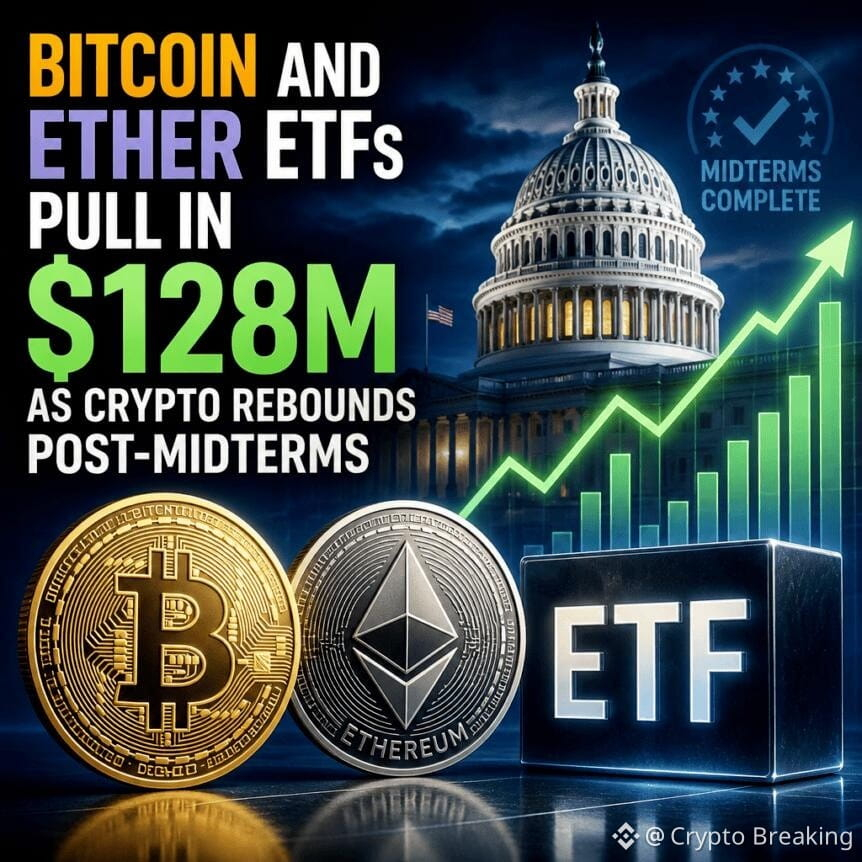
Bitcoin and Ether ETFs Pull in $128M as Crypto Rebounds Post-MidtermsUS-listed spot Bitcoin and Ether exchange-traded funds regained momentum on Wednesday after a brief thaw in broader risk sentiment tied to the outcome of the US midterm elections. Crypto markets rebounded alongside US equities following Democrats’ victories, helping flip ETF flows that had recently been dominated by withdrawals.
According to SoSoValue, Bitcoin spot ETFs pulled in $74.6 million on Wednesday and Ether spot ETFs added $53 million. The move interrupted Bitcoin ETF outflows from three straight sessions, when withdrawals totaled $1.16 billion, and it also ended Ether’s seven-day run of net outflows worth $657 million.
Key takeaways
SoSoValue data shows spot Bitcoin ETFs recorded $74.6 million of inflows on Wednesday after $1.16 billion in prior-session outflows.
Ether spot ETFs added $53 million, reversing a $657 million seven-day outflow streak, also per SoSoValue.
Bitcoin’s ETF inflow rebound coincided with a market-wide risk turn after the US midterms, while Bitcoin traded back above $80,000.
Not all fund flows improved: BlackRock’s iShares Bitcoin Trust (IBIT) continued to register outflows, extending its streak despite a broad recovery.
Farside Investors reported that BTC ETF net flows for 2026 narrowed to about $79 million after Wednesday’s inflow surge.
Bitcoin and Ether ETFs flip back to inflows
Wednesday’s ETF turn came after a period of pressure that had investors focused on the direction of institutional demand. Bitcoin fund flows had been negative across three consecutive trading days, while Ether saw prolonged outflows over the past week.
SoSoValue’s figures underscore the shift: Bitcoin spot ETFs attracted $74.6 million and Ether spot ETFs gained $53 million. The improvement also followed signs that withdrawals were moderating—Bitcoin outflows fell from $399 million on Monday to $116 million on Tuesday—before Wednesday brought a clearer reversal.
The broader market backdrop mattered as well. Earlier coverage from Cointelegraph noted that Bitcoin rebounded above $80,000 as US stocks rallied following Democrats’ midterm election victories, suggesting that macro sentiment played a meaningful role in short-term crypto positioning.
IBIT outflows persist even as the complex recovers
While the overall spot Bitcoin ETF complex saw inflows, fund-level data showed uneven participation. Farside Investors data cited by the article indicates that BlackRock’s iShares Bitcoin Trust (IBIT) recorded another $201.2 million in outflows on Wednesday, extending a four-session outflow streak to $935.2 million.
That contrast highlights an important nuance for readers tracking ETF flows: a rebound at the aggregate level does not necessarily mean every major vehicle is seeing demand return immediately. For traders and allocation-focused investors, differences across issuers can affect near-term liquidity and the timing of broader institutional re-engagement.
Against that backdrop, Fidelity’s Wise Origin Bitcoin Fund (FBTC) led inflows with roughly $237 million, helping offset ongoing selling pressure seen at IBIT. Farside Investors also reported that the latest day of inflows narrowed Bitcoin’s 2026 net outflows to around $79 million.
What analysts say about the election and liquidity
Analysts caution that election-driven narratives may be overplayed when explaining day-to-day moves in Bitcoin. James Butterfill, head of research at digital asset manager CoinShares, said Bitcoin had largely priced in the likelihood of a Democratic sweep before the election. In that view, the subsequent price strength was more plausibly a relief reaction as uncertainty eased rather than a direct endorsement of any particular political outcome.
Butterfill added a practical warning for investors: it’s easy to attribute too much of Bitcoin’s performance to the election itself, when other drivers may be doing more of the work.
CK Zheng, co-founder of ZX Squared Capital and former global head of risk at Credit Suisse, pointed instead to factors that often influence BTC’s price more consistently—monetary liquidity, institutional investment flows, and overall risk appetite. He also suggested that the market structure created by spot Bitcoin ETFs could both broaden demand and expose Bitcoin to institutional selling pressure, depending on how portfolio flows evolve.
Zheng’s framing matters because it helps explain why Wednesday’s rebound could occur alongside continued outflows at a major ETF like IBIT: even when sentiment improves, institutional positioning can remain fragmented across managers and mandates.
Why these flow patterns matter going forward
For investors, the key takeaway is not simply that inflows returned, but that flows are still uneven—at least across issuers and not uniformly across asset classes. Wednesday delivered broad stabilization for the ETF complex, yet IBIT’s continued withdrawals suggest that some institutions may still be reducing exposure even as others step in.
Going forward, readers should watch whether the inflow recovery holds for both Bitcoin and Ether—or whether Wednesday represents a short-lived relief rally that fades as macro and liquidity factors reassert themselves. ETF issuers’ next few daily prints will be particularly useful for gauging whether demand is strengthening at the institutional level or merely rotating within the ecosystem.
This article was originally published as Bitcoin and Ether ETFs Pull in $128M as Crypto Rebounds Post-Midterms on Crypto Breaking News – your trusted source for crypto news, Bitcoin news, and blockchain updates.
Bitcoin and Ether ETFs Pull in $128M as Crypto Rebounds Post-Midterms
US-listed spot Bitcoin and Ether exchange-traded funds regained momentum on Wednesday after a brief thaw in broader risk sentiment tied to the outcome of the US midterm elections. Crypto markets rebounded alongside US equities following Democrats’ victories, helping flip ETF flows that had recently been dominated by withdrawals.
According to SoSoValue, Bitcoin spot ETFs pulled in $74.6 million on Wednesday and Ether spot ETFs added $53 million. The move interrupted Bitcoin ETF outflows from three straight sessions, when withdrawals totaled $1.16 billion, and it also ended Ether’s seven-day run of net outflows worth $657 million.
Key takeaways
SoSoValue data shows spot Bitcoin ETFs recorded $74.6 million of inflows on Wednesday after $1.16 billion in prior-session outflows.
Ether spot ETFs added $53 million, reversing a $657 million seven-day outflow streak, also per SoSoValue.
Bitcoin’s ETF inflow rebound coincided with a market-wide risk turn after the US midterms, while Bitcoin traded back above $80,000.
Not all fund flows improved: BlackRock’s iShares Bitcoin Trust (IBIT) continued to register outflows, extending its streak despite a broad recovery.
Farside Investors reported that BTC ETF net flows for 2026 narrowed to about $79 million after Wednesday’s inflow surge.
Bitcoin and Ether ETFs flip back to inflows
Wednesday’s ETF turn came after a period of pressure that had investors focused on the direction of institutional demand. Bitcoin fund flows had been negative across three consecutive trading days, while Ether saw prolonged outflows over the past week.
SoSoValue’s figures underscore the shift: Bitcoin spot ETFs attracted $74.6 million and Ether spot ETFs gained $53 million. The improvement also followed signs that withdrawals were moderating—Bitcoin outflows fell from $399 million on Monday to $116 million on Tuesday—before Wednesday brought a clearer reversal.
The broader market backdrop mattered as well. Earlier coverage from Cointelegraph noted that Bitcoin rebounded above $80,000 as US stocks rallied following Democrats’ midterm election victories, suggesting that macro sentiment played a meaningful role in short-term crypto positioning.
IBIT outflows persist even as the complex recovers
While the overall spot Bitcoin ETF complex saw inflows, fund-level data showed uneven participation. Farside Investors data cited by the article indicates that BlackRock’s iShares Bitcoin Trust (IBIT) recorded another $201.2 million in outflows on Wednesday, extending a four-session outflow streak to $935.2 million.
That contrast highlights an important nuance for readers tracking ETF flows: a rebound at the aggregate level does not necessarily mean every major vehicle is seeing demand return immediately. For traders and allocation-focused investors, differences across issuers can affect near-term liquidity and the timing of broader institutional re-engagement.
Against that backdrop, Fidelity’s Wise Origin Bitcoin Fund (FBTC) led inflows with roughly $237 million, helping offset ongoing selling pressure seen at IBIT. Farside Investors also reported that the latest day of inflows narrowed Bitcoin’s 2026 net outflows to around $79 million.
What analysts say about the election and liquidity
Analysts caution that election-driven narratives may be overplayed when explaining day-to-day moves in Bitcoin. James Butterfill, head of research at digital asset manager CoinShares, said Bitcoin had largely priced in the likelihood of a Democratic sweep before the election. In that view, the subsequent price strength was more plausibly a relief reaction as uncertainty eased rather than a direct endorsement of any particular political outcome.
Butterfill added a practical warning for investors: it’s easy to attribute too much of Bitcoin’s performance to the election itself, when other drivers may be doing more of the work.
CK Zheng, co-founder of ZX Squared Capital and former global head of risk at Credit Suisse, pointed instead to factors that often influence BTC’s price more consistently—monetary liquidity, institutional investment flows, and overall risk appetite. He also suggested that the market structure created by spot Bitcoin ETFs could both broaden demand and expose Bitcoin to institutional selling pressure, depending on how portfolio flows evolve.
Zheng’s framing matters because it helps explain why Wednesday’s rebound could occur alongside continued outflows at a major ETF like IBIT: even when sentiment improves, institutional positioning can remain fragmented across managers and mandates.
Why these flow patterns matter going forward
For investors, the key takeaway is not simply that inflows returned, but that flows are still uneven—at least across issuers and not uniformly across asset classes. Wednesday delivered broad stabilization for the ETF complex, yet IBIT’s continued withdrawals suggest that some institutions may still be reducing exposure even as others step in.
Going forward, readers should watch whether the inflow recovery holds for both Bitcoin and Ether—or whether Wednesday represents a short-lived relief rally that fades as macro and liquidity factors reassert themselves. ETF issuers’ next few daily prints will be particularly useful for gauging whether demand is strengthening at the institutional level or merely rotating within the ecosystem.
This article was originally published as Bitcoin and Ether ETFs Pull in $128M as Crypto Rebounds Post-Midterms on Crypto Breaking News – your trusted source for crypto news, Bitcoin news, and blockchain updates.
68
Artikel
Übersetzung ansehen
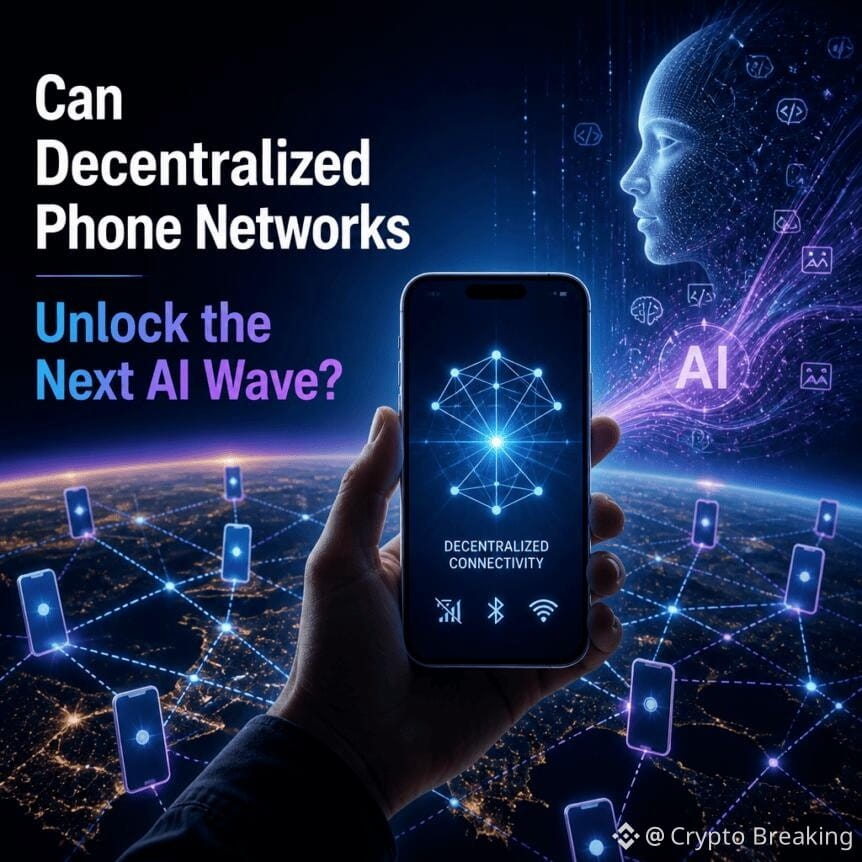
Can Decentralized Phone Networks Unlock the Next AI Wave?Global efforts to expand AI infrastructure are colliding with rising scrutiny over the energy, water, and capital required to build large data centers. Campaigners argue the environmental footprint is too high, while market participants point to the sheer cost of scaling centralized compute—such as the roughly $38 billion figure cited for constructing a one-gigawatt AI data center by Epoch AI’s data insights.
Against that backdrop, a different approach is gaining attention: networks that repurpose everyday smartphones as distributed compute and connectivity infrastructure. According to DataReportal, there were an estimated 7.68 billion mobile connections worldwide as of October 2026—leaving an enormous pool of idle hardware that could, in theory, be coordinated to serve AI workloads.
Key takeaways
Decentralized AI network designs aim to reduce reliance on energy- and capex-heavy data centers by using widely distributed smartphone hardware.
Acurast reports onboarding 335,000 smartphones, with about 40,000 active on an average day across tasks including AI inference and agent hosting.
Projects such as Phase Proxy target a practical deployment gap: web platforms that block or rate-limit traffic from data centers by routing through residential/mobile proxies.
Technical coordination is the core bottleneck—real-world phone networks vary in uptime, connectivity, thermal limits, and device specs.
Economics remain uncertain, with rewards models heavily dependent on uptime, staking or participation, and sustained customer demand.
Smartphones as an alternative compute layer
Decentralized AI networks are positioning mobile devices as a new infrastructure layer—one that trades centralized data center capacity for a globally distributed pool of phones with built-in processors, memory, and internet access.
Acurast is one of the more prominent examples. Co-founder Alessandro De Carli says the company has onboarded more than 335,000 smartphones, and that roughly 40,000 are fully active each day on average. He describes those active devices as contributing compute to workloads such as web scraping, cybersecurity tasks, AI inference, and agent hosting.
De Carli argues that phones can be especially effective for certain categories of work. He highlights hardware security features that, in his view, “excel” in confidential computing and creating isolated environments for installing and running executables. Smartphones may also suit “CPU intensive” workloads and scenarios requiring broad, unfiltered access to internet endpoints—settings where centralized servers can be constrained by rate limits or detection.
Memory limitations are acknowledged, but De Carli’s position is that many tasks can still be accommodated within the available device RAM. He further claims that aggregated compute from active phones can reach the equivalent capacity of about 2,340 high-end data-center servers, benchmarked against an ASUS RS720A-E11 server designed for AI and high-performance computing.
While those comparisons are persuasive as an engineering narrative, investors and operators should treat them as application-dependent. The real measure will be whether distributed phones can deliver consistent performance and reliability under production workloads—especially when the network must function like a predictable service rather than a research prototype.
Phase Proxy and the proxy problem for data-center traffic
Not all smartphone-driven networks are trying to run full AI models on-device immediately. Some begin by solving a different bottleneck: access and connectivity behavior on the public internet.
Phase launched Phase Proxy in October with a model focused on using users’ mobile and residential connections as proxies for AI agents. Founder Kirill Eves explains that websites frequently block or rate-limit automated traffic from data centers. By routing requests through mobile/residential networks, Phase aims to reduce those friction points for agent-driven tasks.
Eves outlines a pricing plan for the proxy service: 0.5 USDT per 1,000 requests and 1GB of traffic. The next component, Phase Router, is intended to direct simpler requests to models running on phones in the network, while routing more complex tasks to major external providers such as OpenAI and Anthropic. Routing decisions are described as depending on task complexity, model capability, performance, and cost.
Phase also signals an eventual expansion beyond phones to desktops, servers, and GPUs. For users, this matters because it suggests a hybrid architecture: mobile devices may cover particular gaps (like proxy access or localized distribution), while other hardware pools handle the heaviest inference and scaling demands.
Reliability and coordination: the practical obstacle
Turning idle devices into a dependable compute resource is far more difficult than proving that a device can run a workload in isolation. Coordinating a large number of heterogeneous smartphones—each subject to battery drain, overheating, fluctuating network conditions, and variable hardware specs—creates a reliability problem that centralized infrastructure typically avoids.
A 2025 study (published in Sensors) tested small groups of smartphones running image recognition tasks and found that clustered phones could perform competitively under controlled conditions. However, the results were generated in environments where devices were managed and not scattered across the world—an important difference when extrapolating to a live network.
Supporting evidence comes from research conducted via a Google-backed effort at the University of California, San Diego. That work reported that a cluster of 20 retired smartphones could handle the peak workload of a class of more than 75 students, with grading times faster than the university’s standard cloud setup. Again, the experiment involved devices organized in a controlled environment rather than connected through unpredictable real-world conditions.
In production settings, networks must contend with phones disconnecting, changing connectivity, running out of battery, or operating with mismatched compute and memory capacities. In blockchain systems such as Ethereum—cited in the source article—performance can also be constrained by communication latency and by the processing limits of the lowest-spec nodes. For smartphone networks, the scheduling challenge is amplified: distributing subtasks across independent devices can fail if even a small share of the devices lag, disconnect, or become unavailable.
Who pays, and how rewards scale
Even if coordination and reliability issues can be engineered down, smartphone-based networks must still make economic sense for both customers and device operators.
De Carli says Acurast does not rely on a single fixed reward number. Instead, rewards are described as varying based on factors such as device uptime, hardware specifications (benchmark performance), total ACU staked, and active compute demand from developers. He characterizes the system as competing for an inflation-funded rewards pool rather than charging developers in a way that directly maps to individual operator payouts.
Phase’s reward structure is framed differently. Eves says Phase will use part of its service revenue to buy PHASE on the open market, then distribute tokens to node operators according to their contributions.
Both approaches point to the same practical truth: running AI compute on a phone is no longer the only hard part. The bigger difficulty is building incentives and operational mechanisms that keep tens of thousands of devices participating reliably, while ensuring that customer demand stays strong enough to sustain payouts and network usage.
As these projects evolve, the most useful signal for the market may not be token metrics or node counts, but whether the networks consistently deliver services that users will pay to maintain—at performance levels that are stable enough to replace or complement centralized infrastructure.
For now, investors and builders should watch how these networks handle three questions in the real world: sustained uptime under unpredictable conditions, cost-effectiveness relative to conventional providers, and reward models that can endure beyond early adoption without degrading reliability.
This article was originally published as Can Decentralized Phone Networks Unlock the Next AI Wave? on Crypto Breaking News – your trusted source for crypto news, Bitcoin news, and blockchain updates.
Can Decentralized Phone Networks Unlock the Next AI Wave?
Global efforts to expand AI infrastructure are colliding with rising scrutiny over the energy, water, and capital required to build large data centers. Campaigners argue the environmental footprint is too high, while market participants point to the sheer cost of scaling centralized compute—such as the roughly $38 billion figure cited for constructing a one-gigawatt AI data center by Epoch AI’s data insights.
Against that backdrop, a different approach is gaining attention: networks that repurpose everyday smartphones as distributed compute and connectivity infrastructure. According to DataReportal, there were an estimated 7.68 billion mobile connections worldwide as of October 2026—leaving an enormous pool of idle hardware that could, in theory, be coordinated to serve AI workloads.
Key takeaways
Decentralized AI network designs aim to reduce reliance on energy- and capex-heavy data centers by using widely distributed smartphone hardware.
Acurast reports onboarding 335,000 smartphones, with about 40,000 active on an average day across tasks including AI inference and agent hosting.
Projects such as Phase Proxy target a practical deployment gap: web platforms that block or rate-limit traffic from data centers by routing through residential/mobile proxies.
Technical coordination is the core bottleneck—real-world phone networks vary in uptime, connectivity, thermal limits, and device specs.
Economics remain uncertain, with rewards models heavily dependent on uptime, staking or participation, and sustained customer demand.
Smartphones as an alternative compute layer
Decentralized AI networks are positioning mobile devices as a new infrastructure layer—one that trades centralized data center capacity for a globally distributed pool of phones with built-in processors, memory, and internet access.
Acurast is one of the more prominent examples. Co-founder Alessandro De Carli says the company has onboarded more than 335,000 smartphones, and that roughly 40,000 are fully active each day on average. He describes those active devices as contributing compute to workloads such as web scraping, cybersecurity tasks, AI inference, and agent hosting.
De Carli argues that phones can be especially effective for certain categories of work. He highlights hardware security features that, in his view, “excel” in confidential computing and creating isolated environments for installing and running executables. Smartphones may also suit “CPU intensive” workloads and scenarios requiring broad, unfiltered access to internet endpoints—settings where centralized servers can be constrained by rate limits or detection.
Memory limitations are acknowledged, but De Carli’s position is that many tasks can still be accommodated within the available device RAM. He further claims that aggregated compute from active phones can reach the equivalent capacity of about 2,340 high-end data-center servers, benchmarked against an ASUS RS720A-E11 server designed for AI and high-performance computing.
While those comparisons are persuasive as an engineering narrative, investors and operators should treat them as application-dependent. The real measure will be whether distributed phones can deliver consistent performance and reliability under production workloads—especially when the network must function like a predictable service rather than a research prototype.
Phase Proxy and the proxy problem for data-center traffic
Not all smartphone-driven networks are trying to run full AI models on-device immediately. Some begin by solving a different bottleneck: access and connectivity behavior on the public internet.
Phase launched Phase Proxy in October with a model focused on using users’ mobile and residential connections as proxies for AI agents. Founder Kirill Eves explains that websites frequently block or rate-limit automated traffic from data centers. By routing requests through mobile/residential networks, Phase aims to reduce those friction points for agent-driven tasks.
Eves outlines a pricing plan for the proxy service: 0.5 USDT per 1,000 requests and 1GB of traffic. The next component, Phase Router, is intended to direct simpler requests to models running on phones in the network, while routing more complex tasks to major external providers such as OpenAI and Anthropic. Routing decisions are described as depending on task complexity, model capability, performance, and cost.
Phase also signals an eventual expansion beyond phones to desktops, servers, and GPUs. For users, this matters because it suggests a hybrid architecture: mobile devices may cover particular gaps (like proxy access or localized distribution), while other hardware pools handle the heaviest inference and scaling demands.
Reliability and coordination: the practical obstacle
Turning idle devices into a dependable compute resource is far more difficult than proving that a device can run a workload in isolation. Coordinating a large number of heterogeneous smartphones—each subject to battery drain, overheating, fluctuating network conditions, and variable hardware specs—creates a reliability problem that centralized infrastructure typically avoids.
A 2025 study (published in Sensors) tested small groups of smartphones running image recognition tasks and found that clustered phones could perform competitively under controlled conditions. However, the results were generated in environments where devices were managed and not scattered across the world—an important difference when extrapolating to a live network.
Supporting evidence comes from research conducted via a Google-backed effort at the University of California, San Diego. That work reported that a cluster of 20 retired smartphones could handle the peak workload of a class of more than 75 students, with grading times faster than the university’s standard cloud setup. Again, the experiment involved devices organized in a controlled environment rather than connected through unpredictable real-world conditions.
In production settings, networks must contend with phones disconnecting, changing connectivity, running out of battery, or operating with mismatched compute and memory capacities. In blockchain systems such as Ethereum—cited in the source article—performance can also be constrained by communication latency and by the processing limits of the lowest-spec nodes. For smartphone networks, the scheduling challenge is amplified: distributing subtasks across independent devices can fail if even a small share of the devices lag, disconnect, or become unavailable.
Who pays, and how rewards scale
Even if coordination and reliability issues can be engineered down, smartphone-based networks must still make economic sense for both customers and device operators.
De Carli says Acurast does not rely on a single fixed reward number. Instead, rewards are described as varying based on factors such as device uptime, hardware specifications (benchmark performance), total ACU staked, and active compute demand from developers. He characterizes the system as competing for an inflation-funded rewards pool rather than charging developers in a way that directly maps to individual operator payouts.
Phase’s reward structure is framed differently. Eves says Phase will use part of its service revenue to buy PHASE on the open market, then distribute tokens to node operators according to their contributions.
Both approaches point to the same practical truth: running AI compute on a phone is no longer the only hard part. The bigger difficulty is building incentives and operational mechanisms that keep tens of thousands of devices participating reliably, while ensuring that customer demand stays strong enough to sustain payouts and network usage.
As these projects evolve, the most useful signal for the market may not be token metrics or node counts, but whether the networks consistently deliver services that users will pay to maintain—at performance levels that are stable enough to replace or complement centralized infrastructure.
For now, investors and builders should watch how these networks handle three questions in the real world: sustained uptime under unpredictable conditions, cost-effectiveness relative to conventional providers, and reward models that can endure beyond early adoption without degrading reliability.
This article was originally published as Can Decentralized Phone Networks Unlock the Next AI Wave? on Crypto Breaking News – your trusted source for crypto news, Bitcoin news, and blockchain updates.
23

Artikel
Übersetzung ansehen
VeChain CEO Says Blockchain Is Key to Trust for AI AgentsVeChain co-founder and CEO Sunny Lu believes AI agents—software that can act autonomously and continuously—could become the next major driver of blockchain adoption, but only if the ecosystem develops stronger ways to verify identity and establish accountability.
Speaking during Cointelegraph’s Chain Reaction show on Wednesday, Lu argued that widespread trust in always-on autonomous systems will require “a new accountability system,” adding that “the perfect solution is a blockchain.” His comments centered on VeWorld.ai, an agent-building platform built on VeChain, and a broader vision of how agents could earn credibility over time.
Key takeaways
Sunny Lu says AI agents operating around the clock need a dedicated accountability layer to earn public trust.
Lu’s model relies on blockchain-based identity and reputation “passports” to track agents and their creators.
Smart contracts are positioned as a mechanism for settling transactions between agents—or between agents and people.
Lu frames agent-building as a new way for non-developers to monetize domain expertise, similar to how app stores expanded software distribution.
Industry warnings persist: other leaders have cautioned that users may become dependent on agent providers they do not control.
Why Lu thinks blockchain is essential for autonomous agents
Lu’s argument begins with a practical problem: AI agents are not intermittent tools. If autonomous agents run continuously, the trust model changes. Instead of trusting a human operator, users and institutions would need reliable ways to confirm who is behind an agent and whether that agent behaves predictably over time.
In Lu’s view, blockchain can serve as the foundation for that trust. He described the concept of agents carrying digital “passports,” paired with a “decentralized credibility system” designed to track reputations—not only of the agents themselves, but also of their creators. The implication is that accountability should be auditable and transferable, rather than dependent on centralized intermediaries.
He also pointed to smart contracts as a settlement layer for interactions. If agents are interacting with one another, or with individuals, their transactions could be handled under programmable rules, potentially reducing disputes about what happened and why.
VeWorld.ai and the push toward reputation-based agent ecosystems
Lu tied his broader thesis to VeWorld.ai, describing it as an agent-building platform that uses VeChain’s blockchain. The emphasis on reputation and identity is central to his pitch: an agent that can demonstrate reliable behavior over time could become more usable, while weak accountability could undermine adoption.
This matters for investors and developers because reputation systems are only useful when they are consistent and hard to game. While the article does not outline specific technical details of how “passports” and credibility scores would be computed, Lu’s framing suggests VeChain is positioning itself not just as infrastructure for payments or assets, but as a trust layer for autonomous software.
Lu also pointed to existing blockchain adoption efforts in supply-chain tracking. VeChain has previously pursued use cases such as food traceability, including a project involving a Walmart China subsidiary for tracing food products, according to earlier coverage on Cointelegraph. That track record provides context for why identity and verification themes resonate within VeChain’s broader narrative: the company has repeatedly focused on “proof” systems that can be checked independently.
Monetizing expertise beyond software development
Beyond trust and accountability, Lu’s comments highlighted a second adoption pathway: turning agent-building into a broader economic opportunity. He argued that AI agents could help individuals monetize their expertise and deliver services or businesses without requiring them to be software developers.
His comparison to mobile app stores is instructive. App stores enabled developers to distribute and monetize software to global users, while also lowering barriers for new entrants. Lu’s view is that agent-building tools could similarly expand who can participate—opening the market to people with specialist experience, local knowledge, or hobbies, not only programmers.
Lu described examples from his own experiments, including educational support for his daughter, an agent intended to assist his mother’s daily routine and recovery, and a virtual employee that handled purchasing, inventory, sales, and operations for an acquaintance’s shop in Milan. While these anecdotes do not prove commercial viability at scale, they reinforce his core point: agents can be packaged as practical services rather than purely technical products.
Real concerns: dependence on agent providers
Lu’s optimism comes alongside warnings from other industry voices about the risks of relying on agent platforms. In an October interview, Animoca Brands chairman Yat Siu told Cointelegraph that crypto traders could use AI agents to work around the clock, but warned that users may end up building trading strategies around services they do not control.
The concern is structural. If an agent’s behavior, model updates, or execution pathway depend on a third-party provider, users may face hidden constraints—ranging from changes to the agent’s tooling to differences in how instructions are carried out. That can be especially problematic in high-stakes environments such as automated trading, where small shifts can affect outcomes.
For Lu’s vision of blockchain-based credibility to work in practice, the accountability system would need to reduce—not obscure—this kind of dependency. If agents can demonstrate provenance, reputation, and enforceable rules through verifiable on-chain records, users may be better positioned to assess risk before trusting automation.
What to watch next
As agent platforms mature, the key question will be whether identity, reputation, and transaction settlement can be made reliable enough for everyday users and institutions—without forcing them to trust opaque intermediaries. Lu’s blockchain-based accountability concept offers one path forward, but adoption will likely depend on how effectively these systems address real-world operational risks highlighted by industry critics.
This article was originally published as VeChain CEO Says Blockchain Is Key to Trust for AI Agents on Crypto Breaking News – your trusted source for crypto news, Bitcoin news, and blockchain updates.
VeChain CEO Says Blockchain Is Key to Trust for AI Agents
VeChain co-founder and CEO Sunny Lu believes AI agents—software that can act autonomously and continuously—could become the next major driver of blockchain adoption, but only if the ecosystem develops stronger ways to verify identity and establish accountability.
Speaking during Cointelegraph’s Chain Reaction show on Wednesday, Lu argued that widespread trust in always-on autonomous systems will require “a new accountability system,” adding that “the perfect solution is a blockchain.” His comments centered on VeWorld.ai, an agent-building platform built on VeChain, and a broader vision of how agents could earn credibility over time.
Key takeaways
Sunny Lu says AI agents operating around the clock need a dedicated accountability layer to earn public trust.
Lu’s model relies on blockchain-based identity and reputation “passports” to track agents and their creators.
Smart contracts are positioned as a mechanism for settling transactions between agents—or between agents and people.
Lu frames agent-building as a new way for non-developers to monetize domain expertise, similar to how app stores expanded software distribution.
Industry warnings persist: other leaders have cautioned that users may become dependent on agent providers they do not control.
Why Lu thinks blockchain is essential for autonomous agents
Lu’s argument begins with a practical problem: AI agents are not intermittent tools. If autonomous agents run continuously, the trust model changes. Instead of trusting a human operator, users and institutions would need reliable ways to confirm who is behind an agent and whether that agent behaves predictably over time.
In Lu’s view, blockchain can serve as the foundation for that trust. He described the concept of agents carrying digital “passports,” paired with a “decentralized credibility system” designed to track reputations—not only of the agents themselves, but also of their creators. The implication is that accountability should be auditable and transferable, rather than dependent on centralized intermediaries.
He also pointed to smart contracts as a settlement layer for interactions. If agents are interacting with one another, or with individuals, their transactions could be handled under programmable rules, potentially reducing disputes about what happened and why.
VeWorld.ai and the push toward reputation-based agent ecosystems
Lu tied his broader thesis to VeWorld.ai, describing it as an agent-building platform that uses VeChain’s blockchain. The emphasis on reputation and identity is central to his pitch: an agent that can demonstrate reliable behavior over time could become more usable, while weak accountability could undermine adoption.
This matters for investors and developers because reputation systems are only useful when they are consistent and hard to game. While the article does not outline specific technical details of how “passports” and credibility scores would be computed, Lu’s framing suggests VeChain is positioning itself not just as infrastructure for payments or assets, but as a trust layer for autonomous software.
Lu also pointed to existing blockchain adoption efforts in supply-chain tracking. VeChain has previously pursued use cases such as food traceability, including a project involving a Walmart China subsidiary for tracing food products, according to earlier coverage on Cointelegraph. That track record provides context for why identity and verification themes resonate within VeChain’s broader narrative: the company has repeatedly focused on “proof” systems that can be checked independently.
Monetizing expertise beyond software development
Beyond trust and accountability, Lu’s comments highlighted a second adoption pathway: turning agent-building into a broader economic opportunity. He argued that AI agents could help individuals monetize their expertise and deliver services or businesses without requiring them to be software developers.
His comparison to mobile app stores is instructive. App stores enabled developers to distribute and monetize software to global users, while also lowering barriers for new entrants. Lu’s view is that agent-building tools could similarly expand who can participate—opening the market to people with specialist experience, local knowledge, or hobbies, not only programmers.
Lu described examples from his own experiments, including educational support for his daughter, an agent intended to assist his mother’s daily routine and recovery, and a virtual employee that handled purchasing, inventory, sales, and operations for an acquaintance’s shop in Milan. While these anecdotes do not prove commercial viability at scale, they reinforce his core point: agents can be packaged as practical services rather than purely technical products.
Real concerns: dependence on agent providers
Lu’s optimism comes alongside warnings from other industry voices about the risks of relying on agent platforms. In an October interview, Animoca Brands chairman Yat Siu told Cointelegraph that crypto traders could use AI agents to work around the clock, but warned that users may end up building trading strategies around services they do not control.
The concern is structural. If an agent’s behavior, model updates, or execution pathway depend on a third-party provider, users may face hidden constraints—ranging from changes to the agent’s tooling to differences in how instructions are carried out. That can be especially problematic in high-stakes environments such as automated trading, where small shifts can affect outcomes.
For Lu’s vision of blockchain-based credibility to work in practice, the accountability system would need to reduce—not obscure—this kind of dependency. If agents can demonstrate provenance, reputation, and enforceable rules through verifiable on-chain records, users may be better positioned to assess risk before trusting automation.
What to watch next
As agent platforms mature, the key question will be whether identity, reputation, and transaction settlement can be made reliable enough for everyday users and institutions—without forcing them to trust opaque intermediaries. Lu’s blockchain-based accountability concept offers one path forward, but adoption will likely depend on how effectively these systems address real-world operational risks highlighted by industry critics.
This article was originally published as VeChain CEO Says Blockchain Is Key to Trust for AI Agents on Crypto Breaking News – your trusted source for crypto news, Bitcoin news, and blockchain updates.
57

Artikel
Übersetzung ansehen
Scaramucci Says Trump Memecoin Push Undercut CLARITY ActSkyBridge Capital founder Anthony Scaramucci argued that political and personal business entanglements around President Donald Trump helped stall the momentum behind the CLARITY Act—pointing specifically to memecoin activity that, in his view, weakened Democratic support for broader crypto regulation.
Speaking to Cointelegraph at SALT London, Scaramucci said memecoin launches shortly before Trump’s January 2025 inauguration undermined efforts to build bipartisan consensus after the 2024 election. He described the memecoin issue as the “singular reason” the bill failed to advance, while also noting that disagreements over ethics provisions were central to the breakdown.
Key takeaways
Scaramucci attributes the CLARITY Act’s failure to the timing of Trump-linked memecoin launches before the January 2025 inauguration.
He says Democrats who had become more receptive to regulation withdrew support following those launches.
Scaramucci also argues negotiations broke down over how strict ethics rules for government officials should be.
The Senate procedural vote on Sept. 15 fell short of the 60-vote threshold needed to move the CLARITY Act forward.
What derailed the CLARITY Act
The remarks come after the U.S. Senate failed to advance the CLARITY Act on Sept. 15. As reported by Cointelegraph, a procedural motion received 49 votes in favor and 50 against, short of the 60 votes required. The bill aimed to establish a federal regulatory framework for digital assets, but the effort was complicated by disagreements over ethics provisions designed to limit or restrict government officials’ crypto-related interests.
In Scaramucci’s telling, the political climate shifted at a critical moment. He said memecoin launches around the period leading up to the inauguration disrupted bipartisan momentum that might otherwise have carried the legislation farther through the legislative process.
When asked whether memecoin activity was the sole reason the bill did not pass, Scaramucci said “singular reason,” adding that Democrats who had shown greater openness to crypto regulation reversed course after the launches.
Ethics negotiations and the White House position
Scaramucci’s account goes beyond the memecoin narrative. He also pointed to a substantive legislative friction point: the push for stronger ethics restrictions and the alleged reluctance of the White House to sign off on that direction.
“I think it’s the business interests, the memecoins,” Scaramucci said, describing lawmakers as trying “to put real teeth into the ethics provision” while the White House “did not want to sign it.”
He framed the final outcome as a mutual failure to reach a workable deal, stating there was “culpability on both sides” for the legislation not moving forward.
Scaramucci’s emphasis on ethics illustrates how crypto regulation—especially measures that touch token issuance, trading, and investment structures—can become enmeshed in broader governance questions. Even when the technical goal is a clearer regulatory regime, the political pathway can hinge on credibility, conflicts of interest, and institutional trust.
Preceding concerns from Democrats and consumer advocates
Earlier reporting by Cointelegraph highlighted that lawmakers and advocacy groups had already been focused on potential conflicts involving Trump’s crypto footprint. In July, five Democratic senators called for hearings into Trump’s crypto holdings and possible conflicts of interest, citing concerns that financial ties could influence crypto policy. Around the same period, House Financial Services Committee Chair French Hill acknowledged that Trump’s crypto businesses had complicated attempts to pass legislation.
Later, consumer advocacy group Public Citizen estimated that investors incurred at least $4.7 billion in largely unrealized losses across Trump-related crypto ventures, including $3.2 billion tied to the Official Trump memecoin. The group also said Trump earned $635 million in memecoin licensing fees in 2025, citing his financial disclosure, according to Cointelegraph.
Taken together, those threads suggest the CLARITY Act dispute was not occurring in isolation. For many observers, the question was not only how to regulate digital assets, but whether the political process could credibly separate crypto policy from personal financial incentives.
Where token regulation may still move: SEC focus on tokenization
Despite the legislative setback, Scaramucci argued that regulatory progress could still come from the executive-branch side, particularly through the Securities and Exchange Commission. He said the SEC’s approach under Chair Paul Atkins could help tokenization reach what he described as “escape velocity”—a threshold where adoption becomes widespread enough that it becomes harder for future SEC leadership to halt or significantly slow the industry.
He cautioned that it was too early to know whether the level of adoption needed for that outcome would materialize before the next administration. That uncertainty matters for market participants because the regulatory bottleneck may shift: if legislation stalls, the pace of industry compliance and product development can increasingly depend on enforcement posture, interpretive guidance, and agency priorities.
For readers tracking U.S. crypto policy, the next signals to watch are whether lawmakers revisit the CLARITY Act framework with revised ethics language, and whether SEC actions continue to support tokenization without triggering broader political pushback. The balance between legislative clarity and executive-branch enforcement could decide whether the industry gets a stable runway—or remains stuck in cycles of partial progress and renewed uncertainty.
This article was originally published as Scaramucci Says Trump Memecoin Push Undercut CLARITY Act on Crypto Breaking News – your trusted source for crypto news, Bitcoin news, and blockchain updates.
Scaramucci Says Trump Memecoin Push Undercut CLARITY Act
SkyBridge Capital founder Anthony Scaramucci argued that political and personal business entanglements around President Donald Trump helped stall the momentum behind the CLARITY Act—pointing specifically to memecoin activity that, in his view, weakened Democratic support for broader crypto regulation.
Speaking to Cointelegraph at SALT London, Scaramucci said memecoin launches shortly before Trump’s January 2025 inauguration undermined efforts to build bipartisan consensus after the 2024 election. He described the memecoin issue as the “singular reason” the bill failed to advance, while also noting that disagreements over ethics provisions were central to the breakdown.
Key takeaways
Scaramucci attributes the CLARITY Act’s failure to the timing of Trump-linked memecoin launches before the January 2025 inauguration.
He says Democrats who had become more receptive to regulation withdrew support following those launches.
Scaramucci also argues negotiations broke down over how strict ethics rules for government officials should be.
The Senate procedural vote on Sept. 15 fell short of the 60-vote threshold needed to move the CLARITY Act forward.
What derailed the CLARITY Act
The remarks come after the U.S. Senate failed to advance the CLARITY Act on Sept. 15. As reported by Cointelegraph, a procedural motion received 49 votes in favor and 50 against, short of the 60 votes required. The bill aimed to establish a federal regulatory framework for digital assets, but the effort was complicated by disagreements over ethics provisions designed to limit or restrict government officials’ crypto-related interests.
In Scaramucci’s telling, the political climate shifted at a critical moment. He said memecoin launches around the period leading up to the inauguration disrupted bipartisan momentum that might otherwise have carried the legislation farther through the legislative process.
When asked whether memecoin activity was the sole reason the bill did not pass, Scaramucci said “singular reason,” adding that Democrats who had shown greater openness to crypto regulation reversed course after the launches.
Ethics negotiations and the White House position
Scaramucci’s account goes beyond the memecoin narrative. He also pointed to a substantive legislative friction point: the push for stronger ethics restrictions and the alleged reluctance of the White House to sign off on that direction.
“I think it’s the business interests, the memecoins,” Scaramucci said, describing lawmakers as trying “to put real teeth into the ethics provision” while the White House “did not want to sign it.”
He framed the final outcome as a mutual failure to reach a workable deal, stating there was “culpability on both sides” for the legislation not moving forward.
Scaramucci’s emphasis on ethics illustrates how crypto regulation—especially measures that touch token issuance, trading, and investment structures—can become enmeshed in broader governance questions. Even when the technical goal is a clearer regulatory regime, the political pathway can hinge on credibility, conflicts of interest, and institutional trust.
Preceding concerns from Democrats and consumer advocates
Earlier reporting by Cointelegraph highlighted that lawmakers and advocacy groups had already been focused on potential conflicts involving Trump’s crypto footprint. In July, five Democratic senators called for hearings into Trump’s crypto holdings and possible conflicts of interest, citing concerns that financial ties could influence crypto policy. Around the same period, House Financial Services Committee Chair French Hill acknowledged that Trump’s crypto businesses had complicated attempts to pass legislation.
Later, consumer advocacy group Public Citizen estimated that investors incurred at least $4.7 billion in largely unrealized losses across Trump-related crypto ventures, including $3.2 billion tied to the Official Trump memecoin. The group also said Trump earned $635 million in memecoin licensing fees in 2025, citing his financial disclosure, according to Cointelegraph.
Taken together, those threads suggest the CLARITY Act dispute was not occurring in isolation. For many observers, the question was not only how to regulate digital assets, but whether the political process could credibly separate crypto policy from personal financial incentives.
Where token regulation may still move: SEC focus on tokenization
Despite the legislative setback, Scaramucci argued that regulatory progress could still come from the executive-branch side, particularly through the Securities and Exchange Commission. He said the SEC’s approach under Chair Paul Atkins could help tokenization reach what he described as “escape velocity”—a threshold where adoption becomes widespread enough that it becomes harder for future SEC leadership to halt or significantly slow the industry.
He cautioned that it was too early to know whether the level of adoption needed for that outcome would materialize before the next administration. That uncertainty matters for market participants because the regulatory bottleneck may shift: if legislation stalls, the pace of industry compliance and product development can increasingly depend on enforcement posture, interpretive guidance, and agency priorities.
For readers tracking U.S. crypto policy, the next signals to watch are whether lawmakers revisit the CLARITY Act framework with revised ethics language, and whether SEC actions continue to support tokenization without triggering broader political pushback. The balance between legislative clarity and executive-branch enforcement could decide whether the industry gets a stable runway—or remains stuck in cycles of partial progress and renewed uncertainty.
This article was originally published as Scaramucci Says Trump Memecoin Push Undercut CLARITY Act on Crypto Breaking News – your trusted source for crypto news, Bitcoin news, and blockchain updates.
119

Artikel
Bitcoins Gewinnquote erholt sich, während ein Muster nach den Zwischenwahlen dem S&P 500 Auftrieb gibtBitcoin beginnt, seine lang anhaltende relative Underperformance gegenüber US-Aktien umzukehren. Das On-Chain-Analyseunternehmen Glassnode berichtet, dass BTC den S&P 500 in 50 % der US-Handelssitzungen innerhalb eines rollierenden Zeitraums von 90 Sitzungen übertroffen hat.
Diese Veränderung ist bemerkenswert, denn laut Glassnode lag Bitcoins „Gewinnquote“ pro Sitzung seit März 2025 nicht mehr über 50 %. Das bedeutet, dass BTC während des größten Teils des vergangenen Jahres in mehr Sitzungen hinter dem S&P 500 zurückblieb, als ihn zu übertreffen.
Wichtigste Erkenntnisse
Daten von Glassnode zeigen, dass Bitcoin den S&P 500 in 50 % der US-Handelssitzungen der vergangenen 90 Sitzungen übertroffen hat.
Bitcoins Gewinnquote erholt sich, während ein Muster nach den Zwischenwahlen dem S&P 500 Auftrieb gibt
Bitcoin beginnt, seine lang anhaltende relative Underperformance gegenüber US-Aktien umzukehren. Das On-Chain-Analyseunternehmen Glassnode berichtet, dass BTC den S&P 500 in 50 % der US-Handelssitzungen innerhalb eines rollierenden Zeitraums von 90 Sitzungen übertroffen hat.
Diese Veränderung ist bemerkenswert, denn laut Glassnode lag Bitcoins „Gewinnquote“ pro Sitzung seit März 2025 nicht mehr über 50 %. Das bedeutet, dass BTC während des größten Teils des vergangenen Jahres in mehr Sitzungen hinter dem S&P 500 zurückblieb, als ihn zu übertreffen.
Wichtigste Erkenntnisse
Daten von Glassnode zeigen, dass Bitcoin den S&P 500 in 50 % der US-Handelssitzungen der vergangenen 90 Sitzungen übertroffen hat.
37

Artikel
Südkorea schlägt vierte Verschiebung der Kryptosteuer vor und peilt Einführung 2029 anDie Regierung Südkoreas will die geplante Besteuerung von Kryptowährungsgewinnen um weitere zwei Jahre verschieben und den Start der Abgabe damit auf 2029 verlegen – es wäre bereits die vierte Verschiebung der Maßnahme.
Finanzminister Lee Hyoung-il kündigte den Vorschlag am Donnerstag an. Das Ministerium werde mit den Abgeordneten darüber beraten, die derzeitige Frist für die Einführung im Januar 2027 zu verschieben. Bei einer Zustimmung würden jährliche Krypto-Gewinne von mehr als 2,5 Millionen Won (etwa 1.860 US-Dollar) besteuert. Der Steuersatz läge bei insgesamt 22 % und setzte sich aus 20 % Einkommensteuer und 2 % lokaler Steuer zusammen.
Südkorea schlägt vierte Verschiebung der Kryptosteuer vor und peilt Einführung 2029 an
Die Regierung Südkoreas will die geplante Besteuerung von Kryptowährungsgewinnen um weitere zwei Jahre verschieben und den Start der Abgabe damit auf 2029 verlegen – es wäre bereits die vierte Verschiebung der Maßnahme.
Finanzminister Lee Hyoung-il kündigte den Vorschlag am Donnerstag an. Das Ministerium werde mit den Abgeordneten darüber beraten, die derzeitige Frist für die Einführung im Januar 2027 zu verschieben. Bei einer Zustimmung würden jährliche Krypto-Gewinne von mehr als 2,5 Millionen Won (etwa 1.860 US-Dollar) besteuert. Der Steuersatz läge bei insgesamt 22 % und setzte sich aus 20 % Einkommensteuer und 2 % lokaler Steuer zusammen.
Finanzminister Lee Hyoung-il kündigte den Vorschlag am Donnerstag an. Das Ministerium werde mit den Abgeordneten darüber beraten, die derzeitige Frist für die Einführung im Januar 2027 zu verschieben. Bei einer Zustimmung würden jährliche Krypto-Gewinne von mehr als 2,5 Millionen Won (etwa 1.860 US-Dollar) besteuert. Der Steuersatz läge bei insgesamt 22 % und setzte sich aus 20 % Einkommensteuer und 2 % lokaler Steuer zusammen.
29

Artikel
Bitkub Exchange und Bitkub Academy kooperieren mit der Canton Foundation bei der Blockchain-Bildung für Institutionen...Bitkub Online Co., Ltd., Betreiber der Bitkub Exchange, und Bitkub Labs Co., Ltd., Betreiber der Bitkub Academy, gaben am 5. November 2026 bekannt, dass sie eine strategische Zusammenarbeit mit der Canton Foundation eingegangen sind, einer unabhängigen gemeinnützigen Organisation, die das Canton Network betreut.
Die Unternehmen erklärten, dass die Partnerschaft sich auf die Erstellung von Bildungsinhalten konzentrieren werde, die darauf abzielen, das Bewusstsein bei Finanzinstituten, Unternehmen und Entwicklern in Thailand für „datenschutzfreundliche, interoperable Blockchain-Infrastruktur“ und „programmierbare Finanzdienstleistungen“ zu stärken. Ziel sei es, das Verständnis zu erweitern und die Einführung blockchainbasierter Finanzinfrastruktur voranzutreiben, einschließlich Anwendungsfällen für die Ausgabe, Abwicklung und Verwaltung von realen Vermögenswerten wie Wertpapieren und Fonds.
Bitkub Exchange und Bitkub Academy kooperieren mit der Canton Foundation bei der Blockchain-Bildung für Institutionen...
Bitkub Online Co., Ltd., Betreiber der Bitkub Exchange, und Bitkub Labs Co., Ltd., Betreiber der Bitkub Academy, gaben am 5. November 2026 bekannt, dass sie eine strategische Zusammenarbeit mit der Canton Foundation eingegangen sind, einer unabhängigen gemeinnützigen Organisation, die das Canton Network betreut.
Die Unternehmen erklärten, dass die Partnerschaft sich auf die Erstellung von Bildungsinhalten konzentrieren werde, die darauf abzielen, das Bewusstsein bei Finanzinstituten, Unternehmen und Entwicklern in Thailand für „datenschutzfreundliche, interoperable Blockchain-Infrastruktur“ und „programmierbare Finanzdienstleistungen“ zu stärken. Ziel sei es, das Verständnis zu erweitern und die Einführung blockchainbasierter Finanzinfrastruktur voranzutreiben, einschließlich Anwendungsfällen für die Ausgabe, Abwicklung und Verwaltung von realen Vermögenswerten wie Wertpapieren und Fonds.
Die Unternehmen erklärten, dass die Partnerschaft sich auf die Erstellung von Bildungsinhalten konzentrieren werde, die darauf abzielen, das Bewusstsein bei Finanzinstituten, Unternehmen und Entwicklern in Thailand für „datenschutzfreundliche, interoperable Blockchain-Infrastruktur“ und „programmierbare Finanzdienstleistungen“ zu stärken. Ziel sei es, das Verständnis zu erweitern und die Einführung blockchainbasierter Finanzinfrastruktur voranzutreiben, einschließlich Anwendungsfällen für die Ausgabe, Abwicklung und Verwaltung von realen Vermögenswerten wie Wertpapieren und Fonds.
21

Artikel
Frankreichs Haushaltsabstimmung lehnt Stablecoin-Steuer und Meldepflicht für Wallets abDie französische Nationalversammlung hat den Einnahmenteil des Staatshaushalts für 2027 abgelehnt und damit kryptobezogene Änderungsanträge aus der Fassung des Gesetzentwurfs gestrichen, die dem Senat vorgelegt wird. Die Entscheidung fiel am späten Mittwoch in erster Lesung. Die Abgeordneten stimmten mit 458 zu 0 Stimmen (bei zwei Enthaltungen) gegen den Einnahmenteil.
Nachdem die Einnahmebestimmungen aus dem Text gestrichen wurden, wird die Regierung dem Senat den ursprünglichen Haushaltsentwurf ohne die von der Nationalversammlung beschlossenen Änderungsanträge vorlegen. Dennoch sind die Kryptomaßnahmen nicht zwangsläufig vom Tisch: Sie könnten im Senat wieder eingebracht werden und müssten weiterhin das restliche Haushaltsverfahren durchlaufen, um Gesetz zu werden.
Frankreichs Haushaltsabstimmung lehnt Stablecoin-Steuer und Meldepflicht für Wallets ab
Die französische Nationalversammlung hat den Einnahmenteil des Staatshaushalts für 2027 abgelehnt und damit kryptobezogene Änderungsanträge aus der Fassung des Gesetzentwurfs gestrichen, die dem Senat vorgelegt wird. Die Entscheidung fiel am späten Mittwoch in erster Lesung. Die Abgeordneten stimmten mit 458 zu 0 Stimmen (bei zwei Enthaltungen) gegen den Einnahmenteil.
Nachdem die Einnahmebestimmungen aus dem Text gestrichen wurden, wird die Regierung dem Senat den ursprünglichen Haushaltsentwurf ohne die von der Nationalversammlung beschlossenen Änderungsanträge vorlegen. Dennoch sind die Kryptomaßnahmen nicht zwangsläufig vom Tisch: Sie könnten im Senat wieder eingebracht werden und müssten weiterhin das restliche Haushaltsverfahren durchlaufen, um Gesetz zu werden.
Nachdem die Einnahmebestimmungen aus dem Text gestrichen wurden, wird die Regierung dem Senat den ursprünglichen Haushaltsentwurf ohne die von der Nationalversammlung beschlossenen Änderungsanträge vorlegen. Dennoch sind die Kryptomaßnahmen nicht zwangsläufig vom Tisch: Sie könnten im Senat wieder eingebracht werden und müssten weiterhin das restliche Haushaltsverfahren durchlaufen, um Gesetz zu werden.
33
Artikel
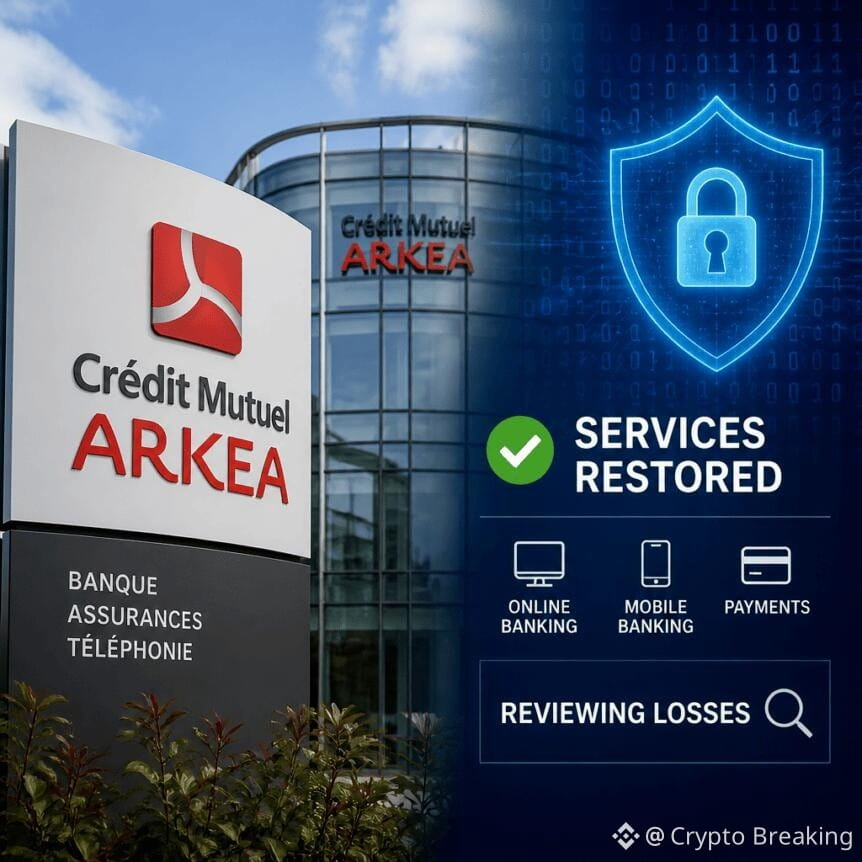
Crédit Mutuel Arkéa stellt nach Cyberangriff Dienste wieder her und prüft VerlusteDie französische Bankengruppe Crédit Mutuel Arkéa teilte mit, dass am Mittwoch nach einem Cyberangriff, der offenbar mit dem mutmaßlichen Diebstahl von Geldern direkt von der Bank begonnen hatte, nahezu alle Dienste wiederhergestellt waren. Die Störung verzögerte einige Überweisungen, doch Arkéa erklärte, dass Kundengelder nicht betroffen waren.
Arkéas Bekanntmachung deutete auch darauf hin, wie sich der Vorfall wahrscheinlich abgespielt hatte: Die Angreifer verschafften sich über einen Drittanbieter Zugang und nicht über die Onlinebanking-Tochter Fortuneo. Ermittlungen auf der Blockchain, über die zunächst in Berichten über verdächtige Krypto-Abhebungen informiert worden war, halfen später dabei, Arkéa als wahrscheinliches Opfer zu identifizieren.
Crédit Mutuel Arkéa stellt nach Cyberangriff Dienste wieder her und prüft Verluste
Die französische Bankengruppe Crédit Mutuel Arkéa teilte mit, dass am Mittwoch nach einem Cyberangriff, der offenbar mit dem mutmaßlichen Diebstahl von Geldern direkt von der Bank begonnen hatte, nahezu alle Dienste wiederhergestellt waren. Die Störung verzögerte einige Überweisungen, doch Arkéa erklärte, dass Kundengelder nicht betroffen waren.
Arkéas Bekanntmachung deutete auch darauf hin, wie sich der Vorfall wahrscheinlich abgespielt hatte: Die Angreifer verschafften sich über einen Drittanbieter Zugang und nicht über die Onlinebanking-Tochter Fortuneo. Ermittlungen auf der Blockchain, über die zunächst in Berichten über verdächtige Krypto-Abhebungen informiert worden war, halfen später dabei, Arkéa als wahrscheinliches Opfer zu identifizieren.
Arkéas Bekanntmachung deutete auch darauf hin, wie sich der Vorfall wahrscheinlich abgespielt hatte: Die Angreifer verschafften sich über einen Drittanbieter Zugang und nicht über die Onlinebanking-Tochter Fortuneo. Ermittlungen auf der Blockchain, über die zunächst in Berichten über verdächtige Krypto-Abhebungen informiert worden war, halfen später dabei, Arkéa als wahrscheinliches Opfer zu identifizieren.
30

Artikel
Demokraten nehmen Trump und Big Tech nach ihrem überwältigenden Wahlsieg bei den Zwischenwahlen erneut ins VisierDemokratische Abgeordnete sagen, dass der Beginn des neuen US-Kongresses im Januar eine neue Welle von Vorladungen und Kontrollbemühungen mit sich bringen wird, die sich sowohl gegen das Geschäftsnetzwerk von Donald Trump als auch gegen führende Technologieunternehmen richten. Die Äußerungen – die fielen, nachdem die Demokraten infolge einer Wahl die Kontrolle über den Kongress gefestigt hatten – signalisieren, dass Ermittlungen schnell von Wahlkampfvorwürfen zu einer formellen Prüfung übergehen könnten.
Zu den genannten Zielen zählen führende Vertreter der großen Tech-Konzerne sowie Organisationen und Amtsträger mit Verbindungen zu KI, Energieverbrauch und der Durchsetzung der bundesstaatlichen Aufsicht. Die Abgeordneten hoben auch Trumps Krypto-Aktivitäten hervor und stellten sie als Teil eines umfassenderen Musters mutmaßlicher Korruption und persönlicher Bereicherung dar, das sie während der nächsten Legislaturperiode genauer unter die Lupe nehmen wollen.
Demokraten nehmen Trump und Big Tech nach ihrem überwältigenden Wahlsieg bei den Zwischenwahlen erneut ins Visier
Demokratische Abgeordnete sagen, dass der Beginn des neuen US-Kongresses im Januar eine neue Welle von Vorladungen und Kontrollbemühungen mit sich bringen wird, die sich sowohl gegen das Geschäftsnetzwerk von Donald Trump als auch gegen führende Technologieunternehmen richten. Die Äußerungen – die fielen, nachdem die Demokraten infolge einer Wahl die Kontrolle über den Kongress gefestigt hatten – signalisieren, dass Ermittlungen schnell von Wahlkampfvorwürfen zu einer formellen Prüfung übergehen könnten.
Zu den genannten Zielen zählen führende Vertreter der großen Tech-Konzerne sowie Organisationen und Amtsträger mit Verbindungen zu KI, Energieverbrauch und der Durchsetzung der bundesstaatlichen Aufsicht. Die Abgeordneten hoben auch Trumps Krypto-Aktivitäten hervor und stellten sie als Teil eines umfassenderen Musters mutmaßlicher Korruption und persönlicher Bereicherung dar, das sie während der nächsten Legislaturperiode genauer unter die Lupe nehmen wollen.
Zu den genannten Zielen zählen führende Vertreter der großen Tech-Konzerne sowie Organisationen und Amtsträger mit Verbindungen zu KI, Energieverbrauch und der Durchsetzung der bundesstaatlichen Aufsicht. Die Abgeordneten hoben auch Trumps Krypto-Aktivitäten hervor und stellten sie als Teil eines umfassenderen Musters mutmaßlicher Korruption und persönlicher Bereicherung dar, das sie während der nächsten Legislaturperiode genauer unter die Lupe nehmen wollen.
72

Artikel
Binance und Polymarket drängen auf Polygon-Fork, um gestohlene Kryptowährung im Wert von 6,8 Millionen US-Dollar zurückzuholenBinance und Polymarket haben gemeinsam einen Hard Fork von Polygon vorgeschlagen, um rund 70,49 Millionen POL-Token zurückzuholen – Vermögenswerte, die ihren Angaben zufolge bei zwei separaten Sicherheitsvorfällen im Zusammenhang mit den Unternehmen gestohlen wurden. Nach den im Governance-Vorschlag genannten Beträgen sind die Token etwa 6,8 Millionen US-Dollar wert.
Dem am Mittwoch im Polygon-Forum veröffentlichten Vorschlag zufolge zielt der Wiederherstellungsplan auf fünf von Angreifern kontrollierte Adressen ab: 23,86 Millionen POL (im Wert von etwa 2,31 Millionen US-Dollar), die über vier Adressen mit dem Polymarket-Hack in Verbindung stehen, sowie 46,63 Millionen POL (etwa 4,51 Millionen US-Dollar), die sich in einer einzelnen, mit dem Binance-Vorfall verknüpften Adresse befinden.
Binance und Polymarket drängen auf Polygon-Fork, um gestohlene Kryptowährung im Wert von 6,8 Millionen US-Dollar zurückzuholen
Binance und Polymarket haben gemeinsam einen Hard Fork von Polygon vorgeschlagen, um rund 70,49 Millionen POL-Token zurückzuholen – Vermögenswerte, die ihren Angaben zufolge bei zwei separaten Sicherheitsvorfällen im Zusammenhang mit den Unternehmen gestohlen wurden. Nach den im Governance-Vorschlag genannten Beträgen sind die Token etwa 6,8 Millionen US-Dollar wert.
Dem am Mittwoch im Polygon-Forum veröffentlichten Vorschlag zufolge zielt der Wiederherstellungsplan auf fünf von Angreifern kontrollierte Adressen ab: 23,86 Millionen POL (im Wert von etwa 2,31 Millionen US-Dollar), die über vier Adressen mit dem Polymarket-Hack in Verbindung stehen, sowie 46,63 Millionen POL (etwa 4,51 Millionen US-Dollar), die sich in einer einzelnen, mit dem Binance-Vorfall verknüpften Adresse befinden.
Dem am Mittwoch im Polygon-Forum veröffentlichten Vorschlag zufolge zielt der Wiederherstellungsplan auf fünf von Angreifern kontrollierte Adressen ab: 23,86 Millionen POL (im Wert von etwa 2,31 Millionen US-Dollar), die über vier Adressen mit dem Polymarket-Hack in Verbindung stehen, sowie 46,63 Millionen POL (etwa 4,51 Millionen US-Dollar), die sich in einer einzelnen, mit dem Binance-Vorfall verknüpften Adresse befinden.
25

Artikel
Mercado Bitcoin nimmt den Betrieb am Montag schrittweise wieder auf und will Verluste ausgleichenDie brasilianische Kryptobörse Mercado Bitcoin teilte mit, dass sie ab Montag den Kunden wieder Zugang zu ihren Konten gewähren wird. Zuvor hatte es einen Hackerangriff gegeben, der laut Schätzungen von Blockchain-Analysten zum Diebstahl von Kryptowertebeständen im Wert von mehr als 46 Millionen US-Dollar führte.
In einem Update gegenüber Cointelegraph erklärte die Börse, dass die Nutzer schrittweise wieder Zugang erhalten werden. In der ersten Phase können Kunden ihre Kontostände überprüfen und Abrechnungen, Bestände und Investitionen einsehen. Funktionen, bei denen Werte bewegt werden, etwa Überweisungen, Auszahlungen und der Handel, sollen später wieder verfügbar sein – vorbehaltlich unabhängiger Sicherheitstests.
Mercado Bitcoin nimmt den Betrieb am Montag schrittweise wieder auf und will Verluste ausgleichen
Die brasilianische Kryptobörse Mercado Bitcoin teilte mit, dass sie ab Montag den Kunden wieder Zugang zu ihren Konten gewähren wird. Zuvor hatte es einen Hackerangriff gegeben, der laut Schätzungen von Blockchain-Analysten zum Diebstahl von Kryptowertebeständen im Wert von mehr als 46 Millionen US-Dollar führte.
In einem Update gegenüber Cointelegraph erklärte die Börse, dass die Nutzer schrittweise wieder Zugang erhalten werden. In der ersten Phase können Kunden ihre Kontostände überprüfen und Abrechnungen, Bestände und Investitionen einsehen. Funktionen, bei denen Werte bewegt werden, etwa Überweisungen, Auszahlungen und der Handel, sollen später wieder verfügbar sein – vorbehaltlich unabhängiger Sicherheitstests.
In einem Update gegenüber Cointelegraph erklärte die Börse, dass die Nutzer schrittweise wieder Zugang erhalten werden. In der ersten Phase können Kunden ihre Kontostände überprüfen und Abrechnungen, Bestände und Investitionen einsehen. Funktionen, bei denen Werte bewegt werden, etwa Überweisungen, Auszahlungen und der Handel, sollen später wieder verfügbar sein – vorbehaltlich unabhängiger Sicherheitstests.
29

Artikel
Indien warnt vor KI-gesteuerten Angriffen auf Kryptobörsen in MaschinengeschwindigkeitIndiens nationale Cybersicherheitsbehörde hat ihre Warnung vor einer KI-gestützten Hacking-Kampagne verschärft, die sich nach ihren Angaben aktiv gegen Finanzdienstleister richtet – darunter auch Kryptowährungsbörsen. Das Indian Computer Emergency Response Team (CERT-In) stufte den Bedrohungsakteur am Mittwoch als „CRAFTY FALCON“ ein und setzte damit ein Kampagnen-Update fort, das es erstmals im Oktober veröffentlicht hatte.
In seiner jüngsten Warnmeldung erklärte CERT-In, es habe Berichte über erfolgreiche Eindringversuche in Organisationen erhalten, die bereits in früheren vertraulichen Mitteilungen erwähnt worden waren. Dazu zählten Nichtbanken-Finanzunternehmen (NBFCs), Fintech-Unternehmen und nun auch Kryptobörsen. Die Behörde nannte keine konkreten Börsen und bezifferte die Verluste nicht. Sie beschrieb jedoch, wie die Angreifer KI-gestützte Tools mit direkter Interaktion mit den Zahlungs- und Auszahlungssystemen ihrer Opfer kombinieren.
Indien warnt vor KI-gesteuerten Angriffen auf Kryptobörsen in Maschinengeschwindigkeit
Indiens nationale Cybersicherheitsbehörde hat ihre Warnung vor einer KI-gestützten Hacking-Kampagne verschärft, die sich nach ihren Angaben aktiv gegen Finanzdienstleister richtet – darunter auch Kryptowährungsbörsen. Das Indian Computer Emergency Response Team (CERT-In) stufte den Bedrohungsakteur am Mittwoch als „CRAFTY FALCON“ ein und setzte damit ein Kampagnen-Update fort, das es erstmals im Oktober veröffentlicht hatte.
In seiner jüngsten Warnmeldung erklärte CERT-In, es habe Berichte über erfolgreiche Eindringversuche in Organisationen erhalten, die bereits in früheren vertraulichen Mitteilungen erwähnt worden waren. Dazu zählten Nichtbanken-Finanzunternehmen (NBFCs), Fintech-Unternehmen und nun auch Kryptobörsen. Die Behörde nannte keine konkreten Börsen und bezifferte die Verluste nicht. Sie beschrieb jedoch, wie die Angreifer KI-gestützte Tools mit direkter Interaktion mit den Zahlungs- und Auszahlungssystemen ihrer Opfer kombinieren.
In seiner jüngsten Warnmeldung erklärte CERT-In, es habe Berichte über erfolgreiche Eindringversuche in Organisationen erhalten, die bereits in früheren vertraulichen Mitteilungen erwähnt worden waren. Dazu zählten Nichtbanken-Finanzunternehmen (NBFCs), Fintech-Unternehmen und nun auch Kryptobörsen. Die Behörde nannte keine konkreten Börsen und bezifferte die Verluste nicht. Sie beschrieb jedoch, wie die Angreifer KI-gestützte Tools mit direkter Interaktion mit den Zahlungs- und Auszahlungssystemen ihrer Opfer kombinieren.
26

Artikel
Indien warnt vor KI-gesteuerten Hackern, die in großem Umfang Krypto-Börsen ins Visier nehmenIndiens nationale Cybersicherheitsbehörde hat gewarnt, dass ein von KI unterstützter Angreifer seine Attacken auf Kryptowährungsbörsen und andere Finanzunternehmen verstärkt, darunter den Diebstahl von Schlüsseln für Kryptowährungs-Wallets und die unbefugte Abzweigung von Geldern. In der Mitteilung des indischen Computer Emergency Response Teams (CERT-In) wird die Gruppe „CRAFTY FALCON“ genannt. Außerdem heißt es, die Kampagne sei aktiv und nehme an Intensität zu.
Die am Mittwoch veröffentlichte Warnung von CERT-In ergänzt eine frühere Meldung aus dem Oktober, indem sie Krypto-Börsen ausdrücklich zu den betroffenen Zielen zählt. Die Behörde beschrieb auch, wie der Angreifer maschinengestützte Aufklärung mit automatisierten Ausnutzungstechniken kombiniert und Opfersysteme – etwa Programmierschnittstellen (APIs) für Zahlungs- und Auszahlungsprozesse – nutzt, um Überweisungen auszuführen.
Indien warnt vor KI-gesteuerten Hackern, die in großem Umfang Krypto-Börsen ins Visier nehmen
Indiens nationale Cybersicherheitsbehörde hat gewarnt, dass ein von KI unterstützter Angreifer seine Attacken auf Kryptowährungsbörsen und andere Finanzunternehmen verstärkt, darunter den Diebstahl von Schlüsseln für Kryptowährungs-Wallets und die unbefugte Abzweigung von Geldern. In der Mitteilung des indischen Computer Emergency Response Teams (CERT-In) wird die Gruppe „CRAFTY FALCON“ genannt. Außerdem heißt es, die Kampagne sei aktiv und nehme an Intensität zu.
Die am Mittwoch veröffentlichte Warnung von CERT-In ergänzt eine frühere Meldung aus dem Oktober, indem sie Krypto-Börsen ausdrücklich zu den betroffenen Zielen zählt. Die Behörde beschrieb auch, wie der Angreifer maschinengestützte Aufklärung mit automatisierten Ausnutzungstechniken kombiniert und Opfersysteme – etwa Programmierschnittstellen (APIs) für Zahlungs- und Auszahlungsprozesse – nutzt, um Überweisungen auszuführen.
Die am Mittwoch veröffentlichte Warnung von CERT-In ergänzt eine frühere Meldung aus dem Oktober, indem sie Krypto-Börsen ausdrücklich zu den betroffenen Zielen zählt. Die Behörde beschrieb auch, wie der Angreifer maschinengestützte Aufklärung mit automatisierten Ausnutzungstechniken kombiniert und Opfersysteme – etwa Programmierschnittstellen (APIs) für Zahlungs- und Auszahlungsprozesse – nutzt, um Überweisungen auszuführen.
30

Artikel
Demokraten übernehmen die Kontrolle über den US-Senat und sichern sich die MehrheitLaut der Associated Press haben die Demokraten die Kontrolle über den US-Senat gesichert, nachdem sie mehrere zuvor von Republikanern gehaltene Sitze gewonnen haben. Dazu gehören Sitzgewinne in Texas, Ohio, North Carolina, South Carolina, Kansas und Iowa. Das Ergebnis bestimmt, wie schnell wichtige Kryptogesetze – insbesondere der ins Stocken geratene CLARITY Act – in der nächsten Legislaturperiode vorankommen können.
In Iowa stärkt der Sieg des demokratischen Senators Josh Turek die Fraktion aus Demokraten und Unabhängigen, die nun 51 Sitze umfasst. Nach dieser Verschiebung richtet sich die Aufmerksamkeit auf die Besetzung der Ausschussvorsitze und darauf, wie streng die Abgeordneten Kryptounternehmen und regulatorische Entscheidungen prüfen könnten.
Demokraten übernehmen die Kontrolle über den US-Senat und sichern sich die Mehrheit
Laut der Associated Press haben die Demokraten die Kontrolle über den US-Senat gesichert, nachdem sie mehrere zuvor von Republikanern gehaltene Sitze gewonnen haben. Dazu gehören Sitzgewinne in Texas, Ohio, North Carolina, South Carolina, Kansas und Iowa. Das Ergebnis bestimmt, wie schnell wichtige Kryptogesetze – insbesondere der ins Stocken geratene CLARITY Act – in der nächsten Legislaturperiode vorankommen können.
In Iowa stärkt der Sieg des demokratischen Senators Josh Turek die Fraktion aus Demokraten und Unabhängigen, die nun 51 Sitze umfasst. Nach dieser Verschiebung richtet sich die Aufmerksamkeit auf die Besetzung der Ausschussvorsitze und darauf, wie streng die Abgeordneten Kryptounternehmen und regulatorische Entscheidungen prüfen könnten.
In Iowa stärkt der Sieg des demokratischen Senators Josh Turek die Fraktion aus Demokraten und Unabhängigen, die nun 51 Sitze umfasst. Nach dieser Verschiebung richtet sich die Aufmerksamkeit auf die Besetzung der Ausschussvorsitze und darauf, wie streng die Abgeordneten Kryptounternehmen und regulatorische Entscheidungen prüfen könnten.
41
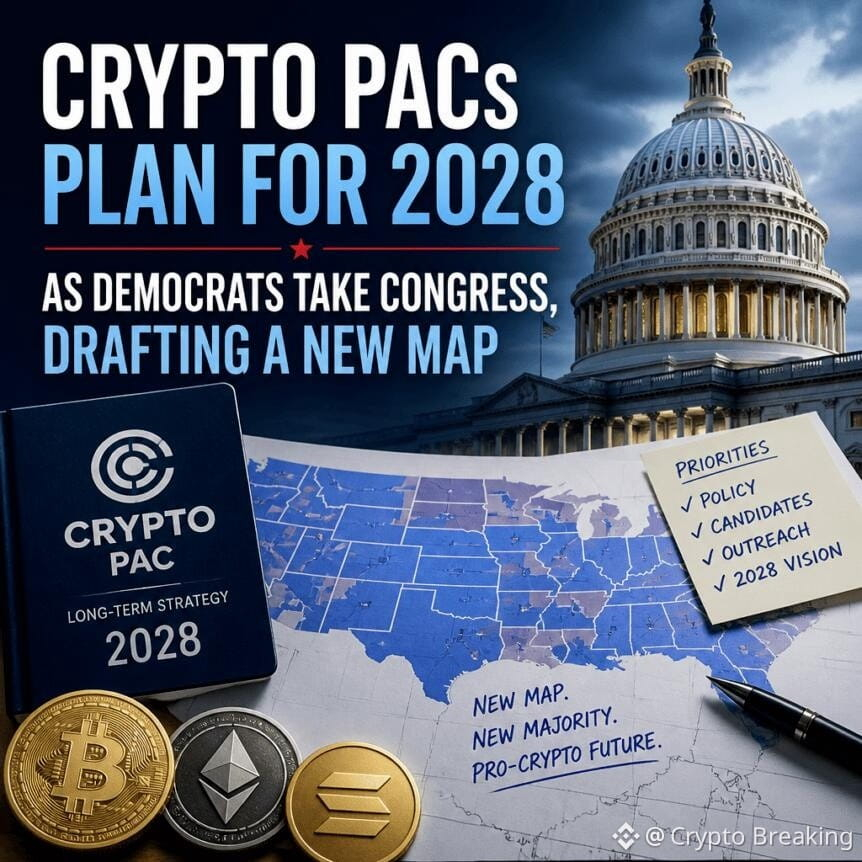
Artikel
Krypto-PACs planen für 2028, während die Demokraten den Kongress übernehmen und eine neue Strategie entwerfenDie politische Ausgabenoffensive der Kryptobranche rund um die Zwischenwahlen 2026 hat dem Netzwerk kryptofreundlicher PACs einen seltenen, öffentlichkeitswirksamen Rückschlag beschert – zumindest bei einem seiner wichtigsten Ziele. Senator Sherrod Brown, dessen überraschende Rückkehr in den Senat darauf folgt, dass von der Kryptobranche unterstützte Gruppen zig Millionen Dollar ausgegeben hatten, um den republikanischen Nachfolger seines Vorgängers zu verhindern, besiegte in Ohio den Republikaner Jon Husted und verhalf den Demokraten damit dazu, die Kontrolle über beide Kammern des Kongresses zu gewinnen.
Das Ergebnis verändert die kurzfristigen Erwartungen daran, wie intensiv die Abgeordneten auf Bundesebene die Politik zu digitalen Vermögenswerten unter die Lupe nehmen werden. Zugleich markiert es einen institutionellen Wandel in Washington: Senatorin Elizabeth Warren, die seit Langem Aspekte der Kryptobranche kritisiert, soll den Vorsitz des Bankenausschusses des Senats übernehmen.
Krypto-PACs planen für 2028, während die Demokraten den Kongress übernehmen und eine neue Strategie entwerfen
Die politische Ausgabenoffensive der Kryptobranche rund um die Zwischenwahlen 2026 hat dem Netzwerk kryptofreundlicher PACs einen seltenen, öffentlichkeitswirksamen Rückschlag beschert – zumindest bei einem seiner wichtigsten Ziele. Senator Sherrod Brown, dessen überraschende Rückkehr in den Senat darauf folgt, dass von der Kryptobranche unterstützte Gruppen zig Millionen Dollar ausgegeben hatten, um den republikanischen Nachfolger seines Vorgängers zu verhindern, besiegte in Ohio den Republikaner Jon Husted und verhalf den Demokraten damit dazu, die Kontrolle über beide Kammern des Kongresses zu gewinnen.
Das Ergebnis verändert die kurzfristigen Erwartungen daran, wie intensiv die Abgeordneten auf Bundesebene die Politik zu digitalen Vermögenswerten unter die Lupe nehmen werden. Zugleich markiert es einen institutionellen Wandel in Washington: Senatorin Elizabeth Warren, die seit Langem Aspekte der Kryptobranche kritisiert, soll den Vorsitz des Bankenausschusses des Senats übernehmen.
Das Ergebnis verändert die kurzfristigen Erwartungen daran, wie intensiv die Abgeordneten auf Bundesebene die Politik zu digitalen Vermögenswerten unter die Lupe nehmen werden. Zugleich markiert es einen institutionellen Wandel in Washington: Senatorin Elizabeth Warren, die seit Langem Aspekte der Kryptobranche kritisiert, soll den Vorsitz des Bankenausschusses des Senats übernehmen.
26

Artikel
Mercado Bitcoin startet am Montag die schrittweise Wiedereröffnung und deckt VerlusteDie brasilianische Kryptobörse Mercado Bitcoin gibt an, ab Montag nach einer Sicherheitsverletzung wieder den Zugang zu Kundenkonten freizuschalten. Blockchain-Analysten schätzen, dass dabei Vermögenswerte im Wert von mehr als 46 Millionen US-Dollar gestohlen wurden.
In einem Update an Cointelegraph skizzierte die Börse einen stufenweisen Wiederherstellungsplan. Kunden erhalten zunächst Lesezugriff – etwa um Kontostände, Abrechnungen, Bestände und Investments einzusehen. Überweisungen, Auszahlungen und der Handel sollen erst später nach unabhängigen Sicherheitstests wieder möglich sein.
Mercado Bitcoin startet am Montag die schrittweise Wiedereröffnung und deckt Verluste
Die brasilianische Kryptobörse Mercado Bitcoin gibt an, ab Montag nach einer Sicherheitsverletzung wieder den Zugang zu Kundenkonten freizuschalten. Blockchain-Analysten schätzen, dass dabei Vermögenswerte im Wert von mehr als 46 Millionen US-Dollar gestohlen wurden.
In einem Update an Cointelegraph skizzierte die Börse einen stufenweisen Wiederherstellungsplan. Kunden erhalten zunächst Lesezugriff – etwa um Kontostände, Abrechnungen, Bestände und Investments einzusehen. Überweisungen, Auszahlungen und der Handel sollen erst später nach unabhängigen Sicherheitstests wieder möglich sein.
In einem Update an Cointelegraph skizzierte die Börse einen stufenweisen Wiederherstellungsplan. Kunden erhalten zunächst Lesezugriff – etwa um Kontostände, Abrechnungen, Bestände und Investments einzusehen. Überweisungen, Auszahlungen und der Handel sollen erst später nach unabhängigen Sicherheitstests wieder möglich sein.
16
Artikel
BitMart-Gründer sagt, das Sicherheitsteam sei „stark unterbesetzt“ gewesenBitMart erklärt, dass das Unternehmen nach einem neuen, diese Woche bestätigten Sicherheitsvorfall mit einem stark unterbesetzten Sicherheitsteam zu kämpfen hat. Gründer Sheldon Xia verwies auf Schwierigkeiten bei der Mitarbeiterbindung nach Umstrukturierungen und internen Streitigkeiten. Xia deutete außerdem an, dass der Zeitpunkt mit einem größeren Vorfall bei der brasilianischen Börse Mercado Bitcoin Anfang des Monats zusammenhängen könnte.
Das Blockchain-Analyseunternehmen Bitquery berichtete, es habe verdächtige Transfers im Wert von rund 391.000 US-Dollar von Wallets nachverfolgt, die BitMart zugeordnet werden. Die Transfers erstreckten sich über drei Blockchains. Bitquery zufolge war eine der beteiligten Wallets bereits im Zusammenhang mit dem Mercado-Bitcoin-Hack aufgetaucht, bei dem mehr als 46 Millionen US-Dollar erbeutet wurden und der etwa zur selben Zeit bekannt wurde.
BitMart-Gründer sagt, das Sicherheitsteam sei „stark unterbesetzt“ gewesen
BitMart erklärt, dass das Unternehmen nach einem neuen, diese Woche bestätigten Sicherheitsvorfall mit einem stark unterbesetzten Sicherheitsteam zu kämpfen hat. Gründer Sheldon Xia verwies auf Schwierigkeiten bei der Mitarbeiterbindung nach Umstrukturierungen und internen Streitigkeiten. Xia deutete außerdem an, dass der Zeitpunkt mit einem größeren Vorfall bei der brasilianischen Börse Mercado Bitcoin Anfang des Monats zusammenhängen könnte.
Das Blockchain-Analyseunternehmen Bitquery berichtete, es habe verdächtige Transfers im Wert von rund 391.000 US-Dollar von Wallets nachverfolgt, die BitMart zugeordnet werden. Die Transfers erstreckten sich über drei Blockchains. Bitquery zufolge war eine der beteiligten Wallets bereits im Zusammenhang mit dem Mercado-Bitcoin-Hack aufgetaucht, bei dem mehr als 46 Millionen US-Dollar erbeutet wurden und der etwa zur selben Zeit bekannt wurde.
Das Blockchain-Analyseunternehmen Bitquery berichtete, es habe verdächtige Transfers im Wert von rund 391.000 US-Dollar von Wallets nachverfolgt, die BitMart zugeordnet werden. Die Transfers erstreckten sich über drei Blockchains. Bitquery zufolge war eine der beteiligten Wallets bereits im Zusammenhang mit dem Mercado-Bitcoin-Hack aufgetaucht, bei dem mehr als 46 Millionen US-Dollar erbeutet wurden und der etwa zur selben Zeit bekannt wurde.
29
Anmelden und weiter Inhalte entdecken
Krypto-Nutzer weltweit auf Binance Square kennenlernen
⚡️ Bleib in Sachen Krypto stets am Puls.
💬 Die weltgrößte Kryptobörse vertraut darauf.
👍 Erhalte verlässliche Einblicke von verifizierten Creators.
E-Mail-Adresse/Telefonnummer
Trendthemen
BinanceReopensWithdrawalsForMoreAssets
794,102 Aufrufe
4,415 Kommentare
Sicherheitsvorfall | Update zur Wiederherstellung Nr. 8: Auszahlungen für weitere Assets werden wieder aufgenommen (05.11.2026)
Binance Announcement
·363 Likes
·1.6M Aufrufe
Binance98PercentReplenished
155,673 Aufrufe
1,744 Kommentare
USStocksSlipandCryptoMarketUnderBroadPressure
3,165 Aufrufe
160 Kommentare