
Crypto hunter 55
13.1k Beiträge

Crypto hunter 55
 Square Verified+
ALHAMDOLILLH FOR EVERYTHING
Trade eröffnen
Regelmäßiger Trader
11.8 Monate
1.0K+ Following
31.3K+ Follower
15.0K+ Like gegeben
Beiträge
Portfolio
Alle
Zitierungen
Live
#dusk $DUSK @Dusk
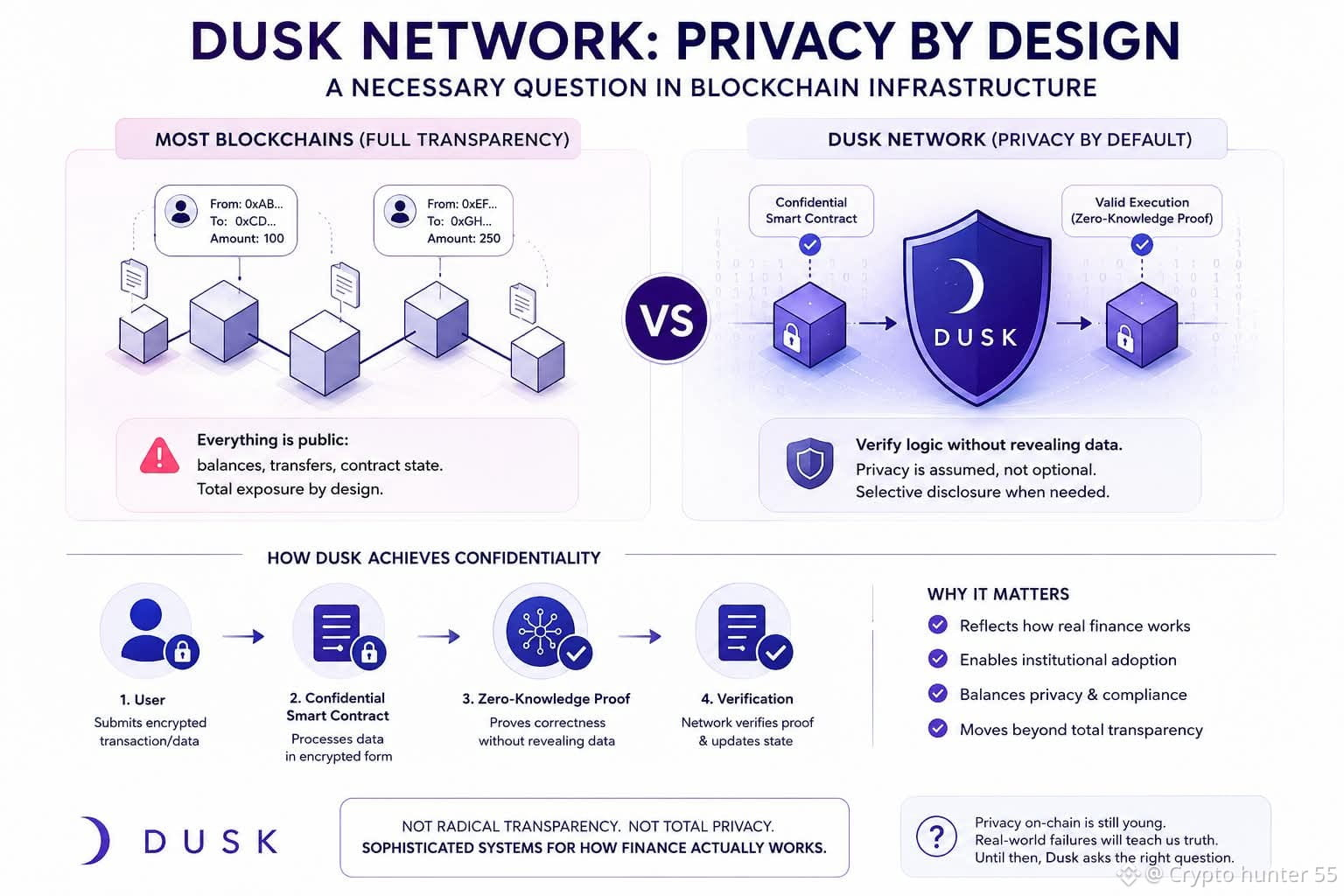
Ich bin auf Dusk gestoßen, während ich Schicht-1s recherchiert habe – eine Privacy-Blockchain für Finanzen. Was mir auffiel: Sie löst eine Unbequemlichkeit, nicht eine Revolution.
Die meisten Blockchains senden alles aus: Guthaben, Transaktionen, Contract-Status. Aber Dusk stellt eine stille Frage: **Was wäre, wenn du die Zahlen gar nicht sehen lassen willst?**
Mit vertraulichen Smart Contracts kannst du prüfen, ob die Logik stimmt, ohne die Daten offenzulegen. Das ist kryptografisch nicht völlig neu, aber es als grundlegendes Fundament zu behandeln statt als nachträglich aufgesetztes Feature ist etwas anderes. Es sagt: Privatsphäre ist angenommen – nicht optional.
Darum bin ich ins Stocken geraten: Für Finanzen haben wir nie totale Transparenz gebraucht. Banken veröffentlichen nicht jede Transaktion. Wir vertrauen über Regulierung und teilweise Audits. Blockchains haben auf totale Offenlegung umgeschaltet – das löst nichts, es macht nur die Sichtbarkeit vollständig.
Dusk legt nahe: Was wäre, wenn die Antwort nicht radikale Transparenz **oder** totale Privatsphäre ist, sondern Systeme, die so ausgefeilt sind, dass sie nachbilden, wie Finanzen tatsächlich funktionieren?
Die Ungewissheit: Privatsphäre on-chain ist noch jung. Ich würde erst sehen wollen, wie sie in echten Deployments scheitert oder sich bewährt, bevor ich ihr einen ernsthaften Wert anvertraue. Bis dahin fühlt sich Dusk wie eine notwendige Frage an, die als Infrastruktur gestellt wird – das ist interessant. Aber notwendige Fragen rechtfertigen nicht immer die Komplexität.
Ich bin auf Dusk gestoßen, während ich Schicht-1s recherchiert habe – eine Privacy-Blockchain für Finanzen. Was mir auffiel: Sie löst eine Unbequemlichkeit, nicht eine Revolution.
Die meisten Blockchains senden alles aus: Guthaben, Transaktionen, Contract-Status. Aber Dusk stellt eine stille Frage: **Was wäre, wenn du die Zahlen gar nicht sehen lassen willst?**
Mit vertraulichen Smart Contracts kannst du prüfen, ob die Logik stimmt, ohne die Daten offenzulegen. Das ist kryptografisch nicht völlig neu, aber es als grundlegendes Fundament zu behandeln statt als nachträglich aufgesetztes Feature ist etwas anderes. Es sagt: Privatsphäre ist angenommen – nicht optional.
Darum bin ich ins Stocken geraten: Für Finanzen haben wir nie totale Transparenz gebraucht. Banken veröffentlichen nicht jede Transaktion. Wir vertrauen über Regulierung und teilweise Audits. Blockchains haben auf totale Offenlegung umgeschaltet – das löst nichts, es macht nur die Sichtbarkeit vollständig.
Dusk legt nahe: Was wäre, wenn die Antwort nicht radikale Transparenz **oder** totale Privatsphäre ist, sondern Systeme, die so ausgefeilt sind, dass sie nachbilden, wie Finanzen tatsächlich funktionieren?
Die Ungewissheit: Privatsphäre on-chain ist noch jung. Ich würde erst sehen wollen, wie sie in echten Deployments scheitert oder sich bewährt, bevor ich ihr einen ernsthaften Wert anvertraue. Bis dahin fühlt sich Dusk wie eine notwendige Frage an, die als Infrastruktur gestellt wird – das ist interessant. Aber notwendige Fragen rechtfertigen nicht immer die Komplexität.
#dusk $DUSK @Dusk
Ich habe mir etwas Zeit genommen, um mich durch die Architektur des Dusk Network zu graben, und was bei mir hängen geblieben ist, ist, dass sein Datenschutzansatz sich eher praktisch anfühlt als das übliche „alles verbergen“-Narrativ. Das Spannende ist, dass es Anwendungsfälle voneinander trennt, statt ein einziges Kontomodell auf jede Transaktion zu erzwingen.
Der L1 von Dusk nutzt DuskDS für Konsens, Abwicklung und Datenverfügbarkeit, während DuskVM Rust/WASM-Smart Contracts ausführt. Dazu kommt noch DuskEVM, eine OP-Stack-basierte Umgebung, die auf Solidity-Entwickler ausgerichtet ist. Diese Aufteilung ergibt Sinn, aber ich habe mich gefragt, wie viel Komplexität Entwickler voraussichtlich aufnehmen müssen, wenn sie zwischen dem nativen Privacy-Stack und dem EVM-Pfad wählen.
Die Datenschutz-Tools sind der Bereich, in dem Dusk technisch besonders interessant wird. Phoenix verwendet abgeschirmte Notes und Zero-Knowledge-Proofs, um Transaktionsdetails zu verschleiern, während Moonlight ein transparenteres, kontobasiertes Modell bereitstellt. Sein Confidential Security Contract (XSC)-Standard ergänzt selektive Offenlegung, was vor allem für finanzielle Anwendungen relevant ist, in denen Privatsphäre und Compliance oft gleichzeitig bestehen müssen.
Aber es gibt eine Lücke, die man im Blick behalten sollte. Dusk ist seit Januar 2025 im Mainnet live, doch die größere Frage ist nicht, ob die Kryptografie funktioniert. Es geht darum, ob Entwickler damit komfortabel bauen können. Rust/WASM, Dusk-spezifische Tools, GraphQL und APIs liefern einen echten Stack, während DuskEVM die Einstiegshürde mit vertrauten Ethereum-Tools senkt. Letztlich werden jedoch die Reife der Infrastruktur, vorhersehbare Gebühren, nutzbare SDKs und echte Anwendungen darüber entscheiden, ob die Architektur in eine Adoption übersetzt.
Also frage ich mich: Kann Dusk vertrauliches Finanzwesen wirklich leichter machbar machen, oder wird die Flexibilität seiner Architektur zu einem weiteren Trade-off für Entwickler?
$TRUMP
$MOVE
Umfrage: Was ist für die Dusk-Adoption am wichtigsten?
Ich habe mir etwas Zeit genommen, um mich durch die Architektur des Dusk Network zu graben, und was bei mir hängen geblieben ist, ist, dass sein Datenschutzansatz sich eher praktisch anfühlt als das übliche „alles verbergen“-Narrativ. Das Spannende ist, dass es Anwendungsfälle voneinander trennt, statt ein einziges Kontomodell auf jede Transaktion zu erzwingen.
Der L1 von Dusk nutzt DuskDS für Konsens, Abwicklung und Datenverfügbarkeit, während DuskVM Rust/WASM-Smart Contracts ausführt. Dazu kommt noch DuskEVM, eine OP-Stack-basierte Umgebung, die auf Solidity-Entwickler ausgerichtet ist. Diese Aufteilung ergibt Sinn, aber ich habe mich gefragt, wie viel Komplexität Entwickler voraussichtlich aufnehmen müssen, wenn sie zwischen dem nativen Privacy-Stack und dem EVM-Pfad wählen.
Die Datenschutz-Tools sind der Bereich, in dem Dusk technisch besonders interessant wird. Phoenix verwendet abgeschirmte Notes und Zero-Knowledge-Proofs, um Transaktionsdetails zu verschleiern, während Moonlight ein transparenteres, kontobasiertes Modell bereitstellt. Sein Confidential Security Contract (XSC)-Standard ergänzt selektive Offenlegung, was vor allem für finanzielle Anwendungen relevant ist, in denen Privatsphäre und Compliance oft gleichzeitig bestehen müssen.
Aber es gibt eine Lücke, die man im Blick behalten sollte. Dusk ist seit Januar 2025 im Mainnet live, doch die größere Frage ist nicht, ob die Kryptografie funktioniert. Es geht darum, ob Entwickler damit komfortabel bauen können. Rust/WASM, Dusk-spezifische Tools, GraphQL und APIs liefern einen echten Stack, während DuskEVM die Einstiegshürde mit vertrauten Ethereum-Tools senkt. Letztlich werden jedoch die Reife der Infrastruktur, vorhersehbare Gebühren, nutzbare SDKs und echte Anwendungen darüber entscheiden, ob die Architektur in eine Adoption übersetzt.
Also frage ich mich: Kann Dusk vertrauliches Finanzwesen wirklich leichter machbar machen, oder wird die Flexibilität seiner Architektur zu einem weiteren Trade-off für Entwickler?
$TRUMP
$MOVE
Umfrage: Was ist für die Dusk-Adoption am wichtigsten?
🔹 Developer-friendly tooling
34%
🔹 EVM compatibility
0%
🔹 Privacy + compliance
33%
🔹 Real-world applications
33%
3 Stimmen • Abstimmung beendet
#dusk $DUSK @Dusk
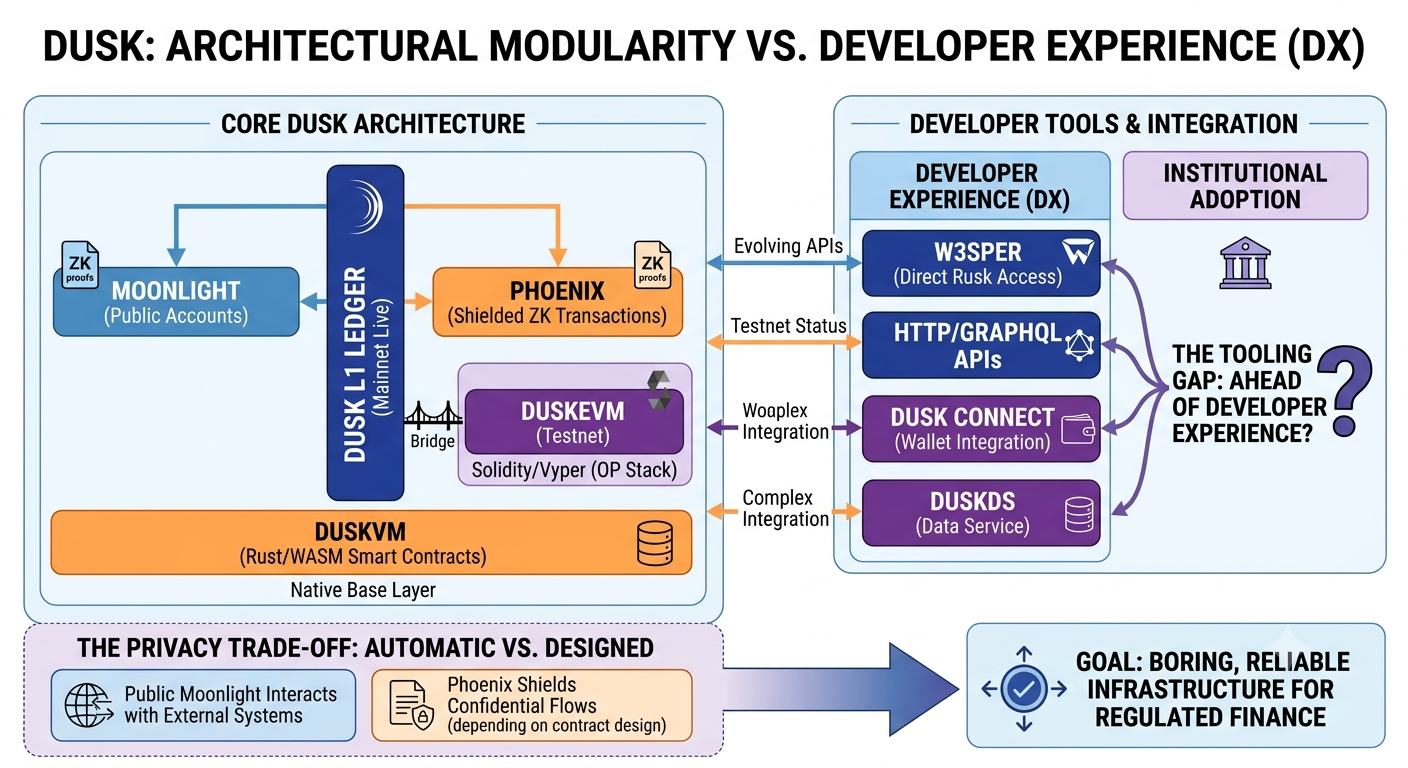
Ich bin immer wieder zu derselben Frage zurückgekehrt, während ich Dusk durchgesehen habe: Ist seine Privacy-Story bereits ein nutzbares Produkt, oder ist die Architektur noch weiter voraus als die Entwicklererfahrung?
Das Interessante daran ist, dass Dusk nicht auf eine einzelne Privacy-Schicht setzt. L1 trennt öffentliche Moonlight-Accounts von abgeschirmten Phoenix-Transaktionen, während DuskVM Rust/WASM-Contracts direkt auf der Basisschicht ausführt. Außerdem gibt es DuskEVM für Solidity/Vyper, das OP-Stack-Kompatibilität nutzt und über DuskDS abwickelt. Diese Modularität ergibt für Finanzen Sinn, wo nicht jede Information verborgen sein sollte.
Was bei mir allerdings hängen blieb, ist die Lücke im Tooling. Die Dokumentation legt inzwischen W3sper für direkten Rusk-Zugriff, HTTP/GraphQL-APIs und Dusk Connect für Wallet-Integrationen offen. Das ist eine bedeutende Verbesserung, aber einige der neueren Bausteine entwickeln sich noch weiter. DuskEVM ist derzeit als Testnet gelistet, während die native L1 live ist. Damit ist die größere Vision einer „regulierten Finanzinfrastruktur“ größer als das, was ein Entwickler heute einfach bereitstellen kann.
Auch Privacy selbst ist nicht automatisch universell. Phoenix kann Transfers verschleiern, aber öffentliche Interaktionen bleiben sichtbar – je nach Vertragsdesign. Selbst Exchange-Integrationen benötigen möglicherweise öffentliche Moonlight-Accounts, statt direkt mit abgeschirmten Notes zu arbeiten.
Diese Unterscheidung ist entscheidend. Dusk hat einige ernsthafte Primitives für vertrauliche Finanzen gebaut, aber der echte Test ist, ob diese Primitives zu langweiligem, verlässlichem Infrastrukturzeug für Entwickler und Institutionen werden.
Kann Dusk diesen technisch ambitionierten Stack in eine Entwicklererfahrung verwandeln, die für regulierte Finanzen einfach genug ist, um sie tatsächlich in großem Maßstab zu übernehmen?
$ACE
$ACET.US
Ich bin immer wieder zu derselben Frage zurückgekehrt, während ich Dusk durchgesehen habe: Ist seine Privacy-Story bereits ein nutzbares Produkt, oder ist die Architektur noch weiter voraus als die Entwicklererfahrung?
Das Interessante daran ist, dass Dusk nicht auf eine einzelne Privacy-Schicht setzt. L1 trennt öffentliche Moonlight-Accounts von abgeschirmten Phoenix-Transaktionen, während DuskVM Rust/WASM-Contracts direkt auf der Basisschicht ausführt. Außerdem gibt es DuskEVM für Solidity/Vyper, das OP-Stack-Kompatibilität nutzt und über DuskDS abwickelt. Diese Modularität ergibt für Finanzen Sinn, wo nicht jede Information verborgen sein sollte.
Was bei mir allerdings hängen blieb, ist die Lücke im Tooling. Die Dokumentation legt inzwischen W3sper für direkten Rusk-Zugriff, HTTP/GraphQL-APIs und Dusk Connect für Wallet-Integrationen offen. Das ist eine bedeutende Verbesserung, aber einige der neueren Bausteine entwickeln sich noch weiter. DuskEVM ist derzeit als Testnet gelistet, während die native L1 live ist. Damit ist die größere Vision einer „regulierten Finanzinfrastruktur“ größer als das, was ein Entwickler heute einfach bereitstellen kann.
Auch Privacy selbst ist nicht automatisch universell. Phoenix kann Transfers verschleiern, aber öffentliche Interaktionen bleiben sichtbar – je nach Vertragsdesign. Selbst Exchange-Integrationen benötigen möglicherweise öffentliche Moonlight-Accounts, statt direkt mit abgeschirmten Notes zu arbeiten.
Diese Unterscheidung ist entscheidend. Dusk hat einige ernsthafte Primitives für vertrauliche Finanzen gebaut, aber der echte Test ist, ob diese Primitives zu langweiligem, verlässlichem Infrastrukturzeug für Entwickler und Institutionen werden.
Kann Dusk diesen technisch ambitionierten Stack in eine Entwicklererfahrung verwandeln, die für regulierte Finanzen einfach genug ist, um sie tatsächlich in großem Maßstab zu übernehmen?
$ACE
$ACET.US
Verifiziert
#termmax @TermMax
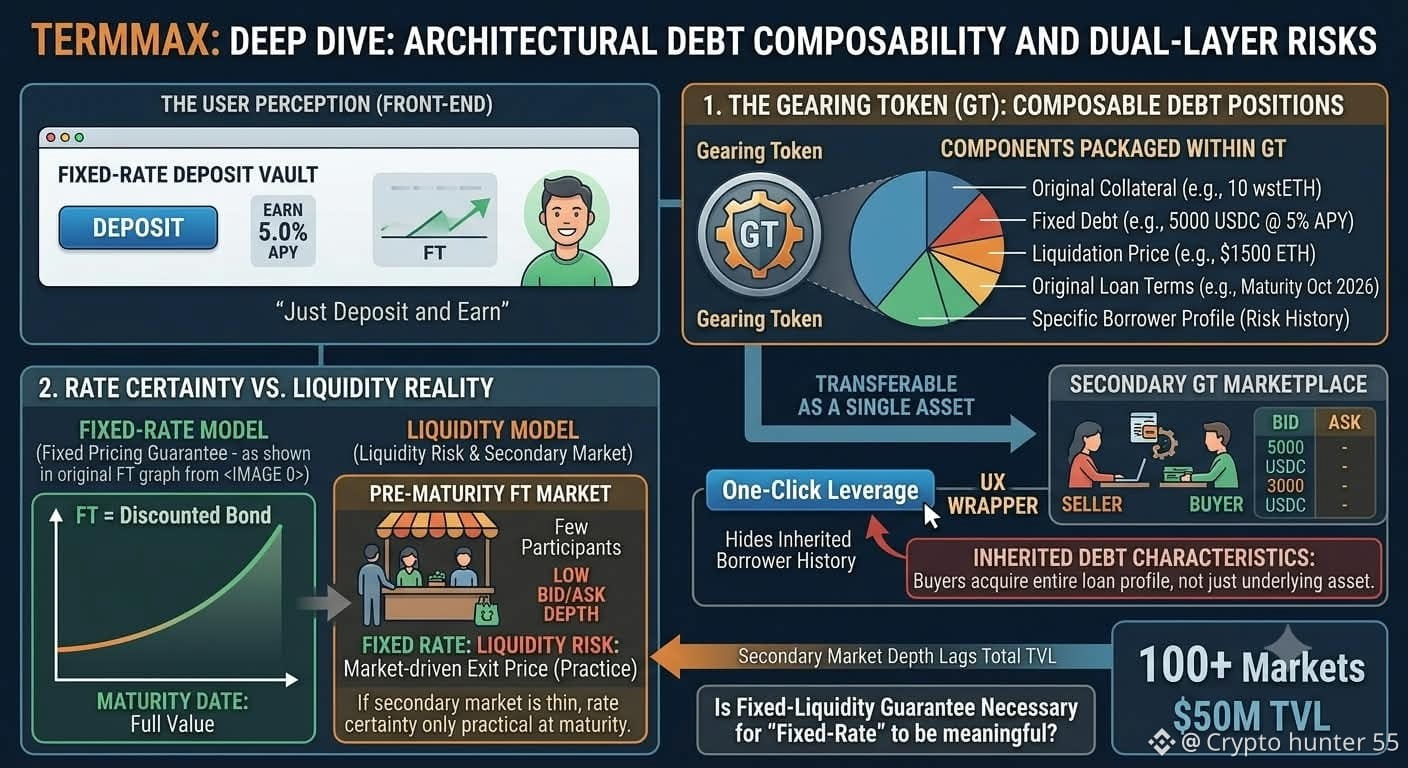
Ich habe mir etwas Zeit genommen, das GT-(Gearing-Token)-Mechanismus von TermMax genauer anzuschauen, und das ist besonders aufgefallen – es ist nicht einfach nur ein Sicherheitenbeleg. Es bündelt die gesamte Position (Sicherheit + Schulden + Konditionen) in einem einzigen handelbaren Token. Das bedeutet, dass du deine komplette gehebelt(e) Position an jemand anderen verkaufen oder übertragen kannst, ohne das zugrunde liegende Darlehen auflösen zu müssen. Das ist zwar ein kleiner, aber echter Schritt hin zu einem Sekundärmarkt für Schuldpositionen on-chain – näher an Bond-Trading als an typisches DeFi-Lending.
Der interessante Punkt ist jedoch: Diese Kombinierbarkeit klingt mächtig, führt aber zu einer neuen Risikodimension. Wer ein GT kauft, erwirbt nicht nur Sicherheit – er übernimmt die Liquidationshistorie des ursprünglichen Kreditnehmers und die in dieser Position eingepreisten Marktbedingungen. Die „One-Click-Leverage“-UI versteckt diese Komplexität; in Wirklichkeit kaufst du eine strukturierte Position und nicht nur einen Token.
Zweitens: TermMaxs Fixed-Rate-Modell hedget zwar das Zinsrisiko, lässt aber das Liquiditätsrisiko nahezu vollständig unangetastet. Wenn der Markt unter Stress steht und sich niemand findet, der deinen FT vor Fälligkeit kauft, spielt der Vorteil einer „festen Verzinsung“ erst dann eine Rolle, wenn du auch tatsächlich aussteigen kannst. Festpreis und feste Liquidität sind zwei unterschiedliche Garantien, und das Protokoll liefert im Wesentlichen nur die erste.
Einordnung nach Größenordnung: ungefähr $50M TVL, 100+ Märkte über drei Chains hinweg – solide Signale für echte Nutzung, aber institutionelles-Qualitätsniveau in der Tiefe ist noch ein Stück entfernt. Solange der Sekundärmarkt für GT/FT-Tokens nicht wirklich tief wird, bleibt der Pitch der „Fixed-Rate-Sicherheit“ eher theoretisch als praktisch.
Die eigentliche Frage ist also: Braucht DeFi neben festen Zinssätzen auch eine feste Liquiditätsgarantie, oder begnügen wir uns mit Zinssicherheit und nennen das schon genug?
$GRVT
$KII
$DOS
Ich habe mir etwas Zeit genommen, das GT-(Gearing-Token)-Mechanismus von TermMax genauer anzuschauen, und das ist besonders aufgefallen – es ist nicht einfach nur ein Sicherheitenbeleg. Es bündelt die gesamte Position (Sicherheit + Schulden + Konditionen) in einem einzigen handelbaren Token. Das bedeutet, dass du deine komplette gehebelt(e) Position an jemand anderen verkaufen oder übertragen kannst, ohne das zugrunde liegende Darlehen auflösen zu müssen. Das ist zwar ein kleiner, aber echter Schritt hin zu einem Sekundärmarkt für Schuldpositionen on-chain – näher an Bond-Trading als an typisches DeFi-Lending.
Der interessante Punkt ist jedoch: Diese Kombinierbarkeit klingt mächtig, führt aber zu einer neuen Risikodimension. Wer ein GT kauft, erwirbt nicht nur Sicherheit – er übernimmt die Liquidationshistorie des ursprünglichen Kreditnehmers und die in dieser Position eingepreisten Marktbedingungen. Die „One-Click-Leverage“-UI versteckt diese Komplexität; in Wirklichkeit kaufst du eine strukturierte Position und nicht nur einen Token.
Zweitens: TermMaxs Fixed-Rate-Modell hedget zwar das Zinsrisiko, lässt aber das Liquiditätsrisiko nahezu vollständig unangetastet. Wenn der Markt unter Stress steht und sich niemand findet, der deinen FT vor Fälligkeit kauft, spielt der Vorteil einer „festen Verzinsung“ erst dann eine Rolle, wenn du auch tatsächlich aussteigen kannst. Festpreis und feste Liquidität sind zwei unterschiedliche Garantien, und das Protokoll liefert im Wesentlichen nur die erste.
Einordnung nach Größenordnung: ungefähr $50M TVL, 100+ Märkte über drei Chains hinweg – solide Signale für echte Nutzung, aber institutionelles-Qualitätsniveau in der Tiefe ist noch ein Stück entfernt. Solange der Sekundärmarkt für GT/FT-Tokens nicht wirklich tief wird, bleibt der Pitch der „Fixed-Rate-Sicherheit“ eher theoretisch als praktisch.
Die eigentliche Frage ist also: Braucht DeFi neben festen Zinssätzen auch eine feste Liquiditätsgarantie, oder begnügen wir uns mit Zinssicherheit und nennen das schon genug?
$GRVT
$KII
$DOS
🎙️ Der kommt rein! Lass uns über Handelsstrategien sprechen!
Beenden
03 h 12 m 03 s
15.7k
33
#dusk $DUSK @Dusk
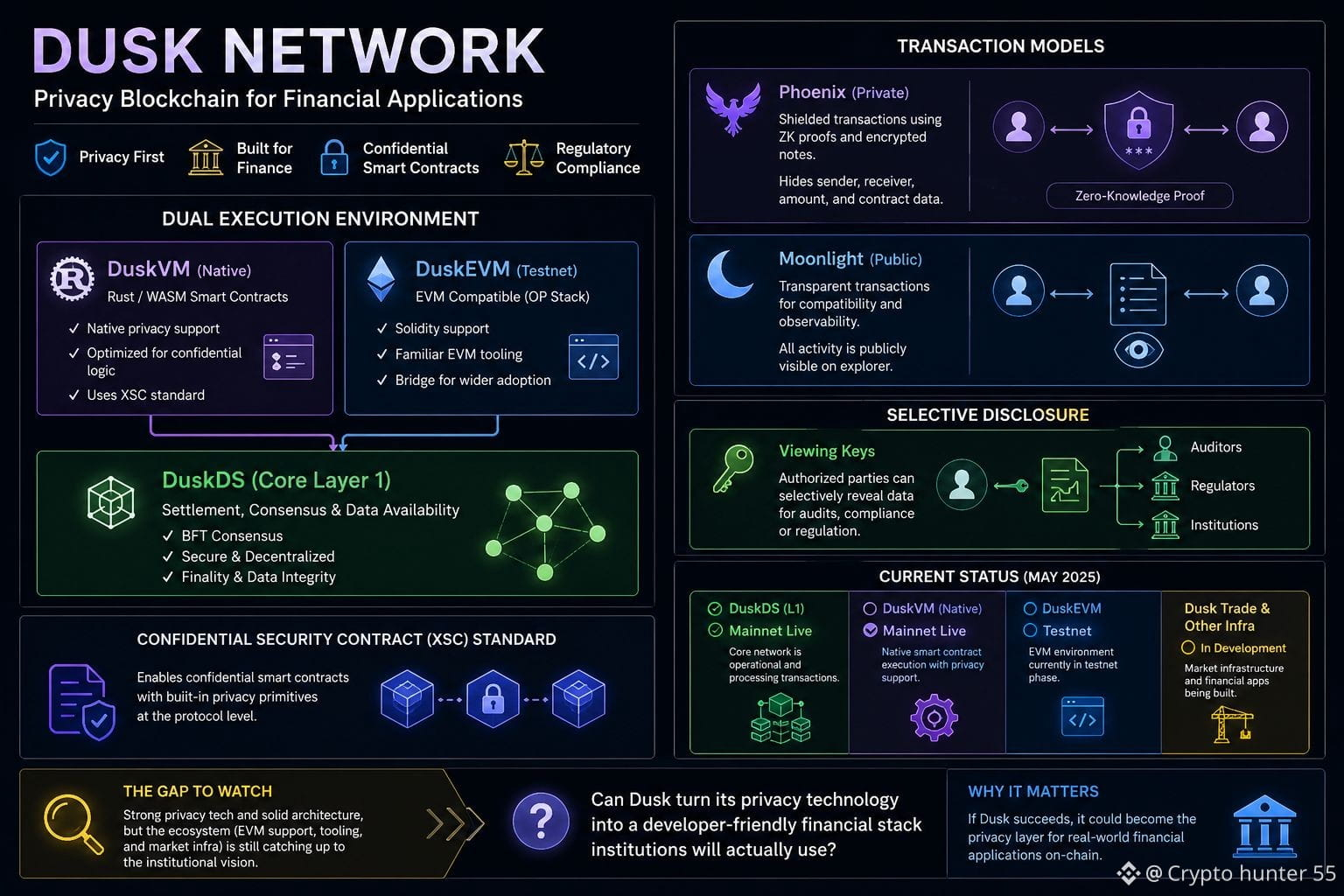
Ich habe mir etwas Zeit genommen, die aktuellen Dusk-Dokumente durchzugehen, und was dabei auffiel, war nicht die Bezeichnung „Privacy Blockchain“. Es ging vielmehr darum, wie stark die Architektur heute auf verschiedene Ausführungspfade aufgeteilt ist.
Im Kern übernimmt DuskDS das Settlement, den Konsens und die Datenverfügbarkeit, während DuskVM Rust/WASM-Contracts direkt auf der L1 ausführt. Daneben gibt es DuskEVM, eine auf OP Stack basierende Umgebung für Solidity und vertraute EVM-Tooling. Diese Flexibilität ist zwar sinnvoll für die Einführung, schafft aber auch einen interessanten Entwicklers-Trade-off: Der native Privacy-Pfad ist nicht dasselbe wie die schlichte Bereitstellung einer EVM-App.
Der Privacy-Teil ist greifbarer als nur ein Slogan. Phoenix nutzt geschützte Notizen und Zero-Knowledge-Proofs, während Viewing Keys Informationen selektiv offenlegen können, wenn beim Auditing oder bei regulatorischen Anforderungen Transparenz erforderlich ist. Selbst der Explorer spiegelt diese Unterscheidung wider: Phoenix-Transaktionen können Sender, Empfänger und Betrag verbergen, während öffentliche Moonlight-Aktivität weiterhin beobachtbar bleibt.
Was mir allerdings besonders im Kopf blieb, ist die Lücke zwischen der größeren institutionellen Vision und dem, was heute tatsächlich production-ready ist. Die native L1 ist live, aber DuskEVM ist derzeit als Testnet gelistet, während neue Markt-Infrastruktur wie Dusk Trade noch aufgebaut wird.
Daher habe ich mich gefragt: Liegt der echte Vorteil von Dusk vor allem in der Privacy-Technologie selbst – oder kann es diese Technologie in einen Entwickler-freundlichen Finanz-Stack verwandeln, den Institutionen tatsächlich nutzen werden?
$ACE
$SOL
Ich habe mir etwas Zeit genommen, die aktuellen Dusk-Dokumente durchzugehen, und was dabei auffiel, war nicht die Bezeichnung „Privacy Blockchain“. Es ging vielmehr darum, wie stark die Architektur heute auf verschiedene Ausführungspfade aufgeteilt ist.
Im Kern übernimmt DuskDS das Settlement, den Konsens und die Datenverfügbarkeit, während DuskVM Rust/WASM-Contracts direkt auf der L1 ausführt. Daneben gibt es DuskEVM, eine auf OP Stack basierende Umgebung für Solidity und vertraute EVM-Tooling. Diese Flexibilität ist zwar sinnvoll für die Einführung, schafft aber auch einen interessanten Entwicklers-Trade-off: Der native Privacy-Pfad ist nicht dasselbe wie die schlichte Bereitstellung einer EVM-App.
Der Privacy-Teil ist greifbarer als nur ein Slogan. Phoenix nutzt geschützte Notizen und Zero-Knowledge-Proofs, während Viewing Keys Informationen selektiv offenlegen können, wenn beim Auditing oder bei regulatorischen Anforderungen Transparenz erforderlich ist. Selbst der Explorer spiegelt diese Unterscheidung wider: Phoenix-Transaktionen können Sender, Empfänger und Betrag verbergen, während öffentliche Moonlight-Aktivität weiterhin beobachtbar bleibt.
Was mir allerdings besonders im Kopf blieb, ist die Lücke zwischen der größeren institutionellen Vision und dem, was heute tatsächlich production-ready ist. Die native L1 ist live, aber DuskEVM ist derzeit als Testnet gelistet, während neue Markt-Infrastruktur wie Dusk Trade noch aufgebaut wird.
Daher habe ich mich gefragt: Liegt der echte Vorteil von Dusk vor allem in der Privacy-Technologie selbst – oder kann es diese Technologie in einen Entwickler-freundlichen Finanz-Stack verwandeln, den Institutionen tatsächlich nutzen werden?
$ACE
$SOL

#dusk $DUSK @Dusk
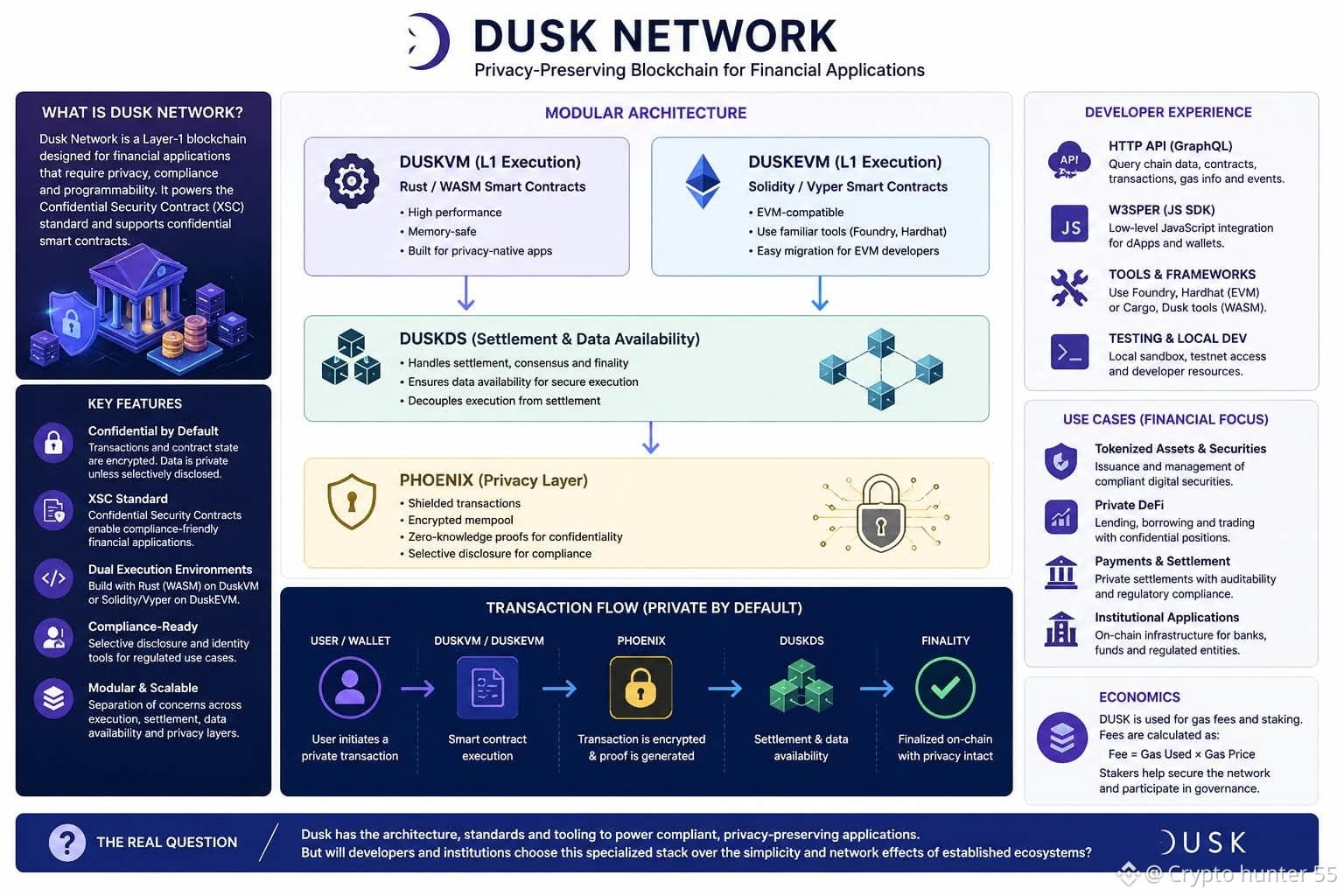
Ich habe mir etwas Zeit genommen, Dusk’ aktuelle Dokumentation durchzugehen, und hängen geblieben ist nicht nur der Datenschutz-Aspekt. Vielmehr, wie stark die Architektur rund um finanzielle Infrastruktur geformt wird, statt Privatsphäre als nachträgliche Zusatzfunktion zu betrachten.
Das Interessante daran: Dusk trennt inzwischen Ausführungspfade. DuskVM führt Rust/WASM-Verträge direkt auf der L1 aus, während DuskEVM Solidity/Vyper sowie vertraute Tools wie Foundry und Hardhat mitbringt. Im Hintergrund übernimmt DuskDS das Settlement und die Datenverfügbarkeit, während Phoenix abgeschirmte Transaktionen bereitstellt. Diese Modularität ist sinnvoll, bedeutet aber auch, dass Entwickler mehr verstehen müssen als nur „eine private Smart-Contract-Chain“.
Ich habe mir außerdem die Entwickler-Schnittstelle angesehen. Die HTTP-API stellt GraphQL, Contract-Calls, Gas-Daten, Transaktionsübermittlung und Event-Subscriptions bereit, während W3sper die tiefere JavaScript-Integration abdeckt. DUSK selbst wird für Gas und Staking verwendet, wobei die Gebühren aus dem verwendeten Gas × dem Gaspreis berechnet werden. Das fühlt sich deutlich mehr nach einer für ernsthafte Anwendungen gebauten Infrastruktur an als nach einer einfachen Consumer-Chain.
Doch ich habe weiter über die Lücke zwischen Architektur und Adoption nachgedacht. Die Bausteine für konformen Datenschutz, selektive Offenlegung und regulierte Assets werden immer konkreter; der schwierigere Test ist jedoch, ob Entwickler und Finanzinstitute diesen Stack tatsächlich gegenüber etablierten EVM-Ökosystemen wählen. Die Technologie kann ein echtes Problem lösen, aber Infrastruktur zählt nur dann, wenn jemand darauf aufbaut.
Ist die größte Herausforderung für Dusk also immer noch die Datenschutztechnologie – oder vielmehr der Nachweis, dass seine spezialisierte Architektur den zusätzlichen Aufwand wert ist?
$GRVT
$KII
Ich habe mir etwas Zeit genommen, Dusk’ aktuelle Dokumentation durchzugehen, und hängen geblieben ist nicht nur der Datenschutz-Aspekt. Vielmehr, wie stark die Architektur rund um finanzielle Infrastruktur geformt wird, statt Privatsphäre als nachträgliche Zusatzfunktion zu betrachten.
Das Interessante daran: Dusk trennt inzwischen Ausführungspfade. DuskVM führt Rust/WASM-Verträge direkt auf der L1 aus, während DuskEVM Solidity/Vyper sowie vertraute Tools wie Foundry und Hardhat mitbringt. Im Hintergrund übernimmt DuskDS das Settlement und die Datenverfügbarkeit, während Phoenix abgeschirmte Transaktionen bereitstellt. Diese Modularität ist sinnvoll, bedeutet aber auch, dass Entwickler mehr verstehen müssen als nur „eine private Smart-Contract-Chain“.
Ich habe mir außerdem die Entwickler-Schnittstelle angesehen. Die HTTP-API stellt GraphQL, Contract-Calls, Gas-Daten, Transaktionsübermittlung und Event-Subscriptions bereit, während W3sper die tiefere JavaScript-Integration abdeckt. DUSK selbst wird für Gas und Staking verwendet, wobei die Gebühren aus dem verwendeten Gas × dem Gaspreis berechnet werden. Das fühlt sich deutlich mehr nach einer für ernsthafte Anwendungen gebauten Infrastruktur an als nach einer einfachen Consumer-Chain.
Doch ich habe weiter über die Lücke zwischen Architektur und Adoption nachgedacht. Die Bausteine für konformen Datenschutz, selektive Offenlegung und regulierte Assets werden immer konkreter; der schwierigere Test ist jedoch, ob Entwickler und Finanzinstitute diesen Stack tatsächlich gegenüber etablierten EVM-Ökosystemen wählen. Die Technologie kann ein echtes Problem lösen, aber Infrastruktur zählt nur dann, wenn jemand darauf aufbaut.
Ist die größte Herausforderung für Dusk also immer noch die Datenschutztechnologie – oder vielmehr der Nachweis, dass seine spezialisierte Architektur den zusätzlichen Aufwand wert ist?
$GRVT
$KII
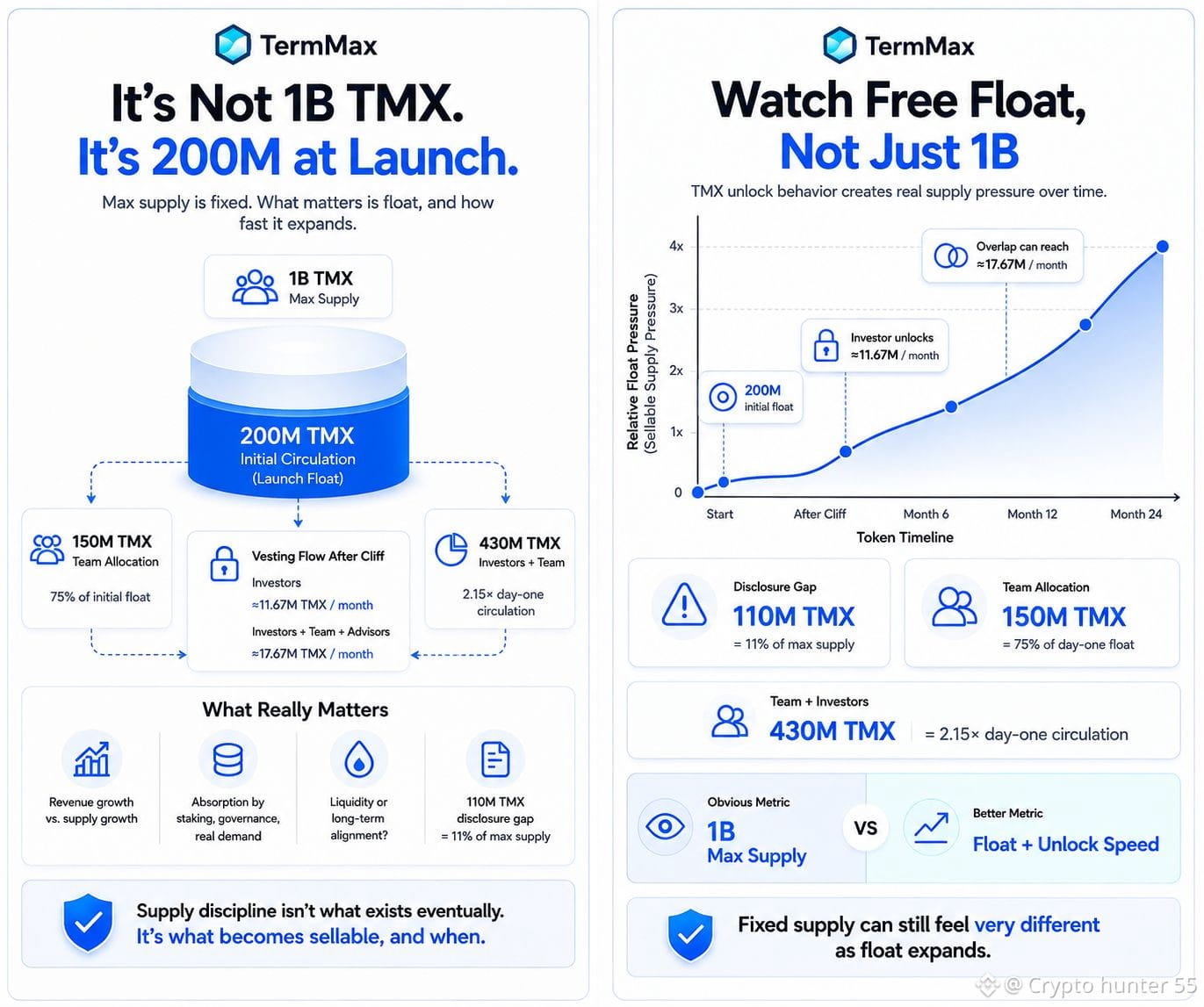
Während ich den Token-Plan von TermMax gelesen habe, bin ich immer wieder zu einer Zahl zurückgekehrt. 1 Milliarde TMX klingt fest und einfach – aber nur 200 Millionen sollen beim Start zirkulieren. Das macht das maximale Angebot zur naheliegenden Kennzahl – und vermutlich zur schwächeren.
Zuerst zählt der Umlauf (Float), dann, wie schnell dieser Float wächst. Nur Investor-Tokens lassen auf ungefähr 11,67 Mio. TMX schließen, die pro Monat nach dem Cliff freigeschaltet werden. Fügt man Team- und Berater-Überlappungen hinzu, könnte der monatliche lineare Entsperrstrom bei etwa 17,67 Mio. liegen. Das ist nicht automatisch ein Problem – etwas geplante Verwässerung ist normal.
Der eigentliche Test ist das Verhalten: Wächst der Protokollumsatz schneller als das zirkulierende Angebot? Wird neues TMX durch Staking, Governance und echte Nachfrage aufgenommen – oder wird es nur zu handelbarer Liquidität?
Die Team-Allokation von 150 Mio. entspricht 75% des anfänglichen 200-Mio.-Floats. Team plus Investoren zusammen ergeben 430 Mio. – das sind 2,15× die Tag-1-Zirkulation. Das rückt in ein anderes Licht, was „festes Angebot“ hier tatsächlich bedeutet.
Außerdem gibt es eine unangenehme Einzelheit: Eine 110-Mio.-Offenlegungsdifferenz entspricht 11% des maximalen Angebots. Die Versionsverwaltung des Dokuments wird seltsamerweise zu Tokenomics-Daten an sich.
Ich beobachte also den Free Float – nicht die Schlagzeilen-Milliarde –, denn Angebotsdisziplin ist nicht nur das, was irgendwann existiert, sondern das, was verkaufbar wird – und wann.
#TermMax @TermMax
$HEMI
$OPG
$KITE
Zuerst zählt der Umlauf (Float), dann, wie schnell dieser Float wächst. Nur Investor-Tokens lassen auf ungefähr 11,67 Mio. TMX schließen, die pro Monat nach dem Cliff freigeschaltet werden. Fügt man Team- und Berater-Überlappungen hinzu, könnte der monatliche lineare Entsperrstrom bei etwa 17,67 Mio. liegen. Das ist nicht automatisch ein Problem – etwas geplante Verwässerung ist normal.
Der eigentliche Test ist das Verhalten: Wächst der Protokollumsatz schneller als das zirkulierende Angebot? Wird neues TMX durch Staking, Governance und echte Nachfrage aufgenommen – oder wird es nur zu handelbarer Liquidität?
Die Team-Allokation von 150 Mio. entspricht 75% des anfänglichen 200-Mio.-Floats. Team plus Investoren zusammen ergeben 430 Mio. – das sind 2,15× die Tag-1-Zirkulation. Das rückt in ein anderes Licht, was „festes Angebot“ hier tatsächlich bedeutet.
Außerdem gibt es eine unangenehme Einzelheit: Eine 110-Mio.-Offenlegungsdifferenz entspricht 11% des maximalen Angebots. Die Versionsverwaltung des Dokuments wird seltsamerweise zu Tokenomics-Daten an sich.
Ich beobachte also den Free Float – nicht die Schlagzeilen-Milliarde –, denn Angebotsdisziplin ist nicht nur das, was irgendwann existiert, sondern das, was verkaufbar wird – und wann.
#TermMax @TermMax
$HEMI
$OPG
$KITE
Verifiziert
#dusk $DUSK @Dusk
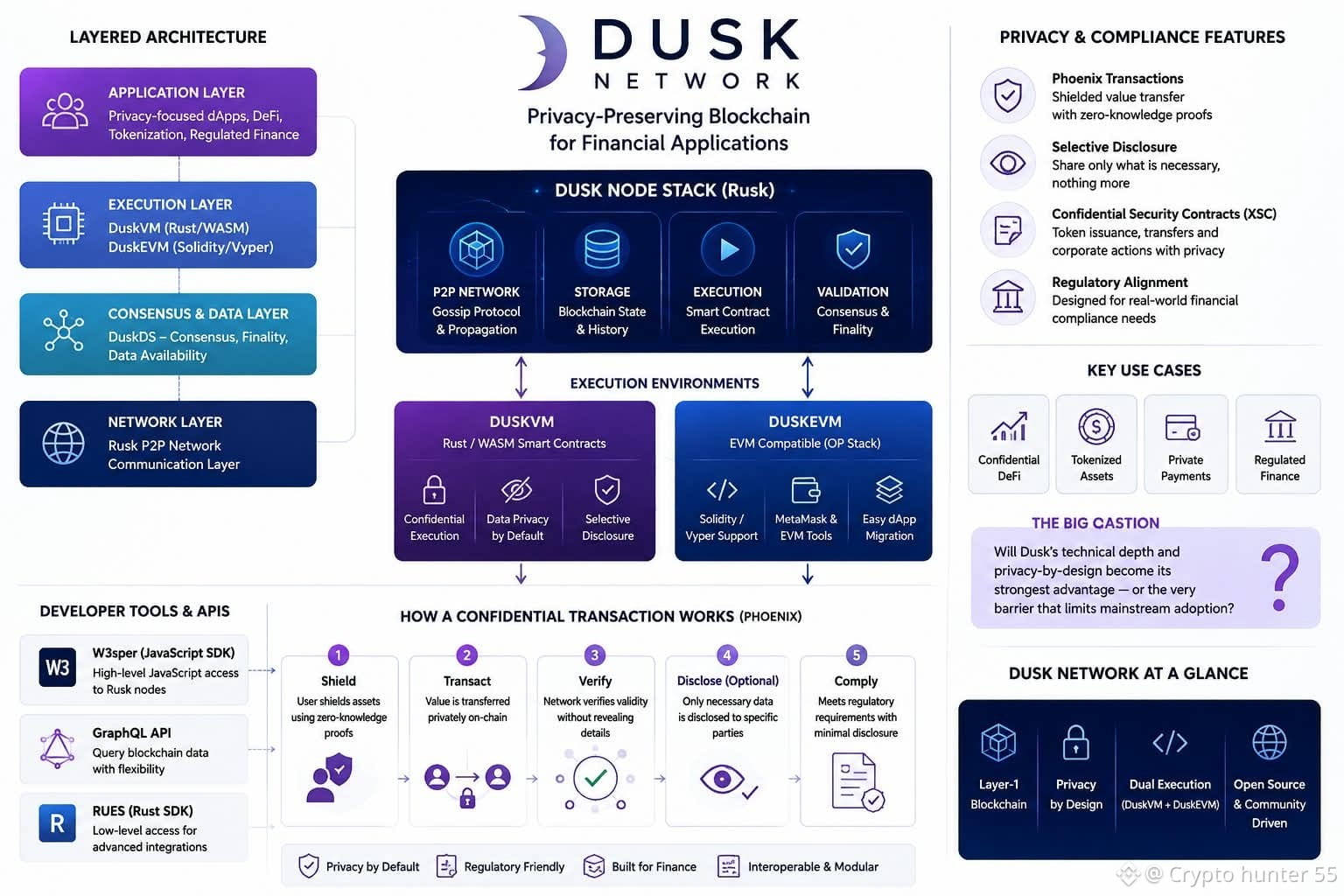
Ich habe mir etwas Zeit genommen, die aktuellen Dusk-Dokumente durchzugehen, anstatt nur den Pitch „Privacy Blockchain for Finance“ zu lesen, und die Architektur ist interessanter, als die Überschrift vermuten lässt. Was bei mir hängen geblieben ist: Dusk verlässt sich nicht auf ein einziges Ausführungsmodell, um alles abzudecken.
Die Basisschicht, DuskDS, übernimmt Konsens, Finalität und Datenverfügbarkeit, während Rusk den Node-Stack betreibt und die DuskVM direkt Rust/WASM-Verträge auf der L1 ausführt. Außerdem gibt es DuskEVM, eine OP-Stack-basierte Umgebung für Solidity und Vyper. Diese Aufteilung ergibt Sinn für die Einführung: Entwickler können vertraute EVM-Tools nutzen, während Anwendungen, die Dusk’s native Privacy-Primitiven benötigen, näher am Basissystem arbeiten können.
Hier ist der Teil, über den ich immer wieder nachgedacht habe: Wie viel von der Vision für Privacy und Compliance ist heute für Entwickler tatsächlich leicht nutzbar? Die Tools sind real — W3sper bietet JavaScript-Zugriff auf Rusk, während GraphQL und RUES niedrigere Programmierschnittstellen freilegen — aber die DuskVM erfordert dennoch, dass Entwickler Rust/WASM und Dusk-spezifische Transaktionsmodelle verstehen. Das ist eine spürbare Lernkurve im Vergleich zum schlichten Deployment eines EVM-Vertrags.
Die Architektur wirkt bewusst für regulierte Märkte ausgelegt: abgeschirmte Phoenix-Transaktionen, selektive Offenlegung und XSC-ähnliche vertrauliche Security-Contracts. Aber bestehende Infrastruktur ist etwas anderes als eine breite, produktionsreife Einführung. Die spannende Frage ist, ob die technische Komplexität von Dusk für spezialisierte Finanzanwendungen zum Vorteil wird — oder zur Hürde für das Ökosystem, das Dusk aufbauen will.
$ACE
$SOL
Ich habe mir etwas Zeit genommen, die aktuellen Dusk-Dokumente durchzugehen, anstatt nur den Pitch „Privacy Blockchain for Finance“ zu lesen, und die Architektur ist interessanter, als die Überschrift vermuten lässt. Was bei mir hängen geblieben ist: Dusk verlässt sich nicht auf ein einziges Ausführungsmodell, um alles abzudecken.
Die Basisschicht, DuskDS, übernimmt Konsens, Finalität und Datenverfügbarkeit, während Rusk den Node-Stack betreibt und die DuskVM direkt Rust/WASM-Verträge auf der L1 ausführt. Außerdem gibt es DuskEVM, eine OP-Stack-basierte Umgebung für Solidity und Vyper. Diese Aufteilung ergibt Sinn für die Einführung: Entwickler können vertraute EVM-Tools nutzen, während Anwendungen, die Dusk’s native Privacy-Primitiven benötigen, näher am Basissystem arbeiten können.
Hier ist der Teil, über den ich immer wieder nachgedacht habe: Wie viel von der Vision für Privacy und Compliance ist heute für Entwickler tatsächlich leicht nutzbar? Die Tools sind real — W3sper bietet JavaScript-Zugriff auf Rusk, während GraphQL und RUES niedrigere Programmierschnittstellen freilegen — aber die DuskVM erfordert dennoch, dass Entwickler Rust/WASM und Dusk-spezifische Transaktionsmodelle verstehen. Das ist eine spürbare Lernkurve im Vergleich zum schlichten Deployment eines EVM-Vertrags.
Die Architektur wirkt bewusst für regulierte Märkte ausgelegt: abgeschirmte Phoenix-Transaktionen, selektive Offenlegung und XSC-ähnliche vertrauliche Security-Contracts. Aber bestehende Infrastruktur ist etwas anderes als eine breite, produktionsreife Einführung. Die spannende Frage ist, ob die technische Komplexität von Dusk für spezialisierte Finanzanwendungen zum Vorteil wird — oder zur Hürde für das Ökosystem, das Dusk aufbauen will.
$ACE
$SOL
#termmax @TermMax
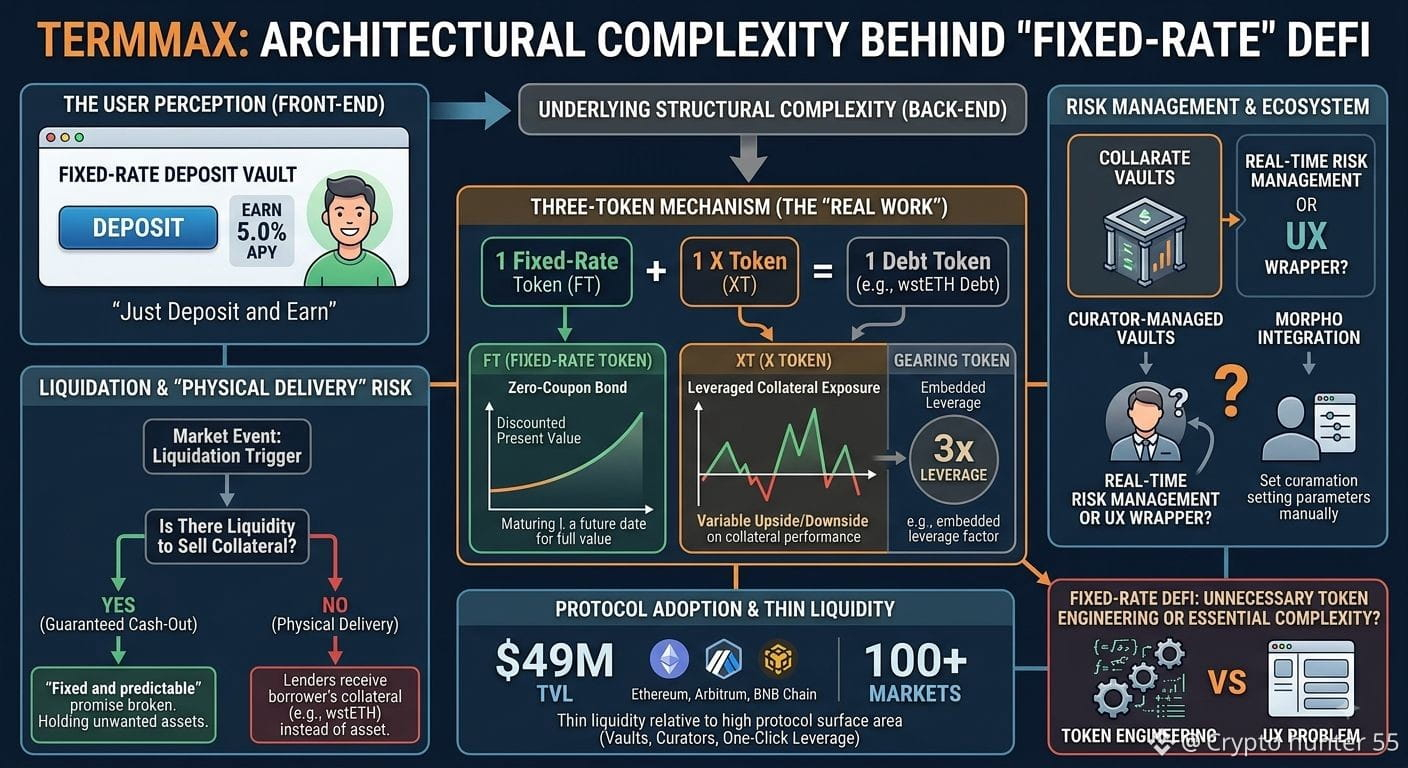
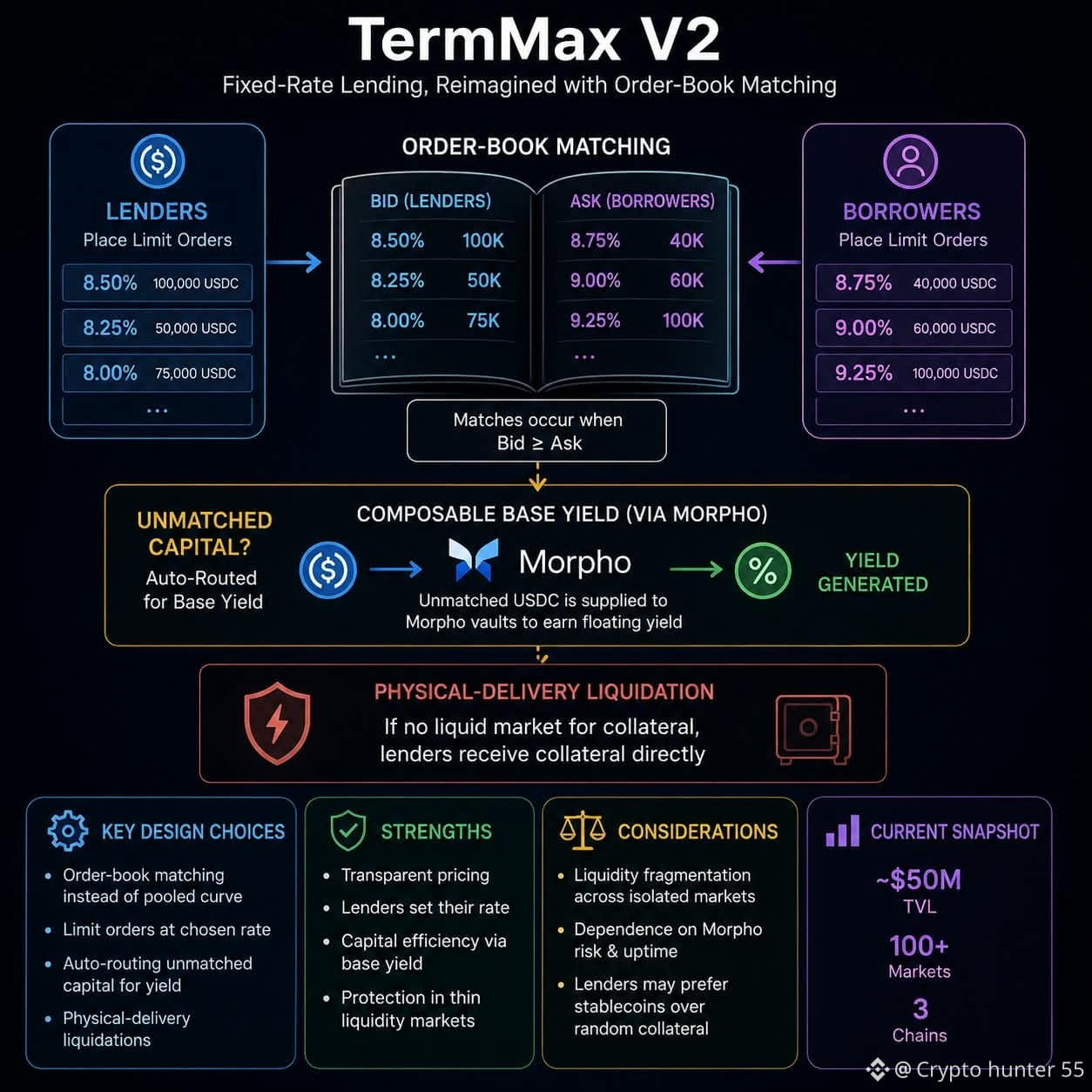
Was mir beim Erkunden von TermMax besonders aufgefallen ist, ist, wie viel vom eigentlichen Mechanismus in drei kleinen Tokens steckt, an die die meisten Nutzer nie denken. Jeder Markt zerfällt in einen Fixed-Rate Token (FT), einen X Token (XT) und einen Gearing Token. Die Beziehung 1 FT + 1 XT = 1 Debt Token erledigt die gesamte entscheidende Arbeit — im Grunde ist das eine Zero-Coupon-Anleihe, die in DeFi-„Rohrleitungen“ verpackt ist. Das ist clever, bedeutet aber auch: Der Slogan „einzahlen und verdienen“ auf der Startseite verheimlicht darunter eine ganze Menge struktureller Komplexität.
Der spannende Teil ist: Liquidationen sind nicht garantiert Barauszahlungen. Wenn es keine Liquidität gibt, um Sicherheiten zu verkaufen, erhalten Kreditgeber stattdessen die physische Lieferung der Sicherheiten des Kreditnehmers — nicht das erwartete Asset zurück. Das ist eine nachvollziehbare Designentscheidung für isolierte Märkte mit exotischen Sicherheiten, aber sie bricht still und leise das Versprechen „fix und vorhersehbar“, auf das das ganze Protokoll aufgebaut ist — du kannst dir zwar eine Rendite sichern, am Ende aber trotzdem etwas halten, das du gar nicht angefragt hast.
TVL liegt seit einem Launch im April 2025 bei rund 49 Mio. USD über Ethereum, Arbitrum und BNB Chain verteilt, mit über 100 Märkten — solide, aber dünn im Vergleich zu der Menge an Oberfläche (Vaults, Kuratoren, One-Click-Hebel, Morpho-Integration), die sie bereits ausgeliefert haben. Ich fragte mich daher, ob die kuratorverwaltete Vault-Ebene wirklich aktives Risikomanagement ist oder aktuell eher ein UX-Wrapper über manuelles Setzen von Parametern.
Braucht Fixed-Rate-DeFi wirklich so viel Token-Engineering, um zu funktionieren — oder löst es im Kern ein UX-Problem, das mit unnötiger finanzieller Komplexität angegangen wird?
$GRVT
$KII
$DOS
Was mir beim Erkunden von TermMax besonders aufgefallen ist, ist, wie viel vom eigentlichen Mechanismus in drei kleinen Tokens steckt, an die die meisten Nutzer nie denken. Jeder Markt zerfällt in einen Fixed-Rate Token (FT), einen X Token (XT) und einen Gearing Token. Die Beziehung 1 FT + 1 XT = 1 Debt Token erledigt die gesamte entscheidende Arbeit — im Grunde ist das eine Zero-Coupon-Anleihe, die in DeFi-„Rohrleitungen“ verpackt ist. Das ist clever, bedeutet aber auch: Der Slogan „einzahlen und verdienen“ auf der Startseite verheimlicht darunter eine ganze Menge struktureller Komplexität.
Der spannende Teil ist: Liquidationen sind nicht garantiert Barauszahlungen. Wenn es keine Liquidität gibt, um Sicherheiten zu verkaufen, erhalten Kreditgeber stattdessen die physische Lieferung der Sicherheiten des Kreditnehmers — nicht das erwartete Asset zurück. Das ist eine nachvollziehbare Designentscheidung für isolierte Märkte mit exotischen Sicherheiten, aber sie bricht still und leise das Versprechen „fix und vorhersehbar“, auf das das ganze Protokoll aufgebaut ist — du kannst dir zwar eine Rendite sichern, am Ende aber trotzdem etwas halten, das du gar nicht angefragt hast.
TVL liegt seit einem Launch im April 2025 bei rund 49 Mio. USD über Ethereum, Arbitrum und BNB Chain verteilt, mit über 100 Märkten — solide, aber dünn im Vergleich zu der Menge an Oberfläche (Vaults, Kuratoren, One-Click-Hebel, Morpho-Integration), die sie bereits ausgeliefert haben. Ich fragte mich daher, ob die kuratorverwaltete Vault-Ebene wirklich aktives Risikomanagement ist oder aktuell eher ein UX-Wrapper über manuelles Setzen von Parametern.
Braucht Fixed-Rate-DeFi wirklich so viel Token-Engineering, um zu funktionieren — oder löst es im Kern ein UX-Problem, das mit unnötiger finanzieller Komplexität angegangen wird?
$GRVT
$KII
$DOS
Was mir an TermMax hängen geblieben ist, war nicht die Festzins-Emissionsidee selbst — das haben schon viele Protokolle versucht — sondern wie stark das Design auf Order-Book-Matching setzt statt auf eine gebündelte Kurve. Kreditgeber platzieren Limit-Orders zu einer gewählten Rate und warten einfach… Wenn nichts auf der anderen Seite zuschlägt, bleibt das Kapital untätig, sofern es nicht automatisch irgendwo anders weitergeleitet wird, um in der Zwischenzeit eine variable Rendite zu erwirtschaften. Das ist ein sinnvoller Workaround, aber er gesteht auch leise ein, dass der Kernmechanismus ein Liquiditätsproblem hat, über das das Marketing hinweggeht.
Beim Blick in die V2-Dokumentation ist die Idee der „Composable Base Yield“ (nicht gematchtes USDC an Morpho zu routen) der spannendere Teil. Es ist weniger „Festzins-Revolution“ und eher „wir haben eine Matching-Schicht auf die Liquiditäts-Engine von jemand anderem aufgebaut“. Das ist eine faire Gegenleistung, wenn man bedenkt, wie schwer es ist, die Order-Book-Tiefe von Grund auf zu bootstrappen — aber das bedeutet auch, dass das Schicksal von TermMax teilweise an die eigenen Risikoparameter und die Verfügbarkeit von Morpho gekoppelt ist.
Das Modell der physisch durchgeführten Liquidation — Kreditgeber erhalten Sicherheiten direkt, falls die
$ACE
$XAUT
$PORTAL
#termmax @TermMax
Beim Blick in die V2-Dokumentation ist die Idee der „Composable Base Yield“ (nicht gematchtes USDC an Morpho zu routen) der spannendere Teil. Es ist weniger „Festzins-Revolution“ und eher „wir haben eine Matching-Schicht auf die Liquiditäts-Engine von jemand anderem aufgebaut“. Das ist eine faire Gegenleistung, wenn man bedenkt, wie schwer es ist, die Order-Book-Tiefe von Grund auf zu bootstrappen — aber das bedeutet auch, dass das Schicksal von TermMax teilweise an die eigenen Risikoparameter und die Verfügbarkeit von Morpho gekoppelt ist.
Das Modell der physisch durchgeführten Liquidation — Kreditgeber erhalten Sicherheiten direkt, falls die
$ACE
$XAUT
$PORTAL
#termmax @TermMax
#dusk $DUSK @Dusk
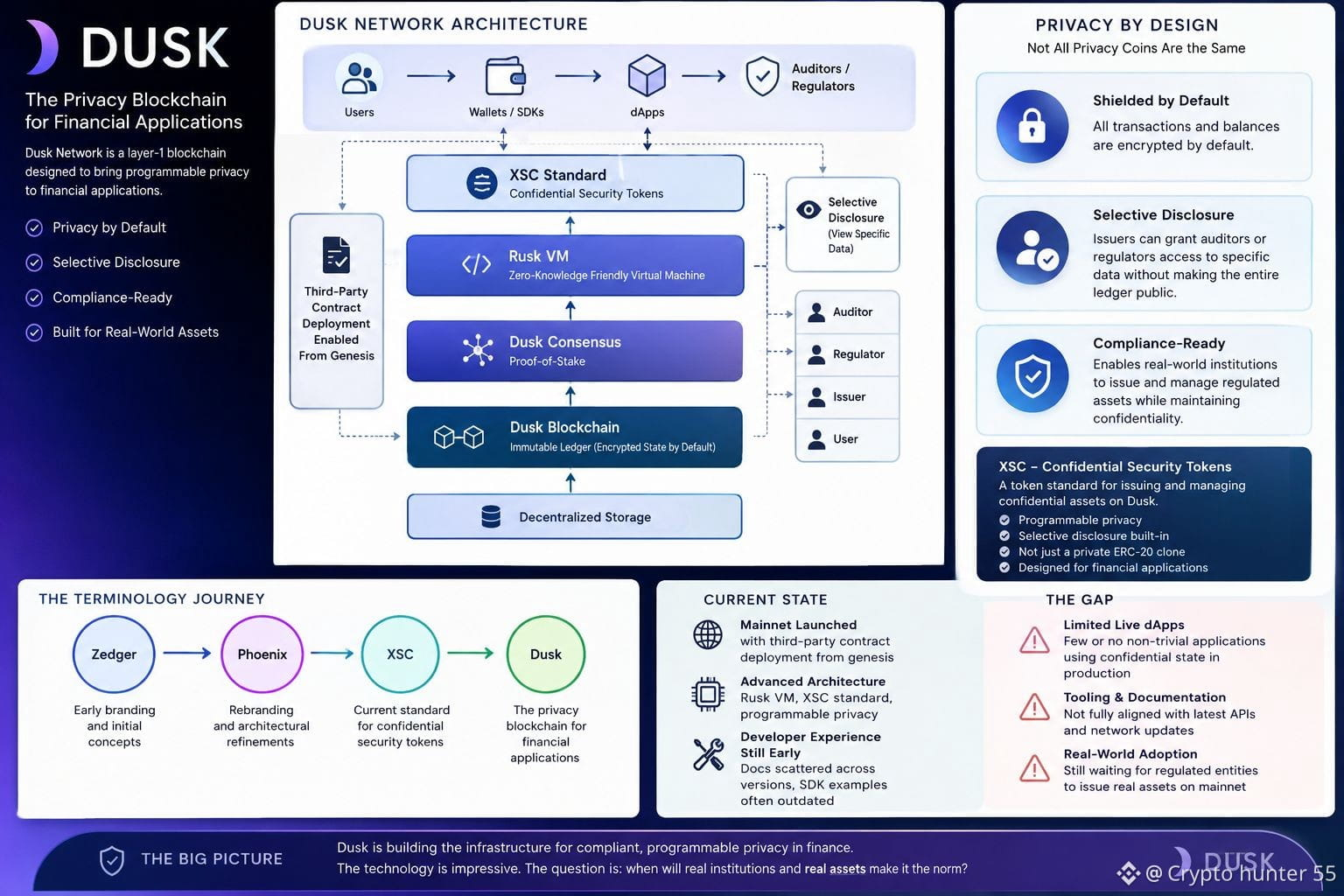
Ich habe einen Abend damit verbracht, die Dusk-Network-Dokumentation und den Testnet-Explorer durchzugehen, nachdem ich es als „die Privacy-Blockchain für Finanzanwendungen“ erwähnt gesehen hatte. Das Erste, was mir auffiel, war, wie stark sich die Terminologie im Laufe der Jahre verschoben hat – Zedger, Phoenix, nun XSC. Das ließ mich fragen, wie viel der Architektur bereits feststeht und wie viel weiterhin umbenannt, angepasst und neu aufgebaut wird.
Interessant ist jedoch das eigentliche Design: Rusk, ihre zero-knowledge-freundliche VM, sowie der XSC-Standard für vertrauliche Security Tokens sind nicht einfach nur „private ERC-20-Klone“. Der Ansatz ist programmierbare Privatsphäre – Transaktionen sind standardmäßig abgeschirmt, aber Emittenten können selektive Offenlegung einbauen, sodass ein Auditor oder Regulator bestimmte Daten sehen kann, ohne dass die gesamte Kette transparent wird. Das ist eine echte technische Unterscheidung zu den meisten „Privacy-Coins“, die meist „entweder alles oder nichts“ bieten.
Dorthin bin ich immer wieder gestoßen: Das Mainnet wurde mit dem Einbezug von Contract-Deployments durch Dritte ab Genesis gestartet – das ist tatsächlich selten; die meisten Chains schalten diese Funktion erst nach dem Launch frei. Aber das Tooling rund darum wirkt noch früh. Die Dokumentation ist über verschiedene Versionen verstreut, die SDK-Beispiele passen nicht immer zur aktuellen API-Oberfläche, und es gibt bislang wenig Anzeichen dafür, dass bereits produktive, nicht-triviale dApps mit vertrauligem State im Einsatz sind – statt nur in Demos.
Ich verstehe, warum sie compliance-fähige Privatsphäre gegenüber reiner Anonymität priorisieren – das ist der einzige Weg, wie Institutionen mit so etwas überhaupt in Kontakt kommen. Aber „compliant by design“ spielt erst dann wirklich eine Rolle, wenn echte, regulierte Akteure darauf bereits echte Assets ausgeben – nicht nur beim Testen.
Hat jemand tatsächlich schon etwas Nicht-Triviales im Dusk-Mainnet deployed, oder ist das Ganze noch überwiegend eine vielversprechende Spezifikation, die auf ihren ersten echten Nutzer wartet?
$KII
$AIO
Ich habe einen Abend damit verbracht, die Dusk-Network-Dokumentation und den Testnet-Explorer durchzugehen, nachdem ich es als „die Privacy-Blockchain für Finanzanwendungen“ erwähnt gesehen hatte. Das Erste, was mir auffiel, war, wie stark sich die Terminologie im Laufe der Jahre verschoben hat – Zedger, Phoenix, nun XSC. Das ließ mich fragen, wie viel der Architektur bereits feststeht und wie viel weiterhin umbenannt, angepasst und neu aufgebaut wird.
Interessant ist jedoch das eigentliche Design: Rusk, ihre zero-knowledge-freundliche VM, sowie der XSC-Standard für vertrauliche Security Tokens sind nicht einfach nur „private ERC-20-Klone“. Der Ansatz ist programmierbare Privatsphäre – Transaktionen sind standardmäßig abgeschirmt, aber Emittenten können selektive Offenlegung einbauen, sodass ein Auditor oder Regulator bestimmte Daten sehen kann, ohne dass die gesamte Kette transparent wird. Das ist eine echte technische Unterscheidung zu den meisten „Privacy-Coins“, die meist „entweder alles oder nichts“ bieten.
Dorthin bin ich immer wieder gestoßen: Das Mainnet wurde mit dem Einbezug von Contract-Deployments durch Dritte ab Genesis gestartet – das ist tatsächlich selten; die meisten Chains schalten diese Funktion erst nach dem Launch frei. Aber das Tooling rund darum wirkt noch früh. Die Dokumentation ist über verschiedene Versionen verstreut, die SDK-Beispiele passen nicht immer zur aktuellen API-Oberfläche, und es gibt bislang wenig Anzeichen dafür, dass bereits produktive, nicht-triviale dApps mit vertrauligem State im Einsatz sind – statt nur in Demos.
Ich verstehe, warum sie compliance-fähige Privatsphäre gegenüber reiner Anonymität priorisieren – das ist der einzige Weg, wie Institutionen mit so etwas überhaupt in Kontakt kommen. Aber „compliant by design“ spielt erst dann wirklich eine Rolle, wenn echte, regulierte Akteure darauf bereits echte Assets ausgeben – nicht nur beim Testen.
Hat jemand tatsächlich schon etwas Nicht-Triviales im Dusk-Mainnet deployed, oder ist das Ganze noch überwiegend eine vielversprechende Spezifikation, die auf ihren ersten echten Nutzer wartet?
$KII
$AIO
Verifiziert
#dusk $DUSK @Dusk
Ich habe tatsächlich ein Wochenende damit verbracht, Dusk-Dokumentationen zu lesen, statt nur die Startseite zu überfliegen, und die Lücke zwischen „Privacy-Blockchain für Finanzanwendungen“ und dem, was man aktuell tatsächlich anfassen kann, ist interessanter, als die meisten Threads vermuten lassen.
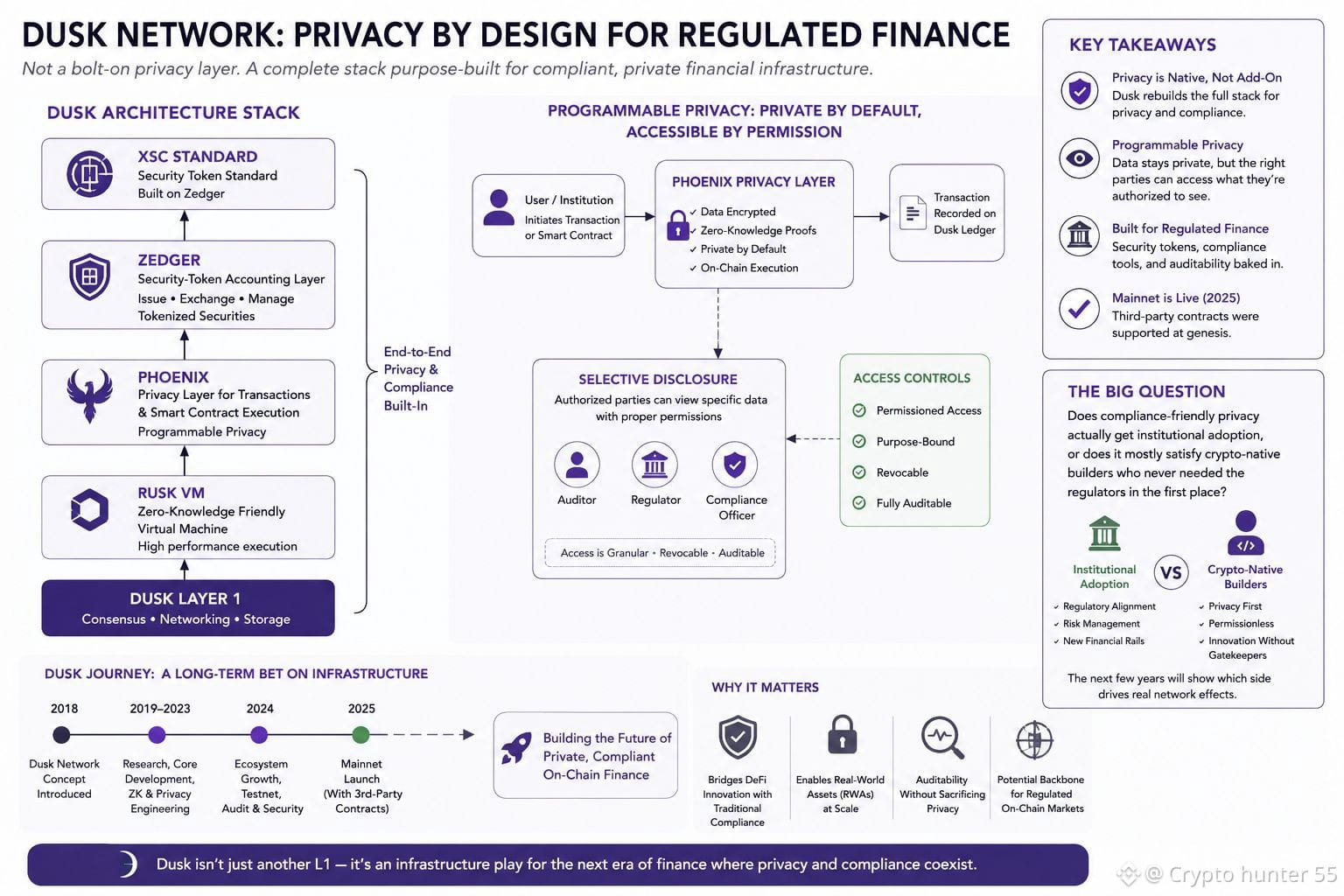
Das Interessante daran: Dusk setzt keine zusätzliche Privacy-Layer „on top“ ein, sondern betreibt sein eigenes Transaktionsmodell, Phoenix, gekoppelt mit Zedger für die eigentliche Security-Token-Abrechnung, und Rusk als ZK-freundliche VM darunter. Das XSC-Standard sitzt auf Zedger auf, das die Ausgabe, den Tausch und das Management tokenisierter Wertpapiere übernimmt, während Phoenix Privacy auf Transaktionen und die Ausführung von Contracts ausweitet.
Das ist wirklich eine andere Architektur als „Ethereum plus ein Mixer“, und es erklärt, warum das Projekt Jahre länger gebraucht hat als die meisten anderen L1s, um an den Start zu gehen – Mainnet ist erst 2025 gelandet, also ganze fünf Jahre nachdem der ursprüngliche Roadmap-Plan 2024 davon gesprochen hat.
Am stärksten im Kopf geblieben ist mir der Pitch für „programmable privacy“ – Transaktionen standardmäßig privat, aber Auditoren oder Regulierer können die Erlaubnis erhalten, auf Anfrage bestimmte Details einzusehen. Auf dem Papier ist das genau der Kernnutzen für regulierte Finanzen. In der Praxis ist selektives Disclosure-Tooling für Dritte jedoch genau die Art von Sache, die sich leicht diagrammieren lässt und schwer zu produktivieren ist – Key-Management, Widerruf, wer auditet den Zugriff des Auditors. Ich habe kaum etwas gefunden, das zeigt, dass das bereits von einer realen Institution genutzt wird, statt nur als Fähigkeit beschrieben zu werden.
Das Deployment von Third-Party-Contracts wurde übrigens bereits beim Genesis ausgeliefert und nicht erst nach dem Launch – ein echter Pluspunkt in puncto Ausführungsdisziplin.
Erreicht compliance-freundliche Privacy tatsächlich institutionelle Akzeptanz, oder erfüllt sie größtenteils eher die Bedürfnisse von crypto-nativen Buildern, die die Regulierer nie wirklich gebraucht haben?
$KII
$AIO
Ich habe tatsächlich ein Wochenende damit verbracht, Dusk-Dokumentationen zu lesen, statt nur die Startseite zu überfliegen, und die Lücke zwischen „Privacy-Blockchain für Finanzanwendungen“ und dem, was man aktuell tatsächlich anfassen kann, ist interessanter, als die meisten Threads vermuten lassen.
Das Interessante daran: Dusk setzt keine zusätzliche Privacy-Layer „on top“ ein, sondern betreibt sein eigenes Transaktionsmodell, Phoenix, gekoppelt mit Zedger für die eigentliche Security-Token-Abrechnung, und Rusk als ZK-freundliche VM darunter. Das XSC-Standard sitzt auf Zedger auf, das die Ausgabe, den Tausch und das Management tokenisierter Wertpapiere übernimmt, während Phoenix Privacy auf Transaktionen und die Ausführung von Contracts ausweitet.
Das ist wirklich eine andere Architektur als „Ethereum plus ein Mixer“, und es erklärt, warum das Projekt Jahre länger gebraucht hat als die meisten anderen L1s, um an den Start zu gehen – Mainnet ist erst 2025 gelandet, also ganze fünf Jahre nachdem der ursprüngliche Roadmap-Plan 2024 davon gesprochen hat.
Am stärksten im Kopf geblieben ist mir der Pitch für „programmable privacy“ – Transaktionen standardmäßig privat, aber Auditoren oder Regulierer können die Erlaubnis erhalten, auf Anfrage bestimmte Details einzusehen. Auf dem Papier ist das genau der Kernnutzen für regulierte Finanzen. In der Praxis ist selektives Disclosure-Tooling für Dritte jedoch genau die Art von Sache, die sich leicht diagrammieren lässt und schwer zu produktivieren ist – Key-Management, Widerruf, wer auditet den Zugriff des Auditors. Ich habe kaum etwas gefunden, das zeigt, dass das bereits von einer realen Institution genutzt wird, statt nur als Fähigkeit beschrieben zu werden.
Das Deployment von Third-Party-Contracts wurde übrigens bereits beim Genesis ausgeliefert und nicht erst nach dem Launch – ein echter Pluspunkt in puncto Ausführungsdisziplin.
Erreicht compliance-freundliche Privacy tatsächlich institutionelle Akzeptanz, oder erfüllt sie größtenteils eher die Bedürfnisse von crypto-nativen Buildern, die die Regulierer nie wirklich gebraucht haben?
$KII
$AIO
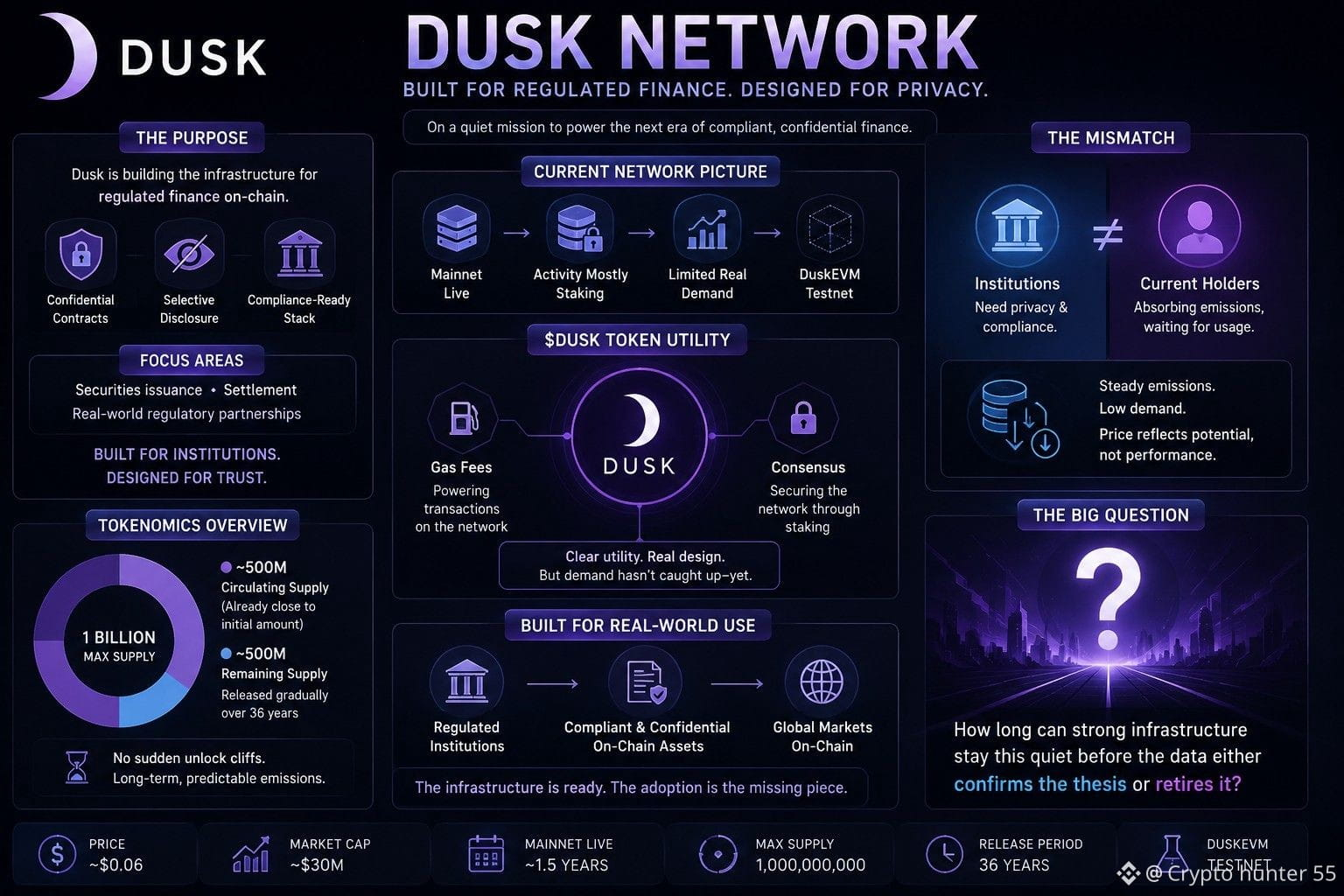
Spät in der Nacht habe ich in älteren Charts gestöbert und bemerkt, dass Dusk immer noch um etwa sechs Cent herum schwebt, während die Marktkapitalisierung bei rund 30 Mio. US-Dollar liegt. Nach ungefähr eineinhalb Jahren auf dem Mainnet fühlt sich das Ausbleiben von Lärm inzwischen weniger wie ein vorübergehendes Phänomen an, sondern eher wie Teil der Story.
Dusk ist für ein sehr konkretes Problem konzipiert: reguliertes Finanzwesen On-Chain zu bringen, ohne dabei Vertraulichkeit aufzugeben. Der Stack setzt auf vertrauliche Verträge, selektive Offenlegung, regelkonforme Emission und Abwicklung von Wertpapieren – ergänzt durch Partnerschaften mit lizenzierten Handelsplätzen, die etwas echten regulatorischen Kontext aus der realen Welt liefern. Die Infrastruktur ergibt Sinn. Der schwierigere Teil ist die Adoption.
Derzeit scheint der Großteil der sichtbaren Netzwerkaktivität immer noch eher mit Staking verbunden zu sein als mit einer wirklich bedeutenden Nachfrage nach Transaktionen. Das zirkulierende Angebot ist bereits nahe am anfänglichen 500-Millionen-Volumen, während der verbleibende Vorrat über Jahrzehnte hinweg schrittweise freigegeben wird – statt durch plötzliche Unlock-Events. Das Token hat klare Rollen bei Gas und im Konsens, aber diese Rollen haben sich bisher noch nicht in eine starke Nachfrage übersetzt.
Das lässt eine interessante Lücke zwischen Technologie und Markt. Die Menschen, die Dusk’ Datenschutz- und Compliance-Funktionen irgendwann eventuell benötigen werden, sind nicht zwangsläufig dieselben, die heute die laufenden Emissionen bereits „auffressen“. DuskEVM ist außerdem noch im Testnet. Bis regulierte Assets in nennenswertem Maßstab On-Chain zu wandern beginnen, bepreist der Markt im Wesentlichen, was Dusk werden könnte – nicht, was es heute ist. Die eigentliche Frage ist, wie lange eine starke Infrastruktur so still bleiben kann, bevor die Daten die These schließlich belegen oder anfangen, sie zu widerlegen.
@Dusk #dusk $DUSK $AKE $OPG
Dusk ist für ein sehr konkretes Problem konzipiert: reguliertes Finanzwesen On-Chain zu bringen, ohne dabei Vertraulichkeit aufzugeben. Der Stack setzt auf vertrauliche Verträge, selektive Offenlegung, regelkonforme Emission und Abwicklung von Wertpapieren – ergänzt durch Partnerschaften mit lizenzierten Handelsplätzen, die etwas echten regulatorischen Kontext aus der realen Welt liefern. Die Infrastruktur ergibt Sinn. Der schwierigere Teil ist die Adoption.
Derzeit scheint der Großteil der sichtbaren Netzwerkaktivität immer noch eher mit Staking verbunden zu sein als mit einer wirklich bedeutenden Nachfrage nach Transaktionen. Das zirkulierende Angebot ist bereits nahe am anfänglichen 500-Millionen-Volumen, während der verbleibende Vorrat über Jahrzehnte hinweg schrittweise freigegeben wird – statt durch plötzliche Unlock-Events. Das Token hat klare Rollen bei Gas und im Konsens, aber diese Rollen haben sich bisher noch nicht in eine starke Nachfrage übersetzt.
Das lässt eine interessante Lücke zwischen Technologie und Markt. Die Menschen, die Dusk’ Datenschutz- und Compliance-Funktionen irgendwann eventuell benötigen werden, sind nicht zwangsläufig dieselben, die heute die laufenden Emissionen bereits „auffressen“. DuskEVM ist außerdem noch im Testnet. Bis regulierte Assets in nennenswertem Maßstab On-Chain zu wandern beginnen, bepreist der Markt im Wesentlichen, was Dusk werden könnte – nicht, was es heute ist. Die eigentliche Frage ist, wie lange eine starke Infrastruktur so still bleiben kann, bevor die Daten die These schließlich belegen oder anfangen, sie zu widerlegen.
@Dusk #dusk $DUSK $AKE $OPG
#dusk $DUSK @Dusk
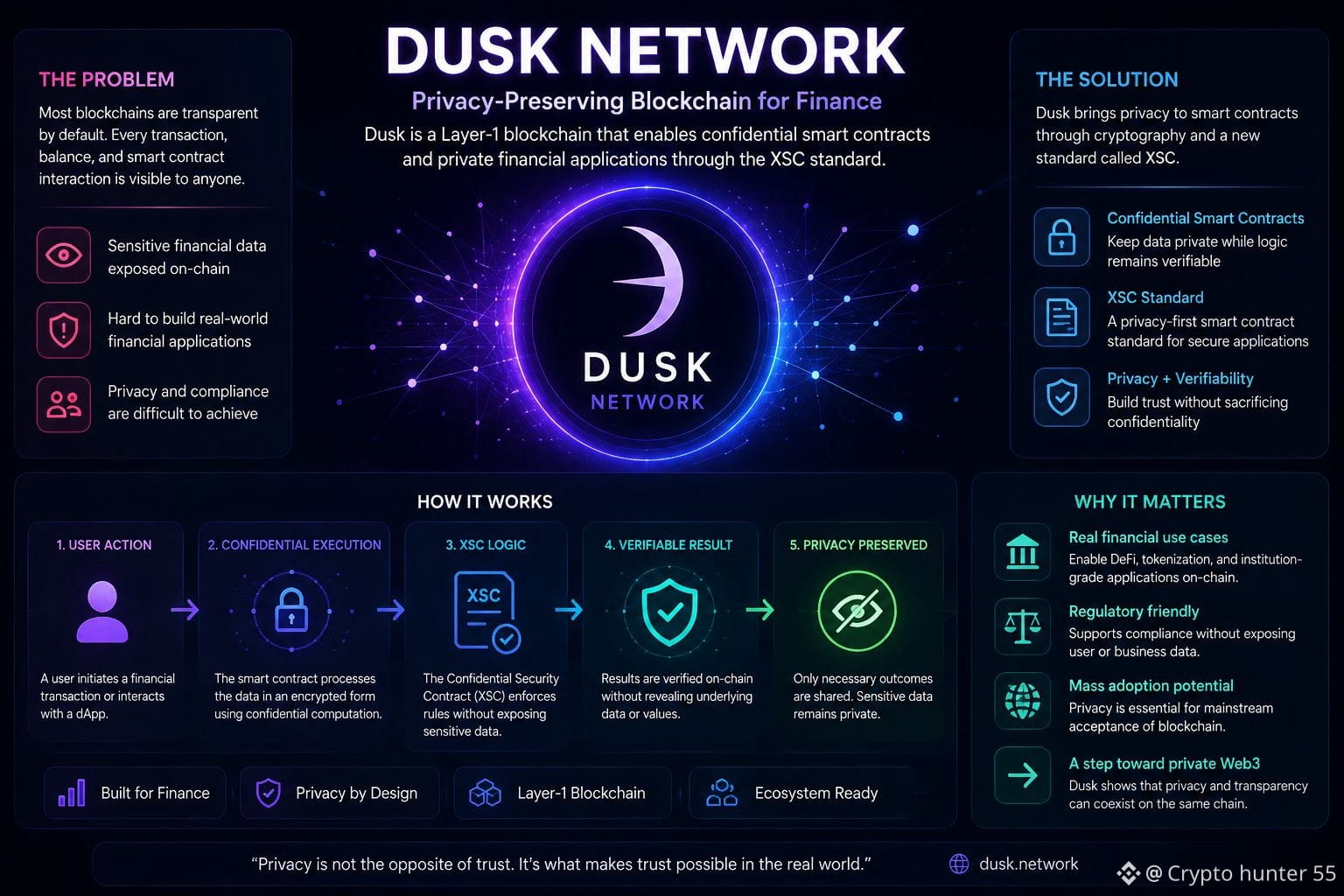
Ich habe mir heute das Dusk Network angesehen und bin immer wieder zu einer einfachen Frage zurückgekehrt: Warum müssen sich Finanz-Blockchains zwischen Datenschutz und Nachvollziehbarkeit entscheiden?
Dusk geht einen anderen Weg mit vertraulichen Smart Contracts und seinem Confidential Security Contract (XSC)-Standard. Das Interessante ist nicht nur das Verbergen von Transaktionsdetails. Es geht darum, dass finanzielle Logik auf der Chain ausgeführt werden kann, während sensible Informationen standardmäßig nicht öffentlich werden.
Das erscheint wichtig, denn reale Finanzsysteme laufen selten so, dass jede Einzelheit offenliegt. Doch Krypto behandelt Transparenz mitunter als den natürlichen Preis von Vertrauen. Dusk lässt mich darüber nachdenken, ob diese Annahme immer notwendig war.
Natürlich bringt Datenschutz-Infrastruktur ihre eigene Komplexität mit sich, und nachzuweisen, dass diese Systeme zuverlässig und in großem Maßstab funktionieren, ist eine deutlich größere Herausforderung als die Idee selbst. Aber wenn Blockchains irgendwann ernsthafte Finanzaktivitäten abwickeln sollen, dann ist Privatsphäre vielleicht kein optionales Feature mehr. Sie könnte vielmehr Teil dessen sein, was On-Chain-Finanzierung überhaupt praktikabel macht.
Ich habe mir heute das Dusk Network angesehen und bin immer wieder zu einer einfachen Frage zurückgekehrt: Warum müssen sich Finanz-Blockchains zwischen Datenschutz und Nachvollziehbarkeit entscheiden?
Dusk geht einen anderen Weg mit vertraulichen Smart Contracts und seinem Confidential Security Contract (XSC)-Standard. Das Interessante ist nicht nur das Verbergen von Transaktionsdetails. Es geht darum, dass finanzielle Logik auf der Chain ausgeführt werden kann, während sensible Informationen standardmäßig nicht öffentlich werden.
Das erscheint wichtig, denn reale Finanzsysteme laufen selten so, dass jede Einzelheit offenliegt. Doch Krypto behandelt Transparenz mitunter als den natürlichen Preis von Vertrauen. Dusk lässt mich darüber nachdenken, ob diese Annahme immer notwendig war.
Natürlich bringt Datenschutz-Infrastruktur ihre eigene Komplexität mit sich, und nachzuweisen, dass diese Systeme zuverlässig und in großem Maßstab funktionieren, ist eine deutlich größere Herausforderung als die Idee selbst. Aber wenn Blockchains irgendwann ernsthafte Finanzaktivitäten abwickeln sollen, dann ist Privatsphäre vielleicht kein optionales Feature mehr. Sie könnte vielmehr Teil dessen sein, was On-Chain-Finanzierung überhaupt praktikabel macht.
#dusk $DUSK @Dusk
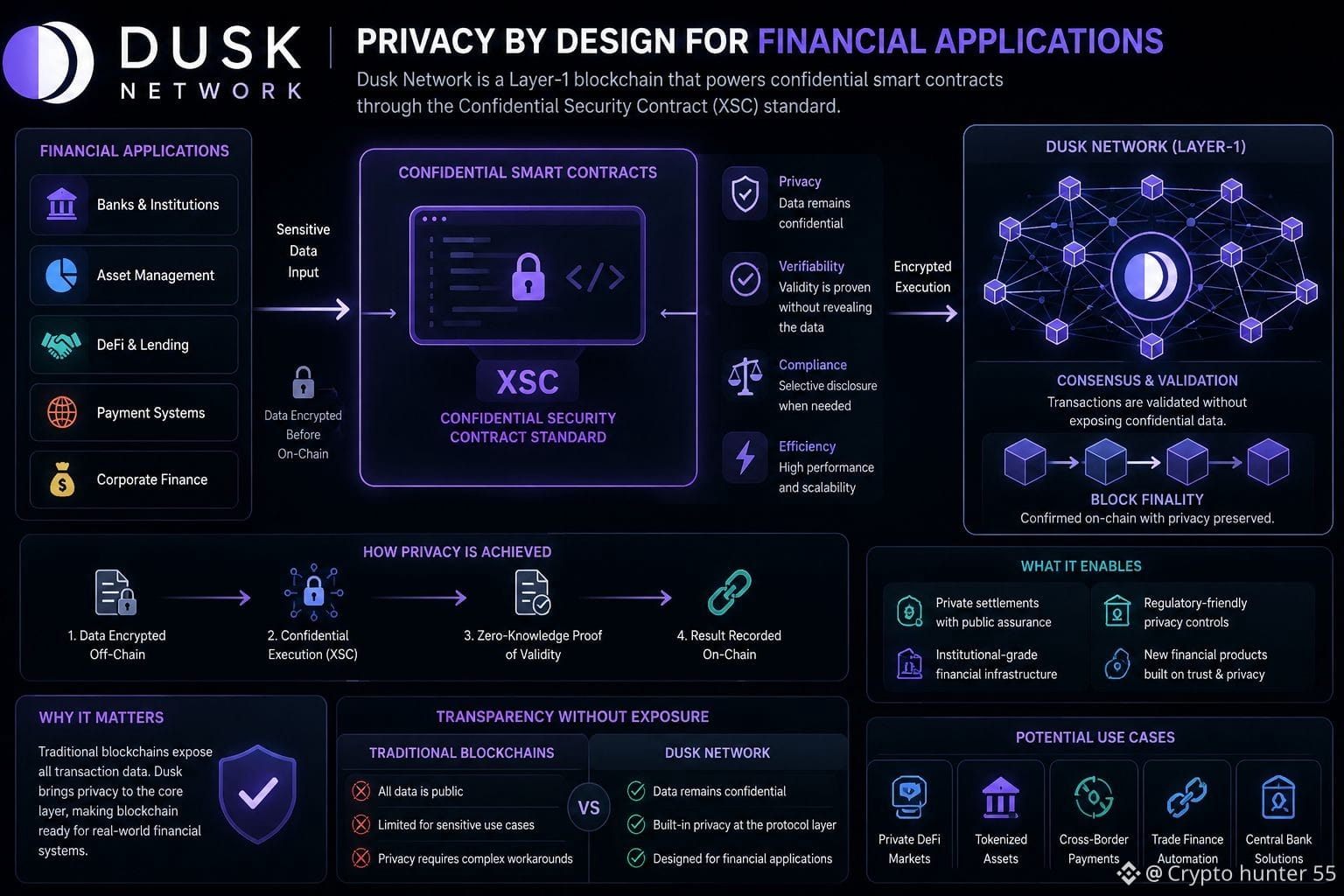
Ich habe mir heute Dusk Network angesehen und bin bei einer einfachen Frage hängen geblieben: Was wäre, wenn Finanzanwendungen nicht zwischen Nachvollziehbarkeit und dem Schutz sensibler Informationen entscheiden müssten?
Dusk geht damit anders um. Das ist eine Layer-1, die um vertrauliche Smart Contracts und den Confidential Security Contract (XSC)-Standard herum gebaut wurde. Ziel ist es, dass Transaktionen und finanzielle Logik privat bleiben können, während sie dennoch auf der On-Chain-Ebene verarbeitet und gesichert werden. Das fühlt sich weniger an wie das Hinzufügen von Privatsphäre als Feature – und eher wie das Infragestellen der Standardannahme, dass alles Wertvolle öffentlich sichtbar sein muss.
Spannend ist, was das für echte Finanzsysteme bedeuten könnte. Institutionen könnten sich nach Blockchain-Settlement, Automatisierung und gemeinsamer Verifikation sehnen, doch die Offenlegung jeder Einzelheit einer Transaktion ist eine ernsthafte Einschränkung. Vertrauliche Ausführung könnte dieses Modell deutlich praxistauglicher machen. Trotzdem wirft Privatsphäre auch eigene Fragen auf: Wie kann man genug beweisen, ohne zu viel offenzulegen – und wie leicht können Nutzer tatsächlich dem vertrauen, was verborgen bleibt?
Mit genau dieser Spannung bin ich hängen geblieben. Vielleicht besteht der nächste Schritt für Blockchain nicht darin, alles transparent zu machen, sondern darin zu lernen, wie man bestimmte Dinge nachweisbar machen kann, ohne sie öffentlich zu machen.
Ich habe mir heute Dusk Network angesehen und bin bei einer einfachen Frage hängen geblieben: Was wäre, wenn Finanzanwendungen nicht zwischen Nachvollziehbarkeit und dem Schutz sensibler Informationen entscheiden müssten?
Dusk geht damit anders um. Das ist eine Layer-1, die um vertrauliche Smart Contracts und den Confidential Security Contract (XSC)-Standard herum gebaut wurde. Ziel ist es, dass Transaktionen und finanzielle Logik privat bleiben können, während sie dennoch auf der On-Chain-Ebene verarbeitet und gesichert werden. Das fühlt sich weniger an wie das Hinzufügen von Privatsphäre als Feature – und eher wie das Infragestellen der Standardannahme, dass alles Wertvolle öffentlich sichtbar sein muss.
Spannend ist, was das für echte Finanzsysteme bedeuten könnte. Institutionen könnten sich nach Blockchain-Settlement, Automatisierung und gemeinsamer Verifikation sehnen, doch die Offenlegung jeder Einzelheit einer Transaktion ist eine ernsthafte Einschränkung. Vertrauliche Ausführung könnte dieses Modell deutlich praxistauglicher machen. Trotzdem wirft Privatsphäre auch eigene Fragen auf: Wie kann man genug beweisen, ohne zu viel offenzulegen – und wie leicht können Nutzer tatsächlich dem vertrauen, was verborgen bleibt?
Mit genau dieser Spannung bin ich hängen geblieben. Vielleicht besteht der nächste Schritt für Blockchain nicht darin, alles transparent zu machen, sondern darin zu lernen, wie man bestimmte Dinge nachweisbar machen kann, ohne sie öffentlich zu machen.
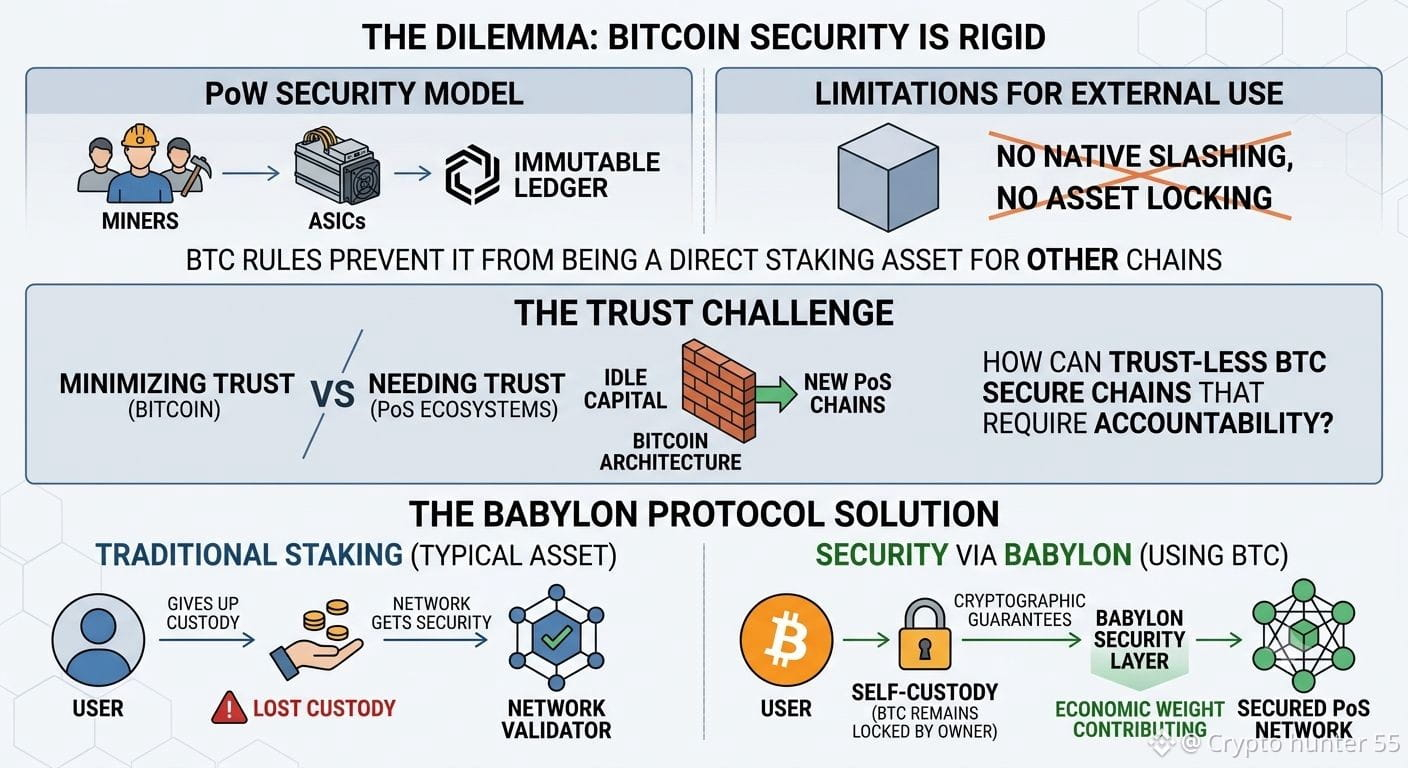
Ich habe mir heute Babylon angesehen und bin an eine einfache Frage geraten: Warum muss Bitcoin seine Regeln ändern, damit seine Sicherheit woanders nützlich wird?
Was mir auffällt, ist, dass Babylon nicht versucht, BTC in einen typischen Staking-Asset zu verwandeln. Die Idee kommt eher daher, dass Bitcoin-Inhaber die Sicherheit ihres BTC nutzen können, um PoS-Netzwerke zu schützen, während sie die Verwahrung der zugrunde liegenden Bitcoins behalten. Das wirkt wie eine andere Denkweise in Bezug auf brachliegendes Kapital.
Spannend ist dabei die Trennung zwischen Eigentum und Sicherheit. Bitcoin kann weiterhin Bitcoin bleiben, während sein wirtschaftliches Gewicht zur Sicherheit einer anderen Kette beiträgt. Wenn das im großen Maßstab funktioniert, könnte das die Sicherheit neuerer PoS-Ökosysteme weniger abhängig davon machen, alles von Grund auf neu zu bauen. Gleichzeitig bringt die Komplexität jedoch Fragen zu Anreizen, Vertrauensannahmen und dazu, wie sich diese Systeme unter Stress verhalten.
Das ist es, was Babylon für mich herausstechen ließ. Es geht nicht nur darum, BTC produktiv zu machen. Es stellt eine größere Frage: Kann ein Asset, das darauf ausgelegt ist, Vertrauen zu minimieren, Teil der Sicherheitsschicht für Systeme werden, die mehr davon brauchen?
#baby $BABY @BabylonLabs_io
Was mir auffällt, ist, dass Babylon nicht versucht, BTC in einen typischen Staking-Asset zu verwandeln. Die Idee kommt eher daher, dass Bitcoin-Inhaber die Sicherheit ihres BTC nutzen können, um PoS-Netzwerke zu schützen, während sie die Verwahrung der zugrunde liegenden Bitcoins behalten. Das wirkt wie eine andere Denkweise in Bezug auf brachliegendes Kapital.
Spannend ist dabei die Trennung zwischen Eigentum und Sicherheit. Bitcoin kann weiterhin Bitcoin bleiben, während sein wirtschaftliches Gewicht zur Sicherheit einer anderen Kette beiträgt. Wenn das im großen Maßstab funktioniert, könnte das die Sicherheit neuerer PoS-Ökosysteme weniger abhängig davon machen, alles von Grund auf neu zu bauen. Gleichzeitig bringt die Komplexität jedoch Fragen zu Anreizen, Vertrauensannahmen und dazu, wie sich diese Systeme unter Stress verhalten.
Das ist es, was Babylon für mich herausstechen ließ. Es geht nicht nur darum, BTC produktiv zu machen. Es stellt eine größere Frage: Kann ein Asset, das darauf ausgelegt ist, Vertrauen zu minimieren, Teil der Sicherheitsschicht für Systeme werden, die mehr davon brauchen?
#baby $BABY @BabylonLabs_io
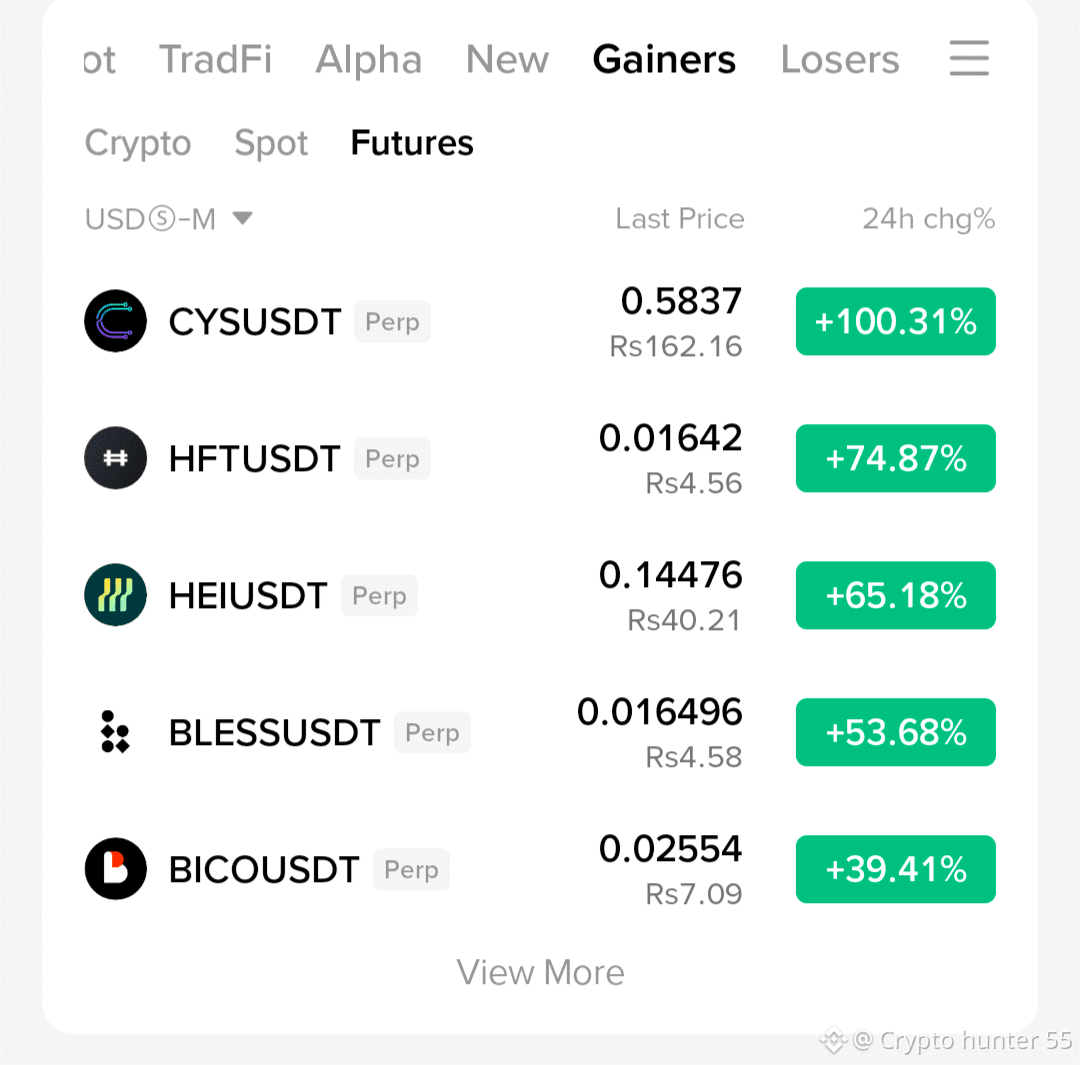
HEUTE TOP-ZUKUNFTS-GEWINNER 💚
01:$CYS
02:$HFT
03:$HEI
04:#BLESS
05:#BICO
DIES SIND DIE ZUKÜNFTIGEN GEWINNER DES TAGES 🔥🔥 🔮🤞
#futureGainers
01:$CYS
02:$HFT
03:$HEI
04:#BLESS
05:#BICO
DIES SIND DIE ZUKÜNFTIGEN GEWINNER DES TAGES 🔥🔥 🔮🤞
#futureGainers
#SpaceXFallsOnAISpendingAfterDebutEarnings 🚀
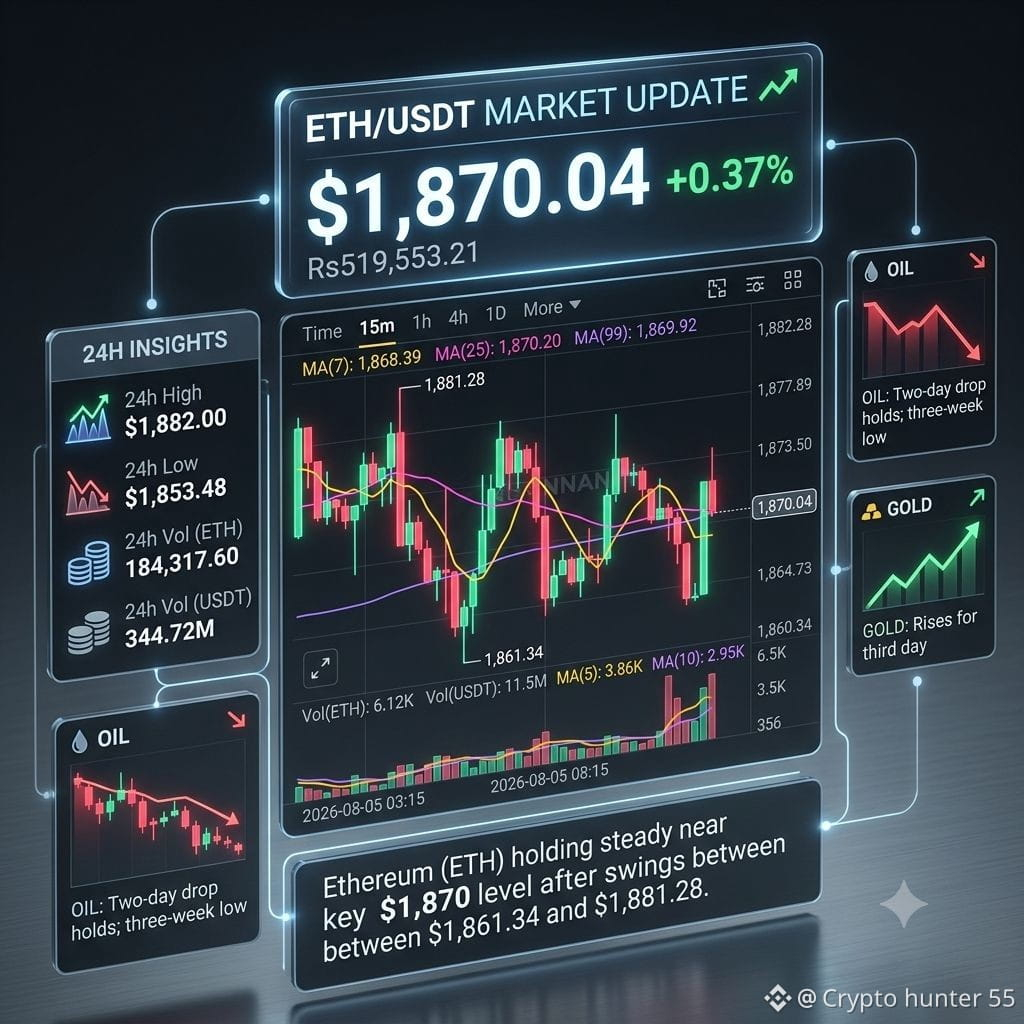
$ETH /USDT Marktupdate 📈
🔹 Aktueller Kurs: $1.870,04 (+0,37%)
🔹 Lokale Währung: Rs519.553,21
📊 24-Stunden-Spanne & Volumen:
🔹 24h Hoch: $1.882,00
🔹 24h Tief: $1.853,48
🔹 24h Vol (ETH): 184.317,60
🔹 24h Vol (USDT): 344,72 Mio.
📉 Gleitende Durchschnitte (15m-Zeitrahmen):
🔹 MA(7): $1.868,39
🔹 MA(25): $1.870,20
🔹 MA(99): $1.869,92
💎 Ethereum hält sich stabil nahe $1.870 nach den jüngsten Preisschwankungen zwischen $1.861,34 und $1.881,28.
#OilHoldsTwoDayDrop
#OilFallsToThreeWeekLow
#GoldRisesForThirdDay
#Ethereum
$ETH /USDT Marktupdate 📈
🔹 Aktueller Kurs: $1.870,04 (+0,37%)
🔹 Lokale Währung: Rs519.553,21
📊 24-Stunden-Spanne & Volumen:
🔹 24h Hoch: $1.882,00
🔹 24h Tief: $1.853,48
🔹 24h Vol (ETH): 184.317,60
🔹 24h Vol (USDT): 344,72 Mio.
📉 Gleitende Durchschnitte (15m-Zeitrahmen):
🔹 MA(7): $1.868,39
🔹 MA(25): $1.870,20
🔹 MA(99): $1.869,92
💎 Ethereum hält sich stabil nahe $1.870 nach den jüngsten Preisschwankungen zwischen $1.861,34 und $1.881,28.
#OilHoldsTwoDayDrop
#OilFallsToThreeWeekLow
#GoldRisesForThirdDay
#Ethereum
Anmelden und weiter Inhalte entdecken