
Aeriez
440 Beiträge

Aeriez
Altcoin and memecoins hunter
44 Following
33 Follower
117 Like gegeben
Beiträge
Alle
Zitierungen
$ONDO könnte im Moment eines der einfachsten Spot-Setups auf dem Brett sein.
Setze hier $1M bei ungefähr $0,36–$0,37 ein, und ein Rücklauf bis $1,16 macht daraus etwa $3,1M–$3,2M.
Das sind über $2M Gewinn, wenn das Setup wie geplant aufgeht.
Der Wochenchart krümmt sich endlich, der Kurs hält sich oberhalb des 7W-MAs, und der 25W-MA beginnt wie eine Unterstützung zu wirken.
Wichtige Levels, auf die ich achte:
Halten von $0,33–$0,36 = immer noch gut
Bruch von $0,40–$0,45 = Momentum kommt zurück
$0,55 zurückerobern = der echte Ausbruch beginnt
Zielzone = $1,00–$1,16
Die RWA-Story ist nicht tot.
#ONDO es braucht nur einen sauberen wöchentlichen Breakout, dann fangen die Leute wieder an hinterherzulaufen.
Setze hier $1M bei ungefähr $0,36–$0,37 ein, und ein Rücklauf bis $1,16 macht daraus etwa $3,1M–$3,2M.
Das sind über $2M Gewinn, wenn das Setup wie geplant aufgeht.
Der Wochenchart krümmt sich endlich, der Kurs hält sich oberhalb des 7W-MAs, und der 25W-MA beginnt wie eine Unterstützung zu wirken.
Wichtige Levels, auf die ich achte:
Halten von $0,33–$0,36 = immer noch gut
Bruch von $0,40–$0,45 = Momentum kommt zurück
$0,55 zurückerobern = der echte Ausbruch beginnt
Zielzone = $1,00–$1,16
Die RWA-Story ist nicht tot.
#ONDO es braucht nur einen sauberen wöchentlichen Breakout, dann fangen die Leute wieder an hinterherzulaufen.
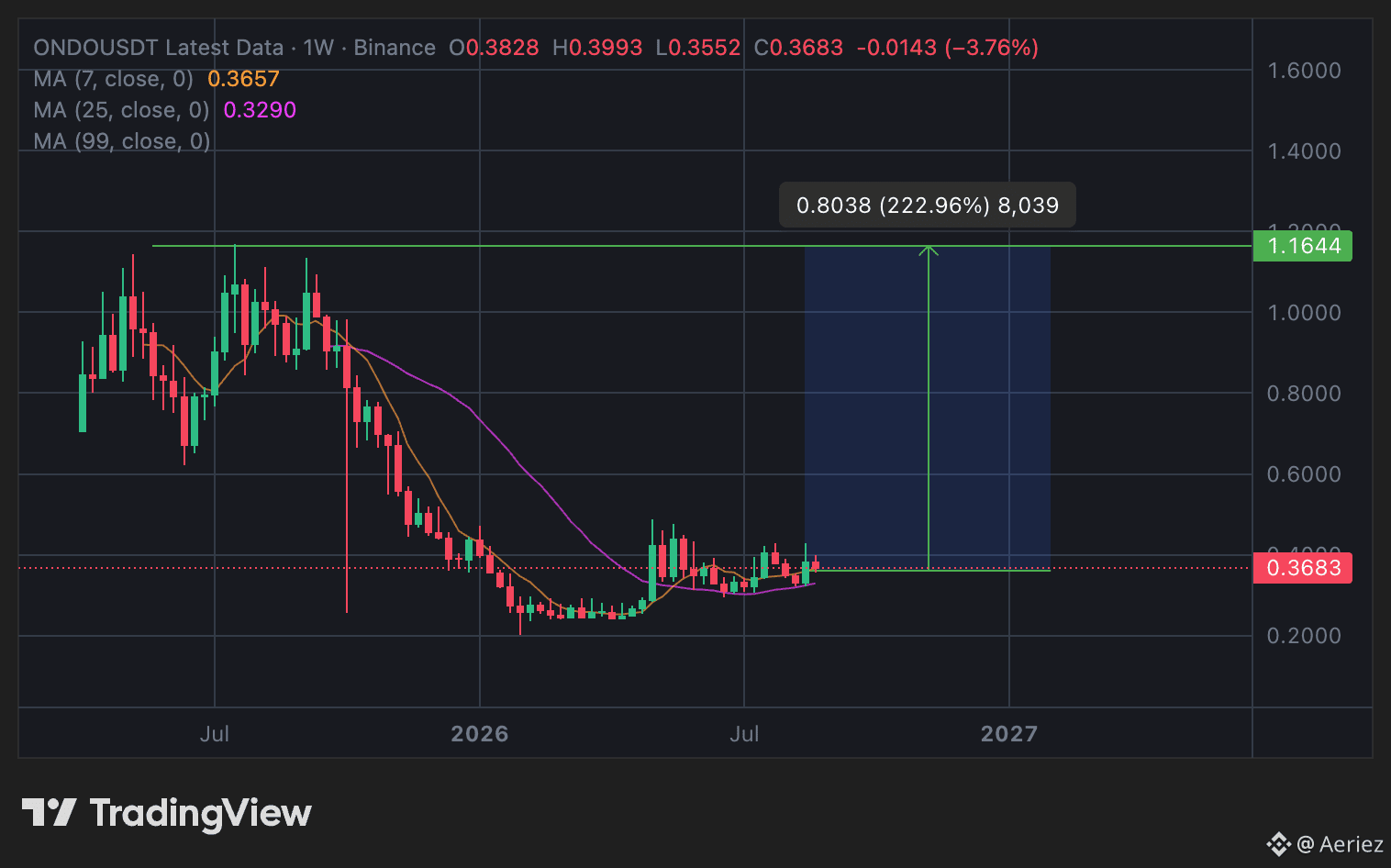
Wenn der wöchentliche Schlusskurs über den Widerstand steigt, sieht das gesamte Erholungs-Setup deutlich sauberer aus.
Feed-Creator-dd10abd6f
·
--
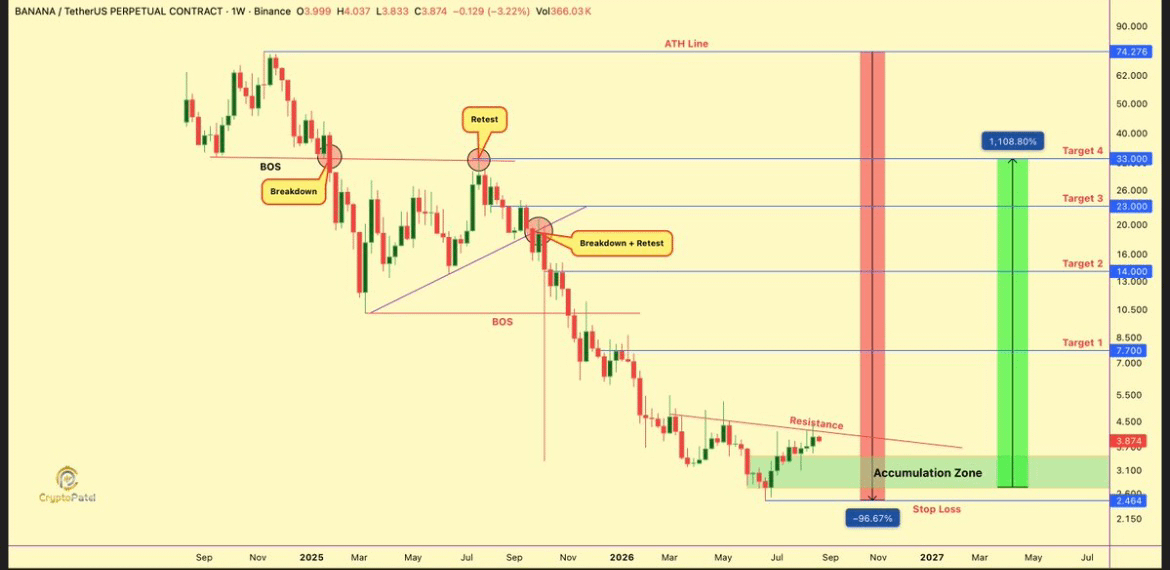
$BANANA Steig mehr als 94% seit dem ATH: Ist das hier die Akkumulationszone für eine potenzielle Erholung von 1.800%+?
#BANANA Hat eine vollständige Abwärtsphase auf höheren Zeitrahmen durchlaufen und ist vom ATH von 74,27$ in den Bereich um 2,50$ gefallen.
Die wichtige Frage ist jetzt nicht, wie viel BANANA bereits gefallen ist.
Die Frage ist, ob diese mehrmonatige Basis endlich die Grundlage für eine große Trendwende aufbaut.
Technische Struktur
✅ ATH: 74,276$
✅ Erstes großes BOS: 33 Break + Retest
✅ Zweites BOS: 10,50 Break nach dem Scheitern der aufsteigenden Trendlinie
✅ Makro-Abschwung: -94%+ seit dem ATH
✅ HTF-Akkumulationszone: 3,5–2,70$
✅ Höhere Tiefs entwickeln sich innerhalb der Basis
✅ Wöchentlich komprimierte Volatilität in Richtung abwärtsgerichtetem Widerstand
✅ Aktueller Widerstand: ~4,20$
✅ Bullenstruktur bestätigt erst nach einem Wochenabschluss oberhalb des Widerstands
✅ Risikoinvalidation: Wochenabschluss unter 2,464$
#BANANA Hat eine vollständige Abwärtsphase auf höheren Zeitrahmen durchlaufen und ist vom ATH von 74,27$ in den Bereich um 2,50$ gefallen.
Die wichtige Frage ist jetzt nicht, wie viel BANANA bereits gefallen ist.
Die Frage ist, ob diese mehrmonatige Basis endlich die Grundlage für eine große Trendwende aufbaut.
Technische Struktur
✅ ATH: 74,276$
✅ Erstes großes BOS: 33 Break + Retest
✅ Zweites BOS: 10,50 Break nach dem Scheitern der aufsteigenden Trendlinie
✅ Makro-Abschwung: -94%+ seit dem ATH
✅ HTF-Akkumulationszone: 3,5–2,70$
✅ Höhere Tiefs entwickeln sich innerhalb der Basis
✅ Wöchentlich komprimierte Volatilität in Richtung abwärtsgerichtetem Widerstand
✅ Aktueller Widerstand: ~4,20$
✅ Bullenstruktur bestätigt erst nach einem Wochenabschluss oberhalb des Widerstands
✅ Risikoinvalidation: Wochenabschluss unter 2,464$
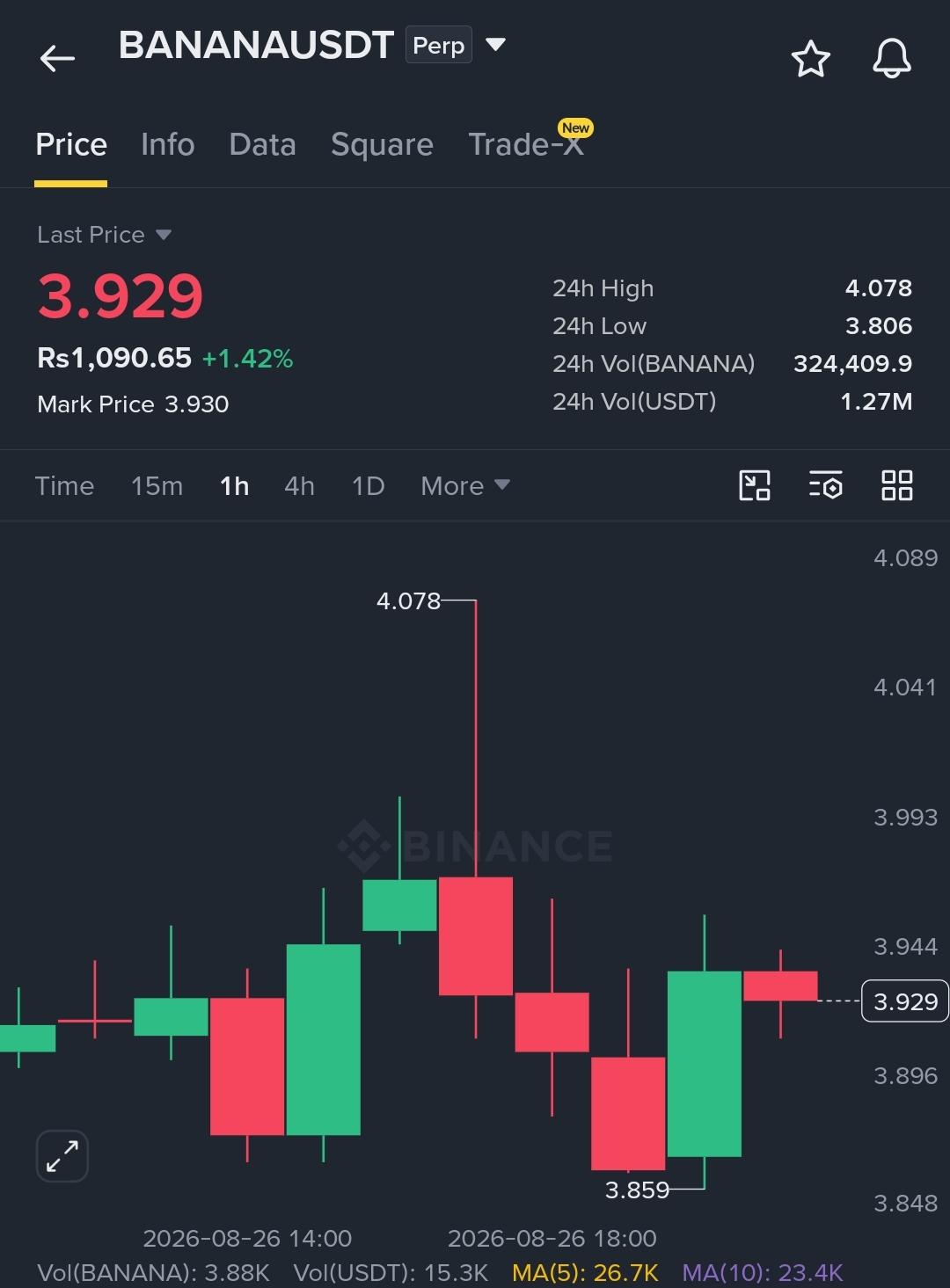
Ich mag immer noch, wie $BANANA um 3,93 herum dasteht

Mr_jennifer
·
--
$BANANA
— Der Momentum bleibt positiv.
EP: $3.934
TP: $4.05 / $4.18
SL: $3.82
#KOSPIRisesNearly1% #BrentWTICrudeFallOver3% #BrentWTICrudeFallOver3%
— Der Momentum bleibt positiv.
EP: $3.934
TP: $4.05 / $4.18
SL: $3.82
#KOSPIRisesNearly1% #BrentWTICrudeFallOver3% #BrentWTICrudeFallOver3%
$BANANA wacht langsam wieder auf. neugierig, wie schnell 4.12 getestet wird

Sohail03293148063
·
--
$BANANA
#BANAUSDC
Das BANANA/USDC-Handelspaar konsolidiert derzeit um 3,96 $ nach der Erholung von seinen makroökonomischen Tiefständen.Technische Indikatoren zeigen einen unmittelbaren Aufwärts-Widerstand bei 4,12 $, gefolgt von einem sekundären Ziel bei 4,22 $, falls der bullische Impuls durchbricht.Falls es jedoch nicht gelingt, über 3,87 $ zu bleiben, wird die niedrigere Nachfragezone bei 3,65 $ sichtbar.Das obige Layout veranschaulicht diese klaren Unterstützungsniveaus und Zielzonen, um Handels-Sets optimal auszurichten.Verfolge die Live-Charts für weitere Verschiebungen auf großen Plattformen wie TradingView oder den Binance Spot Markets.
#KOSPIRisesNearly1%
#BrentWTICrudeFallOver3%
#USStocksCloseHigherNvidiaGains2%
#CryptoFearGreedIndexHits74
#BANAUSDC
Das BANANA/USDC-Handelspaar konsolidiert derzeit um 3,96 $ nach der Erholung von seinen makroökonomischen Tiefständen.Technische Indikatoren zeigen einen unmittelbaren Aufwärts-Widerstand bei 4,12 $, gefolgt von einem sekundären Ziel bei 4,22 $, falls der bullische Impuls durchbricht.Falls es jedoch nicht gelingt, über 3,87 $ zu bleiben, wird die niedrigere Nachfragezone bei 3,65 $ sichtbar.Das obige Layout veranschaulicht diese klaren Unterstützungsniveaus und Zielzonen, um Handels-Sets optimal auszurichten.Verfolge die Live-Charts für weitere Verschiebungen auf großen Plattformen wie TradingView oder den Binance Spot Markets.
#KOSPIRisesNearly1%
#BrentWTICrudeFallOver3%
#USStocksCloseHigherNvidiaGains2%
#CryptoFearGreedIndexHits74
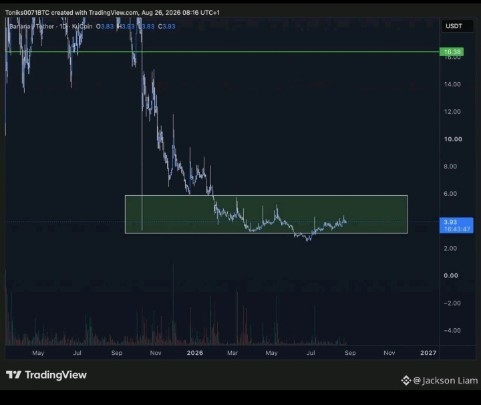
$BANANA holding, die Unterstützung leisten würde, würde die lange These auch für mich am Leben erhalten

Heer kambohzadi
·
--
Banana Gun ($BANANA) Futures LONG Setup 🚀
$BANANA handelt nahe 3.933, mit der Möglichkeit für eine bullische Fortsetzung, wenn die aktuelle Unterstützungszone hält.
🟢 Einstieg: 3.933
🎯 TP1: 4.15
🎯 TP2: 4.45
🎯 TP3: 4.85
🛑 SL: 3.65
📈 Ein starker Halt über der Unterstützung bei zunehmendem Volumen könnte das bullische Setup verstärken. Ein bestätigter Ausbruch über den Widerstand könnte die Bewegung zu den höheren Kurszielen beschleunigen.
⚠️ Nutze kontrolliertes Leverage, eine passende Positionsgröße und strenges Risikomanagement beim Futures-Trading.
$BANANA handelt nahe 3.933, mit der Möglichkeit für eine bullische Fortsetzung, wenn die aktuelle Unterstützungszone hält.
🟢 Einstieg: 3.933
🎯 TP1: 4.15
🎯 TP2: 4.45
🎯 TP3: 4.85
🛑 SL: 3.65
📈 Ein starker Halt über der Unterstützung bei zunehmendem Volumen könnte das bullische Setup verstärken. Ein bestätigter Ausbruch über den Widerstand könnte die Bewegung zu den höheren Kurszielen beschleunigen.
⚠️ Nutze kontrolliertes Leverage, eine passende Positionsgröße und strenges Risikomanagement beim Futures-Trading.
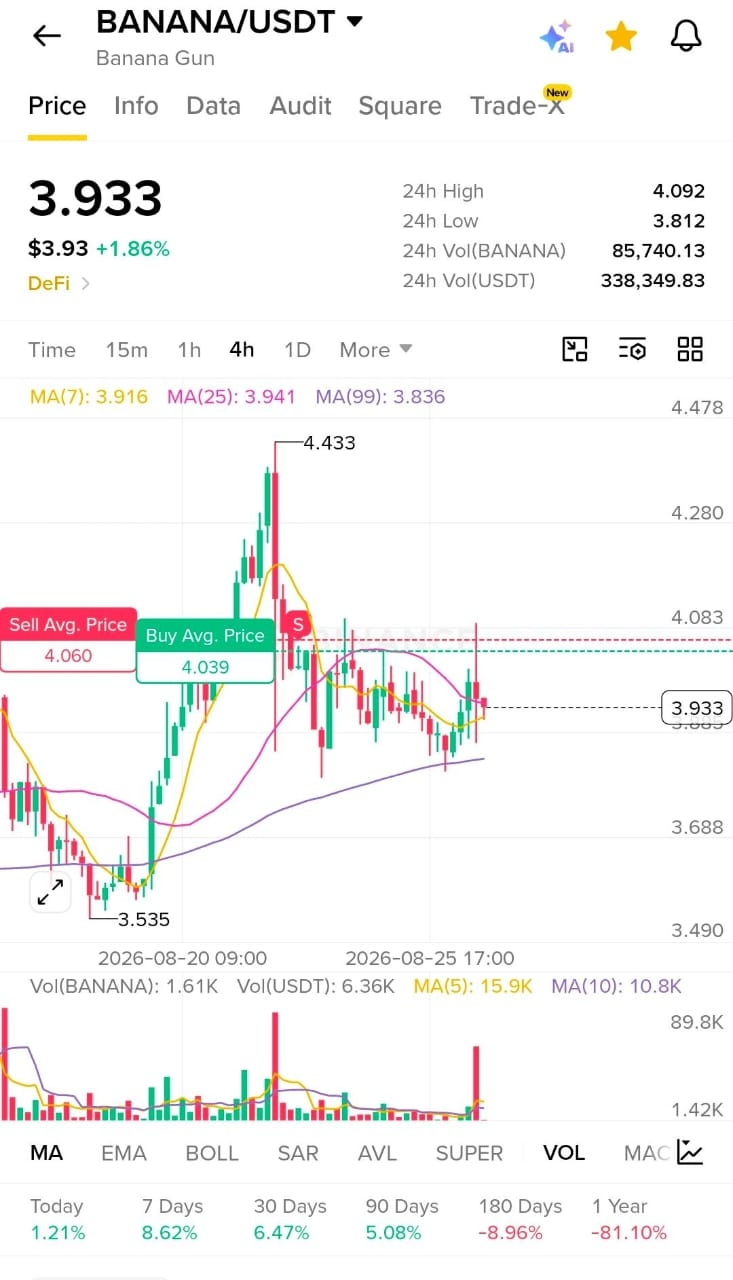
das Volumen ist heruntergefahren, aber ich mag immer noch das breitere Setup auf $BANANA


Naeem Crypto Expert
·
--
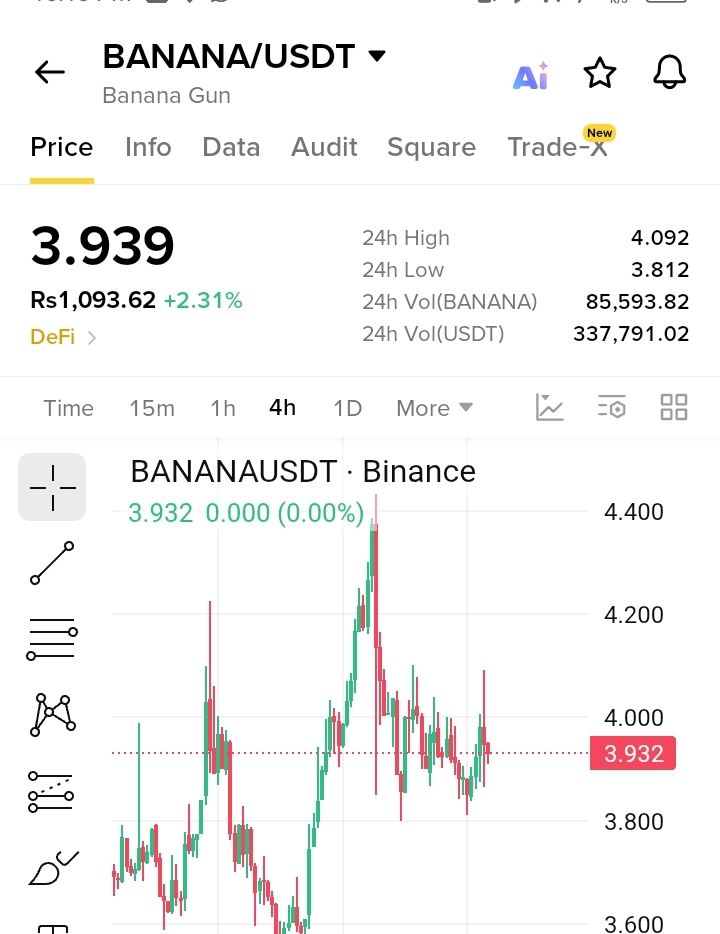
Bärisch$BANANA Bei 4,09 hart abgewiesen. Volumen nimmt ab. Bärische Divergenz beim RSI. Wenn 3,81 bricht, gehe ich short bis 3,60. Muss 4,00 zurückerobern, um meine Meinung zu ändern.
$BTR
$DEBIT
$BTR
$DEBIT
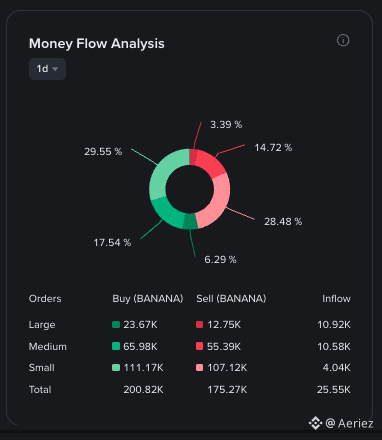
$BANANA bulls laufen immer noch.
1D Money-Flow ist grün:
Käufe: 200.82K
Verkäufe: 175.27K
Netto: +25.55K
Wale ignorieren das ganz eindeutig nicht.
Memecoin-Trader kommen zurück, und $BANANA ist eines dieser Tokens, das tatsächlich profitiert, wenn die Schützengräben wieder aktiv werden.
Cashback, Rewards, Einnahmen für Inhaber.
Jetzt heizen sich die Memes auf.
Hier wird es interessant für #BANANA .
1D Money-Flow ist grün:
Käufe: 200.82K
Verkäufe: 175.27K
Netto: +25.55K
Wale ignorieren das ganz eindeutig nicht.
Memecoin-Trader kommen zurück, und $BANANA ist eines dieser Tokens, das tatsächlich profitiert, wenn die Schützengräben wieder aktiv werden.
Cashback, Rewards, Einnahmen für Inhaber.
Jetzt heizen sich die Memes auf.
Hier wird es interessant für #BANANA .
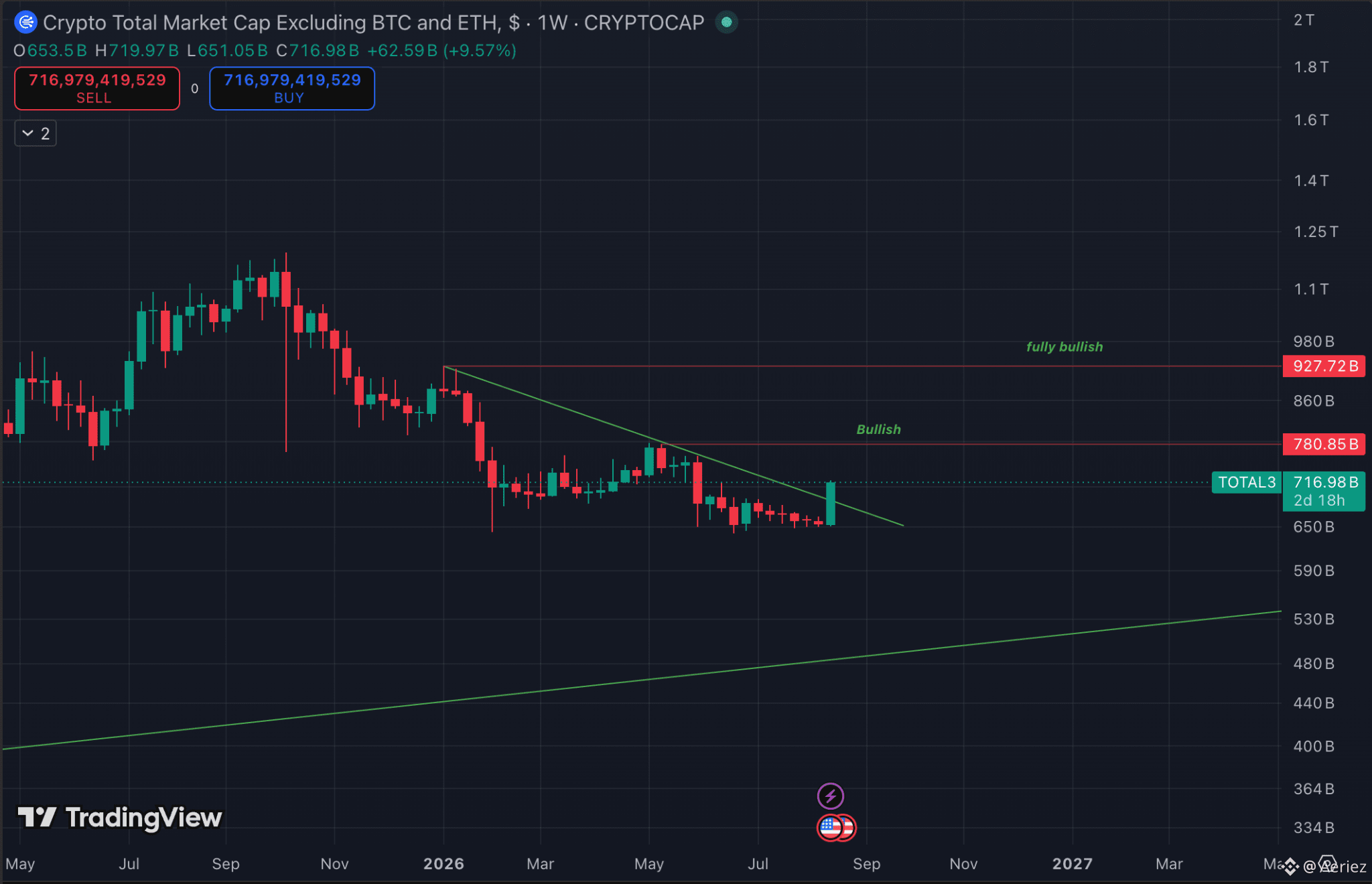
Der Krypto-Markt pumpt gerade.
$ETH , $SOL , $XRP bewegen sich alle, aber schau auf TOTAL3.
Wir haben gerade den ersten wöchentlichen Abwärtstrend gebrochen, aber wir sind noch nicht ganz klar.
Nächste Levels, die ich beobachte:
$780B zurückerobern = bullisch
$927B zurückerobern = vollständig bullisch
Wenn das klappt, sieht der echte Altcoin-Markt wieder richtig lebendig aus.
Genieße den Pump, aber vergiss nicht, Gewinne mitzunehmen.
Screenshots zahlen keine Rechnungen.
$ETH , $SOL , $XRP bewegen sich alle, aber schau auf TOTAL3.
Wir haben gerade den ersten wöchentlichen Abwärtstrend gebrochen, aber wir sind noch nicht ganz klar.
Nächste Levels, die ich beobachte:
$780B zurückerobern = bullisch
$927B zurückerobern = vollständig bullisch
Wenn das klappt, sieht der echte Altcoin-Markt wieder richtig lebendig aus.
Genieße den Pump, aber vergiss nicht, Gewinne mitzunehmen.
Screenshots zahlen keine Rechnungen.
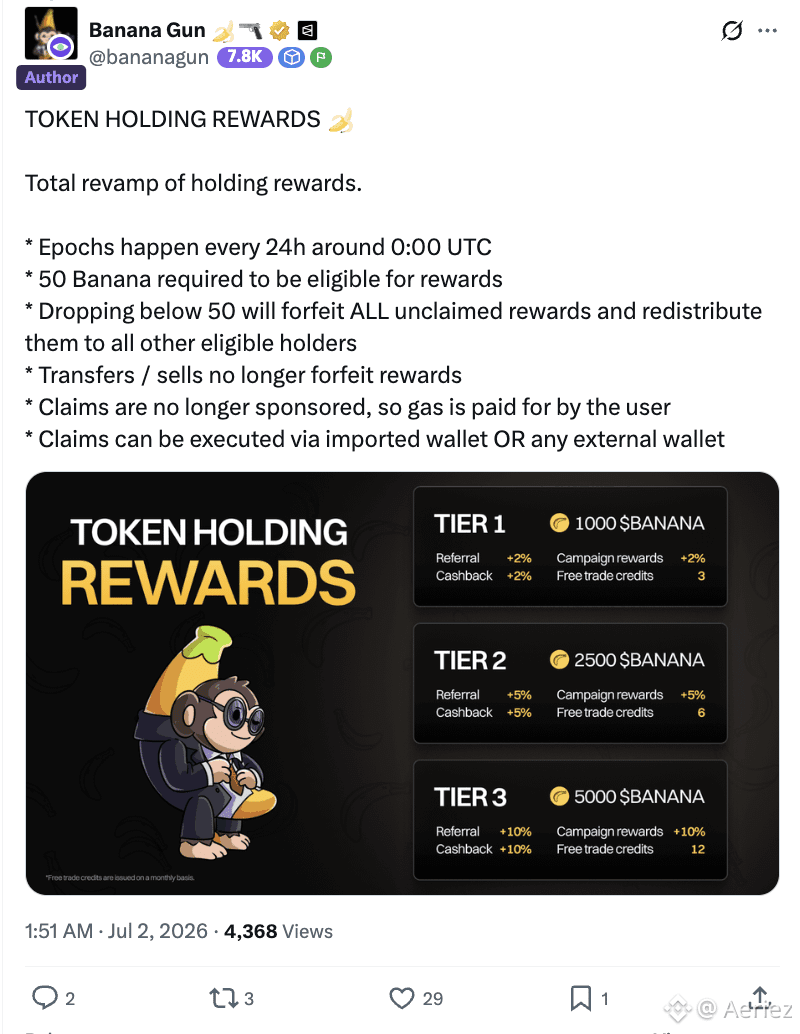
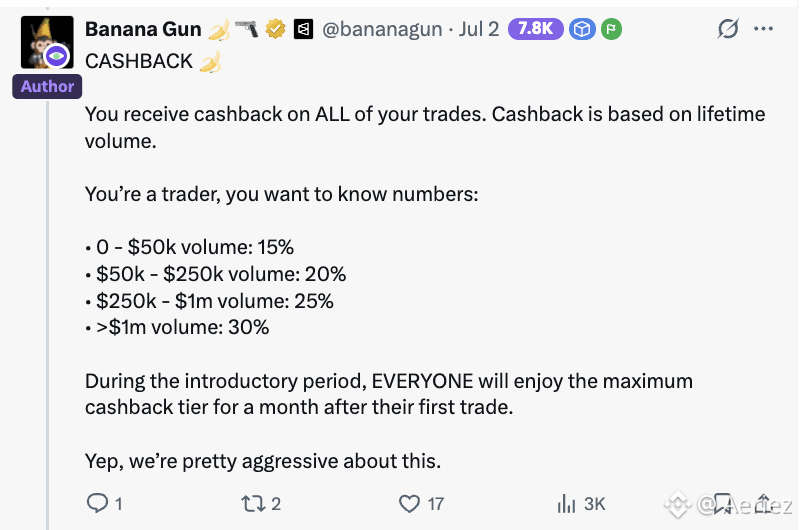
$BANANA is pumpt gerade, aber ich habe das Gefühl, dass viele Leute immer noch nicht verstehen, warum.
Seit dem großen Rewards-Update im Juli läuft der Chart im Grunde nur noch nach oben.
Holding Rewards wurden überarbeitet.
Cashback ist über alle Trades live gegangen.
Trader haben jetzt mehr Gründe, $BANANA zu halten, während sie den Bot, Pro und Predict nutzen.
Das ist der Teil, den die meisten übersehen.
Das ist kein zufälliger Pump.
Mehr Volumen = mehr Rewards-Story = mehr Nachfrage nach #banana
Außerdem vergessen viele, dass $BANANA auch schon seit Jahren auf Binance Spot gelistet ist.
Ich glaube, der Markt fängt jetzt endlich an, das einzupreisen.
Seit dem großen Rewards-Update im Juli läuft der Chart im Grunde nur noch nach oben.
Holding Rewards wurden überarbeitet.
Cashback ist über alle Trades live gegangen.
Trader haben jetzt mehr Gründe, $BANANA zu halten, während sie den Bot, Pro und Predict nutzen.
Das ist der Teil, den die meisten übersehen.
Das ist kein zufälliger Pump.
Mehr Volumen = mehr Rewards-Story = mehr Nachfrage nach #banana
Außerdem vergessen viele, dass $BANANA auch schon seit Jahren auf Binance Spot gelistet ist.
Ich glaube, der Markt fängt jetzt endlich an, das einzupreisen.
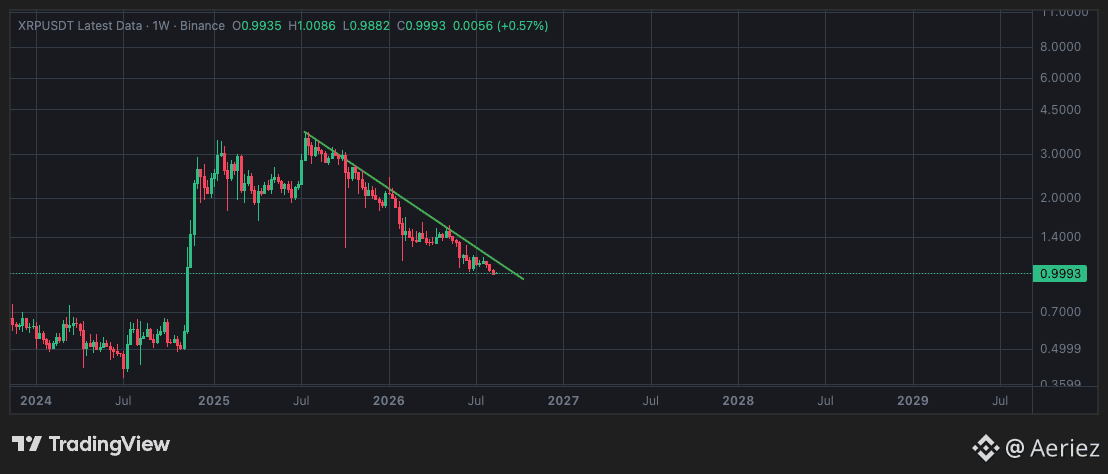
Was passiert mit $XRP ? Es blutet weiter, aber genau hier fange ich an, genau hinzuschauen.
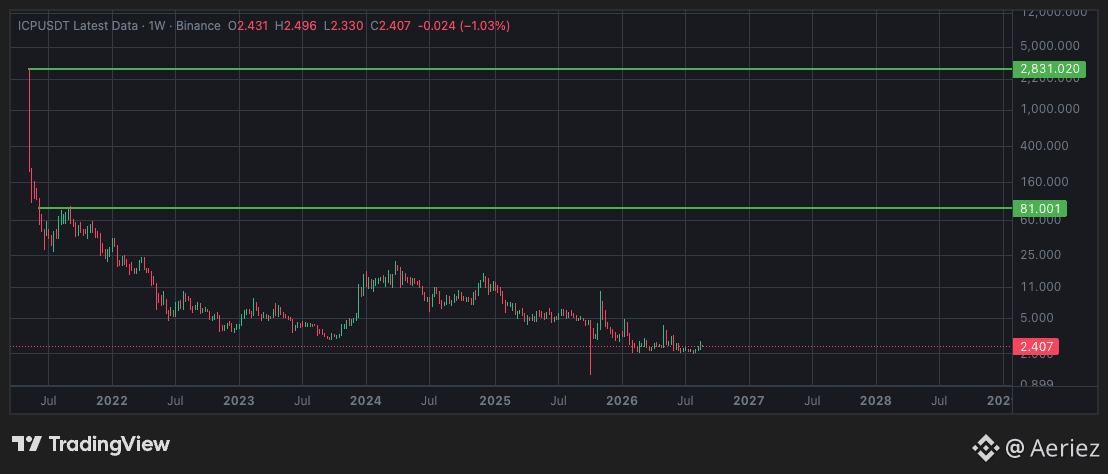
Der Wochenchart liegt nahe der 1,00-$-Zone, direkt unter dem Abwärtstrend, und der größere Support darunter liegt bei etwa 0,85–0,90 US-Dollar.
Das sind die Levels, auf die ich für Gebote achte.
Wenn XRP 1,20 US-Dollar zurückerobert, wird der Rücksprung ernst.
Wenn es jedoch 1,60 US-Dollar bricht, sieht der Trend plötzlich komplett anders aus.
Und mit der heutigen Narrative rund um das Treffen des Ripple-CEO mit Trump bin ich bei den Fundamentaldaten überhaupt nicht bärisch.
Klarheit bei der Regulierung, Banken, Zahlungen, #XRP army immer noch aktiv.
Dieser Chart sieht jetzt schmerzhaft aus, aber ich denke, der Rückprall wird heftig sein, wenn er endlich kommt.
Der Wochenchart liegt nahe der 1,00-$-Zone, direkt unter dem Abwärtstrend, und der größere Support darunter liegt bei etwa 0,85–0,90 US-Dollar.
Das sind die Levels, auf die ich für Gebote achte.
Wenn XRP 1,20 US-Dollar zurückerobert, wird der Rücksprung ernst.
Wenn es jedoch 1,60 US-Dollar bricht, sieht der Trend plötzlich komplett anders aus.
Und mit der heutigen Narrative rund um das Treffen des Ripple-CEO mit Trump bin ich bei den Fundamentaldaten überhaupt nicht bärisch.
Klarheit bei der Regulierung, Banken, Zahlungen, #XRP army immer noch aktiv.
Dieser Chart sieht jetzt schmerzhaft aus, aber ich denke, der Rückprall wird heftig sein, wenn er endlich kommt.
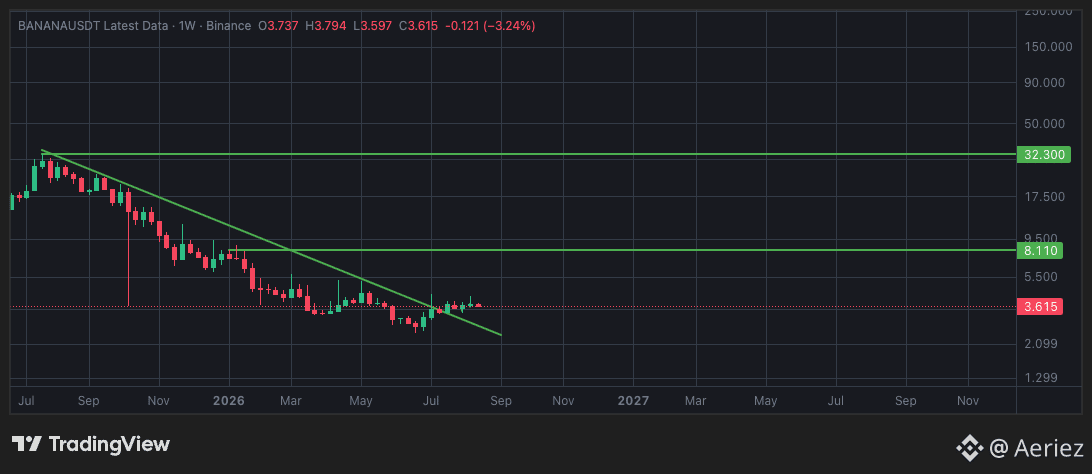
Ich bin gerade mit $BANANA long.
Die Memecoin-Saison heizt sich auf, und On-Chain-Trading-Tools werden normalerweise nicht still, wenn die Frontlinien wieder aktiv werden.
Der Banana-Token hat bereits den Long-Abwärtstrend auf Wochenbasis durchbrochen und versucht nun, ihn zu halten.
Wenn dieser Reclaim hält, denke ich, dass das nächste echte Ziel bei $8+ liegt.
Wenn mehr Trader zu Memes zurückkommen, bedeutet das mehr Aufmerksamkeit für die Tools, die sie tatsächlich nutzen.
Ich bin nicht dabei, #BANANA hier abzuflauen.
Die Memecoin-Saison heizt sich auf, und On-Chain-Trading-Tools werden normalerweise nicht still, wenn die Frontlinien wieder aktiv werden.
Der Banana-Token hat bereits den Long-Abwärtstrend auf Wochenbasis durchbrochen und versucht nun, ihn zu halten.
Wenn dieser Reclaim hält, denke ich, dass das nächste echte Ziel bei $8+ liegt.
Wenn mehr Trader zu Memes zurückkommen, bedeutet das mehr Aufmerksamkeit für die Tools, die sie tatsächlich nutzen.
Ich bin nicht dabei, #BANANA hier abzuflauen.
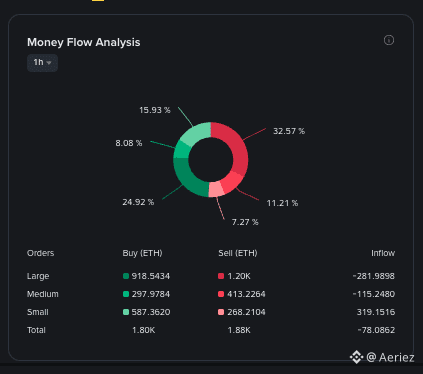
Spannende Aufteilung auf $ETH
Der für den Einzelhandel gedachte Zahlungsfluss ist positiv, während größere Bestellungen weiterhin verteilt werden. Ich brauche erst das größere Geld, das sich bewegt, bevor ich mich zu sehr freue.
KAUF DEN DIP!
Der für den Einzelhandel gedachte Zahlungsfluss ist positiv, während größere Bestellungen weiterhin verteilt werden. Ich brauche erst das größere Geld, das sich bewegt, bevor ich mich zu sehr freue.
KAUF DEN DIP!
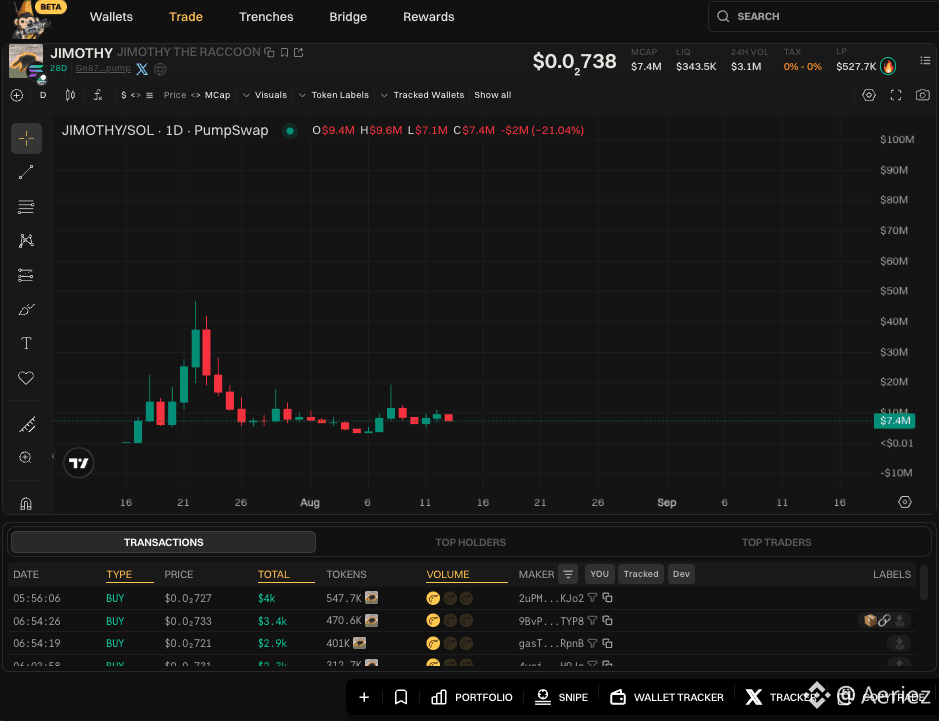
$JIMOTHY hat jede Menge Aufmerksamkeit bekommen, aber der Preis liegt immer noch nahe an den Tiefs.
Das bedeutet normalerweise eines von zwei Dingen:
Entweder das Meme ist durch…
oder der Markt schläft noch, bevor die echte Kerze kommt.
Wal-Käufe werden immer noch auf $BANANA @BananaGun Pro angezeigt.
Ich rufe hier nicht #Jimothy dead.
Das bedeutet normalerweise eines von zwei Dingen:
Entweder das Meme ist durch…
oder der Markt schläft noch, bevor die echte Kerze kommt.
Wal-Käufe werden immer noch auf $BANANA @BananaGun Pro angezeigt.
Ich rufe hier nicht #Jimothy dead.
Übersetzung ansehen
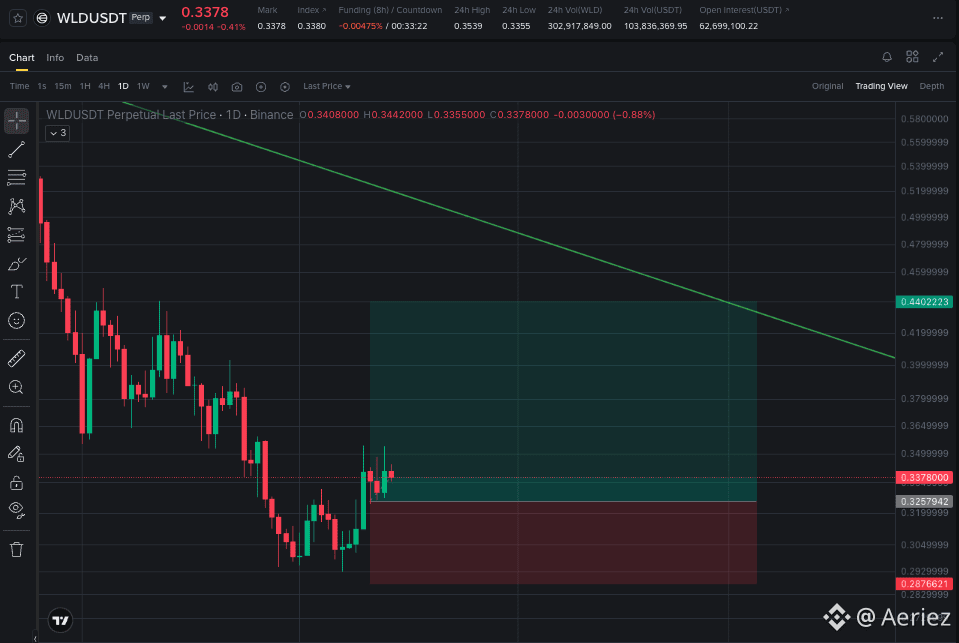
Who’s looking at $WLD right now?
I’m taking this long setup. Putting $100 with 50x leverage.
Entry: around $0.337-$0.338
Target: $0.440
Chart invalidation: $0.287
If $WLD hits target from here, that’s roughly +$1.5K PnL on $100 margin before fees/funding.
But with 50x, the chart invalidation is way too wide. I’d keep my real risk tighter around $0.331-$0.332 or lower the leverage.
Setup looks clean if #WLD holds this reclaim.
I’m taking this long setup. Putting $100 with 50x leverage.
Entry: around $0.337-$0.338
Target: $0.440
Chart invalidation: $0.287
If $WLD hits target from here, that’s roughly +$1.5K PnL on $100 margin before fees/funding.
But with 50x, the chart invalidation is way too wide. I’d keep my real risk tighter around $0.331-$0.332 or lower the leverage.
Setup looks clean if #WLD holds this reclaim.
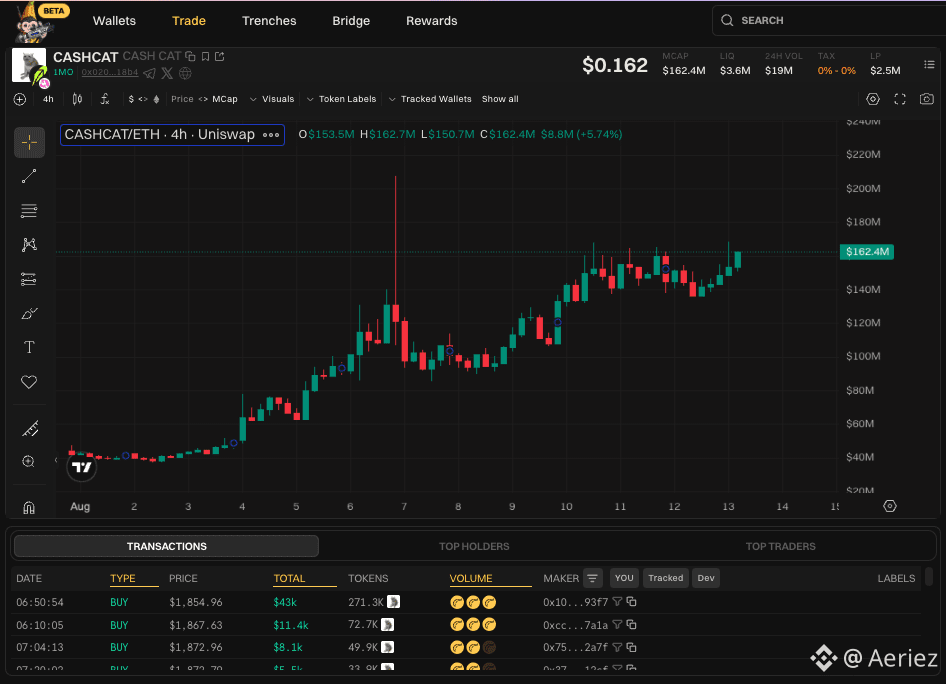
Die Leute diskutieren immer noch, ob die Robinhood-Chain echt ist.
In der Zwischenzeit sitzt $CASHCAT bei rund $162M mcap mit $19M Volumen und druckt weiterhin höhere Tiefs.
Ich beobachte den Ticker auf @bananagun Pro – und Käufe im vierstelligen Bereich kommen weiterhin rein.
Das handelt sich nicht wie ein totes Meta.
Es handelt sich so, als würde sich der Leader vom Rest absetzen.
Billiarden sind das Ziel.
#CASHCAT
In der Zwischenzeit sitzt $CASHCAT bei rund $162M mcap mit $19M Volumen und druckt weiterhin höhere Tiefs.
Ich beobachte den Ticker auf @bananagun Pro – und Käufe im vierstelligen Bereich kommen weiterhin rein.
Das handelt sich nicht wie ein totes Meta.
Es handelt sich so, als würde sich der Leader vom Rest absetzen.
Billiarden sind das Ziel.
#CASHCAT
Anmelden und weiter Inhalte entdecken