

One thing I've learned after years of watching crypto cycles is that the loudest narratives are rarely where the deepest changes happen.
Everyone notices the new token. Everyone notices the rally. Everyone notices the excitement. What often goes unnoticed are the infrastructure shifts quietly changing how value moves through an industry.
That's partly why OpenLedger caught my attention.
Not because it's another AI project. There are hundreds of those already. And not because it promises to revolutionize everything. Markets have heard that story too many times.
What interests me is the problem it is trying to solve.
AI is becoming one of the most important technologies in the world, yet the economics around it still feel strangely centralized. Millions of people generate data every day. Developers train models. Communities provide feedback. Businesses create use cases. But when value is created, only a small number of entities tend to capture most of it.
The system works, but it feels incomplete.
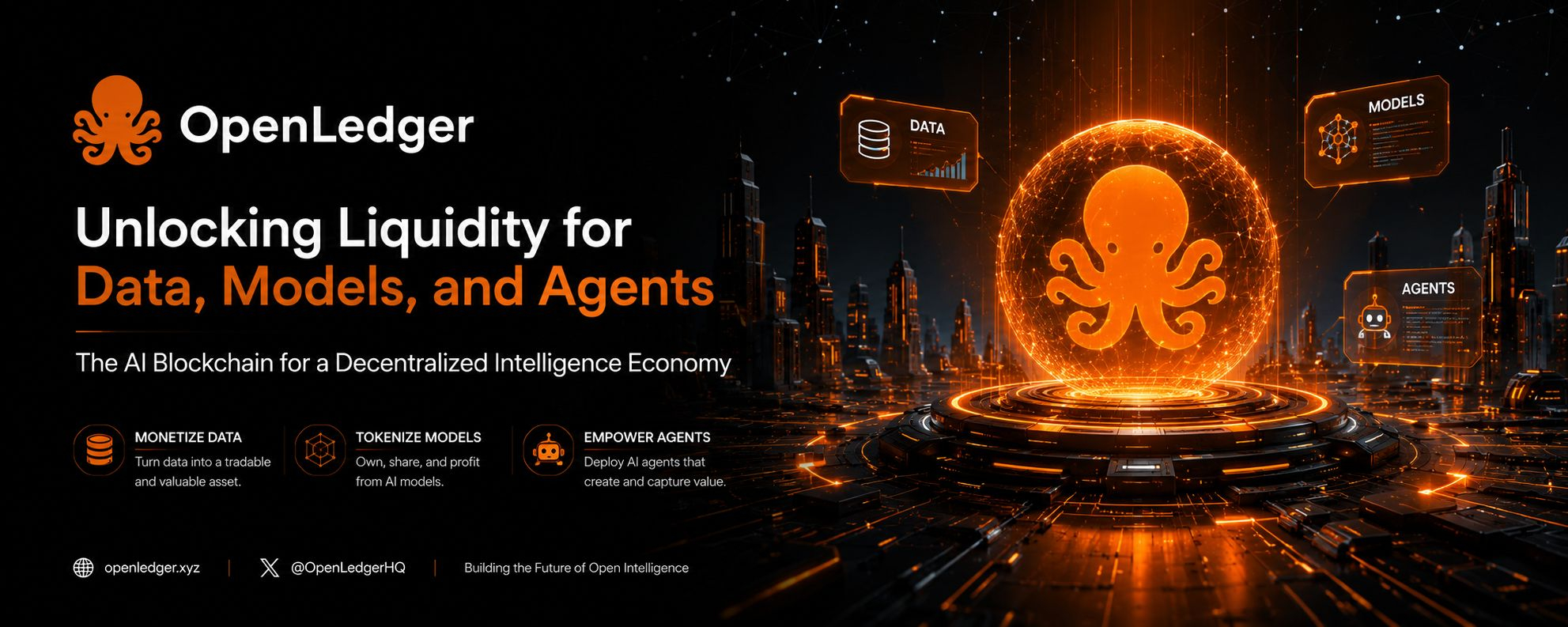
OpenLedger is exploring an idea that feels simple on the surface but could become important if AI continues expanding at its current pace. Instead of treating data, models, and AI agents as invisible resources inside closed systems, it attempts to turn them into assets that can participate in an open economy.
As a trader, I find that more interesting than another consumer-facing AI application.
Applications come and go. Infrastructure tends to stay.
The more mature a market becomes, the more valuable coordination layers become. Crypto taught us that lesson already. Early cycles focused on speculation. Later cycles focused on exchanges, liquidity networks, and smart contract platforms. The biggest winners often weren't the products people interacted with every day. They were the systems underneath that allowed everything else to function.
I sometimes wonder if AI is approaching a similar moment.
Today, most conversations focus on what AI can do. Few conversations focus on who owns the economic value created by AI. That question becomes increasingly important as agents become more capable and models become more deeply integrated into business operations.
Imagine a future where autonomous agents complete tasks, generate revenue, negotiate services, and interact with digital markets on their own. The technology sounds futuristic, but pieces of it already exist.
If that future arrives, ownership matters.
Who gets rewarded when an agent creates value?
Who benefits when a model becomes widely used?
How should contributors be compensated when their data improves a system?
These are not technical questions. They are economic questions.
And economic questions are usually where crypto becomes relevant.
Of course, there is a large gap between an interesting idea and a successful network.
That is where my optimism becomes more measured.
Building infrastructure is difficult. Building infrastructure that people actually use is even harder. The technology can be elegant, the vision can be compelling, and the token can perform well for a period of time, but none of that guarantees long-term relevance.
The real test is whether developers choose to build on it. Whether businesses find practical reasons to participate. Whether incentives create sustainable activity instead of temporary speculation.
Crypto has a long history of confusing attention with adoption.
Those are not the same thing.
I also think investors need to separate the product from the token. A network can become useful while its token struggles to capture meaningful value. We've seen that happen before. The relationship between usage and token appreciation is often far less direct than people assume.
Still, I find the broader trend difficult to ignore.
AI is accelerating creation. Crypto is improving ownership and coordination. When those two forces intersect, entirely new economic models become possible. Not because of hype, but because the underlying incentives begin to change.
Maybe OpenLedger becomes an important piece of that future. Maybe another project executes the vision better. That's impossible to know today.
What feels more important is the direction itself.
For years, markets have focused on tokenizing assets, capital, and financial activity. The next chapter may involve tokenizing intelligence, contribution, and digital work.
If that happens, the projects building those foundations today could matter far more than they appear to matter right now.
And in my experience, the most important shifts in crypto usually look small before they look obvious.
