
#openledger
openledger
17.3M Aufrufe
202,829 Kommentare
Hot
Zuletzt

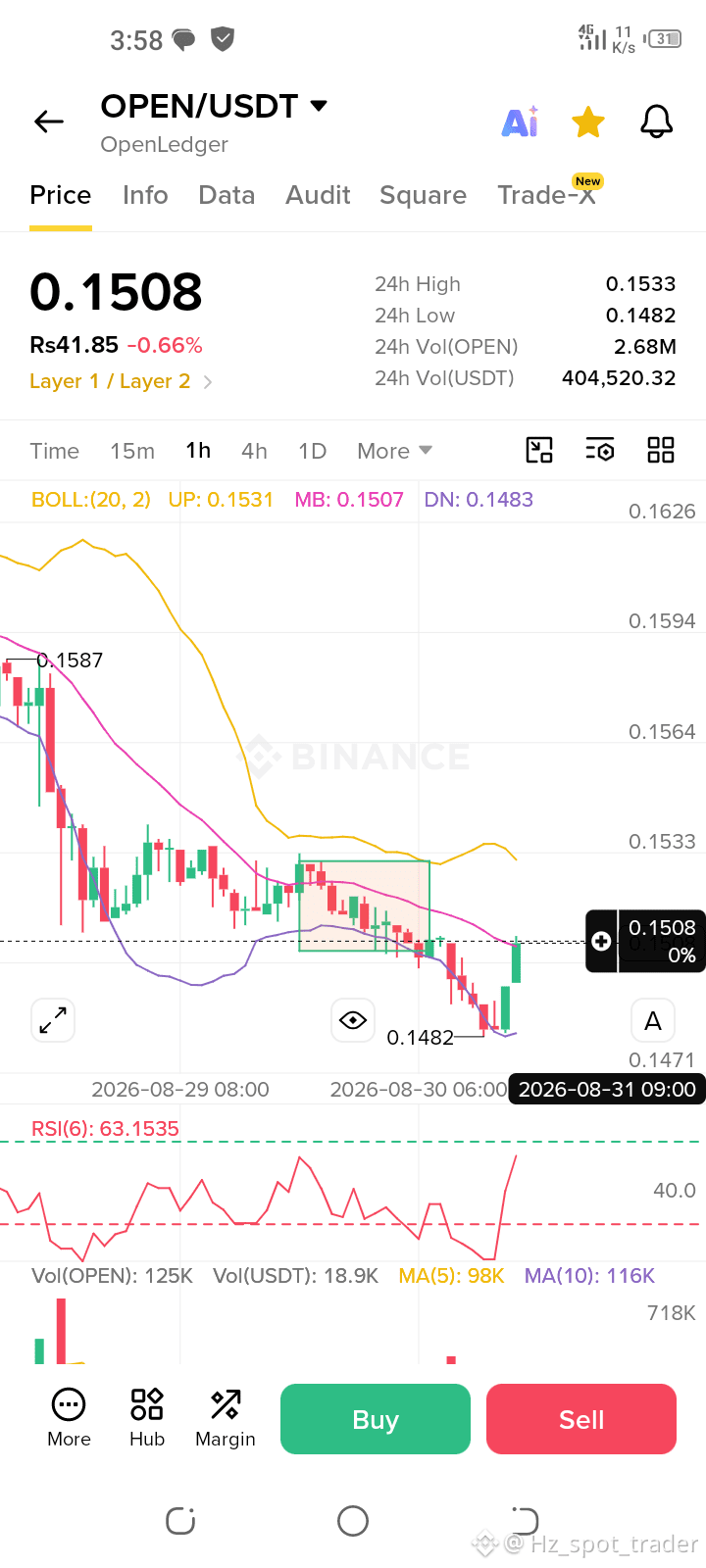
$OPEN — Erster Ziel-Treffer ✅
Die erste Stufe, die ich auf Open geteilt habe, lag bei etwa 0,1508 $.
Der Preis hat sie erreicht. 🎯
Das waren ungefähr +1,2% im Vergleich zu dem Bereich, den ich im Blick hatte.
Ich habe auch ein ähnliches kurzfristiges Setup früher auf $HOME geteilt, wobei der Bereich von 0,00622 die Zone ist, die man beobachten sollte.
Ich behaupte nicht, dass jedes Ziel funktionieren wird.
Wichtig ist: die Kurszone VOR der Bewegung planen und das Risiko respektieren.
Hat jemand hier das Open-SPOT-Setup genommen?
Wenn ja, sag mir deinen Einstieg und dein Ergebnis 👇
Nur SPOT. Keine Futures. Kein Leverage.
Mein erstes Ziel / die Zone, die ich beobachten sollte, war 0,1508 $ — und der Preis hat sie erreicht
$OPEN
#OPEN #OpenLedger #SpotTrading
Die erste Stufe, die ich auf Open geteilt habe, lag bei etwa 0,1508 $.
Der Preis hat sie erreicht. 🎯
Das waren ungefähr +1,2% im Vergleich zu dem Bereich, den ich im Blick hatte.
Ich habe auch ein ähnliches kurzfristiges Setup früher auf $HOME geteilt, wobei der Bereich von 0,00622 die Zone ist, die man beobachten sollte.
Ich behaupte nicht, dass jedes Ziel funktionieren wird.
Wichtig ist: die Kurszone VOR der Bewegung planen und das Risiko respektieren.
Hat jemand hier das Open-SPOT-Setup genommen?
Wenn ja, sag mir deinen Einstieg und dein Ergebnis 👇
Nur SPOT. Keine Futures. Kein Leverage.
Mein erstes Ziel / die Zone, die ich beobachten sollte, war 0,1508 $ — und der Preis hat sie erreicht
$OPEN
#OPEN #OpenLedger #SpotTrading
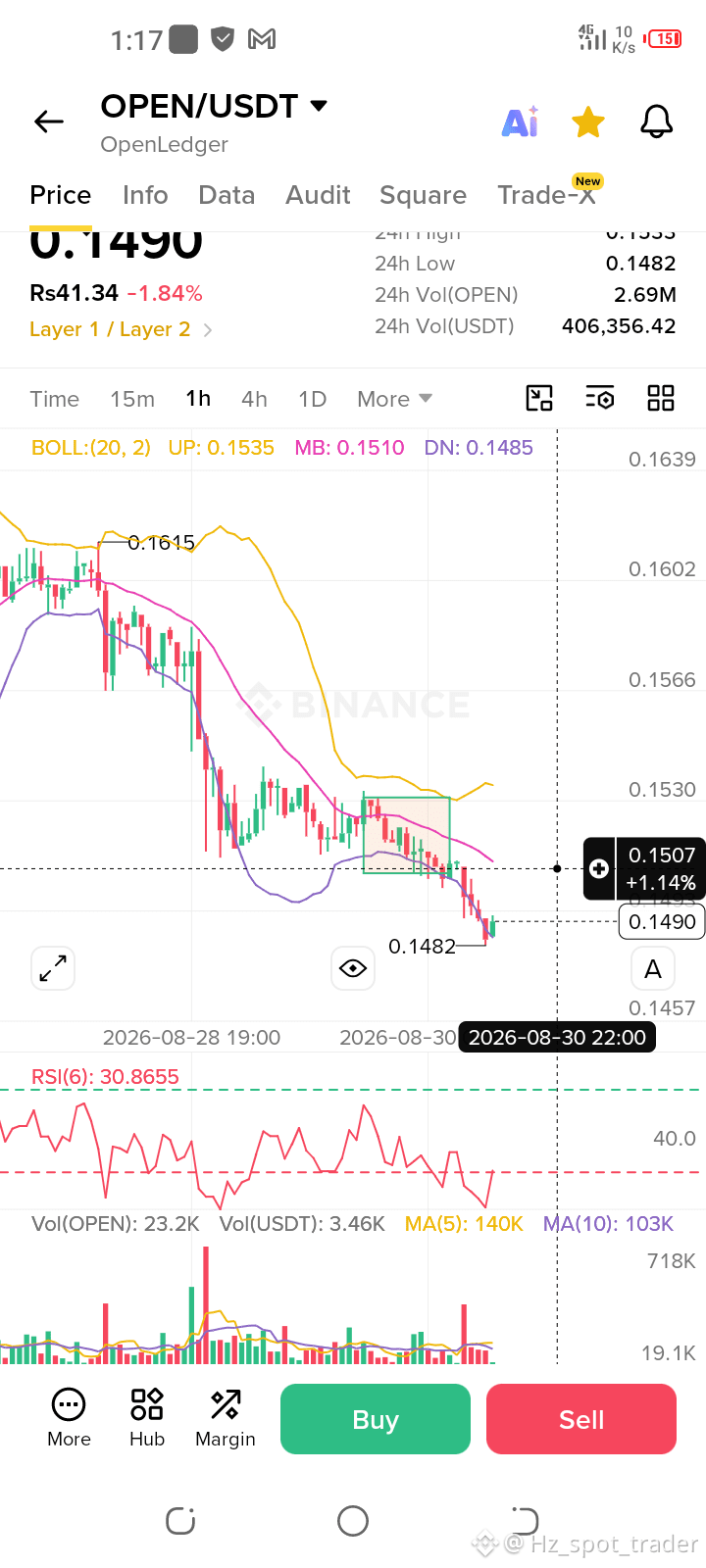
$OPEN — Bounce-Setup oder nur ein toter Cat Bounce? 👀
OPEN handelt derzeit nach dem jüngsten Sell-off um $0.1490.
Auf dem 1H-Chart:
• RSI(6) ≈ 30.9 — überverkauftes Gebiet
• Unteres Bollinger-Band ≈ $0.1485
• Mittleres Band ≈ $0.1510
• Mein erster Kurs, den ich im Blick habe: $0.1508
Ein Move zu $0.1508 wäre etwa +1,2% vom aktuellen Bereich entfernt.
Wenn der Momentum wiederkommt, beobachte ich als Nächstes die Zone $0.1510–$0.1530.
Aber keine Garantie — wenn $0.1482 durchbricht, wird das Setup schwächer.
Würdest du den SPOT-Bounce nehmen oder auf Bestätigung warten?
$OPEN
#OPEN #OpenLedger #SpotTrading
OPEN handelt derzeit nach dem jüngsten Sell-off um $0.1490.
Auf dem 1H-Chart:
• RSI(6) ≈ 30.9 — überverkauftes Gebiet
• Unteres Bollinger-Band ≈ $0.1485
• Mittleres Band ≈ $0.1510
• Mein erster Kurs, den ich im Blick habe: $0.1508
Ein Move zu $0.1508 wäre etwa +1,2% vom aktuellen Bereich entfernt.
Wenn der Momentum wiederkommt, beobachte ich als Nächstes die Zone $0.1510–$0.1530.
Aber keine Garantie — wenn $0.1482 durchbricht, wird das Setup schwächer.
Würdest du den SPOT-Bounce nehmen oder auf Bestätigung warten?
$OPEN
#OPEN #OpenLedger #SpotTrading



$OPEN
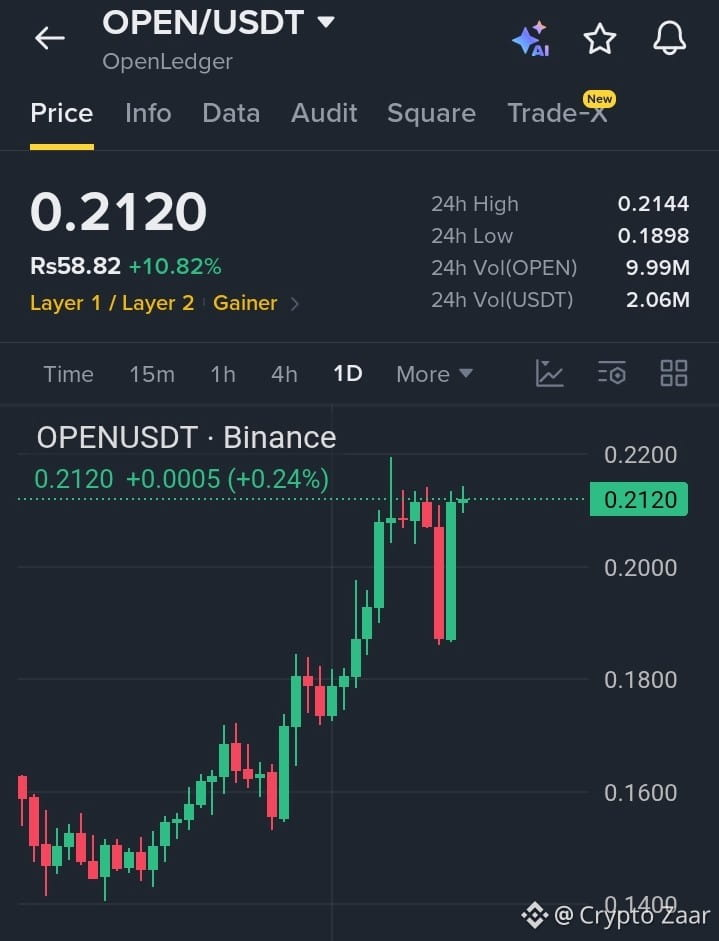
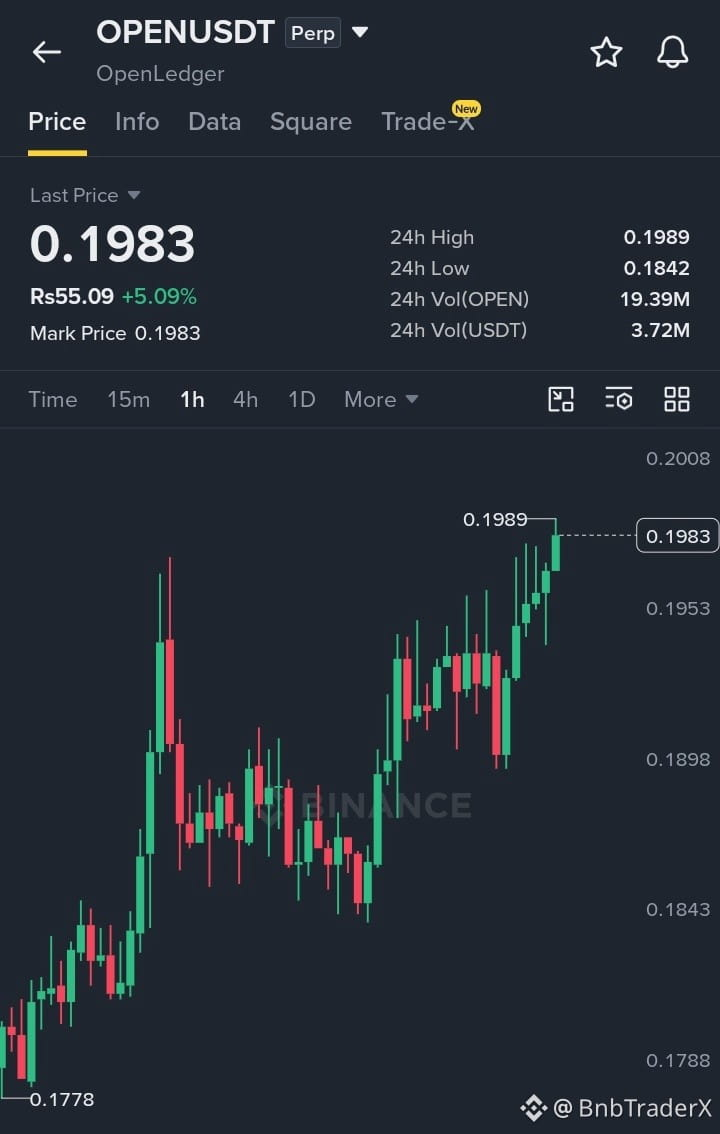
/USDT wacht auf 👀
+10,82% in 24 Std.
Preis: 0,2120 USDT
Hoch: 0,2144 🔥
Der Momentum gewinnt an Spannung… jetzt achten wir auf einen sauberen Ausbruch oder Rücksetzer. 📈
$OPEN #OPEN #OpenLedger #Binance #Crypto
/USDT wacht auf 👀
+10,82% in 24 Std.
Preis: 0,2120 USDT
Hoch: 0,2144 🔥
Der Momentum gewinnt an Spannung… jetzt achten wir auf einen sauberen Ausbruch oder Rücksetzer. 📈
$OPEN #OPEN #OpenLedger #Binance #Crypto

🚀 $OPEN Starker bullischer Ausbruch! 🔥
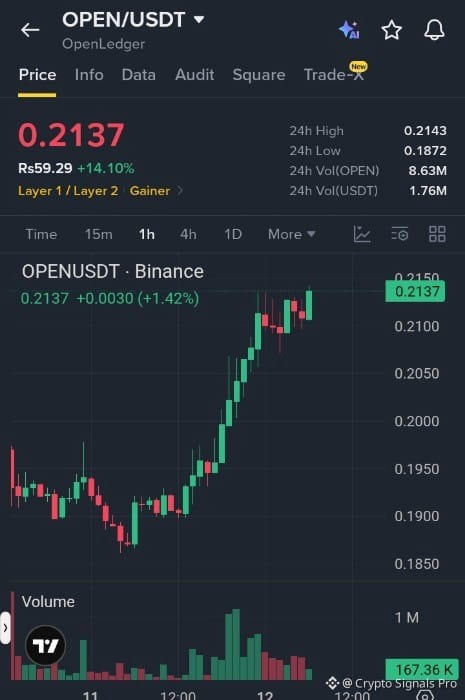
$OPEN ist um +14,10% auf 0,2137 $ gestiegen 📈 und das 1H-Chart zeigt starken Kaufdruck.
🎯 Widerstand: 0,2145–0,2150
🚀 Ausbruchs-Ziel: 0,220 → 0,225
🛡️ Unterstützung: 0,210 → 0,205
⚡ Wenn 0,215 mit starkem Volumen durchbricht, könnte eine weitere Aufwärtsbewegung bevorstehen!
#OpenLedger #Crypto #BinanceSquare #BullishOnPepeCoinPriceTonight #trading 🚀📊
$OPEN ist um +14,10% auf 0,2137 $ gestiegen 📈 und das 1H-Chart zeigt starken Kaufdruck.
🎯 Widerstand: 0,2145–0,2150
🚀 Ausbruchs-Ziel: 0,220 → 0,225
🛡️ Unterstützung: 0,210 → 0,205
⚡ Wenn 0,215 mit starkem Volumen durchbricht, könnte eine weitere Aufwärtsbewegung bevorstehen!
#OpenLedger #Crypto #BinanceSquare #BullishOnPepeCoinPriceTonight #trading 🚀📊

Jungs $OPEN halten eine konstruktive bullische Struktur aufrecht, während der Kurs nur knapp unter seinem Tageshoch handelt und weiterhin stetiges Kaufinteresse besteht. Ein entschiedener Ausbruch über die aktuelle Widerstandszone könnte den Aufwärtsimpuls weiter verstärken und den Trend in den kommenden Sitzungen nach oben treiben.
Ziele:
Ziel 1: 0,2050 $
Ziel 2: 0,2200 $
Ziel 3: 0,2400 $
#$OPEN #OpenLedger #Binance
Ziele:
Ziel 1: 0,2050 $
Ziel 2: 0,2200 $
Ziel 3: 0,2400 $
#$OPEN #OpenLedger #Binance

Was ist OpenLedger und warum zieht es Aufmerksamkeit auf sich?
Ich lerne gerade über #OpenLedger auf Binance Square. Ich finde das Projekt interessant, da es versucht, künstliche Intelligenz und Blockchain zu kombinieren. Viele Leute verfolgen die Entwicklung von @OpenLedger und dem Token $OPEN . Ich werde weiterhin lernen und mehr Informationen über dieses Projekt und sein Wachstum im Krypto-Ökosystem teilen. #OpenLedger $OPEN .
#OpenLedger
$OPEN
@OpenLedger
Ich lerne gerade über #OpenLedger auf Binance Square. Ich finde das Projekt interessant, da es versucht, künstliche Intelligenz und Blockchain zu kombinieren. Viele Leute verfolgen die Entwicklung von @OpenLedger und dem Token $OPEN . Ich werde weiterhin lernen und mehr Informationen über dieses Projekt und sein Wachstum im Krypto-Ökosystem teilen. #OpenLedger $OPEN .
#OpenLedger
$OPEN
@OpenLedger

Früher hatte ich beim Cross-Chain-Trading am meisten Angst vor langsamen Transaktionen, sondern eher vor dem Moment, wenn "du denkst, es läuft nichts, und dann zittert deine Hand und du klickst nochmal", und plötzlich wird aus einem Trade zwei – und wenn das passiert, ist es peinlich, das im Rückblick zuzugeben: War das System nicht klar über den Status oder hast du einfach den Überblick verloren? Je mehr du versuchst, die Brücke in automatisierte Abläufe zu integrieren, desto gefährlicher wird dieser Fehler, denn eine wiederholte Ausführung ist nicht einfach "ein bisschen Verlust", sondern das durcheinanderbringen der Logik.
Deshalb schaue ich mir jetzt die EVM Bridge von @OpenLedger an und teste sie nach einem ganz einfachen Standard: Kann dieser Brückenschritt zu einem klaren Checkpoint werden, anstatt zu einer „Aktivität ohne klare Grenzen“? Wenn OctoClaw eine Aktion generiert und dieser Schritt ein Cross-Chain ist, möchte ich, dass es diese „Brückenaktion“ an einen eindeutigen Verweis bindet: Wenn du später denselben Trade auslöst, sollte das System nicht einfach stillschweigend die Aktion erneut ausführen, sondern dir klar mitteilen – dieser Trade ist gerade im Gange / bereits abgeschlossen / eine Wiederholung ist nicht erlaubt. Trading-Agenten können gerne weiter an den Verbindungen arbeiten, aber bei so risikobehaften Aktionen wie der Brücke muss zuerst das „Wiederholungsproblem“ beseitigt werden, sonst wird die Automatisierung immer mehr zu einem Minenfeld.
Heute habe ich nur einen Akzeptanzpunkt: Wenn die gleiche Brückenaktion erneut ausgelöst wird, kann das System dann direkt denselben Ausführungsreferenz zurückgeben und einen klaren Status (im Gange / abgeschlossen) anzeigen, während es gleichzeitig die Erstellung einer zweiten Brücke ablehnt? Wenn das funktioniert, betrachte ich die Bridge als fähig zur Ausführung; wenn nicht, lasse ich diesen Schritt lieber manuell bestätigen.
@OpenLedger $OPEN #OpenLedger
Deshalb schaue ich mir jetzt die EVM Bridge von @OpenLedger an und teste sie nach einem ganz einfachen Standard: Kann dieser Brückenschritt zu einem klaren Checkpoint werden, anstatt zu einer „Aktivität ohne klare Grenzen“? Wenn OctoClaw eine Aktion generiert und dieser Schritt ein Cross-Chain ist, möchte ich, dass es diese „Brückenaktion“ an einen eindeutigen Verweis bindet: Wenn du später denselben Trade auslöst, sollte das System nicht einfach stillschweigend die Aktion erneut ausführen, sondern dir klar mitteilen – dieser Trade ist gerade im Gange / bereits abgeschlossen / eine Wiederholung ist nicht erlaubt. Trading-Agenten können gerne weiter an den Verbindungen arbeiten, aber bei so risikobehaften Aktionen wie der Brücke muss zuerst das „Wiederholungsproblem“ beseitigt werden, sonst wird die Automatisierung immer mehr zu einem Minenfeld.
Heute habe ich nur einen Akzeptanzpunkt: Wenn die gleiche Brückenaktion erneut ausgelöst wird, kann das System dann direkt denselben Ausführungsreferenz zurückgeben und einen klaren Status (im Gange / abgeschlossen) anzeigen, während es gleichzeitig die Erstellung einer zweiten Brücke ablehnt? Wenn das funktioniert, betrachte ich die Bridge als fähig zur Ausführung; wenn nicht, lasse ich diesen Schritt lieber manuell bestätigen.
@OpenLedger $OPEN #OpenLedger


#openledger $OPEN
Beeindruckt von der Art und Weise, wie @OpenLedger ein dezentrales Ökosystem schafft, das sich auf KI-Daten und transparente Innovation konzentriert. OpenLedger ermächtigt Mitwirkende, Entwickler und Gemeinschaften, indem es eine faire Wertverteilung und verifizierbaren Datenbesitz ermöglicht. Während die KI-Branche weiter wächst, bietet OpenLedger die Infrastruktur, die nötig ist, um eine offenere und nachhaltigere Zukunft zu bauen. Die Vision, Technologie und das wachsende Ökosystem des Projekts machen es zu einer der spannendsten Entwicklungen im Web3- und KI-Bereich. Freue mich darauf, mehr Adoption und Innovation, angetrieben von $OPEN , in den kommenden Monaten zu sehen. #OpenLedger
$OPEN
Beeindruckt von der Art und Weise, wie @OpenLedger ein dezentrales Ökosystem schafft, das sich auf KI-Daten und transparente Innovation konzentriert. OpenLedger ermächtigt Mitwirkende, Entwickler und Gemeinschaften, indem es eine faire Wertverteilung und verifizierbaren Datenbesitz ermöglicht. Während die KI-Branche weiter wächst, bietet OpenLedger die Infrastruktur, die nötig ist, um eine offenere und nachhaltigere Zukunft zu bauen. Die Vision, Technologie und das wachsende Ökosystem des Projekts machen es zu einer der spannendsten Entwicklungen im Web3- und KI-Bereich. Freue mich darauf, mehr Adoption und Innovation, angetrieben von $OPEN , in den kommenden Monaten zu sehen. #OpenLedger
$OPEN

Ein öffentliches Ledger ist ein transparenter, gemeinsam genutzter Aufzeichnungssystem, in dem jede Transaktion öffentlich sichtbar ist und von jedem überprüft werden kann. Im Gegensatz zu privaten Datenbanken entfällt die Notwendigkeit einer zentralen Instanz, weil das Vertrauen aus einem verteilten Konsens entsteht. Am bekanntesten wird ein öffentliches Ledger in der Blockchain-Technologie eingesetzt: Es erfasst Einträge chronologisch und macht sie nach der Bestätigung manipulationssicher. Diese Transparenz reduziert Betrug, erhöht die Verantwortlichkeit und ermöglicht unabhängige Prüfungen ohne Berechtigung. Unternehmen, Regierungen und Finanzsysteme nutzen öffentliche Ledgers, um Vermögenswerte, Verträge und Zahlungen offen nachzuverfolgen. Auch wenn es das Vertrauen stärkt, muss der Datenschutz sorgfältig gehandhabt werden, da die Daten öffentlich sind. Insgesamt fördern öffentliche Ledgers Fairness, indem sie allen Teilnehmenden den gleichen gleichberechtigten Zugang zu den selben verlässlichen Informationen geben.
#openledger $OPEN @OpenLedger
#openledger $OPEN @OpenLedger



Vor ein paar Tagen kam mein Cousin, der im E-Commerce arbeitet, mit einer ganzen Menge #OpenLedger -beflissener Werbetext-Geplänkel zu mir an und sagte, wenn man ein bisschen Nutzerverhaltensdaten hineinfüttere, könne man $OPEN eintauschen—und fragte, ob das wirklich garantiert ohne Verluste sei. Ich wollte erst gar kein kaltes Wasser ausschütten. Stattdessen habe ich erst mal eine Charge entsensibilisierte Laden-Transaktionsdaten in DataNet eingespeist, um zu testen. Oberflächlich betrachtet läuft das On-Chain-Rechtsnachweis-Thema tatsächlich ziemlich sauber: Jede relevante Textpassage wird mit einem Attribution-Tag versehen, und das Ledger rechnet klar und nachvollziehbar. Aber nachdem ich einen kompletten Zyklus durchlaufen hatte, wurde mir der Geschmack doch unangenehm bewusst: Du hast überhaupt keine Preisgestaltungsbefugnis.
Das Gemeinste daran ist, dass es nicht du bestimmst, wie viel deine Daten wert sind—sondern ob das Terminal-Large-Model deine eingespeisten Parameter wirklich „verdaut“. Meine vermeintlich extrem wertvollen Konsumpräferenzdaten hatten dann aber leider nicht genau den Nerv der Zeit, was die aktuellen Modell-Feinabstimmungs-Hotspots betrifft. Die Token, die On-Chain ausgeschüttet wurden, zerbröselten jämmerlich, sodass nicht mal die Breitbandkosten für das Betreiben der Nodes aufgebracht werden konnten. Im Vergleich dazu hat der Typ nebenan einfach irgendein Allerwelts-Open-Source-Korpus in die Gegend gekippt—und bekam trotzdem eine deutlich würdigere Ausschüttung, weil es gerade zufällig in die Hochlastphase passte. Das ist keine faire Aufteilung nach Beitrag, sondern schlicht Glückspiel: Wetten darauf, dass der Modellhunger trifft.
$LAB
Noch schockierender ist, dass dein exklusiver Datensatz, sobald er verpackt und eingereicht wurde, im Mainnet-Index-Repository zwangsweise als Feature-Snapshot zwischengespeichert wird. Ganz offen gesagt: Der ganze „Schatz“, den du immer nur für dich behalten wolltest, liegt dann praktisch halb öffentlich auf dem Tisch—für alle im Netz. Die offiziellen Stellen nehmen Zero-Knowledge-Proofs als Ausrede: Daten gäben sie angeblich nie aus dem Local heraus. Aber wenn man der Einreichungslogik folgt, kann man die Schlussfolgerung nur weiter treiben: Die Metadaten-Features müssen trotzdem hochgeladen werden. Du glaubst, du würdest die Souveränität fest verriegeln—tatsächlich wird die Kerninformation längst still und leise abgezogen.
Ganz objektiv betrachtet: Die Idee, mit Kryptographie den Arbeitslohn mit Fälschungsschutz-Markierungen abzusichern, ist tatsächlich ziemlich „hart“. Auch die Attribution-Mechanik eröffnet den Retail-Leuten zumindest eine Tür, um einen Platz am Tisch zu ergattern. Aber das entscheidende Problem bleibt: Die Preisgestaltungsbefugnis steckt fest in den Händen der Algorithmen und der Big Player. Solange das so bleibt, sind Bottom-Contributors für das Modell immer nur billige Wegwerfverbrauchsmittel, die nach Gutdünken vom Modellhunger „geknackt“ werden. Ich rate meinem Cousin: Lass das Gehirn nicht durchbrennen und stürz dich nicht sofort mit einem großen Wurf hinein. Lauf erst mal ein paar Interaktionen, nimm dir ein bisschen Spielgeld, um die Abläufe zu testen. Warte dann auf echte Mainnet-Call-Daten, damit klar wird, wer am Ende tatsächlich Preisentscheidungen trifft—und dann erst wieder nachlegen. #BTC
#OpenLedger $OPEN @OpenLedger
Das Gemeinste daran ist, dass es nicht du bestimmst, wie viel deine Daten wert sind—sondern ob das Terminal-Large-Model deine eingespeisten Parameter wirklich „verdaut“. Meine vermeintlich extrem wertvollen Konsumpräferenzdaten hatten dann aber leider nicht genau den Nerv der Zeit, was die aktuellen Modell-Feinabstimmungs-Hotspots betrifft. Die Token, die On-Chain ausgeschüttet wurden, zerbröselten jämmerlich, sodass nicht mal die Breitbandkosten für das Betreiben der Nodes aufgebracht werden konnten. Im Vergleich dazu hat der Typ nebenan einfach irgendein Allerwelts-Open-Source-Korpus in die Gegend gekippt—und bekam trotzdem eine deutlich würdigere Ausschüttung, weil es gerade zufällig in die Hochlastphase passte. Das ist keine faire Aufteilung nach Beitrag, sondern schlicht Glückspiel: Wetten darauf, dass der Modellhunger trifft.
$LAB
Noch schockierender ist, dass dein exklusiver Datensatz, sobald er verpackt und eingereicht wurde, im Mainnet-Index-Repository zwangsweise als Feature-Snapshot zwischengespeichert wird. Ganz offen gesagt: Der ganze „Schatz“, den du immer nur für dich behalten wolltest, liegt dann praktisch halb öffentlich auf dem Tisch—für alle im Netz. Die offiziellen Stellen nehmen Zero-Knowledge-Proofs als Ausrede: Daten gäben sie angeblich nie aus dem Local heraus. Aber wenn man der Einreichungslogik folgt, kann man die Schlussfolgerung nur weiter treiben: Die Metadaten-Features müssen trotzdem hochgeladen werden. Du glaubst, du würdest die Souveränität fest verriegeln—tatsächlich wird die Kerninformation längst still und leise abgezogen.
Ganz objektiv betrachtet: Die Idee, mit Kryptographie den Arbeitslohn mit Fälschungsschutz-Markierungen abzusichern, ist tatsächlich ziemlich „hart“. Auch die Attribution-Mechanik eröffnet den Retail-Leuten zumindest eine Tür, um einen Platz am Tisch zu ergattern. Aber das entscheidende Problem bleibt: Die Preisgestaltungsbefugnis steckt fest in den Händen der Algorithmen und der Big Player. Solange das so bleibt, sind Bottom-Contributors für das Modell immer nur billige Wegwerfverbrauchsmittel, die nach Gutdünken vom Modellhunger „geknackt“ werden. Ich rate meinem Cousin: Lass das Gehirn nicht durchbrennen und stürz dich nicht sofort mit einem großen Wurf hinein. Lauf erst mal ein paar Interaktionen, nimm dir ein bisschen Spielgeld, um die Abläufe zu testen. Warte dann auf echte Mainnet-Call-Daten, damit klar wird, wer am Ende tatsächlich Preisentscheidungen trifft—und dann erst wieder nachlegen. #BTC
#OpenLedger $OPEN @OpenLedger
数据定价权到底归谁说了算
0%
归因标签是馅饼还是陷阱
100%
1 Stimmen • Abstimmung beendet

#openledger $OPEN Die OpenLedger-Kampagne sorgt in der gesamten Krypto-Community für große Begeisterung – und das aus gutem Grund. Während sich die Blockchain-Technologie weiterentwickelt, positioniert sich OpenLedger als Projekt mit Fokus auf Innovation, Transparenz und ein gemeinschaftsgetriebenes Wachstum.
Die Teilnahme an der Binance OpenLedger-Kampagne bedeutet mehr als nur Aufgaben zu erledigen und Belohnungen zu erhalten – es ist eine Chance, Teil eines wachsenden Ökosystems zu werden, bevor die breitere Einführung stattfindet. Frühe Unterstützer sammeln oft wertvolle Erfahrungen, bauen stärkere Verbindungen innerhalb der Community auf und positionieren sich für zukünftige Möglichkeiten.
Was diese Kampagne besonders attraktiv macht, ist die Kombination aus Lernen, Engagement und Belohnungen. Egal, ob du ein erfahrener Krypto-Enthusiast bist oder gerade erst Web3 entdeckst: OpenLedger bietet eine tolle Möglichkeit, aktiv und informiert zu bleiben und möglicherweise von dem Wachstum des Projekts zu profitieren.
Schau nicht nur von der Seitenlinie zu – bring dich in die Diskussion ein, erledige die Kampagnenaktivitäten und entdecke, warum so viele Nutzer ein besonderes Augenmerk auf OpenLedger richten. Die nächste große Chance könnte näher sein, als du denkst! 🔥
#OpenLedger #BinanceSquare #Crypto #Web3 #Airdrop #Blockchain #BinanceCampaign #CryptoCommunity
Die Teilnahme an der Binance OpenLedger-Kampagne bedeutet mehr als nur Aufgaben zu erledigen und Belohnungen zu erhalten – es ist eine Chance, Teil eines wachsenden Ökosystems zu werden, bevor die breitere Einführung stattfindet. Frühe Unterstützer sammeln oft wertvolle Erfahrungen, bauen stärkere Verbindungen innerhalb der Community auf und positionieren sich für zukünftige Möglichkeiten.
Was diese Kampagne besonders attraktiv macht, ist die Kombination aus Lernen, Engagement und Belohnungen. Egal, ob du ein erfahrener Krypto-Enthusiast bist oder gerade erst Web3 entdeckst: OpenLedger bietet eine tolle Möglichkeit, aktiv und informiert zu bleiben und möglicherweise von dem Wachstum des Projekts zu profitieren.
Schau nicht nur von der Seitenlinie zu – bring dich in die Diskussion ein, erledige die Kampagnenaktivitäten und entdecke, warum so viele Nutzer ein besonderes Augenmerk auf OpenLedger richten. Die nächste große Chance könnte näher sein, als du denkst! 🔥
#OpenLedger #BinanceSquare #Crypto #Web3 #Airdrop #Blockchain #BinanceCampaign #CryptoCommunity

Ich arbeite gerade an einem automatisierten Prozess mit mehreren Agenten und je mehr ich darüber nachdenke, desto mehr finde ich die Vision, dass @OpenLedger "tausende von Agenten automatisch miteinander interagieren und abwickeln", echt sexy klingt. Wenn man es dann aber umsetzt, gibt's ein großes Risiko: die Kaskadierung von Fehlern.
Lass mich dir mein reales Szenario schildern. Ich habe drei Microservices: A, das die On-Chain-Daten abgreift, B, das die Daten in strukturierte Reports aufbereitet, und C, das basierend auf den Reports Entscheidungen trifft. In einem zentralisierten System kann ich jeder Stufe Timeout, Retries und Circuit Breaker hinzufügen. Wenn A ausfällt, kann C sofort reagieren und degradieren, sodass es nicht mit schmutzigen Daten herumläuft. Diese Fehlertoleranz-Mechanismen habe ich lokal lange optimiert, bis sie stabil waren.
Jetzt versuche ich, das Ganze ins dezentrale Netzwerk von OpenLedger zu bringen, und die Schwierigkeiten sind einfach durch die Decke gegangen. Wenn Agent C automatisch von Agent B Reports kauft und B dann automatisch an A die Datengebühr bezahlt, läuft die gesamte Kette vollautomatisch und unbemannt. Und jetzt kommt das Problem: Was passiert, wenn bei A plötzlich der Strom ausfällt, das Internet weg ist oder der Server crasht?
Die schlimmste Situation wäre, dass A nicht komplett ausfällt, sondern ein "normal aussehendes, tatsächlich aber schmutziges Ergebnis" zurückgibt. B würde nichts hinterfragen, sondern alles abnehmen und in einen Report umwandeln. C würde mit diesem Report, der auf schmutzigen Daten basiert, ohne zu zögern eine echte Transaktion auf der Chain ausführen. Wenn du es bemerkst, sind die Verluste bereits entstanden und da alles vollautomatisch abläuft, kann niemand rechtzeitig den Pauseknopf drücken. $LAB
In einem zentralisierten System kann ich jederzeit den Markt überwachen, unterbrechen oder zurückrollen. Aber in einem vollautomatischen, Black-Box-DeFi-Netzwerk kann niemand "chirurgisch" an dieser rasenden Kette arbeiten. Selbst wenn das System später über Smart Contracts A's Einzahlung beschlagnahmt (Slash), um zu kompensieren, ist mein Geschäft bereits durch diesen Kaskadenfehler in eine katastrophale Stilllegung geraten.
Also, objektiv betrachtet, ist der modulare Ansatz der Agenten in OpenLedger richtig und trifft tatsächlich den Trend der Maschinenwirtschaft. Aber "wenn Daten verloren gehen, kann man dafür entschädigt werden" ist weit davon entfernt, genug zu sein. Für ernsthafte kommerzielle Anwendungen ist es entscheidend, dass "die Kette keine Sekunde falsch sein darf". Schau nicht nur auf die coole automatische Abwicklung, sondern analysiere auch das echte Design zur Fehlertoleranz und Kaskadierungsunterbrechung. Sei neutral, schau zu, und DYOR. #BTC
#OpenLedger $OPEN @OpenLedger
Lass mich dir mein reales Szenario schildern. Ich habe drei Microservices: A, das die On-Chain-Daten abgreift, B, das die Daten in strukturierte Reports aufbereitet, und C, das basierend auf den Reports Entscheidungen trifft. In einem zentralisierten System kann ich jeder Stufe Timeout, Retries und Circuit Breaker hinzufügen. Wenn A ausfällt, kann C sofort reagieren und degradieren, sodass es nicht mit schmutzigen Daten herumläuft. Diese Fehlertoleranz-Mechanismen habe ich lokal lange optimiert, bis sie stabil waren.
Jetzt versuche ich, das Ganze ins dezentrale Netzwerk von OpenLedger zu bringen, und die Schwierigkeiten sind einfach durch die Decke gegangen. Wenn Agent C automatisch von Agent B Reports kauft und B dann automatisch an A die Datengebühr bezahlt, läuft die gesamte Kette vollautomatisch und unbemannt. Und jetzt kommt das Problem: Was passiert, wenn bei A plötzlich der Strom ausfällt, das Internet weg ist oder der Server crasht?
Die schlimmste Situation wäre, dass A nicht komplett ausfällt, sondern ein "normal aussehendes, tatsächlich aber schmutziges Ergebnis" zurückgibt. B würde nichts hinterfragen, sondern alles abnehmen und in einen Report umwandeln. C würde mit diesem Report, der auf schmutzigen Daten basiert, ohne zu zögern eine echte Transaktion auf der Chain ausführen. Wenn du es bemerkst, sind die Verluste bereits entstanden und da alles vollautomatisch abläuft, kann niemand rechtzeitig den Pauseknopf drücken. $LAB
In einem zentralisierten System kann ich jederzeit den Markt überwachen, unterbrechen oder zurückrollen. Aber in einem vollautomatischen, Black-Box-DeFi-Netzwerk kann niemand "chirurgisch" an dieser rasenden Kette arbeiten. Selbst wenn das System später über Smart Contracts A's Einzahlung beschlagnahmt (Slash), um zu kompensieren, ist mein Geschäft bereits durch diesen Kaskadenfehler in eine katastrophale Stilllegung geraten.
Also, objektiv betrachtet, ist der modulare Ansatz der Agenten in OpenLedger richtig und trifft tatsächlich den Trend der Maschinenwirtschaft. Aber "wenn Daten verloren gehen, kann man dafür entschädigt werden" ist weit davon entfernt, genug zu sein. Für ernsthafte kommerzielle Anwendungen ist es entscheidend, dass "die Kette keine Sekunde falsch sein darf". Schau nicht nur auf die coole automatische Abwicklung, sondern analysiere auch das echte Design zur Fehlertoleranz und Kaskadierungsunterbrechung. Sei neutral, schau zu, und DYOR. #BTC
#OpenLedger $OPEN @OpenLedger
自动调用链断了怎么办
50%
Agent 协作扛得住故障吗
50%
2 Stimmen • Abstimmung beendet


#openledger $OPEN @OpenLedger
Für den Großteil der Menschheitsgeschichte galt: Wenn du etwas erschufst, warst du daran gebunden. Ein Handwerker baute einen Stuhl, und die Menschen wussten, wessen Hände ihn geformt hatten. Eine Autorin veröffentlichte ein Buch, und ihr Name blieb auf dem Cover – durch jede Ausgabe hindurch. Die Verbindung zwischen Schöpfung und Schöpfer war so selbstverständlich, dass das Trennen dieser beiden eine gezielte rechtliche Anstrengung erforderte.
KI hat das verändert – ohne dass irgendjemand ein Gesetz verabschiedet hätte.
Wenn ein Modell Text oder ein Bild oder eine Analyse erzeugt, verschwindet der Bezug zu den Menschen, deren Wissen es trainiert hat, einfach. Nicht gestohlen, ganz genau. Nicht einmal zugeschrieben. Nur stillschweigend irgendwo im Prozess des Nützlichwerdens für jemand anderen abgetrennt. Das Ergebnis existiert. Die Mitwirkenden nicht.
Was mich an @OpenLedger interessiert, ist, dass es darauf abzielt, diese beiden Dinge wieder miteinander zu verbinden. Nicht, indem man die KI ausbremst oder verlangt, dass sie anders arbeitet. Sondern indem man eine Schicht entwickelt, die sich daran erinnert, wer was beigetragen hat, und dafür sorgt, dass dieses Gedächtnis wirtschaftliche Konsequenzen hat. Die Idee hinter $OPEN ist, dass Urheberschaft und Eigentum vielleicht irgendwann wieder dasselbe werden könnten.
Ob das möglich sein wird, ist nach wie vor eine offene Frage. Aber es kommt mir vor, als sei das eines der wichtigeren Probleme, an denen in diesem Bereich jemand arbeitet.
Glaubst du, dass die Trennung zwischen Urheberschaft und Eigentum in der KI nur eine vorübergehende Lücke ist, die irgendwann behoben wird – oder ist sie bereits zum dauerhaften Standard geworden, auf dem die meisten der Branche einfach aufbauen?
Für den Großteil der Menschheitsgeschichte galt: Wenn du etwas erschufst, warst du daran gebunden. Ein Handwerker baute einen Stuhl, und die Menschen wussten, wessen Hände ihn geformt hatten. Eine Autorin veröffentlichte ein Buch, und ihr Name blieb auf dem Cover – durch jede Ausgabe hindurch. Die Verbindung zwischen Schöpfung und Schöpfer war so selbstverständlich, dass das Trennen dieser beiden eine gezielte rechtliche Anstrengung erforderte.
KI hat das verändert – ohne dass irgendjemand ein Gesetz verabschiedet hätte.
Wenn ein Modell Text oder ein Bild oder eine Analyse erzeugt, verschwindet der Bezug zu den Menschen, deren Wissen es trainiert hat, einfach. Nicht gestohlen, ganz genau. Nicht einmal zugeschrieben. Nur stillschweigend irgendwo im Prozess des Nützlichwerdens für jemand anderen abgetrennt. Das Ergebnis existiert. Die Mitwirkenden nicht.
Was mich an @OpenLedger interessiert, ist, dass es darauf abzielt, diese beiden Dinge wieder miteinander zu verbinden. Nicht, indem man die KI ausbremst oder verlangt, dass sie anders arbeitet. Sondern indem man eine Schicht entwickelt, die sich daran erinnert, wer was beigetragen hat, und dafür sorgt, dass dieses Gedächtnis wirtschaftliche Konsequenzen hat. Die Idee hinter $OPEN ist, dass Urheberschaft und Eigentum vielleicht irgendwann wieder dasselbe werden könnten.
Ob das möglich sein wird, ist nach wie vor eine offene Frage. Aber es kommt mir vor, als sei das eines der wichtigeren Probleme, an denen in diesem Bereich jemand arbeitet.
Glaubst du, dass die Trennung zwischen Urheberschaft und Eigentum in der KI nur eine vorübergehende Lücke ist, die irgendwann behoben wird – oder ist sie bereits zum dauerhaften Standard geworden, auf dem die meisten der Branche einfach aufbauen?
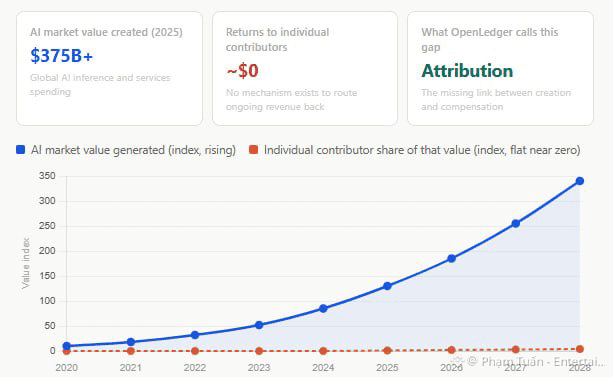

#openledger $OPEN #OpenLedger (OPEN), die auf Künstliche Intelligenz spezialisierte Blockchain-Serie, hat die Einführung von Liquidität angekündigt, um Einnahmen aus Daten, Modellen und intelligenten Agenten zu generieren.
Diese Innovation eröffnet Entwicklern, Unternehmen und Kreativen neue Perspektiven:
🔹 Direkte Einnahmen: Nutzer können ihre Daten, Modelle und intelligenten Agenten nun in handelbare Vermögenswerte umwandeln.
🔹 Innovation beschleunigen: Die Plattform ermöglicht die sichere und effiziente gemeinsame Nutzung intelligenter Ressourcen und unterstützt so die Entwicklung fortschrittlicher KI-Lösungen.
🔹 Dezentralität und Transparenz: Alle Transaktionen und Übertragungen erfolgen über die OPEN-Blockchain, was vollständige Verlässlichkeit und ein hohes Maß an Sicherheit gewährleistet.
Mit OpenLedger ist KI nicht mehr nur ein Werkzeug, sondern eine eigenständige Wirtschaft, in der alle mitmachen und davon profitieren können. 🌐💡
Diese Innovation eröffnet Entwicklern, Unternehmen und Kreativen neue Perspektiven:
🔹 Direkte Einnahmen: Nutzer können ihre Daten, Modelle und intelligenten Agenten nun in handelbare Vermögenswerte umwandeln.
🔹 Innovation beschleunigen: Die Plattform ermöglicht die sichere und effiziente gemeinsame Nutzung intelligenter Ressourcen und unterstützt so die Entwicklung fortschrittlicher KI-Lösungen.
🔹 Dezentralität und Transparenz: Alle Transaktionen und Übertragungen erfolgen über die OPEN-Blockchain, was vollständige Verlässlichkeit und ein hohes Maß an Sicherheit gewährleistet.
Mit OpenLedger ist KI nicht mehr nur ein Werkzeug, sondern eine eigenständige Wirtschaft, in der alle mitmachen und davon profitieren können. 🌐💡

#openledger $OPEN Open data und dezentralisierte KI können neue Möglichkeiten für die gesamte Blockchain-Branche eröffnen. @OpenLedger baut Infrastruktur, die dabei hilft, Datenanbieter und KI-Anwendungen miteinander zu verbinden und echten Nutzen für das Ökosystem zu schaffen. Ich freue mich auf die Zukunft von $OPEN . #OpenLedger

#openledger $OPEN @OpenLedger
Open Ledger ist eine KI-Blockchain mit einem Marktwert.
Aktiv im Markt seit Jahrzehnten.
Jetzt haben sie eine Kampagne auf Binance Square gestartet. Was du tun musst, ist, Aufgaben zu erledigen und deine Belohnungen zu erhalten.
#50000usdc
Open Ledger ist eine KI-Blockchain mit einem Marktwert.
Aktiv im Markt seit Jahrzehnten.
Jetzt haben sie eine Kampagne auf Binance Square gestartet. Was du tun musst, ist, Aufgaben zu erledigen und deine Belohnungen zu erhalten.
#50000usdc
Anmelden und weiter Inhalte entdecken