
#cryptotax
cryptotax
618,456 Aufrufe
1,525 Kommentare
Hot
Zuletzt

#southkoreaseekscryptotaxdelayuntil2029
🚨 SÜDKOREA GIBT KRYPTOWÄHRUNGSANLEGERN GERADE MÖGLICHERWEISE EINE LEBENSLEINE — STEUERN KÖNNTEN BIS 2029 AUFGESCHOBEN WERDEN!
Südkorea erwägt erneut, die Einführung der Kryptowährungssteuer aufzuschieben. Das könnte Anlegern bis 2029 Zeit verschaffen, bevor die geplanten Steuerregeln in Kraft treten.
Und dabei geht es um mehr als nur einen Steueraufschub.
🔥 Was ist los?
Südkorea bemüht sich um einen weiteren Aufschub der geplanten Besteuerung von Kryptowährungen.
Der vorgeschlagene Zeitplan könnte den Start auf Januar 2029 verschieben.
Dadurch hätten Anleger, Börsen und Aufsichtsbehörden mehr Zeit zur Vorbereitung.
Südkorea hat eine der weltweit aktivsten Krypto-Handelsgemeinschaften.
📈 Warum ist das wichtig?
Ein Aufschub der Krypto-Steuer könnte für südkoreanische Händler eine positive Nachricht sein, denn sie warten schon lange auf klare regulatorische Vorgaben.
Mehr Zeit bis zur Besteuerung könnte außerdem dazu beitragen, die Beteiligung von Anlegern am Markt aufrechtzuerhalten und die Unsicherheit rund um den Krypto-Handel zu verringern.
Doch hier stellt sich die größere Frage: Wird dieser Aufschub tatsächlich zu einer stärkeren Verbreitung von Kryptowährungen führen, oder vertagt Südkorea lediglich eine Entscheidung, der es nicht entgehen kann?
Eines ist sicher: Südkoreas Krypto-Politik könnte ein wichtiges Signal für den gesamten asiatischen Markt sein.
Die Krypto-Branche wächst, und Regierungen versuchen noch immer herauszufinden, wie sie sie regulieren sollen.
#SouthKorea #cryptotax #CryptoNews
1.2k


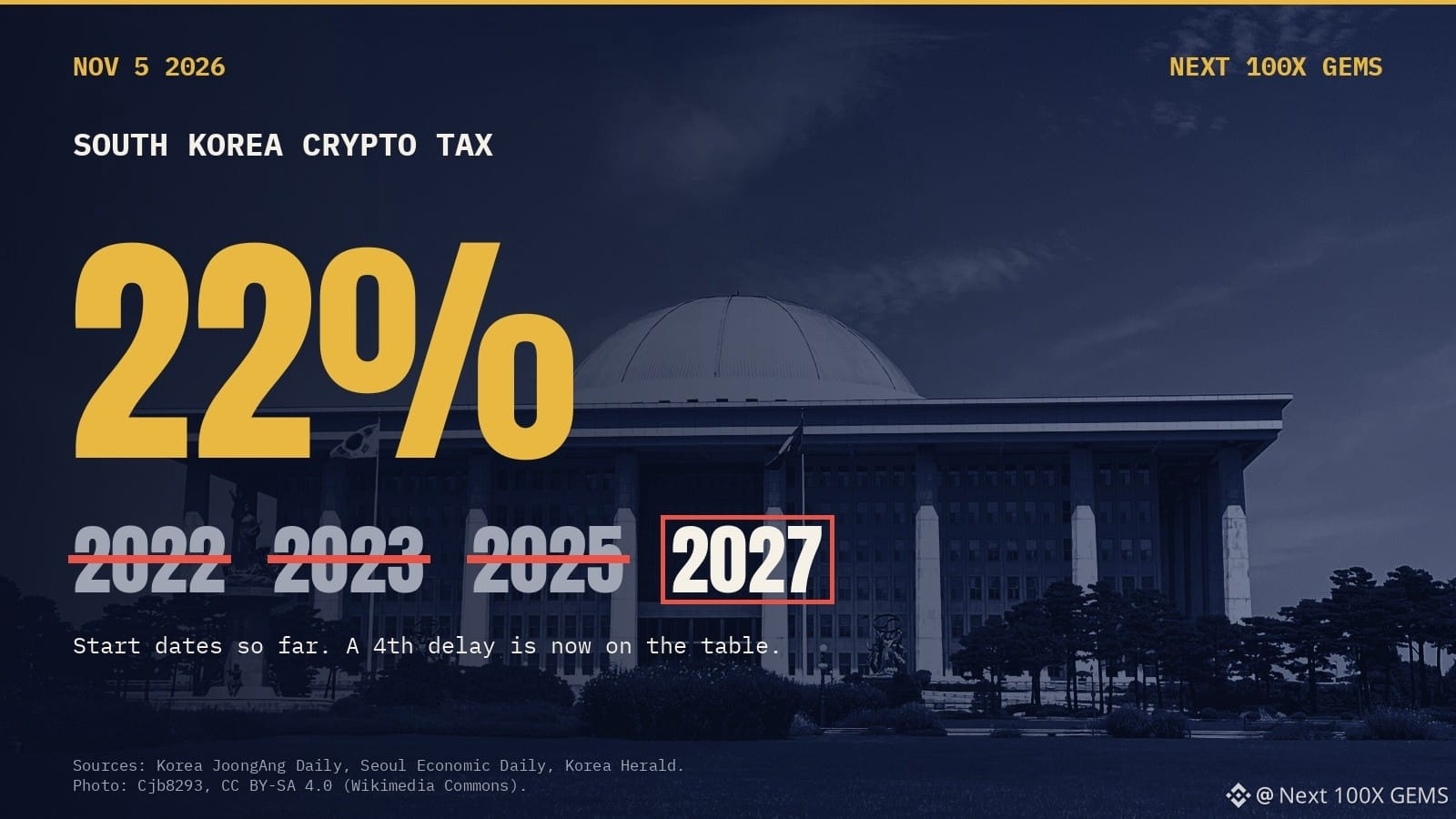
Südkorea hat 2020 eine Kryptosteuer von 22 % gesetzlich festgeschrieben. Bisher wurden null Won eingenommen.
Als erster Starttermin galt der 1. Januar 2022 – der Tag, an dem $BTC bei etwa 46.200 US-Dollar eröffnete.
Dann wurde der Termin auf 2023 verschoben. Dann auf 2025. Dann auf den 1. Januar 2027, der in 57 Tagen ist.
Am Mittwoch bat die regierende Demokratische Partei die Regierung offiziell um eine vierte Verschiebung. Parteichef Kim Min-seok will, dass zuerst das grundlegende Gesetz über digitale Vermögenswerte verabschiedet wird, und das Finanzamt hat nach wie vor Schwierigkeiten, Handelsgeschäfte auf ausländischen Börsen zu erfassen. Ein Abgeordneter der DP hat bereits einen Gesetzentwurf eingebracht, der den Termin auf den 1. Januar 2029 verschiebt.
Die Regel auf dem Papier hat sich nicht geändert: 22 % auf jährliche Gewinne über 2,5 Millionen Won, etwa 1.860 US-Dollar.
Eine kurze Rechnung in US-Dollar: Wer am ersten Starttermin eine Coin gekauft und sie heute für etwa 80.400 US-Dollar verkauft hätte, hätte ungefähr 34.100 US-Dollar Gewinn gemacht. Wäre die Steuer in Kraft, gingen etwa 7.100 US-Dollar an den Staat. Die tatsächliche Steuerrechnung für diesen Handel beläuft sich bislang auf null.
Die längste Haltedauer in der koreanischen Kryptobranche hat die Steuer selbst.
#CryptoTax #Südkorea
Keine Finanzberatung. Recherchiere selbst.
1.3k

·
--
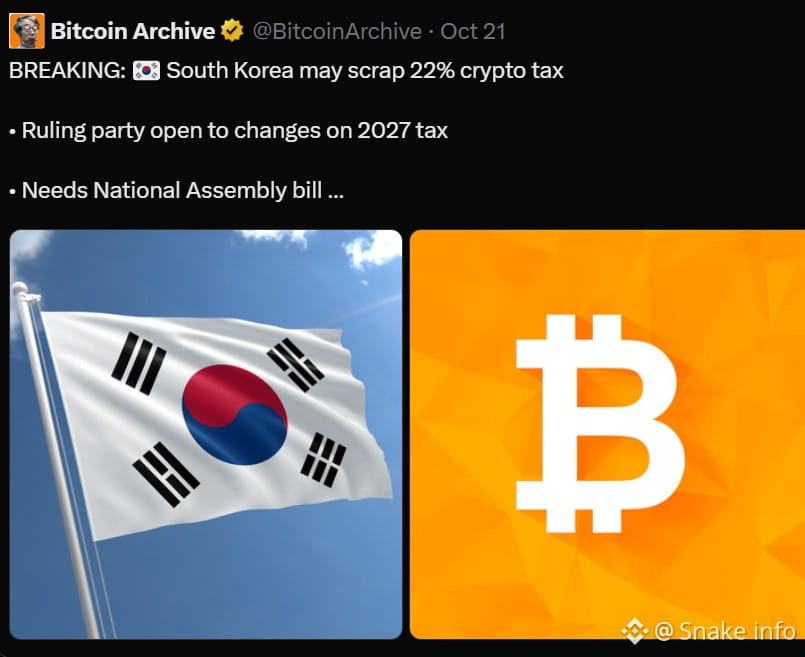
🇰🇷 SÜDKOREA KÖNNTE SEINE 22-%-KRYPTOSTEUER ABSCHAFFEN! 🚨
Südkorea kommt einer Neubewertung seiner umstrittenen 22-prozentigen Kapitalertragssteuer auf Kryptowährungen näher. Der Plan könnte verschoben oder sogar ganz verworfen werden.
Das solltest du wissen:
🔹 Steueraufschub: Die Regierung hat darüber gesprochen, die 22-prozentige Kryptosteuer bis 2029 aufzuschieben.
🔹 Unterstützung durch die Regierungspartei: Berichten zufolge ist die Regierungspartei offen für Änderungen an der geplanten Steuerpolitik für 2027.
🔹 Überprüfung im November: Weitere Gespräche und Überprüfungen werden im November erwartet.
🔹 Endgültige Zustimmung erforderlich: Jede größere Änderung muss durch die Nationalversammlung Südkoreas gesetzlich beschlossen werden.
📊 Warum ist das für Kryptowährungen wichtig?
Südkorea ist einer der bedeutenden Kryptowährungsmärkte Asiens. Eine geringere Steuerlast könnte mehr Privatanleger zur Teilnahme ermutigen, die Stimmung unter Anlegern verbessern und möglicherweise die Handelsaktivität ankurbeln.
⚠️ Aber noch ist nichts endgültig! Anleger sollten auf eine offizielle gesetzgeberische Bestätigung warten, bevor sie die Steuerstreichung als beschlossene Sache betrachten.
🔥 Was meinst du?
Sollte Südkorea die 22-prozentige Kryptosteuer vollständig abschaffen oder sollten Gewinne aus Kryptowährungen weiterhin besteuert werden?
Teile deine Meinung unten mit! 👇
#SouthKorea #CryptoTax #Bitcoin #BTC
KLICKE UNTEN, UM ZU HANDELN 👇
$BTC $ETH $BNB
{future}(BNBUSDT)
{future}(ETHUSDT)
{future}(BTCUSDT)
🇰🇷 SÜDKOREA KÖNNTE SEINE 22-%-KRYPTOSTEUER ABSCHAFFEN! 🚨
Südkorea kommt einer Neubewertung seiner umstrittenen 22-prozentigen Kapitalertragssteuer auf Kryptowährungen näher. Der Plan könnte verschoben oder sogar ganz verworfen werden.
Das solltest du wissen:
🔹 Steueraufschub: Die Regierung hat darüber gesprochen, die 22-prozentige Kryptosteuer bis 2029 aufzuschieben.
🔹 Unterstützung durch die Regierungspartei: Berichten zufolge ist die Regierungspartei offen für Änderungen an der geplanten Steuerpolitik für 2027.
🔹 Überprüfung im November: Weitere Gespräche und Überprüfungen werden im November erwartet.
🔹 Endgültige Zustimmung erforderlich: Jede größere Änderung muss durch die Nationalversammlung Südkoreas gesetzlich beschlossen werden.
📊 Warum ist das für Kryptowährungen wichtig?
Südkorea ist einer der bedeutenden Kryptowährungsmärkte Asiens. Eine geringere Steuerlast könnte mehr Privatanleger zur Teilnahme ermutigen, die Stimmung unter Anlegern verbessern und möglicherweise die Handelsaktivität ankurbeln.
⚠️ Aber noch ist nichts endgültig! Anleger sollten auf eine offizielle gesetzgeberische Bestätigung warten, bevor sie die Steuerstreichung als beschlossene Sache betrachten.
🔥 Was meinst du?
Sollte Südkorea die 22-prozentige Kryptosteuer vollständig abschaffen oder sollten Gewinne aus Kryptowährungen weiterhin besteuert werden?
Teile deine Meinung unten mit! 👇
#SouthKorea #CryptoTax #Bitcoin #BTC
KLICKE UNTEN, UM ZU HANDELN 👇
$BTC $ETH $BNB
51

·
--
Übersetzung ansehen
#SouthKoreaSeeksCryptoTaxDelayUntil2029
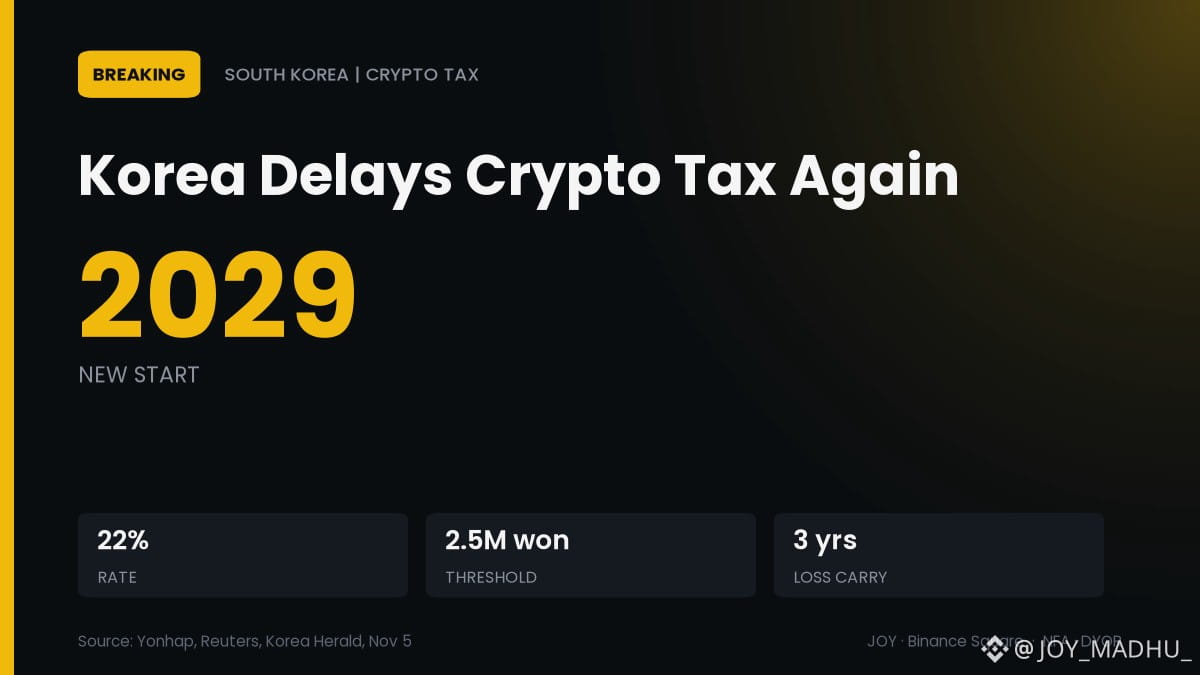
⏳ Korea's Crypto Tax Slips a 4th Time, Now to 2029
Seoul formally asked for a two-year delay today and added a loss carryforward for traders.
📅 Start moves from Jan 2027 to 2029, pending an Assembly vote
📊 22% rate (incl. local tax) on gains above 2.5M won (~$1,869)
📉 New: losses carry forward 3 years, offsetting gains through 2032
🏦 Reason: US crypto data sharing only starts in 2029
Watch next: the Assembly must amend the Income Tax Act before January.
Tax start: 2029 delay passes, or Jan 1, 2027 stands? 👇
$BTC
#Korea #CryptoTax #SouthKoreaSeeksCryptoTaxDelayUntil2029
6

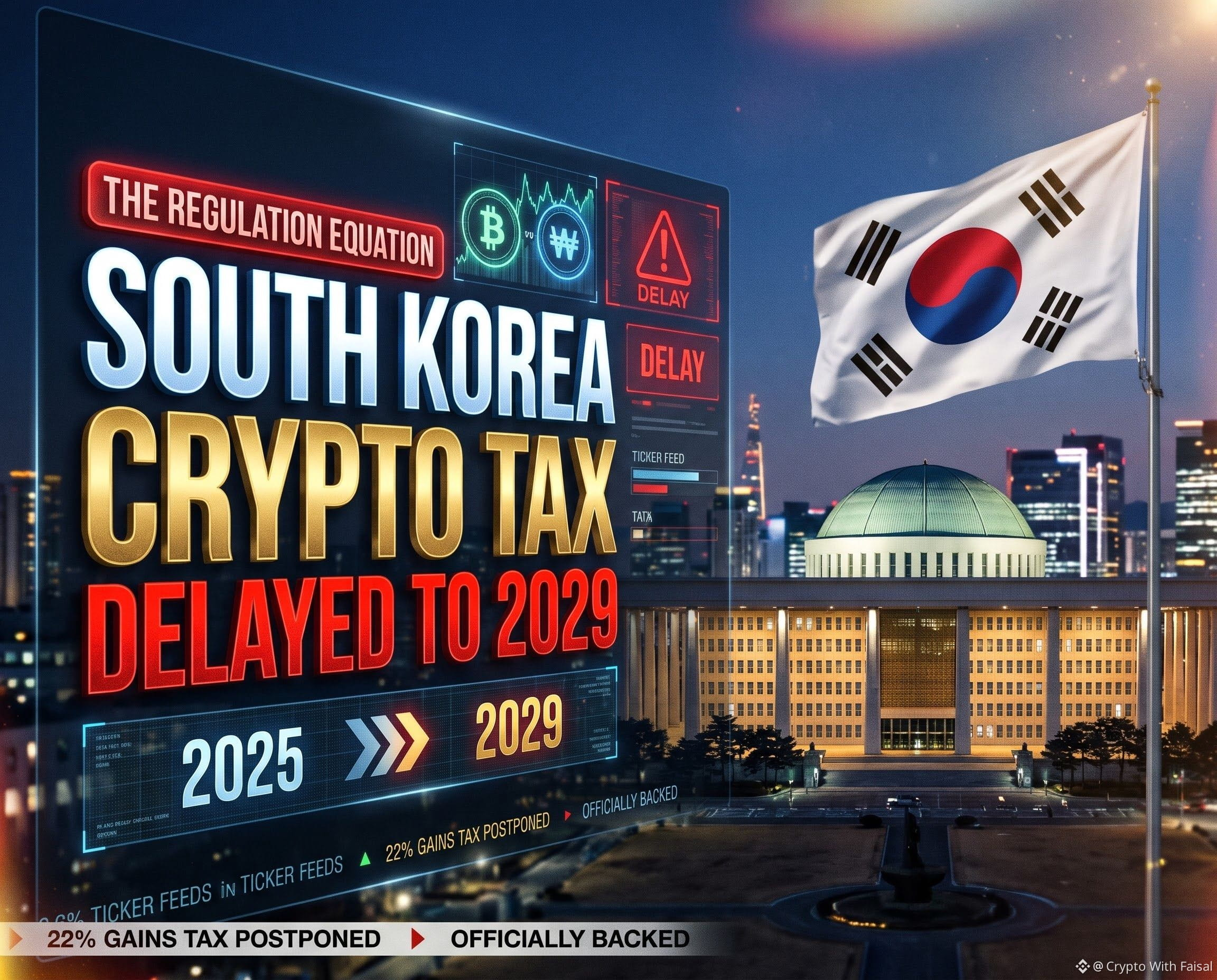
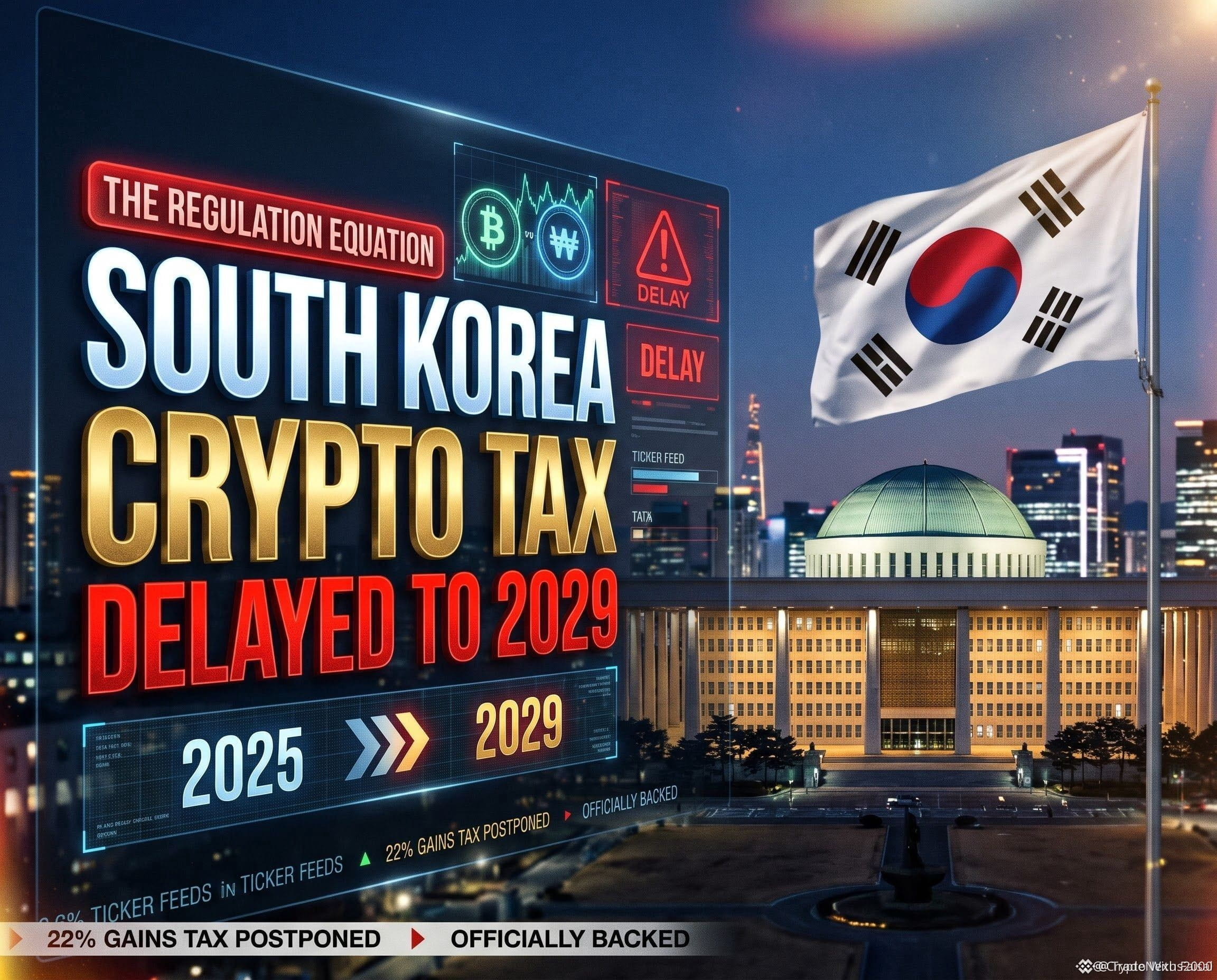
🚨 DIE REGULIERUNGSGLEICHUNG: Steuer auf 2029 verschoben 🚨
#southkoreaseekscryptotaxdelayuntil2029 Die Regierung hat gerade offiziell eine massive Verschiebung der Kryptobesteuerung unterstützt. Rechnen wir die politische Gleichung durch 🧮👇
(Unfertige Gesetze) + (Verzögerungen bei US-Daten) = Steuer aufgeschoben 🛑
Der Ausgangspunkt:
(Der Auslöser) = Nachdem der Vorsitzende der Demokratischen Partei, Kim Min-seok, einen Vorschlag unterbreitet hatte, verkündete Finanzminister Lee Hyoung-il, dass die Regierung eine Verschiebung der 22-prozentigen Steuer auf Kryptogewinne auf 2029 unterstützt.
Das Ergebnis:
(Die Realität) ➔ Sollte das Parlament zustimmen, wäre dies die vierte Verschiebung seit der Einführung der Steuer. Die geplante Abgabe von 22 % betrifft jährliche Kryptogewinne von mehr als 2,5 Millionen Won (ca. 1.860 US-Dollar).
Die Hintergründe:
Im Kern geht es bei der Verschiebung um die Infrastruktur. Offizielle Stellen verweisen darauf, dass zunächst das Digital Asset Basic Act verabschiedet werden müsse und die Regelung mit dem US-Zeitplan für den internationalen Austausch von Steuerdaten ab 2029 abgestimmt werden müsse. Steuern einzuführen, bevor der globale Datenaustausch beginnt, würde die heimischen Märkte erheblich benachteiligen.
Wird Südkorea diese Steuer letztendlich einführen, oder führen die wiederholten Verschiebungen dazu, dass sie ganz gestrichen wird? ❓👇💬
$BTC
{future}(BTCUSDT)
$ETH
{future}(ETHUSDT)
$SOL
{future}(SOLUSDT)
#SouthKorea #CryptoTax #CryptoRegulation
🚨 DIE REGULIERUNGSGLEICHUNG: Steuer auf 2029 verschoben 🚨
#southkoreaseekscryptotaxdelayuntil2029 Die Regierung hat gerade offiziell eine massive Verschiebung der Kryptobesteuerung unterstützt. Rechnen wir die politische Gleichung durch 🧮👇
(Unfertige Gesetze) + (Verzögerungen bei US-Daten) = Steuer aufgeschoben 🛑
Der Ausgangspunkt:
(Der Auslöser) = Nachdem der Vorsitzende der Demokratischen Partei, Kim Min-seok, einen Vorschlag unterbreitet hatte, verkündete Finanzminister Lee Hyoung-il, dass die Regierung eine Verschiebung der 22-prozentigen Steuer auf Kryptogewinne auf 2029 unterstützt.
Das Ergebnis:
(Die Realität) ➔ Sollte das Parlament zustimmen, wäre dies die vierte Verschiebung seit der Einführung der Steuer. Die geplante Abgabe von 22 % betrifft jährliche Kryptogewinne von mehr als 2,5 Millionen Won (ca. 1.860 US-Dollar).
Die Hintergründe:
Im Kern geht es bei der Verschiebung um die Infrastruktur. Offizielle Stellen verweisen darauf, dass zunächst das Digital Asset Basic Act verabschiedet werden müsse und die Regelung mit dem US-Zeitplan für den internationalen Austausch von Steuerdaten ab 2029 abgestimmt werden müsse. Steuern einzuführen, bevor der globale Datenaustausch beginnt, würde die heimischen Märkte erheblich benachteiligen.
Wird Südkorea diese Steuer letztendlich einführen, oder führen die wiederholten Verschiebungen dazu, dass sie ganz gestrichen wird? ❓👇💬
$BTC
$ETH
$SOL
#SouthKorea #CryptoTax #CryptoRegulation
2
634

Übersetzung ansehen
🚨 $BTC REACTS TO SOUTH KOREA TAX DELAY TILL 2029 🦈
South Korea's fourth postponement of the 22% crypto gains levy aligns with the 2029 US data‑sharing timeline, preserving domestic liquidity while the Digital Asset Basic Act catches up. 📊 Institutional eyes are scanning the move as a liquidity buffer, signaling smart‑money patience.
With the threshold set at 2.5 million won (~$1,860), the market anticipates a muted sell‑pressure wave, but any parliamentary green light could re‑ignite short‑term volatility. ⚡ How will this regulatory cadence shape the next swing in $BTC , $ETH , and $SOL ? 💬
⚠️ Not financial advice. Always manage your risk. 🛡️
🏷️ #BTC #CryptoTax #Regulation #SouthKorea #Crypto
🚀 🔥
15

·
--
Ein Votum mit 458 zu 0 Stimmen hat Frankreichs neue Ideen zur Kryptobesteuerung aus dem Haushalt 2027 gekippt – zumindest vorerst.
• Französische Abgeordnete lehnten am 4. November den Einnahmenteil des Haushalts 2027 mit 458 zu 0 Stimmen ab (zwei Enthaltungen)
• Zuvor angenommene Kryptoänderungsanträge, darunter eine Steuer auf Gewinne aus dem Tausch von Kryptowährungen gegen Stablecoins und eine Meldepflicht für selbstverwahrte Vermögenswerte ab 100.000 €, sind damit hinfällig
Warum das wichtig ist: Die Besteuerung von Stablecoin-Tauschgeschäften und die Meldepflicht für selbstverwahrte Wallets hätten einen Präzedenzfall in der EU geschaffen.
Quelle: Cointelegraph / crypto.news / Journal du Coin
Keine Finanzberatung.
💬 Sollten selbstverwahrte Wallets jemals den Steuerbehörden gemeldet werden müssen?
#France #Stablecoins #Kryptosteuer
2

·
--
Übersetzung ansehen
🚨 South Korea pushes its 22% crypto tax to 2029, delaying the January 2027 implementation. This extension signals ongoing regulatory uncertainty and likely dampens short-term market momentum.
Market Implication: Expect delayed institutional entry and potential altcoin rotation into safer assets as clarity emerges.
💡 What does this delay mean for your altcoin strategy? #CryptoTax
$KORUB #TradingSignal #CryptoAnalysis
Market Implication: Expect delayed institutional entry and potential altcoin rotation into safer assets as clarity emerges.
💡 What does this delay mean for your altcoin strategy? #CryptoTax
$KORUB #TradingSignal #CryptoAnalysis

4

·
--
Hongkong hat die Krypto-Steuerberichterstattung gerade gesetzlich verankert.
Am 4. November verabschiedet (COINOTAG):
• Börsen müssen ab 2027 Kundendaten erheben
• Der Austausch von Steuerinformationen beginnt 2028
In derselben Woche erholte sich $BTC wieder auf über 80.000 $. Die Märkte beobachten die Regeln ebenso genau wie den Kurs.
Meine Einschätzung: Meldepflichten wie diese bedeuten meist weniger Anonymität, aber mehr Vertrauen seitens institutioneller Akteure. Standorte, die früh klare Regeln festlegen, ziehen tendenziell lizenzierte Anbieter an.
Macht eine klarere Steuerberichterstattung es für dich wahrscheinlicher oder unwahrscheinlicher, eine regulierte Börse in Asien zu nutzen? Warum?
#HongKong #CryptoRegulation #CryptoTax $ETH
1

·
--
Übersetzung ansehen
Why does a two-year tax delay in Seoul matter to every crypto trader watching Asia? 🇰🇷
South Korea just confirmed it: the 22% tax on crypto gains is delayed for a fourth time, from January 2027 to 2029. Finance Minister Lee Hyoung-il announced the plan at a briefing in Seoul today (Nov 5), and the government will work with the National Assembly to change the law. (Korea JoongAng Daily)
The numbers: a 22% rate (20% national + 2% local) on annual gains above 2.5 million won, about $1,870. The tax was first scheduled for January 2022. It has now been pushed back four times: 2022, 2023, 2025, 2027, 2029.
The delay was widely expected since late October, so the decision itself is not the story. The variable is what comes with it. Seoul says the real blocker is enforcement: the country starts exchanging crypto transaction data under the OECD's CARF framework in 2027, but the US does not join until 2029. Taxing domestic traders before overseas trades are visible would punish local exchanges and push volume offshore. The two-year window also buys time for a 3-year loss carryforward, letting losses offset future gains.
My take: this is bigger than two tax-free years. It is Korea admitting it cannot tax what it cannot see, and choosing to keep its traders onshore instead of driving them to overseas venues.
But a delay is not an abolition. The principle that crypto income gets taxed still stands, and 2029 is a deadline, not a pardon. The real test now is execution, not promises: National Assembly approval, detailed guidelines due in the first half of 2028, and the CARF data exchange actually starting in 2029.
📊 What to watch:
- National Assembly vote on the amendment
- Detailed tax guidelines, H1 2028
- US CARF participation in 2029, the real enforcement trigger
$BTC held $80,382 (+2.5%) and $ETH $2,416 (+4.0%) as the news landed, with fear and greed at 50, neutral. (Binance spot data)
Is Korea's delay a blueprint other countries will copy, or does it just kick the can down the road? 👇
Not financial advice. DYOR.
#crypto #SouthKorea #CryptoTax #regulation
45

·
--
🗳️ Die französische Nationalversammlung hat den Einnahmenteil des Haushalts für 2027 mit 458 Gegenstimmen, 0 Ja-Stimmen und 2 Enthaltungen abgelehnt. Dadurch wurde verhindert, dass die bereits verabschiedeten Änderungen zur Kryptobesteuerung in den Beratungsentwurf des Senats aufgenommen werden.
**Begünstigende Bedingungen**
- Zu den verabschiedeten Änderungen gehören die Besteuerung von Gewinnen aus dem Umtausch von Kryptowährungen in Stablecoins sowie eine Meldepflicht für selbstverwahrte Vermögenswerte im Wert von ≥100.000 Euro (maßgeblich ist jeweils der 31. Dezember).
- Wird der Gesetzentwurf erneut eingebracht, könnte er im Senat weiter beraten und schließlich Gesetz werden.
**Unsicherheitsfaktoren**
- Ob der Haushaltstext im Senat wieder aufgenommen wird, ist weiterhin unklar. Für die Beratungen ist lediglich der Zeitraum vom 20. bis 23. November vorgesehen.
- Ob der Vorschlag, die Geldstrafe für Plattformen, die ihren steuerlichen Informationspflichten nicht nachkommen, auf 50.000 Euro zu erhöhen, angenommen wird, hängt ebenfalls von späteren Abstimmungen ab.
🔍 Das bedeutet, dass sich Frankreichs Regulierung von Kryptowährungen noch in der Entwicklung befindet. Marktteilnehmer sollten die Fortschritte im Gesetzgebungsverfahren statt kurzfristiger Auswirkungen im Blick behalten.
🌍
Keine Anlageberatung.
#CryptoTax #France #Regulation #Write2Earn

54

·
--
Bullisch
Übersetzung ansehen
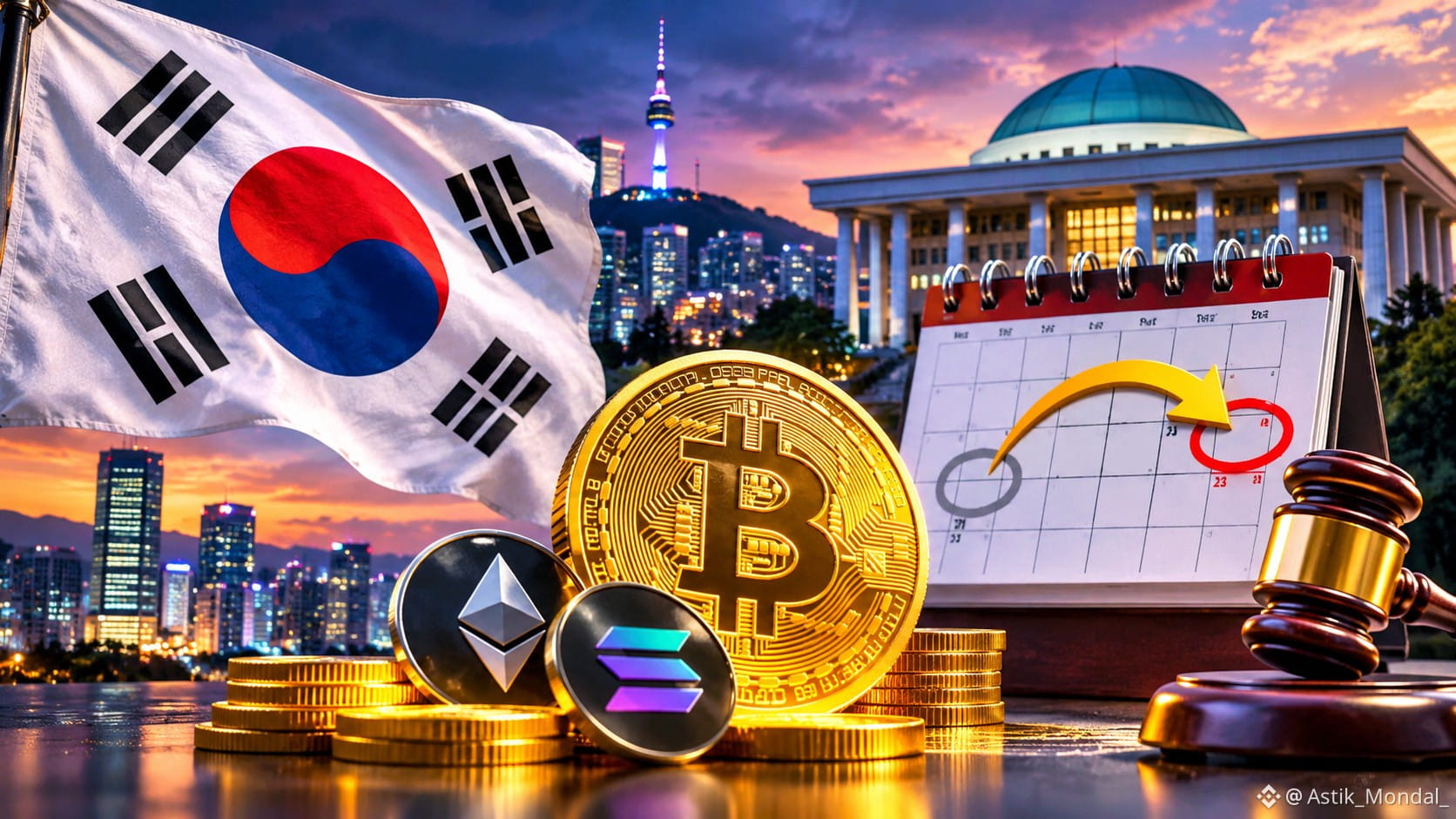
🚨 SOUTH KOREA DELAYS ITS 22% CRYPTO TAX UNTIL 2029!
A major development for South Korea's crypto investors.
The government plans to push the tax deadline from January 2027 to 2029, pending parliamentary approval.
Here's why it matters:
🔹 FOURTH postponement since the original 2022 deadline.
🔹 The proposed 22% tax applies to annual crypto profits exceeding 2.5 million won ($1,900).
🔹 Crypto transaction data sharing with the US isn't expected to begin until 2029.
🔹 Authorities fear domestic exchange users could face unequal tax treatment compared with overseas traders.
The bigger picture?
South Korea is giving its crypto market more time before the proposed tax takes effect.
If approved, investors get another two years before facing this taxation framework.
A significant policy development for one of Asia's biggest crypto markets.
#Bitcoin #Crypto #SouthKorea #CryptoTax #CryptoNews $BTC $SOL $XRP
1
5

·
--
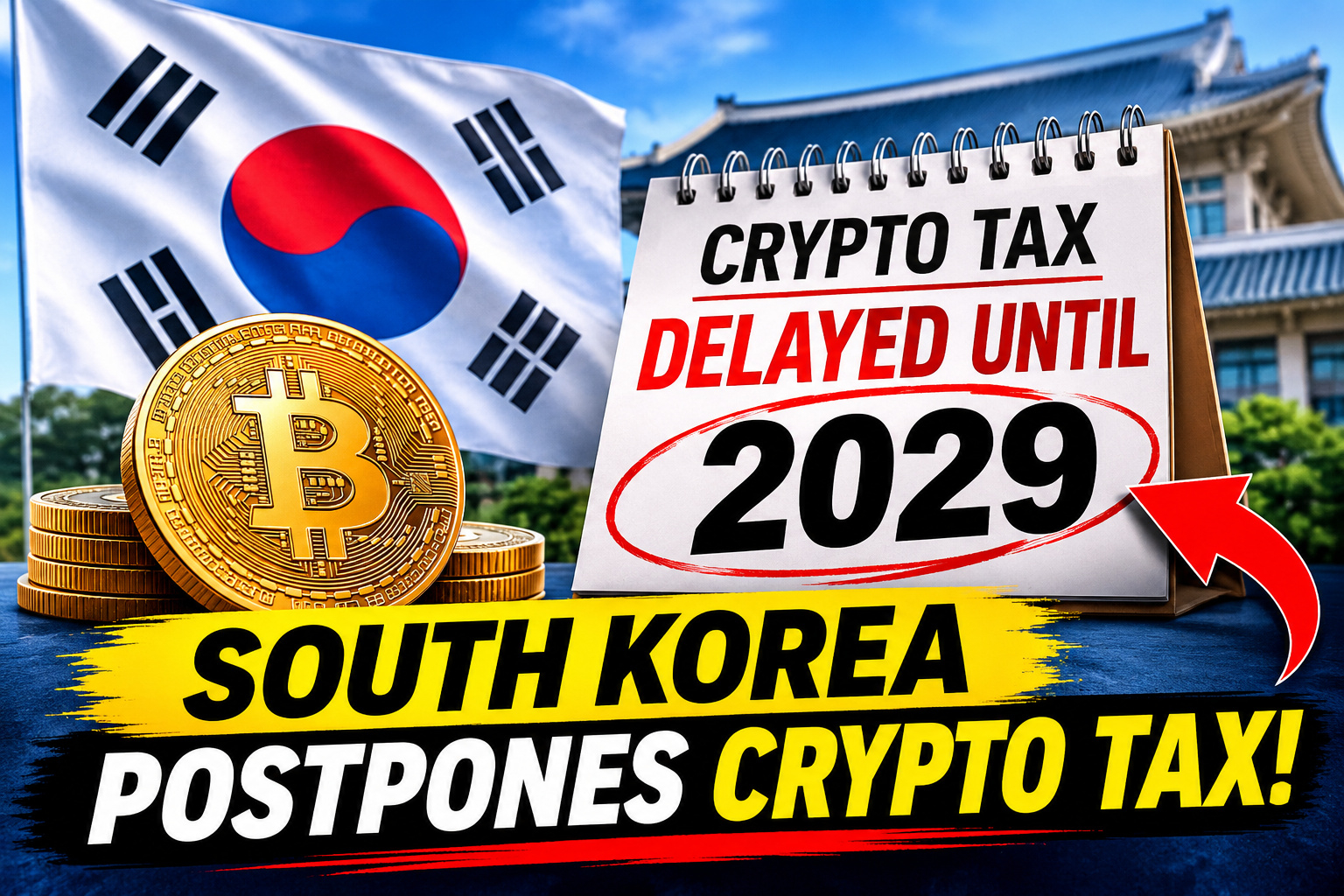
🚨 EILMELDUNG: Südkorea verschiebt die Kryptosteuer auf 2029! 🇰🇷
Südkorea hat die geplante Steuer auf Kryptowährungen um weitere zwei Jahre verschoben. Es ist bereits die vierte Verschiebung der Maßnahme.
Offizielle Stellen begründen dies mit einer unzureichenden Steuerinfrastruktur und Verzögerungen beim Austausch von Daten zu Kryptotransaktionen mit den Vereinigten Staaten.
Die geplante Steuer von 22 % auf jährliche Kryptogewinne von mehr als 2,5 Millionen Won steht weiterhin zur Debatte.
⏳ Kryptoanleger haben mehr Zeit, bevor die Steuerregeln in Kraft treten!
#CryptoNews $FOGO $BEAMX $BTC #SouthKorea #Bitcoin #CryptoTax #Cryptocurrency
1
88
·
--
Südkoreas Finanzminister: Krypto-Gewinnsteuer von 2027 auf 2029 verschieben – die vierte Verschiebung seit 2020.
• Die Regierung will die Zustimmung der Nationalversammlung einholen, um die Krypto-Steuer von 22 % (einschließlich lokaler Steuern) vom 1. Januar 2027 auf den 1. Januar 2029 zu verschieben
• Außerdem wird ein dreijähriger Verlustvortrag vorgeschlagen, damit frühere Kryptoverluste mit späteren Gewinnen verrechnet werden können
• Vierte Verschiebung seit 2020; als Gründe werden der Austausch von Steuerinformationen mit den USA ab 2029 und ein noch ausstehendes Gesetz zu digitalen Vermögenswerten genannt
Warum das wichtig ist: Wenn die Nationalversammlung der Verschiebung zustimmt, bleiben Gewinne aus dem privaten Kryptohandel in Korea länger steuerfrei.
Quelle: Korea.kr / MOFE
Keine Finanzberatung.
💬 Erneut bis 2029 verschieben oder Kryptogewinne wie geplant besteuern?
#CryptoTax #Südkorea
9

Diesen Beitrag habe ich gestern verpasst, aber es lohnt sich, ihn nachzuholen — Hongkong hat Kryptotransaktionen gerade auf den Radar der Steuerbehörde gesetzt.
Am 4. November verabschiedete der Legislativrat das Gesetz zur Änderung der Inland Revenue Ordinance und führte damit den Crypto-Asset Reporting Framework (CARF) der OECD ein. Ab dem 1. Januar 2027 müssen erfasste Anbieter — Börsen, Broker, Händler und einige Geldautomatenbetreiber — Kunden überprüfen, Transaktionen erfassen und jährlich der Steuerbehörde (Inland Revenue Department) melden. Der grenzüberschreitende Informationsaustausch beginnt 2028.
Wichtig ist mir dabei: Das schafft Transparenz, aber keine neue Steuer — das Gesetz ändert nichts daran, was jemand schuldet. Chainalysis schätzt außerdem, dass nur etwa 14 % der steuerpflichtigen Onchain-Aktivitäten in der Praxis von CARF erfasst werden können. Dezentrale und Peer-to-Peer-Transaktionen bleiben daher größtenteils außen vor.
$BTC nahe bei 80.764 $ (+4,8 %/24 Std.) und $ETH nahe bei 2.432 $ (+7,3 %) am Binance-Spotmarkt sind Kontext, keine Reaktion, die ich diesem Gesetz zuschreibe.
Macht eine klarere Meldepflicht Hongkong attraktiver als Standort für den Aufbau eines Unternehmens — oder führt sie einfach nur zu mehr Überwachung? Keine Finanzberatung, eigene Recherche betreiben.
$BTC $ETH #Regulation #HongKong #CARF #CryptoTax
63

·
--
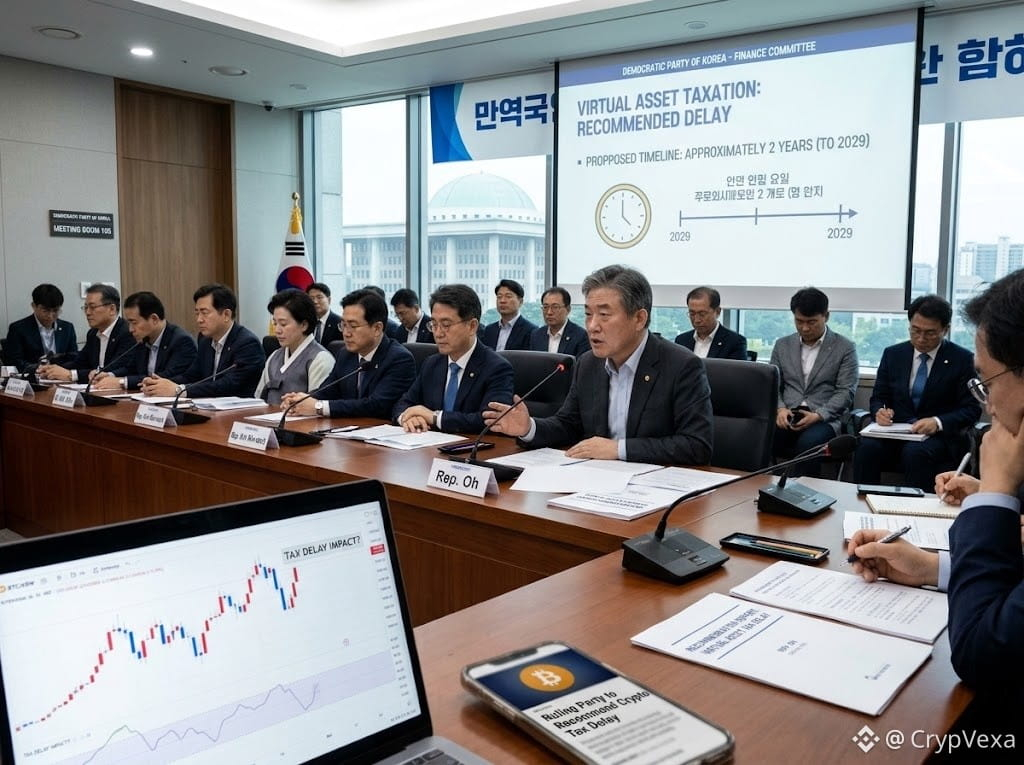
🇰🇷 Südkoreas Regierungspartei drängt auf eine zweijährige Verschiebung der Kryptosteuer
⚡ Südkoreas regierende Demokratische Partei hat vorgeschlagen, die Kryptosteuer, die derzeit für Januar 2027 geplant ist, um etwa zwei Jahre zu verschieben.
📋 Abgeordnete sagen, dass mehr Zeit benötigt wird, um Steuersysteme vorzubereiten und einen umfassenderen Regulierungsrahmen für digitale Vermögenswerte zu schaffen.
🔄 Bei einer Zustimmung wäre dies die vierte Verschiebung der Steuer.
⚠️ Die Verschiebung ist noch ein Vorschlag und keine bestätigte politische Änderung.
👀 Findest du, dass Krypto-Investoren mehr Zeit brauchen, bevor die Besteuerung beginnt?
#SouthKorea #CryptoTax #CryptoRegulation #CryptoNews
1
56

·
--
🇰🇷 SÜDKOREAS KRYPTOSTEUERPOLITIK WIEDER IM FOKUS!
Südkoreas Regierungspartei hat offiziell vorgeschlagen, die geplante Einkommensteuer auf Kryptowährungen im Land aufzuschieben.
Warum ist das wichtig?
🔹 Die Besteuerung von Kryptowährungen bleibt eine wichtige politische Debatte.
🔹 Anleger und Börsen beobachten, ob für regulatorische Klarheit gesorgt wird.
🔹 Jede Änderung könnte sich auf den Markt für digitale Vermögenswerte des Landes auswirken.
Wichtig: Es handelt sich um einen Vorschlag, nicht um eine bestätigte Steuerbefreiung.
Die Regulierung von Kryptowährungen entwickelt sich in den großen Volkswirtschaften weiter.
💬 Sollten Regierungen klare Regeln für Kryptowährungen priorisieren, bevor sie neue Steuern einführen?
#SouthKorea #CryptoTax #CryptoRegulation #bitcoin $BTC
18
·
--
Französische Abgeordnete wollen, dass Besitzer von Hardware- und Software-Wallets hohe Guthaben dem Finanzamt melden.
• Änderungsantrag I-2701 wurde am 3. November mit 150 zu 44 Stimmen bei 8 Enthaltungen angenommen
• Selbstverwahrte Wallets mit einem Wert von mindestens 100.000 EUR am 31. Dezember müssten angegeben werden
• Noch ist es kein Gesetz: Es muss noch das Haushaltsverfahren 2027 und den Senat passieren
Warum das wichtig ist: Dadurch würden die französischen Meldepflichten für Steuerzwecke auch auf Hardware- und Software-Wallets ausgeweitet und nicht mehr nur für Konten bei Kryptobörsen gelten.
Quelle: Französische Nationalversammlung
Keine Finanzberatung.
💬 Sollten Regierungen die Meldung selbstverwahrter Kryptowährungen verlangen dürfen? Teile deine Meinung unten mit.
#France #CryptoTax #SelfCustody
72
·
--
#SüdkoreasRegierungsparteichefFordertAufschubDerKryptosteuer
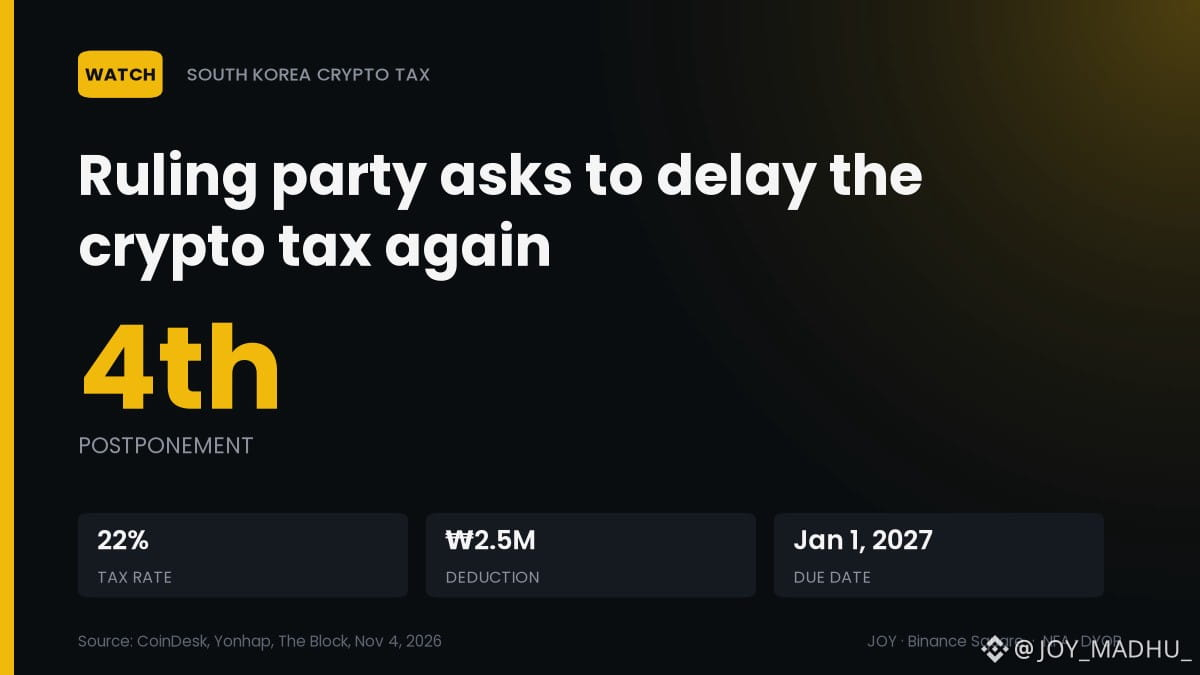
⏳ Südkoreas Regierungspartei will die Kryptosteuer erneut verschieben
Am 4. Nov. bat Parteichef Kim Min-seok die Regierung offiziell darum, die Steuer auf Kryptogewinne, die am 1. Jan. 2027 in Kraft treten soll, aufzuschieben.
📅 Es ist von etwa 2 Jahren die Rede, was auf 2029 hindeutet (CoinDesk)
📊 Derzeit: 22 % einschließlich lokaler Steuer auf Gewinne über ₩2.5M
🔁 Es wäre die 4. Verschiebung seit dem Gesetz von 2020
🏦 Der Finanzminister spricht sich für einen Start 2027 aus; der Börsenverband DAXA will eine Verschiebung
Der Haken: Ein neues Datum steht noch nicht fest.
Verschiebung auf 2029 oder Start am 1. Jan. 2027? 👇
$BTC
#CryptoTax #SouthKorea #SüdkoreasRegierungsparteichefFordertAufschubDerKryptosteuer
35

Kurze Klarstellung für koreanische Krypto-Nutzer: Ein Vorschlag, die Steuer aufzuschieben, ist noch kein rechtskräftiger Aufschub.
Am 4. November schlug der Oberste Rat der regierenden Demokratischen Partei offiziell vor, die für den 1. Januar 2027 geplante Steuer auf Kryptogewinne aufzuschieben. Zunächst sollten das Gesetz über digitale Basiswerte und mehr Vorbereitungszeit im Vordergrund stehen. Sollte der Vorschlag angenommen werden, wäre dies der vierte Aufschub; laut CoinDesk haben Abgeordnete eine Verschiebung um etwa zwei Jahre erörtert. Nach geltendem Recht werden jährliche Gewinne von über ₩2,5 Millionen mit einer Gesamtsteuer von 22 % belegt. Daher bleibt der 1. Januar der geplante Starttermin, sofern die Abgeordneten das Gesetz nicht ändern.
Wird aus dem Vorschlag ein Gesetz?
Quellen: Yonhap (veröffentlicht um 02:14 UTC) — https://en.yna.co.kr/view/AEN20261104004600315
CoinDesk (veröffentlicht um 05:09 UTC) — https://www.coindesk.com/policy/2026/11/04/south-korea-s-ruling-party-wants-to-put-off-its-crypto-tax-again
Fazit: Dies ist ein politischer Vorschlag, keine beschlossene Steuererleichterung. Für einen Überblick über den breiten Markt: $BTC | Offizieller Binance-Spot-Chart: https://www.binance.com/en/trade/BTC_USDT
Prüfen Sie den Chart selbst, recherchieren Sie eigenständig und handeln Sie verantwortungsbewusst.
#CryptoTax #SouthKorea #DigitalAssets #CryptoRegulation

96
Anmelden und weiter Inhalte entdecken
Krypto-Nutzer weltweit auf Binance Square kennenlernen
⚡️ Bleib in Sachen Krypto stets am Puls.
💬 Die weltgrößte Kryptobörse vertraut darauf.
👍 Erhalte verlässliche Einblicke von verifizierten Creators.
E-Mail-Adresse/Telefonnummer
Trendthemen
1
#BinanceReopensWithdrawalsForMoreAssets
765,938 Aufrufe
4,244 Kommentare
2
#Binance98PercentReplenished
140,456 Aufrufe
1,641 Kommentare
3
#USStocksSlipandCryptoMarketUnderBroadPressure
201 Aufrufe
83 Kommentare
4
#StrategySTRCResumesIssuanceAfterOver170Days
12,848 Aufrufe
322 Kommentare
5
#ADPUSPrivateEmployersAdd86000JobsInOctober
27,759 Aufrufe
491 Kommentare
6
#KazakhstanReportedlyInvests$100MInCryptoFunds
1,062 Aufrufe
39 Kommentare
7
#SouthKoreaSeeksCryptoTaxDelayUntil2029
16,628 Aufrufe
214 Kommentare
8
#USMidterms-WhatAreMarketsExpecting?
574,355 Aufrufe
2,807 Kommentare
9
#US10YearTreasuryYieldFallsTo4.845%
18,376 Aufrufe
160 Kommentare
10
#ZcashExpectsNU7ToMake$16MSproutZECInaccessible
1,149 Aufrufe
18 Kommentare