

MAICKY_
9.6k منشورات

MAICKY_
إبلاغ
حظر المُستخدم
📊 Crypto Trader | Blockchain Enthusiast | Building wealth through innovation | #DeFi #Web3
فتح تداول
مُتداول مُتكرر
1 سنوات
879 تتابع
31.3K+ المتابعون
19.2K+ إعجاب
منشورات
الحافظة الاستثمارية
الكل
اقتباسات
مقاطع فيديو
Live
·
--
🚨 مُكاسب العقود الآجلة في تصاعد! 🚨
🔥 تفوقت SOPH بنسبة +55.98%
⚡ ارتفعت IOST بنسبة +32.07%
🚀 قفز $WLD بنسبة +22.56%
💥 صعد $BUSD بنسبة +20.67%
من الواضح أن الزخم يتزايد… 👀
أيّ واحد سيتحرك بعد ذلك؟
1️⃣ $SOPH 🚀
2️⃣ $IOST ⚡
3️⃣ $WLD 🔥
4️⃣ $B USD 💥
{future}(BUSDT)
🚨 مُكاسب العقود الآجلة في تصاعد! 🚨
🔥 تفوقت SOPH بنسبة +55.98%
⚡ ارتفعت IOST بنسبة +32.07%
🚀 قفز $WLD بنسبة +22.56%
💥 صعد $BUSD بنسبة +20.67%
من الواضح أن الزخم يتزايد… 👀
أيّ واحد سيتحرك بعد ذلك؟
1️⃣ $SOPH 🚀
2️⃣ $IOST ⚡
3️⃣ $WLD 🔥
4️⃣ $B USD 💥
🔥 تفوقت SOPH بنسبة +55.98%
⚡ ارتفعت IOST بنسبة +32.07%
🚀 قفز $WLD بنسبة +22.56%
💥 صعد $BUSD بنسبة +20.67%
من الواضح أن الزخم يتزايد… 👀
أيّ واحد سيتحرك بعد ذلك؟
1️⃣ $SOPH 🚀
2️⃣ $IOST ⚡
3️⃣ $WLD 🔥
4️⃣ $B USD 💥
$BUSD — +20.67% 💥
0%
$WLD — +22.56% 🔥
88%
$IOST — +32.07% ⚡
0%
$SOPH — +55.98% 🚀
12%
8 الأصوات • تمّ إغلاق التصويت
682
·
--

BULL_TRADER0
·
--
🚨🧧 تنبيه تنبيهات باكيت بينانس الأحمر! 🧧🚨
🎁 توجد مفاجأة بانتظارك! 👀🔥
💰 يا صيّادي باكيتات الحمراء، هل أنتم جاهزون؟ 😈⚡
👉 تابعني للمطالبة بها! 🧧💸
🍀 نقرة واحدة قد تجلب مفاجأة
⚡ الأيادي السريعة قد تفوز بالجائزة الكبيرة!
🧧❤️ من المستعد لالتقاطها؟ 👇🚀
$BNB
🎁 توجد مفاجأة بانتظارك! 👀🔥
💰 يا صيّادي باكيتات الحمراء، هل أنتم جاهزون؟ 😈⚡
👉 تابعني للمطالبة بها! 🧧💸
🍀 نقرة واحدة قد تجلب مفاجأة
⚡ الأيادي السريعة قد تفوز بالجائزة الكبيرة!
🧧❤️ من المستعد لالتقاطها؟ 👇🚀
$BNB
5
46
·
--
🚨 الرابحون في العقود الآجلة على نار!
سوق التداول للتو طبع اندفاع زخم قوي، ولوحة الرابحين في العقود الآجلة تُظهر بعض التحركات المتفجرة.
🔥 أبرز المتحركات رصدنا: • $AKE USDT → +53.76% | $0.012939
• $BULLA USDT → +50.49% | $0.028714
• MARSCOINUSDT → +46.73% | $0.09975
• USELESSUSDT → +46.60% | $0.14897
• $BR USDT → +41.69% | $0.29512
هذا ليس بيئة شموع خضراء عادية — هذه منطقة عالية التقلب.
{future}(BRUSDT)
ما يلفت انتباهي هو مدى تلاصق هذه المكاسب. عدة عقود تحقق 40–50%+ خلال 24 ساعة عادةً يعني أن المتداولين يقومون بتحويلات عدوانية نحو صفقات الزخم.
لكن انتبهوا من هنا 👀
بعد تحركات بهذا العنف، قد يصبح المطاردة خلف القمة محفوفًا جدًا بالمخاطر. الاختبار الحقيقي هو ما إذا كانت هذه العملات تستطيع الحفاظ على مناطق اختراقها بعد الضخّة الأولية، وليس فقط مدى ارتفاع رقم النسبة.
📈 متداولو الزخم: راقبوا التماسك + استمرار الاختراق.
📉 الدخول المتأخر: انتبهوا من جني الأرباح الحاد وسلاسل التصفية.
الترتيب الأعلى يصرخ زخمًا، لكن الحركة التالية هي التي ستحدد من يملك القوة فعلًا.
أيّ واحد تتابع — AKE، BULLA، MARSCOIN، USELESS أم BR؟ 🔥
🚨 الرابحون في العقود الآجلة على نار!
سوق التداول للتو طبع اندفاع زخم قوي، ولوحة الرابحين في العقود الآجلة تُظهر بعض التحركات المتفجرة.
🔥 أبرز المتحركات رصدنا: • $AKE USDT → +53.76% | $0.012939
• $BULLA USDT → +50.49% | $0.028714
• MARSCOINUSDT → +46.73% | $0.09975
• USELESSUSDT → +46.60% | $0.14897
• $BR USDT → +41.69% | $0.29512
هذا ليس بيئة شموع خضراء عادية — هذه منطقة عالية التقلب.
ما يلفت انتباهي هو مدى تلاصق هذه المكاسب. عدة عقود تحقق 40–50%+ خلال 24 ساعة عادةً يعني أن المتداولين يقومون بتحويلات عدوانية نحو صفقات الزخم.
لكن انتبهوا من هنا 👀
بعد تحركات بهذا العنف، قد يصبح المطاردة خلف القمة محفوفًا جدًا بالمخاطر. الاختبار الحقيقي هو ما إذا كانت هذه العملات تستطيع الحفاظ على مناطق اختراقها بعد الضخّة الأولية، وليس فقط مدى ارتفاع رقم النسبة.
📈 متداولو الزخم: راقبوا التماسك + استمرار الاختراق.
📉 الدخول المتأخر: انتبهوا من جني الأرباح الحاد وسلاسل التصفية.
الترتيب الأعلى يصرخ زخمًا، لكن الحركة التالية هي التي ستحدد من يملك القوة فعلًا.
أيّ واحد تتابع — AKE، BULLA، MARSCOIN، USELESS أم BR؟ 🔥
سوق التداول للتو طبع اندفاع زخم قوي، ولوحة الرابحين في العقود الآجلة تُظهر بعض التحركات المتفجرة.
🔥 أبرز المتحركات رصدنا: • $AKE USDT → +53.76% | $0.012939
• $BULLA USDT → +50.49% | $0.028714
• MARSCOINUSDT → +46.73% | $0.09975
• USELESSUSDT → +46.60% | $0.14897
• $BR USDT → +41.69% | $0.29512
هذا ليس بيئة شموع خضراء عادية — هذه منطقة عالية التقلب.
ما يلفت انتباهي هو مدى تلاصق هذه المكاسب. عدة عقود تحقق 40–50%+ خلال 24 ساعة عادةً يعني أن المتداولين يقومون بتحويلات عدوانية نحو صفقات الزخم.
لكن انتبهوا من هنا 👀
بعد تحركات بهذا العنف، قد يصبح المطاردة خلف القمة محفوفًا جدًا بالمخاطر. الاختبار الحقيقي هو ما إذا كانت هذه العملات تستطيع الحفاظ على مناطق اختراقها بعد الضخّة الأولية، وليس فقط مدى ارتفاع رقم النسبة.
📈 متداولو الزخم: راقبوا التماسك + استمرار الاختراق.
📉 الدخول المتأخر: انتبهوا من جني الأرباح الحاد وسلاسل التصفية.
الترتيب الأعلى يصرخ زخمًا، لكن الحركة التالية هي التي ستحدد من يملك القوة فعلًا.
أيّ واحد تتابع — AKE، BULLA، MARSCOIN، USELESS أم BR؟ 🔥
1️⃣ AKEUSDT — +53.76% 🚀
58%
2️⃣ BULLAUSDT — +50.49% 🔥
12%
3️⃣ MARSCOINUSDT — +46.73% ⚡
12%
4️⃣ USELESSUSDT — +46.60% 💥
18%
33 الأصوات • تمّ إغلاق التصويت
1
3k
·
--
🚀 الفائزون بالعقود الآجلة يشتدون!
يتصدر $MAGMA US اللوحة بنسبة ضخمة +57.77% خلال 24 ساعة، يليه $T USDT بنسبة +36.76% و$FF USDT بنسبة +32.61%.
الزخم واضح أنه عدواني—لكن بعد هذه التحركات الحادة، قد ترتفع التقلبات بسرعة. راقب الاختراق القادم بعناية!
أي رمز حقق أكبر مكسب خلال 24 ساعة؟ 👇
#G20StatementCitesDigitalAssets #KuwaitAirDefensesRespondToIranianDroneAttacks
🚀 الفائزون بالعقود الآجلة يشتدون!
يتصدر $MAGMA US اللوحة بنسبة ضخمة +57.77% خلال 24 ساعة، يليه $T USDT بنسبة +36.76% و$FF USDT بنسبة +32.61%.
الزخم واضح أنه عدواني—لكن بعد هذه التحركات الحادة، قد ترتفع التقلبات بسرعة. راقب الاختراق القادم بعناية!
أي رمز حقق أكبر مكسب خلال 24 ساعة؟ 👇
#G20StatementCitesDigitalAssets #KuwaitAirDefensesRespondToIranianDroneAttacks
يتصدر $MAGMA US اللوحة بنسبة ضخمة +57.77% خلال 24 ساعة، يليه $T USDT بنسبة +36.76% و$FF USDT بنسبة +32.61%.
الزخم واضح أنه عدواني—لكن بعد هذه التحركات الحادة، قد ترتفع التقلبات بسرعة. راقب الاختراق القادم بعناية!
أي رمز حقق أكبر مكسب خلال 24 ساعة؟ 👇
#G20StatementCitesDigitalAssets #KuwaitAirDefensesRespondToIranianDroneAttacks
1️⃣ MAGMAUS
33%
2️⃣ TUSDT
42%
3️⃣ FFUSDT
25%
4️⃣ UAIUSDT
0%
24 الأصوات • تمّ إغلاق التصويت
1
2.3k
·
--
🔥 ألفا تسخن!
DEBIT يتصدر السباق مع +18.88%، تليه BTR بنسبة +17.05% و$CRCLon بنسبة +10.04%.
الزخم يتزايد بوضوح — لكن السؤال الحقيقي هو: من سيتحرك بعد ذلك؟
📊 استطلاع: أي توكن لديه أقوى إعداد؟
$DEBIT
{alpha}(560x66661c7229901f568f16bd1551b3ba826f83ce49)
$BTR
{alpha}(560xfed13d0c40790220fbde712987079eda1ed75c51)
#USIranMilitaryClashesResume #USStocksCloseLowerAmazonSuedByFTC #XRPRises40%InTwoWeeksAsOpenInterestFalls #SaylorHintsStrategyBitcoinBuy
🔥 ألفا تسخن!
DEBIT يتصدر السباق مع +18.88%، تليه BTR بنسبة +17.05% و$CRCLon بنسبة +10.04%.
الزخم يتزايد بوضوح — لكن السؤال الحقيقي هو: من سيتحرك بعد ذلك؟
📊 استطلاع: أي توكن لديه أقوى إعداد؟
$DEBIT
$BTR
#USIranMilitaryClashesResume #USStocksCloseLowerAmazonSuedByFTC #XRPRises40%InTwoWeeksAsOpenInterestFalls #SaylorHintsStrategyBitcoinBuy
DEBIT يتصدر السباق مع +18.88%، تليه BTR بنسبة +17.05% و$CRCLon بنسبة +10.04%.
الزخم يتزايد بوضوح — لكن السؤال الحقيقي هو: من سيتحرك بعد ذلك؟
📊 استطلاع: أي توكن لديه أقوى إعداد؟
$DEBIT
$BTR
#USIranMilitaryClashesResume #USStocksCloseLowerAmazonSuedByFTC #XRPRises40%InTwoWeeksAsOpenInterestFalls #SaylorHintsStrategyBitcoinBuy
1. 🚀 DEBIT
42%
2. 🔥 BTR
50%
3. 💎 CRCLon
6%
4. ⚡ AGT
2%
48 الأصوات • تمّ إغلاق التصويت
1
3.4k
·
--
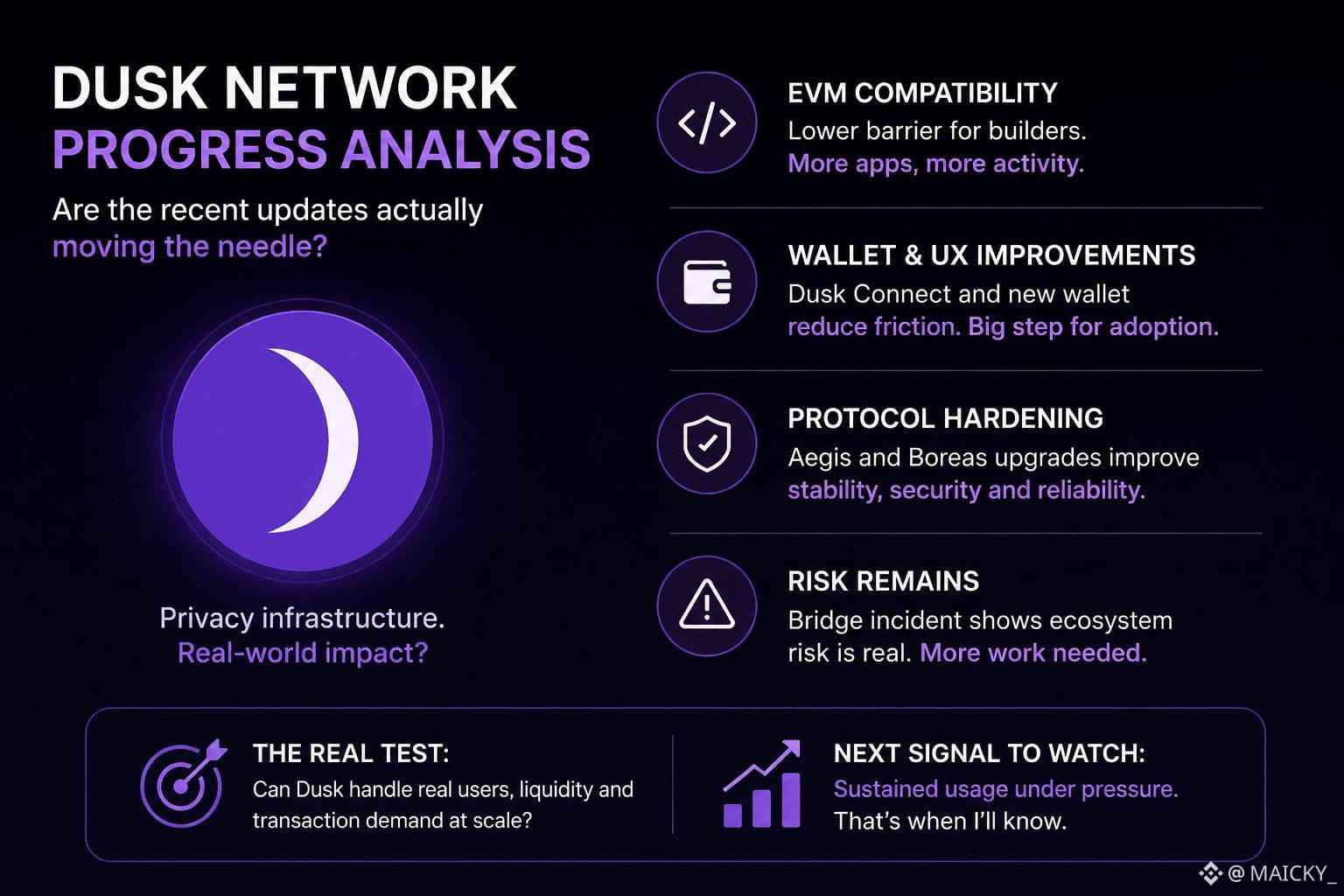
كنت أراقب Dusk عن قرب مرة أخرى، وبصراحة، وجهة نظري أصبحت أكثر إثارة للاهتمام.
ما لفت انتباهي ليس مجرد وعد بخارطة طريق. بل هو مزيج DuskEVM، وأعمال الأمن، والتحسينات الأخيرة على البروتوكول.
قد يكون DuskEVM بمثابة مفتاح كبير؛ لأن بإمكان المطورين الاقتراب من الشبكة من خلال بيئة EVM مألوفة بدلًا من البدء من الصفر. لكنني لا أعدّ نشاط testnet اعتمادًا بعد. السؤال الحقيقي هو ما إذا كان المطورون يستمرون فعلًا في البقاء والبناء.
ثم هناك جانب الأمان. إصلاح 39 نتيجة، بما في ذلك 7 مشكلات حرجة، هو نوع التقدم الذي أأخذه على محمل الجد. يذكرني بأن البنية التحتية لا تصبح بمستوى مؤسساتي لمجرد أن التكنولوجيا تبدو مثيرة للإعجاب. يجب أن تجتاز التدقيق.
كما شدّتني التغييرات الأخيرة في البروتوكول. قد لا تولّد معالجة أفضل للمعاملات، وقواعد تنفيذ أوضح، ومنطق انتقال حالة أقوى ضجة، لكن هذه بالضبط التفاصيل المملة التي تصبح شديدة الأهمية عندما تبدأ الأموال الحقيقية بالتحرك.
ما زلت متحفظًا.
يبدو Dusk أقرب إلى حزمة بنية تحتية مالية قابلة للاستخدام مما كان عليه من قبل، لكن أصعب اختبار لم يأتِ بعد: الاستخدام المستمر في العالم الحقيقي.
أريد أن أرى المطورين والمستخدمين والسيولة والمؤسسات يدفعون النظام تحت الضغط.
هنا تنمو قناعتي—أو تنكسر.
@Dusk_Foundation $DUSK #dusk
كنت أراقب Dusk عن قرب مرة أخرى، وبصراحة، وجهة نظري أصبحت أكثر إثارة للاهتمام.
ما لفت انتباهي ليس مجرد وعد بخارطة طريق. بل هو مزيج DuskEVM، وأعمال الأمن، والتحسينات الأخيرة على البروتوكول.
قد يكون DuskEVM بمثابة مفتاح كبير؛ لأن بإمكان المطورين الاقتراب من الشبكة من خلال بيئة EVM مألوفة بدلًا من البدء من الصفر. لكنني لا أعدّ نشاط testnet اعتمادًا بعد. السؤال الحقيقي هو ما إذا كان المطورون يستمرون فعلًا في البقاء والبناء.
ثم هناك جانب الأمان. إصلاح 39 نتيجة، بما في ذلك 7 مشكلات حرجة، هو نوع التقدم الذي أأخذه على محمل الجد. يذكرني بأن البنية التحتية لا تصبح بمستوى مؤسساتي لمجرد أن التكنولوجيا تبدو مثيرة للإعجاب. يجب أن تجتاز التدقيق.
كما شدّتني التغييرات الأخيرة في البروتوكول. قد لا تولّد معالجة أفضل للمعاملات، وقواعد تنفيذ أوضح، ومنطق انتقال حالة أقوى ضجة، لكن هذه بالضبط التفاصيل المملة التي تصبح شديدة الأهمية عندما تبدأ الأموال الحقيقية بالتحرك.
ما زلت متحفظًا.
يبدو Dusk أقرب إلى حزمة بنية تحتية مالية قابلة للاستخدام مما كان عليه من قبل، لكن أصعب اختبار لم يأتِ بعد: الاستخدام المستمر في العالم الحقيقي.
أريد أن أرى المطورين والمستخدمين والسيولة والمؤسسات يدفعون النظام تحت الضغط.
هنا تنمو قناعتي—أو تنكسر.
@Dusk $DUSK #dusk
ما لفت انتباهي ليس مجرد وعد بخارطة طريق. بل هو مزيج DuskEVM، وأعمال الأمن، والتحسينات الأخيرة على البروتوكول.
قد يكون DuskEVM بمثابة مفتاح كبير؛ لأن بإمكان المطورين الاقتراب من الشبكة من خلال بيئة EVM مألوفة بدلًا من البدء من الصفر. لكنني لا أعدّ نشاط testnet اعتمادًا بعد. السؤال الحقيقي هو ما إذا كان المطورون يستمرون فعلًا في البقاء والبناء.
ثم هناك جانب الأمان. إصلاح 39 نتيجة، بما في ذلك 7 مشكلات حرجة، هو نوع التقدم الذي أأخذه على محمل الجد. يذكرني بأن البنية التحتية لا تصبح بمستوى مؤسساتي لمجرد أن التكنولوجيا تبدو مثيرة للإعجاب. يجب أن تجتاز التدقيق.
كما شدّتني التغييرات الأخيرة في البروتوكول. قد لا تولّد معالجة أفضل للمعاملات، وقواعد تنفيذ أوضح، ومنطق انتقال حالة أقوى ضجة، لكن هذه بالضبط التفاصيل المملة التي تصبح شديدة الأهمية عندما تبدأ الأموال الحقيقية بالتحرك.
ما زلت متحفظًا.
يبدو Dusk أقرب إلى حزمة بنية تحتية مالية قابلة للاستخدام مما كان عليه من قبل، لكن أصعب اختبار لم يأتِ بعد: الاستخدام المستمر في العالم الحقيقي.
أريد أن أرى المطورين والمستخدمين والسيولة والمؤسسات يدفعون النظام تحت الضغط.
هنا تنمو قناعتي—أو تنكسر.
@Dusk $DUSK #dusk
1
136
·
--
تمّ التحقق
تداول $DUSK 2.9K USDT خلال 30 يوم
حلّ الظلام للتوّ بسنة من النوع الذي إمّا يتحوّل إلى دراسة حالة أو تحذير، وما زلت غير متأكد أيّهما.
ابدأ بـ AEGIS. عثر المدققون على خلل سمح بتوقيعٍ واحدٍ مُسرّب بتزوير توقيعات جديدة تحت المفتاح نفسه. على طبقة الإجماع. هذا ليس خللاً، بل سلاحٌ محمّل جالس في قاعدة الشيفرة منذ mainnet. كما اكتشفوا فجوةً في ربط الرسوم؛ إذ كان بإمكان مهاجم اعتراض معاملة، وإعادة توجيه الاسترداد، وخلق قيمة من لا شيء — ثلاث مسارات استغلال من قاعدة واحدة منتهكة. تم شحن تسعٍ وثلاثين إصلاحًا. لا توجد أدلة على استغلالٍ سابق، كما يقولون. أصدّقهم، لكن "لا أدلة" لا تعني بالضرورة "لم يحدث".
ثم مشهد تقسيم الشاشة: بينما أعيد بناء الأمان من الصفر حتى العظم، ما زال المنتج الفعلي DuskEVM وHedger وعقود Solidity السرّية — جالسًا على testnet. بعد أشهر من طرحه باعتباره وشيكًا.
لذا فهذه هي النقطة التي أصل إليها: كانت هذه هي السنة التي توقف فيها Dusk عن سذاجته تجاه سطح الهجوم الخاص بها. هذا ليس شيئًا يُستهان به — ربما يكون أهم شيء حدث. لكنه اشتراها سلامة، لا جاهزية. الاختبار الحقيقي التالي ليس تدقيقًا آخر. إنه mainnet، تحت الضغط، وبأموال ليست أموالهم.
@Dusk_Foundation #dusk $DUSK
$TAC $TMX
حلّ الظلام للتوّ بسنة من النوع الذي إمّا يتحوّل إلى دراسة حالة أو تحذير، وما زلت غير متأكد أيّهما.
ابدأ بـ AEGIS. عثر المدققون على خلل سمح بتوقيعٍ واحدٍ مُسرّب بتزوير توقيعات جديدة تحت المفتاح نفسه. على طبقة الإجماع. هذا ليس خللاً، بل سلاحٌ محمّل جالس في قاعدة الشيفرة منذ mainnet. كما اكتشفوا فجوةً في ربط الرسوم؛ إذ كان بإمكان مهاجم اعتراض معاملة، وإعادة توجيه الاسترداد، وخلق قيمة من لا شيء — ثلاث مسارات استغلال من قاعدة واحدة منتهكة. تم شحن تسعٍ وثلاثين إصلاحًا. لا توجد أدلة على استغلالٍ سابق، كما يقولون. أصدّقهم، لكن "لا أدلة" لا تعني بالضرورة "لم يحدث".
ثم مشهد تقسيم الشاشة: بينما أعيد بناء الأمان من الصفر حتى العظم، ما زال المنتج الفعلي DuskEVM وHedger وعقود Solidity السرّية — جالسًا على testnet. بعد أشهر من طرحه باعتباره وشيكًا.
لذا فهذه هي النقطة التي أصل إليها: كانت هذه هي السنة التي توقف فيها Dusk عن سذاجته تجاه سطح الهجوم الخاص بها. هذا ليس شيئًا يُستهان به — ربما يكون أهم شيء حدث. لكنه اشتراها سلامة، لا جاهزية. الاختبار الحقيقي التالي ليس تدقيقًا آخر. إنه mainnet، تحت الضغط، وبأموال ليست أموالهم.
@Dusk #dusk $DUSK
$TAC $TMX
ابدأ بـ AEGIS. عثر المدققون على خلل سمح بتوقيعٍ واحدٍ مُسرّب بتزوير توقيعات جديدة تحت المفتاح نفسه. على طبقة الإجماع. هذا ليس خللاً، بل سلاحٌ محمّل جالس في قاعدة الشيفرة منذ mainnet. كما اكتشفوا فجوةً في ربط الرسوم؛ إذ كان بإمكان مهاجم اعتراض معاملة، وإعادة توجيه الاسترداد، وخلق قيمة من لا شيء — ثلاث مسارات استغلال من قاعدة واحدة منتهكة. تم شحن تسعٍ وثلاثين إصلاحًا. لا توجد أدلة على استغلالٍ سابق، كما يقولون. أصدّقهم، لكن "لا أدلة" لا تعني بالضرورة "لم يحدث".
ثم مشهد تقسيم الشاشة: بينما أعيد بناء الأمان من الصفر حتى العظم، ما زال المنتج الفعلي DuskEVM وHedger وعقود Solidity السرّية — جالسًا على testnet. بعد أشهر من طرحه باعتباره وشيكًا.
لذا فهذه هي النقطة التي أصل إليها: كانت هذه هي السنة التي توقف فيها Dusk عن سذاجته تجاه سطح الهجوم الخاص بها. هذا ليس شيئًا يُستهان به — ربما يكون أهم شيء حدث. لكنه اشتراها سلامة، لا جاهزية. الاختبار الحقيقي التالي ليس تدقيقًا آخر. إنه mainnet، تحت الضغط، وبأموال ليست أموالهم.
@Dusk #dusk $DUSK
$TAC $TMX
🤷 Bugs were minor
50%
🟢 DuskEVM is live now
0%
🛡️ Safer,not yet proven ready
0%
🚀 Fully ready for mainnet
50%
2 الأصوات • تمّ إغلاق التصويت
1
3
127
·
--
لقد عدت مؤخرًا إلى التعمّق في Dusk مرة أخرى، وأعتقد أن القصة أصبحت أكثر إثارة للاهتمام قليلًا.
ما لفت انتباهي هو أن التركيز يبدو يتحرك من مجرد بناء الشبكة إلى جعلها أسهل للمطوّرين لاستخدامها فعليًا. يُعدّ DuskEVM مثالًا جيدًا — إدخال أدوات Ethereum المألوفة إلى الصورة قد يجعل حاجز البدء في البناء أقل بكثير.
كما أن أعمال تطوير البروتوكول الأقل بريقًا مهمة أيضًا. التحسينات المتعلقة بمعالجة المعاملات وموثوقية الشبكة ليست من التحديثات التي تخلق حماسًا فوريًا، لكنها بالضبط ما أود رؤيته إذا كان Dusk جادًا بشأن التطبيقات المالية.
ومع ذلك، ما زلت حذرًا. تُظهر الاختبارات التجريبية (Testnets) والتكاملات وأرقام الإيداع (staking) تقدّمًا، لكن ذلك لا يعني تلقائيًا وجود تبنٍّ حقيقي.
وجهة نظري بالتأكيد أصبحت أكثر إيجابية، لكنني أنتظر شيئًا واحدًا: الاستخدام المستمر من قِبل المطوّرين والنشاط المالي الحقيقي.
إذا استطاع Dusk تحويل التقدم التقني إلى طلب إنتاجي فعلي، فهذا سيغيّر قناعتي كثيرًا.
@Dusk_Foundation #dusk $DUSK
{future}(DUSKUSDT)
لقد عدت مؤخرًا إلى التعمّق في Dusk مرة أخرى، وأعتقد أن القصة أصبحت أكثر إثارة للاهتمام قليلًا.
ما لفت انتباهي هو أن التركيز يبدو يتحرك من مجرد بناء الشبكة إلى جعلها أسهل للمطوّرين لاستخدامها فعليًا. يُعدّ DuskEVM مثالًا جيدًا — إدخال أدوات Ethereum المألوفة إلى الصورة قد يجعل حاجز البدء في البناء أقل بكثير.
كما أن أعمال تطوير البروتوكول الأقل بريقًا مهمة أيضًا. التحسينات المتعلقة بمعالجة المعاملات وموثوقية الشبكة ليست من التحديثات التي تخلق حماسًا فوريًا، لكنها بالضبط ما أود رؤيته إذا كان Dusk جادًا بشأن التطبيقات المالية.
ومع ذلك، ما زلت حذرًا. تُظهر الاختبارات التجريبية (Testnets) والتكاملات وأرقام الإيداع (staking) تقدّمًا، لكن ذلك لا يعني تلقائيًا وجود تبنٍّ حقيقي.
وجهة نظري بالتأكيد أصبحت أكثر إيجابية، لكنني أنتظر شيئًا واحدًا: الاستخدام المستمر من قِبل المطوّرين والنشاط المالي الحقيقي.
إذا استطاع Dusk تحويل التقدم التقني إلى طلب إنتاجي فعلي، فهذا سيغيّر قناعتي كثيرًا.
@Dusk #dusk $DUSK
ما لفت انتباهي هو أن التركيز يبدو يتحرك من مجرد بناء الشبكة إلى جعلها أسهل للمطوّرين لاستخدامها فعليًا. يُعدّ DuskEVM مثالًا جيدًا — إدخال أدوات Ethereum المألوفة إلى الصورة قد يجعل حاجز البدء في البناء أقل بكثير.
كما أن أعمال تطوير البروتوكول الأقل بريقًا مهمة أيضًا. التحسينات المتعلقة بمعالجة المعاملات وموثوقية الشبكة ليست من التحديثات التي تخلق حماسًا فوريًا، لكنها بالضبط ما أود رؤيته إذا كان Dusk جادًا بشأن التطبيقات المالية.
ومع ذلك، ما زلت حذرًا. تُظهر الاختبارات التجريبية (Testnets) والتكاملات وأرقام الإيداع (staking) تقدّمًا، لكن ذلك لا يعني تلقائيًا وجود تبنٍّ حقيقي.
وجهة نظري بالتأكيد أصبحت أكثر إيجابية، لكنني أنتظر شيئًا واحدًا: الاستخدام المستمر من قِبل المطوّرين والنشاط المالي الحقيقي.
إذا استطاع Dusk تحويل التقدم التقني إلى طلب إنتاجي فعلي، فهذا سيغيّر قناعتي كثيرًا.
@Dusk #dusk $DUSK
Bullish 💚
67%
🌨️🌨️🌨️
33%
bearish ♥️♥️
0%
🤧🤧🤧🤧
0%
3 الأصوات • تمّ إغلاق التصويت
2
4
145
·
--
لقد كنت أتابع Dusk لأسابيع قليلة الآن، وهذه هي مكانة تفكيري.
أخيرًا تم فتح شبكة الاختبار لـ DuskEVM رسميًا لـ Solidity وHardhat في 10 أغسطس — بعد سبعة أشهر من تاريخ الإطلاق على الشبكة الرئيسية الذي وعدوا به في الأصل. لا أغضب بسبب التأخير. ما يزعجني أنها ما زالت مجرد شبكة اختبار بينما الوقت لا يزال يمضي مع استمرار نفاد صبر الجميع.
ثم بعد ستة أيام، تم اختراق الجسر. نشاط محافظ مشبوه، إعادة تدوير العناوين، إيقاف الخدمات، وإشراك Binance. لم تُفقَد أموال، كما يقولون. حسنًا. لكن التوقيت شبه سينمائي — في اللحظة التي يحتاج فيها DuskEVM إلى الجسر ليحمل الزخم، ينطفئ ليخضع لمراجعة أمنية.
وفي الوقت نفسه، قام Aegis وBoreas بتقوية الشبكة بهدوء تحت كل هذا، وجعل Dusk Connect تكامل المحافظ أسهل للمطوّرين. عمل غير لامع، حقيقي، وسهل تفويته.
ومع ذلك، ما يزال NPEX هو الشيء الوحيد هنا الذي تبدو عليه علامات استخدام فعلي: أوراق مالية حقيقية، ومنصة حقيقية مُنظّمة، ويورو حقيقي. لم يتم اختباره تحت الضغط حتى الآن.
لذا لست متفائلًا ولا متشائمًا. أنا أراقب شيئًا واحدًا: هل ستُطلق DuskEVM على الهواء مباشرة وهي تحمل قيمة حقيقية قبل صدور تقرير الحادثة التالي. هذا هو التحديث الوحيد الذي يمكنه أن يغيّر رأيي.
@Dusk_Foundation #dusk $DUSK
{future}(DUSKUSDT)
$SPK
{future}(SPKUSDT)
$memes
{alpha}(560xf74548802f4c700315f019fde17178b392ee4444)
لقد كنت أتابع Dusk لأسابيع قليلة الآن، وهذه هي مكانة تفكيري.
أخيرًا تم فتح شبكة الاختبار لـ DuskEVM رسميًا لـ Solidity وHardhat في 10 أغسطس — بعد سبعة أشهر من تاريخ الإطلاق على الشبكة الرئيسية الذي وعدوا به في الأصل. لا أغضب بسبب التأخير. ما يزعجني أنها ما زالت مجرد شبكة اختبار بينما الوقت لا يزال يمضي مع استمرار نفاد صبر الجميع.
ثم بعد ستة أيام، تم اختراق الجسر. نشاط محافظ مشبوه، إعادة تدوير العناوين، إيقاف الخدمات، وإشراك Binance. لم تُفقَد أموال، كما يقولون. حسنًا. لكن التوقيت شبه سينمائي — في اللحظة التي يحتاج فيها DuskEVM إلى الجسر ليحمل الزخم، ينطفئ ليخضع لمراجعة أمنية.
وفي الوقت نفسه، قام Aegis وBoreas بتقوية الشبكة بهدوء تحت كل هذا، وجعل Dusk Connect تكامل المحافظ أسهل للمطوّرين. عمل غير لامع، حقيقي، وسهل تفويته.
ومع ذلك، ما يزال NPEX هو الشيء الوحيد هنا الذي تبدو عليه علامات استخدام فعلي: أوراق مالية حقيقية، ومنصة حقيقية مُنظّمة، ويورو حقيقي. لم يتم اختباره تحت الضغط حتى الآن.
لذا لست متفائلًا ولا متشائمًا. أنا أراقب شيئًا واحدًا: هل ستُطلق DuskEVM على الهواء مباشرة وهي تحمل قيمة حقيقية قبل صدور تقرير الحادثة التالي. هذا هو التحديث الوحيد الذي يمكنه أن يغيّر رأيي.
@Dusk #dusk $DUSK
$SPK
$memes
أخيرًا تم فتح شبكة الاختبار لـ DuskEVM رسميًا لـ Solidity وHardhat في 10 أغسطس — بعد سبعة أشهر من تاريخ الإطلاق على الشبكة الرئيسية الذي وعدوا به في الأصل. لا أغضب بسبب التأخير. ما يزعجني أنها ما زالت مجرد شبكة اختبار بينما الوقت لا يزال يمضي مع استمرار نفاد صبر الجميع.
ثم بعد ستة أيام، تم اختراق الجسر. نشاط محافظ مشبوه، إعادة تدوير العناوين، إيقاف الخدمات، وإشراك Binance. لم تُفقَد أموال، كما يقولون. حسنًا. لكن التوقيت شبه سينمائي — في اللحظة التي يحتاج فيها DuskEVM إلى الجسر ليحمل الزخم، ينطفئ ليخضع لمراجعة أمنية.
وفي الوقت نفسه، قام Aegis وBoreas بتقوية الشبكة بهدوء تحت كل هذا، وجعل Dusk Connect تكامل المحافظ أسهل للمطوّرين. عمل غير لامع، حقيقي، وسهل تفويته.
ومع ذلك، ما يزال NPEX هو الشيء الوحيد هنا الذي تبدو عليه علامات استخدام فعلي: أوراق مالية حقيقية، ومنصة حقيقية مُنظّمة، ويورو حقيقي. لم يتم اختباره تحت الضغط حتى الآن.
لذا لست متفائلًا ولا متشائمًا. أنا أراقب شيئًا واحدًا: هل ستُطلق DuskEVM على الهواء مباشرة وهي تحمل قيمة حقيقية قبل صدور تقرير الحادثة التالي. هذا هو التحديث الوحيد الذي يمكنه أن يغيّر رأيي.
@Dusk #dusk $DUSK
$SPK
$memes
Bullish 💚
58%
,,,,,,
0%
Bearish 💔💔💔
42%
,,,,,,
0%
12 الأصوات • تمّ إغلاق التصويت
1
2
597
·
--
#dusk $DUSK @Dusk_Foundation
لقد عدتُ للتعمّق في @Dusk_Foundation مرة أخرى، وبصراحة أعتقد أن الجزء المثير للاهتمام لم يعد هو سرد الخصوصية.
السؤال هو: هل يمكن للترقيات الأخيرة أن تصمد أمام الاستخدام الحقيقي؟
يتجه Dusk نحو تجربة مطوّرين أكثر إتاحة، مع دعم EVM وبنية تحتية للـمحافظ، إلى جانب مواصلة تعزيز صلابة البروتوكول على مستوى البروتوكول.
على الورق، تبدو هذه تركيبة قوية.
لكنني أعود باستمرار إلى سؤال واحد:
هل يجعل هذا Dusk أكثر فائدة فعلًا، أم أننا فقط نكدّس ميزات فوق نظام غير مكتمل؟
يمكن لتوافق EVM أن يجذب المطورين. يمكن للمحافظ الأفضل أن تقلّل الاحتكاك. يمكن لعمل الأمان أن يحسّن الموثوقية.
لكن لا شيء من ذلك يهم كثيرًا إذا واجهت الشبكة صعوبة عندما تبدأ المستخدمون والسيولة والتطبيقات وطلب المعاملات بالتوسع معًا.
وهنا بالضبط أراقب عن كثب.
كما أنني أولي اهتمامًا أكبر للفرق بين مخاطر البروتوكول الأساسي ومخاطر النظام البيئي. لقد أظهرت أعمال الأمان الأخيرة وحادثة الجسر لي أن بناء بنية تحتية للخصوصية هو جزء واحد فقط من المشكلة. الروابط المحيطة بها تحتاج أيضًا لأن تكون متينة.
لذلك تغيّر رأيي.
أنا أكثر اهتمامًا بـ Dusk مما كنت عليه قبل بضعة أشهر، لكنني لست مستعدًا لإعلانه أمرًا مُثبتًا.
بالنسبة لي، الإشارة ذات المعنى التالية ليست إعلانًا آخر.
إنها الاستخدام المستمر تحت الضغط.
عندها سأعرف ما إذا كان Dusk يصبح بنية تحتية حقيقية — أم أنه يكتفي بأن يصبح أفضل في رواية القصة.
#dusk $DUSK @Dusk
لقد عدتُ للتعمّق في @Dusk مرة أخرى، وبصراحة أعتقد أن الجزء المثير للاهتمام لم يعد هو سرد الخصوصية.
السؤال هو: هل يمكن للترقيات الأخيرة أن تصمد أمام الاستخدام الحقيقي؟
يتجه Dusk نحو تجربة مطوّرين أكثر إتاحة، مع دعم EVM وبنية تحتية للـمحافظ، إلى جانب مواصلة تعزيز صلابة البروتوكول على مستوى البروتوكول.
على الورق، تبدو هذه تركيبة قوية.
لكنني أعود باستمرار إلى سؤال واحد:
هل يجعل هذا Dusk أكثر فائدة فعلًا، أم أننا فقط نكدّس ميزات فوق نظام غير مكتمل؟
يمكن لتوافق EVM أن يجذب المطورين. يمكن للمحافظ الأفضل أن تقلّل الاحتكاك. يمكن لعمل الأمان أن يحسّن الموثوقية.
لكن لا شيء من ذلك يهم كثيرًا إذا واجهت الشبكة صعوبة عندما تبدأ المستخدمون والسيولة والتطبيقات وطلب المعاملات بالتوسع معًا.
وهنا بالضبط أراقب عن كثب.
كما أنني أولي اهتمامًا أكبر للفرق بين مخاطر البروتوكول الأساسي ومخاطر النظام البيئي. لقد أظهرت أعمال الأمان الأخيرة وحادثة الجسر لي أن بناء بنية تحتية للخصوصية هو جزء واحد فقط من المشكلة. الروابط المحيطة بها تحتاج أيضًا لأن تكون متينة.
لذلك تغيّر رأيي.
أنا أكثر اهتمامًا بـ Dusk مما كنت عليه قبل بضعة أشهر، لكنني لست مستعدًا لإعلانه أمرًا مُثبتًا.
بالنسبة لي، الإشارة ذات المعنى التالية ليست إعلانًا آخر.
إنها الاستخدام المستمر تحت الضغط.
عندها سأعرف ما إذا كان Dusk يصبح بنية تحتية حقيقية — أم أنه يكتفي بأن يصبح أفضل في رواية القصة.
لقد عدتُ للتعمّق في @Dusk مرة أخرى، وبصراحة أعتقد أن الجزء المثير للاهتمام لم يعد هو سرد الخصوصية.
السؤال هو: هل يمكن للترقيات الأخيرة أن تصمد أمام الاستخدام الحقيقي؟
يتجه Dusk نحو تجربة مطوّرين أكثر إتاحة، مع دعم EVM وبنية تحتية للـمحافظ، إلى جانب مواصلة تعزيز صلابة البروتوكول على مستوى البروتوكول.
على الورق، تبدو هذه تركيبة قوية.
لكنني أعود باستمرار إلى سؤال واحد:
هل يجعل هذا Dusk أكثر فائدة فعلًا، أم أننا فقط نكدّس ميزات فوق نظام غير مكتمل؟
يمكن لتوافق EVM أن يجذب المطورين. يمكن للمحافظ الأفضل أن تقلّل الاحتكاك. يمكن لعمل الأمان أن يحسّن الموثوقية.
لكن لا شيء من ذلك يهم كثيرًا إذا واجهت الشبكة صعوبة عندما تبدأ المستخدمون والسيولة والتطبيقات وطلب المعاملات بالتوسع معًا.
وهنا بالضبط أراقب عن كثب.
كما أنني أولي اهتمامًا أكبر للفرق بين مخاطر البروتوكول الأساسي ومخاطر النظام البيئي. لقد أظهرت أعمال الأمان الأخيرة وحادثة الجسر لي أن بناء بنية تحتية للخصوصية هو جزء واحد فقط من المشكلة. الروابط المحيطة بها تحتاج أيضًا لأن تكون متينة.
لذلك تغيّر رأيي.
أنا أكثر اهتمامًا بـ Dusk مما كنت عليه قبل بضعة أشهر، لكنني لست مستعدًا لإعلانه أمرًا مُثبتًا.
بالنسبة لي، الإشارة ذات المعنى التالية ليست إعلانًا آخر.
إنها الاستخدام المستمر تحت الضغط.
عندها سأعرف ما إذا كان Dusk يصبح بنية تحتية حقيقية — أم أنه يكتفي بأن يصبح أفضل في رواية القصة.
2
152
·
--
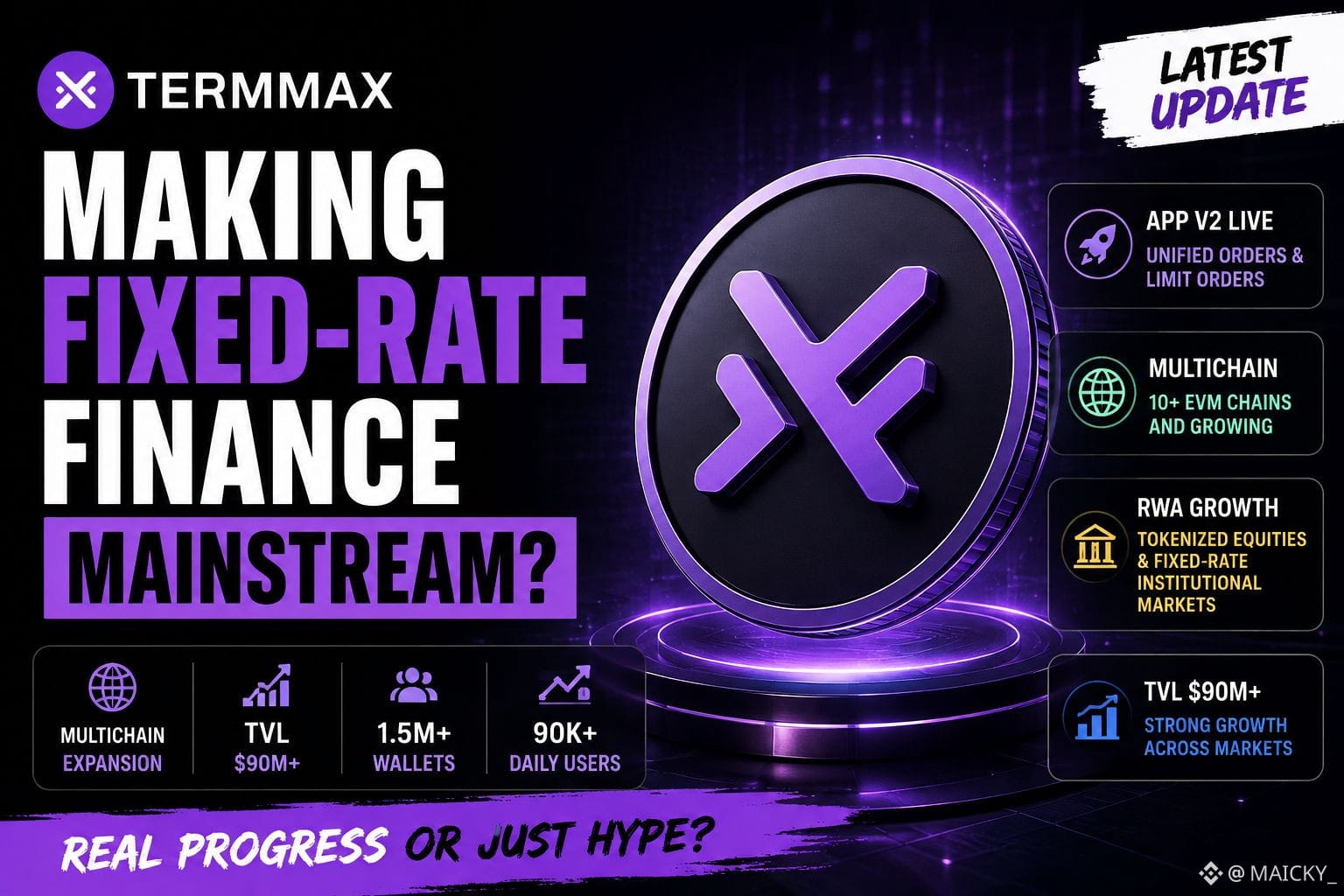
لقد كنت أتابع TermMax عن كثب مؤخرًا، وتبدو التحديثات الأخيرة وكأن المنتج أخيرًا يتحرك بما يتجاوز مجرد «الإقراض بسعر ثابت».
تم إطلاق التطبيق V2 مع طلبات موحّدة، وأسواق متعددة السلاسل، وأوامر حدّية عبر كل سوق. هذا تحسين مهم على تجربة المستخدم، لكن الاختبار الحقيقي هو ما إذا كان هذا سيحسّن فعليًا التنفيذ والسيولة، وليس مجرد جعل الواجهة أكثر أناقة.
التحول الأكبر يحدث حول النظام البيئي: bStocks على BNB Chain، والتوسع في HyperEVM، وتحول TermPrime إلى منصة إقراض بسعر ثابت على Canton، وإطلاق الأسهم المرمّزة على Robinhood Chain. تمنح هذه الخطوات TermMax حالات استخدام حقيقية أكثر، لكن التبني لا يزال يحتاج إلى إثبات نفسه بعيدًا عن العناوين الرئيسية.
يُبلّغ الآن عن TVL بما يزيد عن 90 مليون دولار، مع أكثر من 1.5 مليون محفظة مسجلة و90 ألف مستخدم نشط يوميًا عبر 10 سلاسل EVM. هذه الأرقام مشجعة، لكنني أكثر اهتمامًا بمعرفة مقدار النشاط المتبقي عندما لا تصبح الحوافز وإطلاق الرمز القادم هما المحفّز الأساسي بعد الآن.
تحسنت ثقتي لأن التحديثات صارت أكثر تركيزًا على المنتج، وترتبط بشكل متزايد بالأسواق المؤسسية والأسواق الواقعية. ومع ذلك، لا يزال يتعين على TermMax أن يثبت أن السيولة والاستخدام والطلب يمكنها الصمود بعد انتهاء دورة الحوافز الحالية.
بالنسبة لي، فإن أحجام التداول العضوية المستمرة، ونشاط النضج/الترحيل الصحي، ستكون المحطات التالية التي قد تغيّر نظرتي بشكل ملموس.
@termmax #TermMax
$XPIN
{alpha}(560xd955c9ba56fb1ab30e34766e252a97ccce3d31a6)
$ONG
{future}(ONGUSDT)
$ENA
{future}(ENAUSDT)
لقد كنت أتابع TermMax عن كثب مؤخرًا، وتبدو التحديثات الأخيرة وكأن المنتج أخيرًا يتحرك بما يتجاوز مجرد «الإقراض بسعر ثابت».
تم إطلاق التطبيق V2 مع طلبات موحّدة، وأسواق متعددة السلاسل، وأوامر حدّية عبر كل سوق. هذا تحسين مهم على تجربة المستخدم، لكن الاختبار الحقيقي هو ما إذا كان هذا سيحسّن فعليًا التنفيذ والسيولة، وليس مجرد جعل الواجهة أكثر أناقة.
التحول الأكبر يحدث حول النظام البيئي: bStocks على BNB Chain، والتوسع في HyperEVM، وتحول TermPrime إلى منصة إقراض بسعر ثابت على Canton، وإطلاق الأسهم المرمّزة على Robinhood Chain. تمنح هذه الخطوات TermMax حالات استخدام حقيقية أكثر، لكن التبني لا يزال يحتاج إلى إثبات نفسه بعيدًا عن العناوين الرئيسية.
يُبلّغ الآن عن TVL بما يزيد عن 90 مليون دولار، مع أكثر من 1.5 مليون محفظة مسجلة و90 ألف مستخدم نشط يوميًا عبر 10 سلاسل EVM. هذه الأرقام مشجعة، لكنني أكثر اهتمامًا بمعرفة مقدار النشاط المتبقي عندما لا تصبح الحوافز وإطلاق الرمز القادم هما المحفّز الأساسي بعد الآن.
تحسنت ثقتي لأن التحديثات صارت أكثر تركيزًا على المنتج، وترتبط بشكل متزايد بالأسواق المؤسسية والأسواق الواقعية. ومع ذلك، لا يزال يتعين على TermMax أن يثبت أن السيولة والاستخدام والطلب يمكنها الصمود بعد انتهاء دورة الحوافز الحالية.
بالنسبة لي، فإن أحجام التداول العضوية المستمرة، ونشاط النضج/الترحيل الصحي، ستكون المحطات التالية التي قد تغيّر نظرتي بشكل ملموس.
@TermMax #TermMax
$XPIN
$ONG
$ENA
تم إطلاق التطبيق V2 مع طلبات موحّدة، وأسواق متعددة السلاسل، وأوامر حدّية عبر كل سوق. هذا تحسين مهم على تجربة المستخدم، لكن الاختبار الحقيقي هو ما إذا كان هذا سيحسّن فعليًا التنفيذ والسيولة، وليس مجرد جعل الواجهة أكثر أناقة.
التحول الأكبر يحدث حول النظام البيئي: bStocks على BNB Chain، والتوسع في HyperEVM، وتحول TermPrime إلى منصة إقراض بسعر ثابت على Canton، وإطلاق الأسهم المرمّزة على Robinhood Chain. تمنح هذه الخطوات TermMax حالات استخدام حقيقية أكثر، لكن التبني لا يزال يحتاج إلى إثبات نفسه بعيدًا عن العناوين الرئيسية.
يُبلّغ الآن عن TVL بما يزيد عن 90 مليون دولار، مع أكثر من 1.5 مليون محفظة مسجلة و90 ألف مستخدم نشط يوميًا عبر 10 سلاسل EVM. هذه الأرقام مشجعة، لكنني أكثر اهتمامًا بمعرفة مقدار النشاط المتبقي عندما لا تصبح الحوافز وإطلاق الرمز القادم هما المحفّز الأساسي بعد الآن.
تحسنت ثقتي لأن التحديثات صارت أكثر تركيزًا على المنتج، وترتبط بشكل متزايد بالأسواق المؤسسية والأسواق الواقعية. ومع ذلك، لا يزال يتعين على TermMax أن يثبت أن السيولة والاستخدام والطلب يمكنها الصمود بعد انتهاء دورة الحوافز الحالية.
بالنسبة لي، فإن أحجام التداول العضوية المستمرة، ونشاط النضج/الترحيل الصحي، ستكون المحطات التالية التي قد تغيّر نظرتي بشكل ملموس.
@TermMax #TermMax
$XPIN
$ONG
$ENA
2
4
475
·
--
@Dusk_Foundation #dusk $DUSK
لقد كنت أراقب @Dusk_Foundation عن كثب أكثر في الآونة الأخيرة، وبصراحة أعتقد أنني كنت أحكم على التقدم كثيرًا من الخارج.
الجزء المثير للاهتمام ليس مجرد إعلان عن ميزة جديدة. بل إن Dusk تعمل تدريجيًا على جعل الشبكة أسهل في الواقع للبناء عليها.
تمنح DuskEVM المطورين مسارًا أكثر مألوفة للدخول إلى النظام البيئي، بينما تجعل أدوات المحفظة والاتصال تجربة المستخدم أقل إرباكًا. تبدو هذه تحسينات صغيرة، لكنها من النوع الذي يهم عندما يتعين على التطبيقات الحقيقية العمل من النهاية إلى النهاية.
كما لفت انتباهي جانب الأمان أيضًا. أسفر تقييم AEGIS عن 39 إصلاحًا، بما في ذلك 7 نتائج حرجة. كانت مشكلات الجسر تذكيرًا آخر بأن أصعب المخاطر لا تكون دائمًا داخل سلسلة النواة نفسها.
لذلك أنا أقل اهتمامًا بسؤال ما إذا كانت Dusk تمتلك تقنيات جيدة. أنا أراقب ما إذا كانت كل هذه الأجزاء يمكنها الصمود أمام الاستخدام الحقيقي.
لقد تحسّن موقفي، لكنني لست أقول إنها مُثبتة بعد.
ما أريد رؤيته لاحقًا بسيط: تطبيقات حقيقية، ومستخدمون حقيقيون، وبنية تحتية موثوقة، وسير عمل مالي فعلي يعمل دون أن يصبح النظام معقدًا للغاية.
عندها فقط سأغير قناعتي تجاه Dusk بشكل جاد. $LAB
{future}(LABUSDT)
$BOME
{future}(BOMEUSDT)
@Dusk #dusk $DUSK
لقد كنت أراقب @Dusk عن كثب أكثر في الآونة الأخيرة، وبصراحة أعتقد أنني كنت أحكم على التقدم كثيرًا من الخارج.
الجزء المثير للاهتمام ليس مجرد إعلان عن ميزة جديدة. بل إن Dusk تعمل تدريجيًا على جعل الشبكة أسهل في الواقع للبناء عليها.
تمنح DuskEVM المطورين مسارًا أكثر مألوفة للدخول إلى النظام البيئي، بينما تجعل أدوات المحفظة والاتصال تجربة المستخدم أقل إرباكًا. تبدو هذه تحسينات صغيرة، لكنها من النوع الذي يهم عندما يتعين على التطبيقات الحقيقية العمل من النهاية إلى النهاية.
كما لفت انتباهي جانب الأمان أيضًا. أسفر تقييم AEGIS عن 39 إصلاحًا، بما في ذلك 7 نتائج حرجة. كانت مشكلات الجسر تذكيرًا آخر بأن أصعب المخاطر لا تكون دائمًا داخل سلسلة النواة نفسها.
لذلك أنا أقل اهتمامًا بسؤال ما إذا كانت Dusk تمتلك تقنيات جيدة. أنا أراقب ما إذا كانت كل هذه الأجزاء يمكنها الصمود أمام الاستخدام الحقيقي.
لقد تحسّن موقفي، لكنني لست أقول إنها مُثبتة بعد.
ما أريد رؤيته لاحقًا بسيط: تطبيقات حقيقية، ومستخدمون حقيقيون، وبنية تحتية موثوقة، وسير عمل مالي فعلي يعمل دون أن يصبح النظام معقدًا للغاية.
عندها فقط سأغير قناعتي تجاه Dusk بشكل جاد. $LAB
$BOME
لقد كنت أراقب @Dusk عن كثب أكثر في الآونة الأخيرة، وبصراحة أعتقد أنني كنت أحكم على التقدم كثيرًا من الخارج.
الجزء المثير للاهتمام ليس مجرد إعلان عن ميزة جديدة. بل إن Dusk تعمل تدريجيًا على جعل الشبكة أسهل في الواقع للبناء عليها.
تمنح DuskEVM المطورين مسارًا أكثر مألوفة للدخول إلى النظام البيئي، بينما تجعل أدوات المحفظة والاتصال تجربة المستخدم أقل إرباكًا. تبدو هذه تحسينات صغيرة، لكنها من النوع الذي يهم عندما يتعين على التطبيقات الحقيقية العمل من النهاية إلى النهاية.
كما لفت انتباهي جانب الأمان أيضًا. أسفر تقييم AEGIS عن 39 إصلاحًا، بما في ذلك 7 نتائج حرجة. كانت مشكلات الجسر تذكيرًا آخر بأن أصعب المخاطر لا تكون دائمًا داخل سلسلة النواة نفسها.
لذلك أنا أقل اهتمامًا بسؤال ما إذا كانت Dusk تمتلك تقنيات جيدة. أنا أراقب ما إذا كانت كل هذه الأجزاء يمكنها الصمود أمام الاستخدام الحقيقي.
لقد تحسّن موقفي، لكنني لست أقول إنها مُثبتة بعد.
ما أريد رؤيته لاحقًا بسيط: تطبيقات حقيقية، ومستخدمون حقيقيون، وبنية تحتية موثوقة، وسير عمل مالي فعلي يعمل دون أن يصبح النظام معقدًا للغاية.
عندها فقط سأغير قناعتي تجاه Dusk بشكل جاد. $LAB
$BOME
🚀 Bullish
0%
📈 Accumulation
0%
📉 More downside
0%
👀 Waiting
0%
0 الأصوات • تمّ إغلاق التصويت
4
3
127
·
--
لقد عدت إلى النظر في Dusk مرة أخرى، وقد تغيّر منظوري قليلاً.
ما لفت انتباهي ليس وعود خريطة طريق أخرى. بل هو العمل الجاري حول الأجزاء التي تهم حقًا عندما تحاول تحويل البنية التحتية إلى شيء يمكن للناس استخدامه.
يبدو أن DuskEVM، وأدوات التطوير الأفضل، وترقيات البروتوكول، وإصلاحات الأمان الأخيرة أكثر أهمية بالنسبة لي من التحديثات التجميلية.
لكنني لست مستعدًا بعد لإعلانها انتصارًا.
من السهل إطلاق شبكة اختبار. الاختبار الحقيقي هو ما إذا كان المطورون سيظلون، وما إذا كانت ستظهر المستخدمون، وما إذا كانت الشبكة ستصمد عندما تزيد كثافة النشاط وضغط الأمان.
هذا ما أراقبه الآن مع Dusk.
إثارة أقل، دليل أكثر.
@Dusk_Foundation #dusk $DUSK
{future}(DUSKUSDT)
$LAB $SYN
لقد عدت إلى النظر في Dusk مرة أخرى، وقد تغيّر منظوري قليلاً.
ما لفت انتباهي ليس وعود خريطة طريق أخرى. بل هو العمل الجاري حول الأجزاء التي تهم حقًا عندما تحاول تحويل البنية التحتية إلى شيء يمكن للناس استخدامه.
يبدو أن DuskEVM، وأدوات التطوير الأفضل، وترقيات البروتوكول، وإصلاحات الأمان الأخيرة أكثر أهمية بالنسبة لي من التحديثات التجميلية.
لكنني لست مستعدًا بعد لإعلانها انتصارًا.
من السهل إطلاق شبكة اختبار. الاختبار الحقيقي هو ما إذا كان المطورون سيظلون، وما إذا كانت ستظهر المستخدمون، وما إذا كانت الشبكة ستصمد عندما تزيد كثافة النشاط وضغط الأمان.
هذا ما أراقبه الآن مع Dusk.
إثارة أقل، دليل أكثر.
@Dusk #dusk $DUSK
$LAB $SYN
ما لفت انتباهي ليس وعود خريطة طريق أخرى. بل هو العمل الجاري حول الأجزاء التي تهم حقًا عندما تحاول تحويل البنية التحتية إلى شيء يمكن للناس استخدامه.
يبدو أن DuskEVM، وأدوات التطوير الأفضل، وترقيات البروتوكول، وإصلاحات الأمان الأخيرة أكثر أهمية بالنسبة لي من التحديثات التجميلية.
لكنني لست مستعدًا بعد لإعلانها انتصارًا.
من السهل إطلاق شبكة اختبار. الاختبار الحقيقي هو ما إذا كان المطورون سيظلون، وما إذا كانت ستظهر المستخدمون، وما إذا كانت الشبكة ستصمد عندما تزيد كثافة النشاط وضغط الأمان.
هذا ما أراقبه الآن مع Dusk.
إثارة أقل، دليل أكثر.
@Dusk #dusk $DUSK
$LAB $SYN
Bullish 💚
0%
Bearish ♥️
0%
Natural 🤕
0%
0 الأصوات • تمّ إغلاق التصويت
1
116
·
--
تمّ التحقق
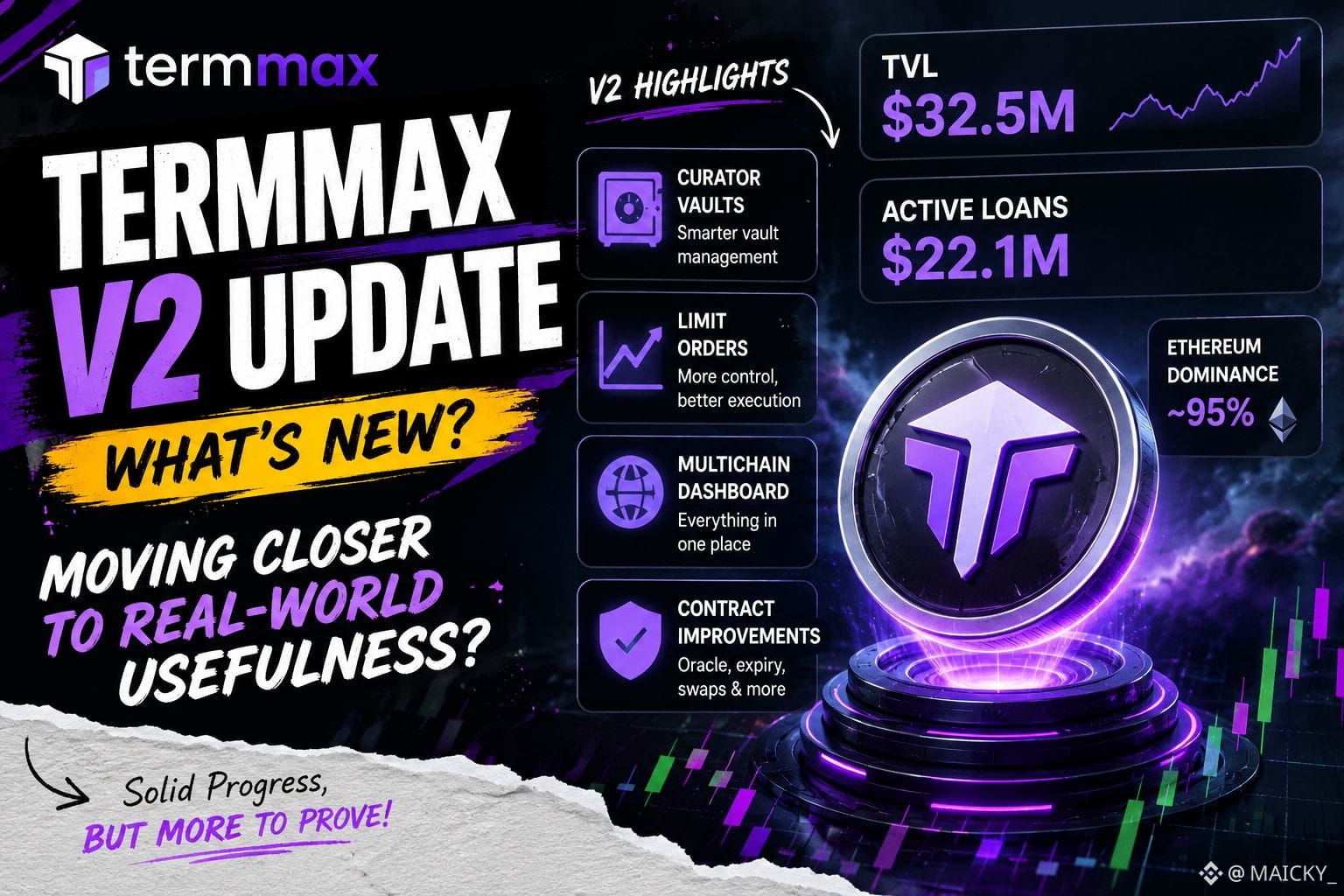
لقد عدت للتعمق في @termmax مؤخرًا، وبصراحة، أعتقد أنني كنت أنظر إلى المشروع بشكل ضيق بعض الشيء في السابق.
الإصدار v2 بدأ يصبح أكثر وضوحًا بالنسبة لي. خزائن المُقيِّم (Curator vaults)، وأوامر الحد (limit orders)، ولوحة تحكم موحدة متعددة السلاسل (multichain dashboard) أجزاء صغيرة على حدة، لكن معًا تجعل المنتج يبدو أكثر قابلية للاستخدام.
الأرقام أيضًا مثيرة للاهتمام. إجمالي القيمة المقفلة (TVL) حوالي 32 مليون دولار، مع ما يقارب 22 مليون دولار في قروض نشطة. لكن معظم هذه السيولة ما زالت متواجدة على شبكة Ethereum، لذلك لا أظن أن قصة التبني أصبحت مُثبتة بالكامل بعد.
ما لفت انتباهي هو أن الفريق يعمل أيضًا على إحكام جانب العقود، بما في ذلك تكاملات الأوراكل (oracle integrations)، وانتهاء صلاحية الأوامر (order expiry)، وإصلاحات مرتبطة بالتبديل/التبادل (swap-related fixes). هذا أقل إثارة للواجهة، لكنه غالبًا أكثر أهمية لبروتوكول الإقراض/التداول.
ثقتي في TermMax ارتفعت قليلًا، لكنني ما زلت أراقب الشيء نفسه: هل يمكن لهذه التحديثات أن تتحول إلى سيولة أعمق، واستخدام أوسع، ونشاط أكثر اتساقًا؟
هذه هي النقطة التي أحتاج أن أراها قبل أن أعتبر الأمر أكثر من مجرد تقدمٍ تدريجي.
@termmax #TermMax
$RE
{future}(REUSDT)
$LAB
{future}(LABUSDT)
لقد عدت للتعمق في @TermMax مؤخرًا، وبصراحة، أعتقد أنني كنت أنظر إلى المشروع بشكل ضيق بعض الشيء في السابق.
الإصدار v2 بدأ يصبح أكثر وضوحًا بالنسبة لي. خزائن المُقيِّم (Curator vaults)، وأوامر الحد (limit orders)، ولوحة تحكم موحدة متعددة السلاسل (multichain dashboard) أجزاء صغيرة على حدة، لكن معًا تجعل المنتج يبدو أكثر قابلية للاستخدام.
الأرقام أيضًا مثيرة للاهتمام. إجمالي القيمة المقفلة (TVL) حوالي 32 مليون دولار، مع ما يقارب 22 مليون دولار في قروض نشطة. لكن معظم هذه السيولة ما زالت متواجدة على شبكة Ethereum، لذلك لا أظن أن قصة التبني أصبحت مُثبتة بالكامل بعد.
ما لفت انتباهي هو أن الفريق يعمل أيضًا على إحكام جانب العقود، بما في ذلك تكاملات الأوراكل (oracle integrations)، وانتهاء صلاحية الأوامر (order expiry)، وإصلاحات مرتبطة بالتبديل/التبادل (swap-related fixes). هذا أقل إثارة للواجهة، لكنه غالبًا أكثر أهمية لبروتوكول الإقراض/التداول.
ثقتي في TermMax ارتفعت قليلًا، لكنني ما زلت أراقب الشيء نفسه: هل يمكن لهذه التحديثات أن تتحول إلى سيولة أعمق، واستخدام أوسع، ونشاط أكثر اتساقًا؟
هذه هي النقطة التي أحتاج أن أراها قبل أن أعتبر الأمر أكثر من مجرد تقدمٍ تدريجي.
@TermMax #TermMax
$RE
$LAB
الإصدار v2 بدأ يصبح أكثر وضوحًا بالنسبة لي. خزائن المُقيِّم (Curator vaults)، وأوامر الحد (limit orders)، ولوحة تحكم موحدة متعددة السلاسل (multichain dashboard) أجزاء صغيرة على حدة، لكن معًا تجعل المنتج يبدو أكثر قابلية للاستخدام.
الأرقام أيضًا مثيرة للاهتمام. إجمالي القيمة المقفلة (TVL) حوالي 32 مليون دولار، مع ما يقارب 22 مليون دولار في قروض نشطة. لكن معظم هذه السيولة ما زالت متواجدة على شبكة Ethereum، لذلك لا أظن أن قصة التبني أصبحت مُثبتة بالكامل بعد.
ما لفت انتباهي هو أن الفريق يعمل أيضًا على إحكام جانب العقود، بما في ذلك تكاملات الأوراكل (oracle integrations)، وانتهاء صلاحية الأوامر (order expiry)، وإصلاحات مرتبطة بالتبديل/التبادل (swap-related fixes). هذا أقل إثارة للواجهة، لكنه غالبًا أكثر أهمية لبروتوكول الإقراض/التداول.
ثقتي في TermMax ارتفعت قليلًا، لكنني ما زلت أراقب الشيء نفسه: هل يمكن لهذه التحديثات أن تتحول إلى سيولة أعمق، واستخدام أوسع، ونشاط أكثر اتساقًا؟
هذه هي النقطة التي أحتاج أن أراها قبل أن أعتبر الأمر أكثر من مجرد تقدمٍ تدريجي.
@TermMax #TermMax
$RE
$LAB
1
5
729
·
--
لقد عدت مؤخرًا إلى الغوص في Dusk مرة أخرى، وبصراحة أرى أن التقدم الأخير أكثر إثارة للاهتمام من المعتاد حديث «خارطة طريق كبيرة».
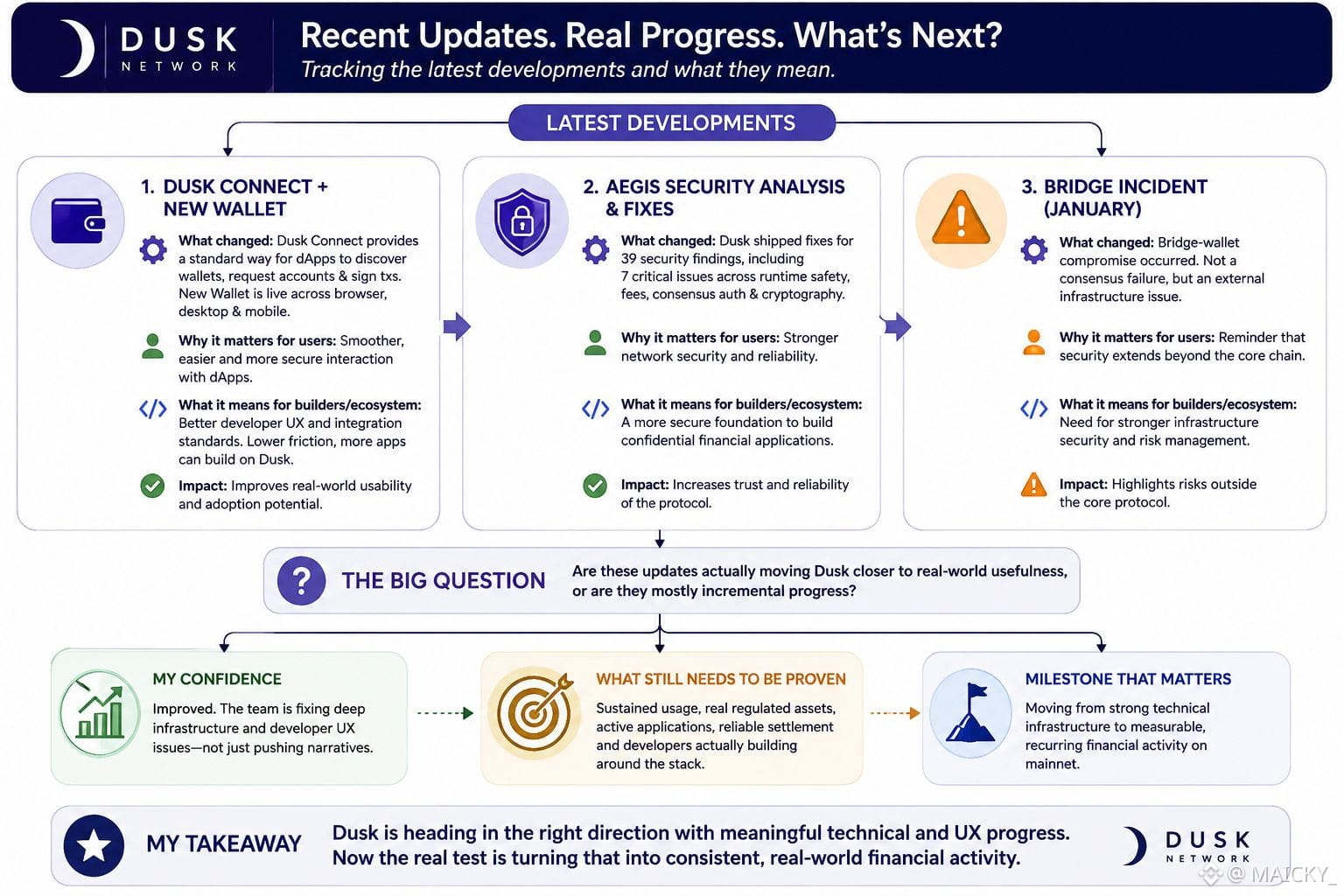
لفت انتباهي Dusk Connect وWallet الجديدان لأنهما يعملان على مشكلة عملية جدًا: جعل التفاعل مع الشبكة أسهل فعلًا بالنسبة للتطبيقات والمستخدمين والمطورين. يبدو ذلك بديهيًا، لكن تجربة المستخدم وبنية المحافظ يمكن أن تصنع عملية التبنّي أو تُفشلها.
كما أن أعمال الأمان AEGIS تبرز أيضًا. العثور على 39 مشكلة وإصلاحها، بما في ذلك 7 مشاكل حرجة، يُعد تقدمًا ذا معنى. وفي الوقت نفسه، لا أراه انتصارًا احتفاليًا—بل يوضح حجم أعمال الأمان المطلوبة عند بناء بنية تحتية لاستخدامات مالية.
وأيضًا حادثة الجسر تستحق أن تؤخذ في الاعتبار. حتى لو لم تكن المشكلة في الإجماع الأساسي، فقد أظهرت أن أمن العالم الحقيقي يتجاوز البلوكشين نفسه.
لذا فأنا أكثر ثقة في الاتجاه، لكنني ما زلت أنتظر الدليل الأصعب: استخدامًا مستمرًا، وتطبيقات حقيقية، وأصولًا مُنظَّمة، وتسوية موثوقة تحدث على نطاق واسع.
بالنسبة لي، هذا هو الاختبار الكبير التالي. إذا استطاعت Dusk تحويل هذا التقدم التقني إلى نشاط مالي واقعي ومتسق في العالم الحقيقي، فستتغير وجهة نظري بشكل كبير.
@Dusk_Foundation #dusk $DUSK
{future}(DUSKUSDT)
لقد عدت مؤخرًا إلى الغوص في Dusk مرة أخرى، وبصراحة أرى أن التقدم الأخير أكثر إثارة للاهتمام من المعتاد حديث «خارطة طريق كبيرة».
لفت انتباهي Dusk Connect وWallet الجديدان لأنهما يعملان على مشكلة عملية جدًا: جعل التفاعل مع الشبكة أسهل فعلًا بالنسبة للتطبيقات والمستخدمين والمطورين. يبدو ذلك بديهيًا، لكن تجربة المستخدم وبنية المحافظ يمكن أن تصنع عملية التبنّي أو تُفشلها.
كما أن أعمال الأمان AEGIS تبرز أيضًا. العثور على 39 مشكلة وإصلاحها، بما في ذلك 7 مشاكل حرجة، يُعد تقدمًا ذا معنى. وفي الوقت نفسه، لا أراه انتصارًا احتفاليًا—بل يوضح حجم أعمال الأمان المطلوبة عند بناء بنية تحتية لاستخدامات مالية.
وأيضًا حادثة الجسر تستحق أن تؤخذ في الاعتبار. حتى لو لم تكن المشكلة في الإجماع الأساسي، فقد أظهرت أن أمن العالم الحقيقي يتجاوز البلوكشين نفسه.
لذا فأنا أكثر ثقة في الاتجاه، لكنني ما زلت أنتظر الدليل الأصعب: استخدامًا مستمرًا، وتطبيقات حقيقية، وأصولًا مُنظَّمة، وتسوية موثوقة تحدث على نطاق واسع.
بالنسبة لي، هذا هو الاختبار الكبير التالي. إذا استطاعت Dusk تحويل هذا التقدم التقني إلى نشاط مالي واقعي ومتسق في العالم الحقيقي، فستتغير وجهة نظري بشكل كبير.
@Dusk #dusk $DUSK
لفت انتباهي Dusk Connect وWallet الجديدان لأنهما يعملان على مشكلة عملية جدًا: جعل التفاعل مع الشبكة أسهل فعلًا بالنسبة للتطبيقات والمستخدمين والمطورين. يبدو ذلك بديهيًا، لكن تجربة المستخدم وبنية المحافظ يمكن أن تصنع عملية التبنّي أو تُفشلها.
كما أن أعمال الأمان AEGIS تبرز أيضًا. العثور على 39 مشكلة وإصلاحها، بما في ذلك 7 مشاكل حرجة، يُعد تقدمًا ذا معنى. وفي الوقت نفسه، لا أراه انتصارًا احتفاليًا—بل يوضح حجم أعمال الأمان المطلوبة عند بناء بنية تحتية لاستخدامات مالية.
وأيضًا حادثة الجسر تستحق أن تؤخذ في الاعتبار. حتى لو لم تكن المشكلة في الإجماع الأساسي، فقد أظهرت أن أمن العالم الحقيقي يتجاوز البلوكشين نفسه.
لذا فأنا أكثر ثقة في الاتجاه، لكنني ما زلت أنتظر الدليل الأصعب: استخدامًا مستمرًا، وتطبيقات حقيقية، وأصولًا مُنظَّمة، وتسوية موثوقة تحدث على نطاق واسع.
بالنسبة لي، هذا هو الاختبار الكبير التالي. إذا استطاعت Dusk تحويل هذا التقدم التقني إلى نشاط مالي واقعي ومتسق في العالم الحقيقي، فستتغير وجهة نظري بشكل كبير.
@Dusk #dusk $DUSK
8
9
227
·
--
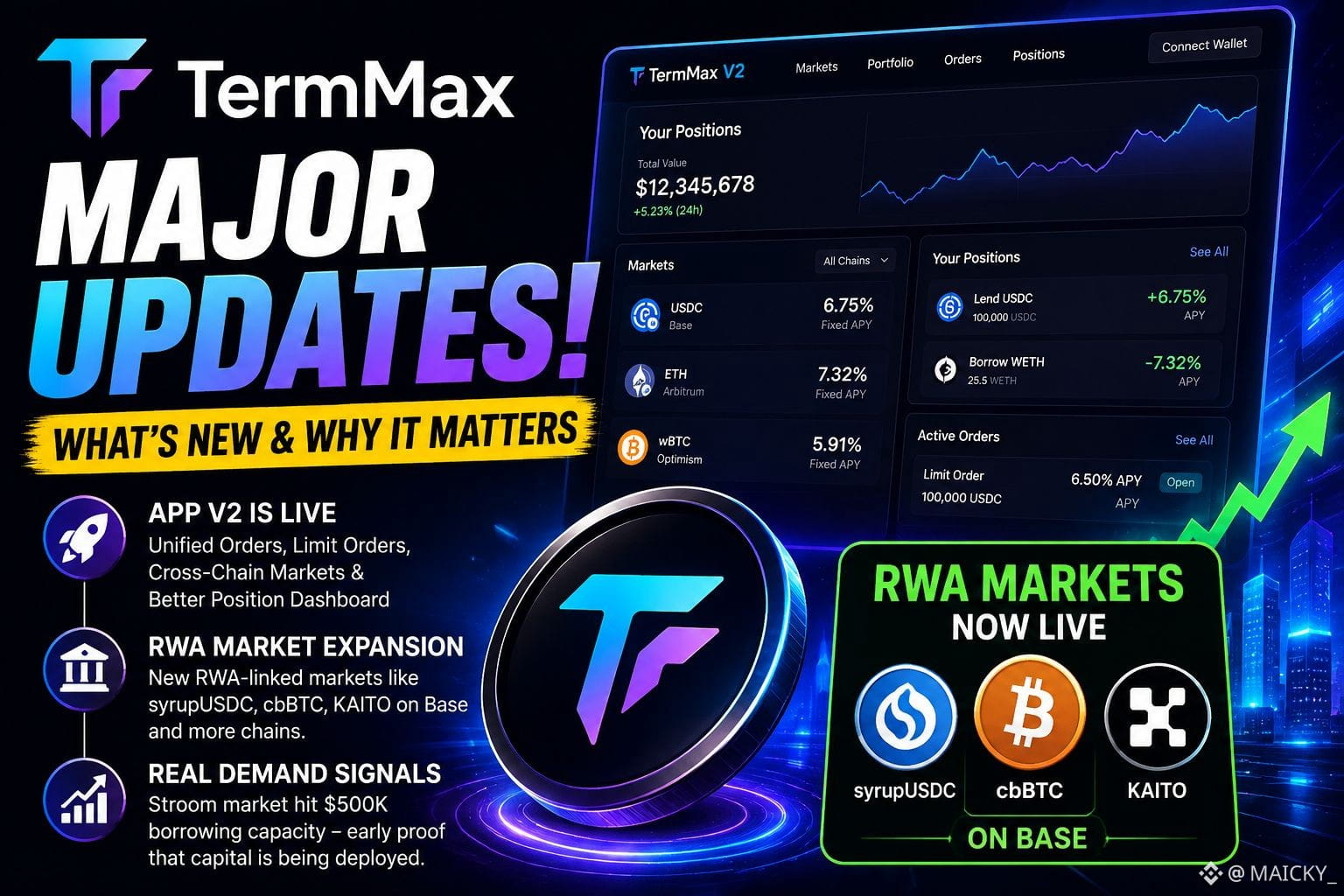
لقد راقبت @termmax عن كثب مرة أخرى، وتبدو أحدث التطورات أكثر عملية من كونها مجرد سردٍ قصصي. أصبح App V2 الآن مباشرًا مع طلبات موحّدة، وظهور للسوق عبر سلاسل مختلفة، وأوامر حدّية عبر الأسواق، ولوحة مراكز أكثر وضوحًا بكثير.
المهم هنا هو أن الأمر لا يتعلق بإضافة واجهة أخرى بقدر ما يتعلق بتقليل الاحتكاك حول المراكز ذات المدد الثابتة. بالنسبة للمستخدمين، يجب أن يصبح مقارنة الأسواق وإدارة الديون عبر السلاسل أسهل؛ وبالنسبة للمطوّرين، فإن طبقة التوجيه الموحدة تمنح النظام البيئي أساسًا أكثر قابلية للاستخدام.
التطوير الآخر الذي أركّز عليه هو التوسّع إلى أسواق مرتبطة بـ RWA. لدى TermMax الآن أسواق حول أصول مثل syrupUSDC و cbBTC و KAITO على Base، كما تعرض تطبيقه الحالي فرص الاقتراض المرتكزة على RWA وسلاسل أحدث.
كما توجد أدلة مبكرة على وجود طلب حقيقي وليس مجرد إعلانات. يقال إن سوق Stroom الأخير على TermMax وصل إلى قدرة اقتراض بقيمة 500 ألف دولار، ما يُظهر أن التكاملات يمكن أن تتحول إلى رأس مال يتم توظيفه—لكن سوقًا واحدة مُكتملة لا تزال عيّنة صغيرة وليست دليلًا على تبنٍّ واسع.
السؤال الأكبر بالنسبة لي هو ما إذا كان بإمكان TermMax تحويل هذا التوسّع في السوق إلى سيولة متينة واستخدام متكرر. لا تزال بيانات الطرف الثالث الحالية تُظهر إيرادات بروتوكول متواضعة نسبيًا مقارنةً بالمنصات الإقراضية الأكبر، لذا تظلّ مسألة الحجم والنشاط المستمر أشياء مهمة لمراقبتها.
بشكل عام، زادت هذه التحديثات من ثقتي بأن TermMax يتجه إلى ما هو أبعد من بناء منتج إضافي، خصوصًا على مستوى سهولة الاستخدام وقيمة RWA. ما يزال يحتاج إلى إثبات هو سيولة أعمق، وحجم تداول ثابت، ومتانة عبر الاستحقاقات؛ وارتفاع مستمر في الطلب الحقيقي على الاقتراض دون الاعتماد بشكل كبير على الحوافز من شأنه أن يغيّر موقفي بشكل ملموس.
#TermMax @termmax
لقد راقبت @TermMax عن كثب مرة أخرى، وتبدو أحدث التطورات أكثر عملية من كونها مجرد سردٍ قصصي. أصبح App V2 الآن مباشرًا مع طلبات موحّدة، وظهور للسوق عبر سلاسل مختلفة، وأوامر حدّية عبر الأسواق، ولوحة مراكز أكثر وضوحًا بكثير.
المهم هنا هو أن الأمر لا يتعلق بإضافة واجهة أخرى بقدر ما يتعلق بتقليل الاحتكاك حول المراكز ذات المدد الثابتة. بالنسبة للمستخدمين، يجب أن يصبح مقارنة الأسواق وإدارة الديون عبر السلاسل أسهل؛ وبالنسبة للمطوّرين، فإن طبقة التوجيه الموحدة تمنح النظام البيئي أساسًا أكثر قابلية للاستخدام.
التطوير الآخر الذي أركّز عليه هو التوسّع إلى أسواق مرتبطة بـ RWA. لدى TermMax الآن أسواق حول أصول مثل syrupUSDC و cbBTC و KAITO على Base، كما تعرض تطبيقه الحالي فرص الاقتراض المرتكزة على RWA وسلاسل أحدث.
كما توجد أدلة مبكرة على وجود طلب حقيقي وليس مجرد إعلانات. يقال إن سوق Stroom الأخير على TermMax وصل إلى قدرة اقتراض بقيمة 500 ألف دولار، ما يُظهر أن التكاملات يمكن أن تتحول إلى رأس مال يتم توظيفه—لكن سوقًا واحدة مُكتملة لا تزال عيّنة صغيرة وليست دليلًا على تبنٍّ واسع.
السؤال الأكبر بالنسبة لي هو ما إذا كان بإمكان TermMax تحويل هذا التوسّع في السوق إلى سيولة متينة واستخدام متكرر. لا تزال بيانات الطرف الثالث الحالية تُظهر إيرادات بروتوكول متواضعة نسبيًا مقارنةً بالمنصات الإقراضية الأكبر، لذا تظلّ مسألة الحجم والنشاط المستمر أشياء مهمة لمراقبتها.
بشكل عام، زادت هذه التحديثات من ثقتي بأن TermMax يتجه إلى ما هو أبعد من بناء منتج إضافي، خصوصًا على مستوى سهولة الاستخدام وقيمة RWA. ما يزال يحتاج إلى إثبات هو سيولة أعمق، وحجم تداول ثابت، ومتانة عبر الاستحقاقات؛ وارتفاع مستمر في الطلب الحقيقي على الاقتراض دون الاعتماد بشكل كبير على الحوافز من شأنه أن يغيّر موقفي بشكل ملموس.
#TermMax @TermMax
المهم هنا هو أن الأمر لا يتعلق بإضافة واجهة أخرى بقدر ما يتعلق بتقليل الاحتكاك حول المراكز ذات المدد الثابتة. بالنسبة للمستخدمين، يجب أن يصبح مقارنة الأسواق وإدارة الديون عبر السلاسل أسهل؛ وبالنسبة للمطوّرين، فإن طبقة التوجيه الموحدة تمنح النظام البيئي أساسًا أكثر قابلية للاستخدام.
التطوير الآخر الذي أركّز عليه هو التوسّع إلى أسواق مرتبطة بـ RWA. لدى TermMax الآن أسواق حول أصول مثل syrupUSDC و cbBTC و KAITO على Base، كما تعرض تطبيقه الحالي فرص الاقتراض المرتكزة على RWA وسلاسل أحدث.
كما توجد أدلة مبكرة على وجود طلب حقيقي وليس مجرد إعلانات. يقال إن سوق Stroom الأخير على TermMax وصل إلى قدرة اقتراض بقيمة 500 ألف دولار، ما يُظهر أن التكاملات يمكن أن تتحول إلى رأس مال يتم توظيفه—لكن سوقًا واحدة مُكتملة لا تزال عيّنة صغيرة وليست دليلًا على تبنٍّ واسع.
السؤال الأكبر بالنسبة لي هو ما إذا كان بإمكان TermMax تحويل هذا التوسّع في السوق إلى سيولة متينة واستخدام متكرر. لا تزال بيانات الطرف الثالث الحالية تُظهر إيرادات بروتوكول متواضعة نسبيًا مقارنةً بالمنصات الإقراضية الأكبر، لذا تظلّ مسألة الحجم والنشاط المستمر أشياء مهمة لمراقبتها.
بشكل عام، زادت هذه التحديثات من ثقتي بأن TermMax يتجه إلى ما هو أبعد من بناء منتج إضافي، خصوصًا على مستوى سهولة الاستخدام وقيمة RWA. ما يزال يحتاج إلى إثبات هو سيولة أعمق، وحجم تداول ثابت، ومتانة عبر الاستحقاقات؛ وارتفاع مستمر في الطلب الحقيقي على الاقتراض دون الاعتماد بشكل كبير على الحوافز من شأنه أن يغيّر موقفي بشكل ملموس.
#TermMax @TermMax
1
3
287
·
--
#BTCPerpFundingRateHits20MonthHigh
🚨 #BTCPerpFundingRateHits20MonthHig
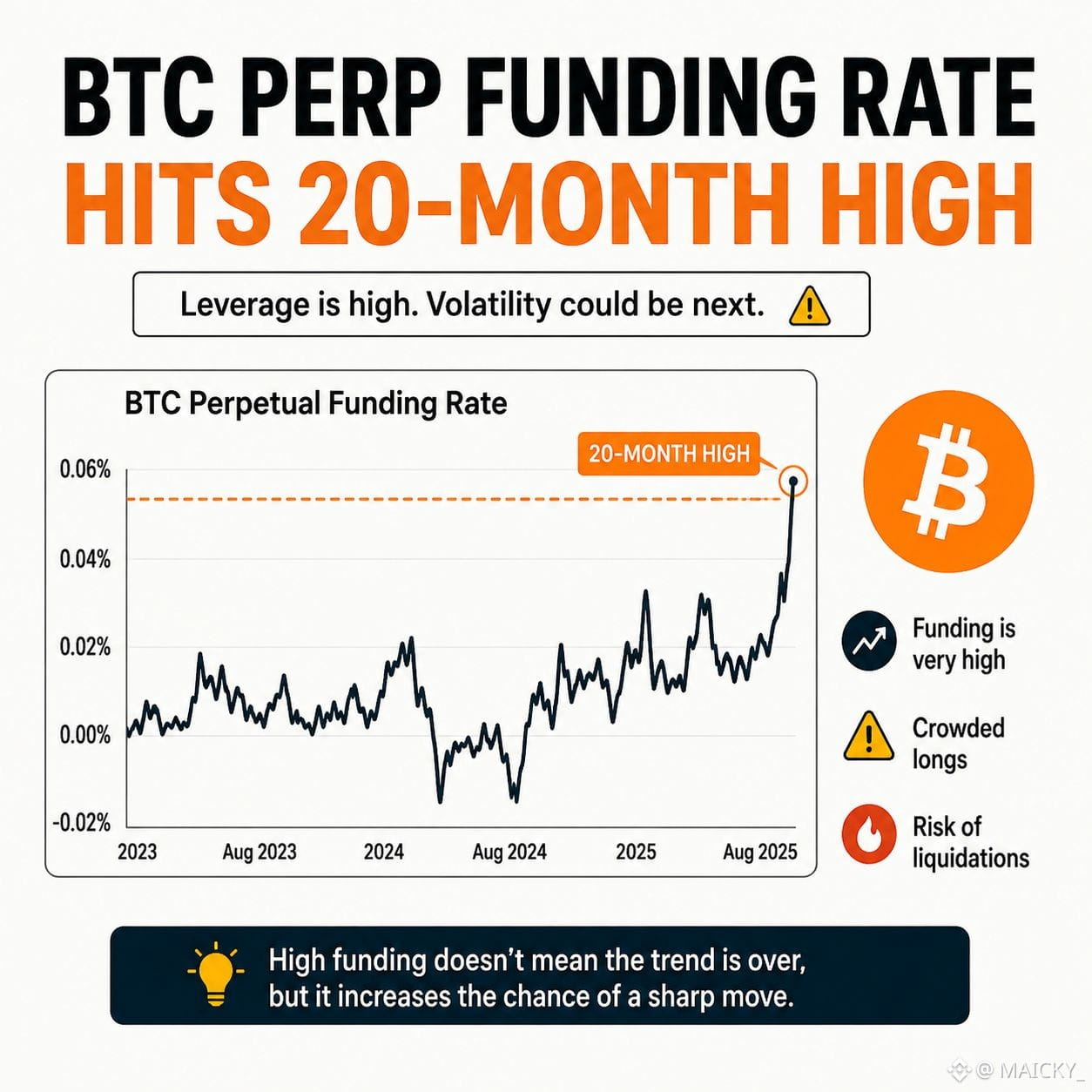
تمويل العقود الدائمة للبيتكوين وصل إلى مستوى لم نشهده منذ 20 شهرًا.
هذا لا يعني تلقائيًا أن BTC قد بلغت القمة.
لكن هذا يخبرني بشيء واحد: الرافعة المالية أصبحت مزدحمة.
عندما يصبح المتداولون متمركزين بكثافة على نفس الجانب، لا يحتاج السعر إلى محفّز كبير ليبدأ التحرك بعنف. تراجع بسيط قد يبدأ عمليات التصفية، والتصفيات يمكن أن تُسرّع البيع، وفجأة يتحول اتجاه صعودي “صحي” إلى موجة تصفية قاسية.
الجزء المثير للاهتمام ليس مجرد رقم التمويل.
بل ما الذي سيفعله BTC بعد ذلك.
إذا استمر السعر في الارتفاع تدريجيًا بينما يبرد التمويل، فقد يشير ذلك إلى أن السوق يمتص الرافعة المالية.
لكن إذا بقي التمويل مرتفعًا جدًا بينما يبدأ السعر في فقدان مستويات دعم رئيسية، فسأراقب عن كثب لاحتمال إعادة ضبط الرافعة.
🔥 اتجاه صعودي + تمويل مُتحكم فيه = إعداد أكثر صحة.
⚠️ اتجاه صعودي + تمويل شديد الارتفاع = تداول مزدحم.
قد يبقى السوق غير منطقي لفترة أطول مما يتوقعه المتداولون… لكن في النهاية يجب دفع ثمن الرافعة المالية.
لا يحتاج BTC إلى الانهيار. يكفيه قدر كافٍ من التقلبات لمعاقبة الجانب المزدحم.
$LAYER $BTW $LAB
#BTCPerpFundingRateHits20MonthHigh
#BTCPerpFundingRateHits20MonthHigh
🚨 #BTCPerpFundingRateHits20MonthHig
تمويل العقود الدائمة للبيتكوين وصل إلى مستوى لم نشهده منذ 20 شهرًا.
هذا لا يعني تلقائيًا أن BTC قد بلغت القمة.
لكن هذا يخبرني بشيء واحد: الرافعة المالية أصبحت مزدحمة.
عندما يصبح المتداولون متمركزين بكثافة على نفس الجانب، لا يحتاج السعر إلى محفّز كبير ليبدأ التحرك بعنف. تراجع بسيط قد يبدأ عمليات التصفية، والتصفيات يمكن أن تُسرّع البيع، وفجأة يتحول اتجاه صعودي “صحي” إلى موجة تصفية قاسية.
الجزء المثير للاهتمام ليس مجرد رقم التمويل.
بل ما الذي سيفعله BTC بعد ذلك.
إذا استمر السعر في الارتفاع تدريجيًا بينما يبرد التمويل، فقد يشير ذلك إلى أن السوق يمتص الرافعة المالية.
لكن إذا بقي التمويل مرتفعًا جدًا بينما يبدأ السعر في فقدان مستويات دعم رئيسية، فسأراقب عن كثب لاحتمال إعادة ضبط الرافعة.
🔥 اتجاه صعودي + تمويل مُتحكم فيه = إعداد أكثر صحة.
⚠️ اتجاه صعودي + تمويل شديد الارتفاع = تداول مزدحم.
قد يبقى السوق غير منطقي لفترة أطول مما يتوقعه المتداولون… لكن في النهاية يجب دفع ثمن الرافعة المالية.
لا يحتاج BTC إلى الانهيار. يكفيه قدر كافٍ من التقلبات لمعاقبة الجانب المزدحم.
$LAYER $BTW $LAB
#BTCPerpFundingRateHits20MonthHigh
🚨 #BTCPerpFundingRateHits20MonthHig
تمويل العقود الدائمة للبيتكوين وصل إلى مستوى لم نشهده منذ 20 شهرًا.
هذا لا يعني تلقائيًا أن BTC قد بلغت القمة.
لكن هذا يخبرني بشيء واحد: الرافعة المالية أصبحت مزدحمة.
عندما يصبح المتداولون متمركزين بكثافة على نفس الجانب، لا يحتاج السعر إلى محفّز كبير ليبدأ التحرك بعنف. تراجع بسيط قد يبدأ عمليات التصفية، والتصفيات يمكن أن تُسرّع البيع، وفجأة يتحول اتجاه صعودي “صحي” إلى موجة تصفية قاسية.
الجزء المثير للاهتمام ليس مجرد رقم التمويل.
بل ما الذي سيفعله BTC بعد ذلك.
إذا استمر السعر في الارتفاع تدريجيًا بينما يبرد التمويل، فقد يشير ذلك إلى أن السوق يمتص الرافعة المالية.
لكن إذا بقي التمويل مرتفعًا جدًا بينما يبدأ السعر في فقدان مستويات دعم رئيسية، فسأراقب عن كثب لاحتمال إعادة ضبط الرافعة.
🔥 اتجاه صعودي + تمويل مُتحكم فيه = إعداد أكثر صحة.
⚠️ اتجاه صعودي + تمويل شديد الارتفاع = تداول مزدحم.
قد يبقى السوق غير منطقي لفترة أطول مما يتوقعه المتداولون… لكن في النهاية يجب دفع ثمن الرافعة المالية.
لا يحتاج BTC إلى الانهيار. يكفيه قدر كافٍ من التقلبات لمعاقبة الجانب المزدحم.
$LAYER $BTW $LAB
#BTCPerpFundingRateHits20MonthHigh
170
·
--
تمّ التحقق
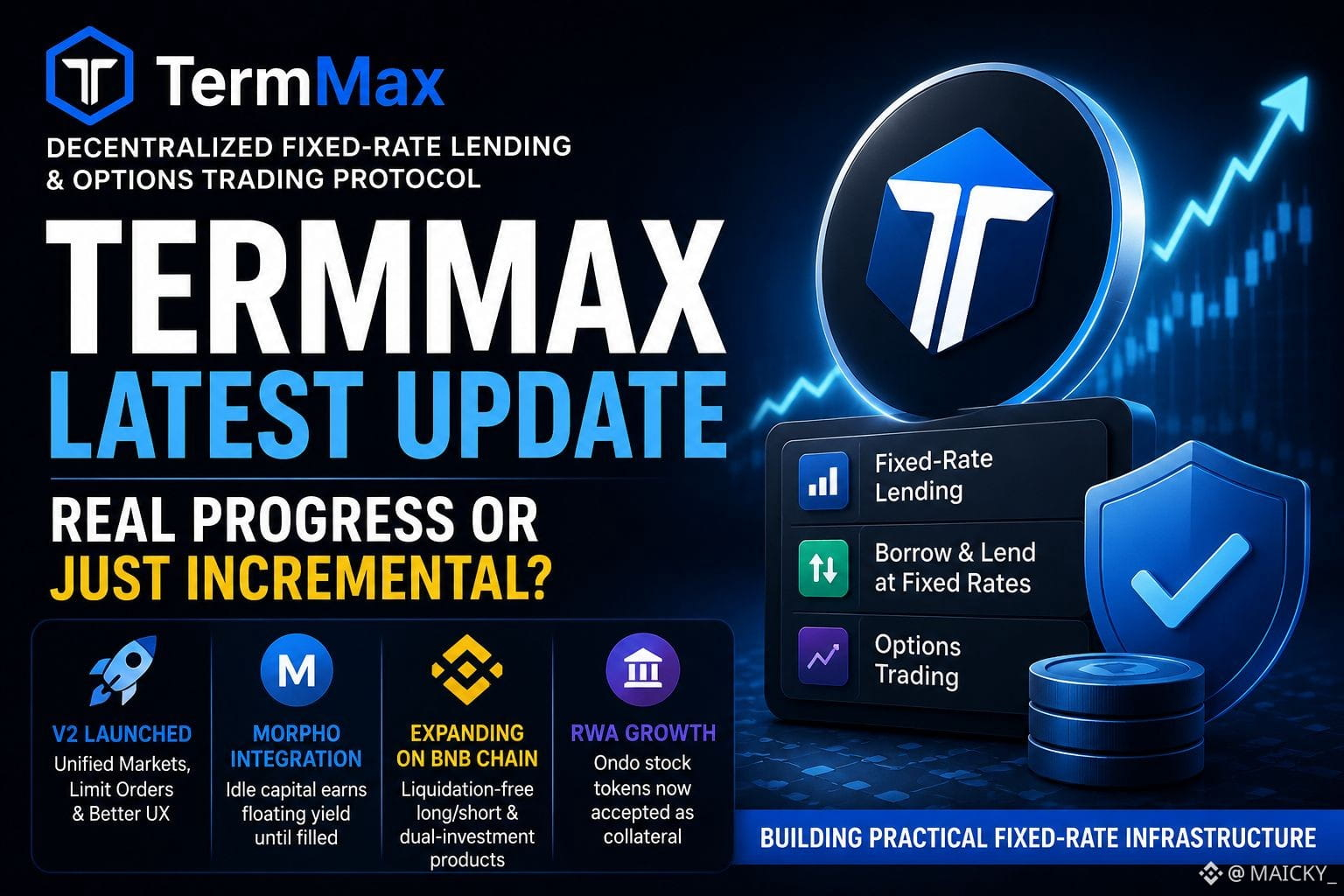
كنت أتابع TermMax مرة أخرى في الآونة الأخيرة، وأكبر تغيير بالنسبة لي هو أن V2 أصبحت أكثر قابلية للاستخدام بكثير. إطلاق 27 مايو وحّد الأوامر، ودمج الأسواق عبر السلاسل، وأتاح أوامر حدّية عبر كل سوق، مما يقلّل الاحتكاك عند العثور على مراكز بسعر ثابت وتنفيذها.
تكامل Morpho هو جزء آخر أراه مثيرًا للاهتمام. يمكن لرأس مال أوامر حدّية غير مناظرة لـ TermMax أن يدرّ عائدًا عائمًا عبر Morpho إلى أن يتم ملء أمر بسعر ثابت، وهذا يعالج مباشرة مشكلة السيولة الخاملة بدلًا من مجرد إضافة تكامل آخر من أجل الإضافة.
يدفع TermMax أيضًا إلى ما هو أبعد من الإقراض الأساسي مع Alpha على سلسلة BNB Chain، بما يشمل تعرضًا طويل/قصير دون التصفية ومنتجات استثمار مزدوج. كما أن اتجاه RWA يتوسع أيضًا، حيث تُستخدم رموز أسهم Ondo كضمان لأسواق الاقتراض أو الإقراض.
لكنني ما زلت أفصل بين تقدم المنتج وبين التبنّي المُثبت. أصبحت البنية أكثر عملية، إلا أن السيولة الأعمق، والاستخدام المستمر، والتنفيذ الموثوق عبر الأسواق هي ما سيحدد ما إذا كان هذا سيصبح بنية تحتية مفيدة حقًا أم مجرد بروتوكول DeFi مليء بالميزات.
تحسّنت ثقتي لأن التحديثات تعالج مشكلات حقيقية في تجربة المستخدم وكفاءة رأس المال. وما زلت أريد رؤية سيولة واستخدامًا متينين دون الاعتماد بشكل كبير على الحوافز؛ وجود دلائل أقوى على ذلك سيغيّر رأيي في TermMax بشكل ملموس.
@termmax #TermMax
$TUT
{future}(TUTUSDT)
$CLO
{alpha}(560x81d3a238b02827f62b9f390f947d36d4a5bf89d2)
$EDEN
{future}(EDENUSDT)
كنت أتابع TermMax مرة أخرى في الآونة الأخيرة، وأكبر تغيير بالنسبة لي هو أن V2 أصبحت أكثر قابلية للاستخدام بكثير. إطلاق 27 مايو وحّد الأوامر، ودمج الأسواق عبر السلاسل، وأتاح أوامر حدّية عبر كل سوق، مما يقلّل الاحتكاك عند العثور على مراكز بسعر ثابت وتنفيذها.
تكامل Morpho هو جزء آخر أراه مثيرًا للاهتمام. يمكن لرأس مال أوامر حدّية غير مناظرة لـ TermMax أن يدرّ عائدًا عائمًا عبر Morpho إلى أن يتم ملء أمر بسعر ثابت، وهذا يعالج مباشرة مشكلة السيولة الخاملة بدلًا من مجرد إضافة تكامل آخر من أجل الإضافة.
يدفع TermMax أيضًا إلى ما هو أبعد من الإقراض الأساسي مع Alpha على سلسلة BNB Chain، بما يشمل تعرضًا طويل/قصير دون التصفية ومنتجات استثمار مزدوج. كما أن اتجاه RWA يتوسع أيضًا، حيث تُستخدم رموز أسهم Ondo كضمان لأسواق الاقتراض أو الإقراض.
لكنني ما زلت أفصل بين تقدم المنتج وبين التبنّي المُثبت. أصبحت البنية أكثر عملية، إلا أن السيولة الأعمق، والاستخدام المستمر، والتنفيذ الموثوق عبر الأسواق هي ما سيحدد ما إذا كان هذا سيصبح بنية تحتية مفيدة حقًا أم مجرد بروتوكول DeFi مليء بالميزات.
تحسّنت ثقتي لأن التحديثات تعالج مشكلات حقيقية في تجربة المستخدم وكفاءة رأس المال. وما زلت أريد رؤية سيولة واستخدامًا متينين دون الاعتماد بشكل كبير على الحوافز؛ وجود دلائل أقوى على ذلك سيغيّر رأيي في TermMax بشكل ملموس.
@TermMax #TermMax
$TUT
$CLO
$EDEN
تكامل Morpho هو جزء آخر أراه مثيرًا للاهتمام. يمكن لرأس مال أوامر حدّية غير مناظرة لـ TermMax أن يدرّ عائدًا عائمًا عبر Morpho إلى أن يتم ملء أمر بسعر ثابت، وهذا يعالج مباشرة مشكلة السيولة الخاملة بدلًا من مجرد إضافة تكامل آخر من أجل الإضافة.
يدفع TermMax أيضًا إلى ما هو أبعد من الإقراض الأساسي مع Alpha على سلسلة BNB Chain، بما يشمل تعرضًا طويل/قصير دون التصفية ومنتجات استثمار مزدوج. كما أن اتجاه RWA يتوسع أيضًا، حيث تُستخدم رموز أسهم Ondo كضمان لأسواق الاقتراض أو الإقراض.
لكنني ما زلت أفصل بين تقدم المنتج وبين التبنّي المُثبت. أصبحت البنية أكثر عملية، إلا أن السيولة الأعمق، والاستخدام المستمر، والتنفيذ الموثوق عبر الأسواق هي ما سيحدد ما إذا كان هذا سيصبح بنية تحتية مفيدة حقًا أم مجرد بروتوكول DeFi مليء بالميزات.
تحسّنت ثقتي لأن التحديثات تعالج مشكلات حقيقية في تجربة المستخدم وكفاءة رأس المال. وما زلت أريد رؤية سيولة واستخدامًا متينين دون الاعتماد بشكل كبير على الحوافز؛ وجود دلائل أقوى على ذلك سيغيّر رأيي في TermMax بشكل ملموس.
@TermMax #TermMax
$TUT
$CLO
$EDEN
7
6
591
·
--
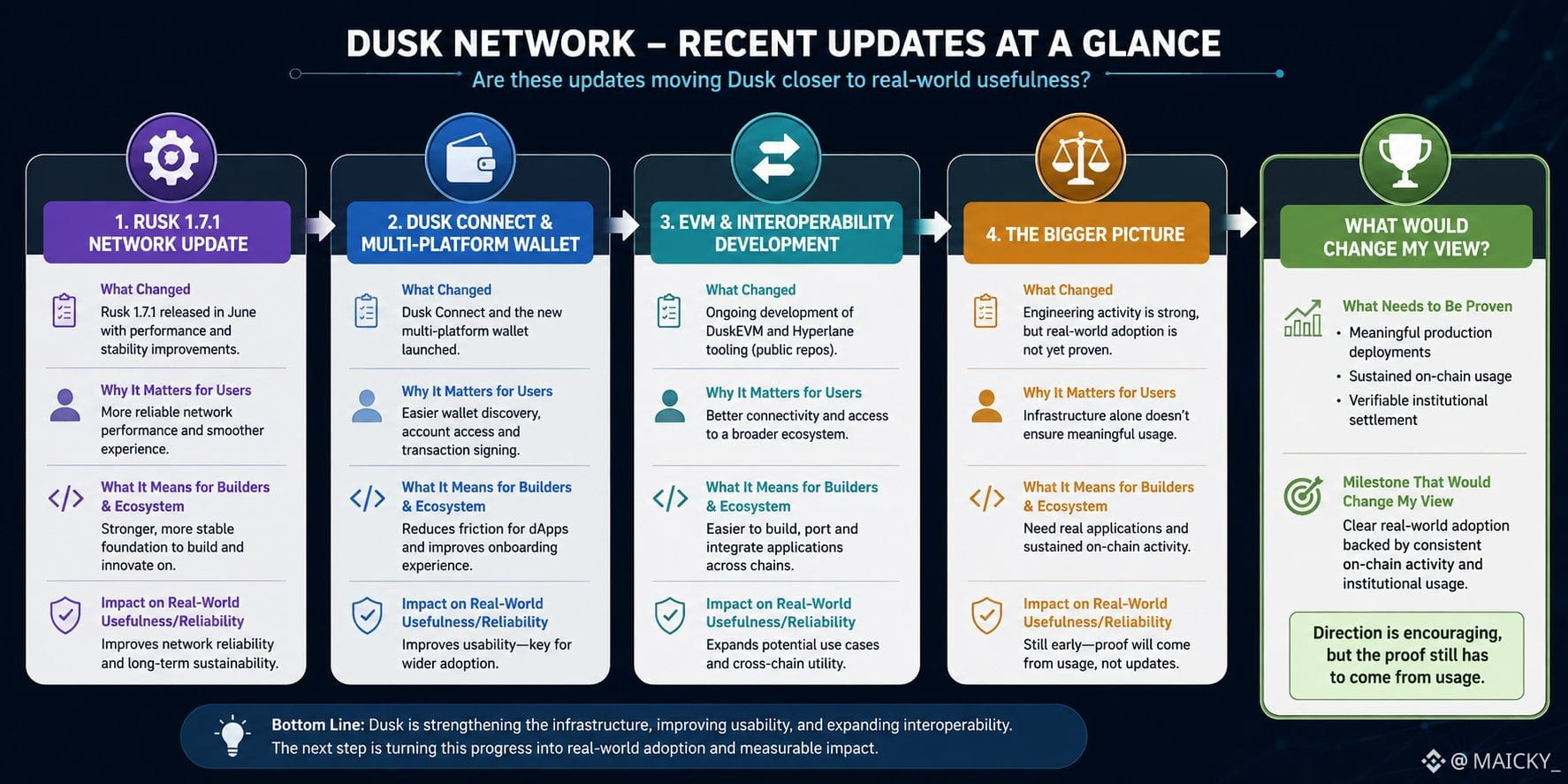
كنت أراقب Dusk عن كثب مرة أخرى، ويبدو أن التقدم الأخير أقرب إلى تقوية البنية التحتية منه إلى كونه عنوانًا لامعًا. تم إصدار Rusk 1.7.1 في يونيو، بينما واصلت المحفظة والمكدس الأساسي تلقي تحديثات خلال يوليو.
بالنسبة لي، الإشارة الأكبر تكمن في طبقة المطورين. تم تصميم Dusk Connect والمحفظة الجديدة متعددة المنصات لجعل اكتشاف المحفظة والوصول إلى الحساب وتوقيع المعاملات أسهل بالنسبة لـ dApps، وهذا يزيل مباشرة بعض الاحتكاك عن المطورين.
كما أنني أتابع عمل EVM والتوافقية. تُظهر المستودعات العامة لـ Dusk استمرار التطوير حول أدوات DuskEVM وHyperlane، ما يوحي بأن النظام البيئي يحاول جعل Dusk أسهل في البناء والربط معه—وليس فقط تحسين السلسلة الأساسية.
لكنني لن أصف ذلك كدليل بعد على التبني في العالم الحقيقي. إن نشاط الهندسة الأخير ذو معنى، في حين تبقى الأسئلة الأصعب: هل يقوم المطورون فعلًا بنشر تطبيقات مفيدة؟ وهل تولّد سير العمل المؤسسي نشاطًا متواصلًا على السلسلة؟
لقد تحسّن مستوى ثقتي قليلًا لأن المكوّنات أصبحت أكثر قابلية للاستخدام، لكنني ما زلت أنتظر أدلة أقوى تتجاوز مجرد التقدم في البنية التحتية. بالنسبة لي، فإن عمليات النشر الإنتاجية ذات المعنى، والاستخدام المستمر، والتسوية المؤسسية القابلة للتحقق—كلها ستغيّر رؤيتي بشكل ملموس.
لذا يبقى السؤال: هل تحرّك هذه التحديثات Dusk نحو فائدة واقعية في الاستخدام، أم أنها ما زالت في الغالب تقدّمًا تدريجيًا؟ في الوقت الحالي، أقول إن الاتجاه مُشجّع—لكن الدليل يجب أن يأتي من الاستخدام.
#dusk @Dusk_Foundation $DUSK
{future}(DUSKUSDT)
كنت أراقب Dusk عن كثب مرة أخرى، ويبدو أن التقدم الأخير أقرب إلى تقوية البنية التحتية منه إلى كونه عنوانًا لامعًا. تم إصدار Rusk 1.7.1 في يونيو، بينما واصلت المحفظة والمكدس الأساسي تلقي تحديثات خلال يوليو.
بالنسبة لي، الإشارة الأكبر تكمن في طبقة المطورين. تم تصميم Dusk Connect والمحفظة الجديدة متعددة المنصات لجعل اكتشاف المحفظة والوصول إلى الحساب وتوقيع المعاملات أسهل بالنسبة لـ dApps، وهذا يزيل مباشرة بعض الاحتكاك عن المطورين.
كما أنني أتابع عمل EVM والتوافقية. تُظهر المستودعات العامة لـ Dusk استمرار التطوير حول أدوات DuskEVM وHyperlane، ما يوحي بأن النظام البيئي يحاول جعل Dusk أسهل في البناء والربط معه—وليس فقط تحسين السلسلة الأساسية.
لكنني لن أصف ذلك كدليل بعد على التبني في العالم الحقيقي. إن نشاط الهندسة الأخير ذو معنى، في حين تبقى الأسئلة الأصعب: هل يقوم المطورون فعلًا بنشر تطبيقات مفيدة؟ وهل تولّد سير العمل المؤسسي نشاطًا متواصلًا على السلسلة؟
لقد تحسّن مستوى ثقتي قليلًا لأن المكوّنات أصبحت أكثر قابلية للاستخدام، لكنني ما زلت أنتظر أدلة أقوى تتجاوز مجرد التقدم في البنية التحتية. بالنسبة لي، فإن عمليات النشر الإنتاجية ذات المعنى، والاستخدام المستمر، والتسوية المؤسسية القابلة للتحقق—كلها ستغيّر رؤيتي بشكل ملموس.
لذا يبقى السؤال: هل تحرّك هذه التحديثات Dusk نحو فائدة واقعية في الاستخدام، أم أنها ما زالت في الغالب تقدّمًا تدريجيًا؟ في الوقت الحالي، أقول إن الاتجاه مُشجّع—لكن الدليل يجب أن يأتي من الاستخدام.
#dusk @Dusk $DUSK
بالنسبة لي، الإشارة الأكبر تكمن في طبقة المطورين. تم تصميم Dusk Connect والمحفظة الجديدة متعددة المنصات لجعل اكتشاف المحفظة والوصول إلى الحساب وتوقيع المعاملات أسهل بالنسبة لـ dApps، وهذا يزيل مباشرة بعض الاحتكاك عن المطورين.
كما أنني أتابع عمل EVM والتوافقية. تُظهر المستودعات العامة لـ Dusk استمرار التطوير حول أدوات DuskEVM وHyperlane، ما يوحي بأن النظام البيئي يحاول جعل Dusk أسهل في البناء والربط معه—وليس فقط تحسين السلسلة الأساسية.
لكنني لن أصف ذلك كدليل بعد على التبني في العالم الحقيقي. إن نشاط الهندسة الأخير ذو معنى، في حين تبقى الأسئلة الأصعب: هل يقوم المطورون فعلًا بنشر تطبيقات مفيدة؟ وهل تولّد سير العمل المؤسسي نشاطًا متواصلًا على السلسلة؟
لقد تحسّن مستوى ثقتي قليلًا لأن المكوّنات أصبحت أكثر قابلية للاستخدام، لكنني ما زلت أنتظر أدلة أقوى تتجاوز مجرد التقدم في البنية التحتية. بالنسبة لي، فإن عمليات النشر الإنتاجية ذات المعنى، والاستخدام المستمر، والتسوية المؤسسية القابلة للتحقق—كلها ستغيّر رؤيتي بشكل ملموس.
لذا يبقى السؤال: هل تحرّك هذه التحديثات Dusk نحو فائدة واقعية في الاستخدام، أم أنها ما زالت في الغالب تقدّمًا تدريجيًا؟ في الوقت الحالي، أقول إن الاتجاه مُشجّع—لكن الدليل يجب أن يأتي من الاستخدام.
#dusk @Dusk $DUSK
3
3
136
·
--
@Dusk_Foundation #dusk $DUSK
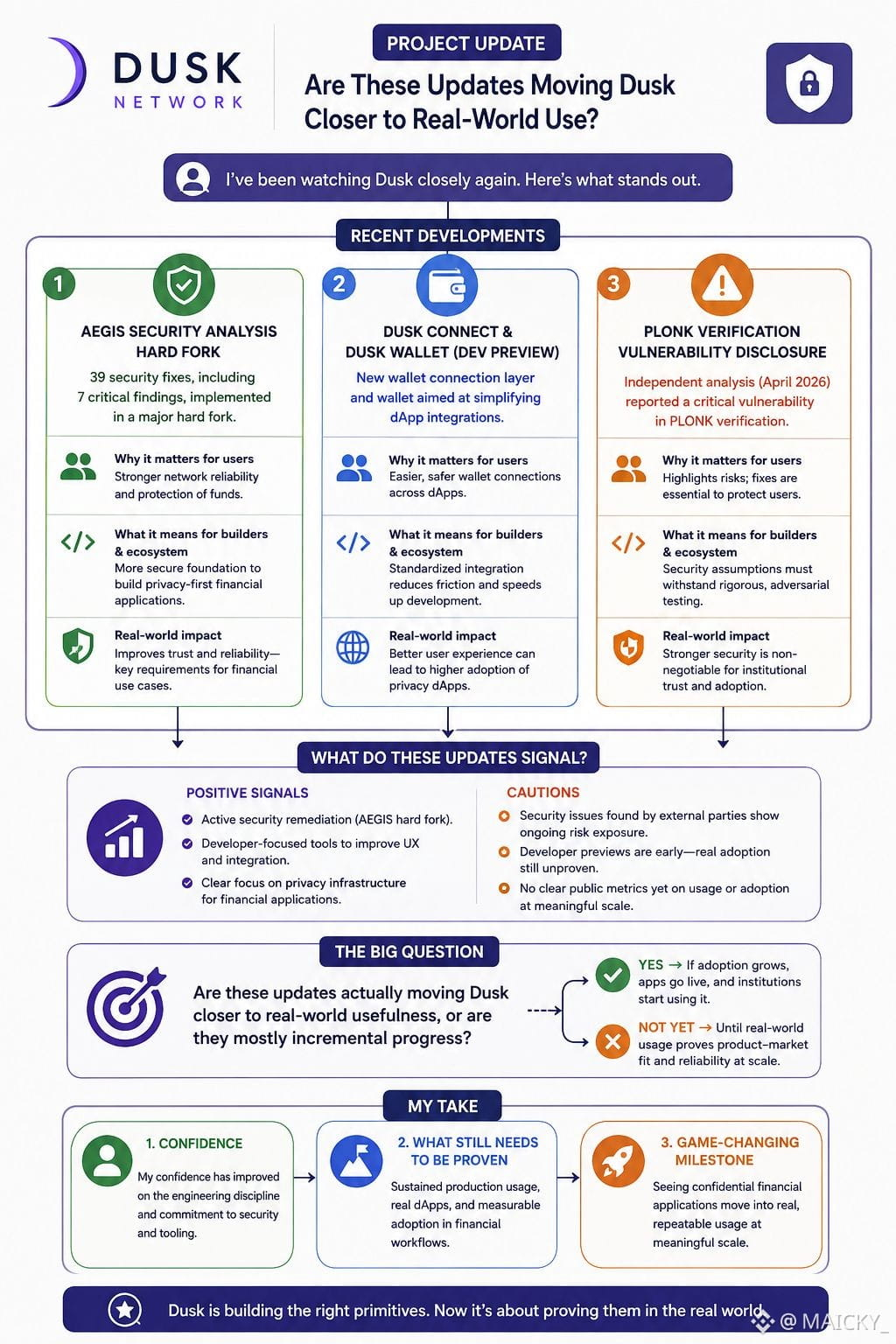
كنت أراقب @Dusk_Foundation عن كثب مرة أخرى، وأبرز التقدم الأخير يجعل الصورة أكثر إثارة للاهتمام—لكن أيضًا أكثر دقة وتعقيدًا. كانت أكبر خطوة هي AEGIS: 39 إصلاحًا أمنيًا، بما في ذلك 7 نتائج حرجة، تم دفعها إلى شوكة رئيسية (hard fork). هذا مهم للموثوقية، لكنه أيضًا يُظهر مقدار المخاطر منخفضة المستوى التي كان لا يزال يتعين إزالتها من النظام المباشر.
على صعيد المنتج، يهدف Dusk Connect وWallet Dusk الجديد إلى جعل dApps أسهل في الاستخدام عبر توفير طبقة قياسية لاتصال المحافظ للمطورين بدلًا من إجبار كل تطبيق على بناء تكامل خاص به. وهذا مهم للمطّورين، على الرغم من أنه تم تقديمهما كمعاينات للمطورين؛ لذلك لا يزال اعتماد النظام البيئي الحقيقي بحاجة إلى إظهاره.
هناك أيضًا نقطة بيانات أكثر إزعاجًا: ذكرت دراسة تحليلية مستقلة في أبريل وجود ثغرة حرجة في التحقق من PLONK كان يمكن أن تُمكّن من إثباتات مُزوَّرة. تقول Dusk إن الإصلاح الأساسي نُفّذ في فبراير، لكن الكشف يعيد التأكيد على الدرس نفسه كما في AEGIS: لا تصبح بنية الخصوصية التحتية مفيدة فعليًا كبنية مالية إلا عندما تصمد افتراضاتها الأمنية أمام اختبارات خصومية جدية.
لذا يبقى سؤالي: هل تدفع هذه التحديثات Dusk نحو فائدة واقعية في العالم الحقيقي، أم أنها في الغالب مجرد تقدم تدريجي؟ لقد تحسنت ثقتي في الانضباط الهندسي، خصوصًا فيما يتعلق بالإصلاحات والأدوات، لكنني ما زلت أنتظر دليلًا أقوى على الاستخدام الإنتاجي المستمر. المعلم الذي قد يغيّر نظرتي بشكل جوهري هو رؤية التطبيقات المالية السرّية تنتقل من الجاهزية التقنية إلى استخدام واقعي قابل للتكرار وبحجم ذي معنى.
$GPS
{future}(GPSUSDT)
$TAG
{alpha}(560x208bf3e7da9639f1eaefa2de78c23396b0682025)
@Dusk #dusk $DUSK
كنت أراقب @Dusk عن كثب مرة أخرى، وأبرز التقدم الأخير يجعل الصورة أكثر إثارة للاهتمام—لكن أيضًا أكثر دقة وتعقيدًا. كانت أكبر خطوة هي AEGIS: 39 إصلاحًا أمنيًا، بما في ذلك 7 نتائج حرجة، تم دفعها إلى شوكة رئيسية (hard fork). هذا مهم للموثوقية، لكنه أيضًا يُظهر مقدار المخاطر منخفضة المستوى التي كان لا يزال يتعين إزالتها من النظام المباشر.
على صعيد المنتج، يهدف Dusk Connect وWallet Dusk الجديد إلى جعل dApps أسهل في الاستخدام عبر توفير طبقة قياسية لاتصال المحافظ للمطورين بدلًا من إجبار كل تطبيق على بناء تكامل خاص به. وهذا مهم للمطّورين، على الرغم من أنه تم تقديمهما كمعاينات للمطورين؛ لذلك لا يزال اعتماد النظام البيئي الحقيقي بحاجة إلى إظهاره.
هناك أيضًا نقطة بيانات أكثر إزعاجًا: ذكرت دراسة تحليلية مستقلة في أبريل وجود ثغرة حرجة في التحقق من PLONK كان يمكن أن تُمكّن من إثباتات مُزوَّرة. تقول Dusk إن الإصلاح الأساسي نُفّذ في فبراير، لكن الكشف يعيد التأكيد على الدرس نفسه كما في AEGIS: لا تصبح بنية الخصوصية التحتية مفيدة فعليًا كبنية مالية إلا عندما تصمد افتراضاتها الأمنية أمام اختبارات خصومية جدية.
لذا يبقى سؤالي: هل تدفع هذه التحديثات Dusk نحو فائدة واقعية في العالم الحقيقي، أم أنها في الغالب مجرد تقدم تدريجي؟ لقد تحسنت ثقتي في الانضباط الهندسي، خصوصًا فيما يتعلق بالإصلاحات والأدوات، لكنني ما زلت أنتظر دليلًا أقوى على الاستخدام الإنتاجي المستمر. المعلم الذي قد يغيّر نظرتي بشكل جوهري هو رؤية التطبيقات المالية السرّية تنتقل من الجاهزية التقنية إلى استخدام واقعي قابل للتكرار وبحجم ذي معنى.
$GPS
$TAG
كنت أراقب @Dusk عن كثب مرة أخرى، وأبرز التقدم الأخير يجعل الصورة أكثر إثارة للاهتمام—لكن أيضًا أكثر دقة وتعقيدًا. كانت أكبر خطوة هي AEGIS: 39 إصلاحًا أمنيًا، بما في ذلك 7 نتائج حرجة، تم دفعها إلى شوكة رئيسية (hard fork). هذا مهم للموثوقية، لكنه أيضًا يُظهر مقدار المخاطر منخفضة المستوى التي كان لا يزال يتعين إزالتها من النظام المباشر.
على صعيد المنتج، يهدف Dusk Connect وWallet Dusk الجديد إلى جعل dApps أسهل في الاستخدام عبر توفير طبقة قياسية لاتصال المحافظ للمطورين بدلًا من إجبار كل تطبيق على بناء تكامل خاص به. وهذا مهم للمطّورين، على الرغم من أنه تم تقديمهما كمعاينات للمطورين؛ لذلك لا يزال اعتماد النظام البيئي الحقيقي بحاجة إلى إظهاره.
هناك أيضًا نقطة بيانات أكثر إزعاجًا: ذكرت دراسة تحليلية مستقلة في أبريل وجود ثغرة حرجة في التحقق من PLONK كان يمكن أن تُمكّن من إثباتات مُزوَّرة. تقول Dusk إن الإصلاح الأساسي نُفّذ في فبراير، لكن الكشف يعيد التأكيد على الدرس نفسه كما في AEGIS: لا تصبح بنية الخصوصية التحتية مفيدة فعليًا كبنية مالية إلا عندما تصمد افتراضاتها الأمنية أمام اختبارات خصومية جدية.
لذا يبقى سؤالي: هل تدفع هذه التحديثات Dusk نحو فائدة واقعية في العالم الحقيقي، أم أنها في الغالب مجرد تقدم تدريجي؟ لقد تحسنت ثقتي في الانضباط الهندسي، خصوصًا فيما يتعلق بالإصلاحات والأدوات، لكنني ما زلت أنتظر دليلًا أقوى على الاستخدام الإنتاجي المستمر. المعلم الذي قد يغيّر نظرتي بشكل جوهري هو رؤية التطبيقات المالية السرّية تنتقل من الجاهزية التقنية إلى استخدام واقعي قابل للتكرار وبحجم ذي معنى.
$GPS
$TAG
5
2
418
سجّل الدخول لاستكشاف المزيد من المُحتوى
انضم إلى مُستخدمي العملات الرقمية حول العالم على Binance Square
⚡️ احصل على أحدث المعلومات المفيدة عن العملات الرقمية.
💬 موثوقة من قبل أكبر منصّة لتداول العملات الرقمية في العالم.
👍 اكتشف الرؤى الحقيقية من صنّاع المُحتوى الموثوقين.
البريد الإلكتروني / رقم الهاتف
المواضيع الرائجة
CircleMints500MUSDCOnSolana
58,368 مشاهدات
1,462 يقومون بالنقاش
$SOL — CIRCLE تطبع للتو دفعة جديدة بقيمة 500 مليون دولار من USDC على سولانا. 🚨
قامت شركة Circle بإصدار 500 مليون USDC على سولانا على دفعتين بقيمة 250 مليون دولار، ما أضاف ضخّ سيولة رئيسي آخر إلى الشبكة. يؤكد الإبلاغ على السلسلة عمليات الإصدار، على الرغم من أن الرموز ظلت في البداية ضمن مخزون الخزانة الخاضع لسيطرة Circle بدلًا من دخول التداول فورًا.
وهذا ليس تحركًا معزولًا.
وصل إجمالي المعروض من العملات المستقرة على سولانا إلى مستوى تاريخي جديد عند 17.3 مليار دولار، بينما أفادت التقارير أن Circle قامت بإصدار ما يقارب 11 مليار دولار من USDC على سولانا خلال شهر أغسطس وحده.
لماذا هذا مهم بالنسبة إلى $SOL ؟
زيادة سيولة العملات المستقرة يمكن أن تعني وقودًا أكبر لتداول DEX وDeFi والمدفوعات والنشاط على السلسلة.
الأموال لا تغادر سولانا.
المزيد من الدولارات يتم سكّها باستمرار عليها. 👀
متابعة من فضلكم
$CRCL
#circlemints500musdconsolana #PolymarketBankFailureBetsDrawFDICConcern #BlackRockBuildsTokenizedPortfoliosForOndo #BitwiseFilesToListNEARETFOnNYSEArca #SECCommissionerPeirceToLeaveOct2
Shamika Metting
·6 إعجاب
·5.4k مشاهدات
PolymarketBankFailureBetsDrawFDICConcern
71,560 مشاهدات
1,453 يقومون بالنقاش
BlackRockBuildsTokenizedPortfoliosForOndo
57,826 مشاهدات
1,009 يقومون بالنقاش