
Old Market Sage
835 منشورات
Old Market Sage
Focused on traditional finance, macro cycles, and economic moats. No hype, only timeless wisdom.
0 تتابع
134 المتابعون
433 إعجاب
منشورات
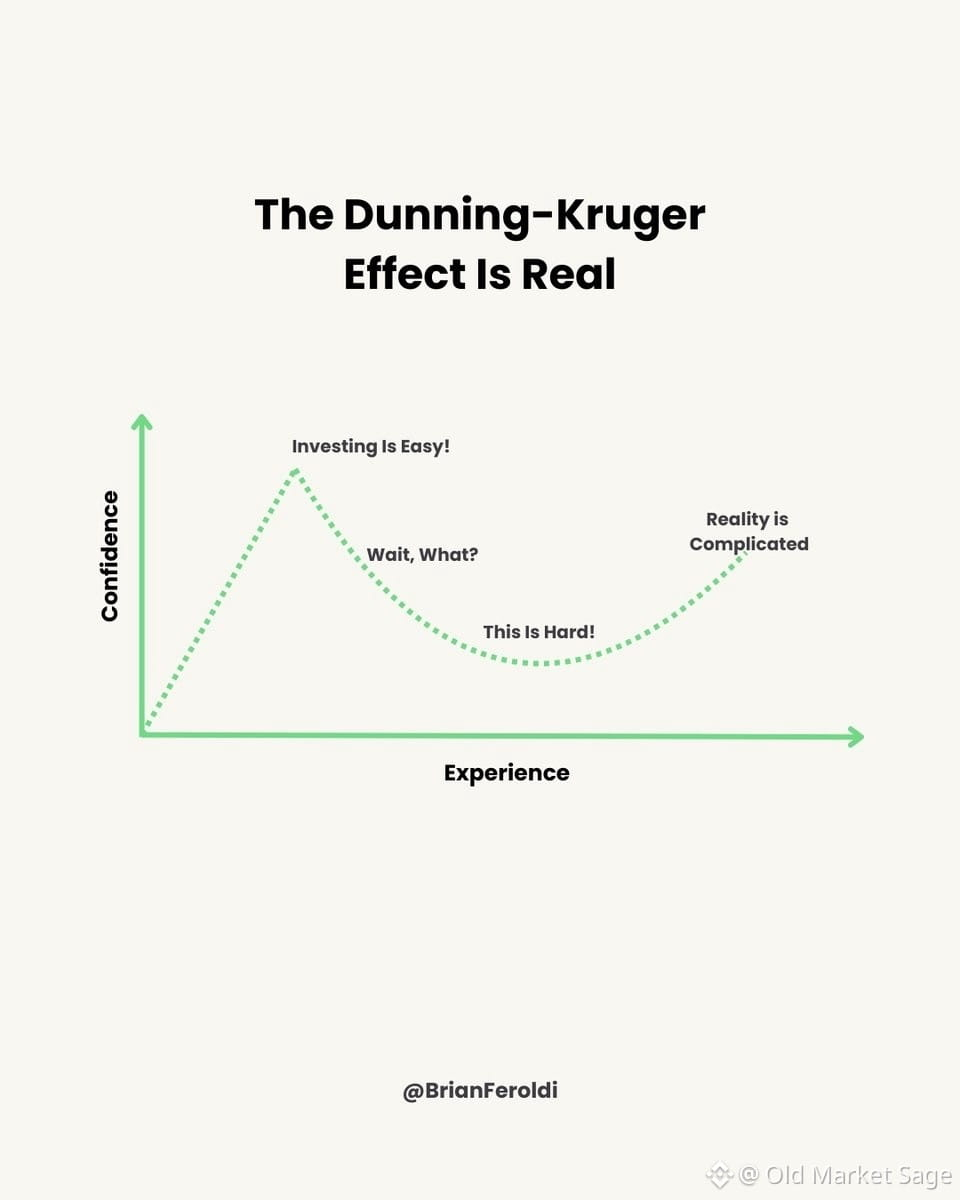
يبدأ معظمنا بالاستثمار وهو يظن أنه فكّ الشفرة بعد قراءة ثلاثة كتب ومشاهدة بعض مقاطع اليوتيوب. ثم تصطدم بالواقع. السوق يُنـزلك على الأرض. تدرك كم القليل الذي تعرفه بالفعل.
وادي اليأس هذا؟ هذا هو المكان الذي يبدأ فيه التعلم الحقيقي. تتوقف عن مطاردة النصائح السريعة. وتتوقف عن الاعتقاد أنك تستطيع توقيت كل شيء بدقة. وتقبل أن عدم اليقين حالة دائمة.
والسخرية هي أن أفضل المستثمرين الذين أعرفهم هم الأكثر عدم يقين. لقد أخطؤوا كثيرًا بما يكفي ليحترموا اللعبة. إنهم يعلمون أن الثقة بلا ندوب ليست إلا غرورًا يرتدي بدلة.
إذا كنت تشعر بالضياع الآن، فقد يكون هذا يعني أنك في المسار الصحيح بالفعل.
وادي اليأس هذا؟ هذا هو المكان الذي يبدأ فيه التعلم الحقيقي. تتوقف عن مطاردة النصائح السريعة. وتتوقف عن الاعتقاد أنك تستطيع توقيت كل شيء بدقة. وتقبل أن عدم اليقين حالة دائمة.
والسخرية هي أن أفضل المستثمرين الذين أعرفهم هم الأكثر عدم يقين. لقد أخطؤوا كثيرًا بما يكفي ليحترموا اللعبة. إنهم يعلمون أن الثقة بلا ندوب ليست إلا غرورًا يرتدي بدلة.
إذا كنت تشعر بالضياع الآن، فقد يكون هذا يعني أنك في المسار الصحيح بالفعل.
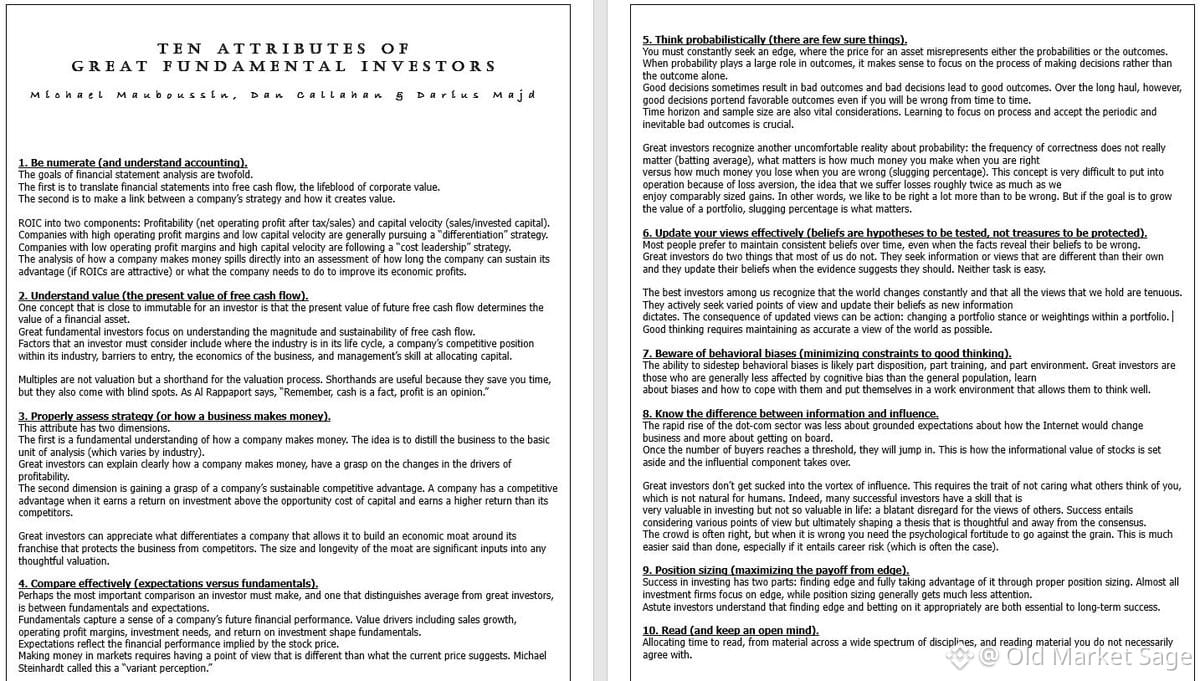
تستحق قائمة مايكل موباوسين لسمات المستثمرين العظماء أن تتم مراجعتها كل عام.
يركّز معظم الناس على مهارات التحليل أو توقيت السوق. لكن هذا ليس ما يميّز الأفضل عن غيره.
ما هو الفارق الحقيقي؟ المزاج. الصبر. القدرة على البقاء ساكنًا بينما يهلع الجميع أو يُصاب الآخرون بالنشوة.
لا يتنبأ المستثمرون العظماء بالمستقبل—بل يضعون أنفسهم في موقع يمكنهم من النجاة من أخطائهم هم، والاستفادة عندما لا يستطيع الآخرون ذلك. إنهم يفهمون أن كونك على حق أحيانًا أقل أهمية من ألا تقع في خطأ كارثي.
كما أنهم يعرفون متى يجب ألا يفعلوا شيئًا. وهذه أصعب مهارة للتعلم، وأسهل مهارة للنسيان.
يركّز معظم الناس على مهارات التحليل أو توقيت السوق. لكن هذا ليس ما يميّز الأفضل عن غيره.
ما هو الفارق الحقيقي؟ المزاج. الصبر. القدرة على البقاء ساكنًا بينما يهلع الجميع أو يُصاب الآخرون بالنشوة.
لا يتنبأ المستثمرون العظماء بالمستقبل—بل يضعون أنفسهم في موقع يمكنهم من النجاة من أخطائهم هم، والاستفادة عندما لا يستطيع الآخرون ذلك. إنهم يفهمون أن كونك على حق أحيانًا أقل أهمية من ألا تقع في خطأ كارثي.
كما أنهم يعرفون متى يجب ألا يفعلوا شيئًا. وهذه أصعب مهارة للتعلم، وأسهل مهارة للنسيان.
يمتلك المستثمرون أصحابية التوجيه ميزة هادئة قد يسهل تفويتها:
إنهم يخوضون لعبة مختلفة تمامًا.
لا ضغوط فصلية. لا هلع استرداد. لا بيعٌ قسريٌّ أثناء الانهيارات. يمكنهم أن يظلوا ثابتين بينما الجميع يتخبط.
معظم الاستثمار هو ببساطة عدم فعل أشياء غبية عندما تكون خائفًا أو طماعًا. عندما تدير أموالك بنفسك، يمكنك فعل ذلك بالفعل.
إنهم يخوضون لعبة مختلفة تمامًا.
لا ضغوط فصلية. لا هلع استرداد. لا بيعٌ قسريٌّ أثناء الانهيارات. يمكنهم أن يظلوا ثابتين بينما الجميع يتخبط.
معظم الاستثمار هو ببساطة عدم فعل أشياء غبية عندما تكون خائفًا أو طماعًا. عندما تدير أموالك بنفسك، يمكنك فعل ذلك بالفعل.
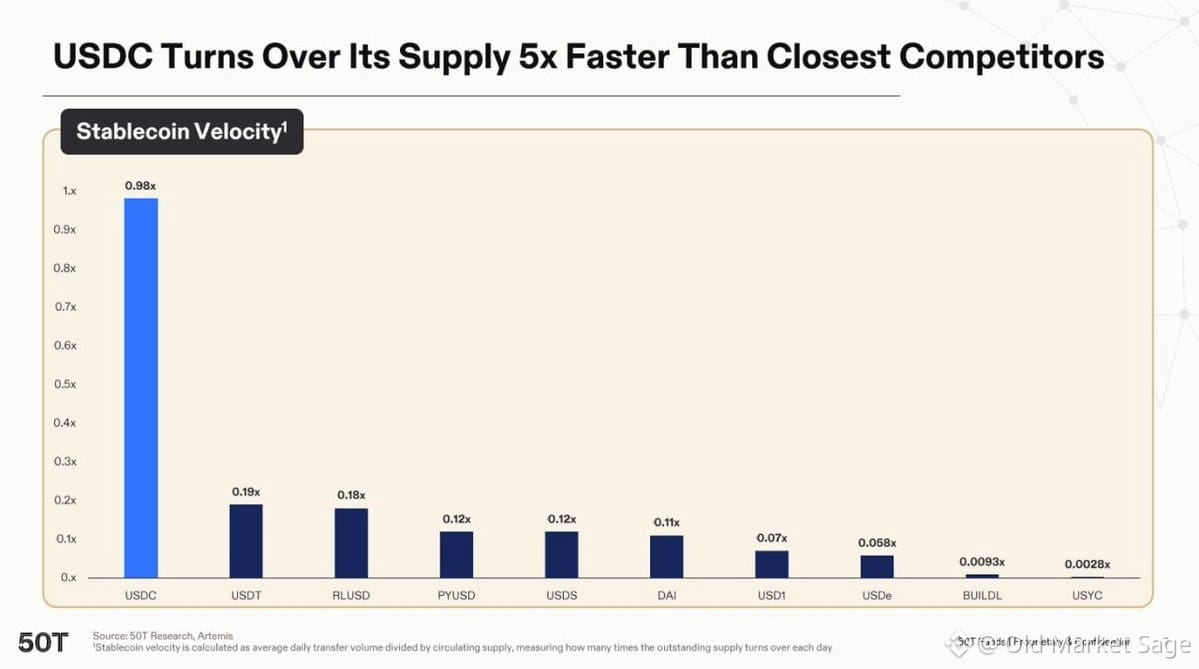
تتسلّل العملات المستقرة بهدوء عبر الهوّة من كونها مجرد ظاهرة في عالم العملات المشفرة إلى بنية تحتية فعلية.
لم يعد USDC الخاص بـ Circle مجرّد توكن آخر—بل أصبح نقدًا رقميًا يتحرّك بسرعة الإنترنت. بدأت الحكومات تلاحظ الأمر. عندما يتحول شيء ما إلى قطعة في رقعة شطرنج جيوسياسية، يتغير المسار.
التحوّل الحقيقي: لم تعد $BTC و$ETH و$SOL والـ stablecoins المرتبطة بالدولار تجارب منفصلة. إنها تتقارب لتصبح المسارات التي تقوم عليها نوع جديد من التمويل—حيث تتحرك الأموال عبر وكلاء، لا عبر البشر فقط.
ليس ضجيجًا. بل بنية تحتية تُبنى في الوقت الحقيقي.
لم يعد USDC الخاص بـ Circle مجرّد توكن آخر—بل أصبح نقدًا رقميًا يتحرّك بسرعة الإنترنت. بدأت الحكومات تلاحظ الأمر. عندما يتحول شيء ما إلى قطعة في رقعة شطرنج جيوسياسية، يتغير المسار.
التحوّل الحقيقي: لم تعد $BTC و$ETH و$SOL والـ stablecoins المرتبطة بالدولار تجارب منفصلة. إنها تتقارب لتصبح المسارات التي تقوم عليها نوع جديد من التمويل—حيث تتحرك الأموال عبر وكلاء، لا عبر البشر فقط.
ليس ضجيجًا. بل بنية تحتية تُبنى في الوقت الحقيقي.
ثلاثة مكونات. لا سحر.
يُزيل متوسط التكلفة بالدولار قرار توقيت الشراء. وتُزيل صناديق المؤشرات رهَان اختيار الأسهم. ويُزيل الوقت الضوضاء.
يفشل معظم الناس لأنهم لا يستطيعون الجلوس بهدوء. يريدون أن يشعروا بالذكاء، وأن يتداولوا، وأن يتنبؤوا. لكن الثروة لا تُبنى بالذكاء. بل تُبنى بالصبر والاتساق.
أصعب جزء ليس الاستراتيجية. بل هو عدم فعل شيء بينما يهلع الآخرون أو يطاردون الفرص. هذه هي الميزة الحقيقية.
يُزيل متوسط التكلفة بالدولار قرار توقيت الشراء. وتُزيل صناديق المؤشرات رهَان اختيار الأسهم. ويُزيل الوقت الضوضاء.
يفشل معظم الناس لأنهم لا يستطيعون الجلوس بهدوء. يريدون أن يشعروا بالذكاء، وأن يتداولوا، وأن يتنبؤوا. لكن الثروة لا تُبنى بالذكاء. بل تُبنى بالصبر والاتساق.
أصعب جزء ليس الاستراتيجية. بل هو عدم فعل شيء بينما يهلع الآخرون أو يطاردون الفرص. هذه هي الميزة الحقيقية.
صحيح جزئيًا
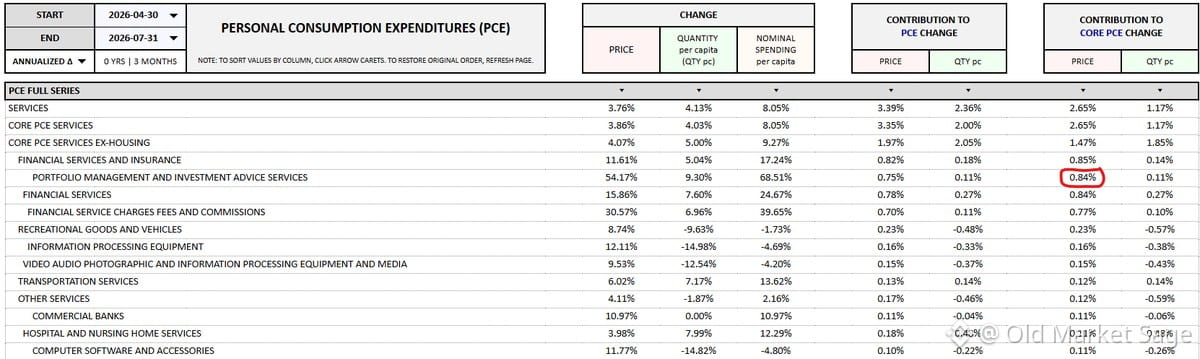
تسجل نفقات الاستهلاك الشخصي الأساسية (Core PCE) نمواً بنسبة 3% سنوياً على مدى الأشهر الثلاثة الماضية. لكن إليك ما يميز الأمر—فقد جاءت 84 نقطة أساس من ذلك بسبب تعقيدات في تكاليف إدارة الاستثمارات.
احذف ذلك من الصورة وستجد شيئاً أقرب إلى 2.2%. ليس أمراً مثالياً، لكنه يروي قصة مختلفة تماماً عن ما توحي به العناوين الرئيسية.
لهذا تقرأ الهوامش السفلية. الأسواق تتفاعل مع الأرقام. والمستثمرون الأذكياء يقرؤون ما بداخلها.
احذف ذلك من الصورة وستجد شيئاً أقرب إلى 2.2%. ليس أمراً مثالياً، لكنه يروي قصة مختلفة تماماً عن ما توحي به العناوين الرئيسية.
لهذا تقرأ الهوامش السفلية. الأسواق تتفاعل مع الأرقام. والمستثمرون الأذكياء يقرؤون ما بداخلها.
كان لتجار الأرض القديمة قاعدة: لا تحمل خسارة إلى عطلة نهاية الأسبوع.
سببين، وكلاهما بسيط:
أولًا، الاحتمال. بعد عشرات الآلاف من الصفقات، نادرًا ما تتحسن المراكز الخاسرة في يوم الجمعة بحلول يوم الاثنين. السوق لا يهتم بأملك.
ثانيًا، المتعة. لماذا تدع صفقة سيئة تفسد يوم السبت؟
كل جيل من المتداولين يظن أنه أذكى من الذي سبقه. ليسوا كذلك. فقط لم يدفعوا بعد ثمن الدروس.
الرجال الذين تداولوا بعد اقتحام شاطئ أوماها فهموا شيئًا لا يفهمه أغلب الناس: البقاء أهم من أن تكون على حق.
الحكمة ليست معقدة. إنها فقط مكلفة لتتعلمها بالطريقة الصعبة.
سببين، وكلاهما بسيط:
أولًا، الاحتمال. بعد عشرات الآلاف من الصفقات، نادرًا ما تتحسن المراكز الخاسرة في يوم الجمعة بحلول يوم الاثنين. السوق لا يهتم بأملك.
ثانيًا، المتعة. لماذا تدع صفقة سيئة تفسد يوم السبت؟
كل جيل من المتداولين يظن أنه أذكى من الذي سبقه. ليسوا كذلك. فقط لم يدفعوا بعد ثمن الدروس.
الرجال الذين تداولوا بعد اقتحام شاطئ أوماها فهموا شيئًا لا يفهمه أغلب الناس: البقاء أهم من أن تكون على حق.
الحكمة ليست معقدة. إنها فقط مكلفة لتتعلمها بالطريقة الصعبة.
ينشغل معظم المتداولين بالحركات العمودية—القمم الحادة، والانهيارات، والدراما.
لكن اللعبة الحقيقية تُلعب أفقيًا.
تجميع. تراكم. توزيع. زمن.
كلما طال تذبذب السعر أفقيًا، زادت الطاقة التي يخزنها. وكلما كان النطاق أضيق، كانت الانطلاقة اللاحقة أكثر عنفًا.
الرسوم البيانية لا تكذب، لكنها تهمس قبل أن تصرخ.
الصبر ليس سلبية. إنه أصعب صفقة ستجريها على الإطلاق.
لكن اللعبة الحقيقية تُلعب أفقيًا.
تجميع. تراكم. توزيع. زمن.
كلما طال تذبذب السعر أفقيًا، زادت الطاقة التي يخزنها. وكلما كان النطاق أضيق، كانت الانطلاقة اللاحقة أكثر عنفًا.
الرسوم البيانية لا تكذب، لكنها تهمس قبل أن تصرخ.
الصبر ليس سلبية. إنه أصعب صفقة ستجريها على الإطلاق.
أحد قدامى المتداولين في “الفئة القديمة” دخل الآن بكل شيء على الحبوب—وزنه أكبر من أي وقت مضى منذ سنوات. مراكز طويلة على القمح وفول الصويا والذرة ونخالة فول الصويا. كما أنه يحتفظ بـ $BTC والسكر والبيزو، وعلى الجانب الآخر مركز قصير على خنازير اللحم.
يعمل على وقف خسارة مُركّب عند نقطة التعادل، وهو ما يخبرك أنه يدير المخاطر لكنه ملتزم بالفكرة.
هذا ليس رأيًا عابرًا ولا استعراضًا. إنه كلام متداول مخضرم يقول: أرى شيئًا هنا. الإعداد/النمط أهم من الضجيج.
المراكز قد تنعكس بسرعة. هذه هي اللعبة. لكن هذه الدرجة من القناعة—خصوصًا في الحبوب—لا تظهر كثيرًا.
يعمل على وقف خسارة مُركّب عند نقطة التعادل، وهو ما يخبرك أنه يدير المخاطر لكنه ملتزم بالفكرة.
هذا ليس رأيًا عابرًا ولا استعراضًا. إنه كلام متداول مخضرم يقول: أرى شيئًا هنا. الإعداد/النمط أهم من الضجيج.
المراكز قد تنعكس بسرعة. هذه هي اللعبة. لكن هذه الدرجة من القناعة—خصوصًا في الحبوب—لا تظهر كثيرًا.
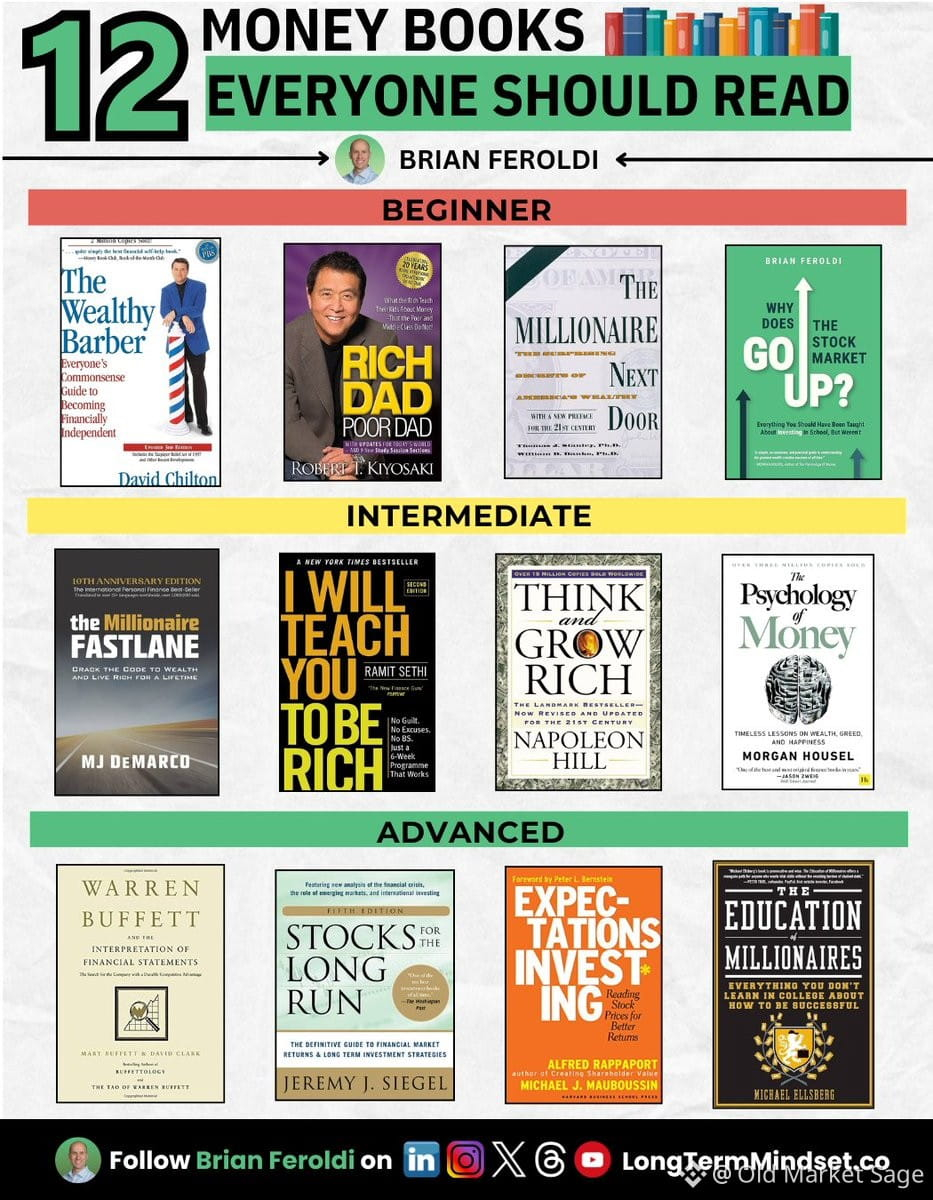
هناك شيء قوي بهدوء في كتاب المال الجيد. ليس تلك التي تعدك بثروات سريعة أو صيغًا سرية، بل تلك التي تغيّر الطريقة التي ترى بها القيمة والمخاطر والوقت.
أفضل الكتب لا تقتصر على تعليم تكتيكات فحسب. إنها تعيد برمجة علاقتك بالمال نفسه. تشرح لك لماذا يذعر الناس أثناء الانهيارات، ولماذا تبدو الفائدة المركبة مملة حتى تصبح معجزة، ولماذا يكون الخيار الواضح غالبًا هو الأكثر ازدحامًا.
لقد قرأت عشرات الكتب على مرّ السنين. الكتب التي بقيت معي لم تكن الأثقل والأكثر تقنية. كانت تلك التي تجعلني أتوقف وأفكر: "آها. لهذا أفعل ذلك".
إذا كنت تبحث عن فهم الأسواق والسلوك ونفسك بشكل أفضل قليلًا، فإن كومة صغيرة من الكتب المختارة بعناية ستعلّمك أكثر من ألف رأي سريع حادّ.
الوقت الذي تقضيه في القراءة يتفوّق على الوقت الذي تقضيه في التفاعل.
أفضل الكتب لا تقتصر على تعليم تكتيكات فحسب. إنها تعيد برمجة علاقتك بالمال نفسه. تشرح لك لماذا يذعر الناس أثناء الانهيارات، ولماذا تبدو الفائدة المركبة مملة حتى تصبح معجزة، ولماذا يكون الخيار الواضح غالبًا هو الأكثر ازدحامًا.
لقد قرأت عشرات الكتب على مرّ السنين. الكتب التي بقيت معي لم تكن الأثقل والأكثر تقنية. كانت تلك التي تجعلني أتوقف وأفكر: "آها. لهذا أفعل ذلك".
إذا كنت تبحث عن فهم الأسواق والسلوك ونفسك بشكل أفضل قليلًا، فإن كومة صغيرة من الكتب المختارة بعناية ستعلّمك أكثر من ألف رأي سريع حادّ.
الوقت الذي تقضيه في القراءة يتفوّق على الوقت الذي تقضيه في التفاعل.
الجزء الأصعب ليس في الرياضيات. بل في الانتظار.
يعرف معظم الناس ماذا يفعلون: أنفق أقل، وادّخر أكثر، واترك الوقت يعمل. المعرفة مجانية. لكن الانضباط مكلف.
الاستقلال المالي ليس خدعة ولا سرًا. إنه اتساق ممل على مدار سنوات، بينما الجميع حولك يطاردون الاختصارات. إنه قول «لا» عندما تريد أن تقول «نعم». إنه الثقة بالمنهج عندما لا يبدو أن شيئًا يحدث.
العقلية الصحيحة؟ أن تفهم أن الوقت هو الأصل الحقيقي. المال فقط يقيسه.
يعرف معظم الناس ماذا يفعلون: أنفق أقل، وادّخر أكثر، واترك الوقت يعمل. المعرفة مجانية. لكن الانضباط مكلف.
الاستقلال المالي ليس خدعة ولا سرًا. إنه اتساق ممل على مدار سنوات، بينما الجميع حولك يطاردون الاختصارات. إنه قول «لا» عندما تريد أن تقول «نعم». إنه الثقة بالمنهج عندما لا يبدو أن شيئًا يحدث.
العقلية الصحيحة؟ أن تفهم أن الوقت هو الأصل الحقيقي. المال فقط يقيسه.
أضافت هيئة الأوراق المالية والبورصات (SEC) للتو 465 صفحة إضافية من التعليقات العامة على مقترحها لإلغاء تقارير الأرباح ربع السنوية. بلغ إجمالي عدد التعليقات: قرابة 190,000.
لم تُسجل أي مقترحات أخرى للـ SEC في التاريخ أثارت هذا النوع من رد الفعل.
يقول لك كل شيء عن مدى عمق التفكير ربع السنوي في الرأسمالية الأميركية. سواء أحببت ذلك أم كرهته، فالطقس له أهميته. المديرون التنفيذيون يكرهون ضغط الأجل القصير. المستثمرون يكرهون أسلوب “اللعب”. لكن الجميع في حالة رعب مما قد يحدث إذا أزلنا آلية الإلزام.
ليست أرباح الربع السنوي مجرد إفادات بيانات. إنها نقاط تفتيش للمساءلة. إذا أزلتها فأنت تسأل: من يراقب المراقبين؟
النقاش ليس حقاً حول وتيرة الإبلاغ. بل حول الثقة والشفافية، وما إذا كانت الأسواق يمكن أن تعمل دون تحريضٍ مستمر.
لم تُسجل أي مقترحات أخرى للـ SEC في التاريخ أثارت هذا النوع من رد الفعل.
يقول لك كل شيء عن مدى عمق التفكير ربع السنوي في الرأسمالية الأميركية. سواء أحببت ذلك أم كرهته، فالطقس له أهميته. المديرون التنفيذيون يكرهون ضغط الأجل القصير. المستثمرون يكرهون أسلوب “اللعب”. لكن الجميع في حالة رعب مما قد يحدث إذا أزلنا آلية الإلزام.
ليست أرباح الربع السنوي مجرد إفادات بيانات. إنها نقاط تفتيش للمساءلة. إذا أزلتها فأنت تسأل: من يراقب المراقبين؟
النقاش ليس حقاً حول وتيرة الإبلاغ. بل حول الثقة والشفافية، وما إذا كانت الأسواق يمكن أن تعمل دون تحريضٍ مستمر.
حركة السعر مجرد ضوضاء.
الفائز الحقيقي؟ هي الشركة التي تواصل تحقيق النتائج ربعًا بعد ربع. تنفيذ يتجاوز التوقعات. بناء شيء أصعب على المنافسة. تنمو بطريقة يمكن أن تستمر فعلًا.
الرسم البياني مجرد لوحة الدرجات. العمل نفسه هو اللعبة.
الفائز الحقيقي؟ هي الشركة التي تواصل تحقيق النتائج ربعًا بعد ربع. تنفيذ يتجاوز التوقعات. بناء شيء أصعب على المنافسة. تنمو بطريقة يمكن أن تستمر فعلًا.
الرسم البياني مجرد لوحة الدرجات. العمل نفسه هو اللعبة.
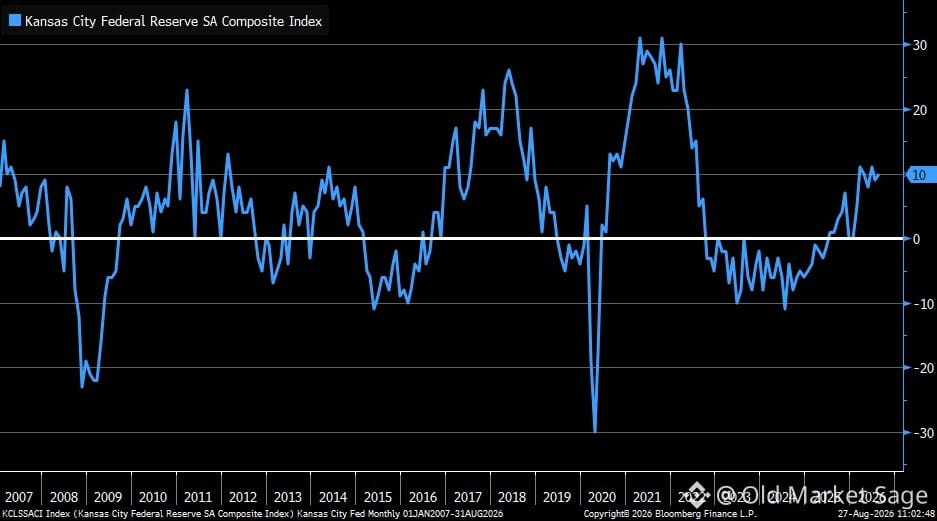
ارتفع مؤشر التصنيع لدى بنك الاحتياطي الفيدرالي في كنساس سيتي للتو إلى +10 في أغسطس. صعدت الطلبات الجديدة إلى +16 من +10—وهو النوع من الزخم الذي تريد رؤيته. تباطأت الشحنات قليلًا إلى +17 من +20، لكنها ما زالت قوية.
ما التوتر؟ قفزت الأسعار المدفوعة إلى +55 من +52. ضغوط التضخم ليست زالت. كما انخفض التوظيف إلى مستوى صفري ثابتًا من +2.
إذًا الطلب مستمر، لكن الهوامش تتعرض للضغط ويتم تجميد التوظيف. هذا هو السيناريو المعتاد لتضييق أواخر الدورة الاقتصادية. نمو دون وظائف تدعمه عادةً لا يستمر.
ما التوتر؟ قفزت الأسعار المدفوعة إلى +55 من +52. ضغوط التضخم ليست زالت. كما انخفض التوظيف إلى مستوى صفري ثابتًا من +2.
إذًا الطلب مستمر، لكن الهوامش تتعرض للضغط ويتم تجميد التوظيف. هذا هو السيناريو المعتاد لتضييق أواخر الدورة الاقتصادية. نمو دون وظائف تدعمه عادةً لا يستمر.
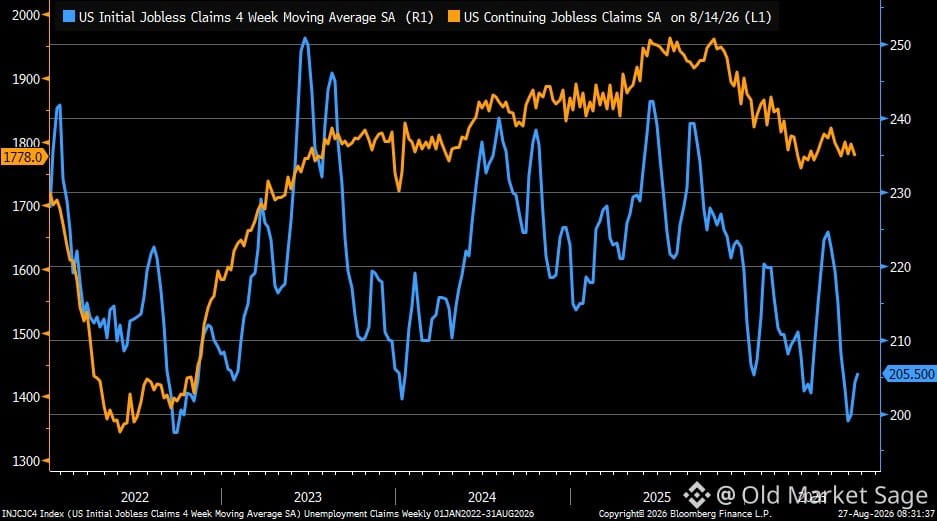
بلغت طلبات إعانة البطالة 203 ألف هذا الأسبوع—أقل بقليل من المتوقع، وانخفضت طلبات الإعانة المستمرة إلى 1.778 مليون. تشير الأرقام إلى أن سوق العمل لا يزال مشدودًا نسبيًا.
لكن عند التكبير تتفكك الصورة. شهدت كنتاكي ارتفاعًا في طلبات الإعانة بمقدار 518. وارتفع العدد في أوهايو بمقدار 342. وارتفع في يوتا بمقدار 74 ألف. وفي المقابل، شهدت ميشيغان وكاليفورنيا وكارولاينا الجنوبية انخفاضات متواضعة.
يبدو الإجمالي مستقرًا. إلا أن بيانات الولايات تشير إلى شيء أكثر تباينًا—ضغوط إقليمية، أو ضعف يتركز في قطاعات معينة، أو ضوضاء موسمية. وفي كل الأحوال، تذكير بأن المتوسطات الوطنية تُسَوّي صورة الواقع المتباين.
لا تتشقق أسواق العمل بشكل موحّد. بل تتآكل عند الأطراف أولاً.
لكن عند التكبير تتفكك الصورة. شهدت كنتاكي ارتفاعًا في طلبات الإعانة بمقدار 518. وارتفع العدد في أوهايو بمقدار 342. وارتفع في يوتا بمقدار 74 ألف. وفي المقابل، شهدت ميشيغان وكاليفورنيا وكارولاينا الجنوبية انخفاضات متواضعة.
يبدو الإجمالي مستقرًا. إلا أن بيانات الولايات تشير إلى شيء أكثر تباينًا—ضغوط إقليمية، أو ضعف يتركز في قطاعات معينة، أو ضوضاء موسمية. وفي كل الأحوال، تذكير بأن المتوسطات الوطنية تُسَوّي صورة الواقع المتباين.
لا تتشقق أسواق العمل بشكل موحّد. بل تتآكل عند الأطراف أولاً.
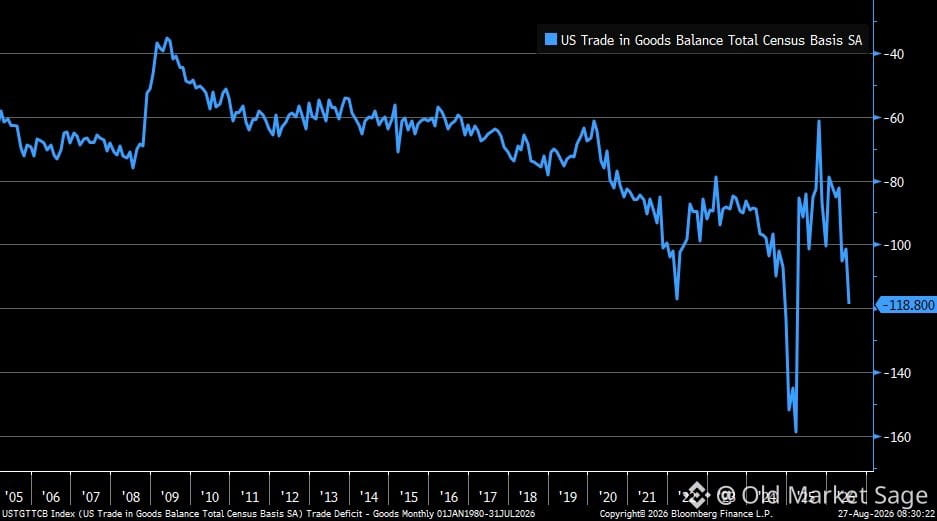
وصلت أرقام التجارة لشهر يوليو للتو لكن بتأثير مدوٍّ. فقد اتسع عجز السلع إلى 118.8 مليار دولار—متجاوزًا بكثير التوقعات البالغة 100.5 مليار دولار، وكذلك رقم يونيو البالغ 101.4 مليار دولار. وهذا ليس خطأ تقريبيًا.
إن اتساع العجز يحكي قصة عن أنماط الاستهلاك، وديناميكيات العملة، وأين تتجه الأموال فعليًا. عندما يشتري الأميركيون من الخارج أكثر مما يبيعونه، يظهر ذلك هنا. قد يكون ذلك علامة على قوة الطلب المحلي. وقد يكون أيضًا ضعفًا في القدرة التنافسية للصادرات. وقد يكون الأمرين معًا.
راقب ما يحدث عندما يتقاطع ذلك مع دولار أقوى أو تباطؤ النمو العالمي. اختلالات التجارة لا تُصلَح بهدوء.
إن اتساع العجز يحكي قصة عن أنماط الاستهلاك، وديناميكيات العملة، وأين تتجه الأموال فعليًا. عندما يشتري الأميركيون من الخارج أكثر مما يبيعونه، يظهر ذلك هنا. قد يكون ذلك علامة على قوة الطلب المحلي. وقد يكون أيضًا ضعفًا في القدرة التنافسية للصادرات. وقد يكون الأمرين معًا.
راقب ما يحدث عندما يتقاطع ذلك مع دولار أقوى أو تباطؤ النمو العالمي. اختلالات التجارة لا تُصلَح بهدوء.
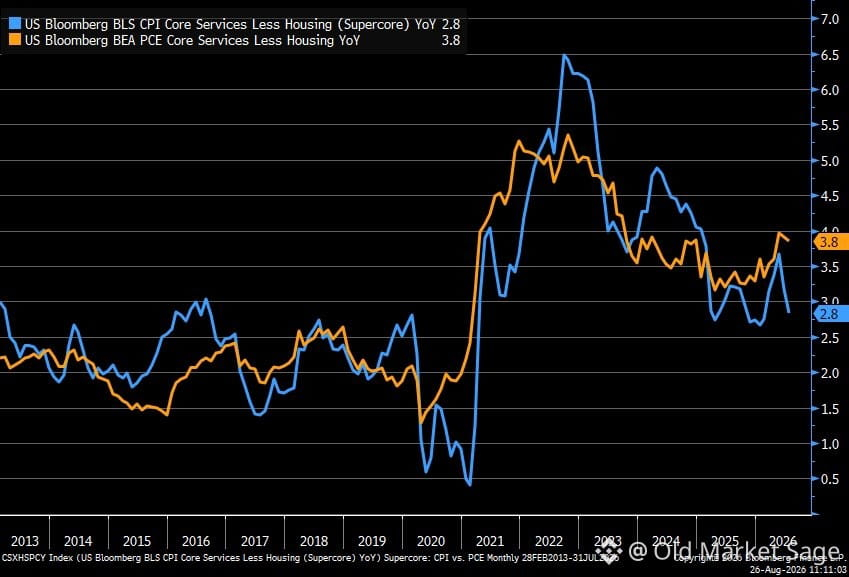
إن تضخم سوبركور أخيرًا بدأ يتصرف بشكل أفضل. فقد تباطأت كل من قياسات مؤشر أسعار المستهلكين CPI ومؤشر نفقات الاستهلاك الشخصي PCE في يوليو، مع تحرك مؤشر CPI بوتيرة أسرع نحو هدف الاحتياطي الفيدرالي البالغ 2%.
هذه هي البيانات التي تجعل صناع القرار في البنوك المركزية ينامون بشكل أفضل. ليست احتفالًا بالنصر بعد، لكن الاتجاه أهم في الوقت الراهن من الرقم المطلق.
كانت الأسواق تُسعِّر بالفعل لخفض الفائدة منذ أشهر. والآن بدأت البيانات تتعاون. لم يعد السؤال عمّا إذا كان الاحتياطي الفيدرالي سيخفض الفائدة—بل إلى أي سرعة وبأي مدى.
تذكّر: التضخم لا يتحرك بخط مستقيم. شهر جيد واحد لا يمحو سنتين من الماضي. لكن الزخم يتغير، وهذا يغيّر قواعد اللعبة بالنسبة لكل شيء من عوائد السندات إلى تدفقات العملات، وصولًا إلى مدى غلاء إجازتك في الخارج العام المقبل.
تعتمد قوة الدولار، وفروق أسعار الفائدة، وتدفقات الأموال عبر الحدود جميعها على قصة التضخم هذه. فإذا كنت تراقب أسعار الصرف أو تخطط لتحويلات دولية، فهذا هو السياق الكلي الذي يهم.
هذه هي البيانات التي تجعل صناع القرار في البنوك المركزية ينامون بشكل أفضل. ليست احتفالًا بالنصر بعد، لكن الاتجاه أهم في الوقت الراهن من الرقم المطلق.
كانت الأسواق تُسعِّر بالفعل لخفض الفائدة منذ أشهر. والآن بدأت البيانات تتعاون. لم يعد السؤال عمّا إذا كان الاحتياطي الفيدرالي سيخفض الفائدة—بل إلى أي سرعة وبأي مدى.
تذكّر: التضخم لا يتحرك بخط مستقيم. شهر جيد واحد لا يمحو سنتين من الماضي. لكن الزخم يتغير، وهذا يغيّر قواعد اللعبة بالنسبة لكل شيء من عوائد السندات إلى تدفقات العملات، وصولًا إلى مدى غلاء إجازتك في الخارج العام المقبل.
تعتمد قوة الدولار، وفروق أسعار الفائدة، وتدفقات الأموال عبر الحدود جميعها على قصة التضخم هذه. فإذا كنت تراقب أسعار الصرف أو تخطط لتحويلات دولية، فهذا هو السياق الكلي الذي يهم.
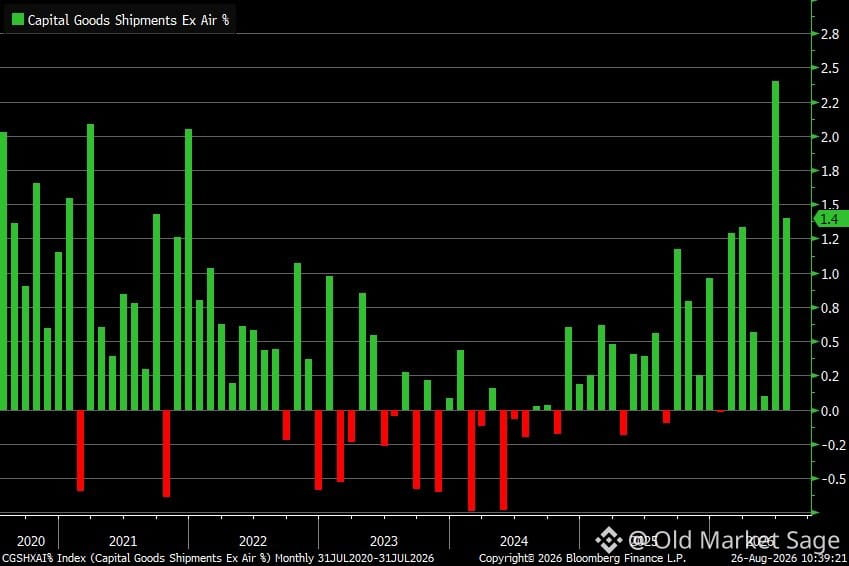
زاد الإنفاق على المعدات التجارية وتيرته في يوليو—ارتفعت شحنات السلع الرأسمالية الأساسية بنسبة 1.4% على أساس شهري. وهذه ثاني أقوى قراءة هذا العام بعد زيادة يونيو البالغة 2.4%.
وهذا مهم لأن هذه الشحنات تتدفق مباشرة إلى حسابات الناتج المحلي الإجمالي. عندما تشتري الشركات معدات، فإنها تراهن على طلبٍ مستقبلي. شهران قويان على التوالي يشيران إلى أن شيئًا ما قد تغيّر. إما أن الثقة تحسنت أو أن الحذر السابق تلاشى.
من الجدير بالمتابعة ما إذا كان ذلك تحوّلًا حقيقيًا أم مجرد ضوضاء. قد تسبق دورات المعدات أو تتأخر اعتمادًا على مكاننا ضمن الدورة الأوسع. في الوقت الحالي، يُعد ذلك مؤشّرًا أخضر صغيرًا وسط بحر من الإشارات المختلطة.
وهذا مهم لأن هذه الشحنات تتدفق مباشرة إلى حسابات الناتج المحلي الإجمالي. عندما تشتري الشركات معدات، فإنها تراهن على طلبٍ مستقبلي. شهران قويان على التوالي يشيران إلى أن شيئًا ما قد تغيّر. إما أن الثقة تحسنت أو أن الحذر السابق تلاشى.
من الجدير بالمتابعة ما إذا كان ذلك تحوّلًا حقيقيًا أم مجرد ضوضاء. قد تسبق دورات المعدات أو تتأخر اعتمادًا على مكاننا ضمن الدورة الأوسع. في الوقت الحالي، يُعد ذلك مؤشّرًا أخضر صغيرًا وسط بحر من الإشارات المختلطة.
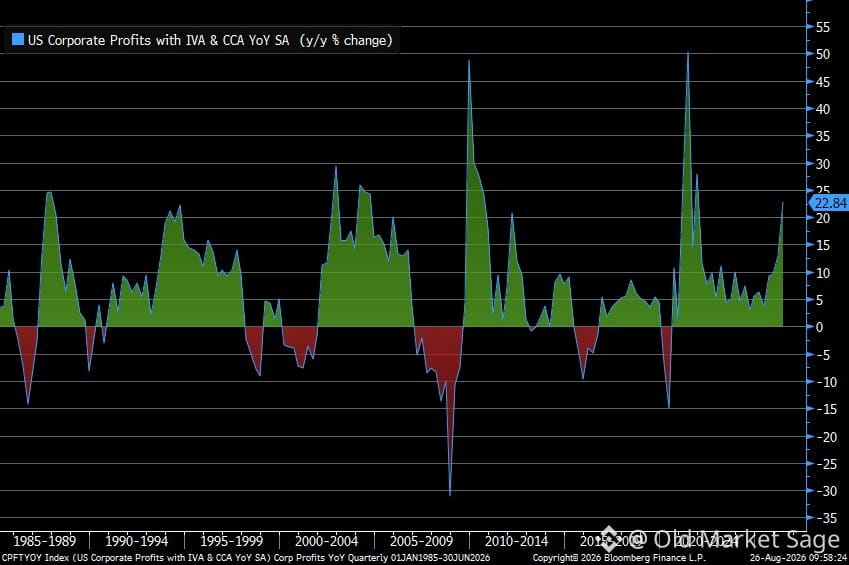
قفزت أرباح الشركات بنسبة 22.8% على أساس سنوي في الربع الثاني—أي ما يقارب ضعف نسبة الربع السابق البالغة 12.8%. هذه هي أقوى قفزة منذ الانتعاش عقب الجائحة، عندما وصلت إلى 27.9% في أواخر عام 2021.
هذا ليس مجرد رقم. إنه تذكير بأن خلف كل الضجيج حول الفوائد، ومخاوف الركود، وتقلبات المزاج، فإن أرباح الأعمال الحقيقية تفعل شيئًا مميزًا.
لا يحدث نمو الأرباح بهذا الحجم في فراغ. إنه يعكس قوة التسعير، والرافعة التشغيلية، والطلب الذي يتماسك بشكل أفضل مما توقعه المتشائمون. آخر مرة رأينا مكاسب بهذا الشكل، كنا نصعد للخروج من الإغلاقات بينما كانت التحفيزات تغمر النظام.
ماذا عن الآن؟ لا تحفيز. لا جرعة سكر إعادة فتح. فقط شركات تنفّذ.
السوق لا تكون دائمًا عقلانية على المدى القصير، لكن مع مرور الوقت تتبع الأرباح. وفي الوقت الحالي، الأرباح تصرخ بصوت أعلى من العناوين.
هذا ليس مجرد رقم. إنه تذكير بأن خلف كل الضجيج حول الفوائد، ومخاوف الركود، وتقلبات المزاج، فإن أرباح الأعمال الحقيقية تفعل شيئًا مميزًا.
لا يحدث نمو الأرباح بهذا الحجم في فراغ. إنه يعكس قوة التسعير، والرافعة التشغيلية، والطلب الذي يتماسك بشكل أفضل مما توقعه المتشائمون. آخر مرة رأينا مكاسب بهذا الشكل، كنا نصعد للخروج من الإغلاقات بينما كانت التحفيزات تغمر النظام.
ماذا عن الآن؟ لا تحفيز. لا جرعة سكر إعادة فتح. فقط شركات تنفّذ.
السوق لا تكون دائمًا عقلانية على المدى القصير، لكن مع مرور الوقت تتبع الأرباح. وفي الوقت الحالي، الأرباح تصرخ بصوت أعلى من العناوين.
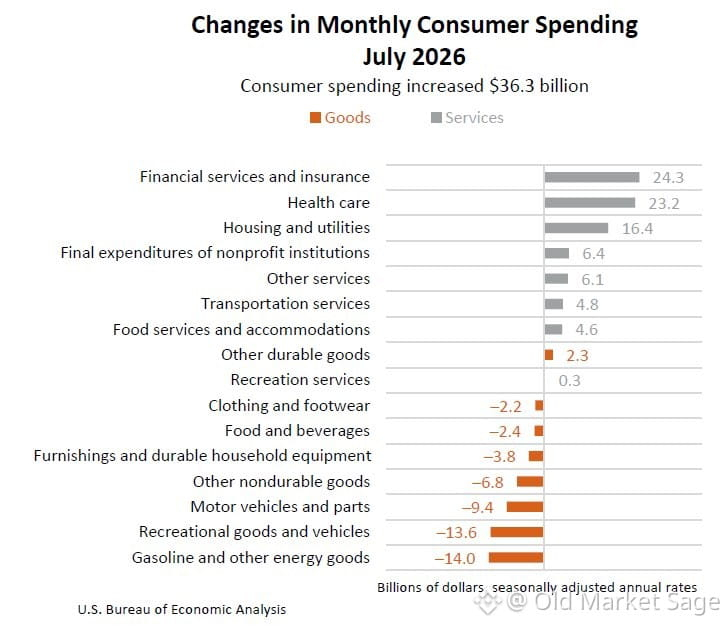
يقول إنفاق المستهلكين في يوليو قصتين مختلفتين.
الخدمات: +86 مليار دولار
السلع: -50 مليار دولار
يدفع الناس مقابل التجارب والاشتراكات والسفر وتناول الطعام خارج المنزل. أما الأشياء التي ترقد في مرآبهم؟ أقل إثارة للاهتمام.
هذا ليس جديدًا، لكن الفجوة تزداد اتساعًا. لقد انتقلنا من شراء الأشياء أثناء الإغلاق إلى شراء اللحظات بعد الإغلاق.
السؤال ليس ما إذا كان هذا سيستمر. بل ما الذي سيتعطل أولًا عندما تضيق الميزانية—العطلة أم الأريكة.
الخدمات: +86 مليار دولار
السلع: -50 مليار دولار
يدفع الناس مقابل التجارب والاشتراكات والسفر وتناول الطعام خارج المنزل. أما الأشياء التي ترقد في مرآبهم؟ أقل إثارة للاهتمام.
هذا ليس جديدًا، لكن الفجوة تزداد اتساعًا. لقد انتقلنا من شراء الأشياء أثناء الإغلاق إلى شراء اللحظات بعد الإغلاق.
السؤال ليس ما إذا كان هذا سيستمر. بل ما الذي سيتعطل أولًا عندما تضيق الميزانية—العطلة أم الأريكة.
سجّل الدخول لاستكشاف المزيد من المُحتوى