
W A R D A N
4k منشورات

W A R D A N
إبلاغ
حظر المُستخدم
331 تتابع
20.1K+ المتابعون
11.0K+ إعجاب
منشورات
الكل
اقتباسات
مقاطع فيديو
Live
·
--
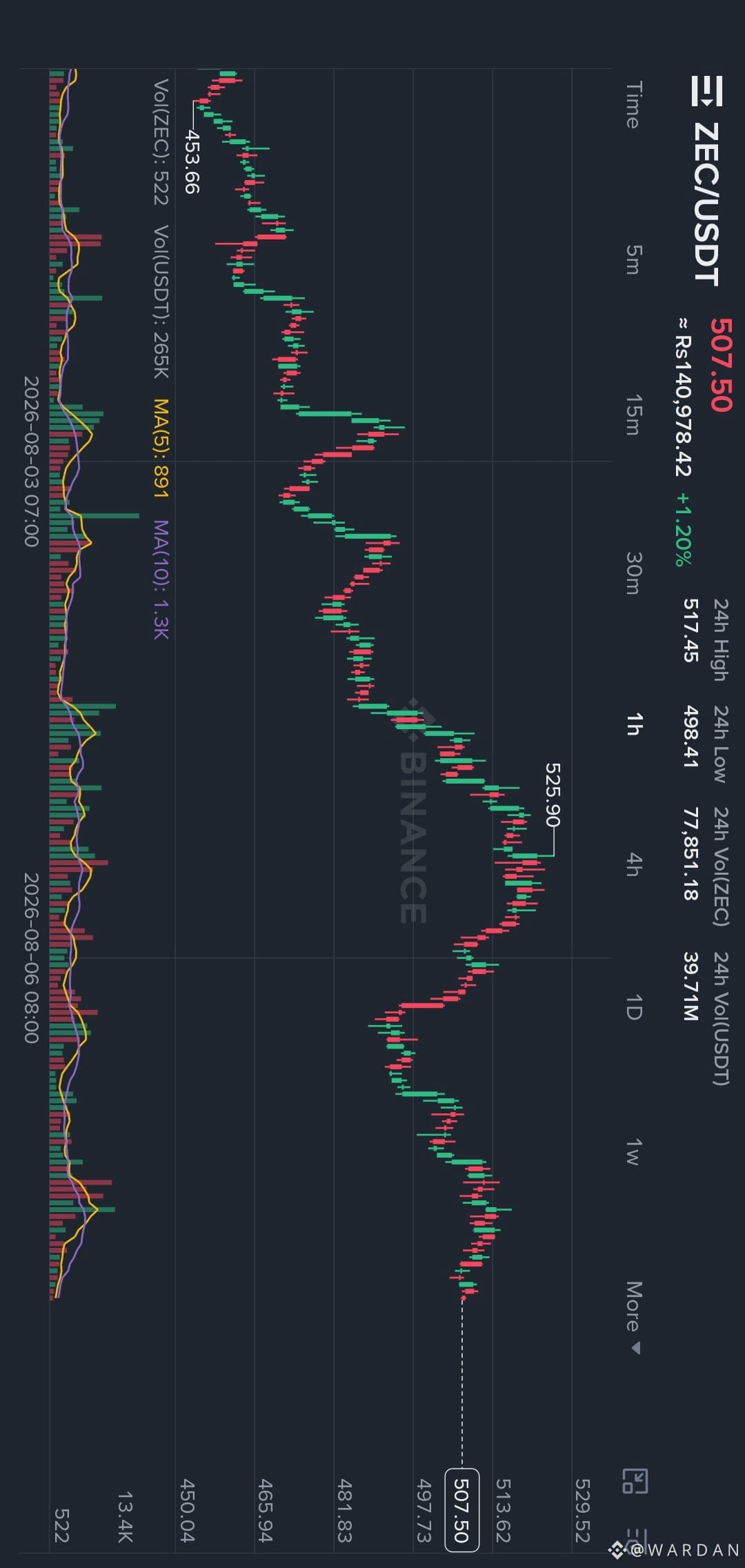
أول شيء جذب انتباهي في $ZEC لم يكن القوة الأخيرة. بل كان المكان الذي تحدث فيه تلك القوة.
لقد كان ZEC يتفوق على BTC ضمن نافذة الـ7 أيام الأوسع، بينما كان أيضًا الاهتمام المفتوح يرتفع. على الورق، يبدو ذلك كمشاركة جديدة. لكن السعر ما زال جالسًا تحت منطقة مقاومة مهمة قرب $525.70، والحجم الحالي لا يتوسع بما يكفي بالنسبة لي لكي أتعامل مع الحركة باعتبارها اختراقًا مؤكدًا.
هذا يغيّر الصفقة بالكامل.
الشراء فقط لأن ZEC يبدو أقوى من BTC يعني الدخول قبل أن يثبت السوق قدرته بالفعل على قبول أسعار أعلى. يمكن لارتفاع OI تحت المقاومة أن يدعم اختراقًا، لكنه قد يخلق أيضًا مراكز محاصَرة إذا فشل المشترون في الدفع للأعلى.
بالنسبة لي، الإعداد الأأنظف هو الصبر.
إذا تمكن ZEC من تحقيق قبول حقيقي فوق $525.70، ثم عاد إلى تلك المنطقة واحتفظ بها كدعم، سيصبح الاختراق أكثر إثارة للاهتمام بكثير. ستمنحني ردّة فعل قوية على إطار 15M/1H من إعادة الاختبار تأكيدًا أفضل من مطاردة أول شمعة خضراء.
ومن الجهة الأخرى، فإن فقدان منطقة ~$498 سيضعف البنية الصعودية ويخبرني أن السوق غير جاهز.
لذا فإن وجهة نظري الحالية صعودية ولكن بشكل مشروط فقط. الميزة ليست “أن ZEC سيضخ”. الميزة هي معرفة بالضبط ما يجب على السعر أن يثبتَه قبل تحمل المخاطرة.
هل ستثق بالاختراق الأول فوق $525.70، أم ستنتظر أن يصمد المستوى بعد إعادة الاختبار قبل اعتباره قبولًا حقيقيًا؟
$ZEC $BTC #cryptotrading #zec
{spot}(ZECUSDT)
أول شيء جذب انتباهي في $ZEC لم يكن القوة الأخيرة. بل كان المكان الذي تحدث فيه تلك القوة.
لقد كان ZEC يتفوق على BTC ضمن نافذة الـ7 أيام الأوسع، بينما كان أيضًا الاهتمام المفتوح يرتفع. على الورق، يبدو ذلك كمشاركة جديدة. لكن السعر ما زال جالسًا تحت منطقة مقاومة مهمة قرب $525.70، والحجم الحالي لا يتوسع بما يكفي بالنسبة لي لكي أتعامل مع الحركة باعتبارها اختراقًا مؤكدًا.
هذا يغيّر الصفقة بالكامل.
الشراء فقط لأن ZEC يبدو أقوى من BTC يعني الدخول قبل أن يثبت السوق قدرته بالفعل على قبول أسعار أعلى. يمكن لارتفاع OI تحت المقاومة أن يدعم اختراقًا، لكنه قد يخلق أيضًا مراكز محاصَرة إذا فشل المشترون في الدفع للأعلى.
بالنسبة لي، الإعداد الأأنظف هو الصبر.
إذا تمكن ZEC من تحقيق قبول حقيقي فوق $525.70، ثم عاد إلى تلك المنطقة واحتفظ بها كدعم، سيصبح الاختراق أكثر إثارة للاهتمام بكثير. ستمنحني ردّة فعل قوية على إطار 15M/1H من إعادة الاختبار تأكيدًا أفضل من مطاردة أول شمعة خضراء.
ومن الجهة الأخرى، فإن فقدان منطقة ~$498 سيضعف البنية الصعودية ويخبرني أن السوق غير جاهز.
لذا فإن وجهة نظري الحالية صعودية ولكن بشكل مشروط فقط. الميزة ليست “أن ZEC سيضخ”. الميزة هي معرفة بالضبط ما يجب على السعر أن يثبتَه قبل تحمل المخاطرة.
هل ستثق بالاختراق الأول فوق $525.70، أم ستنتظر أن يصمد المستوى بعد إعادة الاختبار قبل اعتباره قبولًا حقيقيًا؟
$ZEC $BTC #cryptotrading #zec
لقد كان ZEC يتفوق على BTC ضمن نافذة الـ7 أيام الأوسع، بينما كان أيضًا الاهتمام المفتوح يرتفع. على الورق، يبدو ذلك كمشاركة جديدة. لكن السعر ما زال جالسًا تحت منطقة مقاومة مهمة قرب $525.70، والحجم الحالي لا يتوسع بما يكفي بالنسبة لي لكي أتعامل مع الحركة باعتبارها اختراقًا مؤكدًا.
هذا يغيّر الصفقة بالكامل.
الشراء فقط لأن ZEC يبدو أقوى من BTC يعني الدخول قبل أن يثبت السوق قدرته بالفعل على قبول أسعار أعلى. يمكن لارتفاع OI تحت المقاومة أن يدعم اختراقًا، لكنه قد يخلق أيضًا مراكز محاصَرة إذا فشل المشترون في الدفع للأعلى.
بالنسبة لي، الإعداد الأأنظف هو الصبر.
إذا تمكن ZEC من تحقيق قبول حقيقي فوق $525.70، ثم عاد إلى تلك المنطقة واحتفظ بها كدعم، سيصبح الاختراق أكثر إثارة للاهتمام بكثير. ستمنحني ردّة فعل قوية على إطار 15M/1H من إعادة الاختبار تأكيدًا أفضل من مطاردة أول شمعة خضراء.
ومن الجهة الأخرى، فإن فقدان منطقة ~$498 سيضعف البنية الصعودية ويخبرني أن السوق غير جاهز.
لذا فإن وجهة نظري الحالية صعودية ولكن بشكل مشروط فقط. الميزة ليست “أن ZEC سيضخ”. الميزة هي معرفة بالضبط ما يجب على السعر أن يثبتَه قبل تحمل المخاطرة.
هل ستثق بالاختراق الأول فوق $525.70، أم ستنتظر أن يصمد المستوى بعد إعادة الاختبار قبل اعتباره قبولًا حقيقيًا؟
$ZEC $BTC #cryptotrading #zec
163
·
--
جعلت شراكة Ledger منصة Babylon للبتكوين غير الموثوقة (TBV) تبدو جاهزة لجمهور أوسع من محافظ الأجهزة. لكن تعليمات الشبكة التجريبية الحية تروي قصة أدق.
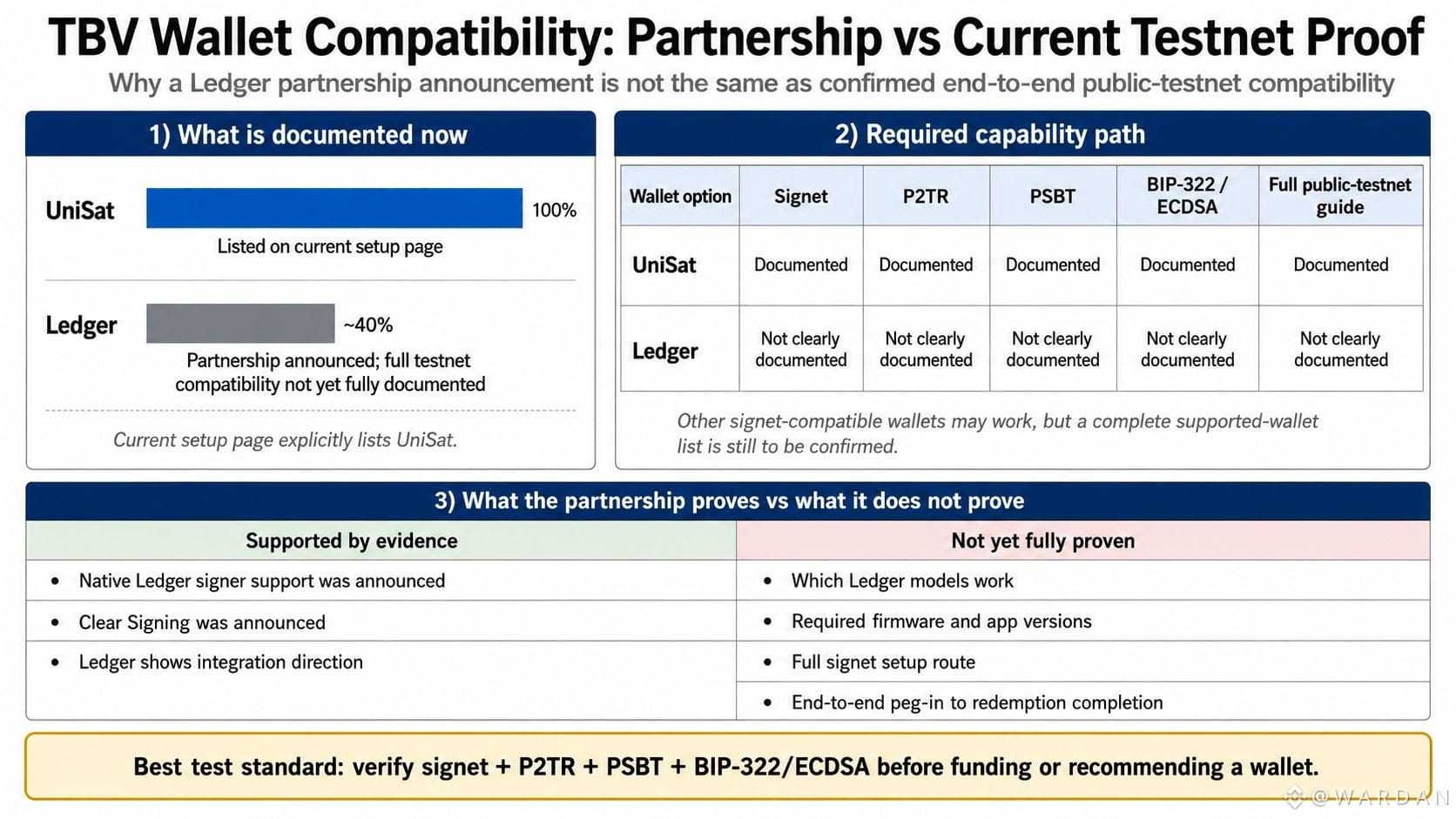
في الوقت الحالي، يعرض كما صفحة الإعداد UniSat ويتطلب محفظة للقيام بأربع مهام محددة: الاتصال بـ Bitcoin signet، وإنشاء عنوان Taproot P2TR، وتوقيع PSBTs، والتحقق عبر BIP-322 أو توقيع رسائل ECDSA.
وهذا التفصيل الذي لم أكن لأتجاوزه.
قد تظل المحفظة قادرة على حفظ البيتكوين بأمان بينما تفشل لاحقًا في تدفق TBV. قد تستقبل BTC الخاصة بـ signet، لكنها تتوقف عند مصادقة البوابة، أو موافقة PSBT، أو peg-in، أو التفعيل. لذلك فإن الشراكة المُعلنة تُظهر الاتجاه، لكنها لا تعني بالضرورة التوافق الحالي الكامل.
لن أخلص إلى أن Ledger لا يمكنه العمل مع @babylonlabs_io . قد تكون الوثائق فقط غير محدثة بالنسبة للمنتج، وقد تكون محافظ أخرى متوافقة مع signet تعمل بالفعل. لكن الأدلة المتاحة لا تزال لا تثبت أي نماذج Ledger أو إصدارات البرامج الثابتة أو طرق التوقيع أو مسارات الاتصال تُكمل دورة الشبكة التجريبية العامة بالكامل.
وهذا مهم لأن التوافق قد يفشل بعد الخطوة السهلة. تلقي اختبار BTC يثبت فقط أن العنوان يعمل. لا يثبت أن المحفظة تستطيع المصادقة، أو توقيع مجموعة المعاملات المطلوبة، أو إنهاء دورة العمل. وبالنسبة للمختبرين، يمكن أن يتسع هذا الفارق لاحقًا ويحوّل شراكة واعدة إلى مشكلة دعم مربكة.
بالنسبة للشبكة التجريبية $BABY ، لا تتمثل المعيارية المفيدة في شعار الشراكة. المعيارية هي إكمال المسار المطلوب للقدرة بنجاح.
قبل تمويل أو التوصية بأي محفظة، تحقق أن إعدادها بالضبط يدعم signet وP2TR وتوقيع PSBT وBIP-322 أو توقيع رسائل ECDSA. ثم تحقق ما إذا كانت تستطيع فعليًا إكمال peg-in والتفعيل والإقراض والسداد والاسترداد.
هذا هو الفرق بين الإعلان عن الإتاحة وإثبات أن الإتاحة تعمل من النهاية إلى النهاية. #baby
جعلت شراكة Ledger منصة Babylon للبتكوين غير الموثوقة (TBV) تبدو جاهزة لجمهور أوسع من محافظ الأجهزة. لكن تعليمات الشبكة التجريبية الحية تروي قصة أدق.
في الوقت الحالي، يعرض كما صفحة الإعداد UniSat ويتطلب محفظة للقيام بأربع مهام محددة: الاتصال بـ Bitcoin signet، وإنشاء عنوان Taproot P2TR، وتوقيع PSBTs، والتحقق عبر BIP-322 أو توقيع رسائل ECDSA.
وهذا التفصيل الذي لم أكن لأتجاوزه.
قد تظل المحفظة قادرة على حفظ البيتكوين بأمان بينما تفشل لاحقًا في تدفق TBV. قد تستقبل BTC الخاصة بـ signet، لكنها تتوقف عند مصادقة البوابة، أو موافقة PSBT، أو peg-in، أو التفعيل. لذلك فإن الشراكة المُعلنة تُظهر الاتجاه، لكنها لا تعني بالضرورة التوافق الحالي الكامل.
لن أخلص إلى أن Ledger لا يمكنه العمل مع @BabylonLabs_io . قد تكون الوثائق فقط غير محدثة بالنسبة للمنتج، وقد تكون محافظ أخرى متوافقة مع signet تعمل بالفعل. لكن الأدلة المتاحة لا تزال لا تثبت أي نماذج Ledger أو إصدارات البرامج الثابتة أو طرق التوقيع أو مسارات الاتصال تُكمل دورة الشبكة التجريبية العامة بالكامل.
وهذا مهم لأن التوافق قد يفشل بعد الخطوة السهلة. تلقي اختبار BTC يثبت فقط أن العنوان يعمل. لا يثبت أن المحفظة تستطيع المصادقة، أو توقيع مجموعة المعاملات المطلوبة، أو إنهاء دورة العمل. وبالنسبة للمختبرين، يمكن أن يتسع هذا الفارق لاحقًا ويحوّل شراكة واعدة إلى مشكلة دعم مربكة.
بالنسبة للشبكة التجريبية $BABY ، لا تتمثل المعيارية المفيدة في شعار الشراكة. المعيارية هي إكمال المسار المطلوب للقدرة بنجاح.
قبل تمويل أو التوصية بأي محفظة، تحقق أن إعدادها بالضبط يدعم signet وP2TR وتوقيع PSBT وBIP-322 أو توقيع رسائل ECDSA. ثم تحقق ما إذا كانت تستطيع فعليًا إكمال peg-in والتفعيل والإقراض والسداد والاسترداد.
هذا هو الفرق بين الإعلان عن الإتاحة وإثبات أن الإتاحة تعمل من النهاية إلى النهاية. #baby
في الوقت الحالي، يعرض كما صفحة الإعداد UniSat ويتطلب محفظة للقيام بأربع مهام محددة: الاتصال بـ Bitcoin signet، وإنشاء عنوان Taproot P2TR، وتوقيع PSBTs، والتحقق عبر BIP-322 أو توقيع رسائل ECDSA.
وهذا التفصيل الذي لم أكن لأتجاوزه.
قد تظل المحفظة قادرة على حفظ البيتكوين بأمان بينما تفشل لاحقًا في تدفق TBV. قد تستقبل BTC الخاصة بـ signet، لكنها تتوقف عند مصادقة البوابة، أو موافقة PSBT، أو peg-in، أو التفعيل. لذلك فإن الشراكة المُعلنة تُظهر الاتجاه، لكنها لا تعني بالضرورة التوافق الحالي الكامل.
لن أخلص إلى أن Ledger لا يمكنه العمل مع @BabylonLabs_io . قد تكون الوثائق فقط غير محدثة بالنسبة للمنتج، وقد تكون محافظ أخرى متوافقة مع signet تعمل بالفعل. لكن الأدلة المتاحة لا تزال لا تثبت أي نماذج Ledger أو إصدارات البرامج الثابتة أو طرق التوقيع أو مسارات الاتصال تُكمل دورة الشبكة التجريبية العامة بالكامل.
وهذا مهم لأن التوافق قد يفشل بعد الخطوة السهلة. تلقي اختبار BTC يثبت فقط أن العنوان يعمل. لا يثبت أن المحفظة تستطيع المصادقة، أو توقيع مجموعة المعاملات المطلوبة، أو إنهاء دورة العمل. وبالنسبة للمختبرين، يمكن أن يتسع هذا الفارق لاحقًا ويحوّل شراكة واعدة إلى مشكلة دعم مربكة.
بالنسبة للشبكة التجريبية $BABY ، لا تتمثل المعيارية المفيدة في شعار الشراكة. المعيارية هي إكمال المسار المطلوب للقدرة بنجاح.
قبل تمويل أو التوصية بأي محفظة، تحقق أن إعدادها بالضبط يدعم signet وP2TR وتوقيع PSBT وBIP-322 أو توقيع رسائل ECDSA. ثم تحقق ما إذا كانت تستطيع فعليًا إكمال peg-in والتفعيل والإقراض والسداد والاسترداد.
هذا هو الفرق بين الإعلان عن الإتاحة وإثبات أن الإتاحة تعمل من النهاية إلى النهاية. #baby
1
138
·
--
ما لاحظته هو أن الحالة «قيد الانتظار» في خزائن البيتكوين اللامركزية (TBV) الخاصة بـ Babylon لا تشير تلقائيًا إلى فشل مزوّد الخزنة.
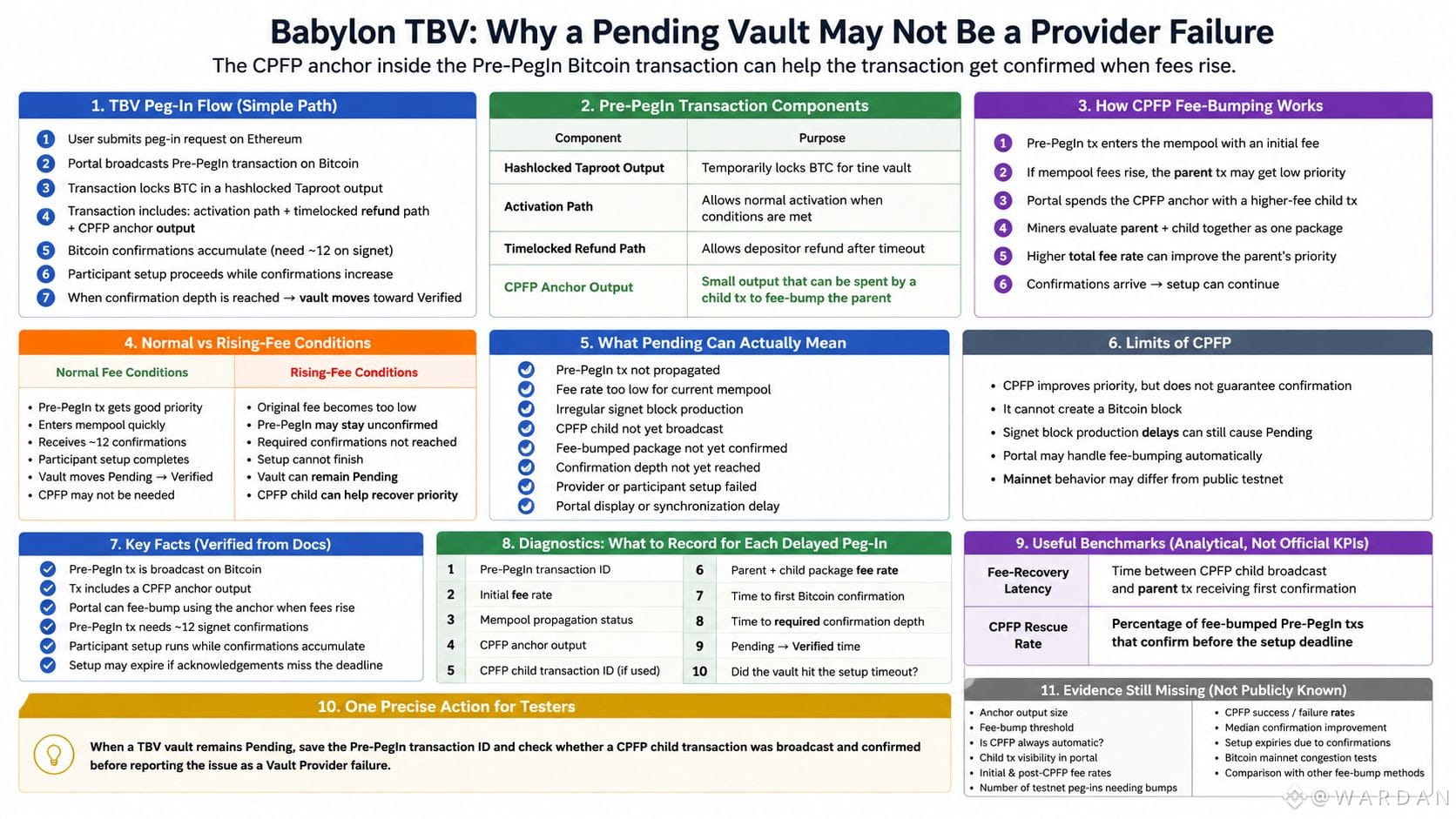
تبدأ عملية الـ peg-in بمعاملة بيتكوين Pre-PegIn يجب أن تصل إلى نحو 12 تأكيدًا على signet قبل أن يمكن أن تتابع عملية الإعداد. داخل تلك المعاملة توجد إرسالية صغيرة من Child Pays for Parent، أو CPFP، كمرساة. إذا أصبحت رسوم الوالد منخفضة جدًا مع ارتفاع رسوم mempool، يمكن للطفل الأعلى رسومًا أن ينفق المرساة، مما يسمح للمنقّبين بأن يقيموا المعاملتين كحزمة واحدة وقد يحسّن أولوية تأكيد المعاملة الأصل.
هذا التفصيل يغيّر التشخيص. قد يكون طلب الإيثيريوم صحيحًا وقد يكون المشاركون في البروتوكول جاهزين، بينما لا تزال معاملة تمويل البيتكوين تنتظر أولوية كافية. لذلك يمكن لـ «قيد الانتظار» أن يخفي مشكلة رسوم معاملة، أو تأخرًا غير منتظم في بلوكات signet، أو مشكلة حقيقية في الإعداد. الحالة الظاهرة وحدها لا تكفي لمعرفة أيّها حدث.
CPFP ليس ضمانًا. لا يمكنه إنشاء بلوك جديد، كما أن سياسة portal الدقيقة لرفع الرسوم غير واضحة علنًا. ومع ذلك، يمنح هذا المختبرين فحصًا ملموسًا من جهة البيتكوين قبل إلقاء اللوم على المزوّد.
بالنسبة لاختبار شبكة @babylonlabs_io $BABY ، احفظ رقم معرّف معاملة Pre-PegIn كلما بقيت الخزنة في حالة «قيد الانتظار». تحقق مما إذا كان قد تم بثّ طفل CPFP، وما إذا كانت حزمة الوالد قد تأكدّت قبل الإبلاغ «لم ينجح مزوّدي». يمكن لهذا التفصيل الواحد أن يحوّل الملاحظات غير الواضحة إلى تشخيص مفيد لمعرفة عند أي نقطة توقفت عملية الـ peg-in فعليًا، وأي طبقة من النظام تحتاج إلى الاهتمام أولًا. #baby
ما لاحظته هو أن الحالة «قيد الانتظار» في خزائن البيتكوين اللامركزية (TBV) الخاصة بـ Babylon لا تشير تلقائيًا إلى فشل مزوّد الخزنة.
تبدأ عملية الـ peg-in بمعاملة بيتكوين Pre-PegIn يجب أن تصل إلى نحو 12 تأكيدًا على signet قبل أن يمكن أن تتابع عملية الإعداد. داخل تلك المعاملة توجد إرسالية صغيرة من Child Pays for Parent، أو CPFP، كمرساة. إذا أصبحت رسوم الوالد منخفضة جدًا مع ارتفاع رسوم mempool، يمكن للطفل الأعلى رسومًا أن ينفق المرساة، مما يسمح للمنقّبين بأن يقيموا المعاملتين كحزمة واحدة وقد يحسّن أولوية تأكيد المعاملة الأصل.
هذا التفصيل يغيّر التشخيص. قد يكون طلب الإيثيريوم صحيحًا وقد يكون المشاركون في البروتوكول جاهزين، بينما لا تزال معاملة تمويل البيتكوين تنتظر أولوية كافية. لذلك يمكن لـ «قيد الانتظار» أن يخفي مشكلة رسوم معاملة، أو تأخرًا غير منتظم في بلوكات signet، أو مشكلة حقيقية في الإعداد. الحالة الظاهرة وحدها لا تكفي لمعرفة أيّها حدث.
CPFP ليس ضمانًا. لا يمكنه إنشاء بلوك جديد، كما أن سياسة portal الدقيقة لرفع الرسوم غير واضحة علنًا. ومع ذلك، يمنح هذا المختبرين فحصًا ملموسًا من جهة البيتكوين قبل إلقاء اللوم على المزوّد.
بالنسبة لاختبار شبكة @BabylonLabs_io $BABY ، احفظ رقم معرّف معاملة Pre-PegIn كلما بقيت الخزنة في حالة «قيد الانتظار». تحقق مما إذا كان قد تم بثّ طفل CPFP، وما إذا كانت حزمة الوالد قد تأكدّت قبل الإبلاغ «لم ينجح مزوّدي». يمكن لهذا التفصيل الواحد أن يحوّل الملاحظات غير الواضحة إلى تشخيص مفيد لمعرفة عند أي نقطة توقفت عملية الـ peg-in فعليًا، وأي طبقة من النظام تحتاج إلى الاهتمام أولًا. #baby
تبدأ عملية الـ peg-in بمعاملة بيتكوين Pre-PegIn يجب أن تصل إلى نحو 12 تأكيدًا على signet قبل أن يمكن أن تتابع عملية الإعداد. داخل تلك المعاملة توجد إرسالية صغيرة من Child Pays for Parent، أو CPFP، كمرساة. إذا أصبحت رسوم الوالد منخفضة جدًا مع ارتفاع رسوم mempool، يمكن للطفل الأعلى رسومًا أن ينفق المرساة، مما يسمح للمنقّبين بأن يقيموا المعاملتين كحزمة واحدة وقد يحسّن أولوية تأكيد المعاملة الأصل.
هذا التفصيل يغيّر التشخيص. قد يكون طلب الإيثيريوم صحيحًا وقد يكون المشاركون في البروتوكول جاهزين، بينما لا تزال معاملة تمويل البيتكوين تنتظر أولوية كافية. لذلك يمكن لـ «قيد الانتظار» أن يخفي مشكلة رسوم معاملة، أو تأخرًا غير منتظم في بلوكات signet، أو مشكلة حقيقية في الإعداد. الحالة الظاهرة وحدها لا تكفي لمعرفة أيّها حدث.
CPFP ليس ضمانًا. لا يمكنه إنشاء بلوك جديد، كما أن سياسة portal الدقيقة لرفع الرسوم غير واضحة علنًا. ومع ذلك، يمنح هذا المختبرين فحصًا ملموسًا من جهة البيتكوين قبل إلقاء اللوم على المزوّد.
بالنسبة لاختبار شبكة @BabylonLabs_io $BABY ، احفظ رقم معرّف معاملة Pre-PegIn كلما بقيت الخزنة في حالة «قيد الانتظار». تحقق مما إذا كان قد تم بثّ طفل CPFP، وما إذا كانت حزمة الوالد قد تأكدّت قبل الإبلاغ «لم ينجح مزوّدي». يمكن لهذا التفصيل الواحد أن يحوّل الملاحظات غير الواضحة إلى تشخيص مفيد لمعرفة عند أي نقطة توقفت عملية الـ peg-in فعليًا، وأي طبقة من النظام تحتاج إلى الاهتمام أولًا. #baby
2
154
·
--
التفصيل الذي غيّر طريقة قراءتي لـ“خزائن بيتكوين العَقدية” لدى Babylon (TBV) هو أن عبارة “ضمانات بيتكوين أصلية” تبدو وكأن سعر بيتكوين واحد يجب أن يشرح القرض بالكامل. لكن عمليًا، هذا ليس تمامًا كيف تعمل التصفية.
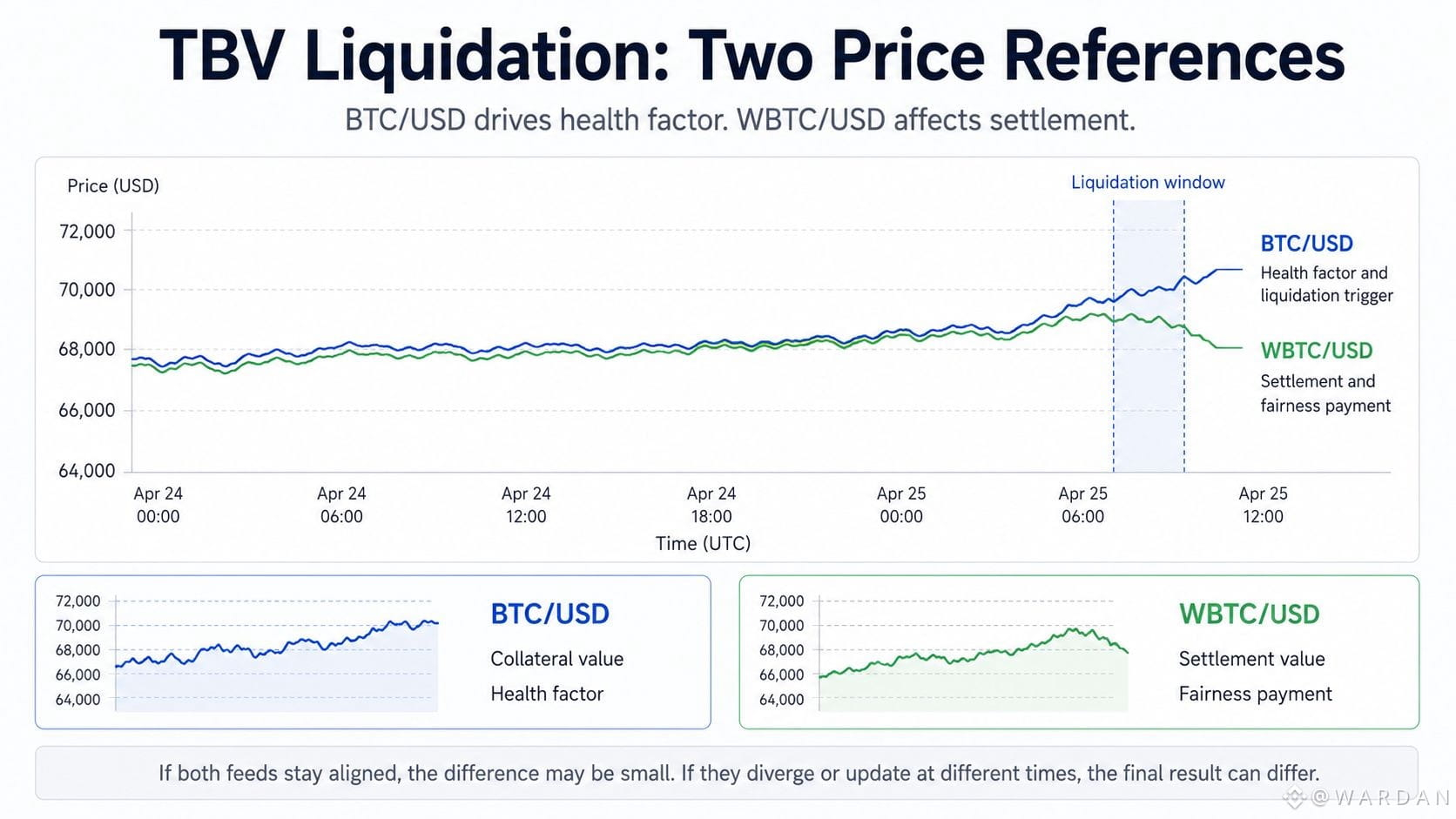
يُستخدم BTC/USD لتقييم الضمانات الأصلية من بيتكوين، وحساب عامل الصحة، وتحديد متى يمكن تصفية مركز ما. لكن التسوية من جهة إيثيريوم تستخدم WBTC، لذلك يدخل أيضًا WBTC/USD في حساب التسوية ودفع الإنصاف.
وهذا يخلق انقسامًا مهمًا: أحد التغذيات يساعد على تشغيل التصفية، بينما تغذية أخرى تساعد في تسعير ما يحدث بعد لحظة التشغيل.
عندما يبقى BTC/USD وWBTC/USD حديثَين ومتقاربَين بشكل وثيق، قد تكون الفجوة صغيرة جدًا بحيث لا تُحدث فرقًا. لكن إذا تم تحديث التغذيات في أوقات مختلفة، أو تحرّك WBTC/USD بعيدًا عن BTC/USD، فقد يُحكم على المركز بأنه غير صحي باستخدام مرجع، بينما تُحسب التسوية باستخدام مرجع آخر.
لا يعني ذلك أن @babylonlabs_io يستخدم BTC ملفوفًا كضمان المودِع. فالبتكوين ما يزال أصليًا داخل الخزنة. المقصود أن الحيازة الأصلية والتسعير في التسوية طبقتان منفصلتان، وأن سعر BTC وحده قد لا يشرح نتيجة التصفية بالكامل. وتهم هذه الفروقات أكثر خلال فترات الضغط، عندما يمكن أن تصبح فجوات التوقيت ظاهرة اقتصاديًا للمقترضين.
بالنسبة لاختبار $BABY على الشبكة التجريبية، فإن أكثر تحقق مفيد هو بسيط: سجّل قيم كلٍّ من BTC/USD وWBTC/USD، مع أزمنة تحديثهما، عند مراجعة تصفية. معيار تحليلي مفيد هو أساس oracle الخاص بـ BTC–WBTC، ليس بوصفه مؤشرًا رسميًا لـ Babylon KPI، بل كطريقة لمعرفة ما إذا كانت التغذيتان تحكيان القصة الاقتصادية نفسها. #baby
التفصيل الذي غيّر طريقة قراءتي لـ“خزائن بيتكوين العَقدية” لدى Babylon (TBV) هو أن عبارة “ضمانات بيتكوين أصلية” تبدو وكأن سعر بيتكوين واحد يجب أن يشرح القرض بالكامل. لكن عمليًا، هذا ليس تمامًا كيف تعمل التصفية.
يُستخدم BTC/USD لتقييم الضمانات الأصلية من بيتكوين، وحساب عامل الصحة، وتحديد متى يمكن تصفية مركز ما. لكن التسوية من جهة إيثيريوم تستخدم WBTC، لذلك يدخل أيضًا WBTC/USD في حساب التسوية ودفع الإنصاف.
وهذا يخلق انقسامًا مهمًا: أحد التغذيات يساعد على تشغيل التصفية، بينما تغذية أخرى تساعد في تسعير ما يحدث بعد لحظة التشغيل.
عندما يبقى BTC/USD وWBTC/USD حديثَين ومتقاربَين بشكل وثيق، قد تكون الفجوة صغيرة جدًا بحيث لا تُحدث فرقًا. لكن إذا تم تحديث التغذيات في أوقات مختلفة، أو تحرّك WBTC/USD بعيدًا عن BTC/USD، فقد يُحكم على المركز بأنه غير صحي باستخدام مرجع، بينما تُحسب التسوية باستخدام مرجع آخر.
لا يعني ذلك أن @BabylonLabs_io يستخدم BTC ملفوفًا كضمان المودِع. فالبتكوين ما يزال أصليًا داخل الخزنة. المقصود أن الحيازة الأصلية والتسعير في التسوية طبقتان منفصلتان، وأن سعر BTC وحده قد لا يشرح نتيجة التصفية بالكامل. وتهم هذه الفروقات أكثر خلال فترات الضغط، عندما يمكن أن تصبح فجوات التوقيت ظاهرة اقتصاديًا للمقترضين.
بالنسبة لاختبار $BABY على الشبكة التجريبية، فإن أكثر تحقق مفيد هو بسيط: سجّل قيم كلٍّ من BTC/USD وWBTC/USD، مع أزمنة تحديثهما، عند مراجعة تصفية. معيار تحليلي مفيد هو أساس oracle الخاص بـ BTC–WBTC، ليس بوصفه مؤشرًا رسميًا لـ Babylon KPI، بل كطريقة لمعرفة ما إذا كانت التغذيتان تحكيان القصة الاقتصادية نفسها. #baby
يُستخدم BTC/USD لتقييم الضمانات الأصلية من بيتكوين، وحساب عامل الصحة، وتحديد متى يمكن تصفية مركز ما. لكن التسوية من جهة إيثيريوم تستخدم WBTC، لذلك يدخل أيضًا WBTC/USD في حساب التسوية ودفع الإنصاف.
وهذا يخلق انقسامًا مهمًا: أحد التغذيات يساعد على تشغيل التصفية، بينما تغذية أخرى تساعد في تسعير ما يحدث بعد لحظة التشغيل.
عندما يبقى BTC/USD وWBTC/USD حديثَين ومتقاربَين بشكل وثيق، قد تكون الفجوة صغيرة جدًا بحيث لا تُحدث فرقًا. لكن إذا تم تحديث التغذيات في أوقات مختلفة، أو تحرّك WBTC/USD بعيدًا عن BTC/USD، فقد يُحكم على المركز بأنه غير صحي باستخدام مرجع، بينما تُحسب التسوية باستخدام مرجع آخر.
لا يعني ذلك أن @BabylonLabs_io يستخدم BTC ملفوفًا كضمان المودِع. فالبتكوين ما يزال أصليًا داخل الخزنة. المقصود أن الحيازة الأصلية والتسعير في التسوية طبقتان منفصلتان، وأن سعر BTC وحده قد لا يشرح نتيجة التصفية بالكامل. وتهم هذه الفروقات أكثر خلال فترات الضغط، عندما يمكن أن تصبح فجوات التوقيت ظاهرة اقتصاديًا للمقترضين.
بالنسبة لاختبار $BABY على الشبكة التجريبية، فإن أكثر تحقق مفيد هو بسيط: سجّل قيم كلٍّ من BTC/USD وWBTC/USD، مع أزمنة تحديثهما، عند مراجعة تصفية. معيار تحليلي مفيد هو أساس oracle الخاص بـ BTC–WBTC، ليس بوصفه مؤشرًا رسميًا لـ Babylon KPI، بل كطريقة لمعرفة ما إذا كانت التغذيتان تحكيان القصة الاقتصادية نفسها. #baby
3
1
152
·
--
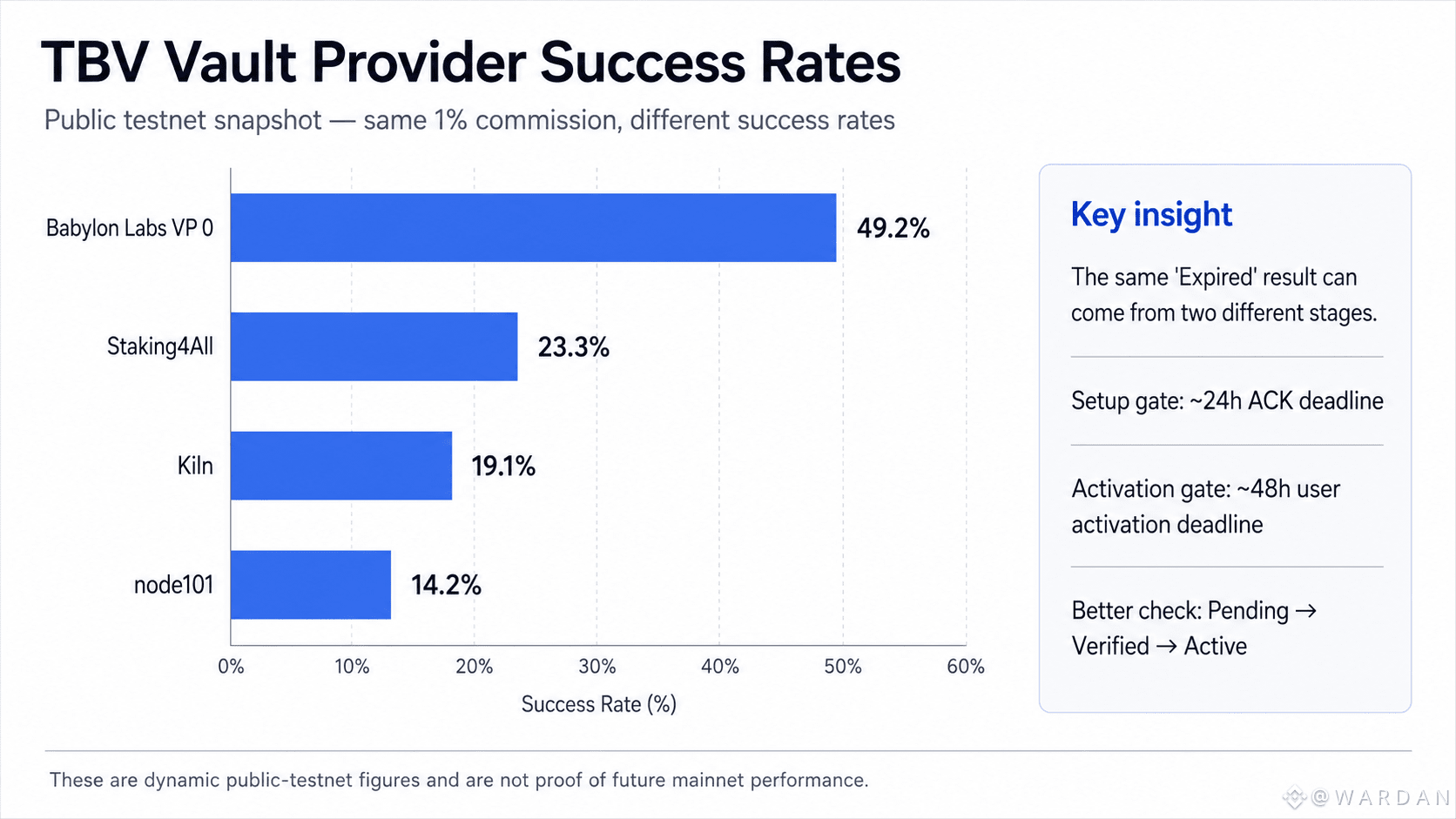
ما جذب انتباهي في شبكة الاختبار الخاصة بـ Babylon لأقبية البيتكوين غير القابلة للثقة (TBV) هو أن أربع صفحات لمزوّدي الأقبية أظهرت نفس عمولة 1%، لكن معدلات النجاح تراوحت بين 14.2% و49.2%. في البداية، بدا الأمر كأنه ترتيب. لكن الآلية جعلتني أقرأه بشكل مختلف. وبما أن هذه أرقام من شبكة اختبار متغيّرة، فسأستخدمها لتوجيه الأسئلة، لا للحسم في حكم يتعلق بموثوقية الشبكة الرئيسية.
يجب أن ينتقل القبو من Pending إلى Verified. خلال هذه المرحلة، يجب على مزوّد القبو والمشغّلين إكمال الإعداد والإقرارات خلال 24 ساعة. بعد ذلك، يجب على المودِع كشف سر التفعيل على Ethereum خلال نحو 48 ساعة لكي يصبح القبو Active.
إن فُوّتت أي بوابة، قد تكون التسمية النهائية نفسها: Expired.
هذه هي التفاصيل التي لن أتجاهلها. قد يختلط معدل نجاح عنوان رئيسي مع حدثين. قد يعكس أحدهما مشاكل في الإعداد أو التنسيق قبل Verified. والآخر قد يعكس مستخدمًا حصل على قبو جاهز لكنه لم يُكمل التفعيل. لذا قد يحتوي النسبة على إشارة من المزوّد، لكنها لا تُظهر من تسبب في كل حالة Expiry.
بالنسبة لاختبار @babylonlabs_io $BABY على شبكة الاختبار، أرى تحققًا أفضل ضمن مسار مبني على المراحل (funnel): كم عدد الطلبات التي تصل إلى Verified، وكم عدد الأقبية التي وصلَت Verified وانتقلت إلى Active. ستكون هذه مقاييس مقترحة، وليست مؤشرات رسمية من Babylon (KPIs).
عند اختبار TBV، سجّل المزوّد، وأعلى حالة تم الوصول إليها، وما إذا تمّت محاولة التفعيل، والنتيجة النهائية. «قبوّي بقي Pending» أو «وصل إلى Verified لكنني لم أقم بتفعيله» يعطيان تعليقات أفضل من «مزوّدي فشل». #baby
ما جذب انتباهي في شبكة الاختبار الخاصة بـ Babylon لأقبية البيتكوين غير القابلة للثقة (TBV) هو أن أربع صفحات لمزوّدي الأقبية أظهرت نفس عمولة 1%، لكن معدلات النجاح تراوحت بين 14.2% و49.2%. في البداية، بدا الأمر كأنه ترتيب. لكن الآلية جعلتني أقرأه بشكل مختلف. وبما أن هذه أرقام من شبكة اختبار متغيّرة، فسأستخدمها لتوجيه الأسئلة، لا للحسم في حكم يتعلق بموثوقية الشبكة الرئيسية.
يجب أن ينتقل القبو من Pending إلى Verified. خلال هذه المرحلة، يجب على مزوّد القبو والمشغّلين إكمال الإعداد والإقرارات خلال 24 ساعة. بعد ذلك، يجب على المودِع كشف سر التفعيل على Ethereum خلال نحو 48 ساعة لكي يصبح القبو Active.
إن فُوّتت أي بوابة، قد تكون التسمية النهائية نفسها: Expired.
هذه هي التفاصيل التي لن أتجاهلها. قد يختلط معدل نجاح عنوان رئيسي مع حدثين. قد يعكس أحدهما مشاكل في الإعداد أو التنسيق قبل Verified. والآخر قد يعكس مستخدمًا حصل على قبو جاهز لكنه لم يُكمل التفعيل. لذا قد يحتوي النسبة على إشارة من المزوّد، لكنها لا تُظهر من تسبب في كل حالة Expiry.
بالنسبة لاختبار @BabylonLabs_io $BABY على شبكة الاختبار، أرى تحققًا أفضل ضمن مسار مبني على المراحل (funnel): كم عدد الطلبات التي تصل إلى Verified، وكم عدد الأقبية التي وصلَت Verified وانتقلت إلى Active. ستكون هذه مقاييس مقترحة، وليست مؤشرات رسمية من Babylon (KPIs).
عند اختبار TBV، سجّل المزوّد، وأعلى حالة تم الوصول إليها، وما إذا تمّت محاولة التفعيل، والنتيجة النهائية. «قبوّي بقي Pending» أو «وصل إلى Verified لكنني لم أقم بتفعيله» يعطيان تعليقات أفضل من «مزوّدي فشل». #baby
يجب أن ينتقل القبو من Pending إلى Verified. خلال هذه المرحلة، يجب على مزوّد القبو والمشغّلين إكمال الإعداد والإقرارات خلال 24 ساعة. بعد ذلك، يجب على المودِع كشف سر التفعيل على Ethereum خلال نحو 48 ساعة لكي يصبح القبو Active.
إن فُوّتت أي بوابة، قد تكون التسمية النهائية نفسها: Expired.
هذه هي التفاصيل التي لن أتجاهلها. قد يختلط معدل نجاح عنوان رئيسي مع حدثين. قد يعكس أحدهما مشاكل في الإعداد أو التنسيق قبل Verified. والآخر قد يعكس مستخدمًا حصل على قبو جاهز لكنه لم يُكمل التفعيل. لذا قد يحتوي النسبة على إشارة من المزوّد، لكنها لا تُظهر من تسبب في كل حالة Expiry.
بالنسبة لاختبار @BabylonLabs_io $BABY على شبكة الاختبار، أرى تحققًا أفضل ضمن مسار مبني على المراحل (funnel): كم عدد الطلبات التي تصل إلى Verified، وكم عدد الأقبية التي وصلَت Verified وانتقلت إلى Active. ستكون هذه مقاييس مقترحة، وليست مؤشرات رسمية من Babylon (KPIs).
عند اختبار TBV، سجّل المزوّد، وأعلى حالة تم الوصول إليها، وما إذا تمّت محاولة التفعيل، والنتيجة النهائية. «قبوّي بقي Pending» أو «وصل إلى Verified لكنني لم أقم بتفعيله» يعطيان تعليقات أفضل من «مزوّدي فشل». #baby
1
116
·
--
التفصيلة التي تغيّر طريقة قراءتي لاختبار شبكة Babylon’s testnet هي كلمة “permissionless” (غير خاضع للتصاريح).
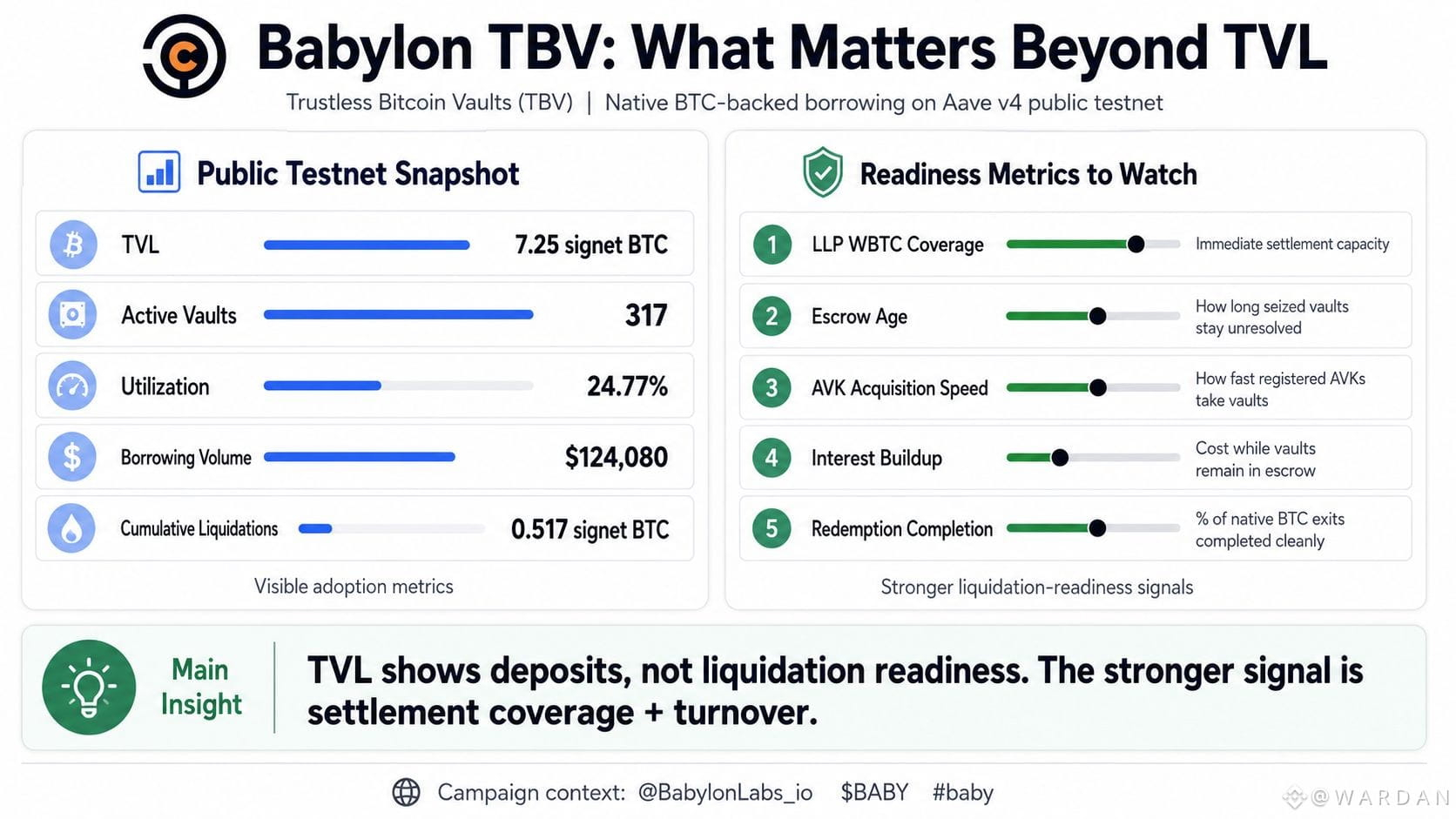
مع Trustless Bitcoin Vaults (TBV)، يمكن لأي شخص تفعيل مسار تصفية LLP عندما تصبح إحدى صفقات Aave v4 المدعومة بعملة BTC الأصلية غير صحية. لكن هذا الزناد المفتوح هو الخطوة الأولى فقط. يتلقى المُصفي WBTC فورًا، بينما ينتقل صندوق/خزنة البيتكوين المُصادَرة إلى الحجز (escrow). بعد ذلك، يجب على AVK مسجّل الحصول على تلك الخزنة وإكمال مسار الاسترداد الأبطأ من جهة البيتكوين.
تهم هذه الفروقات لأن “التصفية غير الخاضعة للتصاريح” لا تعني أن كل مرحلة متاحة لنفس الجهات. استدعاء الإيثيريوم مفتوح، لكن التسوية النهائية لـ BTC الأصلية ما تزال تعتمد على الأدوار المسجّلة، وبيانات الخزائن المتاحة، ومسارات الإثبات والطعن التي تعمل.
لا أرى هذا كعيب بحد ذاته. قد يكون هذا الانقسام هو بالضبط ما يتيح TBV تسوية سريعة لـ Aave دون إجبار المستخدم على لفّ BTC أو نقلها بعيدًا عن البيتكوين. لكن هذا يغيّر ما الذي ينبغي اختباره.
سؤال اختبار شبكي مفيد ليس فقط ما إذا كانت التصفية يمكن استدعاؤها. بل ما إذا كان بإمكان عدد كافٍ من AVKs مستقلين تولّي خزائن الحجز، وإخلاؤها بسرعة، وإكمال الاسترداد دون تكدّس التأخيرات.
بالنسبة لـ @babylonlabs_io ، فإن أقوى دليل على نظام سليم سيكون خريطة كاملة للصلاحيات وبيانات تسوية شاملة ونظيفة: من الذي يمكنه التفعيل، ومن الذي يمول WBTC، ومن الذي يحصل على الخزنة، وكم يستغرق الأمر لـ BTC الأصلية لتُصفّى/تُزال.
عند هذا المستوى، يمكن للقراء $BABY و#baby تقييم ما إذا كان التصميم يبقى “مفتوحًا” عمليًا، لا فقط في المعاملة الأولى.
التفصيلة التي تغيّر طريقة قراءتي لاختبار شبكة Babylon’s testnet هي كلمة “permissionless” (غير خاضع للتصاريح).
مع Trustless Bitcoin Vaults (TBV)، يمكن لأي شخص تفعيل مسار تصفية LLP عندما تصبح إحدى صفقات Aave v4 المدعومة بعملة BTC الأصلية غير صحية. لكن هذا الزناد المفتوح هو الخطوة الأولى فقط. يتلقى المُصفي WBTC فورًا، بينما ينتقل صندوق/خزنة البيتكوين المُصادَرة إلى الحجز (escrow). بعد ذلك، يجب على AVK مسجّل الحصول على تلك الخزنة وإكمال مسار الاسترداد الأبطأ من جهة البيتكوين.
تهم هذه الفروقات لأن “التصفية غير الخاضعة للتصاريح” لا تعني أن كل مرحلة متاحة لنفس الجهات. استدعاء الإيثيريوم مفتوح، لكن التسوية النهائية لـ BTC الأصلية ما تزال تعتمد على الأدوار المسجّلة، وبيانات الخزائن المتاحة، ومسارات الإثبات والطعن التي تعمل.
لا أرى هذا كعيب بحد ذاته. قد يكون هذا الانقسام هو بالضبط ما يتيح TBV تسوية سريعة لـ Aave دون إجبار المستخدم على لفّ BTC أو نقلها بعيدًا عن البيتكوين. لكن هذا يغيّر ما الذي ينبغي اختباره.
سؤال اختبار شبكي مفيد ليس فقط ما إذا كانت التصفية يمكن استدعاؤها. بل ما إذا كان بإمكان عدد كافٍ من AVKs مستقلين تولّي خزائن الحجز، وإخلاؤها بسرعة، وإكمال الاسترداد دون تكدّس التأخيرات.
بالنسبة لـ @BabylonLabs_io ، فإن أقوى دليل على نظام سليم سيكون خريطة كاملة للصلاحيات وبيانات تسوية شاملة ونظيفة: من الذي يمكنه التفعيل، ومن الذي يمول WBTC، ومن الذي يحصل على الخزنة، وكم يستغرق الأمر لـ BTC الأصلية لتُصفّى/تُزال.
عند هذا المستوى، يمكن للقراء $BABY و#baby تقييم ما إذا كان التصميم يبقى “مفتوحًا” عمليًا، لا فقط في المعاملة الأولى.
مع Trustless Bitcoin Vaults (TBV)، يمكن لأي شخص تفعيل مسار تصفية LLP عندما تصبح إحدى صفقات Aave v4 المدعومة بعملة BTC الأصلية غير صحية. لكن هذا الزناد المفتوح هو الخطوة الأولى فقط. يتلقى المُصفي WBTC فورًا، بينما ينتقل صندوق/خزنة البيتكوين المُصادَرة إلى الحجز (escrow). بعد ذلك، يجب على AVK مسجّل الحصول على تلك الخزنة وإكمال مسار الاسترداد الأبطأ من جهة البيتكوين.
تهم هذه الفروقات لأن “التصفية غير الخاضعة للتصاريح” لا تعني أن كل مرحلة متاحة لنفس الجهات. استدعاء الإيثيريوم مفتوح، لكن التسوية النهائية لـ BTC الأصلية ما تزال تعتمد على الأدوار المسجّلة، وبيانات الخزائن المتاحة، ومسارات الإثبات والطعن التي تعمل.
لا أرى هذا كعيب بحد ذاته. قد يكون هذا الانقسام هو بالضبط ما يتيح TBV تسوية سريعة لـ Aave دون إجبار المستخدم على لفّ BTC أو نقلها بعيدًا عن البيتكوين. لكن هذا يغيّر ما الذي ينبغي اختباره.
سؤال اختبار شبكي مفيد ليس فقط ما إذا كانت التصفية يمكن استدعاؤها. بل ما إذا كان بإمكان عدد كافٍ من AVKs مستقلين تولّي خزائن الحجز، وإخلاؤها بسرعة، وإكمال الاسترداد دون تكدّس التأخيرات.
بالنسبة لـ @BabylonLabs_io ، فإن أقوى دليل على نظام سليم سيكون خريطة كاملة للصلاحيات وبيانات تسوية شاملة ونظيفة: من الذي يمكنه التفعيل، ومن الذي يمول WBTC، ومن الذي يحصل على الخزنة، وكم يستغرق الأمر لـ BTC الأصلية لتُصفّى/تُزال.
عند هذا المستوى، يمكن للقراء $BABY و#baby تقييم ما إذا كان التصميم يبقى “مفتوحًا” عمليًا، لا فقط في المعاملة الأولى.
1
133
·
--
رقم لوحة التحكم الذي شدّ انتباهي أولًا كان TVL، لكن تدفّق TBV جعلني أتساءل عمّا إذا كان هذا الرقم يمكنه فعلًا إثبات شيء حقيقي.
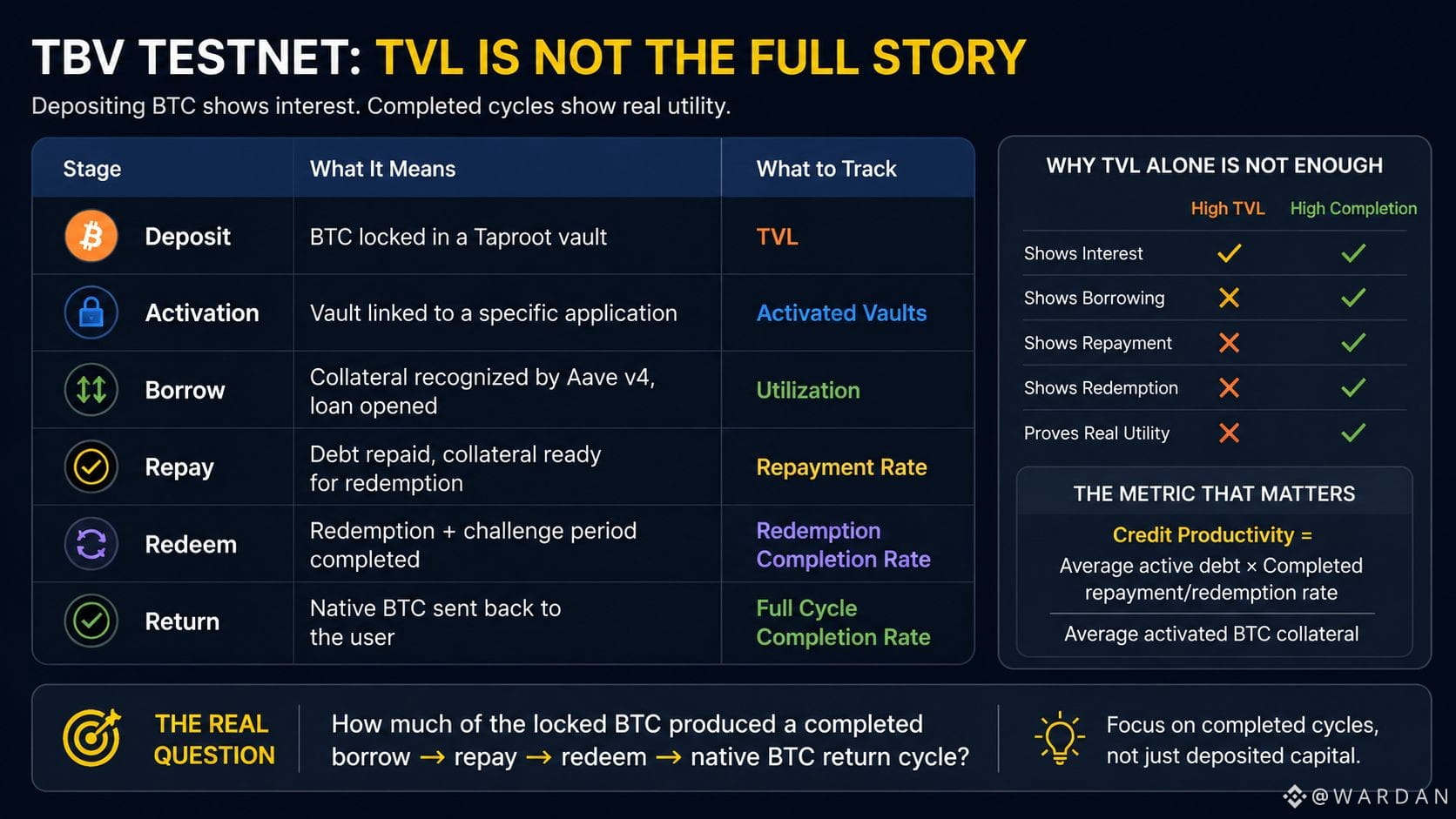
بالنسبة لـ صناديق بيتكوين غير قابلة للثقة لدى بابيلون (TBV)، فإن الإيداع لا يُظهر سوى أن BTC وصلت إلى حالة ضمان. ولا يبيّن أن نظام الاقتراض الكامل عمل من البداية إلى النهاية. ما زال يتعيّن تفعيل الخزنة، ثم استخدامها للاقتراض عبر Aave v4، ثم سدادها، ثم المرور عبر الاسترداد، وأخيرًا إرجاع BTC الأصلية بعد عملية التحدّي.
لهذا أرى أن معدل الاستخدام ودورات القروض المكتملة هما الاختبار الأقوى. يمكن لـ TVL أن يرتفع حتى عندما لا تفتح العديد من الخزائن قرضًا أبدًا، أو تتوقف قبل السداد، أو تبقى عالقة قبل الاسترداد النهائي. يقوم المستكشف العام بالفعل بفصل TVL عن الاستخدام، وهي إشارة مهمة: الضمانات المُقفلة والائتمان القابل للاستخدام ليستا النتيجة نفسها. كما أنه يوفّر للـمُختبِرين طريقة أوضح لفصل الاهتمام المبكر عن الأداء الحقيقي من طرف إلى طرف في ظل ظروف الشبكة الاختبارية العامة الحالية.
سؤال الشبكة الاختبارية الأفضل ليس فقط: “كم مقدار BTC الذي دخل؟” بل هو: “كم مقدار هذا الـBTC الذي أنتج دورة اقتراض مكتملة ثم سداد ثم استرداد؟”
بالنسبة للمستخدمين، يغيّر هذا شكل التغذية الراجعة المفيدة. يجب أن يذكر تقرير الاختبار القوي ما إذا كانت الخزنة قد تم تفعيلها، وهل نجح الاقتراض، وكيف كان سلوك السداد، وكم استغرق الاسترداد، وما إذا كانت BTC الأصلية عادت دون خطوات غير واضحة أو حالات فشل.
ما زال TVL مهمًا لأنه يُظهر المشاركة. لكن لا يمكنه إثبات أن مسار الائتمان الكامل موثوق. بالنسبة إلى @babylonlabs_io ، ستكون الإشارة الأقوى هي عدد الخزائن التي تُكمل الرحلة كاملة، وليس عدد الخزائن التي تدخلها ببساطة.
هذا هو المقياس الذي سأراقبه عند تقييم ما إذا كان الاقتراض المدعوم ببيتكوين—على نحو قابل للاستخدام عمليًا—يصبح مفيدًا فعليًا. $BABY #baby
رقم لوحة التحكم الذي شدّ انتباهي أولًا كان TVL، لكن تدفّق TBV جعلني أتساءل عمّا إذا كان هذا الرقم يمكنه فعلًا إثبات شيء حقيقي.
بالنسبة لـ صناديق بيتكوين غير قابلة للثقة لدى بابيلون (TBV)، فإن الإيداع لا يُظهر سوى أن BTC وصلت إلى حالة ضمان. ولا يبيّن أن نظام الاقتراض الكامل عمل من البداية إلى النهاية. ما زال يتعيّن تفعيل الخزنة، ثم استخدامها للاقتراض عبر Aave v4، ثم سدادها، ثم المرور عبر الاسترداد، وأخيرًا إرجاع BTC الأصلية بعد عملية التحدّي.
لهذا أرى أن معدل الاستخدام ودورات القروض المكتملة هما الاختبار الأقوى. يمكن لـ TVL أن يرتفع حتى عندما لا تفتح العديد من الخزائن قرضًا أبدًا، أو تتوقف قبل السداد، أو تبقى عالقة قبل الاسترداد النهائي. يقوم المستكشف العام بالفعل بفصل TVL عن الاستخدام، وهي إشارة مهمة: الضمانات المُقفلة والائتمان القابل للاستخدام ليستا النتيجة نفسها. كما أنه يوفّر للـمُختبِرين طريقة أوضح لفصل الاهتمام المبكر عن الأداء الحقيقي من طرف إلى طرف في ظل ظروف الشبكة الاختبارية العامة الحالية.
سؤال الشبكة الاختبارية الأفضل ليس فقط: “كم مقدار BTC الذي دخل؟” بل هو: “كم مقدار هذا الـBTC الذي أنتج دورة اقتراض مكتملة ثم سداد ثم استرداد؟”
بالنسبة للمستخدمين، يغيّر هذا شكل التغذية الراجعة المفيدة. يجب أن يذكر تقرير الاختبار القوي ما إذا كانت الخزنة قد تم تفعيلها، وهل نجح الاقتراض، وكيف كان سلوك السداد، وكم استغرق الاسترداد، وما إذا كانت BTC الأصلية عادت دون خطوات غير واضحة أو حالات فشل.
ما زال TVL مهمًا لأنه يُظهر المشاركة. لكن لا يمكنه إثبات أن مسار الائتمان الكامل موثوق. بالنسبة إلى @BabylonLabs_io ، ستكون الإشارة الأقوى هي عدد الخزائن التي تُكمل الرحلة كاملة، وليس عدد الخزائن التي تدخلها ببساطة.
هذا هو المقياس الذي سأراقبه عند تقييم ما إذا كان الاقتراض المدعوم ببيتكوين—على نحو قابل للاستخدام عمليًا—يصبح مفيدًا فعليًا. $BABY #baby
بالنسبة لـ صناديق بيتكوين غير قابلة للثقة لدى بابيلون (TBV)، فإن الإيداع لا يُظهر سوى أن BTC وصلت إلى حالة ضمان. ولا يبيّن أن نظام الاقتراض الكامل عمل من البداية إلى النهاية. ما زال يتعيّن تفعيل الخزنة، ثم استخدامها للاقتراض عبر Aave v4، ثم سدادها، ثم المرور عبر الاسترداد، وأخيرًا إرجاع BTC الأصلية بعد عملية التحدّي.
لهذا أرى أن معدل الاستخدام ودورات القروض المكتملة هما الاختبار الأقوى. يمكن لـ TVL أن يرتفع حتى عندما لا تفتح العديد من الخزائن قرضًا أبدًا، أو تتوقف قبل السداد، أو تبقى عالقة قبل الاسترداد النهائي. يقوم المستكشف العام بالفعل بفصل TVL عن الاستخدام، وهي إشارة مهمة: الضمانات المُقفلة والائتمان القابل للاستخدام ليستا النتيجة نفسها. كما أنه يوفّر للـمُختبِرين طريقة أوضح لفصل الاهتمام المبكر عن الأداء الحقيقي من طرف إلى طرف في ظل ظروف الشبكة الاختبارية العامة الحالية.
سؤال الشبكة الاختبارية الأفضل ليس فقط: “كم مقدار BTC الذي دخل؟” بل هو: “كم مقدار هذا الـBTC الذي أنتج دورة اقتراض مكتملة ثم سداد ثم استرداد؟”
بالنسبة للمستخدمين، يغيّر هذا شكل التغذية الراجعة المفيدة. يجب أن يذكر تقرير الاختبار القوي ما إذا كانت الخزنة قد تم تفعيلها، وهل نجح الاقتراض، وكيف كان سلوك السداد، وكم استغرق الاسترداد، وما إذا كانت BTC الأصلية عادت دون خطوات غير واضحة أو حالات فشل.
ما زال TVL مهمًا لأنه يُظهر المشاركة. لكن لا يمكنه إثبات أن مسار الائتمان الكامل موثوق. بالنسبة إلى @BabylonLabs_io ، ستكون الإشارة الأقوى هي عدد الخزائن التي تُكمل الرحلة كاملة، وليس عدد الخزائن التي تدخلها ببساطة.
هذا هو المقياس الذي سأراقبه عند تقييم ما إذا كان الاقتراض المدعوم ببيتكوين—على نحو قابل للاستخدام عمليًا—يصبح مفيدًا فعليًا. $BABY #baby
1
1
124
·
--
ما يغيّر نظرتي إلى مخازن البيتكوين غير القابلة للثقة التابعة لبابلون (TBV) هو أن الحيازة الذاتية لا تنتهي بمجرد امتلاك مفتاح البيتكوين.
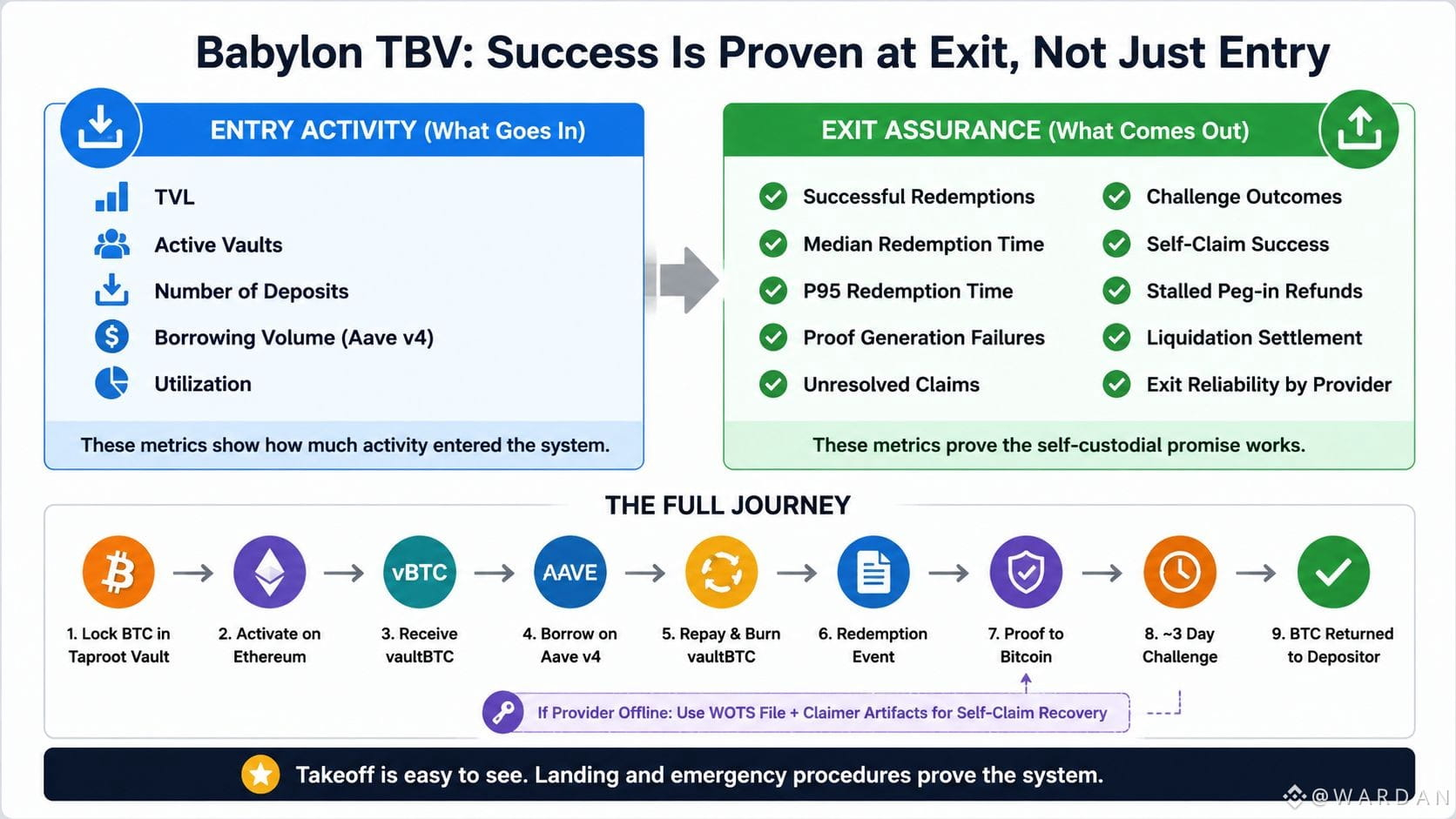
في التصميم الحالي، فإن أقوى آلية بديلة تعتمد أيضًا على ملفات الاسترداد التي يتم إنشاؤها عند إعداد المخزن. إذا لم يبدأ موفّر المخزن عملية السحب، فقد يحتاج المودِع إلى ملف WOTS وملفات المُطالِب المحلية لاستخدام مسار المطالبة بالبيتكوين الذي تمت الموافقة عليه مسبقًا.
هذه التفاصيل مهمة لأن المخزن لا يمكنه ببساطة إنشاء مسار دفع جديد لاحقًا. مسارات الإنفاق الشرعية للبيتكوين مُلتزم بها مسبقًا. لذلك فإن تحكم المستخدم لا يتعلق فقط بامتلاك المفتاح. بل يتعلق أيضًا بالاحتفاظ بالملفات التي تجعل مسار التعويض صالحًا للاستخدام.
يحمي مفتاح البيتكوين سلطة التوقيع، بينما تحافظ هذه المقتنيات على البيانات اللازمة لمواصلة عملية الاسترداد المُعدة مسبقًا. إنها تعالج أجزاء مختلفة من المشكلة نفسها.
لا أقرأ ذلك على أنه دليل على أن TBV ليست حيازة ذاتية. بل أراه نسخة أكثر اكتمالًا من الحيازة الذاتية: التحكم بالمفتاح مع الجاهزية للاسترداد.
بالنسبة لمستخدِم testnet، فإن الاختبار المفيد بسيط. لا تكتفِ بالتأكد فقط من أن المخزن تم إنشاؤه وأن الاقتراض نجح. بل تأكد أيضًا من تنزيل ملف WOTS ومقتنيات المُطالِب، وأنه تم نسخها احتياطيًا بشكل آمن، وأنه يمكن استعادتها عند الحاجة.
هذه هي التفاصيل التي لن أتجاهلها في @babylonlabs_io الحالية $BABY على testnet. السؤال الحقيقي حول الاسترداد ليس فقط "من يمسك بالمفتاح؟" بل أيضًا "هل يمكن للمالك استخدام مسار التعويض عندما يكون المزوّد العادي غير متصل؟" #baby
ما يغيّر نظرتي إلى مخازن البيتكوين غير القابلة للثقة التابعة لبابلون (TBV) هو أن الحيازة الذاتية لا تنتهي بمجرد امتلاك مفتاح البيتكوين.
في التصميم الحالي، فإن أقوى آلية بديلة تعتمد أيضًا على ملفات الاسترداد التي يتم إنشاؤها عند إعداد المخزن. إذا لم يبدأ موفّر المخزن عملية السحب، فقد يحتاج المودِع إلى ملف WOTS وملفات المُطالِب المحلية لاستخدام مسار المطالبة بالبيتكوين الذي تمت الموافقة عليه مسبقًا.
هذه التفاصيل مهمة لأن المخزن لا يمكنه ببساطة إنشاء مسار دفع جديد لاحقًا. مسارات الإنفاق الشرعية للبيتكوين مُلتزم بها مسبقًا. لذلك فإن تحكم المستخدم لا يتعلق فقط بامتلاك المفتاح. بل يتعلق أيضًا بالاحتفاظ بالملفات التي تجعل مسار التعويض صالحًا للاستخدام.
يحمي مفتاح البيتكوين سلطة التوقيع، بينما تحافظ هذه المقتنيات على البيانات اللازمة لمواصلة عملية الاسترداد المُعدة مسبقًا. إنها تعالج أجزاء مختلفة من المشكلة نفسها.
لا أقرأ ذلك على أنه دليل على أن TBV ليست حيازة ذاتية. بل أراه نسخة أكثر اكتمالًا من الحيازة الذاتية: التحكم بالمفتاح مع الجاهزية للاسترداد.
بالنسبة لمستخدِم testnet، فإن الاختبار المفيد بسيط. لا تكتفِ بالتأكد فقط من أن المخزن تم إنشاؤه وأن الاقتراض نجح. بل تأكد أيضًا من تنزيل ملف WOTS ومقتنيات المُطالِب، وأنه تم نسخها احتياطيًا بشكل آمن، وأنه يمكن استعادتها عند الحاجة.
هذه هي التفاصيل التي لن أتجاهلها في @BabylonLabs_io الحالية $BABY على testnet. السؤال الحقيقي حول الاسترداد ليس فقط "من يمسك بالمفتاح؟" بل أيضًا "هل يمكن للمالك استخدام مسار التعويض عندما يكون المزوّد العادي غير متصل؟" #baby
في التصميم الحالي، فإن أقوى آلية بديلة تعتمد أيضًا على ملفات الاسترداد التي يتم إنشاؤها عند إعداد المخزن. إذا لم يبدأ موفّر المخزن عملية السحب، فقد يحتاج المودِع إلى ملف WOTS وملفات المُطالِب المحلية لاستخدام مسار المطالبة بالبيتكوين الذي تمت الموافقة عليه مسبقًا.
هذه التفاصيل مهمة لأن المخزن لا يمكنه ببساطة إنشاء مسار دفع جديد لاحقًا. مسارات الإنفاق الشرعية للبيتكوين مُلتزم بها مسبقًا. لذلك فإن تحكم المستخدم لا يتعلق فقط بامتلاك المفتاح. بل يتعلق أيضًا بالاحتفاظ بالملفات التي تجعل مسار التعويض صالحًا للاستخدام.
يحمي مفتاح البيتكوين سلطة التوقيع، بينما تحافظ هذه المقتنيات على البيانات اللازمة لمواصلة عملية الاسترداد المُعدة مسبقًا. إنها تعالج أجزاء مختلفة من المشكلة نفسها.
لا أقرأ ذلك على أنه دليل على أن TBV ليست حيازة ذاتية. بل أراه نسخة أكثر اكتمالًا من الحيازة الذاتية: التحكم بالمفتاح مع الجاهزية للاسترداد.
بالنسبة لمستخدِم testnet، فإن الاختبار المفيد بسيط. لا تكتفِ بالتأكد فقط من أن المخزن تم إنشاؤه وأن الاقتراض نجح. بل تأكد أيضًا من تنزيل ملف WOTS ومقتنيات المُطالِب، وأنه تم نسخها احتياطيًا بشكل آمن، وأنه يمكن استعادتها عند الحاجة.
هذه هي التفاصيل التي لن أتجاهلها في @BabylonLabs_io الحالية $BABY على testnet. السؤال الحقيقي حول الاسترداد ليس فقط "من يمسك بالمفتاح؟" بل أيضًا "هل يمكن للمالك استخدام مسار التعويض عندما يكون المزوّد العادي غير متصل؟" #baby
1
133
·
--
عندما أتتبّع تدفّق بابل المقطِّع من الإثبات إلى تسوية البيتكوين، يبرز شيء واحد باستمرار: الدليل التشفيري ليس هو نفسه الإنفاذ الاقتصادي.
الخطر الحقيقي ليس ما إذا كان بالإمكان إثبات المراوغة. الخطر هو ما إذا أصبح ذلك الدليل معاملة بيتكوين مؤكدة بسرعة كافية للحفاظ على الردع.
في تصميم بابل، يمكن لـ"التواقيع الأحادية القابلة للاستخراج" (EOTS) كشف مزوّد نهائية يوقّع كتلًا متعارضة. لكن ما يزال"مراقب رهن البيتكوين" يتعيّن عليه اكتشاف المخالفة، واستخراج مادة المفتاح القابلة للاستخدام، وتفعيل مسار العقوبة، ثم انتظار إدراج البيتكوين.
أعتقد أن هذه هي النقطة التي يبالغ فيها كثيرون في تقدير معنى "اللامركزيّة دون ثقة". رهن بيتكوين ذاتي الحيازة يُزيل الحاجة إلى الجسر أو التغليف، لكنه لا يُزيل شرط الحيوية التشغيلية. يجب أن يظل المراقبون متصلين بالإنترنت، ويقومون بفهرسة الأحداث الصحيحة، ويتصرفون بشكل صحيح، والتنافس على إدراج الكتلة أثناء الازدحام.
لذلك لن أحكم على أمن بابل فقط مما إذا كان دليل المراوغة موجودًا. سأراقب زمن الانتقال الكامل من الدليل إلى الإنفاذ تحت الضغط.
أهم قياسين هما: العدد الوسيط لكتل بيتكوين من اكتشاف المراوغة إلى الإعدام المؤكد، وعدد الحالات القابلة للإثبات التي لا تزال دون عقوبة بعد 12 كتلة. إذا ظلّ التأكيد ضمن كتلتين ولا بقيت أي حالة صالحة دون حل، فمسار الإنفاذ يؤدي عمله. أما إذا استمرت التأخيرات، فإن ادعاء الردع يضعف حتى عندما تعمل التشفيريات.
إن استنتاجي بخصوص @babylonlabs_io و $BABY بسيط: ينبغي قياس أمان "الخزنة دون ثقة" بسرعة تحوّل الإثبات إلى عقوبة. #BABY
عندما أتتبّع تدفّق بابل المقطِّع من الإثبات إلى تسوية البيتكوين، يبرز شيء واحد باستمرار: الدليل التشفيري ليس هو نفسه الإنفاذ الاقتصادي.
الخطر الحقيقي ليس ما إذا كان بالإمكان إثبات المراوغة. الخطر هو ما إذا أصبح ذلك الدليل معاملة بيتكوين مؤكدة بسرعة كافية للحفاظ على الردع.
في تصميم بابل، يمكن لـ"التواقيع الأحادية القابلة للاستخراج" (EOTS) كشف مزوّد نهائية يوقّع كتلًا متعارضة. لكن ما يزال"مراقب رهن البيتكوين" يتعيّن عليه اكتشاف المخالفة، واستخراج مادة المفتاح القابلة للاستخدام، وتفعيل مسار العقوبة، ثم انتظار إدراج البيتكوين.
أعتقد أن هذه هي النقطة التي يبالغ فيها كثيرون في تقدير معنى "اللامركزيّة دون ثقة". رهن بيتكوين ذاتي الحيازة يُزيل الحاجة إلى الجسر أو التغليف، لكنه لا يُزيل شرط الحيوية التشغيلية. يجب أن يظل المراقبون متصلين بالإنترنت، ويقومون بفهرسة الأحداث الصحيحة، ويتصرفون بشكل صحيح، والتنافس على إدراج الكتلة أثناء الازدحام.
لذلك لن أحكم على أمن بابل فقط مما إذا كان دليل المراوغة موجودًا. سأراقب زمن الانتقال الكامل من الدليل إلى الإنفاذ تحت الضغط.
أهم قياسين هما: العدد الوسيط لكتل بيتكوين من اكتشاف المراوغة إلى الإعدام المؤكد، وعدد الحالات القابلة للإثبات التي لا تزال دون عقوبة بعد 12 كتلة. إذا ظلّ التأكيد ضمن كتلتين ولا بقيت أي حالة صالحة دون حل، فمسار الإنفاذ يؤدي عمله. أما إذا استمرت التأخيرات، فإن ادعاء الردع يضعف حتى عندما تعمل التشفيريات.
إن استنتاجي بخصوص @BabylonLabs_io و $BABY بسيط: ينبغي قياس أمان "الخزنة دون ثقة" بسرعة تحوّل الإثبات إلى عقوبة. #BABY
الخطر الحقيقي ليس ما إذا كان بالإمكان إثبات المراوغة. الخطر هو ما إذا أصبح ذلك الدليل معاملة بيتكوين مؤكدة بسرعة كافية للحفاظ على الردع.
في تصميم بابل، يمكن لـ"التواقيع الأحادية القابلة للاستخراج" (EOTS) كشف مزوّد نهائية يوقّع كتلًا متعارضة. لكن ما يزال"مراقب رهن البيتكوين" يتعيّن عليه اكتشاف المخالفة، واستخراج مادة المفتاح القابلة للاستخدام، وتفعيل مسار العقوبة، ثم انتظار إدراج البيتكوين.
أعتقد أن هذه هي النقطة التي يبالغ فيها كثيرون في تقدير معنى "اللامركزيّة دون ثقة". رهن بيتكوين ذاتي الحيازة يُزيل الحاجة إلى الجسر أو التغليف، لكنه لا يُزيل شرط الحيوية التشغيلية. يجب أن يظل المراقبون متصلين بالإنترنت، ويقومون بفهرسة الأحداث الصحيحة، ويتصرفون بشكل صحيح، والتنافس على إدراج الكتلة أثناء الازدحام.
لذلك لن أحكم على أمن بابل فقط مما إذا كان دليل المراوغة موجودًا. سأراقب زمن الانتقال الكامل من الدليل إلى الإنفاذ تحت الضغط.
أهم قياسين هما: العدد الوسيط لكتل بيتكوين من اكتشاف المراوغة إلى الإعدام المؤكد، وعدد الحالات القابلة للإثبات التي لا تزال دون عقوبة بعد 12 كتلة. إذا ظلّ التأكيد ضمن كتلتين ولا بقيت أي حالة صالحة دون حل، فمسار الإنفاذ يؤدي عمله. أما إذا استمرت التأخيرات، فإن ادعاء الردع يضعف حتى عندما تعمل التشفيريات.
إن استنتاجي بخصوص @BabylonLabs_io و $BABY بسيط: ينبغي قياس أمان "الخزنة دون ثقة" بسرعة تحوّل الإثبات إلى عقوبة. #BABY
Median slash latency
67%
Number of detected offenses
0%
Total BTC staked
33%
Finality provider count
0%
3 الأصوات • تمّ إغلاق التصويت
2
1
160
·
--
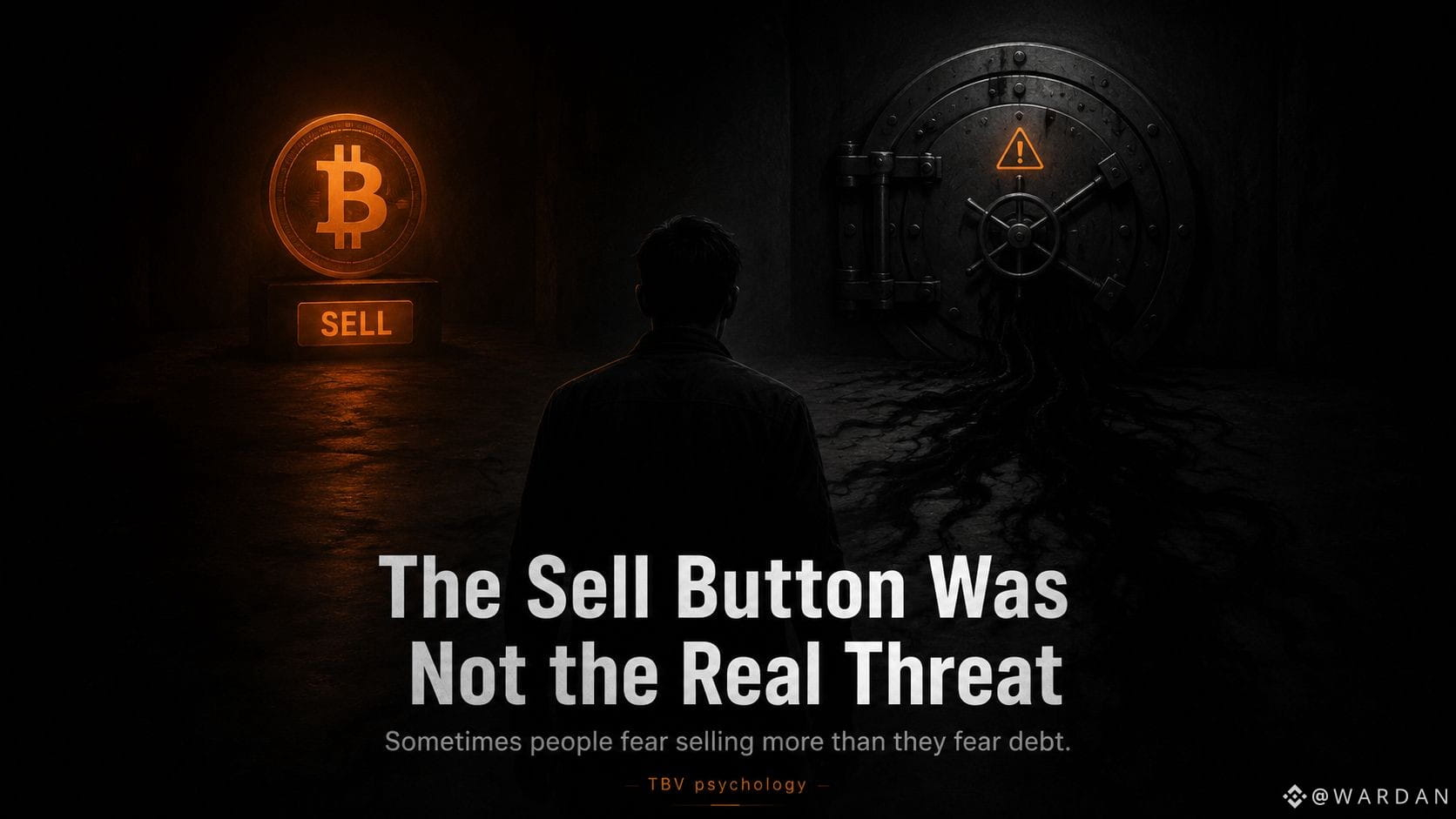
زر البيع لم يكن التهديد الحقيقي
أتذكر مشاهدة أحد حاملي البيتكوين وهو يحدق بزر البيع كأنه فخ أرضي. تحركت يده نحو الشاشة، ثم توقفت. كانت الغرفة هادئة، لكن عقله كان صاخبًا. لم يكن بحاجة إلى كل بيتكويناته. كان يحتاج فقط إلى بعض النقد. ومع ذلك، بدا البيع كأنه اقتطاع جزء من مستقبله. لذلك اختار الخيار الذي بدا أقل إيلامًا: الاحتفاظ بالـ BTC، ووضعه داخل خزنة، والاقتراض بالاستناد إليه.
في البداية، بدت الخطوة ذكية. ما زال بيتكوينُه موجودًا. يمكن أن يرتفع السعر. كان لديه نقد بيده. لم يبدُ أن شيئًا قد فُقد. وهناك اشتد علم النفس ظلامًا.
غالبًا ما يخشى البشر خسارةً مرئية أكثر من مخاطرةٍ مخفية. البيع يخلق جرحًا فوريًا. ينخفض الرصيد، ويغادر الرمز، وتصبح القرارات أمرًا واقعًا. تبدو الديون ألين لأنّها تصل مرتديةً عباءة الوصول والاختيار والوقت. لكن الخطر لم يختفِ. لقد تغيّر شكله فقط.
يمكن لنظام مثل TBV أن يتيح لبيتكوين BTC الأصلي دعمَ مركز اقتراض دون أن يتحول أولًا إلى رمز مُلتف. هذا قد يُقلل بعض الحدود القديمة. ومع ذلك، لا يلغي مخاطر السوق. قد تزيد الفائدة. قد ينخفض البيتكوين. يمكن لمركز ضعيف أن يقترب من التصفية بينما يستمر الحامل في إقناع نفسه: «أنا ما زلت أملك بيتكويناتي».
هذه هي الالتفافة: أحيانًا لا يقترض الناس لأن الدين أكثر أمانًا. يقترضون لأن البيع يؤلم أكثر.
الدرس الحقيقي للمتعلّمين ليس «لا تقترض أبدًا». بل أن تطرح سؤالًا أصعب قبل فتح أي مركز: هل أستخدم الدين كأداة، أم أستخدمه للهروب من قرار أخشى اتخاذه؟
قد تحمي الخزنة البيتكوين من أن يُباع اليوم. وقد لا تحمي الحامل من فقدانه غدًا.
🤯
@babylonlabs_io $BABY #baby
{spot}(BABYUSDT)
زر البيع لم يكن التهديد الحقيقي
أتذكر مشاهدة أحد حاملي البيتكوين وهو يحدق بزر البيع كأنه فخ أرضي. تحركت يده نحو الشاشة، ثم توقفت. كانت الغرفة هادئة، لكن عقله كان صاخبًا. لم يكن بحاجة إلى كل بيتكويناته. كان يحتاج فقط إلى بعض النقد. ومع ذلك، بدا البيع كأنه اقتطاع جزء من مستقبله. لذلك اختار الخيار الذي بدا أقل إيلامًا: الاحتفاظ بالـ BTC، ووضعه داخل خزنة، والاقتراض بالاستناد إليه.
في البداية، بدت الخطوة ذكية. ما زال بيتكوينُه موجودًا. يمكن أن يرتفع السعر. كان لديه نقد بيده. لم يبدُ أن شيئًا قد فُقد. وهناك اشتد علم النفس ظلامًا.
غالبًا ما يخشى البشر خسارةً مرئية أكثر من مخاطرةٍ مخفية. البيع يخلق جرحًا فوريًا. ينخفض الرصيد، ويغادر الرمز، وتصبح القرارات أمرًا واقعًا. تبدو الديون ألين لأنّها تصل مرتديةً عباءة الوصول والاختيار والوقت. لكن الخطر لم يختفِ. لقد تغيّر شكله فقط.
يمكن لنظام مثل TBV أن يتيح لبيتكوين BTC الأصلي دعمَ مركز اقتراض دون أن يتحول أولًا إلى رمز مُلتف. هذا قد يُقلل بعض الحدود القديمة. ومع ذلك، لا يلغي مخاطر السوق. قد تزيد الفائدة. قد ينخفض البيتكوين. يمكن لمركز ضعيف أن يقترب من التصفية بينما يستمر الحامل في إقناع نفسه: «أنا ما زلت أملك بيتكويناتي».
هذه هي الالتفافة: أحيانًا لا يقترض الناس لأن الدين أكثر أمانًا. يقترضون لأن البيع يؤلم أكثر.
الدرس الحقيقي للمتعلّمين ليس «لا تقترض أبدًا». بل أن تطرح سؤالًا أصعب قبل فتح أي مركز: هل أستخدم الدين كأداة، أم أستخدمه للهروب من قرار أخشى اتخاذه؟
قد تحمي الخزنة البيتكوين من أن يُباع اليوم. وقد لا تحمي الحامل من فقدانه غدًا.
🤯
@BabylonLabs_io $BABY #baby
أتذكر مشاهدة أحد حاملي البيتكوين وهو يحدق بزر البيع كأنه فخ أرضي. تحركت يده نحو الشاشة، ثم توقفت. كانت الغرفة هادئة، لكن عقله كان صاخبًا. لم يكن بحاجة إلى كل بيتكويناته. كان يحتاج فقط إلى بعض النقد. ومع ذلك، بدا البيع كأنه اقتطاع جزء من مستقبله. لذلك اختار الخيار الذي بدا أقل إيلامًا: الاحتفاظ بالـ BTC، ووضعه داخل خزنة، والاقتراض بالاستناد إليه.
في البداية، بدت الخطوة ذكية. ما زال بيتكوينُه موجودًا. يمكن أن يرتفع السعر. كان لديه نقد بيده. لم يبدُ أن شيئًا قد فُقد. وهناك اشتد علم النفس ظلامًا.
غالبًا ما يخشى البشر خسارةً مرئية أكثر من مخاطرةٍ مخفية. البيع يخلق جرحًا فوريًا. ينخفض الرصيد، ويغادر الرمز، وتصبح القرارات أمرًا واقعًا. تبدو الديون ألين لأنّها تصل مرتديةً عباءة الوصول والاختيار والوقت. لكن الخطر لم يختفِ. لقد تغيّر شكله فقط.
يمكن لنظام مثل TBV أن يتيح لبيتكوين BTC الأصلي دعمَ مركز اقتراض دون أن يتحول أولًا إلى رمز مُلتف. هذا قد يُقلل بعض الحدود القديمة. ومع ذلك، لا يلغي مخاطر السوق. قد تزيد الفائدة. قد ينخفض البيتكوين. يمكن لمركز ضعيف أن يقترب من التصفية بينما يستمر الحامل في إقناع نفسه: «أنا ما زلت أملك بيتكويناتي».
هذه هي الالتفافة: أحيانًا لا يقترض الناس لأن الدين أكثر أمانًا. يقترضون لأن البيع يؤلم أكثر.
الدرس الحقيقي للمتعلّمين ليس «لا تقترض أبدًا». بل أن تطرح سؤالًا أصعب قبل فتح أي مركز: هل أستخدم الدين كأداة، أم أستخدمه للهروب من قرار أخشى اتخاذه؟
قد تحمي الخزنة البيتكوين من أن يُباع اليوم. وقد لا تحمي الحامل من فقدانه غدًا.
🤯
@BabylonLabs_io $BABY #baby
114
·
--
مقالة
السوق لم يأخذ أموالي أبدًاكان الربح ما زال يضيء باللون الأخضر على شاشتي عندما شعرت بشيء غريب في الغرفة. لم يكن هناك أي شيء قد تحطّم، ولم تظهر أي تحذيرات، وكانت المخططات ما تزال تتحرك في الاتجاه الذي كنت أستهدفه، ومع ذلك كان الصمت من حولي ثقيلاً. لقد تمّت بالفعل الغاية التي كنت أبحث عنها. ووفقًا للخطة المكتوبة في دفتري، كان تنفيذ الصفقة قد اكتمل، لكن يدي توقفت قبل الضغط على زر الإغلاق. لم يعد الرقم على الشاشة مجرد أرباح. لقد بدأ يبدو كأنه بداية لشيء أكبر بكثير.
السوق لم يأخذ أموالي أبدًا
كان الربح ما زال يضيء باللون الأخضر على شاشتي عندما شعرت بشيء غريب في الغرفة. لم يكن هناك أي شيء قد تحطّم، ولم تظهر أي تحذيرات، وكانت المخططات ما تزال تتحرك في الاتجاه الذي كنت أستهدفه، ومع ذلك كان الصمت من حولي ثقيلاً. لقد تمّت بالفعل الغاية التي كنت أبحث عنها. ووفقًا للخطة المكتوبة في دفتري، كان تنفيذ الصفقة قد اكتمل، لكن يدي توقفت قبل الضغط على زر الإغلاق. لم يعد الرقم على الشاشة مجرد أرباح. لقد بدأ يبدو كأنه بداية لشيء أكبر بكثير.
118
·
--
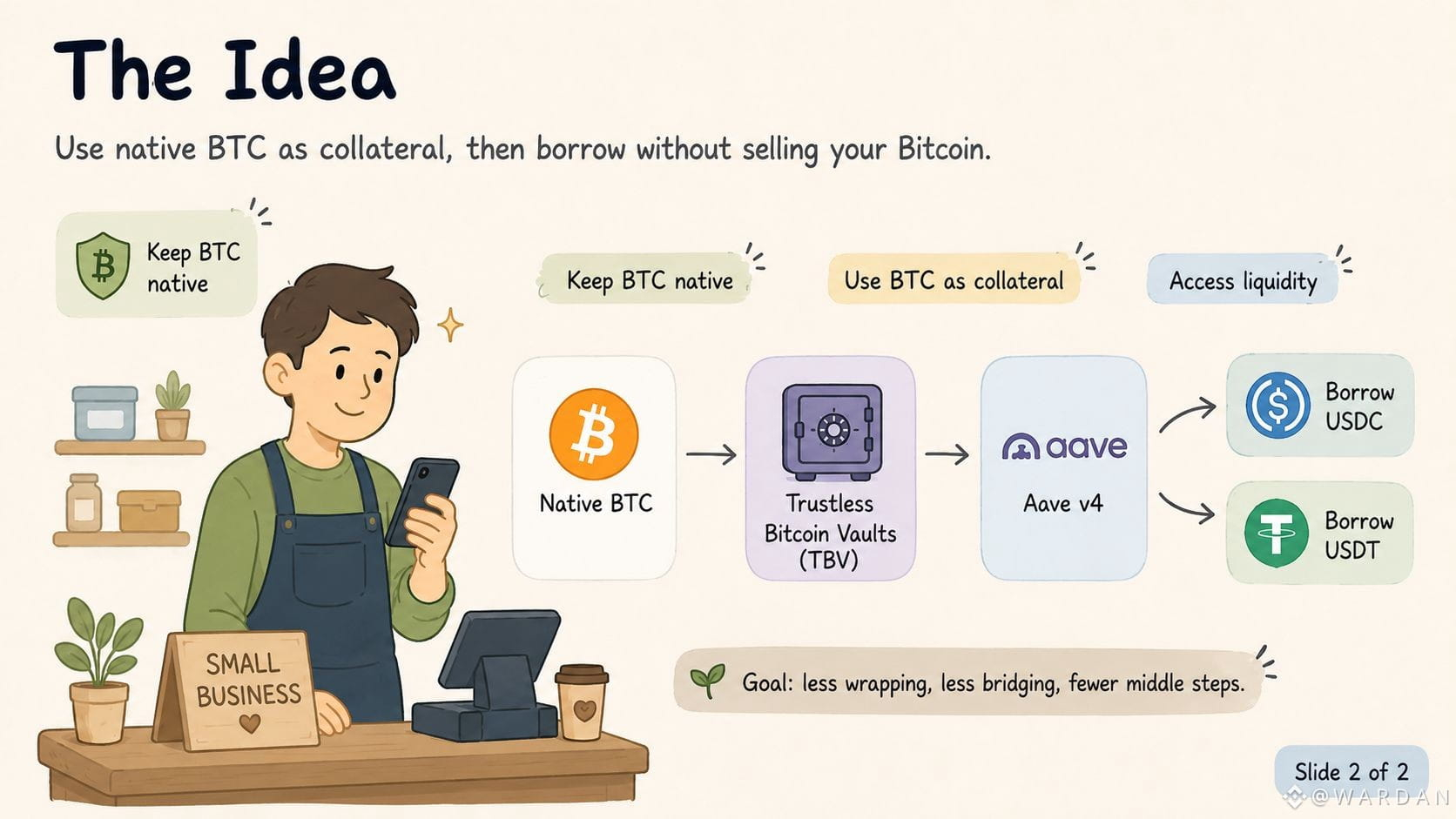
كنت أُمرّر الصفحة العامة لشبكة الاختبار (testnet) الخاصة ببابل على هاتفي حين أوقفتني مسألة صغيرة: إذا كان الاقتراض مقابل البيتكوين موجودًا بالفعل، فماذا هو الجديد هنا؟ عدتُ خطوةً إلى الوراء خلال التدفق، وفتحت روابط الـtestnet، وراجعت الخطوات، وأصبح الجواب أوضح. الفكرة الحقيقية ليست القرض نفسه. الفكرة الحقيقية هي الحفاظ على البيتكوين بوضعه الأصلي مع استخدامه كضمان.
صاحب مشروع صغير يغلق متجره بينما يرسل إليه أحد المورّدين رسالة يطلب فيها الدفع بحلول صباح اليوم التالي. معظم مدخراته موجودة في البيتكوين. لا يريد بيعها لأنه يخطط للاحتفاظ بها لسنوات، لكنه ما زال يحتاج إلى أموال قصيرة الأجل. يفتح محفظته، ويتحقق من رصيد الـBTC، ويبدأ البحث عن حل. بسرعة كبيرة يكتشف البيتكوين المعرّف (wrapped Bitcoin)، والجسور (bridges)، وخدمات الحفظ (custodians)، وشبكات مختلفة. ما بدا كقرض بسيط الآن صار يتضمن خطوات إضافية وأشياء جديدة يجب الوثوق بها.
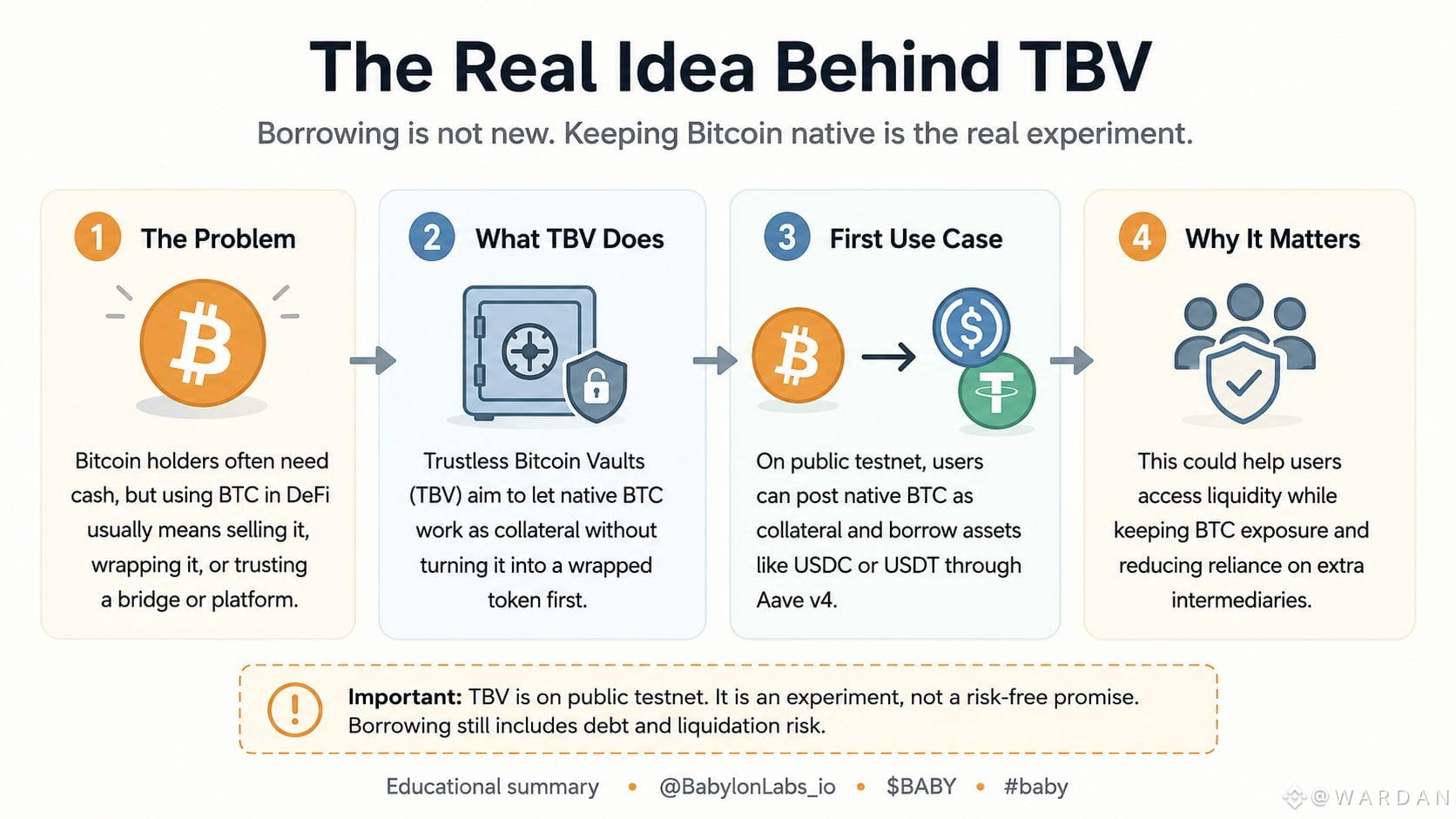
هذه هي المشكلة التي تحاول حلول «Trustless Bitcoin Vaults» (TBV) معالجتها. صُممت TBV بحيث تعمل بيتكوين الأصلية كضمان دون الحاجة أولًا إلى تحويلها إلى توكن مُلتف (wrapped) أو منح السيطرة إلى مُقرض مركزي.
تربط الحالة الاستخدام الأولى بين الاقتراض المضمون ببيتكوين الأصلية وAave v4. يستطيع المستخدم إيداع بيتكوين أصلية كضمان واقتراض أصول مدعومة مثل USDC أو USDT على شبكة Ethereum. الجزء المهم ليس فقط استلام عملات مستقرة. فهذا يحدث بالفعل في أسواق إقراض كثيرة. الجزء المثير للاهتمام هو محاولة الوصول إلى هذه السيولة مع بقاء الضمان بيتكوين أصلية.
الـtestnet العام هو المكان الذي تتحول فيه هذه الفكرة من مجرد جملة نظيفة إلى شيء ملموس. يجب على المستخدم فتح التطبيق، وطلب/استلام توكنات اختبار، واتباع خطوات الاقتراض، ثم التحقق من المعاملة في الـexplorer، وملاحظة ما إذا كانت العملية تبدو واضحة أو مربكة.
لا تزال TBV على شبكة الاختبار، لذا لا ينبغي اعتبارها مكتملة أو خالية من المخاطر. الاقتراض ما يزال يعني دينًا وفائدة وخطر التصفية. لكن السؤال الكامن خلف ذلك قوي: هل يمكن لحامل بيتكوين الوصول إلى سيولة دون بيع BTC أو لفّه أو تسليمه إلى شركة مركزية؟
هذا هو الجزء الذي أجدني أستحق متابعته أكثر ما يستحق.
@babylonlabs_io $BABY #baby
كنت أُمرّر الصفحة العامة لشبكة الاختبار (testnet) الخاصة ببابل على هاتفي حين أوقفتني مسألة صغيرة: إذا كان الاقتراض مقابل البيتكوين موجودًا بالفعل، فماذا هو الجديد هنا؟ عدتُ خطوةً إلى الوراء خلال التدفق، وفتحت روابط الـtestnet، وراجعت الخطوات، وأصبح الجواب أوضح. الفكرة الحقيقية ليست القرض نفسه. الفكرة الحقيقية هي الحفاظ على البيتكوين بوضعه الأصلي مع استخدامه كضمان.
صاحب مشروع صغير يغلق متجره بينما يرسل إليه أحد المورّدين رسالة يطلب فيها الدفع بحلول صباح اليوم التالي. معظم مدخراته موجودة في البيتكوين. لا يريد بيعها لأنه يخطط للاحتفاظ بها لسنوات، لكنه ما زال يحتاج إلى أموال قصيرة الأجل. يفتح محفظته، ويتحقق من رصيد الـBTC، ويبدأ البحث عن حل. بسرعة كبيرة يكتشف البيتكوين المعرّف (wrapped Bitcoin)، والجسور (bridges)، وخدمات الحفظ (custodians)، وشبكات مختلفة. ما بدا كقرض بسيط الآن صار يتضمن خطوات إضافية وأشياء جديدة يجب الوثوق بها.
هذه هي المشكلة التي تحاول حلول «Trustless Bitcoin Vaults» (TBV) معالجتها. صُممت TBV بحيث تعمل بيتكوين الأصلية كضمان دون الحاجة أولًا إلى تحويلها إلى توكن مُلتف (wrapped) أو منح السيطرة إلى مُقرض مركزي.
تربط الحالة الاستخدام الأولى بين الاقتراض المضمون ببيتكوين الأصلية وAave v4. يستطيع المستخدم إيداع بيتكوين أصلية كضمان واقتراض أصول مدعومة مثل USDC أو USDT على شبكة Ethereum. الجزء المهم ليس فقط استلام عملات مستقرة. فهذا يحدث بالفعل في أسواق إقراض كثيرة. الجزء المثير للاهتمام هو محاولة الوصول إلى هذه السيولة مع بقاء الضمان بيتكوين أصلية.
الـtestnet العام هو المكان الذي تتحول فيه هذه الفكرة من مجرد جملة نظيفة إلى شيء ملموس. يجب على المستخدم فتح التطبيق، وطلب/استلام توكنات اختبار، واتباع خطوات الاقتراض، ثم التحقق من المعاملة في الـexplorer، وملاحظة ما إذا كانت العملية تبدو واضحة أو مربكة.
لا تزال TBV على شبكة الاختبار، لذا لا ينبغي اعتبارها مكتملة أو خالية من المخاطر. الاقتراض ما يزال يعني دينًا وفائدة وخطر التصفية. لكن السؤال الكامن خلف ذلك قوي: هل يمكن لحامل بيتكوين الوصول إلى سيولة دون بيع BTC أو لفّه أو تسليمه إلى شركة مركزية؟
هذا هو الجزء الذي أجدني أستحق متابعته أكثر ما يستحق.
@BabylonLabs_io $BABY #baby
صاحب مشروع صغير يغلق متجره بينما يرسل إليه أحد المورّدين رسالة يطلب فيها الدفع بحلول صباح اليوم التالي. معظم مدخراته موجودة في البيتكوين. لا يريد بيعها لأنه يخطط للاحتفاظ بها لسنوات، لكنه ما زال يحتاج إلى أموال قصيرة الأجل. يفتح محفظته، ويتحقق من رصيد الـBTC، ويبدأ البحث عن حل. بسرعة كبيرة يكتشف البيتكوين المعرّف (wrapped Bitcoin)، والجسور (bridges)، وخدمات الحفظ (custodians)، وشبكات مختلفة. ما بدا كقرض بسيط الآن صار يتضمن خطوات إضافية وأشياء جديدة يجب الوثوق بها.
هذه هي المشكلة التي تحاول حلول «Trustless Bitcoin Vaults» (TBV) معالجتها. صُممت TBV بحيث تعمل بيتكوين الأصلية كضمان دون الحاجة أولًا إلى تحويلها إلى توكن مُلتف (wrapped) أو منح السيطرة إلى مُقرض مركزي.
تربط الحالة الاستخدام الأولى بين الاقتراض المضمون ببيتكوين الأصلية وAave v4. يستطيع المستخدم إيداع بيتكوين أصلية كضمان واقتراض أصول مدعومة مثل USDC أو USDT على شبكة Ethereum. الجزء المهم ليس فقط استلام عملات مستقرة. فهذا يحدث بالفعل في أسواق إقراض كثيرة. الجزء المثير للاهتمام هو محاولة الوصول إلى هذه السيولة مع بقاء الضمان بيتكوين أصلية.
الـtestnet العام هو المكان الذي تتحول فيه هذه الفكرة من مجرد جملة نظيفة إلى شيء ملموس. يجب على المستخدم فتح التطبيق، وطلب/استلام توكنات اختبار، واتباع خطوات الاقتراض، ثم التحقق من المعاملة في الـexplorer، وملاحظة ما إذا كانت العملية تبدو واضحة أو مربكة.
لا تزال TBV على شبكة الاختبار، لذا لا ينبغي اعتبارها مكتملة أو خالية من المخاطر. الاقتراض ما يزال يعني دينًا وفائدة وخطر التصفية. لكن السؤال الكامن خلف ذلك قوي: هل يمكن لحامل بيتكوين الوصول إلى سيولة دون بيع BTC أو لفّه أو تسليمه إلى شركة مركزية؟
هذا هو الجزء الذي أجدني أستحق متابعته أكثر ما يستحق.
@BabylonLabs_io $BABY #baby
1
149
·
--
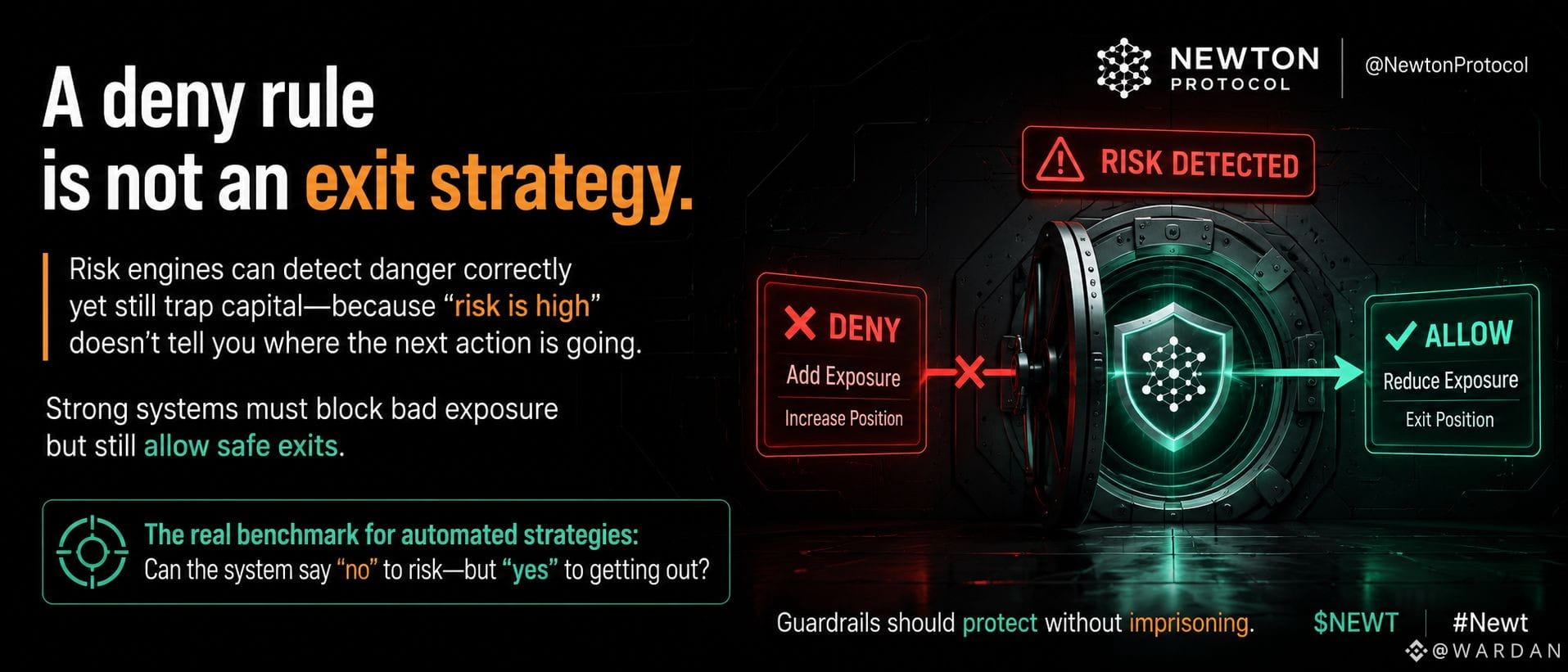
يمكن لمحرك المخاطر أن يفشل حتى عندما يكتشف الخطر بشكل صحيح.
هذا هو الاختبار غير المريح لـ @NewtonProtocol l و $NEWT
تخيّل أن خزنة تصطدم بعتبة هبوط (depeg) أو هبوط/سحب (drawdown). السياسة ترى المخاطر وتبدأ برفض المعاملات. حسنًا. لكن السؤال الحقيقي هو ما إذا كانت تستطيع التمييز بين إجراء يزيد التعرض وإجراء يقلّله.
لأن عبارة “المخاطر مرتفعة” هي مجرد وصف للحالة الحالية. لا تخبرك إلى أين ستأخذ الصفقة التالية الخزنة.
قد تؤدي قاعدة رفض صارمة إلى حجب الاتجاهين معًا.
وهذا يخلق نمط فشلًا غريبًا: يتعرّف النظام على الخطر، ويطبّق القاعدة حرفيًا كما كُتبت، ومع ذلك يحبس رأس المال داخل الحالة التي صُمم لحمايتها.
لهذا السبب، أهمية اتجاه الإجراء أكبر من مجرد اكتشاف المخاطر الخام لاستراتيجيات الأتمتة.
يجب على طبقة السياسة أن تقيم ليس فقط ما هو خاطئ الآن، بل ما إذا كانت النية المقترحة تجعل المركز أكثر أمانًا أو أسوأ. إضافة التعرض أثناء هبوط (depeg) والخروج من هذا التعرض لا ينبغي أن تحصل على الإجابة نفسها لمجرد أن كلا المعاملتين تحدثان تحت نفس راية المخاطر.
إن قاعدة الرفض ليست خطة خروج.
بالنسبة لنيوتن، فإن المعيار الأكثر صعوبة ليس مدى موثوقية السياسات في قول “لا”. بل هل يمكنها أن تقول: لا، لا يمكنك إضافة هذا الخطر—لكن نعم، يمكنك الخروج منه.
قد يحدد هذا الفرق ما إذا كانت الحواجز القابلة للبرمجة تصبح ضوابط مخاطر مؤسسية حقيقية أم مجرد أقفال شديدة الكفاءة.
#Newt
يمكن لمحرك المخاطر أن يفشل حتى عندما يكتشف الخطر بشكل صحيح.
هذا هو الاختبار غير المريح لـ @NewtonProtocol l و $NEWT
تخيّل أن خزنة تصطدم بعتبة هبوط (depeg) أو هبوط/سحب (drawdown). السياسة ترى المخاطر وتبدأ برفض المعاملات. حسنًا. لكن السؤال الحقيقي هو ما إذا كانت تستطيع التمييز بين إجراء يزيد التعرض وإجراء يقلّله.
لأن عبارة “المخاطر مرتفعة” هي مجرد وصف للحالة الحالية. لا تخبرك إلى أين ستأخذ الصفقة التالية الخزنة.
قد تؤدي قاعدة رفض صارمة إلى حجب الاتجاهين معًا.
وهذا يخلق نمط فشلًا غريبًا: يتعرّف النظام على الخطر، ويطبّق القاعدة حرفيًا كما كُتبت، ومع ذلك يحبس رأس المال داخل الحالة التي صُمم لحمايتها.
لهذا السبب، أهمية اتجاه الإجراء أكبر من مجرد اكتشاف المخاطر الخام لاستراتيجيات الأتمتة.
يجب على طبقة السياسة أن تقيم ليس فقط ما هو خاطئ الآن، بل ما إذا كانت النية المقترحة تجعل المركز أكثر أمانًا أو أسوأ. إضافة التعرض أثناء هبوط (depeg) والخروج من هذا التعرض لا ينبغي أن تحصل على الإجابة نفسها لمجرد أن كلا المعاملتين تحدثان تحت نفس راية المخاطر.
إن قاعدة الرفض ليست خطة خروج.
بالنسبة لنيوتن، فإن المعيار الأكثر صعوبة ليس مدى موثوقية السياسات في قول “لا”. بل هل يمكنها أن تقول: لا، لا يمكنك إضافة هذا الخطر—لكن نعم، يمكنك الخروج منه.
قد يحدد هذا الفرق ما إذا كانت الحواجز القابلة للبرمجة تصبح ضوابط مخاطر مؤسسية حقيقية أم مجرد أقفال شديدة الكفاءة.
#Newt
هذا هو الاختبار غير المريح لـ @NewtonProtocol l و $NEWT
تخيّل أن خزنة تصطدم بعتبة هبوط (depeg) أو هبوط/سحب (drawdown). السياسة ترى المخاطر وتبدأ برفض المعاملات. حسنًا. لكن السؤال الحقيقي هو ما إذا كانت تستطيع التمييز بين إجراء يزيد التعرض وإجراء يقلّله.
لأن عبارة “المخاطر مرتفعة” هي مجرد وصف للحالة الحالية. لا تخبرك إلى أين ستأخذ الصفقة التالية الخزنة.
قد تؤدي قاعدة رفض صارمة إلى حجب الاتجاهين معًا.
وهذا يخلق نمط فشلًا غريبًا: يتعرّف النظام على الخطر، ويطبّق القاعدة حرفيًا كما كُتبت، ومع ذلك يحبس رأس المال داخل الحالة التي صُمم لحمايتها.
لهذا السبب، أهمية اتجاه الإجراء أكبر من مجرد اكتشاف المخاطر الخام لاستراتيجيات الأتمتة.
يجب على طبقة السياسة أن تقيم ليس فقط ما هو خاطئ الآن، بل ما إذا كانت النية المقترحة تجعل المركز أكثر أمانًا أو أسوأ. إضافة التعرض أثناء هبوط (depeg) والخروج من هذا التعرض لا ينبغي أن تحصل على الإجابة نفسها لمجرد أن كلا المعاملتين تحدثان تحت نفس راية المخاطر.
إن قاعدة الرفض ليست خطة خروج.
بالنسبة لنيوتن، فإن المعيار الأكثر صعوبة ليس مدى موثوقية السياسات في قول “لا”. بل هل يمكنها أن تقول: لا، لا يمكنك إضافة هذا الخطر—لكن نعم، يمكنك الخروج منه.
قد يحدد هذا الفرق ما إذا كانت الحواجز القابلة للبرمجة تصبح ضوابط مخاطر مؤسسية حقيقية أم مجرد أقفال شديدة الكفاءة.
#Newt
2
1
110
·
--
مقالة
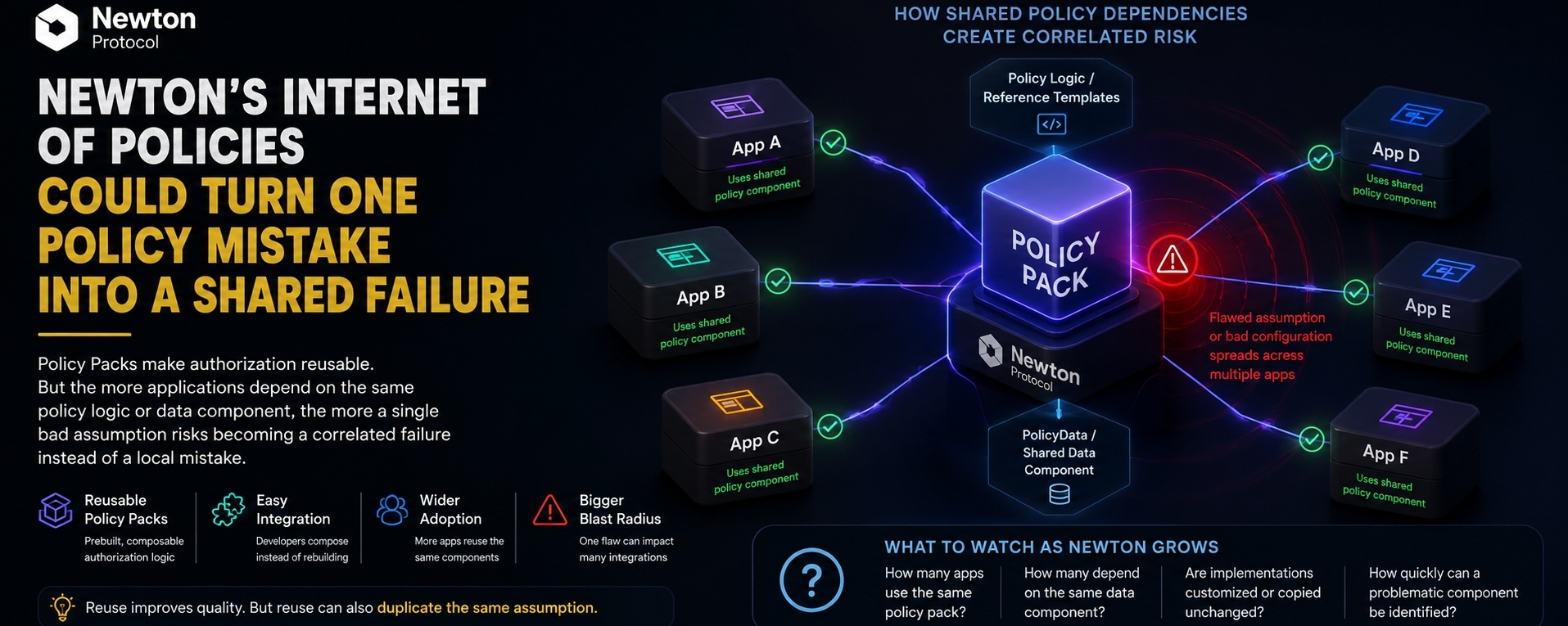
قد تصبح حزم سياسات نيوتن أكثر أهمية من التطبيقات التي تستخدمهاالجزء من نيوتن الذي جعلني أتوقف لم يكن فشلًا. بل كان ذلك هو الملاءمة. تُعد حزم السياسات مفيدة لأن المُنشئ لا يحتاج إلى إعادة إنشاء منطق التفويض نفسه في كل مرة. يمكن إعادة استخدام مكوّن سياسة يعمل، ودمجه مع مكوّنات أخرى، وتكييفه داخل تطبيق جديد. ومن وجهة نظر المطور، فهذا بالضبط ما ينبغي للبنية التحتية الجيدة أن تفعله.
لكن الملاءمة تغيّر السلوك.
عندما يعثر المطورون على مكوّن يعمل بالفعل، فإن كثيرين منهم سيختارونه. فهم يوفرون الوقت، ويقلّلون من عملهم الهندسي الخاص، ويتجنبون إعادة بناء عناصر التحكم التي كانت موجودة بالفعل. يمكن لمجموعة حزم شائعة أن تصبح تدريجيًا الخيار المعتاد دون أن يتخذ أحد قرارًا رسميًا بأن عليها أن تصبح معيارًا.
قد تصبح حزم سياسات نيوتن أكثر أهمية من التطبيقات التي تستخدمها
الجزء من نيوتن الذي جعلني أتوقف لم يكن فشلًا. بل كان ذلك هو الملاءمة. تُعد حزم السياسات مفيدة لأن المُنشئ لا يحتاج إلى إعادة إنشاء منطق التفويض نفسه في كل مرة. يمكن إعادة استخدام مكوّن سياسة يعمل، ودمجه مع مكوّنات أخرى، وتكييفه داخل تطبيق جديد. ومن وجهة نظر المطور، فهذا بالضبط ما ينبغي للبنية التحتية الجيدة أن تفعله.
لكن الملاءمة تغيّر السلوك.
عندما يعثر المطورون على مكوّن يعمل بالفعل، فإن كثيرين منهم سيختارونه. فهم يوفرون الوقت، ويقلّلون من عملهم الهندسي الخاص، ويتجنبون إعادة بناء عناصر التحكم التي كانت موجودة بالفعل. يمكن لمجموعة حزم شائعة أن تصبح تدريجيًا الخيار المعتاد دون أن يتخذ أحد قرارًا رسميًا بأن عليها أن تصبح معيارًا.
لكن الملاءمة تغيّر السلوك.
عندما يعثر المطورون على مكوّن يعمل بالفعل، فإن كثيرين منهم سيختارونه. فهم يوفرون الوقت، ويقلّلون من عملهم الهندسي الخاص، ويتجنبون إعادة بناء عناصر التحكم التي كانت موجودة بالفعل. يمكن لمجموعة حزم شائعة أن تصبح تدريجيًا الخيار المعتاد دون أن يتخذ أحد قرارًا رسميًا بأن عليها أن تصبح معيارًا.
4
1
200
·
--
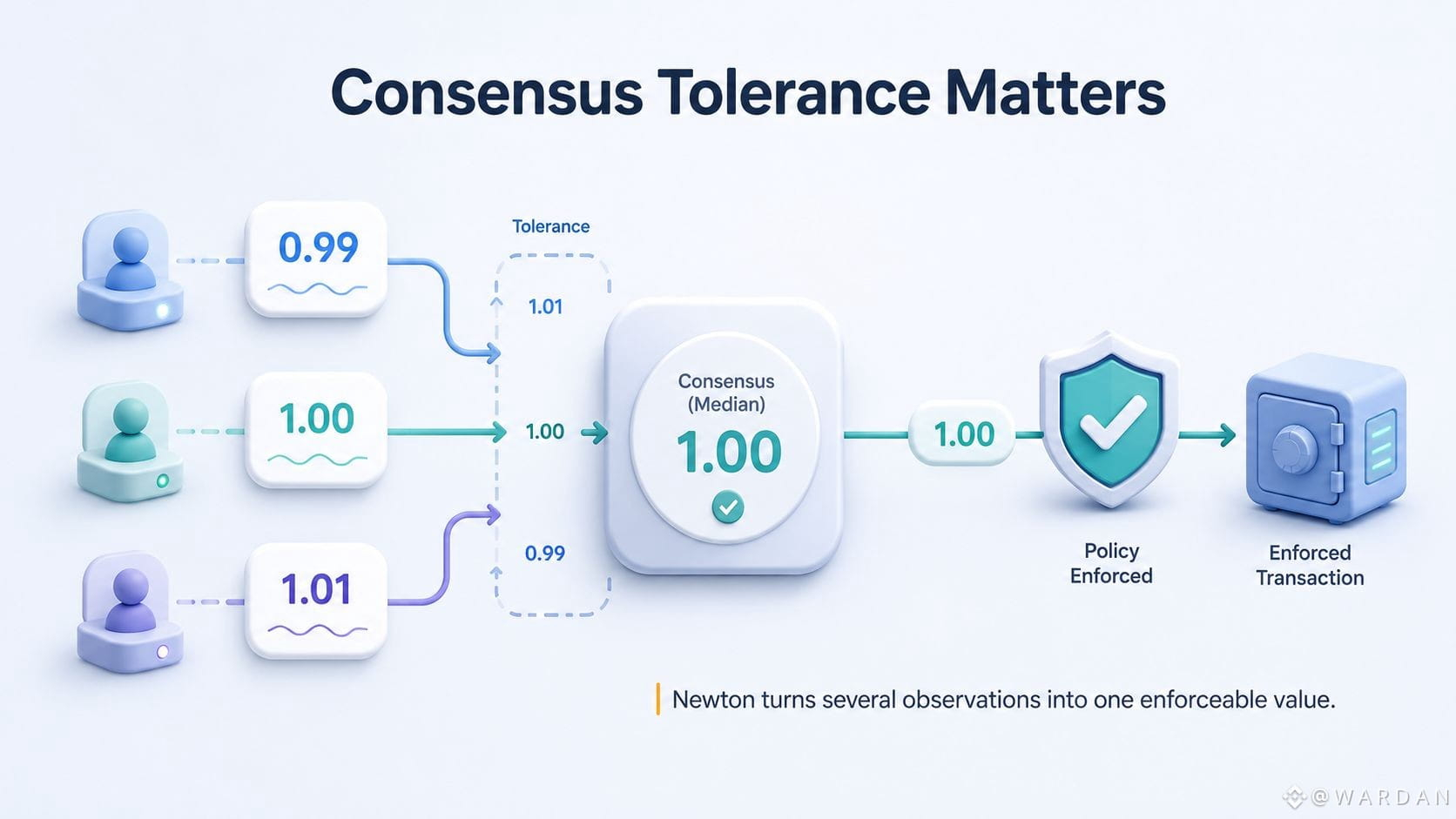
غدًا صباحًا، أثناء مراجعة تدفق الإجماع لنيوتن، كتبتُ ثلاثة قراءات سعر مختلفة قليلًا بجانب بعضها. في البداية، تعاملتُ مع الفجوة باعتبارها ضوضاءً عادية في السوق. لكن عندما حوّل نيوتن تلك القراءات إلى قيمة وسيطة واحدة، بدأت عتبة السياسة «الدقيقة» تبدو أقل بساطة.
قد يسترجع مشغّلو نيوتن قيمًا رقمية مختلفة. تقوم البوابة بحساب الوسيط، وتتحقق مما إذا كانت القراءات تظل ضمن التسامح المُعدّ، ثم تمنح السياسة قيمةً مشتركة واحدة لتقييمها. هذا يساعد على منع قراءة متأخرة أو غير طبيعية واحدة من التحكم في القرار.
هذا التصميم مفيد، لكن يصبح التسامح مهمًا عندما تكون قاعدة في أحد الأقبية قريبة من حد ضيق في السعر أو المخاطر أو الرافعة أو حالة فكّ الربط (depeg). في تلك الحالة، لا يعتمد النتيجة فقط على العتبة المكتوبة في السياسة، بل أيضًا على مقدار الخلاف الذي يسمح به نيوتن قبل إنشاء الوسيط.
لا يثبت ذلك أن الافتراضي الموثّق لدى نيوتن بنسبة 10% يُستخدم في كل سياسة تشغيلية، ولا أن التفويضات الحالية غير دقيقة. يمكن ضبط التسامح، ويمكن للقيم الواقعة خارجه أن تفشل الإجماع بدلًا من أن تُقبل.
لن أُحكم على سياسة نيوتن فقط عبر السؤال عن أي أوراكل يزوّد البيانات. سأريد أيضًا معرفة مدى اختلاف قراءات المشغّل، أي تسامح تم اختياره، ومدى قرب الوسيط النهائي من حد السياسة. يصبح إجماع الوسيط مفيدًا فقط عندما يتوافق مقدار الخلاف المسموح مع حساسية الأموال التي يتم حمايتها.
@NewtonProtocol $NEWT #Newt
غدًا صباحًا، أثناء مراجعة تدفق الإجماع لنيوتن، كتبتُ ثلاثة قراءات سعر مختلفة قليلًا بجانب بعضها. في البداية، تعاملتُ مع الفجوة باعتبارها ضوضاءً عادية في السوق. لكن عندما حوّل نيوتن تلك القراءات إلى قيمة وسيطة واحدة، بدأت عتبة السياسة «الدقيقة» تبدو أقل بساطة.
قد يسترجع مشغّلو نيوتن قيمًا رقمية مختلفة. تقوم البوابة بحساب الوسيط، وتتحقق مما إذا كانت القراءات تظل ضمن التسامح المُعدّ، ثم تمنح السياسة قيمةً مشتركة واحدة لتقييمها. هذا يساعد على منع قراءة متأخرة أو غير طبيعية واحدة من التحكم في القرار.
هذا التصميم مفيد، لكن يصبح التسامح مهمًا عندما تكون قاعدة في أحد الأقبية قريبة من حد ضيق في السعر أو المخاطر أو الرافعة أو حالة فكّ الربط (depeg). في تلك الحالة، لا يعتمد النتيجة فقط على العتبة المكتوبة في السياسة، بل أيضًا على مقدار الخلاف الذي يسمح به نيوتن قبل إنشاء الوسيط.
لا يثبت ذلك أن الافتراضي الموثّق لدى نيوتن بنسبة 10% يُستخدم في كل سياسة تشغيلية، ولا أن التفويضات الحالية غير دقيقة. يمكن ضبط التسامح، ويمكن للقيم الواقعة خارجه أن تفشل الإجماع بدلًا من أن تُقبل.
لن أُحكم على سياسة نيوتن فقط عبر السؤال عن أي أوراكل يزوّد البيانات. سأريد أيضًا معرفة مدى اختلاف قراءات المشغّل، أي تسامح تم اختياره، ومدى قرب الوسيط النهائي من حد السياسة. يصبح إجماع الوسيط مفيدًا فقط عندما يتوافق مقدار الخلاف المسموح مع حساسية الأموال التي يتم حمايتها.
@NewtonProtocol $NEWT #Newt
قد يسترجع مشغّلو نيوتن قيمًا رقمية مختلفة. تقوم البوابة بحساب الوسيط، وتتحقق مما إذا كانت القراءات تظل ضمن التسامح المُعدّ، ثم تمنح السياسة قيمةً مشتركة واحدة لتقييمها. هذا يساعد على منع قراءة متأخرة أو غير طبيعية واحدة من التحكم في القرار.
هذا التصميم مفيد، لكن يصبح التسامح مهمًا عندما تكون قاعدة في أحد الأقبية قريبة من حد ضيق في السعر أو المخاطر أو الرافعة أو حالة فكّ الربط (depeg). في تلك الحالة، لا يعتمد النتيجة فقط على العتبة المكتوبة في السياسة، بل أيضًا على مقدار الخلاف الذي يسمح به نيوتن قبل إنشاء الوسيط.
لا يثبت ذلك أن الافتراضي الموثّق لدى نيوتن بنسبة 10% يُستخدم في كل سياسة تشغيلية، ولا أن التفويضات الحالية غير دقيقة. يمكن ضبط التسامح، ويمكن للقيم الواقعة خارجه أن تفشل الإجماع بدلًا من أن تُقبل.
لن أُحكم على سياسة نيوتن فقط عبر السؤال عن أي أوراكل يزوّد البيانات. سأريد أيضًا معرفة مدى اختلاف قراءات المشغّل، أي تسامح تم اختياره، ومدى قرب الوسيط النهائي من حد السياسة. يصبح إجماع الوسيط مفيدًا فقط عندما يتوافق مقدار الخلاف المسموح مع حساسية الأموال التي يتم حمايتها.
@NewtonProtocol $NEWT #Newt
4
1
98
·
--
مقالة
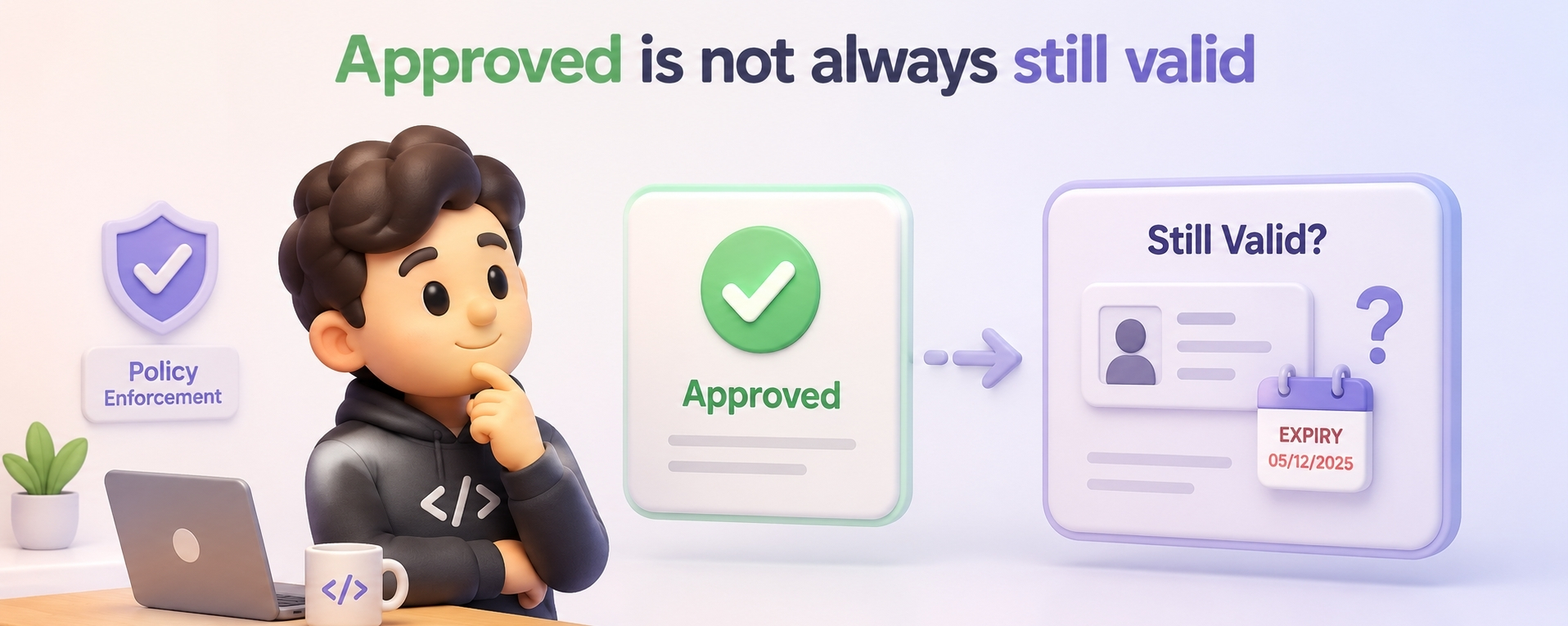
يمكن لـ Newton الخاص بـ KYC أن يثبت أنك تمت الموافقة عليك دون إثبات أن هويتك لا تزال صالحةكنت أنسخ ثلاث عمليات تحقق من هوية نيوتن إلى ملاحظاتي عندما أصبح الفرق بينها واضحًا أخيرًا. إحداها كانت تتحقق مما إذا كان المستخدم قد تمت الموافقة عليه. وأخرى كانت تتحقق مما إذا كانت الوثيقة قد انتهت صلاحيتها. ويمكن أن تطلب الثالثة أن تظل الوثيقة صالحة لمدة دنيا محددة.
في البداية، كنت أتعامل مع هذه باعتبارها طرقًا مختلفة لطرح السؤال نفسه. إنها ليست كذلك.
تكشف نيوتن check_approved() وnot_expired() وvalid_for() كأدوات منفصلة لمطوّر السياسات. يقرر المطوّر الشروط التي يجب أن تنجح قبل أن يتمكن المستخدم من تنفيذ إجراء محمي.
يمكن لـ Newton الخاص بـ KYC أن يثبت أنك تمت الموافقة عليك دون إثبات أن هويتك لا تزال صالحة
كنت أنسخ ثلاث عمليات تحقق من هوية نيوتن إلى ملاحظاتي عندما أصبح الفرق بينها واضحًا أخيرًا. إحداها كانت تتحقق مما إذا كان المستخدم قد تمت الموافقة عليه. وأخرى كانت تتحقق مما إذا كانت الوثيقة قد انتهت صلاحيتها. ويمكن أن تطلب الثالثة أن تظل الوثيقة صالحة لمدة دنيا محددة.
في البداية، كنت أتعامل مع هذه باعتبارها طرقًا مختلفة لطرح السؤال نفسه. إنها ليست كذلك.
تكشف نيوتن check_approved() وnot_expired() وvalid_for() كأدوات منفصلة لمطوّر السياسات. يقرر المطوّر الشروط التي يجب أن تنجح قبل أن يتمكن المستخدم من تنفيذ إجراء محمي.
في البداية، كنت أتعامل مع هذه باعتبارها طرقًا مختلفة لطرح السؤال نفسه. إنها ليست كذلك.
تكشف نيوتن check_approved() وnot_expired() وvalid_for() كأدوات منفصلة لمطوّر السياسات. يقرر المطوّر الشروط التي يجب أن تنجح قبل أن يتمكن المستخدم من تنفيذ إجراء محمي.
7
4
144
·
--
لا تعني عملية تكامل نيوتن أن التطبيق بأكمله محمي
كنت أراجع تدفق تكامل العقود الذكية من نيوتن عندما غيّر تفصيل صغير طريقة فهمي لادعاء الأمان.
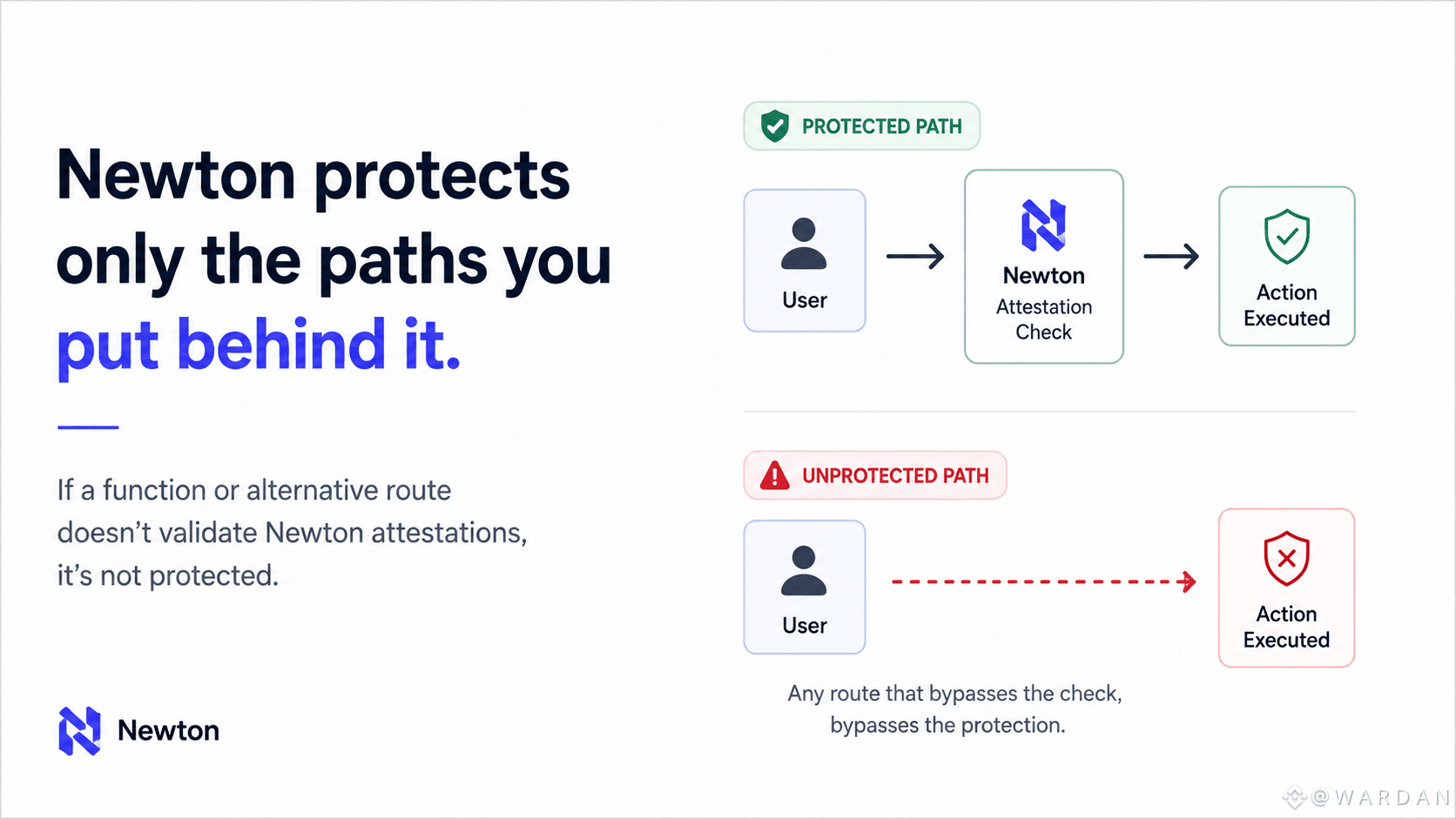
لا يقوم نيوتن تلقائيًا بحماية تطبيق كامل لمجرد أن المشروع قام بدمجه.
يجب على المطوّر وضع فحص إقرار نيوتن داخل كل دالة حسّاسة. يجب أن يحدث هذا الفحص قبل انتقال الأموال أو تنفيذ الإجراء الرئيسي. كما يجب أن يؤكد أن الموافقة تخص الدالة الدقيقة التي يتم استدعاؤها.
يبدو هذا كأنه تفصيل تقني، لكن المعنى العملي بسيط.
تخيّل تطبيقًا يحمي دالة السحب الرئيسية عبر نيوتن، لكن دالة أخرى يمكنها نقل نفس الأموال عبر مسار مختلف. قد يتمكن مشغّلو نيوتن من تقييم السياسة بشكل صحيح في كل مرة، ومع ذلك قد يبقى ذلك المسار الثاني خارج نطاق الحماية.
وأفهم أيضًا لماذا يمنح نيوتن المطوّرين هذه المرونة. كل تطبيق يعمل بشكل مختلف. قد يؤدي إجبار فحوصات التفويض على كل دالة صغيرة إلى زيادة التكلفة وجعل عملية التكامل أكثر تعقيدًا مما يلزم.
لكن هذه المرونة تجعل عبارة “مُدمج مع نيوتن” أقل فائدة لوحدها.
قد تعني أن إجراءً واحدًا محمي. وقد تعني أن أهم الإجراءات محمية. أو قد تعني أن كل مسار يمكنه تحقيق نفس النتيجة المالية محمي. هذه مستويات مختلفة تمامًا من الأمان.
لهذا السبب لن أحكم على اعتماد نيوتن فقط بناءً على عدد عمليات التكامل المعلنة.
سأبحث عن شيء أكثر عملية: تدقيق واضح على مستوى الدوال يبيّن بالضبط أي الإجراءات تتطلب تحقق نيوتن وما إذا كان مسار آخر في الكود يمكن أن يصل إلى نفس النتيجة دون ذلك.
يمكن لنيوتن التحقق مما إذا كان الإجراء يتبع السياسة.
لا يزال المطوّر هو من يقرر أي الإجراءات يجب أن تواجه هذا التحقق.
@NewtonProtocol $NEWT #Newt
لا تعني عملية تكامل نيوتن أن التطبيق بأكمله محمي
كنت أراجع تدفق تكامل العقود الذكية من نيوتن عندما غيّر تفصيل صغير طريقة فهمي لادعاء الأمان.
لا يقوم نيوتن تلقائيًا بحماية تطبيق كامل لمجرد أن المشروع قام بدمجه.
يجب على المطوّر وضع فحص إقرار نيوتن داخل كل دالة حسّاسة. يجب أن يحدث هذا الفحص قبل انتقال الأموال أو تنفيذ الإجراء الرئيسي. كما يجب أن يؤكد أن الموافقة تخص الدالة الدقيقة التي يتم استدعاؤها.
يبدو هذا كأنه تفصيل تقني، لكن المعنى العملي بسيط.
تخيّل تطبيقًا يحمي دالة السحب الرئيسية عبر نيوتن، لكن دالة أخرى يمكنها نقل نفس الأموال عبر مسار مختلف. قد يتمكن مشغّلو نيوتن من تقييم السياسة بشكل صحيح في كل مرة، ومع ذلك قد يبقى ذلك المسار الثاني خارج نطاق الحماية.
وأفهم أيضًا لماذا يمنح نيوتن المطوّرين هذه المرونة. كل تطبيق يعمل بشكل مختلف. قد يؤدي إجبار فحوصات التفويض على كل دالة صغيرة إلى زيادة التكلفة وجعل عملية التكامل أكثر تعقيدًا مما يلزم.
لكن هذه المرونة تجعل عبارة “مُدمج مع نيوتن” أقل فائدة لوحدها.
قد تعني أن إجراءً واحدًا محمي. وقد تعني أن أهم الإجراءات محمية. أو قد تعني أن كل مسار يمكنه تحقيق نفس النتيجة المالية محمي. هذه مستويات مختلفة تمامًا من الأمان.
لهذا السبب لن أحكم على اعتماد نيوتن فقط بناءً على عدد عمليات التكامل المعلنة.
سأبحث عن شيء أكثر عملية: تدقيق واضح على مستوى الدوال يبيّن بالضبط أي الإجراءات تتطلب تحقق نيوتن وما إذا كان مسار آخر في الكود يمكن أن يصل إلى نفس النتيجة دون ذلك.
يمكن لنيوتن التحقق مما إذا كان الإجراء يتبع السياسة.
لا يزال المطوّر هو من يقرر أي الإجراءات يجب أن تواجه هذا التحقق.
@NewtonProtocol $NEWT #Newt
كنت أراجع تدفق تكامل العقود الذكية من نيوتن عندما غيّر تفصيل صغير طريقة فهمي لادعاء الأمان.
لا يقوم نيوتن تلقائيًا بحماية تطبيق كامل لمجرد أن المشروع قام بدمجه.
يجب على المطوّر وضع فحص إقرار نيوتن داخل كل دالة حسّاسة. يجب أن يحدث هذا الفحص قبل انتقال الأموال أو تنفيذ الإجراء الرئيسي. كما يجب أن يؤكد أن الموافقة تخص الدالة الدقيقة التي يتم استدعاؤها.
يبدو هذا كأنه تفصيل تقني، لكن المعنى العملي بسيط.
تخيّل تطبيقًا يحمي دالة السحب الرئيسية عبر نيوتن، لكن دالة أخرى يمكنها نقل نفس الأموال عبر مسار مختلف. قد يتمكن مشغّلو نيوتن من تقييم السياسة بشكل صحيح في كل مرة، ومع ذلك قد يبقى ذلك المسار الثاني خارج نطاق الحماية.
وأفهم أيضًا لماذا يمنح نيوتن المطوّرين هذه المرونة. كل تطبيق يعمل بشكل مختلف. قد يؤدي إجبار فحوصات التفويض على كل دالة صغيرة إلى زيادة التكلفة وجعل عملية التكامل أكثر تعقيدًا مما يلزم.
لكن هذه المرونة تجعل عبارة “مُدمج مع نيوتن” أقل فائدة لوحدها.
قد تعني أن إجراءً واحدًا محمي. وقد تعني أن أهم الإجراءات محمية. أو قد تعني أن كل مسار يمكنه تحقيق نفس النتيجة المالية محمي. هذه مستويات مختلفة تمامًا من الأمان.
لهذا السبب لن أحكم على اعتماد نيوتن فقط بناءً على عدد عمليات التكامل المعلنة.
سأبحث عن شيء أكثر عملية: تدقيق واضح على مستوى الدوال يبيّن بالضبط أي الإجراءات تتطلب تحقق نيوتن وما إذا كان مسار آخر في الكود يمكن أن يصل إلى نفس النتيجة دون ذلك.
يمكن لنيوتن التحقق مما إذا كان الإجراء يتبع السياسة.
لا يزال المطوّر هو من يقرر أي الإجراءات يجب أن تواجه هذا التحقق.
@NewtonProtocol $NEWT #Newt
4
4
195
·
--
مقالة
الحماية التي تنتظر: لماذا يحدث اختبار نيوتن الحقيقي للأمان عندما تحتاج الخزائن إلى السرعة أكثرفي هذه الأمسية، كان لديّ تبويبان في المتصفح مفتوحان جنبًا إلى جنب. على اليسار كانت صفحة التسويق الخاصة ببروتوكول نيوتن، والتي تعد بإيقاف مديري الخزائن من كسر القواعد المحددة سلفًا. وعلى اليمين كانت وثائق VaultKit التقنية التي كنت أنوي مراجعتها. تحدث الإعلان عن حماية قابلة للتنفيذ وسلامة آلية. أما الوثائق فكانت تتحدث عن شيء مختلف تمامًا. توقفت عن التمرير عندما وصلت إلى عبارة "fail-closed". قرأت أن VaultKit لا يقوم بإعادة توجيه إجراء خزنة عندما يتعذر الوصول إلى النصاب الذي يحدده المشغّل، أو عندما تنتهي صلاحية الإقرارات، أو عندما يفشل التحقق من Shield. يتوقف النظام عن تنفيذ المعاملات ليس فقط عندما تُنتهك السياسة، بل أيضًا عندما لا يمكن للمنظومة المسؤولة عن التفويض نفسها إتمام العمل.
الحماية التي تنتظر: لماذا يحدث اختبار نيوتن الحقيقي للأمان عندما تحتاج الخزائن إلى السرعة أكثر
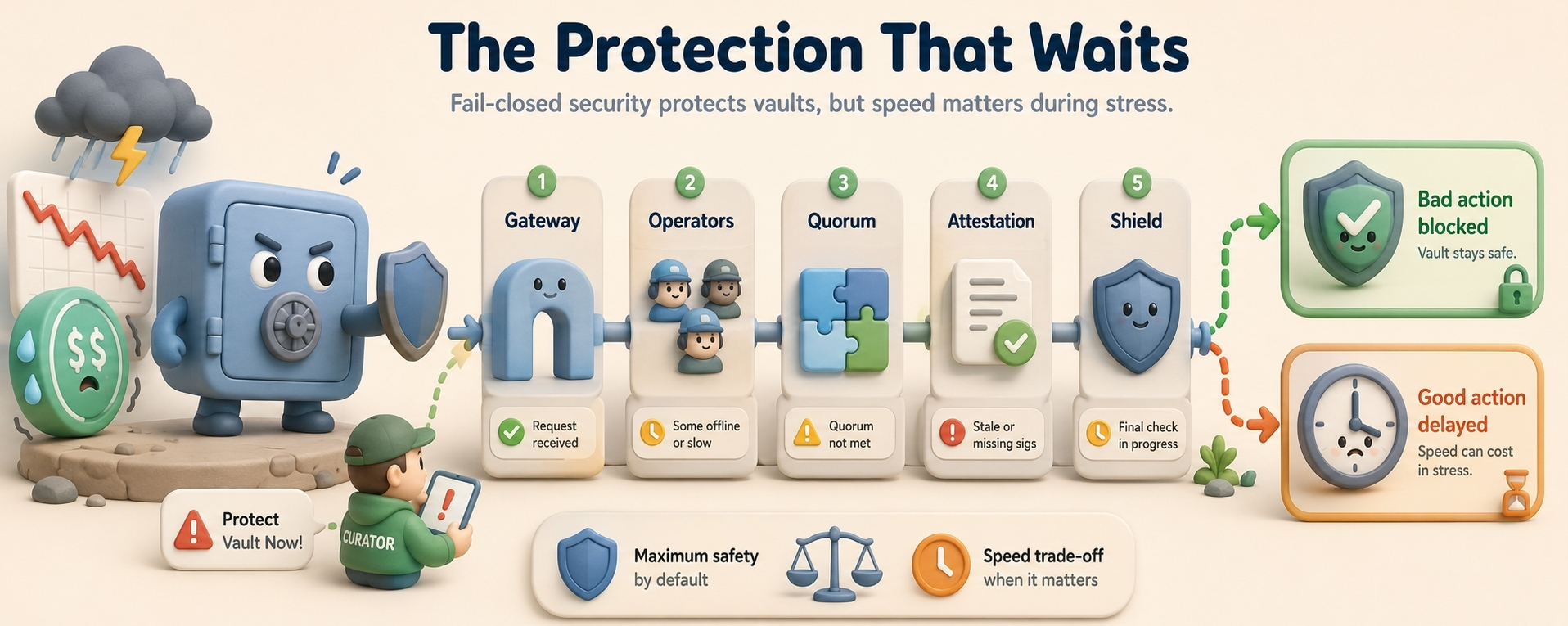
في هذه الأمسية، كان لديّ تبويبان في المتصفح مفتوحان جنبًا إلى جنب. على اليسار كانت صفحة التسويق الخاصة ببروتوكول نيوتن، والتي تعد بإيقاف مديري الخزائن من كسر القواعد المحددة سلفًا. وعلى اليمين كانت وثائق VaultKit التقنية التي كنت أنوي مراجعتها. تحدث الإعلان عن حماية قابلة للتنفيذ وسلامة آلية. أما الوثائق فكانت تتحدث عن شيء مختلف تمامًا. توقفت عن التمرير عندما وصلت إلى عبارة "fail-closed". قرأت أن VaultKit لا يقوم بإعادة توجيه إجراء خزنة عندما يتعذر الوصول إلى النصاب الذي يحدده المشغّل، أو عندما تنتهي صلاحية الإقرارات، أو عندما يفشل التحقق من Shield. يتوقف النظام عن تنفيذ المعاملات ليس فقط عندما تُنتهك السياسة، بل أيضًا عندما لا يمكن للمنظومة المسؤولة عن التفويض نفسها إتمام العمل.
4
3
201
·
--
لقد لاحظت أن معظم مشاريع أتمتة الذكاء الاصطناعي تُقيَّم وفقًا لمدى سرعتها في تنفيذ المهام. لكن السرعة تصبح أقل إثارة للإعجاب عندما لا يستطيع المستخدمون التحقق مما الذي قام به النظام الآلي بالفعل.
وهنا تكتسب فكرة البلوكشين المُجمَّع الآمن في بروتوكول Newton معناها. ليست القيمة الأعمق مجرد السماح باستراتيجيات مدعومة بالذكاء الاصطناعي أو التداول الآلي. بل تتمثل في إنشاء طبقة تنفيذ يمكن للإجراءات الآلية أن تعمل ضمن شروط أكثر وضوحًا للأمان والتحقق.
وهذا مهم لأن الأتمتة تزيد كلاً من الراحة والمسافة. كلما اتخذ النظام مزيدًا من القرارات نيابةً عنا، أصبح من الأصعب ملاحظة أين حدث خطأ ما، سواء تم اتباع التعليمات بشكل صحيح، أو من الذي ينبغي الوثوق به عندما تختلف النتائج عن التوقعات.
قد يوسّع سوق مطوري Newton عدد أدوات الذكاء الاصطناعي المتاحة، لكن المزيد من الأدوات وحده لن يؤدي إلى اعتماد فعلي. سيظل المستخدمون بحاجة إلى الثقة بأن تلك الأدوات تُنفِّذ بشكل موثوق، وتتفاعل بأمان، وتنتج نتائج يمكنهم فحصها بدلًا من قبولها بشكل أعمى.
الاختبار الحقيقي لمدى تبنّي بروتوكول Newton ليس عدد الاستراتيجيات الآلية التي يمكن بناؤها عليه. بل هو ما إذا كان المستخدمون في النهاية سيشعرون بالأمان عند تفويض إجراءات ذات معنى لتلك الاستراتيجيات.
يمكن للذكاء الاصطناعي اتخاذ القرارات بسرعة أكبر. والثقة هي التي تحدد ما إذا كان الناس سيسمحون له بالاستمرار في اتخاذها.
@NewtonProtocol $NEWT #Newt
{spot}(NEWTUSDT)
لقد لاحظت أن معظم مشاريع أتمتة الذكاء الاصطناعي تُقيَّم وفقًا لمدى سرعتها في تنفيذ المهام. لكن السرعة تصبح أقل إثارة للإعجاب عندما لا يستطيع المستخدمون التحقق مما الذي قام به النظام الآلي بالفعل.
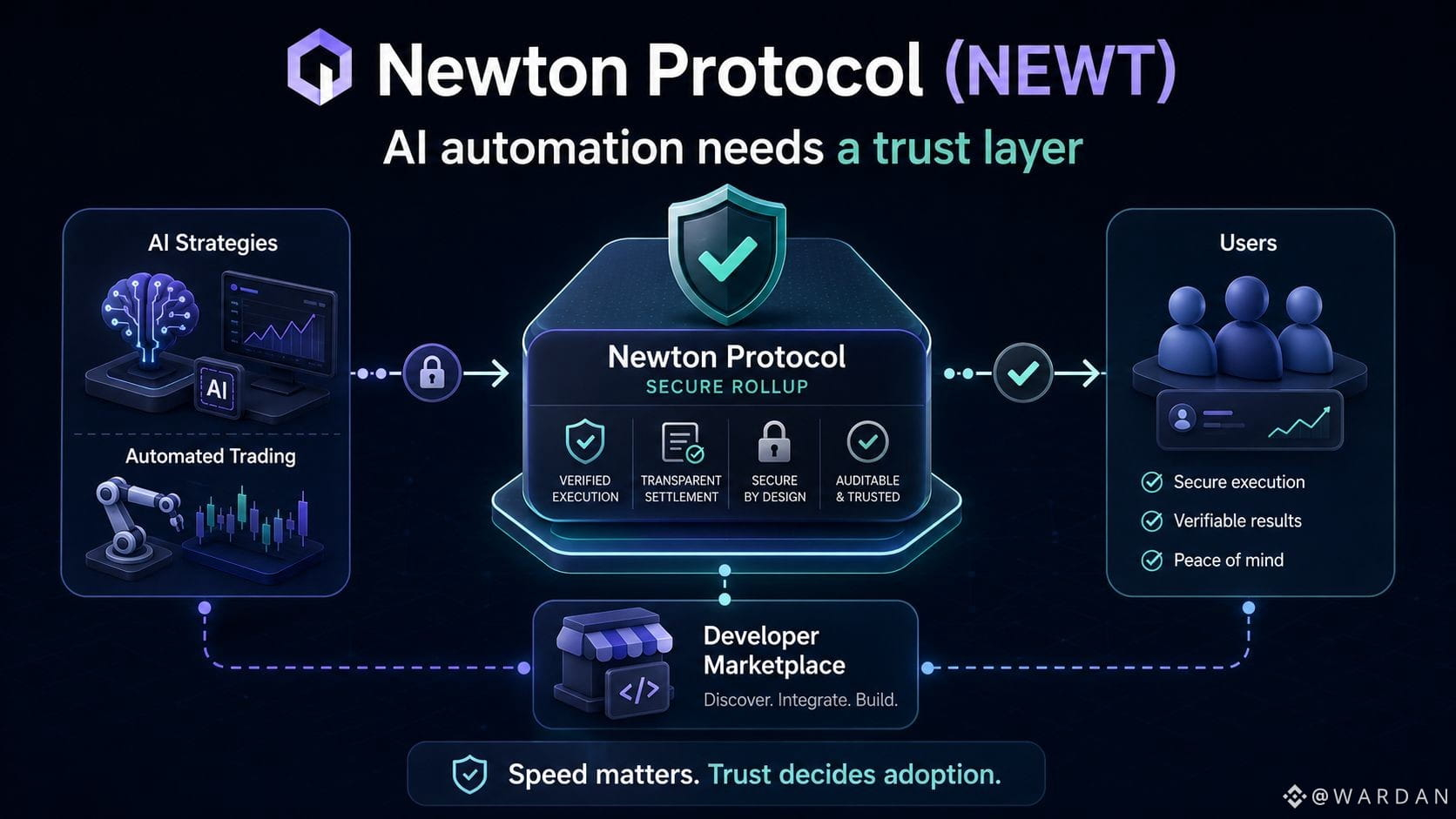
وهنا تكتسب فكرة البلوكشين المُجمَّع الآمن في بروتوكول Newton معناها. ليست القيمة الأعمق مجرد السماح باستراتيجيات مدعومة بالذكاء الاصطناعي أو التداول الآلي. بل تتمثل في إنشاء طبقة تنفيذ يمكن للإجراءات الآلية أن تعمل ضمن شروط أكثر وضوحًا للأمان والتحقق.
وهذا مهم لأن الأتمتة تزيد كلاً من الراحة والمسافة. كلما اتخذ النظام مزيدًا من القرارات نيابةً عنا، أصبح من الأصعب ملاحظة أين حدث خطأ ما، سواء تم اتباع التعليمات بشكل صحيح، أو من الذي ينبغي الوثوق به عندما تختلف النتائج عن التوقعات.
قد يوسّع سوق مطوري Newton عدد أدوات الذكاء الاصطناعي المتاحة، لكن المزيد من الأدوات وحده لن يؤدي إلى اعتماد فعلي. سيظل المستخدمون بحاجة إلى الثقة بأن تلك الأدوات تُنفِّذ بشكل موثوق، وتتفاعل بأمان، وتنتج نتائج يمكنهم فحصها بدلًا من قبولها بشكل أعمى.
الاختبار الحقيقي لمدى تبنّي بروتوكول Newton ليس عدد الاستراتيجيات الآلية التي يمكن بناؤها عليه. بل هو ما إذا كان المستخدمون في النهاية سيشعرون بالأمان عند تفويض إجراءات ذات معنى لتلك الاستراتيجيات.
يمكن للذكاء الاصطناعي اتخاذ القرارات بسرعة أكبر. والثقة هي التي تحدد ما إذا كان الناس سيسمحون له بالاستمرار في اتخاذها.
@NewtonProtocol $NEWT #Newt
وهنا تكتسب فكرة البلوكشين المُجمَّع الآمن في بروتوكول Newton معناها. ليست القيمة الأعمق مجرد السماح باستراتيجيات مدعومة بالذكاء الاصطناعي أو التداول الآلي. بل تتمثل في إنشاء طبقة تنفيذ يمكن للإجراءات الآلية أن تعمل ضمن شروط أكثر وضوحًا للأمان والتحقق.
وهذا مهم لأن الأتمتة تزيد كلاً من الراحة والمسافة. كلما اتخذ النظام مزيدًا من القرارات نيابةً عنا، أصبح من الأصعب ملاحظة أين حدث خطأ ما، سواء تم اتباع التعليمات بشكل صحيح، أو من الذي ينبغي الوثوق به عندما تختلف النتائج عن التوقعات.
قد يوسّع سوق مطوري Newton عدد أدوات الذكاء الاصطناعي المتاحة، لكن المزيد من الأدوات وحده لن يؤدي إلى اعتماد فعلي. سيظل المستخدمون بحاجة إلى الثقة بأن تلك الأدوات تُنفِّذ بشكل موثوق، وتتفاعل بأمان، وتنتج نتائج يمكنهم فحصها بدلًا من قبولها بشكل أعمى.
الاختبار الحقيقي لمدى تبنّي بروتوكول Newton ليس عدد الاستراتيجيات الآلية التي يمكن بناؤها عليه. بل هو ما إذا كان المستخدمون في النهاية سيشعرون بالأمان عند تفويض إجراءات ذات معنى لتلك الاستراتيجيات.
يمكن للذكاء الاصطناعي اتخاذ القرارات بسرعة أكبر. والثقة هي التي تحدد ما إذا كان الناس سيسمحون له بالاستمرار في اتخاذها.
@NewtonProtocol $NEWT #Newt
1
1
160
·
--
مقالة
أصعب مهمة لبروتوكول نيوتن هي تعليم الذكاء الاصطناعي متى لا يجب أن يتصرفكلما درست مشاريع العملات المشفرة المدفوعة بالذكاء الاصطناعي، قلّت إعجابي بالوعد بأن الوكيل يمكنه التداول بشكل أسرع أو مسح المزيد من البيانات أو إدارة محفظة دون نوم. نحن نعلم بالفعل أن البرمجيات تستطيع أتمتة القرارات. ما أعود إليه باستمرار هو سؤال أكثر إزعاجًا: ماذا يحدث عندما يتخذ الوكيل قرارًا خاطئًا بأموال حقيقية؟
غيرت تلك الأسئلة طريقة تفكيري عندما بدأت النظر إلى بروتوكول نيوتن.
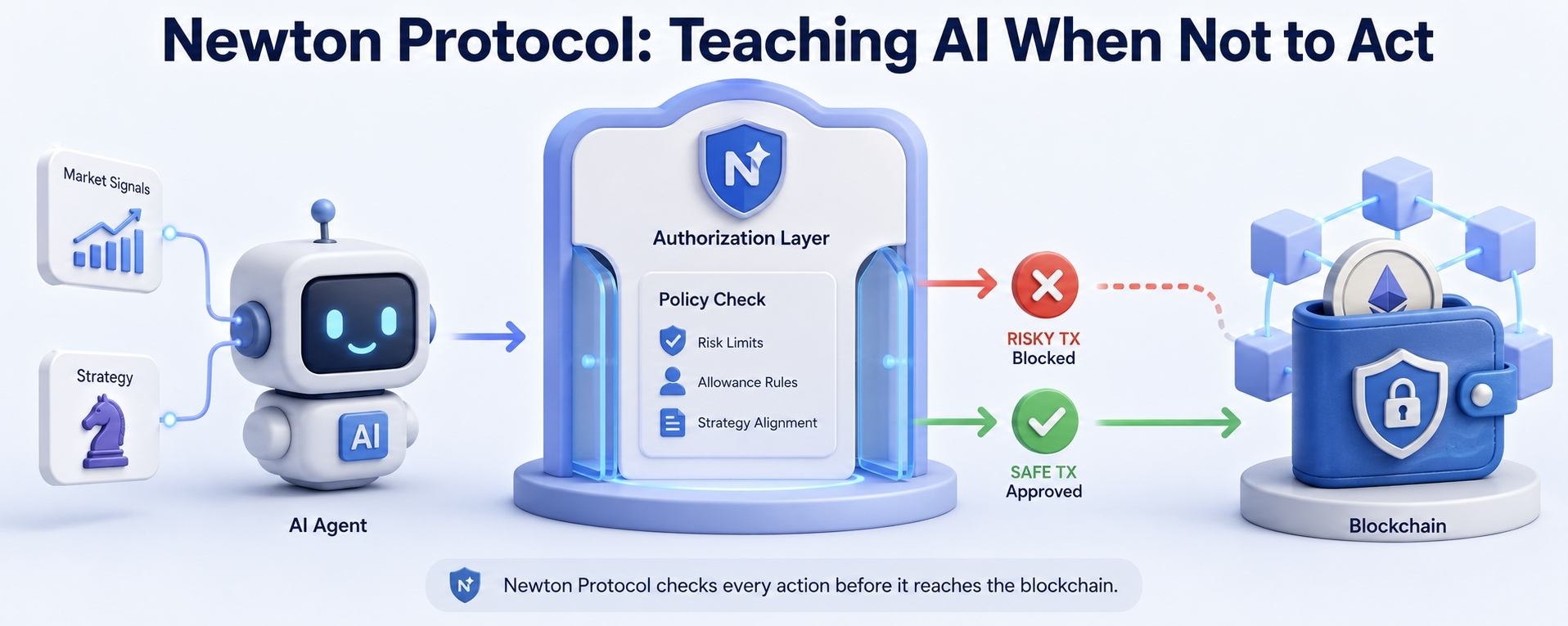
في البداية، يبدو أن نيوتن يتماشى مع السردية المعتادة حول الذكاء الاصطناعي. فهو يدعم استراتيجيات مستقلة، ومعاملات آلية، وسوقًا يمكن لمطوريه من خلاله بناء الوكلاء وتوزيعهم. لكنني لا أعتقد أن الوكيل نفسه هو الجزء الأكثر أهمية في النظام. الجزء الذي يثير اهتمامي هو ما يقف بين نية الوكيل والمعاملة النهائية.
أصعب مهمة لبروتوكول نيوتن هي تعليم الذكاء الاصطناعي متى لا يجب أن يتصرف
كلما درست مشاريع العملات المشفرة المدفوعة بالذكاء الاصطناعي، قلّت إعجابي بالوعد بأن الوكيل يمكنه التداول بشكل أسرع أو مسح المزيد من البيانات أو إدارة محفظة دون نوم. نحن نعلم بالفعل أن البرمجيات تستطيع أتمتة القرارات. ما أعود إليه باستمرار هو سؤال أكثر إزعاجًا: ماذا يحدث عندما يتخذ الوكيل قرارًا خاطئًا بأموال حقيقية؟
غيرت تلك الأسئلة طريقة تفكيري عندما بدأت النظر إلى بروتوكول نيوتن.
في البداية، يبدو أن نيوتن يتماشى مع السردية المعتادة حول الذكاء الاصطناعي. فهو يدعم استراتيجيات مستقلة، ومعاملات آلية، وسوقًا يمكن لمطوريه من خلاله بناء الوكلاء وتوزيعهم. لكنني لا أعتقد أن الوكيل نفسه هو الجزء الأكثر أهمية في النظام. الجزء الذي يثير اهتمامي هو ما يقف بين نية الوكيل والمعاملة النهائية.
غيرت تلك الأسئلة طريقة تفكيري عندما بدأت النظر إلى بروتوكول نيوتن.
في البداية، يبدو أن نيوتن يتماشى مع السردية المعتادة حول الذكاء الاصطناعي. فهو يدعم استراتيجيات مستقلة، ومعاملات آلية، وسوقًا يمكن لمطوريه من خلاله بناء الوكلاء وتوزيعهم. لكنني لا أعتقد أن الوكيل نفسه هو الجزء الأكثر أهمية في النظام. الجزء الذي يثير اهتمامي هو ما يقف بين نية الوكيل والمعاملة النهائية.
3
2
150
سجّل الدخول لاستكشاف المزيد من المُحتوى
انضم إلى مُستخدمي العملات الرقمية حول العالم على Binance Square
⚡️ احصل على أحدث المعلومات المفيدة عن العملات الرقمية.
💬 موثوقة من قبل أكبر منصّة لتداول العملات الرقمية في العالم.
👍 اكتشف الرؤى الحقيقية من صنّاع المُحتوى الموثوقين.
البريد الإلكتروني / رقم الهاتف