Binance Square

DANNY MORRIS

Crypto Enthusiast ,Trade lover .Gen,KOL
23 تتابع
1.5K+ المتابعون
1.1K+ إعجاب
22 تمّت مُشاركتها
جميع المُحتوى
PINNED
--
صاعد
ترجمة
Something is about to unlock… Not a signal. Not a prediction. Not a promise. 🫧 It’s a reward. 🫧 For those who stayed patient 🫧 For those who read between the levels 🫧 For those who understand risk before reward
Something is about to unlock…
Not a signal.
Not a prediction.
Not a promise.
🫧 It’s a reward.
🫧 For those who stayed patient
🫧 For those who read between the levels
🫧 For those who understand risk before reward
PINNED
--
صاعد
ترجمة
Hey Binancians 👋 Our family has grown strong to 1.4K members - thank you all for the amazing support. 🎯 Next target: 5K, and we want to reach it fast! To celebrate the journey, here’s a big USTD Red Packet for the community. Join, support, and let’s grow together.
Hey Binancians 👋
Our family has grown strong to 1.4K members - thank you all for the amazing support.
🎯 Next target: 5K, and we want to reach it fast!
To celebrate the journey, here’s a big USTD Red Packet for the community.
Join, support, and let’s grow together.
ترجمة
APRO INCENTIVES FOR PROFESSIONAL DATA PROVIDERS AND INSTITUTIONS There are moments in the evolution of blockchain where you start noticing a particular shift, a change in how data is accessed, validated, and commercialized. APRO sits right in that transition, building something that many oracles promised but few truly executed well: a system where professional data providers, institutions, and large-scale validators participate not only as nodes, but as economic beneficiaries. When you think about data feeding smart contracts, you picture streams of prices, weather indexes, supply feeds, financial metrics, identity proofs, and things that need to be delivered with accuracy, not guesswork. This is where APRO becomes interesting, because the protocol does not just rely on miners or hobbyists - it deliberately encourages experts, research firms, and institutional data suppliers to plug into its network and get rewarded in a predictable, structured, and scalable manner. Instead of creating sections and headings, let’s talk through it naturally. Think of APRO as a marketplace of truths, where each truth comes with a price and providers who stake their reputation and tokens to prove it. A professional data supplier could be a financial index firm that pushes daily stock spot feeds. An institution may be a weather modeling company feeding climate readings into agriculture insurance contracts. A blockchain project might depend on medical equipment audit records or real estate valuations for on-chain lending. These are heavy workflows, the kind that require uptime, secure infrastructure, and guaranteed delivery. APRO understands this landscape, so it has built incentive rails specifically to attract serious actors, not just casual participants. The first form of incentive comes through staking-based revenue distribution. Data providers stake APRO tokens when joining the network, creating an alignment mechanism: good data equals rewards, while malicious or faulty submissions risk slashing. It feels elegant because it pushes quality over quantity. Providers with accuracy, reputation, and low-latency infrastructure earn higher weight in data selection rounds. Over time, those who consistently deliver are promoted by the system’s reputation scoring engine, unlocking even higher payout tiers. You could imagine it like proof-of-quality layered on staking itself. This model encourages institutions to remain honest not only because of profit, but because reputation is a capital asset inside the network. The second incentive mechanism revolves around query fees. Every time a dApp, DeFi protocol, insurance platform, or enterprise contract requests data, they pay a fee to the network. The protocol distributes this fee among the data feeders who contributed to the validated data point. In simple words: more usage equals more revenue for providers. If APRO integrates into DeFi markets, liquidation engines, prediction markets, token pricing feeds, AI-verification systems, cross-chain bridges – the demand grows exponentially. Now imagine institutions feeding proprietary datasets and getting paid per request, like selling raw truth to a global decentralized market. Data becomes a commodity, but a premium one, and APRO is trying to build the marketplace where that commodity circulates. Institutional participation gets even more interesting when you consider batch-data streams or subscription-based access. APRO does not restrict monetization to per-request distribution – providers can supply entire data channels and earn recurring yield based on consumption. Think streaming liquidity health metrics to lending platforms, compliance reports to institutional vaults, forex and commodities feeds to tokenized trading desks. As the network scales, providers have strong reasons to maintain infrastructure uptime, reduce feed latency, enhance data delivery pipelines. Basically, the incentives naturally push them to behave like professional service operators, not passive nodes. There’s another layer that feels crucial: reputation bonds. APRO allows verified providers to attach institutional credibility as collateral, which translates directly into greater reward issuance. Verified providers get priority in data aggregation rounds because the network trusts their identity and track record. New entrants must prove themselves, but established providers -Bloomberg-style financial vendors, weather labs, KYC services, enterprise analytics firms - can enter with confidence. This opens a channel for corporate Web2 companies wanting to monetize data in Web3 markets without fully transitioning infrastructure themselves. APRO becomes a bridge. Now consider governance. Providers earning APRO tokens become stakeholders in the protocol’s future decisions. This aligns incentives beyond short-term payouts. They vote to expand data categories, change fee models, support new chains, integrate enterprise clients, upgrade node infrastructure standards. Governance rewards are a subtle but powerful incentive particularly for institutions who want influence in the ecosystem they operate in. With governance weight tied to on-chain performance and token stake, APRO ensures active contributors shape policy over passive holders. This is a long-term incentive, nurturing an ecosystem where the most valuable participants gain authority. Let’s move deeper into economic flow. Rewards are not just distributed; they are optimized to maintain sustainability. APRO uses a hybrid emission model – early providers earn significant yield to bootstrap supply, and as the network matures, incentives gradually transition toward fee-based revenue rather than inflationary token emission. This shift is crucial. In young networks, you need high yield to attract attention. In mature networks, real demand pays the bills. Institutions care about predictability; they want stable long-term revenue not speculative inflation. APRO seems aware of this balance, allowing the network to grow without collapsing under token hyper issuance. On top of this, APRO may support collateral-backed nodes for institutional scaling. In practice, large providers can run multiple nodes, lock token collateral, and earn proportionally to throughput capacity. You can picture a tiered system: smaller independent providers at the base, mid-tier corporate suppliers above them, and top-tier verified institutions supplying high-value real-world data with premium payouts. This hierarchy emerges naturally without manual control- it is driven by stake, performance, uptime, and reliability. Incentives become self-regulating. Professional data providers need more than revenue; they need risk management. APRO introduces slashing only for malicious or negligent behavior, not for unpredictable external factors. Node redundancy strategies can be implemented through multi-source failover to reduce the risk of accidental downtime. Institutions love risk-managed environments. If the protocol offers insurance pools or reliability bonds, professional confidence could expand even further. Think of a world where insurance companies stake liquidity to cover temporary failures, taking a small percentage of provider rewards. We are talking about a decentralized data economy, complete with risk hedging layers. There’s also the enterprise integration path. Instead of forcing companies to adopt crypto architecture directly, APRO could provide API pipelines where institutions feed data without even touching private keys or wallets. The node infrastructure could be abstracted with secure key management, letting traditional data firms earn APRO while operating familiar workflow tools. On the demand side, enterprises building blockchain products gain access to verified data without negotiating separate contracts. APRO essentially removes negotiation overhead, replacing it with automated incentives governed by code. If we zoom out a little, we see an emerging landscape where APRO transforms data from an internal corporate asset to an open monetizable financial instrument. Valuation firms could price NFTs. Satellite companies could stream weather models. Research labs could sell real-time AI inference outputs. Logistics firms could feed supply chain tracking proofs. Centralized institutions become decentralized service providers, and APRO becomes their revenue router. One of the most subtle yet powerful incentives is network prestige. When a well-known institution joins as a verified provider, they signal trust to the ecosystem. Other enterprises follow credibility. Developers see legitimacy. Liquidity flows. Tokens appreciate. This creates a reinforcing loop where early institutional participants gain reputation advantage. Professional environments thrive on recognition. APRO understands the psychology of prestige, using it as a silent incentive. Let’s imagine a real scenario. A large analytics firm integrates with APRO and begins pushing Forex and equities price feeds. DeFi lending platforms adopt these feeds for cross-collateral borrowing. The provider earns fees for every loan liquidation, interest recalibration, futures settlement. Another institution joins, supplying commodities and macro indexes. Insurance protocols adopt weather feeds. Synthetic assets platforms adopt metal price feeds. Over time, demand surges. Providers upgrade infrastructure. More institutions enter to capture market share. This is not speculative excitement; it is practical business logic in motion. Of course, incentives only work if the ecosystem grows. APRO must continue forming partnerships with DeFi protocols, cross-chain bridges, rollups, enterprises, prediction markets, RWA tokenization platforms. The foundation of incentives lies in usage. Without demand, providers lose reason to participate. Without participation, demand gets no supply. APRO is solving this chicken-egg loop by merging early reward inflation with long-term fee distribution. It is a runway design. Challenges still exist. Bringing regulated institutions into Web3 requires compliance clarity, documentation, reliable infrastructure support, transparent onboarding, and enterprise-level security audits. Data ownership rights must be respected. Organizations want control. They need clear terms for revenue distribution, failure handling, dispute resolution. APRO must evolve governance and documentation so institutions feel legally safe to contribute. The economic structure is solid, but adoption requires trust beyond code. Yet the opportunity is massive. Every industry with digital information could theoretically supply APRO with data streams. Every smart contract needing truth could consume those streams. Incentives connect the pipes. APRO is trying to build a global decentralized data highway, and institutional providers are the freight trucks delivering value through it. The more traffic, the more toll revenue. The better the trucks, the higher their earnings. In a world increasingly automated, accurate information will become as valuable as currency. Machine economies, autonomous agents, decentralized AI models – they all depend on external truth. Whoever controls truth distribution will control economic flow. APRO is positioning itself as that distributor, and the incentives it offers to professional data providers and institutions are not merely rewards. They are the foundation of a new data economy powered by transparency, competition, and open access. If the network matures as intended, we may see institutional adoption not as an exception, but as a standard. Analysts might list APRO revenue as a new line item in quarterly reports. Research companies could scale their dataset sales globally without a sales team. Every packet of data becomes a micro-income stream. A marketplace of facts paid in real time. In closing, APRO is building more than an oracle. It is constructing an economic environment where truth has price, accuracy has reward, trust has value, and institutions finally have a profitable reason to step onto chain. Incentives are the engine of participation, and APRO’s engine feels engineered for long-distance industrial usage, not weekend experimentation. For data providers and institutions looking to capture the next big wave of blockchain utility, APRO might be the opportunity to enter not as users, but as owners of the data economy that is coming next. @APRO-Oracle $AT {spot}(ATUSDT) #APRO

APRO INCENTIVES FOR PROFESSIONAL DATA PROVIDERS AND INSTITUTIONS

There are moments in the evolution of blockchain where you start noticing a particular shift, a change in how data is accessed, validated, and commercialized. APRO sits right in that transition, building something that many oracles promised but few truly executed well: a system where professional data providers, institutions, and large-scale validators participate not only as nodes, but as economic beneficiaries. When you think about data feeding smart contracts, you picture streams of prices, weather indexes, supply feeds, financial metrics, identity proofs, and things that need to be delivered with accuracy, not guesswork. This is where APRO becomes interesting, because the protocol does not just rely on miners or hobbyists - it deliberately encourages experts, research firms, and institutional data suppliers to plug into its network and get rewarded in a predictable, structured, and scalable manner.
Instead of creating sections and headings, let’s talk through it naturally. Think of APRO as a marketplace of truths, where each truth comes with a price and providers who stake their reputation and tokens to prove it. A professional data supplier could be a financial index firm that pushes daily stock spot feeds. An institution may be a weather modeling company feeding climate readings into agriculture insurance contracts. A blockchain project might depend on medical equipment audit records or real estate valuations for on-chain lending. These are heavy workflows, the kind that require uptime, secure infrastructure, and guaranteed delivery. APRO understands this landscape, so it has built incentive rails specifically to attract serious actors, not just casual participants.
The first form of incentive comes through staking-based revenue distribution. Data providers stake APRO tokens when joining the network, creating an alignment mechanism: good data equals rewards, while malicious or faulty submissions risk slashing. It feels elegant because it pushes quality over quantity. Providers with accuracy, reputation, and low-latency infrastructure earn higher weight in data selection rounds. Over time, those who consistently deliver are promoted by the system’s reputation scoring engine, unlocking even higher payout tiers. You could imagine it like proof-of-quality layered on staking itself. This model encourages institutions to remain honest not only because of profit, but because reputation is a capital asset inside the network.
The second incentive mechanism revolves around query fees. Every time a dApp, DeFi protocol, insurance platform, or enterprise contract requests data, they pay a fee to the network. The protocol distributes this fee among the data feeders who contributed to the validated data point. In simple words: more usage equals more revenue for providers. If APRO integrates into DeFi markets, liquidation engines, prediction markets, token pricing feeds, AI-verification systems, cross-chain bridges – the demand grows exponentially. Now imagine institutions feeding proprietary datasets and getting paid per request, like selling raw truth to a global decentralized market. Data becomes a commodity, but a premium one, and APRO is trying to build the marketplace where that commodity circulates.
Institutional participation gets even more interesting when you consider batch-data streams or subscription-based access. APRO does not restrict monetization to per-request distribution – providers can supply entire data channels and earn recurring yield based on consumption. Think streaming liquidity health metrics to lending platforms, compliance reports to institutional vaults, forex and commodities feeds to tokenized trading desks. As the network scales, providers have strong reasons to maintain infrastructure uptime, reduce feed latency, enhance data delivery pipelines. Basically, the incentives naturally push them to behave like professional service operators, not passive nodes.
There’s another layer that feels crucial: reputation bonds. APRO allows verified providers to attach institutional credibility as collateral, which translates directly into greater reward issuance. Verified providers get priority in data aggregation rounds because the network trusts their identity and track record. New entrants must prove themselves, but established providers -Bloomberg-style financial vendors, weather labs, KYC services, enterprise analytics firms - can enter with confidence. This opens a channel for corporate Web2 companies wanting to monetize data in Web3 markets without fully transitioning infrastructure themselves. APRO becomes a bridge.
Now consider governance. Providers earning APRO tokens become stakeholders in the protocol’s future decisions. This aligns incentives beyond short-term payouts. They vote to expand data categories, change fee models, support new chains, integrate enterprise clients, upgrade node infrastructure standards. Governance rewards are a subtle but powerful incentive particularly for institutions who want influence in the ecosystem they operate in. With governance weight tied to on-chain performance and token stake, APRO ensures active contributors shape policy over passive holders. This is a long-term incentive, nurturing an ecosystem where the most valuable participants gain authority.
Let’s move deeper into economic flow. Rewards are not just distributed; they are optimized to maintain sustainability. APRO uses a hybrid emission model – early providers earn significant yield to bootstrap supply, and as the network matures, incentives gradually transition toward fee-based revenue rather than inflationary token emission. This shift is crucial. In young networks, you need high yield to attract attention. In mature networks, real demand pays the bills. Institutions care about predictability; they want stable long-term revenue not speculative inflation. APRO seems aware of this balance, allowing the network to grow without collapsing under token hyper issuance.
On top of this, APRO may support collateral-backed nodes for institutional scaling. In practice, large providers can run multiple nodes, lock token collateral, and earn proportionally to throughput capacity. You can picture a tiered system: smaller independent providers at the base, mid-tier corporate suppliers above them, and top-tier verified institutions supplying high-value real-world data with premium payouts. This hierarchy emerges naturally without manual control- it is driven by stake, performance, uptime, and reliability. Incentives become self-regulating.
Professional data providers need more than revenue; they need risk management. APRO introduces slashing only for malicious or negligent behavior, not for unpredictable external factors. Node redundancy strategies can be implemented through multi-source failover to reduce the risk of accidental downtime. Institutions love risk-managed environments. If the protocol offers insurance pools or reliability bonds, professional confidence could expand even further. Think of a world where insurance companies stake liquidity to cover temporary failures, taking a small percentage of provider rewards. We are talking about a decentralized data economy, complete with risk hedging layers.
There’s also the enterprise integration path. Instead of forcing companies to adopt crypto architecture directly, APRO could provide API pipelines where institutions feed data without even touching private keys or wallets. The node infrastructure could be abstracted with secure key management, letting traditional data firms earn APRO while operating familiar workflow tools. On the demand side, enterprises building blockchain products gain access to verified data without negotiating separate contracts. APRO essentially removes negotiation overhead, replacing it with automated incentives governed by code.
If we zoom out a little, we see an emerging landscape where APRO transforms data from an internal corporate asset to an open monetizable financial instrument. Valuation firms could price NFTs. Satellite companies could stream weather models. Research labs could sell real-time AI inference outputs. Logistics firms could feed supply chain tracking proofs. Centralized institutions become decentralized service providers, and APRO becomes their revenue router.
One of the most subtle yet powerful incentives is network prestige. When a well-known institution joins as a verified provider, they signal trust to the ecosystem. Other enterprises follow credibility. Developers see legitimacy. Liquidity flows. Tokens appreciate. This creates a reinforcing loop where early institutional participants gain reputation advantage. Professional environments thrive on recognition. APRO understands the psychology of prestige, using it as a silent incentive.
Let’s imagine a real scenario. A large analytics firm integrates with APRO and begins pushing Forex and equities price feeds. DeFi lending platforms adopt these feeds for cross-collateral borrowing. The provider earns fees for every loan liquidation, interest recalibration, futures settlement. Another institution joins, supplying commodities and macro indexes. Insurance protocols adopt weather feeds. Synthetic assets platforms adopt metal price feeds. Over time, demand surges. Providers upgrade infrastructure. More institutions enter to capture market share. This is not speculative excitement; it is practical business logic in motion.
Of course, incentives only work if the ecosystem grows. APRO must continue forming partnerships with DeFi protocols, cross-chain bridges, rollups, enterprises, prediction markets, RWA tokenization platforms. The foundation of incentives lies in usage. Without demand, providers lose reason to participate. Without participation, demand gets no supply. APRO is solving this chicken-egg loop by merging early reward inflation with long-term fee distribution. It is a runway design.
Challenges still exist. Bringing regulated institutions into Web3 requires compliance clarity, documentation, reliable infrastructure support, transparent onboarding, and enterprise-level security audits. Data ownership rights must be respected. Organizations want control. They need clear terms for revenue distribution, failure handling, dispute resolution. APRO must evolve governance and documentation so institutions feel legally safe to contribute. The economic structure is solid, but adoption requires trust beyond code.
Yet the opportunity is massive. Every industry with digital information could theoretically supply APRO with data streams. Every smart contract needing truth could consume those streams. Incentives connect the pipes. APRO is trying to build a global decentralized data highway, and institutional providers are the freight trucks delivering value through it. The more traffic, the more toll revenue. The better the trucks, the higher their earnings.
In a world increasingly automated, accurate information will become as valuable as currency. Machine economies, autonomous agents, decentralized AI models – they all depend on external truth. Whoever controls truth distribution will control economic flow. APRO is positioning itself as that distributor, and the incentives it offers to professional data providers and institutions are not merely rewards. They are the foundation of a new data economy powered by transparency, competition, and open access.
If the network matures as intended, we may see institutional adoption not as an exception, but as a standard. Analysts might list APRO revenue as a new line item in quarterly reports. Research companies could scale their dataset sales globally without a sales team. Every packet of data becomes a micro-income stream. A marketplace of facts paid in real time.
In closing, APRO is building more than an oracle. It is constructing an economic environment where truth has price, accuracy has reward, trust has value, and institutions finally have a profitable reason to step onto chain. Incentives are the engine of participation, and APRO’s engine feels engineered for long-distance industrial usage, not weekend experimentation. For data providers and institutions looking to capture the next big wave of blockchain utility, APRO might be the opportunity to enter not as users, but as owners of the data economy that is coming next.
@APRO Oracle
$AT
#APRO
--
صاعد
ترجمة
Altcoin Rotation Season: 5 Cryptos Pakistani Investors Are Buying for a Potential Year End Rally With Bitcoin and Ethereum consolidating, crypto investors are rotating into altcoins that offer stronger short-term upside ahead of the holiday season. Community chatter, YouTube influencers, and Telegram trading groups in Pakistan are buzzing about low- to mid-cap tokens showing bullish setups for a potential “New Year rally.” This blog highlights 5 trending altcoins gaining traction among Indian traders - and why they could outperform as 2025 wraps up. $ZEC {spot}(ZECUSDT) $AT {spot}(ATUSDT)
Altcoin Rotation Season: 5 Cryptos Pakistani Investors Are Buying for a Potential Year End Rally
With Bitcoin and Ethereum consolidating, crypto investors are rotating into
altcoins that offer stronger short-term upside ahead of the holiday season.
Community chatter, YouTube influencers, and Telegram trading groups in
Pakistan are buzzing about low- to mid-cap tokens showing bullish setups for a
potential “New Year rally.” This blog highlights 5 trending altcoins gaining
traction among Indian traders - and why they could outperform as 2025
wraps up.
$ZEC
$AT
--
صاعد
ترجمة
$LUNC waking up with real momentum today. Binance quietly rolled out the $LUNC /USDC spot pair on Dec 24, 2025 -and here’s what makes it different. Liquidity didn’t come from community pools or funded providers. No coordination, no seed announcement, yet the order book launched deep with Trading Bots live from day one. That means one thing: Binance and partners stepped in themselves - likely Circle involved - showing confidence in LUNC’s activity, burns, and survival strength. This isn’t charity. It’s recognition. They want LUNC liquid, accessible, and integrated deeper with USDC flows. The community has been grinding for months - burns, upgrades, proposals - now the ecosystem is starting to reward that effort. Volume is the next step. Keep building, keep pushing. {spot}(LUNCUSDT) This is bullish for LUNC. $ZEC {spot}(ZECUSDT) #USJobsData #BinanceAlphaAlert #WriteToEarnUpgrade #BinanceAlphaAlert
$LUNC waking up with real momentum today. Binance quietly rolled out the $LUNC /USDC spot pair on Dec 24, 2025 -and here’s what makes it different.
Liquidity didn’t come from community pools or funded providers. No coordination, no seed announcement, yet the order book launched deep with Trading Bots live from day one. That means one thing: Binance and partners stepped in themselves - likely Circle involved - showing confidence in LUNC’s activity, burns, and survival strength.
This isn’t charity. It’s recognition. They want LUNC liquid, accessible, and integrated deeper with USDC flows.
The community has been grinding for months - burns, upgrades, proposals - now the ecosystem is starting to reward that effort.
Volume is the next step. Keep building, keep pushing.

This is bullish for LUNC.
$ZEC
#USJobsData
#BinanceAlphaAlert
#WriteToEarnUpgrade
#BinanceAlphaAlert
--
صاعد
ترجمة
ALTCOINS ARE BLEEDING WHILE BITCOIN HOLDS STEADY The market is slow, liquidity is thin, and most price action feels stuck in a range. BTC is holding firm, which is good for stability, but not enough fire yet for a breakout. Altcoins, on the other hand, are still feeling the pressure. $ETH – around $2,930, chilling above key support. If it clears $3,000 with strength, we might finally see some upside. BNB – trading near $835, still one of the more resilient majors. Needs a push above $900 to break the range. $XRP – sitting around $1.85, moving sideways without a real catalyst. A clear move above $2.00 could shift momentum. $ADA – near $0.35, struggling for now. Development keeps hope alive, but price action weak until volume steps in. Still a wait-and-watch phase. Bitcoin steering the ship, altcoins following in the dark. Keep risk managed.
ALTCOINS ARE BLEEDING WHILE BITCOIN HOLDS STEADY
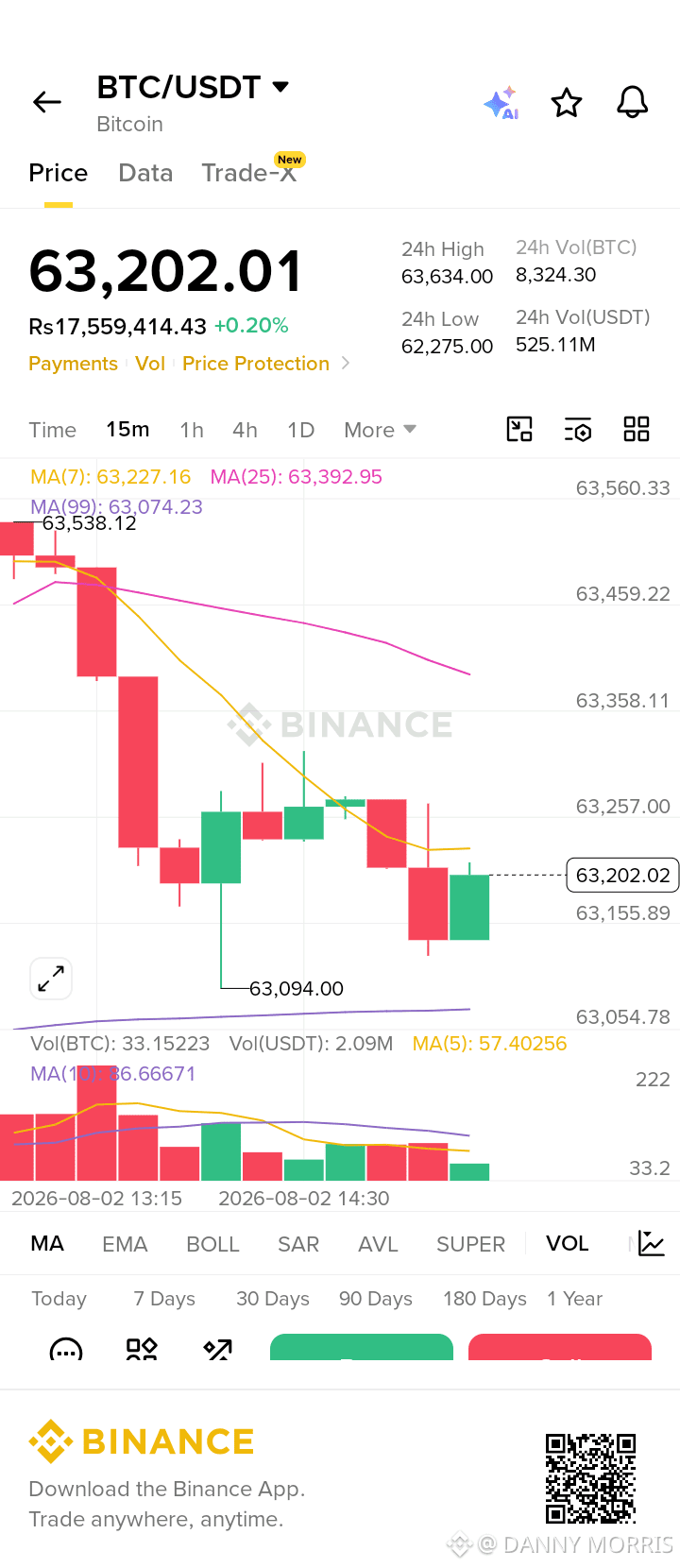
The market is slow, liquidity is thin, and most price action feels stuck in a range. BTC is holding firm, which is good for stability, but not enough fire yet for a breakout. Altcoins, on the other hand, are still feeling the pressure.

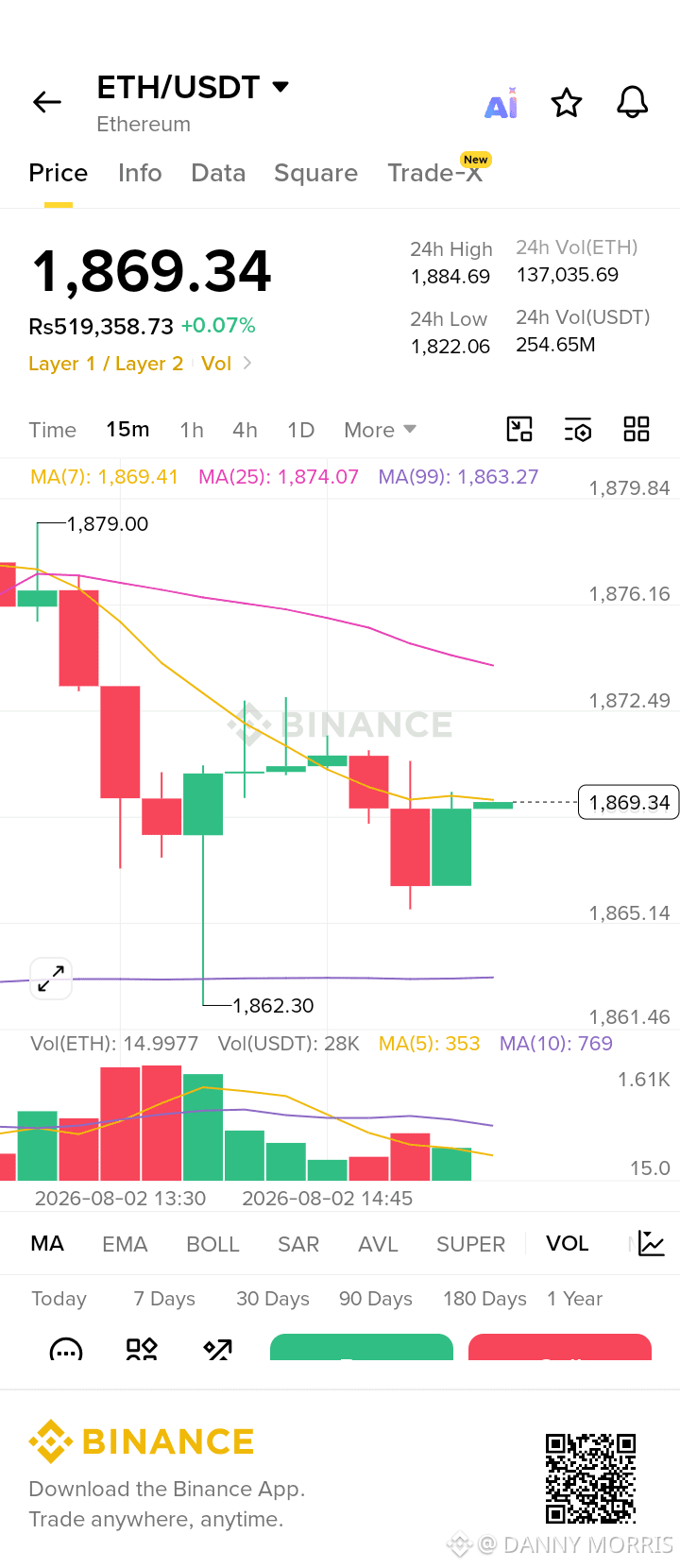
$ETH – around $2,930, chilling above key support. If it clears $3,000 with strength, we might finally see some upside.
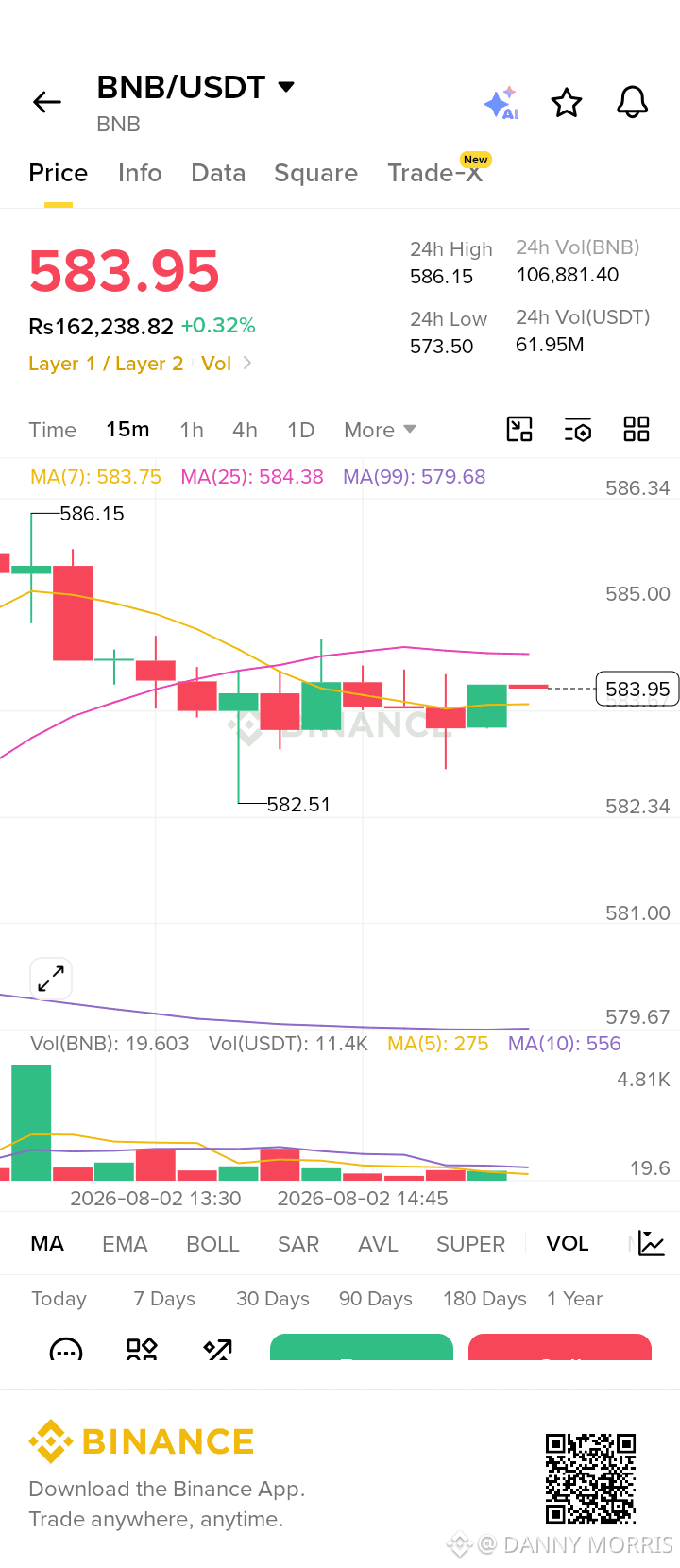
BNB – trading near $835, still one of the more resilient majors. Needs a push above $900 to break the range.
$XRP – sitting around $1.85, moving sideways without a real catalyst. A clear move above $2.00 could shift momentum.
$ADA – near $0.35, struggling for now. Development keeps hope alive, but price action weak until volume steps in.
Still a wait-and-watch phase. Bitcoin steering the ship, altcoins following in the dark. Keep risk managed.
--
صاعد
ترجمة
Trump is gearing up to pick the next Fed Chair in early 2026, right as Jerome Powell’s term ends. The decision matters big time-whoever takes the seat could reshape US interest rates, the dollar, and the market mood. Trump wants someone aligned with low-rate thinking, with names like Kevin Hassett and Kevin Warsh floating around. Expect the markets to react long before the announcement is official. Stay sharp, volatility is on the horizon. $TRUMP {spot}(TRUMPUSDT) $ZEC {spot}(ZECUSDT) #CPIWatch #WriteToEarnUpgrade #BTCVSGOLD #BinanceAlphaAlert
Trump is gearing up to pick the next Fed Chair in early 2026, right as Jerome Powell’s term ends. The decision matters big time-whoever takes the seat could reshape US interest rates, the dollar, and the market mood. Trump wants someone aligned with low-rate thinking, with names like Kevin Hassett and Kevin Warsh floating around. Expect the markets to react long before the announcement is official. Stay sharp, volatility is on the horizon.
$TRUMP
$ZEC
#CPIWatch
#WriteToEarnUpgrade
#BTCVSGOLD
#BinanceAlphaAlert
--
صاعد
ترجمة
🚨 MUST WATCH 🚨 $LUNC +54,356% 📈 Amazing performance… on Photoshop Chain 🎨 No volume, no liquidity, no buyers - but hey, the number looks 🔥 “100x incoming” on dreams of holders. {spot}(LUNCUSDT) $ZEC {spot}(ZECUSDT)
🚨 MUST WATCH 🚨
$LUNC
+54,356% 📈
Amazing performance… on Photoshop Chain 🎨
No volume, no liquidity, no buyers -
but hey, the number looks 🔥
“100x incoming” on dreams of holders.
$ZEC
ترجمة
FALCON FINANCE AS INFRASTRUCTURE, NOT JUST A DEFI PRODUCT People often place Falcon Finance in the same category as lending protocols, stablecoin issuers, or collateralized debt platforms. It is understandable at first glance, because Falcon issues USDf and allows users to lock digital assets and tokenized RWAs to unlock liquidity. But reducing Falcon to a “DeFi product” misses the real story. Falcon is not just a protocol. It is infrastructure-a foundation for liquidity, collateral valuation, and yield creation across the emerging tokenized economy. Where most projects build applications, Falcon is building rails. Where others offer a tool, Falcon offers a system. That difference becomes clearer when we stop viewing Falcon as a product and start viewing it as a collateralization layer that other protocols can build upon. DeFi products are siloed experiences. You deposit here, borrow there, bridge somewhere else, and manually rebalance when markets move. Infrastructure is different. Infrastructure abstracts complexity, automates flow, and enables a stack of other applications to exist. Falcon fits that category because USDf, collateral acceptance, liquidation logic, oracle integration, and yield routing are not isolated features-they are primitives that developers and financial systems can integrate. Falcon is building a universal collateral layer where anyone can plug assets, generate stable liquidity, and compose yield strategies. It is a settlement engine for collateral, not a borrowing interface. The introduction of USDf illustrates this transformation well. Many stablecoins exist. But USDf is not merely a token chasing adoption. It is a liquid output generated from collateral vaults, backed by diversified on-chain and real-world assets. Instead of depending on external yield sources or centralized backing, USDf is issued against a universal collateral system managed by Falcon. This means other DeFi apps can rely on USDf as a neutral liquidity layer, like how banks rely on base money in traditional finance. When a system becomes money-like infrastructure instead of a product, it gains role, not utility. Falcon aims at becoming that foundational liquidity source that powers lending markets, derivatives platforms, trading protocols, payment networks, and RWA finance. What makes Falcon infrastructure is composability. A product expects users; infrastructure enables builders. A product competes with peers; infrastructure becomes the layer they all use. Falcon invites developers to build synthetic asset markets, collateral lending modules, leverage engines, and tokenized credit rails using its stable liquidity and vault logic. Instead of fighting for users, Falcon seeks to power an ecosystem of applications using its collateral engine. The role is similar to MakerDAO historically, but more modular, more RWA-forward, and better optimized for collateral liquidity efficiency. Falcon treats assets as productive capital rather than locked dead weight. Yields generated from collateral do not only sustain USDf-they become streams that applications can route, tokenize, or redistribute. Think of tokenized real-world assets-Treasury bills, corporate bonds, invoice financing, commodities. These markets are moving on-chain rapidly, but they lack unified collateral frameworks. Every RWA platform today builds its own issuance and collateral logic, fragmenting liquidity and valuation. Falcon standardizes this layer. RWAs can plug into Falcon vaults, mint USDf, and tap into on-chain liquidity instantly. Institutions gain access to digital capital without liquidating assets, while DeFi gains access to yield-bearing collateral without reinventing risk models every time. This is not a product workflow. It is pipeline infrastructure, like how Stripe enables payments rather than just collecting them. Because Falcon is infrastructure, governance matters differently. Instead of feature-driven updates, governance evolves system parameters: collateral types, risk weights, stability fees, liquidation mechanisms, RWA onboarding standards. These decisions shape not just Falcon, but the applications that rely on it. That responsibility shifts Falcon into a system-layer protocol where economic policy becomes infrastructure policy. Like monetary infrastructure, its stability and trust determine downstream reliability. This is why Falcon focuses heavily on risk framework architecture, collateral diversity, and liquidity routing mechanisms. Stability here is systemic stability, not user stability. Falcon also introduces a liquidity philosophy different from typical DeFi protocols. Most protocols view collateral purely as backing and charge borrowers interest. Falcon views collateral as a productive yield asset and integrates earning models directly. Collateral can generate yield within Falcon, offsetting borrowing cost and potentially even making net-positive liquidity possible. This transforms how capital flows. Users are no longer forced into tradeoffs-borrow or earn-they can do both simultaneously. This creates a new capital efficiency standard that other DeFi applications can plug into. If a DEX wants deeper liquidity, it can integrate USDf pools backed by productive collateral. If a lending protocol wants stable backing, USDf becomes a base currency. Falcon becomes a liquidity spine. The broader significance of infrastructure emerges when we look at future possibilities. Imagine derivatives platforms settling margin in USDf, insurance protocols backing policies with Falcon vaults, RWA issuers establishing credit lines using Falcon collateral, payment dApps using USDf for settlement, while Falcon silently powers them all underneath. Users may never interact with Falcon directly. They may interact with apps built on Falcon, just as most internet users never think about TCP/IP. When a technology becomes invisible, it becomes infrastructure. Falcon is building toward that invisibility. Its roadmap suggests deeper ecosystem integration-vault modules, cross-chain liquidity expansion, credit markets, institutional onboarding, automated collateral rebalancing, oracle diversification, and yield routing frameworks. Every new module is not a feature but a building block. The long-term vision is a collateral internet where value flows through Falcon like electricity through power lines. Applications plug in, capital routes automatically, liquidity stabilizes, yields distribute. Falcon fades into the background while the ecosystem grows on top of it. In many ways, the DeFi industry has been searching for a base layer for collateral the same way early internet needed DNS, HTTP, and TCP before web apps could scale. Falcon positions itself as that missing layer. If it succeeds, future products may look less like independent protocols and more like Falcon-connected modules forming a financial supernetwork. Falcon is designing that foundation piece by piece-collateral vaults, synthetic liquidity, yield infrastructure, RWA integration. The strategy is long-term and infrastructure-first. What stands out most is mindset. Falcon is not asking users to borrow. It is asking builders to build. It is not optimizing for TVL spikes. It is optimizing for structural adoption. It is not chasing seasonal liquidity. It is architecting a financial layer that can support thousands of applications, millions of users, and trillions in tokenized assets. To look at Falcon Finance and see only a DeFi product is to look at a city skyline and see only buildings. Falcon is the grid. The water lines. The roads. The power cables. It is infrastructure. And infrastructure is what lasts. Anyone following the evolution of DeFi, RWA tokenization, or liquidity architecture should watch Falcon closely. Products come and go. Infrastructure becomes the environment everyone builds on. Falcon is aiming to be that environment-a financial base layer powering the next generation of digital economies. @falcon_finance $FF {future}(FFUSDT) # #falconfinance

FALCON FINANCE AS INFRASTRUCTURE, NOT JUST A DEFI PRODUCT

People often place Falcon Finance in the same category as lending protocols, stablecoin issuers, or collateralized debt platforms. It is understandable at first glance, because Falcon issues USDf and allows users to lock digital assets and tokenized RWAs to unlock liquidity. But reducing Falcon to a “DeFi product” misses the real story. Falcon is not just a protocol. It is infrastructure-a foundation for liquidity, collateral valuation, and yield creation across the emerging tokenized economy. Where most projects build applications, Falcon is building rails. Where others offer a tool, Falcon offers a system. That difference becomes clearer when we stop viewing Falcon as a product and start viewing it as a collateralization layer that other protocols can build upon.
DeFi products are siloed experiences. You deposit here, borrow there, bridge somewhere else, and manually rebalance when markets move. Infrastructure is different. Infrastructure abstracts complexity, automates flow, and enables a stack of other applications to exist. Falcon fits that category because USDf, collateral acceptance, liquidation logic, oracle integration, and yield routing are not isolated features-they are primitives that developers and financial systems can integrate. Falcon is building a universal collateral layer where anyone can plug assets, generate stable liquidity, and compose yield strategies. It is a settlement engine for collateral, not a borrowing interface.
The introduction of USDf illustrates this transformation well. Many stablecoins exist. But USDf is not merely a token chasing adoption. It is a liquid output generated from collateral vaults, backed by diversified on-chain and real-world assets. Instead of depending on external yield sources or centralized backing, USDf is issued against a universal collateral system managed by Falcon. This means other DeFi apps can rely on USDf as a neutral liquidity layer, like how banks rely on base money in traditional finance. When a system becomes money-like infrastructure instead of a product, it gains role, not utility. Falcon aims at becoming that foundational liquidity source that powers lending markets, derivatives platforms, trading protocols, payment networks, and RWA finance.
What makes Falcon infrastructure is composability. A product expects users; infrastructure enables builders. A product competes with peers; infrastructure becomes the layer they all use. Falcon invites developers to build synthetic asset markets, collateral lending modules, leverage engines, and tokenized credit rails using its stable liquidity and vault logic. Instead of fighting for users, Falcon seeks to power an ecosystem of applications using its collateral engine. The role is similar to MakerDAO historically, but more modular, more RWA-forward, and better optimized for collateral liquidity efficiency. Falcon treats assets as productive capital rather than locked dead weight. Yields generated from collateral do not only sustain USDf-they become streams that applications can route, tokenize, or redistribute.
Think of tokenized real-world assets-Treasury bills, corporate bonds, invoice financing, commodities. These markets are moving on-chain rapidly, but they lack unified collateral frameworks. Every RWA platform today builds its own issuance and collateral logic, fragmenting liquidity and valuation. Falcon standardizes this layer. RWAs can plug into Falcon vaults, mint USDf, and tap into on-chain liquidity instantly. Institutions gain access to digital capital without liquidating assets, while DeFi gains access to yield-bearing collateral without reinventing risk models every time. This is not a product workflow. It is pipeline infrastructure, like how Stripe enables payments rather than just collecting them.
Because Falcon is infrastructure, governance matters differently. Instead of feature-driven updates, governance evolves system parameters: collateral types, risk weights, stability fees, liquidation mechanisms, RWA onboarding standards. These decisions shape not just Falcon, but the applications that rely on it. That responsibility shifts Falcon into a system-layer protocol where economic policy becomes infrastructure policy. Like monetary infrastructure, its stability and trust determine downstream reliability. This is why Falcon focuses heavily on risk framework architecture, collateral diversity, and liquidity routing mechanisms. Stability here is systemic stability, not user stability.
Falcon also introduces a liquidity philosophy different from typical DeFi protocols. Most protocols view collateral purely as backing and charge borrowers interest. Falcon views collateral as a productive yield asset and integrates earning models directly. Collateral can generate yield within Falcon, offsetting borrowing cost and potentially even making net-positive liquidity possible. This transforms how capital flows. Users are no longer forced into tradeoffs-borrow or earn-they can do both simultaneously. This creates a new capital efficiency standard that other DeFi applications can plug into. If a DEX wants deeper liquidity, it can integrate USDf pools backed by productive collateral. If a lending protocol wants stable backing, USDf becomes a base currency. Falcon becomes a liquidity spine.
The broader significance of infrastructure emerges when we look at future possibilities. Imagine derivatives platforms settling margin in USDf, insurance protocols backing policies with Falcon vaults, RWA issuers establishing credit lines using Falcon collateral, payment dApps using USDf for settlement, while Falcon silently powers them all underneath. Users may never interact with Falcon directly. They may interact with apps built on Falcon, just as most internet users never think about TCP/IP. When a technology becomes invisible, it becomes infrastructure. Falcon is building toward that invisibility.
Its roadmap suggests deeper ecosystem integration-vault modules, cross-chain liquidity expansion, credit markets, institutional onboarding, automated collateral rebalancing, oracle diversification, and yield routing frameworks. Every new module is not a feature but a building block. The long-term vision is a collateral internet where value flows through Falcon like electricity through power lines. Applications plug in, capital routes automatically, liquidity stabilizes, yields distribute. Falcon fades into the background while the ecosystem grows on top of it.
In many ways, the DeFi industry has been searching for a base layer for collateral the same way early internet needed DNS, HTTP, and TCP before web apps could scale. Falcon positions itself as that missing layer. If it succeeds, future products may look less like independent protocols and more like Falcon-connected modules forming a financial supernetwork. Falcon is designing that foundation piece by piece-collateral vaults, synthetic liquidity, yield infrastructure, RWA integration. The strategy is long-term and infrastructure-first.
What stands out most is mindset. Falcon is not asking users to borrow. It is asking builders to build. It is not optimizing for TVL spikes. It is optimizing for structural adoption. It is not chasing seasonal liquidity. It is architecting a financial layer that can support thousands of applications, millions of users, and trillions in tokenized assets.
To look at Falcon Finance and see only a DeFi product is to look at a city skyline and see only buildings. Falcon is the grid. The water lines. The roads. The power cables. It is infrastructure. And infrastructure is what lasts.
Anyone following the evolution of DeFi, RWA tokenization, or liquidity architecture should watch Falcon closely. Products come and go. Infrastructure becomes the environment everyone builds on. Falcon is aiming to be that environment-a financial base layer powering the next generation of digital economies.
@Falcon Finance
$FF
# #falconfinance
ترجمة
KITE AS A FOUNDATION FOR NEXT-GENERATION DEFI EXCHANGES Kite often appears in discussions about AI-enabled settlement and agent-driven transactions, but the bigger picture is more compelling: Kite is quietly positioning itself as the foundational layer for the coming wave of next-generation decentralized exchanges. Not DEXs as we know them today-slow, fragmented, liquidity-thirsty-but markets built around autonomous execution, real-time clearing, microscopic fees, intelligent order routing, and a trading environment where humans, bots, and AI agents operate as equal participants. The conversation is shifting from DeFi 1.0 pools to DeFi infrastructures capable of handling the velocity and complexity of real markets. Kite fits that trajectory naturally because it doesn’t treat transactions as isolated events. Instead, it focuses on verifiable identity, payment automation, and programmable settlement logic, which together unlock an exchange architecture far beyond swaps. Many DeFi exchanges today rely on AMM liquidity pools with predictable weaknesses: capital inefficiency, IL exposure, fragmented liquidity, congestion spikes during volatility, and heavy dependency on external oracles for price discovery. Traders accept these limitations because DeFi is trustless and global, but if we contrast current DEX performance with centralized market expectations-millisecond finality, advanced order types, efficient clearing&it becomes obvious why institutional and algorithmic capital still leans toward centralized platforms. Next-gen DEXs need more than cheaper transactions; they need intelligence and automation. Kite is designed for this shift by enabling agentic payments where AI or programmatic actors can manage positions, hedge risk, snipe arbitrage windows, and coordinate liquidity dynamically. These are workflows impossible or extremely inefficient under traditional AMM models without deep scripting and off-chain automation. The real value emerges when Kite becomes the settlement fabric for exchanges. With verifiable identity layers baked into the chain, trading agents no longer operate blindly. They can evaluate counterparties, enforce credit rules, and build sophisticated liquidity networks rather than simple pools. Imagine an exchange where market makers aren’t passive LPs locking assets in a pool-they are autonomous bots with risk parameters, yield strategies, inventory rebalancing logic, and on-chain incentives to tighten spreads. This creates a live orderbook environment instead of static liquidity curves. Kite’s infrastructure favors these actors by offering programmable triggers: if price deviates beyond tolerance, rebalance; if spread widens, deploy liquidity; if arbitrage exists cross-chain, execute instantly. Liquidity becomes active rather than idle, which reduces slippage and increases trading depth. A core reason Kite is suited for this role is throughput and parallelization. Traditional EVM-based DEX architectures choke when order flow scales. During market events, gas costs spike, mempools clog, and transaction certainty drops. For real markets, this is unacceptable. Kite’s architecture is optimized for autonomous interactions at high volume, which means exchanges built on top won’t buckle during volatility. Instead of bottlenecks, execution remains deterministic. This enables the type of high-frequency liquidity needed for derivatives, leveraged trading, prediction markets, and RWA settlement. An exchange on Kite could host dynamic collateralized lending pools, perpetual futures with AI-driven liquidation bots, and spot-to-perp arbitrage systems that adjust positions in real time without human input. Everything is triggered, automated, and coordinated natively through the network. The future of DEX trading isn’t humans opening trades manually-it’s systems optimizing allocation minute-by-minute. To enable that future, three elements must align: identity to establish reputation and reduce malicious behavior, payments compatible with autonomous actors, and low-latency settlement. Kite weaves these together. Governance is designed around agent participation, not just token voting, which means exchanges can integrate incentive-linked market roles. Liquidity providers receive rewards not merely for locking assets, but for meeting criteria like maintaining bid-ask depth or providing stable volatility buffers. The shift is from passive yield to performance-based liquidity. This naturally leads to more efficient markets because capital flows toward productive use. Where Kite becomes particularly interesting is cross-ecosystem routing. Most DeFi today is siloed, forcing liquidity fragmentation across chains. Next-gen exchanges require unified execution. Kite’s approach to programmable agents allows connectors to route liquidity across chains or L2s without waiting on centralized bridges. An arbitrage agent on Kite could execute a triangle trade using liquidity on Ethereum, Solana, and a local Kite exchange, all under automated settlement logic. With identity and accountability baked into each agent, trust minimization remains intact. This unlocks a new tier of liquidity depth, making Kite-based exchanges highly competitive against CEX infrastructure while retaining the composability of DeFi. Traditional DEXs rely on external bots for arbitrage, liquidation, and MEV extraction, which often create adversarial dynamics. Kite flips that dynamic by internalizing automation into the core framework. Instead of MEV competition harming users, agentic coordination can return value to the ecosystem itself. A liquidation event becomes orderly rather than chaotic; arbitrage sweeps improve price alignment rather than extract user value. Exchanges gain stability because automation works for the protocol, not against it. Another element in Kite’s long-term potential is compliance-optional architecture. Institutional DeFi adoption has been slow because anonymity and regulation don’t blend well with large capital. Kite enables identity primitives and permission layers that exchanges can toggle per market type. Retail spot markets may remain open and fully permissionless, while RWA-backed derivatives require verified agent identities. The same chain supports both without fragmenting liquidity. This modularity is exactly what institutions need to move serious volume into decentralized infrastructure. When liquidity isn’t forced to choose between compliance and permissionlessness, DEX growth accelerates. Token design also plays a role. As Kite evolves, incentives will likely align traders, liquidity agents, and settlement nodes under a unified economy. Think trading fee distribution, staking yield tied to network load, and governance powered by participants who actually drive liquidity rather than passive holders. Token velocity should remain healthy because utility extends beyond staking—agents will require tokens to execute, automate, and maintain operational permissions. This embeds economic flow directly into exchange activity rather than treating the token as an afterthought. When the token economy is woven into settlement, governance, and automation, it scales with exchange volume organically. Looking a little further ahead, imagine synthetic market layers built on Kite. Assets can be wrapped, fractionalized, bundled into smart portfolios, or converted into programmable trading strategies. A DEX could let users stake into algorithmic funds managed entirely by agents. Instead of choosing pairs, LPs could fund strategy-driven liquidity clusters: volatility arbitrage pools, yield carry strategies, cross-chain neutral positions. AI manages allocation, users reap returns, and exchanges maintain liquidity health automatically. This is the kind of trading environment where risk and reward are engineered intelligently, not left to pool exposure alone. The upgrade path for existing DEXs onto Kite is also feasible. Many protocols could eventually migrate liquidity execution while retaining brand and UX layers. Kite sits beneath as the execution engine, enabling faster settlement and smarter positioning without forcing a rebuild from scratch. This positions Kite not only as a new chain, but as an integration layer for DeFi evolution. The network becomes the marketplace where strategies compete, liquidity refines itself, and trading becomes an automated conversation rather than a sporadic event. If DeFi wants to move past speculation and become real infrastructure, it needs exchanges that behave like exchanges-not just swap endpoints. Markets must adapt dynamically, not wait for manual liquidity adjustments. Kite provides the primitives to build this world: verifiable agents, programmable payments, high-throughput transactions, and a settlement environment optimized for automation. The next major DEX breakthrough will not be a new AMM curve or a new incentive mechanism. It will be intelligence. It will be speed. It will be exchanges that behave like markets, not pools. Kite is one of the rare infrastructures designed with that future in mind. The transition will not happen overnight, but the direction is clear. As liquidity becomes more competitive, whales and institutions will seek environments with efficiency and automation at the core. Traders will not accept high slippage and slow settlement when smarter platforms exist. Developers will not keep building on architectures optimized for 2020 when the industry needs 2030 solutions. Kite fits into this timeline naturally, not as hype but as evolution. In summary, Kite has the potential to be more than a blockchain-it can be the foundation for the next wave of DeFi exchanges. By enabling autonomous trading agents, programmable settlement, identity-linked participation, active liquidity mechanics, and scalable throughput, Kite unlocks a DEX architecture fundamentally different from AMM-only systems. Faster, smarter, deeper markets. Liquidity that moves on its own. Exchanges that scale under pressure. If DeFi is waiting for infrastructure that bridges the gap between decentralized ethos and institutional-grade execution, Kite is one of the most promising answers. The projects that build their exchanges on top of Kite will likely set the standard for how crypto markets operate in the coming decade. Kite is not just building a chain. It is quietly building the trading environment of the future. @GoKiteAI $KITE {spot}(KITEUSDT) # #KITE

KITE AS A FOUNDATION FOR NEXT-GENERATION DEFI EXCHANGES

Kite often appears in discussions about AI-enabled settlement and agent-driven transactions, but the bigger picture is more compelling: Kite is quietly positioning itself as the foundational layer for the coming wave of next-generation decentralized exchanges. Not DEXs as we know them today-slow, fragmented, liquidity-thirsty-but markets built around autonomous execution, real-time clearing, microscopic fees, intelligent order routing, and a trading environment where humans, bots, and AI agents operate as equal participants. The conversation is shifting from DeFi 1.0 pools to DeFi infrastructures capable of handling the velocity and complexity of real markets. Kite fits that trajectory naturally because it doesn’t treat transactions as isolated events. Instead, it focuses on verifiable identity, payment automation, and programmable settlement logic, which together unlock an exchange architecture far beyond swaps.
Many DeFi exchanges today rely on AMM liquidity pools with predictable weaknesses: capital inefficiency, IL exposure, fragmented liquidity, congestion spikes during volatility, and heavy dependency on external oracles for price discovery. Traders accept these limitations because DeFi is trustless and global, but if we contrast current DEX performance with centralized market expectations-millisecond finality, advanced order types, efficient clearing&it becomes obvious why institutional and algorithmic capital still leans toward centralized platforms. Next-gen DEXs need more than cheaper transactions; they need intelligence and automation. Kite is designed for this shift by enabling agentic payments where AI or programmatic actors can manage positions, hedge risk, snipe arbitrage windows, and coordinate liquidity dynamically. These are workflows impossible or extremely inefficient under traditional AMM models without deep scripting and off-chain automation.
The real value emerges when Kite becomes the settlement fabric for exchanges. With verifiable identity layers baked into the chain, trading agents no longer operate blindly. They can evaluate counterparties, enforce credit rules, and build sophisticated liquidity networks rather than simple pools. Imagine an exchange where market makers aren’t passive LPs locking assets in a pool-they are autonomous bots with risk parameters, yield strategies, inventory rebalancing logic, and on-chain incentives to tighten spreads. This creates a live orderbook environment instead of static liquidity curves. Kite’s infrastructure favors these actors by offering programmable triggers: if price deviates beyond tolerance, rebalance; if spread widens, deploy liquidity; if arbitrage exists cross-chain, execute instantly. Liquidity becomes active rather than idle, which reduces slippage and increases trading depth.
A core reason Kite is suited for this role is throughput and parallelization. Traditional EVM-based DEX architectures choke when order flow scales. During market events, gas costs spike, mempools clog, and transaction certainty drops. For real markets, this is unacceptable. Kite’s architecture is optimized for autonomous interactions at high volume, which means exchanges built on top won’t buckle during volatility. Instead of bottlenecks, execution remains deterministic. This enables the type of high-frequency liquidity needed for derivatives, leveraged trading, prediction markets, and RWA settlement. An exchange on Kite could host dynamic collateralized lending pools, perpetual futures with AI-driven liquidation bots, and spot-to-perp arbitrage systems that adjust positions in real time without human input. Everything is triggered, automated, and coordinated natively through the network.
The future of DEX trading isn’t humans opening trades manually-it’s systems optimizing allocation minute-by-minute. To enable that future, three elements must align: identity to establish reputation and reduce malicious behavior, payments compatible with autonomous actors, and low-latency settlement. Kite weaves these together. Governance is designed around agent participation, not just token voting, which means exchanges can integrate incentive-linked market roles. Liquidity providers receive rewards not merely for locking assets, but for meeting criteria like maintaining bid-ask depth or providing stable volatility buffers. The shift is from passive yield to performance-based liquidity. This naturally leads to more efficient markets because capital flows toward productive use.
Where Kite becomes particularly interesting is cross-ecosystem routing. Most DeFi today is siloed, forcing liquidity fragmentation across chains. Next-gen exchanges require unified execution. Kite’s approach to programmable agents allows connectors to route liquidity across chains or L2s without waiting on centralized bridges. An arbitrage agent on Kite could execute a triangle trade using liquidity on Ethereum, Solana, and a local Kite exchange, all under automated settlement logic. With identity and accountability baked into each agent, trust minimization remains intact. This unlocks a new tier of liquidity depth, making Kite-based exchanges highly competitive against CEX infrastructure while retaining the composability of DeFi.
Traditional DEXs rely on external bots for arbitrage, liquidation, and MEV extraction, which often create adversarial dynamics. Kite flips that dynamic by internalizing automation into the core framework. Instead of MEV competition harming users, agentic coordination can return value to the ecosystem itself. A liquidation event becomes orderly rather than chaotic; arbitrage sweeps improve price alignment rather than extract user value. Exchanges gain stability because automation works for the protocol, not against it.
Another element in Kite’s long-term potential is compliance-optional architecture. Institutional DeFi adoption has been slow because anonymity and regulation don’t blend well with large capital. Kite enables identity primitives and permission layers that exchanges can toggle per market type. Retail spot markets may remain open and fully permissionless, while RWA-backed derivatives require verified agent identities. The same chain supports both without fragmenting liquidity. This modularity is exactly what institutions need to move serious volume into decentralized infrastructure. When liquidity isn’t forced to choose between compliance and permissionlessness, DEX growth accelerates.
Token design also plays a role. As Kite evolves, incentives will likely align traders, liquidity agents, and settlement nodes under a unified economy. Think trading fee distribution, staking yield tied to network load, and governance powered by participants who actually drive liquidity rather than passive holders. Token velocity should remain healthy because utility extends beyond staking—agents will require tokens to execute, automate, and maintain operational permissions. This embeds economic flow directly into exchange activity rather than treating the token as an afterthought. When the token economy is woven into settlement, governance, and automation, it scales with exchange volume organically.
Looking a little further ahead, imagine synthetic market layers built on Kite. Assets can be wrapped, fractionalized, bundled into smart portfolios, or converted into programmable trading strategies. A DEX could let users stake into algorithmic funds managed entirely by agents. Instead of choosing pairs, LPs could fund strategy-driven liquidity clusters: volatility arbitrage pools, yield carry strategies, cross-chain neutral positions. AI manages allocation, users reap returns, and exchanges maintain liquidity health automatically. This is the kind of trading environment where risk and reward are engineered intelligently, not left to pool exposure alone.
The upgrade path for existing DEXs onto Kite is also feasible. Many protocols could eventually migrate liquidity execution while retaining brand and UX layers. Kite sits beneath as the execution engine, enabling faster settlement and smarter positioning without forcing a rebuild from scratch. This positions Kite not only as a new chain, but as an integration layer for DeFi evolution. The network becomes the marketplace where strategies compete, liquidity refines itself, and trading becomes an automated conversation rather than a sporadic event.
If DeFi wants to move past speculation and become real infrastructure, it needs exchanges that behave like exchanges-not just swap endpoints. Markets must adapt dynamically, not wait for manual liquidity adjustments. Kite provides the primitives to build this world: verifiable agents, programmable payments, high-throughput transactions, and a settlement environment optimized for automation. The next major DEX breakthrough will not be a new AMM curve or a new incentive mechanism. It will be intelligence. It will be speed. It will be exchanges that behave like markets, not pools. Kite is one of the rare infrastructures designed with that future in mind.
The transition will not happen overnight, but the direction is clear. As liquidity becomes more competitive, whales and institutions will seek environments with efficiency and automation at the core. Traders will not accept high slippage and slow settlement when smarter platforms exist. Developers will not keep building on architectures optimized for 2020 when the industry needs 2030 solutions. Kite fits into this timeline naturally, not as hype but as evolution.
In summary, Kite has the potential to be more than a blockchain-it can be the foundation for the next wave of DeFi exchanges. By enabling autonomous trading agents, programmable settlement, identity-linked participation, active liquidity mechanics, and scalable throughput, Kite unlocks a DEX architecture fundamentally different from AMM-only systems. Faster, smarter, deeper markets. Liquidity that moves on its own. Exchanges that scale under pressure. If DeFi is waiting for infrastructure that bridges the gap between decentralized ethos and institutional-grade execution, Kite is one of the most promising answers. The projects that build their exchanges on top of Kite will likely set the standard for how crypto markets operate in the coming decade.
Kite is not just building a chain. It is quietly building the trading environment of the future.
@KITE AI
$KITE
# #KITE
ترجمة
GOVERNANCE ATTACK VECTORS IN ORACLE TOKENS AND HOW APRO MITIGATES THEMWhen people first hear about governance attacks in oracle token systems, it often sounds like an abstract threat. Something that exists only in technical papers and not in the real world. But anyone who has watched DeFi evolve, break, rebuild, and grow again understands just how real and serious governance vulnerabilities are. A decentralized oracle is only as secure as the incentive models behind its governance. Once governance can be manipulated, data can be manipulated—and when data is compromised, everything relying on it follows. That is where APRO steps in, not just as another oracle protocol but as a redesigned approach to oracle governance where power is earned through participation, aligned incentives, and structural constraints that reduce the chances of hostile takeovers. Before understanding how APRO tackles these risks, it is important to walk through what governance attack vectors really look like in oracle-token ecosystems, why they happen, and why they matter more now than ever. Governance tokens were introduced as a way to decentralize control. The idea was romantic: instead of one entity running an oracle, token holders collectively decide how data feeds operate, how upgrades roll out, and which assets to support. The dream was community-driven security. The problem is, governance tokens trade freely. If enough supply is purchased, borrowed, or coordinated by an external actor, the attacker can sway decisions. Sometimes they don’t even need majority control—just enough voting weight relative to voter turnout. And because voter participation is historically low in most DAO environments, an attacker often needs far less than 51% to pass malicious proposals. This means a motivated whale, bot network, or coordinated cartel could influence parameters such as oracle update frequency, validator selection, staking reward rules, or even submit fraudulent data feeds. And the saddest part? It can happen quietly, without warning. A governance proposal looks technical, passes due to apathy, and the next moment price feeds update incorrectly and liquidations cascade. Billions of dollars locked in lending markets, derivatives, stablecoins, and automated strategies depend on these oracle numbers. The danger isn’t small. It is systemic. One of the most common governance attack patterns revolves around vote buying, either through direct marketplace-style influence or through flash loan leveraged accumulation. Flash loans allow huge volumes of tokens to be borrowed temporarily without upfront collateral as long as they’re repaid within the same transaction block. Attackers can borrow governance tokens, execute a vote, and return them instantly without ever owning them. If the protocol does not have appropriate snapshot timing or anti-flash-loan safeguards, voting becomes a game. Another vector is liquidity concentration. If liquidity for governance tokens is shallow, it takes far less capital to accumulate majority voting power. Attackers silently scoop supply during low-volume periods, wait until the moment is right, and then push proposals designed to siphon treasury funds, manipulate feeds, or change key parameters. Then there is collusion among validators and reporting parties. In an oracle system, not all malicious outcomes require ownership of tokens. Sometimes validators themselves form an internal cartel. Their incentive? Profit from misreported data. If ten validators collectively agree to skew prices at a specific moment, they could trigger mass liquidations on lending protocols and short the asset externally, pocketing huge returns. If governance cannot detect or challenge these actions quickly enough, corruption becomes permanent. Oracles are trusted because they are supposed to reflect the real-world truth. A governance takeover destroys that truth. That is why APRO's approach is refreshing: instead of simply assuming token-governance works, APRO anticipates its weaknesses and restructures decision—and reward—flows to minimize the incentive and ability to attack. APRO understands that decentralization alone does not equal security. Real decentralization requires distributed authority, economic disincentives for malicious actors, and machine-checkable accountability. APRO introduces multi-layer governance checkpoints where decisions affecting core oracle logic do not pass immediately, but move through phased verification. One layer of stakeholders cannot unilaterally make critical changes. Governance rights are weighted not only by token holdings but by reputation, staking duration, network participation, and sustained accuracy records. That prevents short-term speculators from gaining quick influence. You don't become powerful in APRO merely by buying tokens. You earn it by contributing and staying aligned with the ecosystem long-term. Flash-loan voting attacks are mitigated through snapshot-based governance, where voting power is recorded from token balances taken well before voting windows begin. Borrowing tokens for a single block won’t grant voting rights. Staked positions are counted separately and voting weight scales over time, encouraging long-term alignment and building friction against rapid accumulation. APRO also employs quorum thresholds dynamically linked to network value and activity. This means the hurdle for passing proposals rises with the size and influence of the protocol, making late-stage attacks exponentially more expensive. Another elegant mechanism in APRO is oracle result verification redundancy. Even if governance were compromised, on-chain data cannot be updated solely through governance proposals. APRO requires validator signatures representing a diverse set of independent reporters. The governance layer cannot simply flip a switch and force arbitrary price updates. Data integrity is enforced cryptographically through consensus among multiple sources. And to prevent collusion, APRO uses randomized validator selection per feed update, so attackers cannot reliably coordinate without controlling broad portions of the network. If validators report inconsistent data, slashing penalties burn their stake, making attacks economically self-destructive. APRO expands further by using stake-weighted truth challenges where users can dispute suspicious feeds and trigger escalation. During challenge windows, the system pulls additional external reference data, comparing validator submissions against third-party verifiable sources. If manipulation is detected, malicious parties lose stake while challengers earn rewards, building a competitive incentive to keep reporting honest. Governance doesn’t override truth; truth overrides governance. On treasury control, APRO applies multi-signature and time-delay frameworks where fund movement proposals must remain public for review, giving the community time to analyze and react. Emergency recovery modules allow the network to freeze or revert malicious governance decisions if they conflict with protocol safety rules. Instead of blindly trusting democratic token distribution, APRO embeds constitutional-level protocol rules that governance cannot violate. Security is not left to chance or goodwill. It is enforced through protocol design. Why does all this matter? Because as the DeFi space matures, oracle security becomes the backbone of financial integrity. Every collateral ratio, every liquidation threshold, every real-world asset tokenization pipeline depends on reliable data. When oracles fail, markets fail. We have seen flash crashes and price manipulation in the past where poorly secured oracles allowed attackers to distort values long enough to drain protocols. It is no longer enough to say "community governance will protect us." APRO takes a more realistic view: attackers are rational, creative, and economically motivated. So APRO makes attacks irrational by making them too costly, too complex, and too detectable to be worthwhile. Another subtle but powerful defense built into APRO is distribution of governance incentives in a way where participation itself earns more long-term rewards than manipulation ever could. Instead of only rewarding stakers with emissions, APRO distributes rewards to those who actively vote, verify, challenge, and contribute high-quality oracle inputs. Honest behavior becomes profitable. Malicious intent becomes expensive. This flips the common DAO problem where passive holders dominate. APRO turns token holding into a responsibility, not just ownership. Because APRO recognizes the psychology of attacks. Most governance exploits come not from ideology but from math: "If I can make more money attacking than participating, I will attack." APRO pushes the opposite: "If I attack, I lose more than I could ever gain." And when incentives align like that, systems become resilient. In a way, APRO isn’t just a defense mechanism—it is a protocol that believes trust should not be based on hope. Trust should be engineered. The structure is pragmatic: it assumes adversaries exist and designs a system where their best financial decision is to cooperate. That is the foundation of real Web3 governance. Accountability. Sustainability. Economic security rather than blind voting. Look at the larger picture. Oracles will become one of the most important bridges between blockchain and the physical world as real-world assets, financial markets, AI systems, and autonomous agents integrate with DeFi. A compromised oracle doesn’t just break a lending pool. It could disrupt tokenized bonds, insurance payouts, decentralized exchanges, energy markets, AI execution, even cross-chain settlements. When the future depends on data, securing the data source is securing the future itself. APRO’s road ahead involves scaling validator networks, enhancing zk-proof integrations for transparent data audits, and establishing inter-oracle consensus bridges where multiple oracle networks cross-verify values to reduce single-source dependency. Imagine a world where no one entity, no whale, no cartel can dictate truth. A world where data reliability is as trustless as the blockchains it feeds. That vision is what APRO builds toward. In conclusion, oracle governance vulnerabilities are not theoretical risks. They are active challenges shaping the security of decentralized finance. Governance attacks exploit low participation, token concentration, flash-loan manipulability, validator collusion, and shallow incentive structures. APRO mitigates these through time-based snapshots, reputation and participation weighted voting, randomized validator selection, slashing penalties, multi-layer verification, challenge incentives, delayed treasury execution, and protocol-level security rules that governance cannot bypass. Instead of hoping that token holders behave ethically, APRO constructs an environment where honesty is profitable and corruption is self-destructive. That is what modern oracle security requires: not trust, but enforceable truth. APRO stands out because it doesn’t simply decentralize power—it decentralizes attack surface, aligns economics with integrity, and turns governance into a living, defended system. In a landscape where oracles feed the pulse of DeFi, APRO is building the nervous system that keeps it healthy. Anyone researching oracle protocols, building financial applications, or thinking seriously about the future of decentralized infrastructure should take time to explore APRO’s model deeper. The more you look into governance risks, the clearer it becomes: the next generation of oracles will not be defined by who reports data, but by how securely they govern truth. APRO seems ready for that future. @APRO-Oracle $AT {spot}(ATUSDT) #APRO

GOVERNANCE ATTACK VECTORS IN ORACLE TOKENS AND HOW APRO MITIGATES THEM

When people first hear about governance attacks in oracle token systems, it often sounds like an abstract threat. Something that exists only in technical papers and not in the real world. But anyone who has watched DeFi evolve, break, rebuild, and grow again understands just how real and serious governance vulnerabilities are. A decentralized oracle is only as secure as the incentive models behind its governance. Once governance can be manipulated, data can be manipulated—and when data is compromised, everything relying on it follows. That is where APRO steps in, not just as another oracle protocol but as a redesigned approach to oracle governance where power is earned through participation, aligned incentives, and structural constraints that reduce the chances of hostile takeovers. Before understanding how APRO tackles these risks, it is important to walk through what governance attack vectors really look like in oracle-token ecosystems, why they happen, and why they matter more now than ever.

Governance tokens were introduced as a way to decentralize control. The idea was romantic: instead of one entity running an oracle, token holders collectively decide how data feeds operate, how upgrades roll out, and which assets to support. The dream was community-driven security. The problem is, governance tokens trade freely. If enough supply is purchased, borrowed, or coordinated by an external actor, the attacker can sway decisions. Sometimes they don’t even need majority control—just enough voting weight relative to voter turnout. And because voter participation is historically low in most DAO environments, an attacker often needs far less than 51% to pass malicious proposals. This means a motivated whale, bot network, or coordinated cartel could influence parameters such as oracle update frequency, validator selection, staking reward rules, or even submit fraudulent data feeds. And the saddest part? It can happen quietly, without warning. A governance proposal looks technical, passes due to apathy, and the next moment price feeds update incorrectly and liquidations cascade. Billions of dollars locked in lending markets, derivatives, stablecoins, and automated strategies depend on these oracle numbers. The danger isn’t small. It is systemic.

One of the most common governance attack patterns revolves around vote buying, either through direct marketplace-style influence or through flash loan leveraged accumulation. Flash loans allow huge volumes of tokens to be borrowed temporarily without upfront collateral as long as they’re repaid within the same transaction block. Attackers can borrow governance tokens, execute a vote, and return them instantly without ever owning them. If the protocol does not have appropriate snapshot timing or anti-flash-loan safeguards, voting becomes a game. Another vector is liquidity concentration. If liquidity for governance tokens is shallow, it takes far less capital to accumulate majority voting power. Attackers silently scoop supply during low-volume periods, wait until the moment is right, and then push proposals designed to siphon treasury funds, manipulate feeds, or change key parameters.

Then there is collusion among validators and reporting parties. In an oracle system, not all malicious outcomes require ownership of tokens. Sometimes validators themselves form an internal cartel. Their incentive? Profit from misreported data. If ten validators collectively agree to skew prices at a specific moment, they could trigger mass liquidations on lending protocols and short the asset externally, pocketing huge returns. If governance cannot detect or challenge these actions quickly enough, corruption becomes permanent. Oracles are trusted because they are supposed to reflect the real-world truth. A governance takeover destroys that truth. That is why APRO's approach is refreshing: instead of simply assuming token-governance works, APRO anticipates its weaknesses and restructures decision—and reward—flows to minimize the incentive and ability to attack.

APRO understands that decentralization alone does not equal security. Real decentralization requires distributed authority, economic disincentives for malicious actors, and machine-checkable accountability. APRO introduces multi-layer governance checkpoints where decisions affecting core oracle logic do not pass immediately, but move through phased verification. One layer of stakeholders cannot unilaterally make critical changes. Governance rights are weighted not only by token holdings but by reputation, staking duration, network participation, and sustained accuracy records. That prevents short-term speculators from gaining quick influence. You don't become powerful in APRO merely by buying tokens. You earn it by contributing and staying aligned with the ecosystem long-term.

Flash-loan voting attacks are mitigated through snapshot-based governance, where voting power is recorded from token balances taken well before voting windows begin. Borrowing tokens for a single block won’t grant voting rights. Staked positions are counted separately and voting weight scales over time, encouraging long-term alignment and building friction against rapid accumulation. APRO also employs quorum thresholds dynamically linked to network value and activity. This means the hurdle for passing proposals rises with the size and influence of the protocol, making late-stage attacks exponentially more expensive.

Another elegant mechanism in APRO is oracle result verification redundancy. Even if governance were compromised, on-chain data cannot be updated solely through governance proposals. APRO requires validator signatures representing a diverse set of independent reporters. The governance layer cannot simply flip a switch and force arbitrary price updates. Data integrity is enforced cryptographically through consensus among multiple sources. And to prevent collusion, APRO uses randomized validator selection per feed update, so attackers cannot reliably coordinate without controlling broad portions of the network. If validators report inconsistent data, slashing penalties burn their stake, making attacks economically self-destructive.

APRO expands further by using stake-weighted truth challenges where users can dispute suspicious feeds and trigger escalation. During challenge windows, the system pulls additional external reference data, comparing validator submissions against third-party verifiable sources. If manipulation is detected, malicious parties lose stake while challengers earn rewards, building a competitive incentive to keep reporting honest. Governance doesn’t override truth; truth overrides governance.

On treasury control, APRO applies multi-signature and time-delay frameworks where fund movement proposals must remain public for review, giving the community time to analyze and react. Emergency recovery modules allow the network to freeze or revert malicious governance decisions if they conflict with protocol safety rules. Instead of blindly trusting democratic token distribution, APRO embeds constitutional-level protocol rules that governance cannot violate. Security is not left to chance or goodwill. It is enforced through protocol design.

Why does all this matter? Because as the DeFi space matures, oracle security becomes the backbone of financial integrity. Every collateral ratio, every liquidation threshold, every real-world asset tokenization pipeline depends on reliable data. When oracles fail, markets fail. We have seen flash crashes and price manipulation in the past where poorly secured oracles allowed attackers to distort values long enough to drain protocols. It is no longer enough to say "community governance will protect us." APRO takes a more realistic view: attackers are rational, creative, and economically motivated. So APRO makes attacks irrational by making them too costly, too complex, and too detectable to be worthwhile.

Another subtle but powerful defense built into APRO is distribution of governance incentives in a way where participation itself earns more long-term rewards than manipulation ever could. Instead of only rewarding stakers with emissions, APRO distributes rewards to those who actively vote, verify, challenge, and contribute high-quality oracle inputs. Honest behavior becomes profitable. Malicious intent becomes expensive. This flips the common DAO problem where passive holders dominate. APRO turns token holding into a responsibility, not just ownership.

Because APRO recognizes the psychology of attacks. Most governance exploits come not from ideology but from math: "If I can make more money attacking than participating, I will attack." APRO pushes the opposite: "If I attack, I lose more than I could ever gain." And when incentives align like that, systems become resilient.

In a way, APRO isn’t just a defense mechanism—it is a protocol that believes trust should not be based on hope. Trust should be engineered. The structure is pragmatic: it assumes adversaries exist and designs a system where their best financial decision is to cooperate. That is the foundation of real Web3 governance. Accountability. Sustainability. Economic security rather than blind voting.

Look at the larger picture. Oracles will become one of the most important bridges between blockchain and the physical world as real-world assets, financial markets, AI systems, and autonomous agents integrate with DeFi. A compromised oracle doesn’t just break a lending pool. It could disrupt tokenized bonds, insurance payouts, decentralized exchanges, energy markets, AI execution, even cross-chain settlements. When the future depends on data, securing the data source is securing the future itself.

APRO’s road ahead involves scaling validator networks, enhancing zk-proof integrations for transparent data audits, and establishing inter-oracle consensus bridges where multiple oracle networks cross-verify values to reduce single-source dependency. Imagine a world where no one entity, no whale, no cartel can dictate truth. A world where data reliability is as trustless as the blockchains it feeds. That vision is what APRO builds toward.

In conclusion, oracle governance vulnerabilities are not theoretical risks. They are active challenges shaping the security of decentralized finance. Governance attacks exploit low participation, token concentration, flash-loan manipulability, validator collusion, and shallow incentive structures. APRO mitigates these through time-based snapshots, reputation and participation weighted voting, randomized validator selection, slashing penalties, multi-layer verification, challenge incentives, delayed treasury execution, and protocol-level security rules that governance cannot bypass. Instead of hoping that token holders behave ethically, APRO constructs an environment where honesty is profitable and corruption is self-destructive. That is what modern oracle security requires: not trust, but enforceable truth.

APRO stands out because it doesn’t simply decentralize power—it decentralizes attack surface, aligns economics with integrity, and turns governance into a living, defended system. In a landscape where oracles feed the pulse of DeFi, APRO is building the nervous system that keeps it healthy. Anyone researching oracle protocols, building financial applications, or thinking seriously about the future of decentralized infrastructure should take time to explore APRO’s model deeper. The more you look into governance risks, the clearer it becomes: the next generation of oracles will not be defined by who reports data, but by how securely they govern truth. APRO seems ready for that future.
@APRO Oracle
$AT
#APRO
--
صاعد
ترجمة
TOP 6 COINS TO HOLD FOREVER 💎 These are long-term champions with massive potential: 1️⃣ #Bitcoin → $150,000 2️⃣ #Ethereum → $10,000 3️⃣ $XRP → $20 4️⃣ #Solana → $500 5️⃣ $BNB → $2,000 6️⃣ $SUI → $50 💡 HODL strong, ride the waves, and secure your future. 👉 Follow our page for evergreen crypto plays! {spot}(SUIUSDT) {spot}(BNBUSDT) {spot}(XRPUSDT) #WriteToEarnUpgrade #BTCVSGOLD #BinanceAlphaAlert
TOP 6 COINS TO HOLD FOREVER 💎
These are long-term champions with massive potential:
1️⃣ #Bitcoin → $150,000
2️⃣ #Ethereum → $10,000
3️⃣ $XRP → $20
4️⃣ #Solana → $500
5️⃣ $BNB → $2,000
6️⃣ $SUI → $50
💡 HODL strong, ride the waves, and secure your future.
👉 Follow our page for evergreen crypto plays!


#WriteToEarnUpgrade
#BTCVSGOLD
#BinanceAlphaAlert
--
صاعد
ترجمة
--
صاعد
ترجمة
$F - Market Overview & Trade Plan Current Price: 0.00782 (₹2.19) 24h Change: −18.71% Short-Term Insight: Significant pullback suggests strong bearish pressure. Long-Term Insight: Recovery requires reclaiming structural levels with strong volume. Trade Targets: Entry Zone: Wait for base build (0.0070–0.0082) if price stabilizes TG1: 0.0096 TG2: 0.0110 TG3: 0.0135 Market Overview: Risk is elevated; trade only after trend confirmation. Pro Tips: Avoid chasing down moves. Confirm market reversal with volume and structure change. Tight stops are essential. {spot}(FUSDT) $AT {spot}(ATUSDT) $ZEC {spot}(ZECUSDT) #BinanceAlphaAlert #WriteToEarnUpgrade #USGDPUpdate #BTCVSGOLD
$F - Market Overview & Trade Plan
Current Price: 0.00782 (₹2.19)
24h Change: −18.71%
Short-Term Insight:
Significant pullback suggests strong bearish pressure.
Long-Term Insight:
Recovery requires reclaiming structural levels with strong volume.
Trade Targets:
Entry Zone: Wait for base build (0.0070–0.0082) if price stabilizes
TG1: 0.0096
TG2: 0.0110
TG3: 0.0135
Market Overview:
Risk is elevated; trade only after trend confirmation.
Pro Tips:
Avoid chasing down moves.
Confirm market reversal with volume and structure change.
Tight stops are essential.
$AT
$ZEC
#BinanceAlphaAlert
#WriteToEarnUpgrade
#USGDPUpdate
#BTCVSGOLD
--
صاعد
ترجمة
$KITE - Market Overview & Trade Plan Current Price: 0.0908 (₹25.45) 24h Change: +2.83% Short-Term Insight: Price bouncing off support suggests buyers stepping in. Long-Term Insight: If demand sustains, KITE can form higher highs and enlarge the trend. Trade Targets: Entry Zone: 0.0880–0.0925 TG1: 0.1080 TG2: 0.1240 TG3: 0.1400 Market Overview: Bullish bias guided by lower support strength. Pro Tips: Confirm demand zone strength before scaling. Stop-loss near 0.0800. Manage positions incrementally. {spot}(KITEUSDT) $AT {spot}(ATUSDT) $ZEC {spot}(ZECUSDT) #WriteToEarnUpgrade #USCryptoStakingTaxReview #BTCVSGOLD #WriteToEarnUpgrade
$KITE - Market Overview & Trade Plan
Current Price: 0.0908 (₹25.45)
24h Change: +2.83%
Short-Term Insight:
Price bouncing off support suggests buyers stepping in.
Long-Term Insight:
If demand sustains, KITE can form higher highs and enlarge the trend.
Trade Targets:
Entry Zone: 0.0880–0.0925
TG1: 0.1080
TG2: 0.1240
TG3: 0.1400
Market Overview:
Bullish bias guided by lower support strength.
Pro Tips:
Confirm demand zone strength before scaling.
Stop-loss near 0.0800.
Manage positions incrementally.
$AT
$ZEC
#WriteToEarnUpgrade
#USCryptoStakingTaxReview
#BTCVSGOLD
#WriteToEarnUpgrade
--
صاعد
ترجمة
$MMT - Market Overview & Trade Plan Current Price: 0.2266 (₹63.51) 24h Change: −1.61% Short-Term Insight: Minor pullback observed. Potential re-accumulation zone forming. Long-Term Insight: Market sentiment will decide if deeper corrections unfold or trend stabilizes. Trade Targets: Entry Zone: 0.2200–0.2260 TG1: 0.2460 TG2: 0.2680 TG3: 0.2950 Market Overview: Slight bearish tilt short-term; watch structure breaks. Pro Tips: Avoid adding positions if prices close below 0.2120. Use tight stops to defend against volatility. Evaluate order flow for entry signals. {spot}(MMTUSDT) $AT {spot}(ATUSDT) $ZEC {spot}(ZECUSDT) #USJobsData #BinanceAlphaAlert #WriteToEarnUpgrade
$MMT - Market Overview & Trade Plan
Current Price: 0.2266 (₹63.51)
24h Change: −1.61%
Short-Term Insight:
Minor pullback observed. Potential re-accumulation zone forming.
Long-Term Insight:
Market sentiment will decide if deeper corrections unfold or trend stabilizes.
Trade Targets:
Entry Zone: 0.2200–0.2260
TG1: 0.2460
TG2: 0.2680
TG3: 0.2950
Market Overview:
Slight bearish tilt short-term; watch structure breaks.
Pro Tips:
Avoid adding positions if prices close below 0.2120.
Use tight stops to defend against volatility.
Evaluate order flow for entry signals.
$AT
$ZEC
#USJobsData
#BinanceAlphaAlert
#WriteToEarnUpgrade
--
صاعد
ترجمة
$SAPIEN - Market Overview & Trade Plan Current Price: 0.1220 (₹34.19) 24h Change: +0.16% Short-Term Insight: Tight range — suggests indecision. Watch for breakout patterns. Long-Term Insight: If support zones hold, $SAPIEN could carve upward structure. If breakdown occurs, beware desperate correction. Trade Targets: Entry Zone: 0.1180–0.1225 TG1: 0.1380 TG2: 0.1550 TG3: 0.1750 Market Overview: Neutral to bullish bias with significant resistance overhead. Pro Tips: Confirm breakout above resistance before aggressive entry. Stop-loss at 0.1090 protects capital. Use micro-position sizing on range trades. $ZEC {spot}(ZECUSDT) #USGDPUpdate #BTCVSGOLD #BinanceAlphaAlert #WriteToEarnUpgrade
$SAPIEN - Market Overview & Trade Plan
Current Price: 0.1220 (₹34.19)
24h Change: +0.16%
Short-Term Insight:
Tight range — suggests indecision. Watch for breakout patterns.
Long-Term Insight:
If support zones hold, $SAPIEN could carve upward structure. If breakdown occurs, beware desperate correction.
Trade Targets:
Entry Zone: 0.1180–0.1225
TG1: 0.1380
TG2: 0.1550
TG3: 0.1750
Market Overview:
Neutral to bullish bias with significant resistance overhead.
Pro Tips:
Confirm breakout above resistance before aggressive entry.
Stop-loss at 0.1090 protects capital.
Use micro-position sizing on range trades.
$ZEC
#USGDPUpdate
#BTCVSGOLD
#BinanceAlphaAlert
#WriteToEarnUpgrade
--
صاعد
ترجمة
$ALLO - Market Overview & Trade Plan Current Price: 0.1155 (₹32.37) 24h Change: +2.85% Short-Term Insight: $ALLO is forming a gradual stair-step pattern, suggesting measured buying. Long-Term Insight: Bullish continuity is possible if $ALLO holds above key supports and beats volatility traps. Trade Targets: Entry Zone: 0.1120–0.1160 TG1: 0.1350 TG2: 0.1550 TG3: 0.1780 Market Overview: Bullish bias with corrective phase likely before strong breakout. Pro Tips: Monitor demand zone reaction; rejects signal buys. Place stops near 0.1010. Used partial profit strategy to secure gains. {future}(ALLOUSDT) {spot}(ATUSDT) {spot}(ZECUSDT) #USJobsData #BTCVSGOLD #WriteToEarnUpgrade #BinanceAlphaAlert
$ALLO - Market Overview & Trade Plan
Current Price: 0.1155 (₹32.37)
24h Change: +2.85%
Short-Term Insight:
$ALLO is forming a gradual stair-step pattern, suggesting measured buying.
Long-Term Insight:
Bullish continuity is possible if $ALLO holds above key supports and beats volatility traps.
Trade Targets:
Entry Zone: 0.1120–0.1160
TG1: 0.1350
TG2: 0.1550
TG3: 0.1780
Market Overview:
Bullish bias with corrective phase likely before strong breakout.
Pro Tips:
Monitor demand zone reaction; rejects signal buys.
Place stops near 0.1010.
Used partial profit strategy to secure gains.
#USJobsData
#BTCVSGOLD
#WriteToEarnUpgrade
#BinanceAlphaAlert
ترجمة
$MET - Market Overview & Trade Plan Current Price: 0.2552 (₹71.52) 24h Change: +3.11% Short-Term Insight: MET is in a mild uptrend but showing hesitation near short-term resistance. Long-Term Insight: Accumulation zones below current market price should be monitored for re-entry if dips occur. Trade Targets: Entry Zone: 0.2480–0.2550 TG1: 0.2850 TG2: 0.3150 TG3: 0.3500 Market Overview: Balanced sentiment. Price action slightly bullish; watch confirmation above 0.2650. Pro Tips: For conservative entries, place limit buys near support. Stop-loss near 0.2290 protects against breakdowns. Scale out positions at each target for risk control. {spot}(METUSDT) $AT {spot}(ATUSDT) $ZEC {spot}(ZECUSDT) #USJobsData #WriteToEarnUpgrade #USGDPUpdate #BTCVSGOLD #BinanceAlphaAlert
$MET - Market Overview & Trade Plan
Current Price: 0.2552 (₹71.52)
24h Change: +3.11%
Short-Term Insight:
MET is in a mild uptrend but showing hesitation near short-term resistance.
Long-Term Insight:
Accumulation zones below current market price should be monitored for re-entry if dips occur.
Trade Targets:
Entry Zone: 0.2480–0.2550
TG1: 0.2850
TG2: 0.3150
TG3: 0.3500
Market Overview:
Balanced sentiment. Price action slightly bullish; watch confirmation above 0.2650.
Pro Tips:
For conservative entries, place limit buys near support.
Stop-loss near 0.2290 protects against breakdowns.
Scale out positions at each target for risk control.
$AT
$ZEC
#USJobsData
#WriteToEarnUpgrade
#USGDPUpdate
#BTCVSGOLD
#BinanceAlphaAlert
سجّل الدخول لاستكشاف المزيد من المُحتوى
استكشف أحدث أخبار العملات الرقمية
⚡️ كُن جزءًا من أحدث النقاشات في مجال العملات الرقمية
💬 تفاعل مع صنّاع المُحتوى المُفضّلين لديك
👍 استمتع بالمحتوى الذي يثير اهتمامك
البريد الإلكتروني / رقم الهاتف

آخر الأخبار

--
عرض المزيد

المقالات الرائجة

Shadeouw
عرض المزيد
خريطة الموقع
تفضيلات ملفات تعريف الارتباط
شروط وأحكام المنصّة