Looking back at the conversation going on between traders and developers in the current scene, there is one topic that is continuously popping up – and that is about the need for real-world and real-time data within decentralized applications. In those good old days of DeFi and NFT marketplaces, you could get away by providing price data through simple feeds, but in today's Web3 applications related to prediction markets, AI-powered bots, autonomous agents, and real-world asset tokens, there is an insane appetite for reliable and high-frequency data from multiple sources. This is where APRO and Autonomous Web3 applications enter the scene, and trust me, this is no mere story for entertainment – this is what is needed in the Web3 world and its applications. APRO, commonly shortened to its ticker token AT, is developed as an oracle platform for the next generation with the aim of connecting blockchain-based smart contract systems to external sources of data. The normal blockchain is a deterministic system that does exactly what is expected of it with what data it holds. However, all valuable kinds of data from real-time price information to weather updates or election reporting to predictions from an artificial intelligence model exist outside blockchain walls. The restriction to what can be accomplished on decentralized applications is that there is no direct link to such external data just yet. The oracle is designed to solve just that. However, what APRO is proposing is for its oracle to go beyond price information. What does all of this mean? Well, on a very basic level, APRO is able to pull information from hundreds of reputable sources, be it centralized or decentralized exchanges, APIs, or various blockchains, in order to produce verifiable data feeds that AI agents and smart contracts can rely on. In essence, it leverages AI to validate and clean information, minimizing the risk of tampering. This data platform supports over 40 blockchains, and there are thousands of data feeds spanning more than just pricing information to include analyses and real-world data. Such infrastructure is now a necessary prerequisite for decentralized apps to engage with the real world beyond blockchains. In terms of its impact on traders and investors, APRO's launch schedule also stood out. The AT token launched on October 24th of 2025 on Binance Alpha. Binance also held an airdrop during this time as they attempted to build community support before it reached other exchanges. The significance of its launch and related events placed APRO on the map of market players who are seeking investment opportunities in either infrastructure tokens or meme coins. The APRO token, too, is more than speculative. It has been developed to enable the functioning of governance, staking, reward, and incentive systems within the oracle network. The total supply of the APRO token is set at 1,000,000,000 AT, of which approximately 230 million are believed to be in circulation shortly after the product’s launch. Some of the tokens are reserved for staking rewards, which will motivate node providers to validate and make available data, among other uses. What’s the significance of this with respect to the larger narrative of Web3? As protocols increasingly rely on complex systems, they need truthfully accurate data at the speed of machine computation. What’s the meaning of using AI-powered prediction markets when the results within the marketplace don’t feed into the AI accurately and on a timely basis? What’s the meaning of using AI-driven autonomous trading robots when the data is stale? By enabling AI-optimized oracle data streams on multiple chains, APRO ensures applications can react to real-world events in real-time. “As someone with my own experience in trading, I think we have seen this scenario before, but in different circumstances. There has been a learning curve for DeFi, where we have learned the importance of having sound pricing feeds for lending, borrowing, and derivatives. There has been a corresponding lesson from prediction markets, where there has been a desire for objective, external verification of event outcomes. Currently, with the advent of AI, autonomous Web3 apps—to my mind, the stakes have escalated once more. Traders find themselves asking, ‘What does the future hold when smart contracts are allowed to react automatically to external real-world events?’ This, of course, where a protocol like APRO becomes important, not just providing numbers but ensuring their accuracy.” Of course, there are risks involved, and some of these are still unanswered. Oracle networks could be difficult to assess externally. The distribution of tokens and vesting schedules should be carefully examined, especially if unlock events could impact pricing based on usage patterns that may not materialize. Adoption will ultimately be a challenge. It’s true that a number of oracle networks are touted to be compatible with dozens of blockchains, but it will be more convincing to see these networks being utilized for critical applications such as in DeFi, Prediction markets, Gaming, and autonomous agents. Another thing to keep an eye on would be the development of technology. The APRO development roadmap is not a finished product. There are conversations being had about the need for advanced layers of infrastructure on the protocol level, advanced analytic layers, and the use of advanced AI. The future infrastructure being considered would enable the kind of secure communication necessary for self-directed agents communicating on multiple chains. This is the very definition of a next-generation building block. Ultimately, projects such as APRO point to a key change we see in our space. The Web3 era was about trying to decentralize finances and ownership. The future is about autonomy and intelligence—to enable code to execute based on good data without needing humans. For traders and investors, it's both the promise and the danger. The reward is clear if such technology integrates well. The danger is that we see too-enthusiastic adoption before actual interest. Observing data feeds, and perhaps more importantly, observing partnerships and more particularly what happens in actual use, that's where real value is demonstrated. In this ever-evolving dynamic of decentralized technology, it’s not often that a project has found itself where APRO has: a crossing point in oracle technology, artificial intelligence readiness, and Web3 independence. But for those who can see beyond a straightforward narrative, there's much to be observed. @APRO Oracle #APRO $AT
If you’ve traded crypto for a few years, you learn that sometimes it’s not the project that makes the biggest noise that ends up gaining attention. Sometimes they are the ones that are hiding in plain sight and working under the hood. The world of Oracle networks is one such under the hood project, they are the unsung workhorses that bring off chain data directly to smart contracts. Towards late 2025, one of the players that seem to be creating a niche for itself in such a saturated market is APRO, built on top of AT. The question then is what niches they occupy and what it means for traders and developers who are willing to look under the hood. Crypto oracles are not so complex if one analyses them. The blockchain itself is a self-contained environment. It cannot retrieve APIs or price feeds or any other external information because it’s only aware of the information contained in the blockchain. The role of oracles basically comes into play when they convey outside information in a secure manner to smart contracts in the blockchain. Smart contracts themselves are not able to make any action based on the outside world if it wasn’t for oracles like APRO. This is the problem they are trying to solve. APRO is developed as a decentralized oracle solution for providing real-world data for multiple blockchains. It will support the provision of prices, market data, and even external data for more than 40 chains, including some of the most popular ecosystems like Ethereum, BNB Chain, Solana, and Bitcoin networks. It is definitely not an ambition to be considered another copy-and-paste project. What is unique to APRO is its use of an AI-enabled infrastructure. In contrast to traditional oracle solutions, which fetch data from offline APIs and simply feed this data back to contracts on-chain, APRO utilizes machine learning algorithms to check and double-check this massive quantity of data for validity. This is important because, for decentralized applications, “data integrity is its lifeblood,” and providing faulty price or event data to contracts can lead to faulty contract execution and economic consequences in DeFi applications. There’s also use of a two-layer tech approach, where one layer is responsible for the raw data analysis and transformation, and another for forming a consensus on it before it goes on-chain. It’s almost like they have a separate team for the verification of the news you are reading to ensure it’s fast yet reliable, because speed, reliability, and decentralization are parameters that are always at odds with each other in oracle solutions. For traders tracking the performance of tokens, AT, the native token of APRO, has experienced its share of fluctuations since listing towards the end of 2025. The AT token started trading on platforms such as ju.com in October, followed by a listing on Binance’s HODLer Airdrop in November, introducing more mainstream exposure to what was hitherto a specialized infrastructure token. Currently, as of the latest data, AT has been struggling to move past the levels of a cycle low following an all-time high in early November. As far as the investor is concerned, tokenomics is equally important as technology. Especially when it comes to the total supply and the number of available units that will be distributed at the onset. For example, the total supply of AT tokens for the APRO ecosystem is fixed at 1 billion units with a distribution plan that will only see a quarter of the total supply available at the onset. This was designed to ensure that the financial incentives will be aligned with the stability of the network. What is trending with APRO towards the end of 2025? Several things, to be honest. Firstly, the overall oracle space is seeing a revival in interest due to DeFi adoption, the adoption of real world asset tokens, and AI-based applications. The overall significance of the space cannot be overstated—it’s a scalability bottleneck in terms of smart contract functionality. Second, the fact that it has institutional support from Polychain Capital or Franklin Templeton, among others, is key here—it gets validation beyond the retail space. Lastly, its emphasis on AI and hybrid data validation applies to several rapidly growing verticals in the Web3 space, such as AI agents, prediction markets, or real world assets, rather than mere price data. I could probably go down that rabbit hole longer, but I'll stop here!" However, let’s be real – APRO doesn’t operate in a vacuum. It’s apparent that Chainlink leads by a wide margin in terms of market share and adoption, with most of DeFi’s current price feeds relying on it. Then there are projects like Pyth that cater to a very specific niche with feeds that offer incredibly low latency for trading platforms. In this kind of market, it would seem that for APRO, adoption by protocols that require access to oracle data would be a key determinant of success. Speaking from personal experience, infrastructure projects like oracle tokens tend to have a longer maturation period than DeFi-facing applications or even NFT applications. Traders, at times, tend to be impatient if the application of their growth isn't immediately apparent on the market. However, actual growth on the data side of things tends to compound on a longer time frame, in this case years and not mere months, given that developers exercise caution when dealing with systems that provide financial primitives. There are risks, of course. The complexity of hybrid AI validation systems creates new attack surfaces. It isn’t easy to integrate with multiple blockchains, and it has to be intuitive and engaging enough to attract developers away from existing systems. And then there are market dynamics towards the end of 2025 that continue to impact speculative assets at this stage of critical infrastructure assets. As far as any trader or investor looking to take on the infrastructure layer of a blockchain stack is concerned, APRO is a unique and fascinating example of innovation and evolution. It is much more than just another token looking to capitalize on oracle pricing; it has its eyes firmly on revolutionizing the way external data verification and access are accomplished in such an interchain and AI-integrated space. Observe its evolution to see much more than has ever been associated with any bullish blogging. As has been stated many times before: do your own research. @APRO Oracle #APRO $AT
I’ve been watching oracle projects for years, and if there’s one thing every serious trader and investor eventually realizes, it’s this: data is the backbone of any meaningful blockchain application. You can have the flashiest smart contract or the most clever tokenomics, but without trusted, real‑world data feeding into those systems, they’re just blinking lights on a dashboard. That’s where APRO comes into the picture, and if you’ve seen chatter around this project in late 2025, it’s because the market finally seems to be waking up to how critical data infrastructure really is in the Web3 data economy. At a basic level, APRO is a decentralized oracle network—a protocol that securely delivers real‑world data to blockchain applications. Smart contracts, the self‑executing pieces of code that run on blockchains, are deterministic by design: they produce the same output every time given the same input, but they cannot fetch any data from the external world on their own. That’s a huge limitation if you want them to react to price feeds, settlement events, weather data, election results, or anything that happens outside the chain itself. Oracles bridge that gap, and APRO aims to be one of the most robust oracle solutions out there by integrating AI‑enhanced validation and multi‑chain support, pushing it beyond the role of a simple price feed provider. What’s driving interest in APRO right now isn’t just the fact that it exists, but that it’s positioning itself as the data layer for the modern decentralized economy. In October 2025 APRO’s native token, AT, had its Token Generation Event and started trading, with a total supply capped at 1 billion tokens and roughly 230 million circulating early on. That supply structure gives us a tangible data point to think about tokenomics: about a quarter of the supply was fielded into circulation shortly after launch, with the rest vesting or dedicated to ecosystem growth. You might wonder, why care about oracles at all if you’re a trader? Think about this: DeFi platforms depend on real‑time price feeds to execute liquidations, manage collateral ratios, and settle derivatives. Prediction markets need reliable event outcomes. AI‑driven applications require high‑frequency, anomaly‑checked data to function autonomously. If the underlying data is inaccurate, stale, or tampered with, entire systems can fail or be exploited. That’s precisely the problem traditional oracles sometimes face, and it’s why projects like APRO have attracted institutional backing from firms such as Polychain Capital and Franklin Templeton—signals that serious capital sees data infrastructure as foundational, not optional. From a technical standpoint, two things distinguish APRO from legacy oracle models. First, it uses a dual‑layer architecture where an off‑chain network gathers and pre‑validates data, and then a verification layer ensures on‑chain accuracy. This reduces the risk of bad data slipping through and helps manage scalability without burdening the chain with every raw data point. Second, AI models are used to enhance validation and detect anomalies, an increasingly important feature as data types grow beyond simple price feeds to include social sentiment, real‑world asset pricing, and prediction events. But don’t confuse AI as a marketing buzzword here. In practice, these systems help filter noise and detect potential manipulation before data ever touches a smart contract. For traders that rely on algorithmic strategies or automated execution triggers, that kind of reliability is not just convenience, it’s risk mitigation. A faulty price feed at the wrong moment can wipe out leveraged positions or trigger incorrect settlements, and APRO’s approach aims to minimize those risks by combining machine learning with decentralized consensus mechanisms. Progress in adoption is another reason APRO is trending. It claims integration across 40 plus blockchain networks with over 1,400 data feeds supporting a wide array of assets, cryptocurrencies, equities, commodities, and even alternative datasets like social indicators. That’s impressive because interoperability matters in a fragmented ecosystem. Projects don’t all live on the same chain, so the ability for APRO to serve data across multiple environments gives developers and platforms a unified source of verified information. I was particularly struck by how this project is moving beyond simply supplying price feeds. Some oracle networks focus narrowly on numeric asset prices, but APRO is pushing into real‑world assets and prediction market outcomes, areas where data quality directly influences the value proposition of tokenized assets or contract settlements. As the real‑world asset sector expands—estimates in the broader market talk about trillion‑dollar opportunities—the demand for high‑integrity data will only grow. From my perspective as someone who has seen oracle failures result in financial losses, the evolution toward AI‑assisted, multi‑chain data validation feels like a natural next step. Traders should always ask: is there real utility behind a token, or just a narrative? With APRO, the narrative is grounded in something tangible: the data needed for smart contracts to interact meaningfully with the real world. That utility translates into demand for AT tokens because they’re used to stake in the network, participate in governance, and incentivize node operators who deliver and validate data. That said, nothing is without risk. Oracle infrastructure is highly competitive, and projects like Chainlink, Pyth, and others already have entrenched positions. APRO’s success will depend on adoption by real developers, uptime and reliability of its feeds under stress, and how well its AI components scale and validate across diverse data types. Traders should watch metrics like feed uptime, cross‑chain integration depth, and actual usage statistics, not just token price. In the end, APRO matters in the Web3 data economy because data is the fuel that makes decentralized systems run. If that fuel is contaminated, whole engines stop. For anyone trading, building, or investing in protocols that rely on external information, whether it’s prices, event outcomes, or complex real‑world metrics—understanding how oracles like APRO work and why they’re gaining traction could be as important as mastering candlestick patterns or on‑chain liquidity flows. @APRO Oracle #APRO $AT
When something finally comes along and starts fixing the problems that actually exist within the markets that exist on chain, that tends to get my attention more so than the usual hype cycles that tend to happen every year and every six months. One such story for me within 2025 is that of Falcon Finance and the part that it plays within improving the fluidity of liquidity and the available capital that can be used and accessed within the realm of decentralized finance and traditional markets. This is much more than a yield farm token; this is something that is attempting to address several issues that have long plagued the world of crypto. I recall being exposed to the first figures of Falcon's stablecoin USDf in early 2025, and then in mid-May 2025, USDf had already exceeded 350 million dollars in circulation only two weeks since its launch. These figures indicated significant adoption rates and demand for programmable dollars on chain. This was further complemented by 200 million dollars of Total Value Locked during the closed beta launch, which was an encouraging aspect that traders were willing to participate at an early stage. To illustrate, DeFi needs stable liquidity to function. Without sufficient stable liquidity on hand, which can be easily mobilized on and off different blockchains or protocols without resistance or risk of depegging, there is fragmentation within DeFi markets. Falcon aimed to resolve these challenges by establishing the USDf, which is a synthetic dollar fully overcollateralized. In short, you lock your crypto assets, which may include ERC-20 assets or real-world assets tokens, and you receive USDf, almost like a loan to your decentralized account, without selling your assets. Overcollateralizing assets simply implies ensuring your asset's value is higher than your USDf supply. The significance of this is realized in that prior to projects such as Falcon starting to gain popularity, liquidity would be locked in silos. You would want liquidity in one chain and desire to trade on another chain, and no efficient means of moving funds would exist other than bridges and exchanges. The growing support of Falcon on multiple chains such as Ethereum, BNB Chain, and XRPL EVM, as well as functionality to trade USDf on both decentralized exchanges such as Uniswap and Curve and on exchanges such as Bitfinex, reduced such silos. Liquidity inefficiency is more than just capital misallocation. It is also about yield inefficiency. In normal circumstances, you are supposed to stake your stable coins or your Bitcoin or whatever and just wait for some decent returns. However, conventional methods require too much administrative work on your part or saddle you with impermanent losses and slippages. The arrival of Falcon with its introduction of yield-bearing sUSDf a type of USDf that derives its returns from diversified strategies such as basis spread arbitrage and funding rate plays, provided traders with something useful to do with their idle stable liquidities. In addition to programs like Falcon Miles for rewarding minting, staking, and liquidity provision, it seemed that the platform was no longer just one type of service but more of an overall liquidity ‘ecosystem. Institutional trust is also an important consideration in understanding Falcon and what they do. In August 2025, Falcon launched an on-chain insurance fund of 10 million dollars, designed to enhance risk management and foster even greater confidence for institutional participants to commit funds on-chain. Consider that for a second. One of the largest inefficiencies in markets today one of the biggest inefficiencies in markets, isn’t technology; it’s trust. Falcon’s insurance and transparent reserves help solve that directly and directly improve trust, and their transparency page, launched in April 2025, offered daily information regarding collateral deposited, reserves configuration, and third-party audit data—and aggregates risk information in a way that is more transparent than many other protocols today. In latter 2025, these contributions began to bear scale. Falcon declared that it had passed 2 billion dollars in USDf supplied, a notable increase in scale following previous achievements, solidifying it as a peerless synthetic asset in the realm of DeFi. This kind of scale is important because liquidity breeds liquidity. When market participants realize that money can be effectively allocated and easily exchanged between markets, it decreases market fragmentation and the resistance that has made on-chain markets notorious for being sluggish, costly, and sometimes unreliable in the past. Based on my experience analyzing other stable cryptocurrencies and liquidity protocols, it is apparent that it is not the volume alone that makes a system or protocol like Falcon unique or unique enough to be noticed among many others throughout the years. It has to be considered that Falcon went beyond the simple use of cryptographic collateral; rather, it started using real-world collateral, which involves converting their relatively passive holding into a liquidity-generating asset, starting with tokenized Treasurys, Tether Gold, among others. Of course, none of this is risk-free. Collateralized systems are anchored on effective liquidation processes, but even a quick crash in the market could test even the most liquid of systems. This regulatory environment is also still a gray area, especially considering that operating at scale in multiple regions creates a massive compliance puzzle. But what Falcon has done to chart their roadmap through 2026, starting off with regulated fiat routes in Latin America and eventually extending to the eurozone, suggests they are looking beyond immediate adoption to a longer-term utility structure that could further optimize inefficiencies. As market participants, either through trading, investing, or building, our role is to distill story from substance. Falcon Finance is not revolutionary by any means and can change rapidly as markets do. What is important to recognize is that Falcon Finance is attempting to solve for some of the essential inefficiencies of fragmented liquidity, unproductive assets, risk asymmetry, and walled-off capital that have traditionally held back on-chain markets. Whether or not it is part of a future foundational layer or simply part of what will become the next DeFi its underlying mechanics can greatly help to shed light on where capital is going to move and how efficiency can still be improved in order to explain why synthetic dollars such as those symbolized by USDf, are going to play so many more crucial roles in what will become known as decentralized finance. @Falcon Finance #FalconFinance $FF
If you’re a veteran of the crypto game, then you’re used to watching price charts and paying attention to the story behind a particular project. But in 2025, it’s clear that a different narrative is arising within decentralized finance—one that has very little to do with a high-gaining farm or meme coin. Instead, it has everything to do with risk management. Yes, it’s a yawner of a topic when set alongside some of the more exciting developments within crypto, but let’s be clear here, if you lived through 2022’s events within the Terra community, then risk management isn’t a luxury, you need it to survive. At the forefront of this current trend within Falcon Finance isn’t some get rich quick scheme but a mixing of yield farming strategies and a methodical approach to risk management that even experienced traders could learn a thing or two about. But what’s going on, why’s it being discussed, and what does it all mean for your portfolio? Falcon Finance’s mainnet was rolled out in early 2025 by seasoned fintech and crypto entrepreneur, Andrei Grachev, with the product undergoing the Closed Beta stage by March 2025. Falcon Finance is more than just another platform for yield farming. At its very foundation, it is a synthetic dollar platform. What this means is that Falcon Finance allows for the creation of what is called USDf, which is essentially a stablecoin that can be manufactured by locking in other cryptocurrencies or assets as collaterals. What sets this apart from all other stablecoins pegged to single assets, and what makes this rather very unique, is that this stablecoin, USDf, will be significantly overcollateralized, meaning that it will be made from all sorts of cryptocurrencies, including Bitcoin, Ethereum, stablecoins, and even treasuries or stocks that are tokenized. Falcon Finance also makes use of what is called sUSDf, which is essentially a yield-bearing USDf that earns revenue from diverse market-neutral strategies. But now, you may be wondering why you should care about all this as a trader or investor. Let me put it simply: DeFi today has reached a level of maturation where the risk is no longer about missing a pump, but about having your capital go down the drain due to a poorly run DeFi platform. DeFi today has seen the value locked on these platforms go up massively. But as DeFi scales, it sees hack attacks, inefficiencies due to poor pricing, or incorrect assumptions about system development. There was a recent warning issued about DeFi, stating that DeFi platforms have immature views on scaling versus securing billions of dollars. Falcon's risk management strategy is also interesting. The company has designed its system with automatic and manual check processes to ensure positions are continuously monitored in real time. The system has also designed risk levels where mitigating measures are put in place before problems escalate. In markets where a fall of 30 percent can occur in one hour, continuous monitoring of positions is not merely marketing mumbo-jumbo. On transactions and positions on collaterals, continuous monitoring is employed. When volatility increases, positions are liquidated while strategists wait for a market recovery. The system will give you another layer of reassurance since purely automatic systems would not offer virtually identical safety. Security transparency is another cornerstone of Falcon’s risk model. The protocol maintains a public Transparency Dashboard where third parties can verify on a day-by-day basis the collateral attestations and asset distributions. This is a best practice in its own right, but it’s a big benefit for investors, allowing them to check for themselves that the stablecoin is collateralized as promised. Smart contract code has been reviewed by independent auditors, while storage arrangements involve regulated parties with multisig protection against a point of failure. These aren’t trivial matters for traders who’ve observed “fast money flood into a place with a lack of transparency. Additionally, aside from the technical aspects, Falcon has implemented efforts to develop confidence at an institutional level. In August 2025, the protocol established an on-chain insurance fund with a 10 million dollar contribution. An independently sustained fund such as this one is meant to cushion financial losses when market stress ensues. The perception that risk management is its own sector can be construed as an indication that DeFi is maturing from infinite growth to sound growth. One personal observation of mine in all this is this: yield without a safety net is a lottery ticket, not an investment. DeFi risk is multifaceted, it could be contract-based, market-driven, governance-driven, and so on, but usually, bad capital stability is what kills most projects. What Falcon's solution recognizes is this, it integrates all aspects of governance, custody, and capital into a unified solution. It cannot be risk-free, of course, but making risk tractable and transparent is exactly what traders and institutions are hungry for in this post-Luna world. Of course, no project is without its questions. It is argued that the combination of yield generation and synthesized assets combined with delta-neutral strategies creates a level of complexity in the risk profiles which may or may not be identified fully until times of stress testing in a crisis situation. Fair enough. Any amount of auditing or dashboards won't do any good if the economic design is simply faulty. But a smart investor would examine both sides of the equation instead of simply pursuing the highest annual percentage yield. The adoption numbers seen by Falcon represent genuine interest because, at mid-2025, the stablecoin ecosystems had already breached a billion in circulating supply, while strategic funding rounds had seen substantial support flow into the venture. The community sale of Falcon’s governance token, FF, had been oversubscribed to a colossal degree, making it certain that genuine interest exists among people to take a trade in Falcon, rather than mere speculation to profit from prices going either way. Then what does all of this mean for us? As persons who trade, Falcon Finance symbolizes something new for us: it symbolizes how we ought to be thinking about DeFI investing, no longer just with regard to rewards but with regard to risk infrastructure. Now, it’s not that every DeFI project requires an insurance fund residing on chain and transparency dashboards; it’s just that these things help to elevate professionalism within an industry that prides itself on its Wild West beginnings. @Falcon Finance #FalconFinance $FF
Smart routing is just one of those terms that could show up on some tech bro give-and-take podcast for blockchain experts. But trust me, as someone who’s been watching enough protocols rise and fall in DeFi, there’s just something different about real capital efficiency versus just something for show. Falcon Finance is clearly more on one side of that equation, and it all has to do with its approach to routing. Falcon Finance appeared in early 2025 with a relatively transparent goal in mind: improving access to fragmented on-chain liquidity. The service lets users lock in assets such as BTC, ETH, stable coins, and tokenized real-world assets, which get transformed into a synthetic unit of value dubbed USDf and its yield-generating variant sUSDf. In mid-2025, there were over one billion dollars in circulation of the former, which made Falcon a fairly large decentralized dollar ecosystem in the Ethereum space. This does not happen without efficiency. Efficiency is where the importance of smart routing is seen. Speaking practically here, with smart routing, the protocol Never relies on a single pool for liquidity when making trades or investing funds. Rather, the protocol looks at several options simultaneously and routes the trade through the route that provides the best possible outcome. What is best is actually dependent on the situation: lower slippage may be best for the trader’s needs while greater liquidity may be considered best for the criteria set for investment. It’s basically like the trader having an execution console that looks at several markets simultaneously rather than the market closest by. DeFi is where this is more important because liquidity is everywhere. There has been further fragmentation in 2025 within Ethereum, Layer 2 solutions like Arbitrum, and other blockchains. There isn’t a pool where the price is optimal at a given time. What’s optimal about DeFi is the way in which the fragmentation is a benefit because funds move dynamically, rather than being stagnant in the same place. Falcon Finance uses this approach not just for swaps. Routing is incorporated into the handling of collateral, the accrual of yields, as well as the distribution of liquidity across blockchains. Also, for a user who decides to mint USDf or holds a position of sUSDf, the underlying capital does not remain fixed. Instead, it gets distributed across various strategies, including market-making and arbitrage strategies, depending on various conditions. Alternatively, if a platform becomes inefficient, capital can be redistributed. From the trader’s side, it is almost a déjà vu thing. Those of you who have traded on centralized markets know what best execution means. You wouldn’t want to scan five order books every time you make a trade. You would like the system to handle it for you. Falcon’s approach attempts to replicate the same on-chain, where the price of inefficiencies is evident in terms of slippage, losses, or yield deficits. Smart routing has received attention in the year 2025 because the market conditions have been less forgiving, with bouts of volatileness, reduced liquidity, and the unavailability of systematic incentive mechanisms in yield farming. When this happens, static strategies that performed well in a stable market can be ineffective. Smart routing is still imperfect but has proven to be superior to static strategies in managing uncertain market conditions. The reported yields of Falcon for yields in the mid to high single-digit range in 2025 on sUSDf symbolize this prudent approach to investing in the market. There is a defensive aspect to this particular use case as well. Efficient routing could mitigate general DeFi threats such as excessive slippage and MEV, for example, simply through diversification of execution and making their routes less predictable on the blockchain. It is not a risk-reduction strategy but rather a risk moderator to preserve security in larger positions. However, it should be noted that while smart routing is an effective means of route selection, it also has limitations. Smart routing is prone to added complexity, and when the assumptions and data are flawed, this added complexity can fail. For instance, algorithms demand accurate information on prices, sound liquidity providers, and ongoing updates. What is it about Falcon Finance that is being mentioned in relation to DeFi in general? Scale is one reason. By the middle of 2025, total value locked on Falcon had entered the multi-billion-dollar market, and its multi-chain presence had expanded. As DeFi platforms grow in size, inefficiencies come to light and the importance of routing quality over yields gains significance. The changing nature of DeFi users is another reason why Falcon Finance has come to be mentioned. More sophisticated institutional investment is entering DeFi. Based on my own experience with smart routing technology, I would have to say that its appeal does not lie in excitement but rather in relief. It decreases the psychological overhead of tracking market conditions and acting accordingly and quickly. Of course, it doesn’t mean that you won’t be thinking anymore; rather, it helps invested capital behave less like an array of random trades and more like a portfolio. Nevertheless, it must never be forgotten that while smart routing maximizes an opportunity, it doesn’t actually make money. For the traders and investors assessing Falcon Finance, the question isn’t whether it’s cool to route in a smart way. It’s whether it fits the model you envision for capital in a fragmented and multichain world. The fact that Falcon stresses adaptive routing and execution superiority provides a theoretical advantage over a more static DeFi model. It may not be a recipe for success, but it does indicate a level of seriousness worthy of monitoring in so much of the DeFi world. @Falcon Finance #FalconFinance $FF
What you're really talking about is a shift in how value flows in the digital world when code gets a wallet. Kite, the Layer-1 blockchain being built for autonomous AI agents, represents one of the more ambitious attempts to make software not just intelligent but economically active. The idea sounds abstract at first, but it's actually very practical. Picture an AI system that doesn't just analyze markets or recommend actions but can also pay for data, rent computing power, settle invoices with other systems, and receive payments for services it provides. That's the long game Kite is playing, and it's why the project has started to show up more often on traders' and developers' radars in 2025. Going into this year, the AI narrative in crypto was already heating up, but most projects were still loosely defined. Kite differs in that it is actually an infrastructural focus. Instead of trying to build yet another app or trading tool, it's building a blockchain specifically for machine-to-machine payments. In simple terms, Kite gives software agents their own on-chain identity and wallet. Those agents can hold funds and send and receive payments; they can operate within rules set by humans. The project describes these identities as Agent Passports. Think of them more like a combination of a digital ID and a bank account for code. Once configured, an agent can act independently without requiring a human to sign every transaction. This is part of the reason why Kite has gained attention beyond retail traders. In September 2025, it announced a funding round that brought its total capital raised to about 33 million dollars. The investor list included big names from both FinTech and crypto, which matters because this does have the implication of not being a retail-driven experiment. Generally speaking, institutional investors seem to hunt for long-term infrastructure rather than short-lived narratives. For the market, that sort of backing doesn't guarantee success, but rather it changes how seriously the project is taken. Kite is technically based on Proof-of-Stake, which is the general consensus model Ethereum uses right now. Rather than burning energy through miners, validators stake tokens to secure the network and process transactions. That leads to faster confirmations and lower fees. This is important when you're talking about automated systems making frequent, small payments. Kite is also compatible with Ethereum's tooling, making development easier, according to the paper. If you already know how to build on Ethereum, you don't need to start from scratch to experiment on Kite. One of the more interesting design choices is how Kite handles security for these autonomous agents. Rather than expose a single private key, the system uses layered keys: there's a root key controlled by the user, agent keys derived from that root, and short-lived session keys for specific tasks. If something goes wrong, the damage is limited. To traders and developers, that matters because it reduces the risk of giving software too much financial autonomy. You can cap spending, restrict counterparties, or revoke access entirely if needed. So why is Kite trending now? Timing is everything. AI adoption accelerated sharply through 2024 and into 2025, and markets are starting to ask how these systems will actually operate economically. Meanwhile, Kite has been steadily improving. Its testnet phases through 2025 saw heavy developer activity; volumes of test transactions came in large chunks as builders experimented with agent payments, automated workflows, and integrations. While testnet data isn't real revenue, it at least shows that people are actually building and not just talking. The KITE token itself entered public markets in November 2025 and immediately saw strong trading volume across major exchanges. Like most new listings tied to hot narratives, the price action was mostly volatile. Early enthusiasm pushed valuations up quickly, followed by pullbacks as traders digested supply dynamics and future unlocks. From an experienced trader's point of view, this sort of thing is normal. What matters more over time is whether the network sees genuine usage. Tokens tied to infrastructure tend to perform best when demand comes from activity, not just speculation. What's compelling to me about Kite isn't the short-term chart but the direction it points toward. If autonomous agents are going to be common, they need robust ways to transact without friction. They'll need to pay for data, computing, APIs and services in real time. Today that's awkward and often centralized. Kite is trying to make that process native to the blockchain. It's subtle, but potentially powerful if the adoption follows. That said, the risks are very real. Building a new Layer-1 is difficult. Attracting developers, users, and sustained economic activity takes years, not months. Regulatory questions surrounding no-autonomous-wallet-and-machine-driven payments remain unresolved. And market conditions in late 2025 are far more cautious than during the previous crypto booms. All this should not be ignored. For traders and investors, the sensible approach is to pay close attention to the fundamentals. Pay attention to the developer activity on a protocol, actual transaction volume, how many agents adopt it, and integrations. Price is always going to move faster than reality, but ultimately it tends to follow usage. Kite's long game is about making code economically independent. Whether or not it succeeds, it's the part of a bigger shift worth paying attention to, because if software really does get its own wallet, the way value will move on the internet will never be quite the same. @KITE AI #KITE $KITE
The Blockchain Built for Software That Pays Its Own Bills
I've been watching this AI and blockchain interoperability space for a pretty extended period now, and at first, it was very easy to be dismissive of it all. It seems like every year or so there's a new crypto boom and subsequent bust. But in 2025 so far, this AI and blockchain interoperability seems to be different. It seems to be more structural and even, in some ways, useful. A big part of this is the Kite system and its use of the KITE token. This is not an investment in an AI token for traders and developers—it's an investment in autonomous machine economies. In short, Kite is based upon the concept of utilizing economic actors within AI. An economic actor in an AI context refers to an entity that is a software program running with self-governed control and decision-making capability without necessarily requiring constant input from humans. Currently, economic activities involving AI are dependent on conventional payment channels and off-chain agreements or APIs. Kite strives to provide an economic space for an AI actor that has an address and is able to receive and send payments and even engage with other actors or smart contracts through blockchain. It is at this juncture that the role of blockchain adds a new dimension. In Kite, AI agents are practically no less than users on the chain. They can pay for computation, data feed services, or pay other AI agents for services. All this is a transparent process, and the set of rules guiding the process is now enforced by smart contracts, not by the platform itself. Traders who have observed the way DeFi dismantled the entire need for intermediaries in finance know the exact relation here. Kite dismantles the need for intermediaries for the trade between machines. The KITE token is an essential part of how this entire system operates. It is used for the cost of transactions, staking, voting, and a payment asset within the system. It did not go unnoticed in the marketplace when the KITE token went live in early November of 2025. It took just a few hours for trading volumes to hit hundreds of millions of dollars, and it began listing on some of the largest trading platforms. It is usually a good sign when it performs like this on day one. From a technical point of view, Kite is a Layer 1 blockchain compatible with EVM. This is significant for adoption because it allows developers who know Ethereum’s development environment to easily switch to Kite without having to learn something entirely new. For now, developers usually choose the path of least resistance, which is to say that compatibility with EVM is a major advantage. As for scaling, it operates on proof-of-stake consensus, where validators lock tokens to maintain low transaction fees. What sets Kite apart from other AI-blockchain initiatives, however, is its emphasis on identity and_permissions for AI agents. This means, instead of a complete set of possibilities being extended to an AI agent, a set of possibilities can be laid down for its operations. For example, consider AI trading agents. They can be limited in terms of markets, trade sizes, or certain risk levels. After establishing a set of restrictions, the blockchain ensures they are followed automatically. This becomes very important if autonomous systems have to be scaled. The progress of this project in 2025 has already exceeded whitepaper stages. In September of 2025, Kite raised 18 million dollars in Series A funding, cumulatively reaching about 33 million dollars in funding as reported. This funding included some of the biggest players in fintech and cryptocurrency circles, meaning that this concept has struck roots outside of simple speculation. Testnet activity reportedly contained millions of interactions and experiments with agent applications.” While numbers from testnet do not necessarily correlate to numbers on mainnet, they do represent curious developers. As far as traders go, it would be necessary to distinguish between story and execution risk. The story of artificial intelligence and blockchain technologies combined makes for an interesting narrative, but this alone doesn’t necessarily make for smooth market action. In regards to KITE hitting the market for trading, approximately 18 percent of its overall token distribution of 10 billion was in circulation. This represents a significant portion and therefore represents selling pressure by virtue of speculators looking to take profits. It came as little surprise that there would be market fluctuation following its launch. What drives this convergence trend at this juncture? It has a lot to do with timing. There has been a huge pickup in AI adoption in the last two years, and companies are now looking at autonomous systems. Meanwhile, blockchain infrastructure has developed to a point where it’s now capable of handling more complex tasks. When these two factors are put together, it makes it seem less theoretical to construe that AI agents are built to function on-chain. This creates a trend of market front-running, which has made tokens like KITE gain traction. Speaking from experience, the most fascinating crypto projects always have an infrastructure component that sometimes takes time for the full picture to be realized. Kite is definitely such a project. It is more than just building intelligent apps and making faster payments; it is setting up a new economic participant altogether. This may or may not bear fruit based on the adoption level and the result of scaling. For the investor and the trader, it is essential that the role of the KITE token is considered within this long-term frame. The short term will be driven by liquidity, unlock times, and market cycles. The long term, should it eventuate, will be driven by actual demand from AI actors using the network for economic purposes. Again, crypto: hazardous territory, but knowledge of the mechanics will serve you better than just playing the news. @KITE AI #KITE $KITE
As a newcomer to a project like Kite, the easiest thing to zero in on is the flurry of announcements related to AI bots and new token sales. But if you have been trading or investing for a bit, you understand that the real interplay between power is found in the governance. Kite’s governance structure is still a work in progress, but even at this nascent stage, it is important to understand how it operates and why, for anyone who owns or trades the KITE token. In its simplest form, governing is about decision making. In blockchain networks, this is best exemplified where token holders are given voting rights for proposals that pertain to blockchain themselves. In the Kite Network ecosystem, this is represented by KITE. However, it should be pointed out that the token is for payments and rewarding. Later on, it is also associated with voting power. The concept is simple. People with economic interests should also have votes on how things ought to develop. Otherwise, everything would rest with a handful of people. Kite's system of governance is also being phased in. The first stage after the token generation event in late 2025 focuses on getting the network launched and developers on board. The system of governance during this stage is more of a framework than an operational system. The token holders are notified of impending changes, and the foundation has been laid for on-chain voting, although most of the guidance on in-proc protocol updates and evolution remains with the core team of contributors. This is only to be expected with new layer-1 blockchains to prevent complete pandemonium. As the network develops, there will also be a greater emphasis on actual governance. In short, in the next stage of development, KITE holders will be able to vote on such things as upgrading the protocol, altering reward structures, and resource allocation. In simpler terms, it means that people in the community will also get to determine where reward monies are directed and what new features are added to the chain, wrote one online analyst. This is important to traders and investors because it will minimize any disruptions that may originate from sudden changes. One aspect that is significant about the approach taken by Kite is the involvement of governance within the modular ecosystem framework. Kite is not meant to be a monolithic blockchain system. Instead, the system is based on a set of different modules that deal with AI agents, data-related services, and blockchain-based coordination. Staking KITE is necessary for validators so that the network is secured, and the validators also vote for particular modules. Delegators get to select the validators that receive their vote. This system results in a multi-level approach to governance that not only depends on the amount of possessions based on tokens, but also their allocation. In market terms, governance is seen to become more relevant once real value is apparent to be at risk. When trading is affected by governance related to voting changes in emissions, rewards, or fees, market participants take notice. Proper governance can make trading more confident, especially in volatile markets. Inconsistently governed or poorly governed projects can make its unclarity apparent through market price actions. In Kite, governance as news has become popular in 2025 primarily due to market participants attempting to make sense of how decentralized they will finally become and if KITE is more than mere speculative value for AI tokens. It’s also worth noting that Kite’s design incentivizes long-term behavior. The rewards for validators and delegators grow with time, but claiming them prematurely can lead to lowered emissions in the future. Such design has an almost unseen effect on governance. If you are going to be around for the long run, it’s likely that you will think about voting and proposals, or that you will even be involved in matters concerning the network. If you are only going to trade the token, the idea of governance seems irrelevant. However, it seems that there are still things that have not been clarified yet. Starting with proposals that can be submitted. It seems that there is an element of convenience when it comes to submitting proposals. Then there’s also the question of what percentage of votes is required for that vote to go through. And also whether it would be done on-chain and whether there would be votes that go by social consensus. The governance structure in the kite’s ecosystem is also making headlines because of the overall story of AI. For anything blockchain or AI-related in the year 2025, governance is a very prominent part of making it all accountable. For AI agents to make transactions on their own, the rules governing them must be malleable. This happens through governance. Personally, governance is one of those domains that can be boring until it suddenly isn’t. Usually, when markets are quiet, nobody cares who’s voting on a protocol change. But if something goes wrong, maybe a controversial proposal appears, suddenly governance becomes center stage. This is why I always analyze governance engagement, proposals, and transparency in addition to graphs and trading volume. Ultimately, governance in the Kite token network is a matter of more than just voting power. It’s a question of whether a project can innovate while maintaining stability, especially during growth. As a trader, governance affects market sentiment and risk levels. Investors care about it because it will define project value in the long run. As a developer, governance will define if the community gets to have a voice in the system that developers have been building upon. When Kite fully introduces governance to its network, paying attention to their use may be more informative about the future of the project than market performance could ever be. @KITE AI #KITE $KITE
Gold-Silver Ratio Drops to 2014 Low as Silver Surges
The gold-silver ratio fell to 61.60, its lowest level since February 2014. Silver jumped to a new record above $75/oz, while gold climbed back above $4,500/oz, showing strong momentum in precious metals.
Trust Wallet Extension Hack Leads to $6M+ User Losses
A security incident involving the Trust Wallet browser extension led to the theft of over $6 million. Hundreds of users were affected across EVM, Bitcoin, and Solana networks, and victims are advised to contact official support for help.
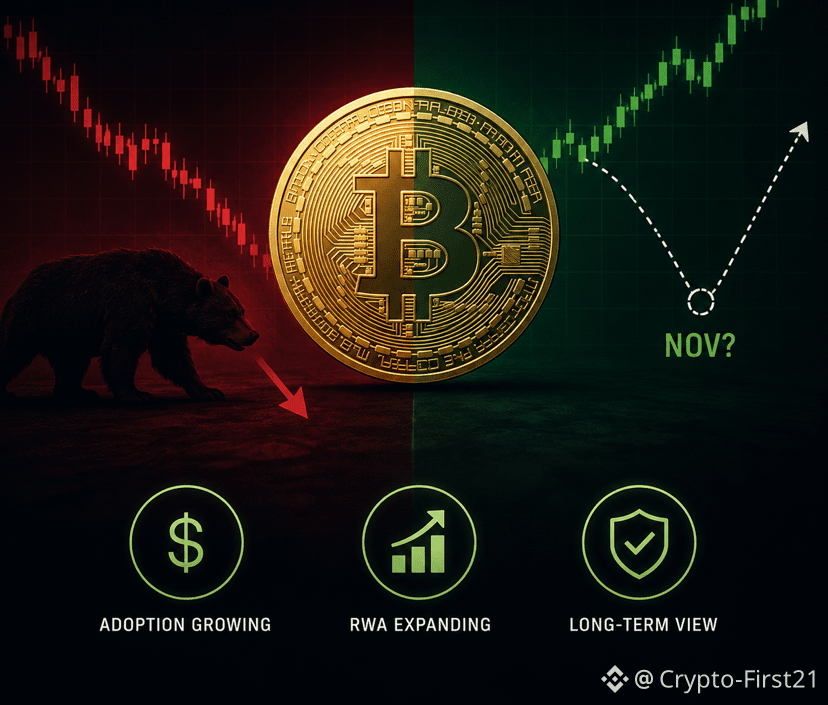
Nano Labs Founder Says Bitcoin Bottoms Often Form Around Christmas
The founder of Nano Labs said Bitcoin bear markets have historically found their bottom around the Christmas period, hinting that year-end could be a key turning point for prices.
China Pushes Blockchain Into Environmental Governance
China’s Ministry of Ecology and Environment said it will promote the deep use of technologies like blockchain and digital tools to improve ecological and environmental governance and oversight.
You learn to recognize that it’s not very often that the needs of crypto become apparent to the masses in a way that shines a spotlight on the underlying infrastructural requirements. One of the trends that is quietly making headway in 2025, particularly in the crypto space, is that of oracle networks. It is likely that you may have heard of the concept of oracles and are wondering what the connection could possibly be to prices, the weather, or event outcomes in the context of decentralized applications. Oracles are essentially what bring this on-chain data into blockchains. APO, an oracle network that has been making headway in this particular sector, has been doing so via use of its token. Or, simplified, an oracle is a bridge. Blockchain computers are deterministic, doing the same things every time with the same input, with no ability to reach out to fetch external data on their networks. Smart contracts, with their autonomous coding when certain conditions are met, require external data, with price feeds or results of certain events. Oracles, then, are indispensable for the following applications of decentralization: There’s no trade settlement in decentralized finance, no outcome verification in prediction markets, or stale, but trustworthy, data for tokenized real-world assets without oracles. APRO is one of the next-generation oracle networks, providing real-time, verifiable, trusted, multi-blockchain data, so smart contracts can run with the info they require. The key thing that differentiates APRO, at least as it is being presented by the team and investors, is its focus on AI-assisted data validation across multiple chains. Oracle networks primarily provide aggregated price data and simple data feeds, while APRO uses machine learning models to validate data from hundreds of sources to ensure that the data provided to a smart contract is not merely fast, but also truthful and consistent. This is a problem because errant data results in a “domino effect”-style catastrophe, such as liquidations of DeFi protocols, wrong payouts to prediction markets, or wrongly valued tokenized real-world assets. By tapping into over 1,400 data feeds across 40+ blockchains, the vision is to provide a solid base strong enough to support everything from high-frequency DeFi to institutional-level asset tokenization. Occasionally, you may hear it referred to as “oracle 3.0,” pertaining to APRO. This is some marketing-fluff stuff, but it does indicate an underlying design goal: creating an oracle that does far more than simply spit out prices at predetermined intervals; it should be compatible with AI-based validation, allow access to its data when asked for it, and integrate well with decentralized software. The APRO network uses two primary models: pull-based, where software fetches live data if it’s required, and push-based, where it will automatically send data whenever specified parameters are activated. This is incredibly handy at preventing extraneous transactions from being recorded on-chain, therefore increasing gas prices unnecessarily while still allowing necessary data to flow where it should. For traders and investors, among the most notable and tangible developments that have happened in the past few weeks includes the emergence of APRO in terms of market recognition. Towards the end of 2025, the native cryptocurrency of the project, AT, started to appear in platforms such as Binance Alpha with airdrops meant to generate a starting base before the complete listing of AT in trade platforms and markets. The supply of AT stands fixed at a total of 1 billion tokens; its token economics are quite predictable with only a few tokens in circulation with the rest vesting in different schedules for various purposes such as developing the ecosystem and staking rewards. Having backing in the crypto space, particularly for infrastructure blockchains, is always a positive and an important issue. Early stages of fundraising for APRO involved the participation of Polychain Capital and Franklin Templeton Digital Assets. This is significant as mainstream institutional capital has always avoided pure token chains. Later stages of strategic investment in 2025, with participants such as YZi Labs and Gate Labs, demonstrated continued faith in the technology and the people behind it. It is not merely an investment in a capital increase but an underlying belief that APRO can credibly address a critical infrastructure issue for the Web3 applications in DeFi, Real-world Assets, Prediction Markets, and AI-enhanced smart contracts. However, what drives this movement at this moment? Firstly, the intersection of blockchain technology and artificial intelligence as a hype story is being surpassed. As developers continue working on complex applications with autonomous agents or real-world compliance rules involved, there comes a need for higher integrity and real-time data feeds. APRO’s Hybrid Architecture combines off-chain computation and artificial intelligence inference with on-chain verification and cryptographically ensures this integrity need is addressed. Secondly, compatibility across multiple chains has moved from a nice to have feature to a requirement. Just as there exist multiple environments under the umbrella of Web 3, Ethereum, BNB Chain, Solana, and a variety of L2 networks built upon Bitcoin, each supports dApps with their own set of requirements and needs. Being versatile and capable of handling multiple “languages” and data integrity within them becomes much more useful than being exclusively for one chain alone. All the same, a dose of reality must be applied here. Supporting a decentralized oracle network requires a great deal of technological savvy. There’s a great deal that APRO proposes to deliver validation for AI models, fast transaction times, inter-chain provision, and enabling a new class of assets, that must be validated in practice. Just works, fast, smart, reliability is more about hardening, integrity, and tamper-resistance. Traders and investors would do well to note the on-chain metrics of data feed usage, integration counts, and DeFi application usage in judging the usefulness of this innovation in the long run. Developer adoption in the hundreds may prove a more positive indicator than market prices. Personally speaking, the most fascinating thing about APRO is its point of integrating AI and the decentralized trust model. The reality is that in order for decentralized networks to feature complex financial tools and decision engines, they require oracles that are both fast and reliable. This is no small feat in an industry where substandard data streams can mean direct financial losses. Those that execute on this vision will be much more than simply another token listed on an exchange; they will be Web3 plumbing. In the world of trader-investors, this means asking questions such as: who is using these tools, and does the solution offered by this network eliminate the problems which the developers are trying to solve with this application of blockchain, or is the utility of the token attributed to speculation rather than the use of the token in a particular application or service? The responses to these questions are far more important than any pump in the short term. The Web3 infrastructures are frequently below the radar but frequently determine who’s left when markets turn sour in a particular application such as APRO or any other application’s case in an environment where APRO could be the cornerstone of an oracle network or a mere footnote in history. @APRO Oracle #APRO $AT
If you’re paying attention to the crypto space, you can’t help but notice how certain projects begin with a niche notion but grow into a functional solution set that gets utilized by traders, developers, and even traditional enterprises. One of the stories that’s been making the rounds towards the end of 2025 is APRO, also known as AT on some exchanges, which is a fully-decentralized oracle solution aimed at providing more than just basic price feeds, such as pulling certain Real-world Data sets onto blockchains. Traders and investors are paying attention to APRO, not just because it’s another up-and-coming token play, but also due to the applications directly related to certain sectors that could very well set the stage for Web 3.0. But most simply, the oracle in the context of a blockchain is just a connection between off-chain data – whether that is price data, or weather patterns, or contracts of law, or any type of data that comes from outside the system – and smart contracts that require that data in order to be able to act. Without the trust that comes with oracle data, most decentralized apps wouldn’t be able to work properly since the world of blockchains doesn’t have any concept of the world outside of its own existence. The value of the pitch that APRO has is that they provide all of this with more accuracy and with more coverage through machine learning that the data is correct before it enters the world of blockchains. The origins of the story that you are currently reading about began around October and November 2025. APRO finished its Token Generation Event on October 24, 2025, with the distribution of the native tokens and the initiation of the oracle services for the protocol. Later, Binance welcomed APRO into its ecosystem and initiated the trading of AT on November 27, 2025, with a significant 20 million token airdrop for eligible members of the Binance community. It might have been mere marketing, but the airdrop was also an attempt at distributing and involving early members with the protocol. What traders are particularly interested in is what APRO oracle has been able to deliver when it comes to more practical uses that don’t fall under general oracle services. Of course, APRO could be used as just a normal oracle; it could provide a basic price feed; but what APRO has set out as a project agenda involves verification of unstructured data, which means it “digests” documents like or legal records, images, and a variety of other data sources and “digests” them into verifiable data on the blockchain. In the world of decentralized finance offering verifiable data this way isn’t just helpful when it comes to lending borrowing pairs or decentralized derivatives; it’s a requirement when it comes to tokenizing real-world assets like real estate itself or insurance or collectibles. Generally, these assets haven’t been easily tokenized because this data has all been stored in complex off-blockchain formats. Then there’s the prediction market, an area of crypto that has also seen heightened interest. These markets are essentially betting tools that traders use based on the outcome of events such as election results and stock market movements, all requiring correct and tamper-proof data that will determine the winners of such betting events. APRO’s AI supply chain is designed with the task of processing real-time event data and checking its correctness before relaying it to other applications, thus reducing the possibility of incorrect results and manipulation, especially in markets that are quite volatile and involve real-world money exchanges. The interesting piece in terms of a trader-level perspective is seeing what’s happening in terms of the applicability of these scenarios becoming something with traction. In terms of what’s happening as of the end of 2025, it’s nice to see that the oracle network offered by APRO has already launched and is in play with thousands of active data feeds and connections within various ecosystems, indicating that something is happening in the network as a reality beyond a pure concept in theory. It definitely has the makings of which catches the attention of institutional-level market players. From a market performance standpoint, the AT token index has experienced the volatility that can be expected in a newly-listed infrastructure token. Launch fervor immediately following the Binance airdrop pushed the token volumes in a sharp direction when everyone was hoping for a breakout, but profit taking coupled with the general mood of crypto markets that seem destined for a whip saw effect in the tail end of 2025 saw the market retreat more significantly in certain pockets of time. Those folks that traded in on launch day had their take-home gains before seeing a retreat that brought a harsh memory that infrastructure tokens tend to fluctuate before resolving in a direction that follows usage guides. But why is APRO trending? Well, of course, it has something to do with the intersection of AI data, interoperability among multiple chains, and a process of real-world asset tokenization—all of which have been among the most popular narratives in crypto over the course of this year. But it’s also that APRO is not simply talking about these things; they are actively implementing them and showing where developers and other blockchain projects can integrate with them and leverage APRO today. And that’s significant. Traders aren’t going to trade on hope as much as they trade on proof of implementation. That’s where APRO’s implementation begin to set it apart from pure concept projects. Nevertheless, I must caution against being too hasty in my praise. The challenge of connecting unstructured or real-world data to a blockchain environment is not trivial. This requires a lot more than quality data sources alone; a robust network defense system is also necessary to guarantee integrity and decentralization of data. Moreover, when considering enterprise blockchain adoption, issues pertaining to financial, property, and cross-border data sharing may act as speed bumps. What does it all mean for the trading and investing community that continues to mesh the crypto world with the greater financial ecosystem at large? It means that the story of APRO’s token is interesting because it connects well into the practical usage scenarios surrounding actual blockchain infrastructure implementation that fixes actual pain points rather than just a typical trading story. Its integration into actual real-world data feeds and early exposure at the institutional level means that what's happening here is more than just the hype surrounding it because that's all just going away right now. That does not necessarily mean it will trend smoothly into the future because it never does, but it does provide a practical purpose towards the actual work that's taking place. @APRO Oracle #APRO $AT
How APRO Integrates AI for Smarter Data Verification
As someone who has been tracking oracle protocols for years because they represent the nexus of data and value on blockchain networks, there’s nothing that shows the problem with decentralized networks like bad data. In 2025, as the role of AI becomes more prominent in finance and the world of Web 3.0, a lot of new projects like APRO are emerging not because they could be “the next meme coin” but because they address a fundamental problem—the problem of providing blockchain networks and AI systems with better and better data fast and in a provable manner. It may not be purely intellectually interesting reading for traders and builders; it could cause you to retrofit your views on risk and utility in the world of crypto. At its most basic level, the APRO is a decentralized AI-augmented oracle network. An oracle is basically the connection between the world of noise that exists outside the system—pricing data, the records of real-life assets, social media data—and the predictable world of the smart contracts that act in accordance with the right inputs within the system. Conventional oracles have been in existence for several years; however, their data is sourced from very few sources and is not augmented through the use of AI. Why is that important? If you’re operating trading bots, prediction markets, algorithmic settlements, or even DeFi systems that rely on price feeds, inaccurate information can indeed result in catastrophic levels of loss. Going bad enough, flash loan attacks and oracle fraud have already led to the loss of hundreds of millions in the past for DeFi investors. AI introduces a further layer of complexity because large language models tend to hallucinate—you mean it when you hear it because it sounds so real but lacks actual facts verified by actual events. APRO’s solution prevents that problem at the root itself. It gathers information from hundreds of independent sources and provides a consensus mechanism and digital signature that what the cryptocurrency or the AI model is presented with is indeed unassailable. APRO is more than theory. This is because in late 2025, it provided support to more than 1,400 real-time data feeds on over 40 blockchains ranging from crypto asset price data to tokenized real-world assets and even social media metrics. This is important because modern decentralized apps are no longer single-purpose tools. Rather, they aggregate insights from complex ecosystems involving markets, governance models, off-chain occurrences, and the outside world. Among the most interesting things that APRO has brought to the fore is Proof of Reserve Reporting. In layman’s terms, Proof of Reserve Reporting can be defined as an open, verifiable audit of the assets that are backing a particular token or a reserve pool of assets. Rather than having to rely on the estimates of a custodian, APRO’s algorithms use exchange APIs, regulatory submissions, banking sources, and staking information, followed by an on-chain hash of verification of such evidence. From a tech standpoint, APRO’s innovations extend beyond traditional price feeds. The innovation has developed a protocol called ATTPs that is specifically for safe and verifiable AI agent communication. This is not just a term; it truly has implications since AI agents will soon begin transacting independently on the network for things such as trade executions and portfolio rebalancing or analytics reporting. All of which depend on having safe and reliable communication between these AI agents. There is a human component to the popularity of APRO, as well. In October 2025, a token called AT, which is short for APRO, saw considerable support from various exchanges to list their token, among others. The initial price reaction during trade saw big rallies, including the hype settling down because a new infrastructure project doesn’t quite fit into a speculation play narrative so quickly. Partnerships and ecosystem integrations reveal a richer narrative as well. APRO has partnered with platforms such as Uquid in integrating verifiable data services into tokenization processes for real-world assets and has teamed up with compliance-focused firms in integrating verifiable payment and audit proofs with AI-based commerce. Such initiatives cause APRO to progress from being a conventional oracle in price feed provision into a middleware solution provider for business and regulated applications. What does all this mean from a traders' point of view? First, it represents an evolution from pure speculation tokens towards infrastructure plays with true demand drivers on the horizon. Eventually, markets will favor solutions that diminish risks and enhance automation capabilities, followed by new means for generating revenue. Then, there are AI strategy-executing oracles, and they are right at the forefront of this revolution. Second, having an appreciation for how data validation and distribution work will prove an essential trait on the part of traders looking at algorithmic trades, automated settlements, and DeFi risk management solutions. Those days are behind us, and APRO and other tools force us to consider who checked the checker. Nevertheless, there are challenges that come with the Oracle network. Oracle networks must scale well without any bottlenecks. Oracle nodes must be honest when attacked. Oracle developers must engage in mass adoption. The models of AI change frequently. The work of keeping oracle systems up to date with new data types, greater amounts of data, as well as cross-chain compatibility, is hard work. Orbadox technology is intriguing, yet implementation will prove whether APRO will be fundamental in 2026 or another experiment in 2026. As someone who has both traded and built systems based on these advances, it seems like a much-needed step forward. We’ve been living with the choice of static feeds or accessing data through a centralized API for far too long, and with the increasing sophistication of trading strategies to incorporate sentiment analysis, cross-market patterns, and real-world factors, you want to be able to ensure your data isn’t only quick, but right and immutable. So if you are either a trader or an investor who wants more than temporary market boosts, you should be thinking about where solutions like APRO are going and what they mean for you. Consider where they fall in your risk assessment formulas, where the incentives for their tokens intersect with security, and what their impact is when it comes to the accuracy of their decisions. The smart money of tomorrow will require smart data, and APRO is making its move in that market. @APRO Oracle #APRO $AT
How Stablecoin Infrastructure Is Shaping DeFi Execution
I have been observing what Falcon Finance has managed to accomplish within the crypto space during 2025, and for traders and investors, it symbolizes something more than a new DeFi platform. It operates at the intersection of stablecoin infrastructure, on-chain liquidity, collateral optimization and execution quality, which forms the growing epicenter of how capital moves on-chain. Learning what Falcon Finance tries to accomplish and how it ties to execution quality in the crypto market can allow you to understand better what drives the popularity of Falcon Finance and what follows. And when we speak about the quality of execution in the traditional financial industry, what we’re discussing is the execution speed relative to the benchmark price of the trade that was made, the speed of settlement of the transaction itself, as well as the slippage that was involved. But in decentralized finance, the quality of the execution is not only based on the speed of the execution of the trade; instead, the depth of the liquidity that is involved in the execution of the trade, the stability of pegs that are involved in stablecoins, as well as the stability of the infrastructure that is involved in the execution of the trade. Falcon Finance's relevance comes from its synthesized dollar, the USDf. Its relevance extends further into a general universal collateralization layer that seeks to enhance the scalability of on-chain liquidity. The problem that the synthesized dollar seeks to solve is that a fiat-backed stablecoin is just a reserve that sits at a bank while the synthesized dollar derives its collateral from a diversified portfolio of assets that seek to keep the peg without allowing it exposure to extreme volatility. The synthesized dollar is collateral-backed so that you can mint it using crypto assets or eligible collateral. Its value seeks to remain close to one U.S. dollar while providing yield to the holders. This could be considered rather mundane, but it’s important to say that the quality of DeFi project execution is a function of the quality of liquidity and how trustworthy it is. If a stablecoin project is able to consistently maintain a peg while being fully transparent with their collateral, then traders are more likely to use it as a trusted underlying to base a trade or hedge upon. This will reduce the overall slippage between exchanges that these coins are listed on and help to further tighten bid-ask spreads. Falcon’s real-time data and reserve assurances within their transparency charts are a part of that trust infrastructure. This kind of transparency is also directly linked to the quality of execution because, by understanding how a stablecoin sustains its price and what it is backed by, it’s easier to accept it as a way to collateralize something like an automated market maker or a cross-chain bridge. This leads to an improvement in trade quality because, in volatile markets, this kind of trust is important. Falcon Finance was also making significant noise in 2025 regarding its expansion in the circulation of its USDf, or synthetic dollar. Specifically, the final circulation level of the protocol’s synthetic dollar was around 2 billion dollars in mid-November 2025, with this level an indication of substantial adoption for a product that is relatively nascent on the market as a stablecoin solution. Being of this size is important for execution quality for two main reasons. Firstly, it allows traders on the network to have an on-chain money market solution that is agnostic to the traditional infrastructure related to fiat. In my perspective, watching USDf break a billion in supply is a milestone in the success of the protocol but also marks the point where execution algorithms and arbitrage systems are being developed around it. The significance of this is in the fact that the quality of execution is not fixed; it is a product of the exposure to the asset in question as a base upon which other transactions are executed. The point to note is that as investors and institutional market participants view USDf to be a legitimate substitute for the dollar, one starts to see improved orbiting liquidity and predictable execution prices even in a volatile market environment. Of course, there are risks and challenges associated with every project that ventures into critical financial infrastructure as well. In the case of synthetic stablecoins, for example, there is the issue of smart contract security, collateral risk models, and oracle reliability—the potential for which could introduce unforeseen bugs or oracle failure leading to depressing incidents. It’s because of this that Falcon’s commitment to third-party audits and proof of reserves reporting definitely isn’t a marketing buzzword but a crucial aspect of their plans for execution reliability. Further, execution quality is also not solely a function of liquidity depth but is also a function of overall market infrastructure such as cross-chain bridges, layer 2 scaling solutions, and routing algorithms that distribute orders among market participants. Though Falcon Finance does not provide such a solution, its role in the ecosystem as a collaborative backbone means that any improvement or stressful in such a space could have a spillover effect in the overall market as well. This means that with the acceptance of USDf in more than one market, there could be an overall improvement in market execution quality in any trade involving a stable asset. What has been so interesting from a trader’s or developer’s point of view is that it is not simply yield farming or chasing after new token hype anymore. It is talking about the stabilization infrastructure that is essential for the entire execution stacks, what is known as layers that are essential in forming efficient capital flow from one corner of DeFi to another. This is exactly where Falcon Finance’s significance comes from since it is at the point where stability, liquidity, and execution are critical. All of that said, no project gets done without a few speed bumps along the way.Industry trends in late 2025 have been a bit iffy, and everyone in crypto knows that times of strengthening a peg can be extremely challenging in terms of smooth execution. Yet the fact that Falcon maintains a steady stream of transparency metrics, usage growth, and a vision that makes sense by linking efficiency in collateral with broader application-based usage. As traders and investors, it’s not enough to ask whether Falcon Finance will succeed on its own merits. It’s whether things like Falcon Finance and by extension, the use of a strong and clear collateral layer, are capable of enhancing execution quality on an on-chain market that is, reducing true costs, enhancing settlement integrity, and increasing on-chain capital depth. And that is the sort of change that not only makes something successful for a season, but makes the whole industry better. As a reminder, the quality of execution and liquidity are not abstract things; they represent exactly how much money you make or lose with each trade. Paying attention to things like Falcon Finance will give you a window into how the plumbing of the markets is changing in crypto, since these undertows are just as important as price action. @Falcon Finance #FalconFinance $FF
سجّل الدخول لاستكشاف المزيد من المُحتوى
استكشف أحدث أخبار العملات الرقمية
⚡️ كُن جزءًا من أحدث النقاشات في مجال العملات الرقمية