It took me 4 years in the crypto market to realize these things & you only need 2 minutes to read: 🤏
1. No matter the market condition, one thing stays the same: 8% of people will own 21 million Bitcoin. 2. Financial, capital, and risk management skills are 100 times more important than technical analysis or crypto research. 3. Earning while you sleep: There are many ways to make money in the crypto market without actively trading.
On average, #Bitcoin has increased more than 100% per year over the past 15 years. Yet, why do so few people make money? Because getting rich quickly is a common mentality. If you can't dedicate at least 4 hours a day to crypto, stick to Bitcoin and ETH—70% in BTC and 30% in ETH.
Trust no one: Trust leads to hope, disappointment, and errors. Learn independently and take responsibility for your actions. This is how to gain automatic minting experience!
The ultimate goal of investing: Make life more meaningful. If crypto investing can achieve that, do it. If not, reconsider.
Crypto is now a financial market: Originally born from technology, it's now influenced by macroeconomics and connected to mainstream financial markets.
People may discourage you from buying Bitcoin, but remember, once something is widely accepted, the opportunity might be gone. Seize your chance now!
Invest wisely, make meaningful choices, and let crypto pave the way to a better future.
$ETH is holding above the $1955–$1960 support zone after a strong recovery from the lows. Price is forming higher lows on the 15m chart, showing steady buyer interest. As long as this base holds, continuation to the upside is likely.
🚀 $ZEC Bullish Continuation Setup — Momentum Still Building
ZEC is holding strong above the $236–$238 support zone after a healthy pullback. Price is consolidating with higher lows, showing buyers are still in control. As long as this base holds, the next upside push looks likely.
Buyers are defending the 610–612 area and price is consolidating near resistance. A clean breakout above 620 can accelerate the next move. Manage risk and trade smart. 🚀
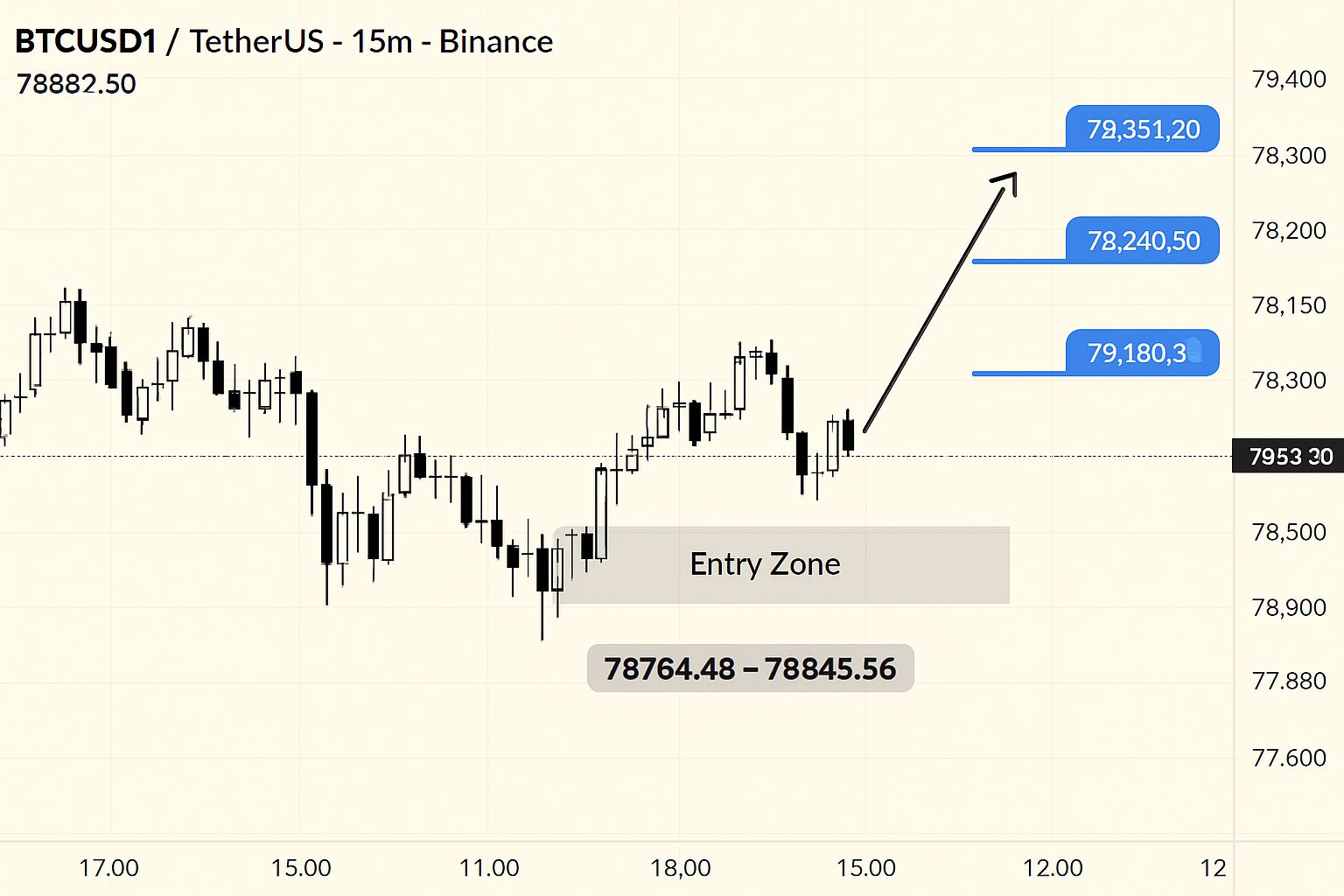
The chart which clearly show the next move of the market. $BTC move on 15min chart is given below in the image the analysis is clear just following the trend and key points are clearly mentioned.
Bitcoin is currently showing a short-term recovery structure on the 15-minute timeframe after a strong rejection from lower support. The price previously dropped into a well-defined demand zone near the 68,600–68,900 region, where buyers stepped in aggressively. This area acted as a liquidity sweep and accumulation zone, leading to a sharp bounce. The strong bullish reaction from this level indicates that institutional and large-volume participants are defending this zone, making it a key foundation for the current upward move. {future}(BTCUSDT)
After reclaiming the broken intraday support, price formed a sequence of higher lows and higher highs, confirming a short-term trend reversal. The impulsive bullish candle that pushed Bitcoin above 70,000 shows renewed buying pressure and growing confidence among traders. Volume expansion during this recovery further supports the idea that this move is backed by real demand rather than weak speculative buying. This shift in momentum suggests that the market is transitioning from a corrective phase into a potential continuation phase. The current consolidation near the 70,400–70,600 region represents a healthy pause after the impulse move. This area is acting as a minor support and also aligns with the entry zone shown in the setup. Holding above this region is critical for maintaining bullish structure. As long as price remains above this base, buyers are in control, and the probability of continuation toward higher resistance increases.
The breakeven level around 72,260 is an important technical reference. This zone represents previous rejection and supply, where sellers previously entered the market. A successful break and hold above this level would confirm strength and invalidate short-term bearish pressure. If price reaches this area with strong momentum and volume, it is likely to trigger further buying from breakout traders and stop-loss orders from short sellers, potentially accelerating the move toward higher targets. The projected upside target near 74,200 is aligned with the next major resistance and liquidity pool. This level corresponds with previous highs and untested supply, making it a natural magnet for price. If momentum remains intact, this zone is a realistic objective for the current bullish structure. However, partial profit-taking is recommended before this level, as strong reactions are likely in this area.
On the downside, the stop-loss zone around 69,600–69,700 is placed below the recent higher low and below the consolidation base. A break below this region would invalidate the bullish structure and indicate that buyers have lost control. Such a move would likely lead to a retest of the lower demand zone near 68,800. Therefore, maintaining price above this level is essential for this setup to remain valid.
From a market psychology perspective, the recent rejection from support followed by a strong recovery reflects a classic shakeout pattern. Weak longs were flushed out near the lows, while strong hands accumulated positions. This behavior often precedes continuation moves, especially when accompanied by rising volume and structural confirmation. The current market environment favors disciplined long positions rather than chasing breakouts blindly. Risk management remains crucial in this setup. Although the structure is bullish, intraday volatility can still cause temporary pullbacks. Traders should avoid overleveraging and respect the predefined stop-loss. Scaling out profits near resistance zones and moving stop-loss to breakeven after confirmation near 72,200 can help protect capital and lock in gains. Trade Setup Entry Zone: 70,400 – 70,600 Target 1: 71,500 Target 2: 72,260 (Breakeven Zone) Target 3: 74,200 Stop Loss: 69,600 This setup is based on demand zone defense, bullish structure shift, and momentum continuation. As long as price holds above the entry base and respects higher lows, the bias remains bullish. A confirmed breakout above 72,260 will significantly increase the probability of reaching the higher target zone.
ATM is showing strong bullish momentum with rising volume and a clean bounce from support around 1.28–1.30. This level is acting as a solid base, and buyers are clearly stepping in. As long as price holds above this zone, the trend favors upside continuation.
Unlike many experimental payment rails, Plasma ($XPL ) is building stablecoin infrastructure for real production use.
It treats payments as critical systems, not test environments.
With Tenderly-style debugging and Phalcon-style flow tracking, Plasma enables teams to trace payouts, audit failures, and monitor anomalies in real time. This level of observability is what turns crypto rails into reliable financial infrastructure.
When payments can be monitored, verified, and fixed quickly, stablecoins move beyond “fast transfers” and become truly operational systems.
That’s how Plasma becomes more than a chain it becomes payment infrastructure.
One of Vanar’s most underrated strengths isn’t another technical feature — it’s builder distribution.
Through its Kickstart program, Vanar offers real partner benefits, like Plena’s service discounts, co-marketing support, and featured exposure for projects. This isn’t just ecosystem branding. It’s practical growth infrastructure.
This is Web3 done the SaaS way: first build reliable infrastructure, then help teams reach real users.
For builders, this support loop matters as much as TPS and fees. Shipping is only half the battle. Distribution decides survival.
Vanar understands that. And that’s what makes the difference.
Plasma’s Real Power Isn’t Moving Money — It’s Moving Meaningful Payment Data
Most conversations around stablecoins focus on speed and fees. How fast is USDT sent? How cheap is the transaction? Plasma ($XPL ) already competes in that narrative with gasless transfers and a stablecoin-first architecture. But the real frontier of adoption lies somewhere deeper.
It lies in data.
In real finance, no payment exists in isolation. Every transfer represents an invoice, a salary entry, a supplier settlement, a subscription renewal, a refund, or a dispute. Traditional systems dominate global commerce not because they are fast, but because they carry structured information that allows businesses to reconcile, audit, and scale.
The Hidden Problem of Crypto Payments
Most crypto transfers are blind. Value moves from A to B, and the blockchain records it. But businesses need more than proof of transfer. They need context.
What was this payment for?
Which order does it belong to?
Is it partial, final, or refunded?
How does it appear on financial statements?
Without these answers, teams rely on manual tracking, spreadsheets, and off-chain systems. Humans become the bridge between money and meaning — and humans do not scale.
This is why stablecoins remain largely “crypto-native” rather than enterprise-native.
From Transfers to Business Infrastructure
Plasma has the opportunity to redefine stablecoin payments by embedding structured metadata, reference fields, and traceability directly into transactions.
When payments become data-rich, they become usable at scale.
Marketplaces can automatically match payouts to orders.
Companies can link payroll to contracts.
Refunds can connect to original purchases.
Auditors can verify flows without manual intervention.
This transforms stablecoins from tools for traders into tools for organizations.
Why Institutions Care
Institutions do not ask only, “Does it work?”
They ask:
Can I reconcile it?
Can I audit it?
Can I explain it to compliance?
Can I operate it at scale?
A payment system that cannot answer these questions will never become mainstream. Plasma’s focus on institutional infrastructure positions it to meet these requirements through structured settlement data and operational transparency.
Invoice-Level Settlement: The Breakthrough
Global commerce runs on invoices, not transfers.
Imagine stablecoin payments that are natively linked to invoice IDs, line items, partial payments, and adjustments — readable by systems, not just humans.
With this, stablecoins become compatible with enterprise accounting software, procurement systems, and compliance workflows. This is not hype. It is maturity.
Refunds, Disputes, and Operability
Modern payments are defined by how they handle exceptions.
Refunds, disputes, and failures are inevitable. What matters is whether systems can resolve them automatically. With strong data layers, Plasma can make refunds first-class transactions, traceable and auditable by default.
Operational teams can monitor flows, detect anomalies, and debug incidents using trace IDs and event logs. Payments become observable — a core requirement for serious infrastructure.
Why This Matters to Everyday Users
Better payment data improves user experience.
Clear receipts.
Transparent refunds.
Trackable purchases.
Fewer “Where is my money?” moments.
Less support friction.
Reconciliation may be invisible, but its benefits are felt by everyone.
The Long-Term Thesis
Stablecoins become real money when they carry real meaning.
Speed and cost are only the foundation. The future belongs to payment rails that combine settlement with structured, reliable information.
If Plasma succeeds in making payment data a first-class citizen, it will not just be another blockchain. It will be a bridge between crypto settlement and real-world business operations.
Vanar’s Real Edge Isn’t Speed It’s a Packaged Launch Stack
Most Layer 1 ecosystems describe themselves as “forests” where projects can grow. But builders don’t fail because there’s no forest — they fail because the path from idea to product to users is long, expensive, and fragmented. Vanar is approaching this differently.
Instead of telling teams to find audits, wallets, infrastructure, listings, marketing, compliance, and partnerships on their own, Vanar bundles these into a structured go-to-market system called Kickstart. This transforms an ecosystem from a narrative into a repeatable launch process.
The Real Bottleneck in Web3 Isn’t Building It’s Assembling
Writing code is rarely the hardest part of launching a Web3 product.
The friction comes from stitching together everything around it: security providers, analytics, on-ramps, KYC support, exchange access, growth channels, and distribution. On most chains, founders go on a scavenger hunt — negotiating vendors, integrating tools, and absorbing integration risk.
Vanar’s Kickstart model attempts to remove this “assembly tax.”
It positions the ecosystem as a bundled platform rather than a collection of logos. Partners offer tangible incentives — discounted services, free months, co-marketing, priority support — while projects move through a structured path toward launch.
Distribution as Infrastructure
Most L1s compete on speed, TPS, or technical features. Vanar is betting on something else: shipping velocity.
Kickstart treats distribution not as marketing, but as infrastructure. Growth support, co-branding, and partner leverage become part of the base layer experience. That shift matters — because in technology markets, the best distribution often wins over the best product.
If builders can launch faster, cheaper, and with fewer moving parts, density increases. More small teams survive. More products reach users. That creates a compounding ecosystem effect.
Ecosystems Are People, Not Just Projects
Vanar is also investing in builder pipelines — from AI programs to regional collaborations across London, Lahore, and Dubai. A chain with trained developers has long-term leverage beyond announcements.
This aligns with Vanar’s broader identity: a product-ready, structured, enterprise-aware chain. Predictable costs. Organized tooling. Clear launch pathways.
The Risk and the Metric
Any partner network risks becoming a directory page without results.
The true KPI for Kickstart isn’t partner count — it’s shipped projects, retained users, and growing revenue. If real success stories emerge, the model becomes a flywheel: builders join for evidence, partners join for deal flow.
The Thesis
Vanar is positioning itself as the default operating environment for small teams.
Not the loudest chain.
Not the fastest in theory.
But the easiest place to ship, survive, and scale.
In an overcrowded L1 market, that may be one of the most practical — and powerful — differentiators in Web3. #Vanar @Vanarchain
Bitcoin is currently trading around 69,000 after a sharp rejection near the 70,000–70,500 resistance zone, showing sellers are still active at higher levels. On the 15m chart, price is forming a short-term consolidation with higher lows from the recent dip near 68,000, suggesting buyers are trying to defend this support. If BTC holds above 68,500, a rebound toward 69,800–70,500 is possible, while a breakdown below this zone could open the door for another move toward 67,800.
$COLLECT played out exactly as planned. Clean structure, patience paid, and targets delivered. This is why risk management + timing matters more than hype.
More setups like this are coming. I’ll keep sharing clear, realistic signals with proper entries, targets, and exits. Stay with me, stay disciplined, and let the charts do the talking 🚀 #Write2Earn
A lot is happening behind the scenes on the Terra Classic network. SDK 53 and MM2 upgrades are getting closer, while LUNC and USTC burns continue to reduce supply.
After hitting a major bottom, the Terra Classic chain looks technically and fundamentally stronger than ever. Development is active, confidence is returning, and the foundation for a new uptrend is being built step by step.
This isn’t hype — it’s progress. If momentum holds, LUNC could surprise many again. 🚀
BERAUSDT is showing a strong short-term recovery on the 15m chart after defending the 0.48–0.49 support zone, with price now pushing back above the key 0.50 level. The recent higher low and impulsive candle suggest buyers are regaining control, and a sustained hold above 0.50 could trigger a continuation toward the previous supply area. As long as price remains above near-term support, the bias stays bullish with room for further upside.
Despite recent market shakeouts, whales are still accumulating Bitcoin. During the last $BTC dip, most retail traders panic-sold, while smart money used the drop as a buying opportunity. This kind of behavior often signals strength before the next major move.