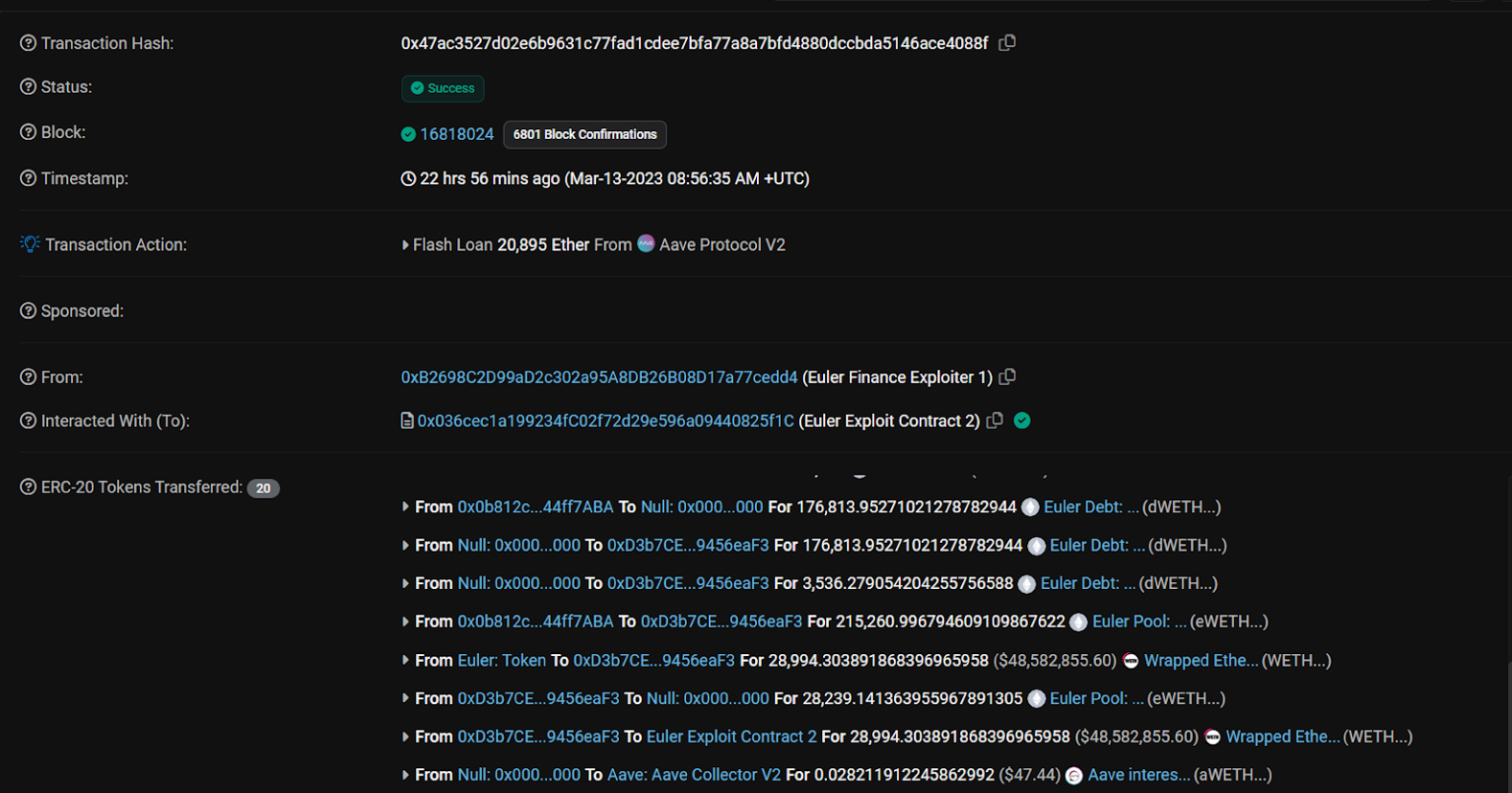

In March 2023, Euler Finance was hit by a devastating flash loan exploit. The attacker managed to slip away with nearly $197 million in various digital assets.
In the immediate aftermath, the team did what every project does: they offered a $1 million bounty for information, tracked the wallets, and pleaded for the return of the funds.
But then, the on-chain transaction logs took a bizarre turn.
Instead of laundering the funds or ignoring the messages, the hacker using the pseudonym "Jacob" started sending embedded text messages back to the Euler deployer address.
They weren't demanding a ransom. They were apologizing.
"I want to make it easy for those affected. I do not intend to keep what is not mine."
Over the next two weeks, the blockchain ledger became an open journal of a hacker's psychological struggle. Jacob expressed deep regret, chatted with the developers on-chain, and even apologized directly to users who had lost their life savings.
Then came the final plot twist. Jacob actually kept his word.
In a series of transactions, the attacker returned 95% of the stolen funds (approximately $196 million worth of ETH and DAI) back to the Euler smart contracts. He kept only a small portion, seemingly as a self-awarded "bounty."
Most security experts argue that "Jacob" didn't return the money out of pure guilt, but because the sheer size of the loot made it impossible to wash or cash out without getting caught by on-chain tracking.
Yet, the bizarre negotiation proved that even in an ecosystem governed by cold, hard code, the human element still dictates the final outcome.
Do you think the hacker returned the funds because of genuine remorse, or was it simply the realization that a $200M bounty hunt is impossible to survive?