

I watched a transaction sit unbroadcast for almost a minute this week and almost ignored it.
I'd configured a policy that would only allow execution when Ethereum gas dropped below a specific threshold. At the time, gas prices were elevated, so seeing the transaction wait didn't surprise me. When the network calmed down and the transaction finally went through, I closed the tab thinking everything had behaved exactly as expected.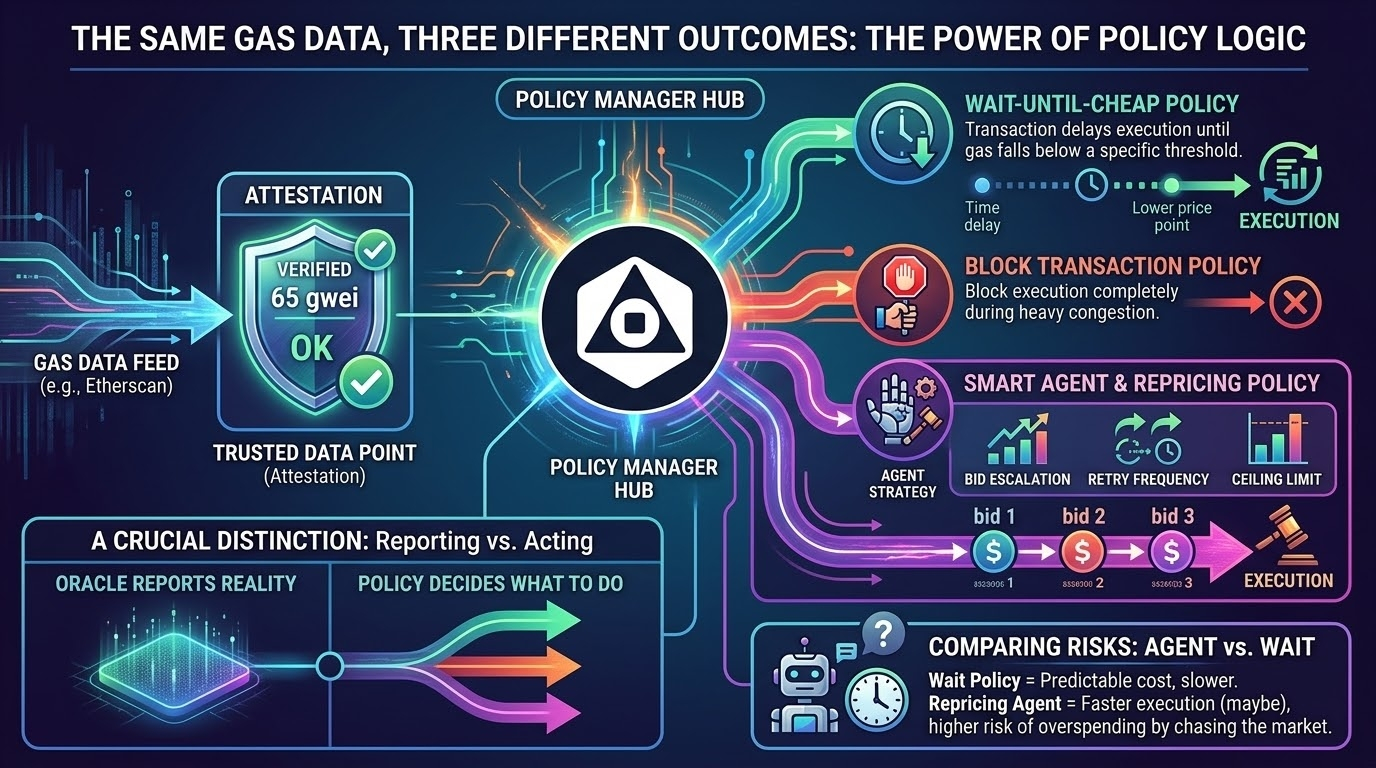
Then another transaction caught my attention.
It was driven by the same gas data source, yet instead of waiting for cheaper fees, it was rebroadcast with a new gas price after conditions changed. At first, I assumed something was inconsistent. Both policies were reading the same gas feed, so why were they reacting differently?
The answer wasn't in the oracle. It was in the policy.
I had been treating a gas threshold as if it always produced one predictable outcome: wait until gas is cheap enough, then execute. But after digging through Newton's documentation, I realized I'd collapsed several different behaviors into a single mental model.
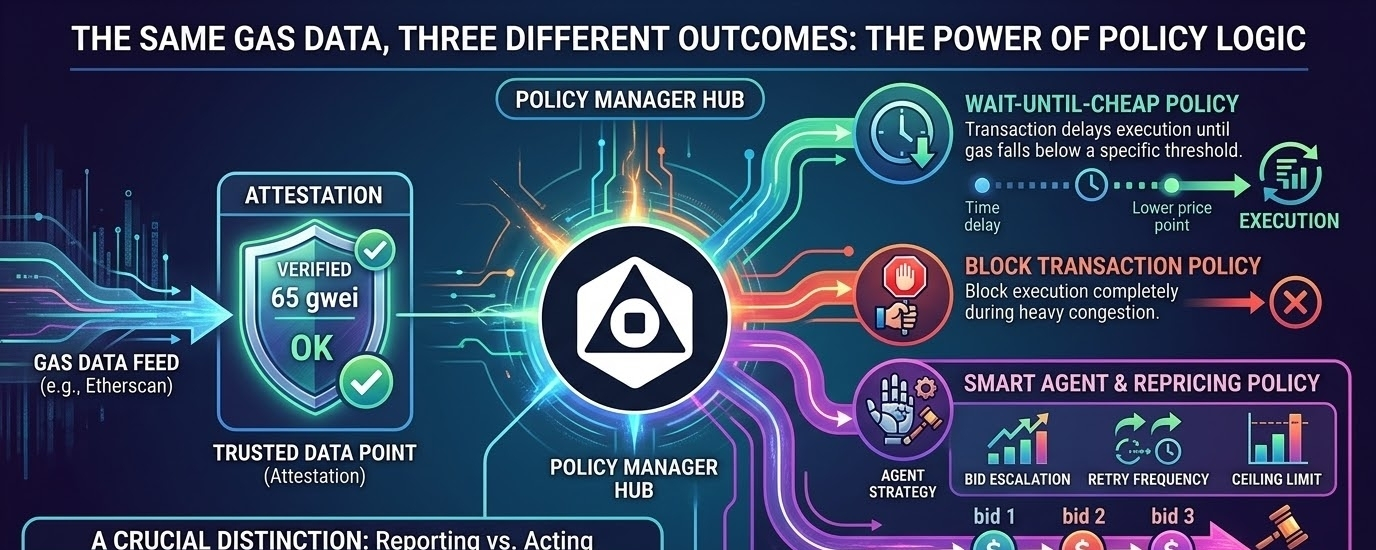
A threshold policy can simply delay execution until gas falls below a chosen level. It can block transactions entirely during heavy congestion. Or it can hand control to a smart agent that continuously reprices and rebroadcasts the transaction as network conditions evolve.
The gas feed never changed. The response to that feed did.
That changed how I think about policy design.
The Etherscan Gas Tracker provides the same information to every policy using it. Every vault, agent, or workflow can read identical gas prices and congestion signals. But identical inputs don't guarantee identical outcomes. Each policy decides what those numbers actually mean.
From the outside, two transactions behaving differently under the same market conditions can easily look like a bug. In reality, they're often following completely different sets of rules.
Once I traced the process end to end, it became much clearer.
Gas data is collected off-chain, verified by Newton's operator network, and turned into an attested data point that policies can trust. After that, the oracle's responsibility is finished. Whether the transaction waits, gets rejected, or is automatically repriced is determined entirely by the policy logic built on top of that attestation.
That distinction feels small on paper, but it's significant in practice.
The part that interests me most is the repricing agent.
If an agent is allowed to rebroadcast transactions as gas moves, it also needs its own strategy. How often should it retry? How much higher should it bid each time? When should it stop chasing the market? Those decisions aren't supplied by the oracle—they belong to another layer of automation.
The oracle reports reality.
The policy decides what to do with it.
The agent decides how aggressively to act.
That separation was easy to overlook until I saw two transactions react differently to the same data.
It reminded me of a mistake I made in my own trading earlier this week. I thought I had created a straightforward stop-loss, but I'd forgotten that I had also enabled a re-entry rule. Instead of exiting and staying out, the position quietly opened again while I was focused elsewhere. The problem wasn't the market. It was that I'd layered two independent pieces of logic together without thinking about how they would interact.
Seeing Newton's policies through that lens made the design click for me.
The more I explore programmable compliance and automated execution, the less I think the hardest problems are about collecting better data. They're about making the behavior built on that data predictable, understandable, and easy to reason about.
One question still sticks with me.
During a period of extreme congestion, when gas prices are changing every few seconds, could a rebroadcast-and-reprice agent end up chasing the market so aggressively that it spends more on repeated attempts than a simple wait-until-cheap policy would have cost? The oracle can tell you where gas is. Deciding whether it's worth chasing is an entirely different problem.
@NewtonProtocol #NEWT #Newt $NEWT
