
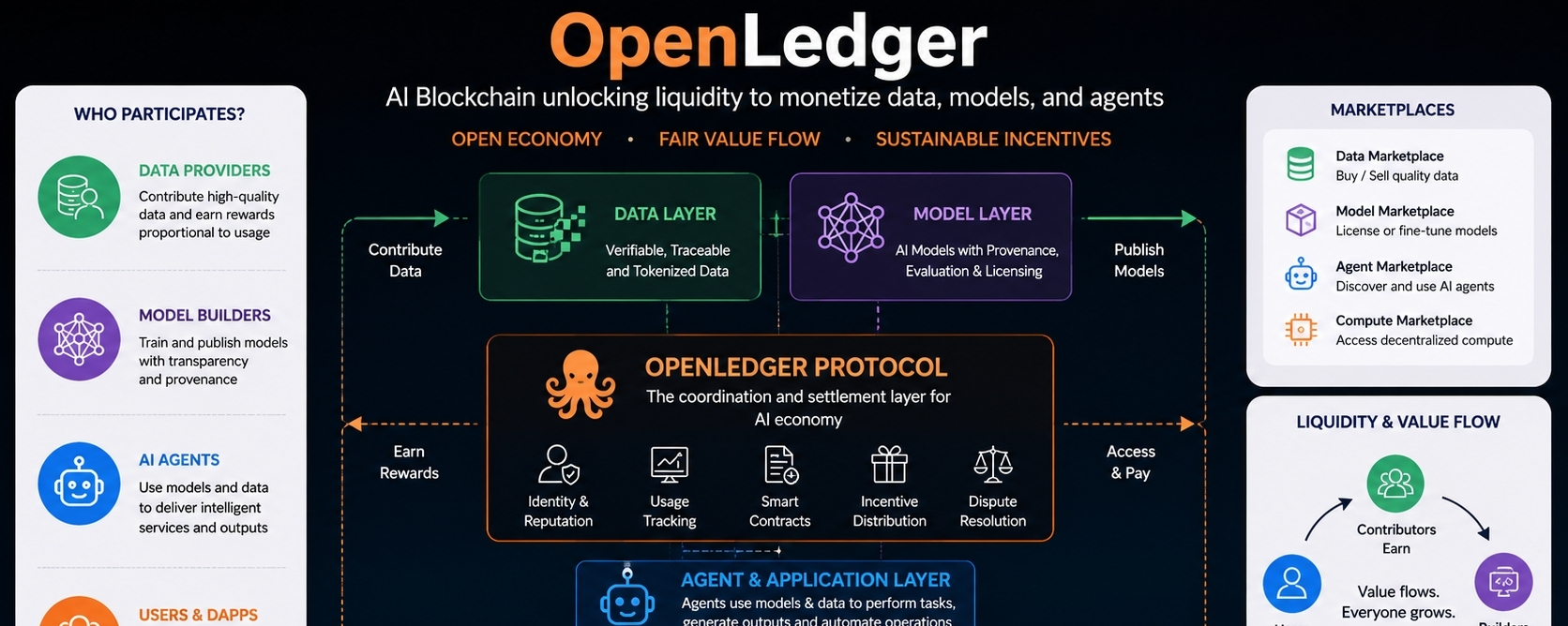

A few days ago, I was stuck in traffic after rain while motorcycles, cars, and delivery riders all tried squeezing through the same narrow road. Nobody wanted to stop, but everyone moving at once only made the situation worse. Horns got louder, tempers changed, and a road that normally worked fine suddenly felt completely broken. Sitting there, I kept thinking about how most systems only look strong when conditions are easy.That’s honestly what comes to mind when I look at OpenLedger.
The AI industry right now feels a lot like that crowded road. Everyone is building models, launching agents, collecting data, and chasing attention at the same time. But behind all the excitement, there’s a bigger issue most people don’t talk about enough — the people creating value inside these systems often don’t share fairly in the rewards. Data providers, smaller developers, researchers, and infrastructure contributors usually sit far away from the real economic upside.
OpenLedger is trying to change that by building a system where data, AI models, agents, and liquidity can work together more openly instead of staying trapped inside closed platforms. The idea sounds simple when explained quickly, but in reality, coordination is never simple once money, incentives, and pressure enter the picture.
I’ve seen this happen across crypto many times. Everything feels smooth during bullish periods when liquidity is flowing and confidence is high. But when markets slow down, behavior changes fast. People protect themselves first. Governance becomes slower. Trust becomes fragile. Small inefficiencies suddenly become major problems.That’s where projects usually get tested for real.
What makes OpenLedger interesting to me is that it seems built around the understanding that AI infrastructure is not just about technology anymore. It’s about economic coordination. Who owns the data? Who gets rewarded? Who controls the flow of value between developers, users, and AI agents? And what happens when growth slows down or incentives stop aligning perfectly?Those questions matter more than flashy marketing.
The project has recently been moving deeper into ideas around AI-native liquidity and decentralized coordination between agents, applications, and contributors. In simple terms, it’s trying to create an environment where value can move more naturally between the people and systems actually participating in the network.But no system fully escapes pressure.
OpenLedger still faces the same challenges most AI and blockchain projects face today. Bad data can still enter the network. Speculation can still overpower utility. Governance can still become slow during critical moments. And despite decentralization goals, much of the AI world still depends heavily on centralized compute infrastructure behind the scenes.That’s why I don’t look at projects like this as perfect solutions. I look at them more like evolving systems trying to solve coordination problems that are becoming harder every year.And honestly, that feels more realistic.
The AI space is moving incredibly fast right now, but speed alone doesn’t create stability. We’re entering a period where infrastructure matters more than hype. Systems that survive long term will probably be the ones designed with the understanding that markets become emotional under stress, liquidity disappears faster than expected, and human behavior rarely follows ideal assumptions.
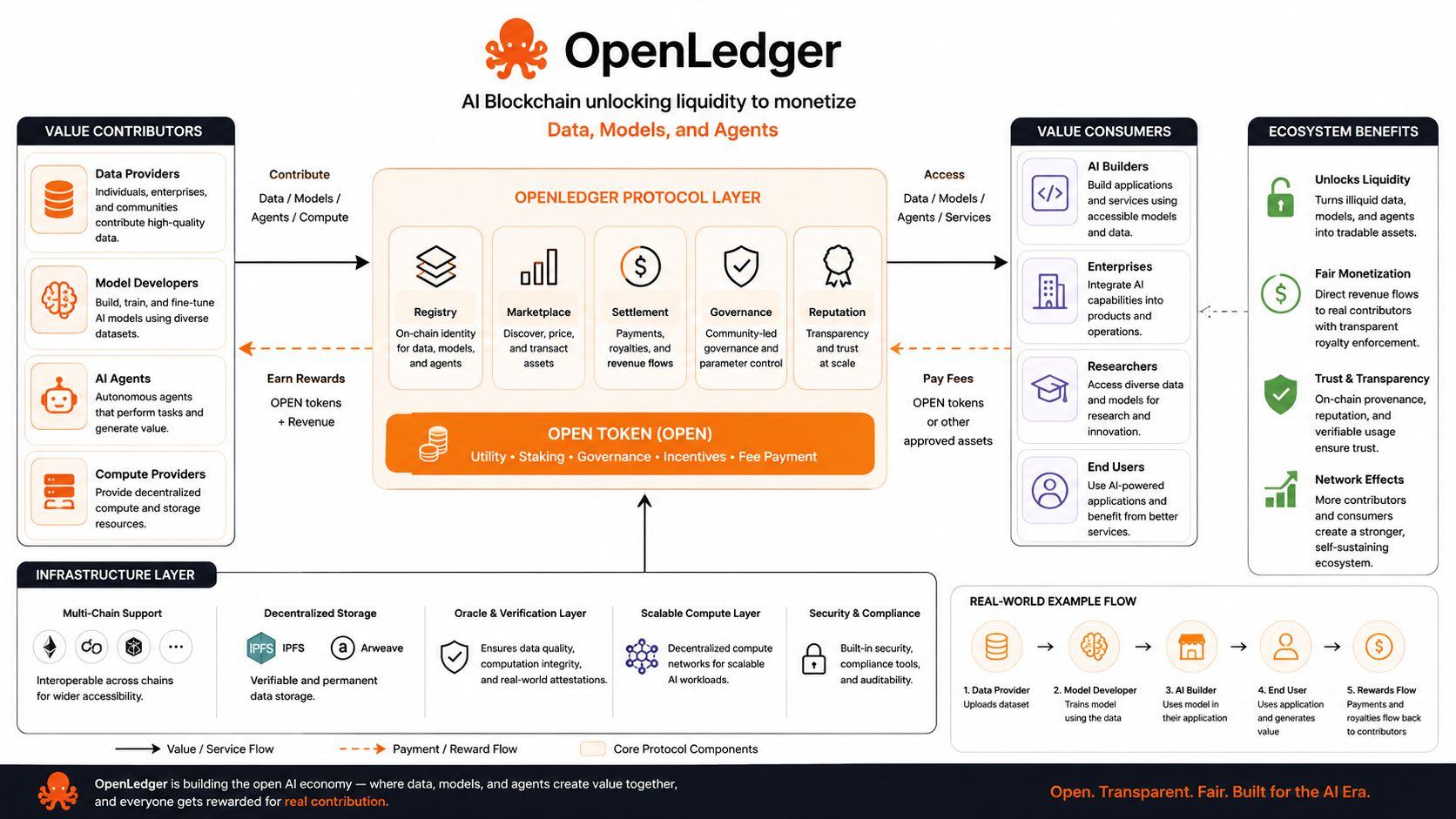
OpenLedger still has a long way to go, and there are risks it may never fully solve. But I do think it reflects an important shift happening across the industry. People are slowly starting to realize that AI is not only about building smarter models anymore. It’s also about building fairer systems around them.And that’s a much harder problem than most people think.