


Yesterday's April Fool's Day was quite interesting.
Originally, the April Fool's joke about Ethereum skyrocketing was already enough to kill someone’s spirit, but from last night until now, reality has struck retail investors like a sharp knife, leaving them feeling cold.
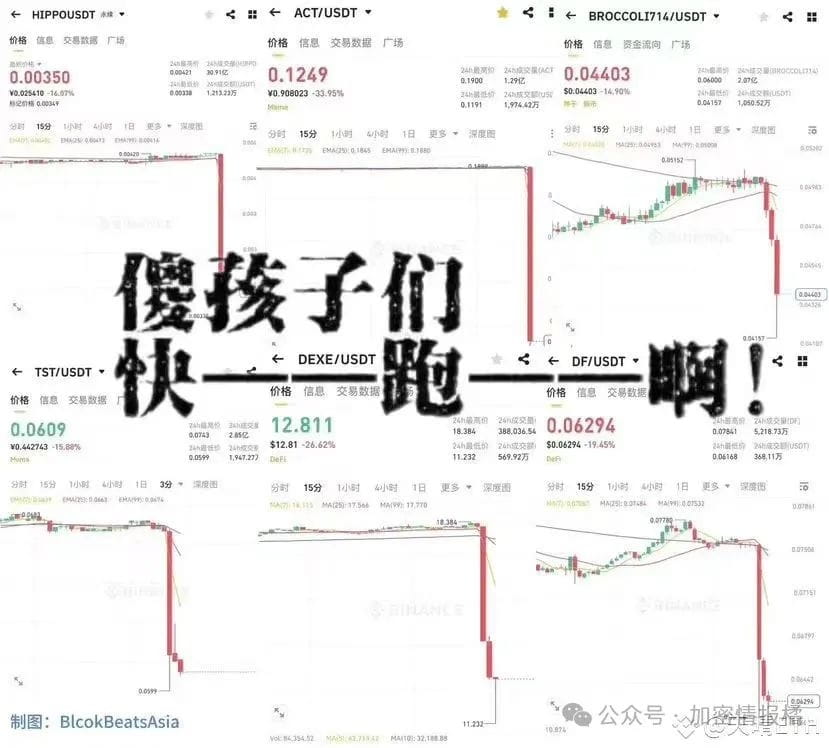
Last night, multiple tokens on Binance experienced a collective drop, with ACT plummeting over 50%. Other tokens like TST, Broccoli 714, DF, DEXE, etc., also performed unusually, plummeting at the same time.
The reason is quite simple; at 3:30 PM yesterday, an announcement was made, adjusting the leverage and margin tiers for multiple USDT-based perpetual contracts.
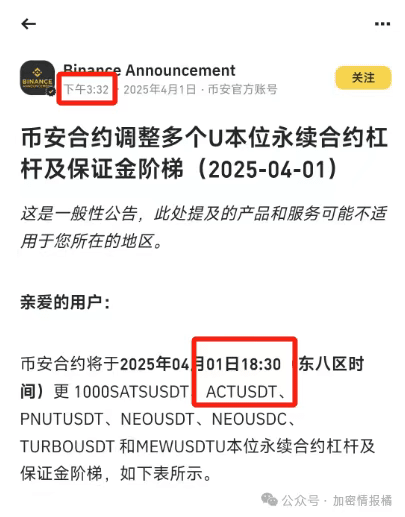
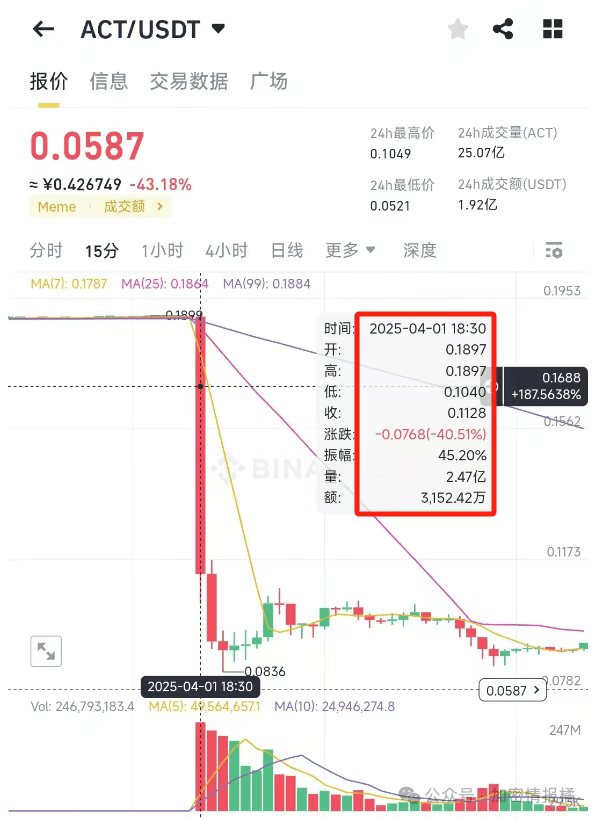
And the market makers of ACT seemed to be oblivious, making no adjustments or actions, so at 6:30, the explosion began.
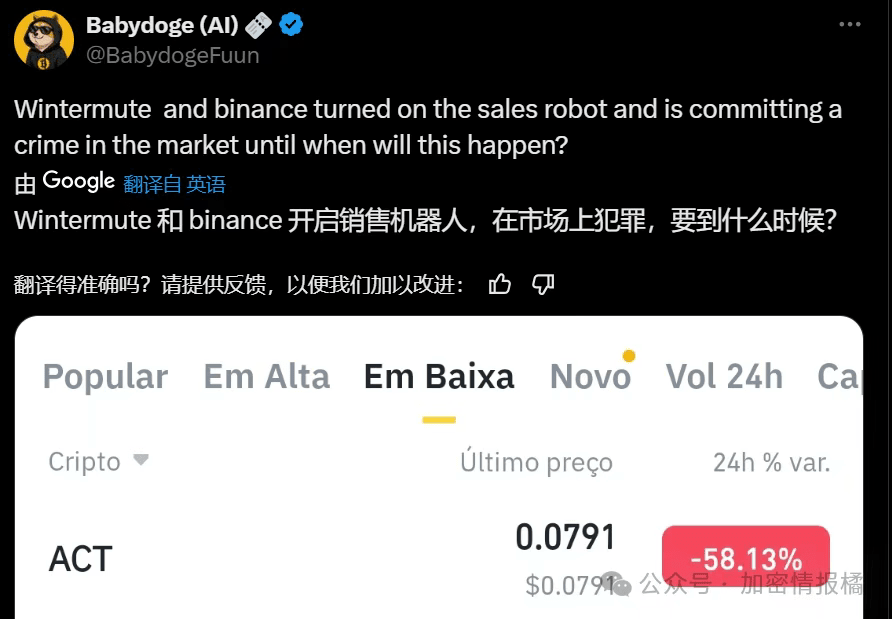
At the same time, the market maker Wintermute cleared out many meme coins, including ACT, on-chain, which made many people feel that the meme market was completely over.

The reason Binance made such adjustments is due to the automatic position reduction mechanism, which you can understand as a protective measure to prevent extreme market conditions, allowing overall contract trading to be more balanced.
And a very unacceptable fact is: this is obviously the market maker's fault, but market makers won't lose money because of it. After all, Wintermute is well-known, and occasional events won't affect their status or cut off their clientele.
Congratulations, once again, it's everyone present who pays the bill.
After explaining the background and true situation of this matter, Orange Seat will talk about the impact of this incident and my views on it.
The most direct impact of this incident is that meme players directly suffered significant losses, which also led to a collapse in the meme market and even made the already exhausted liquidity even more depleted.
Moreover, due to the severity of the ACT incident, deeper issues have been hidden:
Have you considered why when ACT had issues, other memes also showed the same K-line trend at the same time?
Whether it is the problem of market makers or the issue of market-making bots, both have strong implications:
These projects are highly correlated.
And such highly correlated projects are what everyone usually thinks of as decentralized, high-heat projects filtered through the market.
What’s the difference between wanting to eat freshly cooked food and ending up with pre-made meals?
This is really looking down on us retail investors!
And under such circumstances, retail investors still rush in like gamblers, throwing in money, and they can’t be stopped.
Since the beginning of the year, the entire industry has been tarnished by unscrupulous market makers.
In the past, market makers would serve fixed projects within a set period and even have dedicated teams for certain projects. Although the purpose was also to help the project side make more money, at least they would put on a show, drawing lines to entice retail investors and then distributing chips at high prices to maximize profits.
Although making money as a retail investor is like licking blood off a knife's edge, at least there is blood to lick. The current market makers have it much simpler:
A team handles a dozen or even dozens of projects, working day and night.
There's nothing to be done; there are too many projects, and project parties have learned to play the matrix. Project parties that put all their bets on one project are definitely seen as big fools by market makers; the optimal solution for launching projects is to select the best through a competitive mechanism.
No wonder current market makers only sell and don’t bother drawing K-lines; there are so many projects, and making money is so easy; why act?
Anyway, if retail investors are willing to gamble, if you want to buy, I will sell it to you; I'm not holding a knife to your neck forcing you to buy!
Damn it, it’s harder for retail investors to scrape a few coins from you than to eat shit.
Honestly, I always thought that as the industry develops and matures, fewer people would profit from wrongdoing in the future. Ironically, those who were willing to put effort into projects back then are now rare good people in the industry, while those big cuts now seem foolish to the current operators.
When an industry has a dividend, if you don't know how to obtain it, then you are the dividend.
Perhaps in these people's eyes, directly eating the dividends is the most practical, as for building?
They lack the courage to build, but they are bold enough to fleece retail investors under the guise of building, and quite boldly.
If we really let them build, they would say:
We are only responsible for making money; let those fools build!

I am Orange Seat, the founder of Web3 Oasis and an expert in recovering crypto assets.
For other inquiries, please discuss in the comments!
