
#aaplb
aaplb
10,236 views
313 Discussing
Hot
Latest

·
--
AAPLB is surging as Apple shares jump on a Q2 earnings beat, services growth and a new buyback; Binance traders are chasing the tokenized stock proxy.
$AAPLB #AAPLB
Not a financial advice. Be responsible for your own financial decision.
AAPLB is surging as Apple shares jump on a Q2 earnings beat, services growth and a new buyback; Binance traders are chasing the tokenized stock proxy.
$AAPLB #AAPLB
Not a financial advice. Be responsible for your own financial decision.
$AAPLB #AAPLB
Not a financial advice. Be responsible for your own financial decision.
113

·
--
Article
𝐌𝐀𝐃𝐄 $𝟏𝟏𝟒.𝟓 𝐁𝐈𝐋𝐋𝐈𝐎𝐍…🍎 𝐀𝐏𝐏𝐋𝐄 𝐉𝐔𝐒𝐓 𝐌𝐀𝐃𝐄 $𝟏𝟏𝟒.𝟓 𝐁𝐈𝐋𝐋𝐈𝐎𝐍… 𝐁𝐔𝐓 𝐖𝐀𝐋𝐋 𝐒𝐓𝐑𝐄𝐄𝐓 𝐖𝐀𝐒𝐍'𝐓 𝐈𝐌𝐏𝐑𝐄𝐒𝐒𝐄𝐃! 😳
𝐑𝐞𝐜𝐨𝐫𝐝 𝐫𝐞𝐯𝐞𝐧𝐮𝐞. 𝐌𝐨𝐫𝐞 𝐭𝐡𝐚𝐧 $𝟑𝟎 𝐛𝐢𝐥𝐥𝐢𝐨𝐧 𝐢𝐧 𝐩𝐫𝐨𝐟𝐢𝐭. 𝐒𝐭𝐫𝐨𝐧𝐠 𝐢𝐏𝐡𝐨𝐧𝐞 𝐬𝐚𝐥𝐞𝐬.
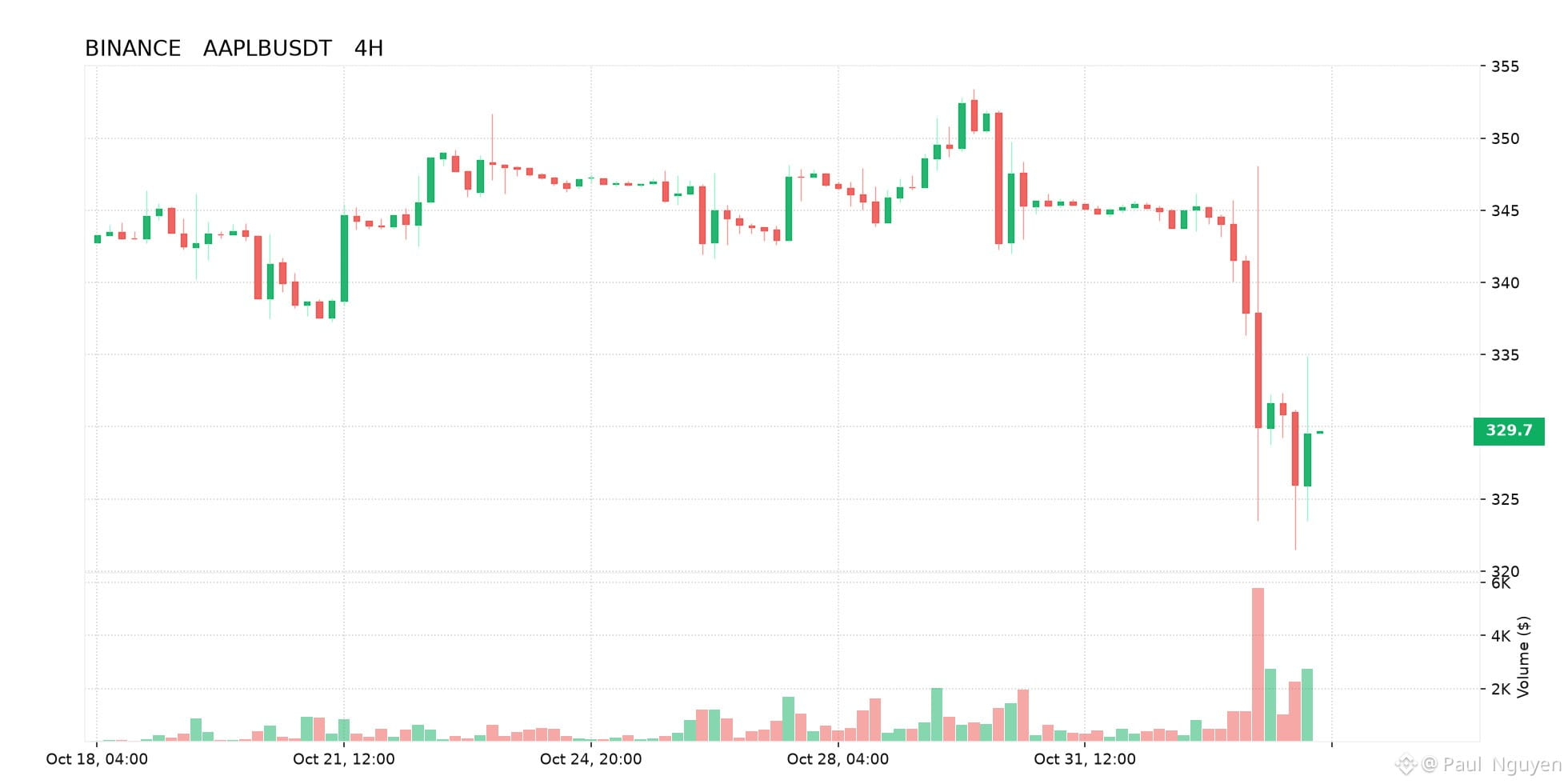
And yet… Apple's share price moved lower after its earnings announcement.
Wait. What?
How can a company make billions in profit, beat analysts' expectations and still disappoint investors?
That's where things get interesting.
Because the stock market doesn't just reward companies for what they earned yesterday. It also judges what they might earn tomorrow.
And Apple's latest results tell us a story that every investor should understand.
## 📊 𝐅𝐈𝐑𝐒𝐓, 𝐋𝐄𝐓'𝐒 𝐋𝐎𝐎𝐊 𝐀𝐓 𝐓𝐇𝐄 𝐍𝐔𝐌𝐁𝐄𝐑𝐒
Apple's fiscal Q4 2026 results are out, and the headline figures are impressive.
🍎 Revenue: $114.5 billion
💰 Net profit: $30.7 billion
📈 Diluted EPS: $2.10
🏭 Gross margin: 47.9%
That's a lot of money. But how much better was it than the previous quarter?
Let's compare.
| Financial metric | Q3 2026 | Q4 2026 |
|---|---:|---:|
| Revenue | $109.4B | $114.5B |
| Net profit | $29.79B | $30.7B |
| EPS | $2.02 | $2.10 |
| Gross margin | 50.1% | 47.9% |
Here's what catches my attention:
✅ Revenue increased.
✅ Net profit increased.
✅ Earnings per share increased.
⚠️ But gross margin declined.
𝐈𝐧 𝐬𝐢𝐦𝐩𝐥𝐞 𝐰𝐨𝐫𝐝𝐬: 𝐀𝐩𝐩𝐥𝐞 𝐢𝐬 𝐬𝐞𝐥𝐥𝐢𝐧𝐠 𝐦𝐨𝐫𝐞, 𝐛𝐮𝐭 𝐤𝐞𝐞𝐩𝐢𝐧𝐠 𝐚 𝐬𝐦𝐚𝐥𝐥𝐞𝐫 𝐩𝐞𝐫𝐜𝐞𝐧𝐭𝐚𝐠𝐞 𝐨𝐟 𝐞𝐚𝐜𝐡 𝐬𝐚𝐥𝐞 𝐚𝐬 𝐠𝐫𝐨𝐬𝐬 𝐩𝐫𝐨𝐟𝐢𝐭.
And that's the first warning investors should pay attention to.
📱 𝐖𝐇𝐀𝐓 𝐈𝐒 𝐀𝐂𝐓𝐔𝐀𝐋𝐋𝐘 𝐌𝐀𝐊𝐈𝐍𝐆 𝐀𝐏𝐏𝐋𝐄 𝐌𝐎𝐍𝐄𝐘?
Let's put the business into perspective.
1️⃣ iPhone: Still the king 👑
iPhone generated $57.6 billion in revenue, growing 17% year-on-year.
That's more than half of Apple's quarterly revenue.
The message is clear: despite intense competition, consumers are still willing to spend heavily on Apple's smartphones.
But here's the question:
Can Apple keep convincing people to upgrade their phones every few years?
That's something investors need to watch.
2️⃣ Services: The quiet money-making machine 💰
Services generated $31.6 billion, growing 10% year-on-year.
Think about it.
You buy an iPhone once, but you might pay for iCloud, Apple Music, subscriptions and other services for years.
That's recurring revenue.
And services generally enjoy higher margins than hardware.
**𝐓𝐡𝐢𝐬 𝐢𝐬 𝐰𝐡𝐞𝐫𝐞 𝐀𝐩𝐩𝐥𝐞'𝐬 𝐥𝐨𝐧𝐠-𝐭𝐞𝐫𝐦 𝐩𝐫𝐨𝐟𝐢𝐭 𝐬𝐭𝐨𝐫𝐲 𝐛𝐞𝐜𝐨𝐦𝐞𝐬 𝐞𝐬𝐩𝐞𝐜𝐢𝐚𝐥𝐥𝐲 𝐢𝐧𝐭𝐞𝐫𝐞𝐬𝐭𝐢𝐧𝐠.**
3️⃣ Mac: A pleasant surprise 💻
Mac revenue reached $10.8 billion, up 24% year-on-year.
Demand is encouraging, although supply limitations prevented Apple from fulfilling all the demand.
4️⃣ Not everything is growing ⚠️
iPad revenue came in at $6.2 billion, down from $7 billion a year earlier.
Wearables, Home and Accessories generated $8.3 billion, down 8% year-on-year.
So, while Apple's overall business is strong, not every product category is moving in the same direction.
🤔 𝐍𝐎𝐖 𝐂𝐎𝐌𝐄𝐒 𝐓𝐇𝐄 𝐑𝐄𝐀𝐋 𝐏𝐑𝐎𝐁𝐋𝐄𝐌…
If Apple is selling more, earning more and beating expectations, why are investors worried?
𝐓𝐇𝐄 𝐀𝐍𝐒𝐖𝐄𝐑: 𝐂𝐎𝐒𝐓𝐒.
And one particular cost is becoming increasingly important: memory chips.
AI data centres are creating enormous demand for memory components. That puts pressure on global supply and can push prices higher.
Apple needs memory for its devices.
When component prices increase, Apple has a difficult choice:
- Absorb the extra cost and accept lower margins.
- Increase product prices and risk affecting demand.
- Negotiate with suppliers or improve efficiency.
None of these choices is effortless.
And management expects memory costs to rise further.
There's another important detail: Apple's December-quarter gross-margin guidance is approximately 45–46%, below the 47.9% reported in Q4.
**𝐓𝐡𝐚𝐭'𝐬 𝐰𝐡𝐲 𝐢𝐧𝐯𝐞𝐬𝐭𝐨𝐫𝐬 𝐚𝐫𝐞 𝐥𝐨𝐨𝐤𝐢𝐧𝐠 𝐛𝐞𝐲𝐨𝐧𝐝 𝐭𝐡𝐞 𝐫𝐞𝐜𝐨𝐫𝐝 𝐫𝐞𝐯𝐞𝐧𝐮𝐞.**
🤖 𝐀𝐏𝐏𝐋𝐄'𝐒 𝐍𝐄𝐗𝐓 𝐁𝐈𝐆 𝐁𝐄𝐓: 𝐀𝐈
Here's another story worth watching.
Apple is investing in artificial intelligence, including its evolving Siri capabilities.
But AI is not free.
It requires:
- Research and development.
- Powerful computing infrastructure.
- Advanced chips.
- Engineering talent.
- Continuous software improvements.
Operating expenses reached $19.2 billion, up 21% year-on-year.
The big question isn't whether Apple should invest in AI.
𝐓𝐡𝐞 𝐫𝐞𝐚𝐥 𝐪𝐮𝐞𝐬𝐭𝐢𝐨𝐧 𝐢𝐬: 𝐖𝐈𝐋𝐋 𝐀𝐈 𝐌𝐀𝐊𝐄 𝐀𝐏𝐏𝐋𝐄 𝐌𝐎𝐑𝐄 𝐏𝐑𝐎𝐅𝐈𝐓𝐀𝐁𝐋𝐄?
If AI makes people more interested in buying Apple devices and using its services, the investment could become extremely valuable.
But if costs rise faster than the additional revenue, shareholders may become impatient.
That's a story that will take more than one quarter to unfold.
📉 𝐖𝐇𝐘 𝐃𝐈𝐃 𝐓𝐇𝐄 𝐒𝐓𝐎𝐂𝐊 𝐅𝐀𝐋𝐋 𝐃𝐄𝐒𝐏𝐈𝐓𝐄 𝐆𝐎𝐎𝐃 𝐄𝐀𝐑𝐍𝐈𝐍𝐆𝐒?
This is one of the most important lessons for anyone investing in stocks.
Imagine you own a restaurant.
Your sales increase, your customer numbers grow and your profits rise.
But then you announce that the cost of ingredients will increase significantly next quarter.
Would investors only celebrate your current profit?
Of course not. They would also worry about what happens to your future profit.
That's exactly how the market is thinking about Apple.
The earnings beat was positive, but investors are concerned about:
🔸 Lower expected gross margins.
🔸 Higher memory-chip costs.
🔸 Supply limitations.
🔸 Rising investment in AI.
🔸 Whether future earnings growth can justify Apple's valuation.
𝐆𝐨𝐨𝐝 𝐫𝐞𝐬𝐮𝐥𝐭𝐬 𝐝𝐨 𝐧𝐨𝐭 𝐚𝐥𝐰𝐚𝐲𝐬 𝐦𝐞𝐚𝐧 𝐚 𝐠𝐨𝐨𝐝 𝐬𝐭𝐨𝐜𝐤 𝐫𝐞𝐚𝐜𝐭𝐢𝐨𝐧.
Sometimes expectations are simply higher.
🔮 𝐖𝐇𝐀𝐓 𝐀𝐁𝐎𝐔𝐓 𝐀𝐏𝐏𝐋𝐄 𝐎𝐕𝐄𝐑 𝐓𝐇𝐄 𝐍𝐄𝐗𝐓 𝟑–𝟓 𝐘𝐄𝐀𝐑𝐒?
Now let's move away from the daily share-price movement and look at the bigger picture.
I see three important factors.
🟢 The opportunity
Apple has a massive ecosystem, loyal customers, recurring services revenue and strong cash generation.
Its installed base of active devices exceeds 2.5 billion.
That is a powerful competitive advantage.
🟡 The challenge
Apple needs to protect its margins while dealing with expensive components, supply constraints and AI investment.
If these costs remain elevated, profit growth could slow even when revenue continues increasing.
🔴 The biggest test
Can Apple turn AI into something customers are genuinely willing to pay for?
If it succeeds, AI could strengthen its ecosystem and create additional revenue opportunities.
If it fails to deliver meaningful differentiation, competitors could gain ground.
💡 𝐒𝐎, 𝐒𝐇𝐎𝐔𝐋𝐃 𝐈𝐍𝐕𝐄𝐒𝐓𝐎𝐑𝐒 𝐁𝐔𝐘, 𝐇𝐎𝐋𝐃 𝐎𝐑 𝐒𝐄𝐋𝐋?
Let's be practical.
If you already own Apple shares:
Don't panic because of one disappointing market reaction. Look at your investment horizon and monitor margins, cash flow, iPhone demand and services growth.
If you want to enter now:
Don't assume that a falling share price automatically means a bargain. Check Apple's valuation against its expected earnings growth. Consider entering gradually rather than investing everything at once.
If you're a short-term trader:
Watch how the stock behaves after the earnings reaction. Look for price stabilisation, volume and confirmation before entering. Define your risk in advance.
And remember:
𝐀 𝐠𝐫𝐞𝐚𝐭 𝐜𝐨𝐦𝐩𝐚𝐧𝐲 𝐜𝐚𝐧 𝐬𝐭𝐢𝐥𝐥 𝐛𝐞 𝐚𝐧 𝐨𝐯𝐞𝐫𝐩𝐫𝐢𝐜𝐞𝐝 𝐬𝐭𝐨𝐜𝐤.
Never confuse the quality of a business with the attractiveness of its share price.
🎯 𝐌𝐘 𝐅𝐈𝐍𝐀𝐋 𝐓𝐀𝐊𝐄
I'm not looking at Apple's latest results and seeing a failing company.
I'm seeing a very strong business entering a period where protecting profitability may become more difficult.
Revenue is growing. Services are expanding. iPhone demand remains impressive. Cash generation is strong.
But rising memory costs, margin pressure and the execution of its AI strategy deserve serious attention.
𝐓𝐡𝐞 𝐧𝐞𝐱𝐭 𝐜𝐡𝐚𝐩𝐭𝐞𝐫 𝐨𝐟 𝐀𝐩𝐩𝐥𝐞'𝐬 𝐬𝐭𝐨𝐫𝐲 𝐰𝐢𝐥𝐥 𝐧𝐨𝐭 𝐣𝐮𝐬𝐭 𝐛𝐞 𝐚𝐛𝐨𝐮𝐭 𝐡𝐨𝐰 𝐦𝐮𝐜𝐡 𝐢𝐭 𝐬𝐞𝐥𝐥𝐬. 𝐈𝐭 𝐰𝐢𝐥𝐥 𝐛𝐞 𝐚𝐛𝐨𝐮𝐭 𝐡𝐨𝐰 𝐦𝐮𝐜𝐡 𝐩𝐫𝐨𝐟𝐢𝐭 𝐢𝐭 𝐜𝐚𝐧 𝐤𝐞𝐞𝐩.
And that's the number I would be watching.
💬 𝐍𝐎𝐖 𝐈 𝐖𝐀𝐍𝐓 𝐓𝐎 𝐇𝐄𝐀𝐑 𝐅𝐑𝐎𝐌 𝐘𝐎𝐔!
Let's make this a proper investment discussion.
🍎 Would you buy Apple after this earnings reaction, or wait for more clarity?
🤖 Do you believe Apple's AI strategy can become its next major growth engine?
📊 What matters more to you: record revenue or improving profit margins?
Drop your thoughts below. I would genuinely like to hear both bullish and bearish arguments.
𝐑𝐄𝐌𝐄𝐌𝐁𝐄𝐑: 𝐃𝐎𝐍'𝐓 𝐉𝐔𝐒𝐓 𝐁𝐔𝐘 𝐀 𝐅𝐀𝐌𝐎𝐔𝐒 𝐂𝐎𝐌𝐏𝐀𝐍𝐘. 𝐔𝐍𝐃𝐄𝐑𝐒𝐓𝐀𝐍𝐃 𝐓𝐇𝐄 𝐁𝐔𝐒𝐈𝐍𝐄𝐒𝐒 𝐁𝐄𝐇𝐈𝐍𝐃 𝐓𝐇𝐄 𝐒𝐓𝐎𝐂𝐊.
#AAPLB #AppleEarningsAhead-CanStockHitNewHigh #BinanceSquareFamily #cryptouniverseofficial
$AAPLB $BTC
Disclaimer: This content is for educational purposes only and is not financial advice. Always do your own research before making investment decisions.
𝐌𝐀𝐃𝐄 $𝟏𝟏𝟒.𝟓 𝐁𝐈𝐋𝐋𝐈𝐎𝐍…
🍎 𝐀𝐏𝐏𝐋𝐄 𝐉𝐔𝐒𝐓 𝐌𝐀𝐃𝐄 $𝟏𝟏𝟒.𝟓 𝐁𝐈𝐋𝐋𝐈𝐎𝐍… 𝐁𝐔𝐓 𝐖𝐀𝐋𝐋 𝐒𝐓𝐑𝐄𝐄𝐓 𝐖𝐀𝐒𝐍'𝐓 𝐈𝐌𝐏𝐑𝐄𝐒𝐒𝐄𝐃! 😳
𝐑𝐞𝐜𝐨𝐫𝐝 𝐫𝐞𝐯𝐞𝐧𝐮𝐞. 𝐌𝐨𝐫𝐞 𝐭𝐡𝐚𝐧 $𝟑𝟎 𝐛𝐢𝐥𝐥𝐢𝐨𝐧 𝐢𝐧 𝐩𝐫𝐨𝐟𝐢𝐭. 𝐒𝐭𝐫𝐨𝐧𝐠 𝐢𝐏𝐡𝐨𝐧𝐞 𝐬𝐚𝐥𝐞𝐬.
And yet… Apple's share price moved lower after its earnings announcement.
Wait. What?
How can a company make billions in profit, beat analysts' expectations and still disappoint investors?
That's where things get interesting.
Because the stock market doesn't just reward companies for what they earned yesterday. It also judges what they might earn tomorrow.
And Apple's latest results tell us a story that every investor should understand.
## 📊 𝐅𝐈𝐑𝐒𝐓, 𝐋𝐄𝐓'𝐒 𝐋𝐎𝐎𝐊 𝐀𝐓 𝐓𝐇𝐄 𝐍𝐔𝐌𝐁𝐄𝐑𝐒
Apple's fiscal Q4 2026 results are out, and the headline figures are impressive.
🍎 Revenue: $114.5 billion
💰 Net profit: $30.7 billion
📈 Diluted EPS: $2.10
🏭 Gross margin: 47.9%
That's a lot of money. But how much better was it than the previous quarter?
Let's compare.
| Financial metric | Q3 2026 | Q4 2026 |
|---|---:|---:|
| Revenue | $109.4B | $114.5B |
| Net profit | $29.79B | $30.7B |
| EPS | $2.02 | $2.10 |
| Gross margin | 50.1% | 47.9% |
Here's what catches my attention:
✅ Revenue increased.
✅ Net profit increased.
✅ Earnings per share increased.
⚠️ But gross margin declined.
𝐈𝐧 𝐬𝐢𝐦𝐩𝐥𝐞 𝐰𝐨𝐫𝐝𝐬: 𝐀𝐩𝐩𝐥𝐞 𝐢𝐬 𝐬𝐞𝐥𝐥𝐢𝐧𝐠 𝐦𝐨𝐫𝐞, 𝐛𝐮𝐭 𝐤𝐞𝐞𝐩𝐢𝐧𝐠 𝐚 𝐬𝐦𝐚𝐥𝐥𝐞𝐫 𝐩𝐞𝐫𝐜𝐞𝐧𝐭𝐚𝐠𝐞 𝐨𝐟 𝐞𝐚𝐜𝐡 𝐬𝐚𝐥𝐞 𝐚𝐬 𝐠𝐫𝐨𝐬𝐬 𝐩𝐫𝐨𝐟𝐢𝐭.
And that's the first warning investors should pay attention to.
📱 𝐖𝐇𝐀𝐓 𝐈𝐒 𝐀𝐂𝐓𝐔𝐀𝐋𝐋𝐘 𝐌𝐀𝐊𝐈𝐍𝐆 𝐀𝐏𝐏𝐋𝐄 𝐌𝐎𝐍𝐄𝐘?
Let's put the business into perspective.
1️⃣ iPhone: Still the king 👑
iPhone generated $57.6 billion in revenue, growing 17% year-on-year.
That's more than half of Apple's quarterly revenue.
The message is clear: despite intense competition, consumers are still willing to spend heavily on Apple's smartphones.
But here's the question:
Can Apple keep convincing people to upgrade their phones every few years?
That's something investors need to watch.
2️⃣ Services: The quiet money-making machine 💰
Services generated $31.6 billion, growing 10% year-on-year.
Think about it.
You buy an iPhone once, but you might pay for iCloud, Apple Music, subscriptions and other services for years.
That's recurring revenue.
And services generally enjoy higher margins than hardware.
**𝐓𝐡𝐢𝐬 𝐢𝐬 𝐰𝐡𝐞𝐫𝐞 𝐀𝐩𝐩𝐥𝐞'𝐬 𝐥𝐨𝐧𝐠-𝐭𝐞𝐫𝐦 𝐩𝐫𝐨𝐟𝐢𝐭 𝐬𝐭𝐨𝐫𝐲 𝐛𝐞𝐜𝐨𝐦𝐞𝐬 𝐞𝐬𝐩𝐞𝐜𝐢𝐚𝐥𝐥𝐲 𝐢𝐧𝐭𝐞𝐫𝐞𝐬𝐭𝐢𝐧𝐠.**
3️⃣ Mac: A pleasant surprise 💻
Mac revenue reached $10.8 billion, up 24% year-on-year.
Demand is encouraging, although supply limitations prevented Apple from fulfilling all the demand.
4️⃣ Not everything is growing ⚠️
iPad revenue came in at $6.2 billion, down from $7 billion a year earlier.
Wearables, Home and Accessories generated $8.3 billion, down 8% year-on-year.
So, while Apple's overall business is strong, not every product category is moving in the same direction.
🤔 𝐍𝐎𝐖 𝐂𝐎𝐌𝐄𝐒 𝐓𝐇𝐄 𝐑𝐄𝐀𝐋 𝐏𝐑𝐎𝐁𝐋𝐄𝐌…
If Apple is selling more, earning more and beating expectations, why are investors worried?
𝐓𝐇𝐄 𝐀𝐍𝐒𝐖𝐄𝐑: 𝐂𝐎𝐒𝐓𝐒.
And one particular cost is becoming increasingly important: memory chips.
AI data centres are creating enormous demand for memory components. That puts pressure on global supply and can push prices higher.
Apple needs memory for its devices.
When component prices increase, Apple has a difficult choice:
- Absorb the extra cost and accept lower margins.
- Increase product prices and risk affecting demand.
- Negotiate with suppliers or improve efficiency.
None of these choices is effortless.
And management expects memory costs to rise further.
There's another important detail: Apple's December-quarter gross-margin guidance is approximately 45–46%, below the 47.9% reported in Q4.
**𝐓𝐡𝐚𝐭'𝐬 𝐰𝐡𝐲 𝐢𝐧𝐯𝐞𝐬𝐭𝐨𝐫𝐬 𝐚𝐫𝐞 𝐥𝐨𝐨𝐤𝐢𝐧𝐠 𝐛𝐞𝐲𝐨𝐧𝐝 𝐭𝐡𝐞 𝐫𝐞𝐜𝐨𝐫𝐝 𝐫𝐞𝐯𝐞𝐧𝐮𝐞.**
🤖 𝐀𝐏𝐏𝐋𝐄'𝐒 𝐍𝐄𝐗𝐓 𝐁𝐈𝐆 𝐁𝐄𝐓: 𝐀𝐈
Here's another story worth watching.
Apple is investing in artificial intelligence, including its evolving Siri capabilities.
But AI is not free.
It requires:
- Research and development.
- Powerful computing infrastructure.
- Advanced chips.
- Engineering talent.
- Continuous software improvements.
Operating expenses reached $19.2 billion, up 21% year-on-year.
The big question isn't whether Apple should invest in AI.
𝐓𝐡𝐞 𝐫𝐞𝐚𝐥 𝐪𝐮𝐞𝐬𝐭𝐢𝐨𝐧 𝐢𝐬: 𝐖𝐈𝐋𝐋 𝐀𝐈 𝐌𝐀𝐊𝐄 𝐀𝐏𝐏𝐋𝐄 𝐌𝐎𝐑𝐄 𝐏𝐑𝐎𝐅𝐈𝐓𝐀𝐁𝐋𝐄?
If AI makes people more interested in buying Apple devices and using its services, the investment could become extremely valuable.
But if costs rise faster than the additional revenue, shareholders may become impatient.
That's a story that will take more than one quarter to unfold.
📉 𝐖𝐇𝐘 𝐃𝐈𝐃 𝐓𝐇𝐄 𝐒𝐓𝐎𝐂𝐊 𝐅𝐀𝐋𝐋 𝐃𝐄𝐒𝐏𝐈𝐓𝐄 𝐆𝐎𝐎𝐃 𝐄𝐀𝐑𝐍𝐈𝐍𝐆𝐒?
This is one of the most important lessons for anyone investing in stocks.
Imagine you own a restaurant.
Your sales increase, your customer numbers grow and your profits rise.
But then you announce that the cost of ingredients will increase significantly next quarter.
Would investors only celebrate your current profit?
Of course not. They would also worry about what happens to your future profit.
That's exactly how the market is thinking about Apple.
The earnings beat was positive, but investors are concerned about:
🔸 Lower expected gross margins.
🔸 Higher memory-chip costs.
🔸 Supply limitations.
🔸 Rising investment in AI.
🔸 Whether future earnings growth can justify Apple's valuation.
𝐆𝐨𝐨𝐝 𝐫𝐞𝐬𝐮𝐥𝐭𝐬 𝐝𝐨 𝐧𝐨𝐭 𝐚𝐥𝐰𝐚𝐲𝐬 𝐦𝐞𝐚𝐧 𝐚 𝐠𝐨𝐨𝐝 𝐬𝐭𝐨𝐜𝐤 𝐫𝐞𝐚𝐜𝐭𝐢𝐨𝐧.
Sometimes expectations are simply higher.
🔮 𝐖𝐇𝐀𝐓 𝐀𝐁𝐎𝐔𝐓 𝐀𝐏𝐏𝐋𝐄 𝐎𝐕𝐄𝐑 𝐓𝐇𝐄 𝐍𝐄𝐗𝐓 𝟑–𝟓 𝐘𝐄𝐀𝐑𝐒?
Now let's move away from the daily share-price movement and look at the bigger picture.
I see three important factors.
🟢 The opportunity
Apple has a massive ecosystem, loyal customers, recurring services revenue and strong cash generation.
Its installed base of active devices exceeds 2.5 billion.
That is a powerful competitive advantage.
🟡 The challenge
Apple needs to protect its margins while dealing with expensive components, supply constraints and AI investment.
If these costs remain elevated, profit growth could slow even when revenue continues increasing.
🔴 The biggest test
Can Apple turn AI into something customers are genuinely willing to pay for?
If it succeeds, AI could strengthen its ecosystem and create additional revenue opportunities.
If it fails to deliver meaningful differentiation, competitors could gain ground.
💡 𝐒𝐎, 𝐒𝐇𝐎𝐔𝐋𝐃 𝐈𝐍𝐕𝐄𝐒𝐓𝐎𝐑𝐒 𝐁𝐔𝐘, 𝐇𝐎𝐋𝐃 𝐎𝐑 𝐒𝐄𝐋𝐋?
Let's be practical.
If you already own Apple shares:
Don't panic because of one disappointing market reaction. Look at your investment horizon and monitor margins, cash flow, iPhone demand and services growth.
If you want to enter now:
Don't assume that a falling share price automatically means a bargain. Check Apple's valuation against its expected earnings growth. Consider entering gradually rather than investing everything at once.
If you're a short-term trader:
Watch how the stock behaves after the earnings reaction. Look for price stabilisation, volume and confirmation before entering. Define your risk in advance.
And remember:
𝐀 𝐠𝐫𝐞𝐚𝐭 𝐜𝐨𝐦𝐩𝐚𝐧𝐲 𝐜𝐚𝐧 𝐬𝐭𝐢𝐥𝐥 𝐛𝐞 𝐚𝐧 𝐨𝐯𝐞𝐫𝐩𝐫𝐢𝐜𝐞𝐝 𝐬𝐭𝐨𝐜𝐤.
Never confuse the quality of a business with the attractiveness of its share price.
🎯 𝐌𝐘 𝐅𝐈𝐍𝐀𝐋 𝐓𝐀𝐊𝐄
I'm not looking at Apple's latest results and seeing a failing company.
I'm seeing a very strong business entering a period where protecting profitability may become more difficult.
Revenue is growing. Services are expanding. iPhone demand remains impressive. Cash generation is strong.
But rising memory costs, margin pressure and the execution of its AI strategy deserve serious attention.
𝐓𝐡𝐞 𝐧𝐞𝐱𝐭 𝐜𝐡𝐚𝐩𝐭𝐞𝐫 𝐨𝐟 𝐀𝐩𝐩𝐥𝐞'𝐬 𝐬𝐭𝐨𝐫𝐲 𝐰𝐢𝐥𝐥 𝐧𝐨𝐭 𝐣𝐮𝐬𝐭 𝐛𝐞 𝐚𝐛𝐨𝐮𝐭 𝐡𝐨𝐰 𝐦𝐮𝐜𝐡 𝐢𝐭 𝐬𝐞𝐥𝐥𝐬. 𝐈𝐭 𝐰𝐢𝐥𝐥 𝐛𝐞 𝐚𝐛𝐨𝐮𝐭 𝐡𝐨𝐰 𝐦𝐮𝐜𝐡 𝐩𝐫𝐨𝐟𝐢𝐭 𝐢𝐭 𝐜𝐚𝐧 𝐤𝐞𝐞𝐩.
And that's the number I would be watching.
💬 𝐍𝐎𝐖 𝐈 𝐖𝐀𝐍𝐓 𝐓𝐎 𝐇𝐄𝐀𝐑 𝐅𝐑𝐎𝐌 𝐘𝐎𝐔!
Let's make this a proper investment discussion.
🍎 Would you buy Apple after this earnings reaction, or wait for more clarity?
🤖 Do you believe Apple's AI strategy can become its next major growth engine?
📊 What matters more to you: record revenue or improving profit margins?
Drop your thoughts below. I would genuinely like to hear both bullish and bearish arguments.
𝐑𝐄𝐌𝐄𝐌𝐁𝐄𝐑: 𝐃𝐎𝐍'𝐓 𝐉𝐔𝐒𝐓 𝐁𝐔𝐘 𝐀 𝐅𝐀𝐌𝐎𝐔𝐒 𝐂𝐎𝐌𝐏𝐀𝐍𝐘. 𝐔𝐍𝐃𝐄𝐑𝐒𝐓𝐀𝐍𝐃 𝐓𝐇𝐄 𝐁𝐔𝐒𝐈𝐍𝐄𝐒𝐒 𝐁𝐄𝐇𝐈𝐍𝐃 𝐓𝐇𝐄 𝐒𝐓𝐎𝐂𝐊.
#AAPLB #AppleEarningsAhead-CanStockHitNewHigh #BinanceSquareFamily #cryptouniverseofficial
$AAPLB $BTC
Disclaimer: This content is for educational purposes only and is not financial advice. Always do your own research before making investment decisions.
1
72

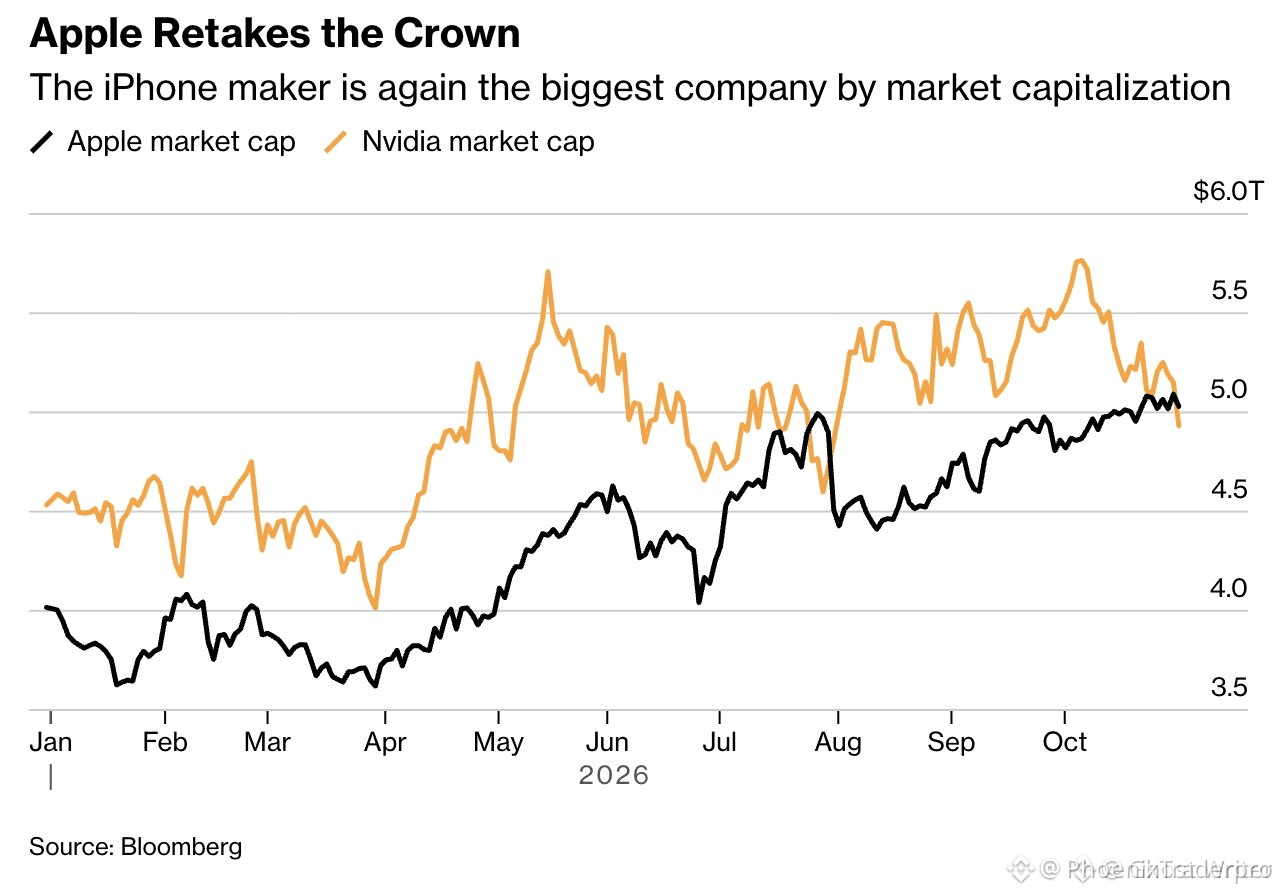
🚀 $AAPLB SURGES PAST $NVDAB TO CLAIM WORLD'S TOP VALUATION 🟢
Apple's $AAPLB just ripped past Nvidia's $NVDAB , snapping the crown of the world’s most valuable firm. The order flow shows a massive smart‑money sweep into the consumer‑tech juggernaut, while Nvidia’s chip‑centric demand is cooling off. 📊
Volume on a top‑tier exchange surged, carving a fresh breakout corridor that’s drawing fresh bids from whales. 🦈⚡ The liquidity pool is swelling, hinting at a potential upside wave as the market re‑prices tech dominance. 🌊
💬 Are you shifting your allocation to the new market king or staying anchored in chip play? 👇
⚠️ Not financial advice. Always manage your risk. 🛡️
🏷️ #AAPLB #TechShift #MarketCap #SmartMoney #Crypto
🚀 🦈
8

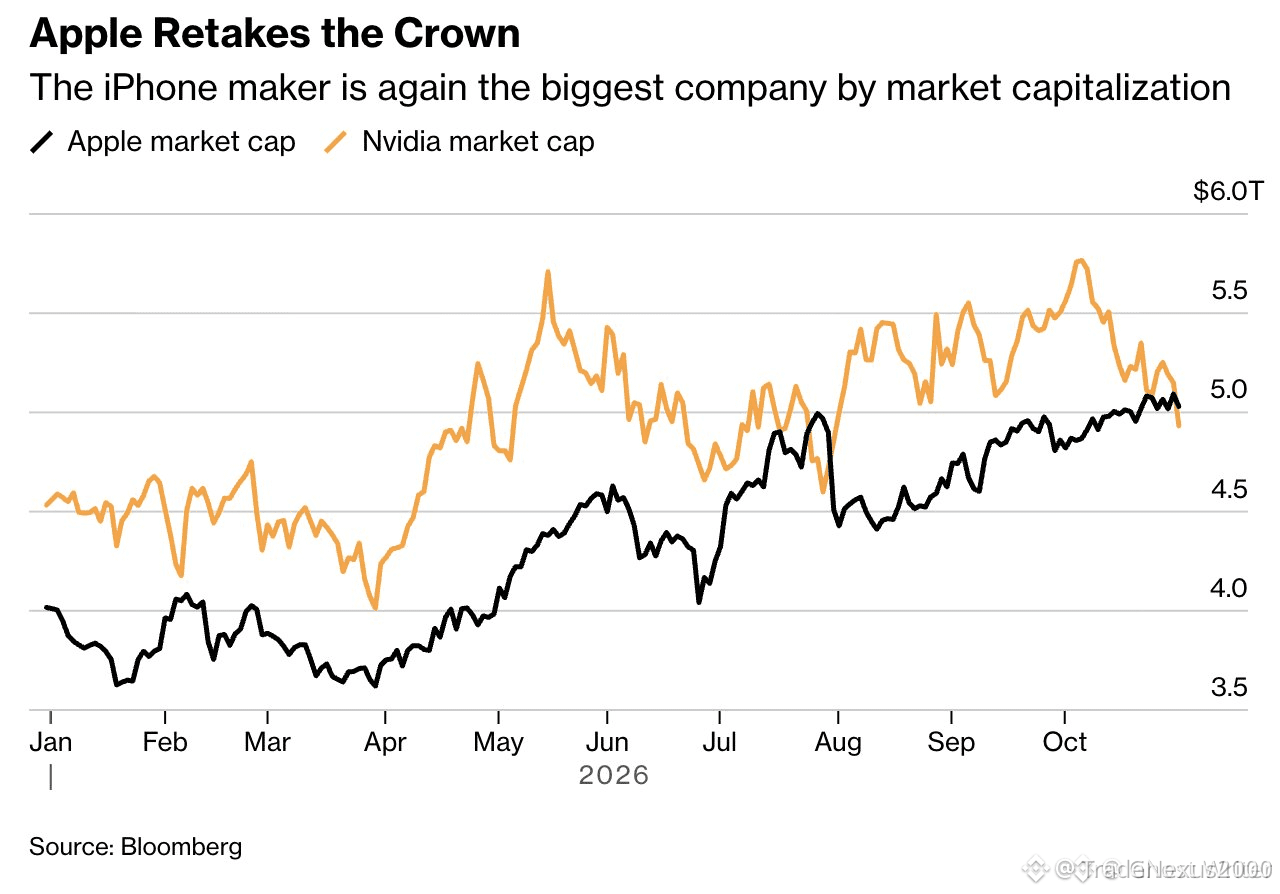
🦈 $AAPLB SURPASSES $NVDAB AS GLOBAL VALUE KING 📈
📊 Smart money is reallocating capital into the Apple block, erasing the Nvidia liquidity pool that anchored the tech premium for months. 🌊 The order‑block at the $AAPLB valuation level has absorbed sell pressure repeatedly, signaling a decisive institutional swing. 📌 This shift creates a fresh fair‑value gap on the macro chart, inviting aggressive longs as the market re‑prices the new asset‑class hierarchy. 💡 Momentum accelerates with every tick, hinting at a broader sector rotation.
💬 How are you positioning for the emerging Apple‑centric liquidity wave? 👇
⚠️ Not financial advice. Always manage your risk. 🛡️
🏷️ #AAPLB #SmartMoney #MarketCapShift #Crypto
🔥 💎
14

⚡ APPLE IPHONE EVENT HISTORICAL PATTERNS REVEAL THE NEXT VOLATILITY MOVE FOR $AAPLB ! 📊
Historical data across the last five launch cycles shows the market consistently front-runs the rumor and sells the news. From the minor 0.9% pump of iPhone 14 to the recent 1.5% pullback for iPhone 17, volatility surrounding these tech reveal events has compressed into predictable rangebound chop. 🔍
Smart money tends to exploit this retail anticipation window by trapping late breakout buyers before liquidity sweeps hit key support zones. 💡 As $AAPLB enters another event timeline alongside broader macro shifts in $BTC and $SNDKB , the real opportunity lies in playing the post-announcement mean reversion rather than chasing the initial impulse. 📊
💬 Are you positioning for a sell-the-news flush or betting on a surprise breakout this cycle? 👇
⚠️ Not financial advice. Always manage your risk. 🛡️
🏷️ #AAPLB #BTC #SNDKB #Crypto #MarketInsight
⚡ 💎

🦈 $AAPLB ORDER BOOKS SEE FRESH LIQUIDITY INFLOW AS PARTICIPATION EXPANDS! ⚡
Tokenized assets like $AAPLB are witnessing an active surge in order book liquidity as seasonal trading incentives draw fresh volume into the spread. 🌊 When market depth thickens, institutional participants evaluate how efficiently resting limit orders absorb aggressive execution flow. 🔍
Capitalizing on ecosystem vouchers allows disciplined traders to optimize fee structures while positioning around key structural macro themes. 💡 Monitoring this order flow often reveals whether sustained accumulation is quietly taking shape beneath the surface. 📊
🤔 How are you deploying your promotional balance across tokenized assets this cycle? 👇
⚠️ Not financial advice. Always manage your risk. 🛡️
🏷️ #AAPLB #OrderFlow #TokenizedAssets #TradingStrategy #Binance
🎯 🦈

6

·
--
AAPLB is currently at 350.31, up 1.57% over 24 hours and 0.57% over 7 days. The intraday range is 344.59–352.52, with a 2.3% amplitude.
【Market】
Let’s pull up today’s AAPLB ledger: that 1.57% gain is recorded, trade by trade.
The 7-day gain of 0.57% and the single-day gain of 1.57% are side by side—the full picture is right here.
AAPLB’s trend has clearly decoupled from the broader market and is moving to its own rhythm.
As long as 344.59 holds, the current pullback can be considered a strong consolidation.
BTC is down 1.18% over the same 24-hour period, while AAPLB’s 1.57% gain clearly outperforms the broader market, indicating stronger investor preference.
【Macro】 U.S. stocks rose overnight: Nasdaq +0.82%, S&P 500 +0.70% (close on 2026-10-27). BTC ETFs saw net outflows of about $45.2 billion this month. U.S. CPI rose 3.7% year over year, above expectations. The probability of an interest rate hike at the 2026-10-27/28 policy meeting is about 47%.
The short-term outlook leans bullish.
【Bullish Reasons】
This isn’t a bet on direction; it’s a wait for the harvest—the 1.57% move has already brought a fresh round of position turnover.
From 344.59 up to around 350.31, the short-term center of gravity is still moving higher.
What should you watch next? 344.59.
Keep in mind that if the broader market turns lower, AAPLB’s high-priced holdings could loosen at any time.
$AAPLB #AAPLB

The Nasdaq closed down 1.07%, chip stocks fell across the board, and oil prices plunged more than 7% in a single day on news of diplomatic developments involving Iran. These are the inputs AAPLB has to digest tonight. But more noteworthy than the market action is another less conspicuous development: Lighter has added 12 stock tokens to its list of eligible collateral on Robinhood Chain. AAPLB has gone from “an asset you can trade” to “margin you can put up as collateral.” That’s fundamentally different from listing a new trading pair.
First, being tradable and being accepted as collateral are two different things. Trading only involves buyers and sellers on opposite sides of a transaction. If the price is off, arbitrageurs bring it back into line, and the impact is limited to those opening or closing positions. Once an asset becomes collateral, it enters lending and margin accounts, where the same AAPLB can be reused as a base for leverage. The risk shifts from “price volatility” to “price volatility × collateral ratio × liquidation chain.” The transmission path becomes much longer, but every step happens faster.
Second, and easiest to overlook: the nature of price gaps when U.S. markets are closed has changed. Previously, if an on-chain stock token traded at a premium or discount while U.S. markets were closed, it was essentially a pricing issue—if it was expensive, someone would sell; if it was cheap, someone would buy. The gap was an arbitrage opportunity. Now the token is also margin collateral. The same gap can trigger not just a price discrepancy, but a margin shortfall and forced liquidation. A pricing error has become a liquidation error, and the liquidation engine won’t wait until the U.S. market opens to act. Stock tokens have no 24-hour underlying asset to anchor to during market closures; index futures can only serve as a partial substitute. The choice of how and whose data is used to calculate the mark price directly determines who gets liquidated.
Third, correlation. The Nasdaq down 1.07%, chip stocks leading the declines, and oil down 7% all point to the same thing: risk appetite is shrinking, and geopolitical expectations are reversing. In such conditions, stock tokens, major crypto assets, and energy-related instruments tend to cluster around the same risk factor. Using stock tokens as margin means stacking two highly correlated assets on the same balance sheet. It may look diversified, but the actual cushion is thinner than it appears on paper. You may think you hold one U.S. equity exposure and one crypto exposure, but when liquidation hits, they move in the same direction.
So what to watch next isn’t whether AAPLB rises or falls, but three parameters: the collateral ratios/haircuts set for these 12 tokens, the data source for mark prices during market closures, and the liquidation engine’s execution-price logic when gaps occur. These three numbers determine whether AAPLB as collateral is “one more useful tool” or “another layer of hidden leverage.” The looser the collateral requirements, the higher the apparent capital efficiency—but the more positions can be swept up in a chain reaction when a gap hits.
To wrap up: bringing stocks on-chain has moved from “can you buy them?” to “can you pledge them?” That’s substantive progress for the sector, and it shouldn’t be read merely as a bullish or bearish signal. But for holders, at this stage it’s better treated as a risk variable than as a liquidity bonus. Don’t max out your leverage during market closures—liquidations don’t wait for U.S. markets to open; they only recognize the on-chain price at that moment.
#Crypto #AAPLB
7
50 companies have joined forces to oppose putting stocks on-chain. The list now includes Nvidia, Microsoft, JPMorgan Chase, Coca-Cola, and Nike. Meanwhile, OKX and ICE, the parent company of the NYSE, are moving ahead as usual. Most people are reading this news as bearish for tokenized stocks, but it has only one real implication for AAPLB: it clarifies who has pricing power.
1. In terms of the narrative, the more opposition there is, the clearer it becomes that tokenized stocks have no source of premium. Issuers don’t control pricing, and neither do exchanges. Institutions like ICE, which control clearing and matching infrastructure, are willing to participate precisely because they have no intention of giving up pricing power. So AAPLB will always be priced against AAPL’s spot price, plus compensation for gaps while U.S. markets are closed. On-chain trading itself cannot create an independent market trend. What matters is whether the premium or discount persistently diverges—not how much people are talking about it on social platforms.
2. The Nasdaq fell 1.07% overnight, chip stocks declined across the board, and oil prices dropped more than 7% in a single day on news of diplomacy involving Iran. On a night when risk appetite is contracting like this, the “24/7 trading” selling point is most likely to expose its weaknesses: on-chain depth is thin, market makers’ bid-ask spreads widen, and overnight prices often merely anticipate the next day’s U.S. market open rather than reflect independent price discovery. Anyone entering during Asian trading hours is paying the cost of the spread at the U.S. East Coast open.
3. Funding rates are my primary indicator for synthetic assets like these. When on-chain longs become crowded and funding rates turn positive, while the underlying spot asset shows no corresponding strength, the inflow is probably narrative-driven rather than allocation-oriented. This kind of positioning usually corrects quickly after the U.S. market opens. Conversely, if funding rates stay low or even turn negative over the long term, that suggests participants are using the asset for hedging and arbitrage—which is how this asset class should behave. Changes in open interest before the U.S. market opens are more honest than any hype.
4. The real risk isn’t regulators’ statements, but where liquidity goes after arbitrage across trading hours is eliminated. The core concerns of those 50 companies are trading hours, market depth, and how shareholder rights like dividends and voting would work in practice. Until these questions are answered, AAPLB is more like a proxy for sentiment toward U.S. stocks than equity itself.
My view is straightforward: use AAPLB as an exposure linked to U.S. stocks, but don’t pay a penny extra for the words “on-chain.” Focus on premium convergence and gaps at the U.S. market open, not on how many more companies have joined the letter.
Risk warning: Slippage on synthetic assets during periods of thin liquidity may be far greater than your stop-loss level.
#代币化股票 #RWA #AAPLB #Crypto
57


·
--
Nvidia falls 16% as Apple reclaims top spot by market capNvidia has fallen nearly 16% since October 6, and Apple has reclaimed the title of the world’s most valuable company. A few months ago, almost no one questioned this ranking; now it needs to be reassessed.
Investors focused on the AI narrative are feeling the most pain: stocks like $NVDAB that move in tandem with Nvidia are under direct pressure, while $AAPLB has instead benefited from this reshuffling. Same sector, very different fortunes.
A change in the lead character doesn’t mean the AI story is over, but the market is voting with its feet: the frontrunner is starting to be repriced. At times like this, it’s more useful to watch who’s holding up and who’s retreating than to read the headlines.
Nvidia falls 16% as Apple reclaims top spot by market cap
Nvidia has fallen nearly 16% since October 6, and Apple has reclaimed the title of the world’s most valuable company. A few months ago, almost no one questioned this ranking; now it needs to be reassessed.
Investors focused on the AI narrative are feeling the most pain: stocks like $NVDAB that move in tandem with Nvidia are under direct pressure, while $AAPLB has instead benefited from this reshuffling. Same sector, very different fortunes.
A change in the lead character doesn’t mean the AI story is over, but the market is voting with its feet: the frontrunner is starting to be repriced. At times like this, it’s more useful to watch who’s holding up and who’s retreating than to read the headlines.
101
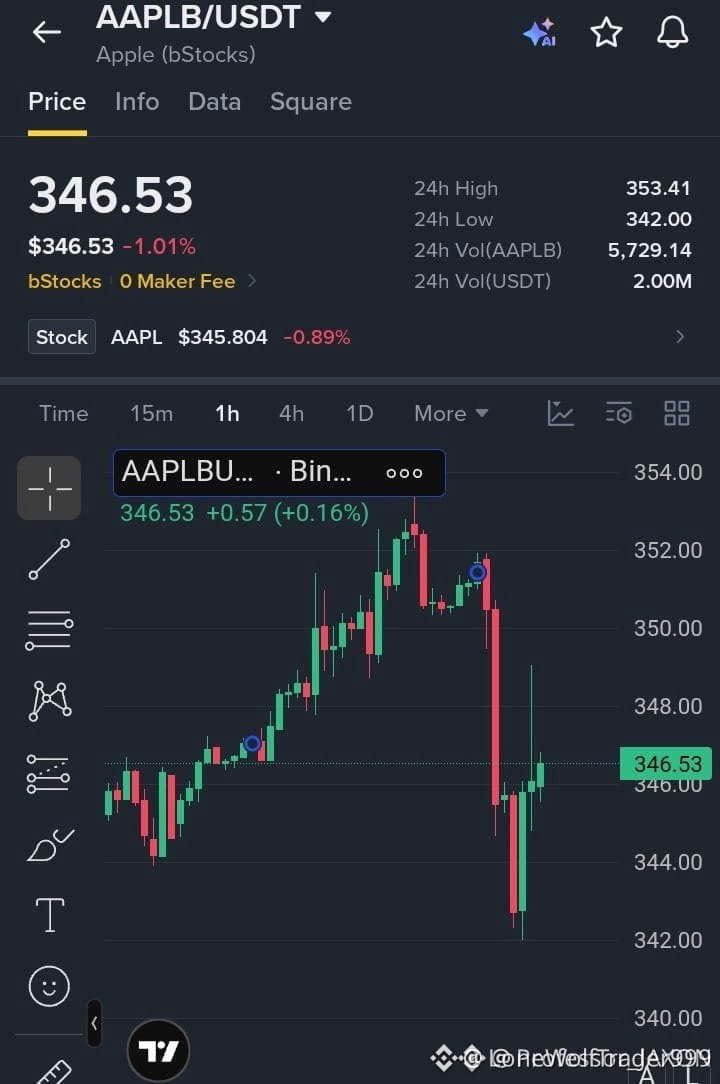
💥 $AAPLB RECLAIMS CRITICAL SUPPORT AS BUYERS STEP IN WITH AGGRESSIVE CONVICTION! 📈
Entry: 345.80 - 346.60 ⚡
Target: 348.00, 350.00, 352.00 🚀
Stop Loss: 342.00 ⚠️
📌 The violent drop into the 342.00 demand pocket met swift absorption, sparking a sharp reaction that shows sellers are running out of steam. Bids are defending 346.00 firmly to flip this territory back into buyer control.
⚡ Maintaining structural acceptance above this pivot paves the way toward the 348.00 to 352.00 overhead liquidity clusters. 💡 With invalidation cleanly anchored below the recent floor, this setup offers crisp asymmetry for disciplined momentum traders.
💬 Are you riding this rebound higher, or waiting for another liquidity sweep? 👇
⚠️ Not financial advice. Always manage your risk. 🛡️
🏷️ #AAPLB #LongSetup #PriceAction #Crypto #Momentum
🎯 🐂
9

·
--
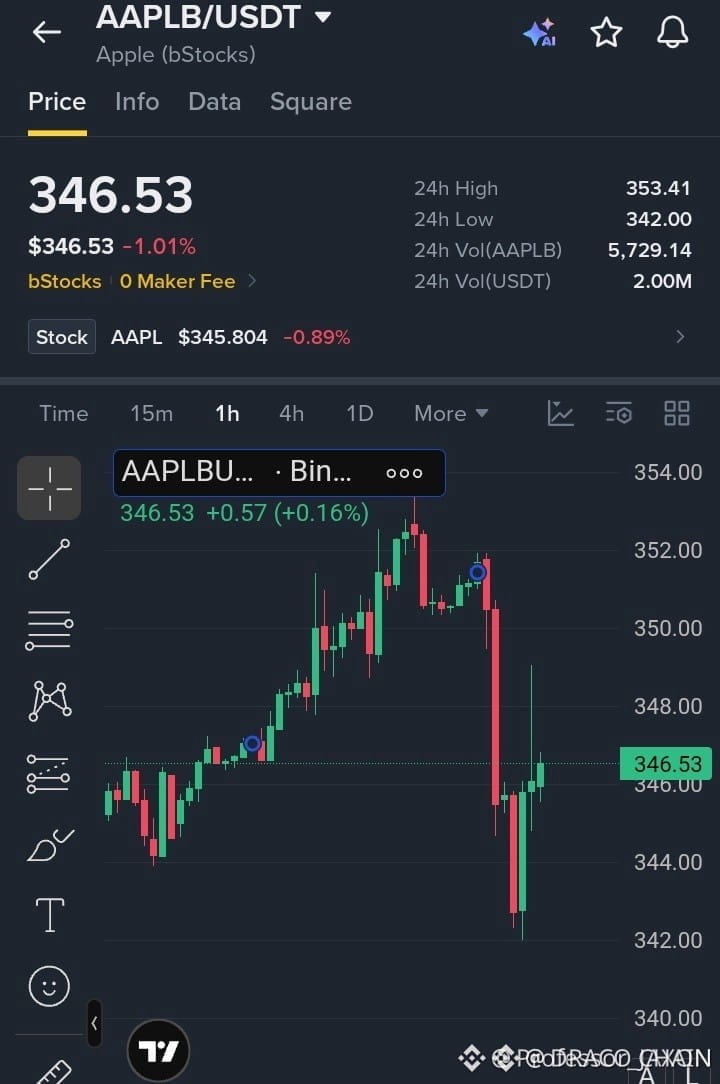
🦈 $AAPLB ABSORBS SELL PRESSURE AT KEY DEMAND WITH SHARP STRUCTURAL RECLAIM! ⚡
Entry: 345.80–346.60 ⚡
Target: 348.00 - 352.00 🎯
Stop Loss: 342.00 ⚠️
📌 Following a sharp liquidity sweep into the 342.00 structural base, $AAPLB demonstrated immediate institutional absorption, creating an aggressive rejection wick on the lower timeframes.
🔍 Sustaining price action above the 346.00 pivot shifts short-term market structure back toward premium liquidity pools sitting overhead. As long as the structural invalidation level holds, the path toward the 350.00 and 352.00 inefficiency targets remains technically sound.
💬 Are you executing within this accumulation zone, or waiting for a clean retest of 346.00 to confirm continuation? 👇
⚠️ Not financial advice. Always manage your risk. 🛡️
🏷️ #AAPLB #MarketStructure #OrderFlow #CryptoTrading #LongSetup
🎯 🦈
15

·
--
CRYPTO MARKET: THE NEXT BIG MOVE IS COMING! 🔥
$AAPLB
{spot}(AAPLBUSDT)
#AAPLB Apple is one of the biggest names in technology, and its tokenized stock brings traditional market exposure into the crypto ecosystem.
👀 Traders are watching for: 📊 Market sentiment 📈 Price momentum 💎 Trading opportunities 🔥 Upcoming market movements
Don't follow hype blindly. Always DYOR and manage your risk.
What's your outlook on AAPL? BULLISH 🐂 or BEARISH 🐻?
CRYPTO MARKET: THE NEXT BIG MOVE IS COMING! 🔥
$AAPLB
#AAPLB Apple is one of the biggest names in technology, and its tokenized stock brings traditional market exposure into the crypto ecosystem.
👀 Traders are watching for: 📊 Market sentiment 📈 Price momentum 💎 Trading opportunities 🔥 Upcoming market movements
Don't follow hype blindly. Always DYOR and manage your risk.
What's your outlook on AAPL? BULLISH 🐂 or BEARISH 🐻?
70

·
--
$AAPLB +1.10% | $XPL +1.10% | $TON +0.95%
#AAPLB nudged up to $350.98, ticking higher by 1.10% on $2.0 M of trade activity.
#XPL climbed to $0.0764, also gaining 1.10% while moving a solid $16.8 M in volume, suggesting fresh interest.
#TON slipped modestly to $1.60, up 0.95% with $7.7 M changing hands, a quieter but still positive flow.
👀 Keep an eye on whether XPL’s strong volume can sustain the upside momentum across the next session.
#Write2Earn #Binance
14

·
--
$AAPLB +0.99% | $DODO +0.95% | $TON +0.95%
#AAPLB nudges up to $350.33, gaining +0.99% on $1.9 M of volume.
#DODO climbs to $0.0244, up +0.95% with $1.4 M changing hands.
#TON edges higher at $1.60, also up +0.95% on a robust $7.7 M flow.
👀 The disparity in volume—TON’s turnover dwarfs the other two—might hint at where buying pressure is concentrating.
#Write2Earn #Binance
7

·
--
📉 AAPLB | SHORT recommendation 🔴
Reference price: 342.5 | 4-hour timeframe
📊 Technical analysis:
* Bearish MACD crossover, indicating weakening buying momentum.
* The signal on the 4-hour timeframe is a stronger indication that the correction may continue.
* The 340 area represents important support.
* A break below support could pave the way for further declines.
🎯 Trade targets:
* TP1: 338
* TP2: 333
* TP3: 328
⛔ Stop loss: 350
Entry: SHORT after confirmation of a break below 340.
⚠️ The signal alone is not enough to confirm a decline; it is preferable to wait for a 4-hour candle to close.
🔥 Look for opportunities
$AAPLB #AAPLB
74
Zhou Qunfei has become China’s richest woman, with a fortune of 127 billion yuan. This news has less—and more— to do with AAPLB than most people think.
Let’s start with the less. The Hurun Rich List looks backward. The 127 billion yuan (128 billion yuan for the couple combined, ranking 33rd overall) is a snapshot of wealth calculated by capitalizing the glass cover orders Lens Technology has received from Apple over the past few years. Her place on the rich list won’t make Apple order one more piece of glass next quarter, nor will it change a single line of cash flow at the parent company behind AAPLB. That’s the classic trap with personality-driven narratives: the story is compelling, but the transmission path is weak.
The more lies in the fact that a supplier’s owner can amass a fortune in the hundreds of billions of yuan from a key component sold to a single customer. That, in itself, is a checkup on Apple’s BOM structure 👑
First, concentration is a double-edged sword. If the glass-cover segment can make someone the richest person in a province, it shows that Apple’s supplier base for key structural components remains highly concentrated. High concentration makes ramping up capacity easier, but price negotiations tougher. Yet the same company is moving into complete-device assembly, which puts downward pressure on assembly prices for Apple. In the same news story, one factor is positive for Apple’s gross margin and the other negative. The net effect is too small to enter the model; what really matters is how market share is allocated over the next two or three years. That’s what AAPLB prices in—not who sits in which row at a state banquet.
Second, when looking at the capital flows behind tokenized stocks, don’t use a crypto framework. AAPLB is anchored to Apple’s underlying stock, and its intraday price movements are driven mainly by news before and after U.S. market hours. Since perpetual contracts for this type of asset can be hedged with the underlying stock, funding rates tend to stay near zero over the long term. It’s difficult for sentiment to push them to extremes as it can with crypto-native products. So changes in open interest are more like a preview of Asian-session sentiment toward overnight U.S. stocks than a measure of speculative fervor in crypto. What’s really worth watching is the premium or discount: when the token price persistently diverges from the underlying stock, it signals that order-book depth on that side can’t absorb orders, and stop-loss orders are most likely to get swept up then.
Third, on-chain, what matters is minting and redemption. Subscription volumes for tokenized stocks indicate that real money is being allocated; open interest in contracts is just a bet. When the two diverge, trust the on-chain data.
Where’s the risk? In the fact that the correlation between the narrative and the asset is far weaker than it sounds. A change at the top of the rich list doesn’t alter Apple’s procurement share at all. Conversely, if Apple increases the share allocated to its second supplier one day, Lens Technology’s fortune may fall first, while AAPLB may not follow. The linkage between these two things is far weaker than the post might lead you to believe.
So the right way to use this news in relation to AAPLB is as a window into supplier concentration—not as a reason to buy. If you’re going to track anything, track gross margins and shifts in assembly share in the earnings reports, not the rich list.
#APPLE #马斯克 #Crypto #AAPLB
6
Apple Stores can now run diagnostics without opening the box: scan the packaging of an unopened iPhone with a device, and it can read the phone’s health status. The results are available before the device even reaches the customer.
First, let’s pin down where this falls financially. It reduces three types of costs: processing returns, determining whether products should be refurbished, and verifying fraud. These are operating expenses. It doesn’t generate revenue or affect the trajectory of service revenue. So for a stock like AAPLB, which is anchored to Apple’s parent stock, this is news that matters only in the “second decimal place.” Trading on it as a boost to service revenue would be getting the direction wrong. Conversely, shorting it because it “isn’t good news” would be just as badly mistaken: it does save money, and that will show up in the expense ratio—just gradually.
The second point is more noteworthy: this news has barely registered as a consensus view among Chinese traders. Of the two Apple hardware-related posts on the Plaza, one has 3 likes and 1 comment, and the other has 1 like and no comments. That’s four comments and four likes in total. Those numbers don’t mean the topic “isn’t hot enough”; they show that retail traders lack a pricing mechanism for this kind of operational news. There’s no discussion, no disagreement, and therefore no change in positioning. Price discovery for AAPLB is still driven by institutional money in the parent stock. The token merely absorbed a very weak sentiment impulse outside trading hours, then stalled.
The risk lies on the other side, and it points in the opposite direction. The iPhone Duo failed JerryRigEverything’s dust-resistance test. Negative quality-control news like this spreads far more efficiently in consumer electronics than “improved store efficiency.” Neither development has any impact on revenue, but the market typically reacts to bad news an order of magnitude faster. For AAPLB, this is short-term pressure on sentiment, not a fundamental event. But if it coincides with a period of thin liquidity, volatility could be amplified.
There’s another structural detail: this kind of operational news usually breaks while the stock market is closed, so the token moves first and the parent stock opens later. That can easily produce a false breakout without support from spot trading. Once the over-the-counter price comes in, the token may retrace. The odds of success when chasing this kind of breakout are far lower than when you assess the nature of the event yourself.
My view: this news is neither a bullish nor a bearish reason to trade AAPLB. It points in the right direction, but carries little weight. The two biggest costs on Apple’s retail side are return processing and fraud verification; condensing both into a scanning device is a form of cost engineering. Its effects will accumulate in the operating expense ratio over several quarters, leaving no trace in any single quarter’s revenue. Pricing it in requires expense-ratio data from several consecutive quarters, so the earliest opportunity will be after the next earnings report. Until then, any intraday move in AAPLB is just a liquidity fluctuation at the token level.
Risk warning: Premiums, discounts, and off-hours pricing discrepancies in tokenized assets are more likely to cost you money than getting the direction wrong.
#AAPLB #Apple #Crypto
22

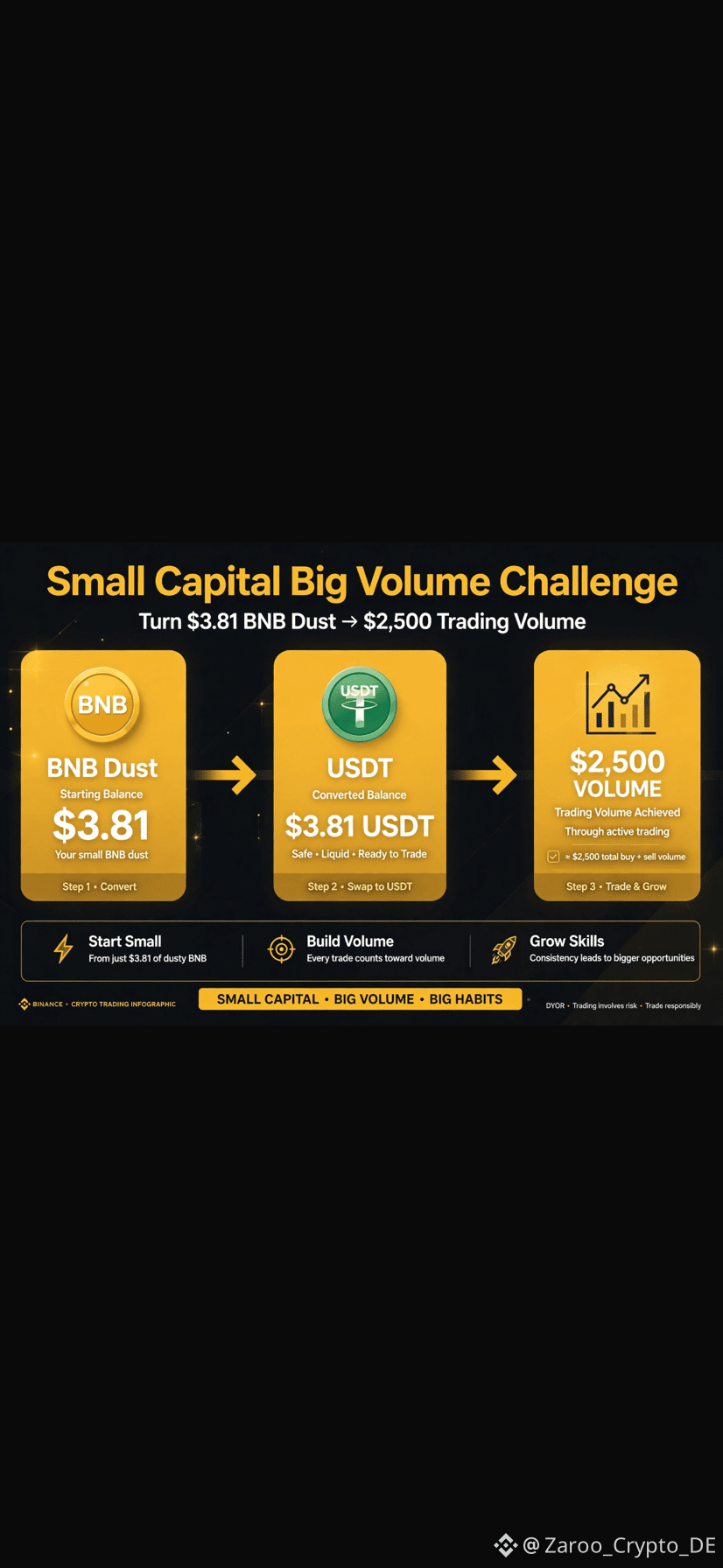
Small Capital Big Volume Challenge Day 1!
I just converted my $3.81 $BNB Dust to $USDT
My goal is to make $2,500 volume for $AAPLB trading event with only $4!
Is it possible? Yes, if I do 625 trades of $4
Follow me, I will post daily profit/loss.
Should I start with $BTC or $ETH? Comment!
BNB $USDT $ETH
{spot}(BTCUSDT)
{spot}(AAPLBUSDT)
{spot}(BNBUSDT)
#EarningsSeason #BinancePick #AAPLB #bnb #BTC
Small Capital Big Volume Challenge Day 1!
I just converted my $3.81 $BNB Dust to $USDT
My goal is to make $2,500 volume for $AAPLB trading event with only $4!
Is it possible? Yes, if I do 625 trades of $4
Follow me, I will post daily profit/loss.
Should I start with $BTC or $ETH? Comment!
BNB $USDT $ETH
#EarningsSeason #BinancePick #AAPLB #bnb #BTC
95
⚡ $AAPLB SHAKES OFF WEAK HANDS IN A CLASSIC TEXTBOOK LIQUIDITY FLUSH! 🦈
A minor pullback on the chart has weak-handed market participants panicking, but smart money sees this routine dip for what it truly is: a calculated leverage reset. 🦈 Whales are simply clearing out late longs and building fresh momentum before the next leg higher.
📊 Spot order books show heavy bids waiting just beneath the surface to absorb panic selling without breaking structure. 💡 Panicking on a routine pullback right before institutional bids step back in is how retail gets left behind.
💬 Are you letting this minor dip shake your conviction, or are you tracking where smart money is accumulating next? 👇
⚠️ Not financial advice. Always manage your risk. 🛡️
🏷️ #AAPLB #Crypto #Altcoins #SmartMoney #Bullish
🚀 ⚡
21
Log in to explore more content
Join global crypto users on Binance Square
⚡️ Get latest and useful information about crypto.
💬 Trusted by the world’s largest crypto exchange.
👍 Discover real insights from verified creators.
Email / Phone number
Trending Topics
1
#USMidterms-WhatAreMarketsExpecting?
18,228 views
303 Discussing
2
#USOctoberNFP-AreRateCutsStillPossible
207,627 views
1,629 Discussing
3
#AMDBeatsExpectations-AINarrativeContinues
2,969 views
123 Discussing
4
#BinanceIncidentReport
161,712 views
1,100 Discussing
5
#AnthropicIPOPricedDownasInvestorsEye$1.5T
6,485 views
82 Discussing
6
#BinanceReopensWithdrawalsForMoreAssets
297,347 views
2,197 Discussing
7
#HongKongToLicenseVirtualAssetCustodyAndAdvisory
166 views
23 Discussing
8
#BinanceHourlyDepositsExceedWithdrawals
129,063 views
1,085 Discussing
9
#SouthKoreaRulingPartyLeaderSeeksCryptoTaxDelay
966 views
34 Discussing
10
#MorganStanleyAmongFirstBanksToUseDTCCTokenization
1,090 views
45 Discussing