
#scalping
scalping
3.8M views
15,018 Discussing
Hot
Latest

·
--
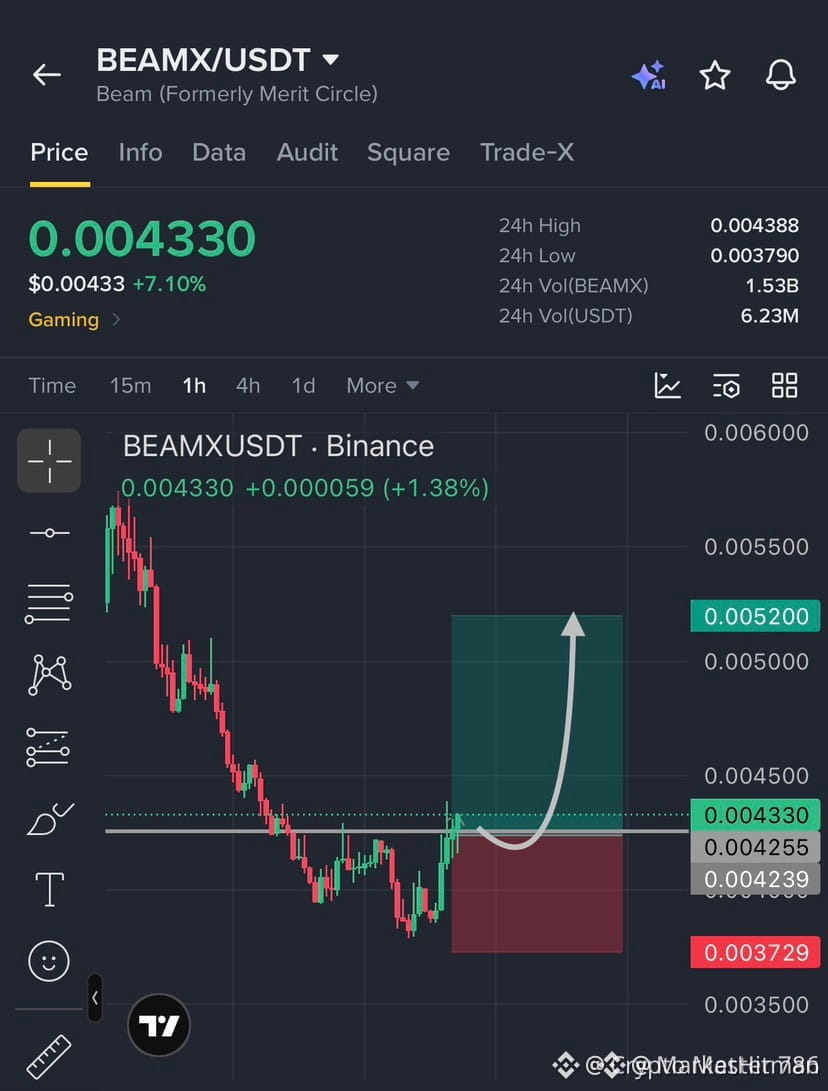
🚀 $BEAMX RECLAIMS RESISTANCE, READY TO SHOOT FOR NEW HIGHS! 🟢
Entry: 0.004255-0.004330 ⚡
Target: 0.004500 / 0.004800 / 0.005200 🚀
Stop Loss: 0.003729 ⚠️
🦈 Smart money is snapping up the reclaimed block, forcing sellers to bleed liquidity as the price flips the ceiling. 📊 Volume spikes on the 5‑minute chart confirm the bid rush, and the RSI is flirting with overbought territory, hinting at a short‑term thrust. ⚡ With three upside targets stacked, the risk‑reward curve looks razor‑sharp for a scalper who rides the wave.
💬 Who’s loading up the bid ladder now? 👇
⚠️ Not financial advice. Always manage your risk. 🛡️
🏷️ #BEAMX #LongSetup #Scalping #Crypto
🔥 💎
8

·
--
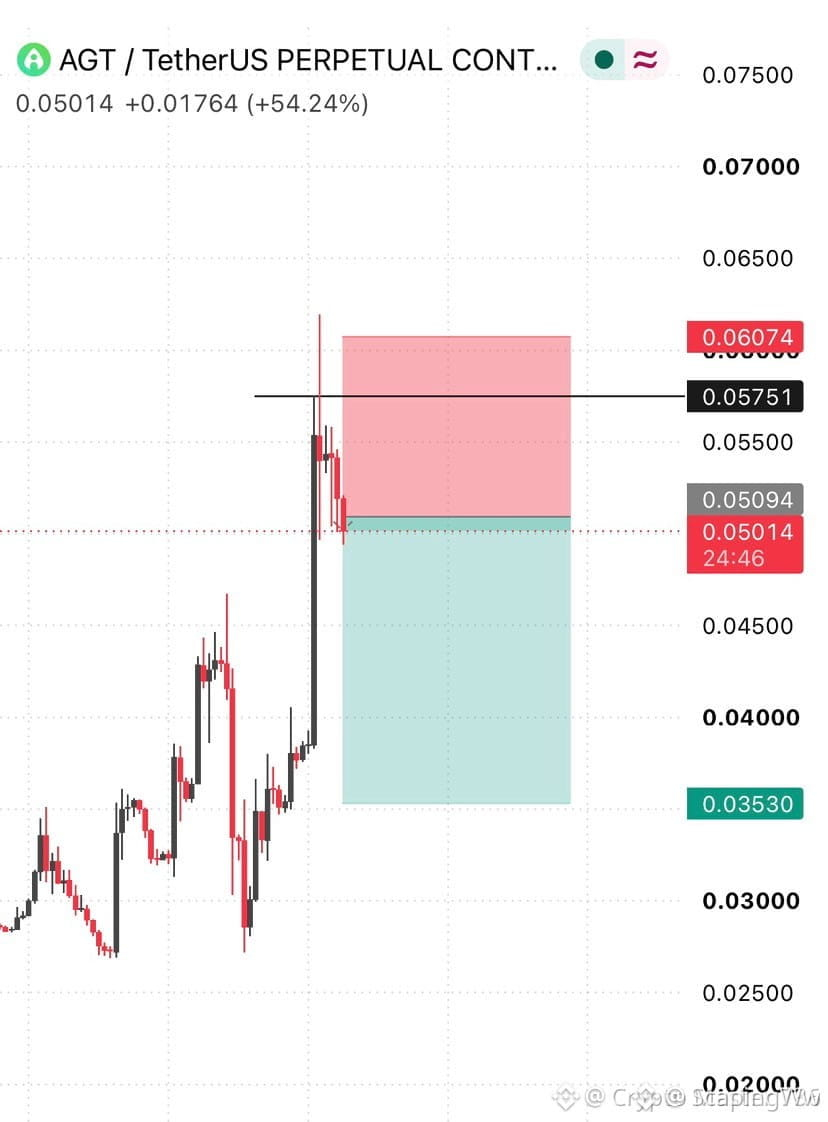
🚨 $AGT SHORT SCALP BREACHING LIQUIDITY SWEEP! 💥
Entry: 0.05014‑0.05094 ⚡
Target: 0.03530 🚀
Stop Loss: 0.06074 ⚠️
🦈 Smart money is unloading aggressively, carving a fresh demand void below the 0.051 zone. 📊 Volume spikes on the 5‑minute chart confirm sellers are flipping bids faster than ever, and the order flow shows a clean sweep of the last liquidity pool. ⚡ The target dives toward the 0.03530 mark, offering a crisp risk‑reward edge for scalpers who can lock in the entry band quickly. 📌
💬 Are you ready to ride this down‑move or waiting for the next liquidity grab? 👇
⚠️ Not financial advice. Always manage your risk. 🛡️
🏷️ #AGT #ShortSetup #Scalping #Crypto
🔥 💎
60



·
--
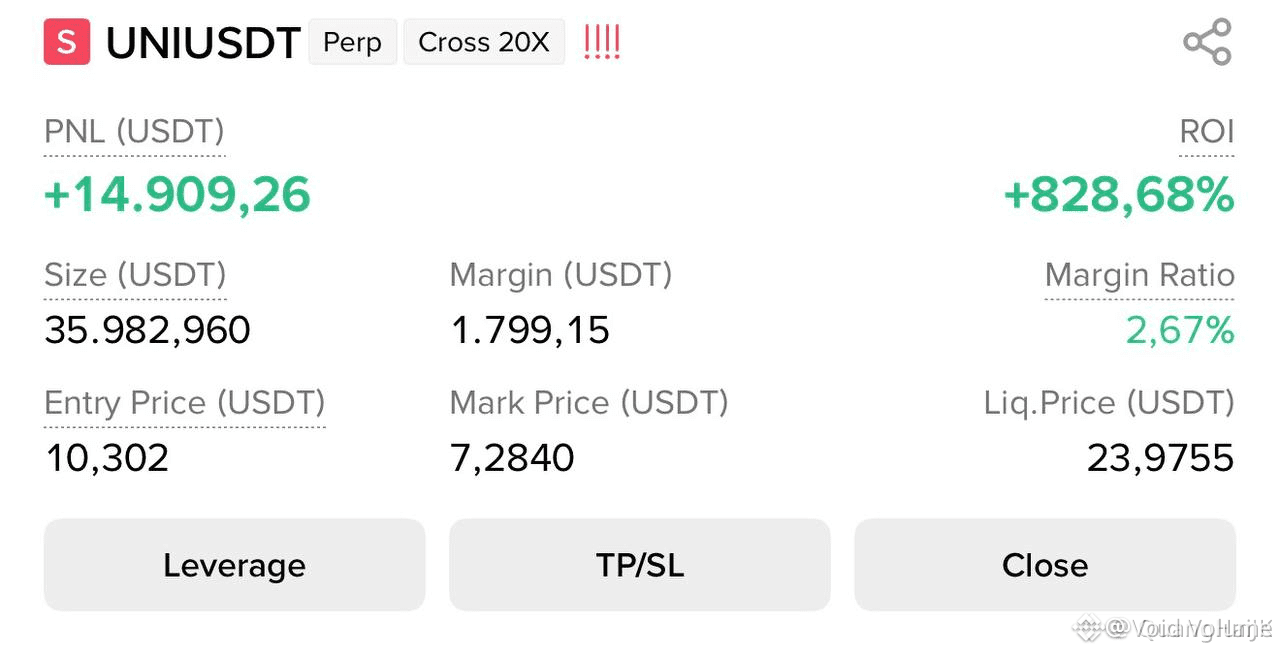
⚡ $UNI M15 SHORT SCALP TARGETING OVERBOUGHT REJECTION 💥
Entry: 7.327‑8.126 ⚡
Target: 7.162 🚀
Target: 6.712 🚀
Target: 6.419 🚀
Stop Loss: 8.526 ⚠️
📊 Hourly RSI‑6 surged past 86, then slipped to 73 right at the $7.34 resistance, exposing a fragile chase. 🦈 The 4‑hour demand block is now exhausted, and liquidity hunters are primed to snap the price lower. 🔍 With the market perched on an overbought ceiling, a swift mean‑reversion is likely on the 15‑minute chart. 💡 Positioning this scalp aligns with institutional liquidity sweeps and tight risk parameters.
💬 Are you ready to ride the pullback or waiting for a deeper breakdown? 👇
⚠️ Not financial advice. Always manage your risk. 🛡️
🏷️ #UNI #ShortSetup #Scalping #Crypto
🦈 🔥
4

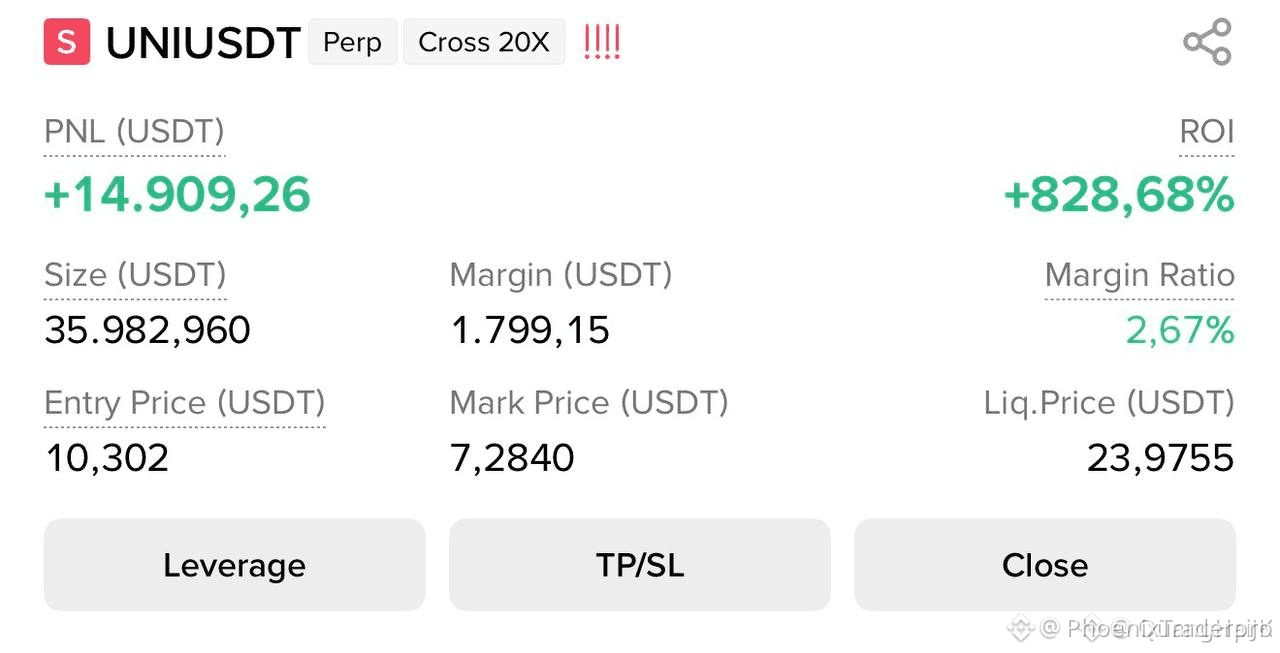
🚨 $UNI SCALP ALERT: FRAGILE REJECTION AT 7.34 MAY SPARK QUICK SELL! ⚡
Entry: 7.327 ⚡
Target: 7.162 🚀
Stop Loss: 8.526 ⚠️
Hourly RSI blew past 86, then slid to 73 right at the $7.34 ceiling – a classic overbought squeeze. Sellers are already chewing the resistance, making the chase fragile 📊⚡
On the 15‑minute frame the price is primed to snap lower. With the order block at 7.327 holding, a swift dip toward the first TP at 7.162 could ignite a cascade, while deeper liquidity pools sit around 6.7 and 6.4 🦈📈
💬 Are you ready to flip the bid before the next liquidity sweep? 👇
⚠️ Not financial advice. Always manage your risk. 🛡️
🏷️ #UNI #ShortSetup #Scalping #Crypto
🦈 🔥
24

·
--
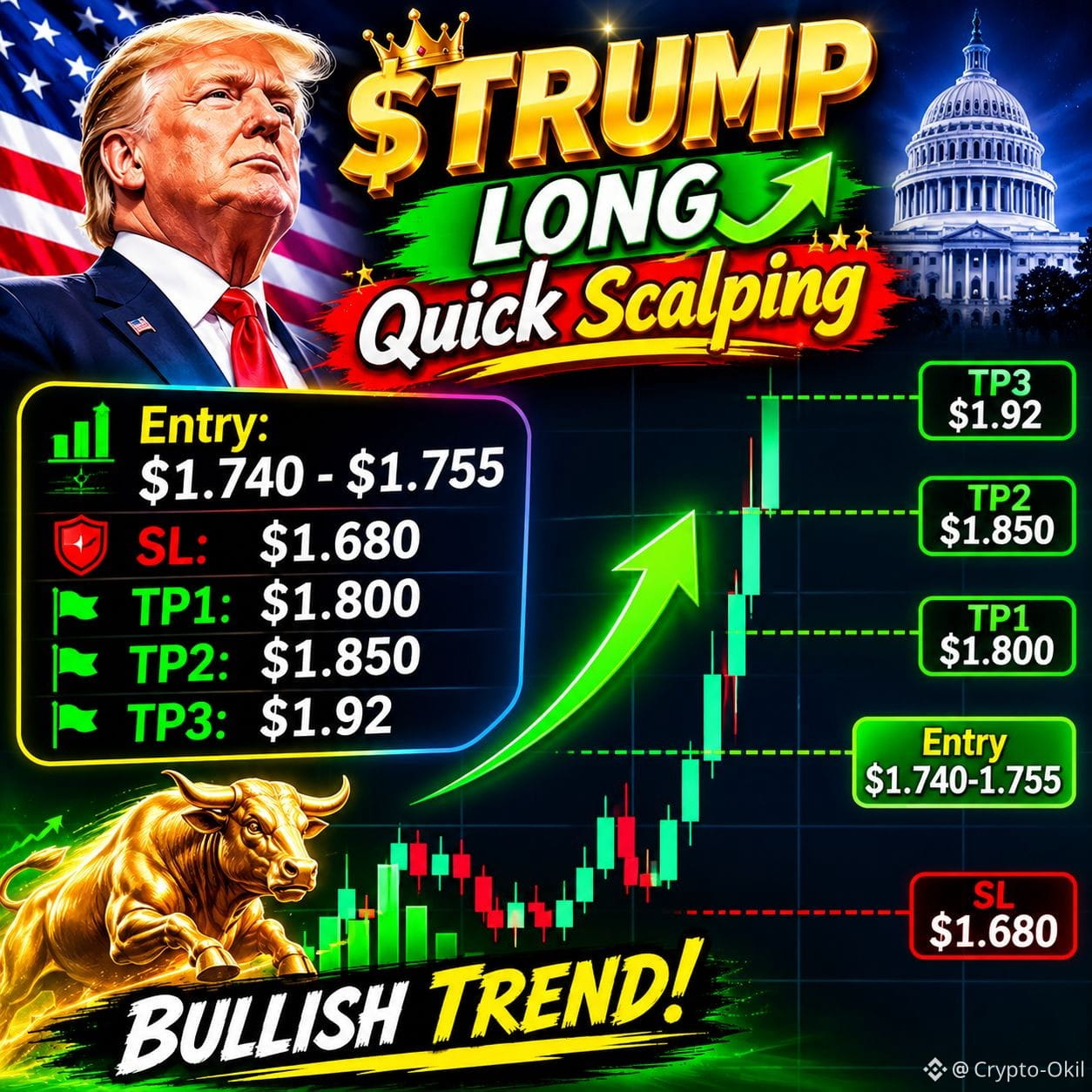
🚀 $TRUMP LONG SCALPING OPPORTUNITY! 🔥
Bulls are looking for another quick upside move! I'm watching this zone for a potential long entry. 🎯
📍 Entry Zone: $1.740 – $1.755
🛑 Stop Loss: $1.680
🎯 Take Profit Levels:
TP1: $1.800
TP2: $1.850
TP3: $1.920
⚡ Keep an eye on momentum and manage your risk carefully!
#TRUMP #CryptoTrading #Scalping #BinanceSquareFamily #TradingCommunity #NFA #DYOR
1
16

🔥 [SCALP SIGNAL] $BTC Setup (+2.10% in 24h)
Direction: LONG 🚀
• Current / Entry: $68,500.00
• Target 1: $70,007.00 (Secure 50% Profit)
• Target 2: $71,788.00 (Core Target)
• Target 3: $74,322.00 (Trailing TP)
• Strict Stop Loss: $67,472.00
💡 Rule for Small Account Holders:
As soon as the first target is reached, book 50% of your profit and move your Stop Loss to the cost/entry price. Never get greedy in an open trade—protecting your capital is the first priority!
👉 Like, Repost & Follow for daily accurate setups.
#Write2Earn #CryptoSignals #BinanceSquare #Scalping
89

·
--
Bullish
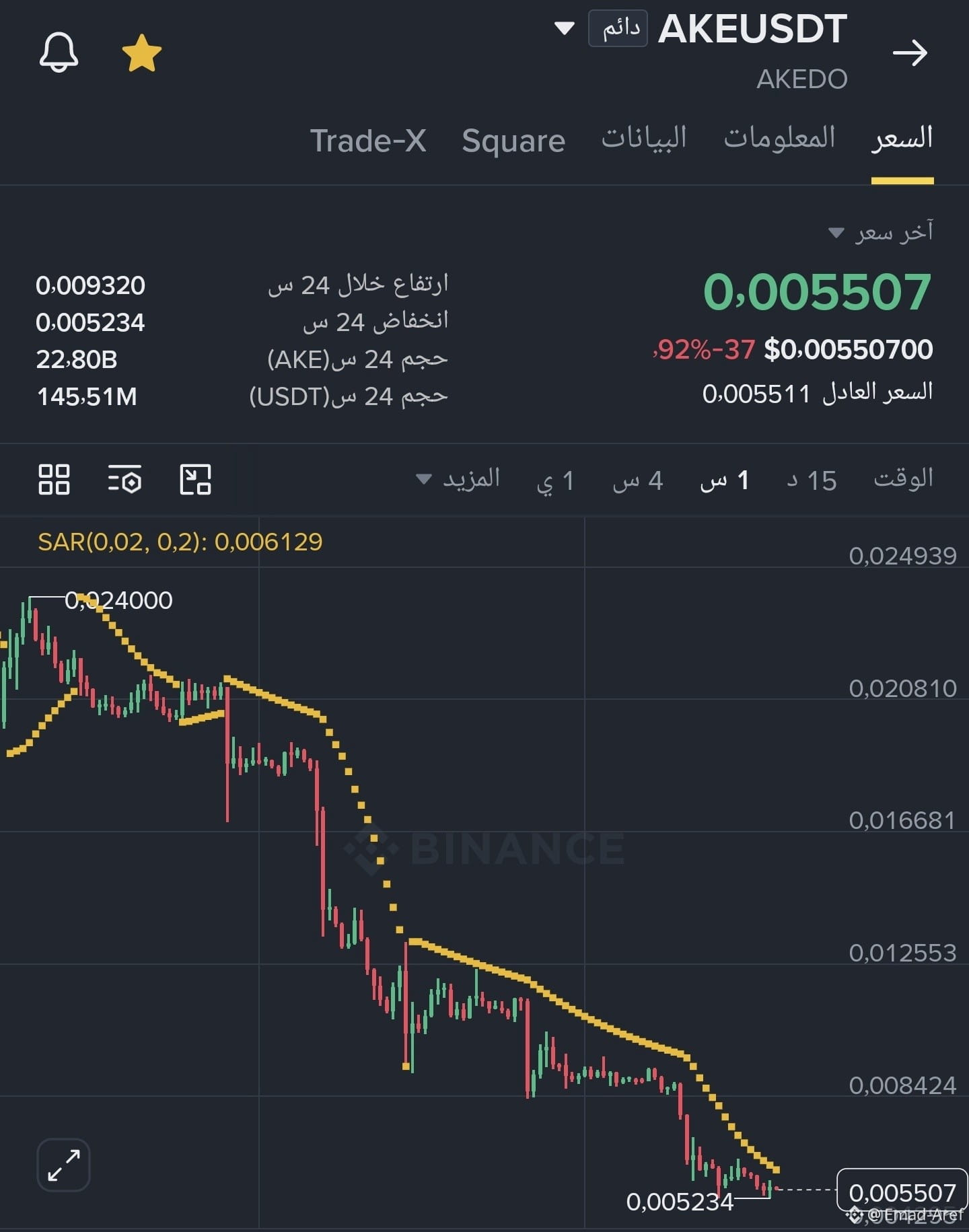
For those looking for quick, fleeting opportunities, the current movement of $AKE offers an intraday scalping setup aimed at capitalizing on immediate momentum.
Here’s the trade plan in detail:
• Entry: $0.005500 - $0.005586 (watch liquidity at these levels)
• Stop-loss: $0.005200 (at the 24-hour low—sticking to it is non-negotiable)
• Targets:
🎯 First target: $0.005900
🎯 Second target: $0.006200
🎯 Final target: $0.006500
The market has no mercy for the impulsive... Strict risk management comes first, then profit-taking.
Are you in on this quick trade, or would you rather watch the price action first? Share your plans in the comments 👇
{future}(AKEUSDT)
#AKE #Scalping #CryptoSignals #BinanceSquare
For those looking for quick, fleeting opportunities, the current movement of $AKE offers an intraday scalping setup aimed at capitalizing on immediate momentum.
Here’s the trade plan in detail:
• Entry: $0.005500 - $0.005586 (watch liquidity at these levels)
• Stop-loss: $0.005200 (at the 24-hour low—sticking to it is non-negotiable)
• Targets:
🎯 First target: $0.005900
🎯 Second target: $0.006200
🎯 Final target: $0.006500
The market has no mercy for the impulsive... Strict risk management comes first, then profit-taking.
Are you in on this quick trade, or would you rather watch the price action first? Share your plans in the comments 👇
#AKE #Scalping #CryptoSignals #BinanceSquare
2
649
·
--
SCALPING VS. GREED: THE IMPORTANCE OF TAKING QUICK PROFITS
Good afternoon, team! Now that the day's main sessions have closed, it's time to analyze the hardest pillar to master in trading: the psychology of taking profit.
In our lab, we strictly apply the scalping strategy. We look for areas of high institutional compression, enter the market, and exit quickly, securing small daily targets (like our 5% net goal). However, the beginner scalper's worst enemy has a name: greed.
Picture this classic scenario: you enter a position, the price moves spectacularly in your favor, and you reach your daily target with a big smile. But instead of closing the trade and securing the money, you leave it open, thinking: "This is going to go even higher; I can make twice as much." Seconds later, the market makes a sharp reversal and wipes out all your gains, leaving you with an unrealized loss.
💡 The 3 Golden Rules of a Successful Scalper:
1.- Secure your profits: A balance in the green on your screen isn't real money until the position is closed. Don't let the market take away what it has already given you.
2.- Patience pays: It's better to make three short, quick, and safe trades during the week than to try to squeeze an "X100" out of a single highly volatile coin.
3.- Stick to the plan: If your strategy says to exit at a specific price, exit without looking back. The market moves in cycles and will always offer new entry opportunities tomorrow.
Team, trading success is built by consistently adding small daily wins through compound interest. Control your mind and you'll master the chart. 🛡️
Has a winning trade ever turned against you because you didn't take profits in time? Share your experience below—let's learn together! 👇
$BTC
{future}(BTCUSDT)
#BinanceSquare #scalping #TradingPsychology #cryptotrading #BinanceFutures #50KUSDTChallenge #TradingVenezuela
SCALPING VS. GREED: THE IMPORTANCE OF TAKING QUICK PROFITS
Good afternoon, team! Now that the day's main sessions have closed, it's time to analyze the hardest pillar to master in trading: the psychology of taking profit.
In our lab, we strictly apply the scalping strategy. We look for areas of high institutional compression, enter the market, and exit quickly, securing small daily targets (like our 5% net goal). However, the beginner scalper's worst enemy has a name: greed.
Picture this classic scenario: you enter a position, the price moves spectacularly in your favor, and you reach your daily target with a big smile. But instead of closing the trade and securing the money, you leave it open, thinking: "This is going to go even higher; I can make twice as much." Seconds later, the market makes a sharp reversal and wipes out all your gains, leaving you with an unrealized loss.
💡 The 3 Golden Rules of a Successful Scalper:
1.- Secure your profits: A balance in the green on your screen isn't real money until the position is closed. Don't let the market take away what it has already given you.
2.- Patience pays: It's better to make three short, quick, and safe trades during the week than to try to squeeze an "X100" out of a single highly volatile coin.
3.- Stick to the plan: If your strategy says to exit at a specific price, exit without looking back. The market moves in cycles and will always offer new entry opportunities tomorrow.
Team, trading success is built by consistently adding small daily wins through compound interest. Control your mind and you'll master the chart. 🛡️
Has a winning trade ever turned against you because you didn't take profits in time? Share your experience below—let's learn together! 👇
$BTC
#BinanceSquare #scalping #TradingPsychology #cryptotrading #BinanceFutures #50KUSDTChallenge #TradingVenezuela
1
81

🧪 THE EXPERIMENT CONTINUES:
We’re continuing to test our bot on Binance Spot, and we came across a finding that significantly changes how we look at scalping:
👉 Getting the direction right isn’t enough.
A bot can correctly detect that the price is starting to rise and still lose money.
Why?
Because there’s a silent barrier that many strategies ignore:
fees + spread + slippage.
In our experiment, the price needed to move approximately +0.19% just to cover the friction of entering and exiting.
So what happened?
The algorithm found small upward impulses:
+0.03%
+0.06%
+0.09%
They looked like good signals, but economically they were useless.
The market moved in the right direction, but not enough to cover the cost of the trade.
That forced us to change the question.
Before, the bot asked:
“Is the price going up?”
Now we want it to ask:
🔥 “Is there enough strength behind this move to make entering worthwhile?”
To answer that, we started studying aggressive buying volume, effective bid movement, the imbalance between buyers and sellers, order book depth, spread, and flow continuity.
And we made another discovery:
When the bid simply held steady, many signals turned out to be false impulses.
When the bid actively moved up, the subsequent price expansion was much greater.
Visually, it’s a small difference, but for an algorithm it can mean the difference between buying at the end of a move and entering while buyers are still pushing the market.
Now the next stage begins: checking whether this new filter works on completely new market data, without reusing the data it was designed with.
Because optimizing based on the past is relatively easy.
The difficult question is:
Does it work when the market hasn’t happened yet?
To be continued.
$BTC $BNB $USDC
{spot}(BNBUSDT)
#Trading #Scalping #TradingBot #Binance #bot
🧪 THE EXPERIMENT CONTINUES:
We’re continuing to test our bot on Binance Spot, and we came across a finding that significantly changes how we look at scalping:
👉 Getting the direction right isn’t enough.
A bot can correctly detect that the price is starting to rise and still lose money.
Why?
Because there’s a silent barrier that many strategies ignore:
fees + spread + slippage.
In our experiment, the price needed to move approximately +0.19% just to cover the friction of entering and exiting.
So what happened?
The algorithm found small upward impulses:
+0.03%
+0.06%
+0.09%
They looked like good signals, but economically they were useless.
The market moved in the right direction, but not enough to cover the cost of the trade.
That forced us to change the question.
Before, the bot asked:
“Is the price going up?”
Now we want it to ask:
🔥 “Is there enough strength behind this move to make entering worthwhile?”
To answer that, we started studying aggressive buying volume, effective bid movement, the imbalance between buyers and sellers, order book depth, spread, and flow continuity.
And we made another discovery:
When the bid simply held steady, many signals turned out to be false impulses.
When the bid actively moved up, the subsequent price expansion was much greater.
Visually, it’s a small difference, but for an algorithm it can mean the difference between buying at the end of a move and entering while buyers are still pushing the market.
Now the next stage begins: checking whether this new filter works on completely new market data, without reusing the data it was designed with.
Because optimizing based on the past is relatively easy.
The difficult question is:
Does it work when the market hasn’t happened yet?
To be continued.
$BTC $BNB $USDC
#Trading #Scalping #TradingBot #Binance #bot

1
114

·
--
It definitely makes me laugh how easily you can get carried away. I know this coin is manipulated and I could lose everything, but I analyzed it and decided to do some micro-scalping so I don’t lose all my money. As soon as I make two successful trades, it’ll be time to stop.
#scalping $ESPORTS
It definitely makes me laugh how easily you can get carried away. I know this coin is manipulated and I could lose everything, but I analyzed it and decided to do some micro-scalping so I don’t lose all my money. As soon as I make two successful trades, it’ll be time to stop.
#scalping $ESPORTS
#scalping $ESPORTS
218

·
--
🎯 SCALPING ALERT | $BEAMX/USDT
🟢 LONG | Momentum under observation
Everyone, I'm keeping an eye on $BEAMX right now. 👀⚡
What's catching my attention is the price behavior and the possibility of momentum continuing in the short term.
I'm monitoring three important factors: volume, price structure, and breakout confirmation. If these factors remain aligned, we could see a new opportunity for a move toward the next liquidity zones.
🎯 TRADE PLAN
📍 Entry: 0.00499200
🛑 Stop Loss: 0.00494208
✅ TP1: 0.00504192
🚀 TP2: 0.00509184
⚡ What could confirm the move?
• Continued buying momentum.
• Volume supporting the move.
• A confirmed breakout or retest of the technical zone.
It's not just about looking at the target, but also observing how the price behaves on the way there. If the structure loses strength, the outlook should be reassessed as well.
So, everyone: are you seeing buying strength at $BEAMX or would you wait for additional confirmation before entering? 👀
Let's follow this move together!
⚠️ Scalping involves significant risks. This analysis does not guarantee results; assess the stop and risk before trading.
#Scalping #Momentum #BinanceSquare
🎯 SCALPING ALERT | $BEAMX /USDT
🟢 LONG | Momentum under observation
Everyone, I'm keeping an eye on $BEAMX right now. 👀⚡
What's catching my attention is the price behavior and the possibility of momentum continuing in the short term.
I'm monitoring three important factors: volume, price structure, and breakout confirmation. If these factors remain aligned, we could see a new opportunity for a move toward the next liquidity zones.
🎯 TRADE PLAN
📍 Entry: 0.00499200
🛑 Stop Loss: 0.00494208
✅ TP1: 0.00504192
🚀 TP2: 0.00509184
⚡ What could confirm the move?
• Continued buying momentum.
• Volume supporting the move.
• A confirmed breakout or retest of the technical zone.
It's not just about looking at the target, but also observing how the price behaves on the way there. If the structure loses strength, the outlook should be reassessed as well.
So, everyone: are you seeing buying strength at $BEAMX or would you wait for additional confirmation before entering? 👀
Let's follow this move together!
⚠️ Scalping involves significant risks. This analysis does not guarantee results; assess the stop and risk before trading.
#Scalping #Momentum #BinanceSquare
152

·
--
🎯 SCALPING ALERT | $SOXLB/USDT
You don’t need to enter on the first move to find an opportunity. 👀⚡
Many traders see the price fall and enter out of fear of missing out. The problem? Without confirmation, what looked like an opportunity can turn into a premature entry.
📊 What should you watch on SOXLB now?
I’m monitoring selling momentum, volume, and price structure to identify possible signs of continuation. Confirmation of a breakout or a consistent retest can help assess whether there’s enough strength to target the next liquidity zones.
🎯 TRADE PLAN
🔴 Direction: SHORT
📍 Entry: 77.520
🛑 Stop Loss: 78.295
✅ TP1: 76.745
🚀 TP2: 75.970
⚡ What should you watch before entering?
• Selling volume sustaining the move.
• Bearish structure remaining intact.
• A breakdown or retest with technical confirmation.
Who is this analysis for? Scalping traders looking to understand momentum, plan entries, and manage risk using technical criteria—without relying solely on the expectation of a price drop.
💬 What about you: would you enter SHORT now or wait for confirmation of a support breakdown? Share your take on $SOXLB!
⚠️ Scalping involves significant risks. This scenario is an analysis, not a guarantee of results. Assess your stop, position size, and risk before trading.
#SOXLB #Scalping #Momentum #CryptoTrading
🎯 SCALPING ALERT | $SOXLB /USDT
You don’t need to enter on the first move to find an opportunity. 👀⚡
Many traders see the price fall and enter out of fear of missing out. The problem? Without confirmation, what looked like an opportunity can turn into a premature entry.
📊 What should you watch on SOXLB now?
I’m monitoring selling momentum, volume, and price structure to identify possible signs of continuation. Confirmation of a breakout or a consistent retest can help assess whether there’s enough strength to target the next liquidity zones.
🎯 TRADE PLAN
🔴 Direction: SHORT
📍 Entry: 77.520
🛑 Stop Loss: 78.295
✅ TP1: 76.745
🚀 TP2: 75.970
⚡ What should you watch before entering?
• Selling volume sustaining the move.
• Bearish structure remaining intact.
• A breakdown or retest with technical confirmation.
Who is this analysis for? Scalping traders looking to understand momentum, plan entries, and manage risk using technical criteria—without relying solely on the expectation of a price drop.
💬 What about you: would you enter SHORT now or wait for confirmation of a support breakdown? Share your take on $SOXLB !
⚠️ Scalping involves significant risks. This scenario is an analysis, not a guarantee of results. Assess your stop, position size, and risk before trading.
#SOXLB #Scalping #Momentum #CryptoTrading
98

·
--
Bearish
#> #IDOL #MEET48 #CryptoTrading #Scalping
Your Hero Trade [Best so far]*
> SHORT at $0.02226, EXIT at $0.02099. 112% ROI in 1 minute 19 seconds 💀
>
> People are dreaming of IDOL reaching $1, while I shorted at the top and got out.
> Coin: #IDOLUSDT
> Leverage: 20x Cross
> Entry: 0.0222689
> Exit: 0.0209915
> Time: 1m 19s
>
> Lesson: Don’t FOMO during a pump; be patient and wait for the top.
94

·
--
Bearish
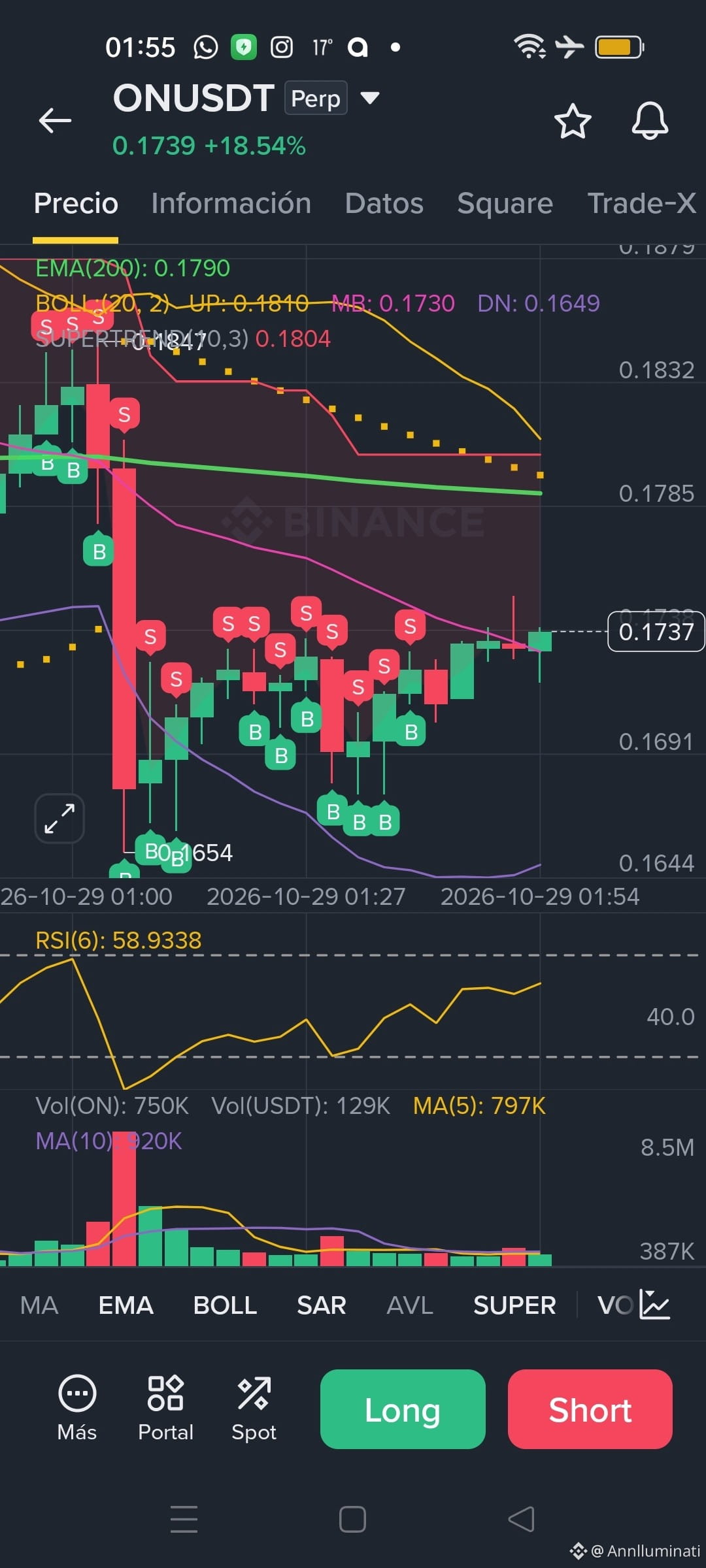
[Opera aquí👇🏼](https://www.binance.com/en/futures/ref/353390069) Despite having an upward trend with a rapid rise, Short orders increased in a short time. The RSI went from swelling to plunging below 35; the drop was abrupt and swept up Longs. The price is moving sideways, but remains quite volatile. If you enter a scalp trade, whether Long or Short, make sure to close manually, within no more than a minute, and use a sufficient margin percentage to absorb the whipsaws.
#ScalpingTrading
#scalping
{future}(ONUSDT)
Opera aquí👇🏼 Despite having an upward trend with a rapid rise, Short orders increased in a short time. The RSI went from swelling to plunging below 35; the drop was abrupt and swept up Longs. The price is moving sideways, but remains quite volatile. If you enter a scalp trade, whether Long or Short, make sure to close manually, within no more than a minute, and use a sufficient margin percentage to absorb the whipsaws.
#ScalpingTrading
#scalping
#ScalpingTrading
#scalping
125

·
--
Bullish
⚡ $ZEC SCALP SPOT ALERT ⚡
{spot}(ZECUSDT)
Preparing for a quick intraday bounce on $ZEC . Do not chase the green candles; wait for the precise pullback to confirm support.
📥 Entry Zone: $1,295 – $1,305
🟢 Trigger: Wait for a **15M candle to close above $1,303**.
✅ **Targets:** $1,318 & $1,335
🛑 **Stop Loss:** $1,282
Strict SPOT ONLY. No leverage. Set price alerts for the $1,303 trigger! 🎯👇
#zec #Zcash #SpotTrading #BinanceSquare #scalping
⚡ $ZEC SCALP SPOT ALERT ⚡
Preparing for a quick intraday bounce on $ZEC . Do not chase the green candles; wait for the precise pullback to confirm support.
📥 Entry Zone: $1,295 – $1,305
🟢 Trigger: Wait for a **15M candle to close above $1,303**.
✅ **Targets:** $1,318 & $1,335
🛑 **Stop Loss:** $1,282
Strict SPOT ONLY. No leverage. Set price alerts for the $1,303 trigger! 🎯👇
#zec #Zcash #SpotTrading #BinanceSquare #scalping
235
·
--
Bullish
⚡ $XRP Quick Scalp Setup! ⚡
{spot}(XRPUSDT)
Don't wait for the big swing—catch the short-term bounce. SPOT ONLY. 🚀
✅ Trigger: 15M Candle CLOSE above **$1.3020**
🎯 **Targets:** $1.3080 & $1.3130
🛑 **Stop Loss:** $1.2950
Set your alerts and secure those quick profits! 💰
#xrp #scalping #SpotTrading #BinanceSquare
⚡ $XRP Quick Scalp Setup! ⚡
Don't wait for the big swing—catch the short-term bounce. SPOT ONLY. 🚀
✅ Trigger: 15M Candle CLOSE above **$1.3020**
🎯 **Targets:** $1.3080 & $1.3130
🛑 **Stop Loss:** $1.2950
Set your alerts and secure those quick profits! 💰
#xrp #scalping #SpotTrading #BinanceSquare
Don't wait for the big swing—catch the short-term bounce. SPOT ONLY. 🚀
✅ Trigger: 15M Candle CLOSE above **$1.3020**
🎯 **Targets:** $1.3080 & $1.3130
🛑 **Stop Loss:** $1.2950
Set your alerts and secure those quick profits! 💰
#xrp #scalping #SpotTrading #BinanceSquare
73

·
--
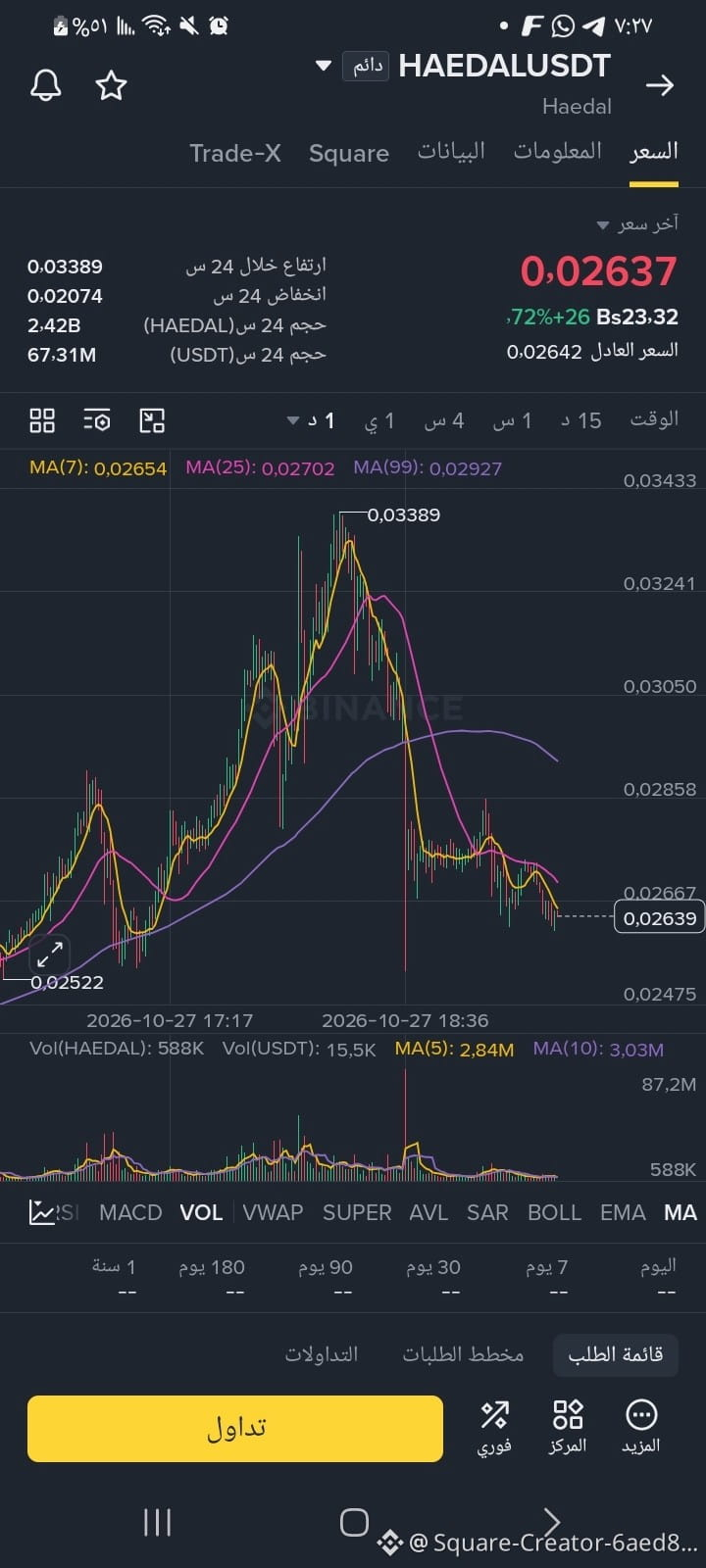
🔥 Quick update and analysis of HAEDAL/USDT on the short timeframe (1m) 📉📈
After a sharp surge and reaching a high of $0.03389, the coin saw profit-taking and a sharp correction, and is currently consolidating around $0.02637.
Here are some quick scalping setups for cautious traders:
Suggested entry zone: $0.02550–$0.02620 (if rebound signals appear or price holds above support).
Targets:
First target: $0.02750
Second target: $0.02900
Third target (major resistance): $0.03100
Stop loss: Close below $0.02480 (risk management is the key to success).
⚠️ Note: Price action is very fast and requires close monitoring of the order book and trading volume (VOL). Remember to manage your capital wisely!
#BinanceSquare #HAEDAL #CryptoTrading #Scalping #تداول_العملات_الرقمية $HAEDAL
{future}(HAEDALUSDT)
🔥 Quick update and analysis of HAEDAL/USDT on the short timeframe (1m) 📉📈
After a sharp surge and reaching a high of $0.03389, the coin saw profit-taking and a sharp correction, and is currently consolidating around $0.02637.
Here are some quick scalping setups for cautious traders:
Suggested entry zone: $0.02550–$0.02620 (if rebound signals appear or price holds above support).
Targets:
First target: $0.02750
Second target: $0.02900
Third target (major resistance): $0.03100
Stop loss: Close below $0.02480 (risk management is the key to success).
⚠️ Note: Price action is very fast and requires close monitoring of the order book and trading volume (VOL). Remember to manage your capital wisely!
#BinanceSquare #HAEDAL #CryptoTrading #Scalping #تداول_العملات_الرقمية $HAEDAL
1
6
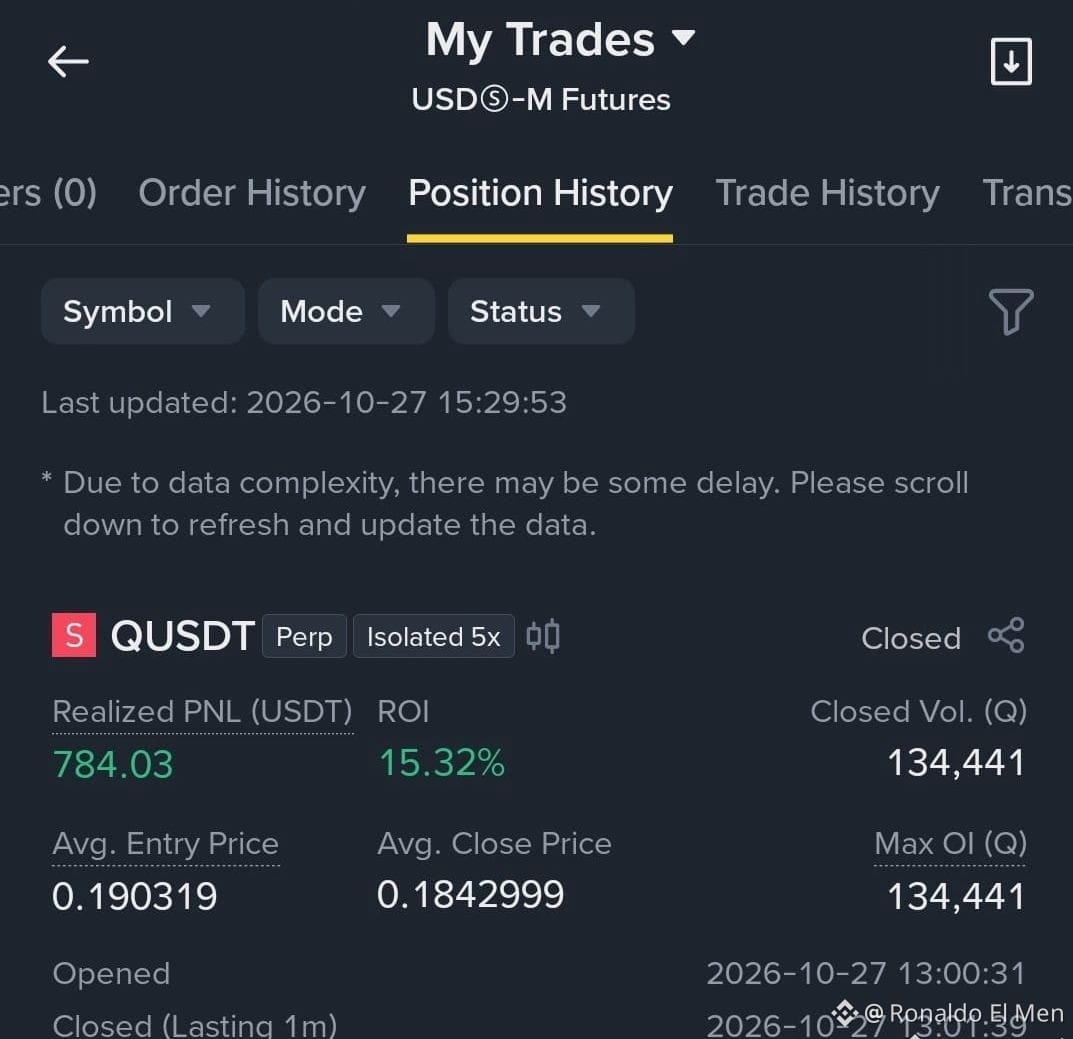
Flash trade on $QUSDT closed successfully!
Pair: QUSDT Perp (Isolated 5x)
ROI: +15.32%
Profit: +784.03 USDT
Duration: Less than 2 minutes!
The key to scalping is discipline and getting in at exactly the right moment. How's your session going today? 👇
#BinanceSquare #trading #scalping #crypto #QUSDTUSDT
Pair: QUSDT Perp (Isolated 5x)
ROI: +15.32%
Profit: +784.03 USDT
Duration: Less than 2 minutes!
The key to scalping is discipline and getting in at exactly the right moment. How's your session going today? 👇
#BinanceSquare #trading #scalping #crypto #QUSDTUSDT
1
74
Log in to explore more content
Join global crypto users on Binance Square
⚡️ Get latest and useful information about crypto.
💬 Trusted by the world’s largest crypto exchange.
👍 Discover real insights from verified creators.
Email / Phone number
Trending Topics
1
#USMidterms-WhatAreMarketsExpecting?
168,625 views
1,258 Discussing
2
#USOctoberNFP-AreRateCutsStillPossible
293,600 views
2,261 Discussing
3
#CircleQ3Revenue865M
4,547 views
162 Discussing
4
#AMDBeatsExpectations-AINarrativeContinues
42,834 views
459 Discussing
5
#FrenchAssemblyPassesSelfCustodiedCryptoReportingAmendment
11 views
6 Discussing
6
#BinanceIncidentReport
334,656 views
1,672 Discussing
7
#AnthropicIPOPricedDownasInvestorsEye$1.5T
24,756 views
118 Discussing
8
#BoundlessToLaunchTokenizedAIInferencePlan
853 views
23 Discussing
9
#HongKongPassesCryptoAssetReportingFrameworkAmendment
155 views
8 Discussing
10
#37thQuarterlyBNBBurnRemoves1.64MillionBNB
5,687 views
110 Discussing