
#itlg
itlg
272,298 views
4,728 Discussing
Hot
Latest

·
--
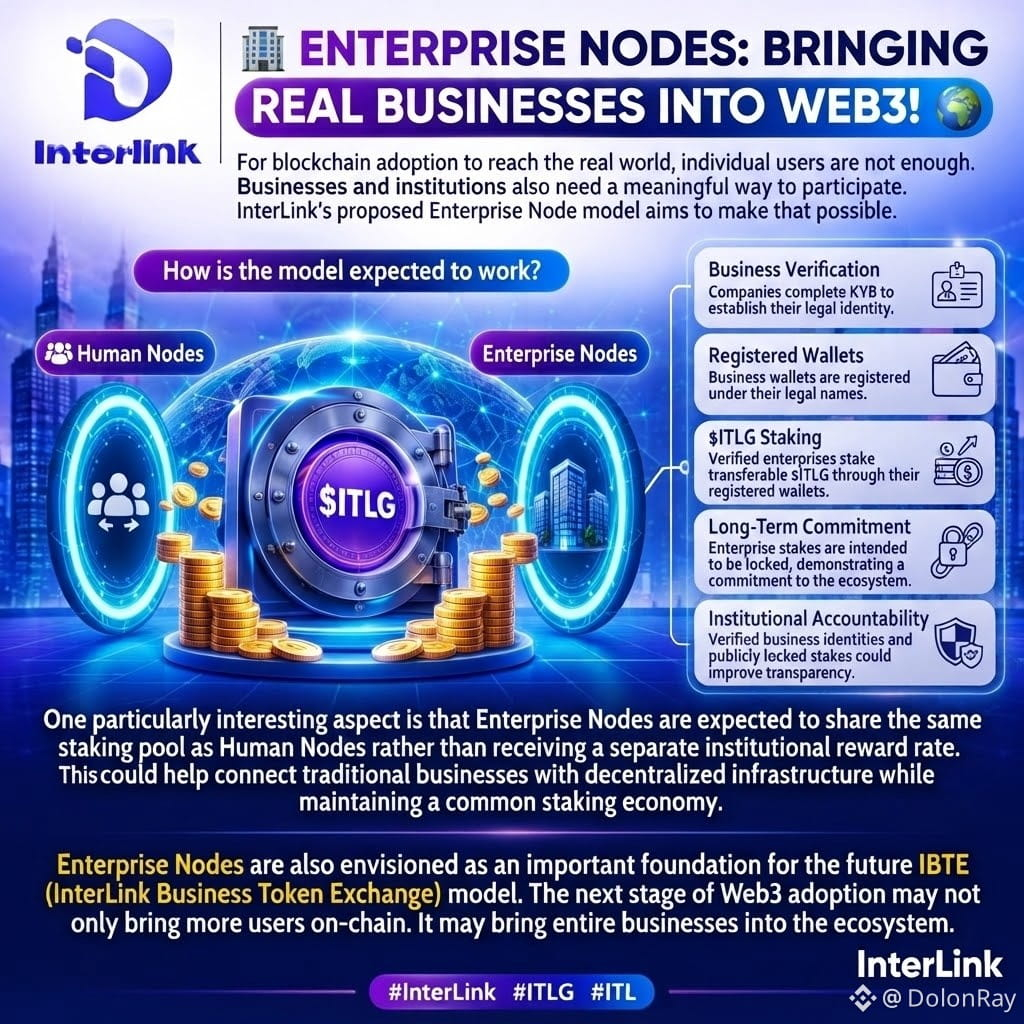
🏢 𝗘𝗡𝗧𝗘𝗥𝗣𝗥𝗜𝗦𝗘 𝗡𝗢𝗗𝗘𝗦: 𝗕𝗥𝗜𝗡𝗚𝗜𝗡𝗚 𝗥𝗘𝗔𝗟 𝗕𝗨𝗦𝗜𝗡𝗘𝗦𝗦𝗘𝗦 𝗜𝗡𝗧𝗢 𝗪𝗘𝗕𝟯! 🌍
For blockchain adoption to reach the real world, individual users are not enough. Businesses and institutions also need a meaningful way to participate.
InterLink's proposed Enterprise Node model aims to make that possible.
Unlike Human Nodes, which represent verified individuals, Enterprise Nodes are designed for legally registered companies and institutions that complete KYB (Know Your Business) verification.
How is the model expected to work?
🔹 Business Verification: Companies complete KYB to establish their legal identity.
🔹 Registered Wallets: Business wallets are registered under their legal names.
🔹 $ITLG Staking: Verified enterprises stake transferable $ITLG through their registered wallets.
🔹 Long-Term Commitment: Enterprise stakes are intended to be locked, demonstrating a commitment to the ecosystem.
🔹 Institutional Accountability: Verified business identities and publicly locked stakes could improve transparency.
One particularly interesting aspect is that Enterprise Nodes are expected to share the same staking pool as Human Nodes rather than receiving a separate institutional reward rate.
This could help connect traditional businesses with decentralized infrastructure while maintaining a common staking economy.
Enterprise Nodes are also envisioned as an important foundation for the future IBTE (InterLink Business Token Exchange) model.
Of course, the actual impact will depend on how KYB, staking locks, governance, and enterprise integrations are implemented.
The next stage of Web3 adoption may not only bring more users on-chain. It may bring entire businesses into the ecosystem.
#InterLink #ITLG #ITL
13
·
--
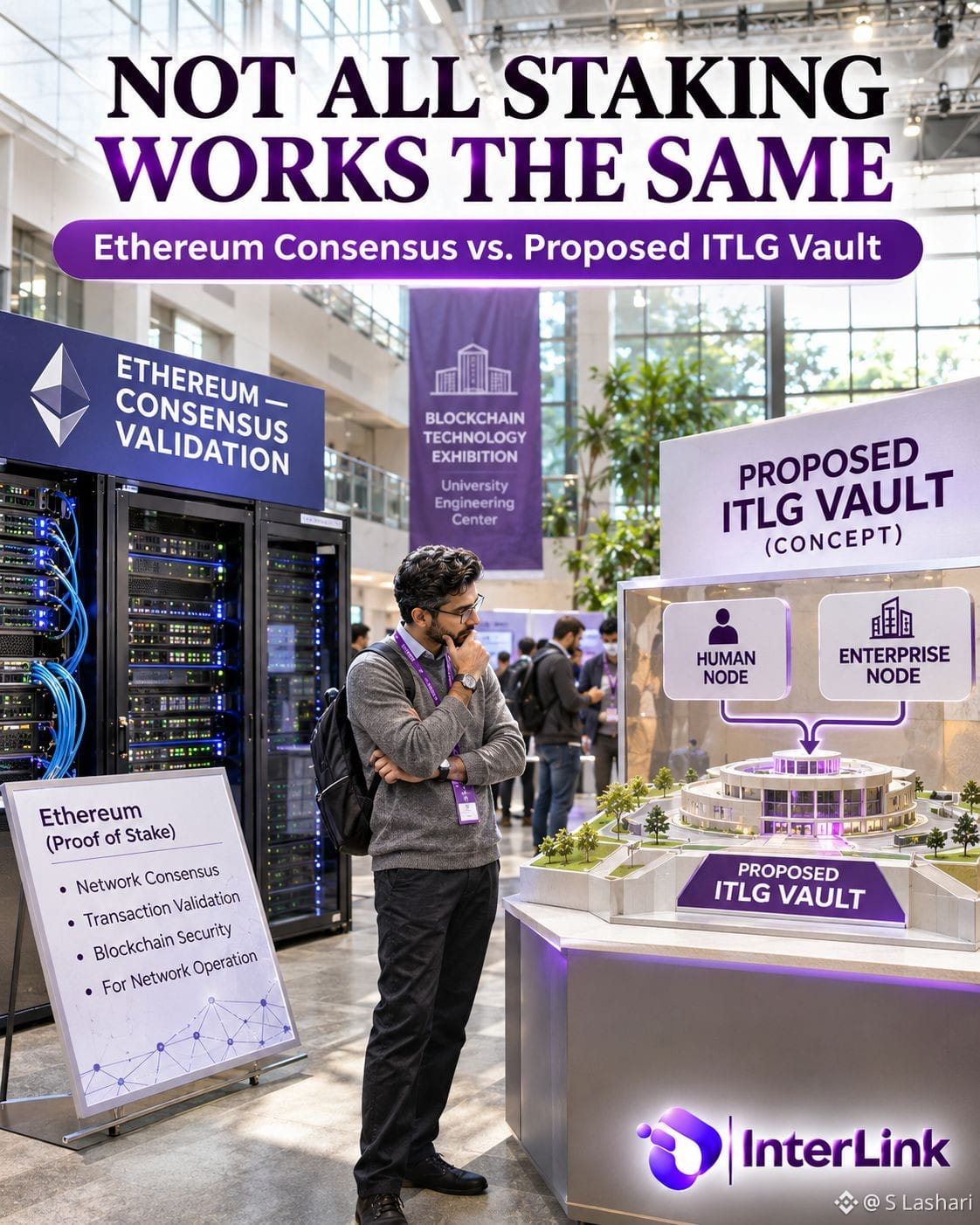
𝗜𝗧𝗟𝗚 𝗦𝗧𝗔𝗞𝗜𝗡𝗚 𝗩𝗔𝗨𝗟𝗧 𝗩𝗦. 𝗘𝗧𝗛𝗘𝗥𝗘𝗨𝗠: 𝗧𝗪𝗢 𝗗𝗜𝗙𝗙𝗘𝗥𝗘𝗡𝗧 𝗔𝗣𝗣𝗥𝗢𝗔𝗖𝗛𝗘𝗦
Staking is not the same mechanism across every blockchain.
Ethereum's $ETH proof-of-stake system uses validators and staked capital to secure network consensus. Validators participate in block proposals and attestations, with rewards and penalties tied to protocol rules.
InterLink's proposed $ITLG Staking Vault takes a different direction.
𝗪𝗵𝗮𝘁 𝗺𝗮𝗸𝗲𝘀 𝘁𝗵𝗲 𝗜𝗧𝗟𝗚 𝗺𝗼𝗱𝗲𝗹 𝗱𝗶𝗳𝗳𝗲𝗿𝗲𝗻𝘁?
The Vault is designed around two verified participant categories:
• Human Nodes: KYC-verified individuals staking transferable $ITLG.
• Enterprise Nodes: KYB-verified businesses staking through registered institutional wallets.
Both would enter a shared staking pool without a separate preferential institutional reward rate.
The proposed rewards would be dynamic, drawing from existing ITLG allocations and ecosystem-generated fees.
𝗧𝗵𝗲 𝗶𝗺𝗽𝗼𝗿𝘁𝗮𝗻𝘁 𝗱𝗶𝘀𝘁𝗶𝗻𝗰𝘁𝗶𝗼𝗻
Ethereum staking directly supports blockchain consensus security.
InterLink's proposed Vault emphasizes verified participation, ecosystem rewards, and governance.
These are different functions. The Vault should not be assumed to provide the same consensus-security mechanism as Ethereum validators.
Its effectiveness will depend on finalized contracts, identity verification, fee generation, and governance rules.
𝗞𝗲𝘆 𝘁𝗮𝗸𝗲𝗮𝘄𝗮𝘆: Staking design matters more than the word "staking." Understanding what participants actually secure, earn, and govern is essential.
#interlink📈 #ITLG #ITL #etherreum
𝗗𝗶𝘀𝗰𝗹𝗮𝗶𝗺𝗲𝗿: Educational purposes only. Not financial advice. DYOR.
87

·
--
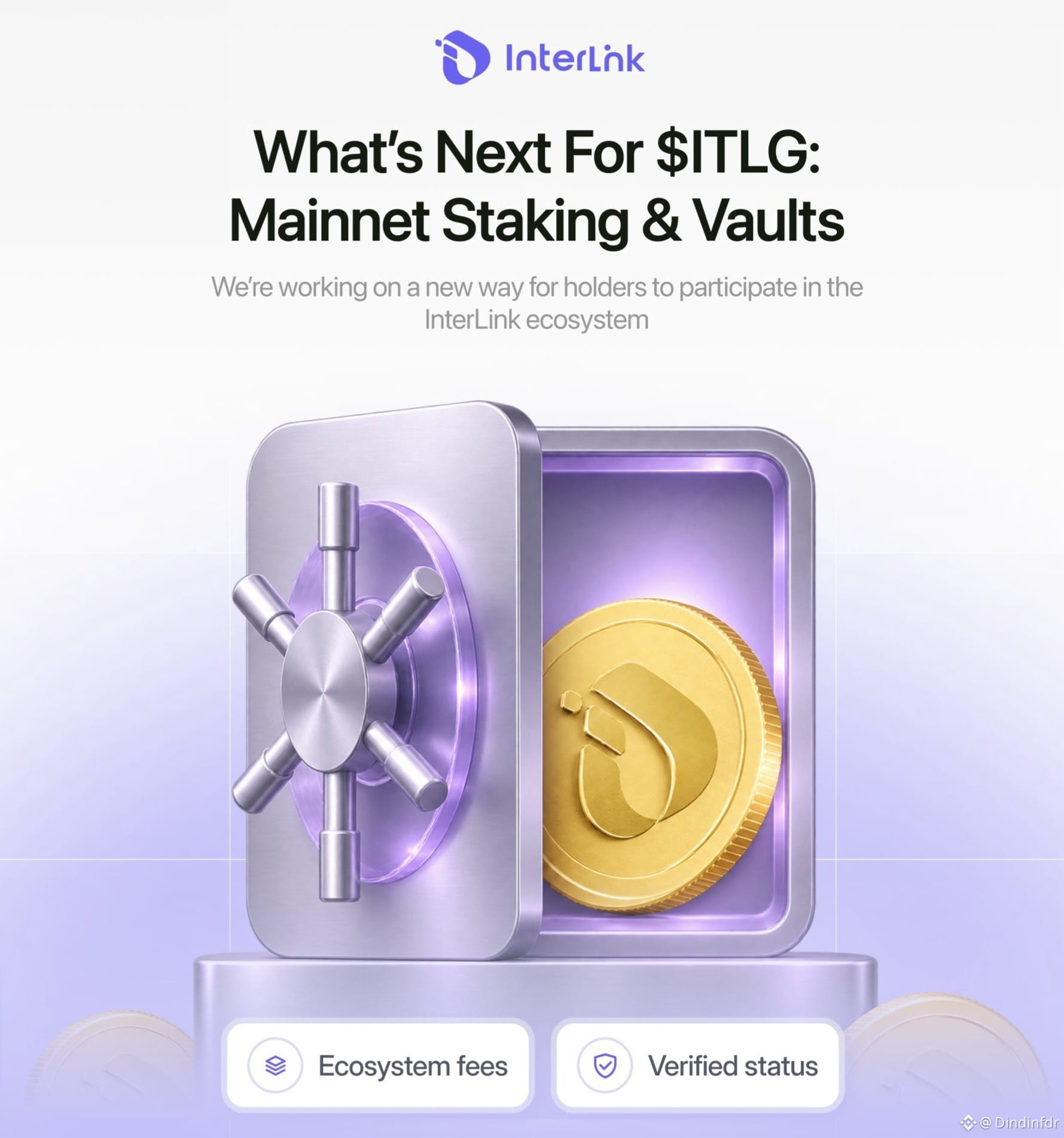
📢 Next for $ITLG: Mainnet staking and vaults.
You can stake your $ITLG in different vaults.
Rewards come from network fees.
Staked tokens also get a random chance to become Verified (not guaranteed).
Both normal people and companies can stake.
Everything is visible on-chain.
Goal: Get 100+ companies (including big ones) to join by 2027.
#InterLink #ITLG #ITL
1
59

·
--
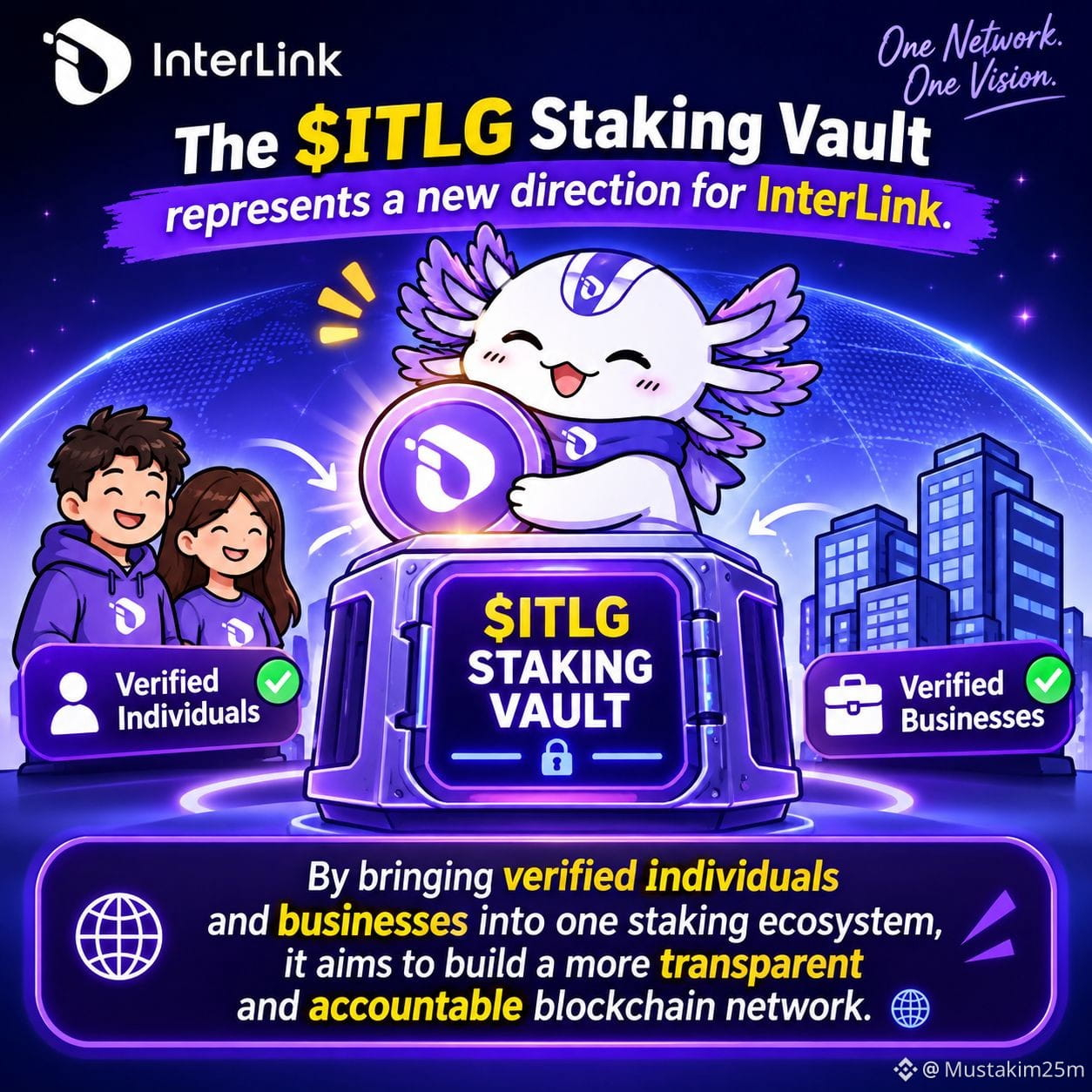
The $ITLG Staking Vault represents a new direction for InterLink. By bringing verified individuals and businesses into one staking ecosystem, it aims to build a more transparent and accountable blockchain network. 🌐
#Interlink #ITLG #ITL
The $ITLG Staking Vault represents a new direction for InterLink. By bringing verified individuals and businesses into one staking ecosystem, it aims to build a more transparent and accountable blockchain network. 🌐
#Interlink #ITLG #ITL
#Interlink #ITLG #ITL
1
73
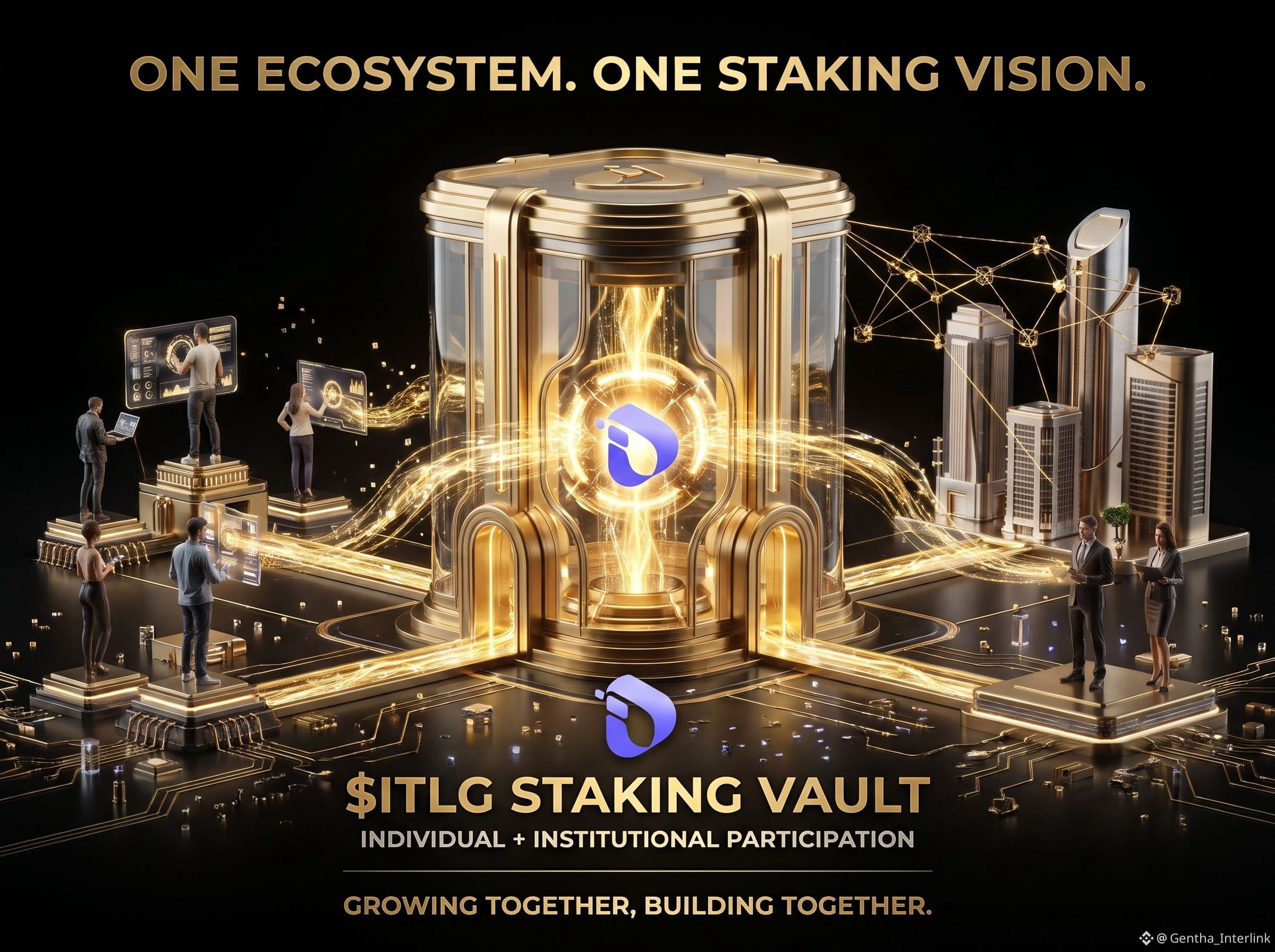
🚀 ONE ECOSYSTEM. ONE STAKING VISION.
The $ITLG Staking Vault aims to bring individual users and institutional participants together in one unified staking ecosystem.
By encouraging long-term participation and collaboration, it seeks to strengthen the InterLink ecosystem, support sustainable growth, and build a stronger foundation for the future.
🤝 United Participation. Stronger Ecosystem.
$ITLG — Growing Together, Building Together.
#InterLink #ITLG #ITL
71
·
--
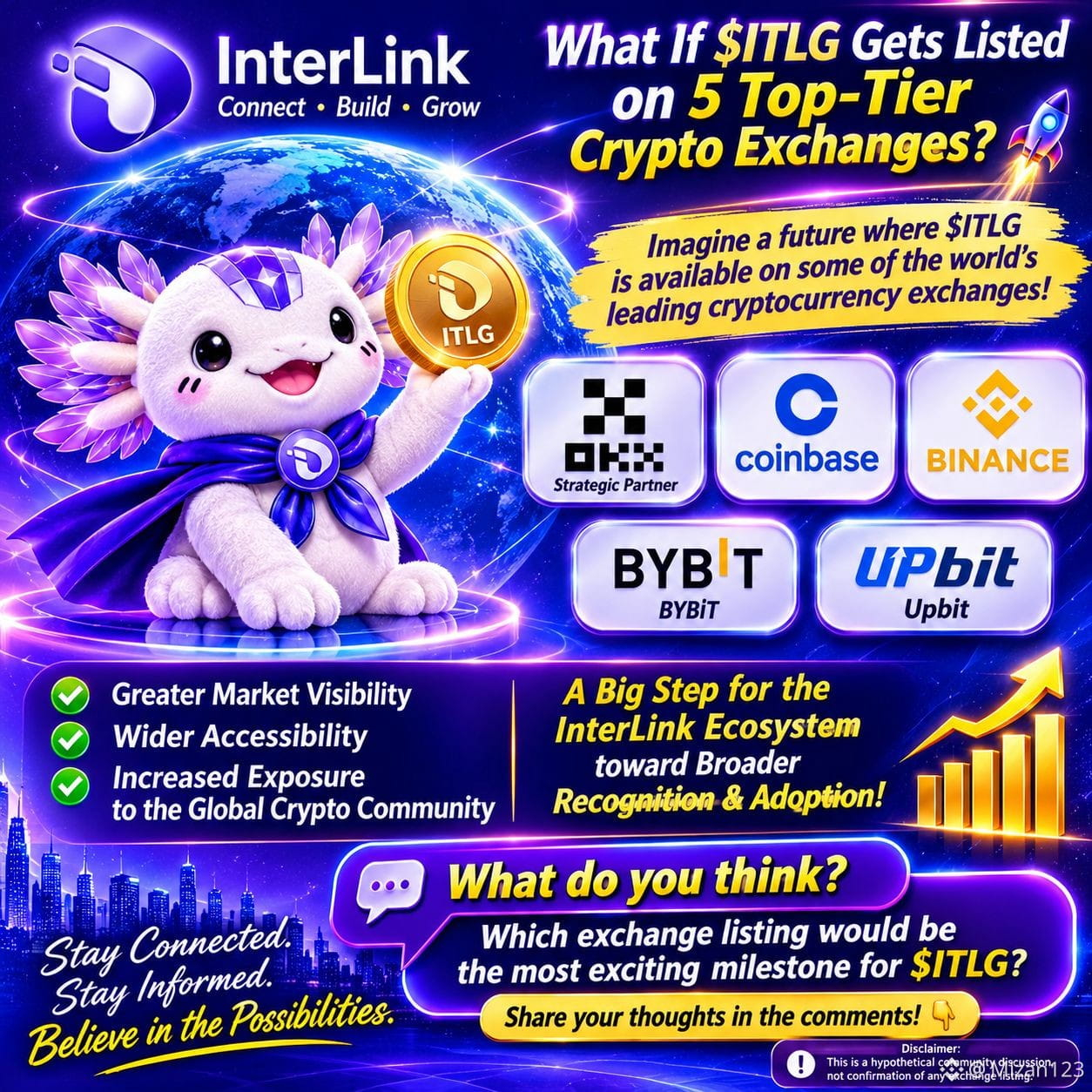
🌍 What If $ITLG Lists on Top 5 Exchanges? 🚀💜
🔥 OKX – Strategic Partner
🔥 Coinbase & Binance
🔥 Bybit & Upbit
📈 Massive global visibility & adoption for InterLink!
Which listing excites you most? Comment below! 👇
#InterLink #ITLG #ITL
🌍 What If $ITLG Lists on Top 5 Exchanges? 🚀💜
🔥 OKX – Strategic Partner
🔥 Coinbase & Binance
🔥 Bybit & Upbit
📈 Massive global visibility & adoption for InterLink!
Which listing excites you most? Comment below! 👇
#InterLink #ITLG #ITL
🔥 OKX – Strategic Partner
🔥 Coinbase & Binance
🔥 Bybit & Upbit
📈 Massive global visibility & adoption for InterLink!
Which listing excites you most? Comment below! 👇
#InterLink #ITLG #ITL
3

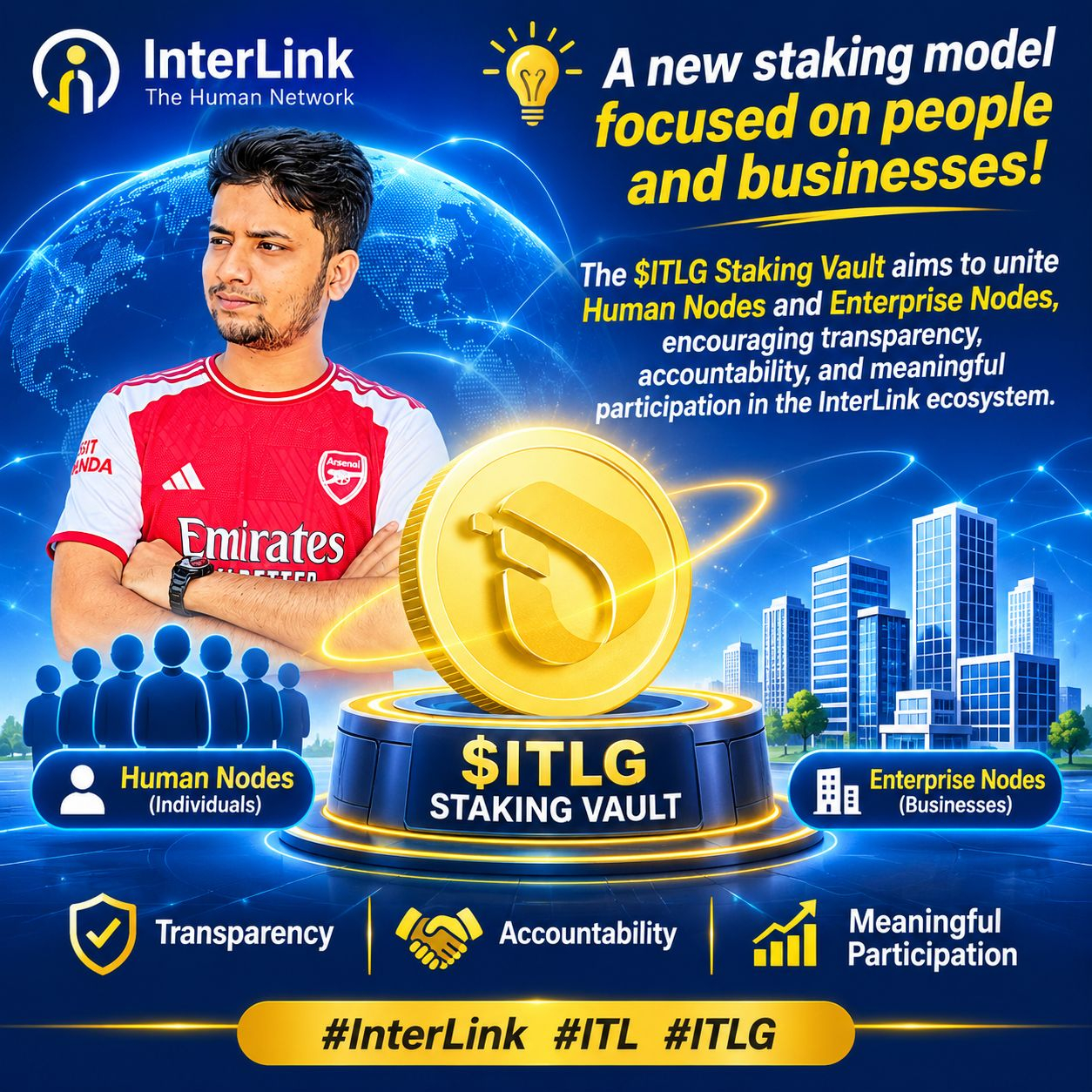
💡 A new staking model focused on people and businesses! The $ITLG Staking Vault aims to unite Human Nodes and Enterprise Nodes, encouraging transparency, accountability, and meaningful participation in the InterLink ecosystem.
#InterLink #ITL #ITLG
💡 A new staking model focused on people and businesses! The $ITLG Staking Vault aims to unite Human Nodes and Enterprise Nodes, encouraging transparency, accountability, and meaningful participation in the InterLink ecosystem.
#InterLink #ITL #ITLG
#InterLink #ITL #ITLG
1
81
·
--
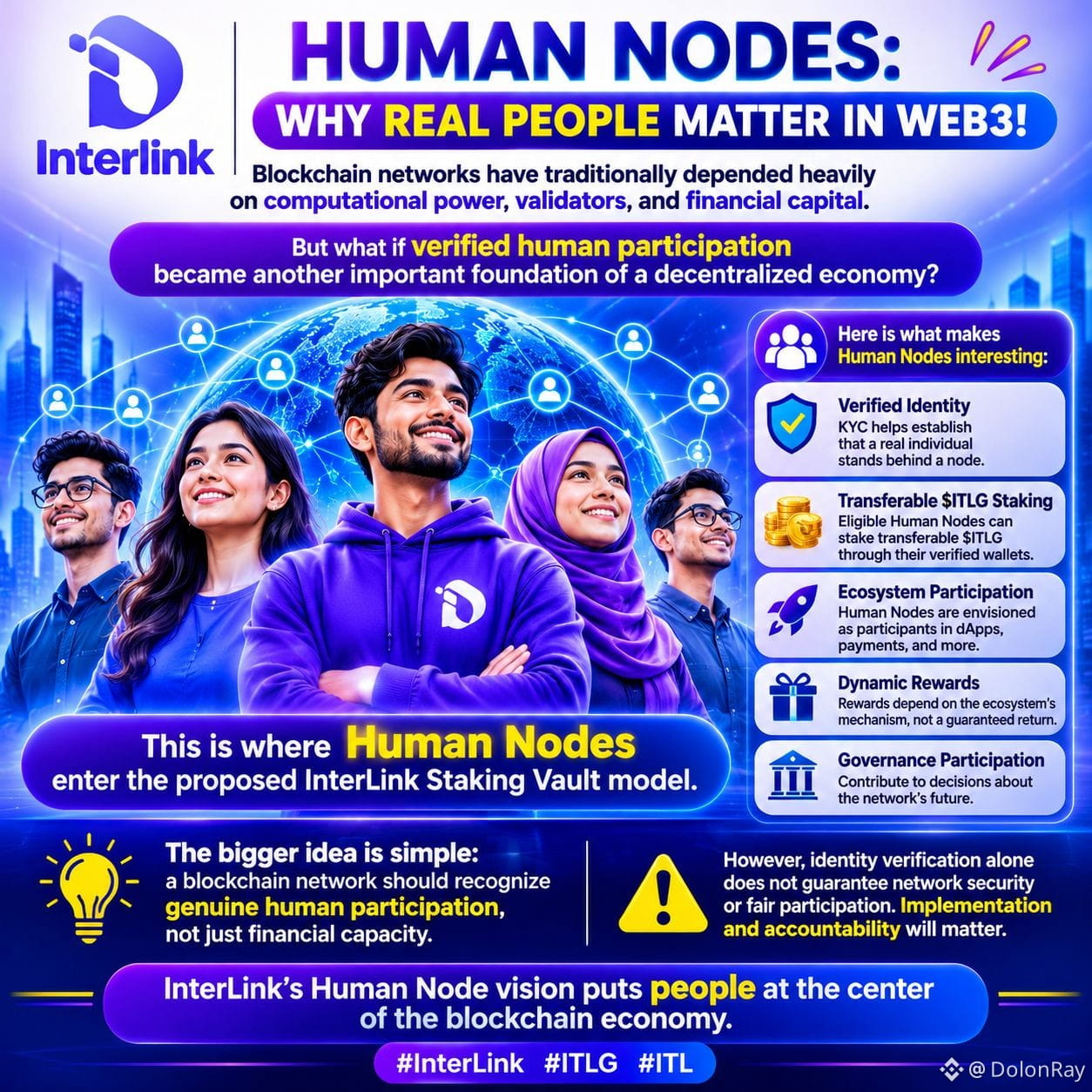
👤 𝗛𝗨𝗠𝗔𝗡 𝗡𝗢𝗗𝗘𝗦: 𝗪𝗛𝗬 𝗥𝗘𝗔𝗟 𝗣𝗘𝗢𝗣𝗟𝗘 𝗠𝗔𝗧𝗧𝗘𝗥 𝗜𝗡 𝗪𝗘𝗕𝟯! 🌐
Blockchain networks have traditionally depended heavily on computational power, validators, and financial capital.
But what if verified human participation became another important foundation of a decentralized economy?
This is where Human Nodes enter the proposed InterLink Staking Vault model.
A Human Node represents an individual Linker who has successfully completed ITLG KYC and participates through a verified wallet.
Here is what makes this concept interesting:
🔹 Verified Identity: KYC helps establish that a real individual stands behind a node.
🔹 Transferable $ITLG Staking: Eligible Human Nodes can stake transferable $ITLG through their verified wallets.
🔹 Ecosystem Participation: Human Nodes are envisioned as participants in dApps, payments, and other InterLink ecosystem activities.
🔹 Dynamic Rewards: Staking rewards are designed to depend on the ecosystem's reward mechanism rather than a guaranteed fixed return.
🔹 Governance Participation: Human Nodes are intended to contribute to decisions about the network's future.
The bigger idea is simple: a blockchain network should recognize genuine human participation, not just financial capacity.
However, identity verification alone does not guarantee network security or fair participation. Implementation and accountability will matter.
InterLink's Human Node vision puts people at the center of the blockchain economy.
#InterLink #ITLG #ITL
43
·
--
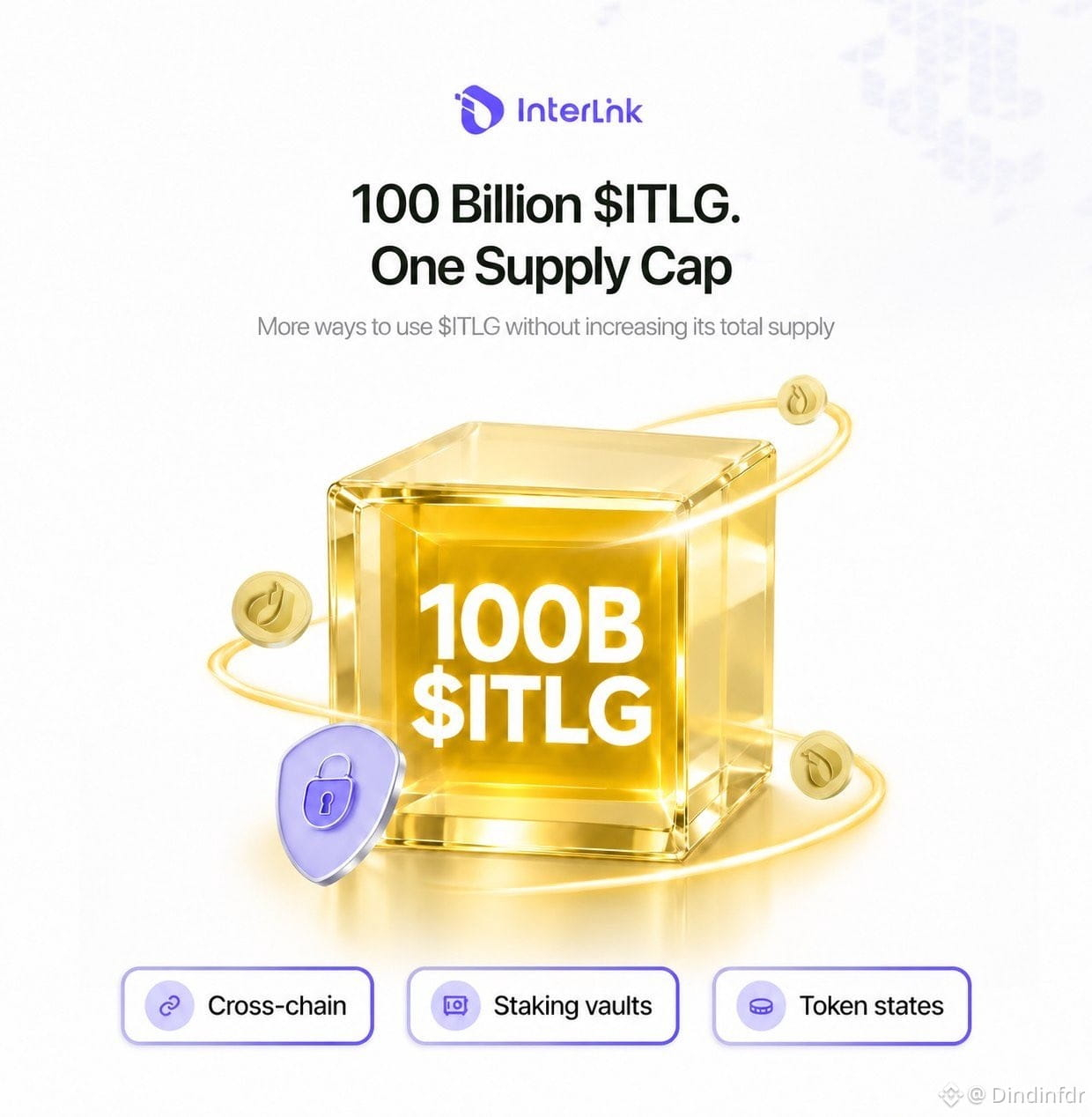
🔒 100 billion $ITLG. That’s the maximum. No more will ever be created
InterLink can never make more than 100 billion $ITLG tokens.
No matter what happens (staking, moving between chains, etc.), the total number stays fixed.
Easy way to understand it:
Think of 100 billion pizza slices.
You can share them, move them, or lock them — but you can never bake more pizza.
Why this is good:
- No secret new tokens
- No extra inflation
- Anyone can check the total on the blockchain
Important note:
100 billion is the *maximum* that can ever exist.
It does *not* mean 100 billion are already circulating today. Most are still locked.
More uses for $ITLG will come, but the total supply will never go up.
#InterLink #ITLG #ITL
1
75

·
--
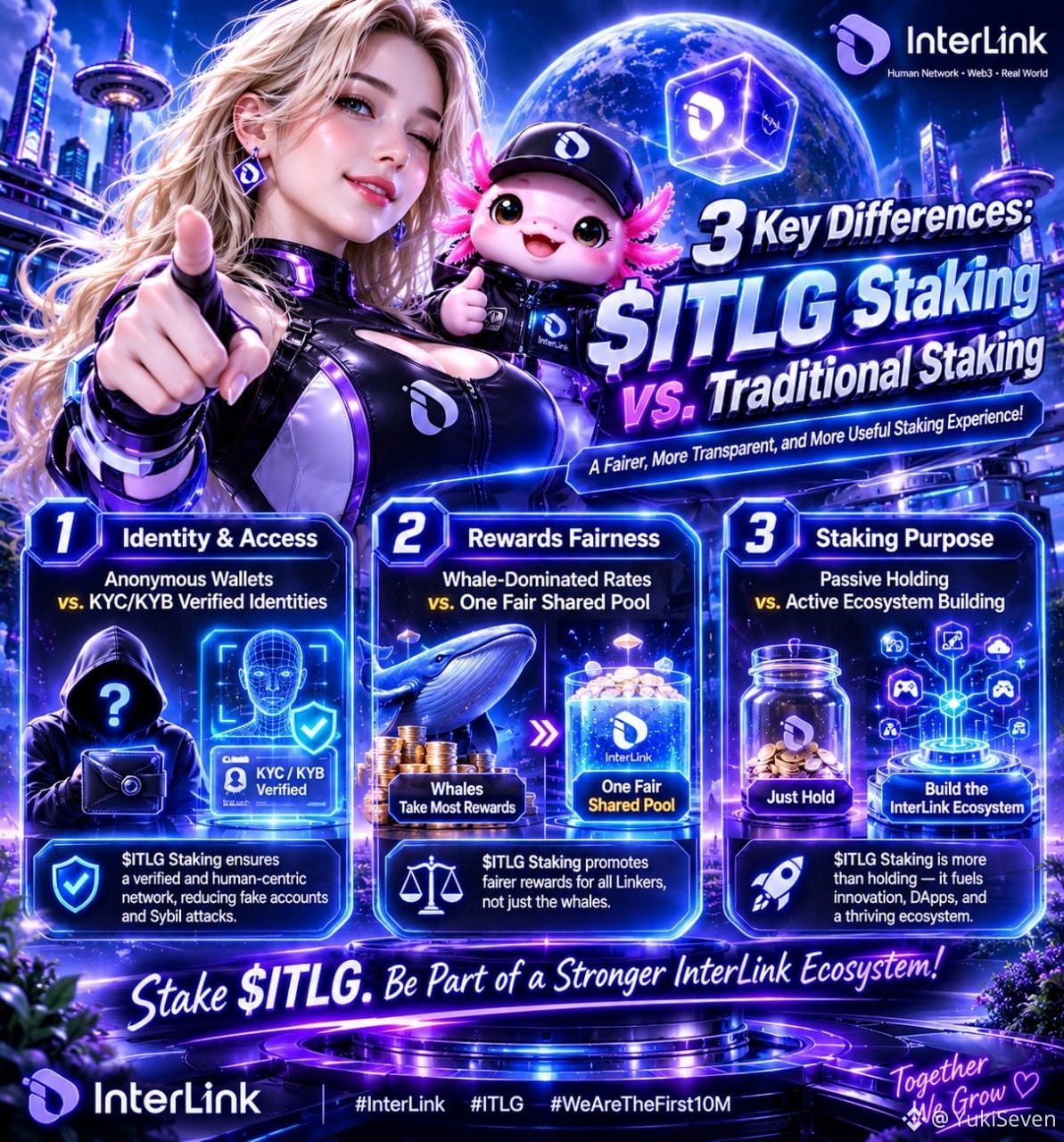
💜 What makes $ITLG Staking different from traditional staking?
🔐 1. Verified Identities
Traditional staking can involve anonymous wallets, while $ITLG highlights KYC/KYB-verified identities.
⚖️ 2. A Shared Pool
Move beyond whale-dominated rates with a model focused on one fair shared pool.
🌱 3. Active Participation
It's more than passively holding tokens. The goal is to support long-term participation and build a stronger InterLink ecosystem.
Three ideas, one vision: a more transparent, accountable, community-focused staking experience. 🚀
#InterLink #ITLG #ITL
35
·
--
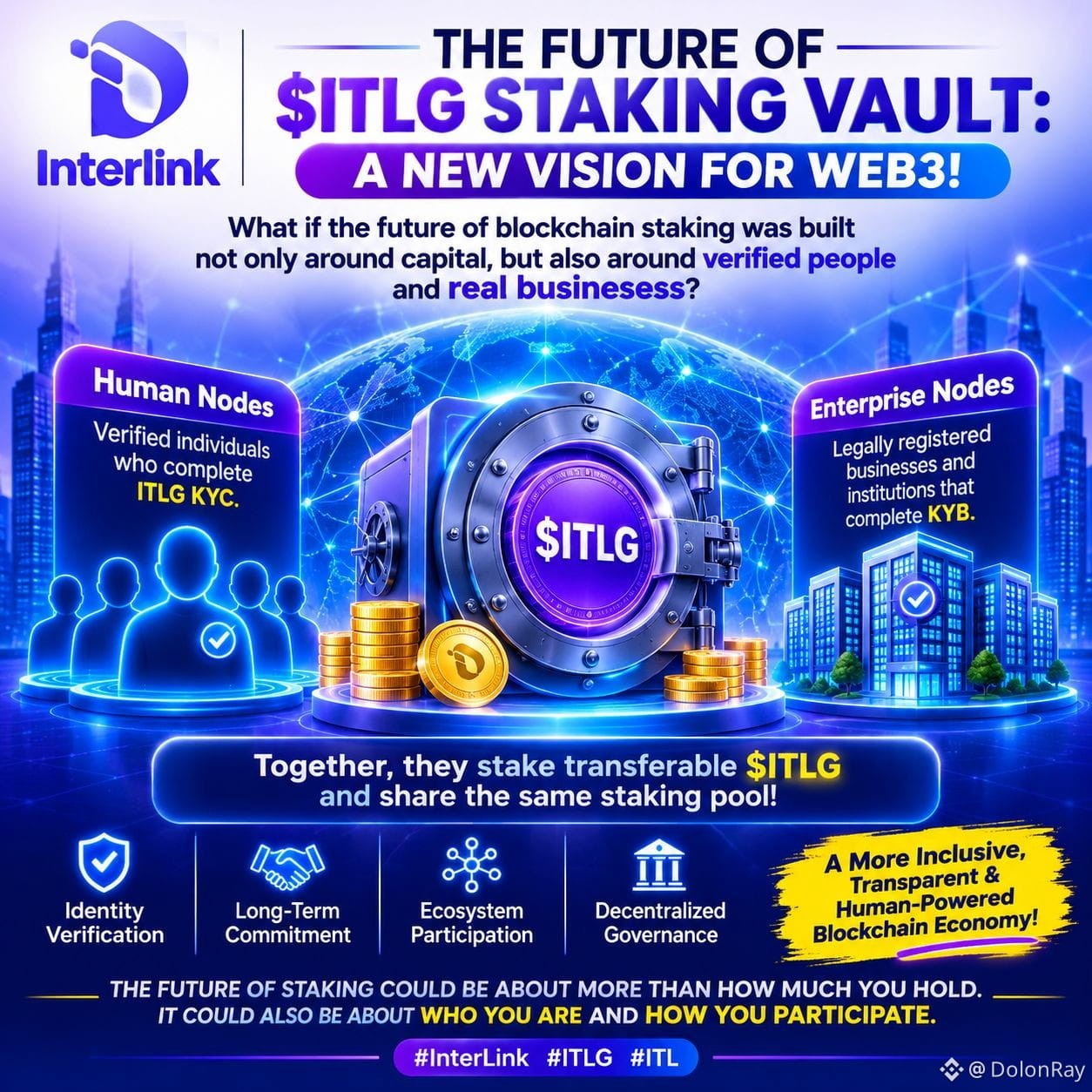
🏦 𝗧𝗛𝗘 𝗙𝗨𝗧𝗨𝗥𝗘 𝗢𝗙 $𝗜𝗧𝗟𝗚 𝗦𝗧𝗔𝗞𝗜𝗡𝗚 𝗩𝗔𝗨𝗟𝗧: 𝗔 𝗡𝗘𝗪 𝗩𝗜𝗦𝗜𝗢𝗡 𝗙𝗢𝗥 𝗪𝗘𝗕𝟯! 🌍
What if the future of blockchain staking was built not only around capital, but also around verified people and real businesses?
That is the vision behind the proposed $ITLG Staking Vault in the InterLink ecosystem.
Traditional staking models often prioritize token holdings and validator infrastructure. InterLink introduces a different approach by bringing two categories of participants into one shared staking economy:
👤 Human Nodes — Verified individuals who complete ITLG KYC.
🏢 Enterprise Nodes — Legally registered businesses and institutions that complete KYB verification.
Both participants are expected to stake transferable $ITLG and share the same staking pool, without a separate institutional reward rate.
The bigger vision goes beyond earning rewards. It connects identity verification, long-term commitment, ecosystem participation, and decentralized governance.
Imagine a blockchain economy where individuals and businesses can contribute together under a transparent framework.
This is an ambitious direction for human-powered Web3.
The real success will depend on implementation, security, participation, and sustainable reward mechanisms.
The future of staking could be about more than how much you hold. It could also be about who you are and how you participate.
#InterLink #ITLG #ITL
62

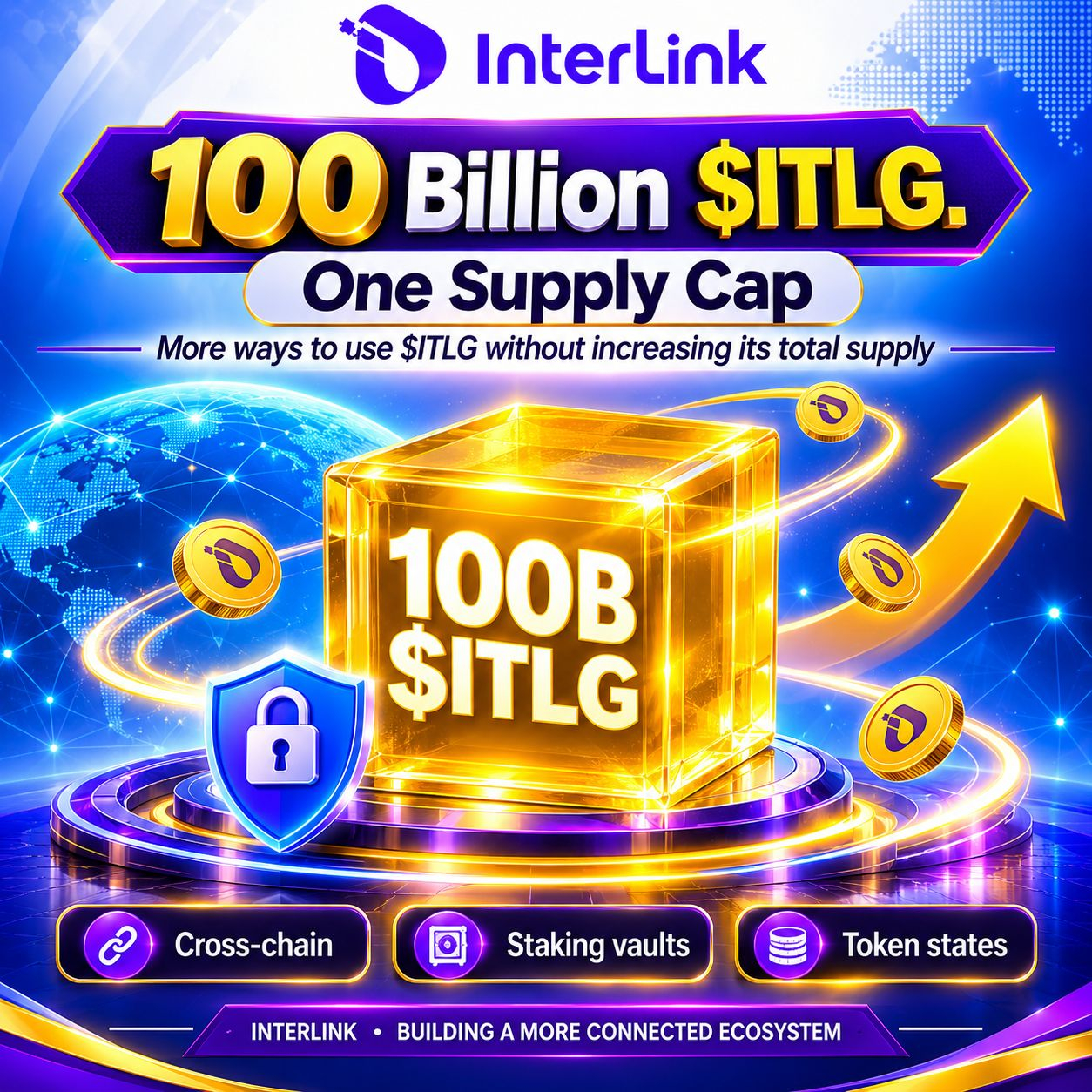
💜 100 Billion $ITLG. One Supply Cap. 💛
A strong ecosystem doesn't need unlimited supply — it needs more utility.
InterLink aims to expand the ways $ITLG can be used through Cross-chain integration, Staking Vaults, and Token States — without increasing its total supply.
One supply. More possibilities. A stronger ecosystem. 🚀
#InterLink #ITLG #ITL
75
·
--
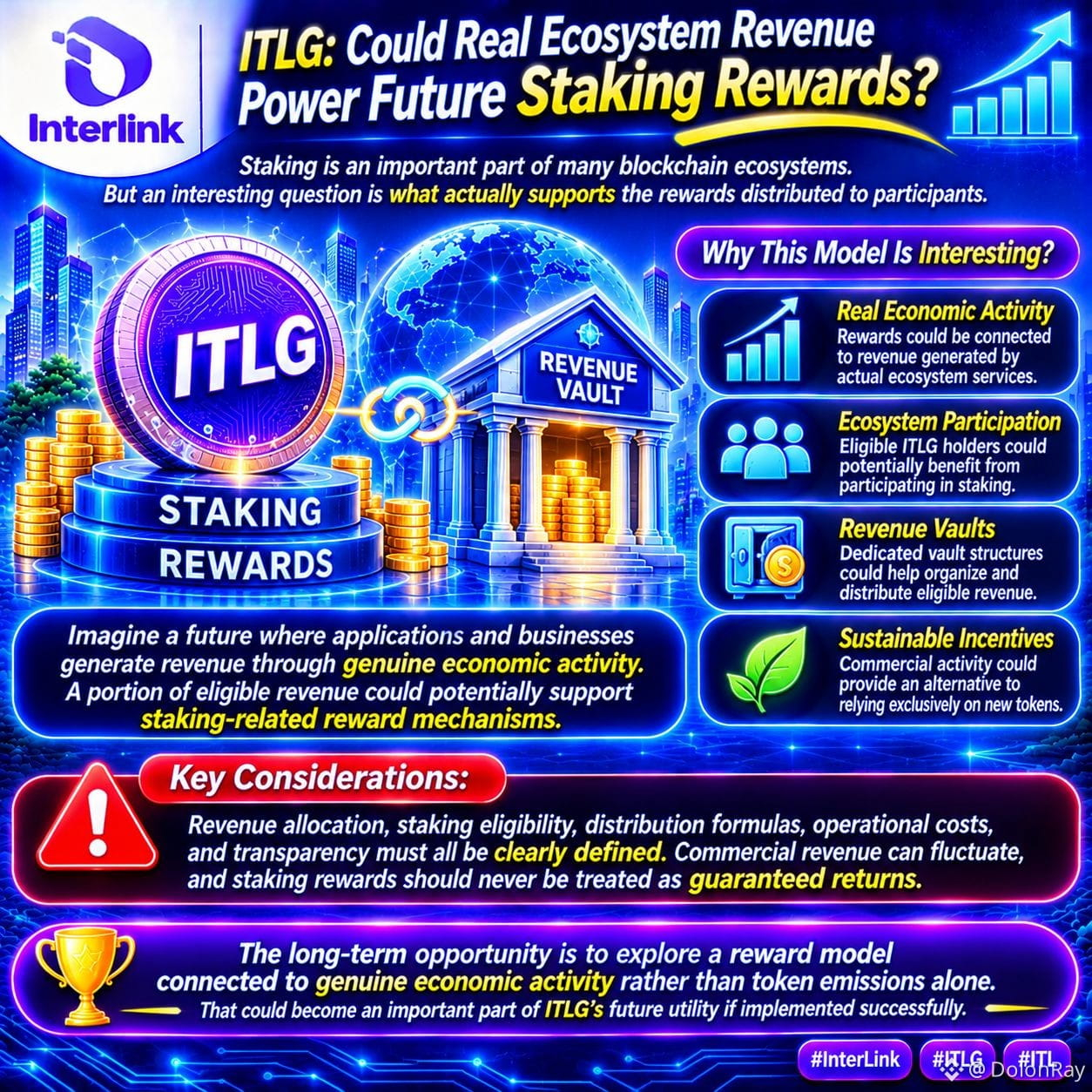
💰 𝗜𝗧𝗟𝗚: 𝗖𝗼𝘂𝗹𝗱 𝗥𝗲𝗮𝗹 𝗘𝗰𝗼𝘀𝘆𝘀𝘁𝗲𝗺 𝗥𝗲𝘃𝗲𝗻𝘂𝗲 𝗣𝗼𝘄𝗲𝗿 𝗙𝘂𝘁𝘂𝗿𝗲 𝗦𝘁𝗮𝗸𝗶𝗻𝗴 𝗥𝗲𝘄𝗮𝗿𝗱𝘀? 📈
Staking is an important part of many blockchain ecosystems.
But an interesting question is what actually supports the rewards distributed to participants.
Within the InterLink vision, dedicated revenue vaults could potentially connect ecosystem-generated commercial revenue with eligible ITLG stakers.
Imagine a future where applications and businesses generate revenue through genuine economic activity.
A portion of eligible revenue could potentially support staking-related reward mechanisms.
Why is this model interesting?
🔹 Real Economic Activity: Rewards could be connected to revenue generated by actual ecosystem services.
🔹 Ecosystem Participation: Eligible ITLG holders could potentially benefit from participating in supported staking mechanisms.
🔹 Revenue Vaults: Dedicated vault structures could help organize and distribute eligible revenue.
🔹 Sustainable Incentives: Commercial activity could provide an alternative to relying exclusively on newly issued tokens.
However, the details matter.
Revenue allocation, staking eligibility, distribution formulas, operational costs, and transparency must all be clearly defined.
Commercial revenue can fluctuate, and staking rewards should never be treated as guaranteed returns.
The long-term opportunity is to explore a reward model connected to genuine economic activity rather than token emissions alone.
That could become an important part of ITLG's future utility if implemented successfully.
#InterLink #ITLG #ITL
76

·
--
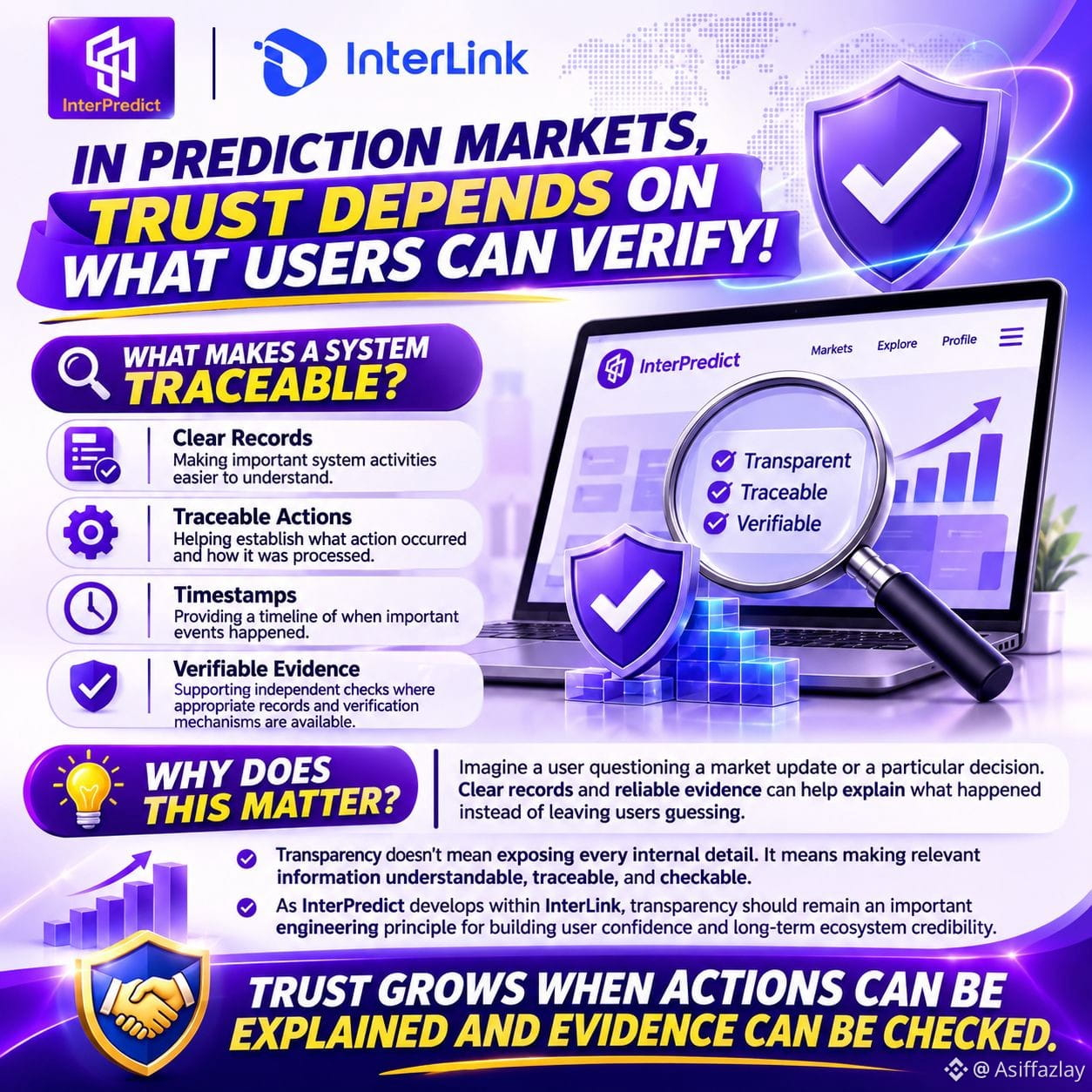
𝗜𝗡 𝗣𝗥𝗘𝗗𝗜𝗖𝗧𝗜𝗢𝗡 𝗠𝗔𝗥𝗞𝗘𝗧𝗦, 𝗧𝗥𝗨𝗦𝗧 𝗗𝗘𝗣𝗘𝗡𝗗𝗦 𝗢𝗡 𝗪𝗛𝗔𝗧 𝗨𝗦𝗘𝗥𝗦 𝗖𝗔𝗡 𝗩𝗘𝗥𝗜𝗙𝗬!
For @InterPredict, transparency should be more than a communication promise. It should be considered from the ground up when designing a prediction-market platform within the @inter_link ecosystem.
🔍 𝗪𝗛𝗔𝗧 𝗠𝗔𝗞𝗘𝗦 𝗔 𝗦𝗬𝗦𝗧𝗘𝗠 𝗧𝗥𝗔𝗖𝗘𝗔𝗕𝗟𝗘?
🔹 Clear Records: Making important system activities easier to understand.
🔹 Traceable Actions: Helping establish what action occurred and how it was processed.
🔹 Timestamps: Providing a timeline of when important events happened.
🔹 Verifiable Evidence: Supporting independent checks where appropriate records and verification mechanisms are available.
💡 𝗪𝗛𝗬 𝗗𝗢𝗘𝗦 𝗧𝗛𝗜𝗦 𝗠𝗔𝗧𝗧𝗘𝗥?
Imagine a user questioning a market update or a particular decision. Clear records and reliable evidence can help explain what happened instead of leaving users guessing.
Transparency doesn't mean exposing every internal detail. It means making relevant information understandable, traceable, and checkable.
As InterPredict develops within InterLink, transparency should remain an important engineering principle for building user confidence and long-term ecosystem credibility.
𝗧𝗥𝗨𝗦𝗧 𝗚𝗥𝗢𝗪𝗦 𝗪𝗛𝗘𝗡 𝗔𝗖𝗧𝗜𝗢𝗡𝗦 𝗖𝗔𝗡 𝗕𝗘 𝗘𝗫𝗣𝗟𝗔𝗜𝗡𝗘𝗗 𝗔𝗡𝗗 𝗘𝗩𝗜𝗗𝗘𝗡𝗖𝗘 𝗖𝗔𝗡 𝗕𝗘 𝗖𝗛𝗘𝗖𝗞𝗘𝗗. 💜
#InterLink #ITL #ITLG
69
·
--
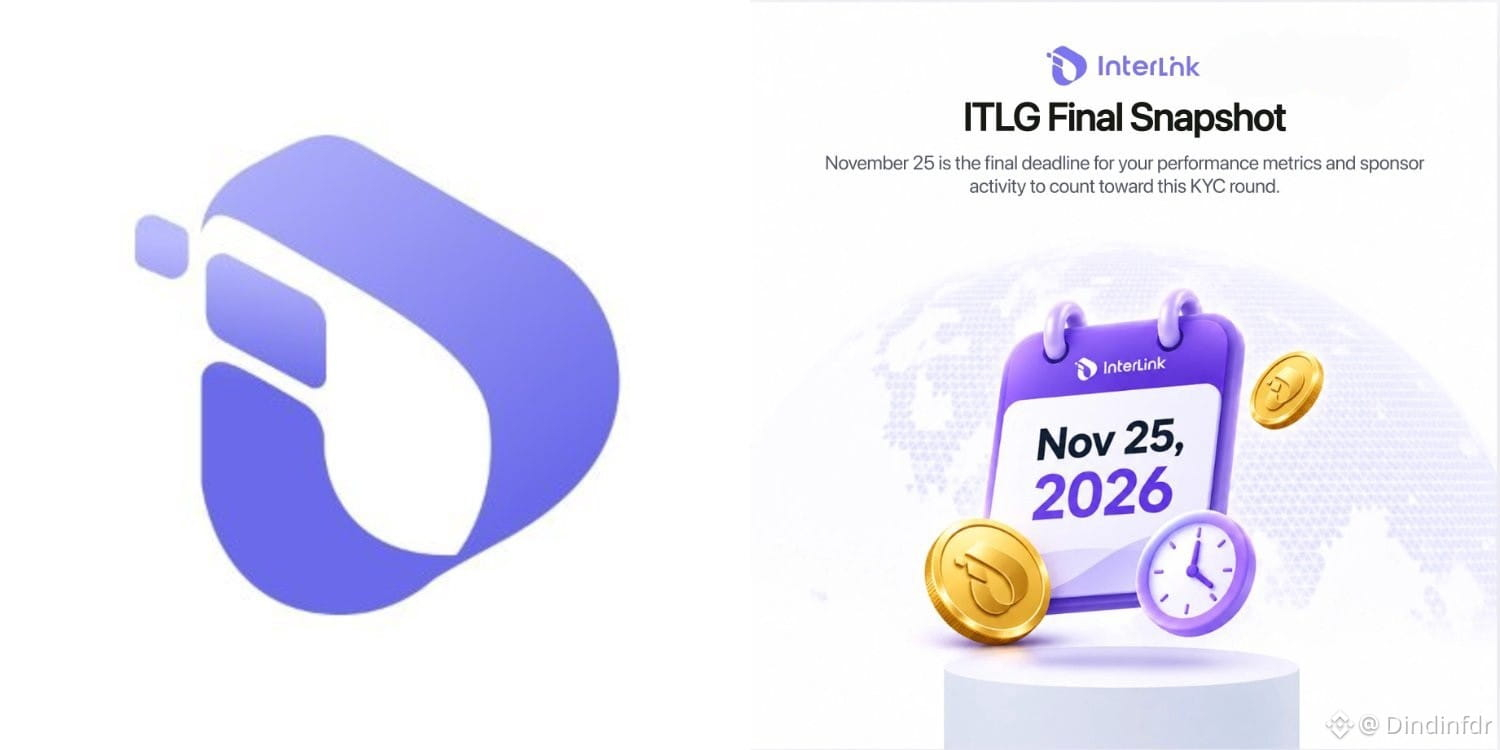
📢 InterLink sets the final deadline for $ITLG rewards.
InterLink announced that **November 25, 2026** is the last day to record activity and referral scores for the current $ITLG rewards.
This will lock the scores for everyone who has already completed Level 1 KYC.
If you don’t meet the requirements by that date, you can’t update your score for this round. You’ll have to wait for the next verification period (date not announced yet)
#InterLink #ITLG #ITL
1
11
·
--
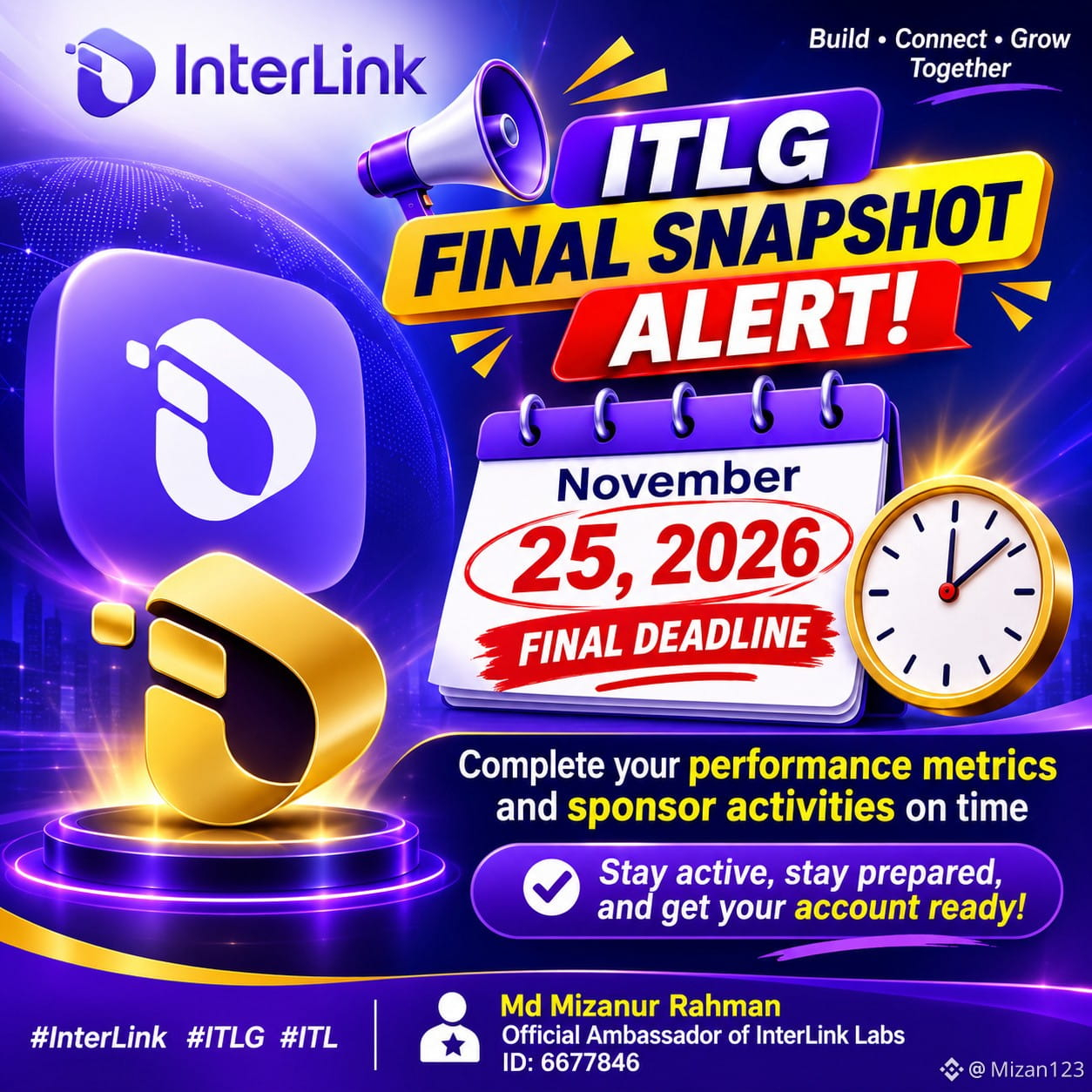
🚨 ITLG FINAL SNAPSHOT ALERT! 🔔
November 25, 2026, is the final deadline for the ITLG Final Snapshot. Complete your performance metrics and sponsor activities on time. Stay active, stay prepared, and get your account ready!
#InterLink #ITLG #ITL
🚨 ITLG FINAL SNAPSHOT ALERT! 🔔
November 25, 2026, is the final deadline for the ITLG Final Snapshot. Complete your performance metrics and sponsor activities on time. Stay active, stay prepared, and get your account ready!
#InterLink #ITLG #ITL
November 25, 2026, is the final deadline for the ITLG Final Snapshot. Complete your performance metrics and sponsor activities on time. Stay active, stay prepared, and get your account ready!
#InterLink #ITLG #ITL
3
·
--
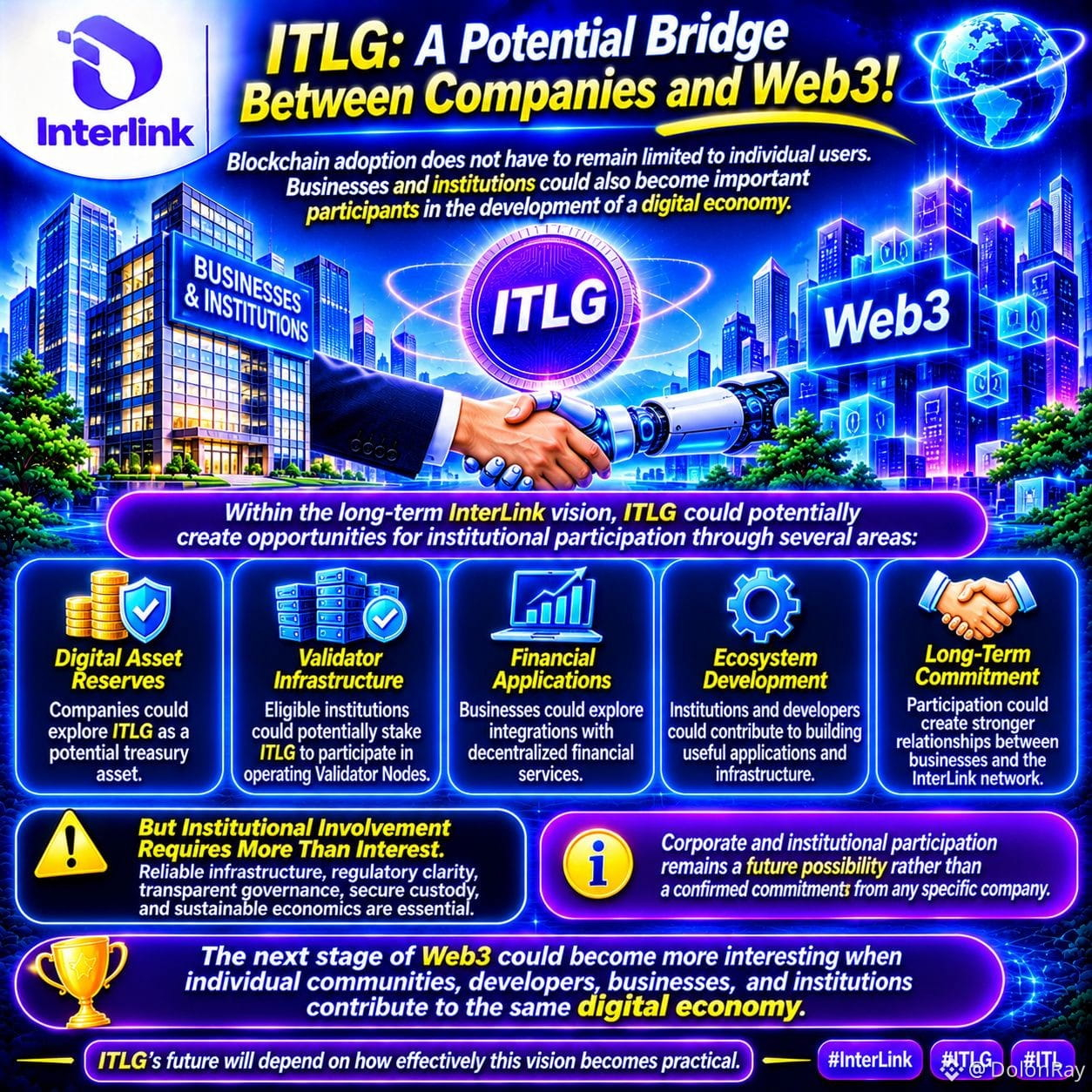
🏢 𝗜𝗧𝗟𝗚: 𝗔 𝗣𝗼𝘁𝗲𝗻𝘁𝗶𝗮𝗹 𝗕𝗿𝗶𝗱𝗴𝗲 𝗕𝗲𝘁𝘄𝗲𝗲𝗻 𝗖𝗼𝗺𝗽𝗮𝗻𝗶𝗲𝘀 𝗔𝗻𝗱 𝗪𝗲𝗯𝟯! 🌐
Blockchain adoption does not have to remain limited to individual users.
Businesses and institutions could also become important participants in the development of a digital economy.
Within the long-term InterLink vision, ITLG could potentially create opportunities for institutional participation through several different areas.
🔹 Digital Asset Reserves: Companies could explore ITLG as a potential treasury asset.
🔹 Validator Infrastructure: Eligible institutions could potentially stake ITLG to participate in operating Validator Nodes.
🔹 Financial Applications: Businesses could explore integrations with decentralized financial services.
🔹 Ecosystem Development: Institutions and developers could contribute to building useful applications and infrastructure.
🔹 Long-Term Commitment: Participation could create stronger relationships between businesses and the InterLink network.
But institutional involvement requires more than interest.
Reliable infrastructure, regulatory clarity, transparent governance, secure custody, and sustainable economics are essential.
Corporate and institutional participation remains a future possibility rather than a confirmed commitment from any specific company.
The next stage of Web3 could become more interesting when individual communities, developers, businesses, and institutions contribute to the same digital economy.
ITLG's future will depend on how effectively this vision becomes practical.
#InterLink #ITLG #ITL
60
·
--
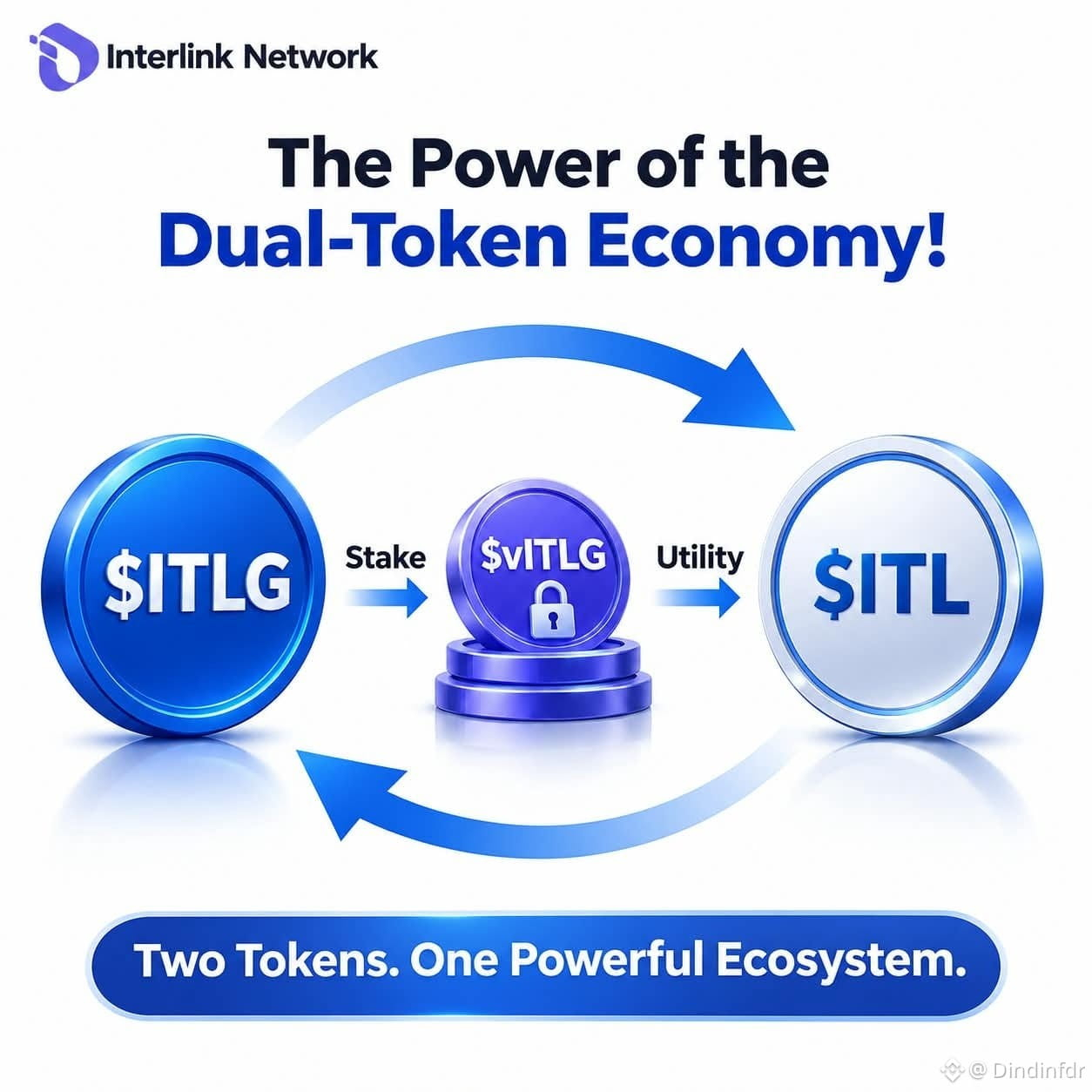
🔥 The Dual-Token Engine is PURE FIRE
Rising demand for $ITL fuels real ecosystem growth
→ More $ITLG gets staked & locked into non-transferable $vITLG
→ Circulating supply of $ITLG shrinks
→ Scarcity + demand = stronger $ITLG value
And here’s the beautiful part:
The same conversion mechanism also boosts $ITL utility & demand.
Two tokens.
One unstoppable flywheel.
A self-reinforcing economic cycle built for the long game.
This is how you design sustainable tokenomics.
#Interlink #ITLG #ITL
1
108
·
--
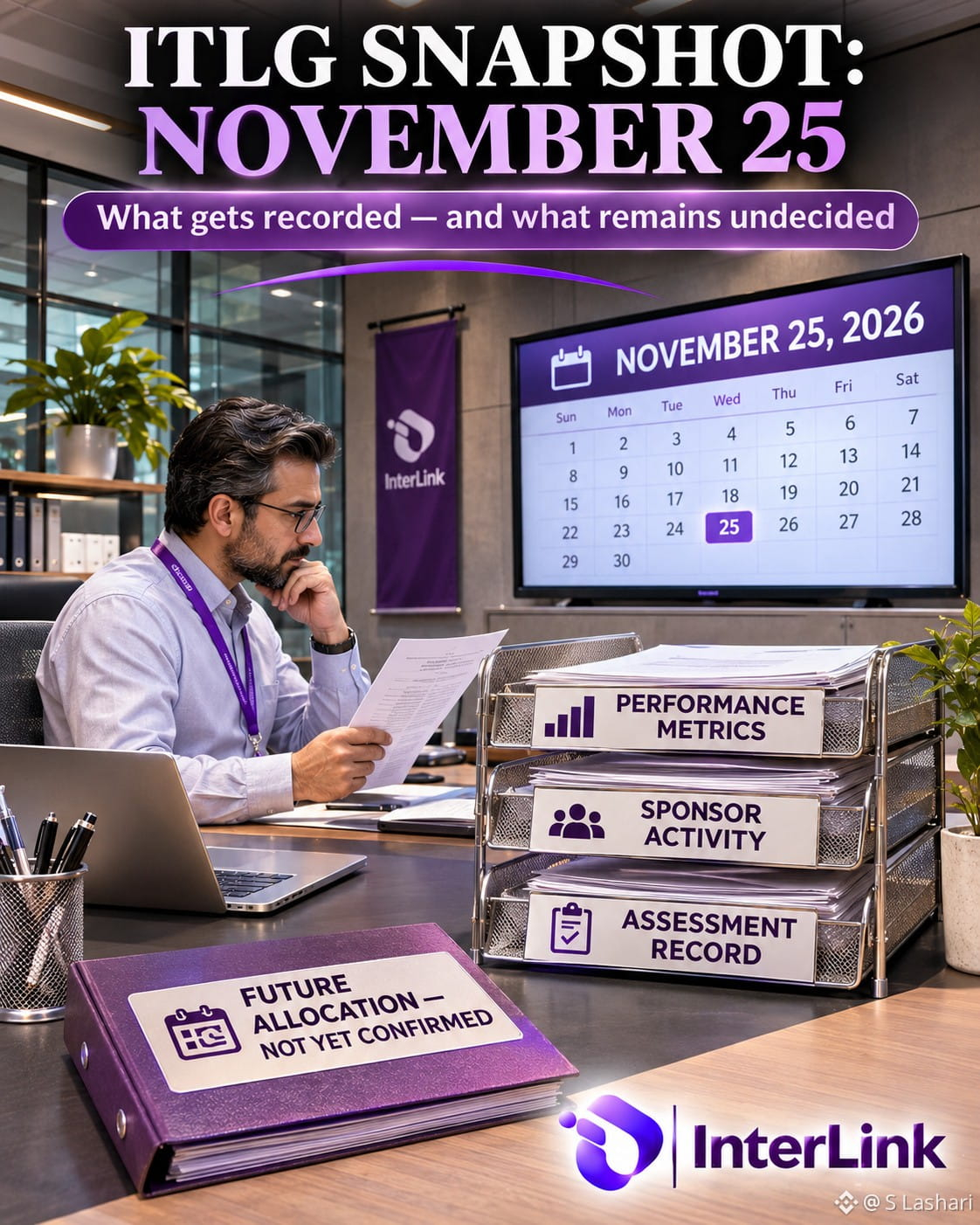
𝗜𝗧𝗟𝗚 𝗡𝗢𝗩𝗘𝗠𝗕𝗘𝗥 𝟮𝟱 𝗦𝗡𝗔𝗣𝗦𝗛𝗢𝗧: 𝗪𝗛𝗔𝗧 𝗔𝗖𝗧𝗨𝗔𝗟𝗟𝗬 𝗚𝗘𝗧𝗦 𝗟𝗢𝗖𝗞𝗘𝗗?
InterLink has announced November 25, 2026, as the final snapshot date for Level 1 users' performance metrics and sponsor activity in the current assessment round.
But a snapshot is not the same as a token distribution.
𝗪𝗵𝗮𝘁 𝗺𝗮𝘁𝘁𝗲𝗿𝘀?
🔹 𝗔𝗰𝘁𝗶𝘃𝗶𝘁𝘆 𝗿𝗲𝗰𝗼𝗿𝗱𝘀: Relevant performance metrics are assessed at the announced cutoff.
🔹 𝗦𝗽𝗼𝗻𝘀𝗼𝗿 𝗮𝗰𝘁𝗶𝘃𝗶𝘁𝘆: Sponsorship records form part of the current-round snapshot.
🔹 𝗞𝗬𝗖 𝘀𝘁𝗮𝘁𝘂𝘀: Under-18 verification access is being introduced in batches, while adult verification is moving toward automated AI processing.
🔹 𝗙𝘂𝘁𝘂𝗿𝗲 𝗮𝗹𝗹𝗼𝗰𝗮𝘁𝗶𝗼𝗻: A recorded snapshot does not independently confirm a final transferable ITLG amount, migration date or market value.
𝗪𝗵𝘆 𝗶𝘀 𝘁𝗵𝗶𝘀 𝗱𝗶𝘀𝘁𝗶𝗻𝗰𝘁𝗶𝗼𝗻 𝗶𝗺𝗽𝗼𝗿𝘁𝗮𝗻𝘁?
In blockchain ecosystems, eligibility assessment, token allocation and on-chain transferability can be separate stages.
Users should rely on official instructions rather than assuming the November 25 snapshot means immediate token release.
𝗞𝗲𝘆 𝘁𝗮𝗸𝗲𝗮𝘄𝗮𝘆: 𝗔 𝘀𝗻𝗮𝗽𝘀𝗵𝗼𝘁 𝗿𝗲𝗰𝗼𝗿𝗱𝘀 𝗱𝗮𝘁𝗮. 𝗜𝘁 𝗱𝗼𝗲𝘀 𝗻𝗼𝘁 𝗴𝘂𝗮𝗿𝗮𝗻𝘁𝗲𝗲 𝗮 𝗽𝗮𝘆𝗼𝘂𝘁.
𝗗𝗶𝘀𝗰𝗹𝗮𝗶𝗺𝗲𝗿: Educational purposes only. Not financial advice. DYOR.
#InterLink #ITLG #ITL #KYCVerification
93
·
--
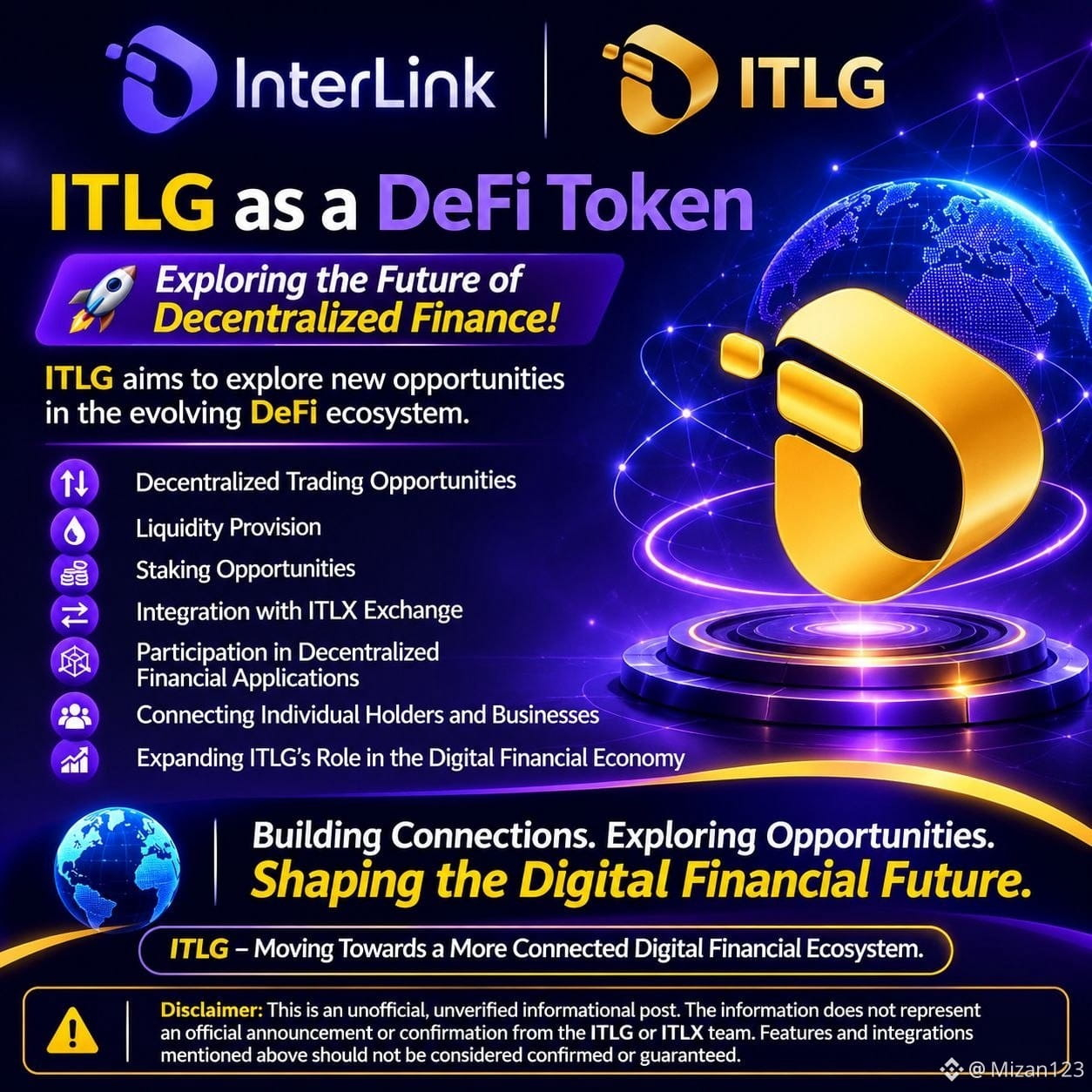
🌐 ITLG as a DeFi Token! 🚀
🔹 Decentralized trading & liquidity pools
🔹 Staking & DeFi app integration
🔹 Seamless ITLX Exchange connectivity
🔹 Connecting holders & businesses
Shaping the Digital Financial Future! 🌍
#InterLink #ITLG #ITL
🌐 ITLG as a DeFi Token! 🚀
🔹 Decentralized trading & liquidity pools
🔹 Staking & DeFi app integration
🔹 Seamless ITLX Exchange connectivity
🔹 Connecting holders & businesses
Shaping the Digital Financial Future! 🌍
#InterLink #ITLG #ITL
🔹 Decentralized trading & liquidity pools
🔹 Staking & DeFi app integration
🔹 Seamless ITLX Exchange connectivity
🔹 Connecting holders & businesses
Shaping the Digital Financial Future! 🌍
#InterLink #ITLG #ITL
1
62
Log in to explore more content
Join global crypto users on Binance Square
⚡️ Get latest and useful information about crypto.
💬 Trusted by the world’s largest crypto exchange.
👍 Discover real insights from verified creators.
Email / Phone number
Trending Topics
1
#NvidiaBeatsEstimatesWith$130BQ4Outlook
17,261 views
197 Discussing
2
#AnthropicIPOPriceCouldExceed$80
22,019 views
169 Discussing
3
#RussiaCentralBankAddsAlfaBankToCryptoExchangeRegister
0 views
5 Discussing
4
#RussianCentralBankPlansToAllowFundsToHoldCryptoIn2027
0 views
2 Discussing
5
#VisaPlansStablecoinPrefundingForAPACCrossBorderPayments
0 views
3 Discussing
6
#CanNvidia’sDataCenterGrowthContinue?
65,350 views
889 Discussing
7
#CanadaAndUSLaunchOperationNiagaraAgainstApprovalPhishing
5,807 views
46 Discussing
8
#BankOfEnglandUnveilsClearingHousePathwayCoveringDLTFirms
2,628 views
54 Discussing
9
#DBSAndCirclePartnerToExpandAsianInstitutionsUSDCAccess
3,856 views
60 Discussing
10
#LedgerHardwareImplantReportsExtendToDubai
31,123 views
412 Discussing