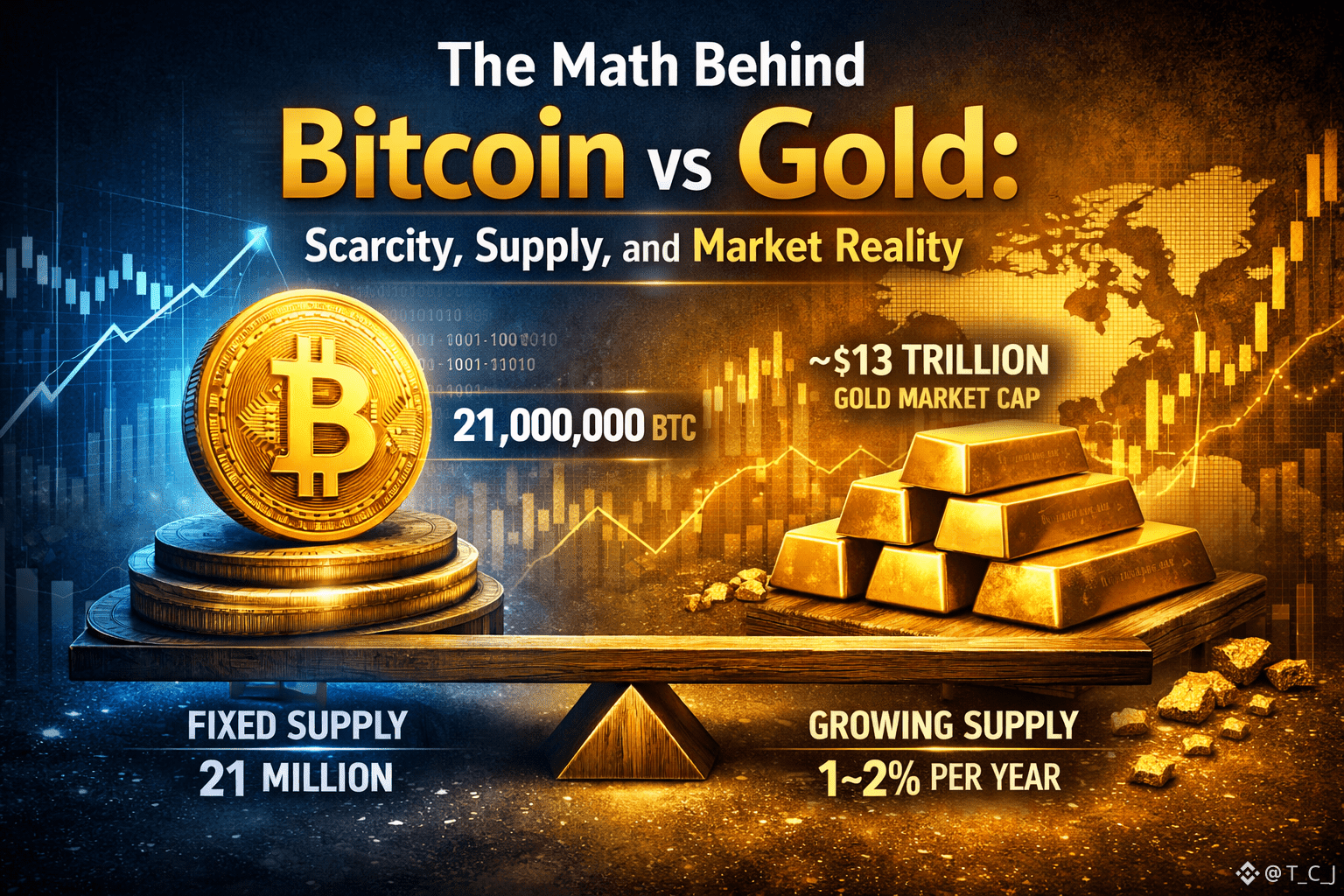
For decades, gold has been the default hedge against inflation and monetary debasement. But according to Cathie Wood, that narrative is quietly changing—and the math behind it is hard to ignore.
Scarcity: The Core of the Argument
Gold is scarce, but it isn’t fixed.
New gold supply increases every year through mining
Total gold supply grows at roughly 1–2% annually
Future discoveries and improved extraction can expand supply
Now compare that with Bitcoin:
Maximum supply is hard-capped at 21 million
Issuance is transparent and programmatic
Supply growth trends toward zero over time
From a pure scarcity perspective, Bitcoin operates with rules that gold simply doesn’t have.
The Market Cap Math
Cathie Wood often frames Bitcoin through comparative valuation:
Estimated gold market cap: ~$13 trillion
Bitcoin market cap (varies with price): significantly lower
If Bitcoin captures even a portion of gold’s store-of-value role, the upside is mathematical, not speculative
This isn’t about Bitcoin “replacing” gold overnight—it’s about capital rotation over time.
Why Institutions Are Paying Attention
Institutional investors care about three things:
Liquidity
Scarcity
Portability
Bitcoin offers:
Instant global settlement
Verifiable ownership
No reliance on physical storage or borders
That combination is why Bitcoin is increasingly viewed as digital gold, not just a risk asset.
Risks Still Matter
This shift isn’t guaranteed.
Bitcoin remains volatile
Regulatory environments can change
Short-term price action is sentiment-driven
Gold still plays a role, especially in conservative portfolios. The transition, if it continues, will likely be gradual—not explosive.
Final Thought
Gold had thousands of years to establish trust. Bitcoin is attempting to compress that process into decades using math, code, and transparency. Markets don’t move on narratives alone—they move when numbers start to make sense.
#Bitcoin #CryptoMarket #DigitalGold #MarketAnalysis #StoreOfValue #InstitutionalAdoption