The Federal Reserve isn’t slamming the brakes anymore, but it’s not stepping hard on the gas either.
By pointing to just one rate cut in 2026, the Fed is basically saying:
“Things are okay for now — but we’re not fully relaxed.”
That sets up a year where policy can quietly support risk assets… or accidentally reveal the weak spots hiding under this AI-driven expansion.
Market Snapshot — Stable, But Nervous
Fed funds rate is sitting around 3.5%–3.75%
2026 baseline: about 2.3% GDP growth, 2.5% core PCE, 4.4% unemployment
Street targets for the S&P 500: roughly 7,300–8,300, with earnings expected to grow in the mid-teens
FOMC meetings are already showing visible disagreement on the pace of cuts
So on paper, it looks like a “soft landing” story.
But under the surface, the message is more cautious: growth is holding, yet nobody feels fully comfortable betting on a straight-line bull market.
What’s Driving the Fed’s Tone?
Two-sided risk management
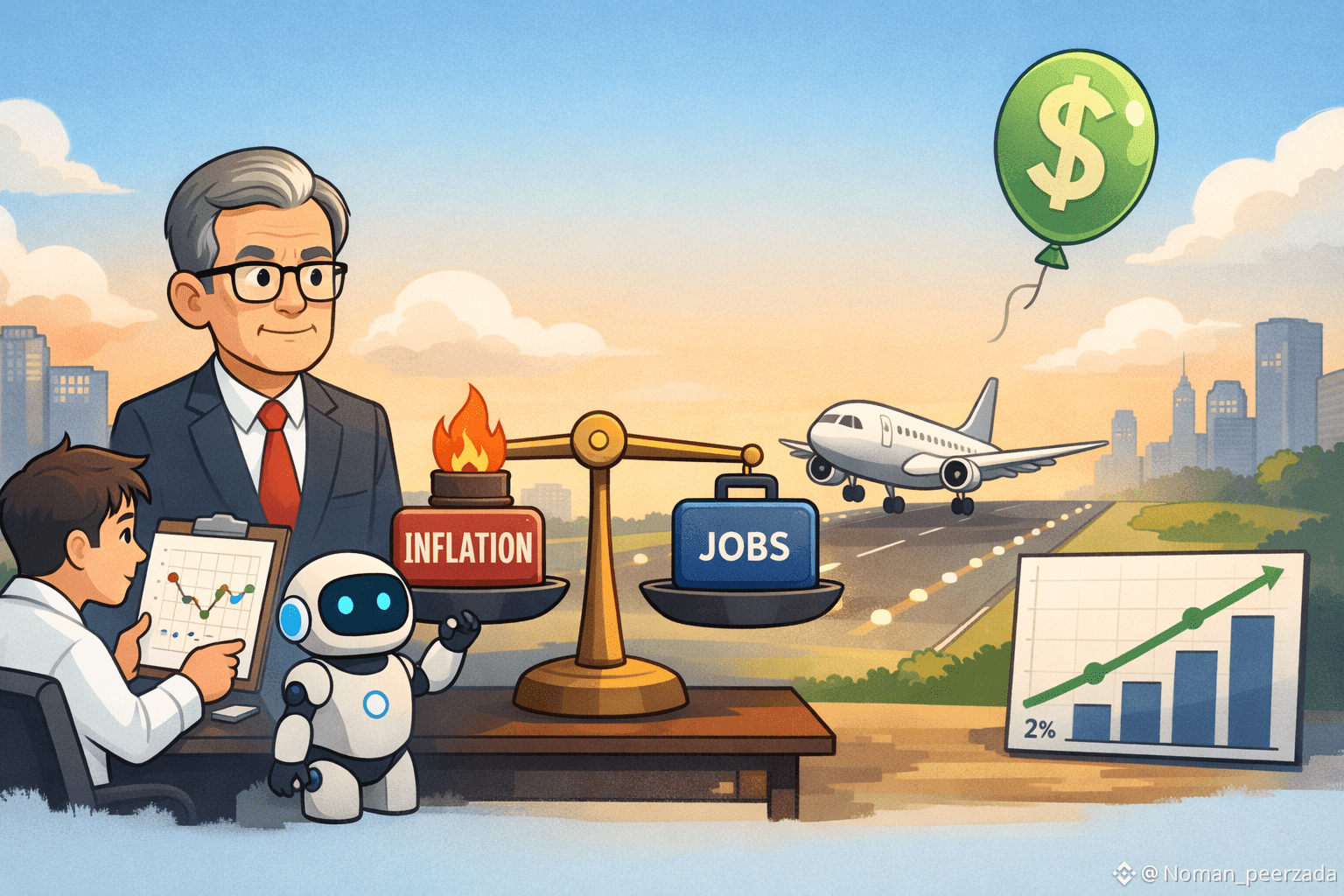
The Fed is no longer obsessed with just killing inflation. It’s juggling both sides:
inflation that still hasn’t fully cooled, and a labor market that’s losing a bit of momentum.
That balance is why they’re moving slowly instead of front-loading cuts.
AI productivity vs. jobs
The AI wave is helping earnings, margins, and productivity — that’s good for stocks.
But it also raises questions about how many jobs get reshaped or replaced in the process.
That tension keeps the Fed cautious: supportive, but not blindly dovish.
Fiscal cushions
Bigger tax refunds and targeted fiscal measures can give households a short-term boost.
At the same time, tariffs and policy noise chip away at confidence.
So you get growth that looks “good enough,” but not bulletproof.
Powell’s term ending in 2026
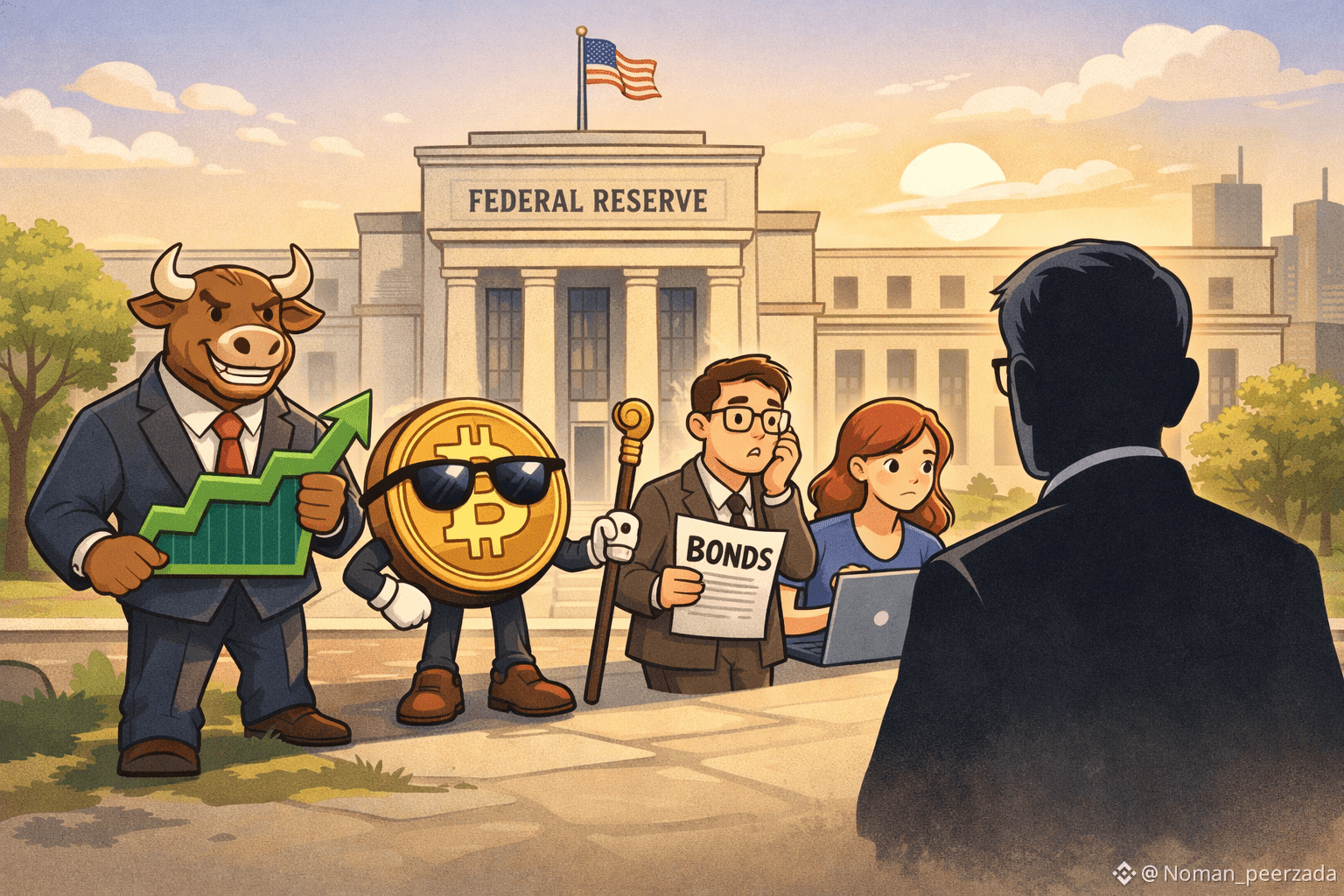
With Powell’s term set to expire, markets know the tone at the top could change — even if the policy path doesn’t flip overnight.
Any hint of a different framework or communication style can move yields, the dollar, and risk appetite quickly.
Pull it all together and you get an economy that looks resilient, but very dependent on how the next few policy decisions land.
Dollar & Bonds — Quiet Shifts to Watch
The dollar (DXY) is no longer riding the same rate advantage it had in the hiking cycle. A drift toward the mid-90s wouldn’t be surprising, and that naturally makes non-U.S. assets more attractive on a relative basis.
On the bond side, the 10-year Treasury hanging somewhere in the 3.75%–4.75% range is a reasonable base case. If growth and fiscal expansion stay firm, yields can lean to the higher end of that band for longer than people like.
A softer dollar plus reasonably contained yields can be a good mix for global risk assets — but the backdrop is still noisy enough that nobody can ignore fiscal risk or policy surprises.
Positioning: Participate — But Stay Disciplined
🔹 Equities: Lean toward U.S. large caps that are plugged into AI, cloud, and communication services — places where earnings are actually being revised higher, not just hyped.
🔹 Bonds: Intermediate maturities make sense if you expect yields to drift down slowly. Holding too much cash starts to lose its appeal once rate cuts are mostly behind you.
🔹 Risk: Don’t anchor your whole view on one Fed dot plot. Keep some currency diversification, and pay attention to any hint of a shift once Powell’s successor conversation heats up.
The idea isn’t to go all-in. It’s to be selective, build around real earnings strength, and avoid being forced into reactive decisions.
Bottom Line
We’re leaving the phase where **“more cuts” automatically meant “more upside.”
Now, the edge goes to traders and investors who adjust quicker than the policy narrative.
If AI-led productivity really keeps inflation under control, 2026 can still reward risk.
If not, every small policy misstep will echo through rates, FX, and equities much faster than people expect.
Stay flexible, respect the data, and treat the Fed’s caution as a signal — not a safety net.