I want to start with something personal honestly.....
A few weeks ago I was going through my old crypto wallet activity. Just scrolling through transactions, remembering things. And I came across some data contribution activity from a project I spent real time on about two years back. Hours of work. Careful submissions. Genuine effort.
The project is still running. The model they built is still being used. Generating revenue somewhere.
I got nothing after the initial reward period ended. No ongoing connection. No attribution. Nothing.
I sat with that feeling for a while.....
And it is not bitterness exactly. More like a quiet frustration at how normal that outcome is. You contribute. The system takes what it needs. The relationship ends. The value you helped create keeps flowing somewhere but none of it flows back to you.
This is why I started paying much closer attention to how @OpenLedger structures their model lifecycle. Because they are at least claiming to solve exactly that feeling. And I wanted to understand whether the claim had any real substance underneath it.
Let me explain what I actually found in my own way.....
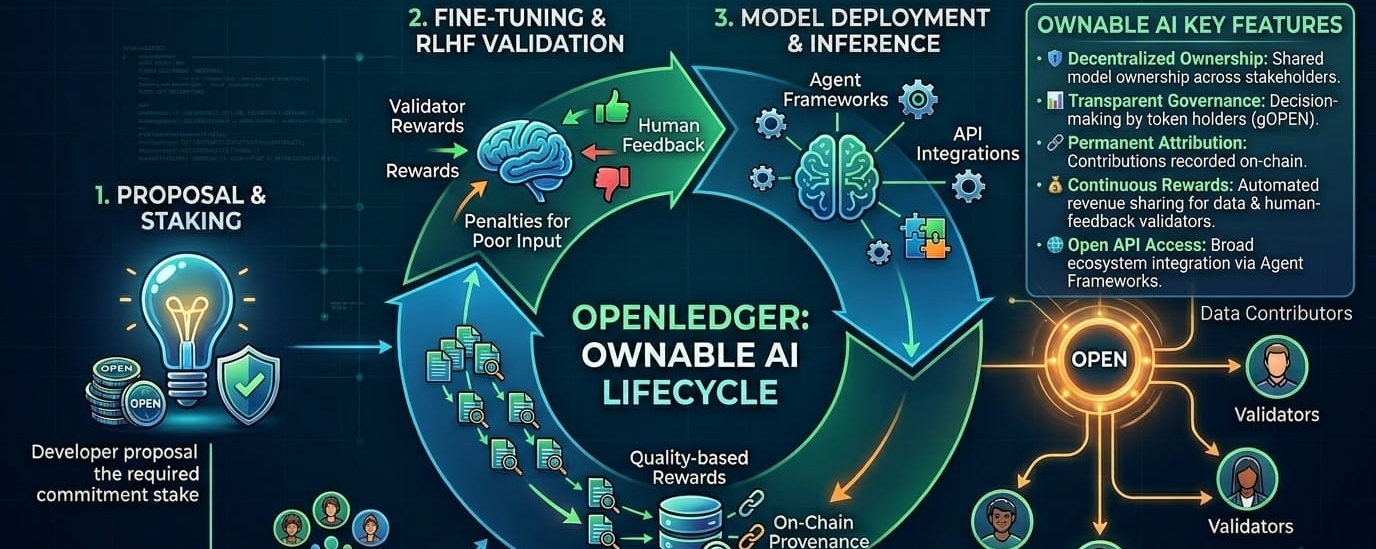
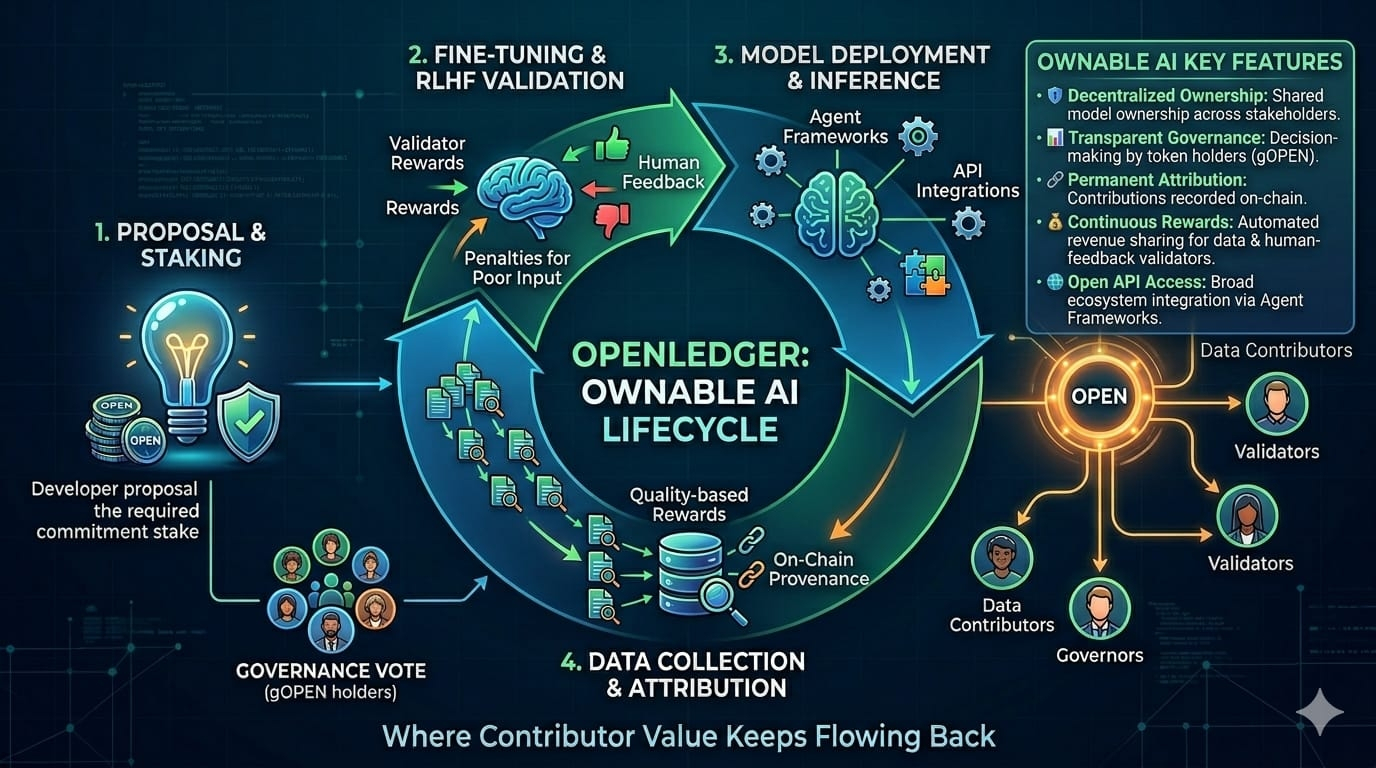
The lifecycle starts at proposal stage. Developer wants to build a specialized model. Submits a proposal. Stakes tokens to do it.
That staking requirement seemed small to me at first. Almost trivial. But I thought about it more and realized what it is actually doing. Every project I have seen that had no barrier to proposing ended up flooded with half serious ideas that went nowhere and wasted community attention. The stake filters that. You are not going to put real value on the line for something you are not genuinely committed to building.
Small design detail. Real behavioral consequence.
Then governance. Protocol Governors vote using gOPEN tokens. The people most economically invested in the ecosystem decide what gets built inside it.
I have seen governance systems in crypto that look democratic and operate like theater. The votes happen, the outcome was predetermined, the community feels heard without actually being heard. Whether @OpenLedger's governance avoids that pattern..... I honestly cannot say with certainty yet. But the design at least connects voting power to genuine economic stake rather than just to whoever shows up loudest.
After approval comes the data collection phase and this is where I spent the most time thinking.....
Because this is the phase I have personal experience with going wrong elsewhere. Datanets here collect domain specific data with contributors rewarded based on quality and relevance. Cryptographic attribution records everything on chain permanently.
When I read that I immediately thought about the project I mentioned at the start. If that system had this attribution layer, my contributions would still be on chain. Still connected to whatever the model keeps producing. Not as a historical record nobody looks at but as an active economic claim.
That difference is not small.
Then fine tuning. Then RLHF with human validators giving feedback and getting rewarded for quality while low quality contributions face penalties.
I spent some time thinking about the RLHF piece specifically.....
Because RLHF gaming is something I have read about extensively. People learn to give feedback that scores well rather than feedback that genuinely improves model behavior. It happens in every system with reward attached to human feedback. Whether the penalty mechanism here is strong enough to actually discourage it..... genuinely uncertain. I do not have enough direct observation of the validation layer in action to say confidently.
And then deployment. API integration. Agent frameworks connecting to the model as a decision making engine.
Every inference paid for with OPEN tokens. That payment flowing back through attribution chain to contributors, validators, governance participants.
The full loop.
I sat with that loop for a long time honestly.....
Because it is exactly what was missing from that project two years ago. The model kept running. The value kept flowing. And the contributors who made it possible had already been forgotten by the economics of the system.
@OpenLedger is at least building infrastructure where that forgetting is structurally harder. Where the attribution chain keeps the connection alive not because someone decided to be generous but because the protocol enforces it.
Though something still sits uncomfortably in my head.....
The 51.71 percent community allocation in tokenomics looks genuinely impressive on paper. Community majority. Good story. But I have seen community allocations before that sounded generous and ended up concentrated in ways that did not feel like real community ownership in practice.
Allocation and distribution are different things. Who actually ends up holding those tokens and how that ownership is distributed over time..... those questions are harder to answer from where I am sitting right now.
And attribution disputes at real scale worry me. When thousands of contributors are each claiming their data mattered and the rewards feel smaller than expected, the disputes that follow can damage the exact trust the system depends on. I have seen that dynamic play out before too.
Still.....
When I compare what @OpenLedger is attempting to that empty wallet history I was looking at a few weeks ago, the direction feels genuinely different. Not perfect. Not without real risks. But pointed at something that the systems I participated in before were not even trying to build.
Most AI development optimizes for the model and forgets the people who made it possible.
This is at least trying to remember them.
Whether that trying survives contact with real scale and real pressure.....
I am watching carefully. More carefully than I watch most things in this space right now 🤔