
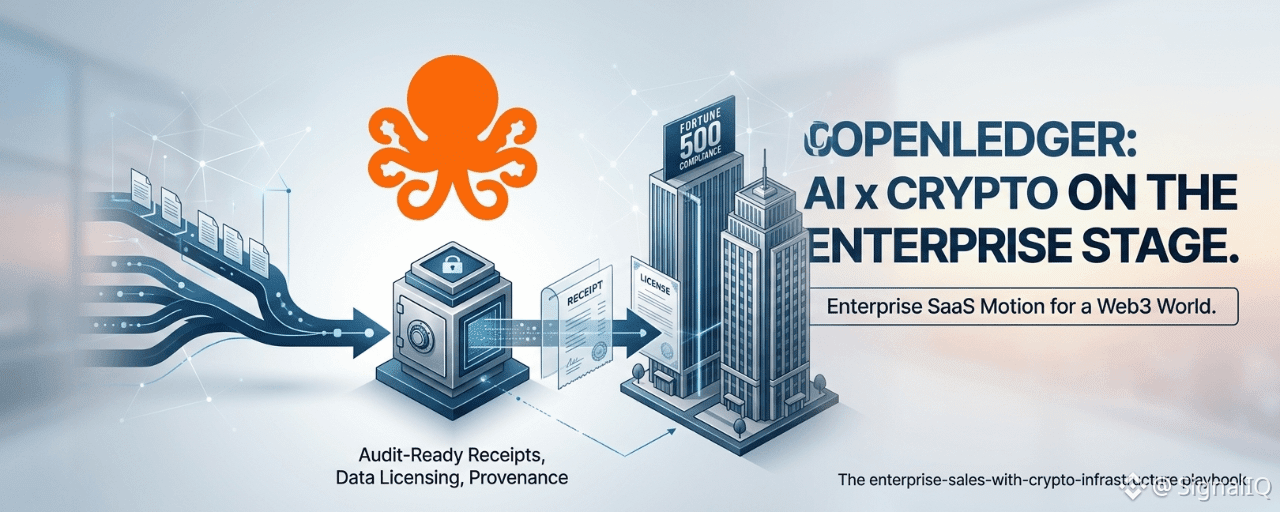
Most AI x crypto teams have a similar shape. Two or three engineers who came up in DeFi, decided AI was interesting, raised a seed round to figure it out. Smart people, often technically sharp, but no enterprise sales experience between them. That's a problem when the product is supposed to plug into compliance teams at large institutions.
@OpenLedger is team profile is different in a way that's easy to miss.
Ram Kumar's prior client list includes Walmart, Sony, GSK, and The LA Times. Managed multi-billion-dollar enterprise accounts before founding OpenLedger. He's also the one who coined the "Payable AI" thesis the project is built around. Co-founders Pryce Adade-Yebesi and Ashtyn Bell each carry their own enterprise and blockchain backgrounds.
That résumé matters because of what attribution infrastructure actually needs to be: a vendor that compliance teams at Fortune 500s will actually onboard. Not a tool that gets tweeted about. A vendor that survives a 12-18 month procurement cycle, passes legal review, gets approved by InfoSec, lands in the master vendor list.
Crypto-native teams systematically underestimate that cycle. They assume product-market fit comes from developer adoption, the way it does for DeFi protocols. AI infrastructure is closer to enterprise SaaS. Different sales motion, different gatekeepers, different proof requirements.
Look at the product cadence through this lens. Proof of Attribution shipped with audit-ready receipts on day one. Datanets includes licensing metadata structures designed for legal review. The Story Protocol partnership covers IP rights enforcement, exactly what corporate counsel wants to see. The Trust Wallet integration extended reach to consumer territory while keeping the enterprise spine intact. Othentic AVS layered restaked security underneath because compliance teams ask about it.
These are not product choices a crypto-native team would naturally make first. They're choices a team that's sat across the table from Fortune 500 procurement makes....
The honest pushback. Founders' prior employers aren't current customers. Walmart isn't going to onboard OpenLedger because Ram Kumar sold them software a decade ago. The enterprise pipeline has to be built from scratch even with the pedigree. And founder credentials drift in relevance fast. Six years out of a B2B sales role and the relationships go cold.
But the team profile tells you which playbook they're running. Not the crypto-native one. Not the AI-research-lab one. The enterprise-sales-with-crypto-infrastructure one. That's a rare combination in this category.
Whether they convert that pedigree into actual enterprise contracts over the next 18 months is the test. The signals from Story Protocol, Trust Wallet, Othentic, and Aethir suggest the conversion is starting. The procurement cycles will reveal the rest.
