
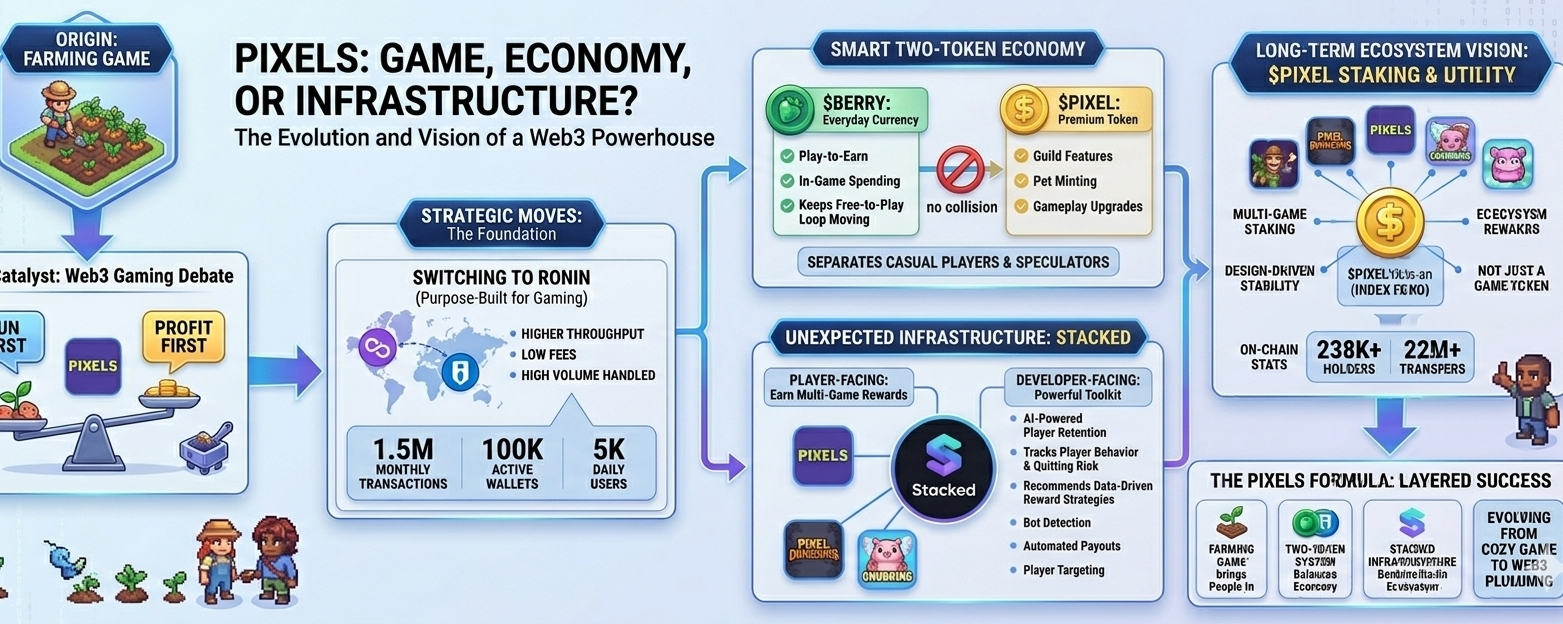
I got into it with a friend last month about Pixels. He called it "a farming game with a token slapped on." I told him he was missing the point. We went back and forth for a solid hour and honestly, the argument taught me more about Pixels than any article I'd read. Because the real debate wasn't about Pixels specifically. It was about what we even want from Web3 gaming. Is it supposed to be fun first? Or profitable first? Pixels is one of the few projects I've seen that doesn't force you to choose.
Why the Ronin Move Mattered More Than People Think
When Pixels left Polygon for Ronin, most people shrugged. New chain, cheaper fees, cool. But I looked at it from a different angle. Pixels moved 1.5 million monthly transactions, 100,000 active wallets, and 5,000 daily users to Ronin. That's a lot of activity to pick up and relocate. You don't do that for slightly cheaper gas. You do that because the new home fits your vision better. Ronin was purpose-built for gaming with high throughput and low fees that handle heavy player traffic without breaking. I've watched projects sit on chains that don't match their needs for years because switching is scary. Pixels switched anyway. That told me the team thinks long-term, not comfortable.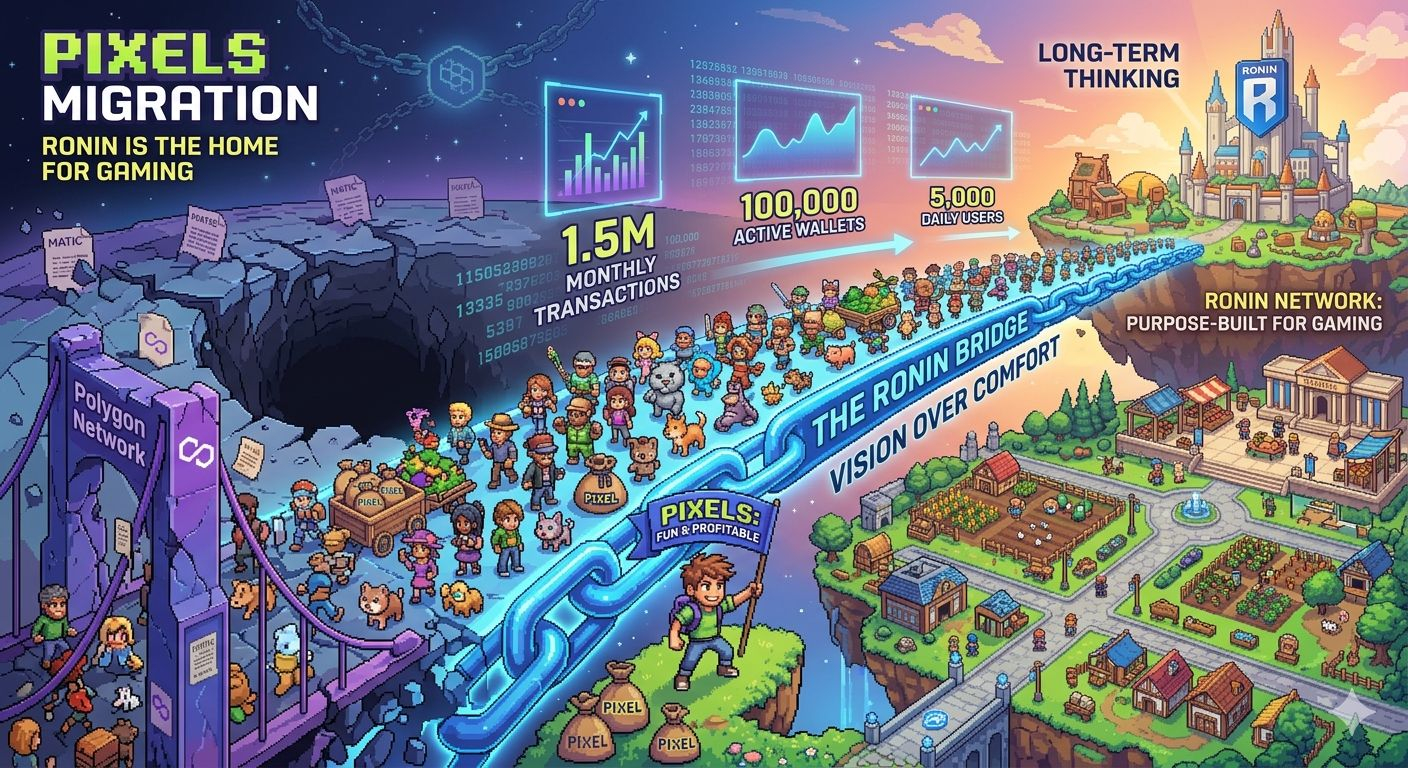
The Two-Token Thing Is Smarter Than It Looks
This is the part I wish more people paid attention to. Pixels doesn't run on one token. It runs on two. $BERRY is the everyday currency. You earn it by playing, spend it in the game, and it keeps the free-to-play loop moving. It's inflationary on purpose so nobody feels gated out. Pixel is different. It's harder to earn and handles premium stuff like guild features, pet minting, and gameplay upgrades.
I've watched so many Web3 games destroy themselves because casual players and speculators fought over the same token. Player farms it, dumps it. Holder watches the chart bleed. Everyone gets frustrated. Pixels separated those two groups entirely. $BERRY is for playing. Pixel is for people who want to go deeper. No tug of war. I don't know why more projects haven't copied this by now.
Stacked Is Where Things Get Serious
Alright so this is the part that changed how I look at the whole project. The Pixels team built an app called Stacked on Ronin that lets players earn rewards across multiple games from one place. Player-facing, it's simple and clean. But the developer side is where my jaw dropped a little.
Stacked gives game studios an AI tool that tracks player behavior, figures out who's about to quit, and recommends reward strategies based on real data like retention and player lifetime value. A farming game team built that. Let it sink in.
It also handles bot detection, automated payouts, and player targeting. I know studios in traditional gaming that spend serious money on tools half this good. And the thing is, this isn't vaporware. Stacked is running live in Pixels, Pixel Dungeons, and Chubkins right now. Real games. Real players. Real data. When I saw that, I stopped thinking of Pixels as a game studio. They're building the plumbing other games will run on.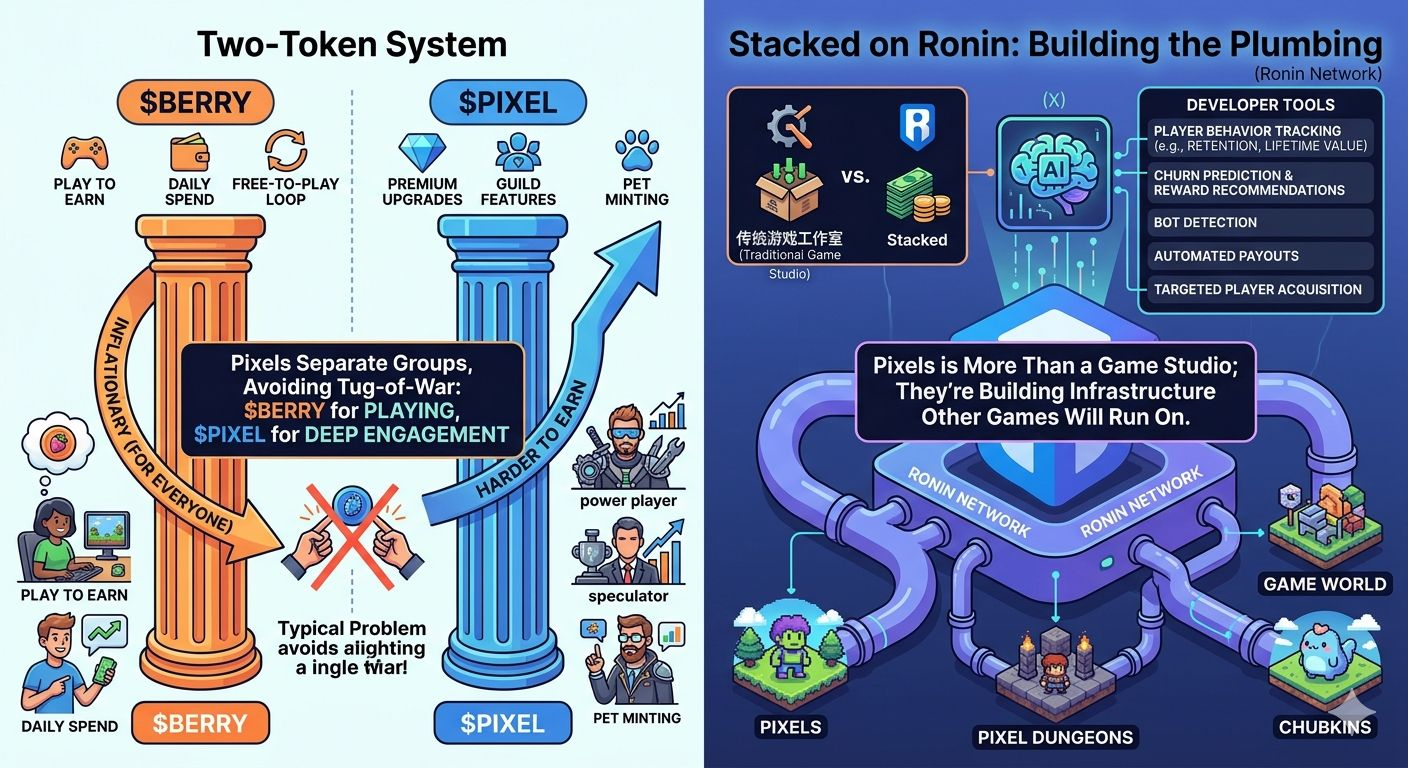
The On-Chain Numbers Tell the Story
I don't get excited about projects based on vibes. I look at what's happening on chain. Pixel has over 238,000 holders and more than 22 million transfers. Those aren't dead wallets from some old airdrop. That's genuine activity.
Now think about where this is heading. The team is building a staking system where $PIXEL works across multiple games on Ronin, kind of like an index fund for the gaming ecosystem. This is what got me interested from a practical standpoint. If your token lives inside one game and that game slows down, your token is toast. We've all seen that play out. But if $PIXEL is staked across four or five games at once, selling means giving up rewards in every single one. That's not hype holding the price up. That's design doing the heavy lifting.
Am I certain pixel takes off? No. Nobody is certain about anything in crypto and anyone who says otherwise is selling you something. But I do think the market still treats this like a simple game token when the team is clearly building something bigger.
Going back to that argument with my friend. After everything I've seen over the past few months, here's where I landed. Pixels is a game. It's also an economy. But what it's becoming is the toolkit other Web3 games need to build their own economies. The farming game brings people in. The two-token setup keeps casual players and long-term holders from wrecking each other. Stacked gives the whole Ronin ecosystem infrastructure that didn't exist before.
Most Web3 gaming projects do one thing and pray. Pixels keeps layering. Each piece feeds the next one. I don't know if they'll nail every single thing on the roadmap. Nobody does. But they're shipping working products while other teams are still tweaking pitch decks. In this space, that counts for a lot.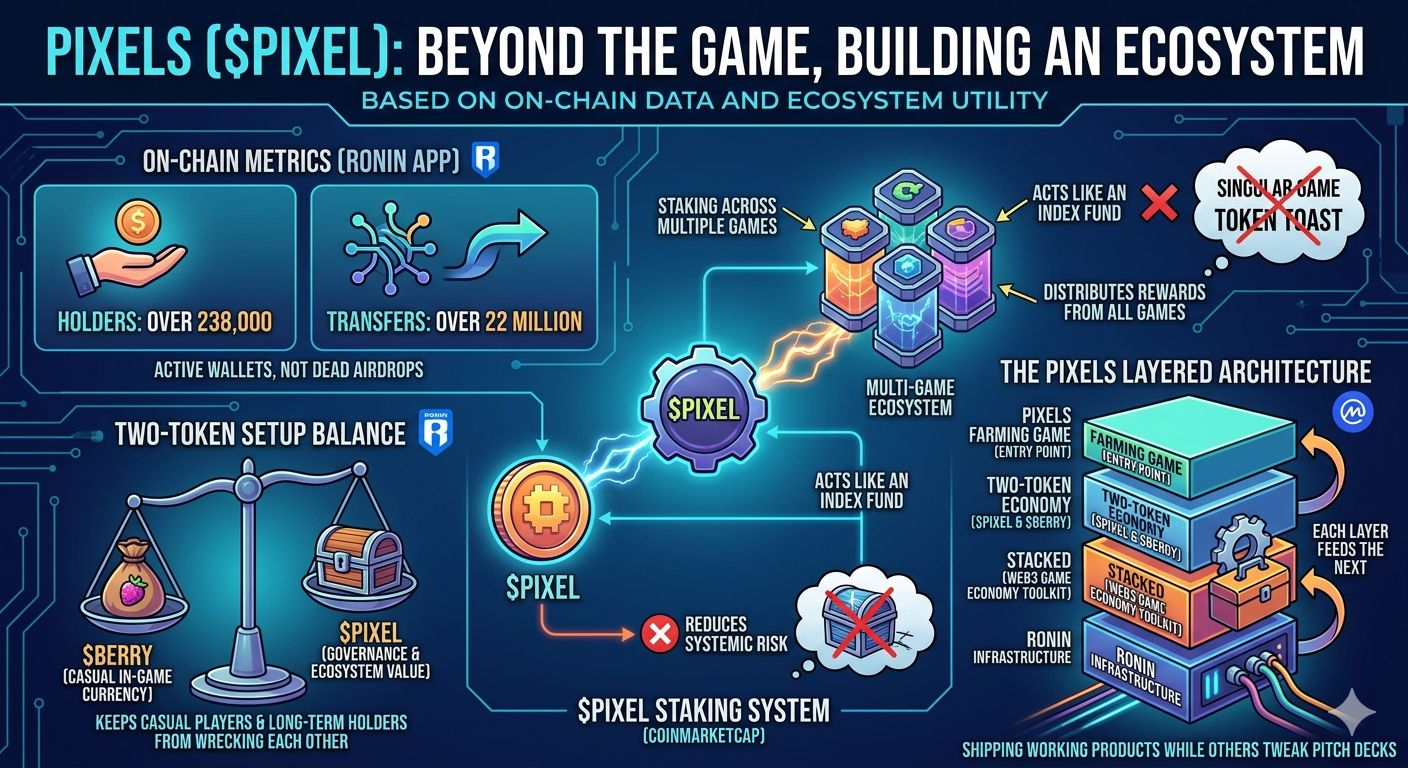
Here's what keeps bouncing around in my head though. If a team that started by building a cozy little farming game ends up creating the best retention tools in Web3 gaming, what exactly were all those "infrastructure first" projects spending their hundreds of millions on?