
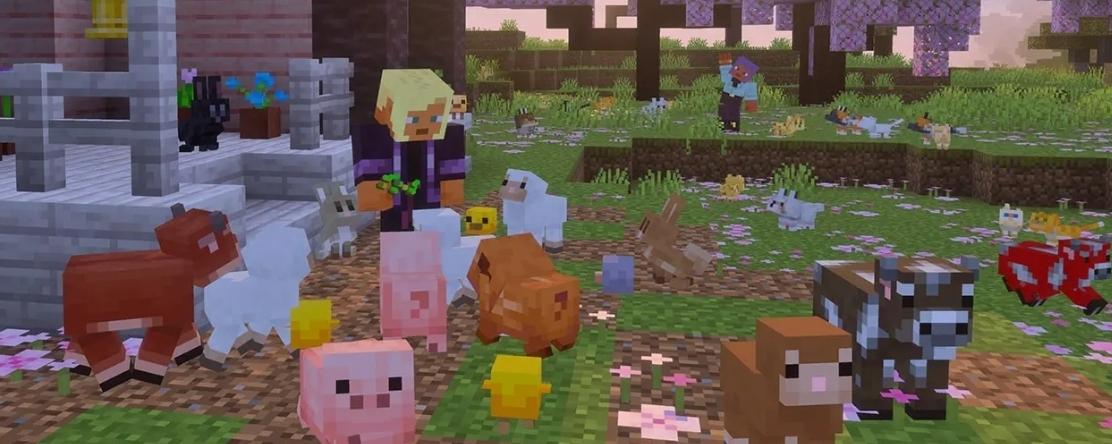

There’s a moment when a system that looks simple on the surface starts revealing its real weight underneath. Pixels’ new animal system feels exactly like that kind of shift. At first glance, it’s easy to dismiss it as just another “cute update”—new creatures, softer visuals, a more cozy loop. But if you spend enough time inside it, especially from a trader’s mindset, the structure underneath starts to look less like decoration and more like infrastructure.
Pixels has always been built around slow progression plant, harvest, craft, repeat. That core loop hasn’t changed. What has changed is how much of that loop now flows through animals. Previously, animals felt optional, almost decorative. Now they sit directly inside the production chain, tied to crafting, resource generation, and time efficiency in a way that’s hard to ignore. Pixels was already leaning toward habit-based gameplay, but this update pushes it further into systems thinking.
The biggest difference is that animals are no longer passive assets. Feeding is no longer a background action it’s a requirement tied to output. Gathering isn’t automatic it’s conditional. Breeding adds a time-based layer that feels closer to yield optimization than casual play. According to recent update breakdowns, the system now includes structured loops around feeding, resource drops, and offspring incubation, all of which connect back into crafting and progression.
That shift matters more than it seems. When a game ties output to maintenance cycles, it starts introducing something traders understand well: operational discipline. You’re no longer just playing when you feel like it-you’re managing timing, inputs, and efficiency. Miss a cycle, and you lose potential output. Optimize correctly, and your yield improves. It’s subtle, but it changes behavior.
The addition of new animal types reinforces this. Different animals now serve different roles in the in-game economy, which creates early forms of specialization. Instead of doing everything, players begin to lean toward certain production paths. Cows, chickens, pigs, and more exotic additions like dragons aren’t just cosmetic-they’re nodes in a broader resource network. This starts to resemble portfolio allocation more than gameplay. You’re choosing where to focus your limited time and energy.
And energy, in Pixels, has always been the real constraint. Almost every meaningful action consumes it, from farming to crafting. The animal system doesn’t replace that it compounds it. Now you’re allocating energy not just across crops, but across animals, feed production, and downstream crafting. The decision tree gets deeper. That’s where the hidden depth starts to show.
Then there’s the feeding loop itself, which is more complex than it looks. Feed isn’t just something you buy it’s something you produce, often with its own dependencies. Some animals require processed inputs, which introduces multi-step production chains. That means more time, more planning, and more coordination between systems. It’s not just “care for your animal”—it’s “build a system that sustains your animal efficiently.”

This is where the update quietly connects to the new industry addition: the Alchemic Forge. On paper, it’s just another crafting station. In practice, it’s a signal of where the game is heading. The Forge allows players to create higher-tier tools and specialized items that improve efficiency across multiple activities. That includes reducing action time, increasing yields, and optimizing resource flow.
If you think about that, the Forge acts like leverage. It doesn’t create value on its own it amplifies the value of everything else you’re doing. Better tools mean faster cycles. Faster cycles mean more output.
This is also a big part of why the update is trending. It’s not just new content it’s deeper interconnection. The animal system, crafting updates, and Forge industry all feed into each other. Players aren’t reacting to a single feature they’re reacting to a system that feels more complete. And in Web3 gaming, completeness is rare.
There’s also been visible progress in how Pixels structures its updates. Instead of isolated features, recent changes feel layered. Animal Care didn’t arrive alone it came with new quests, adjusted recipes, and economic tweaks designed to guide players through the system. That kind of rollout suggests a clearer long-term design direction. Not everything is fully optimized yet, but the intent is becoming easier to read.
I thought, the interesting part isn’t the animals themselves. It’s what they represent. Pixels is slowly shifting from a game you check into, to a system you manage. The more systems they connect animals, crafting, tools, energy the more the game starts to resemble a lightweight economy rather than a casual simulator.
And that comes with trade-offs. More depth means more friction. New players may find it harder to understand where to start. Casual players might feel pushed into routines they didn’t sign up for. When every system is interconnected, inefficiency becomes more punishing. That can improve retention for some, but it can also create drop-off for others.
Still, from a market perspective, this is the kind of evolution that tends to matter. Games that survive in the long run usually find ways to turn simple loops into layered systems without breaking accessibility. Pixels isn’t fully there yet, but the direction is clearer than it was a few months ago.
The animal system, despite its cute presentation, is doing something quite serious. It quietly pushes you to think a bit differently-less like you’re just playing a game, and more like you’re managing something. And once that mindset clicks, the game stops feeling like a farm and starts feeling like a process.
That’s the hidden depth. Not in the animals themselves, but in how they quietly reshape the way you play.