
N O R A 莉莎
3.4k Publicações

N O R A 莉莎
Denunciar
Bloquear Utilizador
74 A seguir
21.7K+ Seguidores
9.5K+ Gostaram
Publicações
Tudo
Cotações
Vídeos
Em direto
·
--
O mercado está em queda, mas nem tudo está fraco. 👀
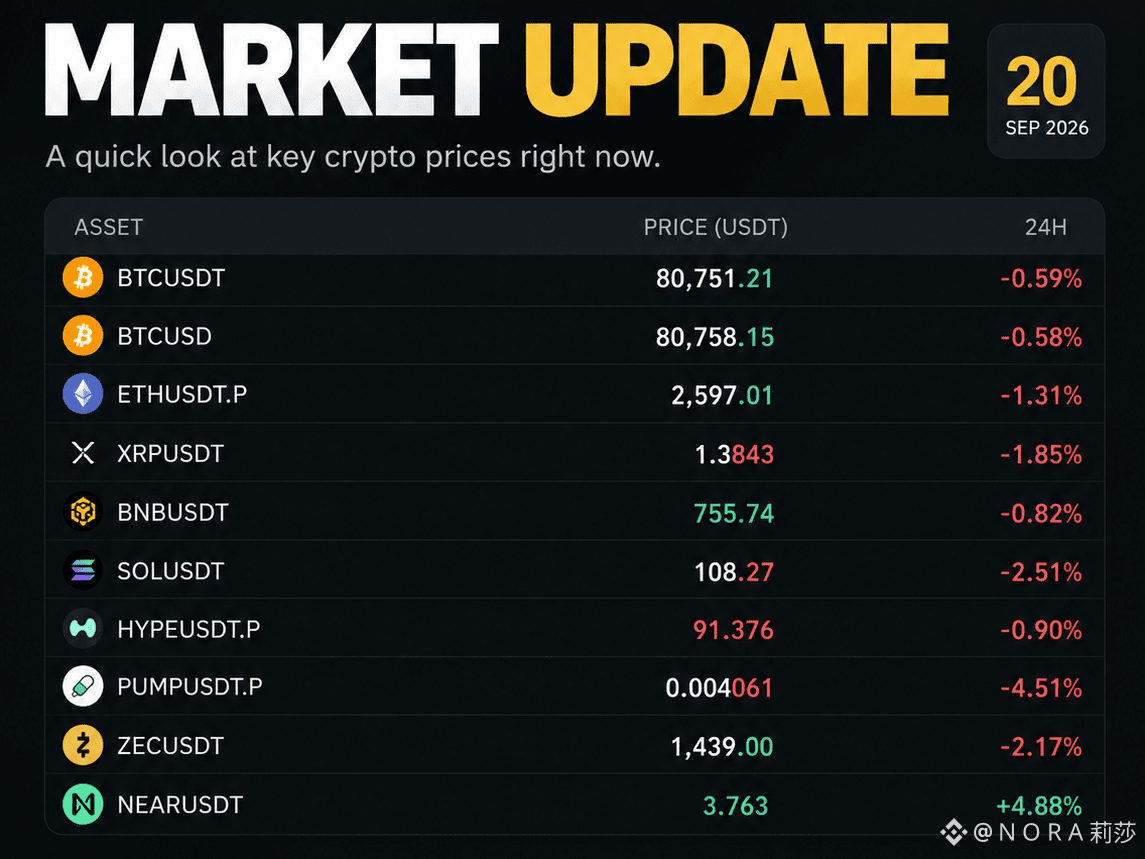
$BTC está segurando em torno de US$ 80,7 mil, enquanto $ETH , XRP, BNB e SOL estão todos negociando em baixa.
Mas $NEAR está indo contra a maré, subindo 4,88% enquanto a maior parte da lista de observação está em vermelho.
{spot}(NEARUSDT)
{spot}(BTCUSDT)
Essa força relativa é o que estou observando.
Dias vermelhos não são apenas sobre quedas; eles mostram quais ativos os compradores ainda estão dispostos a defender.
Por enquanto, o BTC segurando a região de US$ 80 mil importa. Se esse nível permanecer intacto, a estrutura mais ampla continua valendo ser acompanhada de perto.
A volatilidade está alta. Gerencie o risco e aguarde confirmação em vez de correr atrás dos movimentos.
#BinanceSquare #XRPExchangeReservesHitSevenYearLow #BTC☀ #BNB走势 #SolanaStrong
O mercado está em queda, mas nem tudo está fraco. 👀
$BTC está segurando em torno de US$ 80,7 mil, enquanto $ETH , XRP, BNB e SOL estão todos negociando em baixa.
Mas $NEAR está indo contra a maré, subindo 4,88% enquanto a maior parte da lista de observação está em vermelho.
Essa força relativa é o que estou observando.
Dias vermelhos não são apenas sobre quedas; eles mostram quais ativos os compradores ainda estão dispostos a defender.
Por enquanto, o BTC segurando a região de US$ 80 mil importa. Se esse nível permanecer intacto, a estrutura mais ampla continua valendo ser acompanhada de perto.
A volatilidade está alta. Gerencie o risco e aguarde confirmação em vez de correr atrás dos movimentos.
#BinanceSquare #XRPExchangeReservesHitSevenYearLow #BTC☀ #BNB走势 #SolanaStrong
$BTC está segurando em torno de US$ 80,7 mil, enquanto $ETH , XRP, BNB e SOL estão todos negociando em baixa.
Mas $NEAR está indo contra a maré, subindo 4,88% enquanto a maior parte da lista de observação está em vermelho.
Essa força relativa é o que estou observando.
Dias vermelhos não são apenas sobre quedas; eles mostram quais ativos os compradores ainda estão dispostos a defender.
Por enquanto, o BTC segurando a região de US$ 80 mil importa. Se esse nível permanecer intacto, a estrutura mais ampla continua valendo ser acompanhada de perto.
A volatilidade está alta. Gerencie o risco e aguarde confirmação em vez de correr atrás dos movimentos.
#BinanceSquare #XRPExchangeReservesHitSevenYearLow #BTC☀ #BNB走势 #SolanaStrong
9
10
415
·
--
$BTC acabou de fazer um movimento digno de atenção.
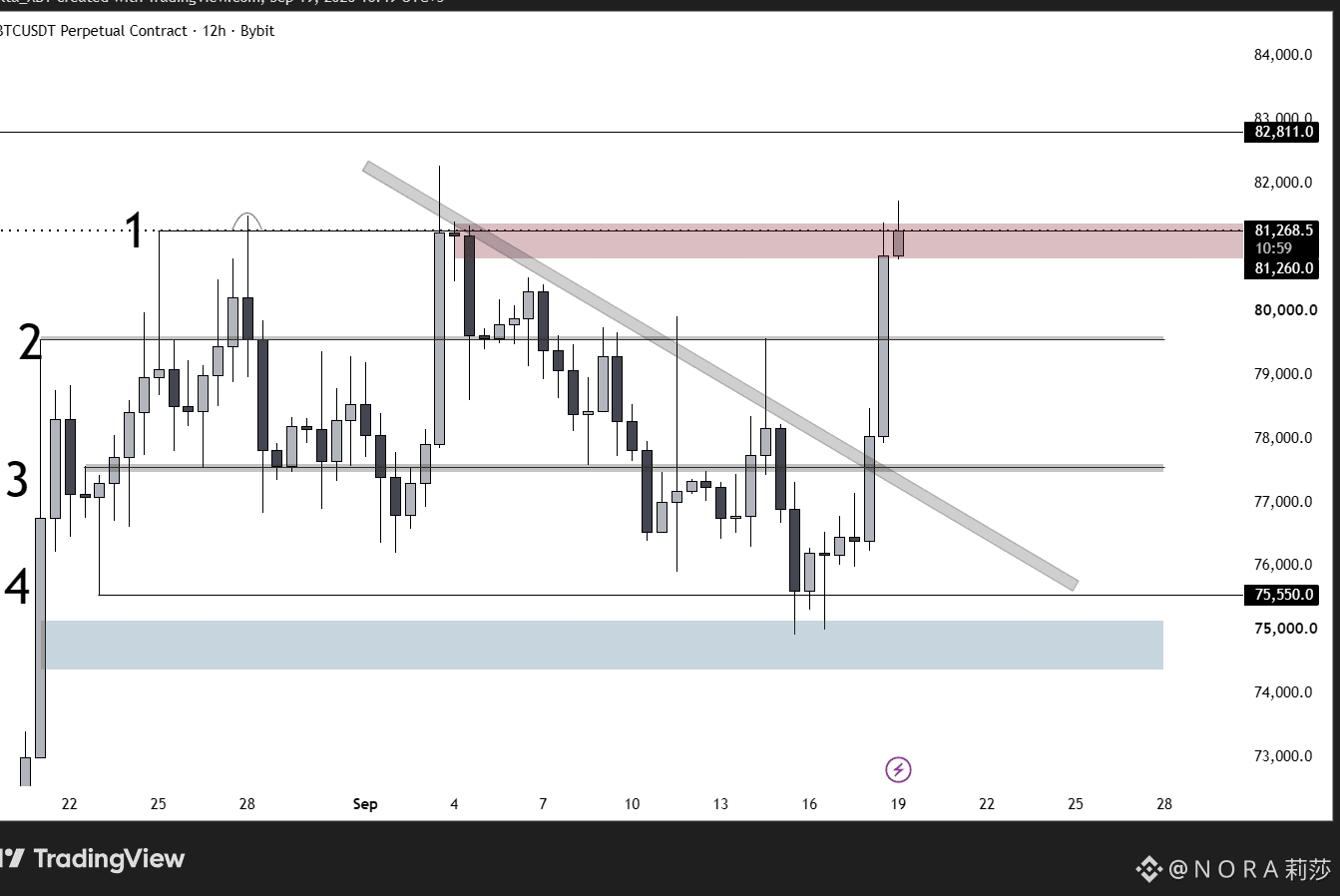
Depois de passar dias comprimido sob uma linha de tendência descendente, o Bitcoin finalmente rompeu com uma forte vela impulsiva e avançou direto para a zona de resistência de US$ 81K.
O que chama atenção no gráfico de 12H:
→ A linha de tendência descendente foi rompida
→ A resistência de ~$79,5K foi recuperada durante o movimento
→ O preço agora está testando a principal faixa de oferta de US$ 81,0K–US$ 81,3K
→ O próximo grande nível acima fica por volta de US$ 82,8K
→ Se houver rejeição, ~$79,5K se torna uma área importante a observar para um reteste
O rompimento em si parece forte, mas é exatamente aqui que a confirmação importa.
Uma manutenção limpa acima de US$ 81,3K fortaleceria a estrutura do rompimento e colocaria novamente a região de US$ 82,8K em foco.
Mas se o BTC não conseguir estabelecer aceitação aqui, um recuo em direção a US$ 79,5K não invalidaria automaticamente o movimento — poderia simplesmente ser o mercado testando o rompimento.
Por enquanto, a estrutura melhorou claramente.
O rompimento aconteceu. A resistência está sendo testada. Agora estou observando se os compradores conseguem transformar US$ 81K de um teto em suporte.
$BTC está ficando interessante de novo.
{spot}(BTCUSDT)
Não é aconselhamento financeiro. Gerencie sempre o risco.
#BTC走势分析 #BTCBreaks80K #BitcoinMarketCapTopsTesla
$BTC acabou de fazer um movimento digno de atenção.
Depois de passar dias comprimido sob uma linha de tendência descendente, o Bitcoin finalmente rompeu com uma forte vela impulsiva e avançou direto para a zona de resistência de US$ 81K.
O que chama atenção no gráfico de 12H:
→ A linha de tendência descendente foi rompida
→ A resistência de ~$79,5K foi recuperada durante o movimento
→ O preço agora está testando a principal faixa de oferta de US$ 81,0K–US$ 81,3K
→ O próximo grande nível acima fica por volta de US$ 82,8K
→ Se houver rejeição, ~$79,5K se torna uma área importante a observar para um reteste
O rompimento em si parece forte, mas é exatamente aqui que a confirmação importa.
Uma manutenção limpa acima de US$ 81,3K fortaleceria a estrutura do rompimento e colocaria novamente a região de US$ 82,8K em foco.
Mas se o BTC não conseguir estabelecer aceitação aqui, um recuo em direção a US$ 79,5K não invalidaria automaticamente o movimento — poderia simplesmente ser o mercado testando o rompimento.
Por enquanto, a estrutura melhorou claramente.
O rompimento aconteceu. A resistência está sendo testada. Agora estou observando se os compradores conseguem transformar US$ 81K de um teto em suporte.
$BTC está ficando interessante de novo.
Não é aconselhamento financeiro. Gerencie sempre o risco.
#BTC走势分析 #BTCBreaks80K #BitcoinMarketCapTopsTesla
Depois de passar dias comprimido sob uma linha de tendência descendente, o Bitcoin finalmente rompeu com uma forte vela impulsiva e avançou direto para a zona de resistência de US$ 81K.
O que chama atenção no gráfico de 12H:
→ A linha de tendência descendente foi rompida
→ A resistência de ~$79,5K foi recuperada durante o movimento
→ O preço agora está testando a principal faixa de oferta de US$ 81,0K–US$ 81,3K
→ O próximo grande nível acima fica por volta de US$ 82,8K
→ Se houver rejeição, ~$79,5K se torna uma área importante a observar para um reteste
O rompimento em si parece forte, mas é exatamente aqui que a confirmação importa.
Uma manutenção limpa acima de US$ 81,3K fortaleceria a estrutura do rompimento e colocaria novamente a região de US$ 82,8K em foco.
Mas se o BTC não conseguir estabelecer aceitação aqui, um recuo em direção a US$ 79,5K não invalidaria automaticamente o movimento — poderia simplesmente ser o mercado testando o rompimento.
Por enquanto, a estrutura melhorou claramente.
O rompimento aconteceu. A resistência está sendo testada. Agora estou observando se os compradores conseguem transformar US$ 81K de um teto em suporte.
$BTC está ficando interessante de novo.
Não é aconselhamento financeiro. Gerencie sempre o risco.
#BTC走势分析 #BTCBreaks80K #BitcoinMarketCapTopsTesla
9
12
773
·
--
Em Alta
$SUI está começando a ficar interessante aqui. 👀
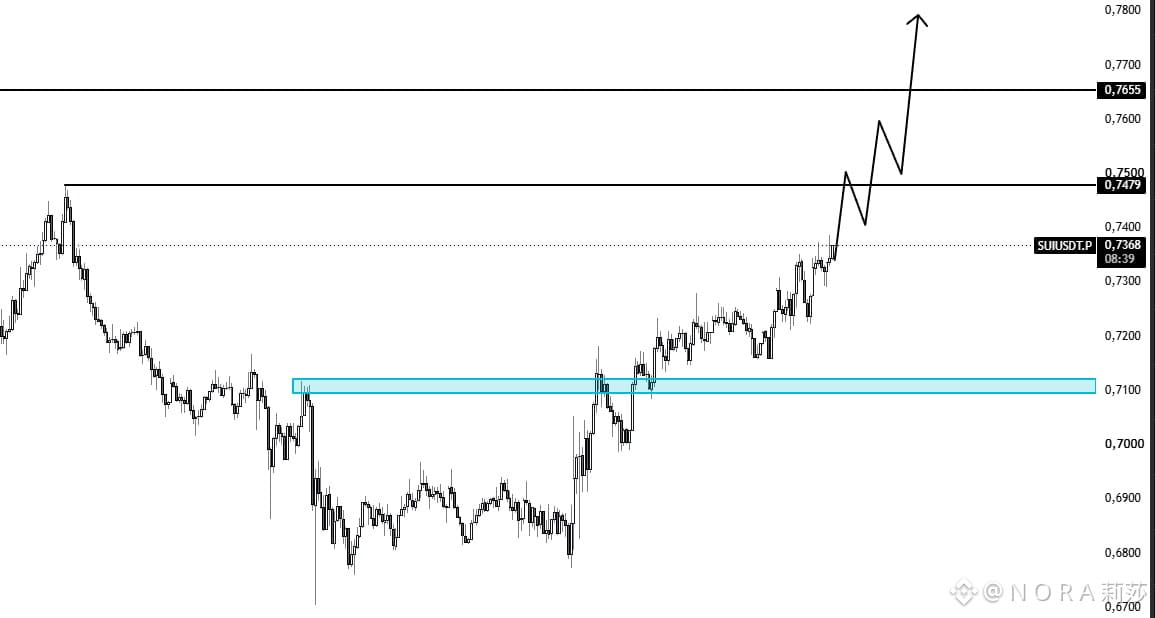
A estrutura mudou para alta: o preço recuperou a zona-chave de suporte de US$ 0.71, e os compradores continuam empurrando para cima.
Neste momento, o SUI está sendo negociado em torno de US$ 0.7368, logo abaixo da primeira grande área de liquidez.
Meus níveis:
📍 Entrada: US$ 0.7368
🎯 Alvo 1: US$ 0.7442
🎯 Alvo 2: US$ 0.7655
🎯 Alvo 3: US$ 0.7929
🛑 Invalidação: US$ 0.7093
A parte mais importante para mim é US$ 0.744–US$ 0.748.
Uma ruptura limpa e permanência acima dessa faixa pode abrir caminho até US$ 0.7655, enquanto a continuidade do impulso pode trazer o alvo mais alto de cerca de US$ 0.7929 para o foco.
Mas eu não estou ignorando o lado negativo. Se o SUI perder a região de suporte de US$ 0.71, esse cenário de alta enfraquece significativamente.
Por enquanto: estrutura de alta, suporte recuperado, liquidez acima.
Observando como o preço reage nessa primeira resistência antes de ficar agressivo demais.
Você faria a ruptura agora ou esperaria o reteste? 👀
#sui #SUIUSDT #BinanceSquare
$SUI está começando a ficar interessante aqui. 👀
A estrutura mudou para alta: o preço recuperou a zona-chave de suporte de US$ 0.71, e os compradores continuam empurrando para cima.
Neste momento, o SUI está sendo negociado em torno de US$ 0.7368, logo abaixo da primeira grande área de liquidez.
Meus níveis:
📍 Entrada: US$ 0.7368
🎯 Alvo 1: US$ 0.7442
🎯 Alvo 2: US$ 0.7655
🎯 Alvo 3: US$ 0.7929
🛑 Invalidação: US$ 0.7093
A parte mais importante para mim é US$ 0.744–US$ 0.748.
Uma ruptura limpa e permanência acima dessa faixa pode abrir caminho até US$ 0.7655, enquanto a continuidade do impulso pode trazer o alvo mais alto de cerca de US$ 0.7929 para o foco.
Mas eu não estou ignorando o lado negativo. Se o SUI perder a região de suporte de US$ 0.71, esse cenário de alta enfraquece significativamente.
Por enquanto: estrutura de alta, suporte recuperado, liquidez acima.
Observando como o preço reage nessa primeira resistência antes de ficar agressivo demais.
Você faria a ruptura agora ou esperaria o reteste? 👀
#sui #SUIUSDT #BinanceSquare
A estrutura mudou para alta: o preço recuperou a zona-chave de suporte de US$ 0.71, e os compradores continuam empurrando para cima.
Neste momento, o SUI está sendo negociado em torno de US$ 0.7368, logo abaixo da primeira grande área de liquidez.
Meus níveis:
📍 Entrada: US$ 0.7368
🎯 Alvo 1: US$ 0.7442
🎯 Alvo 2: US$ 0.7655
🎯 Alvo 3: US$ 0.7929
🛑 Invalidação: US$ 0.7093
A parte mais importante para mim é US$ 0.744–US$ 0.748.
Uma ruptura limpa e permanência acima dessa faixa pode abrir caminho até US$ 0.7655, enquanto a continuidade do impulso pode trazer o alvo mais alto de cerca de US$ 0.7929 para o foco.
Mas eu não estou ignorando o lado negativo. Se o SUI perder a região de suporte de US$ 0.71, esse cenário de alta enfraquece significativamente.
Por enquanto: estrutura de alta, suporte recuperado, liquidez acima.
Observando como o preço reage nessa primeira resistência antes de ficar agressivo demais.
Você faria a ruptura agora ou esperaria o reteste? 👀
#sui #SUIUSDT #BinanceSquare
11
15
2k
·
--
Uma das primeiras lições que o crypto me ensinou foi que a identidade sozinha não cria confiança.
Nos primórdios, as wallets eram anônimas, os perfis eram descartáveis e a reputação tinha que emergir do comportamento. As pessoas que consistentemente entregavam, se comunicavam e honravam compromissos acumulavam algo mais valioso do que tokens: credibilidade.
Acho que a IA está entrando em uma fase similar.
Hoje, a maioria das discussões foca na inteligência dos modelos. Qual sistema é mais esperto? Qual benchmark é mais alto? Qual agente pode realizar mais tarefas? Mas a história sugere que a inteligência é apenas parte da equação.
À medida que os agentes de IA se tornam participantes em sistemas financeiros, marketplaces, redes de pesquisa e economias digitais, o problema mais difícil pode ser a atribuição. Não o que um agente sabe, mas se ele pode ser confiável. Ele completou tarefas de forma confiável? Ele forneceu informações precisas ao longo do tempo? Suas decisões podem ser verificadas e ligadas a um histórico persistente?
É por isso que a infraestrutura de reputação cada vez mais parece uma camada faltante.
Da mesma forma que o crypto evoluiu de transações anônimas para históricos onchain verificáveis, a IA pode evoluir de inteligência isolada para reputação persistente. Comportamento se torna dado. Confiabilidade se torna mensurável. Confiança se torna portátil.
Essa é uma das razões pelas quais continuo prestando atenção no $GENIUS.
A oportunidade a longo prazo pode não ser criar os agentes mais inteligentes. Pode ser criar sistemas que ajudem a identificar quais agentes merecem confiança desde o início.
Se a IA se tornar abundante, a reputação pode se tornar escassa.
E camadas escassas tendem a se tornar fundamentais.
$GENIUS #genius @GeniusOfficial
Uma das primeiras lições que o crypto me ensinou foi que a identidade sozinha não cria confiança.
Nos primórdios, as wallets eram anônimas, os perfis eram descartáveis e a reputação tinha que emergir do comportamento. As pessoas que consistentemente entregavam, se comunicavam e honravam compromissos acumulavam algo mais valioso do que tokens: credibilidade.
Acho que a IA está entrando em uma fase similar.
Hoje, a maioria das discussões foca na inteligência dos modelos. Qual sistema é mais esperto? Qual benchmark é mais alto? Qual agente pode realizar mais tarefas? Mas a história sugere que a inteligência é apenas parte da equação.
À medida que os agentes de IA se tornam participantes em sistemas financeiros, marketplaces, redes de pesquisa e economias digitais, o problema mais difícil pode ser a atribuição. Não o que um agente sabe, mas se ele pode ser confiável. Ele completou tarefas de forma confiável? Ele forneceu informações precisas ao longo do tempo? Suas decisões podem ser verificadas e ligadas a um histórico persistente?
É por isso que a infraestrutura de reputação cada vez mais parece uma camada faltante.
Da mesma forma que o crypto evoluiu de transações anônimas para históricos onchain verificáveis, a IA pode evoluir de inteligência isolada para reputação persistente. Comportamento se torna dado. Confiabilidade se torna mensurável. Confiança se torna portátil.
Essa é uma das razões pelas quais continuo prestando atenção no $GENIUS .
A oportunidade a longo prazo pode não ser criar os agentes mais inteligentes. Pode ser criar sistemas que ajudem a identificar quais agentes merecem confiança desde o início.
Se a IA se tornar abundante, a reputação pode se tornar escassa.
E camadas escassas tendem a se tornar fundamentais.
$GENIUS #genius @GeniusOfficial
Nos primórdios, as wallets eram anônimas, os perfis eram descartáveis e a reputação tinha que emergir do comportamento. As pessoas que consistentemente entregavam, se comunicavam e honravam compromissos acumulavam algo mais valioso do que tokens: credibilidade.
Acho que a IA está entrando em uma fase similar.
Hoje, a maioria das discussões foca na inteligência dos modelos. Qual sistema é mais esperto? Qual benchmark é mais alto? Qual agente pode realizar mais tarefas? Mas a história sugere que a inteligência é apenas parte da equação.
À medida que os agentes de IA se tornam participantes em sistemas financeiros, marketplaces, redes de pesquisa e economias digitais, o problema mais difícil pode ser a atribuição. Não o que um agente sabe, mas se ele pode ser confiável. Ele completou tarefas de forma confiável? Ele forneceu informações precisas ao longo do tempo? Suas decisões podem ser verificadas e ligadas a um histórico persistente?
É por isso que a infraestrutura de reputação cada vez mais parece uma camada faltante.
Da mesma forma que o crypto evoluiu de transações anônimas para históricos onchain verificáveis, a IA pode evoluir de inteligência isolada para reputação persistente. Comportamento se torna dado. Confiabilidade se torna mensurável. Confiança se torna portátil.
Essa é uma das razões pelas quais continuo prestando atenção no $GENIUS .
A oportunidade a longo prazo pode não ser criar os agentes mais inteligentes. Pode ser criar sistemas que ajudem a identificar quais agentes merecem confiança desde o início.
Se a IA se tornar abundante, a reputação pode se tornar escassa.
E camadas escassas tendem a se tornar fundamentais.
$GENIUS #genius @GeniusOfficial

6
168
·
--
Verificado
Uma coisa que o crypto me ensinou cedo é que a confiança raramente vem da identidade.
Ela vem da história.
Antes do DeFi ter instituições, classificações ou garantias formais, as pessoas aprenderam a confiar em wallets, builders e protocolos com base no comportamento observável. Quem entregava consistentemente? Quem apareceu durante condições de mercado difíceis? Quem construiu um histórico que poderia ser verificado de forma independente?
Eu acho que a IA está se movendo em direção a uma realização semelhante.
Agora, a conversa é dominada pela inteligência. Modelos maiores. Raciocínio melhor. Pontuações de benchmark mais altas.
Mas em um mundo onde a inteligência se torna cada vez mais abundante, o verdadeiro gargalo pode se tornar a confiança.
Um agente de IA pode ser responsabilizado por suas ações? Suas decisões podem ser rastreadas? A confiabilidade pode ser medida ao longo de meses em vez de minutos? A atribuição pode persistir através de redes e aplicações?
Essas perguntas parecem mais importantes do que outra melhoria incremental no desempenho do modelo.
É por isso que acho a camada de reputação cada vez mais interessante.
Assim como os blockchains criaram histórias imutáveis para transações, a infraestrutura de IA emergente está começando a explorar histórias persistentes para agentes. Comportamento se torna reputação. Reputação se torna um sinal. E com o tempo, esse sinal pode se tornar mais valioso do que a inteligência bruta em si.
Essa é uma razão pela qual continuo de olho no $BR.
A próxima fase da IA pode não ser definida por quem constrói os agentes mais inteligentes, mas por quem constrói os sistemas que nos ajudam a determinar quais agentes merecem confiança.
A história sugere que quando a informação se torna abundante, a credibilidade se torna o recurso escasso.
$BR #bedrock @Bedrock
Uma coisa que o crypto me ensinou cedo é que a confiança raramente vem da identidade.
Ela vem da história.
Antes do DeFi ter instituições, classificações ou garantias formais, as pessoas aprenderam a confiar em wallets, builders e protocolos com base no comportamento observável. Quem entregava consistentemente? Quem apareceu durante condições de mercado difíceis? Quem construiu um histórico que poderia ser verificado de forma independente?
Eu acho que a IA está se movendo em direção a uma realização semelhante.
Agora, a conversa é dominada pela inteligência. Modelos maiores. Raciocínio melhor. Pontuações de benchmark mais altas.
Mas em um mundo onde a inteligência se torna cada vez mais abundante, o verdadeiro gargalo pode se tornar a confiança.
Um agente de IA pode ser responsabilizado por suas ações? Suas decisões podem ser rastreadas? A confiabilidade pode ser medida ao longo de meses em vez de minutos? A atribuição pode persistir através de redes e aplicações?
Essas perguntas parecem mais importantes do que outra melhoria incremental no desempenho do modelo.
É por isso que acho a camada de reputação cada vez mais interessante.
Assim como os blockchains criaram histórias imutáveis para transações, a infraestrutura de IA emergente está começando a explorar histórias persistentes para agentes. Comportamento se torna reputação. Reputação se torna um sinal. E com o tempo, esse sinal pode se tornar mais valioso do que a inteligência bruta em si.
Essa é uma razão pela qual continuo de olho no $BR .
A próxima fase da IA pode não ser definida por quem constrói os agentes mais inteligentes, mas por quem constrói os sistemas que nos ajudam a determinar quais agentes merecem confiança.
A história sugere que quando a informação se torna abundante, a credibilidade se torna o recurso escasso.
$BR #bedrock @Bedrock
Ela vem da história.
Antes do DeFi ter instituições, classificações ou garantias formais, as pessoas aprenderam a confiar em wallets, builders e protocolos com base no comportamento observável. Quem entregava consistentemente? Quem apareceu durante condições de mercado difíceis? Quem construiu um histórico que poderia ser verificado de forma independente?
Eu acho que a IA está se movendo em direção a uma realização semelhante.
Agora, a conversa é dominada pela inteligência. Modelos maiores. Raciocínio melhor. Pontuações de benchmark mais altas.
Mas em um mundo onde a inteligência se torna cada vez mais abundante, o verdadeiro gargalo pode se tornar a confiança.
Um agente de IA pode ser responsabilizado por suas ações? Suas decisões podem ser rastreadas? A confiabilidade pode ser medida ao longo de meses em vez de minutos? A atribuição pode persistir através de redes e aplicações?
Essas perguntas parecem mais importantes do que outra melhoria incremental no desempenho do modelo.
É por isso que acho a camada de reputação cada vez mais interessante.
Assim como os blockchains criaram histórias imutáveis para transações, a infraestrutura de IA emergente está começando a explorar histórias persistentes para agentes. Comportamento se torna reputação. Reputação se torna um sinal. E com o tempo, esse sinal pode se tornar mais valioso do que a inteligência bruta em si.
Essa é uma razão pela qual continuo de olho no $BR .
A próxima fase da IA pode não ser definida por quem constrói os agentes mais inteligentes, mas por quem constrói os sistemas que nos ajudam a determinar quais agentes merecem confiança.
A história sugere que quando a informação se torna abundante, a credibilidade se torna o recurso escasso.
$BR #bedrock @Bedrock

10
124
·
--
Eu fico pensando em como o início do crypto não falhou na tecnologia, mas sim na confiança.
Lá atrás, na era do BTC e do DeFi, tínhamos sistemas perfeitamente funcionais que ainda exigiam que os usuários sempre fizessem a mesma pergunta: isso pode ser confiável, agora, neste contexto? Eventualmente, o mercado resolveu isso com mecanismos de prova em camada, auditorias, histórico on-chain e, por fim, reputação construída a partir do comportamento em vez de promessas.
O que estou vendo surgir em torno de $BR e de primitivas de reputação em IA parece um ponto de inflexão semelhante, mas para sistemas de inteligência em vez dos financeiros.
Estamos mudando silenciosamente de "quão inteligente é este modelo?" para "quão consistentemente ele se comporta, atribui e permanece confiável ao longo do tempo e em contextos de interação."
Essa mudança importa mais do que parece.
Porque inteligência é barata agora. Atribuição não é. Consistência não é. Comportamento verificável em ambientes definitivamente não é.
Se o crypto nos ensinou algo, é que a capacidade bruta se torna mercadoria rapidamente, mas as camadas de confiança se tornam a verdadeira infraestrutura. No DeFi, a liquidez não importava sem credibilidade. Em sistemas de IA, a qualidade da saída não importará sem uma estrutura de reputação em torno de como essa saída é produzida e rastreada.
Eu suspeito que estamos no início de uma fase onde a reputação se torna uma camada de computação de primeira classe construída sobre histórico de comportamento, taxas de falha e integridade da atribuição.
E se isso se concretizar, a inteligência deixa de ser o diferencial.
A reputação se torna o gargalo.
#bedrock @Bedrock
Eu fico pensando em como o início do crypto não falhou na tecnologia, mas sim na confiança.
Lá atrás, na era do BTC e do DeFi, tínhamos sistemas perfeitamente funcionais que ainda exigiam que os usuários sempre fizessem a mesma pergunta: isso pode ser confiável, agora, neste contexto? Eventualmente, o mercado resolveu isso com mecanismos de prova em camada, auditorias, histórico on-chain e, por fim, reputação construída a partir do comportamento em vez de promessas.
O que estou vendo surgir em torno de $BR e de primitivas de reputação em IA parece um ponto de inflexão semelhante, mas para sistemas de inteligência em vez dos financeiros.
Estamos mudando silenciosamente de "quão inteligente é este modelo?" para "quão consistentemente ele se comporta, atribui e permanece confiável ao longo do tempo e em contextos de interação."
Essa mudança importa mais do que parece.
Porque inteligência é barata agora. Atribuição não é. Consistência não é. Comportamento verificável em ambientes definitivamente não é.
Se o crypto nos ensinou algo, é que a capacidade bruta se torna mercadoria rapidamente, mas as camadas de confiança se tornam a verdadeira infraestrutura. No DeFi, a liquidez não importava sem credibilidade. Em sistemas de IA, a qualidade da saída não importará sem uma estrutura de reputação em torno de como essa saída é produzida e rastreada.
Eu suspeito que estamos no início de uma fase onde a reputação se torna uma camada de computação de primeira classe construída sobre histórico de comportamento, taxas de falha e integridade da atribuição.
E se isso se concretizar, a inteligência deixa de ser o diferencial.
A reputação se torna o gargalo.
#bedrock @Bedrock
Lá atrás, na era do BTC e do DeFi, tínhamos sistemas perfeitamente funcionais que ainda exigiam que os usuários sempre fizessem a mesma pergunta: isso pode ser confiável, agora, neste contexto? Eventualmente, o mercado resolveu isso com mecanismos de prova em camada, auditorias, histórico on-chain e, por fim, reputação construída a partir do comportamento em vez de promessas.
O que estou vendo surgir em torno de $BR e de primitivas de reputação em IA parece um ponto de inflexão semelhante, mas para sistemas de inteligência em vez dos financeiros.
Estamos mudando silenciosamente de "quão inteligente é este modelo?" para "quão consistentemente ele se comporta, atribui e permanece confiável ao longo do tempo e em contextos de interação."
Essa mudança importa mais do que parece.
Porque inteligência é barata agora. Atribuição não é. Consistência não é. Comportamento verificável em ambientes definitivamente não é.
Se o crypto nos ensinou algo, é que a capacidade bruta se torna mercadoria rapidamente, mas as camadas de confiança se tornam a verdadeira infraestrutura. No DeFi, a liquidez não importava sem credibilidade. Em sistemas de IA, a qualidade da saída não importará sem uma estrutura de reputação em torno de como essa saída é produzida e rastreada.
Eu suspeito que estamos no início de uma fase onde a reputação se torna uma camada de computação de primeira classe construída sobre histórico de comportamento, taxas de falha e integridade da atribuição.
E se isso se concretizar, a inteligência deixa de ser o diferencial.
A reputação se torna o gargalo.
#bedrock @Bedrock
1
6
129
·
--
Eu lembro quando o crypto no início focava quase totalmente em consenso. A suposição era simples: se a rede pudesse concordar sobre a verdade, tudo o mais seguiria.
O que surgiu depois foi a reputação. Histórico de wallet, comportamento onchain, registros de contribuição e confiança social se tornaram tão valiosos quanto o próprio protocolo.
A IA pode estar seguindo um caminho semelhante.
À medida que os modelos se tornam cada vez mais capazes, o problema mais difícil pode não ser a inteligência, mas a atribuição. Qual agente pode ser confiável? Quais saídas são consistentemente confiáveis? Quais decisões têm um histórico verificável por trás delas?
É por isso que projetos como $GENIUS chamam minha atenção. A próxima camada da infraestrutura de IA pode não ser outro avanço no desempenho do modelo, mas sistemas que rastreiam comportamento, estabelecem responsabilidade e tornam a reputação portátil.
A longo prazo, a inteligência pode ser replicada. A reputação precisa ser conquistada.
#genius @GeniusOfficial
Eu lembro quando o crypto no início focava quase totalmente em consenso. A suposição era simples: se a rede pudesse concordar sobre a verdade, tudo o mais seguiria.
O que surgiu depois foi a reputação. Histórico de wallet, comportamento onchain, registros de contribuição e confiança social se tornaram tão valiosos quanto o próprio protocolo.
A IA pode estar seguindo um caminho semelhante.
À medida que os modelos se tornam cada vez mais capazes, o problema mais difícil pode não ser a inteligência, mas a atribuição. Qual agente pode ser confiável? Quais saídas são consistentemente confiáveis? Quais decisões têm um histórico verificável por trás delas?
É por isso que projetos como $GENIUS chamam minha atenção. A próxima camada da infraestrutura de IA pode não ser outro avanço no desempenho do modelo, mas sistemas que rastreiam comportamento, estabelecem responsabilidade e tornam a reputação portátil.
A longo prazo, a inteligência pode ser replicada. A reputação precisa ser conquistada.
#genius @GeniusOfficial
O que surgiu depois foi a reputação. Histórico de wallet, comportamento onchain, registros de contribuição e confiança social se tornaram tão valiosos quanto o próprio protocolo.
A IA pode estar seguindo um caminho semelhante.
À medida que os modelos se tornam cada vez mais capazes, o problema mais difícil pode não ser a inteligência, mas a atribuição. Qual agente pode ser confiável? Quais saídas são consistentemente confiáveis? Quais decisões têm um histórico verificável por trás delas?
É por isso que projetos como $GENIUS chamam minha atenção. A próxima camada da infraestrutura de IA pode não ser outro avanço no desempenho do modelo, mas sistemas que rastreiam comportamento, estabelecem responsabilidade e tornam a reputação portátil.
A longo prazo, a inteligência pode ser replicada. A reputação precisa ser conquistada.
#genius @GeniusOfficial

1
5
138
·
--
Uma coisa que o early crypto me ensinou é que o consenso importava mais do que a computação bruta.
O Bitcoin não ganhou porque era a máquina mais poderosa. Ele ganhou porque as pessoas podiam concordar sobre quem fez o que, quando e sob quais regras.
A IA pode estar se aproximando de um momento semelhante.
Hoje, a maior parte da atenção vai para a inteligência do modelo. Mas à medida que os agentes autônomos começam a interagir entre si, a confiabilidade, a atribuição e o histórico comportamental podem se tornar muito mais importantes do que a qualidade da saída sozinha.
É por isso que continuo de olho em $GENIUS .
O desafio a longo prazo pode não ser criar uma IA mais inteligente. Pode ser criar sistemas que consigam identificar consistentemente qual inteligência merece confiança.
Nesse mundo, a reputação se torna infraestrutura, não apenas uma funcionalidade.
#genius @GeniusOfficial
Uma coisa que o early crypto me ensinou é que o consenso importava mais do que a computação bruta.
O Bitcoin não ganhou porque era a máquina mais poderosa. Ele ganhou porque as pessoas podiam concordar sobre quem fez o que, quando e sob quais regras.
A IA pode estar se aproximando de um momento semelhante.
Hoje, a maior parte da atenção vai para a inteligência do modelo. Mas à medida que os agentes autônomos começam a interagir entre si, a confiabilidade, a atribuição e o histórico comportamental podem se tornar muito mais importantes do que a qualidade da saída sozinha.
É por isso que continuo de olho em $GENIUS .
O desafio a longo prazo pode não ser criar uma IA mais inteligente. Pode ser criar sistemas que consigam identificar consistentemente qual inteligência merece confiança.
Nesse mundo, a reputação se torna infraestrutura, não apenas uma funcionalidade.
#genius @GeniusOfficial
O Bitcoin não ganhou porque era a máquina mais poderosa. Ele ganhou porque as pessoas podiam concordar sobre quem fez o que, quando e sob quais regras.
A IA pode estar se aproximando de um momento semelhante.
Hoje, a maior parte da atenção vai para a inteligência do modelo. Mas à medida que os agentes autônomos começam a interagir entre si, a confiabilidade, a atribuição e o histórico comportamental podem se tornar muito mais importantes do que a qualidade da saída sozinha.
É por isso que continuo de olho em $GENIUS .
O desafio a longo prazo pode não ser criar uma IA mais inteligente. Pode ser criar sistemas que consigam identificar consistentemente qual inteligência merece confiança.
Nesse mundo, a reputação se torna infraestrutura, não apenas uma funcionalidade.
#genius @GeniusOfficial

1
135
·
--
A Próxima Corrida Armamentista de IA Pode Ser Sobre Reputação, Não InteligênciaEu fico pensando em um velho problema do cripto que, em retrospectiva, nunca foi realmente sobre dinheiro.
Nos primeiros anos das redes blockchain, um dos maiores desafios não era criar ativos digitais. Era criar confiança entre estranhos. O Bitcoin resolveu parte desse problema através do consenso. O Ethereum expandiu isso por meio da coordenação programável. Ecosistemas inteiros surgiram em torno da prova de propriedade, verificação de transações e estabelecimento de registros confiáveis sem intermediários centralizados.
A Próxima Corrida Armamentista de IA Pode Ser Sobre Reputação, Não Inteligência
Eu fico pensando em um velho problema do cripto que, em retrospectiva, nunca foi realmente sobre dinheiro.
Nos primeiros anos das redes blockchain, um dos maiores desafios não era criar ativos digitais. Era criar confiança entre estranhos. O Bitcoin resolveu parte desse problema através do consenso. O Ethereum expandiu isso por meio da coordenação programável. Ecosistemas inteiros surgiram em torno da prova de propriedade, verificação de transações e estabelecimento de registros confiáveis sem intermediários centralizados.
Nos primeiros anos das redes blockchain, um dos maiores desafios não era criar ativos digitais. Era criar confiança entre estranhos. O Bitcoin resolveu parte desse problema através do consenso. O Ethereum expandiu isso por meio da coordenação programável. Ecosistemas inteiros surgiram em torno da prova de propriedade, verificação de transações e estabelecimento de registros confiáveis sem intermediários centralizados.
2
5
176
·
--
A maioria das pessoas se lembra de quando os smartphones se tornaram onipresentes.
O que elas esquecem é como a transição parecia estranha antes.
A duração da bateria era ruim.
Os aplicativos eram limitados.
As redes eram inconsistentes.
E muitas pessoas questionavam por que alguém precisaria de um computador no bolso.
A tecnologia existia muito antes do comportamento se tornar normal.
Esse padrão aparece repetidamente em grandes mudanças tecnológicas.
A primeira versão raramente se parece com o resultado final.
O mesmo pensamento vem à mente quando olho para $GENIUS .
O que me interessa não é se as ferramentas de hoje são perfeitas. É a mudança gradual em como as pessoas interagem com a informação em si.
Por anos, a abordagem padrão era simples:
Encontrar informações.
Analisá-las manualmente.
Tomar decisões sozinho.
Agora estamos vendo os estágios iniciais de algo diferente.
As pessoas estão começando a delegar partes da pesquisa, filtragem, organização e execução para sistemas que melhoram junto com elas.
De fora, o ecossistema ainda parece fragmentado.
Ferramentas diferentes.
Abordagens diferentes.
Suposições diferentes sobre para onde o mercado está indo.
Mas a fragmentação muitas vezes aparece antes da padronização.
A internet parecia fragmentada.
A computação móvel parecia fragmentada.
O software em nuvem parecia fragmentado.
Então, um dia, o novo comportamento se tornou o padrão.
Eu não acho que chegamos a esse ponto ainda.
Mas eu realmente acredito que a mudança comportamental sob a superfície está se tornando mais difícil de ignorar.
E quando o comportamento muda em escala, a infraestrutura tende a seguir.
@GeniusOfficial #genius
A maioria das pessoas se lembra de quando os smartphones se tornaram onipresentes.
O que elas esquecem é como a transição parecia estranha antes.
A duração da bateria era ruim.
Os aplicativos eram limitados.
As redes eram inconsistentes.
E muitas pessoas questionavam por que alguém precisaria de um computador no bolso.
A tecnologia existia muito antes do comportamento se tornar normal.
Esse padrão aparece repetidamente em grandes mudanças tecnológicas.
A primeira versão raramente se parece com o resultado final.
O mesmo pensamento vem à mente quando olho para $GENIUS .
O que me interessa não é se as ferramentas de hoje são perfeitas. É a mudança gradual em como as pessoas interagem com a informação em si.
Por anos, a abordagem padrão era simples:
Encontrar informações.
Analisá-las manualmente.
Tomar decisões sozinho.
Agora estamos vendo os estágios iniciais de algo diferente.
As pessoas estão começando a delegar partes da pesquisa, filtragem, organização e execução para sistemas que melhoram junto com elas.
De fora, o ecossistema ainda parece fragmentado.
Ferramentas diferentes.
Abordagens diferentes.
Suposições diferentes sobre para onde o mercado está indo.
Mas a fragmentação muitas vezes aparece antes da padronização.
A internet parecia fragmentada.
A computação móvel parecia fragmentada.
O software em nuvem parecia fragmentado.
Então, um dia, o novo comportamento se tornou o padrão.
Eu não acho que chegamos a esse ponto ainda.
Mas eu realmente acredito que a mudança comportamental sob a superfície está se tornando mais difícil de ignorar.
E quando o comportamento muda em escala, a infraestrutura tende a seguir.
@GeniusOfficial #genius
O que elas esquecem é como a transição parecia estranha antes.
A duração da bateria era ruim.
Os aplicativos eram limitados.
As redes eram inconsistentes.
E muitas pessoas questionavam por que alguém precisaria de um computador no bolso.
A tecnologia existia muito antes do comportamento se tornar normal.
Esse padrão aparece repetidamente em grandes mudanças tecnológicas.
A primeira versão raramente se parece com o resultado final.
O mesmo pensamento vem à mente quando olho para $GENIUS .
O que me interessa não é se as ferramentas de hoje são perfeitas. É a mudança gradual em como as pessoas interagem com a informação em si.
Por anos, a abordagem padrão era simples:
Encontrar informações.
Analisá-las manualmente.
Tomar decisões sozinho.
Agora estamos vendo os estágios iniciais de algo diferente.
As pessoas estão começando a delegar partes da pesquisa, filtragem, organização e execução para sistemas que melhoram junto com elas.
De fora, o ecossistema ainda parece fragmentado.
Ferramentas diferentes.
Abordagens diferentes.
Suposições diferentes sobre para onde o mercado está indo.
Mas a fragmentação muitas vezes aparece antes da padronização.
A internet parecia fragmentada.
A computação móvel parecia fragmentada.
O software em nuvem parecia fragmentado.
Então, um dia, o novo comportamento se tornou o padrão.
Eu não acho que chegamos a esse ponto ainda.
Mas eu realmente acredito que a mudança comportamental sob a superfície está se tornando mais difícil de ignorar.
E quando o comportamento muda em escala, a infraestrutura tende a seguir.
@GeniusOfficial #genius


2
4
242
·
--
Nos sistemas de IA, a inteligência desaparece e a reputação comportamental se torna a verdadeira infraestruturaEu continuo voltando à forma como os sistemas de cripto mais antigos resolveram a incerteza, porque parece cada vez mais relevante para como os sistemas de IA estão começando a evoluir.
No Bitcoin, a confiança não foi eliminada—ela foi deslocada. Em vez de confiar em instituições ou identidades, o sistema ancorou a confiança em comportamentos verificáveis ao longo do tempo: blocos validados, consenso consistente e um registro imutável do que realmente aconteceu. O Ethereum estendeu isso para a execução programável, mas a mudança mais profunda permaneceu a mesma—estado e história se tornaram mais confiáveis do que a intenção ou a reputação no sentido humano.
Nos sistemas de IA, a inteligência desaparece e a reputação comportamental se torna a verdadeira infraestrutura
Eu continuo voltando à forma como os sistemas de cripto mais antigos resolveram a incerteza, porque parece cada vez mais relevante para como os sistemas de IA estão começando a evoluir.
No Bitcoin, a confiança não foi eliminada—ela foi deslocada. Em vez de confiar em instituições ou identidades, o sistema ancorou a confiança em comportamentos verificáveis ao longo do tempo: blocos validados, consenso consistente e um registro imutável do que realmente aconteceu. O Ethereum estendeu isso para a execução programável, mas a mudança mais profunda permaneceu a mesma—estado e história se tornaram mais confiáveis do que a intenção ou a reputação no sentido humano.
No Bitcoin, a confiança não foi eliminada—ela foi deslocada. Em vez de confiar em instituições ou identidades, o sistema ancorou a confiança em comportamentos verificáveis ao longo do tempo: blocos validados, consenso consistente e um registro imutável do que realmente aconteceu. O Ethereum estendeu isso para a execução programável, mas a mudança mais profunda permaneceu a mesma—estado e história se tornaram mais confiáveis do que a intenção ou a reputação no sentido humano.
2
4
143
·
--
Eu fico pensando sobre sistemas de reputação de IA através da lente da infraestrutura de crypto do início.
No Bitcoin, a grande sacada não foi a inteligência. Foi a verificabilidade. A rede não precisava confiar em quem fazia uma afirmação porque podia verificar a história por trás dela.
A IA parece estar se aproximando de uma transição similar.
Hoje, a maior parte da atenção está focada na capacidade do modelo: janelas de contexto maiores, melhor raciocínio, saídas mais rápidas. Mas à medida que agentes autônomos se tornam mais comuns, uma pergunta diferente começa a importar:
Esse sistema pode ser confiável ao longo do tempo?
É aí que projetos como $GENIUS se tornam interessantes.
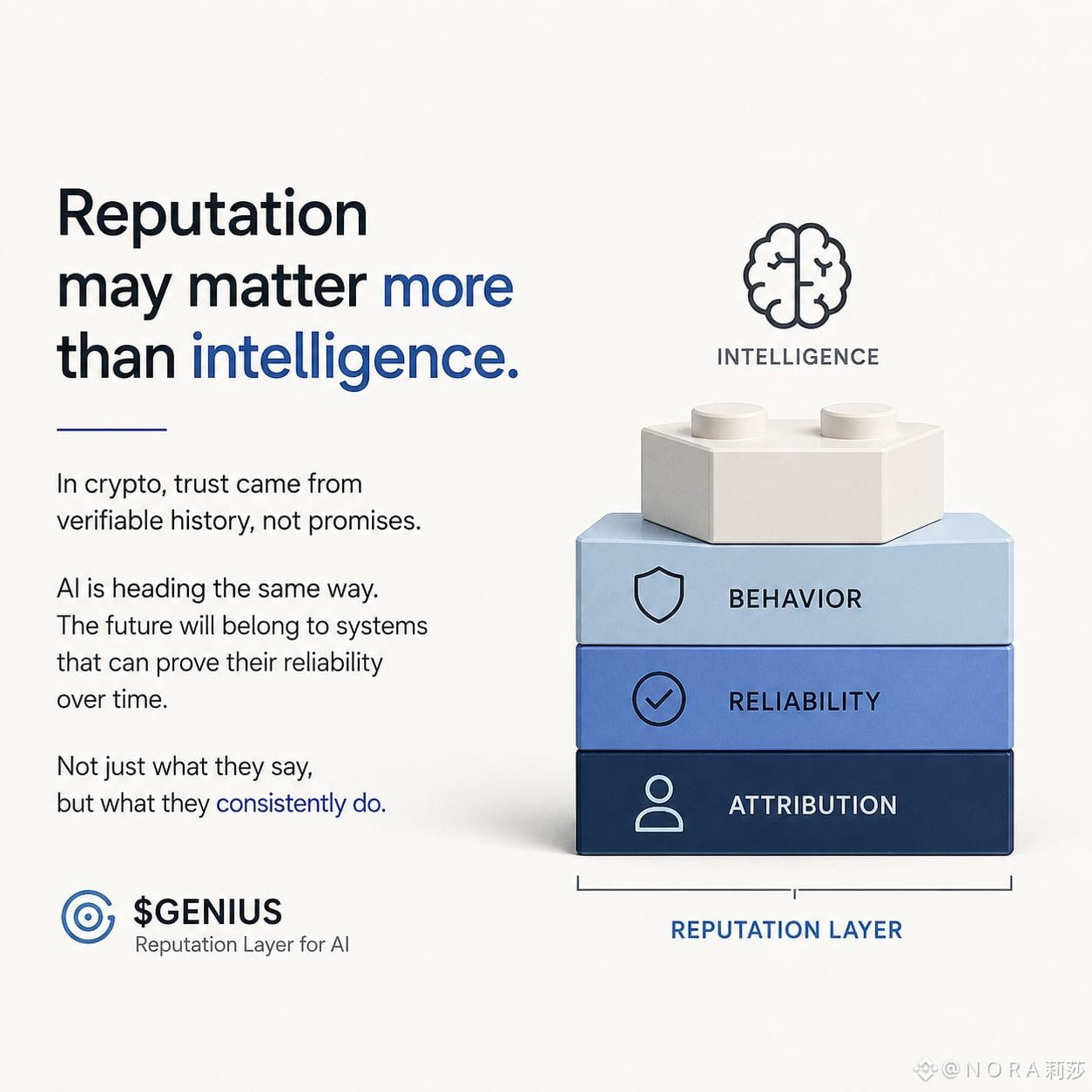
A próxima geração de IA pode não ser julgada apenas pela inteligência, mas pela reputação construída a partir do comportamento, confiabilidade, atribuição e desempenho histórico. Não o que um agente diz que pode fazer, mas o que ele tem feito consistentemente.
Crypto nos ensinou que uma história transparente muitas vezes importa mais do que promessas.
Se essa lição se aplicar à IA, a reputação pode se tornar uma camada fundamental da pilha, uma que, no final das contas, se prove mais valiosa do que a inteligência bruta em si.
#genius @GeniusOfficial
Eu fico pensando sobre sistemas de reputação de IA através da lente da infraestrutura de crypto do início.
No Bitcoin, a grande sacada não foi a inteligência. Foi a verificabilidade. A rede não precisava confiar em quem fazia uma afirmação porque podia verificar a história por trás dela.
A IA parece estar se aproximando de uma transição similar.
Hoje, a maior parte da atenção está focada na capacidade do modelo: janelas de contexto maiores, melhor raciocínio, saídas mais rápidas. Mas à medida que agentes autônomos se tornam mais comuns, uma pergunta diferente começa a importar:
Esse sistema pode ser confiável ao longo do tempo?
É aí que projetos como $GENIUS se tornam interessantes.
A próxima geração de IA pode não ser julgada apenas pela inteligência, mas pela reputação construída a partir do comportamento, confiabilidade, atribuição e desempenho histórico. Não o que um agente diz que pode fazer, mas o que ele tem feito consistentemente.
Crypto nos ensinou que uma história transparente muitas vezes importa mais do que promessas.
Se essa lição se aplicar à IA, a reputação pode se tornar uma camada fundamental da pilha, uma que, no final das contas, se prove mais valiosa do que a inteligência bruta em si.
#genius @GeniusOfficial
No Bitcoin, a grande sacada não foi a inteligência. Foi a verificabilidade. A rede não precisava confiar em quem fazia uma afirmação porque podia verificar a história por trás dela.
A IA parece estar se aproximando de uma transição similar.
Hoje, a maior parte da atenção está focada na capacidade do modelo: janelas de contexto maiores, melhor raciocínio, saídas mais rápidas. Mas à medida que agentes autônomos se tornam mais comuns, uma pergunta diferente começa a importar:
Esse sistema pode ser confiável ao longo do tempo?
É aí que projetos como $GENIUS se tornam interessantes.
A próxima geração de IA pode não ser julgada apenas pela inteligência, mas pela reputação construída a partir do comportamento, confiabilidade, atribuição e desempenho histórico. Não o que um agente diz que pode fazer, mas o que ele tem feito consistentemente.
Crypto nos ensinou que uma história transparente muitas vezes importa mais do que promessas.
Se essa lição se aplicar à IA, a reputação pode se tornar uma camada fundamental da pilha, uma que, no final das contas, se prove mais valiosa do que a inteligência bruta em si.
#genius @GeniusOfficial
2
4
144
·
--
Eu continuo pensando sobre $OPEN menos como um produto e mais como um problema de coordenação.
O Crypto já mostrou esse padrão: Bitcoin não venceu pela velocidade ou flexibilidade, mas pela história verificável. Ethereum estendeu isso para uma execução composta. Mas ambos introduziram silenciosamente algo mais profundo: sistemas onde o comportamento se torna permanentemente legível.
A IA parece estar atingindo o mesmo limite agora.
Ainda avaliamos modelos como saídas isoladas: corretas ou incorretas, úteis ou não. Mas uma vez que os agentes de IA começam a interagir, delegar e construir sobre o trabalho uns dos outros, essa estrutura deixa de funcionar.
É aí que uma camada de reputação começa a importar: comportamento, confiabilidade e atribuição carregados ao longo do tempo e sistemas, não apenas respostas únicas.
Nesse sentido, $OPEN aponta para algo mais próximo de infraestrutura do que de aplicação: como você faz a confiança em IA ser acumulativa em vez de episódica?
E cada vez mais, parece que a inteligência não será mais o gargalo. A reputação será.
#OpenLedger @Openledger
Eu continuo pensando sobre $OPEN menos como um produto e mais como um problema de coordenação.
O Crypto já mostrou esse padrão: Bitcoin não venceu pela velocidade ou flexibilidade, mas pela história verificável. Ethereum estendeu isso para uma execução composta. Mas ambos introduziram silenciosamente algo mais profundo: sistemas onde o comportamento se torna permanentemente legível.
A IA parece estar atingindo o mesmo limite agora.
Ainda avaliamos modelos como saídas isoladas: corretas ou incorretas, úteis ou não. Mas uma vez que os agentes de IA começam a interagir, delegar e construir sobre o trabalho uns dos outros, essa estrutura deixa de funcionar.
É aí que uma camada de reputação começa a importar: comportamento, confiabilidade e atribuição carregados ao longo do tempo e sistemas, não apenas respostas únicas.
Nesse sentido, $OPEN aponta para algo mais próximo de infraestrutura do que de aplicação: como você faz a confiança em IA ser acumulativa em vez de episódica?
E cada vez mais, parece que a inteligência não será mais o gargalo. A reputação será.
#OpenLedger @OpenLedger
O Crypto já mostrou esse padrão: Bitcoin não venceu pela velocidade ou flexibilidade, mas pela história verificável. Ethereum estendeu isso para uma execução composta. Mas ambos introduziram silenciosamente algo mais profundo: sistemas onde o comportamento se torna permanentemente legível.
A IA parece estar atingindo o mesmo limite agora.
Ainda avaliamos modelos como saídas isoladas: corretas ou incorretas, úteis ou não. Mas uma vez que os agentes de IA começam a interagir, delegar e construir sobre o trabalho uns dos outros, essa estrutura deixa de funcionar.
É aí que uma camada de reputação começa a importar: comportamento, confiabilidade e atribuição carregados ao longo do tempo e sistemas, não apenas respostas únicas.
Nesse sentido, $OPEN aponta para algo mais próximo de infraestrutura do que de aplicação: como você faz a confiança em IA ser acumulativa em vez de episódica?
E cada vez mais, parece que a inteligência não será mais o gargalo. A reputação será.
#OpenLedger @OpenLedger
2
146
·
--
Quando a Inteligência se Torna Barata, a Reputação se Torna a Verdadeira Camada de InfraestruturaEu continuo voltando a uma observação simples: no cripto, passamos anos otimizando a verificação do estado, e agora estamos começando a enfrentar um problema diferente, a verificação do comportamento ao longo do tempo.
Se o Bitcoin resolveu "o que é verdade agora?" e o Ethereum ampliou isso para "o que pode ser executado sem confiança?", então os sistemas e protocolos de IA emergentes, como $OPEN , estão cada vez mais apontando para uma pergunta mais difícil: "o que tem sido consistentemente confiável, atribuível e responsável?"
Quando a Inteligência se Torna Barata, a Reputação se Torna a Verdadeira Camada de Infraestrutura
Eu continuo voltando a uma observação simples: no cripto, passamos anos otimizando a verificação do estado, e agora estamos começando a enfrentar um problema diferente, a verificação do comportamento ao longo do tempo.
Se o Bitcoin resolveu "o que é verdade agora?" e o Ethereum ampliou isso para "o que pode ser executado sem confiança?", então os sistemas e protocolos de IA emergentes, como $OPEN , estão cada vez mais apontando para uma pergunta mais difícil: "o que tem sido consistentemente confiável, atribuível e responsável?"
Se o Bitcoin resolveu "o que é verdade agora?" e o Ethereum ampliou isso para "o que pode ser executado sem confiança?", então os sistemas e protocolos de IA emergentes, como $OPEN , estão cada vez mais apontando para uma pergunta mais difícil: "o que tem sido consistentemente confiável, atribuível e responsável?"
1
3
136
·
--
Eu fico pensando em como o crypto mudou silenciosamente de “quem consegue computar mais” para “quem pode ser confiável ao longo do tempo.”
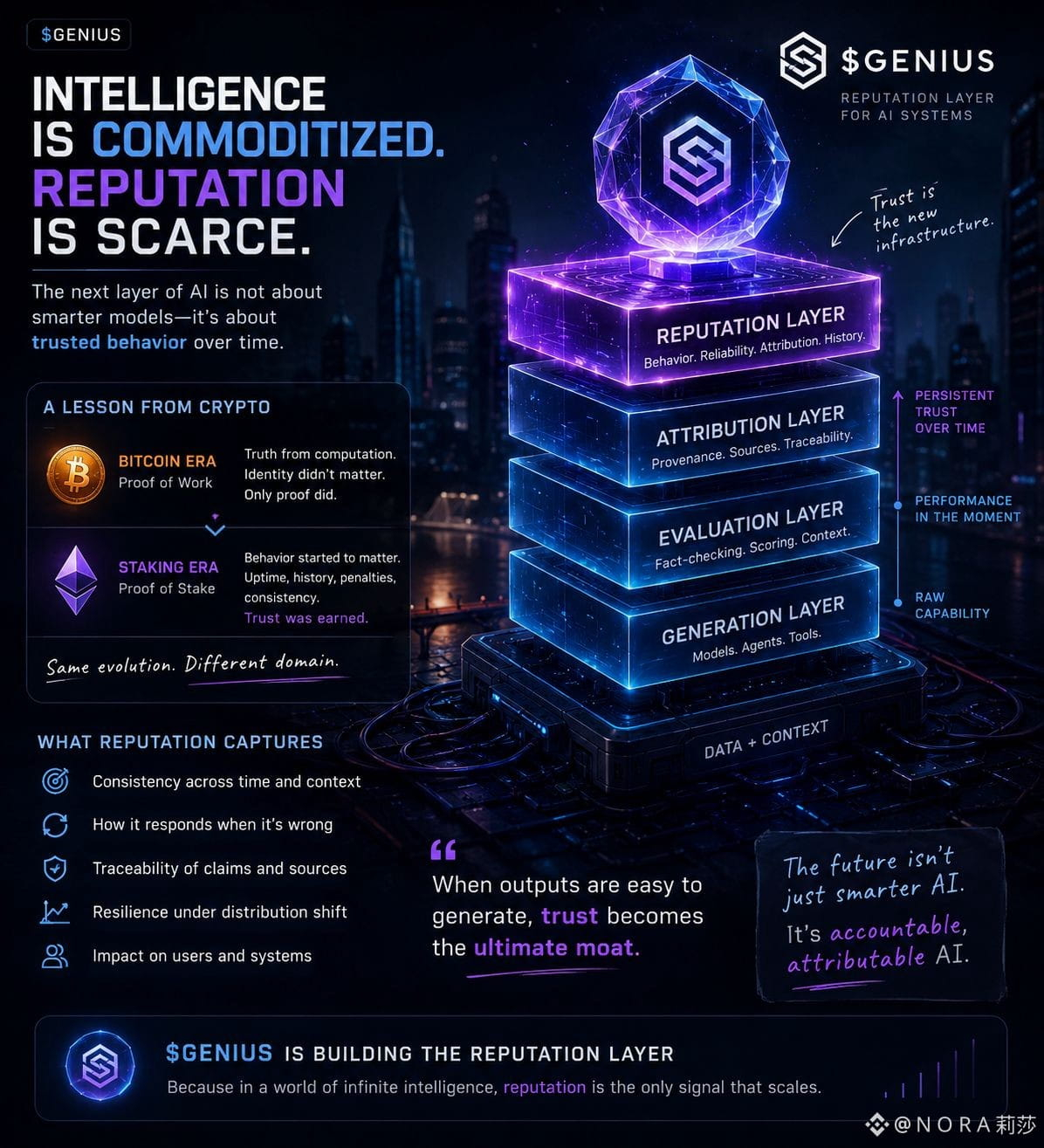
O Bitcoin começou como uma verdade pura de prova de trabalho, emergindo da energia e verificação, não da identidade. Mas, uma vez que entramos nos sistemas de staking, o centro de gravidade mudou. De repente, a história passou a importar: disponibilidade, comportamento, penalidades, consistência. A confiança se tornou algo acumulado, não presumido.
O que estou vendo com $GENIUS parece ser essa mesma transição, mas dentro dos sistemas de IA.
Não estamos mais em uma fase onde a inteligência bruta é o gargalo. Os modelos já conseguem gerar saídas competentes. A verdadeira lacuna é: podemos rastrear a confiabilidade ao longo do tempo, contexto e ciclos de correção?
Esse é um problema de reputação, não um problema de modelo.
Em termos de crypto, parece mais próximo da pontuação de validadores do que da computação. Não é apenas o que você produz, mas como você se comporta quando as condições mudam, quando você está errado, quando os dados mudam, quando a ambiguidade aumenta.
Então, a IA começa a parecer menos como uma única camada de inteligência e mais como um sistema empilhado: geração, avaliação, atribuição e, em seguida, um registro de reputação persistente acima de tudo.
E isso muda a hierarquia.
Porque uma vez que o comportamento é mensurável e persistente, a inteligência sozinha deixa de ser o ativo escasso.
A reputação se torna a verdadeira camada de infraestrutura.
#genius @GeniusOfficial
Eu fico pensando em como o crypto mudou silenciosamente de “quem consegue computar mais” para “quem pode ser confiável ao longo do tempo.”
O Bitcoin começou como uma verdade pura de prova de trabalho, emergindo da energia e verificação, não da identidade. Mas, uma vez que entramos nos sistemas de staking, o centro de gravidade mudou. De repente, a história passou a importar: disponibilidade, comportamento, penalidades, consistência. A confiança se tornou algo acumulado, não presumido.
O que estou vendo com $GENIUS parece ser essa mesma transição, mas dentro dos sistemas de IA.
Não estamos mais em uma fase onde a inteligência bruta é o gargalo. Os modelos já conseguem gerar saídas competentes. A verdadeira lacuna é: podemos rastrear a confiabilidade ao longo do tempo, contexto e ciclos de correção?
Esse é um problema de reputação, não um problema de modelo.
Em termos de crypto, parece mais próximo da pontuação de validadores do que da computação. Não é apenas o que você produz, mas como você se comporta quando as condições mudam, quando você está errado, quando os dados mudam, quando a ambiguidade aumenta.
Então, a IA começa a parecer menos como uma única camada de inteligência e mais como um sistema empilhado: geração, avaliação, atribuição e, em seguida, um registro de reputação persistente acima de tudo.
E isso muda a hierarquia.
Porque uma vez que o comportamento é mensurável e persistente, a inteligência sozinha deixa de ser o ativo escasso.
A reputação se torna a verdadeira camada de infraestrutura.
#genius @GeniusOfficial
O Bitcoin começou como uma verdade pura de prova de trabalho, emergindo da energia e verificação, não da identidade. Mas, uma vez que entramos nos sistemas de staking, o centro de gravidade mudou. De repente, a história passou a importar: disponibilidade, comportamento, penalidades, consistência. A confiança se tornou algo acumulado, não presumido.
O que estou vendo com $GENIUS parece ser essa mesma transição, mas dentro dos sistemas de IA.
Não estamos mais em uma fase onde a inteligência bruta é o gargalo. Os modelos já conseguem gerar saídas competentes. A verdadeira lacuna é: podemos rastrear a confiabilidade ao longo do tempo, contexto e ciclos de correção?
Esse é um problema de reputação, não um problema de modelo.
Em termos de crypto, parece mais próximo da pontuação de validadores do que da computação. Não é apenas o que você produz, mas como você se comporta quando as condições mudam, quando você está errado, quando os dados mudam, quando a ambiguidade aumenta.
Então, a IA começa a parecer menos como uma única camada de inteligência e mais como um sistema empilhado: geração, avaliação, atribuição e, em seguida, um registro de reputação persistente acima de tudo.
E isso muda a hierarquia.
Porque uma vez que o comportamento é mensurável e persistente, a inteligência sozinha deixa de ser o ativo escasso.
A reputação se torna a verdadeira camada de infraestrutura.
#genius @GeniusOfficial
1
1
4
162
·
--
Eu continuo comparando a IA agora com o início do cripto, não em termos de tecnologia, mas em termos do que realmente quebra os sistemas.
Em ambos os casos, nunca foi apenas sobre capacidade. O Bitcoin não falhou porque a mineração era fraca. O DeFi não falhou porque os contratos inteligentes eram lentos. Os sistemas falharam quando o comportamento sob estresse não era mensurável ou responsável.
A IA está atingindo esse mesmo limite.
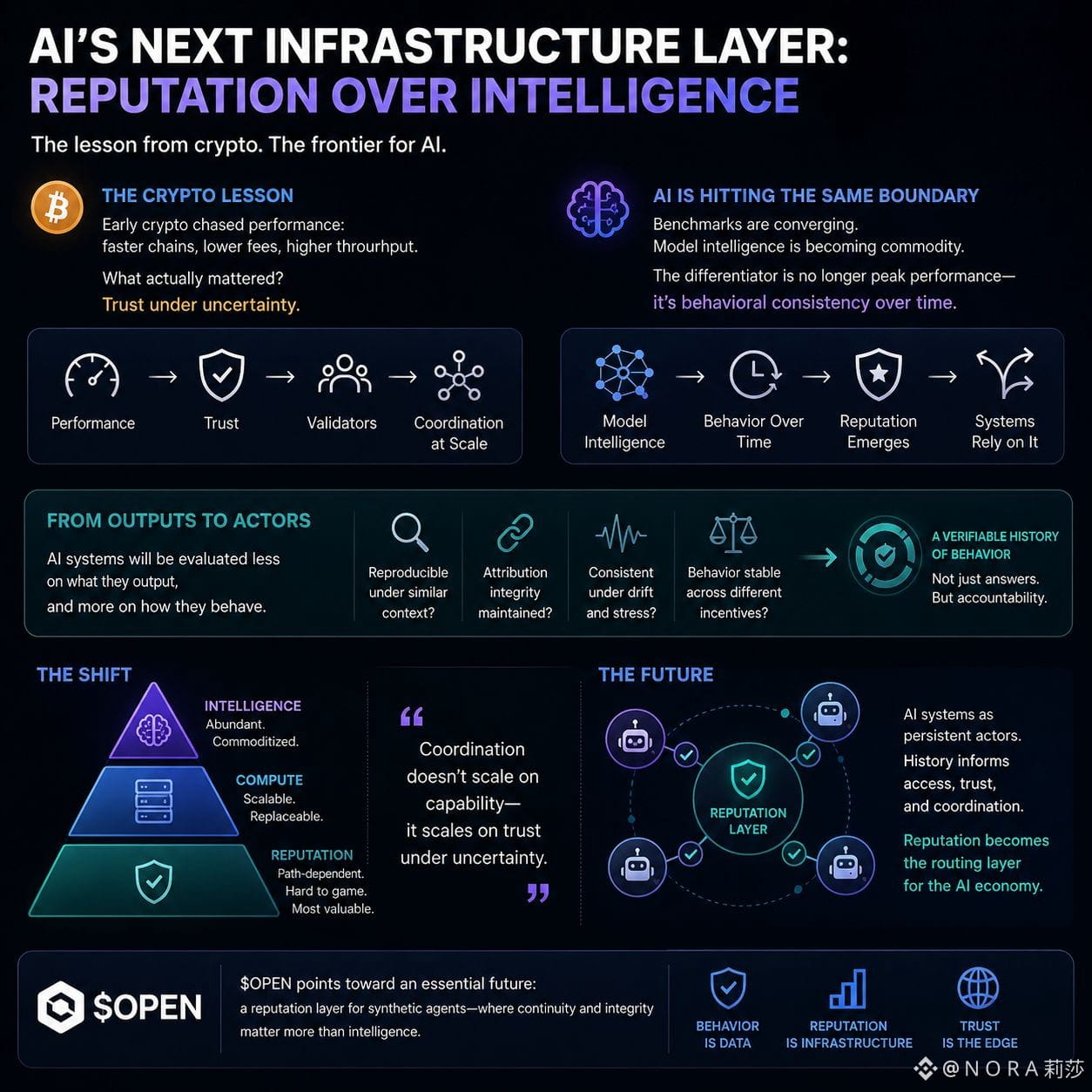
Com $OPEN , o que se destaca é a mudança de avaliar modelos como inteligência estática para tratá-los como atores persistentes com histórias. Não é "o que ele pode fazer?", mas "como ele se comporta ao longo do tempo, em contextos e incentivos em mudança?"
Essa distinção importa mais à medida que a IA se move para ambientes agentes de trading, automação, pipelines de decisão, onde uma saída não confiável não permanece isolada; ela se propaga.
Os benchmarks já estão se comprimindo. A inteligência do modelo está se tornando menos diferenciada. O que não se comprime é o comportamento: consistência, integridade de atribuição, padrões de falha sob deriva.
É aí que a reputação começa a importar mais do que a inteligência bruta.
Não reputação como branding, mas como um traço acumulado e auditável de comportamento que pode ser precificado, classificado e roteado.
Se o cripto ensinou algo, é isso: coordenação não escala na capacidade - escala na confiança sob incerteza.
A IA agora está entrando exatamente nesse espaço de problema.
#OpenLedger @Openledger
Eu continuo comparando a IA agora com o início do cripto, não em termos de tecnologia, mas em termos do que realmente quebra os sistemas.
Em ambos os casos, nunca foi apenas sobre capacidade. O Bitcoin não falhou porque a mineração era fraca. O DeFi não falhou porque os contratos inteligentes eram lentos. Os sistemas falharam quando o comportamento sob estresse não era mensurável ou responsável.
A IA está atingindo esse mesmo limite.
Com $OPEN , o que se destaca é a mudança de avaliar modelos como inteligência estática para tratá-los como atores persistentes com histórias. Não é "o que ele pode fazer?", mas "como ele se comporta ao longo do tempo, em contextos e incentivos em mudança?"
Essa distinção importa mais à medida que a IA se move para ambientes agentes de trading, automação, pipelines de decisão, onde uma saída não confiável não permanece isolada; ela se propaga.
Os benchmarks já estão se comprimindo. A inteligência do modelo está se tornando menos diferenciada. O que não se comprime é o comportamento: consistência, integridade de atribuição, padrões de falha sob deriva.
É aí que a reputação começa a importar mais do que a inteligência bruta.
Não reputação como branding, mas como um traço acumulado e auditável de comportamento que pode ser precificado, classificado e roteado.
Se o cripto ensinou algo, é isso: coordenação não escala na capacidade - escala na confiança sob incerteza.
A IA agora está entrando exatamente nesse espaço de problema.
#OpenLedger @OpenLedger
Em ambos os casos, nunca foi apenas sobre capacidade. O Bitcoin não falhou porque a mineração era fraca. O DeFi não falhou porque os contratos inteligentes eram lentos. Os sistemas falharam quando o comportamento sob estresse não era mensurável ou responsável.
A IA está atingindo esse mesmo limite.
Com $OPEN , o que se destaca é a mudança de avaliar modelos como inteligência estática para tratá-los como atores persistentes com histórias. Não é "o que ele pode fazer?", mas "como ele se comporta ao longo do tempo, em contextos e incentivos em mudança?"
Essa distinção importa mais à medida que a IA se move para ambientes agentes de trading, automação, pipelines de decisão, onde uma saída não confiável não permanece isolada; ela se propaga.
Os benchmarks já estão se comprimindo. A inteligência do modelo está se tornando menos diferenciada. O que não se comprime é o comportamento: consistência, integridade de atribuição, padrões de falha sob deriva.
É aí que a reputação começa a importar mais do que a inteligência bruta.
Não reputação como branding, mas como um traço acumulado e auditável de comportamento que pode ser precificado, classificado e roteado.
Se o cripto ensinou algo, é isso: coordenação não escala na capacidade - escala na confiança sob incerteza.
A IA agora está entrando exatamente nesse espaço de problema.
#OpenLedger @OpenLedger
3
5
123
·
--
Artigo
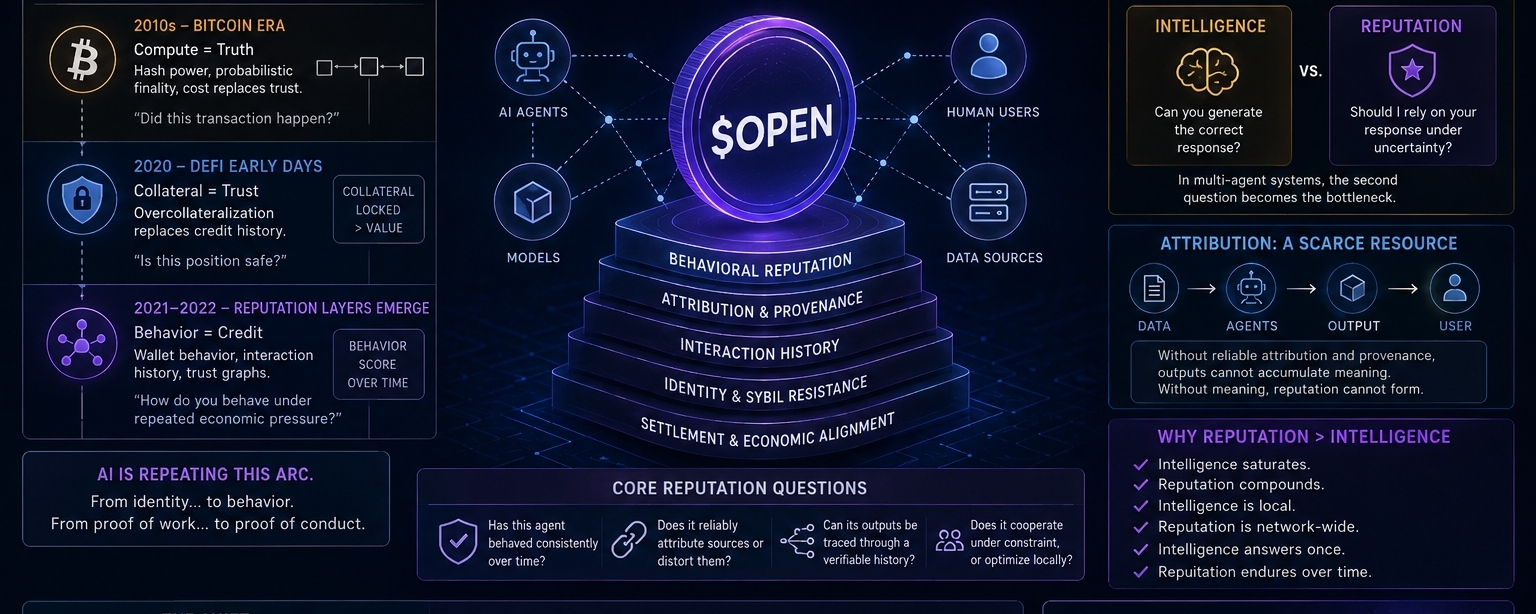
Reputação > Inteligência: O Poder Oculto da Infraestrutura que Sustenta os Sistemas de IAEu continuo voltando a uma simples discordância em como atualmente avaliamos sistemas de inteligência: ainda tendemos a recompensar a qualidade da saída, enquanto os sistemas em si estão silenciosamente se movendo em direção a algo mais fundamental—confiabilidade comportamental ao longo do tempo.
$OPEN, nesse sentido, é melhor entendido como um sinal de infraestrutura do que como uma narrativa de token. Não porque represente um sistema finalizado, mas porque está dentro de uma direção mais ampla que a pilha de IA está seguindo: reputação como um primitivo de primeira classe.
Reputação > Inteligência: O Poder Oculto da Infraestrutura que Sustenta os Sistemas de IA
Eu continuo voltando a uma simples discordância em como atualmente avaliamos sistemas de inteligência: ainda tendemos a recompensar a qualidade da saída, enquanto os sistemas em si estão silenciosamente se movendo em direção a algo mais fundamental—confiabilidade comportamental ao longo do tempo.
$OPEN , nesse sentido, é melhor entendido como um sinal de infraestrutura do que como uma narrativa de token. Não porque represente um sistema finalizado, mas porque está dentro de uma direção mais ampla que a pilha de IA está seguindo: reputação como um primitivo de primeira classe.
$OPEN , nesse sentido, é melhor entendido como um sinal de infraestrutura do que como uma narrativa de token. Não porque represente um sistema finalizado, mas porque está dentro de uma direção mais ampla que a pilha de IA está seguindo: reputação como um primitivo de primeira classe.
3
5
125
·
--
Eu fico pensando em como a internet era antes da banda larga se tornar normal.
A infraestrutura já existia.
Os casos de uso ainda estavam bagunçados.
A maioria das pessoas não conseguia explicar completamente por que isso importava ainda.
Mas o comportamento já estava mudando sob o barulho.
É assim que vejo $GENIUS agora.
Não como uma categoria de produto finalizada, mas como uma mudança comportamental inicial. As pessoas estão lentamente se afastando do processamento manual de informações para delegar partes da tomada de decisão, filtragem e execução a sistemas que aprendem junto com elas.
O que torna esta fase confusa é que o ecossistema ainda parece fragmentado do lado de fora. Muitas ferramentas. Muitas narrativas. Muita experimentação fingindo ser certeza.
Mas as transições tecnológicas iniciais quase sempre parecem ineficientes antes de se tornarem inevitáveis.
Os motores de busca pareciam caóticos antes de se tornarem um comportamento padrão.
O software em nuvem parecia pouco confiável antes de as empresas construírem operações inteiras em torno disso.
Até mesmo os feeds algorítmicos uma vez pareceram antinaturais antes de reconfigurarem silenciosamente a atenção.
Não estou totalmente convencido de que alguém entende como a versão madura deste mercado se parece ainda. Mas eu realmente acho que a mudança de comportamento subjacente é real.
E uma vez que o comportamento muda em escala, a infraestrutura geralmente segue.
#genius @GeniusOfficial
Eu fico pensando em como a internet era antes da banda larga se tornar normal.
A infraestrutura já existia.
Os casos de uso ainda estavam bagunçados.
A maioria das pessoas não conseguia explicar completamente por que isso importava ainda.
Mas o comportamento já estava mudando sob o barulho.
É assim que vejo $GENIUS agora.
Não como uma categoria de produto finalizada, mas como uma mudança comportamental inicial. As pessoas estão lentamente se afastando do processamento manual de informações para delegar partes da tomada de decisão, filtragem e execução a sistemas que aprendem junto com elas.
O que torna esta fase confusa é que o ecossistema ainda parece fragmentado do lado de fora. Muitas ferramentas. Muitas narrativas. Muita experimentação fingindo ser certeza.
Mas as transições tecnológicas iniciais quase sempre parecem ineficientes antes de se tornarem inevitáveis.
Os motores de busca pareciam caóticos antes de se tornarem um comportamento padrão.
O software em nuvem parecia pouco confiável antes de as empresas construírem operações inteiras em torno disso.
Até mesmo os feeds algorítmicos uma vez pareceram antinaturais antes de reconfigurarem silenciosamente a atenção.
Não estou totalmente convencido de que alguém entende como a versão madura deste mercado se parece ainda. Mas eu realmente acho que a mudança de comportamento subjacente é real.
E uma vez que o comportamento muda em escala, a infraestrutura geralmente segue.
#genius @GeniusOfficial
A infraestrutura já existia.
Os casos de uso ainda estavam bagunçados.
A maioria das pessoas não conseguia explicar completamente por que isso importava ainda.
Mas o comportamento já estava mudando sob o barulho.
É assim que vejo $GENIUS agora.
Não como uma categoria de produto finalizada, mas como uma mudança comportamental inicial. As pessoas estão lentamente se afastando do processamento manual de informações para delegar partes da tomada de decisão, filtragem e execução a sistemas que aprendem junto com elas.
O que torna esta fase confusa é que o ecossistema ainda parece fragmentado do lado de fora. Muitas ferramentas. Muitas narrativas. Muita experimentação fingindo ser certeza.
Mas as transições tecnológicas iniciais quase sempre parecem ineficientes antes de se tornarem inevitáveis.
Os motores de busca pareciam caóticos antes de se tornarem um comportamento padrão.
O software em nuvem parecia pouco confiável antes de as empresas construírem operações inteiras em torno disso.
Até mesmo os feeds algorítmicos uma vez pareceram antinaturais antes de reconfigurarem silenciosamente a atenção.
Não estou totalmente convencido de que alguém entende como a versão madura deste mercado se parece ainda. Mas eu realmente acho que a mudança de comportamento subjacente é real.
E uma vez que o comportamento muda em escala, a infraestrutura geralmente segue.
#genius @GeniusOfficial

2
8
194
·
--
$GENIUS me lembra muito de como a infraestrutura de nuvem se sentia antes da adoção em massa chegar completamente.
Naquela época, a maioria das pessoas via fragmentação, ferramentas sobrepostas e sistemas que pareciam bagunçados demais para se tornarem fundamentais. Mas por trás da superfície, o comportamento já estava mudando. Desenvolvedores e empresas começaram lentamente a construir como se os sistemas baseados em nuvem fossem inevitáveis muito antes da narrativa pública acompanhar.
Essa é a mesma sensação que eu tenho aqui.
A parte interessante sobre as mudanças na infraestrutura inicial é que elas raramente aparecem limpas em tempo real. Elas geralmente parecem caóticas, experimentais e difíceis de categorizar bem antes de se tornarem normais.
Não tenho certeza se alguém entende completamente como será a estrutura final em torno da coordenação de IA e interação entre máquinas ainda.
Mas o comportamento mudando antes do consenso sempre foi um dos primeiros sinais de que algo maior pode estar se formando.
#genius @GeniusOfficial
$GENIUS me lembra muito de como a infraestrutura de nuvem se sentia antes da adoção em massa chegar completamente.
Naquela época, a maioria das pessoas via fragmentação, ferramentas sobrepostas e sistemas que pareciam bagunçados demais para se tornarem fundamentais. Mas por trás da superfície, o comportamento já estava mudando. Desenvolvedores e empresas começaram lentamente a construir como se os sistemas baseados em nuvem fossem inevitáveis muito antes da narrativa pública acompanhar.
Essa é a mesma sensação que eu tenho aqui.
A parte interessante sobre as mudanças na infraestrutura inicial é que elas raramente aparecem limpas em tempo real. Elas geralmente parecem caóticas, experimentais e difíceis de categorizar bem antes de se tornarem normais.
Não tenho certeza se alguém entende completamente como será a estrutura final em torno da coordenação de IA e interação entre máquinas ainda.
Mas o comportamento mudando antes do consenso sempre foi um dos primeiros sinais de que algo maior pode estar se formando.
#genius @GeniusOfficial
Naquela época, a maioria das pessoas via fragmentação, ferramentas sobrepostas e sistemas que pareciam bagunçados demais para se tornarem fundamentais. Mas por trás da superfície, o comportamento já estava mudando. Desenvolvedores e empresas começaram lentamente a construir como se os sistemas baseados em nuvem fossem inevitáveis muito antes da narrativa pública acompanhar.
Essa é a mesma sensação que eu tenho aqui.
A parte interessante sobre as mudanças na infraestrutura inicial é que elas raramente aparecem limpas em tempo real. Elas geralmente parecem caóticas, experimentais e difíceis de categorizar bem antes de se tornarem normais.
Não tenho certeza se alguém entende completamente como será a estrutura final em torno da coordenação de IA e interação entre máquinas ainda.
Mas o comportamento mudando antes do consenso sempre foi um dos primeiros sinais de que algo maior pode estar se formando.
#genius @GeniusOfficial

2
5
300
·
--
Artigo
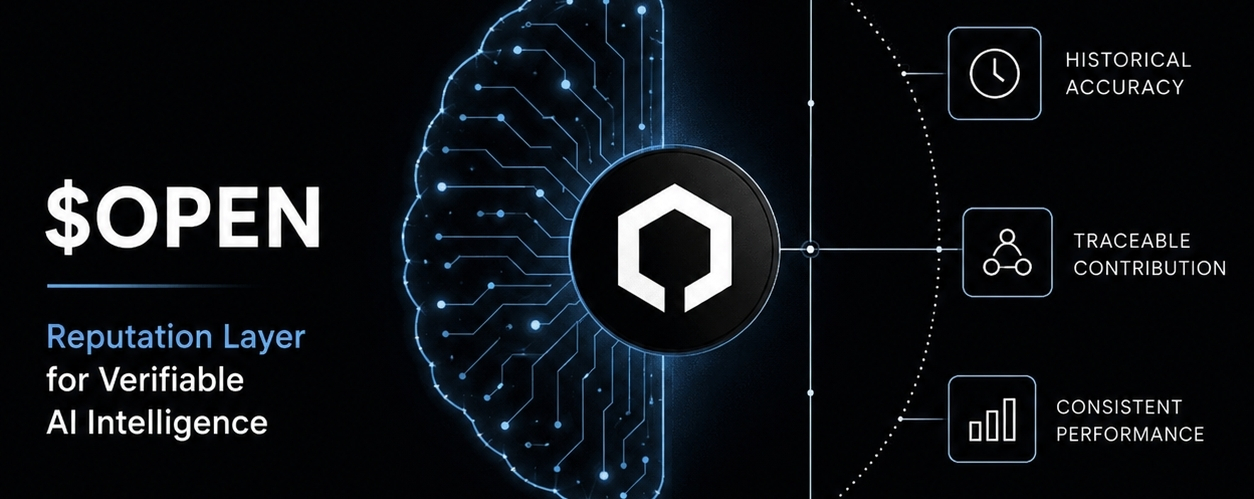
$OPEN e a Emergente Camada de Reputação de IA VerificávelContinuo voltando para $OPEN, mas não como uma narrativa de produto, mais como um problema de coordenação que está se revelando lentamente.
O paralelo histórico mais próximo que consigo pensar é o início do crypto em si, antes que os preços dos tokens ou as narrativas estabilizassem o espaço. Naquela época, a verdadeira inovação não era "moeda" ou "DeFi", mas sim a introdução de comportamento verificável em sistemas que anteriormente dependiam da confiança. O Bitcoin não resolveu a inteligência ou eficiência; ele resolveu a atribuição sob condições adversariais. Você finalmente podia observar quem fez o quê, quando, e com qual consequência, sem pedir permissão a uma instituição.
$OPEN e a Emergente Camada de Reputação de IA Verificável
Continuo voltando para $OPEN , mas não como uma narrativa de produto, mais como um problema de coordenação que está se revelando lentamente.
O paralelo histórico mais próximo que consigo pensar é o início do crypto em si, antes que os preços dos tokens ou as narrativas estabilizassem o espaço. Naquela época, a verdadeira inovação não era "moeda" ou "DeFi", mas sim a introdução de comportamento verificável em sistemas que anteriormente dependiam da confiança. O Bitcoin não resolveu a inteligência ou eficiência; ele resolveu a atribuição sob condições adversariais. Você finalmente podia observar quem fez o quê, quando, e com qual consequência, sem pedir permissão a uma instituição.
O paralelo histórico mais próximo que consigo pensar é o início do crypto em si, antes que os preços dos tokens ou as narrativas estabilizassem o espaço. Naquela época, a verdadeira inovação não era "moeda" ou "DeFi", mas sim a introdução de comportamento verificável em sistemas que anteriormente dependiam da confiança. O Bitcoin não resolveu a inteligência ou eficiência; ele resolveu a atribuição sob condições adversariais. Você finalmente podia observar quem fez o quê, quando, e com qual consequência, sem pedir permissão a uma instituição.
1
5
97
Inicia sessão para explorar mais conteúdos
Junta-te a utilizadores de criptomoedas de todo o mundo na Binance Square
⚡️ Obtém informações úteis e recentes sobre criptomoedas.
💬 Com a confiança da maior exchange de criptomoedas do mundo.
👍 Descobre perspetivas reais de criadores verificados.
E-mail/Número de telefone
Tópicos em Tendência
AIStocksWhatNext
254,457 visualizações
2,552 a discutir
Participe e ganhe recompensas de tráfego na nossa campanha de hashtag em alta
✨Tópico: Que outras oportunidades de investimento ainda existem enquanto as ações de IA continuam subindo?
👉Como participar:
Publique uma postagem curta ou um artigo com a hashtag #AIStocksWhatNext
Compartilhe se você está otimista ou pessimista e publique suas participações em ações de IA ou suas operações — usar o widget de negociação pode melhorar sua elegibilidade.
Você também pode fortalecer sua postagem compartilhando dados ou gráficos e evitando imagens geradas por IA.
✍️Crie conteúdo com base nos ângulos abaixo:
- A Nvidia diz que as vendas de chips vão dobrar no próximo ano, e as principais empresas de IA continuam registrando receita recorde; o gasto com computação por trás disso é igualmente impressionante. A demanda por IA realmente decolou? E por quanto tempo isso pode durar? As ações de IA estão em alta em todo o mercado. Isso é uma ruptura real ou apenas um repique de curto prazo?
- Líderes da indústria estão pedindo para desacelerar o desenvolvimento de IA, enquanto Trump planeja construir uma “Força de IA”, afirmando que a IA poderia representar 25% do PIB dos EUA no futuro. De que lado você está? O apoio em nível estadual será uma vitória de longo prazo para as ações de IA?
- Você está comprando ações de IA? Compartilhe com nosso widget de compartilhamento de negociações suas operações/posições relacionadas a IA.
⏰Período da campanha:
- 2026-09-22 7:00 - 2026-09-24 4:00 UTC
🎁Recompensa:
- As postagens qualificadas que cumprirem as diretrizes acima e tiverem mais de 100 palavras serão revisadas e poderão receber um impulso aleatório de tráfego de 500 a 3.000 visualizações. Você receberá uma notificação do seu secretário de feed caso sua postagem seja selecionada.
- Tenha a chance de ter seu artigo destacado no Binance Square Official
Precisa de ideias para sua postagem? Visite a página do tópico #AIStocksWhatNext ou a Square Guide on How to Post for Better Reach.
Binance Square Official
·325 gostos
·726.3k visualizações
BitcoinBreaksAboveMayHighNears$86K
9,516 visualizações
154 a discutir
DogecoinRises15%
26,090 visualizações
809 a discutir