
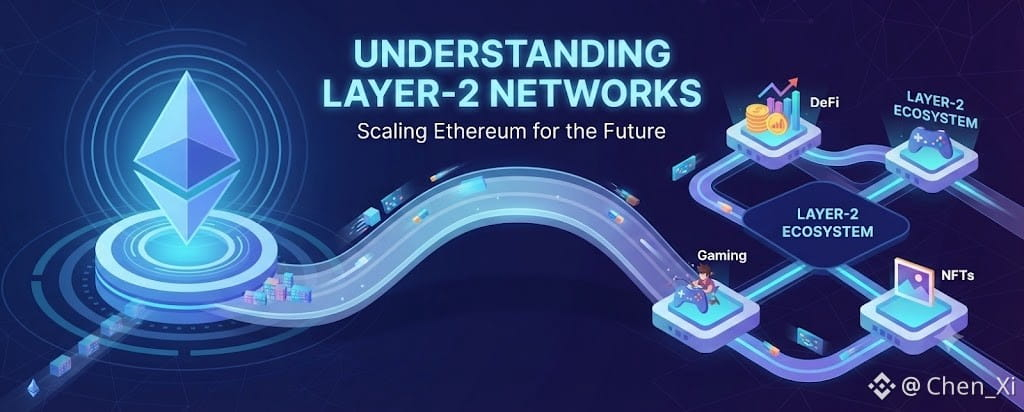

Understanding Layer-2 Networks: Why They Matter for the Future of Ethereum
As blockchain adoption grows, one challenge continues to appear in almost every discussion about decentralized applications: scalability. Networks such as Ethereum have become the foundation for decentralized finance (DeFi), NFTs, gaming, and many other Web3 innovations, but increased activity has often led to higher transaction fees and slower confirmation times. This is where Layer-2 networks have become an important part of the conversation.
While researching blockchain infrastructure, I found that Layer-2 solutions are frequently mentioned alongside major Web3 projects, yet they are often misunderstood. Instead of replacing Ethereum, these networks are designed to work with it, helping improve efficiency while continuing to benefit from Ethereum's underlying security.
## What Is a Layer-2 Network?
A Layer-2 network is a blockchain or protocol built on top of an existing blockchain, commonly referred to as Layer 1. Ethereum is the best-known example of a Layer-1 blockchain.
Rather than processing every transaction directly on Ethereum, a Layer-2 solution handles much of the activity separately before sending transaction data back to the main chain. This approach reduces congestion and can significantly lower transaction costs.
An easy way to think about it is a highway with increasing traffic. Instead of endlessly widening the highway, additional express lanes are built alongside it. Vehicles still reach the same destination, but traffic flows more efficiently.
## Why Ethereum Needs Scaling
Ethereum's decentralized design prioritizes security and broad participation. Every node plays a role in verifying the network, which strengthens trust but also limits how many transactions can be processed each second.
As more decentralized applications attract users, competition for block space increases. During periods of heavy demand, users may experience:
- Higher gas fees
- Longer confirmation times
- Reduced accessibility for smaller transactions
For applications involving gaming, social platforms, or micropayments, these limitations can become significant. Layer-2 technologies aim to reduce these bottlenecks without fundamentally changing Ethereum's security model.
## How Layer-2 Solutions Work
Although different Layer-2 projects use different technologies, the general idea is similar.
Transactions are processed away from Ethereum's main chain. Instead of publishing every individual action directly on Layer 1, many transactions are grouped together and submitted in batches.
This reduces the amount of data Ethereum needs to process while preserving a verifiable record of activity.
One aspect I found particularly interesting is that different Layer-2 designs make different trade-offs between speed, complexity, data availability, and withdrawal times. Understanding these differences helps explain why multiple Layer-2 ecosystems continue to coexist.
## Common Types of Layer-2 Technologies
Several approaches have emerged over the years.
### Optimistic Rollups
Optimistic rollups assume submitted transactions are valid unless someone challenges them within a specified period.
This design allows efficient processing while relying on fraud-proof mechanisms if incorrect data is submitted.
Examples include networks such as Optimism and Arbitrum.
### Zero-Knowledge Rollups
Zero-knowledge (ZK) rollups use cryptographic proofs to demonstrate that batches of transactions are valid before they are finalized on Ethereum.
Because mathematical proofs verify correctness, confirmations can often be faster than systems relying on challenge periods.
Projects such as zkSync, Starknet, and Polygon zkEVM are examples of this category.
### Other Scaling Approaches
Sidechains, validiums, and state channels also contribute to blockchain scalability, although they differ from rollups in their security assumptions and operational models.
Each approach offers benefits for different use cases.
## Practical Applications
Lower transaction costs create opportunities that may not be practical on a congested Layer-1 network.
Some examples include:
- Decentralized finance with more affordable trading and lending
- Blockchain gaming requiring frequent in-game transactions
- NFT marketplaces with reduced minting costs
- Social applications handling large numbers of user interactions
- Payment systems supporting smaller transfers
As developers continue building Web3 applications, infrastructure that improves scalability becomes increasingly important.
## Benefits and Trade-Offs
Layer-2 technology offers several advantages.
Reduced fees make blockchain applications more accessible to a wider audience. Faster transaction processing can improve user experience, especially for applications requiring frequent interactions. Developers also gain greater flexibility when designing decentralized services.
However, no solution is without trade-offs.
Different Layer-2 networks may have varying degrees of decentralization, bridge mechanisms, security assumptions, and compatibility with Ethereum applications. Moving assets between chains can introduce additional complexity, particularly for newcomers.
Looking deeper into the ecosystem, another consideration is fragmentation. With many Layer-2 networks operating simultaneously, liquidity and users can become distributed across multiple environments rather than concentrated in one place.
## The Growing Layer-2 Ecosystem
Based on publicly available information, Layer-2 adoption has expanded considerably over the past few years. Many decentralized applications now deploy across multiple scaling networks instead of relying solely on Ethereum's main chain.
This multi-network approach reflects a broader shift within Web3. Rather than expecting a single blockchain to meet every requirement, developers increasingly choose infrastructure that matches the needs of their applications.
At the same time, interoperability remains an active area of development. Better cross-chain communication and improved user experiences could make interacting with multiple networks feel more seamless in the future.
## Questions Worth Watching
Although Layer-2 technology has progressed rapidly, several questions remain open.
How will interoperability improve as more Layer-2 ecosystems emerge? Can onboarding become simple enough that users no longer need to think about which network they are using? How will decentralized governance evolve as these ecosystems mature?
These questions do not yet have definitive answers, but they highlight that blockchain infrastructure continues to develop alongside growing adoption.
## Final Thoughts
Layer-2 networks represent an important step toward making Ethereum more scalable and practical for everyday applications. Rather than replacing the main blockchain, they extend its capabilities by reducing congestion and improving transaction efficiency while continuing to leverage Ethereum's security.
From a technology perspective, what stands out most is the diversity of approaches. Different Layer-2 designs reflect different priorities, and that variety may continue shaping how Web3 applications are built in the coming years. One area worth monitoring is the evolution of interoperability between Layer-2 ecosystems, as smoother movement of assets and data could significantly improve the overall user experience.
For readers interested in learning more, consulting the official documentation of Ethereum and individual Layer-2 projects is the best way to stay informed as the technology evolves.
What do you think will drive the next wave of Layer-2 adoption? Which scaling approach d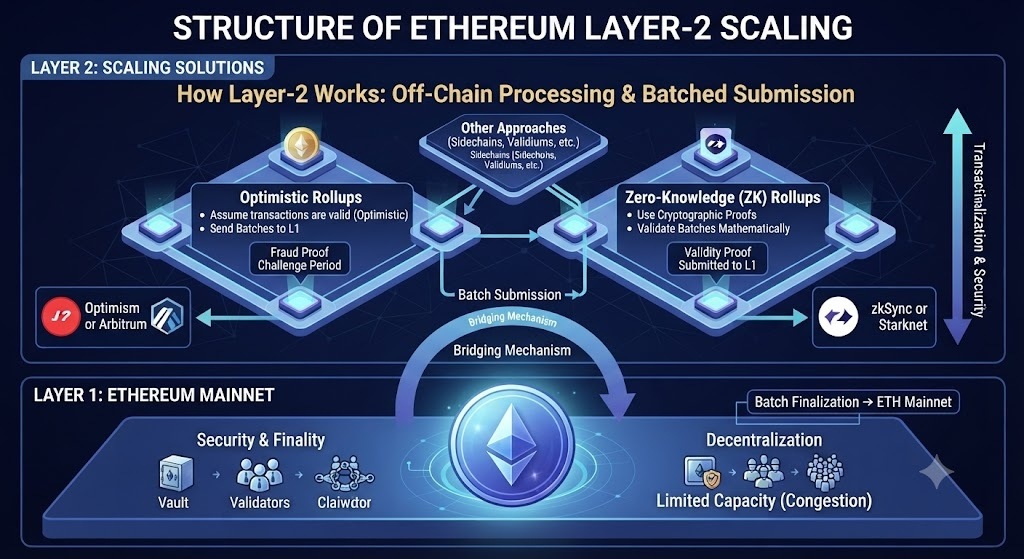 o you find most promising, and why? How important is seamless interoperability for the long-term growth of Web3?