
I Realized Something Strange While Using Apps Every Day. Newton Protocol Made Me Think About It Differently.
A few days ago my banking app asked me to confirm a payment.
Not because I entered the wrong password.
Not because my account had a problem.
It simply wanted to make sure I actually intended to send the money.
I clicked "Confirm" without thinking.
A few minutes later, I wondered why that extra step even existed.
The bank already knew who I was.
It knew my balance.
It knew the destination account.
Technically, the transaction could have happened immediately.
Yet someone decided there should be one final checkpoint before money moved.
The more I thought about it, the more I realized something.
Crypto became incredibly good at moving assets.
Maybe we never spent enough time asking when assets should move at all.
That question followed me while reading Newton Protocol's recent updates.
At first glance, Newton looks like another project preparing infrastructure for AI agents and programmable finance.
But one small detail kept pulling my attention back.
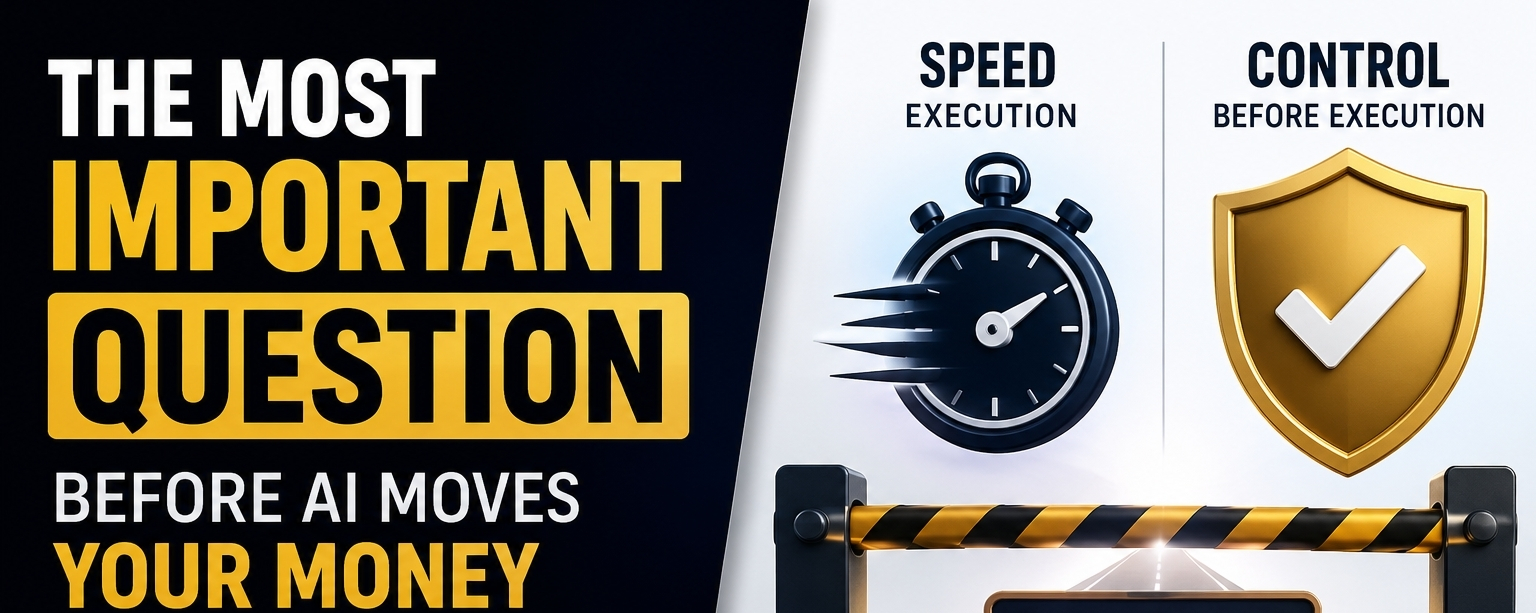
Instead of giving automation unlimited freedom, Newton keeps building ways to define its boundaries before execution happens.
That feels much more important than making automation faster.
Imagine an AI agent managing a treasury.
It can analyse markets in seconds.
It can react faster than any human.
It never gets tired.
Most people immediately ask whether the AI is intelligent enough.
I think there's another question that matters even more.
Who decides what the AI is not allowed to do?
That isn't really an AI problem.
It's a trust problem.
Newton's approach made me look at automation differently.
The project keeps talking about programmable permissions, authorization and policies that exist before execution.
Not after.
Before.
That sounds like a tiny architectural choice.
I don't think it is.
Because once software begins controlling larger amounts of capital, every automated decision becomes less about capability and more about responsibility.
The smartest system isn't automatically the safest one.
Sometimes the safest system is simply the one that knows where to stop.
That's probably why this idea stayed in my head long after I finished reading.
Maybe the future of on-chain finance won't be defined by the protocols that let AI do everything.
Maybe it will belong to the protocols that can clearly prove why certain actions should never happen in the first place.
It's a small difference on paper.
It could become a very big difference once autonomous finance becomes normal.
Maybe that's what Newton Protocol is quietly preparing for.
And honestly...
I think that's a much more interesting conversation than another promise of faster transactions.