

One assumption has been bothering me lately. We expect rules and software to move together. It sounds normal until you look at how they actually behave. A spending limit can change tomorrow. A compliance rule next week. A new risk policy by the end of the month. Software usually stays the same.
Newton gave me a different way to look at that problem.
Instead of putting every rule inside a smart contract, builders define programmable policies in Rego. Those policies evaluate spending limits, identity requirements, sanctions screening, and other conditions before execution. Contracts still execute the action. Policies decide whether the action should move forward under today's rules. One layer stays stable. The other keeps changing.
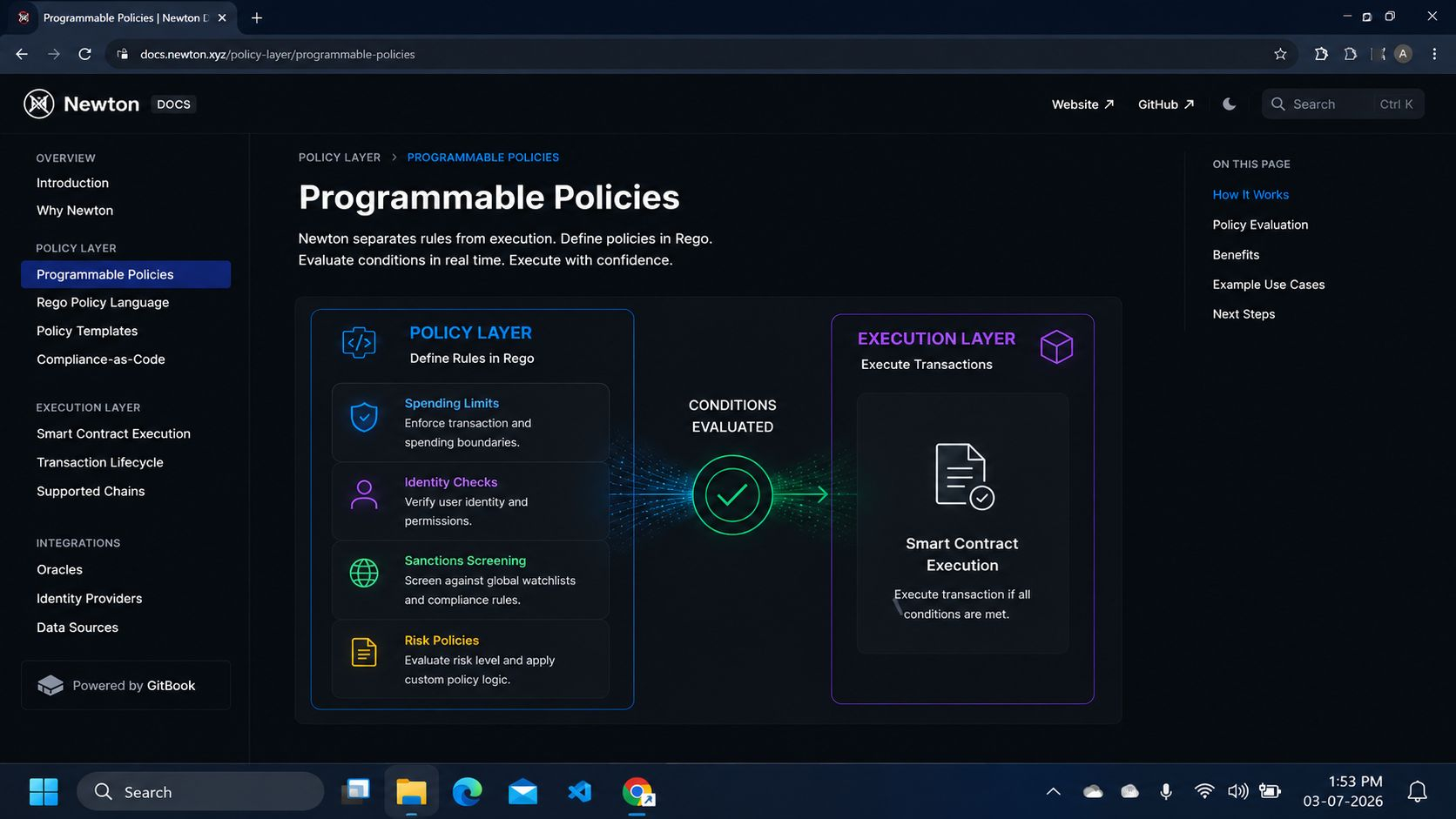
I've started thinking the separation matters more than the language itself. Rego isn't what made me pause. Separating rules from execution did. Once those jobs stop sharing the same layer, a new business rule doesn't automatically become a protocol change. New rule. Same contract.
The comparison that made sense came from my browser.
Chrome doesn't install a new version every time an ad blocker updates its filter list. Same browser. Different rules. That's why extensions keep working without turning every filter update into a browser release.
Newton made me look at smart contracts a little differently. Maybe they were never supposed to carry every rule in the first place. Maybe their job is execution, while policies decide whether execution still makes sense under the rules that exist today.
Source: Newton Protocol Documentation (Programmable Policies, Rego Policy Language, Compliance-as-Code). Not financial advice. DYOR. @NewtonProtocol #Newt $NEWT