
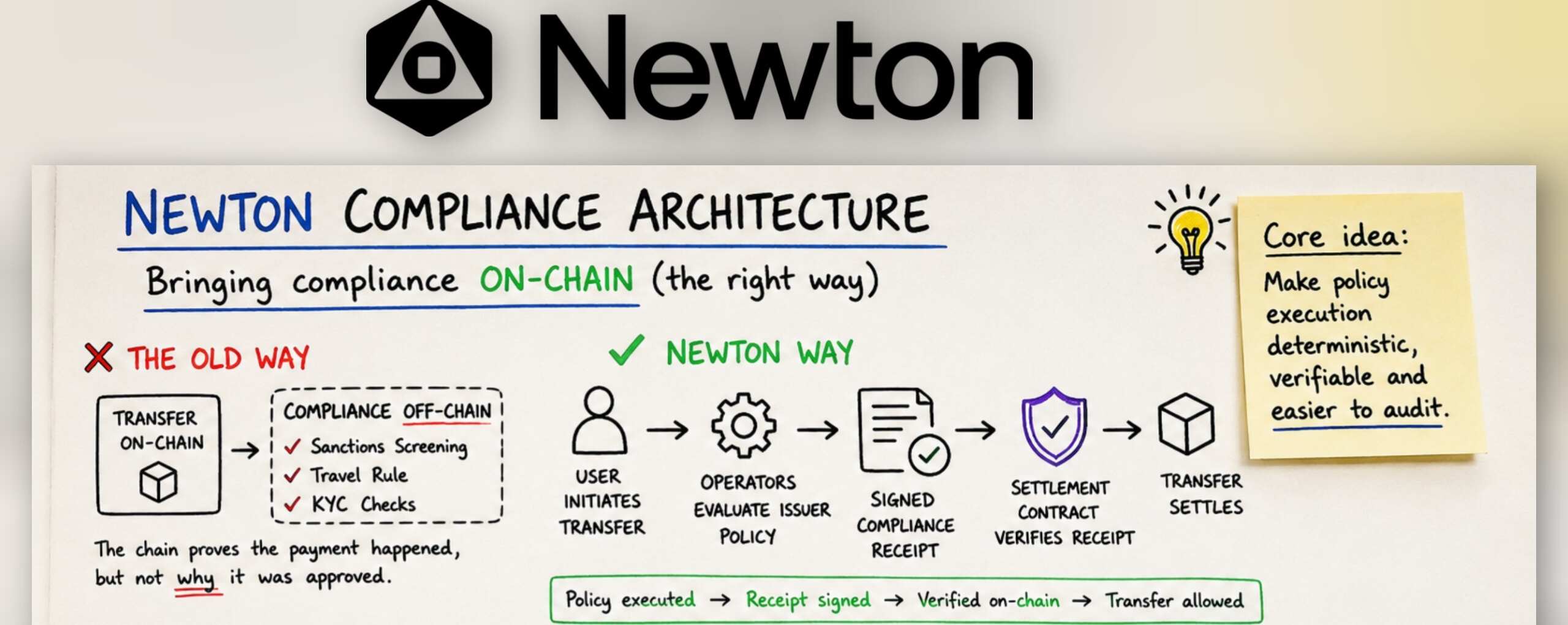
I spent about an hour going through Newton Protocol's compliance infrastructure today, and I kept coming back to the compliance receipt model. At first, I assumed it was just another audit log. After reading a bit more, it felt more like a cryptographic attestation that's verified before a transfer is allowed to settle.
That's a pretty different approach from what most stablecoin infrastructure does today. Usually, the transfer is on-chain, while sanctions screening, Travel Rule checks, and KYC all happen off-chain.The chain proves the payment happened, but not the compliance decisions behind it.
@NewtonProtocol flips that around. Operators execute the issuer's policy before settlement, sign a compliance receipt, and the settlement contract verifies that receipt before the transaction goes through. The part I couldn't stop thinking about is what happens once assets leave that original execution environment.
For example, a compliant USDC transfer is bridged to another chain and immediately deposited into a lending protocol. Does the original compliance receipt still carry any meaning, or should the destination chain require a new policy evaluation because the regulatory context has changed? I don't remember seeing that discussed, and it feels like an interesting edge case.
Another example is delayed execution. Imagine a DAO treasury locks stablecoins in a timelock contract for six months before they're released. If sanctions lists or jurisdiction rules change during that period, should compliance be checked only at deposit, only at release, or at both points?
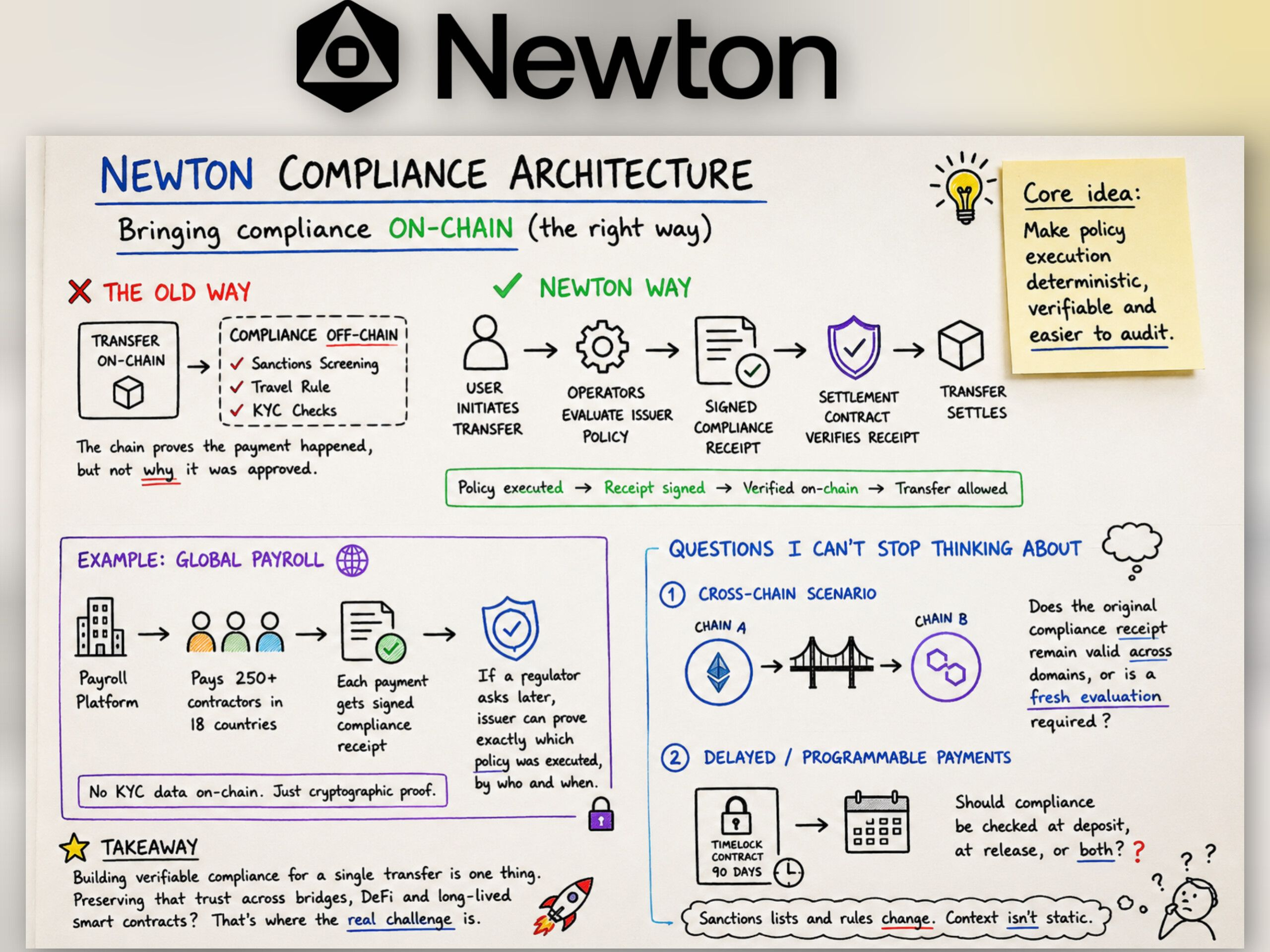
I don't think those questions weaken Newton's model. If anything, I see those questions less as obstacles and more as the natural next stage of the conversation.Solving compliance for a single transfer is already a meaningful technical achievement. The bigger opportunity lies in carrying those same assurances across bridges, DeFi applications, and smart contracts without sacrificing transparency or efficiency.
If Newton continues to evolve in that direction, it could provide a useful reference point for how programmable compliance fits into an increasingly interconnected blockchain ecosystem. I'm interested to see how the architecture develops as it moves from documentation into broader real-world adoption. That's where the most valuable lessons usually emerge.