
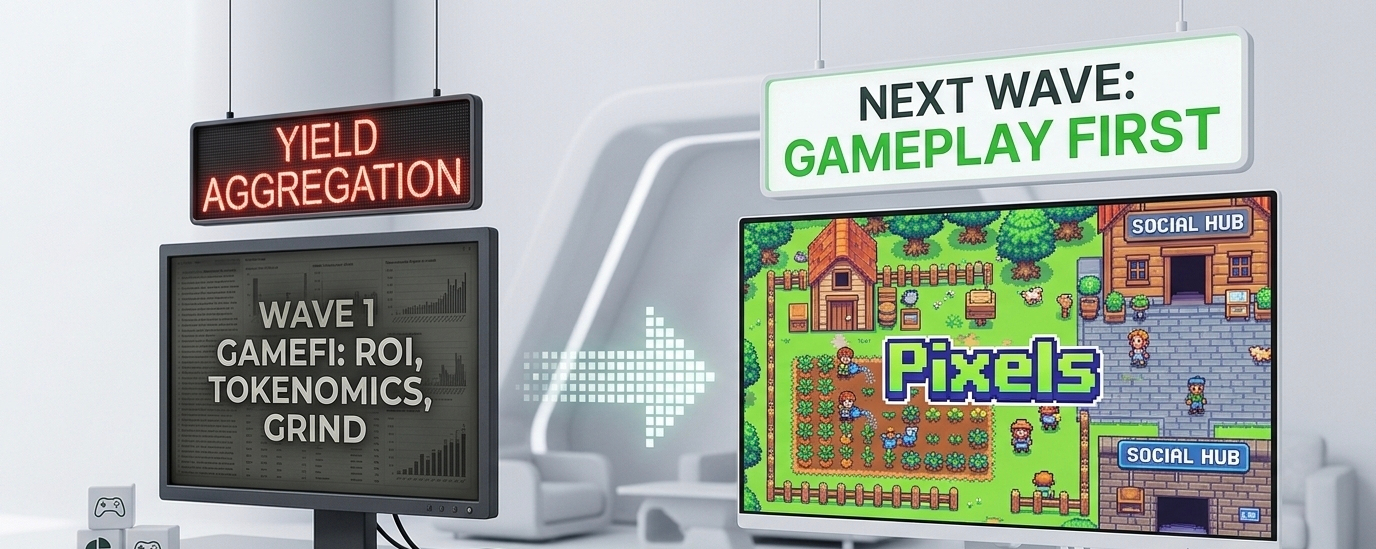

I’ll be honest, I wasn’t actively looking for another Web3 game to pay attention to. Lately, the market hasn’t exactly been kind to that narrative. Liquidity has been rotating back into majors, meme coins keep hijacking attention, and most GameFi tokens feel like they’re stuck somewhere between nostalgia and neglect. So when I came across Pixels, I didn’t expect much. It looked simple at first glance. Almost too simple. But something about the way people were talking about it felt… different.
What caught my attention wasn’t flashy trailers or aggressive marketing. It was the consistency. People weren’t just trying it, they were sticking around. That’s rare in crypto gaming. Usually, you see a spike, a rush for rewards, and then silence. But Pixels seemed to have this quiet momentum building under the surface, especially after moving to the . And from what I’m seeing, that move wasn’t just technical. It changed the entire trajectory of the project.
Right now, the market feels like it’s in this weird in-between phase. Not fully bullish, not exactly bearish either. Narratives are rotating faster than usual. AI had its run, RWAs are gaining traction, and gaming… well, gaming is trying to find its second life. The first wave of GameFi promised ownership and earnings, but it leaned too hard into financial incentives and forgot something basic. People play games because they’re fun. Not because they’re calculating ROI every minute.
That’s where Pixels starts to make more sense to me.
At its core, it’s a social, open-world farming game. That doesn’t sound revolutionary. We’ve seen farming games before, both in Web2 and Web3. But what Pixels seems to be doing differently is how it blends progression, ownership, and social interaction without making it feel like a financial spreadsheet. You’re farming crops, exploring land, crafting items, interacting with other players. It feels closer to something like Stardew Valley than a typical “earn token, dump token” loop.
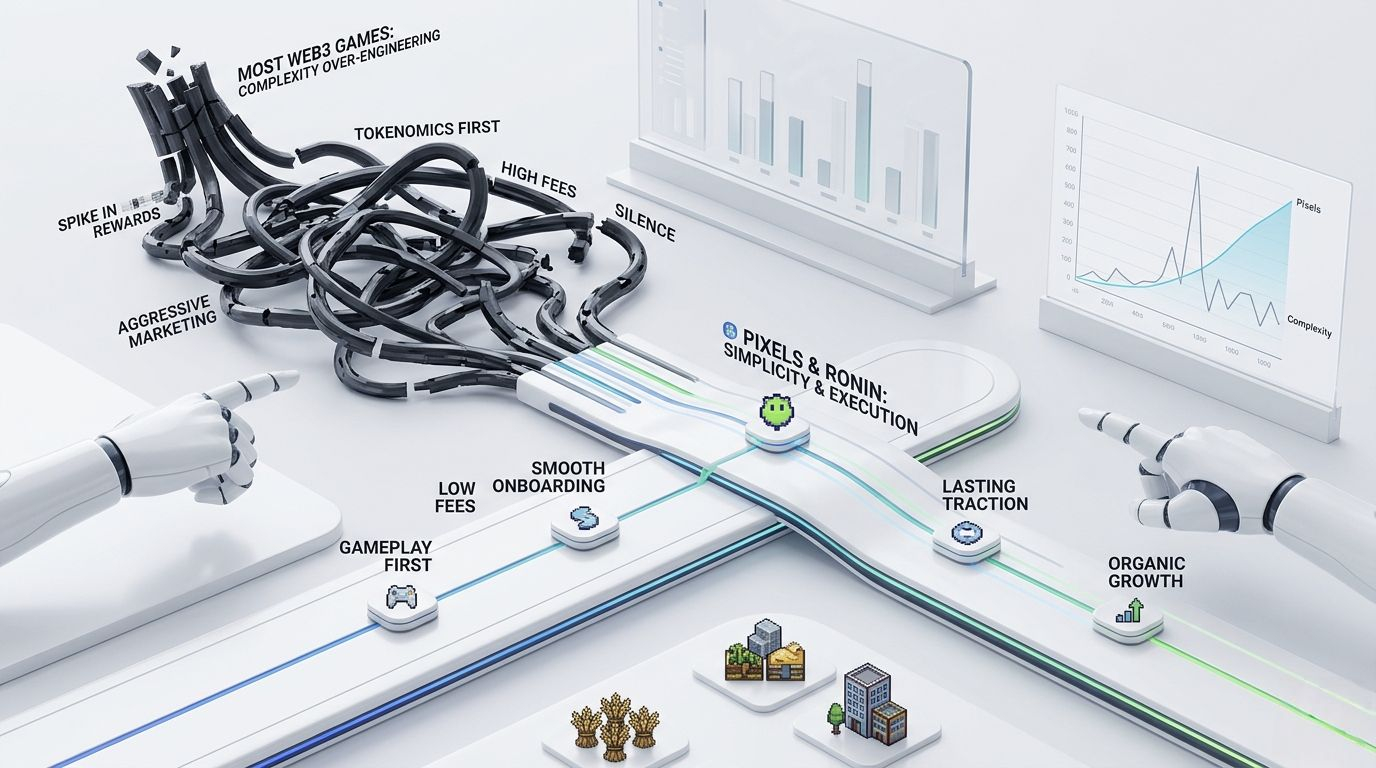
And I didn’t expect this, but that simplicity might actually be the edge.
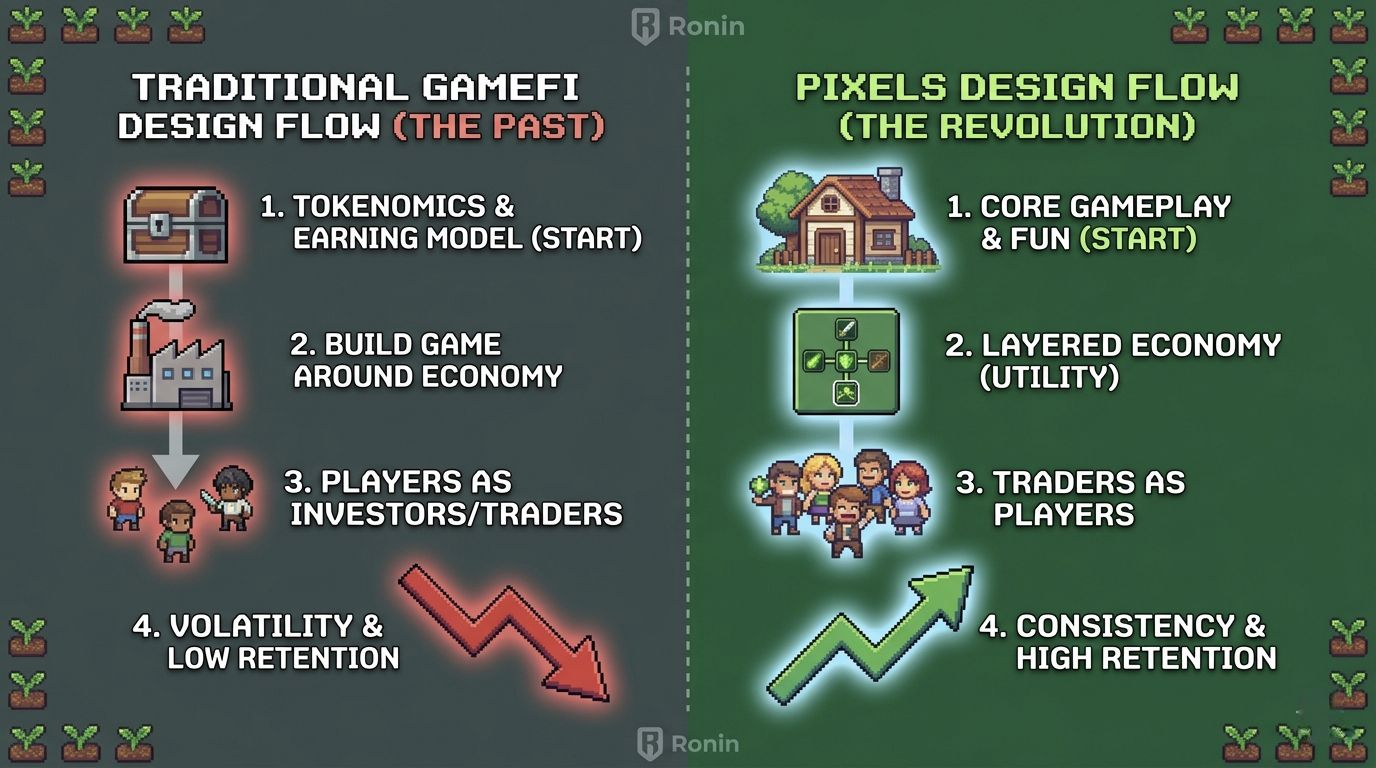
Because if I zoom out a bit, the real problem with most Web3 games hasn’t been technology. It’s been design philosophy. Too many projects started with tokenomics and then tried to build a game around it. Pixels feels like it flipped that. The game comes first. The economy is layered on top, not the other way around.
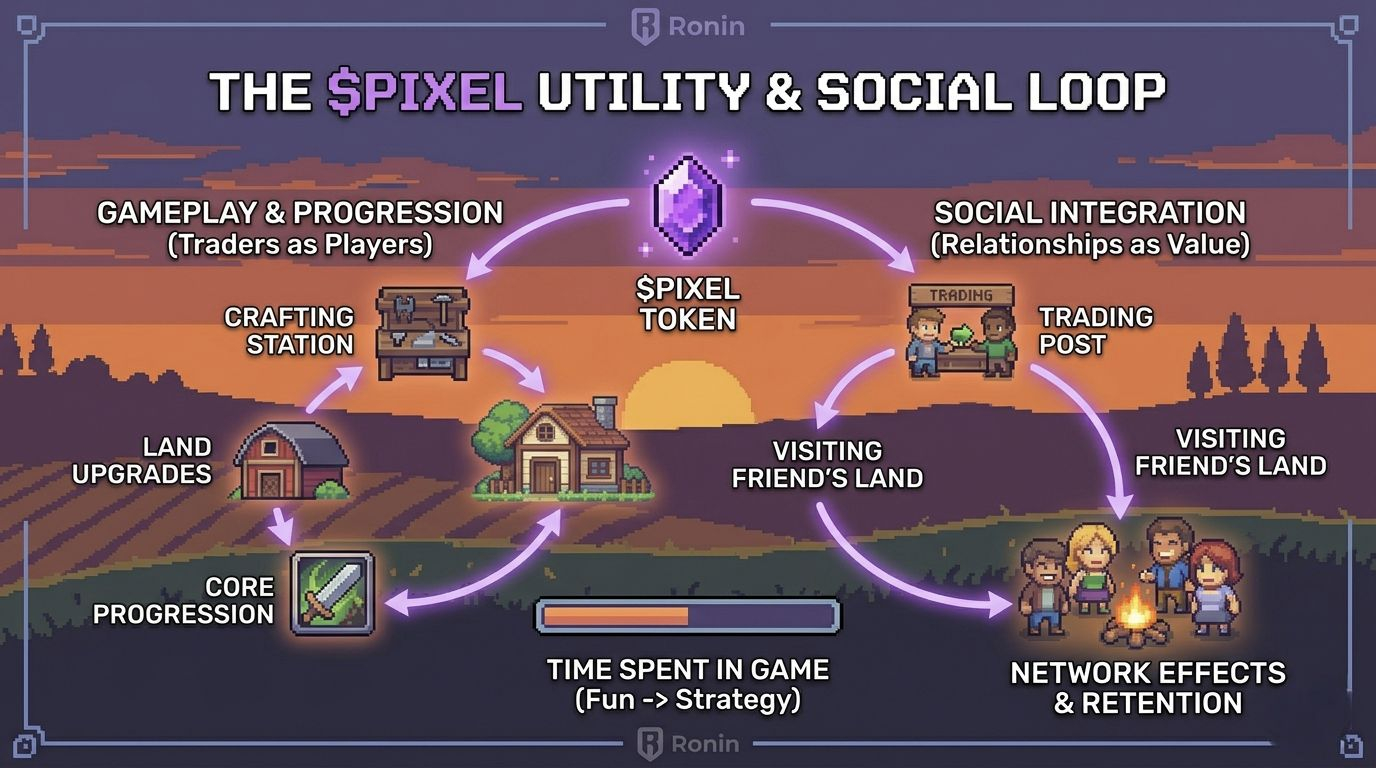
From what I’ve observed, the way Pixels handles its ecosystem is more subtle than most. The $PIXEL token exists, yes, but it doesn’t dominate every interaction. It’s used within the game for utility, progression, and certain upgrades, but you’re not constantly being pushed to think about price. That psychological shift matters more than people realize. When players stop thinking like traders and start behaving like players, retention changes completely.
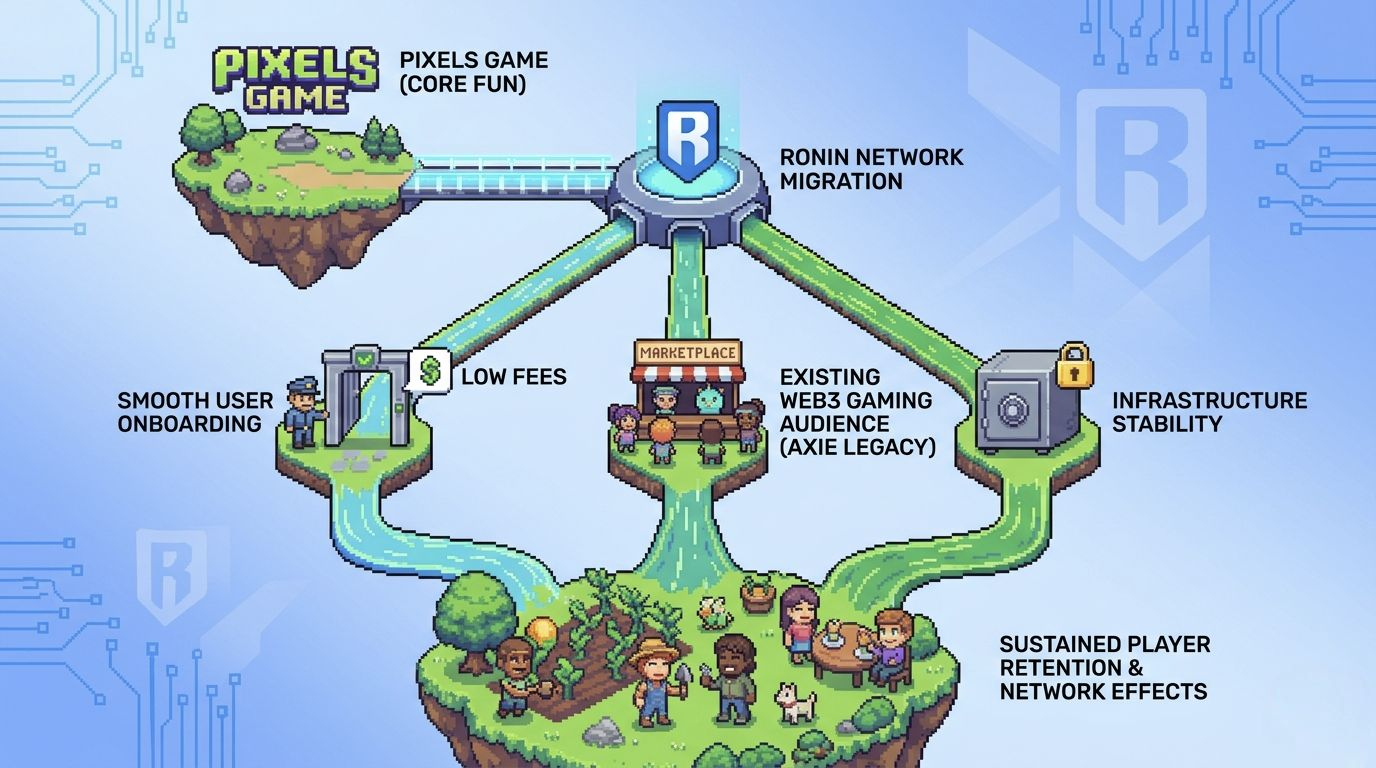
The integration with Ronin also plays a bigger role than I initially thought. Ronin has already proven itself with Axie Infinity, even though Axie had its own ups and downs. What Ronin brings is infrastructure that actually understands gaming behavior. Low fees, smooth onboarding, and a user base that’s already somewhat familiar with Web3 gaming. Pixels didn’t have to build that from scratch, and that gave it a head start.
What I find interesting is how Pixels leans into social dynamics. Land ownership isn’t just a static NFT sitting in a wallet. It becomes a place where interactions happen. Players visit each other, collaborate, trade resources. It creates this subtle network effect where the value of the game isn’t just in assets, but in relationships. And if there’s one thing crypto has taught me, it’s that network effects are where real staying power comes from.
Still, I’m not blindly optimistic about it. There are things that make me pause.
Token sustainability is always the elephant in the room with these projects. Even if Pixels is designed better, it’s still operating in a space where player incentives can shift quickly. If too many users start extracting value without enough sinks in the system, pressure builds. We’ve seen that story before, and it rarely ends well unless the team actively adapts.
There’s also the question of audience. Pixels feels approachable, which is great, but can it scale beyond its current niche? Farming and casual gameplay attract a certain type of player. That’s not necessarily the same audience chasing high-intensity competitive games. So the growth path might be slower, more organic. That’s not a bad thing, but it does mean expectations need to be realistic.
Another thing I’ve been thinking about is how much of its current traction is tied to incentives versus genuine engagement. Even if the game is fun, rewards still play a role in bringing users in. The real test is what happens when those incentives are reduced or normalized. Do people stay because they enjoy it, or do they move on to the next opportunity?
That said, there are signals that feel encouraging.
The player activity hasn’t just been a one-time spike. It’s been relatively consistent. The team seems to be iterating instead of overpromising, which I appreciate. There’s a difference between a project that’s trying to impress the market and one that’s trying to build something people actually use. Pixels feels closer to the second category, at least for now.
And there’s one thing I keep coming back to, something that I think is a bit underrated.
Pixels doesn’t feel like it’s trying to prove that Web3 gaming is the future. It just feels like it’s trying to be a good game that happens to use Web3. That mindset shift is subtle, but it might be the most important piece of the puzzle. Because the average player doesn’t care about decentralization or tokenomics in the way crypto people do. They care about whether they enjoy spending time in the game.
If Pixels can keep that focus, it might quietly outlast louder, more ambitious projects.
When I compare it to other GameFi projects I’ve looked at, the difference is almost philosophical. Some games feel like they’re designed for investors first, players second. Pixels feels like it’s at least attempting the reverse. It’s not perfect, and it’s definitely still an experiment, but it’s moving in a direction that makes more sense to me.
I’ve also noticed how it fits into the broader shift happening in crypto right now. There’s a growing fatigue around overly complex systems. People are starting to gravitate toward things that just work, things that feel intuitive. In that sense, Pixels aligns with where user behavior seems to be heading.
But I’m still cautious.
Execution risk is real. Maintaining a live game with an evolving economy isn’t easy. Competition will increase if the narrative picks up again. And macro conditions still matter. If the market turns risk-off, smaller tokens and niche projects usually feel it first.
So I’m not looking at Pixels as a guaranteed success. I’m looking at it as a case study.
A case study in whether Web3 gaming can actually evolve past its first wave of mistakes.
A case study in whether simplicity can outperform complexity in a space that often overengineers everything.
And maybe more than anything, a case study in whether players will choose to stay when the financial incentives stop being the main attraction.
I didn’t expect to spend this much time thinking about a pixel-style farming game. But here I am, still watching it, still trying to understand where it fits.
Maybe that’s the point.
Not every project needs to scream to be noticed. Some just quietly build, and over time, you start to realize they might be onto something.
The real question is whether Pixels is building something lasting, or if it’s just another moment in a cycle that keeps repeating itself in different forms.
I’m still figuring that out.
