
#tronecostar
tronecostar
4.3M visualizações
1.1M a discutir
Popular
Mais recente

·
--
O que um salto de 27,68% nas transferências on-chain de WIN revelaO que um salto de 27,68% nas transferências on-chain de WIN revela sobre a atividade da Oracle Network
A contagem de transferências on-chain é uma das formas mais claras de distinguir a circulação genuína de tokens da observação passiva do mercado. Com 770 transferências registradas (+27,68%), as transferências on-chain de WIN destacam um aumento evidente na movimentação direta entre carteiras e contratos inteligentes na rede TRON para o token utilitário nativo da WINkLink.
O que um salto de 27,68% nas transferências on-chain de WIN revela
O que um salto de 27,68% nas transferências on-chain de WIN revela sobre a atividade da Oracle Network
A contagem de transferências on-chain é uma das formas mais claras de distinguir a circulação genuína de tokens da observação passiva do mercado. Com 770 transferências registradas (+27,68%), as transferências on-chain de WIN destacam um aumento evidente na movimentação direta entre carteiras e contratos inteligentes na rede TRON para o token utilitário nativo da WINkLink.
A contagem de transferências on-chain é uma das formas mais claras de distinguir a circulação genuína de tokens da observação passiva do mercado. Com 770 transferências registradas (+27,68%), as transferências on-chain de WIN destacam um aumento evidente na movimentação direta entre carteiras e contratos inteligentes na rede TRON para o token utilitário nativo da WINkLink.
23

·
--
Ver tradução
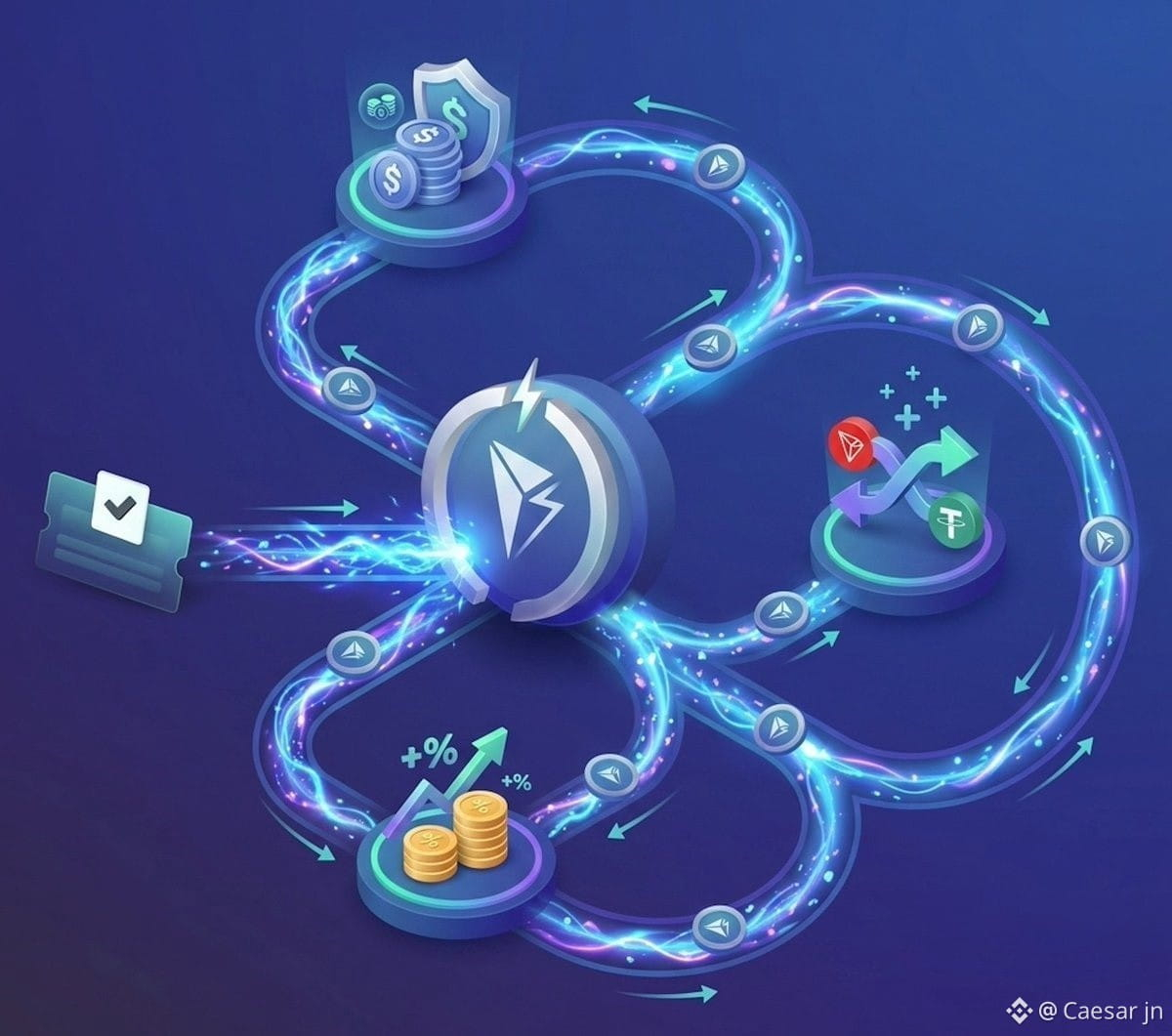
𝗦𝘁𝗥𝗫 𝗶𝘀 𝗾𝘂𝗶𝗲𝘁𝗹𝘆 𝗯𝗲𝗰𝗼𝗺𝗶𝗻𝗴 𝗼𝗻𝗲 𝗼𝗳 𝘁𝗵𝗲 𝗺𝗼𝘀𝘁 𝗶𝗻𝘁𝗲𝗿𝗲𝘀𝘁𝗶𝗻𝗴 𝗰𝗮𝗽𝗶𝘁𝗮𝗹 𝗲𝗳𝗳𝗶𝗰𝗶𝗲𝗻𝗰𝘆 𝘁𝗼𝗼𝗹𝘀 𝗶𝗻 𝘁𝗵𝗲 #TRON 𝗗𝗲𝗙𝗶 𝗲𝗰𝗼𝘀𝘆𝘀𝘁𝗲𝗺
For years, staking has often required a tradeoff:
Lock your assets and earn yield.
Or keep liquidity and forgo staking rewards.
But liquid staking is changing that dynamic and JUST’s sTRX is helping lead the shift.
Here’s what stands out 👇
▫️ sTRX allows users to maintain exposure to TRON staking rewards
▫️ Assets remain usable across DeFi while continuing to generate yield
▫️ Users gain access to additional liquidity opportunities without fully sacrificing participation
▫️ Capital can move more freely throughout the ecosystem
▫️ Liquid staking reduces the friction between earning and utility
▫️ sTRX continues expanding its role across the broader TRON DeFi landscape
𝗪𝗵𝗮𝘁 𝗺𝗮𝗸𝗲𝘀 𝘁𝗵𝗶𝘀 𝗶𝗻𝘁𝗲𝗿𝗲𝘀𝘁𝗶𝗻𝗴 𝗶𝘀 𝗵𝗼𝘄 𝗗𝗲𝗙𝗶 𝗶𝘀 𝗲𝘃𝗼𝗹𝘃𝗶𝗻𝗴 𝗳𝗿𝗼𝗺 𝘀𝗶𝗺𝗽𝗹𝗲 𝘆𝗶𝗲𝗹𝗱 𝗴𝗲𝗻𝗲𝗿𝗮𝘁𝗶𝗼𝗻 𝘁𝗼 𝗰𝗮𝗽𝗶𝘁𝗮𝗹 𝗼𝗽𝘁𝗶𝗺𝗶𝘇𝗮𝘁𝗶𝗼𝗻.
The goal is no longer just earning rewards.
The goal is enabling assets to perform multiple functions simultaneously.
With sTRX, users can:
➡ Earn staking rewards
➡ Maintain liquidity
➡ Access DeFi integrations
➡ Participate in additional yield opportunities
➡ Improve overall capital efficiency
𝗧𝗵𝗮𝘁 𝘀𝗵𝗶𝗳𝘁 𝗺𝗮𝘁𝘁𝗲𝗿𝘀.
Because as decentralized finance matures, users increasingly expect assets to remain productive across multiple layers of the ecosystem.
Rather than choosing between flexibility and yield, they want both.
@DeFi_JUST @JustinSun #TRONEcoStar
𝗦𝘁𝗥𝗫 𝗶𝘀 𝗾𝘂𝗶𝗲𝘁𝗹𝘆 𝗯𝗲𝗰𝗼𝗺𝗶𝗻𝗴 𝗼𝗻𝗲 𝗼𝗳 𝘁𝗵𝗲 𝗺𝗼𝘀𝘁 𝗶𝗻𝘁𝗲𝗿𝗲𝘀𝘁𝗶𝗻𝗴 𝗰𝗮𝗽𝗶𝘁𝗮𝗹 𝗲𝗳𝗳𝗶𝗰𝗶𝗲𝗻𝗰𝘆 𝘁𝗼𝗼𝗹𝘀 𝗶𝗻 𝘁𝗵𝗲 #TRON 𝗗𝗲𝗙𝗶 𝗲𝗰𝗼𝘀𝘆𝘀𝘁𝗲𝗺
For years, staking has often required a tradeoff:
Lock your assets and earn yield.
Or keep liquidity and forgo staking rewards.
But liquid staking is changing that dynamic and JUST’s sTRX is helping lead the shift.
Here’s what stands out 👇
▫️ sTRX allows users to maintain exposure to TRON staking rewards
▫️ Assets remain usable across DeFi while continuing to generate yield
▫️ Users gain access to additional liquidity opportunities without fully sacrificing participation
▫️ Capital can move more freely throughout the ecosystem
▫️ Liquid staking reduces the friction between earning and utility
▫️ sTRX continues expanding its role across the broader TRON DeFi landscape
𝗪𝗵𝗮𝘁 𝗺𝗮𝗸𝗲𝘀 𝘁𝗵𝗶𝘀 𝗶𝗻𝘁𝗲𝗿𝗲𝘀𝘁𝗶𝗻𝗴 𝗶𝘀 𝗵𝗼𝘄 𝗗𝗲𝗙𝗶 𝗶𝘀 𝗲𝘃𝗼𝗹𝘃𝗶𝗻𝗴 𝗳𝗿𝗼𝗺 𝘀𝗶𝗺𝗽𝗹𝗲 𝘆𝗶𝗲𝗹𝗱 𝗴𝗲𝗻𝗲𝗿𝗮𝘁𝗶𝗼𝗻 𝘁𝗼 𝗰𝗮𝗽𝗶𝘁𝗮𝗹 𝗼𝗽𝘁𝗶𝗺𝗶𝘇𝗮𝘁𝗶𝗼𝗻.
The goal is no longer just earning rewards.
The goal is enabling assets to perform multiple functions simultaneously.
With sTRX, users can:
➡ Earn staking rewards
➡ Maintain liquidity
➡ Access DeFi integrations
➡ Participate in additional yield opportunities
➡ Improve overall capital efficiency
𝗧𝗵𝗮𝘁 𝘀𝗵𝗶𝗳𝘁 𝗺𝗮𝘁𝘁𝗲𝗿𝘀.
Because as decentralized finance matures, users increasingly expect assets to remain productive across multiple layers of the ecosystem.
Rather than choosing between flexibility and yield, they want both.
@JUST DAO @Justin Sun孙宇晨 #TRONEcoStar
107
·
--
Ver tradução
𝐖𝐡𝐚𝐭 𝟏𝟔.𝟐𝐁+ 𝐓𝐫𝐚𝐧𝐬𝐚𝐜𝐭𝐢𝐨𝐧𝐬 𝐚𝐧𝐝 𝟒𝟏𝟒𝐌+ 𝐀𝐜𝐜𝐨𝐮𝐧𝐭𝐬 𝐒𝐡𝐨𝐰 𝐀𝐛𝐨𝐮𝐭..𝐖𝐡𝐚𝐭 𝟏𝟔.𝟐𝐁+ 𝐓𝐫𝐚𝐧𝐬𝐚𝐜𝐭𝐢𝐨𝐧𝐬 𝐚𝐧𝐝 𝟒𝟏𝟒𝐌+ 𝐀𝐜𝐜𝐨𝐮𝐧𝐭𝐬 𝐒𝐡𝐨𝐰 𝐀𝐛𝐨𝐮𝐭 𝐓𝐑𝐎𝐍 𝐄𝐜𝐨𝐬𝐲𝐬𝐭𝐞𝐦 𝐆𝐫𝐨𝐰𝐭𝐡
Scale in blockchain infrastructure is rarely achieved through short-term market cycles; it comes from years of consistent transaction throughput and low-friction user onboarding. Reaching 16.2B+ total transactions and 414M+ accounts highlights how deeply the TRON network has embedded itself as a daily settlement layer across Web3.
𝐁𝐫𝐞𝐚𝐤𝐢𝐧𝐠 𝐃𝐨𝐰𝐧 𝐭𝐡𝐞 𝐒𝐜𝐚𝐥𝐞 𝐁𝐞𝐡𝐢𝐧𝐝 𝐓𝐑𝐎𝐍'𝐬 𝐍𝐞𝐭𝐰𝐨𝐫𝐤 𝐌𝐞𝐭𝐫𝐢𝐜𝐬 In my hands-on experience interacting with decentralized applications and transfers across TRON, high throughput only translates into real adoption when paired with predictable resource costs:
Crossing 16.2B+ transactions demonstrates sustained network reliability under continuous daily load, from peer-to-peer stablecoin transfers to complex smart contract executions.Surpassing 414M+ accounts reflects broad global accessibility, where fast confirmation times and manageable resource mechanics allow both everyday users and active traders to participate without friction.Together, massive account reach and multi-billion transaction volume create strong network effects that attract builders, liquidity providers, and infrastructure partners.
𝐖𝐡𝐲 𝐒𝐮𝐬𝐭𝐚𝐢𝐧𝐞𝐝 𝐎𝐧-𝐂𝐡𝐚𝐢𝐧 𝐕𝐨𝐥𝐮𝐦𝐞 𝐌𝐚𝐭𝐭𝐞𝐫𝐬 𝐟𝐨𝐫 𝐄𝐜𝐨𝐬𝐲𝐬𝐭𝐞𝐦 𝐏𝐚𝐫𝐭𝐧𝐞𝐫𝐬 When a network processes billions of transactions across hundreds of millions of accounts, supporting infrastructure becomes essential. That level of activity drives continuous demand for reliable decentralized exchanges, lending markets, and oracle data feeds capable of operating at matching scale.
𝐐𝐮𝐞𝐬𝐭𝐢𝐨𝐧 𝐟𝐨𝐫 𝐓𝐑𝐎𝐍 𝐄𝐜𝐨𝐬𝐲𝐬𝐭𝐞𝐦 𝐎𝐛𝐬𝐞𝐫𝐯𝐞𝐫𝐬 Looking at TRON's milestone of 16.2B+ transactions and 414M+ accounts, which factor do you think has contributed more to this sustained growth—low-cost stablecoin transfers or expanding on-chain DeFi utility?
@WINkLink_Official @JustinSun #TRONEcoStar
𝐖𝐡𝐚𝐭 𝟏𝟔.𝟐𝐁+ 𝐓𝐫𝐚𝐧𝐬𝐚𝐜𝐭𝐢𝐨𝐧𝐬 𝐚𝐧𝐝 𝟒𝟏𝟒𝐌+ 𝐀𝐜𝐜𝐨𝐮𝐧𝐭𝐬 𝐒𝐡𝐨𝐰 𝐀𝐛𝐨𝐮𝐭..
𝐖𝐡𝐚𝐭 𝟏𝟔.𝟐𝐁+ 𝐓𝐫𝐚𝐧𝐬𝐚𝐜𝐭𝐢𝐨𝐧𝐬 𝐚𝐧𝐝 𝟒𝟏𝟒𝐌+ 𝐀𝐜𝐜𝐨𝐮𝐧𝐭𝐬 𝐒𝐡𝐨𝐰 𝐀𝐛𝐨𝐮𝐭 𝐓𝐑𝐎𝐍 𝐄𝐜𝐨𝐬𝐲𝐬𝐭𝐞𝐦 𝐆𝐫𝐨𝐰𝐭𝐡
Scale in blockchain infrastructure is rarely achieved through short-term market cycles; it comes from years of consistent transaction throughput and low-friction user onboarding. Reaching 16.2B+ total transactions and 414M+ accounts highlights how deeply the TRON network has embedded itself as a daily settlement layer across Web3.
𝐁𝐫𝐞𝐚𝐤𝐢𝐧𝐠 𝐃𝐨𝐰𝐧 𝐭𝐡𝐞 𝐒𝐜𝐚𝐥𝐞 𝐁𝐞𝐡𝐢𝐧𝐝 𝐓𝐑𝐎𝐍'𝐬 𝐍𝐞𝐭𝐰𝐨𝐫𝐤 𝐌𝐞𝐭𝐫𝐢𝐜𝐬 In my hands-on experience interacting with decentralized applications and transfers across TRON, high throughput only translates into real adoption when paired with predictable resource costs:
Crossing 16.2B+ transactions demonstrates sustained network reliability under continuous daily load, from peer-to-peer stablecoin transfers to complex smart contract executions.Surpassing 414M+ accounts reflects broad global accessibility, where fast confirmation times and manageable resource mechanics allow both everyday users and active traders to participate without friction.Together, massive account reach and multi-billion transaction volume create strong network effects that attract builders, liquidity providers, and infrastructure partners.
𝐖𝐡𝐲 𝐒𝐮𝐬𝐭𝐚𝐢𝐧𝐞𝐝 𝐎𝐧-𝐂𝐡𝐚𝐢𝐧 𝐕𝐨𝐥𝐮𝐦𝐞 𝐌𝐚𝐭𝐭𝐞𝐫𝐬 𝐟𝐨𝐫 𝐄𝐜𝐨𝐬𝐲𝐬𝐭𝐞𝐦 𝐏𝐚𝐫𝐭𝐧𝐞𝐫𝐬 When a network processes billions of transactions across hundreds of millions of accounts, supporting infrastructure becomes essential. That level of activity drives continuous demand for reliable decentralized exchanges, lending markets, and oracle data feeds capable of operating at matching scale.
𝐐𝐮𝐞𝐬𝐭𝐢𝐨𝐧 𝐟𝐨𝐫 𝐓𝐑𝐎𝐍 𝐄𝐜𝐨𝐬𝐲𝐬𝐭𝐞𝐦 𝐎𝐛𝐬𝐞𝐫𝐯𝐞𝐫𝐬 Looking at TRON's milestone of 16.2B+ transactions and 414M+ accounts, which factor do you think has contributed more to this sustained growth—low-cost stablecoin transfers or expanding on-chain DeFi utility?
@WINkLink_Official @Justin Sun孙宇晨 #TRONEcoStar
7
·
--
Ver tradução
𝐖𝐡𝐲 𝐂𝐮𝐭𝐭𝐢𝐧𝐠 𝐭𝐡𝐞 𝐄𝐧𝐞𝐫𝐠𝐲 𝐁𝐚𝐬𝐞 𝐑𝐚𝐭𝐞 𝐟𝐫𝐨𝐦 𝟏𝟓% 𝐭𝐨 𝟖% 𝐑𝐞𝐬𝐡𝐚𝐩𝐞𝐬𝐖𝐡𝐲 𝐂𝐮𝐭𝐭𝐢𝐧𝐠 𝐭𝐡𝐞 𝐄𝐧𝐞𝐫𝐠𝐲 𝐁𝐚𝐬𝐞 𝐑𝐚𝐭𝐞 𝐟𝐫𝐨𝐦 𝟏𝟓% 𝐭𝐨 𝟖% 𝐑𝐞𝐬𝐡𝐚𝐩𝐞𝐬 𝐓𝐑𝐎𝐍 𝐍𝐞𝐭𝐰𝐨𝐫𝐤 𝐄𝐜𝐨𝐧𝐨𝐦𝐢𝐜𝐬
Transaction costs sit at the center of whether users treat a blockchain as daily financial infrastructure or an occasional settlement layer. Reducing the Energy base rate from 15% to 8% marks a significant structural adjustment on TRON, directly lowering the baseline cost of network resource consumption for everyone interacting on-chain.
𝐇𝐨𝐰 𝐚 𝐒𝐞𝐯𝐞𝐧-𝐏𝐨𝐢𝐧𝐭 𝐁𝐚𝐬𝐞 𝐑𝐚𝐭𝐞 𝐑𝐞𝐝𝐮𝐜𝐭𝐢𝐨𝐧 𝐖𝐨𝐫𝐤𝐬 𝐢𝐧 𝐏𝐫𝐚𝐜𝐭𝐢𝐜𝐞
In my hands-on experience deploying transactions and managing staked resources across TRON, network fee predictability is just as valuable as raw speed. Dropping the Energy base rate from 15% down to 8% changes the underlying cost equation across three key areas:
- Lower baseline overhead means everyday smart contract interactions require fewer burned TRX when users do not hold staked Energy.
- Improved fee elasticity protects retail and institutional participants from sharp cost jumps during periods of elevated network demand.
- Stronger alignment between resource pricing and real user adoption reinforces TRON's position as an accessible, high-throughput settlement network.
𝐖𝐡𝐲 𝐋𝐨𝐰𝐞𝐫 𝐁𝐚𝐬𝐞 𝐑𝐚𝐭𝐞𝐬 𝐒𝐮𝐬𝐭𝐚𝐢𝐧 𝐎𝐧-𝐂𝐡𝐚𝐢𝐧 𝐀𝐜𝐭𝐢𝐯𝐢𝐭𝐲
When base resource rates remain artificially high, smaller transactions get priced out and frequent users hesitate to rebalance positions. Cutting the base rate nearly in half removes friction across the entire stack, keeping routine transfers, approvals, and protocol interactions cost-effective at scale.
𝐐𝐮𝐞𝐬𝐭𝐢𝐨𝐧 𝐟𝐨𝐫 𝐓𝐑𝐎𝐍 𝐍𝐞𝐭𝐰𝐨𝐫𝐤 𝐔𝐬𝐞𝐫𝐬
With the Energy base rate dropping from 15% to 8%, do you plan to adjust how much TRX you keep staked for Energy versus paying direct transaction fees?
@DeFi_JUST @JustinSun
#TRONEcoStar
𝐖𝐡𝐲 𝐂𝐮𝐭𝐭𝐢𝐧𝐠 𝐭𝐡𝐞 𝐄𝐧𝐞𝐫𝐠𝐲 𝐁𝐚𝐬𝐞 𝐑𝐚𝐭𝐞 𝐟𝐫𝐨𝐦 𝟏𝟓% 𝐭𝐨 𝟖% 𝐑𝐞𝐬𝐡𝐚𝐩𝐞𝐬
𝐖𝐡𝐲 𝐂𝐮𝐭𝐭𝐢𝐧𝐠 𝐭𝐡𝐞 𝐄𝐧𝐞𝐫𝐠𝐲 𝐁𝐚𝐬𝐞 𝐑𝐚𝐭𝐞 𝐟𝐫𝐨𝐦 𝟏𝟓% 𝐭𝐨 𝟖% 𝐑𝐞𝐬𝐡𝐚𝐩𝐞𝐬 𝐓𝐑𝐎𝐍 𝐍𝐞𝐭𝐰𝐨𝐫𝐤 𝐄𝐜𝐨𝐧𝐨𝐦𝐢𝐜𝐬
Transaction costs sit at the center of whether users treat a blockchain as daily financial infrastructure or an occasional settlement layer. Reducing the Energy base rate from 15% to 8% marks a significant structural adjustment on TRON, directly lowering the baseline cost of network resource consumption for everyone interacting on-chain.
𝐇𝐨𝐰 𝐚 𝐒𝐞𝐯𝐞𝐧-𝐏𝐨𝐢𝐧𝐭 𝐁𝐚𝐬𝐞 𝐑𝐚𝐭𝐞 𝐑𝐞𝐝𝐮𝐜𝐭𝐢𝐨𝐧 𝐖𝐨𝐫𝐤𝐬 𝐢𝐧 𝐏𝐫𝐚𝐜𝐭𝐢𝐜𝐞
In my hands-on experience deploying transactions and managing staked resources across TRON, network fee predictability is just as valuable as raw speed. Dropping the Energy base rate from 15% down to 8% changes the underlying cost equation across three key areas:
- Lower baseline overhead means everyday smart contract interactions require fewer burned TRX when users do not hold staked Energy.
- Improved fee elasticity protects retail and institutional participants from sharp cost jumps during periods of elevated network demand.
- Stronger alignment between resource pricing and real user adoption reinforces TRON's position as an accessible, high-throughput settlement network.
𝐖𝐡𝐲 𝐋𝐨𝐰𝐞𝐫 𝐁𝐚𝐬𝐞 𝐑𝐚𝐭𝐞𝐬 𝐒𝐮𝐬𝐭𝐚𝐢𝐧 𝐎𝐧-𝐂𝐡𝐚𝐢𝐧 𝐀𝐜𝐭𝐢𝐯𝐢𝐭𝐲
When base resource rates remain artificially high, smaller transactions get priced out and frequent users hesitate to rebalance positions. Cutting the base rate nearly in half removes friction across the entire stack, keeping routine transfers, approvals, and protocol interactions cost-effective at scale.
𝐐𝐮𝐞𝐬𝐭𝐢𝐨𝐧 𝐟𝐨𝐫 𝐓𝐑𝐎𝐍 𝐍𝐞𝐭𝐰𝐨𝐫𝐤 𝐔𝐬𝐞𝐫𝐬
With the Energy base rate dropping from 15% to 8%, do you plan to adjust how much TRX you keep staked for Energy versus paying direct transaction fees?
@JUST DAO @Justin Sun孙宇晨
#TRONEcoStar
11
·
--
𝐎 𝐪𝐮𝐞 $𝟔.𝟏𝟕𝐁 𝐞𝐦 𝐓𝐕𝐋 𝐞 $𝟑.𝟏𝟔𝐁 𝐞𝐦 𝐨𝐟𝐞𝐫𝐭𝐚 𝐫𝐞𝐯𝐞𝐥𝐚𝐦 𝐬𝐨𝐛𝐫𝐞 𝐚 𝐥𝐢𝐪𝐮𝐢𝐝𝐞𝐳 𝐃𝐞𝐅𝐢 𝐝𝐚 𝐉𝐮𝐬𝐭𝐋𝐞𝐧𝐝...𝐎 𝐪𝐮𝐞 $𝟔.𝟏𝟕𝐁 𝐞𝐦 𝐓𝐕𝐋 𝐞 $𝟑.𝟏𝟔𝐁 𝐞𝐦 𝐨𝐟𝐞𝐫𝐭𝐚 𝐫𝐞𝐯𝐞𝐥𝐚𝐦 𝐬𝐨𝐛𝐫𝐞 𝐚 𝐥𝐢𝐪𝐮𝐢𝐝𝐞𝐳 𝐃𝐞𝐅𝐢 𝐝𝐚 𝐉𝐮𝐬𝐭𝐋𝐞𝐧𝐝
Em empréstimos descentralizados, o TVL em destaque conta apenas metade da história, a menos que você examine a relação entre a liquidez total fornecida, a demanda ativa por empréstimos e os incentivos contínuos de rendimento. Analisando o registro histórico da atividade DeFi da JustLend em 17 de novembro de 2026, o protocolo mantém US$ 6,17 bilhões em valor total bloqueado, além de US$ 3,16 bilhões em oferta, US$ 177,91 milhões emprestados e 41.573 em recompensas diárias em USDD.
𝐎 𝐪𝐮𝐞 $𝟔.𝟏𝟕𝐁 𝐞𝐦 𝐓𝐕𝐋 𝐞 $𝟑.𝟏𝟔𝐁 𝐞𝐦 𝐨𝐟𝐞𝐫𝐭𝐚 𝐫𝐞𝐯𝐞𝐥𝐚𝐦 𝐬𝐨𝐛𝐫𝐞 𝐚 𝐥𝐢𝐪𝐮𝐢𝐝𝐞𝐳 𝐃𝐞𝐅𝐢 𝐝𝐚 𝐉𝐮𝐬𝐭𝐋𝐞𝐧𝐝...
𝐎 𝐪𝐮𝐞 $𝟔.𝟏𝟕𝐁 𝐞𝐦 𝐓𝐕𝐋 𝐞 $𝟑.𝟏𝟔𝐁 𝐞𝐦 𝐨𝐟𝐞𝐫𝐭𝐚 𝐫𝐞𝐯𝐞𝐥𝐚𝐦 𝐬𝐨𝐛𝐫𝐞 𝐚 𝐥𝐢𝐪𝐮𝐢𝐝𝐞𝐳 𝐃𝐞𝐅𝐢 𝐝𝐚 𝐉𝐮𝐬𝐭𝐋𝐞𝐧𝐝
Em empréstimos descentralizados, o TVL em destaque conta apenas metade da história, a menos que você examine a relação entre a liquidez total fornecida, a demanda ativa por empréstimos e os incentivos contínuos de rendimento. Analisando o registro histórico da atividade DeFi da JustLend em 17 de novembro de 2026, o protocolo mantém US$ 6,17 bilhões em valor total bloqueado, além de US$ 3,16 bilhões em oferta, US$ 177,91 milhões emprestados e 41.573 em recompensas diárias em USDD.
Em empréstimos descentralizados, o TVL em destaque conta apenas metade da história, a menos que você examine a relação entre a liquidez total fornecida, a demanda ativa por empréstimos e os incentivos contínuos de rendimento. Analisando o registro histórico da atividade DeFi da JustLend em 17 de novembro de 2026, o protocolo mantém US$ 6,17 bilhões em valor total bloqueado, além de US$ 3,16 bilhões em oferta, US$ 177,91 milhões emprestados e 41.573 em recompensas diárias em USDD.
76
·
--
Ver tradução
𝐖𝐡𝐲 𝐭𝐡𝐞 𝐉𝐮𝐬𝐭𝐢𝐧 𝐒𝐮𝐧 𝐑𝐞𝐭𝐰𝐞𝐞𝐭 𝐏𝐨𝐨𝐥 𝐄𝐥𝐞𝐯𝐚𝐭𝐞𝐬 𝐃𝐚𝐭𝐚-𝐃𝐫𝐢𝐯𝐞𝐧...𝐖𝐡𝐲 𝐭𝐡𝐞 𝐉𝐮𝐬𝐭𝐢𝐧 𝐒𝐮𝐧 𝐑𝐞𝐭𝐰𝐞𝐞𝐭 𝐏𝐨𝐨𝐥 𝐄𝐥𝐞𝐯𝐚𝐭𝐞𝐬 𝐃𝐚𝐭𝐚-𝐃𝐫𝐢𝐯𝐞𝐧 𝐓𝐑𝐎𝐍 𝐆𝐫𝐨𝐰𝐭𝐡 𝐀𝐧𝐚𝐥𝐲𝐬𝐢𝐬
Raw blockchain metrics only become meaningful when someone connects on-chain numbers to broader industry shifts. The Justin Sun Retweet Pool introduces additional rewards specifically for posts analyzing TRON network growth, on-chain data, and wider industry trends that earn a repost or quote tweet from @justinsuntron.
𝐓𝐮𝐫𝐧𝐢𝐧𝐠 𝐎𝐧-𝐂𝐡𝐚𝐢𝐧 𝐃𝐚𝐭𝐚 𝐈𝐧𝐭𝐨 𝐌𝐚𝐜𝐫𝐨 𝐈𝐧𝐬𝐢𝐠𝐡𝐭 In my experience tracking network performance across cycles, isolated numbers rarely tell the full story until you place them alongside user behavior and market structure. This dedicated reward pool focuses attention on three high-signal areas of research:
Network growth analysis that examines how active accounts, transaction throughput, and liquidity depth evolve over time on TRON.On-chain data breakdowns that separate sustainable organic utility from short-term market fluctuations.Industry trend commentary that contextualizes TRON's role in stablecoin settlement, decentralized finance, and cross-ecosystem adoption.
𝐖𝐡𝐲 𝐌𝐚𝐜𝐫𝐨 𝐏𝐞𝐫𝐬𝐩𝐞𝐜𝐭𝐢𝐯𝐞 𝐒𝐭𝐫𝐞𝐧𝐠𝐭𝐡𝐞𝐧𝐬 𝐄𝐜𝐨𝐬𝐲𝐬𝐭𝐞𝐦 𝐃𝐢𝐬𝐜𝐮𝐫𝐬𝐞 Earning a repost or quote tweet from @justinsuntron places an analyst's research in front of a global crypto audience. By tying additional rewards to rigorous on-chain and industry-level analysis, the pool motivates creators to dig deeper into verifiable metrics and frame TRON's trajectory within the larger blockchain landscape.
𝐐𝐮𝐞𝐬𝐭𝐢𝐨𝐧 𝐟𝐨𝐫 𝐎𝐧-𝐂𝐡𝐚𝐢𝐧 𝐑𝐞𝐬𝐞𝐚𝐫𝐜𝐡𝐞𝐫𝐬 Which on-chain metric on TRON do you find tells the clearest story about long-term network growth: active account trends, stablecoin transfer velocity, or DeFi liquidity retention?
@JustinSun @SunPump_meme #TRONEcoStar
𝐖𝐡𝐲 𝐭𝐡𝐞 𝐉𝐮𝐬𝐭𝐢𝐧 𝐒𝐮𝐧 𝐑𝐞𝐭𝐰𝐞𝐞𝐭 𝐏𝐨𝐨𝐥 𝐄𝐥𝐞𝐯𝐚𝐭𝐞𝐬 𝐃𝐚𝐭𝐚-𝐃𝐫𝐢𝐯𝐞𝐧...
𝐖𝐡𝐲 𝐭𝐡𝐞 𝐉𝐮𝐬𝐭𝐢𝐧 𝐒𝐮𝐧 𝐑𝐞𝐭𝐰𝐞𝐞𝐭 𝐏𝐨𝐨𝐥 𝐄𝐥𝐞𝐯𝐚𝐭𝐞𝐬 𝐃𝐚𝐭𝐚-𝐃𝐫𝐢𝐯𝐞𝐧 𝐓𝐑𝐎𝐍 𝐆𝐫𝐨𝐰𝐭𝐡 𝐀𝐧𝐚𝐥𝐲𝐬𝐢𝐬
Raw blockchain metrics only become meaningful when someone connects on-chain numbers to broader industry shifts. The Justin Sun Retweet Pool introduces additional rewards specifically for posts analyzing TRON network growth, on-chain data, and wider industry trends that earn a repost or quote tweet from @justinsuntron.
𝐓𝐮𝐫𝐧𝐢𝐧𝐠 𝐎𝐧-𝐂𝐡𝐚𝐢𝐧 𝐃𝐚𝐭𝐚 𝐈𝐧𝐭𝐨 𝐌𝐚𝐜𝐫𝐨 𝐈𝐧𝐬𝐢𝐠𝐡𝐭 In my experience tracking network performance across cycles, isolated numbers rarely tell the full story until you place them alongside user behavior and market structure. This dedicated reward pool focuses attention on three high-signal areas of research:
Network growth analysis that examines how active accounts, transaction throughput, and liquidity depth evolve over time on TRON.On-chain data breakdowns that separate sustainable organic utility from short-term market fluctuations.Industry trend commentary that contextualizes TRON's role in stablecoin settlement, decentralized finance, and cross-ecosystem adoption.
𝐖𝐡𝐲 𝐌𝐚𝐜𝐫𝐨 𝐏𝐞𝐫𝐬𝐩𝐞𝐜𝐭𝐢𝐯𝐞 𝐒𝐭𝐫𝐞𝐧𝐠𝐭𝐡𝐞𝐧𝐬 𝐄𝐜𝐨𝐬𝐲𝐬𝐭𝐞𝐦 𝐃𝐢𝐬𝐜𝐮𝐫𝐬𝐞 Earning a repost or quote tweet from @justinsuntron places an analyst's research in front of a global crypto audience. By tying additional rewards to rigorous on-chain and industry-level analysis, the pool motivates creators to dig deeper into verifiable metrics and frame TRON's trajectory within the larger blockchain landscape.
𝐐𝐮𝐞𝐬𝐭𝐢𝐨𝐧 𝐟𝐨𝐫 𝐎𝐧-𝐂𝐡𝐚𝐢𝐧 𝐑𝐞𝐬𝐞𝐚𝐫𝐜𝐡𝐞𝐫𝐬 Which on-chain metric on TRON do you find tells the clearest story about long-term network growth: active account trends, stablecoin transfer velocity, or DeFi liquidity retention?
@Justin Sun孙宇晨 @OfficialSUNio #TRONEcoStar
8
·
--
Ver tradução
𝐖𝐡𝐲 𝐭𝐡𝐞 𝐓𝐑𝐎𝐍 𝐄𝐂𝐎 𝐒𝐭𝐚𝐫 𝐑𝐞𝐰𝐚𝐫𝐝 𝐒𝐲𝐬𝐭𝐞𝐦 𝐔𝐩𝐠𝐫𝐚𝐝𝐞 𝐏𝐫𝐢𝐨𝐫𝐢𝐭𝐢𝐳𝐞𝐖𝐡𝐲 𝐭𝐡𝐞 𝐓𝐑𝐎𝐍 𝐄𝐂𝐎 𝐒𝐭𝐚𝐫 𝐑𝐞𝐰𝐚𝐫𝐝 𝐒𝐲𝐬𝐭𝐞𝐦 𝐔𝐩𝐠𝐫𝐚𝐝𝐞 𝐏𝐫𝐢𝐨𝐫𝐢𝐭𝐢𝐳𝐞𝐬 𝐃𝐞𝐩𝐭𝐡 𝐎𝐯𝐞𝐫 𝐍𝐨𝐢𝐬𝐞
Most ecosystem creator programs eventually run into the same structural flaw: when rewards are distributed purely by post frequency, feeds fill up with surface-level recaps that teach users nothing new. The upgraded TRON ECO Star reward system shifts that dynamic by directing incentives toward original, in-depth, and impactful content that genuinely moves ecosystem understanding forward.
𝐇𝐨𝐰 𝐭𝐡𝐞 𝐔𝐩𝐠𝐫𝐚𝐝𝐞𝐝 𝐌𝐞𝐜𝐡𝐚𝐧𝐢𝐬𝐦 𝐑𝐞𝐬𝐡𝐚𝐩𝐞𝐬 𝐂𝐨𝐧𝐭𝐞𝐧𝐭 𝐐𝐮𝐚𝐥𝐢𝐭𝐲 In my experience writing analytical threads and testing protocols across the TRON network, readers engage far more when a post explains how a mechanism actually works rather than repeating press releases. By rewarding originality and analytical depth, this upgrade changes what succeeds on social feeds:
Original research replaces copy-paste summaries, encouraging creators to examine real product workflows, liquidity mechanics, and user trade-offs.In-depth breakdowns help newcomers navigate decentralized exchanges, lending markets, and governance modules with practical clarity instead of guesswork.Impactful analysis sparks genuine peer discussion, turning passive followers into informed participants who understand why network metrics matter.
𝐖𝐡𝐲 𝐒𝐮𝐛𝐬𝐭𝐚𝐧𝐭𝐢𝐯𝐞 𝐂𝐨𝐧𝐭𝐞𝐧𝐭 𝐁𝐞𝐧𝐞𝐟𝐢𝐭𝐬 𝐭𝐡𝐞 𝐄𝐧𝐭𝐢𝐫𝐞 𝐓𝐑𝐎𝐍 𝐄𝐜𝐨𝐬𝐲𝐬𝐭𝐞𝐦 When creators are incentivized to produce thoughtful commentary, the educational baseline of the whole community rises. Protocols gain clearer user onboarding, on-chain data gets contextualized properly, and ecosystem conversations shift from short-term hype toward long-term utility.
𝐐𝐮𝐞𝐬𝐭𝐢𝐨𝐧 𝐟𝐨𝐫 𝐓𝐑𝐎𝐍 𝐂𝐫𝐞𝐚𝐭𝐨𝐫𝐬 𝐚𝐧𝐝 𝐑𝐞𝐚𝐝𝐞𝐫𝐬 As the TRON ECO Star system puts greater weight on original, in-depth analysis, what type of educational content do you find most valuable when exploring new features across the TRON network?
@JustinSun @SunPump_meme #TRONEcoStar
𝐖𝐡𝐲 𝐭𝐡𝐞 𝐓𝐑𝐎𝐍 𝐄𝐂𝐎 𝐒𝐭𝐚𝐫 𝐑𝐞𝐰𝐚𝐫𝐝 𝐒𝐲𝐬𝐭𝐞𝐦 𝐔𝐩𝐠𝐫𝐚𝐝𝐞 𝐏𝐫𝐢𝐨𝐫𝐢𝐭𝐢𝐳𝐞
𝐖𝐡𝐲 𝐭𝐡𝐞 𝐓𝐑𝐎𝐍 𝐄𝐂𝐎 𝐒𝐭𝐚𝐫 𝐑𝐞𝐰𝐚𝐫𝐝 𝐒𝐲𝐬𝐭𝐞𝐦 𝐔𝐩𝐠𝐫𝐚𝐝𝐞 𝐏𝐫𝐢𝐨𝐫𝐢𝐭𝐢𝐳𝐞𝐬 𝐃𝐞𝐩𝐭𝐡 𝐎𝐯𝐞𝐫 𝐍𝐨𝐢𝐬𝐞
Most ecosystem creator programs eventually run into the same structural flaw: when rewards are distributed purely by post frequency, feeds fill up with surface-level recaps that teach users nothing new. The upgraded TRON ECO Star reward system shifts that dynamic by directing incentives toward original, in-depth, and impactful content that genuinely moves ecosystem understanding forward.
𝐇𝐨𝐰 𝐭𝐡𝐞 𝐔𝐩𝐠𝐫𝐚𝐝𝐞𝐝 𝐌𝐞𝐜𝐡𝐚𝐧𝐢𝐬𝐦 𝐑𝐞𝐬𝐡𝐚𝐩𝐞𝐬 𝐂𝐨𝐧𝐭𝐞𝐧𝐭 𝐐𝐮𝐚𝐥𝐢𝐭𝐲 In my experience writing analytical threads and testing protocols across the TRON network, readers engage far more when a post explains how a mechanism actually works rather than repeating press releases. By rewarding originality and analytical depth, this upgrade changes what succeeds on social feeds:
Original research replaces copy-paste summaries, encouraging creators to examine real product workflows, liquidity mechanics, and user trade-offs.In-depth breakdowns help newcomers navigate decentralized exchanges, lending markets, and governance modules with practical clarity instead of guesswork.Impactful analysis sparks genuine peer discussion, turning passive followers into informed participants who understand why network metrics matter.
𝐖𝐡𝐲 𝐒𝐮𝐛𝐬𝐭𝐚𝐧𝐭𝐢𝐯𝐞 𝐂𝐨𝐧𝐭𝐞𝐧𝐭 𝐁𝐞𝐧𝐞𝐟𝐢𝐭𝐬 𝐭𝐡𝐞 𝐄𝐧𝐭𝐢𝐫𝐞 𝐓𝐑𝐎𝐍 𝐄𝐜𝐨𝐬𝐲𝐬𝐭𝐞𝐦 When creators are incentivized to produce thoughtful commentary, the educational baseline of the whole community rises. Protocols gain clearer user onboarding, on-chain data gets contextualized properly, and ecosystem conversations shift from short-term hype toward long-term utility.
𝐐𝐮𝐞𝐬𝐭𝐢𝐨𝐧 𝐟𝐨𝐫 𝐓𝐑𝐎𝐍 𝐂𝐫𝐞𝐚𝐭𝐨𝐫𝐬 𝐚𝐧𝐝 𝐑𝐞𝐚𝐝𝐞𝐫𝐬 As the TRON ECO Star system puts greater weight on original, in-depth analysis, what type of educational content do you find most valuable when exploring new features across the TRON network?
@Justin Sun孙宇晨 @OfficialSUNio #TRONEcoStar
8
·
--
Ver tradução
𝐇𝐨𝐰 𝐭𝐡𝐞 𝐓𝐑𝐎𝐍 𝐄𝐜𝐨𝐬𝐲𝐬𝐭𝐞𝐦 𝐑𝐞𝐭𝐰𝐞𝐞𝐭 𝐏𝐨𝐨𝐥 𝐑𝐞𝐰𝐚𝐫𝐝𝐬 𝐇𝐚𝐧𝐝𝐬-𝐎𝐧 ...𝐇𝐨𝐰 𝐭𝐡𝐞 𝐓𝐑𝐎𝐍 𝐄𝐜𝐨𝐬𝐲𝐬𝐭𝐞𝐦 𝐑𝐞𝐭𝐰𝐞𝐞𝐭 𝐏𝐨𝐨𝐥 𝐑𝐞𝐰𝐚𝐫𝐝𝐬 𝐇𝐚𝐧𝐝𝐬-𝐎𝐧 𝐏𝐫𝐨𝐣𝐞𝐜𝐭 𝐀𝐧𝐚𝐥𝐲𝐬𝐢𝐬
Anyone who spends time tracking DeFi protocols knows there is a wide gap between reading a project overview and actually testing how a product behaves under real market conditions. The TRON Ecosystem Retweet Pool is built specifically around that distinction, rewarding creators whose project analyses and product evaluations earn reposts or quote tweets from official TRON ecosystem accounts.
𝐖𝐡𝐚𝐭 𝐌𝐚𝐤𝐞𝐬 𝐏𝐫𝐨𝐝𝐮𝐜𝐭 𝐄𝐯𝐚𝐥𝐮𝐚𝐭𝐢𝐨𝐧𝐬 𝐖𝐨𝐫𝐭𝐡 𝐀𝐦𝐩𝐥𝐢𝐟𝐲𝐢𝐧𝐠 From my hands-on experience using decentralized applications across TRON, the most helpful posts are those that walk through concrete mechanics—such as liquidity pool efficiency, fee structures, staking locks, or governance incentives—with balanced, practical observations. Under this pool, amplification by official ecosystem accounts acts as a direct quality filter:
Detailed project analyses give users a clearer view of how individual protocols fit together inside the broader TRON DeFi stack.Honest product evaluations highlight real usability strengths, execution speed, and capital efficiency without relying on empty promotional slogans.Official reposts and quote tweets connect independent community researchers directly with each protocol's core audience, multiplying organic reach.
𝐖𝐡𝐲 𝐏𝐫𝐨𝐭𝐨𝐜𝐨𝐥-𝐋𝐞𝐯𝐞𝐥 𝐕𝐚𝐥𝐢𝐝𝐚𝐭𝐢𝐨𝐧 𝐌𝐚𝐭𝐭𝐞𝐫𝐬 𝐟𝐨𝐫 𝐔𝐬𝐞𝐫𝐬 When official ecosystem accounts selectively repost or quote community breakdowns, everyday users gain a curated stream of practical product guides. It encourages analysts to inspect protocols closely and explain real mechanics in plain, actionable terms.
𝐐𝐮𝐞𝐬𝐭𝐢𝐨𝐧 𝐟𝐨𝐫 𝐃𝐞𝐅𝐢 𝐀𝐧𝐚𝐥𝐲𝐬𝐭𝐬 𝐨𝐧 𝐓𝐑𝐎𝐍 When you evaluate a specific TRON ecosystem product for the community, which aspect do you examine first: capital efficiency and fee mechanics, or user interface clarity and risk controls?
@JustinSun @SunPump_meme #TRONEcoStar
𝐇𝐨𝐰 𝐭𝐡𝐞 𝐓𝐑𝐎𝐍 𝐄𝐜𝐨𝐬𝐲𝐬𝐭𝐞𝐦 𝐑𝐞𝐭𝐰𝐞𝐞𝐭 𝐏𝐨𝐨𝐥 𝐑𝐞𝐰𝐚𝐫𝐝𝐬 𝐇𝐚𝐧𝐝𝐬-𝐎𝐧 ...
𝐇𝐨𝐰 𝐭𝐡𝐞 𝐓𝐑𝐎𝐍 𝐄𝐜𝐨𝐬𝐲𝐬𝐭𝐞𝐦 𝐑𝐞𝐭𝐰𝐞𝐞𝐭 𝐏𝐨𝐨𝐥 𝐑𝐞𝐰𝐚𝐫𝐝𝐬 𝐇𝐚𝐧𝐝𝐬-𝐎𝐧 𝐏𝐫𝐨𝐣𝐞𝐜𝐭 𝐀𝐧𝐚𝐥𝐲𝐬𝐢𝐬
Anyone who spends time tracking DeFi protocols knows there is a wide gap between reading a project overview and actually testing how a product behaves under real market conditions. The TRON Ecosystem Retweet Pool is built specifically around that distinction, rewarding creators whose project analyses and product evaluations earn reposts or quote tweets from official TRON ecosystem accounts.
𝐖𝐡𝐚𝐭 𝐌𝐚𝐤𝐞𝐬 𝐏𝐫𝐨𝐝𝐮𝐜𝐭 𝐄𝐯𝐚𝐥𝐮𝐚𝐭𝐢𝐨𝐧𝐬 𝐖𝐨𝐫𝐭𝐡 𝐀𝐦𝐩𝐥𝐢𝐟𝐲𝐢𝐧𝐠 From my hands-on experience using decentralized applications across TRON, the most helpful posts are those that walk through concrete mechanics—such as liquidity pool efficiency, fee structures, staking locks, or governance incentives—with balanced, practical observations. Under this pool, amplification by official ecosystem accounts acts as a direct quality filter:
Detailed project analyses give users a clearer view of how individual protocols fit together inside the broader TRON DeFi stack.Honest product evaluations highlight real usability strengths, execution speed, and capital efficiency without relying on empty promotional slogans.Official reposts and quote tweets connect independent community researchers directly with each protocol's core audience, multiplying organic reach.
𝐖𝐡𝐲 𝐏𝐫𝐨𝐭𝐨𝐜𝐨𝐥-𝐋𝐞𝐯𝐞𝐥 𝐕𝐚𝐥𝐢𝐝𝐚𝐭𝐢𝐨𝐧 𝐌𝐚𝐭𝐭𝐞𝐫𝐬 𝐟𝐨𝐫 𝐔𝐬𝐞𝐫𝐬 When official ecosystem accounts selectively repost or quote community breakdowns, everyday users gain a curated stream of practical product guides. It encourages analysts to inspect protocols closely and explain real mechanics in plain, actionable terms.
𝐐𝐮𝐞𝐬𝐭𝐢𝐨𝐧 𝐟𝐨𝐫 𝐃𝐞𝐅𝐢 𝐀𝐧𝐚𝐥𝐲𝐬𝐭𝐬 𝐨𝐧 𝐓𝐑𝐎𝐍 When you evaluate a specific TRON ecosystem product for the community, which aspect do you examine first: capital efficiency and fee mechanics, or user interface clarity and risk controls?
@Justin Sun孙宇晨 @OfficialSUNio #TRONEcoStar
9
·
--
Ver tradução
𝐇𝐨𝐰 𝐭𝐡𝐞 𝐓𝐑𝐎𝐍 𝐄𝐂𝐎 𝐒𝐭𝐚𝐫 𝐃𝐮𝐚𝐥-𝐈𝐧𝐜𝐞𝐧𝐭𝐢𝐯𝐞 𝐔𝐩𝐠𝐫𝐚𝐝𝐞 𝐑𝐞𝐰𝐚𝐫𝐝𝐬 ...𝐇𝐨𝐰 𝐭𝐡𝐞 𝐓𝐑𝐎𝐍 𝐄𝐂𝐎 𝐒𝐭𝐚𝐫 𝐃𝐮𝐚𝐥-𝐈𝐧𝐜𝐞𝐧𝐭𝐢𝐯𝐞 𝐔𝐩𝐠𝐫𝐚𝐝𝐞 𝐑𝐞𝐰𝐚𝐫𝐝𝐬 𝐒𝐮𝐛𝐬𝐭𝐚𝐧𝐭𝐢𝐯𝐞 𝐄𝐜𝐨𝐬𝐲𝐬𝐭𝐞𝐦 𝐂𝐨𝐧𝐭𝐞𝐧𝐭
Most Web3 creator programs struggle because they reward volume over insight, flooding social feeds with repetitive announcements that add little value for everyday users. Looking at the TRON ECO Star Mystery Incentives upgrade, shifting toward dual incentives directly aligns ecosystem amplification with genuinely standout content across TRON, SUN, JUST, AINFT, BitTorrent, WINkLink, USDD, and WBTC.
𝐇𝐨𝐰 𝐭𝐡𝐞 𝐃𝐮𝐚𝐥-𝐈𝐧𝐜𝐞𝐧𝐭𝐢𝐯𝐞 𝐒𝐭𝐫𝐮𝐜𝐭𝐮𝐫𝐞 𝐖𝐨𝐫𝐤𝐬 In my experience creating educational threads and protocol breakdowns across TRON, visibility and recognition from core ecosystem accounts completely change the reach of analytical posts. With the upgraded reward mechanism taking effect upon official announcement, creators now have two distinct pathways for mystery rewards:
Justin Sun Repost Rewards recognize standout posts that earn direct amplification from Justin Sun, highlighting high-impact commentary on the broader TRON network.TRON Ecosystem Repost Rewards incentivize insightful coverage picked up and shared by official TRON ecosystem accounts, rewarding deep dives into specific protocols and on-chain utility.
𝐖𝐡𝐲 𝐐𝐮𝐚𝐥𝐢𝐭𝐲-𝐅𝐢𝐫𝐬𝐭 𝐈𝐧𝐜𝐞𝐧𝐭𝐢𝐯𝐞𝐬 𝐒𝐭𝐫𝐞𝐧𝐠𝐭𝐡𝐞𝐧 𝐭𝐡𝐞 𝐂𝐨𝐦𝐦𝐮𝐧𝐢𝐭𝐲 When rewards are tied to genuine repost recognition rather than mechanical engagement farming, contributors are motivated to explain real protocol mechanics—whether breaking down decentralized liquidity on SUN, stablecoin utility with USDD, or decentralized storage via BitTorrent. That raises the overall signal-to-noise ratio for newcomers exploring the ecosystem.
𝐐𝐮𝐞𝐬𝐭𝐢𝐨𝐧 𝐟𝐨𝐫 𝐓𝐑𝐎𝐍 𝐂𝐫𝐞𝐚𝐭𝐨𝐫𝐬 𝐚𝐧𝐝 𝐂𝐨𝐦𝐦𝐮𝐧𝐢𝐭𝐲 𝐌𝐞𝐦𝐛𝐞𝐫𝐬 Which corner of the TRON ecosystem—from DeFi protocols like SUN and JUST to infrastructure like BitTorrent and WINkLink—do you find produces the most engaging discussions when breaking down real user value?
@JustinSun @SunPump_meme #TRONEcoStar
𝐇𝐨𝐰 𝐭𝐡𝐞 𝐓𝐑𝐎𝐍 𝐄𝐂𝐎 𝐒𝐭𝐚𝐫 𝐃𝐮𝐚𝐥-𝐈𝐧𝐜𝐞𝐧𝐭𝐢𝐯𝐞 𝐔𝐩𝐠𝐫𝐚𝐝𝐞 𝐑𝐞𝐰𝐚𝐫𝐝𝐬 ...
𝐇𝐨𝐰 𝐭𝐡𝐞 𝐓𝐑𝐎𝐍 𝐄𝐂𝐎 𝐒𝐭𝐚𝐫 𝐃𝐮𝐚𝐥-𝐈𝐧𝐜𝐞𝐧𝐭𝐢𝐯𝐞 𝐔𝐩𝐠𝐫𝐚𝐝𝐞 𝐑𝐞𝐰𝐚𝐫𝐝𝐬 𝐒𝐮𝐛𝐬𝐭𝐚𝐧𝐭𝐢𝐯𝐞 𝐄𝐜𝐨𝐬𝐲𝐬𝐭𝐞𝐦 𝐂𝐨𝐧𝐭𝐞𝐧𝐭
Most Web3 creator programs struggle because they reward volume over insight, flooding social feeds with repetitive announcements that add little value for everyday users. Looking at the TRON ECO Star Mystery Incentives upgrade, shifting toward dual incentives directly aligns ecosystem amplification with genuinely standout content across TRON, SUN, JUST, AINFT, BitTorrent, WINkLink, USDD, and WBTC.
𝐇𝐨𝐰 𝐭𝐡𝐞 𝐃𝐮𝐚𝐥-𝐈𝐧𝐜𝐞𝐧𝐭𝐢𝐯𝐞 𝐒𝐭𝐫𝐮𝐜𝐭𝐮𝐫𝐞 𝐖𝐨𝐫𝐤𝐬 In my experience creating educational threads and protocol breakdowns across TRON, visibility and recognition from core ecosystem accounts completely change the reach of analytical posts. With the upgraded reward mechanism taking effect upon official announcement, creators now have two distinct pathways for mystery rewards:
Justin Sun Repost Rewards recognize standout posts that earn direct amplification from Justin Sun, highlighting high-impact commentary on the broader TRON network.TRON Ecosystem Repost Rewards incentivize insightful coverage picked up and shared by official TRON ecosystem accounts, rewarding deep dives into specific protocols and on-chain utility.
𝐖𝐡𝐲 𝐐𝐮𝐚𝐥𝐢𝐭𝐲-𝐅𝐢𝐫𝐬𝐭 𝐈𝐧𝐜𝐞𝐧𝐭𝐢𝐯𝐞𝐬 𝐒𝐭𝐫𝐞𝐧𝐠𝐭𝐡𝐞𝐧 𝐭𝐡𝐞 𝐂𝐨𝐦𝐦𝐮𝐧𝐢𝐭𝐲 When rewards are tied to genuine repost recognition rather than mechanical engagement farming, contributors are motivated to explain real protocol mechanics—whether breaking down decentralized liquidity on SUN, stablecoin utility with USDD, or decentralized storage via BitTorrent. That raises the overall signal-to-noise ratio for newcomers exploring the ecosystem.
𝐐𝐮𝐞𝐬𝐭𝐢𝐨𝐧 𝐟𝐨𝐫 𝐓𝐑𝐎𝐍 𝐂𝐫𝐞𝐚𝐭𝐨𝐫𝐬 𝐚𝐧𝐝 𝐂𝐨𝐦𝐦𝐮𝐧𝐢𝐭𝐲 𝐌𝐞𝐦𝐛𝐞𝐫𝐬 Which corner of the TRON ecosystem—from DeFi protocols like SUN and JUST to infrastructure like BitTorrent and WINkLink—do you find produces the most engaging discussions when breaking down real user value?
@Justin Sun孙宇晨 @OfficialSUNio #TRONEcoStar
102
·
--
Ver tradução
𝐇𝐨𝐰 𝐒𝐔𝐍.𝐢𝐨 𝐎𝐩𝐞𝐫𝐚𝐭𝐞𝐬 𝐚𝐬 𝐚 𝐂𝐨𝐦𝐩𝐫𝐞𝐡𝐞𝐧𝐬𝐢𝐯𝐞 𝐃𝐞𝐅𝐢 𝐇𝐮𝐛 𝐨𝐧 𝐓𝐑𝐎𝐍𝐇𝐨𝐰 𝐒𝐔𝐍.𝐢𝐨 𝐎𝐩𝐞𝐫𝐚𝐭𝐞𝐬 𝐚𝐬 𝐚 𝐂𝐨𝐦𝐩𝐫𝐞𝐡𝐞𝐧𝐬𝐢𝐯𝐞 𝐃𝐞𝐅𝐢 𝐇𝐮𝐛 𝐨𝐧 𝐓𝐑𝐎𝐍
Fragmented liquidity is one of the biggest hidden costs in decentralized finance, forcing users to bridge capital across disconnected protocols just to swap, farm, and vote. Looking at the SUN.io DeFi Ecosystem from the November 18, 2026 UTC historical snapshot, its design eliminates that friction by unifying trading, yield generation, and governance inside one comprehensive hub on TRON.
𝐂𝐨𝐧𝐧𝐞𝐜𝐭𝐢𝐧𝐠 𝐄𝐟𝐟𝐢𝐜𝐢𝐞𝐧𝐭 𝐄𝐱𝐞𝐜𝐮𝐭𝐢𝐨𝐧 𝐖𝐢𝐭𝐡 𝐂𝐨𝐦𝐦𝐮𝐧𝐢𝐭𝐲 𝐎𝐰𝐧𝐞𝐫𝐬𝐡𝐢𝐩 In my hands-on experience using TRON DeFi, a protocol only sustains real traction when everyday trading utility directly feeds participant incentives. SUN.io achieves this through four integrated pillars:
SunSwap powers decentralized trading with low fees and high efficiency, giving users reliable on-chain execution without excessive friction.Liquidity Mining enables participants to provide liquidity and earn incentives alongside additional yields, keeping trading pools well-capitalized.veSUN allows users to lock SUN to earn protocol fees, boost rewards, and gain voting power, rewarding long-term alignment over short-term speculation.SUN DAO establishes community governance focused on building a more open and sustainable ecosystem.
𝐖𝐡𝐲 𝐓𝐡𝐢𝐬 𝐈𝐧𝐭𝐞𝐠𝐫𝐚𝐭𝐢𝐨𝐧 𝐒𝐭𝐫𝐞𝐧𝐠𝐭𝐡𝐞𝐧𝐬 𝐓𝐑𝐎𝐍 𝐃𝐞𝐅𝐢 When protocol fees earned through veSUN are tied directly to trading volume on SunSwap, governance stops being theoretical. Token lockers have a concrete stake in directing liquidity incentives toward productive pools, creating a self-sustaining cycle that benefits both active traders and long-term holders across TRON.
𝐐𝐮𝐞𝐬𝐭𝐢𝐨𝐧 𝐟𝐨𝐫 𝐃𝐞𝐅𝐢 𝐔𝐬𝐞𝐫𝐬 𝐨𝐧 𝐓𝐑𝐎𝐍 When choosing a primary DeFi hub on TRON, do you value low-fee trading efficiency on SunSwap most, or are you primarily drawn by the fee-sharing and governance mechanics of veSUN and SUN DAO?
@JustinSun @SunPump_meme #TRONEcoStar
𝐇𝐨𝐰 𝐒𝐔𝐍.𝐢𝐨 𝐎𝐩𝐞𝐫𝐚𝐭𝐞𝐬 𝐚𝐬 𝐚 𝐂𝐨𝐦𝐩𝐫𝐞𝐡𝐞𝐧𝐬𝐢𝐯𝐞 𝐃𝐞𝐅𝐢 𝐇𝐮𝐛 𝐨𝐧 𝐓𝐑𝐎𝐍
𝐇𝐨𝐰 𝐒𝐔𝐍.𝐢𝐨 𝐎𝐩𝐞𝐫𝐚𝐭𝐞𝐬 𝐚𝐬 𝐚 𝐂𝐨𝐦𝐩𝐫𝐞𝐡𝐞𝐧𝐬𝐢𝐯𝐞 𝐃𝐞𝐅𝐢 𝐇𝐮𝐛 𝐨𝐧 𝐓𝐑𝐎𝐍
Fragmented liquidity is one of the biggest hidden costs in decentralized finance, forcing users to bridge capital across disconnected protocols just to swap, farm, and vote. Looking at the SUN.io DeFi Ecosystem from the November 18, 2026 UTC historical snapshot, its design eliminates that friction by unifying trading, yield generation, and governance inside one comprehensive hub on TRON.
𝐂𝐨𝐧𝐧𝐞𝐜𝐭𝐢𝐧𝐠 𝐄𝐟𝐟𝐢𝐜𝐢𝐞𝐧𝐭 𝐄𝐱𝐞𝐜𝐮𝐭𝐢𝐨𝐧 𝐖𝐢𝐭𝐡 𝐂𝐨𝐦𝐦𝐮𝐧𝐢𝐭𝐲 𝐎𝐰𝐧𝐞𝐫𝐬𝐡𝐢𝐩 In my hands-on experience using TRON DeFi, a protocol only sustains real traction when everyday trading utility directly feeds participant incentives. SUN.io achieves this through four integrated pillars:
SunSwap powers decentralized trading with low fees and high efficiency, giving users reliable on-chain execution without excessive friction.Liquidity Mining enables participants to provide liquidity and earn incentives alongside additional yields, keeping trading pools well-capitalized.veSUN allows users to lock SUN to earn protocol fees, boost rewards, and gain voting power, rewarding long-term alignment over short-term speculation.SUN DAO establishes community governance focused on building a more open and sustainable ecosystem.
𝐖𝐡𝐲 𝐓𝐡𝐢𝐬 𝐈𝐧𝐭𝐞𝐠𝐫𝐚𝐭𝐢𝐨𝐧 𝐒𝐭𝐫𝐞𝐧𝐠𝐭𝐡𝐞𝐧𝐬 𝐓𝐑𝐎𝐍 𝐃𝐞𝐅𝐢 When protocol fees earned through veSUN are tied directly to trading volume on SunSwap, governance stops being theoretical. Token lockers have a concrete stake in directing liquidity incentives toward productive pools, creating a self-sustaining cycle that benefits both active traders and long-term holders across TRON.
𝐐𝐮𝐞𝐬𝐭𝐢𝐨𝐧 𝐟𝐨𝐫 𝐃𝐞𝐅𝐢 𝐔𝐬𝐞𝐫𝐬 𝐨𝐧 𝐓𝐑𝐎𝐍 When choosing a primary DeFi hub on TRON, do you value low-fee trading efficiency on SunSwap most, or are you primarily drawn by the fee-sharing and governance mechanics of veSUN and SUN DAO?
@Justin Sun孙宇晨 @OfficialSUNio #TRONEcoStar
11
·
--
Ver tradução
𝐇𝐨𝐰 𝐒𝐔𝐍.𝐢𝐨 𝐀𝐥𝐢𝐠𝐧𝐬 𝐋𝐨𝐰-𝐅𝐞𝐞 𝐓𝐫𝐚𝐝𝐢𝐧𝐠 𝐖𝐢𝐭𝐡 𝐋𝐨𝐧𝐠-𝐓𝐞𝐫𝐦 𝐆𝐨𝐯𝐞𝐫𝐧𝐇𝐨𝐰 𝐒𝐔𝐍.𝐢𝐨 𝐀𝐥𝐢𝐠𝐧𝐬 𝐋𝐨𝐰-𝐅𝐞𝐞 𝐓𝐫𝐚𝐝𝐢𝐧𝐠 𝐖𝐢𝐭𝐡 𝐋𝐨𝐧𝐠-𝐓𝐞𝐫𝐦 𝐆𝐨𝐯𝐞𝐫𝐧𝐚𝐧𝐜𝐞 𝐨𝐧 𝐓𝐑𝐎𝐍
In DeFi, keeping transaction costs low while rewarding committed liquidity providers is one of the hardest balances to get right. Looking at the SUN.io DeFi Ecosystem as of the November 18, 2026 UTC snapshot, its strength comes from connecting four distinct modules into one continuous loop rather than operating them in isolation.
𝐁𝐫𝐞𝐚𝐤𝐢𝐧𝐠 𝐃𝐨𝐰𝐧 𝐭𝐡𝐞 𝐂𝐨𝐫𝐞 𝐌𝐨𝐝𝐮𝐥𝐞𝐬 From my experience interacting with TRON DeFi protocols, users stay when both execution costs and reward mechanics work in their favor. SUN.io structures this across four pillars:
SunSwap handles asset trading across TRON with low fees and deep liquidity, removing the friction that often deters frequent on-chain swaps.Liquidity Mining allows users to supply capital to pools and earn both SUN and partner rewards, broadening yield sources beyond a single token.veSUN lets holders lock SUN to boost rewards up to 2.5x while gaining voting power, directly incentivizing longer commitment horizons.SUN DAO anchors community governance to guide broader ecosystem growth.
𝐖𝐡𝐲 𝐭𝐡𝐞 𝟐.𝟓𝐱 𝐁𝐨𝐨𝐬𝐭 𝐚𝐧𝐝 𝐏𝐚𝐫𝐭𝐧𝐞𝐫 𝐑𝐞𝐰𝐚𝐫𝐝𝐬 𝐌𝐚𝐭𝐭𝐞𝐫 Pairing partner rewards with a vote-escrowed boost up to 2.5x changes how liquidity providers approach capital allocation. Instead of hopping between short-lived farms, participants who lock SUN gain both enhanced farming efficiency and a direct voice in ecosystem governance, keeping liquidity deeper for everyone trading on SunSwap.
𝐐𝐮𝐞𝐬𝐭𝐢𝐨𝐧 𝐟𝐨𝐫 𝐭𝐡𝐞 𝐓𝐑𝐎𝐍 𝐂𝐨𝐦𝐦𝐮𝐧𝐢𝐭𝐲 For liquidity providers using SUN.io, which factor weighs heavier in your decision to lock SUN for veSUN: reaching the up to 2.5x reward boost or shaping ecosystem growth through SUN DAO voting power?
@JustinSun @SunPump_meme #TRONEcoStar
𝐇𝐨𝐰 𝐒𝐔𝐍.𝐢𝐨 𝐀𝐥𝐢𝐠𝐧𝐬 𝐋𝐨𝐰-𝐅𝐞𝐞 𝐓𝐫𝐚𝐝𝐢𝐧𝐠 𝐖𝐢𝐭𝐡 𝐋𝐨𝐧𝐠-𝐓𝐞𝐫𝐦 𝐆𝐨𝐯𝐞𝐫𝐧
𝐇𝐨𝐰 𝐒𝐔𝐍.𝐢𝐨 𝐀𝐥𝐢𝐠𝐧𝐬 𝐋𝐨𝐰-𝐅𝐞𝐞 𝐓𝐫𝐚𝐝𝐢𝐧𝐠 𝐖𝐢𝐭𝐡 𝐋𝐨𝐧𝐠-𝐓𝐞𝐫𝐦 𝐆𝐨𝐯𝐞𝐫𝐧𝐚𝐧𝐜𝐞 𝐨𝐧 𝐓𝐑𝐎𝐍
In DeFi, keeping transaction costs low while rewarding committed liquidity providers is one of the hardest balances to get right. Looking at the SUN.io DeFi Ecosystem as of the November 18, 2026 UTC snapshot, its strength comes from connecting four distinct modules into one continuous loop rather than operating them in isolation.
𝐁𝐫𝐞𝐚𝐤𝐢𝐧𝐠 𝐃𝐨𝐰𝐧 𝐭𝐡𝐞 𝐂𝐨𝐫𝐞 𝐌𝐨𝐝𝐮𝐥𝐞𝐬 From my experience interacting with TRON DeFi protocols, users stay when both execution costs and reward mechanics work in their favor. SUN.io structures this across four pillars:
SunSwap handles asset trading across TRON with low fees and deep liquidity, removing the friction that often deters frequent on-chain swaps.Liquidity Mining allows users to supply capital to pools and earn both SUN and partner rewards, broadening yield sources beyond a single token.veSUN lets holders lock SUN to boost rewards up to 2.5x while gaining voting power, directly incentivizing longer commitment horizons.SUN DAO anchors community governance to guide broader ecosystem growth.
𝐖𝐡𝐲 𝐭𝐡𝐞 𝟐.𝟓𝐱 𝐁𝐨𝐨𝐬𝐭 𝐚𝐧𝐝 𝐏𝐚𝐫𝐭𝐧𝐞𝐫 𝐑𝐞𝐰𝐚𝐫𝐝𝐬 𝐌𝐚𝐭𝐭𝐞𝐫 Pairing partner rewards with a vote-escrowed boost up to 2.5x changes how liquidity providers approach capital allocation. Instead of hopping between short-lived farms, participants who lock SUN gain both enhanced farming efficiency and a direct voice in ecosystem governance, keeping liquidity deeper for everyone trading on SunSwap.
𝐐𝐮𝐞𝐬𝐭𝐢𝐨𝐧 𝐟𝐨𝐫 𝐭𝐡𝐞 𝐓𝐑𝐎𝐍 𝐂𝐨𝐦𝐦𝐮𝐧𝐢𝐭𝐲 For liquidity providers using SUN.io, which factor weighs heavier in your decision to lock SUN for veSUN: reaching the up to 2.5x reward boost or shaping ecosystem growth through SUN DAO voting power?
@Justin Sun孙宇晨 @OfficialSUNio #TRONEcoStar
41
·
--
Ver tradução
𝐖𝐡𝐲 𝐒𝐔𝐍.𝐢𝐨 𝐑𝐞𝐦𝐚𝐢𝐧𝐬 𝐭𝐡𝐞 𝐋𝐢𝐪𝐮𝐢𝐝𝐢𝐭𝐲 𝐁𝐚𝐜𝐤𝐛𝐨𝐧𝐞 𝐨𝐟 𝐭𝐡𝐞 𝐓𝐑𝐎𝐍 𝐄𝐖𝐡𝐲 𝐒𝐔𝐍.𝐢𝐨 𝐑𝐞𝐦𝐚𝐢𝐧𝐬 𝐭𝐡𝐞 𝐋𝐢𝐪𝐮𝐢𝐝𝐢𝐭𝐲 𝐁𝐚𝐜𝐤𝐛𝐨𝐧𝐞 𝐨𝐟 𝐭𝐡𝐞 𝐓𝐑𝐎𝐍 𝐄𝐜𝐨𝐬𝐲𝐬𝐭𝐞𝐦
Most DeFi protocols fail because they treat trading, yield, and governance as separate products rather than a single interconnected flywheel. Looking at the architecture of SUN.io on TRON, what stands out is how tightly these components reinforce one another under one roof.
𝐓𝐡𝐞 𝐅𝐨𝐮𝐫-𝐏𝐢𝐥𝐥𝐚𝐫 𝐀𝐫𝐜𝐡𝐢𝐭𝐞𝐜𝐭𝐮𝐫𝐞 𝐢𝐧 𝐏𝐫𝐚𝐜𝐭𝐢𝐜𝐞
In my experience navigating TRON DeFi, capital efficiency comes down to minimizing friction between swapping assets and putting idle liquidity to work. SUN.io addresses this directly through four core mechanisms:
- SunSwap provides the foundational layer for decentralized token trading with deep liquidity, ensuring low slippage for everyday swaps across the network.
- Liquidity Mining allows users to supply that liquidity and earn protocol rewards alongside higher yields, directly incentivizing pool depth.
- veSUN bridges short-term farming with long-term alignment; locking SUN grants fee rewards, boosted yields, and governance power.
- SUN DAO puts community governance directly into the hands of SUN holders, letting committed participants shape protocol incentives.
𝐖𝐡𝐲 𝐓𝐡𝐢𝐬 𝐅𝐥𝐲𝐰𝐡𝐞𝐞𝐥 𝐌𝐚𝐭𝐭𝐞𝐫𝐬 𝐟𝐨𝐫 𝐔𝐬𝐞𝐫𝐬
Rather than chasing unsustainable emissions across fragmented dApps, users can route swaps, provide liquidity, and lock SUN for boosted rewards within a unified hub. The vote-escrowed model ensures that those directing protocol emissions through SUN DAO are the same participants who have locked capital into the ecosystem.
𝐎𝐩𝐞𝐧 𝐐𝐮𝐞𝐬𝐭𝐢𝐨𝐧 𝐟𝐨𝐫 𝐓𝐑𝐎𝐍 𝐃𝐞𝐅𝐢 𝐏𝐚𝐫𝐭𝐢𝐜𝐢𝐩𝐚𝐧𝐭𝐬
For those actively providing liquidity on TRON, how do you balance keeping SUN liquid versus locking for veSUN to maximize your yield boosts and fee share?
@JustinSun @SunPump_meme
#TRONEcoStar
𝐖𝐡𝐲 𝐒𝐔𝐍.𝐢𝐨 𝐑𝐞𝐦𝐚𝐢𝐧𝐬 𝐭𝐡𝐞 𝐋𝐢𝐪𝐮𝐢𝐝𝐢𝐭𝐲 𝐁𝐚𝐜𝐤𝐛𝐨𝐧𝐞 𝐨𝐟 𝐭𝐡𝐞 𝐓𝐑𝐎𝐍 𝐄
𝐖𝐡𝐲 𝐒𝐔𝐍.𝐢𝐨 𝐑𝐞𝐦𝐚𝐢𝐧𝐬 𝐭𝐡𝐞 𝐋𝐢𝐪𝐮𝐢𝐝𝐢𝐭𝐲 𝐁𝐚𝐜𝐤𝐛𝐨𝐧𝐞 𝐨𝐟 𝐭𝐡𝐞 𝐓𝐑𝐎𝐍 𝐄𝐜𝐨𝐬𝐲𝐬𝐭𝐞𝐦
Most DeFi protocols fail because they treat trading, yield, and governance as separate products rather than a single interconnected flywheel. Looking at the architecture of SUN.io on TRON, what stands out is how tightly these components reinforce one another under one roof.
𝐓𝐡𝐞 𝐅𝐨𝐮𝐫-𝐏𝐢𝐥𝐥𝐚𝐫 𝐀𝐫𝐜𝐡𝐢𝐭𝐞𝐜𝐭𝐮𝐫𝐞 𝐢𝐧 𝐏𝐫𝐚𝐜𝐭𝐢𝐜𝐞
In my experience navigating TRON DeFi, capital efficiency comes down to minimizing friction between swapping assets and putting idle liquidity to work. SUN.io addresses this directly through four core mechanisms:
- SunSwap provides the foundational layer for decentralized token trading with deep liquidity, ensuring low slippage for everyday swaps across the network.
- Liquidity Mining allows users to supply that liquidity and earn protocol rewards alongside higher yields, directly incentivizing pool depth.
- veSUN bridges short-term farming with long-term alignment; locking SUN grants fee rewards, boosted yields, and governance power.
- SUN DAO puts community governance directly into the hands of SUN holders, letting committed participants shape protocol incentives.
𝐖𝐡𝐲 𝐓𝐡𝐢𝐬 𝐅𝐥𝐲𝐰𝐡𝐞𝐞𝐥 𝐌𝐚𝐭𝐭𝐞𝐫𝐬 𝐟𝐨𝐫 𝐔𝐬𝐞𝐫𝐬
Rather than chasing unsustainable emissions across fragmented dApps, users can route swaps, provide liquidity, and lock SUN for boosted rewards within a unified hub. The vote-escrowed model ensures that those directing protocol emissions through SUN DAO are the same participants who have locked capital into the ecosystem.
𝐎𝐩𝐞𝐧 𝐐𝐮𝐞𝐬𝐭𝐢𝐨𝐧 𝐟𝐨𝐫 𝐓𝐑𝐎𝐍 𝐃𝐞𝐅𝐢 𝐏𝐚𝐫𝐭𝐢𝐜𝐢𝐩𝐚𝐧𝐭𝐬
For those actively providing liquidity on TRON, how do you balance keeping SUN liquid versus locking for veSUN to maximize your yield boosts and fee share?
@Justin Sun孙宇晨 @OfficialSUNio
#TRONEcoStar
73

·
--
Revisão semanal do ecossistema TRON: IA, DeFi e P2P estão se desenvolvendo por caminhos diferentes.🔗 Revisão semanal do ecossistema TRON: IA, DeFi e P2P estão se desenvolvendo por caminhos diferentes.
O resumo mais recente do ecossistema aponta para atividade em três áreas:
🤖 Suporte a agentes de IA
📊 Novos dados de DeFi
🌐 Novidades sobre produtos e staking da BitTorrent
Especificamente sobre a BitTorrent:
✅ Neo PRO lançado para macOS.
✅ As instalações globais ultrapassaram 589,6 milhões.
✅ O staking de BTT na BTTC atingiu um APY máximo anunciado de 6,86%.
O que torna isso interessante é a diversidade de infraestruturas em desenvolvimento em todo o ecossistema.
Revisão semanal do ecossistema TRON: IA, DeFi e P2P estão se desenvolvendo por caminhos diferentes.
🔗 Revisão semanal do ecossistema TRON: IA, DeFi e P2P estão se desenvolvendo por caminhos diferentes.
O resumo mais recente do ecossistema aponta para atividade em três áreas:
🤖 Suporte a agentes de IA
📊 Novos dados de DeFi
🌐 Novidades sobre produtos e staking da BitTorrent
Especificamente sobre a BitTorrent:
✅ Neo PRO lançado para macOS.
✅ As instalações globais ultrapassaram 589,6 milhões.
✅ O staking de BTT na BTTC atingiu um APY máximo anunciado de 6,86%.
O que torna isso interessante é a diversidade de infraestruturas em desenvolvimento em todo o ecossistema.
155
·
--
A SUN.io faz parte de uma economia DeFi mais ampla
Quando observo o ecossistema DeFi da TRON, vejo diferentes projetos atendendo a diferentes necessidades financeiras.
A SUN.io oferece serviços de exchange descentralizada e liquidez. A JustLend DAO disponibiliza mercados de empréstimos e financiamentos. As stablecoins fornecem ativos denominados em dólares que podem circular entre aplicações compatíveis.
Esses serviços têm funções diferentes, mas podem se complementar.
Por exemplo, um usuário pode manter USDT, trocá-lo por meio de um mercado descentralizado e interagir com uma aplicação de empréstimos compatível em outra parte do ecossistema.
Isso cria conexões entre os mercados de liquidez, negociação e crédito.
Portanto, a relevância da SUN.io não se limita ao número de swaps realizados em sua plataforma.
Seus mercados fazem parte de um ambiente mais amplo, no qual os ativos digitais podem circular e participar de diferentes atividades financeiras.
É claro que a composabilidade não significa que todas as aplicações estejam diretamente integradas entre si. Os ativos compatíveis, a liquidez e as integrações técnicas determinam o que é possível.
Ainda assim, acredito que essa é uma forma importante de avaliar o desenvolvimento da infraestrutura financeira da TRON.
Um ecossistema se torna mais útil quando seus diferentes serviços criam conexões práticas.
@SunPump_meme @DeFi_JUST @TRONDAO @JustinSun #TRONEcoStar
A SUN.io faz parte de uma economia DeFi mais ampla
Quando observo o ecossistema DeFi da TRON, vejo diferentes projetos atendendo a diferentes necessidades financeiras.
A SUN.io oferece serviços de exchange descentralizada e liquidez. A JustLend DAO disponibiliza mercados de empréstimos e financiamentos. As stablecoins fornecem ativos denominados em dólares que podem circular entre aplicações compatíveis.
Esses serviços têm funções diferentes, mas podem se complementar.
Por exemplo, um usuário pode manter USDT, trocá-lo por meio de um mercado descentralizado e interagir com uma aplicação de empréstimos compatível em outra parte do ecossistema.
Isso cria conexões entre os mercados de liquidez, negociação e crédito.
Portanto, a relevância da SUN.io não se limita ao número de swaps realizados em sua plataforma.
Seus mercados fazem parte de um ambiente mais amplo, no qual os ativos digitais podem circular e participar de diferentes atividades financeiras.
É claro que a composabilidade não significa que todas as aplicações estejam diretamente integradas entre si. Os ativos compatíveis, a liquidez e as integrações técnicas determinam o que é possível.
Ainda assim, acredito que essa é uma forma importante de avaliar o desenvolvimento da infraestrutura financeira da TRON.
Um ecossistema se torna mais útil quando seus diferentes serviços criam conexões práticas.
@OfficialSUNio @JUST DAO @TRON DAO @Justin Sun孙宇晨 #TRONEcoStar

13
·
--
Por que US$ 1,38 mi em liquidez de WIN sustenta uma execução previsível...Por que US$ 1,38 mi em liquidez de WIN sustenta uma execução previsível on-chain
Sem profundidade suficiente no pool, até mesmo um forte interesse de negociação logo enfrenta alta derrapagem e preços fragmentados. Mantendo-se em US$ 1,38 mi (+0,02%), a liquidez de WIN evidencia o compromisso constante de capital que sustenta as trocas descentralizadas de tokens em todo o ecossistema TRON.
O que US$ 1,38 mi em liquidez de pool significa para traders e provedores de liquidez. Pela minha experiência executando trocas em exchanges descentralizadas da TRON, a estabilidade da liquidez é a base silenciosa que mantém a negociação cotidiana eficiente:
Por que US$ 1,38 mi em liquidez de WIN sustenta uma execução previsível...
Por que US$ 1,38 mi em liquidez de WIN sustenta uma execução previsível on-chain
Sem profundidade suficiente no pool, até mesmo um forte interesse de negociação logo enfrenta alta derrapagem e preços fragmentados. Mantendo-se em US$ 1,38 mi (+0,02%), a liquidez de WIN evidencia o compromisso constante de capital que sustenta as trocas descentralizadas de tokens em todo o ecossistema TRON.
O que US$ 1,38 mi em liquidez de pool significa para traders e provedores de liquidez. Pela minha experiência executando trocas em exchanges descentralizadas da TRON, a estabilidade da liquidez é a base silenciosa que mantém a negociação cotidiana eficiente:
30
·
--
O que um alcance de 40,76 milhões e 8,69 milhões de usuários ativos diários revelamO que um alcance de 40,76 milhões e 8,69 milhões de usuários ativos diários revelam sobre a presença global da BitTorrent
Muitas redes Web3 falam da adoção pelo público em geral como uma meta futura, mas a distribuição real só se manifesta no uso diário consistente em escala global. Com um alcance de 40,76 milhões e uma média de 8,69 milhões de usuários ativos por dia em sua presença global, a rede BitTorrent já opera com uma base de público que a maioria dos protocolos descentralizados leva anos tentando construir.
O que um alcance de 40,76 milhões e 8,69 milhões de usuários ativos diários revelam
O que um alcance de 40,76 milhões e 8,69 milhões de usuários ativos diários revelam sobre a presença global da BitTorrent
Muitas redes Web3 falam da adoção pelo público em geral como uma meta futura, mas a distribuição real só se manifesta no uso diário consistente em escala global. Com um alcance de 40,76 milhões e uma média de 8,69 milhões de usuários ativos por dia em sua presença global, a rede BitTorrent já opera com uma base de público que a maioria dos protocolos descentralizados leva anos tentando construir.
Muitas redes Web3 falam da adoção pelo público em geral como uma meta futura, mas a distribuição real só se manifesta no uso diário consistente em escala global. Com um alcance de 40,76 milhões e uma média de 8,69 milhões de usuários ativos por dia em sua presença global, a rede BitTorrent já opera com uma base de público que a maioria dos protocolos descentralizados leva anos tentando construir.
16
·
--
Ver tradução
𝐇𝐨𝐰 𝐉𝐮𝐬𝐭𝐋𝐞𝐧𝐝 𝐀𝐧𝐜𝐡𝐨𝐫𝐬 𝐃𝐞𝐜𝐞𝐧𝐭𝐫𝐚𝐥𝐢𝐳𝐞𝐝 𝐋𝐞𝐧𝐝𝐢𝐧𝐠 ...𝐇𝐨𝐰 𝐉𝐮𝐬𝐭𝐋𝐞𝐧𝐝 𝐀𝐧𝐜𝐡𝐨𝐫𝐬 𝐃𝐞𝐜𝐞𝐧𝐭𝐫𝐚𝐥𝐢𝐳𝐞𝐝 𝐋𝐞𝐧𝐝𝐢𝐧𝐠 𝐚𝐧𝐝 𝐂𝐚𝐩𝐢𝐭𝐚𝐥 𝐄𝐟𝐟𝐢𝐜𝐢𝐞𝐧𝐜𝐲 𝐀𝐜𝐫𝐨𝐬𝐬 𝐓𝐑𝐎𝐍
Every mature DeFi ecosystem needs a dependable credit layer where users can earn yield on idle assets or unlock liquidity without selling core holdings. Within the TRON ecosystem, JustLend serves as that foundational lending hub, connecting major stablecoins and native ecosystem tokens like WIN into one unified on-chain money market.
𝐖𝐡𝐚𝐭 𝐌𝐚𝐤𝐞𝐬 𝐭𝐡𝐞 𝐓𝐑𝐎𝐍 𝐋𝐞𝐧𝐝𝐢𝐧𝐠 𝐌𝐚𝐫𝐤𝐞𝐭 𝐒𝐭𝐫𝐮𝐜𝐭𝐮𝐫𝐚𝐥𝐥𝐲 𝐄𝐟𝐟𝐢𝐜𝐢𝐞𝐧𝐭 From my hands-on experience interacting with TRON's lending infrastructure, three elements keep capital circulating smoothly between suppliers and borrowers:
Broad asset coverage brings together stablecoins like USDT and USDD alongside native ecosystem tokens such as TRX, JST, SUN, and WIN under transparent smart contract rules.Algorithmic interest rate models adjust supply and borrow yields dynamically based on pool utilization, balancing liquidity depth with borrower demand without manual intervention.Low Energy costs and fast settlement on TRON allow users to supply collateral, adjust positions, and harvest rewards frequently without transaction fees eroding net returns.
𝐖𝐡𝐲 𝐚 𝐒𝐭𝐫𝐨𝐧𝐠 𝐋𝐞𝐧𝐝𝐢𝐧𝐠 𝐋𝐚𝐲𝐞𝐫 𝐄𝐥𝐞𝐯𝐚𝐭𝐞𝐬 𝐭𝐡𝐞 𝐄𝐧𝐭𝐢𝐫𝐞 𝐄𝐜𝐨𝐬𝐲𝐬𝐭𝐞𝐦 When lending markets operate with deep liquidity and reliable oracle pricing from infrastructure like WINkLink, capital stays productive inside TRON rather than sitting idle. Users can compound yields, hedge positions, and deploy liquidity across decentralized exchanges seamlessly.
𝐐𝐮𝐞𝐬𝐭𝐢𝐨𝐧 𝐟𝐨𝐫 𝐓𝐑𝐎𝐍 𝐃𝐞𝐅𝐢 𝐏𝐚𝐫𝐭𝐢𝐜𝐢𝐩𝐚𝐧𝐭𝐬 Which asset category do you rely on most when using JustLend—stablecoins for steady lending yields, or native TRON ecosystem tokens like TRX and WIN to keep long-term holdings productive?
@WINkLink_Official @JustinSun #TRONEcoStar
𝐇𝐨𝐰 𝐉𝐮𝐬𝐭𝐋𝐞𝐧𝐝 𝐀𝐧𝐜𝐡𝐨𝐫𝐬 𝐃𝐞𝐜𝐞𝐧𝐭𝐫𝐚𝐥𝐢𝐳𝐞𝐝 𝐋𝐞𝐧𝐝𝐢𝐧𝐠 ...
𝐇𝐨𝐰 𝐉𝐮𝐬𝐭𝐋𝐞𝐧𝐝 𝐀𝐧𝐜𝐡𝐨𝐫𝐬 𝐃𝐞𝐜𝐞𝐧𝐭𝐫𝐚𝐥𝐢𝐳𝐞𝐝 𝐋𝐞𝐧𝐝𝐢𝐧𝐠 𝐚𝐧𝐝 𝐂𝐚𝐩𝐢𝐭𝐚𝐥 𝐄𝐟𝐟𝐢𝐜𝐢𝐞𝐧𝐜𝐲 𝐀𝐜𝐫𝐨𝐬𝐬 𝐓𝐑𝐎𝐍
Every mature DeFi ecosystem needs a dependable credit layer where users can earn yield on idle assets or unlock liquidity without selling core holdings. Within the TRON ecosystem, JustLend serves as that foundational lending hub, connecting major stablecoins and native ecosystem tokens like WIN into one unified on-chain money market.
𝐖𝐡𝐚𝐭 𝐌𝐚𝐤𝐞𝐬 𝐭𝐡𝐞 𝐓𝐑𝐎𝐍 𝐋𝐞𝐧𝐝𝐢𝐧𝐠 𝐌𝐚𝐫𝐤𝐞𝐭 𝐒𝐭𝐫𝐮𝐜𝐭𝐮𝐫𝐚𝐥𝐥𝐲 𝐄𝐟𝐟𝐢𝐜𝐢𝐞𝐧𝐭 From my hands-on experience interacting with TRON's lending infrastructure, three elements keep capital circulating smoothly between suppliers and borrowers:
Broad asset coverage brings together stablecoins like USDT and USDD alongside native ecosystem tokens such as TRX, JST, SUN, and WIN under transparent smart contract rules.Algorithmic interest rate models adjust supply and borrow yields dynamically based on pool utilization, balancing liquidity depth with borrower demand without manual intervention.Low Energy costs and fast settlement on TRON allow users to supply collateral, adjust positions, and harvest rewards frequently without transaction fees eroding net returns.
𝐖𝐡𝐲 𝐚 𝐒𝐭𝐫𝐨𝐧𝐠 𝐋𝐞𝐧𝐝𝐢𝐧𝐠 𝐋𝐚𝐲𝐞𝐫 𝐄𝐥𝐞𝐯𝐚𝐭𝐞𝐬 𝐭𝐡𝐞 𝐄𝐧𝐭𝐢𝐫𝐞 𝐄𝐜𝐨𝐬𝐲𝐬𝐭𝐞𝐦 When lending markets operate with deep liquidity and reliable oracle pricing from infrastructure like WINkLink, capital stays productive inside TRON rather than sitting idle. Users can compound yields, hedge positions, and deploy liquidity across decentralized exchanges seamlessly.
𝐐𝐮𝐞𝐬𝐭𝐢𝐨𝐧 𝐟𝐨𝐫 𝐓𝐑𝐎𝐍 𝐃𝐞𝐅𝐢 𝐏𝐚𝐫𝐭𝐢𝐜𝐢𝐩𝐚𝐧𝐭𝐬 Which asset category do you rely on most when using JustLend—stablecoins for steady lending yields, or native TRON ecosystem tokens like TRX and WIN to keep long-term holdings productive?
@WINkLink_Official @Justin Sun孙宇晨 #TRONEcoStar
138
·
--
Como o WIN no JustLend transforma um token de utilidade de oráculoComo o WIN no JustLend transforma um token de utilidade de oráculo em capital DeFi produtivo
Manter um token de infraestrutura costuma envolver uma desvantagem comum: você acredita no papel do protocolo a longo prazo, mas seus tokens ficam parados em uma carteira entre os ciclos do mercado. Integrar o WIN ao JustLend muda essa situação, oferecendo aos detentores de WINkLink um mercado monetário on-chain direto para fornecer liquidez, ganhar juros passivos e acessar empréstimos em toda a TRON.
Como o WIN no JustLend transforma um token de utilidade de oráculo
Como o WIN no JustLend transforma um token de utilidade de oráculo em capital DeFi produtivo
Manter um token de infraestrutura costuma envolver uma desvantagem comum: você acredita no papel do protocolo a longo prazo, mas seus tokens ficam parados em uma carteira entre os ciclos do mercado. Integrar o WIN ao JustLend muda essa situação, oferecendo aos detentores de WINkLink um mercado monetário on-chain direto para fornecer liquidez, ganhar juros passivos e acessar empréstimos em toda a TRON.
Manter um token de infraestrutura costuma envolver uma desvantagem comum: você acredita no papel do protocolo a longo prazo, mas seus tokens ficam parados em uma carteira entre os ciclos do mercado. Integrar o WIN ao JustLend muda essa situação, oferecendo aos detentores de WINkLink um mercado monetário on-chain direto para fornecer liquidez, ganhar juros passivos e acessar empréstimos em toda a TRON.
28
·
--
Como US$ 9,07 milhões em volume de negociação de WIN refletem o mercado ativoComo US$ 9,07 milhões em volume de negociação de WIN refletem o giro ativo do mercado na TRON
Um volume de negociação consistente é o que transforma um token de ecossistema de um ativo estático em um instrumento líquido, com preços definidos ativamente. Considerando o valor mais recente do volume de negociação de WIN, de US$ 9,07 milhões (+1,67%), a atividade de mercado em torno do WINkLink demonstra um envolvimento constante de compradores e vendedores em diferentes plataformas de negociação.
Como US$ 9,07 milhões em volume de negociação de WIN refletem o mercado ativo
Como US$ 9,07 milhões em volume de negociação de WIN refletem o giro ativo do mercado na TRON
Um volume de negociação consistente é o que transforma um token de ecossistema de um ativo estático em um instrumento líquido, com preços definidos ativamente. Considerando o valor mais recente do volume de negociação de WIN, de US$ 9,07 milhões (+1,67%), a atividade de mercado em torno do WINkLink demonstra um envolvimento constante de compradores e vendedores em diferentes plataformas de negociação.
Um volume de negociação consistente é o que transforma um token de ecossistema de um ativo estático em um instrumento líquido, com preços definidos ativamente. Considerando o valor mais recente do volume de negociação de WIN, de US$ 9,07 milhões (+1,67%), a atividade de mercado em torno do WINkLink demonstra um envolvimento constante de compradores e vendedores em diferentes plataformas de negociação.
18
·
--
O que um aumento de 44,03% nas transferências de JST nos revela sobre...O que um aumento de 44,03% nas transferências de JST nos revela sobre a movimentação de tokens on-chain
Os gráficos de preços costumam atrair mais atenção no mercado de cripto, mas as transferências de tokens on-chain geralmente oferecem uma visão mais antecipada e clara de se os participantes estão realmente movimentando ativos entre carteiras e protocolos. Com 1.531 transferências (+44,03%), o crescimento das transferências de JST aponta para uma aceleração perceptível da movimentação direta de tokens on-chain na rede TRON.
O que um aumento de 44,03% nas transferências de JST nos revela sobre...
O que um aumento de 44,03% nas transferências de JST nos revela sobre a movimentação de tokens on-chain
Os gráficos de preços costumam atrair mais atenção no mercado de cripto, mas as transferências de tokens on-chain geralmente oferecem uma visão mais antecipada e clara de se os participantes estão realmente movimentando ativos entre carteiras e protocolos. Com 1.531 transferências (+44,03%), o crescimento das transferências de JST aponta para uma aceleração perceptível da movimentação direta de tokens on-chain na rede TRON.
Os gráficos de preços costumam atrair mais atenção no mercado de cripto, mas as transferências de tokens on-chain geralmente oferecem uma visão mais antecipada e clara de se os participantes estão realmente movimentando ativos entre carteiras e protocolos. Com 1.531 transferências (+44,03%), o crescimento das transferências de JST aponta para uma aceleração perceptível da movimentação direta de tokens on-chain na rede TRON.
38
Inicia sessão para explorar mais conteúdos
Junta-te a utilizadores de criptomoedas de todo o mundo na Binance Square
⚡️ Obtém informações úteis e recentes sobre criptomoedas.
💬 Com a confiança da maior exchange de criptomoedas do mundo.
👍 Descobre perspetivas reais de criadores verificados.
E-mail/Número de telefone
Tópicos em Tendência
1
#CanBTCReboundAfterFallingBelow60K?
111,991 visualizações
504 a discutir
2
#GlobalStocksFaceLongestLosingStreakSince2023
49,971 visualizações
497 a discutir
3
#AnthropicPlungesTowardIPOPriceonDay2
16,643 visualizações
198 a discutir
4
#GaoTengBitcoinETFListsOnHKEX
36,530 visualizações
386 a discutir
5
#TradFiForBeginners
1M visualizações
5,819 a discutir
6
#NvidiaBoardReportedlySplitOverHuang’sReturn
397,953 visualizações
2,580 a discutir
7
#TetherBurns8BillionUSDTInPast20Days
42,864 visualizações
158 a discutir
8
#BitcoinWalletSignatureFlawExploitableWithinSeconds
12,076 visualizações
75 a discutir
9
#CanGTA6'sLaunchLiftTTWOShares?
334,345 visualizações
1,807 a discutir
10
#HongKongProposesSFCLicensingForFourVirtualAssetServices
2,133 visualizações
36 a discutir